Episodes
713
April 1, 2025
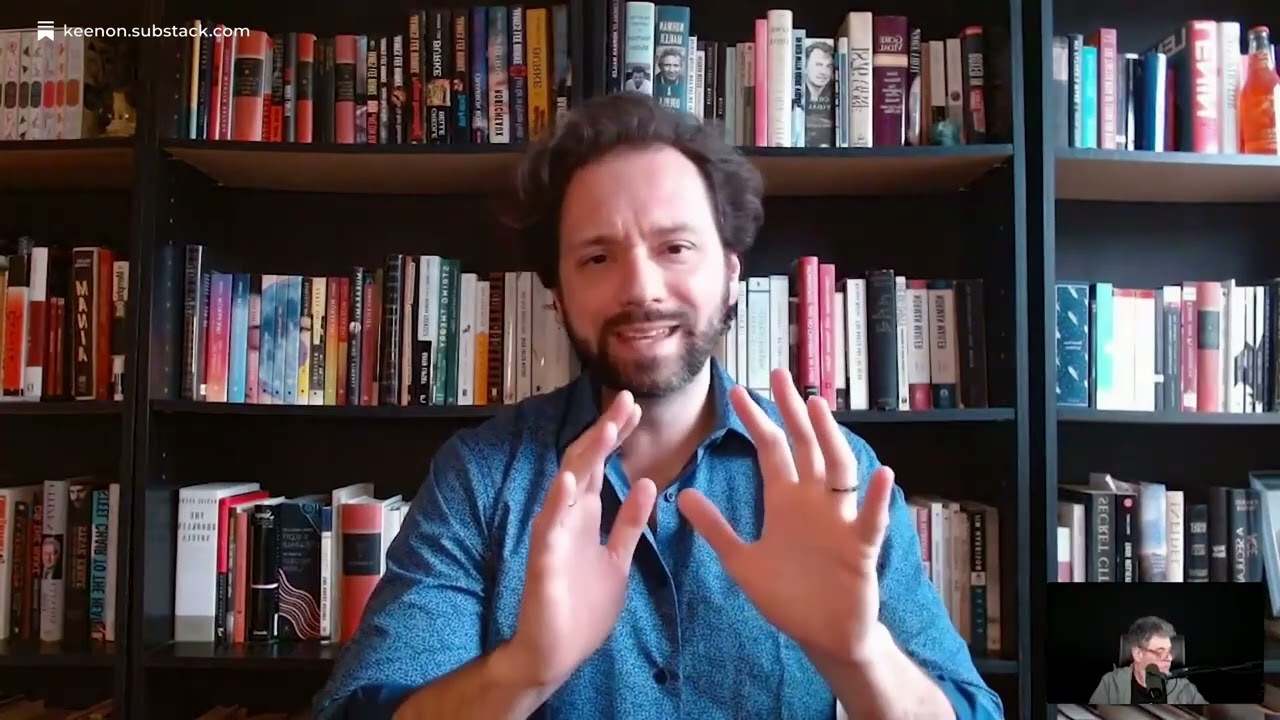
Episode 2484: David Masciotra on how every day has become April Fools Day in Trumpian America
Happy April Fools, everyone! Although, according to cultural critic David Masciotra every day in Trump 2.0 America is now April Fool's Day. KEEN ON AMERICA regular Masciotra argues that the new Trump's administration represents a "bipartisan phantasm" featuring absurdly unqualified and ignorant figures from both right (Hegseth & Vance) and left (RFK Jr. & Tulsi Gabbard). Masciotra explores how the destruction of media gatekeepers has allowed fantasy to dominate reality - creating what he dubs, c...
712
March 31, 2025
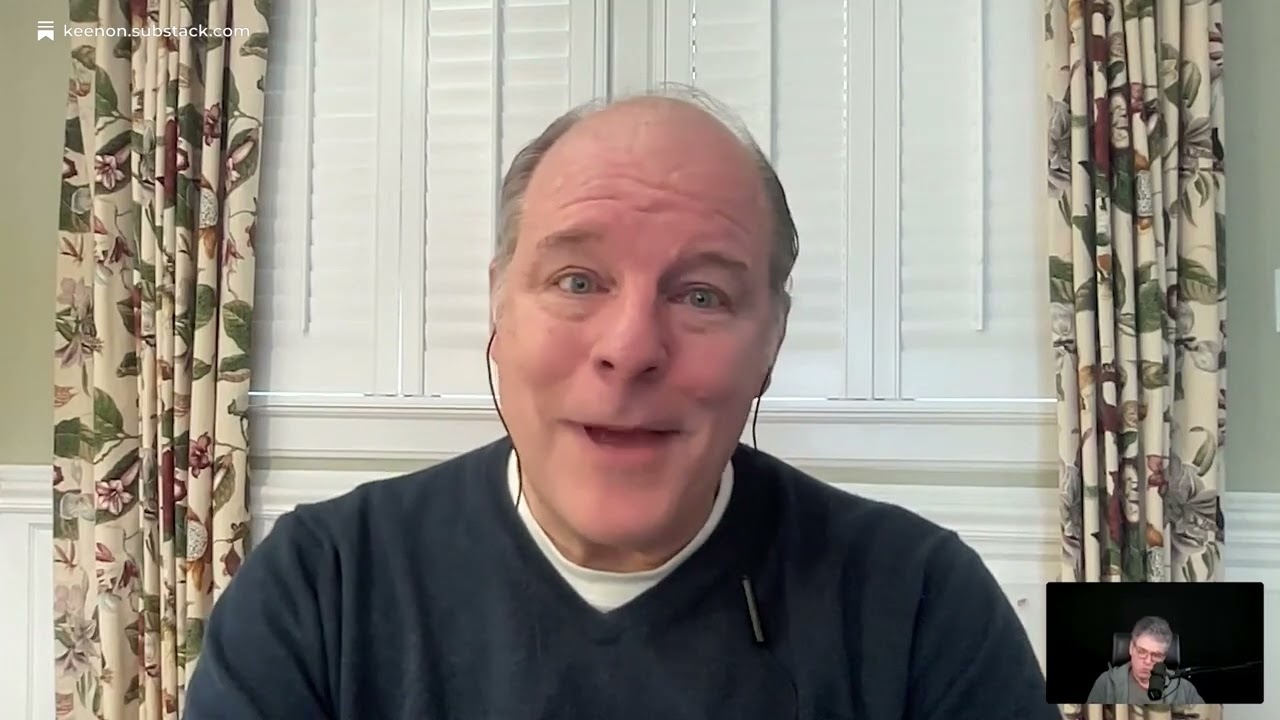
Episode 2483: Peter Wehner on the ethical darkness that has fallen upon America
This is an important interview. I’ve always thought of the political essayist Peter Wehner as representing the conscience of conservative, religious America. Wehner, who writes both for the Atlantic and the New York Times, has been offering a moral critique of Trump’s MAGA movement since 2015. And now that many of his direst warnings are being realized, his voice is amongst the most important in America. In this conversation, Wehner, a religious conservative who worked in several Republican admi...
711
March 30, 2025
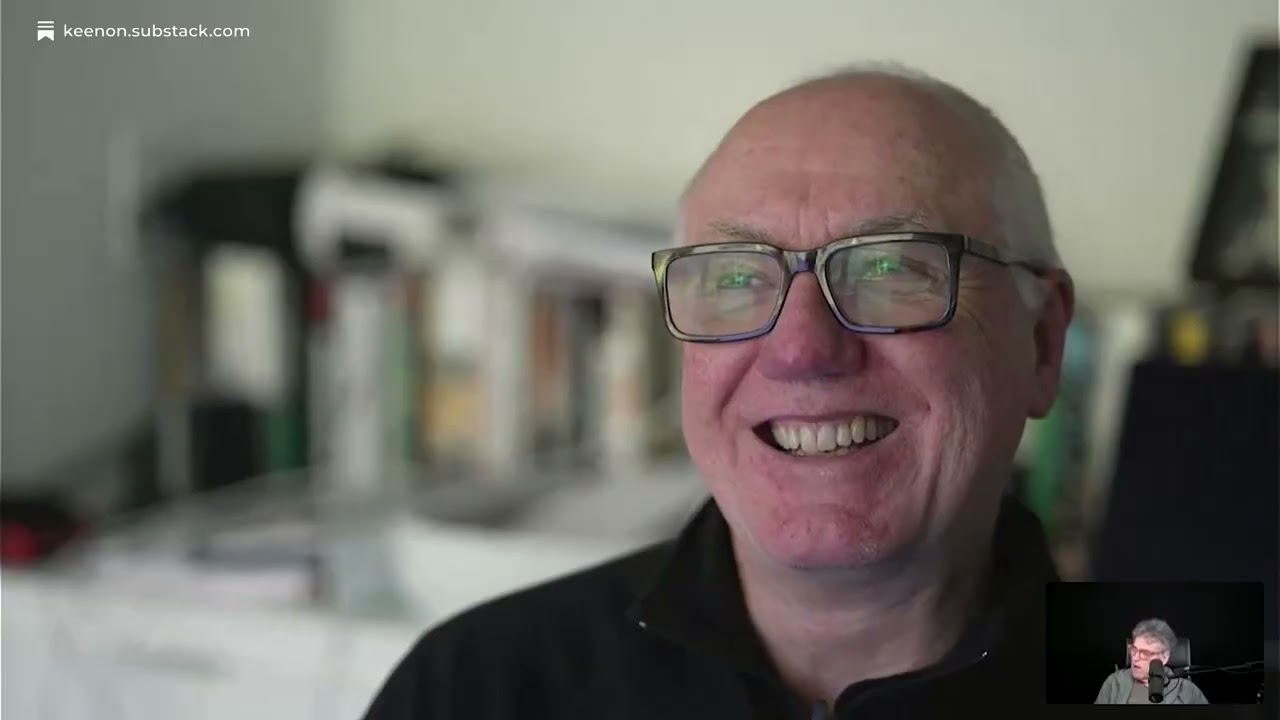
Episode 2482: Is AI really about to change the publishing industry?
That Was The Week publisher Keith Teare believes that the publishing industry is about to be dramatically swept away by AI. I’m not sure. Here, for example, is Anthropic ‘s (Claude) 100 word summary of this week’s KEEN ON AMERICA conversation with Keith: “The conversation between Andrew Keen and Keith Teare discusses OpenAI's new image generation tool that can now integrate text with images—a capability Keith considers revolutionary for publishing and graphic design. Andrew remains skeptical ab...
710
March 29, 2025
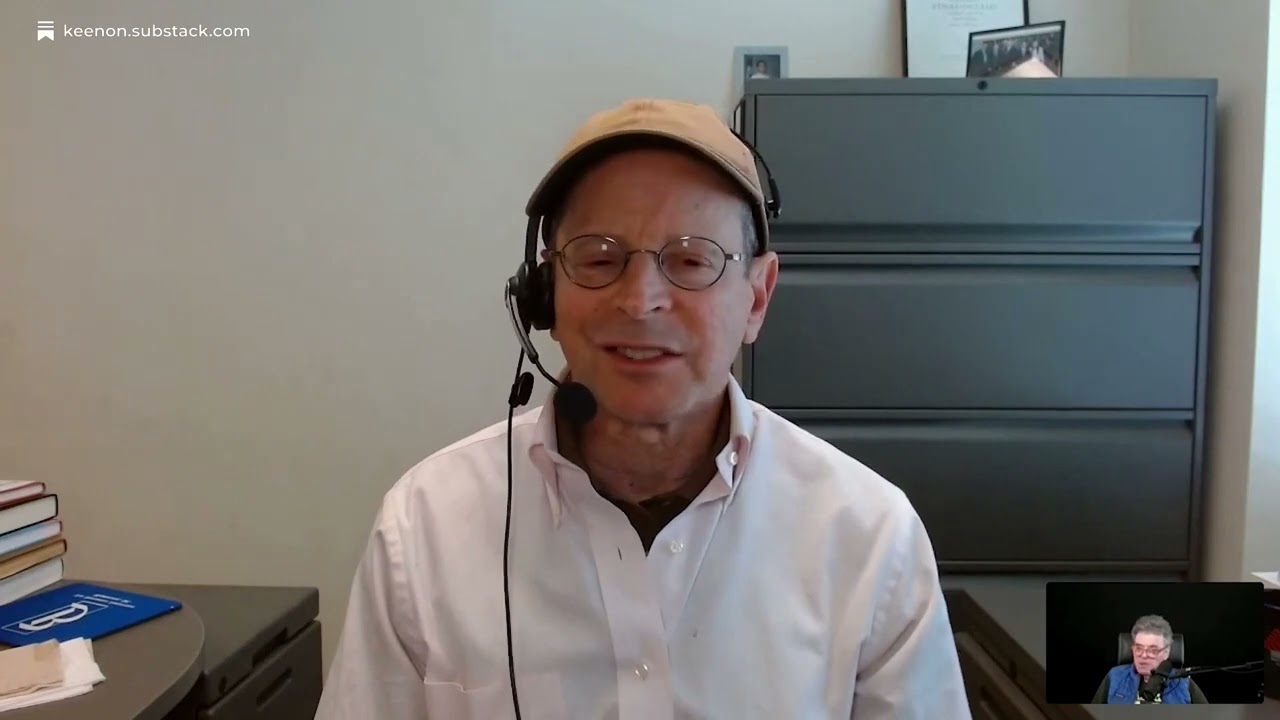
Episode 2481: Jonathan Rauch on The Resistance to Trump 2.0
Has Signalgate triggered a credible resistance movement to Trump 2.0? Brookings scholar and Atlantic columnist Jonathan Rauch isn’t particularly optimistic. He discusses the emerging resistance from law firms, media, and some religious groups, while expressing concern about Trump potential defiance of Supreme Court orders. Rauch observes that the opposition to Trump’s authoritarianism remains fragmented, but believes that eventually counter-organization will develop, though he remains uncertain ...
709
March 28, 2025
Episode 2480: Dr Andy Lazris on how Big Pharma controls the American healthcare system
This isn’t exactly the radical message one would expect from a primary physician from Columbia, Maryland. But according to Dr Andy Lazris, co-author of A Return to Healing, Big Pharma wields an iron grip on the American healthcare system. And it’s only by aggressively challenging the control of the pharmaceutical industry, Lazris says, that we can begin to reform the system. Lazris discusses how pharmaceutical companies heavily influence healthcare through funding medical organizations, research...
708
March 27, 2025
Episode 2479: Brian Goldstone on the 4 million invisible homeless workers in America today
Amidst all the chaos and hysteria of Trump 2.0, some things in America never change. As the Atlanta based journalist Brian Goldstone notes in There Is No Place For Us, America’s “invisible” working homeless population have been mostly ignored by both Democratic and Republican administrations. Goldstone reveals how approximately 4 million Americans who work full-time jobs cannot today afford housing, with many living in extended-stay hotels, cars, or doubled-up with others. He highlights that 93%...
707
March 26, 2025
Episode 2478: Parag Khanna on the Countries Best Positioned to Win the 21st Century
Which countries are best positioned to thrive in the 21st century? No, it’s not Denmark. Nor China. According to Parag Khanna, the Singapore based geo-strategist, the three countries that top what he calls The Periodic Table of States are Germany, Japan and Switzerland. And the United States of America, Khanna says, going against conventional wisdom, isn’t far behind. Khanna’s analysis describes a "post-Westphalian world" where non-state actors like corporations and diasporas hold significant in...
706
March 25, 2025
Episode 2477: How Daniel Oppenheimer Learned That the Problem in his Marriage Was Himself
The writer Daniel Oppenheimer and his wife, Jessica, have been going to marriage therapy for many years. But, as he confessed in a recent New York Times magazine piece, he had to go to a superstar councillor to finally recognize that the biggest problem with his marriage was himself. Oppenheimer explains how renowned therapist Terry Real helped them, particularly by teaching him about healthy expressions of power. As with yesterday’s show with William Deresiewicz, our conversation expands to bro...
705
March 24, 2025
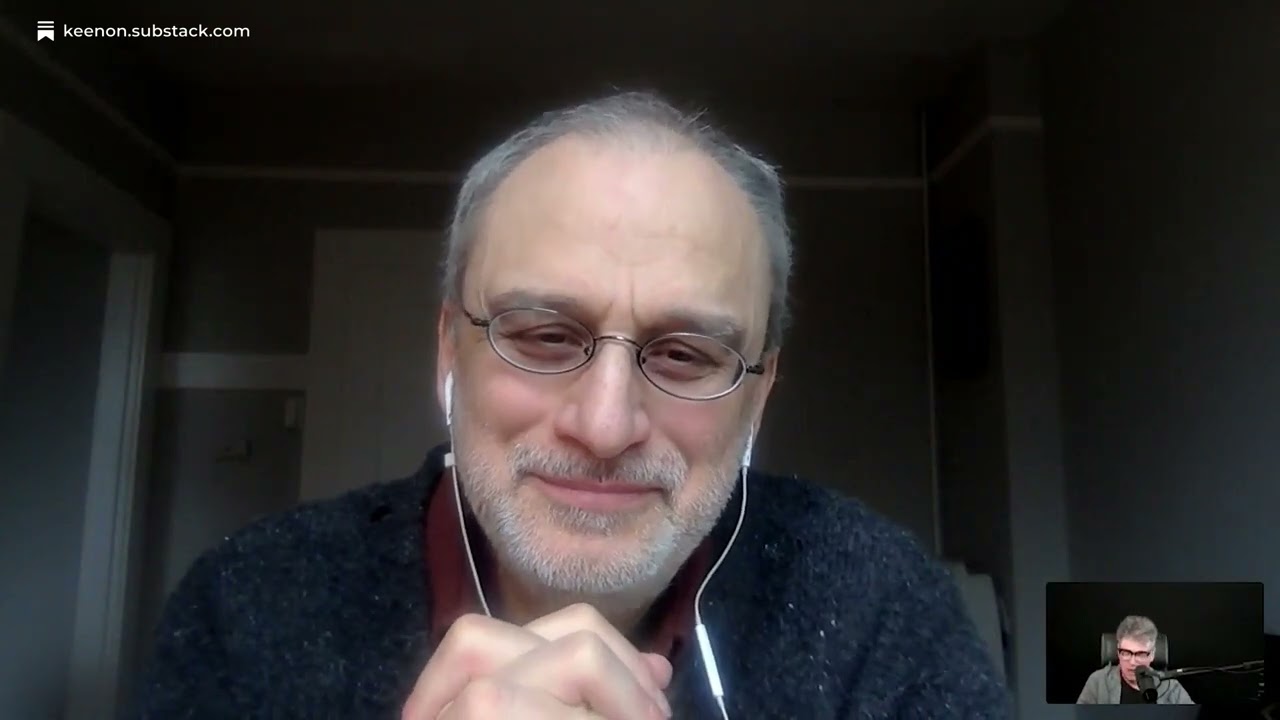
Episode 2476: William Deresiewicz on American Boys & Men
Few observers are more insightful than the critic William Deresiewicz at identifying the changing landscape of American culture. In my latest conversation with Deresiewicz, best known for his book Excellent Sheep, we explore how young American men are increasingly drawn to right-wing politics while feeling socially devalued and alienated by progressive rhetoric. Deresiewicz critiques universities for embracing a censorious left-wing ideology that has become intellectually stagnant. He contrasts ...
704
March 23, 2025
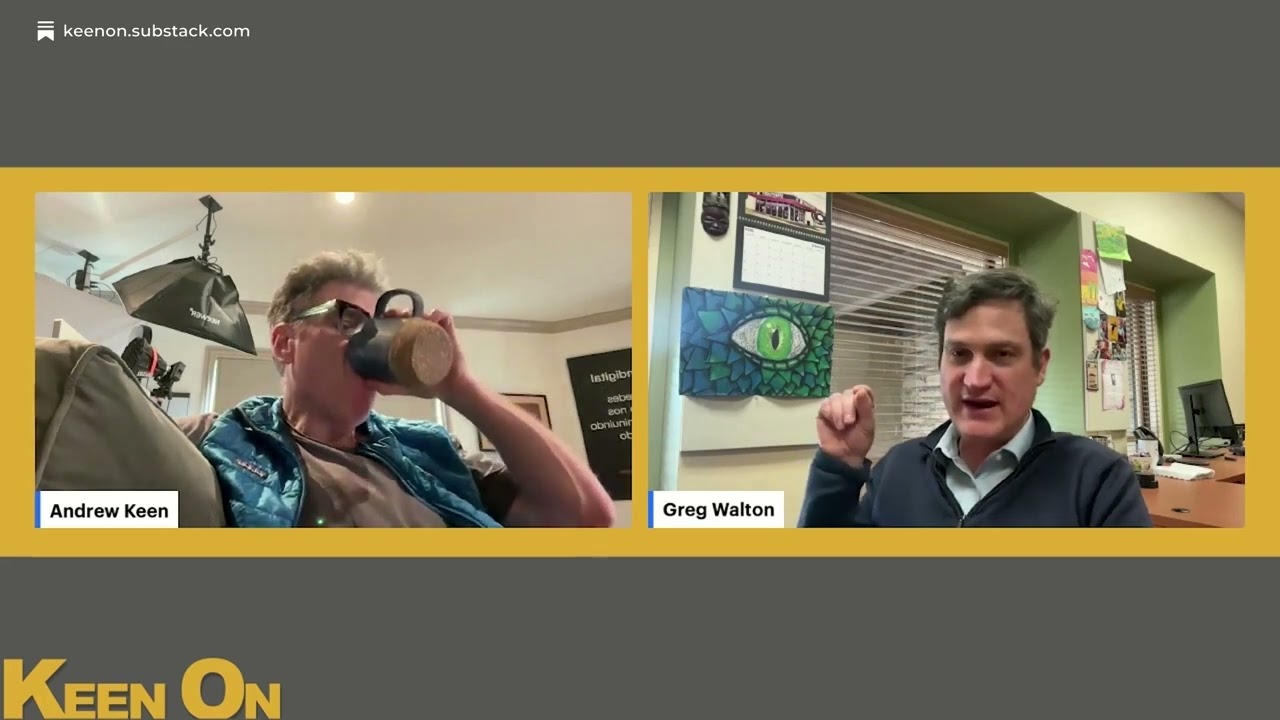
Episode 2475: Gregory Walton on how to achieve BIG change with small acts
How to achieve BIG change with small acts? According to the Stanford psychologist Gregory Walton, this requires what, in his new book, he dubs Ordinary Magic. Small psychological interventions , Walton argues, can create significant positive changes. He explains that people often face "agency-depriving questions" that undermine their confidence and sense of belonging. His research shows how addressing these concerns through simple but powerful psychological reframes and supportive interactions c...
703
March 22, 2025
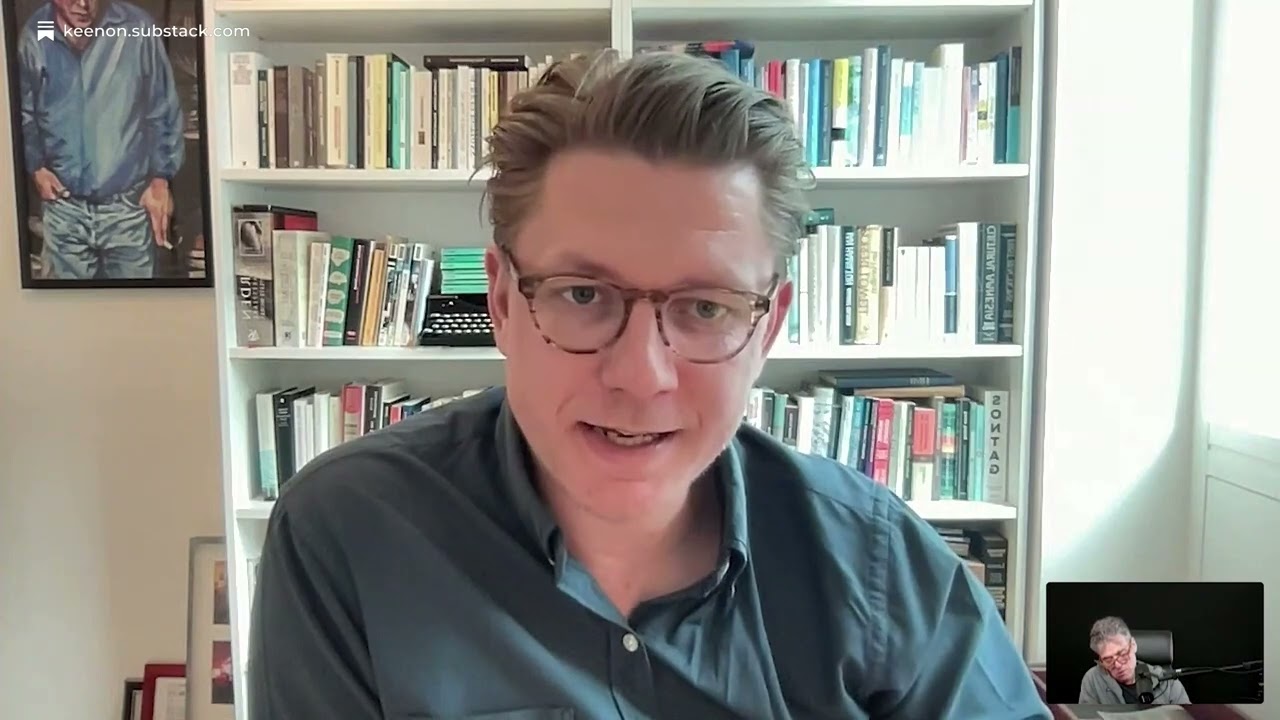
Episode 2474: What Thomas Mann can teach America about how to save its democracy
On Thursday, we featured a conversation with Red Scare author Clay Risen about Joe McCarthy, Donald Trump and the Paranoid Style of American History. Today our subject is one of the best known victims of McCarthyism - the German writer Thomas Mann. In His Liberties essay “Mannhood: The Coming Revival of Democracy,” Morten Hoi Jensen writes about how Mann, as an exile from Nazi Germany, toured the United States in the spring of 1938 lecturing in support of New Deal democracy. Thomas Mann’s brave ...
702
March 21, 2025
Episode 2473: Is Europe about to become the World's 3rd Tech Superpower?
Is Europe about to become the World's Third Tech Superpower? In our regular That Was The Week round-up of tech news, Keith Teare says NO!, arguing that the EU’s increasingly aggressive regulation of Apple and Google will relegate Europe to increasing irrelevance. But I’m not so sure. Just as Europe is finally establishing its military independence from Washington, so I suspect the same will become eventually true of technology. Sure, Europe will never probably develop big tech companies with the...
701
March 20, 2025
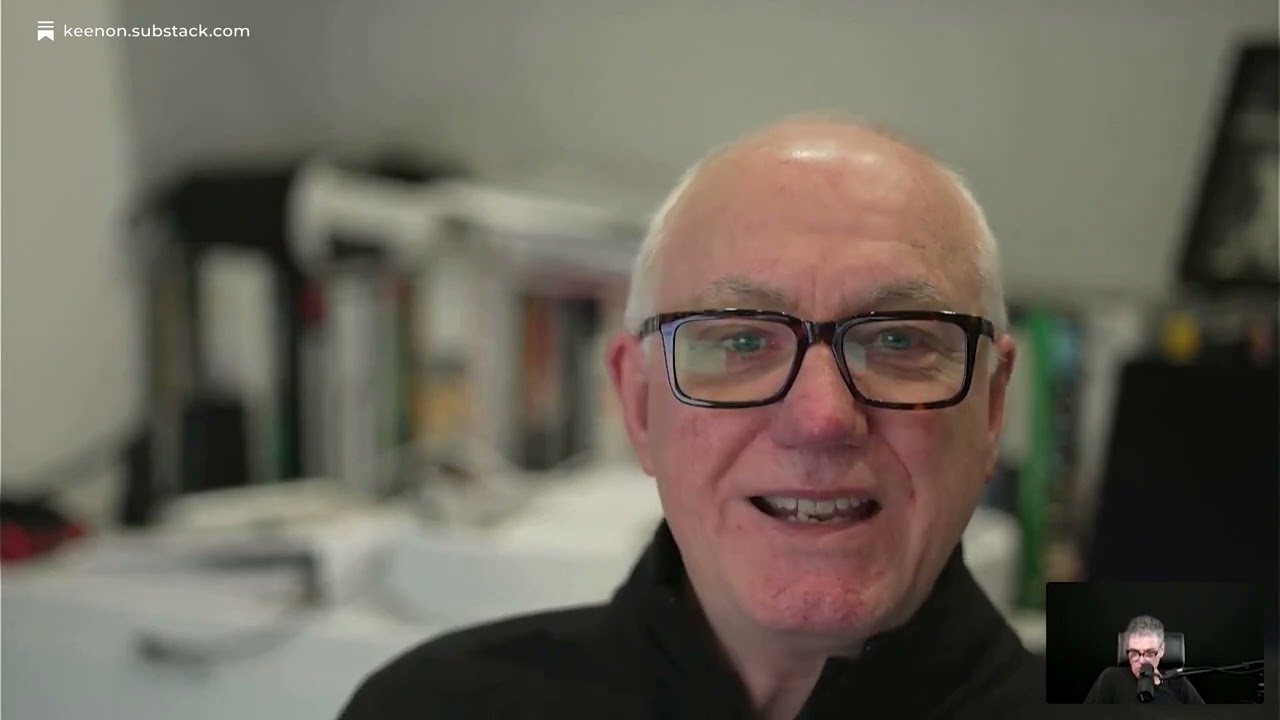
Episode 2472: Clay Risen on Joe McCarthy, Donald Trump and the Paranoid Style of American History
American history, Clay Risen reminds us, has an uncanny knack of repeating itself. In Red Scare, his important new book about blacklists, McCarthyism and the making of modern America, Risen suggests that Trump and MAGA have happened before. First as the tragedy of Joe McCarthy then as farcical Donald Trump? Or might today’s latest chapter in the paranoid style of American history actually be its most consequential and thus tragic? Here are the 5 KEEN ON AMERICA takeaways in this conversation wi...

700
March 19, 2025
Episode 2471: Dan Brooks reveals the MAGA aesthetic
What is the MAGA movement’s aesthetic? According to the New York Times’ Dan Brooks, it’s an aesthetic captured by the generative AI video “Trump Gaza”. Childishly absurd, it’s an aesthetic, Brooks suggests, of “bearded belly dancers, an Elon Musk look-alike on the beach and a golden statue of President Trump”. It’s not reality, of course. There are neither bearded belly dancers nor golden statues of Trump in Gaza right now. It doesn’t even resemble actual MAGA America. But as Brooks notes, the M...

699
March 18, 2025
Episode 2470: Andrew Keen on the current state of American journalism
Andrew Checchia, a young journalist at NewsJunkie.net, requested an interview with me about the current state of American journalism. So here are my thoughts about the Fourth Estate’s role in democracy, our supposedly dwindling trust in media, the ongoing cult of amateurism in journalism and Trump’s successful merging of news and entertainment. Here are the five KEEN ON AMERICA takeaways from my interview with Checchia: * The Fourth Estate's Role in Democracy * I present journalism not as a fo...
698
March 17, 2025
Episode 2469: Daryl Davis on His Life with the Klu Klux Klan
The musician and actor Daryl Davis probably knows more about the Klu Klux Klan than any other living African-American. As the author of Klan-Destine Relationships and his latest The Klan Whisperer, Davis has written about not only his infiltration of the Klan but his befriending of regretful Klansmen like Scott Shepherd (My wife, Cassandra Knight, also wrote about her dinner with Shepherd). Davis’ new book should probably be entitled My Life with the Klan. But as the ideas of the Klan have becom...
697
March 16, 2025
Episode 2468: David Masciotra on Trump's ravenous bigotry toward the trans community
Long-time views of the show know that I’ve always been skeptical of equating Trump/MAGA with European fascism. I’ve always thought it historically facile and misleading. But I’m beginning to change my mind. Take, for example, David Masciotra’s thoughts on Trump’s “ravenous bigotry” toward the trans community. As Masciotra warns, this is the kind of organized, willful persecution of powerless minorities that fascist parties openly pursued while in power. Meanwhile, as Masciotra notes, prominent D...
696
March 15, 2025
Episode 2467: Will AI kill Apple?
Will AI kill Apple? That’s the (absurd) question with which Keith Teare and I begin our THAT WAS THE WEEK tech summary. We conclude that their failure to develop an in-house LLM or introduce a timely intelligence application in mobile won’t , of course, destroy Apple. But as Keith and I discuss, the redundancy of its Siri architecture is now forcing Apple to get serious about AI. So should that mean totally scraping Siri? Or acquiring Anthropic or Perplexity? Or does Tim Cook need to be replaced...
695
March 14, 2025
Episode 2466: Sarah Vowell tells the Untold Story of Public Service
So who, exactly is government. It’s the question that Michael Lewis and an all-star team of writers address in a particularly timely new volume of essays. Who is Government? According to the Montana based Sarah Vowell, author of “The Equalizer”, an essay in the volume about the National Archives, government enables all American citizens to find stories about themselves. Vowell praises the modesty of most government employees. But she warns, the work of public servants like the National Archives'...
694
March 13, 2025
Episode 2464: Marc Dunkelman on Why Nothing Works
As MAGA continues to vandalize the Federal bureaucracy, some progressives are beginning to publicly acknowledge their role in the historic undermining of the US government. In his provocative new book Why Nothing Works, the self-styled “progressive” Marc Dunkelman argues that it was the left - in their cultural aversion to power over the last half century - who have broken the U.S. government. If progressives want to get something…. anything, in fact, done in America - from building high speed r...
693
March 12, 2025
Episode 2263: David Enrich on a secret campaign to murder the truth in America
The New York Times’ David Enrich is one of America’s most tenacious investigative journalists. So when he comes out with a book entitled Murder the Truth, we should take note. There’s a campaign, Enrich warns, sometimes secret, sometimes open, to undermine the First Amendment and press freedom, thereby protecting the rich and powerful. Led by Clarence Thomas, Enrich explains, it’s an attempt to call into question the 1964 Supreme Court’s 1964 New York Times vs Sullivan decision on libel. Undermi...

692
March 11, 2025
Episode 2262: Jessica Pishko explains how the Democrats Built Trump's Police State
Not everyone, especially mainstream Democrats, are going to agree with Jessica Pishko on this one. In Liberties, she argues that it was the Democrats who “built Trump’s army”. It was Joe Biden, she claims, who built up the very law enforcement regime that Trump is now weaponizing. So, in Pishko’s mind, the Democrats have as much responsibility for the Mad Max police state which Trump is now unleashing now on America. Here are the 5 takeaways in our conversation with Pishko: * Democrats investe...

691
March 10, 2025
Episode 2261: Thor Hanson on why virtual reality can never replicate the natural world
There’s a story today about how a VR headset can make us more empathetic toward nature. But according to the Pacific Northwest based author and biologist Thor Hanson, no digital technology can ever replicate nature. Instead, he argues in his new book Close to Home, we humans are wired, so to speak, to appreciate the natureal world whether its on the Galapagos or in our local park. In fact, he told me in a windswept conversation he recorded outside his home on San Juan island, the wonders of natu...
690
March 9, 2025
Episode 2260: Felipe Torres Medina laughs and cries about the American immigration system
Here are the 4 KEEN ON AMERICA take-aways in our conversation about the dysfunctional American immigration system with Felipe Torres Medina 1) Background & Immigration Journey * Felipe Torres Medina is a comic writer for "The Stephen Colbert Show" and author of the new book America Let Me In about the US immigration system * Born in Bogotá, Colombia, Medina moved to the US at 21 on a student visa to pursue a master's in screenwriting at Boston University * Medina received an "alien of extrao...