Yes, It's Fascism: Jon Rauch on Trump and the F Word
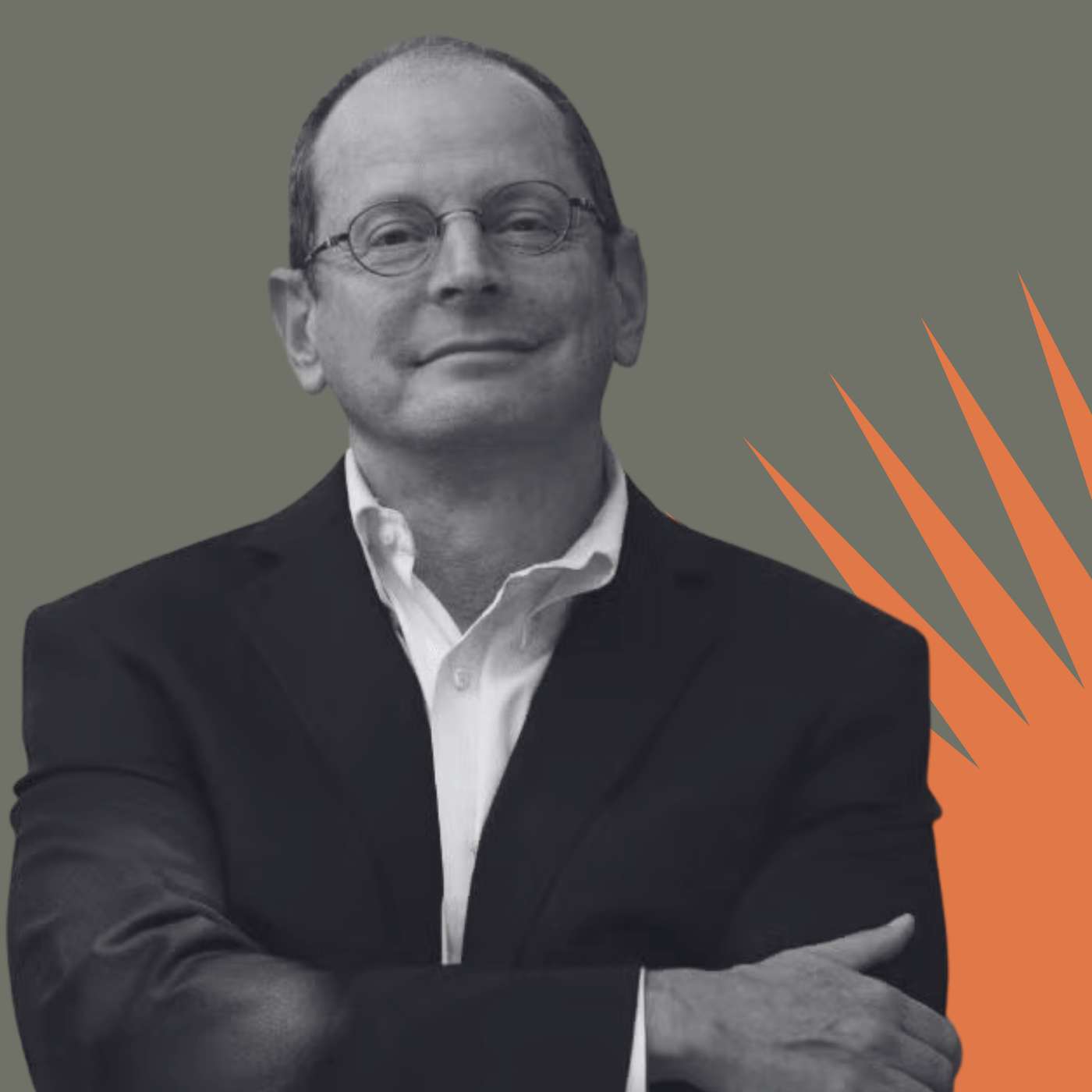


"You either need to call it fascism or you need to invent a new word with more or less the same meaning." — Jonathan Rauch
Jonathan Rauch's viral Atlantic essay has reignited the debate over what to call the Trump administration. Having previously settled on "semi-fascist," Rauch now argues that Trump ticks all 18 boxes on his checklist of fascist characteristics — from the glorification of violence and territorial ambitions to Carl Schmitt's philosophy of "enemies, not adversaries." We spar over whether the term obscures more than it reveals: Is this really fascism, or just authoritarianism with American characteristics? The conversation sharpens around Minneapolis, where citizens were shot face down, and the government initially denied it happened. You don't do that to win votes, Rauch argues — you do it because you believe that's how the social contract should work. He predicts Trump will fail to turn America into a fascist country but warns that institutions like the newly expanded ICE will outlast this administration.
About the Guest
Jonathan Rauch is a senior fellow at the Brookings Institution and a contributing writer for The Atlantic. He is the author of nine books, including The Constitution of Knowledge: A Defense of Truth (2021), Cross Purposes: Christianity's Broken Bargain with Democracy (2025), and Kindly Inquisitors: The New Attacks on Free Thought (1993). He received the 2005 National Magazine Award.
References
Thinkers discussed:
· Carl Schmitt was a Nazi political theorist whose "friend-enemy distinction" argued that politics is fundamentally about identifying and crushing enemies, not managing disagreements with adversaries.
· George Orwell wrote in his 1946 essay "Politics and the English Language" that "the word 'fascism' has now no meaning except insofar as it signifies something not desirable."
· Hannah Arendt was a German-American political theorist and refugee from Nazi Germany whose book The Origins of Totalitarianism examined both Nazism and Stalinism, preferring "totalitarianism" to "fascism" as the more encompassing term.
Historical figures:
· Benito Mussolini invented the term "fascism" (from the Latin fasces, a bundle of rods symbolizing collective strength) and ruled Italy as dictator from 1922 to 1943.
· Francisco Franco ruled Spain from 1939 to 1975. Whether he was truly a fascist or merely an authoritarian remains debated; he never got along well with Hitler and outlasted the fascist era by three decades.
· Viktor Orbán is the prime minister of Hungary whose systematic capture of media, courts, and civil society has become known as the "Orbán playbook" — a template Rauch argues the Trump administration is following.
Contemporary figures mentioned:
· Stephen Miller is a senior advisor to Trump who declared that "force is the iron law of the world" and told progressives "you are nothing" at a memorial service where the widow of the deceased had just offered Christian forgiveness to an assassin.
· Russell Vought is the director of the Office of Management and Budget, identified by Rauch as one of the younger ideologues building Trumpism into something more like a coherent ideology.
· Chris Rufo is a conservative activist and culture war strategist who has employed what Rauch calls "revolutionary language" in his campaigns against universities and public institutions.
Essays and books mentioned:
· "Politics and the English Language" (1946) is Orwell's essay arguing that the corruption of language enables the corruption of politics, and that vague or meaningless words like "fascism" make clear thinking impossible.
· The Origins of Totalitarianism (1951) is Hannah Arendt's study of Nazism and Stalinism as parallel forms of total domination, examining how mass movements, propaganda, and terror enable regimes to control entire societies.
About Keen On America
Nobody asks more awkward questions than the Anglo-American writer and filmmaker Andrew Keen. In Keen On America, Andrew brings his pointed Transatlantic wit to making sense of the United States—hosting daily interviews about the history and future of this now venerable Republic. With nearly 2,800 episodes since the show launched on TechCrunch in 2010, Keen On America is the most prolific intellectual interview show in the history of podcasting.
Chapters:
00:00 -
00:13 - The viral essay
02:10 - Why Rauch changed his mind
03:41 - Fascism vs. authoritarianism
05:54 - Carl Schmitt and "enemies not adversaries"
06:14 - Orwell on the word "fascism"
09:12 - Can old people be fascists?
11:51 - Blood and soil nationalism
14:14 - Minneapolis
17:51 - Kristallnacht comparisons
20:07 - The postmodern right
26:34 - Following the money
32:05 - ICE as paramilitary force
0:00 Hello, my name is Andrew Keen. Welcome to Keen on America, the Daily Interview Show about the United States. Hello everybody. A couple of weeks ago, an article came out in the Atlantic by an old friend of the show, Jonathan Raush. Um, he announced that, "yes, it's fascism," big picture of Donald Trump.
0:42 Uh, he announced that he believed that Donald Trump was, in many ways a fascist. The article has gone viral. Uh, I saw Jon, uh, on all sorts of shows including Andrew Sullivan, Sam Harris, some of the top podcasts. Uh, and in contrast with Sullivan and Harris, you get this podcast for free, so you don't have to subscribe to, uh, hear our whole conversation. Jon is joining us, as always, from Washington DC. Jon, were you surprised with the response to this article? Did you expect it to be as popular? My sense from listening both to the the Sullivan and the, uh, the Harris, uh, shows was that they were really pleased with this article.
1:30 It was almost as if you were legitimizing their thinking. You know, Andrew Sullivan said, ex exactly that. Um, I thought it might get a readership. I I was right about that. I thought it would be controversial. I was wrong about that. I have yet to see a single substantial article that has argued with it in any substantive way. You know, there've been a couple of hahas on social media. But apparently, uh, the proposition that Donald Trump is a fascist in, in a very real sense, a documentable sense went almost overnight from being farfetched to being uncontroversial.
2:15 Apparently. I actually, uh. Perhapsie'll be your first critic. I don't agree. Uh, maybe we can get that into that, into the conversation. But before we start, lay out your arguments. Why in your view is Trump a fascist? I, I was one of those people like you, Andrew, and like so many others who thought the term fascism should be avoided. Because first of all, it's been. Defined and misdefined and overextended and stretched beyond all recognition by progressives who call you a fascist if you oppose affirmative action or abortion.
2:56 Uh, second, because I thought it was likely to pointlessly, alienate the people who voted for Trump, but who were not convinced he was a fascist and who are not themselves by any stretch of the imagination, fascists. And third, because I just thought there was too much about Trump that just didn't fit. Uh, I went with, in, in a book I wrote last year. I went with the term semi fascist, which Joe Biden actually used in a speech. And the reason I went with that is that I went down a list of, of items, characteristics that are often associated with fascism. And Trump met about half of them, but he didn't meet the other half. You know, he wasn't invading other countries, for example.
3:38 And so I thought the term, uh, just didn't fit and the events of the last few weeks and months convinced me that I was wrong because he was ticking so many of those boxes. So I sat down, I made a list. I came up with 18 characteristics that are all frequently found in fascism. And all of which are inconsistent with liberal democracy and there they all were. And at that point I decided it's just perverse to withhold the label for what's what someone just seems to be. My biggest problem is that you seem to, if not confuse, gloss over the difference between fascism and authoritarianism.
4:21 You bring up Franco, for example, who wasn't a fascist, who never got on well with Hitler, was very different from Mussolini. What for you is a fascist and how the, how, how, how would you distinguish a fascist from a traditional authoritarian like Franco and so many other. Political leaders in in human history? Well, or, or for that matter. From a Patrimonial list, which I think, right. And, and we've done shows on Patrimonial. The book on Paton was authored by our friends, uh, Steve Hanson. Jeff Cote has also been on the show. Yes. And who are correct about that. I think Trump's being a patrimonial list is literally uncontroversial.
5:02 He just clearly is one. Fascism is, well, I'm. I should say I am not a leading scholar on this subject, but fascism is not a well-defined idea. It was incoherent from the start. People who called themselves fascists were very different. Hitler, Mussolini, very different. Hitler wound up having contempt for Mussolini. My understanding is that Franco did define self-defined as a fascist. I think Orwell certainly thought of him that way. Um, I think Imperial Japan was probably a form of fascism, but. But I don't wanna, you know, my, my goal is not to get hung up on particular taxonomies of the early to mid 20th century. What I tried to do is look at characteristics, which we associated with the particular form of authoritarianism that we identify with fascists, for instance.
5:52 The philosophy, the political theory of Carl Schmidt, for example, the idea that we, in a, in a society, we don't have political adversaries, we have enemies, and you've gotta crush them, which we saw emerge under Trump. Um. The, uh, territorial ambitions which we saw emerge under Trump, the explicit embrace of might is right. The kind of, uh, nihilistic, fascistic idea that if you're strong, you do what you get away with and the weak suffer what they must. So all of these, it seemed to me, and, and, and others on the list give a sense of ideological directionality to this administration, which I had not seen before.
6:41 You mentioned Orwell. You bring him up in the book, and Sullivan is a big fan of Orwell. He wrote, of course, his famous essay politics in the English language and the English language in which he argued the word fascism and he, I think he was writing this in 1946. I think the word fascism has now no meaning except insofar as it signifies something. Not desirable. You talked about that, Jon, and obviously, um, that's still true, but shouldn't we be situ? I mean, the word fascist was invented by Mussolini. It came out of a specific moment in European and world history. It came after the first World War, and if you turn it into this generic term, it loses any kind of real meaning.
7:31 I'd agree with that if I were using it as a generic term, but I think I'm using it in reference to 18 specific items which align with what I think a lot of people today would identify as fascism. You know, the dual state which we saw under Nazim, I already mentioned. Schmidt, um, I mentioned the idea that might is right and the, the strong take what they like. Uh, um, we could go through this list. Sam Harris did well, although, again, the point is, I, I'm a bit kind of nitpicky, but the idea of might is right, is certainly not just, uh, an idea of, of fascism. I mean, you, you can go right back to the beginnings of.
8:14 Western philosophy on politics and power to find that. I mean, even Machiavelli suggests that sometimes, certainly, uh, Plato covers it. He, and, and, and the word fascism didn't exist in, in antiquity. So, uh, but coming back, Jon, too. I mean, for me, the most interesting thing about this, and it's a wonderful piece. I mean, I think everyone watching listening should read it. It's extremely coherent and in some ways convincing. Um, for me, the interesting thing about Trump is what makes him different from fascist. Hmm. Although. I agree with you that some of the, the features that you describe him as, uh, makes him like, I guess a, a post, uh, an an interwar fascist.
9:05 But the two things that come to mind that make him unlike a fascist or make this moment unlike fascism in America is firstly. The fact that fascism came out of this catastrophe of the first World War. And secondly, it was a, a movement of young people and Mussolini Hitler were young political leaders. The thing that seems to me about Trump is he is an old man, and, and this is in some ways is a cratic movement. How does the generational element play in here? Can old people be fascists? I suppose they can, I, we, we may differ in that.
9:48 I am not all that interested in asking the question, how much does what Trump is doing resemble the particular forms of fascism that we saw in the 1930s. 'cause I don't think it has to. The question I'm interested in asking is if you invent. Uh, if you, if you take the core ideas of those regimes, the things that they tended to have in common, you know, the dehumanization of the opponents, the military adventurism, uh, and so forth, the things we're discussing and you apply them in the 21st century in America, what would it look like? And I think it looks something like this.
10:28 Uh, yeah. Trump is old. He's been saying the things he's been saying For a long time I was on someone else's show. And he read a quote, which I hadn't seen, which I would've used if I had, it's from 1990 and it's Trump in an interview saying that the problem with Gorbachev, I'm loosely paraphrasing, but this is the right idea. The, the problem with Gorbachev is that he wasn't tough enough and that Trump admired the Chinese for cracking down in Gentleman Square. That's how you do it. So he's been like this a long time. Um, I would point out that the people around him are not as old as he is JD Vance. Stephen Miller, uh, Russell V and others in that group, many of whom are the ones who are actually building this out into something more like an ideology.
11:16 Yeah, I think the best, the best example of a fascist in the administration is, is, is probably Miller. I'm not sure about, uh, vo. Um, but coming back to this I issue of, yeah, I would say vote is not probably an ideological fascist, but he adopts this back to this, this idea of a gerontocracy, uh, Samuel Moyne, as I said. Coming out with a book about it. Can old people be fascist? Uh, Jon, I mean, the whole idea of fascism is a, a dynamic rejection of modernity, a love of speed, almost a, a, a very ambivalent attitude towards technology. Should we be? I guess I'd have to say since we're seeing those things from our president, we saw them in big, bold letters in Doge, for example.
12:01 Um, in the revolutionary language that they've employed that, that Russell VO has employed, um, and that, uh, Chris Ruffo has employed. I, I guess I have to see apparently old people can be fascists because that's what they're doing. You talk about blood and soil nationalism, again, I, I mean, it goes without saying. I'm, I'm not a. Supporter of Trump, but I wonder whether a, a, a high profile, uh, invasion a day invasion of, of Venezuela. Conforms to the kind of fascist militarism that Mussolini or Hitler, uh, were responsible for.
12:44 I mean, Trump's foreign policy, his theatricality over Greenland, this odd chapter over Venezuela, it doesn't strike me as blood and soil nationalism. This is one of the factors that tipped me over into applying the term, and it is certainly not the first time by a long shot that the United States has thrown its weight around in the Western Hemisphere or anywhere else. You know, uh, Woodrow Wilson had Poncho Villa, uh, chase, poncho Villa, all over Mexico. Um, among many other examples, what's different?
13:28 The reason that this got my attention was Trump said, Venezuela, we want the oil. We're getting the oil. Rubio comes out, secretary of State, and says, no, there are a bunch of other reasons why we did this. You know, we're interested in human rights and Iran has a foothold down there, and this regime is supporting Cuba and so forth. And Trump comes out and says, no, no, we want the oil. They're gonna play ball. We'll get the oil. Greenland, they have land. We want the land. We're gonna threaten them to take the land. He didn't. In the end, this is not the way Americans have talked in the fast, but it is characteristic of fascist regimes.
14:15 They tend to be ideological, aggressive and in their early stages, revolutionary. So. When I saw that, when I saw of course Minneapolis, when I saw Steven Miller's statement that, uh, force power is the iron law of the world, when I saw his statement saying that of progressives, you are nothing, uh, I couldn't turn a blind eye to that. But Jon, the, this foreign adventurism that you describe was a feature of 19th, certainly 19th century America. As you, as you, as you say, certainly of the colonial states of 19th century Europe, does any state that seeks any kind of adventurism overseas, is it fascist?
15:10 I know I keep on coming back to the F word. I'm not denying that Trump is guilty of some of the things that you talk about, but it's not fascist. It's just the way authoritarian states behave. And sometimes democratic states, I mean, Britain, America, were semi democracies in the 19th century. There are authoritarian states that do not engage in um, um. What's the word for when you call someone an animal? In that kind of of rhetoric, there are authoritarian states that do not explicitly use coercion to take things from other countries.
15:54 There are authoritarian states that do not explicitly say. The rule of the strong, that the rule of force is the iron law. Um, many authoritarian states do, of course have, um, national paramilitary police forces, and many authoritarian, you know, it's one could get tied up in watts, knots all day debating. Is this authoritarianism? Is it fascist? Is it patrimonial is my method Here is, I think it's a constellation. There's no textbook, yes, no bright line definition of fascism. 'cause fascism itself is incoherent. But what you can do is recognize a whole constellation of characteristics.
16:38 And if you see them all, that's when I'm willing to pull the trigger. Now, others may not be, but as I said, this surprise is. I've seen very little pushback and I think what we saw in Minnesota. Tell me what you think, Andrew. I don't get the impression that this administration is embarrassed about being identified as fascistic. They're not going to use the term themselves for obvious reasons, but I think they made very obvious. In Minneapolis and in Stephen Miller's statement and in threatening an ally to try to get its land and so on.
17:18 I don't think they're disguising who they are. I think they want us to know that, and I think the people who are actually squeamish about applying the term fascist are not on their side. They're on our side, and that's what I'd hope to change. I mean, I, I, I don't necessarily disagree with you about Miller, but again, I mean, he's just one figure in this administration. You, in the essay you talk about mobs and street thugs, uh, you talk about, um, Trump's language, uh, in, uh. On January 6th, and of course there's lots of parallels with, um, with Minnesota.
18:03 Uh, you refer to Hitler's Kris program of 1938. And again, I'm not justifying Jon, what I. Trump and his allies got up to in Minnesota or on January 6th, but when you compare Kristol Knight where 30,000 Jewish men were arrested, the 1400 synagogues were burnt down. Aren't you doing, in a sense, an injustice to history by comparing this. Rather haphazard authoritarianism on the part of the Trump administration with what the Nazis got up to, uh, on Crystal Knight?
18:44 Yes. If I were saying that I, I would be wrong. Um, a a point I make in the article and perhaps should have emphasized even more by putting it at, at the top instead of the bottom, is that when I say that Trump is a fascist leader. Or even that he's running in practice of fascist presidential administration. I am not saying that America has a fascist government or is a fascist country, and that is very different from Mussolini or Hitler who moved quickly and decisively to seize all levers of power.
19:27 Um, that is not the case in America. Trump does not control the courts. He may defy them. Uh, he's already playing games with them, but he can't control them. That's become clear. He can't control the media. He's trying very hard. That's an important thing on this list. He's following the whole Orban playbook. He can't control the states. There's sovereign authorities under the Constitution, and he clearly can't control public opinion because it is tanking. Uh, for all those reasons, I think that he is already failing and will fail to turn America into a fascist country with a fascist government.
20:08 So the point of my article is to alert us to who he is and what he's trying to do in hopes of being better prepared to prevent it. But yes, I think you will fail. You use a term, I think later in the essay, uh, you talk about American fascism, and I think that's a good term. I think that's a more helpful term than just the word fascism. I'm not convinced that that's, uh, the right way of going. What is it about America that. Lends itself to perhaps this 21st century version of fascism. You and I have talked in the past, you're a critic of postmodernism.
20:51 Is there a, a, a a fascist postmodernism that Trump seems to be peddling here? Yeah. Well that's, that's an interesting. Interesting question. Yeah. I wrote an article last year about the rise of the postmodern. Right. We talked about that on the show. Some people call it the woke. Right. But, but I think neither, we both agreed. We don't really like that term. And the postmodern has more to do with it. And this is kind of their nihilistic attitude toward truth and their deliberate trolling, their use of, of insults and cynicism. Uh, the kind of, uh, nothing LOL, nothing matters mentality that they use to, um. Uh, to goad and neutralize their critics and so on.
21:35 And we see, I guess, some elements of that in 1930s style fascism. You know, Hitler said somewhere in Amp, uh, it doesn't matter if they mock us or laugh at us, all that matters is that they can't stop thinking about us. But yeah, you've got in, you've got instrumentalities of the internet now. Um, which of course you hadn't seen before. Um, and you've got in the figure of Trump, you know, we call him an old man and obviously he is, but he's so savvy about the use of media to constantly dominate the dialogue so that we're always thinking about him.
22:20 Um, we can't get him out of our mind. One of the reasons I thought that it's useful. To put him in a box and call it fascism, is that it's so hard to keep track of all the things he's doing that doesn't forget today what he did yesterday, doesn't then that makes it chaotic or postmodern or some sort of new ontology or new way of doing things. Obviously it's bound out with the digital revolution, but there's nothing fascist about that. Well, I think the term fascism, which is I think what we're, what we're arguing about, um. The term fascism first helps people understand the larger picture of what he's doing, and second, to some extent, I think it will have predictive power.
23:03 What, what his administration has been doing in Minneapolis is not something you do if you're interested in improving your popularity ratings in a democracy, I mean. We see that because their popularity is tanking for that very reason they're even losing Republicans over it. Talking the way Stephen Miller talked at Charlie Kirk's memorial service. Saying of in in, in the same place where Charlie Kirk's widow forgave the assassin, an extraordinary act of Christian forgiveness. Trump got up there and said, I hate my enemies.
23:44 And Stephen Miller said of. Left that whole half of the country, you are nothing. You are wickedness. You don't do that to expand your coalition and win votes. And I think the explanation for the reason they're doing these things is that they look at the world the way fascists do, which is an all or nothing battle between good and evil. In which you are the side of a revolutionary force that's going to purify society. Get rid of the bad insiders, the traitors who are trying to undermine it, consolidate power, vilify, and dehumanize your opponents.
24:26 You mentioned in. Your argument, one of the 18, uh, arguments you make is alternative facts. You've written extensively about it. You even have a book, the Constitution of Knowledge, which is an excellent, uh, an an excellent analysis of this alternative facts, uh, um, reality, if that's the right word. You quote Orwell and a rent. But a rent wrote a book, not about fascism, but about totalitarianism in which she covered both the communists or the Stalinists at least, and the Nazis might, again, I know I'm might be being a little pedantic here or.
25:07 Medieval in distinguishing these words, but might totalitarian be a better word, a rents word than fascist, which Orwell didn't like and a rent was ambivalent about, even though she herself was a refugee from Fascist German. Yes. Well, you know, fascism, as we've said, is such a poorly defined term that it's, its hard for anyone to talk about. You're the one who, who, who has this. Essay called, yes, it's fascism. So, yes, that's right. And then the way I go about that is not a crisp one sentence definition, it's a whole bunch of attributes, but I acknowledge it's fuzzy. Um, so yes, you ask a, a, a, a smart question. Um, why not totalitarianism?
25:49 And I think it's for the very reason I just totalitarians. Take control of the entire society, or at least they try to and they succeed from top to bottom. I think maybe Trump, this is something I don't think I would've said a year ago when we were talking about Patrimonial Andrew. I think back then I would've said, Trump does not have those kinds of ambitions. I would've said he's, you know, he wants to get rich. He wants his family to get rich. He wants to show he can dominate the government and be the godfather, and those things are all true, but I. I think he would've said that he is not someone who wants to, for example, dominate our cultural institutions. Um, well, I've, I've had to have even some second thoughts about that.
26:33 You know, one, his name is going up on the Kennedy Center, for example, and when he wants to build a triumphal arch, uh, larger than anything except I guess the Washington Monument, you know, you could laugh at these things and say he's just a vain old man. These do start to have some of those overtones. I think, as I said, he will fail. He will not be able to take over the levers, all the levers of power in our society, and thus history will say he was not a totalitarian, whatever he might have wanted to be. There's another argument, another way of looking at it that suggests that all this. Quote, unquote fascism or this, uh, absurd language is a, an attempt by Trump and his people to change the subject.
27:20 He always seems to be at his most absurd during a political crisis. That was an excellent piece. I'm not sure if you saw it in the Wall Street Journal Over the weekend, one generation runs the country. The ne the next cashed in on crypto. It's by, uh, two Wall Street Journal reporters. Uh, Angus Barrick and, and Elliot Brown. I actually wanna get them on the show, which explains how much money, uh, the Trump inner circle, the families of Trump and some of his associates have made out of crypto. Could one make the argument, Jon? Maybe a Marxist would make the argument, or certainly someone who focused on economics.
28:02 Uh, that all this quote unquote fascism was just a smoke screen to loot the country. Well, he's, he's, he's certainly doing a pretty good job of, uh, of gathering, gathering the loot, a a and the loot. Andy is so much more meaningful for him as this real estate guy with an obsession with wealth. Than, than any, you know, that's, that's the very thing that I've come to question Andrew. I was there six months ago, I thought, you know, he'll, he'll make himself and his family rich and he'll be incompetent and corrupt and, and then we'll pro and he'll, he'll stack some important institutions and some people will die of measles, but then we'll be done with them. And as I said, what's forced him, what's forced me to question that is the number of things he's, he's done and that his administration have done, which don't make sense if you just want to be, you know, a standard sort of looting, crooked politician because they make him so much less popular.
28:59 The things you do if you're an ideolog. And if what you're doing is you think you've got four years or maybe only two years, if you think the house might flip in, which you need to do as much as you possibly can to alter this social contract in America so that this becomes a country where US citizens get pumped full of bullets on the street while they're lying face down and have been disarmed and there's. No investigation and the government denied it happened. I'm exaggerating slightly. They now say they'll investigate, but, but they, they're not doing that to become popular from which I reason they must be doing it because they think that's how the social contract should work.
29:45 They have a degree of popularity. You, you note in the piece. I think this is. Quite right that you point out that there are differences between Trumpism and MAGA and classical European fascism. Uh, you note that mass rall and public rituals, for example, don't exist in in the Trump page. What's replacing them, uh, the Internets hyper-masculinity, misogyny and co-option of Christianity, which are quite fascist. What, where do we see the replacement? And I'm curious, I dunno the answer to this, um, because, uh, um, mass rallies and public rituals were central to both Mussolini and Hitler's versions of fascism.
30:31 Is this on the internet? I would guess it is. Yeah. I, I would guess that the Internet's now a much cheaper and faster way to do that. You know, Trump did try to stage a military parade, and I think he probably imagined himself at the top of a grandstand with, with, um, people marching by and saluting him instead of what he got. But I take your, I take your main point and my guess it's just a guess. That's really all it is. It's a conjecture, is that social media is just a much better way to, to build your audience, to feed the message to the audience, to demand solidarity from the audience.
31:14 You can do all those things online quickly and cheaply. He's, he's a master at that, however old he may be. Um, I don't know about very stable. He said he is a very stable genius. I don't know about stable, but, but he's, he's some kind of genius, isn't he? When it comes to the use of those media? Marks famously wrote in his, and I think it was in in response to the the Paris Commune, that history repeats itself twice first as tragedy, then as fast, and that seems to be something that somehow captures Trump in terms of fascism, if indeed you are right. I mean, the first version of fascism was.
31:56 Truly tragic in the terrible death and suffering that the Nazis brought to the world. Uh, but there is something farcical about Trump, if you're right, that he is a fascist. It's a farcical fascism. And in that essay, um, by Marx. He writes about Napoleon ii, trying to be the uncle, trying to be Napoleon Bonaparte. Um, so this seems to be something just ludicrous about this attempt, if you are right to reinvent or reproduce fascism. You mean because Trump himself is so disorganized and, and strange because he's so uncon.
32:40 I, I mean, maybe you're right. Maybe in his heart if he has a heart, he's a fascist, maybe believes some of the things he says. But as you note, he's been. A failure. You, you, you correctly say in, in your essay that, uh, whilst he might be a fascist president, America isn't a fascist country. And if anything, I think it's less of a fascist country in February, 2026 than it was in January, 2025. So this is a, a farcical chapter in American history, Jon, isn't it? I don't know yet. I see this period as, um, I don't know if you remember high school physics and the idea of potential energy, and they'd show you a diagram of a ball.
33:24 A, we didn't study science in England, they show you physics. A picture of, of a ball balanced on top of a hill or a sombrero shaped curve and the potential energy is it, it could, it could fall quickly. In either of two directions and you can't tell which one it might fall in. Maybe one difference between us, Andrew, is that however wacky Trump can seem, there is potential here to do very long-term damage to our institutions. Just to take one example, the, uh, new form of ice that this has taken.
34:07 This is, this is now in law. This is an agency that has already more than doubled its size and will increase it further, is already, I believe, the 15th largest military force in the world that is not accountable as traditional police are to ordinary limits of jurisdiction that has been told that it has impunity. This organization will be probably around for a long time to come, and those people now who are being trained and recruited to run it will be around for a long time. I talked to a person who used to work in the Homeland Security Department for trumpet in, in the first term, and she's worried sick about this because she said, this is going to be a problem for presidents for some time to come.
34:51 You can't disband it, but what do you do with it? So the answer is, um, I have reluctantly come to take. What's happening now is, is very serious. If you, if you push me to the wall, I'm gonna say at the end of the day, we'll still be a liberal democracy in 2029. And someone like JD Vance or even Tucker Carlson probably cannot carry on the way Trump has carried on. But I'm not, I'm no longer. All that confident in, in my prediction. Let's end by going back to history. As I said, for me, fascism, I mean obviously it's a, a tragic period and all the rest of it, um, but it.
35:34 It speaks about a moment in history after the first World War and a fundamental crisis of capitalism. How are we gonna remember this period? You talked a little bit about Orban. We see the appearance of one kind of Trumpism or MAGA style nationalism elsewhere in the world from Russia, perhaps even China, Hungary, Italy, and so on. How are we going to remember this period, Jon, in terms of its triggers? Are we gonna remember it as a crisis of capitalism, a crisis of technology? We don't have the first World war. So what is the great trauma of the 2020s that has generated this?
36:15 Well, we were chatting before we started the program that that's such a big important subject. Maybe the subject of, of my next book, we are, we're in this age. You can explain it better than I, because you understand the technology. I'm convinced this is Frank Fukuyama, many other people. A lot of what we're seeing is. Is driven by technological changes that have reduced people's faith in institution and, and increased, you know, used algorithms to, to excite them. We're seeing a global backsliding, not just in the US so we know it can't just be Trump. We're seeing global backsliding from liberal democracy. We're seeing electorates, which all over the world. Again, this isn't the US alone.
36:56 It's not just Trump that are in a state of constant rebellion. Against whoever's in office, they seem to be almost impossible to please. Um, this, this is a period that I have never lived anything through a period when so many people, in so many places were so unhappy with the governments that were in power and were willing to turn to so many alternatives that you and I think probably would've said, would not have been viable. Even 10 or 15 years ago, and I can't explain that. Um, and not all of it by any means is fascism.
37:37 I'm certainly, certainly not making that claim. It's everything from higher prices to global mass migration to the decline of Christianity. The subject of my last book, a lot of stuff is going on there in this article. I just wanna say something simple, which is if you look at the stuff Trump is doing and you put it together in a big box. You either need to call it fascism or you need to invent a new word with more or less the same meaning. Yeah, I agree with that Final statement. We need to invent a new word with more or less, but I would say it's the less rather than the more. Let's end up with Orwell who, who understood this as much as anyone, and as I said, his wonderful I essay politics in the English language, uh, suggested that when you have problems with language, you have problems with politics, and they go intimately together.
38:31 What is writing this and the response Jon taught you about the relationship between. Language, our languaging, the English language, or that could be any language in politics. It taught me. Maybe this isn't a direct answer. We'll see what comes outta my mouth. I, one of the things that I picked up from Orwell, including the S essay you mentioned, is the importance of naming things. Orwell is someone who does not want us to euphemized.
39:12 Is that a word? Yeah. Well, we know what you mean. Create euphemisms. Yes. He says the hardest thing. I paraphrase again, you'll know the quote. The hardest thing to see is often what's in front of one's nose and. This was an effort to name what I thought and think is in front of our nose. That's the whole exercise. Um, and I guess I'm not sure if that's responsive to the specific question you asked, but it's how I think about what I'm trying at least to do here.
39:52 So what we're trying to do is put words to describe what's in front of our nose, although we're not always sure, but Jon Roush is always ahead of everybody else. His new essay in the Atlantic is a essential reading. Yes, it's fascism. Brave man. I'm not sure I entirely agree, but I agree in part, I'm not sure he entirely agrees, but he certainly agrees in part. Jon, as always, pleasure, honor, keep your important work. You are. One of the loyal members of the Opposition, and we go where you go. Thank you so much and a loyal member of your audience. Hi, this is Andrew again. Thank you so much for listening or watching the show.
40:34 Uh, if you enjoyed it, please subscribe. We're on Substack, YouTube, apple, Spotify, all the platforms. Uh, and I'd be very curious as to your comments as well on what you think of the show, how it can be improved, and the kinds of guests that you would enjoy hearing or listening to in future. Thank you again.