Yellow Stripes and Dead Armadillos: Is Ben Barnes the Last Moderate Texan Democrat?
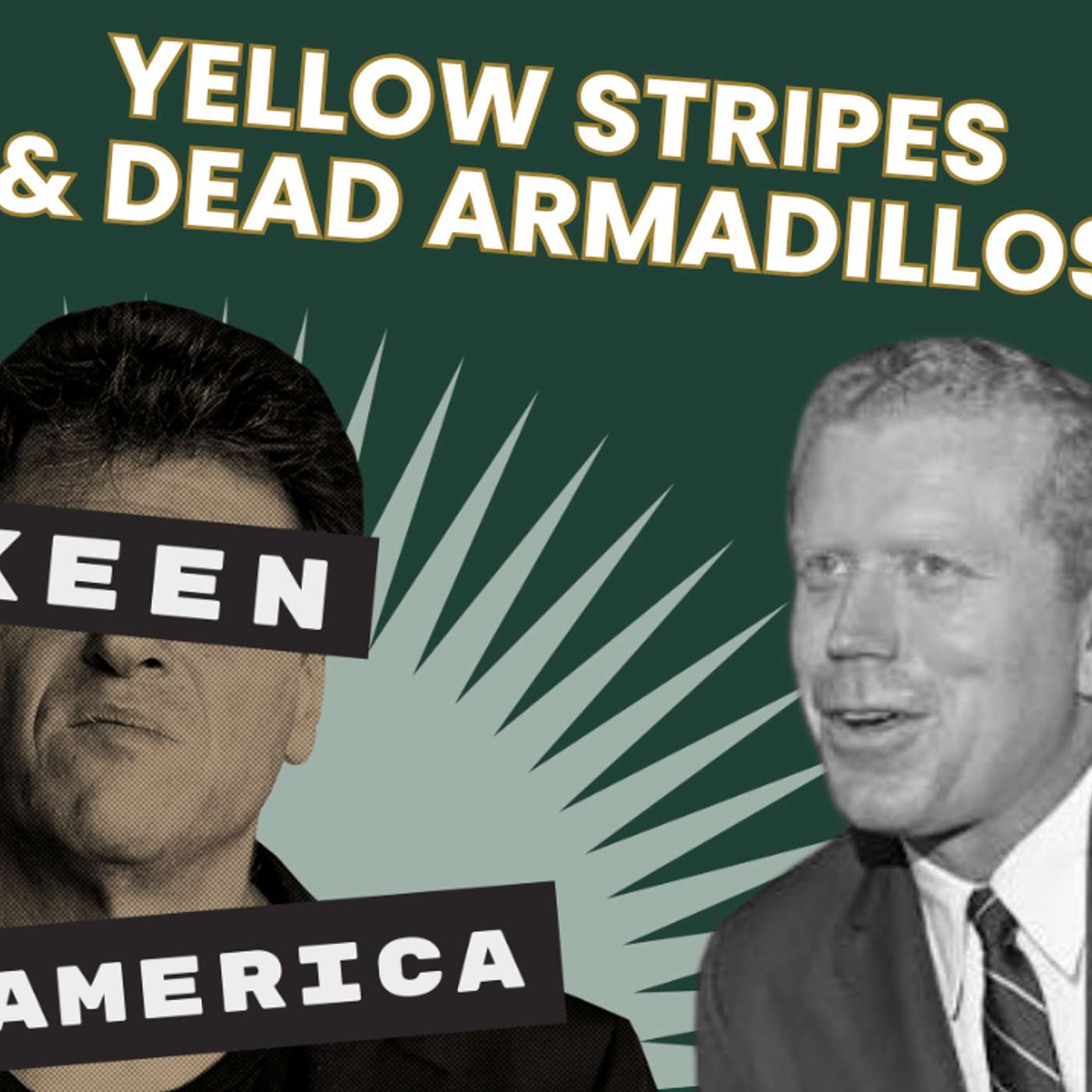


“I could not get under oath and swear that I know exactly how Kennedy died in Dallas.” — Ben Barnes, who helped advance JFK’s fatal Texas trip
In Texas, there’s nothing in the middle of the road, Jim Hightower famously quipped, but yellow stripes and dead armadillos. But Ben Barnes has spent seven decades disproving him. Elected as a Democratic moderate to the Texas legislature at 21, Speaker of the Texas House at 26, and lieutenant governor at 30, Barnes was LBJ’s premier protégé and has known every president from Kennedy to Trump. Now 87, he has distilled all his centrist wisdom into Get It Done: Seven Decades of Lessons from a Political Legend.
Get It Done is more than just a Texan story. Barnes spent six weeks advancing JFK’s fatal 1963 Dallas trip and breakfasted with the president in Fort Worth on the morning of the assassination. He confesses that the Warren Commission “did not get it entirely correct” and notes that the experienced hunter John Connally, who rode in the Presidential limo, always insisted there were four shots, not three.
Then there’s the equally historic scene at the White House on the day LBJ signed the 1965 Voting Rights Act. Pen in hand, Johnson looked a dozen young Southern Democrats — Barnes among them — straight in the eye and told them he’d just signed away Dixie. “What I’m doing today is probably going to turn the South Republican for thirty or forty years,” LBJ confessed with astonishing prescience.
The dirty trickster Richard Nixon, meanwhile, ended Barnes’ electoral career. You can hear it on the tapes — Nixon ordering his attorney general, John Mitchell, to “get something on Barnes” before the Texas Democrat got to be governor. Years later, fresh from prison, Mitchell invited Barnes to lunch, apologized over a bowl of spaghetti, then dropped dead on a Washington sidewalk three months later.
Barnes forgave Mitchell. He is less forgiving of the current administration, which he says is hammering the final nail into the coffin of LBJ’s Voting Rights Act. In the recent Texas Senate runoffs, only seven percent of voters showed up. Seven. Barnes remembers, aged three, watching pickup trucks packed with young men rolling toward the recruiting stations the morning after Pearl Harbor. That generation died for the country. This one, the very alive Texan armadillo quipped, could at least vote to protect American democracy.
Five Takeaways
• Four Shots, Not Three — But No Conspiracy. Barnes advanced JFK’s Texas trip and was at the Fort Worth breakfast on the morning of the assassination. The Warren Commission, he believes, did not get it entirely correct: Connally, a hunter, swore the single-bullet ricochet was a physical impossibility and always counted four shots. Yet Barnes dismantles the grand-plot theories with logistics — Oswald started at the Book Depository thirty days before a motorcade route that wasn’t fixed until six days prior, so he could not have known the president would pass. Ted Kennedy assured him before his death that nothing of importance remains unreleased in the files. Sixty years of phone calls from theorists later, Barnes will not swear under oath that he knows how Kennedy died.
• The Hostility Began in Los Angeles. The LBJ–Bobby Kennedy feud, in Barnes’s telling, started at the 1960 convention, when Bobby went to Johnson’s hotel room to talk him out of accepting the vice presidency his brother had just offered. The wound never healed — not through the vice presidency, not through the White House years with Bobby as attorney general. The counter-example was Ted Kennedy, who voted for the civil rights bills, kept a genuine affection for Johnson, and told Barnes three weeks before his own death what a great president LBJ had been.
• “This Will Turn the South Republican.” On the day he signed the Voting Rights Act, Johnson looked a dozen young Southern officeholders — Barnes among them — in the eye and told them the bill would probably turn the South Republican for thirty or forty years, and that they would have to work and tell the story over and over again. The prophecy held: Texas, Barnes says, is now the reddest state in America. And the administration’s new voting legislation, he warns, would be the final nail in the coffin of Johnson’s greatest achievement — making it harder for everyone to vote, and hardest of all for minorities.
• “Get Something on Barnes”: Nixon’s Vendetta and Mitchell’s Spaghetti. Furious that Barnes had helped Humphrey carry Texas in 1968 — and alarmed that he was outpolling every Democrat in the state — Nixon told John Mitchell to go to Texas and manufacture a scandal before Barnes reached the governor’s mansion. It’s on the tapes, and Barnes keeps copies. His electoral career ended. Years later, out of prison, Mitchell asked him to lunch, apologized over a bowl of spaghetti — “I had time to think in prison” — and died on a Washington sidewalk three months later. Barnes forgave him. The tactics, he notes, are back in fashion.
• Seven Percent. Trump, Barnes says, never prepared himself for the presidency — no student of history, bored by his intelligence briefings, and surrounded this term by a team without depth. American prestige is dwindling; NATO is non-negotiable; when America coughs, the world catches pneumonia. At home, racism has resurfaced and women’s promotions to the military’s top ranks are reportedly frozen. But his sharpest alarm is the emptiest statistic: seven percent turnout in the recent Texas Senate runoffs. The man who watched pickup trucks of volunteers roll toward the recruiting stations after Pearl Harbor asks only that this generation get involved — before the Republic runs out of birthdays.
About the Guest
Ben Barnes was elected to the Texas legislature at 21, became the youngest Speaker of the Texas House at 26, and the youngest lieutenant governor in Texas history at 30. LBJ’s “premier protégé,” he has spent the subsequent decades as a consultant, fundraiser, and Democratic power broker, helped establish the LBJ School of Public Affairs, and is founder and CEO of the Ben Barnes Group in Austin. His new book, written with David Ritz, is Get It Done: Seven Decades of Lessons from a Political Legend (Grand Central Publishing, July 14, 2026).
References:
• Get It Done: Seven Decades of Lessons from a Political Legend by Ben Barnes with David Ritz (Grand Central Publishing, July 14, 2026). Doris Kearns Goodwin: “When a gifted storyteller has a great story to tell, the result is magic.”
• The Warren Commission — the 1964 report whose three-shot conclusion John Connally, a hunter who was wounded in the motorcade, never accepted.
• Jim Hightower — the Texas populist who actually coined “nothing in the middle of the road but yellow stripes and dead armadillos,” a line usually credited to Ann Richards.
...00:31 - Introduction: yellow stripes and dead armadillos
02:02 - Hightower, the left, and one-party Texas
03:14 - Seven decades a Democrat
05:13 - Advancing JFK’s fatal Texas trip
06:48 - What’s your theory? Four shots, not three
11:30 - What does Dallas teach us?
14:17 - LBJ and the Warren Commission
16:27 - The truth serum question: Hoover and the CIA
18:06 - LBJ and the Kennedys
18:42 - The hostility began in Los Angeles
21:36 - Get It Done: LBJ, man of the Senate
23:56 - The South and civil rights
25:29 - Bullying Humphrey?
26:10 - The last sixty days of ’68 — and the case for ego
30:02 - Nixon: terrible president?
31:08 - “Get something on Barnes”: the tapes
32:06 - Watergate, Mitchell’s apology, a bowl of spaghetti
34:13 - Ann Richards and George W. Bush
35:46 - Cheney, Iraq, and Connally’s 1980 warning
37:27 - Is Trump different?
40:49 - Can Texas turn? The Alamo question
41:30 - LBJ’s prophecy: “This will turn the South Republican”
43:26 - Talarico’s chances
43:55 - Jim Crow’s return? Racism resurfaced
47:04 - Why public service? The seven percent problem
51:42 - Thanks and goodbye
00:00:31 Andrew Keen: Hello, everybody. I have to admit that my famous political remark, American political remark, comes from Texas. Everyone had associated it with Ann Richards. So, though, apparently, it was originally made by Jim Hightower. It says that, there is nothing in the middle of the road but yellow stripes and dead armadillos, suggesting, of course, that anyone in the middle of politics is gonna get run over in that great state of Texas at least. And I'm thrilled that we have a Texan politician, a man of the center in many ways, Ben Barnes. I'm not gonna give away your age, Ben, but you're certainly older than I am and older than most of our listeners. You've been around Texan politics for fifty or sixty years.
00:01:22 Ben Barnes: I may be older than everybody.
00:01:24 Andrew Keen: You're older than everyone, but, certainly, you have a beautiful voice, and you're wiser than everyone too. And, you put all that wisdom into a new book. Get It Done: Seven Decades of Lessons from a Political Legend, which is, of course, Ben Barnes. He's talking to us from Nantucket. Normally lives in Austin, but it's a bit sticky there. Ben, congratulations on the book and the life. What about that, Jim Hightower phrase about there being nothing in the middle of the road but yellow stripes and dead armadillos? Have you survived for seven decades, Ben, by being in the middle of the road?
00:02:02 Ben Barnes: Well, that's, was a very, articulate phrase that my friend, Jim Hightower, came up with. And you gotta remember that was in an era in Texas politics when we didn't have anyone but Democrats in office. We had, different shades of Democrats. But while I presided, I served as speaker of the house and lieutenant governor, so I presided over both legislative body. And out of the 31 senators, there were one Republican. And out of the 150 house members, there were three Republicans. So the Republicans were very, very minority party, and so it was really the Democratic party. But, Jim Hightower represented the left side of the party in Texas, and he, campaigned and lived, on the left side of the center line. And, that was a great phrase when he was trying to solicit people to join, him and his movement. It's a lot like the movement now of the democratic socialist. He Jim was a good public servant and a good man, but he was, he was much further to the left than the Democratic Party in Texas was at that time.
00:03:14 Andrew Keen: So what are your politics, Ben, over these seven decades? Have they remained consistent, or can they only be understood in Texan terms rather than national terms?
00:03:27 Ben Barnes: I have, remained a Democrat, and I'm one of the few people that, that had was friends with a lot of the people that were very prominent Democrats in Texas. People like president Lyndon Johnson, vice president John Garner, people like, Sam Rayburn, and the Texas delegation that had so much power in Texas.
00:03:49 Andrew Keen: John Connally, of course.
00:03:51 Ben Barnes: Then John Connally. John Connally switched parties. Lyndon Johnson never switched parties. And I remained a Democrat, and I have supported the party, through the years. I have done it with some enthusiasm, and sometimes more enthusiasm depending on the person. I raised, money in the southwestern part of the United States for John Kerry and was very active in his campaign. Of course, the first campaign I ever worked in was the Kennedy Johnson campaign, and I campaigned very hard for senator Kennedy and senator Johnson. And that was my first entry into politics. I got elected to our state legislature when I was a freshman in law school. So I was just 21 years old when I went to the state legislature. And then I was elected speaker when I was 26 and lieutenant governor when I was 30. So I've spent a lot of time, in the early part of my life and, being very, very active in politics. I've still remained active, but I have had a lot of other things that has taken up my time, including serving on the Johnson Library Board and helping put together the public policy school, the Lyndon Johnson Public Policy School that has campuses in at the University of Texas in Austin and in Washington. And, I'm very proud of that school, and I've actually done some teaching at that school, and I've enjoyed all of that tremendously.
00:05:13 Andrew Keen: Ben, you, talking about Kennedy, John F. Kennedy, of course, assassinated in Dallas. Were you there?
00:05:23 Ben Barnes: I was in Austin. I was I helped advance that trip of Kennedy president Kennedy's trip to Texas. I spent six weeks working with the advance team from the White House, and I had gone on that route many times or having rehearsals of what was gonna happen when the president came. But I went as far as Fort Worth. I was at the breakfast that morning, before president Kennedy went to Dallas. I caught a plane, after Kennedy and Johnson left Dallas and went to Austin because Austin was the big gala the night that president Kennedy was killed. That was our main fundraising dinner, and that's what Kennedy came to Texas for. That was the real purpose of the trip to raise money because he not gotten any money out of Texas in 1960 because his agreement with president Johnson, and Johnson accepting the vice president. The Johnson said all the money that we raised in Texas needs to stay in Texas. We're gonna carry Texas. If we don't carry LBJ. Right? And president Johnson said and he was correct. We're gonna have to have all the money in Texas because Kennedy and Johnson, even with Johnson on the ticket, only carried Texas by 40,000 votes. So it was a close race, and the money was needed. But in 1964, it wasn't gonna be that close race. And Kennedy wanted some money out of Texas to spend nationally, and we were happy to provide that.
00:06:48 Andrew Keen: So what's your theory, then on the assassination? Of course, many conspiracy theories, many films, books have been written about it. Your friend John Connally was in the car, was wounded. Was there just one shooter? What's your theory?
00:07:03 Ben Barnes: Well, as I say in my new book, Get It Done, I have a chapter on the assassination. I believe the Warren Commission did not get it entirely correct. John Connally was a hunter and knew a great deal about rifles. And he always disagreed with the Warren Commission that there were not three shots, but there were four shots. And because the Warren Commission came to the conclusion that the shot that hit president Kennedy in the back of the head then ricocheted and hit John Connally in his lungs. And Connally was sitting in the front of the car and as you can see on your screen, and Kennedy was sitting in the back of the car. And, Connally says it was a physical impossibility with that shot to hit Kennedy and then ricochet over and hit him. So he said there was not three shots. There were four. The warning commission all agreed there were three shots. Now there's the theory about there being another shooter coming from a different direction. I don't think that'll ever be answered. I don't think it'll ever be proven and, well, I can't still people call me and write me, even, after this assassinations has been behind us for fifty years, still with different theories. And there's a theory and there's a film that were taken that shows, some smoke coming up, not out of the book center, but out of the, but out of the grassy knoll that was next to the railroad track that Kennedy and Connick were going under. So I think as John Wilkes Booth, theory of being Booth having some help and there's still many questions raised about Lincoln's assassination, I think there'll still be questions raised about Kennedy assassination. And I don't do not believe that there's anything in the files that have not been released that are of great importance. I was a friend of Ted Kennedy and Kennedy wanted to make certain before he died when he found out he had cancer that the public had an opportunity to know everything that was in that file. And senator Kennedy felt like that everything that was in there had been made public, and he wanted that done. And I believe that, that Lee Harvey Oswald was, had some mental problems and I'm sure he had a hatred for Kennedy. But, Lee Harvey Oswald went to work thirty days prior to the assassination at the School Book Depository in Dallas. Well, now everybody said, well, he went to work there because the cars were gonna come by there and he'd have a shot at the present. Well, that's not what was planned. We changed the parade. We weren't even gonna have a parade in Dallas because we didn't have enough time. At the last minute, we decided to have a parade. And, our senior senator from Texas, then Ralph Yarborough argued for a parade. He said, John Kennedy should not come to Dallas and not be seen by the public. Well, Yarborough won that argument and we were gonna have a parade route. But we were going out to the state fair, which is a, the official, grounds of the state fair in Texas and have a, a luncheon in the Women's Building there. And there are two thousand people could stand in the back of the room and see Kennedy and that's what we wanted, but we did. But we ran out of time in the stand ball [unclear]. We could not get, Kennedy from Fort Worth to Dallas, do the motorcade, go out all the way to the state fair, and then come back and get him on a plane and get him to Austin where he had three functions. He had two receptions and then he had the dinner. So we ran out of time. And so we moved the luncheon in Dallas to very to a venue very close to Love Field. And so we changed the parade route, but we did so and that happened six days prior to the motorcade going by the School Book Depository. Well, Oswald had gone to work there thirty days, not six days. He had no way to know. And those of us that were working on the route and working on where Kennedy was gonna go in Dallas, we didn't have any idea that he was going that route until six days prior to the parade. So by and large
00:11:30 Andrew Keen: all teach you, Ben? You've written this book about your seven decades in political life. What does it teach you, the, the Kennedy assassination in Dallas? Does it teach you that history is arbitrary, that someone is in charge, that things just happen? I mean, you mentioned the Warren Commission. You're suspicious of it. A lot of people are, including Bobby Kennedy, of course, who was attorney general and took his own secrets of this to the grave. But what is the Kennedy tragedy tell us? And what does it tell us about America given, the impact still of this assassination seventy years later?
00:12:16 Ben Barnes: Well, I lived in the and served in the sixties, and that and the decade of the sixties was a terrible decade, in America as far as violence is concerned. Vietnam was going on and we were having a lot of chaos and a lot of demonstrations, a lot of destruction of property and destruction of life in this country. And you remember that not only president Kennedy was assassinated in the sixties, but Bobby Kennedy was assassinated and Martin Luther King were assassinated. And there were theories about all three of those deaths that, that the young man that shot Robert Kennedy in the, in the kitchen of the hotel in Los Angeles. There's still been questions raised about how he did that. And, of course, the, there was a confession of the person that killed King and Memphis. And so that's the only killer that we got a real confession from. But even as much as I had to do with and as much as I was present, you got to understand that all of this was happening so fast that and we, I was with Bill Moyers, Johnson's press secretary having lunch in Austin. He I had landed coming back from Fort Worth and we were having lunch. And there was a I cannot really explain the confusion to you. The first phone call I got, it said that governor Connally was dead and president Kennedy was still alive. Well, that came from the secret service and the department of voting Safety in our state. Well, they got even the assassination and who'd been hit worse, mixed up. There's a lot of confusion. I can't explain to you and I can't explain for history, that I know exactly what happened or that I'm not, I'm not certain. I could not get under oath and swear that I know exactly how Kennedy died in Dallas.
00:14:17 Andrew Keen: What about LBJ? What you knew him pretty well. What was his theory, dude?
00:14:24 Ben Barnes: Well, his theory was that, he wanted it was a terrible time for Johnson to have to take over and to be sworn in as president after such a tragedy had happened in his home state. And what LBJ wanted, he wanted the facts out as quick as it could happen And let's find out who fired the shots and that person be put to trial. And he wanted to go wanted America to go on with our life and wanted the government to go ahead and function and work. And so he was, he was in a hurry, not in a hurry to cover things up. He wanted the he wanted the truth, but he had a tremendous responsibility, to make sure the American people knew who fired the shots. But also, he had a tremendous responsibility of trying to bring the country back together and to be president of the United States. And Johnson, I've talked to president Johnson. Johnson, had no, he had no choice but to accept the Warren Commission report. It was his commission he'd appointed. Earl Warren was from California, was chief justice of the Supreme Court. He did not wanna serve as on the commission, and Johnson pleaded and begged him to do it. And finally, Johnson just announced that he was chairman of the Warren Commission. Warren was not a political ally, Johnson, and he was very respected particularly by the more liberal Americans. And so he was a good selection because everybody had faith in Earl Warren's integrity, and he was not as suspicious upon he as chairman of that commission. But Johnson wanted that commission to find out the truth, but to find it out as quick as possible. And that's the reason he gave them all the resources of the secret service and the FBI and our foreign diplomatic, spy agency. All that federal agencies were turned their attention and time and their budget stored trying to find out what happened.
00:16:27 Andrew Keen: Ben, if there is such a if there was or there is such a thing as a truth drug and we could give it to a single individual, who would we give it to actually figure out what happened in Dallas on that day? Might it be J. Edgar Hoover, Bobby Kennedy? I would
00:16:42 Ben Barnes: I would certainly give J. Edgar Hoover, and I would also give the CIA. The CIA became very, very disillusioned with Jack Kennedy over the invasion of Cuba and the Bay of Pigs. They felt like they had a commitment from Jack Kennedy and Bobby Kennedy that they were going to send in airport planes and an air force strength, to aid that invasion. And then when, they sensed that when the Kennedy administration sensed that it wasn't going to go with like they thought it would, they did not provide the air support. And there was a lot of disenchantment and I heard this from different CIA agents, not that they were aiming to complain to me because they didn't think they do it. They didn't make that do any good. And I certainly didn't have the influence to do it. But I've heard, several horror stories about the invasion of Cuba and the Bay of Pigs and what an embarrassment that was to the, United States. Of course, that precipitated Khrushchev providing those, nuclear weapons for and base those rockets on Cuba, and we had to go through all that crisis. That was probably the greatest test of Jack Kennedy's presidency. But I don't think the CIA ever got over the fact that they didn't have the support and they had to they the CIA was generally embarrassed about the invasion of Cuba and the Bay of Pigs.
00:18:06 Andrew Keen: What's your take on Lyndon Johnson, both, in this conversation. And, of course, I know you write about him extensively in the book. His relations with the Kennedy family were ambivalent. There was a deep seated historic dislike between, of course, LBJ and Bobby Kennedy. Bobby was always opposed to him being made pres vice president. And then once his brother was assassinated, the relations degenerated. They were barely on speaking terms. What's your take on LBJ, Ben?
00:18:42 Ben Barnes: Well, look, you've got to understand that the division and the hostility began, and it may begin a lot earlier than that, but in Los Angeles, Jack Kennedy offered, Lyndon Johnson the vice president again.
00:18:59 Andrew Keen: And that, of course, was it the, what, the 1960 or fifty nine convention?
00:19:05 Ben Barnes: There was a convention in 1960 in California. And then when Bobby Kennedy found out that, it would then be Jack Kennedy offered it to Johnson without talking to Bobby. Well, Bobby actually came to Johnson's room, and I don't know this firsthand, but I've been told this. He came and tried to talk Johnson out of taking the nomination because Robert Kennedy didn't want him to take it. And I think that's sowed ill will between Johnson and, and Bobby Kennedy that continued to exist through Johnson's time as vice president, and then it continued to exist, later with Johnson being president and Kennedy remaining as his attorney general. And I think there was a the entirely different relationship between, some of the Kennedys and Johnson and Bobby Kennedy. I think the president, Jack Kennedy, I saw nothing but friendship and warmth and, and good energy between those two men. And then I campaigned in 1960, Bob, Ted Kennedy. He was a very young man, a little older than me, but he we were both very young then. And we became friends in 1960 and remained friends until Ted's death. And Ted Kennedy had a genuine affection for Lyndon Johnson, and he voted, for the civil rights bills and worked for the civil rights bills and the voting act bill. And he was a genuine supporter of Johnson and believed very strong in the Great Society and went to his grave. I talked to him three weeks before he died. And he again told me what a great president he thought that Lyndon Johnson had been. But Bobby Kennedy and Lyndon Johnson definitely had very serious feelings that were negative, and there were hostility there, and it never changed. And I think that, mister Kennedy, Joe Kennedy, the father of the of all the Kennedy clan, I don't think that he was necessarily a fan of Johnson, but I don't think that he was an enemy either. I never heard any stories about Joe Kennedy being anti Lyndon Johnson. But there are many stories in many instances, and a lot of my friends worked in the White House and were there for the years that Johnson were there. And I've not had a single one, not, reflect on that time that there were serious personal animosity between Johnson and, Bobby Kennedy.
00:21:36 Andrew Keen: It's not really surprising, at least to me, that, Kennedy, Ted Kennedy and LBJ got on. They were both men and of men of the Senate. Your book is entitled Get It Done. It's about getting stuff done, of course, which you've done over the seven decades in politics. Is that might that have also been the title of a book by LBJ, by, Lyndon Baines Johnson, LBJ, about his own life? Was that his great gale [unclear] getting stuff done? I mean, as you know, Tim [unclear]—
00:22:09 Ben Barnes: Well, I realized—
00:22:10 Andrew Keen: —the Great Society. He was a man of the Senate. He understood politics as well as anyone.
00:22:16 Ben Barnes: Well, he did. And I matter of fact, I think, there's there'll always be debate on where Lyndon Johnson belongs, as where he's the best president or he's number 10 or 11 or 15 or 16. And, you know, the historians, around the world and historians here in the United States, put out an annual, rating of who they think was number one to the number 47. And Johnson has continually gone up the list and has been recognized more as a I think he was at fifteenth at one time, and now I think he's a ninth, tenth, or eleventh. They're different ratings. But I think I can say this and repeat what you said. Johnson was a man of the Senate, and I have not made a careful history, historical analysis of all the majority leaders in the Senate. But I truly believe based on what knowledge that I have that Lyndon Johnson was probably one of the greatest, if not the most effective majority leader in the United States Senate. He did get as the title of my book said, it says Get It Done. He did get it done. He was an insatiable worker, and he worked, eighteen hours a day on passing legislation. And I don't think anyone would have ever been able to pass the legislative program that he passed, but he did so much. He created Medicare and Medicaid. He created EPA, clean water and air. He created public broadcasting and television and radio. He passed the civil rights bill, the voting rights bill, the fair housing bill.
00:23:56 Andrew Keen: Right. And, a lot of that stuff, obviously, as someone from the South, which was I mean, whether or not this Texas is really the South is, of course, another conversation. But certainly, coming from LBJ and his associations with the South added to the story, the political story of all this.
00:24:15 Ben Barnes: Well, it really did. And it's really, people are being reminded of that now and people are talking about it because I think this current administration has gone way out of it, of anything to support, Johnson's civil rights and voting rights bill. And the voting right bill that the president is now holding, Congress's feet to the fire to provide a pass and talking about, the, elections not being fair, not being honest. I think if that bill passes, that will be one of the final nails in the coffin of Johnson's voting right bill and minorities, no matter what anybody says about that legislation, it will make it harder for everyone to vote, but it's gonna make it particularly harder for minorities to vote. And I think that's what this administration wants and certainly not what Johnson and Everett Dirksen helped him with the majority of the Republican leader in the Senate. They did an incredible job passing the voting rights bill in 1965, and it will be a real step backwards and a bad day in America if that voting rights bill passed.
00:25:29 Andrew Keen: I wanna come to that later. I wanna get your wisdom, Ben, on Trump and the current administration. But before we get there, LBJ was also a very bullying character. I don't know whether you saw that side of him. I know you write about Hubert Humphrey in the book as well, his vice president who was bullied. Did you see that side of him and the way he treated Humphrey in particular?
00:25:55 Ben Barnes: Well, I saw Johnson, at his, his best party with Humphrey because, I was running for lieutenant governor in 1968. That was the was
00:26:08 Andrew Keen: the number two position in Texas. Right?
00:26:10 Ben Barnes: Yeah. And that was, and Hubert Humphrey was running for president. Well, Hubert Humphrey did not defend Vietnam, as strongly as Johnson wanted him to. And there were there was some ill feelings about that. But the last sixty days of that campaign, and I was working in that campaign, I didn't have a real tough opponent. And I won by 700,000 more votes than anybody on the Democratic ticket. So I had time and I was helping Humphrey. But the last sixty days, I saw Lyndon Johnson turn and do everything he could to help Humphrey and to campaign like he was campaigning for himself. And I saw his genuine feelings for Humphrey. Johnson had a very strong personal feeling for Muriel and Hubert Humphrey and cared for them a lot. And he was, he was almost as excited as, he was when he carried Texas, when Hubert Humphrey actually carried Texas by a few more votes than Johnson and Kennedy had carried. So but, you know, it's very interesting, and you, a student of history, Andrew, but you might you can really charge almost any president of the United States, certainly during my lifetime, with not paying enough attention to the vice president or not letting the vice president have enough say or not make sure the resident the president has a vice president has a role now. Now Obama changed that a little bit with Biden and I think Trump has changed a little bit with Vance. But, you know, the he, Lyndon Johnson told me this story that when World War two, when the atomic bombs were developed, you know, Truman, did not know that we had those weapons when Roosevelt died. And he had to be briefed, before he could make the decision of exactly what an atomic bomb was. Well, that I would consider that, not very good communication with the vice president. But I have heard criticism of how that, Nixon ignored Agnew, and I've heard how that, Kennedy ignored Johnson. Then and it's almost every single, story of an administration. There's always some rumors, that the vice president does not have enough authority or the vice president being treated badly by the president. And I think that's just part of the game. And it happens between the governor and the lieutenant governor in a lot of states. And in Texas, statutorily that our lead office of lieutenant governor has more power than the governor has. And as a result, almost every single governor and lieutenant governor don't get along as good as they should because the governor's mad because the lieutenant governor has so much power in Texas. So it is a fight over power and personalities. And to be successful in politics, people, are very critical of politicians for having egos and being egomaniacs and, and not paying attention to anybody but themselves and being self-centered. I say that after looking at the at this world for the many decades I have that, an ego is part of being a good leader in politics. If you didn't have some ego, you wouldn't go do all the things that you have to do and travel and work it hard and put in eighteen, nineteen, twenty hour days, if you didn't have a gigantic ego. And I so I have in my mind, I've always begun to more and more, think it's a positive rather than a negative if a president has a large ego and he, and he doesn't necessarily share the credit that a lot of people deserve that helped that president be successful.
00:30:02 Andrew Keen: Yeah. And certainly, LBJ had an ego. And you mentioned Nixon. He had an ego too. He was the vice president, in the Eisenhower administration, then, of course, defeated Hubert Humphrey in the nineteen sixty eight presidential election. I know you knew Nixon, and you write about him, in the new book, Get It Done. In a way, Nixon got stuff done. Although, of course, perhaps in some ways, he got too much stuff done. What are your memories? What are the lessons of Nixon? He you mentioned when it comes to polls of historians of former American presidents, he usually turns up at the bottom or maybe not quite at the bottom anymore, but, certainly close to the bottom. Was he a terrible president?
00:30:51 Ben Barnes: Well, you know, you've got to judge Nixon, and I guess I've got more personal feelings about Nixon than anyone because he really tried to bring an end of my political career and he anyway and he was successful. And he used the
00:31:05 Andrew Keen: How? How, Ben? Explain.
00:31:08 Ben Barnes: Well, what he did, he told his attorney general John Mitchell, because I was running in the polls in '68. I was running ahead of both of the senators we had in Texas by 12 or 15 points, and I was running winning the governor's race by 18 points. And so he I and I had helped Humphrey carry Texas, and that made Nixon very mad because he thought he would that he should carry Texas. And it was a big surprise to everyone that he didn't carry. But he told John Mitchell and this all came out of the Nixon tapes. I have the tapes in my possession where he told his attorney general to go to Texas and get something on Barnes. We've gotta embarrass him and we gotta create a scandal down there because we gotta get rid of him right now because if he gets a hold of the governor's office then, Texas will stay democratic. And we'll have trouble in '72 when they won for reelection. So And
00:32:02 Andrew Keen: then both Mitchell eventually went to jail, not for that.
00:32:06 Ben Barnes: But nobody well, but no. He did not for that, but he went to jail for using, the power of his office, to punish his enemies and also the power of his office to do things that were illegal under the election laws of the United States and like breaking into the democratic headquarters and trying to get all he thought he had they had a lot of secrets there. But, you know, Nixon's own party finally after the Watergate hearings and was made public. You know, Howard Baker was the Republican leader in the Senate and he and Everett Dirksen and a group of people Barry Goldwater, but a group of very prominent Republicans went to the White House and told Nixon if he didn't resign, they were gonna vote to impeach him. And he was gonna be the first president to ever be, being impeached and thrown out of office and then that's when he resigned. But so Nixon, similar to this administration, Nixon tried and did abuse the laws of the United States, as a power grab and to stay in power more so than until this recent situation we've had. And it was after John Mitchell served three years in the penitentiary that he called me and asked me to go to lunch. And I was overwhelmed at the why he wanted to have lunch with me. And we sit down and had a bowl of spaghetti in Washington, DC. And John Mitchell said, Ben, I wanna tell you I'm I had time to think in prison about some of the things I did. And he said, I'm sorry about what happened to you because, you're a good man and I'm sorry at the role I played and I hope you'll forgive me. And I told him I would forgive him and, and then three months later, he fell over on the sidewalk in Washington and died. But I'm glad the attorney general, I got to have that, conversation. But he and Nixon both, I went to the White House to see him and they swore up and down that they were having nothing to do with what was happening to me in Texas. Of course, I knew they were having everything to do. But we're seeing a lot of these same tactics now used in this, administration and it's very, very unhealthy and it's
00:34:13 Andrew Keen: put it mildly. And I wanna come to this administration. Before we get there, I mentioned earlier that, I got Ann Richards wrong, a remarkable woman. She didn't do that armadillo comment, but she made some very funny comments about George W. Bush, of course, the forty third US president. Now people look at him a little more positively, particularly, I think, in the light of Trump. Was Richards right, Ben, to be so critical of, of GW Bush? Was he a man of remarkable privilege and little ability in your view?
00:34:55 Ben Barnes: Well, I know. I think this. Of course, he had a good family background, and he got went to the right schools and had the right, opportunities presented to him in his life. But his dad was a, was a disciplined guy and a pretty good guy. You'd like to go fishing or hunting with him.
00:35:19 Andrew Keen: And this was the elder George Bush, of course, who was Connecticut George Bush rather than Texas George Bush.
00:35:26 Ben Barnes: Yes. And but George Bush too, it was a he was a smarter guy that people gave him credit for. He, I think he now there's a situation where a vice president had a tremendous amount of, of power in an administration. As a matter of fact
00:35:44 Andrew Keen: You mean Cheney?
00:35:46 Ben Barnes: Cheney. And I think Cheney made some mistakes and gave George Bush some bad advice that he took it. I think the invasion of Iraq and Afghanistan was a mistake after 9/11, and I think it hurt the United States. And I think our invasion of those countries probably have added to our misery and our woes now in the Middle East because we, I didn't think the Middle East could be, really fouled up any worse than it was. But I think that President Trump has changed my mind. I think, but right now we're, we have a lower prestige in the Middle East as far as the leader of the free world and we've made some very bad mistakes. And John Connally warned Richard—warned Ronald Reagan and did a national television program in 1980, which he said that, that if we didn't, do something about Iran that with that, that we were gonna be in real trouble and their control of the Straits of Hormuz will go are gonna cause, we're gonna cause world problems and that little narrow waterway there could cause the United States and its allies to suffer very serious problems in addition to energy problems and call and someday calls a world recession because of the price of oil. And I believe John Connally, in 1980 made those statements and did a national television program because he had was running for the Republican nomination in which he told this very story. And, when what he, predicted forty five years ago is, hey, it's happening right now because Right.
00:37:27 Andrew Keen: So, I know you're trumping at the bit, Ben, to talk about Trump, and all these characters. You've known them. You've been in national politics now or Texan politics for seven decades, and that's the point of your new book, Get It Done. It's a memoir. It's a autobiography. Is Trump different? I mean, you indicated that he's trying to reverse a lot of, LBJ's legislation, the Voting Rights Act, maybe even some of the civil rights stuff. Have we seen Trump before? You mentioned that Connally warned us about the Middle East back in the eighties. It's a Yeah. Familiar warning about American overreach, of course, extending to Vietnam too. Is what Trump is doing you've been in national politics now for seven decades. Is it surprising you, or is he just resurrecting old ghosts?
00:38:26 Ben Barnes: No. It surprises me. I don't think Donald Trump, had prepared himself, to be the president of the United States. I don't think Donald Trump is a student of history, and I don't think that he and the press had written numerous times about him not paying attention to, his national defense briefings that the president gets every day, and he acted bored and looked out the window sometime when people were trying to tell him what was happening around the world. I and I don't and I've not heard from Trump's very good friends that the president has read a lot of books. And I think that, maybe in his first term, he surrounded himself with some people that were more knowledgeable in foreign policy than he has the second term. And I think that, there is a real, lack of depth in the team that's around the president right now and is giving him the advice. Well, Marco Rubio or the secretary of state is a bright guy, but his secretary of defense or secretary of war, as you call him, has had very little experience. He was a journalist at, at Fox News. I just feel very uncomfortable about who are the people that are in the situation room when the president Trump is making the decisions now that are that's affecting. It's not affecting the 50 states of the United States of America. It's affecting the world. And, you know, when we cough and get sick, well, you know, the world kinda gets pneumonia now whether we like it or not. And I think that's what's happening. And we have seen we've seen America's prestige dwindle, in the last decade, tremendously. And I'm very, very concerned about it. I'm very, well, I think we have to be a member of NATO. I think we have to work with other nations. I don't think we can run the world. I don't think we have the assets and the resources. We don't have the monetary resources, and we don't even have we don't have the human resources and the intellectual resources to be the root of this world. We've got to have friends and work with them and build alliances and count on our allies as much as we count on ourselves.
00:40:49 Andrew Keen: To borrow a Texan metaphor, can Texas become the United States' Alamo in the sense that, that you've over your seven decades in politics, you've seen this sharp shift to the right when you were involved, when you began, under LBJ. Texas was a Democratic state. You said the other party barely existed. Now it seems in some ways the Democrats barely exist. Can Texas reinvent itself, Ben, and start to recalibrate power in America between Democrats and Republicans?
00:41:30 Ben Barnes: I think Texas set an example for a lot of the other states that turned from blue to red. And that's it wasn't only Texas, it was the South too. And matter of fact, president Johnson said to me and a group of other state officials at the, White House in 1965, the day he signed the, the voting rights bill, he said, now fellas, I want you all to know that and it was a group of young people young leaders there that were already elected in Southern states, and we were having a meeting of southern leaders. And we had gotten invited to the bill signing at the White House, and then we went to up to the capital with doctor King and Johnson to sign it. But Johnson said that day, and he looked us all very, straight in the eye and was very serious. He said, what I'm doing today in signing this bill is probably gonna turn the South Republican. And it's probably and they're probably gonna remain Republican for thirty or forty years. And you guys are just gonna have to work and tell the story over and over again.
00:42:33 Andrew Keen: Yeah. Remarkably prescient. The fact you were there is chilling, Ben, in a way. Yeah. Such a prescient and an important remark.
00:42:40 Ben Barnes: Yes. It really was. And all of the southern guys and many of those guys, there were about 12 of us that went over there. And, and I'd say at least 11 or 12 of them, went on to hold higher office and witnessed what has happened in the South. But the South was not part of the, the civil rights bill. When I say not part, there was a certainly maybe 40% of the people, but they were not the majority of the people were not for what Johnson was doing with civil rights and voting rights. And it did turn a lot of people into Republicans and a state Republican. And Texas is there's people talk about red states. I don't think there is really a redder state right now than Texas in the United States.
00:43:26 Andrew Keen: So you don't give Talarico any chance?
00:43:29 Ben Barnes: Yes. I give him a chance. I think he's, I think he's got, I think he's got great mental capacity and understands and makes a very good presentation. I think he's one of the best candidates that's come out of Texas in the last forty years since we became such a Republican state. I think he is one of the best Democratic candidates that the Democratic party has produced.
00:43:55 Andrew Keen: And are there people in the Republican party in your view, Ben, who wanna push America back into Jim Crow?
00:44:02 Ben Barnes: There are. Oh, I—
00:44:04 Andrew Keen: Especially within the African American community who suspect that and that'll be the Southern strategy that Nixon pioneered in response to LBJ's Great Society that it will eventually push the South back to a kind of Jim Crow—
00:44:22 Ben Barnes: Well—
00:44:23 Andrew Keen: —culture?
00:44:24 Ben Barnes: I thought when in the nineteen sixties, and you were correct, I what a fortunate person I was to witness, civil rights and voting rights becoming laws. I really thought that we'd made a lot of progress and it wasn't until the last few years that I under came to understand that there were still a lot of racism and a lot of animosity and a lot of distrust between races, particularly in the South. And it although it might have been dormant during the eighties and nineties, that all of a sudden here it is, it resurfaced during the early decades of this century and racism is alive and well in this country. I'm very concerned about it. I'm concerned about people being told that they can't even have equal opportunity. It's almost like that, that this administration is trying to push back brown and black Americans. And yesterday in the news, there was a report that our secretary of defense is not gonna be promoting any more women to admirals and generals and top officers in our military for the next decade because he, he's arranged the promotion system is gonna be discriminating against women. And I was in office when we passed the first equal rights for women. So it's but I think the story of this administration is not only about black Americans and about civil rights and about voting rights, but it's about all minorities, including women. And I'm just very discouraged that we with the progress we've made, with women and with the multiracial people in this country, it's a sad day. Women are equal to men and women and the decision was made for women to be in the military and to play tremendous roles. We got two new governors that have served in very serious leadership positions in combat. The governor of Virginia and the governor of New Jersey, women have proven themselves on the battlefield to be very able warriors and very able leaders and we're going backwards in that area and I don't think that's good. I've got, three daughters and then I and granddaughters and it worries me about what's gonna happen, with what's happening every day in this country, what's gonna happen in the next decade, to minorities.
00:47:04 Andrew Keen: Finally, Ben, you've left us with this book. It's already out. Get It Done: Seven Decades of Lessons from a Political Legend. In closing, you've led a good life, a civic life, a lot of concern in this country that smart young Americans aren't going into politics. You were and are a smart American. You were young, less young now. What's the argument for Ben living a life of public service that you've led? Why would a kid, maybe your granddaughter or your grandson or friends of your grandkids, why should they go into public life like you? Why wouldn't they wanna go out, make some money, go into tech, or go into law or medicine? What's the value of your life, Ben?
00:47:59 Ben Barnes: Well, as you get a little older and I'm certainly, the one thing I've accomplished in my life is that I've gotten older and still alive. But I must say that, my life in politics was an accident. It happened, I not planned, I not dreamed of being in politics and events happened that pushed me in that direction. But it's so important for my granddaughters and grandsons, but it's so important for young people to get involved. We just had a runoff in Texas, in our United States Senate race, where Talarico was in the Democratic primary runoff and the, the nominate, our attorney general Paxton was in the Republican. And that those races took place sixty days ago. Only 7% of the people voted, 7% not 70%, 7% of the people voted in those runoff. Well, that's the minorities in both parties. Now I'm not talking about race. I'm talking about minority in numbers, electing people and or nominating people to very important, would be positions. And if we don't get a lot more people interested in politics and it takes young people to get people interested in politics, it takes young people with their energy and their enthusiasm and their intelligence. And they're obviously serious minded, vision for America. If they are not in politics or certain percentage of them are, if they're not assuming leadership positions on the school boards, the commissioner courts, the city councils, if we don't have the very best of leaders in our country or very potentially best, if they're not working on politics every day to make certain this country is better, then we may not ever celebrate a 200 [as spoken] birthday, next birthday of this country. And I came to this country believing that we were invincible because I grew up as a bear [as spoken]— I was born, I was three years old when Japan bombed Pearl Harbor. And I saw from my little farming community on that Monday after they bombed Pearl Harbor on Sunday night. I saw pickup loads of young men, standing in the back of pickups because we didn't have enough cars in. But where were they going? They weren't going to the fields to work where they worked every day. They were going to the, to a town called Brownwood and Stephenville, small towns, 20,000 people. But they were going to go join and they were gonna go fight the Germans and the Japanese. They were gonna go fight for this country. And I even though at three years old, I knew something important was happening. And then I saw the men that, come home in their uniforms and they were welcomed home as heroes and as Tom Brokaw said, they were the greatest generation. Well, today, I don't see that patriotism. I don't see it. I don't want us to have to go to World War, I mean World War three to be able to determine, what degree of patriotism and what we care about. But that generation died for this country. The least that this generation of young people can do is get out and get involved and get good men and women running for office. And they must do that. And that's an one of the reasons I wrote this book is I want to make certain that people understand how important our government is to our way of life.
00:51:42 Andrew Keen: Well, there you have it. The legend, Ben Barnes. I'd heard about you, Ben, but this was a real honor to talk to you. The new book is out. Get It Done: Seven Decades of Lessons from a Political Legend, distilled into a few 100 pages. Congratulations, Ben, and continue being a legend and giving our and giving the rest of America your wisdom. I think we still need it, especially these days. Thank you so much.
00:52:11 Ben Barnes: Thank you, Andrew, and thank you for providing a forum for people that, that have messages that, that only encourage people to do better in this country and to do better in the world. But thank you very much for your service and your contribution.