Why Football Saves Our Souls: Brian Bunk on the Collective Beauty of the World’s Most Popular Game
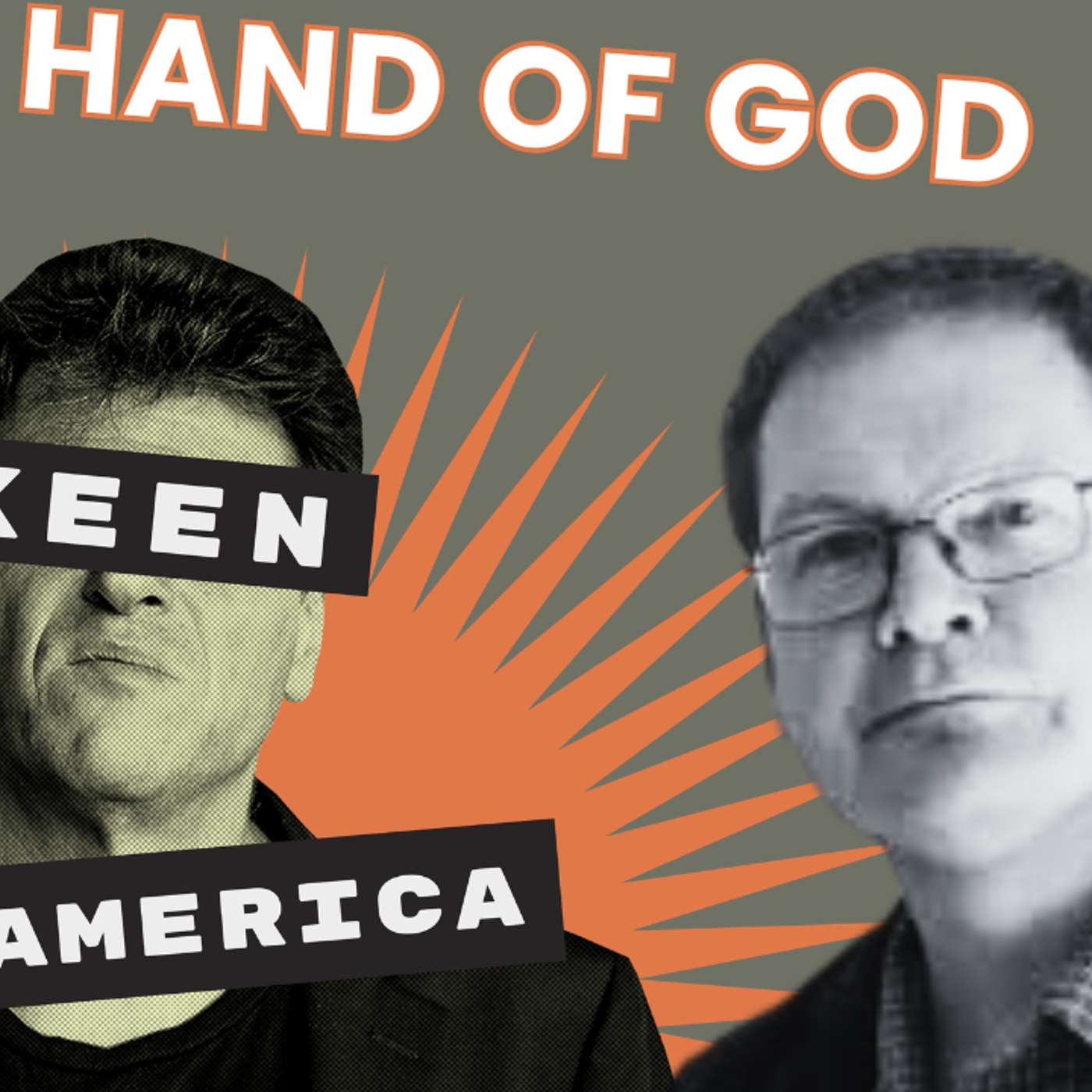


“That kind of put soccer on my radar as a sport. I saw how deeply it meant to people, in a way I didn’t appreciate prior to that. And then I was in London when the World Cup began, and I saw the opening match — Argentina and Cameroon, with Cameroon winning in an upset. Just the whole spectacle of it gave me an appreciation for the game.” — Brian Bunk, on Ireland, Italia ’90, and the moment everything changed
Not long now. Only seven days until the World Cup begins. Just enough time to read Brian D. Bunk’s new The Shortest History of Soccer: From Ancient Kicking Games to the World’s Most Popular Sport. History isn’t Bunk with Brian. He looks a bit like Elton John, which is appropriate given that old Rocket Man was chairman of Watford and bankrolled the tiny English club to almost winning the league. Pop stars like Ed Sheeran (Ipswich) and Robert Plant (Wolves) love football, Bunk notes. Probably because it reminds them of where they came from.
Bunk’s thesis is that soccer’s global dominance is not accidental. Born in the industrial communities of nineteenth-century England, the game gave workers a new identity, new evidence of their collective power, proof they’ll never walk alone. That same logic explains why middle-aged men all over America religiously gather at their local bars to watch English teams with strange names like Ipswich Town and Wolverhampton Wanderers. Such is religion in our globalised post-industrial age.
“Some people think football is a matter of life and death. I don’t like that attitude. I can assure them it is much more serious than that,” the great Liverpool manager Bill Shankly quipped. That’s the shortest of short histories of football. What the working-class Shankly meant was that it gives us social meaning — which is, indeed, more historically significant than the life or death of a single individual. Or even God. Football saves our souls, Brian Bunk concurs with Bill Shankly. Enjoy the World Cup.
Five Takeaways
• Soccer Was Born in Industrial Communities for a Reason: The game emerged in industrial Britain in the second half of the nineteenth century not by accident but because industrialisation had shattered traditional community life. Mass migration to cities, technological disruption, the loss of familiar rhythms — all created a need for new kinds of identity and belonging. Soccer filled that need. It gave factory workers a team to follow, a ground to gather at, a shared identity that transcended ethnic and class lines. Bunk’s argument: this community function is baked into the game itself, which is why it has replicated across every culture it has touched.
• Why Americans Love the Premier League: Bunk identifies the 1990s as the pivotal decade for American soccer. The 1994 World Cup on home soil. The women’s World Cup. The formation of MLS. The arrival of the FIFA video game. The Premier League broadcasting deals with ESPN and Fox. All of these combined and snowballed. Add to that the NFL owners investing in English clubs, the celebrity ownership wave (Ryan Reynolds, Elton John), and the cultural footprint of shows like Ted Lasso and Welcome to Wrexham. The result: a generation of Americans for whom following the Premier League is a primary source of community.
• Maradona: All the Contradictions of Football in One Man: Asked which historical match he would most want to attend, Bunk chooses Mexico City, June 1986: Argentina vs England. Not for the Hand of God goal — which was cheating — but for the second goal, the one where Maradona picked up the ball in his own half, went past five English players, and scored what is generally considered the greatest goal in the history of the game. Bryon Butler’s BBC radio commentary: “turning like a little eel.” Andrew’s verdict: if any single figure captures all the genius, joy, turbulence, and tragedy of football, it is Maradona.
• The World Cup Returns to North America: In seven days, the 2026 FIFA World Cup begins in the United States, Canada, and Mexico — the first time the tournament has returned to North America since the USA hosted in 1994. The timing of Bunk’s book is deliberate. Soccer is more popular in America than at any point in history, and the home World Cup is the event that could push it into the first tier of American sports culture. The Premier League, MLS, women’s soccer, and now the World Cup: the game’s US footprint is larger than it has ever been.
• Andrew’s Game: Tottenham vs Benfica, April 1962: Andrew’s own fantasy match, offered unprompted at the end: the first leg of the 1962 European Cup semi-final between Tottenham Hotspur and Benfica at the Est00e1dio da Luz in Lisbon on March 20, 1962, with Eusebio and Jimmy Greaves on the same pitch. Spurs lost 320131 on the night, went out 420132 on aggregate. Two clear penalties not given. Andrew’s conclusion: had Spurs won that match, the history of European football — and possibly his own life — would have been different. He notes that he has a son, and that he should have called him Jimmy.
About the Guest
Brian D. Bunk is a Senior Lecturer in History at the University of Massachusetts Amherst, where he teaches courses on world history, modern Europe, and the global history of soccer. He is the author of The Shortest History of Soccer: From Ancient Kicking Games to the World’s Most Popular Sport (The Experiment, June 2026), Beyond the Field: How Soccer Built Community in the United States (University of Illinois Press, 2025), and From Football to Soccer: The Early History of the Beautiful Game in the United States (University of Illinois Press, 2021). He lives in Northampton, Massachusetts.
References:
• The Shortest History of Soccer by Brian D. Bunk (The Experiment, June 2026).
• Beyond the Field: How Soccer Built Community in the United States by Brian D. Bunk (University of Illinois Press, 2025).
• Argentina vs England, FIFA World Cup quarter-final, Azteca Stadium, Mexico City, June 22, 1986 — the Hand of God game, referenced as Bunk’s fantasy match.
• Tottenham Hotspur vs Benfica, European Cup semi-final, Estádio da Luz, Lisbon, April 1962 — Andrew’s fantasy match.
About Keen On America
Nobody asks more awkward questions than the Anglo-American writer and filmmaker Andrew Keen. In Keen On America, Andrew brings his pointed Transatlantic wit to making sense of the United States — hosting daily interviews about the history and future of this now venerable Republic. With nearly 2,900 episodes since the show launched on TechCrunch in 2010, Keen On A...
00:31 - Introduction: seven days until the World Cup
01:10 - How do you write the shortest history of soccer?
01:26 - Brian’s origin story: Ireland 1990 and Italia ’90
02:03 - Brian looks like Elton John: pop stars and soccer sidebar
03:11 - What got you into the game?
04:21 - What do you tell the students at UMass about soccer?
05:30 - Why has the Premier League taken off so dramatically in the US?
07:18 - Soccer and community: the longing for belonging
08:48 - Soccer born in industrial communities: identity and anchor
11:35 - Bill Shankly, Sir Alex Ferguson, Bill Nicholson: community managers
20:00 - The World Cup 2026 returns to North America
25:00 - Maradona and the contradictions of the beautiful game
30:00 - Women’s soccer and the evolution of the game
35:00 - The MLS and soccer’s US footprint
40:00 - Brian’s daughter Zoe: not named after Brian Clough
43:15 - The one game you’d want to attend: the Hand of God
44:53 - Maradona captures all the contradictions of football
46:15 - Andrew’s game: Spurs vs Benfica, April 1962
47:50 - Conclusion: congratulations on the book
00:00:31 Andrew Keen: Hello, everybody. It's Thursday, June 4 [date as spoken]. It's only a week. The shortest amount of time, seven days until the World Cup begins, the Football World Cup or what Americans call soccer. And appropriately enough, given that short period of time, we're talking about a new book, The Shortest History of Soccer. It's by my guest, Brian D Bunk, Brian with a d. He is joining us from Northampton in Massachusetts, not Northampton in The United Kingdom. Brian, congratulations on the book. How'd you write a shortest history of soccer? What do you leave out?
00:01:10 Brian Bunk: That's a good question. I left out a lot. I just had to make certain choices, and, you know, other people might have made different choices. But this, you know, it's a big history, and so some things are gonna be left out.
00:01:26 Andrew Keen: How did you get involved? Well, in what people some people call the beautiful game, others now are suggesting is rather ugly. How did you get started? You're an American. I know you're a big fan of Spain. You were an academic teaching Spanish history. Now you teach the history of soccer and football. You've written all sorts of books on it, including a fascinating book called Beyond the How Soccer Built Community in The United States. What got you into the game, the beautiful game, Brian?
00:01:56 Brian Bunk: It might be a bit surprising, but, I never played the game as a child or as a young person. The only
00:02:03 Andrew Keen: And by the way, for people watching this, Brian, you look a lot like Elton John. Are you Elton John in this guy?
00:02:10 Brian Bunk: No. I wish I was.
00:02:11 Andrew Keen: I wish I was. You know, Elton's a big, Elton's a big football fan. He was the chairman of Watford, and, he financed them into the top division. So everyone loves football, Elton John and Brian Bunk.
00:02:25 Brian Bunk: Yeah. There's a little and throughout the book, there are these things called sidebars, and one of them is about pop stars and soccer. So we talk about Elton John, talk about Robert Plant, who's a big fan of Wolverhampton, I think it is.
00:02:39 Andrew Keen: Yeah. Wolverhampton Wanderers who didn't have a very good year this year, unfortunately.
00:02:43 Brian Bunk: No. And then the guy from One Direction who signed a contract with his local club and played in a few games, and Ed Sheeran, of course, who sponsored Ipswich when they were in the Premier League last season.
00:02:58 Andrew Keen: And the Gallaghers who support, Manchester City?
00:03:01 Brian Bunk: Yep.
00:03:03 Andrew Keen: So what so go on. You're a celebrity too. You're Brian Bunk, otherwise known as Elton John. What got you into the game?
00:03:11 Brian Bunk: When I was in college, I spent a semester in Ireland, and it happened to be 1990. And Ireland was in the World Cup, and, you know, the country was ecstatic about this. And the I was a huge fan of the Pogues, an Irish band, and they put out a song with the Dubliners, and I somewhere still have the cassette tape. And that kind of put soccer or football on my radar, I guess, as a sport, and I saw the just, how deeply it meant to people, in a way maybe that I didn't appreciate prior to that. And then later that spring, I was in London, when the World Cup began, the 1990 World Cup in Italy, and I saw the opening match, which was Argentina and Cameroon with Cameroon winning in an upset. And just the whole even seeing it on TV from my hotel room, just the whole spectacle of it really, you know, gave me an appreciation for the game in a way that maybe I hadn't previous to that point.
00:04:12 Andrew Keen: There's a wonderful trilogy of books by Roddy Doyle, and one of them is on that 1990 World Cup. I don't know if you've read them.
00:04:19 Brian Bunk: No. I haven't.
00:04:21 Andrew Keen: So you got into the game, Brian, and you became a teacher of soccer, football, and academic. Mhmm. What do you tell the kids in the classrooms at UMass about soccer, football?
00:04:39 Brian Bunk: Well, we try to trace the history, the origins, where it came from, and then hit on some of the most important players, most important teams, most important competitions. They like to know kind of how we got to where we are now, I think. I tried to do that a little bit in the book where there's a lot of more kind of contemporary references perhaps than one might expect in a history. So I think I found the students really like to know, you know, how did the Premier League get to the point it is now? How did the Champions League get to the point where it is now? How did, you know, women's soccer get to the point where it is now? So that's what I try to do in the book and what I try to do in the classroom as well.
00:05:30 Andrew Keen: The Premier League has done a remarkable job universalizing, globalizing football. Some people see it as in a very positive way, others more critically. Why is the Premier League, in your view, taken off so dramatically in The United States? Always strikes me that a lot of middle aged, lonely American men who somehow find their identity with English football clubs that they can barely point to on a map and have never visited. What is it about the Premier League that makes it so attractive to Americans?
00:06:02 Brian Bunk: That's a good question. I mean, I think the 1990s were sort of a pivotal decade in terms of US saw international soccer, reaching a broader audience. You know, you have the women's World Cup. You have the World Cup in 1994. You have, the formation of MLS, the most successful professional league in US soccer history. You have the introduction of FIFA, the video game, and all of those things. You have the beginnings of the Premier League being broadcast on, ESPN and Fox, sports. And I think it's a combination of all those factors that just kinda snowballed over time, where people began to be able to watch the Premier League maybe in a way that was not necessarily the case for a lot of other European leagues until more recently. So, I think that's part of it. You had the investment by first, by NFL owners and then by other wealthy individuals. And I think that all of those kind of factors really helped to explain why the Premier League especially became popular here.
00:07:18 Andrew Keen: I wonder where it also has to do with this longing for community. As I said, you're you've written a book beyond the field, how soccer built community in The US, which is based on the period between the 1880s and World War one, so more than a century ago. But I wonder whether this longing for community also is a reflection of the popularity, as I said, of the Premier League. I sometimes go to a pub on set on 14th Street in New York to watch Spurs, or I used to, when Harry Kane played for them. Of course, the Spurs fans used to sing One of Our Own about Harry Kane because he grew up in Walthamstow up the road from White Hart Lane. But what's always ironic is in New York, wherever you go to watch Spurs when Kane played, when Kane scored a goal, people would sing he's one of our own, which was particularly ironic since this was being sung in Milan or Munich or New York. What is it about football soccer, Brian, that brings out our longing for belonging? Is it just coincidental, or is there something about the sport itself which brings out these primeval, desires for community, for longing. As I said, you've written this book about soccer building community in The US. It's not the first or the last book to be built to be written about the connection between football and community?
00:08:48 Brian Bunk: I think it probably goes back in some ways to the origins of soccer at the end of the nineteenth and early part of the twentieth century. You do have a time when there was a great deal of, disruption of traditional life. You have the, you know, mass, migration to cities. You have the industrial revolution. You have incredible technological change, happening. And so I think traditional the sort of rhythms of traditional life were disrupted, and that made soccer or soccer became a kind of way of creating a new sense of identity and having a bit of an anchor point, in that kind of new community, especially in an urban environment. And so I think that may be sort of baked into into soccer and helps to explain its popularity across time and across cultures. So I think you're probably on to something when you say that it probably is, you know, something about the popularity of the sport does create that sense of community. I mean, there's a local bar that's about two blocks from my house that is a Spurs. You know, people gather there to watch Spurs every week. And That must be a
00:10:07 Andrew Keen: miserable pub these days, unfortunately.
00:10:11 Brian Bunk: Yeah. Yeah. Well, I mean, they're not relegated, so it could be worse, I guess.
00:10:15 Andrew Keen: Yeah. It could be. It could be West Ham. Yeah. It's interesting. And I wonder and, again, I'm thinking out loud, Brian, whether the most iconic figures in the game, I'm thinking The UK in particular, tend to be people who understand that. The two people who come to mind in particular are the great Liverpool manager, Bill Shankly, and sir Alex Ferguson, both Scots, both, brilliant managers. Shankly also was a good professional. But they understand that the game is really all about the notion of community and fans. The great Spurs manager, Bill Nicholson, as well understood that. He was from Scarborough in Yorkshire, but he understood the enormous rivalry between Tottenham and Arsenal, and he always made that the biggest game of the year independently of how the teams were doing because he always explained to the Spurs side that this was the most important game for the fans. So community is historically central. And, of course, it's a game, as you note in your new book, the shortest history of soccer, which began in the industrial age in communities that were settled in industrial Britain. Of course, it was born in the North in the birthplace of industrialization. Do you agree, Brian? Is that fair?
00:11:35 Brian Bunk: Yeah. I think that's fair.
00:11:38 Andrew Keen: What do you think of, I mean, do you mention the great Shankly or sir Alex Ferguson in the shortest history of soccer in terms of men who understood the value of community of its importance?
00:11:51 Brian Bunk: I don't talk about them in those terms precisely. I have more on, Ferguson than I do on Shankly, I have to admit, talking about the rise of Manchester United in the early years of the Premier League, you know, fueled in part by their relentless merchandising and commercialization. But so it's all part of that kind of process of change that was taking place at the end of the eighties and into the nineties.
00:12:23 Andrew Keen: I wonder whether there's also the history of soccer is also the history of modernity. Of course, in the 1960s, Shankly's Liverpool reinvented the game in England in some senses in a cultural sense, and that was also the moment, of course, where the Beatles were reinventing popular music. Do you see in your shortest history of soccer or in your analysis of soccer a kind of magnified version of modernity and of culture in general? It's not just sport, is it?
00:12:55 Brian Bunk: No. I mean, I think as I mentioned earlier, you know, it is part and parcel of that tremendous change that was taking place over, you know, in the end of the nineteenth and early twentieth century. It's no coincidence that a lot of modern artists in that time, you know, chose football as a subject matter, you know, putting this brand new game or what was relatively a brand new game at that point into, you know, a much more traditional, much more kind of high culture, sort of practice in terms of oil painting in particular and now depicting this new, up and coming sport just like they would railroads or, airplanes or automobiles.
00:13:41 Andrew Keen: Which artist in particular, Brian, are you thinking of?
00:13:45 Brian Bunk: The Italian artist Boccioni has a famous work called dynamism of a soccer player. Malevich, who was a Russian artist, also, has a similar kind of work.
00:13:59 Andrew Keen: Yeah. It's really interesting. Of course, Camus also, Albert Camus, the great French existentialist philosopher, wrote about football, was a goalkeeper himself. So Mhmm. It certainly intrigued mid century, European intellectuals. It may not have been a coincidence that the first World Cups were controversial because of their association with fascism. One of the earliest World Cups were held in Italy, which Mussolini embraced. So there's a kind of modernist element, isn't there, to at least the early history, the early twentieth century history of soccer?
00:14:36 Brian Bunk: Well, I think you were right that it does carry on through. I mean, I write about George Best in the book, and he kind of exemplifies that sort of swinging sixties with the long hair and, you know, the fashion. I think he even opened a men's clothing store. You know, he was known for, womanizing, I guess, we might say today. And, yeah, the general
00:14:59 Andrew Keen: and booze. Yeah. He loved the girls, and he loved the nice drink, which ultimately ruined his life. It's a rather tragic story.
00:15:06 Brian Bunk: Yeah. Yeah. And then I guess too, you could argue in the 1980s when, you know, there is a kind of economic malaise, particularly in England, seventies and eighties, and that's the time when, you know, you get the rise of hooliganism and the stadium catastrophes and the just general sense of gloom surrounding the game. So I think you're right that it does reflect something about the broader culture, at the time.
00:15:34 Andrew Keen: Yeah. So do we, is this the moment to talk about the neoliberal moment, Brian, in the history of soccer? The shift from Bill Shankly and perhaps even sir Alex Ferguson to Heysel and missus Thatcher and Ronald Reagan and the rest. I wonder if it's most summarized in the figure of Cristiano Ronaldo. I know you note in the book that he's the most popular figure on social media, which I'm not sure necessarily reflects well on either him or social media. But is he an example of a atomized globalized age? He seems to be the antithesis of Bill Shankly, even George Best or sir Alex Ferguson, a man who's nowhere and everywhere. He'll play for Portugal, but he doesn't really have much association with that country. No.
00:16:23 Brian Bunk: I think absolutely. I mean, he's in some ways become a brand, and not necessarily, you know, I mean, obviously, he is an incredibly talented footballer, but he's also a brand and a social media figure. And he even kind of has that, you know, with his trimmed hair and his finely tanned, you know, skin and his rock hard abs, he kind of exemplifies a sort of, artificialness, I guess, that perhaps is a mark of our current age or at least the last decade or two.
00:17:00 Andrew Keen: Yeah. I mean, you couldn't call Ronaldo. I mean, his first name would never be Brian, would it? It would never be Brian Ronaldo. It has to be Cristiano. He's not like he's not like the great Brian Clough. I looked up Brian Clough, your namesake, the great English manager, and also a magnificent footballer whose career was tragically cut short by a terrible injury. He looks terribly thin. Not like, as you say, the rock hardness of, I don't know whether that's an erotic reference to, Cristiano Ronaldo. What about the business of the game? The upcoming World Cup is gonna be dominated by all sorts of controversies about Donald Trump and FIFA and Gianni Infantino. Do you see a big shift politically, culturally, economically between those early World Cups, the one that got you hooked in 1990 through to 2028 [as spoken; elsewhere referred to as the 2026 World Cup]?
00:17:59 Brian Bunk: Mhmm. Well, I think the current World Cup is, again, a reflection of our current culture and society where there does seem to be a tremendous emphasis on, you know, making money, as being the most important thing above all else, above community as we were talking about earlier. And I think this World Cup more than maybe any other exemplifies that. Just the relentless, focus on not necessarily on the game, not necessarily on the nations who are participating, certainly not on the fans, but simply on everybody making as much money as possible.
00:18:39 Andrew Keen: Yeah. And, of course, that's borne out with the enormous controversy now about, the pricing. New York and New Jersey are investigating FIFA's ticket pricing. FIFA's been ordered to explain their pricing. To what extent has football become then or soccer or this World Cup at least has become a sport for the 1% for people who can afford hundreds, sometimes or often thousands of dollars. I heard that World Cup tickets World Cup final tickets in New York were going for nearly $1,000,000. To what extent has the history of soccer, your shortest history of soccer, turned full circle from those early working class communities in the North Of England who drove the early popularity of the game to, Trump and Infantino's 2026 World Cup where you need tens, hundreds of thousands of dollars to attend the big
00:19:41 Brian Bunk: games. It is a it's a direct result of the changes that I mentioned beginning in the 1990s with, you know, more of an emphasis on revenues, more of an emphasis on, building a brand, more of an emphasis on merchandising, and it's just sort of escalated and spiraled. And now, you know, many people see the clubs the main goal of the clubs is to make money as a business and not necessarily as a team to win trophies. And I think that's maybe we've reached the sort of logical, end of that cycle that began in the 1990s where, again, the goal seems to be more about making money than it is about winning, you know, matches.
00:20:28 Andrew Keen: Yeah. You mentioned that you're a big fan of the Pogues. I don't suppose that Shane McGowan, who died recently, a very talented Irish musician, would have been particularly keen on the game. Was he ever were the Pogues into football?
00:20:40 Brian Bunk: That's a good question. I don't honestly know. I mean, I they did that song, Jackie's heroes for the 1990 World Cup with the Dubliners, but I don't know if they were, you know, soccer fans, or not.
00:20:57 Andrew Keen: You've written about The United States. You wrote a book also called From Football to Soccer, the early history of the beautiful game in The United States. This is the second time the World Cup has been held in The US. I went to the first one. In fact, went to some games. I was living in Cambridge, Mass at the time, and I went to some games at Foxborough, which were a lot of fun. This year, things are different. You've got an Argentine manager, Mauricio Pochettino, used to be a manager of Spurs. He's promising that your best player or America's best player, Christian Pulisic, is gonna score. Do you think that most Americans are gonna be watching this game as Americans or as globalists? Do most Americans actually care about whether or not America wins? Does it matter?
00:21:46 Brian Bunk: I mean, that's a really good question. I think more Americans will be watching this World Cup than maybe previous World Cups just in part because it is here, and, of course, Canada and Mexico as well. So I do think that probably I would guess that there's gonna be an expanded audience for that. I think there are a lot of fans who care deeply about the US men's national team and whether or not it's successful. I think there's probably, as many, people who maybe don't have as much invested in The US Men's National Team as maybe people in other nations do for their, you know, clubs. But I do think that there'll be much more of an audience this time than there would be than there has been in the past.
00:22:38 Andrew Keen: And yet, Brian, you're one of the official historians of the game in America. You're author of the shortest history of soccer. You teach the history of soccer football at University of Massachusetts, and yet you told me before we went live that you're gonna be rooting for the Spanish. Aren't you a bit of a traitor?
00:22:57 Brian Bunk: Yeah. Well, I think I mentioned earlier that, I mean, I started out as a historian of modern Spain, so I spent a lot of time in Spain. And I, came to really, you know, love the country, the food, especially the people. And so I do have a soft spot for Spain and the Spanish national team, both men and women. The women winning the World Cup a couple of years ago was probably one of the best, that final against England, I'm sorry to say, was probably one of the best, soccer games I've seen, perhaps second only to that 1990 open, World Cup opener that I'm, you know, between Argentina and Cameroon.
00:23:38 Andrew Keen: Didn't see the 86 hand of God go, did you, game between Argentina and England? A lot of people look back at that one and think that was quite a good game. Brian, you mentioned Spain, and I wonder the English like to claim that the game was born in England. Where was it born? Where do you locate it?
00:24:02 Brian Bunk: I mean, it emerges out of folk football traditions in, Great Britain, in England, and Scotland, probably both. And then, you know, gradually, it's written down in 1863 in London, in England, and then it's refined
00:24:19 Andrew Keen: London, I should hope, not South London.
00:24:22 Brian Bunk: Right. And nowhere
00:24:25 Andrew Keen: and nowhere near, Holloway or any of that neighborhood, hopefully.
00:24:30 Brian Bunk: I don't know where the tavern is where they initially met to form the football association. I don't I'm not familiar enough with London geography to say precisely where that is.
00:24:41 Andrew Keen: I suspect it's near White Hart Lane, but that may be a rather biased view of mine. Mhmm. So yeah. So going back to your narrative, Brian, it was theoretically born in The UK, but perhaps more broadly, some of is it the global game? Were they doing the same running around and kicking and fighting in Spain and France and Italy and Germany?
00:25:07 Brian Bunk: I mean, there are in Italy, there was a tradition of a football type game that was played, you know, during the renaissance period, but that has doesn't have much of a real connection to modern soccer. So those whether or not there were folk football traditions in those other nations, not that I'm aware of. So it really does emerge, you know, in The UK in particular, England and Scotland. Again, out of those sort of Shrove Tuesday, matches where dozens or hundreds of people would struggle to, you know, move the ball from one place to another, that's really where the origins of the sport lie is in those traditional games played in England and Scotland.
00:25:55 Andrew Keen: I wonder what it is about Spain that makes it in some ways a second home. My nominee for the greatest player of all time, Johan Cruyff, perhaps culturally and politically as much for his football skills, of course. Began in Ajax, played for Holland, but made a second career in Barcelona. Some of the greatest players in history, Alfredo Di Stefano, Ferenc Puskas played for Real Madrid. What is it about Spain that has made it this second or even alternative home for football, especially at the club level? Ironically enough, up until maybe the 1990s or early two thousands, most Spanish people seemed much more interested in the club their club identities than their national ones. I know there are still Spanish people, especially in, Barcelona or in Catalonia who are not particularly keen on the Spanish side.
00:26:53 Brian Bunk: Mhmm. Yeah. I mean, it comes down to the kind of political and cultural organization of the Peninsula that a lot of Spaniards see themselves primarily as being from their particular region. So that might be a Catalan. It could be Basque. It could be, Gallego. And so, yeah, I would say that, traditionally, support and excitement about the national soccer team was perhaps not as great in Spain as it was in some other countries, and that's a reflection of that the strength of regional identities there. I mean, I think that has changed a little bit, with the success of the of both the women's and the men's teams, more recently. As to why people wanna go there, I mean, the, you know, the weather, the food, you know, the lifestyle is amenable, I guess.
00:27:52 Andrew Keen: DeStefano, of course, was from Argentina. Originally came to Barcelona, and then Real Madrid stole him. The history of Latin American football is also central. Maradona, of course, is from Argentina. We haven't mentioned Pele or Brazil. Where do you place this Latin American with football? I mean, I've been to the Maracana in Rio, and, of course, in Brazil, football is more than life. It's I don't know what Bill Shankly famously said, football being more important than religion or God, but it's certainly more important than anything in Brazil. What is it about Latin America that makes it so central in the history of soccer?
00:28:35 Brian Bunk: Well, again, it goes back to the you know, as football came to those countries, at the turn of the twentieth century, it was a time when, you know, particularly Brazil and Argentina were attempting to industrialize, attempting to make a name for themselves on an international level, to a certain extent, still in the process of trying to create a sense of national unity and identity, even though they had been independent for quite some time. And so I think soccer, again, one of the reasons why it's so popular is that it has this flexibility, and people can, you know, can draw their own meanings and get their own, you know, joy, I suppose, out of the sport. And I think soccer became a vehicle, in the case of Brazil, for, the country to present itself to
00:29:33 Andrew Keen: the
00:29:33 Brian Bunk: world as this, you know, soccer playing nation. You know, that's how we're not gonna be economically, able to compete with, say, The United States or, you know, Great Britain at that particular time. We're not gonna be able to be a military power necessarily, but we can be a sporting power. And so soccer and success at soccer became an intrinsic part of Brazilian identity. And the same in Argentina as well. You know, Argentina, like The United States, had millions of immigrants coming to it from Italy, from Spain, from other countries. And there was a process by which how do we create a common sense of national identity. And soccer became a vehicle for that, became a way of, you know, uniting people from many different places under a single kind of a banner. And Maradona kind of, exemplified that. Right? This notion of the sort of kid from the barrio, you know, kid from the streets who by skill and talent and guile, you know, is able to be successful, and able to lead his team and his country to victory. So I think it's you know, I think that's part of the reason why soccer has proven so popular in Latin America. And then, you know, the success of Argentina and Brazil in particular, you know, again, kind of and the ability of those countries to produce incredibly talented players, you know, that's what makes them such an important part, I guess, of the international soccer community.
00:31:12 Andrew Keen: Yeah. And I wonder, Brian, whether one of the reasons many Americans struggle with the great game is because it is a game of tragedy, that perhaps losing beautifully is as significant, at least in historical terms, as winning. Certainly, I'm sure there's more in your book about Cruyff and Puskas and the Hungarians than the German side of '54 or the Uruguayans in 1950 or the Germans in, 1974. Cruyff was described as a beautiful loser, Puskas, of course, as well, the great Hungarian captain, the gallant lieutenant, or I can't remember what people used to remember, the roaring lieutenant who used to run around, remarkable player. The Hungarians, of course, lost. Do Americans need to understand that to appreciate the game, you need to appreciate losing as much as winning. Americans tend to misunderstand the value of losing just as they sometimes struggle with drawing. Certainly, the nil game, which many football lovers appreciate, is not really appreciated in The United States. Mhmm.
00:32:34 Brian Bunk: I mean, I think there are traditionally, there have been clubs that, you know, that understand that. Famously, the Boston Red Sox baseball team, of course,
00:32:45 Andrew Keen: the
00:32:45 Brian Bunk: curse of the Bambino Yeah. Where they, you know, win a hundred years or whatever it was before winning a world series, the Chicago Cubs. So I think that overall in American sports, I think you might be right that losing is not necessarily seen as a positive thing. But there are certainly examples of, you know, being kind of lovable losers or having that losing be a part of a fan base's identity, certainly.
00:33:14 Andrew Keen: Who do you who did you leave out? You noted that this shortest history of football, soccer required you to leave some stuff out. We've done a lot of these shortest histories. We've done them of all sorts of things, everything from the shortest history of democracy and AI to the shortest history of Palestine, shortest history of America. What did you have to leave out, Brian, that maybe you can remind people of value?
00:33:44 Brian Bunk: I think the thing that I come back to about what I left out was, probably those Italian teams, Milan in the 1980s, people like, Ruud Gullit, Marco van Basten. I just
00:34:00 Andrew Keen: couldn't great upside. Yeah. And many people consider them what they won the European Cup, what, three times in a row.
00:34:07 Brian Bunk: I couldn't figure out a way to sort of shoehorn them in anywhere, unfortunately, because the book is organized thematically. So it does it's not chronological in the sense that it starts with the origins and ends with the Premier League, let's say, or the 2026 World Cup. The chapters are more you know, there's a chapter on politics. There's a chapter on commercialization. There's a chapter on, tragedies, and violence, and then there's a chapter on tactics. And just the way that the chapters was structured, it just seemed to flow from, you know, the total football of the Dutch in the 1970s to Cruyff, and Cruyff at Barcelona to Tikitaka. And it was difficult to find a place to put, you know, those teams from the eighties, unfortunately. So I would say that's one of the things that I feel like is missing from the book.
00:35:11 Andrew Keen: And what about what we should expect in this World Cup? The football is not gonna be very good, is it? There's too many teams, too many bad teams. Is that fair?
00:35:21 Brian Bunk: Probably in the group stage, it's not gonna be the most, scintillating football probably. I think that's true. We also have to factor in the heat, potential. I know that was a problem with the Club World Cup last summer. The fatigue of the players after another long season and now a different you know, another long tournament. So I think at least in the early rounds, it may not be the best. But I think the later rounds should be, you know, some see we should see some quality play, I think.
00:35:55 Andrew Keen: Who do you fancy? We've done a number of shows. Some people have suggested that this might be the year for one of our own, Harry Kane, to raise the trophy. Do you think the English have a chance? Or the French, I think, are the tournament favorites. The Spanish are always your favorites are always very strong.
00:36:14 Brian Bunk: England does have a chance, I think, this year. I mean, Thomas Tuchel, the manager, seems to have been much more pragmatic in his selection, picking players who can fill certain roles, and who can work with, Harry Kane in particular in attack, rather than just picking the all an all star team, I suppose. So that potentially makes them much more dangerous, I guess. But I think you're right. Spain, France, you know, maybe England is right up there as well. I don't know. You know, there's always a chance of some, you know, relatively outsider team to make a run, but those definitely have to be among the favorites.
00:37:02 Andrew Keen: Like The United States, should we try to ignore the politics, the fact that Donald Trump will try and make this a tournament about himself? Is history repeating itself? Is it the equivalent to the I think it was the 1936 World or 1934 World Cup in Italy with Mussolini?
00:37:24 Brian Bunk: I mean, it's impossible to ignore the politics, I think. I mean, it's unclear, you know, how things are gonna go with the sort of immigration. And now the government is talking about, not allowing international flights to land in sanctuary cities, which would be no flights to Boston or New York or some of these other major destinations.
00:37:47 Andrew Keen: So
00:37:47 Brian Bunk: I don't think we can ignore the politics. I think we can, you know, call out the corruption and the violence and the, you know, all of that kinds of stuff, while still trying to derive some enjoyment from the game itself.
00:38:05 Andrew Keen: You gonna go to any of the games? Did you get tickets?
00:38:08 Brian Bunk: I did not. Again, too expensive. And, yeah, that's pretty much I mean, if, you know, if somebody wanted to give me a ticket, I might go. But, I didn't wanna spend the money, and quite frankly, I didn't wanna give FIFA any more money than, you know, I can than I, you know, then I don't wanna give FIFA any more money. Let me put it that way.
00:38:33 Andrew Keen: Well said, Brian. I couldn't agree. You're probably gonna watch the game up at your Spurs pub up the road in North Hampton, Mass, which will it was already miserable. Can't make it any more miserable. What did the writing of this book teach you about the value of history? I don't need to remind you, Brian, that, Henry Ford was thinking of you in 1916 when he said, history is bunk. I'm not sure he was referring to you or your family, but you are, of course, Brian D Bunk. What did the writing of this book tell you about the game? What did you not know that you know now?
00:39:13 Brian Bunk: I think probably what I learned the most was about probably the commercialization of the game. I think that was something that I had never really spent, a great deal of time thinking about or reading about. You know, there's only so much you can cover in a history of soccer class or in a shortest history of soccer book. And I knew it was important to talk about commercialization, but it was not a topic that I knew a lot about. So, just the changes that, again, took place in that period of the 1990s and through the period that [unclear: “through the February” in source] really fundamentally shaped the way the game is today, I think is probably the details of that process is something maybe that I learned a lot more about in the course of writing the book.
00:40:02 Andrew Keen: In other words, history isn't bunk. Henry Ford was wrong. Is that right?
00:40:07 Brian Bunk: Correct.
00:40:08 Andrew Keen: And then what about names? As I said, I find your name, Brian I mean, who better to write a short history of football than Brian Bunk? As I said, there's Brian Clough, the greatest of all English managers and one of its greatest players. My favorite Brian is a BBC commentator, Bryon Butler, who famously commentated on the hand of go hand of God goal in 1986. The names matter in football. I mean, your middle name, be it your Brian D Bunk, your middle name is Dennis. You, perhaps consciously or otherwise named after the great Denis Law.
00:40:48 Brian Bunk: Yeah. I don't think my parents had a clue who Denis Law was, when I was born. But,
00:40:54 Andrew Keen: They weren't naming you after Brian Clough either?
00:40:57 Brian Bunk: No. No. Sadly. I guess, I mean, names do matter. We mentioned Johan Cruyff before and the way you said that he kind of took to Spain in a very personal way. And he named his son Jordi, which at the time was a name that was outlawed by the Franco regime. And so that was a very deliberate act. You know, and then Jordi Cruyff, of course, had his own career, not nearly as, you know, as accomplished as his father, but he was a professional, footballer as well for a time.
00:41:33 Andrew Keen: Yeah. I once met Johan Cruyff in a in a Amsterdam restaurant, shook the great man's hand, and he was very gracious. He must I mean, the amount of people he must have to deal with. Do you have any kids, Brian?
00:41:48 Brian Bunk: Yes.
00:41:48 Andrew Keen: And what did you name them?
00:41:52 Brian Bunk: Well, I named her Zoe.
00:41:55 Andrew Keen: Not after Brian Clough?
00:41:56 Brian Bunk: Nope. And if you've had
00:41:58 Andrew Keen: a do you have a boy?
00:42:00 Brian Bunk: No. But if you're in if you had a
00:42:02 Andrew Keen: boy, what would you call him?
00:42:04 Brian Bunk: That's a good question.
00:42:06 Andrew Keen: Not Diego after the grape. Well, I guess you're a you're a Spanish fan. Who's your favorite Spanish player of all time?
00:42:14 Brian Bunk: Wow. You know, I've never really thought about that before. I mean, I have a close friend who was born in Barcelona, and he's a huge Barcelona fan. So I'd probably have to pick someone.
00:42:30 Andrew Keen: We'd probably do me Messi. Do Lionel?
00:42:35 Brian Bunk: I wouldn't say he's my favorite player. No.
00:42:38 Andrew Keen: But he's Argentine, of course.
00:42:39 Brian Bunk: Yeah. Yeah. I'm trying to think now of who I mean, you know, in Iniesta, of course, scored the goal. Mhmm. Monty [unclear name], you know, great Spanish player. So, you know, I'd probably pick one of those as maybe my favorite player.
00:42:59 Andrew Keen: And then two final questions, Brian. You've written this shortest history, so you've done a lot of reading about the game. What game if there's one game in the history of the sport you'd like to have attended, what would it be? World Cup or otherwise?
00:43:15 Brian Bunk: Wow. Wow. That is a good question. I guess it depends on if I'm going for historical significance or if I'm just going for what would have been an amazing game to be at.
00:43:30 Andrew Keen: Your choice. You can go to one game. I've got a I've got my, time capsule available, but it's not open for very long, so you have to make the decision.
00:43:40 Brian Bunk: I mean, I may go to the hand of god game just because it's so kind of iconic in the history of the sport and to see, you know, Maradona score not only the hand of God goal, but that other goal, this sort of swallowing run, probably would have been something amazing, to witness in the stands.
00:44:02 Andrew Keen: Yeah. And Bryon Butler, when he was commentating, it's worth getting you can get it on the Internet. He described the second goal turning like a little eel, and then he scored. And he said, and that's why Maradona is the greatest player in the world. Really, the only way the English could keep up with the Argentines that day is in terms of radio commentary. So you would be there in was it in Mexico City in '86? I can't remember.
00:44:25 Brian Bunk: I think so. The Argentine, radio commentary of that of the not the hand of God goal, the other goal is incredible to listen to. Even if you don't understand Spanish, just to, yeah, the sheer joy and, you know, at the end of it, just like, they can't believe what they just saw and what, you know, how great Maradona was. It's incredible.
00:44:53 Andrew Keen: Yeah. I think that's a good choice. And I think if there is a figure, perhaps you can somehow encapsulate everything about the game, all its glory, its contradictions, its tragedy, its absurdity, its absurdity, it's Maradona. We've done a number of shows. We did a number of shows earlier this year about the greatest player of all time. I'm not sure that's the best term Americans like to think of greatest player. But I think Maradona somehow captures all the contradictions of the game more than anyone else. All the glory, the genius, the brilliance, the turbulence, the unhappiness, the early death, the history in Naples. There's a wonderful biography, a movie biography of, Maradona, which is worth seeing. So I think that is a good choice. Well, Brian Bunk, you have a name that could have been invented by Oberyn Ward. It isn't. You're a real person. Even if you look like, Elton John, you've written an important new book, the shortest history of soccer. In seven days, the great game will begin, at least what some people call the great game, the beautiful game, and we'll see how it goes. Brian, congratulations on the book.
00:46:05 Brian Bunk: Thank you.
00:46:05 Andrew Keen: And best of luck. I can't guarantee that I can get you back to 86 to see the hand of God goal, but I'll do my best. Thank you.
00:46:13 Brian Bunk: What match would you pick?
00:46:15 Andrew Keen: Well, I would pick and this is gonna reflect my own pessimism. I would pick a game in '19, '60, '61. Sorry. Actually, in 1962. In the spring of 1962, my team, Tottenham, were in the semifinal of the European Cup against Benfica, Eusebio's Benfica. And they had a German referee, and, of course, German referees are always biased against the English. And my favorite player of all time, Jimmy Greaves, was playing for England not for England, for Spurs. And they had two clear penalties that weren't given. So I would have been in Lisbon at the Stadium Of Light in, I think it was April 1961 for that first leg of the Spurs Benfica game, which they eventually lost. I would have also liked to have gone to the second game. And had that been different, maybe the history of the world would have been different over the last sixty years. Certainly, my history would have been different. But, anyway, that's my little revelation. And, I do have a son. I should have called him Jimmy, actually. I shouldn't have because Jimmy Greaves, like Johan Cruyff, had a history of tragedy, the greatest English goal scorer of his age who didn't play in the 1966 World Cup, a loser rather than a winner. Anyway, that's enough bad news for today. Brian Bunk, author of the greatest history of soccer, pleasure and an honor. Best of luck with the book. Thank you so much.
00:47:50 Brian Bunk: Thank you very much for having me.