Who Owns Intelligence? The Smart Wealth of Nations
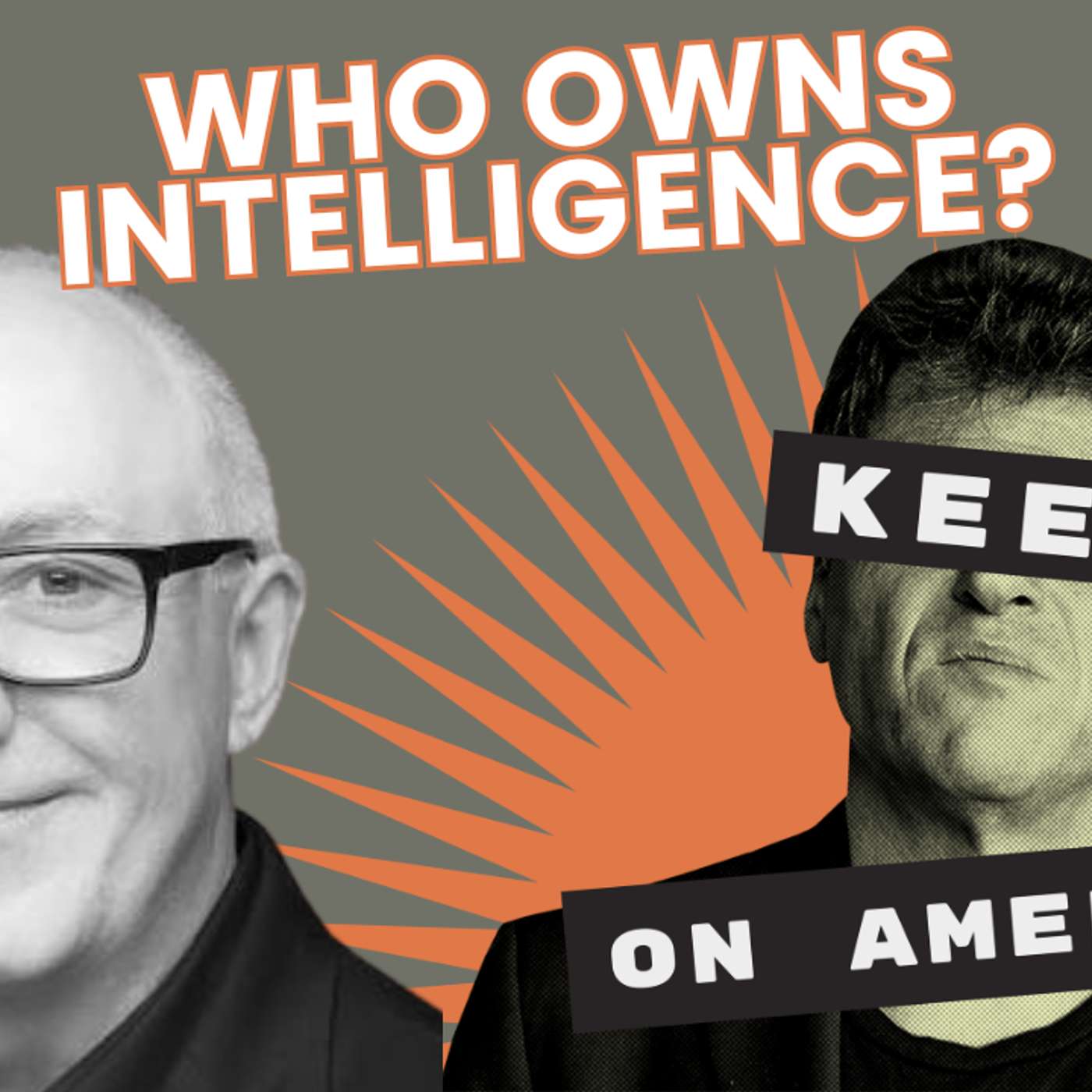


In 1776 — that same year America declared its independence — Adam Smith published the equally revolutionary The Wealth of Nations, his founding explanation of national economic value. Two hundred and fifty years later, Tim O’Reilly argues in the free-market Economist that Elon Musk and his fellow tech barons are building a monarchical form of capitalism that the proto-democratic Smith would have hated. Musk, O’Reilly reports, believes that SpaceX will become “worth more than the rest of Earth”. The merchants are becoming princes, O’Reilly warns. And the rest of us are becoming peasants. Such is the road to serfdom in our AI age.
So who should own the AI in our bewildering age of multi-trillion dollar start-ups like SpaceX, Anthropic and OpenAI? Or as That Was The Week publisher Keith Teare asks in his latest editorial, who should own the “intelligence” of our AI age?
Keith uses a bottling plant as a metaphor to describe our dilemma. Since no single entity can own this intelligence — the sum total of our common experience — charging us for it would be like seizing the Earth’s water supply and selling it back to us, Coca-Cola style, in plastic bottles. Except that the Hayekian Keith approves of the bottling process. Private companies, rather than governments, he argues, are most suited to doing this.
For Keith, this dilemma is also an opportunity to redistribute the ownership of intelligence. He argues for a “Human Wealth Fund” into which every consequential AI company should put a slice of its equity. In the manner of Norway’s sovereign wealth fund, this fund would be distributed to all citizens.
Rather than Denmark, now we should become like Norway, a tiny homogenous nation with a cultural distaste for Muskian individual wealth. Not very realistic, I fear. On top of that, it’s hard to imagine our tech princes collaborating on anything. Musk and Altman aren’t on speaking terms while Altman and Amodei, who also loathe each other, are focused on their IPOs. Meanwhile, the Trump administration, which presumably would coordinate this fund, is pitching a $100,000-a-month fast feed of the president’s posts.
Keith’s question, “who owns the intelligence”, is the right one. But the answer won’t come from trickle-down funds set-up by our tech princes. Such supposed munificence is about as likely as America becoming Norway. Read the fine print of any “Human Wealth Fund” set up by Sam Altman and Elon Musk. As we should know all too well by now, when a “revolutionary” Silicon Valley gives stuff away, it turns out to be exorbitantly expensive. Free plastic bottles of intelligence, anyone?
Five Takeaways
• Intelligence, Not AI. The week’s framing shift: the word AI is too small, because AI is merely the tool for harvesting and delivering the thing itself — intelligence, the sum total of our common human experience. Keith argues the renaming is not semantic but political: the moment intelligence sits at the center of the discussion, everyone’s opinion has to be shaped by what it actually is, and the idea that any single entity could own it starts to look as bizarre as owning the world’s water supply. Andrew’s rejoinder: they’re still just words — though he concedes intelligence is the better one.
• Bottled Intelligence Is Good — The Question Is Who Benefits. Keith refuses the critic’s role: bottling intelligence, like Google’s bottling of the world’s words into search, is a good thing, because only massively capitalized private companies can innovate at that scale — and between private entities and governments as owners of intelligence, he’ll take the companies every time. What’s wrong is the distribution of the benefits. Even insiders are complaining: Alex Karp is publicly angry at OpenAI and Anthropic’s pricing, while China’s Kimi K3 — released the day of recording and, Keith claims, better than Claude Fable — signals that very good models are about to get very cheap.
• Capitalism Adam Smith Would Hate. Tim O’Reilly argues in The Economist that Musk and his type are building a capitalism Smith would despise — founders as monarchs, a point Henry Farrell reinforces with a slide from Peter Thiel’s startup class placing the king of a monarchy and the founder of a startup side by side. Keith’s response is characteristically unsentimental: Smith would have hated everything since the Federal Reserve, and the founder-king structure — Larry and Sergey’s voting shares, Zuckerberg’s special rights, corporations bigger than countries with user bases bigger than China — is simply the stage of capitalism we’re at. The question is whether there’s a path from here to somewhere better.
• The Human Wealth Fund. Keith’s path comes in two versions: government-down, a sovereign wealth fund holding AI equity for every citizen; or company-up, the AI companies voluntarily endowing a global fund — and it only takes one to move first, because everyone else would have to react. His proxy is Norway, where every citizen benefits from ownership — not payouts, ownership — in the oil fund; AI revenues, unlike Norwegian oil, could eventually drive most of a doubled global GDP. His critique of the Brynjolfsson economists’ much-signed statement is that “must act now” is vacuous: he’d have added a point four naming the actual mechanism.
• The Bet. Andrew’s counter-case: Musk and Altman loathe each other, the mob hates AI so thoroughly that no pro-AI politician can survive, the states from Newsom’s California to Florida are embracing nothing, New York just enacted the first data center moratorium, and the founders — eyes on their IPOs — are in the pockets of the banks. Hence the wager: 5% of the Teare Wealth Fund says no Human Wealth Fund this year, and none in the twenties. Keith declined the bet, on principle: he’s an advocate, and only through advocacy does public opinion change. As Andrew put it: keep fighting the good fight — maybe one of the crazy ideas will stick.
About the Guest
Keith Teare is the founder and editor of the That Was The Week tech newsletter, and Andrew’s weekly co-host. A British-born Silicon Valley entrepreneur and investor, he was a co-founder of TechCrunch and runs the Palo Alto–based venture firm SignalRank. He and Andrew have been arguing about technology — productively — every week for years.
References:
• That Was The Week — Keith’s newsletter; this week’s editorial argues that the word AI is too small, and that the central question of the age is who owns intelligence.
• Tim O’Reilly in The Economist — on Elon Musk building a form of capitalism that Adam Smith would hate, quoting Musk’s claim that SpaceX will become worth more than the rest of the Earth.
• Henry Farrell — the big tech critic’s companion piece, featuring the slide from Peter Thiel’s startup class that plac...
00:31 - Introduction: who owns intelligence?
02:07 - Intelligence, not AI
02:36 - Bottled intelligence
04:04 - SpaceX: worth more than the Earth
05:45 - Bottling is good — who benefits?
07:02 - Even Alex Karp is angry
07:35 - What Google did with search
08:26 - Kimi K3: better than Claude Fable?
09:34 - Andrew's dissent: nowhere near AGI
11:01 - Did Google make us rich?
13:44 - O'Reilly: capitalism Adam Smith would hate
15:31 - Companies bigger than countries
16:52 - Thiel: the founder as king
17:44 - Larry and Sergey's voting shares
19:09 - Government down, or company up?
20:04 - The economists: heading off the mob?
21:35 - Musk and Altman aren't on speaking terms
22:42 - Treat intelligence like water?
23:41 - It only takes one company
24:36 - The IPO window is closing
25:27 - Trump Media's $100,000-a-month fast feed
29:12 - New York's data center moratorium
30:49 - Why no politician can be pro-AI
32:18 - The bet: not in the twenties
34:08 - Point four: the Human Wealth Fund
34:57 - Norway: ownership, not payouts
36:16 - America isn't Norway
38:44 - Collective ownership already exists
00:00:31 Andrew Keen: Hello, everybody. It is Saturday, July 18. Last week, it's time, of course, for our weekly tech roundup with That Was the Week publisher Keith Teare. Last week, he or we asked what time it was, and we concluded that it was a revolutionary moment, but maybe one that wasn't gonna turn into a revolution. We headlined the show ten days that didn't shake or change the world, and Keith remarked that it was rather like nineteen o five, the failed Russian Revolution as opposed to 1917, the revolution, of course. Both the failed revolution of o five and of seventeen, was all about property ownership. Who should own the means of production, both the land and the factories in, Russia? And we're back to the question of ownership and property. But for the AI agent, this week, Keith's editorial asks who owns intelligence. He sees this as the central question. He argues this week, the word AI feels too small. The bigger question is simpler and more political. Who owns intelligence, Keith? So, what's the argument this week? Who should indeed own intelligence? I like your replacement. I couldn't agree more that intelligence is a better word than AI, thinking more historically in a meta sense.
00:02:07 Keith Teare: Yeah. AI is the tool for both harvesting and delivering intelligence, but the thing in and of itself is intelligence. And I it's a much better framing because intelligence encapsulates the entire history of humanity. I know that you hate that word, humanity.
00:02:28 Andrew Keen: I hate that. You well, enough patting yourself on the back. We've agreed that intelligence is a better word than, AI. But Yeah.
00:02:36 Keith Teare: But I think it's important why it's better. It's better because it's totally clear that no one owns intelligence. No single entity could own intelligence because it is the sum total of our common experience and the future of it. So once you frame it as intelligence being bottled, if you will, then, you know, it would be a little like somebody taking ownership of the water supply on the Earth and forcing us to buy it from them, you know, as they do in these plastic bottles. And that being the only way to get water. It— Yeah.
00:03:14 Andrew Keen: So you're present but it's interesting because we perhaps come to the implications. You bring up water and electricity. But that suggests to me, at least, reading your editorial, that you're suggesting that intelligence is a utility, maybe a super utility, maybe a remarkably unique utility, but nonetheless a utility.
00:03:35 Keith Teare: Well, utility might be too narrow a word because that we're already going down the municipal ownership route as soon as you say utility. I think it's just a word that sums up the entirety of human experience. And because of that, you know, the idea that it could be owned is already a bizarre idea. Although it's—
00:04:04 Andrew Keen: I don't wanna turn this into an argument between you and I and your friend, Elon Musk, but, Tim O'Reilly has a very strong editorial this week in The Economist, and he quotes Elon Musk, who argued that SpaceX, will become worth more than the rest of the Earth. I mean, it's very much of a Muskian comment. So not everyone would agree with you that intelligence could be owned. I assume that Musk thinks that if SpaceX essentially owns intelligence, then, it will be worth more than the rest of the Earth.
00:04:40 Keith Teare: Well, so that's a measure of current GDP to future GDP, And he's saying that SpaceX will be worth more than current GDP, which, you know, fifty years from now, I wouldn't bet against that being true, but GDP will be a lot bigger by then as well. And, so I'd it's maybe not very fruitful to go down that path. I think the more fruitful—
00:05:05 Andrew Keen: But yeah. I mean, but I'm not sure that, Musk, thinks that intelligence can or should be collectively owned. A lot of the articles this week are about that. You've got a very strong one from, the critic of big tech, Henry Farrell, and, of course, the Tim O'Reilly piece. This is all about ownership. You also have your weekly Paul Krugman Substack piece. Although you don't seem to think very highly of Krugman, so I don't know why you're always including him in the, in the newsletter.
00:05:45 Keith Teare: I often include things I don't agree with. But, look, here's the thing. Intelligence has never previously been monetizable in any meta sense. It's always been monetized by individuals, let's say professors writing books or teachers, getting paid for teaching students. What we've got for the first time is a possibility that intelligence, writ large could be owned by a very small number of entities and metered, and therefore, monetized. I actually think that's a good thing. So I don't wanna be mistaken for being a critic there. I do think that the attempt to bottle and sell intelligence is a good thing. What's bad is who benefits from it. And why is it a good thing? Because the amount of investment required to do that is so huge that the, you know, only two entities would have the means of doing it, a well funded private entity or governments. And between those two, I would never choose governments as being owners and operators of intelligence.
00:07:02 Andrew Keen: But you, this idea of bottling intelligence, I mean, even insiders, even Alex Karp of Palantir, of all people, is, supposedly angry. He's very critical of OpenAI and Anthropic's attempt to essentially is to put it in your language, not just bottle intelligence, but own it. Yeah. And presumably charge guys like Karp or Palantir for access to it.
00:07:28 Keith Teare: Yeah. The it's as if they've seized all human knowledge, and they're sending it back to us, which is exactly what they're doing.
00:07:35 Andrew Keen: But isn't that what Google did with search? Isn't that the Silicon Valley way for better or worse? It's just reflective. It's the nature of things out here.
00:07:46 Keith Teare: Well, that's why I think it's a good thing. I mean, without Google, there wouldn't be, intelligent Internet search, and we would be the worst for it. I actually think that private companies are the only way to innovate rapidly in a competitive framework and do the best with, the technology as it is. So bottling intelligence is the best that it currently is at, and it's gonna create enormous wealth. What Karp is partly talking about is price. How much you know, are they gouging on price? And he says the answer is yes. They are. Although today, Kimi K3 was announced as being better than all—
00:08:26 Andrew Keen: So tell us what Kimi K3 is. Can you talk as if these are Yeah. Everybody knows. I don't know what Kimi K3 is.
00:08:32 Keith Teare: Well, Kimi is a Chinese, model company. It's had Kimi then K2 then now K3. And that each one is better than the previous one as you would expect. And the one that was released today is fairly inefficient. It uses a lot of tokens.
00:08:50 Andrew Keen: Okay. So and this is part of a Wacky Races narrative. Over the last couple of years, every week, somebody seems to be pulling ahead a Chinese company, OpenAI, Anthropic, Google, SpaceX.
00:09:02 Keith Teare: Yeah. But there's qual there's qualitative shifts, and the qualitative shift today, everyone believes that, Claude Fable is almost AGI. Well, Kimi is better than it. And so
00:09:18 Andrew Keen: Better than AGI? Better than AGI? You're not gonna be better than AGI?
00:09:22 Keith Teare: No. Better than Claude. And so for the first time, it's very clear that you're gonna have access to very inexpensive models that are very, very good.
00:09:34 Andrew Keen: Well, I've used Claude. I use Claude every day extensively, and it doesn't seem to me I mean, it's useful, but it's nowhere near AGI in my mind. But that's another question.
00:09:45 Keith Teare: Think it's lacking?
00:09:47 Andrew Keen: The ability to write, for example, the ability to think. But leaving aside that, let's get back. And what I don't understand I mean, I don't necessarily disagree with you, Keith, but I don't really understand how you get from this idea that everything has to be privatized, that the government is inefficient. I mean, in that sense, you're very much in the Marc Andreessen camp who, who is strongly, dramatically against any kind of regulation.
00:10:14 Keith Teare: I'm not sure
00:10:15 Andrew Keen: you're quite as extreme as the idea that, intelligence can somehow be collectively owned and it will drip down to what you call humanity, whatever that means. How do you go from one to the other? I mean, you use it so hold on. You use the example of Google. Right? So back in the nineties, you and I were both around then. There was all this talk of collective ownership. Then Google came along and cornered the market in what, at the time, at least, seemed to be intelligence. Maybe now we think of it as web search. They create massive wealth for a small group of technologists and investors, but not for anyone else. So why is this gonna be any different?
00:11:01 Keith Teare: Well, firstly, I think your supposition is wrong. Google did create enormous wealth, pretty much every American, through their pension plans. So I don't agree that
00:11:13 Andrew Keen: What do you mean that what does that mean?
00:11:16 Keith Teare: Well, Google's investors were venture capitalists who were investing money on behalf of pensions. And, the money was made large amounts of money were made by those investors, which was distributed to pensioners. So it isn't true that
00:11:32 Andrew Keen: Yeah. But you could make the same argument then about any corporate any public corporation.
00:11:37 Keith Teare: Any public corporation that went through a phase of private investment. Yes.
00:11:41 Andrew Keen: For Faye [unclear], it could include Facebook in that. You could include Amazon. But anyway, go on. So I still so but you're not talking about collective ownership in terms of the stock market, the public market.
00:11:54 Keith Teare: Oh, you kind of are. I mean, if you look at any public company and you look at the founders, by the time that company is listed, the founders typically own 10 percent of the company. So 90% of the company is owned by investors whose money is coming from funds. And that money is coming from society as a whole through 401(k)s and all kinds of plans.
00:12:20 Andrew Keen: So Well, a part of society, certainly not everybody. I mean, what percentage of Americans own stock is certainly less than 50%.
00:12:29 Keith Teare: I believe it's above 60%, but I— Yeah.
00:12:31 Andrew Keen: And of those 60, whatever it is, I mean, it skews very much to the wealthy in terms of how much stock
00:12:37 Keith Teare: It's true, but the narrative that it's all about billionaires isn't true. It isn't. There is a societal impact of all these things.
00:12:48 Andrew Keen: I'm not the guy who didn't bring up billionaires.
00:12:50 Keith Teare: Well, then the question becomes, could you go could you take that model of ownership, which already exists, and extend it? And that's I certainly think that's a more interesting discussion than whether the government should nationalize OpenAI and Anthropic, which would be the other way to do it. I think it's super interesting conversation. And I do think that Musk, going back to your question about Musk, is open to that as is Altman, open to that. And if that were to happen, it would be a huge revolution in both the creation and distribution of wealth. And then intelligence, having been bottled for the first time, becomes a driver of society as a whole.
00:13:44 Andrew Keen: So why in your view, if it's so kind of obvious, are guys like O'Reilly so critical? I mean, he makes the argument in this excellent, excellent, piece in the Economist that Musk is building and let's not just focus on Musk. It's not only Musk. But Musk and his type are building a form of capitalism that Smith would hate because it essentially turns them into monarchs. And in fact, Farrell quotes, a slide from one of Peter Thiel's start up classes in which the place of a king in a monarchy and the place of a founder in a start up are rather similar.
00:14:23 Keith Teare: Well, look. Tim isn't wrong that, Adam Smith would hate this form of capitalism, but I think that's been true since about the end of World War one and certainly since the end of World War two as free market capitalism has been replaced by state managed capitalism. And so the debt markets, the Federal Reserve, and other central banks, all of that, Smith would hate because he was the pure, you know, individual capitalist was here at the center of his universe. So it's not saying a lot to say Smith would hate it, and it's also impossible to reverse. That's the historical stage we're at. And now what you've got because of globalization is corporations that are bigger than countries. That is recent history, the last fifty years, let's say.
00:15:20 Andrew Keen: Yeah. I mean, bigger in the sense of being more valuable.
00:15:22 Keith Teare: More valuable than countries.
00:15:24 Andrew Keen: I mean, SpaceX, although it hasn't had a great week, is still what, wealthier or worth more than most countries in the world.
00:15:31 Keith Teare: And not only that, but the user base of these bigger companies is bigger than the population of any country, even China. So you've got some new things on the board. Now you could see all of that as a negative. It wouldn't be very useful because you're not gonna reverse it. So rather, I choose to see it as—
00:15:53 Andrew Keen: a trap. So I take your point. So okay. So you're not you're deeply skeptical of government. You don't want some massive nationalized regulation where the government — or Trump national capitalism — seems to wanna do this, acquire stakes in these companies. Where is it gonna come from, Keith? Is it from democracy? You and I have talked endlessly on this show about the dysfunctionality of American democracy, and it's gonna come from America because that's the heart of this new economy. Yeah. Or are we having to rely like kings on, on the generosity, the munificence of a—
00:16:35 Keith Teare: Yes.
00:16:35 Andrew Keen: An Altman or a Musk who you claim are enlightened, that you and I strongly disagree certainly on Musk, and I'm very, very dubious of Altman as well.
00:16:43 Keith Teare: Yeah. Well, Peter Thiel's drawing there is the status quo. That's how it is today. He's completely accurate. The question is
00:16:52 Andrew Keen: And for people just watching, you've got king monarchy as the king and the founder as the start— the founder controlling the startup. And that's a kind of Zuckerbergian model in the sense that he has special rights so no one can tell him what to do.
00:17:06 Keith Teare: Right. So that, I think that is the status quo. Therefore, I think Musk and Altman and, Amodei and the CEO of Microsoft and Google and Amazon, they're all important. They're all important players. But then yeah.
00:17:20 Andrew Keen: I mean, let's be clear. The CEOs of Microsoft and Google are very different from a Zuckerberg or a Musk. And I'm not quite sure which of the camps, Altman and Amodei would fall into. They don't have the kind of power that Zuckerberg has within, Facebook or, presumably, Musk has within SpaceX.
00:17:44 Keith Teare: Well, I'll just correct you. Larry and Sergey, not the CEO.
00:17:49 Andrew Keen: Oh, okay.
00:17:50 Keith Teare: They have all the voting shares at Google.
00:17:52 Andrew Keen: Right. Okay. So you're fine. So Larry and Sergey, the these founders who acquired massive amounts of ownership, and it comes back down to ownership. They have so much ownership in their companies that they can essentially do what they want. Larry and Sergey, more interesting more interested in having fun, but,
00:18:09 Keith Teare: so they
00:18:10 Andrew Keen: Musk and, Zuckerberg aren't or focused on their own companies?
00:18:17 Keith Teare: They actually have a bigger share of the vote than they do of the shares. So that they have control without majority ownership, actually.
00:18:25 Andrew Keen: Mhmm.
00:18:26 Keith Teare: And they started it. Google were the first company.
00:18:28 Andrew Keen: Right.
00:18:29 Keith Teare: So, so they're not outside of this. Microsoft is different because the majority owners are still the founders. Bill Gates, Steve Ballmer, now deceased third founder in name is escaping me [editor's note: the deceased Microsoft co-founder is Paul Allen; Ballmer was an early employee, not a founder]. So they're a bit different. But the key to understand is that structure is the inevitable result of the modern stage of capitalism that we're in. So the real question is, is there a path from that to something that we would all like to see?
00:19:01 Andrew Keen: Which exactly, which is my question. You've gone round and round in circles. How are we gonna, where, where are we gonna get, where are we gonna get to this new place, which you and I agree on?
00:19:09 Keith Teare: There's only two ways. And, and they're kind of contradictory either, the government, is super smart and creates a sovereign wealth fund or what I prefer is a global wealth fund, but let's call it a sovereign wealth fund, and puts shares into it that every citizen owns.
00:19:32 Andrew Keen: Right. And we've talked about that a couple of weeks ago, which is a very good idea.
00:19:37 Keith Teare: Yeah. That's the government down version. The company up version is that the same thing happens, but this global wealth fund is created by the companies themselves, and they put shares into it themselves voluntarily and distribute to citizens voluntarily. That is not off the table. I actually think that is also—
00:20:01 Andrew Keen: What do you mean the second one?
00:20:02 Keith Teare: Yeah. I think
00:20:04 Andrew Keen: And is that gonna come I mean, in your mind, is that gonna come because of the generosity of the founders or because they realize, and you talk about this in the editorial, that there's so much antipathy now to big tech. This is the week where hundreds of the world's leading economists wrote an op-ed organized by Erik Brynjolfsson of Stanford, old friend of my show. We must act now a statement on AI's transformation of the economy. Is this a way of heading off the mob?
00:20:38 Keith Teare: I think that would be an unintended consequence of it. I don't think they're focused on heading off the mob. They're mainly focused on their short on the short term, which is a mistake. But, you know, you can see very clearly that it's a philosophical, not an economic discussion. It really comes down to the fact that going right back to the formation of OpenAI, Musk said it should be open source. And, you know, there is now a lot of open source AI that is getting better and better. And Altman is on the record wanting Worldcoin and universal income via ownership in tokens. So philosophically, there is an understanding that we're at a stage of history where the entire world is gonna be impacted by these technology developments. And there is a real conversation about what should be done.
00:21:35 Andrew Keen: So who is having so I take your point maybe, although I'm not sure if you ask Marc Andreessen. I don't think he would agree with you. But leaving that aside, Musk and Altman loathe each other. In fact, I think Musk was suing Altman. I mean, they're not on speaking terms. None of them seem— none of them speak— seem to be on speaking terms with Musk. Altman isn't trusted. Where is this gonna come from, Keith?
00:22:01 Keith Teare: Oh, so it needs an outsider like me or you. Yeah. Firstly, to just name what it is we're talking about.
00:22:11 Andrew Keen: Or O'Reilly. I think O'Reilly might be a better person. O'Reilly. Either you or him.
00:22:15 Keith Teare: I think O'Reilly may be too antagonistic to that—
00:22:20 Andrew Keen: But that was O'Reilly calling you, Keith, telling you to—
00:22:23 Keith Teare: Could easily be. But I think if you start by putting intelligence as the thing we're talking about, and then you talk about the societal impact of monetizing it, it becomes very clear that the beneficiaries should be everybody because no individual can own intelligence. It—
00:22:42 Andrew Keen: Is ever happened [as spoken]? I mean, again, come back. You present intelligence as a kind of utility. Why can't we just treat it as electricity or water and have it commonly owned? What's wrong with that?
00:22:56 Keith Teare: A lit— well, it's complicated, isn't it, in America? Electricity and water are not commonly owned.
00:23:01 Andrew Keen: Or let's say make it a little more complicated in the American model of having some sort of public private partnership.
00:23:09 Keith Teare: I just think that's not gonna happen. There's too many contested points of view. I think one of two parties is gonna do this. Either the companies or the government wants it's in, you know, the government gets to a point where it can actually do something, which might be after the midterms or it might be after
00:23:29 Andrew Keen: the not gonna be before the midterms.
00:23:32 Keith Teare: Yeah. So, it's gonna be one entity that has the authority to lead the way. The companies do have authority because they can make decisions based on their balance sheet.
00:23:41 Andrew Keen: But they gotta be in agreement. And what about all the other AI startups that we're talking about in practical terms? I mean, you've got this practical idea. What does it require? Google?
00:23:51 Keith Teare: It doesn't require they agree, actually, Andrew. Just imagine for a minute that one of them did this, just one of them, and said, we realize we have a debt to everybody, and we're gonna do the following blah blah blah. Everyone would end up having to react to that. And I think bit by bit.
00:24:08 Andrew Keen: Hasn't Altman been saying that endlessly with all these long essays?
00:24:12 Keith Teare: He hasn't done anything yet. You know, 100% of the economics of OpenAI belong to its shareholders. He hasn't actually done anything yet.
00:24:20 Andrew Keen: And is this realistic given that OpenAI and Anthropic is supposed to do their IPOs later this year? It's not exactly gonna cheer Wall Street up if they give five, ten, 20% of the company away to this group you call humanity.
00:24:36 Keith Teare: Well, that's why there's a fairly short window. I would say that once they IPO, this idea is off the table. They have to do it now before the IPO.
00:24:47 Andrew Keen: You know, but that's not gonna you know, I don't disagree with your utopian I mean, your utopian instincts, but it's not gonna happen.
00:24:56 Keith Teare: I think it's right to advocate for it even if it doesn't happen.
00:25:02 Andrew Keen: Well, you and I can sit here and talk about pie in the sky for the rest of the year. What's the point?
00:25:09 Keith Teare: Well, why let me explain why it's right to advocate for it. Because you do want the future of our children and their children to be fueled by the wealth created from bottling intelligence. You do want everyone to benefit from it.
00:25:27 Andrew Keen: I mean, I guess the best argument would be that at least you're creating a narrative, a discourse around this that will grow. I mean, meanwhile, in terms of the government, I mean, as we speak, Keith, the Financial Times are leading with a piece about Trump Media pitching $100,000 monthly fee for fast feed of president's post, which is about as antithetical to the principles, the egalitarian principles of Berners-Lee's World Wide Web as you can ever get, which I guess proves your suspicion of government. Is this an opportunity for the Democrats to contrast themselves with Trump who's creating this kind of two tiered Internet where you have to pay $100 to get his social media feeds a half second before everyone else because you can win on the stock market.
00:26:20 Keith Teare: I you know, I think it, what Trump is doing is consistent with the Internet from very early in its life, certainly from 2000. If you think about it, Google gobbled up every word in every language in the world and, gave it to us for free as a search engine, but charged advertisers a lot of money for appearing in a search results page. So, before you know, and they are they literally have a live bidding engine saying who gets there first is the one who pays the most. So the this idea of pay paying to get content is as old as the Internet itself, and Trump's just the latest. That's not going away. But I do think in an AI world, there isn't really the same visual space for advertising. There is still access to information. Information is always gonna be valuable, and information isn't the same as intelligence. So
00:27:17 Andrew Keen: And it does— I mean, my point was about the government. I mean, if the government and, I mean, Trump isn't really the government. He's an odd character because he's an entrepreneur in power, seem to be bending the rules to promote his own private self interest. This is not money that the 100 k monthly fee is not going to the government. It's going to Trump, or his family company. Can the government get wise on this? Have you given up completely? Are you really, when it comes down to it, in Marc Andreessen's camp about
00:27:47 Keith Teare: Well, look.
00:27:48 Andrew Keen: Government always being the enemy to borrow, some language from Ronald Reagan?
00:27:53 Keith Teare: I would say in my I have two versions of the word government. I have the kind of the classical meaning of the word that comes from, you know, the founding fathers of democracy, not just the American ones, but the entire debate going back to Mill and Rousseau and so on. And that ideal government is the right entity to do everything. But in our modern world, unfortunately, government has descended into fiefdoms with, you know, are getting paid by, all kinds of entities to influence them. And you don't really have that classical government anymore. You are—
00:28:37 Andrew Keen: So what's the model of the classical government? Give me an example.
00:28:40 Keith Teare: The classical government is, you know, the simplest way to say it is of the people, for the people, by—
00:28:46 Andrew Keen: I understand that, but give me an example of a government that worked historically that we can look back and think. Maybe we need to try to be like them if we're to probably deal with our AI moment.
00:28:59 Keith Teare: I would say the post revolutionary American government, once it became independent, and for the next several decades after that was building a nation, where the
00:29:12 Andrew Keen: Maybe all this men need to [unclear] because, of course, there wasn't much of a government. It was all local. One of your other interesting pieces of news this week is that New York became the first state to enact a data center moratorium. Whether or not one agrees on a data center moratorium, is some of this initiative for what this Human Wealth Fund, is it gonna come regionally? Is it gonna be triggered on a state basis, maybe in California or New York or one of the more enlightened futuristic states?
00:29:44 Keith Teare: I doubt it's gonna be led by any state. I mean, if you look at the extremes of, say, Gavin Newsom in California and, let's say, Florida, neither one appears to be embracing anything in this space at all. So I don't think it's gonna be local. I think it's it either isn't gonna happen at all or it's gonna be led by the companies.
00:30:08 Andrew Keen: Yeah. It means it's not gonna happen at all. Your Human Wealth Fund, would it be wise for Gavin or somebody else on the left to run with this in '28?
00:30:18 Keith Teare: I think it's a great idea to have a Human Wealth Fund that is, you know, it would completely reset the discussion about AI from an adversarial discussion to a how can we make it the best discussion.
00:30:33 Andrew Keen: But are you convinced that let's say a Gavin or somebody else went that way. Are you convinced that Anthropic or OpenAI would support them? Wouldn't they be like the billionaire tax in California be deeply opposed to it?
00:30:49 Keith Teare: I actually think it's an impossible scenario to think that it would be led by politicians. I think the hatred of AI in the United States is so widespread that any politician, even if they were talking about Human Wealth Fund, that tried to be pro AI would lose. And so unless the companies reset the narrative through their actions, it's gonna stay the way it is for quite some time to come where the AI companies are deemed to be the bad guys. And
00:31:21 Andrew Keen: Yeah. Even by, perhaps the real bad guys like, Alex Karp or Palantir. I mean, I appreciate your wanting to be optimistic and positive, Keith, but this conversation sounds to me even more depressing than we began the show with. It's not gonna happen. You're not gonna get the initiative. These people are focused on their IPOs. They're in the hands of or that these companies now are in the pockets of the banks. You know about this sort of thing. You've been through it yourself as entrepreneur. You're not gonna get Sam Altman or, or, Dario coming out and saying, well, we're gonna give 15% of our wealth away to a Human Wealth Fund, whatever that means.
00:32:10 Keith Teare: I don't know what you know, who knows? I don't know why you would say that. I mean, there is evidence that they wanna give away 5% already.
00:32:18 Andrew Keen: Well, I will bet you 5% of your Teare wealth fund that it won't happen this year, and it actually won't happen in the twenty twenties.
00:32:30 Keith Teare: I don't think I'd take that bet because I'm an advocate for it. I'm an advocate for it, and I think only—
00:32:36 Andrew Keen: Exactly.
00:32:36 Keith Teare: Well, only through advocacy does public opinion change.
00:32:40 Andrew Keen: Yeah. And I take your point, and you're right on that. Well, let's see. How much worse can it get? What did you think, by the way, of this? I assume you wouldn't have signed it if they'd asked you, not that you're an economist. What do you think of these kind of initiatives from Brynjolfsson and all his famous economist friends? I assume that Krugman signed it.
00:33:01 Keith Teare: Well, if you look at the three points, put it back up, and let's just look at them. Number one is correct. AI may become radically more powerful over the next ten years.
00:33:10 Andrew Keen: It will. It's not may. I mean, I
00:33:11 Keith Teare: Number two is correct. This could drive an unprecedented transformation of our economy, larger than the industrial revolution, unfolding over a much shorter period of time, which will bring risks, large scale job displacement, as well as opportunities. Yeah.
00:33:26 Andrew Keen: I mean, that's boilerplate. That goes without saying.
00:33:28 Keith Teare: Well, that's true. The third one, economists, policymakers, and technology leaders must act now to understand the economics of transformative AI and build the incentives, guardrails, and institutions need to steer it in the direction that complements humans. Well, we've been talking about that last— Yeah.
00:33:44 Andrew Keen: So you agree. So you would have signed it.
00:33:46 Keith Teare: But must act now is, like, vacuous. What
00:33:50 Andrew Keen: Well, you what more can you say?
00:33:52 Keith Teare: Well, they've gotta believe in what actions would make sense. I'm putting an actual action on the table. There's no action in here.
00:34:02 Andrew Keen: So you think if you would have done this petition, you would have led with a Human Wealth Fund
00:34:08 Keith Teare: No. No. It would have been number four. Number four, it should take the form of a Human Wealth Fund. Every AI company over a certain size should put n percent of its equity into the fund, and the fund should distribute to all proven citizens annually.
00:34:25 Andrew Keen: And how much would that actually be? What difference would I mean, I'm just curious. I mean, let's think this thing through.
00:34:31 Keith Teare: Elon says it's gonna be bigger than global GDP just in SpaceX. So it obviously, it's gonna
00:34:38 Andrew Keen: be bigger. That's a that but no one's taking that seriously.
00:34:42 Keith Teare: Well, it
00:34:42 Andrew Keen: it Except for you, maybe.
00:34:43 Keith Teare: It'll be very big in future.
00:34:45 Andrew Keen: I mean, if Yeah. But what will that actually mean that someone gets, I mean, Trump's talking about, I don't know, $2,000, $5,000 a year to American citizens.
00:34:54 Keith Teare: Well, we—
00:34:54 Andrew Keen: What are we talking about? And what difference would it make to their lives?
00:34:57 Keith Teare: We do have some proxies in the real world. The Norwegian sovereign wealth fund, which is funded by oil revenues mainly, is the largest in the world. Norway is one of the smallest countries in the world.
00:35:09 Andrew Keen: Yeah. 5,000,000 people we know from the World Cup. All of them seem to come to America and dress up as vice [unclear — possibly "Vikings"].
00:35:15 Keith Teare: And every Norwegian citizen benefits from ownership in that. Ownership. Not payouts. Ownership. And so there is a model that already works. Now the
00:35:29 Andrew Keen: Yeah. But, I mean, two points on that. First is 5,000,000 people live in Norway, enormous wealth, very prosperous society, and very different culture where you don't have the kind of billionaire, for better or worse, billionaire ethic of the United States.
00:35:45 Keith Teare: Well, it's all about scale. Norwegian oil is much smaller in revenue terms than the future value of AI in revenue terms. If AI revenue collectively is driving most of GDP, and most of the predictions are that GDP will double and even triple over fifty years, then the benefits to the— from the Human Wealth Fund would be enormous. Enough to completely smooth over any job transition.
00:36:16 Andrew Keen: We can all become Norwegians. Do you remember what Hillary Clinton said to Bernie Sanders in 2016 in their famous debate when Bernie was going on and on about becoming like Denmark? And Hillary said, well, I love Denmark as much as you, but America isn't Denmark and never will be. And I don't think America will either ever be I mean, it could be it's more like Denmark than Norway of all places.
00:36:36 Keith Teare: So we can all do this.
00:36:40 Andrew Keen: Yeah. We're all gonna become Norwegians, and I'll get into trouble. I don't know if we have any Norwegian viewers or listeners, but they all look the same to me. But maybe I'm just anti Norwegian, except not everyone looks like Haaland, Keith.
00:36:52 Keith Teare: But the main thing we achieved this week, Andrew, is I think just moving the discussion from AI to intelligence is a huge step. And the because the minute you put that in the middle, everyone's opinion has to be shaped by what it is they're talking about. And it's—
00:37:08 Andrew Keen: Well, I mean, yeah, I take your point, although you're only just promoting your own editorial. And, I mean, we're still talking semantically, whether you're talking about AI or intelligence. They're just words.
00:37:19 Keith Teare: Well, the a AI is a method of capturing and distributing it. That's all. So you know? And some of it is done for free as Kimi K3 is. You can literally download it and run it on your own hardware.
00:37:34 Andrew Keen: Well, that's Chinese. And final, just, since you've been plugging your own views, I'll plug my own show, Keen On America. Did an interview with Mehran Gul, a Swiss based analyst, very smart young man. His book, The New Geography of Innovation, won one of the FT's books of the year last year. He suggests that Europe now is irrelevant and that the fight for what Keith would call our intelligence future, maybe our AI future, is between China and the US. So maybe you're right. Keith, we will return to this, I'm sure, next week. We will go back to nineteen o five, 1917, 1848, 1968, all sorts of other interesting political narratives and years. But this week was the week when Keith, wants to know who owns intelligence. He believes we can all do it, or we can all own it. I'm I don't disagree with his idea. I just don't see it being very practical. But we will see. Certainly, by next week, Keith, there won't be collective ownership of intelligence. We can say that thing for sure.
00:38:44 Keith Teare: Well, I will say this. There already is collective ownership [of] intelligence when it comes to intelligence. It's just economically not collectively owned.
00:38:52 Andrew Keen: Well, we will talk next week. Keep fighting the good fight, Keith, bringing up crazy ideas. Maybe one of them will stick. Thank you so much.
00:39:01 Keith Teare: Adios.