When America Broke Up: Kurt Andersen Looks Forward to the Divorce of the United States
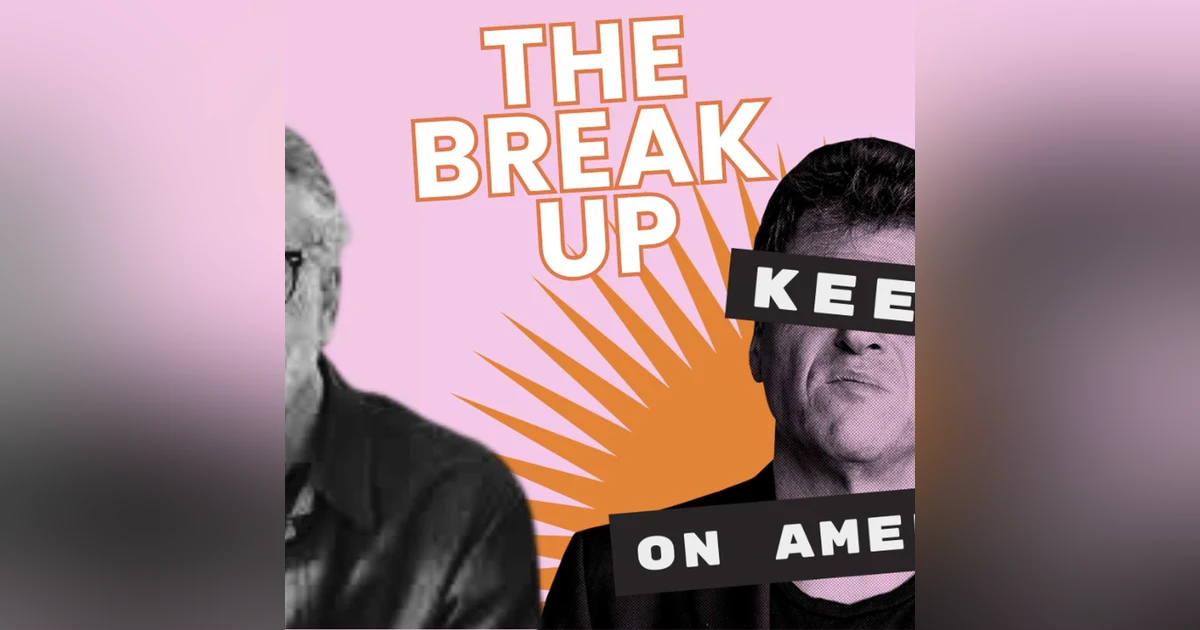


“We are the beginning of a bright and shiny dark age.” — Kurt Andersen, from The Breakup
It’s 2045 and America has got divorced. That’s the premise of The Breakup, by the historian and novelist Kurt Andersen. “The future is fiction. It hasn’t happened yet,” the historian in Andersen reminds us. But his near-term fictional future, an America of civil war and national divorce, certainly isn’t inconceivable. Nor, in an increasingly divided United States between high-tech coastal elites and a medieval hinterland, does such a scenario appear quite as nightmarish as it once did.
In contrast with the bloodiness, say, of Alex Garland’s Hollywood version of an American civil war, Andersen’s literary breakup is the “scattered violence of a Middle Eastern kind.” Lebanon comes to the United States in the form of loosely confederated militias, assassinations and kidnappings. This war kills 28,000, half of them civilians. It could have been worse. Indeed, it is worse today — when compared to the 44,000 people killed by guns each year.
The novel also tells the story of the breakup of a twenty-three-year marriage between the Tennessean poet Natalie and the San Francisco tech bro Asher. Natalie doesn’t much like Silicon Valley and warns that “we are the beginning of a bright and shiny dark age.” But for Andersen this age isn’t totally dark. Marriages and countries break up, he reminds us, and that is often the beginning rather than the end of the story. Not quite darkness at noon. So get ready for the mid-21st-century break-up of the United States. Such a split might actually be brighter than America’s current dark marriage.
Five Takeaways
• The Future Is Fiction. After Fantasyland (five hundred years of how America went haywire) and Evil Geniuses (the last fifty), Andersen considered a third history — of the future — and realized the genre is folly: futurism is just experts guessing, Alvin Toffler in a new suit. “The future is fiction. It hasn’t happened yet. It’s imaginary until it happens.” So the trilogy’s conclusion became a novel — his fifth — and the bookseller algorithms’ “dystopian” label gets a correction: dystopian satire, maybe, but “we are in a dystopian period now.” Where Alex Garland’s Civil War embedded journalists inside the fighting, The Breakup lives with a couple seven years after it — the good, the bad, the thank-God-we-were-okay — and, chalk it up to the Midwestern upbringing, it ends ambiguous but not without hope.
• A Manageable Civil War. The backstory his fictional journalism flashes back to: a blue political comeback — Supreme Court expansion, Puerto Rico and DC statehood — ignites a ferocious right-wing backlash, and the violence that follows is “scattered… of a Middle Eastern kind”: loosely confederated militias assassinating, kidnapping, and bombing, while a presidential administration insists it’s a crime spree — until the military crushes the insurgency with drones and robots in eighteen months. The toll: 28,000 dead, half civilians, 45,000 wounded — numbers Andrew notes are roughly a single year of American gun deaths, and that Andersen’s character Natalie keeps in proportion: “could have been worse… We’re not living in Mad Max time.” Against the 1860s — millions dead from a far smaller population — this is a war America can talk itself into surviving. Which may be the scariest thing about it.
• The Disunion’s Logistics. The novel’s deep research problem: how would you actually do it? You can’t draw an 1860 line, because the real divide runs between cities and countryside, not North and South — so the negotiated Disunion takes seven years, producing Natalie’s Free American Republic and Asher’s smaller United States. The Brexit analogy gets swatted (“the EU is not a country” — this is a whole different deal), balkanization into five or twelve republics is doubted (the prosperities of scale), and the best twist is secessionist remorse: Montana runs the numbers and realizes the West, unlike the South, gives more to Washington than it takes — so why join them? Beneath it all, the state nobody thinks they need: Medicare, Social Security, the federal machinery people discover only as DOGE-style contempt dismantles it. And still, the magic holds: immigrants keep coming, because only in America do you become American by showing up.
• The Soft Breakup Papers. The nonfiction beneath the novel is Andersen’s New York Times essay: America as a long, loveless marriage — separate lives, separate tracks, staying together for the kids — that may already have had its soft breakup. His research assembled what nobody had put together: ten- and twenty-state climate alliances, sanctuary cities, Second Amendment sanctuary states and a thousand such counties — “governmental apparatuses emerging for these separate governments” since 2009, unremarked because the only people saying “national divorce” were Marjorie Taylor Greene and Rush Limbaugh, and nobody serious could agree with them. The mechanism is Hemingway’s bankruptcy: gradually, then suddenly. Fintan O’Toole warned him the book could become self-fulfilling prophecy; Andersen answered that the elephant in the room must be named — and he has the Cassandra receipts, having published Fantasyland’s post-truth diagnosis before Trump was first elected. “Don’t blame me. We’ll reconnoiter in ten or twenty years.”
• A Bright and Shiny Dark Age. The episode’s keeper, from the novel’s tech-despising heroine: “We are the beginning of a bright and shiny dark age.” One political party marches back toward the medieval — no public health, no vaccines, no intellectualism — while the Bay Area ships magic, William Gibson’s unevenly distributed future arriving all at once. In 2045, AI is background hum “like electricity,” the tech trillionaires are plural, and the robots are everywhere and unremarkable — though Andersen’s own book trade is his caution against straight lines: print was declared dead fifteen years ago and still sells half of all books. The age of anxiety — the loneliness, social media’s riled-and-angry business model (30% of the blame or 70%, “but it’s large”), a president “selling pessimism” in his simultaneous idiocy and brilliance against optimism’s old American pillar — reads, in the novel’s hindsight, like the premonition of the breakup. And yet no zombies, no rubble: not without hope.
About the Guest
Kurt Andersen is the New York Times bestselling author of the histories Fantasyland: How America Went Haywire and Evil Geniuses: The Unmaking of America, and the novels Turn of the Century, Heyday, True Believers, and You Can’t Spell America Without Me. Co-founder of Spy magazine and longtime host of the Peabody-winning public radio program Studio 360, he has written for the New York Times, Vanity Fair, and The New Yorker. The Breakup (Random House, August 2026), his fifth novel, is set in the AI-suffused, post-civil-war America of 2045 — “the most brilliant social novelist of our time,” per Walter Isaacson, “in the tradition of Tom Wolfe and Don DeLillo, but even funnier and deeper.”
 ...
00:31 - Introduction: when facts fail, turn to fiction?
02:21 - “That’s not the title I would pick”
02:37 - Why a novel? The future is fiction
04:21 - Dystopian satire and a loveless marriage
06:19 - Divorce: the most fun with your clothes on
07:54 - Militias, drones, and violence of a Middle Eastern kind
11:28 - 28,000 dead: a manageable civil war?
13:55 - Has America already had its soft breakup?
14:58 - “We made it up”: the invented nation
16:09 - Gellner, nationalism, and post-industrial unraveling
20:32 - The 2011 Vanity Fair piece that still holds
21:26 - AI like electricity: technology in 2045
24:11 - The age of anxiety as premonition
26:09 - Evil Geniuses redux: the anger comes home to roost
27:39 - Loneliness, and the president who sells hellscapes
29:50 - Sacrilege: should the first civil war have ended the union?
32:22 - DOGE and the state nobody thinks they need
33:08 - Secessionist remorse: the Montana problem
36:00 - The Thanksgiving dinner where nobody talks
36:53 - Fintan O’Toole’s warning: the self-prophecy risk
38:27 - Stephen Marche and the view from outside the marriage
39:15 - Gradually and then suddenly: the soft breakup papers
41:34 - The Cassandra pattern: don’t blame Kurt
42:06 - Tocqueville or the Middle Ages? A bright and shiny dark age
47:26 - No Hollywood ending — but not without hope