Trump Points, Justice Shoots: Jonathan Rauch Looks Back (Without Anger) at the First Six Months of 2026

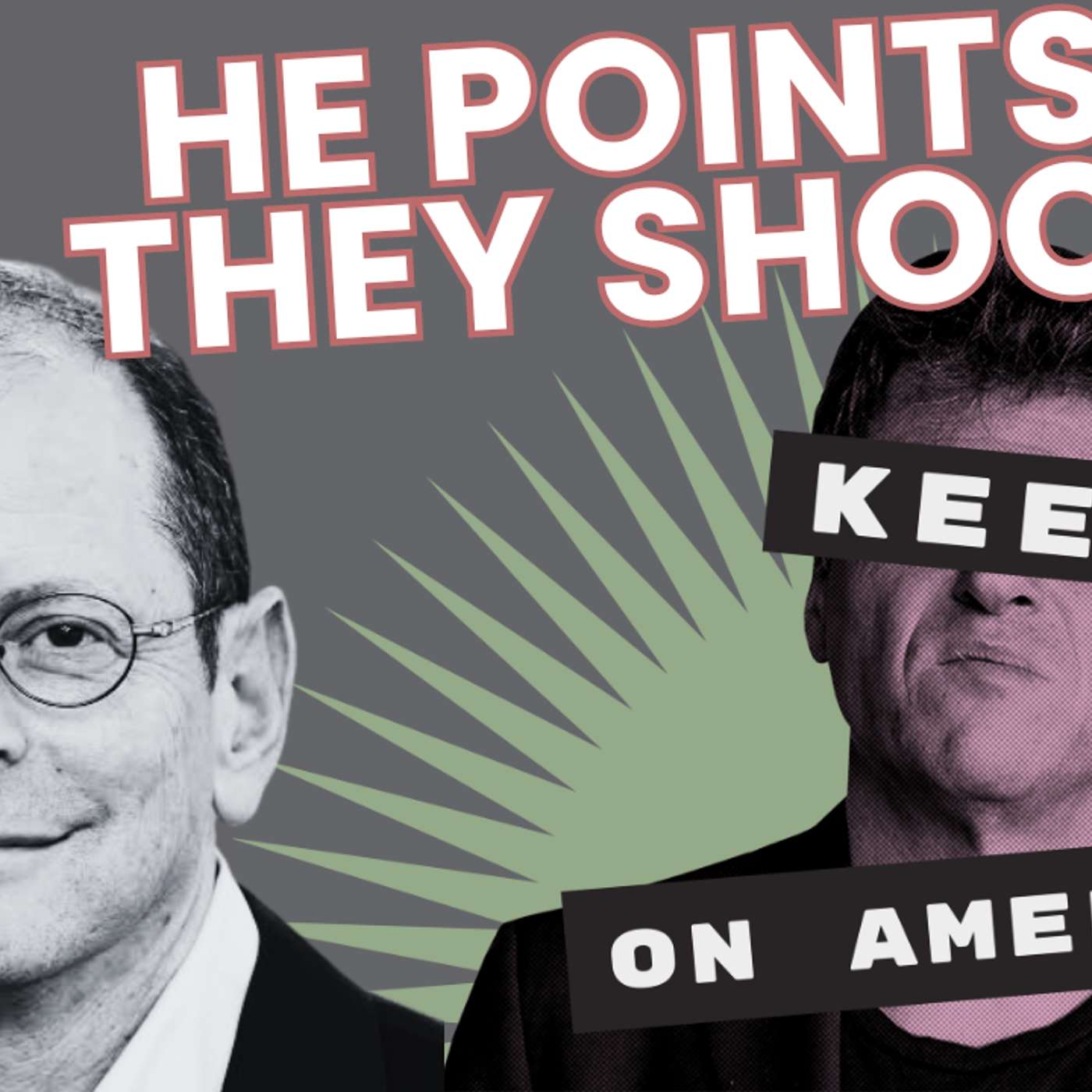


“We have a Justice Department which is now 100% the political pawn of the president,” warns Brookings senior fellow Jonathan Rauch. “He points, and they shoot.”
Point and shoot. Like an old Kodak camera. Not exactly assuring words, you might think, from a man who begins our conversation looking back at the first six months of 2026 by announcing that he’s significantly less alarmed than he was a year ago. Yes, Rauch acknowledges, Trump’s approval ratings have sunk, the courts have pushed back, Elon Musk’s DOGE rampage has petered out. And yet the pointing and the shooting goes on.
Rauch, who only months ago diagnosed eighteen “distinct and unmistakable signs” of an American fascism in a much touted Atlantic piece, now admits he may never crack the Trumpian code. Every time you nail it to the wall, he says, it morphs, creeps or sails away. Like an Iranian gunboat in Hormuz. Slippery stuff for the liberal Brookings analyst. Fascism one month, McKinley-style imperialism the next, then Gilded Age plutocracy — although without those ontologically undeniable Carnegie libraries. Meanwhile, America’s 250th birthday party fizzled into what Rauch calls a “damp squib,” its reflecting pool turning an opaque green rather than a clarifying blue. A muddy madness in DC.
Still, amidst all the opacity, Rauch remains a defiantly optimistic liberal. In contrast with yesterday’s guest, the reality hallucinating Turi Munthe, Rauch believes not only that there is an ontological reality, but that it’s good. Frank Fukuyama was right, Rauch insists. Liberalism is not only the only political system that creates wealth, produces knowledge and settles disputes, but also establishes an undeniable reality. Liberals just need to relearn how to clearly tell its story. Perhaps. Though storytelling is certainly simpler when nobody is waving a gun at you.
Five Takeaways
• Less Alarmed, Still Scared. Rauch opens with the good news: he is significantly less alarmed than he was a year ago, when the administration was running rampage, putting agencies out of business and demanding Greenland. Approval ratings have dropped, so Trump has less political space; the courts have pushed back, so he has less judicial space; Stephen Miller has vanished from view. And then comes the caveat that gives the episode its title: the Justice Department is now 100% the political pawn of the president — he points, and they shoot — and Trump has shown that as his ratings fall, he becomes more willing, not less, to use those tools.
• I May Never Crack the Code. Only months ago, Rauch diagnosed eighteen distinct and unmistakable signs of a modern American reinvention of fascism in The Atlantic. He doesn’t regret the essay — but he has gone back to being confused. The Trump phenomenon is slippery: every time you nail it to the wall, it morphs, creeps or slides away. Fascism one month, McKinley-style imperialism in Venezuela the next, an Iran war with no rationale at all. Trump is such an improviser, and so disorganized, that Rauch concedes there is an element of randomness he may never decode — though he accepts Andrew’s suggestion that attention is now the coin of the political realm.
• Not the Gilded Age — No Carnegie Libraries. The new inequality, Rauch argues, is different in kind: a class of people almost superhuman in the wealth they control, and strangely narcissistic and nihilistic toward the broader society. The Gilded Age tycoons did some bad things, but they also built — Carnegie’s libraries, Mellon’s National Gallery, Rockefeller’s University of Chicago, Stanford’s university. This group builds rockets and sounds, in the case of Marc Andreessen, like a parody of an Ayn Rand novel — or, as Andrew corrects him, not a parody at all: they simply repeat what they’ve read. Even so, Rauch is not sorry to see politics reacting to a world where Musk can casually drop $300 million into a presidential race.
• The Gloves-Off Court and the Accelerating Presidency. The Supreme Court term brought the clearest statement yet of the conservative agenda: Humphrey’s Executor overturned after eighty years, making it far easier for presidents to fire agency heads at will; what remained of the Voting Rights Act effectively gutted; birthright citizenship surviving by a shockingly narrow margin. The imperial presidency is not new, Rauch notes — what’s new is the speed. A president can now simply refuse to run a congressionally mandated agency, and the Senate, forty quietly nixed nominations notwithstanding, remains lacking in spine. The Todd Blanche nomination, he says, is the next test of whether any line exists at all.
• Fukuyama Was Right — and Liberals Should Say So. Rauch sees a moral vacuum and, for the first time, a craving to fill it: the pope’s AI encyclical, multi-faith clergy bearing witness in Minnesota, the Episcopalians and Latter-day Saints finding their voices. His prescription for the second half of 2026 is a liberal one, in the nineteenth-century sense — science, markets, constitutions, rule of law. Fukuyama, widely misunderstood, was right: there is only one system that produces knowledge, peace, freedom, and wealth on a global scale, and it’s ours. It needs fixing — he cheers the bipartisan housing bill Trump refused to sign — but liberals must relearn how to tell that story, and how to brag.
About the Guest
Jonathan Rauch is a senior fellow in Governance Studies at the Brookings Institution and a contributing writer at The Atlantic. He is the author of nine books, including The Constitution of Knowledge: A Defense of Truth (2021), Cross Purposes: Christianity’s Broken Bargain with Democracy (Yale, 2025), and Kindly Inquisitors: The New Attacks on Free Thought. A recipient of the National Magazine Award, he serves on the boards of Heterodox Academy and Civic Life, and is a longtime friend of the show.
References:
• Rauch’s Atlantic essay identifying eighteen “distinct and unmistakable signs” of a modern American reinvention of fascism — the piece he stands by, even as he admits the phenomenon keeps morphing.
• His recent essays for The UnPopulist on why liberal societies need grand stories about themselves, and why liberals must relearn how to brag about liberalism.
• Jonathan Rauch and Peter Wehner in The New York Times — the earlier argument, which Rauch says still holds, that the Republican Party is more dangerous to the constitution and the rule of law than the Democratic Party.
• Tim O’Reilly in The Economist — on Elon Musk building a form of capitalism that Adam Smith would hate.
• Francis Fukuyama — whose widely misunderstood The End of History thesis Rauch defends: there is only one system that creates wealth, produces knowledge, and settles political disputes on a global scal...