The Unexceptional Exceptionalism of the United States: Michael Mandelbaum on the American Way of Foreign Policy
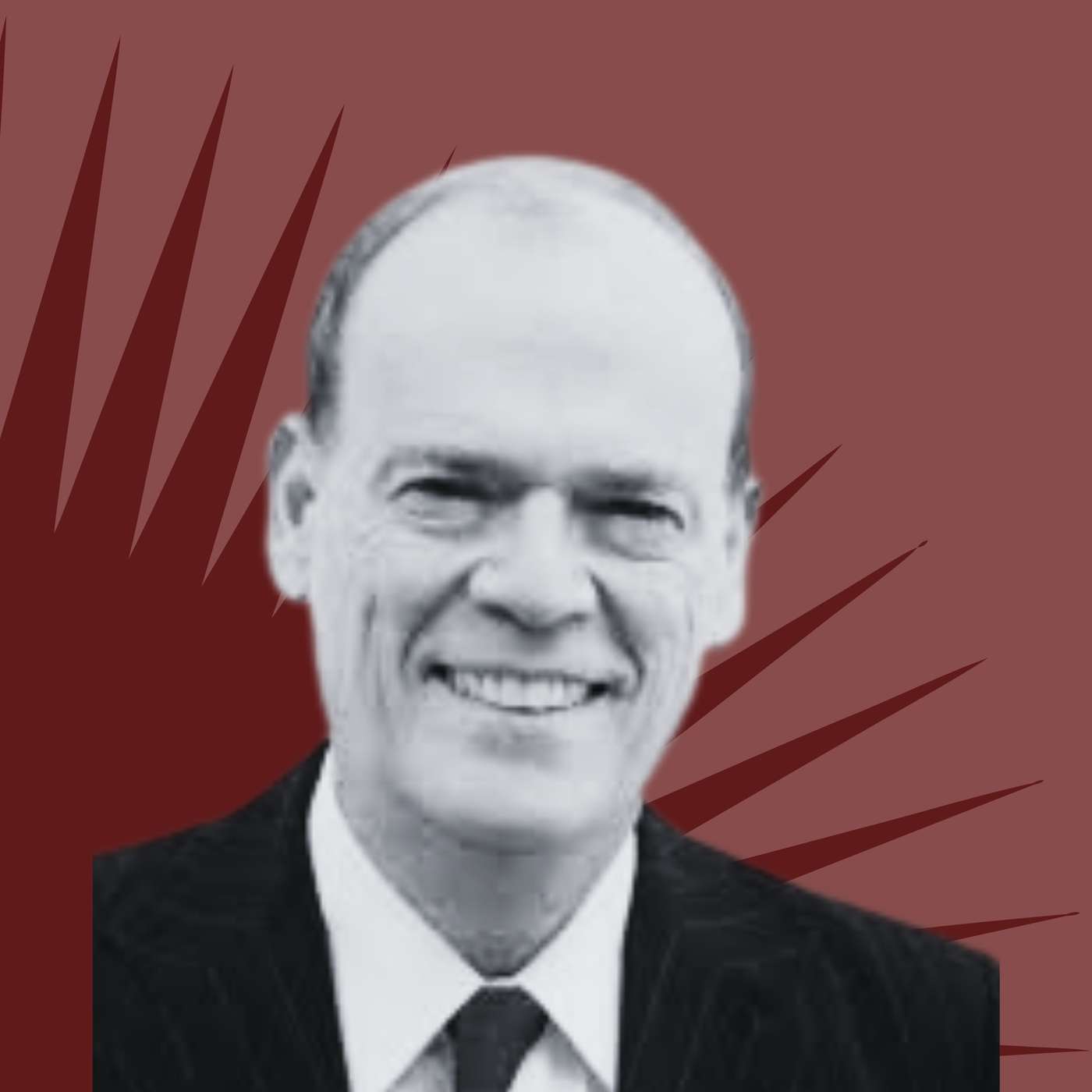


“The United States has conducted an unusually ideological foreign policy, an unusually economic foreign policy, and an unusually democratic foreign policy. These three features have been present from the eighteenth century to the present.” — Michael Mandelbaum
Is there an “American way” of foreign policy? Does that make the now almost 250 year-old republic unique? Michael Mandelbaum, author of The American Way of Foreign Policy: Ideology, Economics, Democracy, says yes and no. America is exceptional. But that exceptionalism is unexceptional.
Mandelbaum says that American foreign policy over the last 250 years has been unusually ideological, economic, and democratic. Foreign policy realists say great powers all behave the same way. Mandelbaum, as an idealist, says: not America. Uniquely in world history, he says, America has pursued its principles overseas without prioritising its political, economic, or military self-interest.
And yet The American Way of Foreign Policy isn’t triumphalist. Mandelbaum opposed NATO expansion in the 1990s. He was in the anti-Vietnam marches as a Harvard student in the Sixties. Nor is he partial to demonstrations of overt nationalism. His July 4 plans, for example, are to watch baseball. As a lucky man in a fortunate Republic, what better way to celebrate 250 years of independence than to enjoy its national pastime?
Five Takeaways
• Three Distinctive Features: Ideological, Economic, Democratic: Mandelbaum’s thesis: American foreign policy has differed from the foreign policies of other countries in three enduring ways. First, ideological: political ideas and the effort to spread them have been more important to America than to other powers. Second, economic: America has used economic instruments to achieve political goals — trade, aid, sanctions — rather than the imperial model of using political power for economic gain. Third, democratic: American public opinion has always had greater influence over foreign policy than in other countries. For almost all other countries, for most of their histories, foreign policy was the preserve of a small elite. That was never true of the United States.
• Idealist and Realist: Both Apply: Andrew invokes Kenneth Waltz and the realist tradition, which argues that great powers always behave the same way regardless of their self-image. Mandelbaum’s response: realism fits American foreign policy up to a point. America has fought twelve significant wars and has not been oblivious to military power. But it has also conducted idealist foreign policies that cannot be explained by realism — policies driven by its liberal political ideas rather than its material interests. The distinctive feature of American foreign policy is not that it ignores realism, but that it goes beyond realism in ways that other great powers have not.
• NATO Expansion: Mandelbaum’s One Big Regret: In the 1990s, Mandelbaum was opposed to the expansion of NATO, alongside George Kennan — one of the architects of Cold War containment. His fear: it would do a lot to alienate Russia. He acknowledges that he cannot blame NATO expansion explicitly for the Russian attack on Ukraine. But he notes that the fear was reasonable and that, as he puts it, alas, it has come to pass. He does not think that the Russian attack was inevitable or that NATO caused it. But he does think the warning was worth issuing and that it deserved more serious consideration than it received.
• Vietnam and the Antiwar Movement: Was It Counterproductive? As a graduate student at Harvard under Stanley Hoffmann, Mandelbaum was opposed to Vietnam and took part in marches. He has since revised his views — not on whether Vietnam was a mistake (it was) but on whether the antiwar movement had any positive effect on the course of policy. His conclusion: it probably didn’t, and may have been perverse. Nixon used the antiwar movement as a foil. The war ended because most Americans decided it was costing too much in American lives — not because the goals were wrong. That was the democratic aspect of American foreign policy in action.
• Israel, Gaza, and the American Way: Andrew suggests that Israel has been able to push America around, and that this is “un-American.” Mandelbaum pushes back firmly. America supports Israel for two reasons: strategic advantage (Israel as a bulwark against threats to American interests in the Middle East) and shared values (Israel is the only country in the region that shares American political values). When interests diverged — the 1980s anti-aircraft arms sale, Obama’s Iran deal — America went its own way. The reverse is also true: America doesn’t have the capacity to push Israel around in Gaza, because for Israel these are matters of national survival.
About the Guest
Michael Mandelbaum is the Christian A. Herter Professor Emeritus of American Foreign Policy at the Johns Hopkins University School of Advanced International Studies. He previously taught at Harvard, Columbia, and the US Naval Academy, and was a Senior Fellow at the Council on Foreign Relations. He holds a BA from Yale, an MA from King’s College Cambridge, and a PhD from Harvard. He is the author or co-author of thirteen books, including The American Way of Foreign Policy: Ideology, Economics, Democracy (Oxford University Press, April 2026) and The Four Ages of American Foreign Policy: Weak Power, Great Power, Superpower, Hyperpower. He lives in the Washington DC suburbs.
References:
• The American Way of Foreign Policy: Ideology, Economics, Democracy by Michael Mandelbaum (Oxford University Press, April 2026).
• The Four Ages of American Foreign Policy: Weak Power, Great Power, Superpower, Hyperpower by Michael Mandelbaum — referenced in the conversation.
• Kenneth Waltz and the realist school of international relations — referenced at the opening.
• Ernst Haas and the idealist school — referenced at the opening; Andrew’s teachers at Berkeley.
• George Kennan — referenced as Mandelbaum’s fellow opponent of NATO expansion in the 1990s.
• Stanley Hoffmann — Mandelbaum’s Harvard PhD supervisor, referenced at the close.
About Keen On America
Nobody asks more awkward questions than the Anglo-American writer and filmmaker Andrew Keen. In Keen On America, Andrew brings his pointed Transatlantic wit to making sense of the United States — hosting daily interviews about the history and future of this now venerable Republic. With nearly ...
00:00:31 Andrew Keen: Hello, everybody. It's less than a month to the big day, the 200 birthday of The United States on the 07/04/2026. We've been doing a number of shows on America's place in the world and its sense of itself. Did a show a few days ago with the Emory University historian, Dominic Erdozain, on, American patriotism. He thinks there's a big problem of patriotism in America and that America are proud of their country, are themselves perhaps, scoundrels. It's a controversial position. We also did a show recently, with the Johns Hopkins University historian, Sarah Pearsall, who has a new book out, Freedom Around the Globe, a World History of the American Revolution, which speaks of the way in which the American Revolution inspired many, liberation movements, in the eighteenth and nineteenth century. And we're continuing that theme today in terms of not how America's seen around the world, but the American way of foreign policy, which is a new book by one of America's leading foreign policy experts. My guest today, Michael, Mandelbaum. He's joining us from his home in suburban Washington DC. Michael, an early, happy two hundred and fiftieth.
00:02:04 Michael Mandelbaum: Thank you very much. Well, I think we all have cause to celebrate. So, I'm looking forward to the July 4, which will be a special one this year.
00:02:16 Andrew Keen: It certainly will. So you disagree with Dominic Erdozain that there's a problem of patriotism in America, that Americans have no more or less reason to be patriotic than anywhere else in the world?
00:02:31 Michael Mandelbaum: I'm not familiar with the book, but I do think Americans have reason to be patriotic. The last two hundred fifty years have not been perfect, but I think, America has done good things for Americans. And on the whole, on balance, and it's one of the themes of the American way of foreign policy, The United States has done good things for the rest of the world as well.
00:02:59 Andrew Keen: That's the standard self conception of America, the idea that America was invented or created in some ways to make the world a better place. Is there really, Michael, an American way of foreign policy that's different from other ways of foreign policy, other great powers historically, the British, the French, the Chinese, the Indians?
00:03:22 Michael Mandelbaum: Well, that's an excellent question, and it is the central question that I address in the American way of foreign policy. My argument, my thesis is that the foreign policy of The United States over two hundred fifty years has differed from the foreign policies of other countries in three specific ways. There are three enduring distinctive features of American foreign policy that have endured from the eighteenth century to the present. The first of these is that The United States has conducted an unusually ideological foreign policy, by which I mean that political ideas and the effort to spread them have been relatively more important for The United States than for other countries. The second enduring feature is that The United States has conducted an unusually economic foreign policy. That is to say, more than other countries, The United States has used economic instruments as a way of trying to achieve political goals. For most countries, it's been the other way around. They've used political instruments for economic purposes by acquiring empires, for example. And, for the first enduring feature, most countries have carried out policies geared to power politics, sometimes, by academics called realism. So The United States is unusual in both those respects and in a third. The United States has carried out from the very beginning an unusually democratic foreign policy, by which I mean that public opinion has had a relatively greater impact on American foreign policy than it has in other countries. For almost all other countries, for most of their histories, foreign policy was the preserve of a small elite. That was never true of The United States. And in this book, I explain why that is so and trace the impact of public opinion over two hundred fifty years.
00:05:49 Andrew Keen: Have those two hundred and fifty years been consistent, Michael? One of the things that always astonishes me, and I've often given this piece of data. I'm always a bit wary of data points, but this one seems particularly striking, is that, before and after the first World War, America had a standing army the size of Sweden or Portugal. Now, of course, America's military investment and prowess is astonishing. Can one then generalize about this two hundred and fifty year history? Haven't there been such sharp turns, so many what we in Silicon Valley call pivots that there isn't a consistent theme or story?
00:06:35 Michael Mandelbaum: There has been one central discontinuity. And in fact, I deal with that in a history of American foreign policy over two hundred fifty years that I published a few years ago called the four ages of American
00:06:53 Andrew Keen: foreign policy. It's a wonderful book, weak power, great power, superpower, hyper power, which is a good summary of the four, say, ages or stages.
00:07:04 Michael Mandelbaum: Exactly right. And what has varied, what has changed, and what has affected American foreign policy very sharply is America's relative power in the world. So, for its first hundred years, The United States was weak compared to the great powers of Europe, and that limited the kinds of things that it could hope to do. In those hundred years, for example, it did carry out an ideological foreign policy. It attempted or at least hoped to spread American political ideas to other countries, but it attempted to do so by the force of its example. It certainly didn't have the power to try to force other countries to do anything The United States wanted them to do. But Americans believe that as their own country flourished, it would it would set such a shining example that other countries would be moved to emulate it, including adopting its own political ideas. So, the relative strength of The United States has made a difference, but the commitment to spreading American political ideas was there from the first.
00:08:26 Andrew Keen: Michael, before we went live, we talked about the idealist and realist schools in foreign policy. I mentioned that I've been at Berkeley with the two of the fathers of each school, Ernst Haas and Kenneth Waltz. Is your argument in the American way of foreign policy, by definition, idealist in the sense that you see America as exceptional? And the realist school argues, was taught by Waltz this. It was always an interesting, provocative notion that whatever powers think about themselves, great powers think about themselves, they always behave in the same way because they have material economic and military interests. So in other words, is this argument with your ideology and your economics and your democracy, is it a an idealist argument? It is partly
00:09:28 Michael Mandelbaum: an idealist argument. The United States has certainly conducted realist foreign policies. The United States has not been oblivious of military power in the world. The United States has fought, by my, by my assessment, by my count, 12 significant wars over two hundred fifty years. So the I the realist template does fit American foreign policy up to a point. But unlike other countries, The United States has also engaged in idealist foreign policies, and that distinguishes it from the traditional great powers and empires. The United States has conducted policies that are not explained by realism, but that are explained by America's liberal political ideas. That's what makes America distinctive, and that's, one of the themes of my book. So, I say that America has conducted both realist and idealist foreign policies.
00:10:44 Andrew Keen: Is there an element of hypocrisy in the way in which Americans conducted foreign policy? Some people are gonna be listening to this and thinking, well, Michael is a little bit of an idealist. He's a glass half full kind of guy. We can think of all sorts of terrible colonial or neocolonial adventures both in the nineteenth and twentieth and twenty first century. What, I mean, someone might have written a book, The American Way of Domestic Policy, which speaks of idealism. And, of course, America is the home in some ways of democracy, but it's also the home of slavery. So could one argue, Michael, that there is an element of hypocrisy in American in the American way of not just foreign, but domestic policy? And how are they connected? Especially something like slavery where which, of course, so profoundly goes against the principle and spirit and text of the American republic and yet existed for a long time and was only ended after a bloody civil war?
00:11:53 Michael Mandelbaum: Well, slavery certainly contradicts the founding principles of The United States, so it counts as a glaring case of hypocrisy, which was understood at the beginning. But the founders just couldn't find a way to bring together all 13 colonies without tolerating slavery. And it became, of course, the most divisive issue in the history of The United States, culminating in a bloody civil war. So although one could say that, the practice of slavery was an example of American hypocrisy. The fact that hundreds of thousands of Americans fought to destroy the institution and tens of thousands gave their lives in order to do so does at least suggest that Americans have also had some fidelity to their founding ideals. Now in the case of foreign policy, the great hypocrisy, if one can call it that, would be the American possession of an empire. An empire is by definition undemocratic, and The United States was founded in opposition to an empire, in opposition to the British Empire. The United States did have an empire very briefly after 1898 when The Philippines became an American possession. But the American empire was much shorter lived than the empires of the great European imperial powers. It was much more modest in scope, and The United States was never very interested in it. And in fact, efforts to dis disencumber the country of The Philippines began almost as soon as it became an American possession. And it was finally granted independence in 1946 and probably would have become independent before that, but for World War two. In general, although The United States is often called an empire, most of the aspects of American foreign policy that its critics point to as imperial, I argue in the book, in the American Way of Foreign Policy, really do not qualify as empire properly so called. Empire means governing other peoples against their will. The United States has governed other peoples after its imperial period, but it did so in the case, for example, of Iraq and Afghanistan in an effort to bring to those countries American institutions, including democracy. Now, in the case of Iraq and certainly in the case of Afghanistan, The United States was not successful in doing so, and most Americans tend to regard those episodes of American foreign policy as failures. But, as I argue in the book, I don't think they qualify as, imperial, and I don't really think they qualify as hypocritical. The United States really was trying to impart its values to other countries, but they didn't take. So I wouldn't call those episodes hypocritical, although I think we do have to call them failures.
00:15:34 Andrew Keen: Michael, is one of the confusing things or complex things about America that foreign and domestic policy are so intertwined, they're hard to separate. You said that America doesn't have an imperial history, and, of course, you brought up The Philippines, which is in some ways a footnote to its foreign policy. And yet many people argue that the American westward expansion was a form of imperial policy and in many ways rather similar perhaps to the Russians in Central Asia, perhaps England in Great Britain, the acquisition of native lands, and the treatment of, Mexican or Spanish owned land. Is there an argument to suggest that, that domestic and foreign policy in terms of the acquisition of land and this westward movement, this westward shift, throughout the two hundred and fifty year history, count as a kind of foreign policy?
00:16:40 Michael Mandelbaum: Yes. There is such an argument, and it does bear some relationship, some resemblance to imperialism. The United States did expand westward at the expense of indigenous peoples. There are a couple of differences between American expansion on the one hand and Russian and especially British overseas expansion on the other. In the, the expansion of The United States, it was for settlement. Whereas, the British did settle the, the dominions of Canada, Australia, and New Zealand, but not the jewel in the imperial crown, namely British India. And the Russians didn't really settle the Caucasus or Central Asia. They held them as protectorate. So that's one difference. A second and crucial difference is that all of the territories that The United States incorporated in its westward expansion, including the indigenous people, many of whom were displaced, became citizens of The United States. So the new states, unlike the, the British, overseas possessions, became part of a democratic country. Now, in India, British Indians could not vote for the parliament. Native Americans could vote. They may not have been they may not have regarded that as an appropriate trade off for becoming part of The United States, and many of them became part of The United States unwillingly and resisted. And American treatment of Native Americans, of American Indians varied rather sharply from, from conciliatory and open minded to brutal. So there's there is a history there, which is not one, to be celebrated as conforming entirely to American values. But even so, the American westward expansion is different from what one might call the normal imperialism of European countries.
00:19:16 Andrew Keen: Michael, you're presenting the American way of foreign policy as you noted, mostly idealist, although with a dash of realism. It's certainly liberal and internationalist. The current, American president, I think, it would be hard to argue he's either liberal or internationalist. There's always been a strain of isolationism in America right from the beginning, right from the debates about the founding of the republic, the nature of the republic. Is that another theme in the American way of foreign policy that isolationism has always been intellectually the great challenge to, the consensus, the liberal internationalist consensus?
00:20:05 Michael Mandelbaum: I don't like to use the term isolationism because never did American officials wish to have nothing to do with the rest of the world or even regard that as feasible. Non interventionism is a very powerful strain, the most powerful one for the first hundred years because The United States did not have the wherewithal to intervene. But even as a weak young nation, Americans believed fervently, as I mentioned, that their example would reverberate around the world and have an impact on how other countries were governed. And even in its earliest days, the American Republic sought to trade as widely as possible. There is, of course, a tradition of protectionism in trade in American history, into which, mister Trump has tapped, but there's also an older tradition of free trade. So, Americans never thought that they could ignore the world or thought that they would or should be isolated from it, but there were moments when, America was uninterested in intervening, at least politically and militarily. Most perhaps famously after World War one. The United States was part of the winning coalition in World War one. Woodrow Wilson proposed an international organization after the war called the League of Nations, which was supposed to keep the peace, especially in Europe. The American Senate rejected membership in the league, and The United States decided until, really, 1941 that it didn't wanna have anything directly to do with the politics of the European continent. And that is sometimes called an isolationist phase, but I think it's more properly called a non intervention phase. In fact, The United States was deeply involved in the nineteen twenties in the economics of Europe. There was a complicated series of reparation arrangements, which dragged down European economies in the nineteen twenties. And The United States offered two plans for straightening out reparations as a way of getting economic growth going again in Europe. The Dawes plan and the Young plan were American, although they involve private capital. So even when The United States was disillusioned with its previous engagement with European politics and didn't want to renew it in the interwar period, even then, The United States was deeply involved in European economic affairs.
00:23:05 Andrew Keen: You mentioned Woodrow Wilson. Is Wilsonian internationalism, which after the second World War, became sort of in the internationalism of people like Eleanor Roosevelt. Is that a manifestation of the American way of foreign policy, or is that, in its own odd way, un American?
00:23:31 Michael Mandelbaum: Well, I think it is a part of, the American way of foreign policy because one of the political ideas that The United States has sought to propagate is peace. Peace is really by way of being a liberal idea in the sense that before the nineteenth century, peace was not widely regarded as a plausible goal or even in some quarters a desirable one. And it was the Anglo American powers that brought peace to the fore, especially Woodrow Wilson at the Paris Peace Conference after World War one. Then, the world was at least initially receptive to his ideas because, of course, World War one had been so awful that it was widely felt that almost anything should be done in order to prevent a recurrence of such a war. Alas, another war even more destructive began in 1939. Woodrow Wilson is, the man, the president most closely identified with the idealist or ideological, as I call it in the American way of foreign policy, approach to American foreign policy. And it was he who put those ideas squarely on the global agenda at the Paris Peace Conference after, World War one. But two things should be said about Woodrow Wilson and his post World War one role. First, he didn't invent these, ideas. They were present at the beginning of the republic. Americans had carried them, in their political DNA for over a hundred years. And so what he proposed were ideas that, for example, Thomas Jefferson had believed in as well. The second point to be made about Woodrow Wilson after World War one is that his ideas did not really take hold. Two in particular were prominent. One was national self determination, the belief that, the multinational empires that had dominated the planet to that point should be replaced by sovereign states dominated by a single nationality. And the second political idea that he brought to Paris was an international organization to keep the peace. Well, neither of them fared all that well. It proved difficult to draw borders so as to include only single nations. And as for international organizations, as for the League of Nations, it really never went anywhere because The United States didn't join, and its successor, The United Nations, which was formed after World War two and which The United States did promote and did join, has had, at best, a mixed record since it was founded. But for all of that, the ideas that Woodrow Wilson brought to Paris in 1918 and 1919 have remained a part of the American foreign policy agenda, and some of them have been adopted by the European Union. So Wilsonianism is now, although it doesn't dominate the world, the world does not run strictly according to Wilsonian principles. But those principles have made headway since, the end of World War one.
00:27:11 Andrew Keen: And you developed that in, one of your books, The Ideas That Conquered the World. Wilson, of course, wasn't universally respected inside or outside The US. I know Keynes didn't have a very high opinion of his performance at Versailles. His ideas were influential, but maybe politically, he wasn't as skilled as some of the other characters involved. Who for you mentioned Jefferson as well. Who for you is the quintessential exemplar, Michael, of the American way of foreign policy? We talked before we went live about Henry Kissinger. I'm assuming you think he's more in the realist school, maybe a little bit un American. But is there someone who captures the spirit, a policymaker, a president, or maybe a foreign, a foreign secretary, who has who captures your argument in the American way of foreign policy?
00:28:16 Michael Mandelbaum: I would, I would nominate two people. For a non president, I would nominate John Quincy Adams. Now he was president. He served a single term. It was an unhappy period for him, but he was secretary of state before that. And he combined realism with idealism. He helped to expand the territory of The United States in North America, but he also was, a very fervent champion of American ideas. And after he left the presidency, as many of your listeners will know, he returned to the Congress and became one of the leading spokesman against the institution of slavery. So I think, John Quincy Adams, who is certainly one of America's great secretaries of state, qualifies as an exemplar. As a president who, can be seen as an exemplar, I would designate Franklin Delano Roosevelt. Roosevelt, along with George Washington and Abraham Lincoln, was one of the three greatest commanders in chief in American history because they presided over the American military effort in the three wars that were most important for American history, the revolutionary war, the civil war, and World War two. But Roosevelt, like John Quincy Adams, was both a realist and an idealist. He led America into the bloodiest war that had ever fought, and he was unsentimental about the need to take military measures even though they came with heavy casualties in order to win the war. He saw the realist, goal of rolling back German and Japanese aggression as being very much in the American interest. But at the same time, he was very cognizant of and devoted to American political ideas. He was very anxious to establish, the United Nations. He understood that The United States had, with Britain central political ideas in common that made them allies and had to be defended. So, I would choose Franklin Roosevelt as, in a way, the exemplar of two hundred fifty years of American foreign policy, and I do write about him at some length in this book.
00:30:54 Andrew Keen: Yeah. And in terms of your four ages of American foreign policy, certainly, FDR lived through a period, maybe not so much of weak power, but certainly of great power and superpower, though he didn't live to see America as a hyper power. Michael, you've, and please correct me if I'm wrong, you seem to have become a little pessimistic about America and the world today. You wrote a book, bestseller, a few years ago, coauthored with Thomas Friedman. That Used to be Us, How America Fell Behind the World It Invented and How We Can Come Back. You also wrote a book about mission failure, America and the World in the Post Cold War Era. Are we or is America in a post hyper power moment? You talked about these four ages. Is there a fifth age? Are we living through that now?
00:31:52 Michael Mandelbaum: I think we are in a fifth age because, in the age of the American hyperpower, there were no major challengers to The United States and no major security threats. Now we have China and, to some extent, Russia, and on a far smaller scale, Iran. So once again, realist foreign policy is central to The United States. The 2011 book that I wrote with Tom Friedman of the New York Times, that used to be us, was about almost exclusively domestic policy. And we make a series of recommendations, which, we would certainly make today. There are things that we thought The United States should be doing that it was not doing. One of them, and one thing that I think is, a great weakness and potential pitfall for The United States, is the enormous debt that we have run up, which could cause serious financial difficulties. And that's it's unpredictable when and even whether that will happen, but it is taking a large risk with the fiscal and economic future of The United States. And, unfortunately, the policies that have run up these debts have bipartisan support, in an era where The United States is more polarized politically than at any time, perhaps even since the eighteen fifties, this is one thing on which the two parties agree. The book Mission Failure covered the post Cold War era, the era of the American hyper power, and argued that, The United States put at the forefront of its foreign policy the effort to transform other societies and other countries to make them more like The United States. Now in many ways, I think this was an admirable, aspiration. I think, countries would be better off if they had the rule of law and were governed democratically. But in order to have those features, they need to have the necessary foundations. They need to have the proper values, the proper institutions, the proper experience, and the places where The United States attempted to implant its form of government generally lacked these prerequisites and so failed. It was, I think, in some ways, a noble failure. It was an expensive failure for The United States. But there, I was referring to one specific foreign policy, which is really not on the agenda at the moment. But coming to your, your final, coming finally to your question, am I optimistic or pessimistic, about The United States? I tend to be optimistic. I think this has been a wonderful country, certainly for me and my family and for millions of other people. It's no accident that so many people want to come here, and they're right to want to come here. I liked, but we don't we cannot foresee the future with perfect accuracy. So when I'm asked whether I'm optimistic about The United States, I say, on the one hand, no one ever made money over the long term betting against The United States. But on the other hand, there's a first time for everything.
00:35:28 Andrew Keen: Coming back to your argument about the and I assume you're pointing to Afghanistan and Iraq as being correctives to the American way of foreign policy, suggesting that you can't just build democracy however much military or economic investment you put into foreign countries. Has that been, Michael, the real corrective since the Cold War that the American way of foreign policy has proven in these various wars in The Middle East and certainly in today's conflict with Iran to be, if not a failure, certainly flawed ideologically or intellectually?
00:36:10 Michael Mandelbaum: I'm not sure that the, the Iran war, the current Iran war demonstrates that because it, is being fought mainly for realist reasons. The purpose of the war was and is to prevent Iran from getting nuclear weapons, which could plausibly have, all kinds of adverse consequences, which would be very costly, not just for the Middle East, but for the whole world, including The United States. And incidentally, although the war has not yet concluded and we don't know how it will come out, it seems likely that at least to some appreciable extent, that central war aim has been achieved since considerable damage has been done by bombing to the Iranian military infrastructure. The war is not a test of the American foreign policy of ideas because The United States is not attempting to impose or to infiltrate its ideas into Iran. And in fact, the president has made clear that The United States is not going to occupy Iran as it did Afghanistan and Iraq, which is the only way to have a hope of bringing about this kind of transformation directly. I might also say that my impression is that The United States does not have to persuade many, if not most, of the people of Iran that the political system under which they operate, under which they live, is undesirable and that the, the western kind of political system would be superior. The reason Iran has the government it does is not because the, the people of Iran have chosen it. It's because the people who wanna impose it have the guns and are willing to shoot anybody who tries to change it.
00:38:14 Andrew Keen: Michael, and I'm sure you've dealt with this question many times before in terms of this new book, The American Way of Foreign Policy. Is the current president we've talked about Iran. Is the current president's take on the world approach to work to the world, the approach to American foreign policy from Ukraine to Cuba to Venezuela, perhaps even to Gaza and Israel, Is that very much in conformity to the American way of foreign policy, or is the current administration un American in the way that they have gone about foreign policy?
00:38:58 Michael Mandelbaum: Well, it's interesting that both the president and his political opponents say that he is sui generis, that he is different, that he represents radical discontinuity with the American past and with the history of the American presidency. Now, the president and his supporters think that's a good thing. His opponents think that it's a bad thing. He is distinctive in many ways in his conduct of the office, but in foreign policy, one can, I think, find elements of continuity? Take, the foreign policy of ideas. Mister Trump tends to be pretty transactional, which is not in keeping with the effort to spread American ideas. But, the two most notable speeches on foreign policy of his administration, given a year apart in Munich, Germany by the vice president and secretary of state, both chastised the Western Europeans for a lack of fidelity to the ideas that both sides of the Atlantic share. Now whether or not their criticism was justified, those speeches certainly bespeak an interest in the fate of American ideas beyond the borders of North America. And similarly, in the distinctively, American economic approach to foreign policy, while mister Trump's tariffs, which are the dominant international economic policy of his presidency, don't really fit into my category because they have been imposed for economic rather than political reasons. The United States is also imposing sanctions as has been the case since the founding of the republic. Sanctions on Cuba, continuing sanctions on Russia, and sanctions on Iran. And as for the distinctively democratic element of American foreign policy, we can see that showing up in the Trump administration as well. Mister Trump has been very careful to limit American casualties to a minimum because I would think he understands that, when American casualties pass beyond a certain point, the American public turns against the war. So, he is very conscious, I think, of the, of the democratic element of American foreign policy. So, however and to what extent, this administration and this president represent discontinuity, there is also continuity with the American way of foreign policy as well.
00:41:55 Andrew Keen: You mentioned Cuba. Because America has a long, complicated, perhaps tragic relationship with the small island, everything from we've done many shows on it. Obviously, we think of the Bay Of Pigs, the missile crisis, and today's threat American threat, Trump, perhaps even Rubio's threat to Cuba. Would it be is the American way of foreign policy to invade Cuba, Michael, or to leave it alone? It's not clear to me what the American way is with, a small island like Cuba.
00:42:32 Michael Mandelbaum: Well, the American relationship with Cuba has gone through many stages, as you note, including some moments in the nineteenth century when there were movements to annex Cuba to make it part of The United States.
00:42:47 Andrew Keen: Teddy Roosevelt, of course, the, distant cousin of FDR.
00:42:52 Michael Mandelbaum: Yes. Well, Teddy Roosevelt, led, an intervention in Cuba in 1898, and the trigger for that intervention was the Spanish repression of the Cuban people, Cuba then being a Spanish colony. So the, yes, the, the rough riders, Teddy Roosevelt and the and the American incursion into Cuba really counts as the first American episode of humanitarian intervention. That was the motive. What we see in Cuba now is economic failure caused by the fact that, they can the Cuban regime can no longer get oil from Venezuela, and their own domestic failures. So, the greatest damage to Cuba has been inflicted by the communist government. I don't myself think that The United States will invade. The, the Trump administration is anxious to see a change of government, but so has every American administration been anxious to see a change of government, since the Kennedy administration or possibly since the Eisenhower administration, which in the tail end of which, Fidel Castro first came to power. In that sense, I think we see very strong continuity with American policies toward Cuba, in the past.
00:44:37 Andrew Keen: I'm not sure you answered my question. Yes or no for humanitarian intervention if in the American way of foreign policy?
00:44:44 Michael Mandelbaum: You mean as well, humanitarian intervention is part of the American way of foreign policy, starting with
00:44:53 Andrew Keen: But it can always be used in those terms whether and I'm sure the Russians argue that their inter their, quote, unquote, intervention in Ukraine is humanitarian. Humanitarian. I mean, people can use these words. They don't always mean what they say.
00:45:07 Michael Mandelbaum: They can. What I can what one can say is that the American humanitarian interventions in Bosnia, Somalia, Haiti, and Kosovo were not taken were not undertaken for realist purposes. There was no threat to The United States, and there was no economic benefit to The United States in undertaking those, interventions. So, you could a Cuban intervention could be advertised, I suppose, as humanitarian intervention. But given the unhappy American experiences with the results of the humanitarian interventions in the post cold war era, the era of the American hyperpower. I don't think it's likely to take place because I think there would be considerable political opposition to a military intervention and very little political support.
00:46:05 Andrew Keen: Michael, another very controversial area of American foreign policy is American relations with Israel. It seems to some people, I think including myself, that Israel, of course, is not a hyper power. It's not really even a superpower. It's a regional power, but it's managed one way or the other in the last quarter century, even half century to push the Americans around and certainly recently. Is that fair that the American way of foreign policy is to know who to do business with and who not and to recognize its own power in the world? And in that sense, perhaps its controversial relations with Israel is, again, rather un American.
00:46:50 Michael Mandelbaum: Well, I would disagree strongly with the way you characterize Israeli American relations. And in fact, I go into them in some depth, in the book. Israel, is a country that The United States has supported for two simple reasons. It has been strategically advantageous for The United States to support Israel because Israel has stood as a bulwark against forces in the Middle East that have threatened American interests and America's friends, especially, the oil producing, sheikdoms of The Gulf. And The United States has been friendly to Israel because unlike any other country in the region, it shares American values. When, Israel's interests coincided with America's interests, there was strong support. But there were also periods or episodes where those two, the interests of the two countries were in conflict, such as the sale of, high technology, anti aircraft materials in the nineteen eighties, where The United States just shunted aside Israeli wishes. Or in the Obama administration, the signing of the, the nuclear deal with Iran was strongly opposed by Israel. As it happens, it was opposed by a majority of Americans as well, But Obama went ahead with it. So Israel does not have the capacity to push The United States around, although it's perhaps, worth adding something else. And that is The United States doesn't have the capacity to push Israel around, certainly not in its military operations in Gaza and in Lebanon. The reason being that these are matters of national survival to Israel. The, the Gaza Hamas, group is dedicated to destroying Israel and murdering all its Jews, and we saw that on 10/07/2023. So the Israelis are not going to go easy on Hamas just because an American president or some American legislators wanted to. It's a matter of survival for them. And as for Lebanon, they're at war not with the Lebanese government, but with an Iranian puppet militia known as Hezbollah, which is trying to make life in, the northern part of Israel impossible. So, what Israel is doing is defending its territory, something that any sovereign state will do.
00:49:42 Andrew Keen: So in other words, people like Tucker Carlson, for example, who suggest that the American policy towards Israel is, if not un American, certainly, doesn't benefit The United States, that they're wrong.
00:49:58 Michael Mandelbaum: Well, they're certainly empirically wrong. I have my own views on the morality of that, but I'll leave it there.
00:50:05 Andrew Keen: Finally, Michael, you've spent your life studying this stuff. You were educated at Yale, Cambridge University, then you did your graduate work at Harvard under Stanley Hoffmann. You've written many books, many bestsellers. You've been enormously influential. How do you think about your own life in The United States and your own career in terms of this American way of foreign policy? Do you personalize it in some way? Do you see your own life as an American citizen in the context of, the American way of foreign policy?
00:50:48 Michael Mandelbaum: Well, I certainly feel that I've been very lucky to be born and raised in The United States. Australia is sometimes called the lucky country, but I think of The United States as being a lucky country, if not the lucky country. And I've been enormously lucky and privileged to be able to spend my life doing things that I very much enjoy doing, reading, writing, and teaching, and being able to make, a decent living that way. Looking back, I don't think that I have had any particular influence on the course of American foreign policy, but I've been part of the discussion and part of the debate. And, sometimes I've taken a side that has prevailed in policy discussions, and sometimes I've been on the other side. I was very much opposed to the expansion of the North Atlantic Treaty Organization in the mid nineteen nineties, for example, because I feared, as did many other people, including the great Sovietologist George Kennan, that would do a lot to alienate Russia as, alas, it has. Although I don't blame NATO expansion explicitly for the, for the Russian attack on Ukraine. So, I do feel that I've had a very privileged life, and I think it's probably possible only in America.
00:52:10 Andrew Keen: I know you were as you said, you were as I said earlier, you, educated. You did your graduate work at Harvard under Stanley Hoffmann. What was your position, Michael, as a grad student, as a young man on Vietnam?
00:52:24 Michael Mandelbaum: I was I was opposed. I took part in marches. I was part of the opposition. As I've grown older and as I've studied in retrospect, my views on Vietnam have changed. I certainly regard it as having been a mistake. That hasn't changed. But I guess I have more sympathy for the people, the officials who gave us Vietnam because they were doing things that they thought, with some reason, were important. And I've come to one other conclusion, and that is that the anti war movement of which I was a part did not have an effect on the course of American policy. Or if it had any effect, it was a perverse effect. The antiwar movement was even less popular than the war. And Nixon, who, felt the need to keep the war going while winding it down, used the antiwar movement as a foil to help him politically. The war ended because most Americans decided not that the goals of the war were wrong, they were fine with that, but they decided it was costing too much in American lives. And that was true in Iraq and in Afghanistan as well. That was American democracy and the democratic aspect of American foreign policy in action.
00:53:49 Andrew Keen: And finally, Michael, what are you gonna be doing, July 4? Hot dogs, fireworks, barbecue?
00:53:57 Michael Mandelbaum: Well, I'll certainly be watching baseball. I'm a great sports fan. I wrote a book about sports, and the July 4 is for me a way a time to celebrate America by celebrating its national pastime or what used to be its national pastime, namely baseball.
00:54:14 Andrew Keen: Well, Michael Mandelbaum, the author of a very I wouldn't say controversial, but very intriguing new book, the American Way of Foreign Policy. Some people will strongly agree. Some people will strongly disagree. I suspect most people will agree and disagree with a lot of the things you've been saying. Congratulations, Michael, on the new book, and, enjoy the July 4. You're an important American, a symbol, if not of American power in the world, of American idealism. Thank you so much.
00:54:46 Michael Mandelbaum: Thank you, and thanks for this terrific interview, and thanks to your listeners for staying tuned.