The Trickle-Down Morality of a Free-Market Girl: Stephanie Slade on Libertarian Fusionism
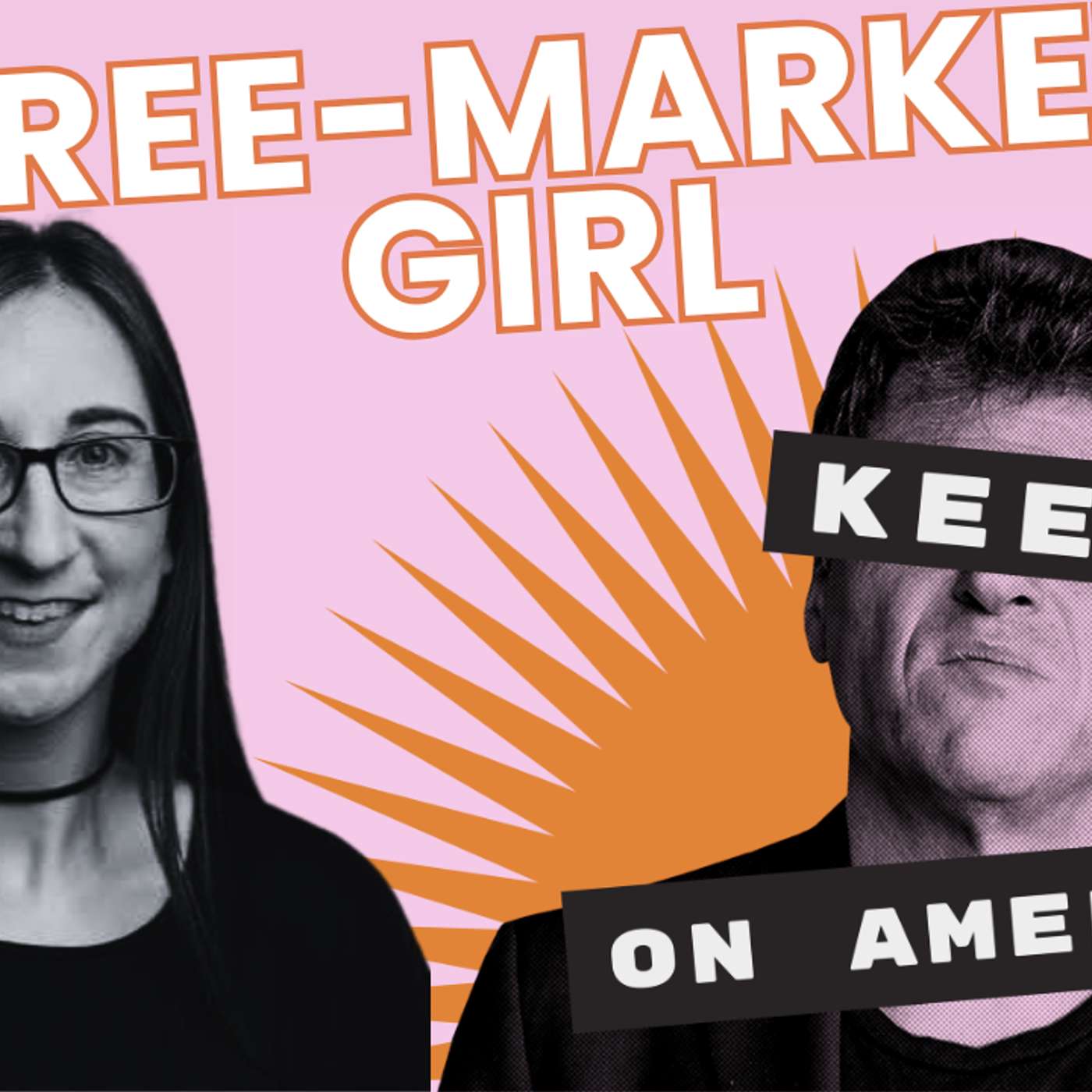


“We all kinda secretly at some level wanna use power against our enemies.” — Stephanie Slade
Earlier this week, Silicon Valley heretic Paulina Borsook railed against libertarianism. Today, the libertarians get their turn. Stephanie Slade is a senior editor at Reason and the author of Fusionism in which she lays out a contemporary path for American conservatism.
For Slade, libertarianism is captured by that New York City intersection where Church Street meets Liberty Street. “Fusionism” = Hayek + Aquinas. It marries the classical liberal defense of individual freedom to the Judeo-Christian tradition of moral virtue. And it’s a polemic against what she calls “will-to-power” conservatism of America-first statists like JD Vance and Tucker Carlson. These are Slade’s enemies. The real threat to the future of American conservatism.
Slade might be politically homeless but is hardly a moderate. She is radically committed to limited government, a pro-life Catholic and, in her words, a “free market girl.” Ronald Reagan championed trickle-down economics. Stephanie Slade fuses that with trickle-down morality. Sladeian rather than Borsookian.
Five Takeaways
• Church & Liberty Street. Fusionism, defined: the marriage of the classical liberal political tradition — individual rights, limited government, rule of law — with the Judeo-Christian understanding of virtue as the habits that let human beings flourish within an objective moral order, a lineage running from Aristotle through Aquinas. It is not sectarian: the irreligious Hayek counts as a fusionist for his respect for the tradition’s inherited wisdom, and virtue is not partisan either — Hayek and Keynes became close friends at wartime Cambridge, and “Keynes could be a virtuous person.” Slade herself is a practicing Catholic in a famously secular, even atheistic movement — a minority within a minority, which is where the whole fusionist project began. As for William Buckley: conservatism’s founding father, not libertarianism’s — and, against Andrew’s Vidal-flavored skepticism, she defends him as a man who evolved, renounced his early racial views, and declared in the eighties that “America needs a black president” — “imperfect and flawed the way we all are.”
• Economic Liberty Is Individual Liberty. Libertarianism spans freedoms coded right (markets, trade) and left (drug legalization, the bedroom) — and Slade’s core claim is that the economic ones are not a separate category: the right to make a living, dispose of your property, and trade across borders is individual freedom, full stop. Crony capitalism — government picking winners — gets no defense. On the culture wars, the fusionist rule is coercion-last: preach from pulpits, persuade, change the culture, and reach for law only when someone’s basic rights are violated — which is why she finds abortion restrictions consistent with a hands-off philosophy (two lives in the equation, on her view) while rejecting laws against how others live. Against Mill, via the scholar Jacob Levy: hers is pluralist rather than rationalist liberalism — defending the right of internally illiberal associations, the Catholic Church included, to exist free of the state. And popes get free speech too: she has disagreed with them in print.
• Will-to-Power Conservatism. The book’s target, named: a rising creed — especially among the young right — that says “politics is war, and the only question is who’s gonna acquire and wield state power against their enemies.” Trump practices it without theory (“not a philosopher… he’s just doing what he wants to do” — and, to Andrew’s wannabe-mafia-leader framing, “all of the above”); JD Vance theorizes it self-consciously; Tucker Carlson preaches it — “we wanna defeat them and destroy them… unperson them.” Her Reason essay “JD Vance and the Politics of Victimhood” tracks the mechanism: the right adopting the left’s victimhood politics — “it works for them. We should do it too” — with straight white men recast as the aggrieved class. The siege mentality underneath is real but “blown out of proportion,” and now functions as “a permission slip to do the things that everybody secretly wants to do.” Hence the episode’s pull quote — the most honest line of the hour, because it implicates everyone, herself included.
• What Trump Voters Actually Believe. Slade’s data point against the populist-economics story: an Ethics and Public Policy Center poll of 2020 Trump voters found them scattered on economics — split even on trade, with a majority calling international trade good for America, against their candidate’s signature position — but united at roughly ninety percent on the cultural siege questions: Christianity under attack, media as an arm of the Democratic Party, rising prejudice against white people. Trumpism, on this evidence, is a cultural phenomenon wearing economic clothes. The deeper commitment survives underneath: at the Heritage Foundation, she asked a man celebrating the GOP’s working-class turn whether the party should rethink free markets — he was horrified: “Of course not. We’re conservatives. That means we believe in freedom.” Recovering that buried instinct is what she cheerfully calls her quixotic hope. DOGE gets no credit toward it: all for shrinking the state, she had “zero faith” in an initiative that started breaking institutions before understanding them.
• Trickle-Down Morality. Where fusionism meets the moment. On abundance: Klein, Thompson, and past guest Marc Dunkelman share her critique of red tape, but the goal inverts — they want efficient government so it can do more (high-speed rail, Medicare for All); she wants government to do less, and would rather the market decide than “some Ezra Klein type podcaster.” The New Deal, she argues, set America back; China’s rail proves only what command economies mandate. On AI and data centers: techno-optimist — the backlash is “quite misguided,” built partly on water-use misconceptions — but with a caveat rare in her camp: “you have to build democratic legitimacy for anything you wanna do in a democratic country.” Kids not writing their own papers is a real problem; the answer is evolved norms, not top-down rules. (No, she didn’t use AI to write Fusionism: “Not at all.”) For 2028: Cruz and Rubio are closer than Vance; the true fusionists — Ben Sasse, Justin Amash — were driven out. Her bet is on reviving the ideas and letting them trickle down — which handed Andrew his closer: Reagan had trickle-down economics; Slade has trickle-down morality.
About the Guest
Stephanie Slade is a senior editor at Reason magazine, where she covers the ins and outs of the American conservative movement. Her writing has also appeared in The New York Times, America, and U.S. News & World Report. A fusionist libertarian and practicing Catholic, she lives in Washington, DC — the belly of the beast, she concedes, but a journalist has to be where the subject matter is.
00:31 - Introduction: after Borsook, the libertarian’s turn
02:12 - What is libertarianism? A fusionist’s definition
03:15 - Living in the belly of the beast
03:53 - Always a minority: Reagan’s rhetoric vs Reagan’s record
05:32 - Anarcho-capitalists: the Andreessen strain
06:30 - Church & Liberty Street: a Catholic in a secular movement
07:43 - Buckley: conservatism’s father, not libertarianism’s
09:33 - Was Buckley virtuous? The Vidal question
12:31 - What is virtue? Flourishing and the moral order
14:13 - From Aristotle to Aquinas — without the dogma
16:16 - Hayek and Keynes: a virtuous friendship
17:59 - Economic liberty is individual liberty
20:05 - Culture wars without coercion — and the abortion exception
23:06 - Fusionism vs Mill: two kinds of liberalism
25:42 - Disagreeing with popes: a free-speech absolutist
26:46 - A conservative family dispute
28:30 - The politics of victimhood, left and right
30:30 - Trump: “all of the above”
31:37 - Vance, Carlson, and will-to-power conservatism
32:11 - The siege mentality as permission slip
36:06 - Politically homeless, radically committed
38:17 - DOGE: zero faith
39:41 - Reason’s reach: 50,000 in print, 5 million online
40:26 - The Heritage anecdote: “we believe in freedom”
41:42 - What Trump voters actually believe: the EPPC poll
43:46 - Dunkelman, Klein, and the abundance overlap
46:18 - High-speed rail and the New Deal
49:16 - AI, data centers, and democratic legitimacy
52:39 - No AI wrote this book
52:45 - Cruz, Rubio, and the fusionists driven out
54:36 - Trickle-down morality
00:00:31 Andrew Keen: Hello, everybody. Earlier this week — actually, Stephanie, I'm gonna start again. Hello, everybody. It is Friday, 09/04/2026. Earlier this week, we did a show with an old friend of mine, Paulina Borsook, who is, an early critic of Silicon Valley libertarianism. Her book, Cyberselfish: A Critical Romp Through the Terribly Libertarian Culture of High-Tech, has been republished after twenty five years. She's taken on, the quality of a cult hero for many critics of Silicon Valley. But, of course, from a libertarian point of view, Borsook, is more of a problem, and I thought it might be a good opportunity today to talk a little bit more about libertarianism. One of the prominent American publications of libertarianism is the magazine Reason. And my guest today, Stephanie Slade, is a senior editor there. And as it happens, she has a new book out this week. It's called Fusionism: Liberty, Virtue, and the Future of the American Right. She's talking to us from Washington, DC, where she lives. Stephanie, congratulations on the new book. Before we get into it, I said to you before we went live, you won't be insulted too much if I call you a libertarian, and you said, no, you wouldn't. What exactly is libertarianism, and would you define yourself as one?
00:02:12 Stephanie Slade: Yes. I'm happy to call myself a libertarian. I work for sort of flagship libertarian magazine, which is Reason. I at this point, I would probably add that I'm a fusionist libertarian, which is a particular kind of libertarianism. We can get into that if you're interested. That's very much tied to the subject of my new book. But libertarians are believers in individual liberty and limited government or in some extreme cases, no government. But, basically, they wanna get government out of the way so that people can live their lives, as freely as possible, and that goes for both some issues that tend to be associated with the political right or at least once were associated with the political right, so free markets and free trade, and also issues that tend to be associated with the political left. So being in favor of drug legalization, prostitution legalization, getting government out of the bedroom, getting government out of the way so people can live their lives, and the idea that we should try to solve problems through nonstate, noncoercive means, if possible, rather than assuming that the government can pass a law and make everything okay.
00:03:15 Andrew Keen: Stephanie, what are you doing then living in Washington, DC? Isn't that the belly of the beast, like living in hell?
00:03:22 Stephanie Slade: It certainly is the belly of the beast, but I'm a journalist, and this is where the subject matter is happening. This is where it's happening, so this is where I gotta be.
00:03:30 Andrew Keen: The subtitle of the book is Liberty, Virtue, and the Future of the American Right. Before we get to the future of the American right, what is the past? Are there are we over the glory days of libertarianism? How do you define the role of libertarianism in the American right, particularly, in the twentieth century?
00:03:53 Stephanie Slade: Well, libertarians have always been one faction, in our politics. And, you know, although we're often lumped in with being on the right, I think many of my colleagues at Reason would object to that and say, listen. We believe in, you know, open borders and legalizing heroin. Like, don't call us right wingers. But I'm comfortable with being considered sort of faction or one part of the sort of broader political landscape, and we've tended to have more success with building alliances to conservatives than to those on the, you know, progressives on the left for a variety of reasons. So, yeah, I mean, we were always only one voice. We were always a minority voice. I think there have been moments when we felt like we had more or less influence in politics. Ronald Reagan campaigned in 1980 and 1984. At least his rhetoric was quite free market, quite oriented towards defending individual freedom, which is things we like. He called for a lot of things that libertarians like. On the other hand, he didn't necessarily govern in a way that libertarians were very happy with. He, for example, managed to cut taxes, but didn't manage to cut any in fact, he increased federal spending and therefore ballooned the national debt. So I would say we've always feel like we've been kind of on the outside trying to drag the political system, both parties, in a more liberty friendly direction and only at best having small bits of partial success. Although, you know, that doesn't mean that we, think it's a hopeless cause. We're happy to continue making the case for the things we believe in whether or not it seems like it has much of a chance of being implemented in any given moment.
00:05:32 Andrew Keen: So what's sometimes when I think about libertarianism, especially hardcore libertarians, especially perhaps out here in Silicon Valley, people like Marc Andreessen, they remind some people of anarchists. They don't seem to have any role or value for government. What's the relationship historically between libertarianism and anarchy?
00:05:54 Stephanie Slade: There are libertarians who identify as anarchists or anarcho capitalists. This is different from what many people think of when they think of left wing anarchism. It's the idea is that we could actually have private institutions, companies basically could fulfill all the roles that we currently expect government to do. So we could have and they would have to compete with each other, and the idea the theory is that they would have to compete with each other for your business. And so they would actually do a better job of meeting people's needs than the government does. This is not all libertarians, but it's one strain of libertarianism is the anarcho capitalist strain.
00:06:30 Andrew Keen: On your X page, you have the image of two streets meeting, Church Street and Liberty Street, which, of course, isn't literal. I don't think there's such a thing as Church and Liberty Street, or maybe there is, but you're using it.
00:06:43 Stephanie Slade: It is. It's actually in New York.
00:06:45 Andrew Keen: Well, you're right. But you're using it, of course, metaphorically or symbolically. Is that for you where libertarians congregate on the corner of Church and Liberty Street?
00:06:58 Stephanie Slade: No. I wouldn't go that far because libertarians the libertarian movement has historically been quite secular, and in many cases, even atheistic. That's one of the dividing lines that has tended or tended to divide people who identify as conservative from people who identify as libertarians. However, I am a Catholic, believing, you know, practicing Catholic libertarian, and so I'm not alone. There are plenty of people who are religious believers and libertarians as well. We're a minority voice within the movement, but we're here. And part of how I see my contribution to the conversation is kind of explaining how that's possible. Some people see that as being intention with each other, but I don't think those things are intention with each other, and that's kind of where this whole fusionism project originated.
00:07:43 Andrew Keen: Yeah. So fusionism is the name of the project and the name of the new book. Fusionism: Liberty, Virtue, and the Future of the American Right. You've already talked about Reagan. I know one of the traditional founding fathers of libertarianism, is William Buckley. We did a show with Sam Tanenhaus, of course, who has a huge new biography of Buckley. How do you view Buckley? Do you see him as one of the founding figures in your definition of libertarianism, of fusionism?
00:08:18 Stephanie Slade: I would not use Buckley as an example of a founding father of libertarianism. I think he's usually described as a founding father of American conservatism, and that's totally fair. He could be quite libertarian on some issues, and at certain times in his life, he voiced libertarian views, and at other times I mean, when he ran for mayor of New York City, for example, he called for legalizing drugs. That's a very libertarian position. But he was also a cold war hawk. Libertarians tend to be more anti interventionist on foreign policy. He at different times, he was more or less libertarian, but he was quite influential as a sort of father of American conservatism. He was the founder of National Review magazine, which is, like, the flagship conservative magazine in the United States, and he made a really conscious effort of building a movement, what we now think of as the American conservative movement or at least the American conservative movement until up until about ten years ago, was kind of defined by the ideas that were discussed in the pages of his magazine. So he was very, very influential and important, to the movement, and I and provided a forum for conservatives who agreed on some things and disagreed on some things to sort of hammer out their differences and try to build a consensus and a coherent platform for their movement to stand for.
00:09:33 Andrew Keen: Yeah. One of the things that struck me about, Buckley, particularly in my conversation with Tanenhaus, was that as a man, he was certainly wasn't particularly virtuous. I mean, he made good friends, but he also behaved often in a rather unpleasant way. Certainly wasn't defined by his virtue. The one of the words in the subtitle of your book is virtue. What exactly does that mean? And do you think that, Buckley was a virtuous fellow?
00:10:06 Stephanie Slade: Yeah. I actually think I would disagree with your characterization. I think he there were a couple of moments in his life when he famous and he spent a lot of his life on TV. That's the hazard of being on camera all the time. He, you know, he was a TV star. He had his own TV show that ran for many years, and he did many TV interviews and did commentary. And there were a couple of moments in his life where he lost his temper and went after somebody on camera. And I think
00:10:29 Andrew Keen: Very unpleasant. I mean, there were, of course, the Gore Vidal incident, remarks about, homosexuals and Jews. So, it doesn't exactly reflect well on him.
00:10:40 Stephanie Slade: I think that even Tanenhaus would probably agree that those were not in character for him, that and that he was actually much more defined by, his good humor and his willingness. And Tanenhaus has written and spoken really, actually, movingly about what a wonderful friend Buckley was and how he was willing to sort of cross the aisle and be, you know, be he was constantly entertaining in his home. He was quite wealthy. He was entertaining in his home, and it was not like he was just bringing in people on one side of the aisle. He had close friendships with people across the political spectrum. So I think that and he was, you know, very Catholic. He was a very, you know, devout Catholic. He early in his life, he was raised and the book does draw this out, and I think it's we have to be upfront about it. He was raised in a household and in an environment where he was sort of steeped in antisemitic and very much, race racially unenlightened ideas, but he evolved a lot over time and came to regret them, came to re renounce some of the views that he had when he was younger on those things. And, you know, at one point in the eighties, he said the America needs a black president. It's time. We're overdue. So I think there were ways in which his life story is a really it's much more complicated than a sort of he was a bad guy or a virtuous or unvirtuous. You know? He was a human being who evolved over the course of his life and learned and grew and, you know, went forwards and backwards and all. The way everyone is, but he did it very much more in the limelight than some people. So we can look at that, the story, you know, the lessons from that, and we can pass judgment on it, but I think, you know, from it's easy to do from the safety of the relative obscurity of somebody like me. I think his life was very interesting. He was an imperfect certainly imperfect, but also very interesting and not a bad man from my read, and I've read Tanenhaus' book. I think, you know, he was imperfect and flawed the way we all are.
00:12:31 Andrew Keen: So okay. So I accept that, and this is not a book, of course, about Buckley. What is virtue then? I mean, you've defined liberty as distance from the state, the right to, as you say, buy drugs if you choose to. What exactly is virtue?
00:12:47 Stephanie Slade: The virtue that is relevant in this conversation about fusionism, because, obviously, you know, different people can disagree about what we're talking about with virtue. I talk about fusionism as being the fusion of the classical liberal political tradition, which sort of, emphasizes and prioritizes individual liberty with the Judeo Christian moral tradition. So the kind of virtue that I'm talking about here is a Judeo Christian traditional Judeo Christian understanding of virtue. And what the that tradition teaches is that virtue is actually the sort of habits and lifestyle choices that allow us as human beings who were made by God in a particular way to become the best, most excellent, most flourishing versions of ourselves. So it's very much actually tied to, the idea of human flourishing and the idea of human happiness and the idea that it's not just whatever feels good in the moment you should do or whatever works for you, but that we were kind of created in a certain way. There is an objective moral order that's out there that's outside of ourselves, And, actually, we will flourish and thrive as human beings best when we conform ourselves in these ways, in various ways to that moral order, as opposed to ignoring it or pretending it doesn't exist or trying to create some other conform to some ourselves to some other code besides that one that was handed down through the tradition.
00:14:13 Andrew Keen: So in that sense, do you go back to Aristotle or some other medieval thinker on flourishing and virtue? Because these are all a little vague, Stephanie, or a bit abstract. Does it have to be grounded? You talked about the Judeo Christian tradition. I'm not entirely sure what that means. Does it have to be grounded in the teachings or the tradition of the Roman Catholic
00:14:36 Stephanie Slade: church? It doesn't have to be. I mean, I think that is a certainly a big part of that tradition was all the work that was done through over the course of two thousand years by thinkers that came out of the Catholic the Roman Catholic church. But this is not a sectarian idea that I'm pushing. Fusionism was sort of more ecumenical than that. The idea was people who have respect for the wisdom that was passed down through that tradition to help us figure out how to make good choices and live good lives and find happiness, but not the idea that you must be a Catholic or even a Christian or even a believer at all. I think I have I know people who I think I would define as a fusionist who are not themselves. In the book, I talk about Friedrich Hayek this way, the libertarian economist Friedrich Hayek who was not personally religious, but he had a lot of respect for the wisdom passed down through that Judeo Christian tradition. So, yes, I think it's tied to the tradition. It's tied to religion, but it's not super dogmatic about what you have to believe or how you have to worship or practice in order to be a fusionist. The idea is that there's wisdom there through that came that comes down to us through this tradition and that we will do a lot better and we will, like, you know, we will just thrive a lot more if we're respectful of that tradition and those lessons than if we try to toss them out and say, there's nothing here for me. You know, this is the twenty first century. There's nothing here that I can gain from this. And, yes, it is. It does go all the way back to Aristotle. So, for example, a thinker in this tradition would be Thomas — Saint Thomas Aquinas. He was one of the great theologians that many, Christians today draw from, and he was an Aristotelian thinker. So it is all rooted. It go it goes back much farther than just any one particular denominational set of teachings.
00:16:16 Andrew Keen: You mentioned, Hayek, one of the high priests of free market economic ideology. He's often compared with Keynes. I know you're not necessarily an economist, but is Keynes the life of Keynes, is that not a good life, a virtuous life?
00:16:39 Stephanie Slade: Yeah. He may be a virtuous man, and I think it was very interesting. I read a bunch of biographies of Hayek in the course of researching my book, and I thought it was really interesting that during his time at the London School of Economics, he and Keynes, although they were they differ, they had different visions of economics. They had different economic philosophies that they were putting forth that they were quite close friends during their time both teaching economics, you know, overlapping during and because during the if I recall correctly, during World War Two, he had to leave the London School. Well, he was teaching at the London School of Economics, but he had to go to Cambridge where Keynes was, if I'm remembering correctly. And so they became close friends during that period. It didn't it's not the case that you have to, that you can't be a virtuous person. You know, if you're not a fusionist, you're not a virtuous person. Keynes could be a virtuous person. There are virtuous people on the left, on the right of the political spectrum. It's not about that, but it's, the marriage of an understand a particular understanding of virtue with a particular political philosophy that really emphasizes limited government rule of law, individual rights, that marriage of those two things, you know, taking starting with the virtue, but adding that extra piece of the political philosophy, which also includes, economic liberty, respect for economic liberty and private property rights and whatnot, that's the marriage that we're describing when we when I talk about fusionism.
00:17:59 Andrew Keen: So what's the relationship between fuse fusionism or at least the definition of fusionism that you lay out in your book and capitalism? There's more and more discomfort with American capitalism, both on the left and the right in America today. Is the liberty and the virtue that you, talk about in this new book, is it, ideally suited to a capitalist society, a market society?
00:18:30 Stephanie Slade: I mean, I would say yes. Of course, it always depends how you define your terms and what you mean by capitalism. So in our world today, we have countries that are more or less free market. They may all have a capitalist system as opposed to, say, a socialist system, but they may be more or less free market, more or less regulation of the economy, more or less intervention from the government. There may be more or less cronyism. So if what you're talking about is crony capitalism, I'm not gonna defend that because that's not free market from where I sit. Crony capitalism, meaning the government is choosing winners and losers, and it's giving subsidies and, you know, tax breaks and regulatory carve outs for the particular players in the market that it wants to see succeed. And that's just unfair. That's tilting the playing field, you know, choosing winners and losers, tilting the playing field. That's not free markets as far as I'm concerned. But generally speaking, I think, yes, the idea of liberty and virtue, liberty includes economic liberty. It includes the right to decide how to make a living, how to dispose of your property, the right to sort of be secure in your property and know that somebody isn't just gonna come along and take what's yours, what you've worked hard for, those sorts of ideas, the right to do business with whom you wanna do business with, including across borders, I would say. That these are the sort of these are this is individual these are examples of individual freedom. And for some reason, some people tend to say, oh, I'm all for individual liberty, but suddenly they don't feel like it's relevant or important to defend it when we step into the economic realm. And I would say no. I think economic liberty is a form of individual liberty. And so if we care about freedom, person individual freedom, we should care about that as well.
00:20:05 Andrew Keen: So where are the fusionists, you as the founding member maybe of libertarian fusionism? Where are you guys on abortion rights, on homosexuality, and all the cultural third rails in 2020 America [ed.: 2026?]?
00:20:24 Stephanie Slade: There can be room for disagreement, I would say, among people who identify as fusionist. So it's not like there is a particular platform that everybody has signed on to because it is a philosophical synthesis. And so you can start with first principles and different people can come to different conclusions about the right policy that follows from those principles. But I would say, generally speaking, fusionists are going to be fairly socially conservative. They're gonna probably take many positions that you would think of as being socially con conservative on social issues. However, this is very important. This is, I think, really a really critical distinction because there are different kinds of conservatives just like there are different kinds of libertarians and different kinds of people on the left or center as well. A fusionist conservative will be someone who would say, unless somebody is somebody's rights are being violated, unless somebody's basic rights, so life, liberty, and property, are being violated by somebody else, we probably don't wanna pass a law to try to solve that problem. We probably wanna try to look to civil society institutions, individuals, communities, you know, churches, charities, the marketplace to see if we can solve a problem. So maybe they would say, a person might say, I think marriage is between one man and one woman. I don't believe in gay marriage. But rather than passing a law to ban homosexual activity or something, then they would say, let's try to use our churches, preach from the pulpit, commit persuade people to come over to our side on this issue, change the culture first rather than always assuming that the right answer to every question is to reach for the government and pass a law banning or requiring or, you know, you because government is such a blunt force instrument. You all you can really do is ban or mandate or it's very hard to really reach people's hearts and minds that way. So we want to try to win on the issues, that we care about in the cultural sphere as much as possible without turning to the coercive power of the state if at all possible until the moment when somebody's rights are violated. So this is very relevant. This is particularly relevant on the abortion issue. Because if you do believe that an abortion is a thing that involves two lives and not one life, if you believe that there's a human baby, you know, in that equation, then there is the possibility, for under this sort of framework for saying we need to have a law to protect that baby's rights, that right to life. And so there's I think it is perfectly consistent with both libertarianism and, fusionism to be in favor of restrictions, legal restrictions on abortion. That's not inconsistent with the philosophy, even though it's, generally speaking, a very limited government hands off kind of philosophy because that's an issue where the a fundamental right to life, you know, you might see that as being an issue.
00:23:06 Andrew Keen: Although, the only coherent human involved in that, of course, is the woman who decides whether or not she wants the abortion. So that's a complicated, issue. I'm not entirely clear, Stephanie, how fusionism is any different from classical liberalism. When you talk about, the right to do anything unless they harm other people? It just reminds me of Mill's On Liberty. How do you distinguish your version of fusionism, this sort of, I guess, we would call it a moderate libertarianism with classical liberalism?
00:23:43 Stephanie Slade: Well, I think fusionists are classical liberals, but not all classical liberals are fusionists. And John Stuart Mill is a great example of this. I think there are some classical liberals. There's sort of two ways to be a liberal. One is to say, I believe in individual liberty, and I want people to be free from any source of power or authority, whether it's government, whether it's private business, whether it's organized religion. I wanna free people from any kind of dominating influence or power. Mill believed that. He thought organized religion, for example, was infringing on people's liberty, and he wanted to liberate people from that. But the other way —
00:24:18 Andrew Keen: To be fair to Mill, he didn't wanna ban religion.
00:24:21 Stephanie Slade: Well, there definitely have been, classical liberals who were, you know, sort of errored in that direction of wanting to use state power. Well, I mean, Mill himself saw thought that there could be regulations of religion or, there's a great book by a guy, a scholar named, Jacob Levy. I cite him in my book, and he has a talks about these two different understandings of liberalism, rationalist liberalism that kinda wants to liberate people from any form of concentrated power, versus a pluralist liberalism, which is the one that I wanna defend, which says individuals have rights, and those rights include the right to come together and form associations even if those associate associations are themselves internally illiberal, meaning they don't give equal rights to everybody within the organization or they keep some people out or whatever or they teach things that are not about equality and, the sort of liberal values of, equality and equal rights or whatever. And so, like, an organized religion like the Catholic church, which is not internally liberal. It's not classically liberal internally, but I would wanna defend the right for it to exist and be free from any kind of interference from the state. And we have seen plenty of examples of attempted interference by the state of the Catholic church and other religious institutes institutions. There's been, you know, ongoing lawsuits
00:25:42 Andrew Keen: So where are you on the, where are you with the current pope and his insistence on having a voice when it comes to issues like AI and poverty and even capitalism?
00:25:57 Stephanie Slade: Well, I mean, I certainly support his right. Sort of I'm a free speech absolutist, basically, as a libertarian, so I support his right to have opinions and voice his opinions and to try to sort of use his influence in you know, he has this incredible platform to try to, again, change the culture, win hearts and minds, bring people over to the causes he believes in. I don't necessarily have to agree with every substantive position that a pope takes even as a faithful Catholic. I wrote things that disagree with Pope Francis, over the years. So it's not as though a Catholic or a fusionist or somebody has to agree with every substantive position that a pope takes, but I would certainly support and defend his right to have opinions and to voice his opinions and to be a sort of active participant in the public square.
00:26:46 Andrew Keen: Stephanie, everything you're saying sounds pretty reasonable. I mean, I'm not a libertarian, but, it sounds reasonable, certainly defensible. Would it be fair to say that this book and the debate that you're entering into is really a conservative family dispute? And this book, Liberty, Virtue, and the Future of the American Right, is directed against what you see or what others see as a kind of statism now within the Republican Party, particularly, represented by Trump and JD Vance?
00:27:26 Stephanie Slade: Yeah. I think that's about right. Now I think that there are is a parallel debate, sort of fam you know, family dispute happening on the left as well between different factions on the left and within the Democratic Party. But what I'm writing about is the version of this that's playing out on the right, you know, in the subtitle of the book between more classically liberal factions of conservatives, people who still believe in limited government, you know, free markets, rule of law, and, the a rising cohort of especially young people on the right, who say something more like, politics is war, and the only question is who's gonna acquire and wield state power against their enemies? Is it gonna be the left wielding power against us, or is it gonna be us wielding power against the left? And this is the only question that matters, and so we need to make sure that we're the ones that come out on top. And all this concern about liberty and virtue and all this philosophizing is just getting in the way of our realistic approach to doing whatever it takes to be the ones who wield the levers of state power. It's a very, very different vision of conservatism from what one that you might associate with somebody like Ronald Reagan.
00:28:30 Andrew Keen: Yeah. And you wrote an interesting piece which somehow encapsulates this for Reason, JD Vance and the Politics of Victimhood. Is Vance and his politics of victimhood, is there any different from the politics of victimhood on the left, what conservatives describe as woke? In other words, is and there are people on the left who see MAGA as just another version of wokeism. Is there any difference between the politics of victimhood on the right and on the left?
00:29:00 Stephanie Slade: Well, the difference is the particular categories of people, democratic and identity categories.
00:29:04 Andrew Keen: Whether you're a victim of the of white people or black people or straight people or gays, it all sounds a little bit the same, doesn't it?
00:29:12 Stephanie Slade: Yes. And that's the argument I make in the piece is that the conservatives used to say, we reject this whole identity politics thing coming from the left and trying to make yourself out to be a victim in order to get unearned social status or to avoid, accepting the consequences of your mistakes. You know, you wanna be shielded from the consequences. You say, what was somebody else's fault? I was a victim. But now I argue the right is increasingly embracing that. They've said, hey. It works for them. We should do it too, and we're just gonna say that it's white working class people and men you know, straight white men who are the victims, who are being, victimized by, centers powerful centers of left wing, elites.
00:29:51 Andrew Keen: I'm guessing you're relatively sympathetic to the Cato Institute. A couple of weeks ago, we had Nick Anthony on, who's their, crypto expert, and he was talking about what he described as Trump's dumb coin, and Trump's behavior and essentially taking advantage of the meme coins to profit himself. How does Trump come into this? Do you see him as an example of someone with or without virtue, or is he just basically a wannabe mafia leader who's using power to enrich himself and his family?
00:30:30 Stephanie Slade: I mean, all of the above. I don't see him as somebody who has any personal virtue, or is at all interested in defending these ideas that I am defending when I talk about virtue. I also think that he is somebody who rejects the classical liberal tradition because classical liberalism is fundamentally about rule of law, not of man, of separation of powers, of limiting the power of the state, of protecting individual rights, whereas Donald Trump is a man who thinks that he should get to do whatever he wants and not be constrained by anything, by the law, by the constitution, by the courts. Right? He thinks he should get to do what he wants, and that and if somebody is standing in his way, that they must be illegitimate. This is really counter to the classical liberal liberty tradition that I'm defending. It's almost the precise opposite. The only thing I would say is that Donald Trump is not a philosopher, obviously, or a theorist or somebody who has any kind of coherent philosophy of what he's doing. He's just doing what he wants to do. He's not whereas JD Vance, I think, is quite self consciously held himself out as a sort of theorist of this anti classical liberal, much more statist conservatism.
00:31:37 Andrew Keen: So as you know or as you imply, at least, Trump has as much liberalism in him as Mussolini or Lenin. And he's supposed to head up the conservative party in the United States, the Republicans, which he does. Many, quote, unquote, conservatives and presumably libertarians, virtuous people, those who believe in liberty, have voted for him. What's happened then, Stephanie in America? Why are we in this bizarre situation?
00:32:11 Stephanie Slade: This is a big part of what I was trying to understand when I started writing the book. And part of the answer I think the probably the most relevant part of the answer that I came to is that there is a large swath of the country that feels that has sort of adopted a siege mentality. They feel extremely resentful of what they see as, militant, excessive, left wing identity politics and wokeism, And they feel like all of the sort of important cultural institutions out there, Hollywood, higher education, you know, the elite universities
00:32:43 Andrew Keen: Silicon Valley, even Silicon Valley, which is supposed to be the heartland of free market libertarianism.
00:32:48 Stephanie Slade: Yeah. And especially up until a couple years ago, they would say all these institutions have been captured by the far left, and they're pushing this insane stuff. Like, not just be respectful of people who are you know, who have suffered injustices, but, like, if you are a straight white man, you have been told your entire life that your job is to sit down, shut up, and, listen to your moral betters and accept that you're not gonna have the same opportunities to get into colleges or have job opportunities as other people are because you don't have the correct demographic characteristics. And they're just or if you're a Christian, they've been told if you voice your opinion about marriage being between one man and one woman or something, we are going to come after you, and we're gonna make it impossible for you to have a business, to keep a job. Like, they just have this sense of this siege mentality of the hostility of the culture that's been captured by their people who see them as the enemy and who hate them and who are hostile to everything that they and people like them believe. And this is large swaths of the country who feel this way. It's not just
00:33:43 Andrew Keen: Yeah. And I take your point, but you don't buy it. Stephanie Slade, the senior editor at Reason, a libertarian, the author of Fusionism, you don't buy that view of the world or their view of the world.
00:33:55 Stephanie Slade: Well, I'm sympathetic to it. I think they're not imagining all of it, but I think it has been blown out of proportion and is now being used as a sort of permission slip to do the things that everybody secretly wants to do, which is, again, to use power against their enemies. We all kinda secretly at some level wanna use power against our enemies.
00:34:12 Andrew Keen: Do you have any enemies, Stephanie? Who would you like to expel? [unclear]
00:34:15 Stephanie Slade: I try really hard not to. I would much rather, you know, have a conversation with people I disagree with rather than see them as an enemy. But I just I think that there is this, the way it's not that I think that they're complaining about things that don't exist. I think that those complaints have been exaggerated, that they've been really blown out of proportion, and that they're now being used to justify real going in a really dangerous, yeah, authoritarian direction with our politics.
00:34:43 Andrew Keen: And then JD Vance then be is exhibit a here. There was a piece this week in The Wall Street Journal about Vance defending his friendship with, quote, unquote, Trump critic Tucker Carlson. Where's Carlson in this? Is he a fusionist?
00:34:58 Stephanie Slade: Oh, no. And he may have been at one time, but he long ago left that train. And I would say he's another one of like Vance, he is one of the sort of foremost, defenders of an anti liberal, anti classically liberal, conservatism that says we should be willing to use state power to go after our enemies. And it just sort of rejects the very you know, the liberal this foundational liberal idea is that we have people of a variety of beliefs and values out there, and we need to find a way to live peacefully with each other and not be trying to kill each other all the time. And liberalism says, we'll do that by agreeing that we're not gonna use code the course of power of the state to try to force other people to live the way we want them to live. We'll all it's like a truce. And this will to power conservatism, I call it, that Vance and Carlson and Trump and others, are practitioners of is the opposite. It says, we don't wanna share a society or live peacefully with people who don't share our values. We wanna defeat them and destroy them and either force them to live the way we want to live or find a way to expel them, make them, you know, unperson them, in some way. And they say they would say, and we wanna do that because we feel like that's what the left has been trying to do to us all along.
00:36:06 Andrew Keen: Stephanie, we've had many centrists who ex Republicans on the show, Pete Wehner, for example, Jonathan Rauch, many others, who will consider themselves, I think, politically stateless, at least when it comes to parties. What about yourself? Why don't you it sounds to me the more you talk, the more you sound like a pretty moderate Democrat. Why not just throw your lot in with the moderate Democrats?
00:36:36 Stephanie Slade: I don't see myself as a moderate Democrat. I mean, I would be happy to work across the aisle with moderate Democrats. I don't see myself as a moderate. I'm radically committed
00:36:43 Andrew Keen: Or moderate, in your own reasonable way.
00:36:47 Stephanie Slade: Well, I'm radically committed to limited government, to free speech, to religious liberty. I want a radically smaller government that gets out of people way people's ways. And so in that sense, I don't think I necessarily see myself as a moderate. And I also I just I do really believe very deeply that economic liberty is an important kind of liberty that individual freedom that we should care about. I think folks on the left of center tend to be a lot less interested. They are much just more comfortable with the idea of using the state to intervene in some way to try to manage or control the economy or bring about economic outcomes that they consider to be superior. This is also now what we're seeing on the far right. But I'm really strongly, well, I'm just skeptical and strongly opposed to that. And so, that's why I'm not a Democrat. I'm too committed. I'm a pro life Catholic. I'm a committed free market, you know, free market girl. And so I do sort of feel myself consider you know, see myself as politically homeless. You're not wrong about that. And I am not opposed to saying on any particular given election I could vote for a Democrat, but I'm not looking to sort of hitch my wagon to that party, which I think is quite fundamental. And because in many ways, the party has gone so gone all in so much, on its far left flank in ways that I think have really driven a lot of, you know, a lot of moderates out of the party and over towards in the direction of Donald Trump. So, I'm worried about that as well myself.
00:38:17 Andrew Keen: You're worrying about a lot of things. As a, quote, unquote, free market girl in your words, not mine, what's your reading? What's your take on the DOGE initiative, which many people, particularly on the left, are horrified with of, Elon Musk at the beginning of Trump 2.0, which doesn't seem to have ended very well. It didn't last very long. Were you initially in favor of that, of this purging almost of the state itself?
00:38:47 Stephanie Slade: I mean, I'm all in favor at a theoretical level of shrinking the state. I think we the government is too big. It's too involved in people's lives. It does a lot of things it shouldn't be doing at all, and, it's bloated in many ways. There probably is an enormous amount of waste that could be, you know, we could it could be much more efficient than it is. Having said all that, from the very beginning, I had zero faith that this initiative run by a guy who had no government experience and sit and who, you know, that and who didn't even seem to care that much about understanding the issues before he started breaking them.
00:39:20 Andrew Keen: You know, I'd say mildly, I think. [unclear]
00:39:22 Stephanie Slade: Yeah. Understanding the institutions before he started breaking. I did not have much hope at all that this would go well. I was glad to see people getting excited about the idea of government efficiency. I do think there's a lot of work that could be done there, but I this obviously was not an effective, you know, or successful attempt.
00:39:41 Andrew Keen: Reason is incredibly intellectually. It's not a massive magazine. I think it's supposed to have about a circulation of 50,000 print and online, which doesn't make it that large. Given that and your fusionist ideas, how large is it? Is it just Stephanie Slade and a few other discontents on the right?
00:40:08 Stephanie Slade: So let me say, Reason has about 40 or 50,000 print subscribers, but our online, you know, viewership and readership is much higher, like, on the order of magnitude of, like, four or five million a month that, encounter our stuff online.
00:40:20 Andrew Keen: So you do have a bigger constituency than just 50,000 because
00:40:26 Stephanie Slade: Yeah. And I would say fusionism, which is, again, a sort of slightly it's overlapping but slightly different from libertarianism because there are nonfusionist libertarians just like there are nonfusionist conservatives. But there is a huge swath of the sort of broad conservative movement that I think is still they maybe have drifted away from their fusionist commitments in recent years in part because they feel so frustrated and resentful of the far left. But you talk to them. I have this story. I was at the Heritage Foundation, and I was talking to a guy, and he was talking about how proud he is that the conservative movement is not the working class party. The Republican party is not the working class party. And I asked him, do you think that means that the Republican party needs to rethink its previous commitments to free markets and free trade? And he was horrified, and he said, of course not. We're conservatives. That means we believe in freedom. And I think that's the sort of deep seated commitment that's sort of at the base of a lot of how a lot of conservatives think about what they're committed to. I don't necessarily think I mean, I definitely don't think that's been coming out in our in right of center politics in the last ten years. But I think it's sort of still there, and there's a there's at least an opportunity to recover it and bring it back to the surface. And so that's sort of my quixotic hope or quest here.
00:41:42 Andrew Keen: How do you know the Republican party in America changed dramatically since Reagan and, Buckley? Much more unequal in the kind of, maybe you won't agree with this definition, but the country club libertarianism or liberalism that you're laying out was relevant in the nineteen fifties and sixties, seventies, even eighties, but is no longer relevant.
00:42:08 Stephanie Slade: I mean, I think it's certainly true that we've seen a demographic shift so that for ex so for example, voters with a college degree overwhelmingly likely to vote Democrat now, and voters without a college degree are much more likely now to vote Republican. That is a change. Right? That's the opposite of the way people would have expected it to go twenty years ago or fifty years ago. So there are changes. But even when you dig down into the polling numbers, you find that even these, you know, quote, unquote, working class Republican voters or Trump voters, for the most part, are not, they're not particularly on board with, like, left of center economics. There I there's this poll that was done by the Ethics and Public Policy Center right after the twenty twenty election. It was a poll of Trump voters and people who voted for Trump in 2020. And I thought it was just very interesting that they were totally divided. They were all over the place on economics, even on something like trade where Trump is really clearly anti trade, right, very pro protectionist, pro tariffs. But his voters were not. They were split on this. A lot of them actually I think even a majority of them said trade is international trade is good for America. But the things that they were, like, united on, unanimous on, like, 90% agreement, was on the sort of culture then these questions of feeling culturally under siege. Like, we feel like Christianity is under attack in America today. We feel like the mainstream media is just an arm of the Democratic Party now, that we feel like there's more and more, prejudice and discrimination against white people happening in this country. It was those questions that seem to be animating the Trump phenomenon, not so much a, like, the idea that the Republican Party is now the party of populist economics.
00:43:46 Andrew Keen: Stephanie, I found an interesting piece on Christianity Today where your book was being reviewed, and it was entitled Can the Left and Right Tell Their Right from the Left [as spoken]? There were three books, Democracy in America by Tocqueville, of course, the classic nineteenth century book on America. And then your book, in contrast with Marc Dunkelman's Why Nothing Works. Dunkelman from Brown University was on the show a few months ago. How does your fusionist view fit in a sense with Dunkelman? Dunkelman argues that the problem with America is nothing works anymore, that, there's too much bureaucracy, and that's why they can't America can't build high speed trains. That's why deindustrialization is increasingly the reality in much of America. What do you make of Dunkelman and perhaps the abundancy agenda, Ezra Klein and Derek Thompson on the left?
00:44:46 Stephanie Slade: Yeah. This is a great question. I asked about this a lot. I would say that those factions of the left of center are definitely closer to a free market conservative or libertarian or, therefore, fusionist perspective on how the world works. We want to get bureaucracy and red tape and, you know, mandates and regulations out of the way so that people can do what they wanna do. There is a really important distinction, though, and Ezra Klein makes this point very explicitly. I'm thinking back to an interview he gave with you know, he did with Jon Stewart where he said, look. I am not a conservative. I am not a libertarian. I wanna get government out of the way. I want go get government, you know, regulations out of the way so that government can do big ambitious things like high speed rail or Medicare for All [unclear] or whatever. That is not the libertarian perspective. We wanna get government out of the way so that people individually and in through private institutions, the companies they form, the civil society, you know, charitable organizations they form can do things. We don't wanna empower government to do more things to sort of take up a larger, chunk or of the sort of economic activity that our country engages in. I want the government to do less, not more. And so at the end of the day, although we're identifying similar critiques of the current situation, and I think that they are closer to a libertarian economic outlook. Their goal is fundamentally different from ours, which is they want government they wanna make government more efficient so it can do more. We wanna get government out of the way so people, you know, outside of government can do more.
00:46:18 Andrew Keen: Presumably, though, you believe that America should have high speed rail and other services to make it a more efficient country, a country that can compete economically with China. It sounds to me, Stephanie, as if your conservatism is a Coolidge like, a pre industrial American conservatism of the late nineteenth century. In this fusionist view of the world, how is America ever gonna get high speed rail?
00:46:46 Stephanie Slade: Well, I'm fairly techno optimistic, so I wouldn't say pre industrial. I think I'm you know, libertarians are very positive about the fruits of the industrial revolution, which have made us the richest, you know, the richest society in the history
00:46:58 Andrew Keen: of the world. In here, but that's true. But much of it was realized. I mean, even you would have to acknowledge that some of it was realized with the role of government. Certainly, with the New Deal, liberalism made America of a viable, functional industrial state.
00:47:13 Stephanie Slade: Oh, I don't agree with that analysis at all. I think the New Deal specifically actually set us back in many ways. I think it was much more the unleashing of the private sector earlier, you know, in the actual industrial revolution and in the postwar years that created the great economic gains that we've seen. And so this is the example. This is, you know, your high speed rail example is perfect because I would my position on high speed rail is I think that if it is the most efficient way to do the thing, then the markets will figure that out. But if it's if the markets are not figuring that out, if private industry is not choosing to build high speed rail, then one of two things is happening. One is either government regulations and restrictions are standing in the way. And so then I would be in overlapping agreement with the Yeah.
00:47:54 Andrew Keen: That's the Dunkelman argument.
00:47:57 Stephanie Slade: Yeah. But or the other possibility is maybe industry has figured out better, you know, even higher tech ways through air you know, air freight and through shipping innovations and whatever else in order or through moving us a little bit away from the sort of need to move as many physical things across the country because our economy is much more virtual these days, much more, about the information economy and service economy. And so it's it is possible that we should have high speed rail in this country and that we need it in order you know, you said we need it in order to compete with China. I'm not convinced that because China has done something that's any real evidence that it's that's a good thing to be shooting for because China is a top down command economy. So some bureaucrat might have decided high speed rail is the future, and they be may be missing the next technological transportation advancement that is being developed here in the United States, you know, that's gonna actually outstrip whatever high speed rail we might sink trillions of dollars into trying to build, you know, because some bureaucrat wanted it. I just I like I wanna see the market solve this in the way that makes the most sense given the resources and constraints that we face in our country and not have some government agency or even some, you know, Ezra Klein type podcaster deciding that it's what we need, and so then we do it.
00:49:16 Andrew Keen: Trump recently announced that he backs OpenAI in a fight. It's having a copyright fight with the New York Times, which isn't exactly surprising. He was also flirting with investing, the state investing in OpenAI. China, of course, is in some way, certainly competing with the US on the AI front. AI is very unpopular in America. It's probably because it conforms to your theories of grievance both on the left and the right, which have congregated or sort of climaxed in the issue of data centers. What's the fusionist take on AI and data centers for or against?
00:49:55 Stephanie Slade: Well, again, I think a fusionist is somebody who's committed to these sort of principles of liberty and virtue, classical liberalism, and the Judeo Christian tradition, and different fusionists might disagree on a particular policy position. So I don't wanna try I don't wanna sound like Well,
00:50:09 Andrew Keen: you're allowed to be the high priest of the high priestess of fusionism on your
00:50:14 Stephanie Slade: Well, I feel more comfortable saying that libertarians, the libertarian movement, and sort of, you know, the Reason magazine space, the Cato Institute space, is very positive about these technological advancements. And we think that the backlash against, like, data centers, for example, is quite misguided and is probably mostly rooted in misunderstandings of what's going on, like, for example, the amount of water that they use. I think that there's a sort of a lot of misconceptions out there that's driving some of this. And as a general matter, these data centers and the sort of ability to operate in the an economy through the cloud and all that has done nothing but made it make us our lives, like, richer and, you know, better off overall. And so that's my our gen we are generally, like, we're techno optimists about these sorts of things. We want to see people have access to as much, you know, abundance really as possible. We just disagree about whether the abundance is gonna come through the private sector or the public sector. Now if there's sort of backlash against something, then that's a challenge for us. We that means that the people who are for it have to do a better job of making the case for our side. So I'm not trying to say that I don't know. They're all stupid, and they their complaints are illegitimate, and we should just do what we wanna do regardless of the, you know, lack of support. We have you have to build democratic legitimacy for anything you wanna do in a democratic country. So that I think that's actually quite very quite important to keep in mind. But, yes, do I think that we are better off with, more data centers? Yes. I suppose I think that these are two slightly different issues, the data centers versus the AI, because AI is a tool. It can be used for good. It can be used for bad. That's, you know, we're gonna have to evolve new norms and best practices about as human beings for how to use it, you know, well and not badly, and that's gonna have to happen. And there's gonna be growing pains there, and that's, I have my concerns about whether it's, you know, currently causing problems. I think it probably certainly is. Like, our kids not writing their you know, college students are not writing their own papers. High school students are not actually learning because they're getting AI to do their homework. These are problems. But I think we can generally speaking, I think we will evolve solutions and adapt to the new normal, if we are not if we are allowed to and we are not we don't have a government that tries to impose a sort of top down solution on us without, of course, understanding what it's doing because it never does. So that's my general take on this.
00:52:39 Andrew Keen: So I hope you didn't use AI to write Fusionism, did you?
00:52:43 Stephanie Slade: Not at all.
00:52:45 Andrew Keen: Good. Finally, Stephanie, you're not a big fan of JD Vance. You're certainly not a big fan of Trump, although he won't be running in 2028. There was a piece recently, in the journal again about Ted Cruz testing the waters for a 2028 run. You've identified as still being a conservative, probably more of a Republican than a Democrat, although you feel politically homeless in some ways at the moment. Are there figures in national politics, maybe Cruz, maybe Rubio, who they're not pure fusionists, but would they be the kind of candidates that might, encourage you to support them?
00:53:31 Stephanie Slade: These things are relative. I think that Cruz and Rubio are closer to the fusionist side than to the post liberal will to power, you know, anti classically liberal side. I would rather have one of them than JD Vance as the nominee, the Republican nominee in two years. There probably are other I mean, there are other people who have been much more, committed fusionists. Somebody like a senate former senator Ben Sasse or a former representative, Justin Amash from Michigan who were great fusionists and were basically driven out of our politics because the public mood in the last years has not been very fusionist. It's not been very, very favorable to the things that I believe. But I think that's just because five years ago, the mood was anti fusionist doesn't mean that will be the case in two years or in ten years. You know? And so I'm more interested in trying to revive the ideas and hoping that they will, like that will trickle down in the future to better politics, healthier politics, as opposed to thinking that we're gonna get the perfect embodiment of my views as the nominee in two years, which doesn't seem very likely.
00:54:36 Andrew Keen: Well, Ronald Reagan had trickled down economics. Stephanie Slade has trickled down morality, perhaps, or certainly political ideology, in Fusionism: Liberty, Virtue, and the Future of the American Right. Certainly, many people on the right won't agree. Many people on the left won't agree, but I think that's why it's so healthy. Stephanie Slade, thank you so much for appearing on the show. We'll have to get you back in 2027 or 2028 to figure out the politics of the American right. Thank you so much.
00:55:09 Stephanie Slade: Thank you for having me. This was great.