The Six Minute War: Michael Dobbs on Reagan, Russia, and the Race to Automate Armageddon
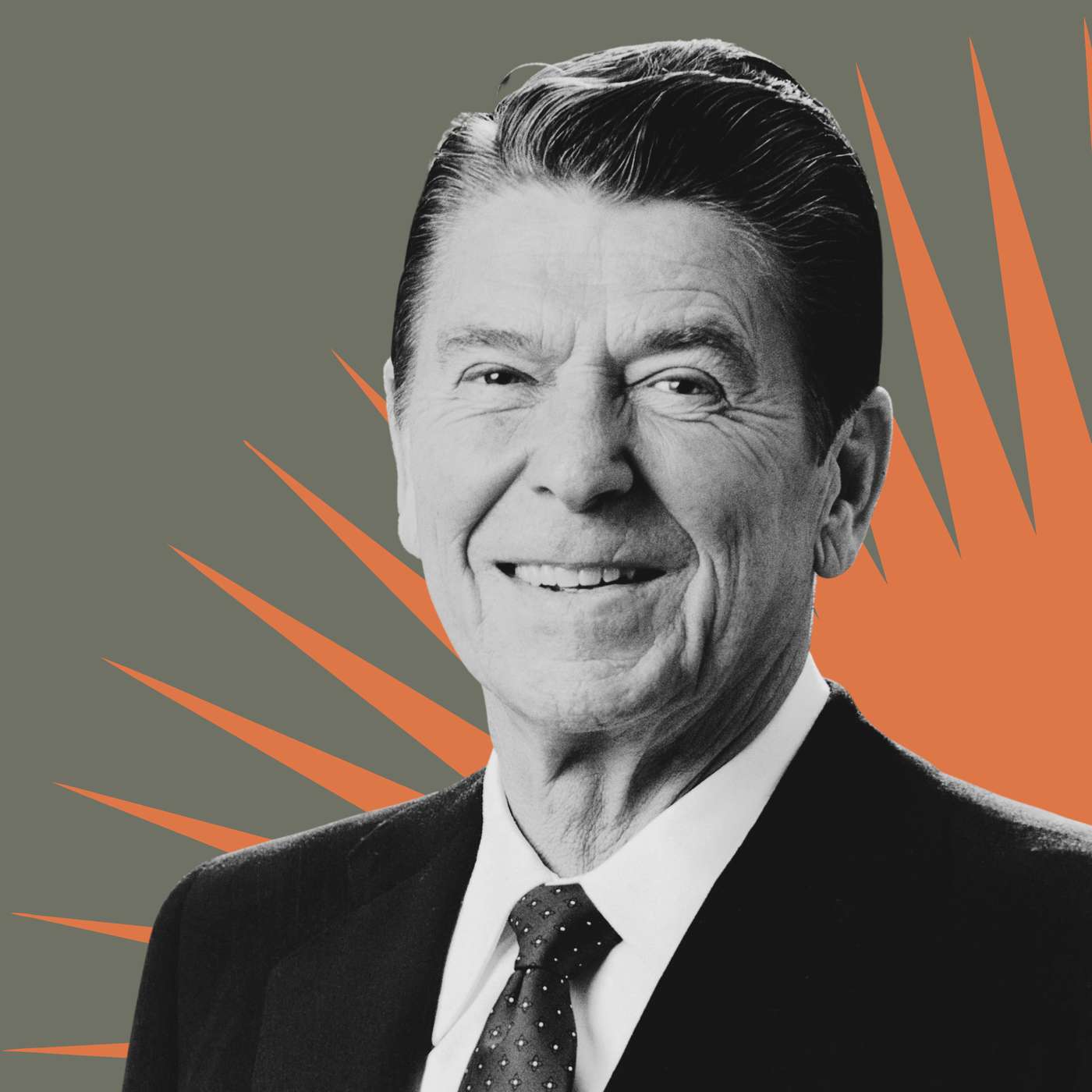


On 16 October 1962, exactly sixty-four years ago, photos of Soviet missiles on Cuba were shown to President Kennedy and the world faced nuclear Armageddon. The definitive account of that thirteen-day crisis, One Minute to Midnight, was written by today’s guest, the presidential crisis historian Michael Dobbs. He has now written about a crisis that few remember, but which he calls the climactic crisis of the Cold War.
It happened in 1983. In September of that year, the Soviets shot down a South Korean airliner with 269 people aboard, among them the most anti-communist member of the United States Congress. A few weeks later a Soviet early-warning computer reported that America had launched its missiles, and a colonel named Petrov, alone in a bunker at one in the morning, decided on his own authority that the machine was lying. In November NATO ran a nuclear release exercise called Able Archer, which Moscow took for the real thing.
The difference between 1962 and 1983, Dobbs says, was twenty years of technology. Kennedy had thirteen days. Reagan, by his own estimate in his memoirs, would have had six minutes. Thus the title of his new book, The Six Minute War, subtitled Reagan, Russia and the Race to Automate Armageddon.
As the incoming Moscow correspondent for the Washington Post, Dobbs had a front seat on the crisis. He arrived in Moscow just after the airliner came down, and his best material is anecdotal. He saw Russians bussed to a state-organised protest outside the American embassy, chanting on cue while jealously eyeing the Buicks and Cadillacs parked on the street. In a Moscow cinema showing Three Days of the Condor as anti-American propaganda, he watched the audience gasp — not at the dastardly CIA, but at the lavish contents of Robert Redford’s fridge.
Fast forward to today, and we get to the most worrying part of Dobbs’ analysis. The presidential crisis historian reckons we are now in a more dangerous period than at any point he can remember. We have more weapons, less warning, with our split-second decisions dependent on machines whose reasoning is increasingly hard for us humans to understand. Call the compounding annual risk one per cent. Multiply it across thirty years and the arithmetic isn’t reassuring. We might now be just a few seconds to midnight.
FURTHER READING
• Michael Dobbs, The Six Minute War: Reagan, Russia, and the Race to Automate Armageddon (Simon & Schuster)
• His Cuban Missile Crisis book, One Minute to Midnight (2008) — the thirteen days against which he measures the six minutes. Down with Big Brother and Six Months in 1945 complete his Cold War trilogy.
• The National Security Archive’s declassified sourcebook on Able Archer 83 — the NATO exercise the Kremlin read as cover for a first strike.
• Eliot Cohen made the companion argument on this show: that the nuclear danger now sits with Pakistan and North Korea rather than Moscow and Washington. Listen or watch.
• Harold James’s essay “Late Soviet America”, the gerontocracy parallel AK raises at 25:26 — among his Project Syndicate columns.
FIVE TAKEAWAYS
1. The headline is about now, not 1983. The historian who wrote the definitive account of the Cuban Missile Crisis says we are in a more dangerous period today than at any point in his memory of the Cold War, as a child or later as a reporter. His reasoning is that the warheads have proliferated, the warning times have been compressed, and the decisions are moving to computers whose workings we cannot inspect. The Cold War at least had a rough nuclear balance between two systems that understood each other. He is more frightened for his grandchildren than he was at the tensest moments he lived through.
2. What changed between 1962 and 1983 was twenty years of technology. Kennedy and Khrushchev had thirteen days to argue their way out of Cuba, which now looks almost leisurely. By 1983 bombers had given way to missiles and computers had entered the early-warning chain, and Reagan wrote in his memoirs that he might have six minutes to decide whether a blip on a screen was the end of the world. That line is where the book’s title comes from. Dobbs is candid that there was no six-minute war: the compression of time is the subject, not an event.
3. A Soviet colonel is the reason this is a book about automation. At one in the morning in the autumn of 1983, Soviet satellites and computers reported an American missile launch, and Colonel Petrov had to decide whether to pass it up the chain as real. He had written some of the algorithms himself and knew they could be wrong, and he reasoned that nobody opens a surprise attack with five missiles rather than two hundred. So he called it a false alarm on his own authority. Dobbs’s point is not that Petrov was a hero but that somebody else in that chair might have answered differently.
4. Reagan was the most anti-nuclear president since the bomb was invented. This is the claim least appreciated at the time and the one Dobbs presses hardest. The man denouncing the evil empire was also reading the Bible for prophecies of Armageddon and was genuinely tormented by the possibility of nuclear war, which is why he later stunned his own advisers at Reykjavik by proposing to abolish nuclear weapons outright. Asked which Reagan to believe, Dobbs refuses to choose: both were real, the militant anti-communist and the pragmatist who found someone he could deal with in Gorbachev.
5. Nobody starts a nuclear war on purpose, which is the frightening part. In both 1962 and 1983 the danger was never a deliberate first strike but an accident that escalates past the point where anyone can stop it — a stray airliner, a faulty algorithm, an exercise misread as cover. Andropov told the former ambassador Averell Harriman exactly that in the Kremlin, and Dobbs thinks it remains true with Pakistan, North Korea and now AI added to the mix. His prescription sounds modest and is not: elect sensible leaders, keep talking to the other side, and practise the empathy that let Kennedy ask what the world looked like from Khrushchev’s chair.
ABOUT THE GUEST
Michael Dobbs is a presidential crisis historian and a former foreign correspondent and Moscow bureau chief for the Washington Post, where he launched the paper’s Fact Checker column in 2007. He reported from Moscow through the 1983 war scare and was there in August 1991 when Boris Yeltsin climbed onto a tank. His Cold War trilogy comprises Down with Big Brother, One Minute to Midnight and Six Months in 1945; he is also the author of King Richard, The Unwanted, Saboteurs and a ...
00:00:31 Andrew Keen: Hello, everybody. It is Friday, October 16, 2026. Sixty-four years ago, exactly sixty-four years ago, the world's biggest crisis, perhaps the most existential crisis ever to face, the globe began. The Cuban Missile Crisis began on October 16, 1962. Of course, we're still around. We got out of it. It's covered by my guest today, the distinguished presidential crisis historian, Michael Dobbs. His book, One Minute to Midnight: Kennedy, Khrushchev, and Castro on the Brink of Nuclear War, did rather well. Came out in 2009 [ed.: published 2008]. But, when we think of crisis years, we often, of course, think of the missile crisis. We think less of 1983. But in 1983, there was a Soviet nuclear false alarm incident as well as the downing of Korean Air Lines Flight 007, both in September 1983. And according to our guest, the president— as I said, the presidential crisis historian, Michael Dobbs, it resulted in something called The Six Minute War: Reagan, Russia, and the Race to Automate Armageddon. And it was, in some ways, as dangerous a year as the Cuban Missile Crisis. Fortunately, we're all still around, Michael. Joining us from Bethesda, in Washington, DC. Can we really compare 1983 to the missile crisis of 1962?
00:02:22 Michael Dobbs: Well, I think it was different. It was, a crisis in a different way. And in its own way, it was— it— perhaps not the most dangerous moment in the Cold War, but after the missile— after the 1962 crisis, I think it runs as certainly a close second. The main difference between 1962 and 1983 was twenty years of technology. And in 1962, John Kennedy and Nikita Khrushchev had thirteen days to resolve their differences over Khrushchev's deployment of missiles in Cuba and to find a way out of the crisis. So it all happened in a very— or what seems like a very leisurely manner compared to the way crises are likely to develop today. By 1983, the whole speed at which, crises can accelerate, had changed completely. Instead of the main threat to the United States being, bombers, the threat has become nuclear missiles. And, of course, there's been a huge, advances in computer technology. And so I don't think that a modern-day president would have thirteen days to resolve a crisis like the Cuban Missile Crisis. And certainly Ronald Reagan, who was the president at the time, he didn't think so. He said that in his memoirs, in a little noticed, portion of his memoirs, he says, I might have only had six minutes to figure out whether a blip on a radar screen, meant that the United States was really under attack. And how can, any human being make a decision in that amount of time? So although we weren't as close to using nuclear weapons in 1983 as we were in 1962, the '83 crisis is dangerous because of this compression of time, and the way in which a president had to make decisions very quickly in the event of a crisis blowing up.
00:04:50 Andrew Keen: Okay. So let's get into the details, Michael, of the crisis. The Six Minute War — unfortunately, it didn't happen, of course. Reagan, Russia, and the Race to Automate Armageddon. You're a Washington Post reporter or you were a Washington Post reporter. Where were you in, when this crisis began?
00:05:12 Michael Dobbs: Actually, I'd been based in Paris, but, I was slated to become the Moscow correspondent for the Washington Post. And, at the time the, then Moscow correspondent, a man called Dusko Doder, was on vacation. So I had a visa in my passport to go to Moscow, and I went to Moscow a few days after the downing of the South Korean airliner by Soviet air defenses. This airliner had— was flying from Alaska to, South Korea to Seoul and it, because of a computer snafu, it ended up over the Soviet Union and the Soviets shot it down. So this was actually one of the most tense moments of the Cold War. And I arrived in Moscow in the middle of it.
00:06:05 Andrew Keen: And, I know you were at the movies. You went to see Three Days of the Condor, which was written by my friend James Grady. [ed.: the film was adapted from Grady's novel Six Days of the Condor; screenplay by Lorenzo Semple Jr. and David Rayfiel.] He's been on the show a couple of times. How were the Russians dealing with this crisis? Did they all think we were on the brink of Armageddon?
00:06:23 Michael Dobbs: Well, Russia is, of course, a completely different kind of society to the United States. In the U— West, we have a surfeit of information. In Russia, you have a dearth of information. And so ordinary Russians depended very much on what they were told by their leaders, through state-controlled media and state-controlled TV. But as you say, I did go to a, there was a movie showing the Three Days of the Condor and I wanted to judge, Russian vox pop at this movie. It's a very anti-American movie. It's about a dastardly CIA plot, and starring Robert Redford—
00:07:06 Andrew Keen: I mean, it isn't. It isn't. I'm actually surprised that in 1983, Three Days of the Condor was on in the Soviet Union. I mean, on the one hand, of course, it does— part of the plot is this dastardly CIA agent. But, you know, Redford's the hero, and he's the good American guy. He's the only thing to do— the Russians aren't in it.
00:07:24 Michael Dobbs: Well, what was interesting to me was that all this, you know, what you could call the propaganda of the movie, the anti-American propaganda, went completely over the heads of ordinary Russians. And what they were interested in was, you know, how they saw, ordinary Americans' lifestyles on TV. And there's one scene— in the movies rather. And there's one scene in the movie where, Robert Redford goes into his kitchen and he opens up the fridge. And, I can remember the gasps in the audience when they saw what was inside an American fridge. So, although the, Soviets might have screened this movie because they thought it was an anti-American movie, the message that ordinary Russians had was that, you know, this place, America, is a much more advanced place than, Russia is. And, they wanted, you know, they thought they wanted part of this consumer lifestyle.
00:08:26 Andrew Keen: Well, you can't really blame them compared to what was happening in Russia at the time. And Faye, I don't know if you remember, Faye Dunaway looked particularly glamorous in that film. I don't know if all the Russians thought that all American women looked like Faye Dunaway.
00:08:39 Michael Dobbs: Well, that was part of the impression that they came away with. But, I think the main thing was, you know, the consumer lifestyles and, just an ordinary American apartment was breathtaking to Russians. And I also happened to go to a demonstration that was, you know, an officially sponsored demonstration outside the American embassy, because, if you recall, this was the period when Reagan was denouncing the Soviet Union as the evil empire. And, we were deploying, missiles to West Germany, Pershing and cruise missiles, which could actually destroy the Kremlin in just six minutes. So they organized these demonstrations. But what really struck me was that the Russians who had been hauled along to the demonstrations were more interested in the outsized American cars, the Buicks and the Cadillacs that were parked on the street outside, than in denouncing America. It was, you know, a really kind of split-screen moment where they were chanting anti-American slogans but you could see them thinking about, you know, these huge American cars that were on display outside the embassy.
00:09:57 Andrew Keen: Michael, you've spent your professional life in and out of America. You wrote a book on, Richard Nixon, King Richard. The— so, you're all too familiar with American presidents. Reagan, of course, at certain points in his presidency wasn't taken very seriously. I remember coming to America for the first time during the presidency, and there was that incident where he joked about launching nuclear weapons. Was this before or after the crisis that you were talking about?
00:10:33 Michael Dobbs: I think it was about the same time. I think the actual joke about bombing the Soviet Union came a few months later. [ed.: the "we begin bombing in five minutes" mic-check joke was in August 1984.] But, you know, that very much reflected his view of the Soviet Union as the evil empire. Of course, he changed a lot later in his presidency during his second term when he negotiated with, Mikhail Gorbachev. But at this point, this was deep in what the Russians called the age of stagnation. The longtime leader, Leonid Brezhnev, had just died and his place had been taken by a KGB chief, Yuri Andropov. And as far as Reagan was concerned, you know, the— this was the evil empire that, stood for everything that was antithetical to America. And, he had a divine mission almost to, combat, this, evil force. That was his mindset back in 1983. And that was one of— part of the background to this crisis.
00:11:36 Andrew Keen: Reagan's reputation, of course, is still controversial. I think, perhaps less controversial than during the presidency. How does he come out then of this crisis in terms of your history in this new book, The Six Minute War? Was he the crazy Reagan? Was he the Reagan who appeared to be crazy? Was that actually rather sane? Was he the Reagan controlled by Nancy or a Reagan controlled by his advisers? What do we learn about Ronald Reagan from this crisis?
00:12:09 Michael Dobbs: Well, I think one thing that was not appreciated at the time was that Reagan was one of— probably the most antinuclear president, the United States has had since the invention of the, atomic bomb in 1945. He was obsessed by, the thought of Armageddon. He studied the Bible and he thought he found prophecies of Armageddon in the Bible. So he was very anti-nuclear. And he thought a nuclear war was quite possible and he had the job of, as president, of preventing a nuclear war. And, you see this, I think some of this sort of anti-nuclear sentiment was kind of hushed up at the time. Later, it became obvious when he went to, Reykjavik to the summit with Gorbachev in Iceland and proposed the complete abolition of nuclear weapons to the horror of some of his advisors. So, you know, there are two sides to Reagan. On the one hand, there was all this militant anti-communist rhetoric. But on the other hand, he was deeply troubled by, you know, the possibility that we could end up in Armageddon.
00:13:31 Andrew Keen: Well, you got it. You're the historian, Michael. Which side of Reagan do you think we should take more seriously? The Bible-thumping, guy who was obsessed with Armageddon and reading the Bible to find passages which somehow pertain to nuclear war or the sensible, down-to-earth guy who actually wanted to get rid of nuclear weapons?
00:13:55 Michael Dobbs: Well, I think both sides are accurate, and you can't say that, you know, one side is the real Reagan and the other side isn't. I think, you know, he was, a rather— in some ways, he was quite a simple person. He believed deeply in, you know, these basic beliefs, and there were two sides to him. On the one hand, he thought of the Soviet Union as an evil empire and, he wanted to denounce it and he thought of America as a shining city on a hill. On the other hand, he was quite pragmatic. And that part of his character was shown particularly during his second term when a younger, Russian leader, came to power, Mikhail Gorbachev and Reagan found somebody he could deal with. And, I think you have to give Reagan credit for that.
00:14:52 Andrew Keen: Michael, I remember, I don't remember very much, but the one thing I remember in 1983, you were in Moscow. I was a graduate student at UC Berkeley when the, Korean Air Lines Flight 007 was shot down. I remember talking to another graduate student, an American, and them saying to me, well, we'll never get over this. This is, this changes everything. And, of course, Americans always think everything changes everything. They said the same after 9/11, which may have been the reasons for all these forever wars. When we look back at this bringing down of the Korean Airlines flight, was it a big deal? I mean, it was a mistake, but how did it change the thinking about the Soviet Union in Washington, DC?
00:15:47 Michael Dobbs: Well, we now know it was a mistake from the— I mean, it was a mistake that the plane got over the Soviet Union in the first place. And, the— secondly, the Soviets probably did not intentionally down a civilian airliner. They confused this civilian airliner with a military reconnaissance planes that were flying around the Soviet Union. So— but it was in the interests of the Reagan administration to depict this as, you know, a, intentional downing of a Soviet airline, of a civilian airliner and the deliberate killing of 200 or so passengers [ed.: 269 people aboard were killed] on the airliner who happened to include a US congressman, who was the most anti-communist, member of Congress. So— who was that? I have to, I was trying to remember his name. I—
00:16:55 Andrew Keen: You can make it out [unclear], Michael. We don't mind. Right. He was probably from— where was he from? Texas?
00:17:00 Michael Dobbs: No. He was— actually, he was a Democratic congressman. He was from the Deep South. [ed.: Rep. Larry McDonald, Democrat of Georgia.]
00:17:06 Andrew Keen: So, I mean, let's get back to this. I mean, I don't make it, I don't wanna make it sound as if I'm not taking it seriously enough, but it's got a dramatic title, The Six Minute War: Reagan, Russia, and the Race to Automate Armageddon. You don't add, Yuri Andropov in this title. Was he a non-player? I mean, what was his role as the Russian? I mean, whenever we talk about the— the Cuban Missile Crisis, we at least mention Khrushchev as a player. Did— were the Russians sort of silent participants in all this?
00:17:42 Michael Dobbs: Well, I probably didn't put it in the title because it would have been too much of a mouthful. But Andropov was very ill at the time. And, you know, Reagan actually said that the Russian president— Russian leaders kept on dying on him. And—
00:17:58 Andrew Keen: Well, he was right, wasn't he?
00:18:00 Michael Dobbs: He was right. Yeah. First Brezhnev, then Andropov, and then a man called Chernenko, who's a bit of a nonentity. But, Andropov, he was in Moscow, during the, when the plane was shot down, but he then immediately went off, to Crimea to be hospitalized because he had a terrible, kidney problem. So he was more or less out of it, during this period. And that was actually one of the risks because there was nobody really in charge in the Kremlin. So authority devolved to the, you know, generals, who would, you know, be actually managing the crisis, you know, managing things in the event of a crisis blowing up. There was nobody really— there was a kind of power vacuum in Moscow at the time.
00:18:50 Andrew Keen: Who was doing Reagan's thinking strategy for him? Of course, you mentioned, JFK, but the guy who really came to the fore, and JFK always acknowledged this, was his brother Bobby during the crisis. Had he been not around, maybe there would have been a war. Were there people around Reagan who were managing this situation, who he trusted, who understood the dangers here?
00:19:22 Michael Dobbs: Well, his secretary of state was George Shultz, who, certainly wanted to, have— begin negotiations with the Soviet Union. And, in fact, he'd been trying to explore the possibility of, you know, renewed arms talks when the Korean airliner was downed. But the— that incident actually put an end to all these tentative steps to renew arms negotiations, that and the power vacuum in Moscow. And we got up into, you know, got ourselves into such a frenetic state denouncing, the Soviet, the Soviets and the Kremlin, that, you know, arms control talks became impossible during that time. In fact, they were broken off.
00:20:14 Andrew Keen: Shultz was, of course, a dove relatively within the Republican party. Was Haig around? I mean, the next version of Dr. Strangelove.
00:20:26 Michael Dobbs: I don't think Haig was around. I mean, certainly, the White House was divided between people like Shultz who wanted to, you know, get on— who thought, well, we have to get on with this, the people in Moscow even though we don't like them. And there's an opportunity for negotiations and people, who, you know, thought that it was impossible— they were impossible to deal with. And that kind of reflected this division in Reagan's own mind. He eventually sided with Shultz, but there was a whole other camp inside the White House who were urging him to take a much tougher line. And, he eventually sided with the doves rather than the hawks.
00:21:11 Andrew Keen: So let's just sort out the— what happened. So there was the Soviet in the fall of '83. You had the Soviet nuclear false alarm incident and then the bringing down of the Korean jet. Which came first? And were they bound up with one another? Were they in parallel?
00:21:31 Michael Dobbs: Well, at the beginning of September, the Korean plane is downed and that, leads to this crisis in US-Soviet relations. And then about a month later, actually, there's what you called the Soviet false alarm incident, which, perhaps I should just describe what happened there is that, one night, actually about 1:00 in the morning, the Soviet computers and the satellites, report that, the United States has launched one and then six [ed.: the system reported five] missiles, nuclear missiles against the Soviet Union. And, there's a man on duty, in the early warning center reading all this information, a guy called Colonel Petrov. And, he has to decide, whether to report this up the chain as a real, US, attack on the Soviet Union or whether, he reports it as a false alarm. And luckily, he had, you know, a lot of experience in programming the algorithms. And, he made a snap decision, that this was more likely to be a false alarm. And partly, because he knew that the algorithms could be faulty. And partly, he just figured out for himself that if the Americans are really going to attack us, would they attack us with one missile or five missiles? And he thought, no. That's very unlikely. If there's going to be a surprise American attack, they'll probably, you know, launch a hundred— a hun— 200 missiles against us. So he made a decision on his own authority that, this was likely a false alarm and that was how he reported it up the military chain. But it's quite possible to imagine somebody else in his position, reporting it in a different way.
00:23:36 Andrew Keen: So just to be clear, so the Korean jet incident ratcheted up the tensions, and then you had this false alarm.
00:23:45 Michael Dobbs: Yeah.
00:23:45 Andrew Keen: Is that right?
00:23:46 Michael Dobbs: That's right. That was a few weeks later. At the same time, we were deploying new missiles in West Germany called Pershing missiles that could— were extremely accurate and, could reach, Moscow in six or seven minutes. And so that contributed to this feeling of paranoia among Soviet leaders that, you know, combined with Reagan's evil empire rhetoric, that perhaps, you know, Reagan really could be considering a first strike against us.
00:24:23 Andrew Keen: So who were these Russian leaders, though? You've noted that, I mean, Brezhnev was dead and Andropov was dying. Who were the Russian players in all this?
00:24:33 Michael Dobbs: Well, the foreign minister was a man called Gromyko. Another old guy there.
00:24:38 Andrew Keen: Another guy close to death [unclear].
00:24:39 Michael Dobbs: Yeah. I mean, it was basically a government of geron, it was a gerontocracy. So—
00:24:48 Andrew Keen: Right. Like Joe Biden or something.
00:24:51 Michael Dobbs: Well, actually, I'd probably Biden that's sort of, Biden may not have been in great shape when he left the presidency, but he was certainly in better shape than some of these Soviet leaders, who were, you know, barely capable of walking across a room, let alone taking decisions. In fact, one of the Americans joke they— when we deployed the Pershings that could hit Moscow in six minutes, I think somebody from the CIA joked, well, they weren't— the Soviet leaders won't even have time to get out of their armchairs in that amount of time.
00:25:26 Andrew Keen: Yeah. I mean, we had a— there's a Princeton historian, Harold James, who wrote a piece a few years ago comparing that gerontocracy in late Soviet Russia with, the current— or, I guess, the Biden— not just Biden, but Nancy Pelosi, Donald Trump, all these extremely old people. So I know I keep on sort of asking the same question, Michael, but I'm still not entirely clear. What was the crisis? Was the crisis this false alarm, the crisis, of the Korean jet? What was the six-minute war? I know it's a phrase from Reagan, but was there a period of six minutes or six hours or six days when people started to seriously contemplate nuclear war?
00:26:13 Michael Dobbs: No. In that sense, it was— there wasn't a six-minute war. Thankfully, we avoided it. But, the six-minute war, I got that phrase from Reagan's memoirs in which, he said that, you know, after we deploy— after all these things happen, the shooting down of the airliner, the, deployment of Pershing missiles in, Europe, a nuclear release exercise known as Able Archer, which the Soviets saw as possibly a veiled attempt to, for a first strike. The Soviets decided, you know, they had to respond to this. So they put their forces on alert, some of their nuclear forces. For example, their nuclear-armed planes in West— in East Germany and Poland, they put them on a 15-minute alert. We already had planes in West Germany on a 15-minute alert. And one of the things they did was to deploy submarines off the coast of, the East Coast of the United States off Cape Hatteras. And it was that deployment of submarines that would have, of course, detected by the United States that caused Reagan to, think, well, the White House could be destroyed in six minutes. Similarly, in the same way that the Kremlin can be destroyed in six minutes. And I think, you know, that was part of the impulse for him in figuring, well, I have to find a way out of this. I have to, you know, we have to step back from the brink. And that was where the, so, anti-nuclear side of Reagan came to the fore.
00:28:00 Andrew Keen: So could we suggest in historical terms when we look back that what you call this six-minute war, this crisis, increased tension between the Soviet Union — Andropov's Soviet Union — and Reagan's United States sort of triggered not just detente, but even Gorbachev and the very warm detente between Gorbachev and Reagan?
00:28:31 Michael Dobbs: Yeah. I think this was, you know, I've called it the climactic crisis of the Cold War. And partly, it helped to trigger, a sort of new outlook in Russia because the, you know, the Russian leaders were not stupid, at least the level below the gerontocrats. They realized that they were falling behind the United States technologically. They realized that, you know, there was this risk of a power vacuum in the Kremlin. And, they understood that the Soviet economy was in desperate shape. And, you know, all these forces were brought to the fore during this period. And although it took another two years— it took another leader, the interregnum of a man called Chernenko, to finally, you know, shove the— all the gerontocrats out of the picture, it was during this period that things were, you know, the mid-level of Soviet officialdom. People in the KGB, people in the military were figuring we have to change in order to compete at all in the modern world.
00:29:42 Andrew Keen: I mean, all they needed to do was join you in the movie theater to watch Three Days of the Condor to see how Americans live.
00:29:49 Michael Dobbs: Yeah. They, well, of course, you know, Russia was, deliberately isolated from the rest of the world, and even Russian leaders didn't have a really good picture of what life was like in the re— in the West. I wrote a book about the collapse of communism called Down with Big Brother. And one of the most vivid scenes in the book is Boris Yeltsin, who was the Russian president after Gorbachev. He comes to the United States, in a couple of years after the— actually, you know, during the Gorbachev period, he comes to the U— United States as a senior Russian official. And he's taken to see an American supermarket. And, just wandering around the shelves of the American supermarket produced in him the same kind of impression that it did on those movie audiences, you know, in the movie theater that I—
00:30:51 Andrew Keen: Although when Khrushchev came to America, he also, went to some supermarkets. I think he was less impressed. Or maybe the Soviet Union was doing rather better in the early sixties than it was doing by the eighties.
00:31:03 Michael Dobbs: I'm not sure they took, Khrushchev to a supermarket. They took him to a farm in Iowa and of course that impressed him. But, and of course they show him the monuments and they show him the White House and they took him to Camp David. But as far as Yeltsin was concerned, the thing that impressed him the most was just going to an ordinary American supermarket. And he came back out of that supermarket a changed man and said, you know, they've been lying to us all these years. We had no idea that this was how people lived in the West.
00:31:39 Andrew Keen: So you— you're the author of— you mentioned Down with Big Brother, the third book in your Cold War trilogy. The first was Six Months in 1945, then One Minute to Midnight about the Cuban Missile Crisis. Could this be the fourth book? I mean, it can't— you can't have a fourth book, obviously, in a trilogy. But is it the end book of the Cold War when it is clear? I mean, maybe given I know you write about watching the Three Days of the Condor in Moscow. It simply became clear to the Russians that the Americans had won.
00:32:15 Michael Dobbs: I think, you know, being a foreign correspondent in Moscow during that period, I had the sense that something must change. I'd also, worked in Poland during the Solidarity period when the workers rebelled against the so-called workers state. So it was obvious to me and most of my colleagues that, you know, communism was in terminal crisis. We didn't know how it was going to end and when it would end, but I think we, you know, picked up on the sense that, you know, this cannot continue indefinitely. And Gorbachev, you know, when he was elected the general secretary of the Soviet Communist Party, he says to his wife, in Russian, "Tak dal'she zhit' nel'zya" [ed.: Russian phrase not captured by ASR; standard quotation inserted]. We can't go on living like this. And, you know, so that sense that this cannot continue and we can't go on living like this took hold not only of ordinary Russians but more importantly of the Soviet elite including Gorbachev and that was the main motivation for perestroika. But it's already visible during this period in the nineteen eighties.
00:33:31 Andrew Keen: Although it's worth also noting that not everyone thought like, Gorbachev or Yeltsin. I mean, there was a young KGB officer in Dresden, man with the last name of Putin, at this point or in the later eighties, who, I'm not sure if Putin ever saw Three Days of the Condor [as spoken: "Three Days of a Condor"]. Maybe he should have, Michael.
00:33:55 Michael Dobbs: Well, I think there are two sides to Putin as well. I think he, like most, you know, educated Russians, understood in the eighties that, you know, communism is— I mean, they're two different things. Communism is an economic system, which was doomed. And I think somebody like Putin certainly understood that, and the authoritarian, style of leadership. And he's certainly sort of shown himself to be an authoritarian in the way he governs the country. But in turn— you have to remember that communism, there was no market economy. Prices were dictated by the state. The whole production was dictated by the state. And, you know, that part was discredited by the eighties. And they had a brief experiment with democracy, which didn't turn out so well. And, you know, Putin concluded from that, you know, we have to govern Russia in the way we've always governed it, which is meaning a dictatorship.
00:35:00 Andrew Keen: And, of course, there was, at the time at least, a young, writer on politics, Francis Fukuyama, I think, in Washington, DC, who believed that this was the moment, maybe not your six-minute war, but the period after that marked the end of history. But forty-three years later, Michael, history doesn't seem to have ended. When we look back now, when we think of Russia and America, the Cold War or at least the Soviet-American Cold War has ended. But in some ways, nothing's changed, has it?
00:35:35 Michael Dobbs: Well, I think Russia has reverted to type, meaning that it's reverted to this very centralized autocratic system. And I think there was a, you know, few years when, they thought that democracy might be the way to go, but democracy resulted in economic chaos in Russia. You know, it wasn't a real capitalism that was tried. It was, the Russians call it prikhvatizatsiya — not privatization, but "grab-itization." Because, the oligarchs and former communist party elites grabbed control over as much of the economy as possible. So there was never a real sort of moment when, you know, they had a real, what we would consider a really, functioning capitalist system there. But if you want to understand Russia nowadays, you need to read about, you know, the Russian czars, about Peter the Great, about Catherine. And, actually, Putin was asked— or the foreign minister Lavrov was asked, who are Putin's advisers? And he said that Putin has three advisers. He has Ivan the Terrible, Peter the Great, and Catherine the Great. And, you know, I think that sums up Putin, actually. He's a revert— reversion to the traditional Russian system of autocracy and the way the czars looked at the world.
00:37:13 Andrew Keen: And meanwhile, as I said, you wrote a book called King Richard. Now we have a King Donald in power in the United States. What do you make of the last forty-three years? You're a foreign correspondent. You worked for many years on The Washington Post. Now you're a presidential crisis historian. Some people see the entire— both Trump administrations as one long crisis. What do you make of what's happened in America over the last forty-three years?
00:37:40 Michael Dobbs: Well, I read, I wrote King Richard about Nixon and Watergate during the first Trump term. And I must say that, Nixon came out quite well by the comparison with Trump. I mean, Nixon never attempted to overturn an election. He certainly had, you know, reason to be unhappy about, Kennedy's victory in 1960 and which was a much closer victory than, you know, Biden's defeat of Trump. But whatever you say about Nixon, he did not attempt to overturn an election. He played by the rules and, or what he thought were the rules. He didn't attempt to, you know, change the rules. And, he was also, of course, quite sophisticated as a foreign policy thinker. So, you know, the comparison in my mind is very much in Nixon's favor.
00:38:41 Andrew Keen: And, of course, in the last few days, there have been all sorts— there's always media on, always commentate— commentary on. It seems as if Trump's attempt to become closer to Putin, on energy policy in the Ukraine war. Has that surprised you as a foreign correspondent that Trump seems so keen, so to speak, on Vladimir Putin?
00:39:04 Michael Dobbs: Well, I think it would have horrified, someone like Richard Nixon and so—
00:39:09 Andrew Keen: Or certainly Reagan. Right?
00:39:10 Michael Dobbs: Certainly Reagan. Absolutely. Yeah, it has been surprising. And, you know, in order to understand that one has to sort of go into Trump's psychology, which is kind of difficult to plumb. And, but it's certainly not in the, tradition of American presidents before him.
00:39:31 Andrew Keen: So what else can we learn from your Six Minute War? The subtitle, as I said, is Reagan, Russia, and Reagan isn't around. Russia is in a different way. And the race to automate Armageddon, of course, that word automate now is, particularly hot subject. All sorts of news stories these days about how AI could maliciously spark another nuclear war. What can or should or would we learn from your new book, Michael, in terms of the automation of Armageddon? I mean, there weren't bots back then. There weren't malicious bots who escaped from frontier lab companies like Anthropic and OpenAI. But was— were we in the early age of a computer technology when it came to the destruction of the world?
00:40:23 Michael Dobbs: Right. We— I mean, we certainly were in early age of computers and the whole question of, you know, whether humans would control this nuclear weapons or whether, computers would push the humans out of the loop. You begin to see coming to the fore in 1983. Of course, we've progressed, far beyond that now. I mean, having lived through the Cold War, having witnessed the Cold War both as a reporter and, you know, as an ordinary citizen and having, written about episodes like the Cuban Missile Crisis, I have to say that we're in a more dangerous period now than at any point in my memory as a kid and then later as a reporter during the Cold War. Because everything has become, you know, the nuclear weapons have proliferated. The time of early warning times, for a nuclear attack have been compressed. And this is what I was trying to get at with the title of my book. And, human— ordinary humans have less time to react, which means that, you know, more and more decisions have to be taken by— in fact being taken by computers. And we don't understand in many cases how these computers are taking decisions. So I'm more worried about the future for my children and grandchildren, than even the most tense moments of the Cold War when there was a kind of stability between Russia and America. Of course, you know, they're completely different systems. But there was a rough nuclear balance then, which prevented, you know, one side or the other using nuclear weapons. And, you know, that could be, in jeopardy now.
00:42:28 Andrew Keen: We had Eliot Cohen, a former, figure in the second Bush White House [ed.: Cohen served as Counselor of the State Department, 2007–09], who was a foreign policy expert on the show recently, talked about the nuclear threat coming less from Russia and America, more from other countries like Pakistan and, of course, North Korea. What's your take on that in terms of learning from The Six Minute War? Back then in 1983, it was still nuclear technology was dominated by the US and Russia. What is the North Korean card or the Pakistan crowd— card or maybe Israel or even conceivably in the future, Iran? How does that change everything?
00:43:11 Michael Dobbs: Well, I think all these, new nuclear powers add, you know, a very, you know, dangerous element to the mix. And, we may say that, you know, that Russia would not attack America and America would not attack Russia. But both in the Cuban Missile Crisis and in 1983, the main risk in my mind was not one side attacking the other deliberately. The main risk was an accidental nuclear war triggered by an incident like the downing of this Korean airliner or a false nuclear alarm. And then I can imagine a sort of escalating chain of events in which, it becomes impossible to stop. And, you know, that's the main difference now. I don't think that, you know, Putin, whatever you think of him, is about to use nuclear weapons against the United States or—
00:44:15 Andrew Keen: Well, he did threaten at one point a couple of years ago on the Ukraine front, didn't he?
00:44:20 Michael Dobbs: He's, certainly there's been a lot of loose talk, you know, particularly among lower-level people in Russia about using nuclear weapons. And that's alarming. But, you know, I think they're sane enough to understand that that would result in the destruction of their own country. But—
00:44:40 Andrew Keen: Well, that's the key.
00:44:40 Michael Dobbs: So I don't think that's how a nuclear war will begin. A nuclear war will begin in an accidental way rather than a deliberate way, I think. And then actually, this is what troubled, Andropov back in 1983. At one point, a man, W. Averell Harriman, who was the former US ambassador to the Soviet Union, goes to Moscow, and he meets with Andropov in the Kremlin. And, Andropov tells him, you know, I'm not worried about a deliberate US attack, but I'm worried about, the possibility of a accident triggering an escalation. And I think that's still the case.
00:45:24 Andrew Keen: So what are we gonna do, Michael? I mean, I take your point. Maybe you've been watching this for a while. You've written all these histories. You're a presidential crisis historian. You say the world is more endangered today than it's ever been in your lifetime. You're clearly rather pessimistic. What is realistic to deal with? I mean, Reagan wanted to get rid of all nuclear weapons. It's very unlikely in today's international environment that anyone— any Russian or, American or, for that matter, Chinese statesman would ever put that offer on the table. We've got AI to add to the mix. Are we talking about aggressive regulation on AI? That doesn't seem very realistic in an international sense. What can we do in a world which is spinning, or at least according to you, spinning out of control where we're all losing agency and something terrible will happen that nobody wanted. It's rather like, the years running up to the First World War.
00:46:25 Michael Dobbs: Well, the period running up to the First World War is a good point of comparison because, the world had been enjoying huge prosperity in the years leading up to 1914. And then suddenly you get an incident like the shooting of an archduke in Sarajevo, and everything changes. And, of course, then there were no nuclear weapons, but one can imagine a incident like that, triggering a, an escalation, resulting in the use of nuclear weapons that become impossible to stop. So what can we do about it? We need to elect sensible leaders. We need to, find ways of talking to the other side. We need to find ways of controlling these new technologies, particularly, AI. We have to do all these things.
00:47:20 Andrew Keen: Well, you sound, slightly dovish. I mean, I'm no great fan of Trump, but previous American presidents, Obama and Biden, who were— maybe Biden was a bit old. Obama seemed reasonable. I mean, they didn't deal very well with Putin either.
00:47:38 Michael Dobbs: No. We probably made mistakes in the— you know, after the Cold War, we suffered from, hubris and, we thought we'd won the Cold War and we could push the Russians around. And, you know, that was sort of one of the contributing factors to Putin turning against the West. I think he— there was certainly a moment when he thought, well, the American— unless I stand up to the Americans, the Americans are going to, you know, grab, first of all, Eastern Europe, and then they will grab parts of Ukraine, which we consider, you know, part of traditional, mother Russia. So I think we could have handled, Russia better in the aftermath of the Cold War. Yeah. I am in favor of, you know, trying to— I think one of the lessons is the need for empathy. And, without empathy, meaning an understanding of the other side and attempt, even in the case of somebody like Putin, to understand his thinking. And it's not completely black and white, he may have some, you know, reason for his actions, and we need to, try to figure out, you know, how— why the other guy is behaving as he does. And I think this was actually one of Kennedy's, strengths during the Cuban Missile Crisis was that he asked this question, you know, what's it like to be in Khrushchev's shoes? And, eventually, that was how they stepped back from the brink. Both Khrushchev and Kennedy made common cause against the people who were willing to unleash a new nuclear war. And we don't have to agree with everything that, you know, endorse, Putin's actions in Ukraine. But we have to have a better understanding of what led him to this point.
00:49:44 Andrew Keen: Or maybe the solution is adding compassion or sympathy to, AI. We've had number of guests on the show, including a recent, Nobel Prize–winning activist who speaks about adding compassion or sympathy to AI. So maybe that's sort of solution. Although, it doesn't sound to me, Michael, as if you're very optimistic. It looks like we're on the verge of Armageddon one way or the other. So maybe we should all go and watch—
00:50:11 Michael Dobbs: —on the verge of Armageddon?
00:50:13 Andrew Keen: Well, maybe we should all go and watch Three Days of the Condor and cheer ourselves up. Watch, a younger Robert Redford and Faye Dunaway. It's a marvelous film.
00:50:23 Michael Dobbs: Well, certainly, that's a good movie recommendation. I mean, I don't think we're on the verge of Armageddon. What I said was that I think the risks of Armageddon are higher than they were during the Cold War. I mean, I don't think we— I mean, Kennedy at one point during the missile crisis says, you know, the chances of a nuclear war are 30, 50%. I didn't think that was the case. But say the chances of nuclear war now are only 1% or 2%. You multiply that. They're certainly nonzero. And you multiply a whole series of nonzeros, by twenty, thirty years. And you get to a point where, you know, the chance at the risk of nuclear war or Armageddon in one way or another becomes something real— quite realistic.
00:51:15 Andrew Keen: Well, if you wanna be cheered up, go and see, Three Days of the Condor. And if you wanna be a little bit more somber, thoughtful about the imminent crisis, nuclear annihilation, go and read The Six Minute War by Michael Dobbs. He's a presidential crisis historian, so he's paid to worry. Is that why you've lost all your hair, Michael?
00:51:38 Michael Dobbs: I think I lost my hair before this, but, it may have contributed to turning it gray probably.
00:51:45 Andrew Keen: Well, I don't wanna sound too rude. Reagan didn't lose his hair, although I think he had probably some artificial— certainly some artificial coloring. Anyway, lovely to talk to you, Michael. You've ruined my afternoon, but I think that's important. We know the world is about to be annihilated, and I'm gonna go and rewatch Three Days of the Condor. But Michael Dobbs's new book, The Six Minute War: Reagan, Russia, and the Race to Automate Armageddon is the fourth book in his Cold War trilogy, and it's out next week. Thank you so much, Michael.
00:52:20 Michael Dobbs: Thank you. Great to join you.