The Revolutionary Center: Adrian Wooldridge on the Lost Genius of Liberalism
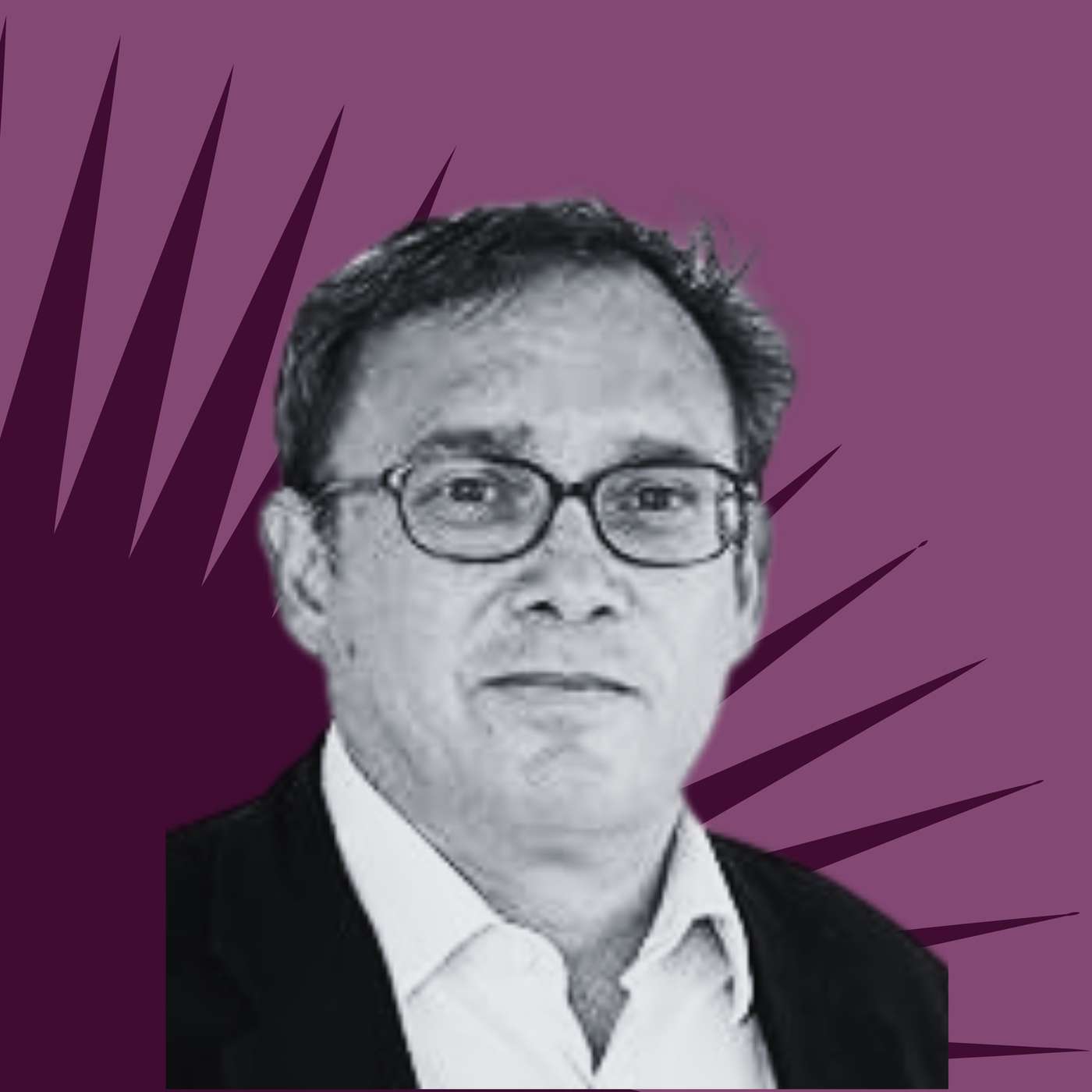


“Liberalism was founded in the middle of the eighteenth century as a revolutionary philosophy — a philosophy that tried to subvert the old world. That set of beliefs has continued to be radical and revolutionary. When liberalism fell into decadence, it examined itself, subverted itself, and became once again a revolutionary faith.” — Adrian Wooldridge
We’ve lost our revolutionary center. At least according to Adrian Wooldridge, the distinguished British political writer. That revolution, Wooldridge insists, is the genius of liberalism — the radical eighteenth-century ideology that shaped the modern world. Today, however, he argues in The Revolutionary Center: The Lost Genius of Liberalism, “liberalism” has become conservative, perhaps even reactionary, in its senescent infatuation with cultural identity. Meanwhile, the biggest threat to liberal individualism is big tech: fragmenting attention, spreading misinformation, manipulating choices through algorithms designed to excite emotion rather than inform reason. Rather than making us geniuses, Silicon Valley is turning all of us into idiots.
To the ramparts then, Wooldridge pronounces. Liberals need to seize back the revolutionary center. Or, as Wooldridge, a Fellow of All Souls, would spell it, centre.
Five Takeaways
• Erasmus and the Liberal Way of Life: Liberalism begins not as an ideology but as a way of living. Erasmus, charting a middle path between the Reformation and the counter-Reformation, offers the founding insight: a good life involves reading books, drinking wine, having discussions, and not bullying people to adopt your faith. What liberalism adds to this is intellectual skepticism — the recognition that you can’t be absolutely certain of your beliefs, and therefore that power must be constrained by constitutions. When liberalism became purely associated with political philosophy, Wooldridge argues, it lost this sense of liberalism as a way of life — and that loss is part of what needs to be recovered.
• Bobo Orthodoxy and Its Wounds: The liberalism of the last forty years has been Bobo liberalism — bohemian bourgeois, David Brooks’ term. Maximum individual freedom in both the marketplace and personal conduct; no judgementalism on lifestyle choices; celebration of diversity and immigration as ipso facto goods. It did a great deal of good. Gay marriage. The dismantling of corporatist economics. But it also created problems it couldn’t see, because its own philosophy prevented it from acknowledging them. In Britain: the Bobo establishment’s inability to confront the grooming gangs, because its multiculturalist assumptions made it terrified of accusations of racism. In America: tent cities, drug addiction, the social costs of choices that nobody felt entitled to criticize.
• Big Tech Is a Bigger Threat Than Putin: Wooldridge’s most provocative claim: the biggest threat to liberalism is not Putin or Xi but the tech oligarchy. Putin is a dictator; that system will eventually collapse. But big tech is dismantling liberal individualism from within. Liberalism’s foundational premise is that individuals, as the building blocks of society, must be well-informed, capable of self-control, and able to act as rational agents. What information capitalism is deliberately engineering — through algorithms designed to excite emotion, fragment attention, and spread misinformation — is the destruction of all three of those conditions. These companies need to be broken up. Not on socialist grounds. On liberal ones.
• Liberalism as Senescence: Biden and Harris: Exhibit A for the Bobo orthodoxy’s exhaustion: the 2024 election. Biden, visibly too old to lead, unable to string sentences together; a whole liberal establishment around him, imprisoned by its own assumptions, running a candidate nobody could defend. Then Harris — chosen, in Wooldridge’s blunt phrase, as an affirmative action candidate. The old liberal establishment — Pelosi and the rest — had been in power since the 1990s, had accrued all the defects of the establishment, and had no blueprint to address the real problems people were encountering. The last time British liberalism looked this dead was the 1890s. Then a new programme and new talent arrived: Churchill, Lloyd George, Asquith.
• The Revolutionary Center: Save Capitalism from Itself: Wooldridge’s prescription is not to destroy capitalism but to reform it, as Teddy Roosevelt and Louis Brandeis did. Break up vast conglomerations of economic power. Tax inherited wealth. Recreate the conditions for a mass middle class. Brandeis’s argument: if people can buy votes, you can’t have democracy. If people have vast fortunes, you can’t have democracy. You need to save capitalism in order to make it the best version of itself. Mill understood this too: once he saw that factory owners and workers had structurally different choices, he began supporting trade unions and moved left on economics. A radical center is not a soft center. It is a center that is willing to blow up the orthodoxies that have calcified within liberalism itself.
About the Guest
Adrian Wooldridge is the global business columnist at Bloomberg Opinion and former political editor and Bagehot, Schumpeter, and Lexington columnist at The Economist. He is the author of The Revolutionary Center: The Lost Genius of Liberalism (Pegasus Books, 2026), The Aristocracy of Talent, and Capitalism in America (with Alan Greenspan). He holds a DPhil from All Souls College, Oxford, and lives in London.
References:
• The Revolutionary Center: The Lost Genius of Liberalism by Adrian Wooldridge (Pegasus Books, 2026).
• Episode 2880: Gal Beckerman on How to Be a Dissident — the companion conversation on liberalism, dissidence, and the question of the revolutionary center.
• Episode 2869: Jacob Mchangama on The Future of Free Speech — the free speech crisis that contextualises Wooldridge’s argument about liberalism’s lost genius.
About Keen On America
Nobody asks more awkward questions than the Anglo-American writer and filmmaker Andrew Keen. In Keen On America, Andrew brings his pointed Transatlantic wit to making sense of the United States — hosting daily interviews about the history and future of this now venerable Republic. With nearly 2,900 episodes since the show launched on TechCrunch in 2010, Keen On America is the most prolific intellectual interview show in the history of podcasting.
00:31 - Are we all liberals swimming in the same water?
02:11 - Putin and Xi: the first articulate opponents of liberalism in decades
03:02 - The revolutionary center: a contradiction in terms?
03:24 - Liberalism as revolutionary philosophy: the eighteenth century origin
05:23 - Is Wooldridge sounding like a tech bro?
06:35 - Meritocracy captured by plutocracy: the Harvard cosplay problem
08:58 - Mill, Bentham, and the utilitarian foundation
10:40 - Mill’s miserable education and his nervous breakdown
11:13 - Harriet Taylor, poetry vs. pushpin, and Mill’s drift left on economics
13:33 - Liberalism as a way of life before it became an ideology
14:54 - Erasmus: the first proto-liberal
15:28 - The middle way between the Reformation and the counter-Reformation
17:37 - Anglo-Saxon liberalism vs. French sad liberalism: Tocqueville, Constant, Aron
19:47 - Thomas More, utopia, and the critique of utopianism
20:33 - Patrick Deneen’s Why Liberalism Failed: a good book, but wrong
22:46 - The alternatives to liberalism: patrimonialism, the Gulf model, theocracy
26:51 - Keir Starmer and the senescence of the liberal center
27:40 - Bobo orthodoxy: how it worked and where it failed
33:32 - Is socialism an alternative? The left-liberal vs. identitarian distinction
35:34 - The real threat: big tech dismantling the individual from within
39:01 - Putin vs. big tech: which is the bigger threat?
40:29 - Teddy Roosevelt, Brandeis, and reforming capitalism from within
43:30 - Does Wooldridge sound like Bernie Sanders?
43:53 - Biden and Harris: liberalism as senescence
45:28 - Does the revolutionary center need to come from below?
48:43 - Mamdani and the need for heroic figures
49:22 - Bill Clinton, Churchill, Lloyd George: when the center revived
00:00 -
00:00:31 Andrew Keen: Hello, everybody. It's Wednesday, 04/23/2026. Yesterday we had The Atlantic writer Gal Beckerman on the show. He has a new book out called How to Be a Dissident. Interesting new book. And we, of course, talked about how one indeed becomes a dissident in the twenty twenties. We talked, of course, about the quintessential twentieth century dissident, Václav Havel — although little was made of the theory of dissidents, which was maybe founded by John Stuart Mill in the nineteenth century. Another word that we might use to describe a dissident is "a liberal" — although Gal Beckerman was a little uncomfortable defining all dissidents as liberals. Perhaps, as I was talking to him, it seems as if we're all liberals swimming in the same water, so we don't quite recognize it.
The issue of liberalism is the subject of today's show too, with one of the twenty-first century's most articulate, wise, learned liberals, Adrian Wooldridge. Wooldridge has been on the show many times before — formerly The Economist, now Bloomberg. He has a new book out, The Revolutionary Centre: The Lost Genius of Liberalism, and he's joining us from Clapham in South London. Adrian, do you think there's some truth to the fact that because we're all swimming, so to speak, in the sea of liberalism, we don't really notice it? It's just everywhere and everything.
00:02:11 Adrian Wooldridge: We do notice it in this sense: there are a group of people now who hate liberalism and want to destroy it. They define themselves against liberalism. They will, in a very articulate way, say liberalism is the problem. The liberal world order is the problem, and we want to replace it. I mean Vladimir Putin, and I mean Xi in China. They regard themselves as illiberal, and they wear that as a badge of pride. They think liberalism has been an awfully evil thing that has harmed the world. They want to replace it with something else. So in one sense, in the West, we are swimming in the sea of liberalism, but we're beginning for the first time in a very long time to be able to see liberalism more clearly precisely because it has articulate, and very dangerous in my view, opponents.
00:03:02 Andrew Keen: Are you in the book, or at least in the title, Adrian, trying to have your cake and eat it? This idea of a revolutionary centre seems to me, logically, to be a contradiction in terms. If you're in the centre, you can't really be a revolutionary. Am I being unfair, missing the lost genius of liberalism?
00:03:24 Adrian Wooldridge: I think you're missing the lost genius of liberalism. Liberalism was something that was founded in the middle of the eighteenth century, very roughly, as a revolutionary philosophy — a philosophy that tried to subvert the old world, which was a static world in which you inherited your place in society as a result of what your parents did, and in which you inherited your religious beliefs, your fundamental metaphysical beliefs, as a result of belonging to an orthodox church. And liberalism said, fundamentally, radically, revolutionarily, that these two things were wrong — that you should define your place in the world according to your abilities and your desires, and that you should be able to choose your own beliefs. Those were two fundamentally revolutionary beliefs, which completely exploded the old world of the ancien régime and established a new world.
And that set of beliefs has continued to be radical and revolutionary, because yes, liberalism became the establishment, and yes, liberalism in the centre became the status quo in many ways, but liberalism kept on revolutionizing itself. When it fell into decadence and too much of an orthodoxy, it examined itself and subverted itself and became once again a revolutionary faith.
And my great argument in this book, my central argument in this book, is that liberalism has again become an orthodoxy. And what we need to do is to rediscover the lost genius of liberalism, and that genius is its revolutionary capacity. It needs to become the opposition, the dissidents, once again, and cease being the orthodoxy — if it is to survive and thrive.
00:05:23 Andrew Keen: Adrian, are you beginning to sound a little bit like a tech bro, a Silicon Valley disruptor? The idea that we've got to disrupt, we've got to innovate, and the liberalism that was once the disruption has now become the orthodoxy.
00:05:38 Adrian Wooldridge: Yes and no. I think we definitely need to disrupt liberalism. Liberalism was an incredibly radical set of ideas in the nineteen eighties, when it was about free markets and globalization and rolling forward a certain laissez-faire attitude to lifestyles. And now, in the last forty years, because it spent forty years as the organizing orthodoxy, it's become rather decadent. So it does, once again, need to be blown up. We do need to have a radical centre — by which I mean people who are defined not as the far left, not as the far right, but as the centre, who are willing to subvert liberal orthodoxies.
I would not regard myself as a tech bro, in the sense that I think one of the most evil forces, which I polemicize against in this book, is precisely the tech oligarchy.
00:06:35 Andrew Keen: Which I assume is a manifestation of the decadence that you talk about. You were on the show a couple of years ago with your last book about meritocracy — another excellent book, The Aristocracy of Talent: How Meritocracy Made the Modern World. Is one of the crises of liberalism, Adrian, that we've rejected the idea of meritocracy?
00:07:01 Adrian Wooldridge: Well, two things have gone on at the same time. One is that we've had a merger between plutocracy and meritocracy — a lot of people who are rich and privileged have succeeded in passing on their wealth and privilege to their children. So if you look at the social composition of Harvard University, let's say, it's basically people from the top of society. And you have this peculiar existence at Harvard where you have a bunch of students who tend to be radical subversives, but what they're actually doing is reproducing the social order in a fairly close sort of way. A lot of this leftist ideology is basically cosplay.
So I do think that meritocracy has lost its bite. But the way to solve the problems of meritocracy, and the fact that it's becoming something self-reinforcing, is actually more meritocracy. I think the arguments the left is making — that we have a society that is frozen, self-replicating, that doesn't have enough room for people at the bottom of society — is absolutely right. The problem with them is they have the wrong solutions. Their solutions are identitarian solutions, group-based solutions. I would say we should go back to the great origins of meritocracy, which is an active search for talent.
And talent is an individual thing. It's something that belongs to individuals, but we must actively try and make sure that people who are born in less privileged circumstances are given more educational opportunities. So meritocracy should be, and is in my view, a radical idea, but it's been captured by the plutocracy.
00:08:58 Andrew Keen: I mentioned Mill earlier. I know you're a big fan. You spend part of a chapter in the book — I mean, he's a nineteenth century figure, of course, but he, I don't know what he'd call it, quantified or categorized liberalism. Where are your moral foundations, Adrian, for liberalism? Are you, like Mill, a utilitarian? Do you believe that liberalism is important because it drives society forward? Or are you a Kantian? Do you believe in some sort of absolute or eternal morality that defines a good society?
00:09:34 Adrian Wooldridge: One reason I focus on Mill in this book is that he takes utilitarianism — takes the idea of the greatest happiness of the greatest number, and takes the good side of utilitarianism, which is the idea that you have to remove constraints on individuals and allow them to pursue their own ends in a way that adds energy to society. He takes all of those things and somewhat qualifies and moderates them. He was brought up as a pure utilitarian. His godfather was Jeremy Bentham, the founder of utilitarianism. His father was not only an advocate of utilitarianism, but he wanted to produce a son who would be its greatest exponent.
So he started teaching his son Greek at the age of three, Latin at the age of four, arithmetic, and all sorts of intellectual accomplishments. He was one of the most highly educated people by the age of eighteen that the world has ever seen.
00:10:40 Andrew Keen: And one of the most miserable, I think.
00:10:42 Adrian Wooldridge: Exactly. It led to an absolutely miserable life, and he had a —
00:10:46 Andrew Keen: — mental nervous breakdown and all sorts of other weird things.
00:10:49 Adrian Wooldridge: He had a mental breakdown as a result of this precocious education. And when he came out of his mental breakdown, he discovered three things. One was human affection — he had a relationship with a woman he eventually married. The second was Taylor —
00:11:07 Andrew Keen: Harriet Taylor.
00:11:10 Adrian Wooldridge: Harriet Taylor. Then married to —
00:11:13 Andrew Keen: — and he credits her with most of his ideas.
00:11:13 Adrian Wooldridge: Absolutely. So, certainly particularly his views on women. Secondly, he begins to appreciate the importance of culture. Jeremy Bentham had said that whether you want pushpin — which was like pinball in those days, a primitive version of pinball — or poetry, they're exactly the same. People's preferences are all that matters. It doesn't matter whether they're for poetry or whether they're for pinball.
And so Mill begins to say, no, that's not true. Poetry, cultural tradition, cultural achievement is something that matters. He begins to read the late poets and is particularly influenced by Coleridge; he begins to think that culture is something that really matters, that some preferences are better than other preferences. At the same time, he also begins to think that his pure laissez-faire economics needs to be modified, because he realizes that some people have a different set of choices.
If you own a factory, your choices in life are rather different from those if you're a worker. And he begins to realize that workers are joining trade unions because their choices are constrained. So he becomes more left-wing, as it were, when it comes to economics, but also more right-wing when it comes to the importance of culture, cultural tradition, national traditions, and things like that. And my own version of market beliefs, utilitarian beliefs — I would say the same thing: we need to have more sensitivity about economic inequalities, particularly about the power of concentrated oligarchs and big business, but also more emphasis on the importance of educating our preferences through culture. So that's why I put Mill at the centre of my account of how we ought to be improving liberalism.
And we have had, over the last forty years, something like utilitarianism in charge. Neoliberalism in charge is basically a very individualistic, utility-maximizing set of ideas. Those ideas created a great deal of economic wealth. They created a great deal of dynamism for a while, but they've also created a lot of problems more recently.
00:13:33 Andrew Keen: As we look, Adrian, for this lost genius of liberalism — which is the subtitle of the book — might we look not so much in ideology and doctrine, in some kind of orthodoxy, categorizing it, but in terms of an individual life? The way you described Mill, which I think you did wonderfully, is a man who both was a conservative and a rebel. He rebelled against his own father, his own godfather, Bentham.
And his life was a remarkable life on many fronts. Certainly not above criticism either — he worked for the East India Company, and all sorts of other contradictions, maybe hypocrisy, but that's not the point. The thing about Mill is he's an all-too-human figure, and liberalism perhaps is the ideology of all-too-humanness — which maybe suggests its lost genius, that we've forgotten that. That it can't simply be categorized into a series of bullets. Is that one of the reasons maybe why we've lost the genius of liberalism?
00:14:54 Adrian Wooldridge: I'd make two points in response to that, which is a very good point. Firstly, I think liberalism sort of starts out as a way of living before it becomes an ideology. A lot of academic histories of liberalism point to the way it grapples with certain fundamental political concepts. But I think the first proto-liberal was Erasmus, the great —
00:15:20 Andrew Keen: You begin the book with Erasmus, who, of course, was a great friend of Thomas More — another maybe proto-liberal in a weird kind of way.
00:15:28 Adrian Wooldridge: Exactly. And Erasmus's fundamental insight is that he talks about a middle way in between the fanatical certainty of the Puritans, the Reformation — Martin, not Martin —
00:15:45 Andrew Keen: Luther.
00:15:46 Adrian Wooldridge: Martin Luther, on the one hand, and the Catholic counter-Reformation on the other. These are two bodies of thought characterized by certainty and a certain degree of cruelty, because they persecute people who have different ideas. And the bashing between the Reformation and the counter-Reformation creates the wars of religion. And Erasmus's argument against this is partly based on skepticism — saying you can't be that certain about things. But essentially that a good life is a life that involves reading books, drinking wine, having discussions, not going around bullying people to become fellow members of your faith. So that's the notion of liberalism as a way of life.
Once liberalism became completely associated with political philosophy, I think we'd lost some sense of liberalism as a way of life. But secondly, liberalism is based on intellectual skepticism — saying you can't be absolutely certain of your faith, so we should agree to disagree. It's also based on a certain skepticism about power, saying that power corrupts, absolute power corrupts absolutely, and that we should create a world in which power is [constrained by] constitutions. Both of those things indicate a way of life, or a way of being skeptical about ideology.
00:17:37 Andrew Keen: And in the book, you focus on the Anglo-American tradition of liberalism, but the French also have one. You touch on Camus, his famous argument in The Myth of Sisyphus about never ever getting anywhere, but trying. Is that French tradition of Camus and Aron equally important?
00:18:01 Adrian Wooldridge: Well, during the era of neoliberalism, liberalism has been dominated by Anglo-Saxon thinkers, by Anglo-Saxon utilitarianism, and also by a sort of Anglo-Saxon utopianism. There's this notion that all values can be reconciled with each other, that the market should decide everything, and that provided you give individuals the maximum degree of freedom in a marketplace, the system will be self-adjusting — you'll get the emergence of a sustainable order. The French were much more skeptical about the market, but they're also much more skeptical about this strand of utopianism in modern liberalism. The French had a tradition of what they call sad liberalism.
And that's basically saying that we need to get religion out of public life, but a lot is lost in the process. So they're trying to come to terms with the fact that the world is never perfect, that individualism has its dark side, that the market has its dark side. And Tocqueville is one of the great philosophers of this tradition. Also Benjamin Constant, another philosopher of this tradition. And, as you say, the great Raymond Aron and postwar thinkers.
And this notion of anti-utopianism is, I think, a very important part of liberalism, and again, something that we've lost and need to re-emphasize.
00:19:47 Andrew Keen: And it's worth, in that sense, going back to Erasmus's friend Thomas More, who, of course, invented the word "utopia," wrote the original critique of utopianism. So, Adrian, where is the critique coming from? You've talked about the woke left. We've done lots of shows on that. Between you and me, I'm a little bored by it now. What about from the right? From people like — you mentioned in the book, and you've written about — characters like Patrick Deneen. Are they consciously critiquing liberalism, or are they simply saying that the history of liberalism actually hasn't resulted in freedom and that we need to go back to beginnings?
00:20:33 Adrian Wooldridge: Well, Patrick Deneen wrote a book entitled Why Liberalism Failed. It's actually rather a good book and an interesting book. And his argument is that liberalism hasn't failed just because it's been misapplied or because it's been carried to extremes by ideologues. It's failed because it was bound to fail. He says the more liberalism becomes its true self, the more it will fail.
And essentially he says that's because liberalism just means individualism. If you have a society which becomes perfectly individualistic, which removes all sorts of moral and religious constraints on behavior — which has the left-wing notion of liberalism, which is we mustn't dictate moral values, and the right-wing version of liberalism, which is we mustn't interfere with the market — you will ultimately get social disintegration. You'll have the tent cities of America's progressive cities. You'll have a commercial world in which ultimate values are degraded by people pursuing profits. And you'll have isolated individuals living a solipsistic, culturally unproductive life.
I think that's a very interesting critique. I think it's wrong, because I think the best critiques of liberalism have always been made by other liberals — that liberals have anticipated these post-liberal critiques, not least Tocqueville. And also that Deneen's post-liberalism has put him and his fellow post-liberals in bed with some very dangerous people — i.e. the Trumpists and the MAGA people and Trump himself.
There is a version of liberalism which you don't have to throw out, to use the cliché, the baby with the bathwater, and you don't have to jump into bed with the MAGA people to recognize and adjust liberalism to be its best self. And that's what my book is trying to do — saying that within liberalism, within the liberal tradition, there are all sorts of intellectual and moral resources which allow you to address the critiques and the worries of the post-liberals.
00:22:46 Andrew Keen: If we're to get out of the ocean as fish and think, okay, maybe there is an alternative — what does it look like? What does the world look like from the land, as fish? What are the alternatives, Adrian, to liberalism that aren't liberal?
I mean, two come to mind for me. The first is patrimonialism. We've done a number of shows on that recently. I'm sure you saw Jonathan Rauch's excellent essay in The Atlantic. A couple of friends of mine, Jeff Kopstein and Stephen Hanson, have written a book about it.
It's a kind of return, I guess, to the world that Erasmus and More were in their own way fighting against. Is patrimonialism an alternative? In that sense, Trump comes to mind, also Orbán, maybe even Putin and Xi.
00:23:42 Adrian Wooldridge: Well, yes. One alternative to liberalism is strong-man rule and giving all your decisions up to the state or the strong man. And there is a great deal of patrimonialism going on. I'm told now that Bolsonaro has a son who is coming up and may well be the next leader of Brazil. So you're getting dynasties of politics.
00:24:06 Andrew Keen: But patrimonialism has to be explicit. You have to say, well, I celebrate giving power to my son or my wife or my daughter.
00:24:18 Adrian Wooldridge: You seldom get that, because even Putin holds democratic elections, although they're not really democratic elections. So most regimes pretend to be democratic even if they are essentially patrimonial regimes. That's not the case in the Gulf States. There are monarchies in the Gulf States where they are proud to be dynasties, and they say that as dynasties, they're responsible dynasties. So that's one argument.
That's one post-liberal way of doing things — the Gulf States saying that we are modernizing autocracies that are delivering benefits. Saudi Arabia would be another example of that. Or you could have Singapore, which is a sort of post-liberal country, which says that we, the wise Mandarin elites, will offer social stability and economic progress. And that is China at its best.
I'm not sure — China has got a lot of bad sides, but that's the best version of what the Chinese would say. I would say that's an infantilizing version of political power: this idea that political power should be wielded on your behalf by other people. I think that's difficult in the long term to sustain, because people in a sophisticated society do want some sort of say over their future. But that is one definite form of post-liberalism.
Another form of post-liberalism is religious authority — the Islamic countries would say that Islam is [the source of] fundamental moral values that need to be imposed by the regime in various ways. Because if you don't have that spine of moral value, society will fall apart. I think that [some] in the United States believe that as well. [unclear] They want to have some sort of moral belief.
I would argue against that — that liberalism doesn't mean being entirely vacated of morality. It means not having an orthodox set of religious [beliefs], but it doesn't mean not having any moral guidance whatsoever.
00:26:51 Andrew Keen: You wrote an interesting piece for the Washington Post recently entitled "Liberalism is the Only Solution. Here's How to Save It." You began by observing the crisis of what you call the senescence of liberalism, and exhibit A on that is Keir Starmer in the UK. Why have so many centrist politicians — they know they're the opposite of the revolutionary centre — become the stasis centre?
Why do we have politicians like Starmer, and many others? You could include Macron, Joe Biden. What has happened to the liberal politician, Adrian?
00:27:40 Adrian Wooldridge: Well, it's partly that they have been the establishment, literally the establishment. They've been running things since the nineteen nineties, really, since the Blair-Clinton revolution. And if you become the establishment, you accrue all the defects of the establishment — such as nepotism, self-satisfaction, being disconnected from the rest of society. So that's an obvious and important thing. If you look at the meetings at Davos, for example, you are seeing the global establishment, and most of them are liberal in their beliefs.
But the second thing is: we saw in the nineteen eighties and nineties the formation of a certain type of liberalism. And that type of liberalism was a marriage between free-market ideas on the one hand, and social liberalism on the other. It's Bobo liberalism — bohemian bourgeois liberalism — the Bobo idea that I think David Brooks invented. It's a very good description. And it's basically saying we leave the market to do as much as it possibly can, and we leave judgmentalism on people's personal choices and moral lives out. We're not judgmental.
We need people to make their own decisions. And this goes along with a very liberal policy towards immigration, a very liberal policy towards most aspects of personal conduct, and a celebration of minorities and all of those sorts of things. That set of beliefs became an orthodoxy, and it did a great deal of good. Gay marriage did an enormous amount of good. Moving away from the corporatist economic policies of the nineteen seventies created a great deal of economic value.
But what these two things did — these sets of beliefs — is they also created problems. Problems of assimilation with high immigration, which is a huge problem in Britain at the moment. Problems of drug addiction, tent cities, homelessness — people making bad choices and getting locked into the results of those bad choices. So what's happened is a lot of centrist politicians have not only become the establishment; they're in the grip of an intellectual orthodoxy, Bobo orthodoxy, which means they can't address certain problems — very important problems.
In Britain, where I'm now sitting, because the Bobo orthodoxy was that immigration was ipso facto a good thing, and that we shouldn't strive too hard at assimilation because we're multiculturalists, we got the rise of parallel societies, and we got the rise of this huge problem with grooming gangs — essentially mass rape of white working-class girls in immigrant communities — which the establishment just turned a blind eye to, because its philosophy was such that it couldn't admit these things were going on. It was terrified of accusations of racism and things like that. So this Bobo orthodoxy is now generating more problems than solutions. But for someone like Keir Starmer, it's a classic old way of thinking about things.
[The earlier reinvention] of the Bobo orthodoxy — like the liberalism of the late nineteenth century in Britain, which was very laissez-faire — a bunch of people called Hobson, Hobhouse, Beveridge, Tawney to some extent, came along. And they said: we need to have a new sort of liberalism, which allows for more intervention by the state, which says individualism doesn't just mean letting individuals do what they want. It means letting individuals have education, welfare payments, pensions, so they can achieve their higher ends in life. And it also means the state taking more of a role in defending society from external attacks.
So you had this reinvention of liberalism. And what happened with the shift from laissez-faire liberalism to the new liberalism is that the Liberal Party, which had been an almost dead party in the eighteen nineties, suddenly revives. It starts attracting really big new talent — Asquith, Churchill, who moves from the Conservatives to join the Liberals, and Lloyd George — and a whole new programme, which rapidly results in a lot of legislation. I think we're in [a similar moment] with people like Keir Starmer at the moment. He's useless partly because he's useless, but he's also useless because he doesn't have a blueprint, a set of policies.
Once you get a new set of policies that address the real problems people are encountering, and doesn't just repeat the mantras of the nineteen eighties and nineties, you will get a solution to the problems of talent.
00:33:32 Andrew Keen: In "Liberalism Is the Only Solution" — I think that's borrowed from Mrs. Thatcher — in your Washington Post piece, you talk about liberalism repositioning itself, rearticulating itself. Sometimes it sounds like a Brookings white paper.
I mean, this isn't a critique. It's just a statement of fact, Adrian. You're a centre-rightist. You're certainly a liberal, but you're on the right. You talk about Bobo orthodoxy. You talk about the woke people at Harvard, and maybe there's some truth in all that. But when I asked you for an alternative to liberalism, you talked about patrimonialism. You talked about the Xi-Putin model. You talked about the religious model in Iran.
But you didn't bring up the alternative of socialism. And in that crisis of liberalism in the late nineteenth, early twentieth century, there were many credible socialist arguments, maybe not always violently anti-capitalist. Is, for you, socialism part of liberalism, or is it an alternative? You talked about Beveridge.
You could talk about FDR or the New Deal, but there's a very grey area between the liberal reformers of late nineteenth, early twentieth century capitalism and socialist critics. Is, for you, socialism one step too far? You could talk about Bernie Sanders — he's certainly not an articulator of a Bobo orthodoxy. He never went to Harvard. Is there an alternative on the left, a real alternative, which isn't just a straw man for conservatives like you to knock down?
00:35:07 Adrian Wooldridge: Well, I'm not quite sure that I am quite as conservative. I'm a work in progress, let me say. But there are two sorts of left-wing thinkers, to my mind at least. There are left liberals, who I have a lot of sympathy with, and then there are the woke people, the identitarian —
00:35:29 Andrew Keen: Okay, we know you don't like them. Who are the left liberals who you admire?
00:35:34 Adrian Wooldridge: There's a big distinction between left liberalism and identitarianism. The reason I want to articulate this — and I know you don't want to hear too much about it — is that the essence of liberalism is a focus on the individual. We must be concerned with the individual as the basic building block of society and of enabling the individual to achieve their best self through social intervention.
So when [left liberals] are for a bigger state, they're not arguing for a bigger state on collectivist grounds — which is what many elements of the Labour Party did. They're arguing for it on individual grounds, on grounds of individualism. In order for individuals to be their best selves, we must intervene — not in order for certain collective ends and a New Jerusalem to be created.
So there's a battle within the left between group thinking and individual thinking. And I'm on the side of individual thinking. But on the issue of being a conservative, I'm definitely culturally conservative. In this book, I try and argue very strongly that the biggest problem — actually a bigger problem than Putin — is what's happening to capitalism: both in terms of the over-concentration of capitalism, the rise of these gigantic companies, but also the nature of information capitalism, which is capable of manipulating individuals, manipulating their choices, actively manipulating their choices through advertising and other sorts of intervention, misinforming people actively and deliberately, creating algorithms which excite emotions, put us all in a sort of emotional frenzy. So those companies need to be broken up, just as a practical issue — they are too powerful.
But what they're doing is potentially the biggest threat to individualism, which is the fundamental building block of liberalism. Individuals, in order to be the successful building block of society, must be well-informed. They must be able to exercise self-control, and they must be rational agents. And what a lot of this information capitalism is tending towards now is fragmenting our attention, speeding up the spread of misinformation, and stopping us from making decisions on the basis of reason and encouraging us to make decisions on the basis of emotion — as a deliberate function of algorithms. So liberalism was the creation of the rise of individualism, particularly in the eighteenth century but also before that.
Such individualism is under threat from capitalism. Obviously it's under threat from Putin as well, but Putin is a dictator, a very unpleasant dictator, and eventually that system will collapse, I think.
00:39:01 Andrew Keen: Yeah, I'm not sure we could describe Putin as anti-many things. I'm not sure he's anti-capitalist, is he?
00:39:08 Adrian Wooldridge: No. Well, Putin is anti-the-West. He's anti the liberal economic order, but —
00:39:12 Andrew Keen: I'm saying he's anti-Western capitalism, but he's not anti-capitalist.
00:39:17 Adrian Wooldridge: No, no. What I'm trying to say about Putin is this: we have many threats to the liberal order at the moment. But in some ways, the most fundamental threat is the big tech companies, because the big tech companies are in the process of dismantling the individual.
00:39:33 Andrew Keen: I take your point there. Adrian, you're still avoiding the question that I asked earlier. Let me just come back on this, because it's a really important and interesting question.
I don't have the answer. Nobody has the answer. A good liberal thesis, I guess. You mentioned the last part of the nineteenth century and the liberal, left-liberal types, the Keyneses who pushed back against capitalism, said it needed to be reformed by the state. It happened in the US too.
But isn't there an argument to be made, Adrian, that history keeps on repeating itself? That we're getting larger and larger companies, more and more inequalities — economic, cultural, political — and that the system simply doesn't work in economic terms? In other words, the liberal economic system and the principle, I guess, of political or moral liberalism — they're not compatible.
00:40:29 Adrian Wooldridge: What happens in the late nineteenth century is that you have the emergence of vast conglomerations of economic power, and you get the rise of a liberal critique of that — from Keynes most obviously, who matures later, but also from Teddy Roosevelt. And their solution to this problem is to break up the vast conglomerations of power and to introduce some sort of system of redistributing wealth from inheritance — stopping the creation of a hereditary aristocracy of wealth, or too much of a hereditary aristocracy of wealth. Teddy Roosevelt says that the reason he's doing this is actually to save the rich from themselves and also to save America from becoming an aristocracy. So these arguments for the breaking up of power, for the breaking up of huge fortunes, are a liberal argument. It's saying: in order for America to remain a liberal country, it has to not have an aristocracy of wealth, and it has to not have an aristocracy of companies that are too powerful.
And this process of breaking up wealth actually worked for some time. After the Second World War, it works again — that liberal interventionism, the creation of the liberal welfare state through the taxation system, creates and reinforces a mass middle class. So liberalism is capable of reforming capitalism. I do think that the missing link in capitalism at the moment is a radical centre or revolutionary centre that doesn't want to destroy capitalism — because that destroys a lot of wealth, and historically has not proved to be successful — but that wants to reform capitalism from within. I would say the inheritance of too much wealth in America is a huge problem.
I would say the size of these companies is a huge problem. I would say even more that the digital destruction of our capacity to think and get good information is a huge problem. But the solution to that does not come from Bernie Sanders.
The solution comes from the revolutionary centre that reaches back to the traditions of Keynes, or Beveridge, or Teddy Roosevelt, or Louis Brandeis, I would say. Louis Brandeis is a really good example of somebody who wants to reform capitalism on liberal principles. He says, if people can buy votes, you can't have democracy. If people have vast fortunes, you can't have democracy. You need to save capitalism itself in order to make it the best version of capitalism.
00:43:30 Andrew Keen: It's weird. You sound like Bernie Sanders. You sound like Mamdani. But you don't want to seize that mantle.
00:43:40 Adrian Wooldridge: No, I don't want to seize that mantle.
00:43:41 Adrian Wooldridge: The title of my book is The Revolutionary Centre, and I want the centre to stop being the establishment, as it now is —
00:43:50 Andrew Keen: You want the centre to be radical.
00:43:53 Adrian Wooldridge: Revolutionary — but the revolution is not to destroy capitalism, but to improve capitalism. Not to destroy the centrist culture, but to revive a centrist culture. If you think back to the last election, the Trump election, when we had Joe Biden — that was a classic example, an almost perfect example, of liberalism as senescence. You had somebody who was obviously too old to go in, who couldn't string sentences together; but not just him — the people around him were the old liberal establishment who'd been in power for too long. You had Pelosi.
You had all of these people who were either too old, or dependent upon this establishment, imprisoned by it, who tried to run this candidate. And then you have Harris, who is not remotely competent, because she was a sort of affirmative action candidate. What I'm saying is, you need a revolutionary centre that gets rid of a lot of those orthodoxies and takes liberalism back to what it has been repeatedly throughout history. It started out as a revolutionary philosophy. It was a revolutionary philosophy under Teddy Roosevelt.
It was a revolutionary philosophy in the nineteen forties and fifties, when it recreated the world. It was a revolutionary philosophy in the nineteen seventies, when it got rid of the corporatist world. It's run out of steam, but the way to save the world is to give it more steam, not to get rid of it.
00:45:28 Andrew Keen: Where does that steam come from? The image on the front of the book is an image of a crowd in a square, presumably in Europe, rebelling. In your Washington Post piece, you talk about liberals needing to take to the public square. Ultimately, is the fate of liberalism — if we're going to revisit a revolutionary centre, Adrian — does it need to come from below? It seems as if the elites, for better or worse, your meritocratic elites, maybe not so meritocratic elites, have let us down. Does there need to be a populist uprising of the revolutionary centre?
00:46:12 Andrew Keen: I think we are beginning —
00:46:13 Adrian Wooldridge: — to see this, actually. People often ask me who I would point to as the great hope for the future. And I can't think of a person I would point to. Macron did regard himself as a revolutionary centrist, but because of his personality, and because he's French — he thinks that France is just discovering neoliberalism. France is in some ways frozen in time.
It's behind the rest of the —
00:46:45 Andrew Keen: What do you mean "in some ways"?
00:46:48 Adrian Wooldridge: In some good ways, but also bad ways. But Macron wasn't the perfect vehicle for the centre. He was the last person who was articulate and intellectually gifted, but he's a peculiarly French figure. [unclear — brief gap in recording] But what you're seeing all over the place [is grassroots concern about] smartphones, about the over-reliance of educators on screens, about the saturation of pornography on digital screens. All of this is coming from below.
It's coming from organizations like Mumsnet. It's coming from teacher-parent associations. You're getting a great deal of discontent in society articulating itself. They're saying the policy is not addressing the problems that we can see. So I think the solution will come from the younger generation.
I mean, I say revolutionary liberalism. I think the people of my generation have been completely — we've done well out of the last forty years. We've been co-opted by the system. I look forward to a revolutionary centre: young people seeing that they've been betrayed, but not being attracted by Bernie Sanders and not being attracted by MAGA. But seeing — rediscovering — that liberalism is, in fact, a radical revolutionary philosophy that holds the answers to many of their problems.
00:48:43 Andrew Keen: But we need the sizzle. I take your point in a way, but the young, for example, in New York have embraced Mamdani. Whether or not he's hard left or centre-left, anti-capitalist or ambivalent on capitalism, we do need heroic figures to lead the crowd, Adrian, don't we? It's not enough to have Mumsnet. That's not going to change the world.
00:49:07 Adrian Wooldridge: Absolutely. No, no. I'm a great believer in heroic figures in history, and I think Churchill and de Gaulle changed the course of history. I don't think it's just a matter of popular crowds.
00:49:17 Andrew Keen: I can't convince you on Mamdani? You don't have some intrigue in him?
00:49:22 Adrian Wooldridge: I think he's certainly very good at what he does, but I don't like the identitarian politics. But, you know, I remember a time when we were all thinking the Democratic Party was dead, and there was all this talk about the seven dwarfs, and it was all completely formulaic. And then Bill Clinton came along and regalvanized the party. I think America is big enough to generate a new figure from a new generation. I'm not saying they should do exactly the same as Bill Clinton, but somebody with the capacity to articulate an ideology.
As I said, in the eighteen nineties it looked as though British liberalism was dead. The British Liberal Party was dead, and then suddenly we got Churchill, and Lloyd George, and Asquith as spokesmen. As long as we get the right set of ideas, and we can articulate them and put them together, there will be a politician — or many politicians — who come along. I'm very frightened of a world in which all of the emotional and intellectual energy is on the Mamdani left or on the MAGA right. Just from the point of view of the health of the political dialogue, we need the centre to be involved.
I actually support the centre, but just from any point of view, polarization is a very dangerous thing.
00:50:41 Andrew Keen: Well, there you have it. The book is out this week. The Revolutionary Centre: The Lost Genius of Liberalism came out yesterday. Adrian Wooldridge is very much our found genius of liberalism. No one does a better job presenting it, defending it, and imagining its future. Adrian, as always, a real pleasure to have you on the show. Best of luck refinding, regenerating liberalism in the late twenty twenties. Thank you so much. Thank you —
00:51:08 Adrian Wooldridge: Thank you very much. Thank you. Very kind of you.