The Jeffrey Epstein of Antiquities: Matthew Campbell on the Man Who Got Away With Stealing the Gods,
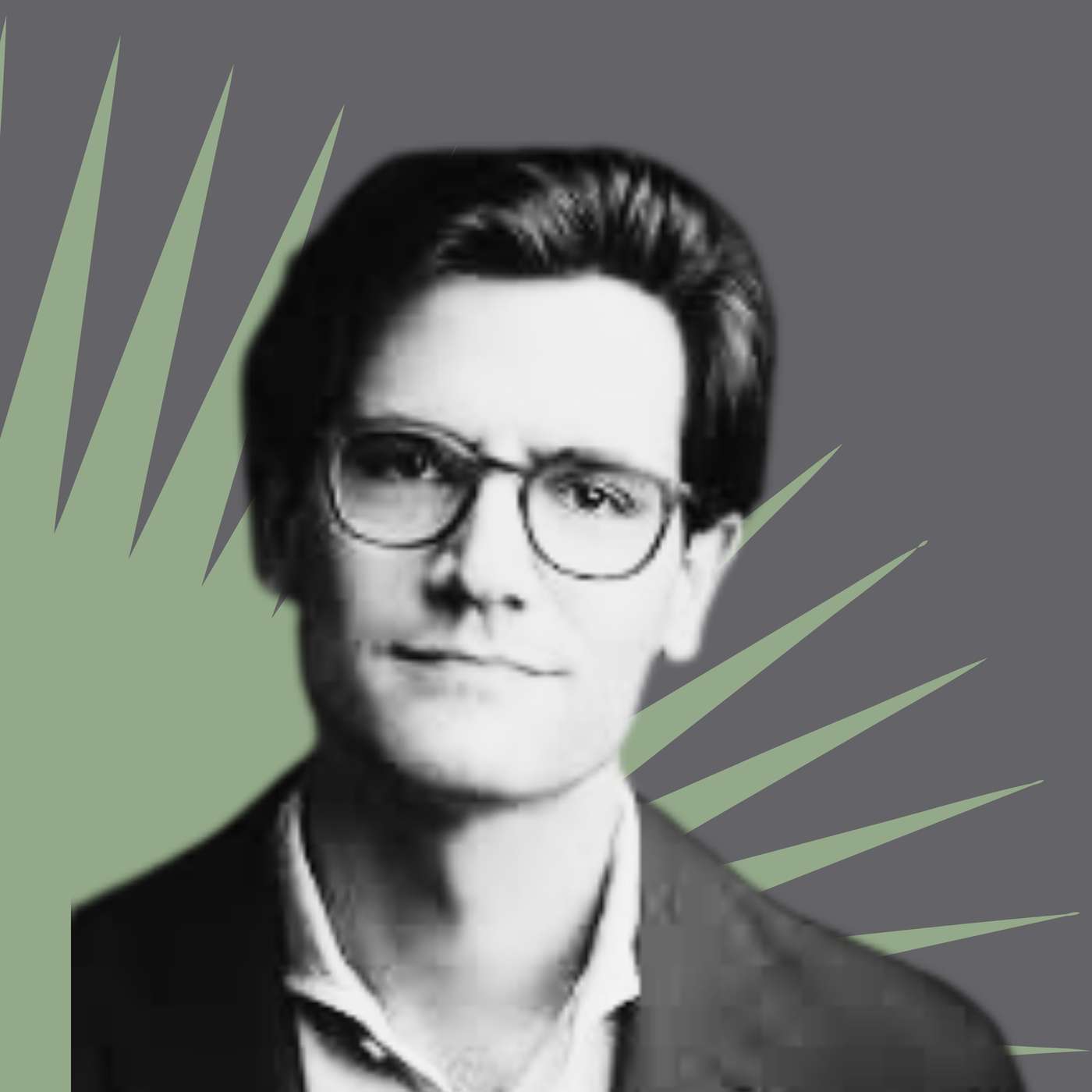


“Objects in museums have to come from somewhere. The stories of how they came to be in those collections often involve laws being broken, unethical behaviour, and extreme violence.” — Matthew Campbell
Imagine a gay Jeffrey Epstein who set up shop in Thailand. Only rather than peddling young girls, he traded in bodybuilders and priceless antiquities. That’s the story of the British émigré Douglas Latchford, the subject of Matthew Campbell’s new book The Man Who Stole the Gods. It’s the true story of a man who was born in the last days of the British Raj, made his fortune in Bangkok, became the world’s leading dealer of Khmer antiquities, and was indicted for criminal conspiracy in 2019.
Campbell’s tale is simultaneously a crime story, a history of Cambodia, and a parable about the relationship between Western wealth and the world’s cultural heritage. The Khmer Empire, which dominated Southeast Asia from the ninth to the fifteenth centuries, produced one of the finest civilisations of the medieval world. Angkor in the twelfth century had 750,000 people — making it ten times the size of London. After the genocidal Khmer Rouge regime, every Khmer site in Cambodia was systematically looted. The pieces went to the Metropolitan Museum, to Christie’s, to private American collectors. Latchford was the central conduit. The Jeffrey Epstein enabler.
Like Epstein, Latchford got away with it for years. Unlike Epstein, he died a free man, even chalking up a 2020 New York Times obituary as a Khmer antiquities expert.
Five Takeaways
• Douglas Latchford: The British Jeffrey Epstein of Asian Art: Born in the last days of the British Raj, educated in the UK, Latchford made his fortune in Bangkok and became the world’s leading dealer of Southeast Asian antiquities — selling pieces for millions of dollars to the Metropolitan Museum, Christie’s, and wealthy American collectors. He presented himself as an expert and connoisseur. He gave to universities and lent to exhibitions. He received a glowing obituary in the New York Times in August 2020. The dark side: he was, Campbell shows, the central organiser of a decades-long criminal conspiracy to loot Cambodia’s cultural heritage. He was indicted in 2019 but died before he could be extradited.
• The Khmer Empire: 750,000 People When London Had 40,000: The Khmer Empire dominated Southeast Asia from the ninth to the fifteenth centuries, ruling directly or indirectly over what is now Thailand, Vietnam, Laos, and parts of Malaysia. Its capital, Angkor, had 750,000 people in the twelfth century — when London had 40,000 at the absolute outside. The Khmer built extraordinary temple cities — Angkor Wat is only the most famous — and produced remarkable stone and bronze sculpture. Every single Khmer site in Cambodia was systematically looted. The pieces all went somewhere. A great many came to the West.
• The Vietnam War, Nixon, Kissinger, and the Conditions for Genocide: The Vietnam War is central to Campbell’s story. The Ho Chi Minh Trail ran partly through Cambodia, making Cambodia of great interest to Nixon and Kissinger. Beginning in 1968, large-scale American bombing of Cambodia — ostensibly aimed at destroying a supposed communist headquarters that, Campbell notes, never actually existed — helped destabilise the country and created the conditions in which the Khmer Rouge could emerge. The Khmer Rouge ideology: Pol Pot believed civilisation needed not to be reformed but erased. A blank slate. Rebuild from zero.
• The Museum World’s Complicity: The Sackler Parallel: The Metropolitan Museum of Art features prominently in Campbell’s account. Objects in museums have to come from somewhere — the works in the Met did not originate in New York. How they came to be in those collections often involved laws being broken, unethical behaviour, and extreme violence. Campbell draws a parallel with Patrick Radden Keefe’s account of the Sacklers: the more investigative journalists look at the wealthy donors and private collectors associated with major cultural institutions, the more troubling the stories that emerge. The museum world has a serious provenance problem.
• The Happy Ending: Repatriation and the National Museum in Phnom Penh: Latchford was indicted in 2019 for criminal conspiracy. He died in 2020, in a monastery in Northern Thailand, before he could be extradited. He never went to trial. But the recovery effort — a remarkable collaboration between Cambodia and the US Department of Justice — tracked down hundreds of stolen objects through meticulous detective work. The pieces have been returned to Cambodia. The National Museum in Phnom Penh now has so many repatriated objects that it is running out of room and may need to build a new wing. As Campbell says: that’s a good problem to have.
About the Guest
Matthew Campbell is an award-winning investigative journalist at Bloomberg Businessweek. He is the author of The Man Who Stole the Gods: A True Story of War, Obsession, and a Global Art Conspiracy (Portfolio/Penguin Random House, June 2, 2026) and co-author, with Kit Chellel, of Dead in the Water (a Book of the Year in The Economist, Financial Times, and The Times; called a ‘masterpiece’ by the New York Times). A 2025 Jonathan Logan Family Foundation Fellow at New America, Campbell has reported from more than 25 countries. He lives in Singapore.
References:
• The Man Who Stole the Gods: A True Story of War, Obsession, and a Global Art Conspiracy by Matthew Campbell (Portfolio/Penguin Random House, June 2, 2026).
• Dead in the Water by Matthew Campbell and Kit Chellel (2022) — the preceding book, referenced at the opening.
• Patrick Radden Keefe, Empire of Pain — referenced as a parallel account of museum world complicity.
• The Metropolitan Museum of Art, New York — a central institution in the Latchford network.
• Cambodia’s National Museum, Phnom Penh — the destination of the repatriated objects.
About Keen On America
Nobody asks more awkward questions than the Anglo-American writer and filmmaker Andrew Keen. In Keen On America, Andrew brings his pointed Transatlantic wit to making sense of the United States — hosting daily interviews about the history and future of this now venerable Republic. With nearly 2,900 episodes since the...
00:31 - Introduction: Dead in the Water and the new book
01:26 - The Man Who Stole the Gods and Douglas Latchford
01:59 - The British Jeffrey Epstein of Asian art
02:05 - Latchford: born in the Raj, made his fortune in Bangkok
03:00 - The dark side of the museum world: the Sackler parallel
03:50 - Objects in museums have to come from somewhere
04:49 - Is this the next chapter in European colonisation?
05:26 - The exoticisation of South and Southeast Asia
06:42 - The Vietnam War and Cambodia
07:13 - The Ho Chi Minh Trail and Nixon’s Cambodia
08:05 - Kissinger, COSVN, and the bamboo Pentagon that never existed
08:53 - A brief history of the Khmer Empire
09:26 - Angkor had 750,000 people; London had 40,000
10:55 - The Elgin Marbles compared: Cambodia is much worse
11:28 - The decline of the Khmer Empire
11:53 - The French arrive in the 1860s
13:26 - Pol Pot, the blank slate ideology, and the Khmer Rouge
14:06 - Why does the Khmer Rouge flag show Angkor Wat?
20:00 - How looting worked in practice
25:00 - Latchford’s network: the Met, Christie’s, private collectors
30:00 - The indictment of 2019 and Latchford’s death in 2020
35:00 - The recovery effort: Cambodia and the US Department of Justice
40:00 - The National Museum in Phnom Penh: running out of room
43:15 - Who should play Latchford? Ben Kingsley
44:17 - Did Latchford get away with it?
45:12 - Should people visit Cambodia?
46:02 - Latchford cremated in a monastery in Northern Thailand
46:24 - A happy ending. A remarkable story.
00:00:31 Andrew Keen: Hello, everybody. Back in 2002 when the show was just called Keen On, and it was an audio show, I did an interview with one of the Bloomberg correspondents in Asia, based in Singapore, Matthew Campbell, about a true story of a fake hijacking and a real murder. He was the coauthor of the hit book Dead in the Water, a book about an invented maritime hijacking in the treacherous Gulf of Aden. It could be the kind of story which I guess would run today, at least in terms of our obsession now with the Straits of Hormuz. And Matthew Campbell is back with a follow-up book, I guess, in a sense, although in a very different part of the world.
00:01:26 Andrew Keen: It's called The Man Who Stole the Gods, the true story of war, obsession, and a global conspiracy, which is built around a man called Douglas A. J. Latchford, who got a very nice obituary in the New York Times back in August 2020 when he died. I don't suppose he would get the same kind of obituary if he died in 2026. Matthew, congratulations on the new book. It's out this week. Tell us about this Latchford character.
00:01:59 Andrew Keen: He sounds like the British version of Jeffrey Epstein in some way.
00:02:05 Matthew Campbell: Certain parallels, certain differences. So Douglas Latchford is the central character in the book and really the villain of the story, and he was a Brit. He had actually been born in the last days of the Raj, went to school in the UK, and then decided to make his fortune in Asia, went to Bangkok in the fifties, and had quite a successful business career, but also set himself up as the leading dealer of Southeast Asian artifacts, and particularly artifacts from Cambodia, on the planet, selling pieces for millions of dollars and becoming a very important conduit to places like the Metropolitan Museum, to very wealthy American collectors. But there was a dark side to this story, which I'm sure we'll speak about.
00:03:00 Andrew Keen: A very dark side. And in fact, the book brings to mind in some ways Patrick Radden Keefe's bestselling book about the Sacklers. Kind of different, but also equivalent in the sense you mentioned the Metropolitan. I know it features the Metropolitan Museum in New York in your narrative. Is this the dark side of the museum world, the wealthy people associated with the museums, Matthew? I'm not suggesting necessarily that Latchford is equivalent to the Sacklers. That's a very different kind of story. But it seems the more journalists like yourself or Patrick Radden Keefe sniff around these museums and this industry of artifacts, the more troubling the stories that emerge.
00:03:50 Matthew Campbell: Well, I think you can go at this generally and specifically. And the general note would be objects in museums have to come from somewhere. Overwhelmingly, the objects in the Met or the objects in the British Museum do not originate in New York and London. They have to come into those collections somehow. The stories of how they came to be in those collections, and in the collections of private buyers, which can be very large as well, often involve laws being broken. They involve unethical behavior, and they involve extreme violence. And if we go specifically, the works that ended up in the Met from Cambodia, and also in other museums, did come out of that country through an extremely violent process wrapped up in the events, of course, of the Cambodian civil war and the rise of the Khmer Rouge.
00:04:49 Andrew Keen: Yeah. I wanna talk specifically about that history. But in a broad sense, I'm not suggesting that Latchford was typical of the kind of characters who came out of the British Empire. As you note, he was born in the last days of the Raj and spent his life in Southeast Asia as this very genial, at least appearing very genial, British aristocrat. But in some ways, is this story the next chapter in European colonization of Southeast Asia?
00:05:26 Matthew Campbell: Well, I think there's something to that. This is different from classic colonization, of course. But in the twentieth century, we had, for various reasons, a lot of them just to do with pop culture and what people were interested in, a sudden explosion of interest in Asia. And if you think of things like the Beatles going to meditate with the Maharishi, or the rise of the Hare Krishna movement, which—
00:05:57 Andrew Keen: Steve Jobs, of course, who just as Nicholas was, in India, he himself went there too.
00:06:03 Matthew Campbell: Well, and I always like to point out that, you know, the Hare Krishna movement was not founded in a Himalayan ashram, but in fact in Tompkins Square Park in New York City. There is this exoticization of South and Southeast Asia, of Hinduism, of Buddhism, that's still with us today. I mean, you can see that in any yoga studio in LA or San Francisco. And that drove a lot of demand for physical items from that part of the world, which had to be obtained one way or another. And the way they were obtained, in Cambodia and elsewhere, was through theft and violence.
00:06:42 Andrew Keen: Yeah. And it's, of course, not just British aristocrats like Latchford who pillaged Southeast Asia. What about the Vietnam War and the way in which it transformed this part of the world? Of course, the modern history of Cambodia is bound up with the American bombing and invasion of Cambodia. How much—I wanna say responsibility, because I think that's a rather silly way of going about this—but how does the Vietnam War play in your narrative, Matthew?
00:07:13 Matthew Campbell: So the Vietnam War is totally central to this story. The quick history-stroke-geography lesson is the Vietnam War really gets going in the mid-sixties. The Vietcong are being supplied from Southern China, and those supplies are being carried along what became known as the Ho Chi Minh Trail. The thing about the Ho Chi Minh Trail, though, is it did not run through Vietnam for all of its length. A lot of it was in Cambodia. So that made Cambodia of great interest to, among others, Richard Nixon.
00:07:45 Andrew Keen: And Henry Kissinger, of course. We did a show recently with a biographer of Kissinger's tapes, and he spoke extensively about Kissinger's involvement in the region. There was a lot of that stuff on his tapes. So—
00:08:05 Matthew Campbell: Yeah. Kissinger became fixated on this issue of what to do about Cambodia, and the thinking was that if you could bomb the Ho Chi Minh Trail, and if you could also destroy something that they called COSVN—Central Office of South Vietnam, the bamboo Pentagon, which was this supposed headquarters of the communists that was supposed to be in Cambodia. Never existed, by the way. It was fantasy. But there was this idea among Kissinger and others that the key to solving Vietnam was in Cambodia. And this is how you got, beginning in 1968, very large-scale American bombing, which helped to enormously destabilize Cambodia, helping to create the conditions in which the Khmer Rouge could emerge.
00:08:53 Andrew Keen: So I wanna talk about the Khmer Rouge and their part in your rather tragic narrative. But before we go there, tell me about the Khmer Empire. Give us a brief introductory history lesson on Cambodia. Most people only know about Cambodia because of its involvement in the Vietnam War, or maybe now as a place where everyone wants to go on holiday. But how important was the Khmer Empire in the region, in Southeast Asia?
00:09:26 Matthew Campbell: So the Khmer Empire was this incredibly powerful polity of the early medieval world. And it was centered on northwest Cambodia, but it ruled, either directly or indirectly, most of Indochina. So Thailand, Vietnam, Laos, parts even reaching into modern-day Malaysia were ruled by the Khmer. And a lot of people will have seen pictures of, or even traveled to, Angkor Wat. That was one of their greatest buildings. The Khmer were incredible builders. They built these temple cities, some of which are still with us. And they were among the largest and most sophisticated urban settlements of their time. So Angkor in the twelfth century would have had something like 750,000 people. And, you know, for context, at that time, London was 40,000 at the absolute outside. So this was a very sophisticated urban civilization that, in addition to producing buildings, produced a lot of art. These huge stone sculptures, bronze sculptures. But the thing about the art is, if you go to Cambodia today, it is all gone. Every single site—and there are thousands of extant Khmer sites across the country—every single one was cleaned out, and those pieces all went somewhere, and a lot of them came to the West, to Europe and the US.
00:10:55 Andrew Keen: So it's much worse than the Elgin Marbles controversy in the way in which Western powers pillaged Greece. So how did we get from the Khmer Empire, this dominant cultural, political, military force that controlled much of Southeast Asia for hundreds of years, to the Khmer Rouge, who, of course, were most associated with being perhaps the most apocalyptic, genocidal regime since the Nazis?
00:11:28 Matthew Campbell: Well, I'll have to very briefly sketch four hundred years of history. But basically, the Khmer Empire declines for somewhat mysterious reasons. It just stops being the force it once was. You know, much like the Maya kind of fizzled out as a major political entity in Latin America.
00:11:47 Andrew Keen: Fizzled out before the Europeans, the Dutch and the Spanish and British, showed up?
00:11:53 Matthew Campbell: So in Cambodia proper, the French only got there in the eighteen-sixties. So it was colonized very, very late relative to other places in Asia, and it had long since stopped being a major economic or political center. It was a very isolated place. And the French were interested in it on the back of their interest in Vietnam. You know, they started in Vietnam and went inland, went up the Mekong, and that brings them to Cambodia. So by the twentieth century, it's a French protectorate. It's pretty quiet. It is not a place that's central to world trade or world politics in any way. But like everywhere else in Southeast Asia, it has a communist movement after the Second World War, a movement ultimately led by a man named Saloth Sar, who would adopt the nom de guerre Pol Pot. And the thing about the Khmer Rouge is, while they drew inspiration from the North Vietnamese, from the Chinese Communist Party, Pol Pot had a very idiosyncratic ideology that was almost more nihilist than communist. I mean, he believed basically that civilization didn't need to be reformed—or capitalist society didn't need to be reformed—it needed to be erased. That there needed to be a blank slate from which you could rebuild an ideal socialist society. And this is what the Khmer Rouge set about doing when they took over the country beginning in 1975.
00:13:26 Andrew Keen: So one question—and excuse these rather naive questions, Matt—but why would the Khmer Rouge call themselves the Khmer Rouge when they clearly were certainly not in love with the dynasties of the past? Where they were sort of apocalyptic socialists wanting to begin again. I mean, my understanding of the Khmer Rouge is it was very much a movement of the countryside against the city. What was their attitude towards these artifacts and this cultural empire, or political-cultural empire, that dominated the region for so many hundreds of years?
00:14:06 Matthew Campbell: Well, the word Khmer Rouge just means Cambodian. And actually, the moniker the Khmer Rouge was not given to them by the Khmer Rouge themselves. That was actually bestowed on them by their opponent [Norodom Sihanouk], who was seen as Cambodia's ruler in the sixties. But they had a very interesting attitude to the heritage of the country, because if you just had the Wikipedia page up for the Khmer Rouge, and if you look at the flag—so this is the Khmer Rouge flag. That yellow thing in the middle, that's Angkor Wat.
00:14:43 Andrew Keen: Yeah. And for people who are just listening, we have the image, the Khmer Rouge flag, a big red rectangle with the image of some buildings in yellow in the middle.
00:14:55 Matthew Campbell: So they kept Angkor Wat on their flag. One of the really unique things about the Khmer Rouge: they actually abolished money, which, you know, even Stalin didn't abolish money. There were still rubles—
00:15:10 Andrew Keen: Although Elon Musk now is talking about abolishing money too.
00:15:13 Matthew Campbell: Well, yeah. So maybe that's one to add. So they abolished money, but they did at one point think about reintroducing it. And so they printed banknotes, which were produced but never used. And the banknotes had Angkor on them. And Pol Pot actually gave a speech where he said, if our people can build Angkor, they can build anything. So the Khmer Rouge actually did have a view of this history that was proud. They wanted to be associated with it, even though, as you rightly say, they wanted to destroy virtually everything else.
00:15:50 Andrew Keen: And, of course, the Khmer Rouge—what year were they themselves defeated by the Vietnamese?
00:15:58 Matthew Campbell: So the Khmer Rouge insurgency really gets going in 1970. There is a savage civil war, seventy to seventy-five. The Khmer Rouge then control the country as a whole until January 1979, when they're defeated by the Vietnamese. But they then go into the forest and fight as guerrillas, quite successfully at times, all the way until 1998. So the civil war as a whole is just about thirty years.
00:16:28 Andrew Keen: So at that point, let's reintroduce the man who stole the gods. He's no friend of yours. He shouldn't be a friend of any of ours, Douglas Latchford. When did he set foot in Cambodia, and when did he begin this story of stealing all these Cambodian artifacts?
00:16:52 Matthew Campbell: So Douglas Latchford moves to Bangkok in 1956, becomes a very successful businessman. He begins—
00:16:59 Andrew Keen: Legally? Was he a success—I mean, what was he doing as a successful businessman in Bangkok?
00:17:07 Matthew Campbell: Yes. He had a legitimate business. He was, first, in a kind of import-export operation, then in pharmaceuticals, and then in real estate. So he had a legitimate business. And—
00:17:16 Andrew Keen: Sounds a bit dodgy, though. Right?
00:17:18 Matthew Campbell: A little bit. I mean, I'm sure there were aspects that were a bit dodgy.
00:17:23 Andrew Keen: Was he sort of an establishment figure within Thailand? Was he close to the royal family?
00:17:29 Matthew Campbell: He certainly had friends who were quite connected. And among the expats, he was a prominent guy. He was never totally A-list. And one reason he wasn't totally A-list was there were, particularly in the sixties, this very tight crew of people at the top of Bangkok society led by a person who some listeners may have heard of, Jim Thompson, who was this legendary American spy. He'd come out of the OSS, the forerunner to the CIA, ended up in Thailand where he basically single-handedly revived the Thai silk industry. And expat life in Bangkok revolved around him, and Latchford was sort of on the outside of that.
00:18:19 Andrew Keen: So in that sense, maybe there is, again, a connection with Jeffrey Epstein, Leon Black—these aspiring businessmen, somewhat corrupt, somewhat shady, trying to make a mark for themselves?
00:18:34 Matthew Campbell: Well, Latchford was, yeah, someone who did wanna make a mark for himself. I think that's fair. And, look, he had no credentials. He'd never gone to university. He did not come from much money. He established himself as an art dealer, but he had never studied art history. He certainly didn't have a PhD or anything like that. And he always hungered for recognition as a connoisseur, as an expert. And that is something that absolutely drove him, and you can see that through his whole life.
00:19:03 Andrew Keen: Is that the Thompson who's the father of Nick Thompson, the current CEO of the Atlantic?
00:19:09 Matthew Campbell: No. He's not a Thompson—
00:19:12 Andrew Keen: Who also came to Southeast Asia for—
00:19:14 Matthew Campbell: That's right. Yes. Rather than other reasons—
00:19:16 Andrew Keen: As well.
00:19:18 Matthew Campbell: Yes. Which Nick Thompson has written about.
00:19:20 Andrew Keen: Yeah. And he was on the show recently talking about his father and his sexual exploits in—
00:19:27 Matthew Campbell: In Bali.
00:19:28 Andrew Keen: In the Philippines, Zimbabwe.
00:19:29 Matthew Campbell: In the Philippines. Yeah.
00:19:30 Andrew Keen: Was Latchford himself—I mean, Bangkok has a notorious reputation for its brothels. Was Latchford someone who enjoyed that kind of life?
00:19:40 Matthew Campbell: So Douglas was gay. He was not super openly gay, although I don't think anyone, even in the sixties, was under any illusions about the fact that he was gay. And this is where you get into one of the interesting things about Bangkok. You know, Thailand in many ways is a very conservative society, but it has had fairly libertine attitudes to some kinds of sexuality for a long time. And it would have been much, much easier as a gay man to live in a prominent way, and to have prominent corporate positions, in Bangkok than it would have been in New York or London at the time. So that was part of what drew him and kept him there.
00:20:21 Andrew Keen: And actually, Nick Thompson's father did the same thing. I don't think he was quite as prominent. So at what point did Latchford go from being this credible businessman to trafficking in looted treasures?
00:20:37 Matthew Campbell: That really gets going with the civil war, and Latchford's life and his career are bound up inextricably with the Khmer Rouge and with the Cambodian civil war. So beginning in 1970, Cambodia explodes. The whole country is a battlefield. And actually, for a big chunk of that period, the front line between communist and non-communist forces ran right through the Angkor complex. So there was shelling and air strikes going on on either side of temples around Angkor Wat. And in this time, you have the beginnings of really large-scale looting of historical sites. Some of it is just opportunistic, you know, people taking advantage of the chaos. Some of it is combatants in the civil war who are funding themselves through looting, because, you know, every war needs money. And Latchford, in this period, establishes himself as something essential. He is the conduit. He is the means by which these looted works go from rural Cambodia onto international markets. So he develops relationships with buyers, first in London and then in the US.
00:21:49 Andrew Keen: And you've written, or spoken, about something called industrial-scale looting in Cambodia. Is this fairly unique, or is this typical of the region?
00:22:02 Matthew Campbell: What happened in Cambodia in the seventies, the eighties, and the nineties—which is one of the shocking things about the story, that many of the pieces which ended up in collections in the US, for example, were stolen as late as 1997, 1998—the scale of this was unique. You know, as I said earlier, Cambodia has between three and four thousand archaeological sites. Virtually every single one of them was attacked. And some of these raids were truly industrial operations, and I use the word very deliberately. There was construction equipment, heavy trucks, bands of soldiers using things like jackhammers to remove friezes and get prize statues loose, or explosives. Those are very popular. So this was a huge industry employing thousands of people across Cambodia, moving large amounts of works—we'll never know exactly how many, but many thousands—out of the country and onto the international art market.
00:23:05 Andrew Keen: As I said in the introduction, Matt, you're the Bloomberg man in Singapore. You focus on culture and regional economics in Southeast Asia. How did you get from Dead in the Water to The Man Who Stole the Gods? You must come across all sorts of interesting stories every day. What is it about this story that made you wanna write a book? And this one's written on your own. The other one you coauthored with Kit Chellel. Everybody knows, or at least anyone who's ever tried to write a book knows, that these are very serious, time-consuming things.
00:23:44 Matthew Campbell: Yeah. This was—look, this story first interested me when—I mean, we're fast-forwarding way ahead—but in 2019, Latchford was indicted federally in New York on fraud and conspiracy charges related to his sales of artifacts. And when I saw that news and started reading and read about this guy, read about how prominent he was, read about the fact, as I'm sure we'll get into, that he was the principal financial sponsor of bodybuilding in Thailand, I thought, my God, that's a story. And then it took me a few years to get to it because of COVID, which meant I couldn't travel to Cambodia. But when I did eventually get there, I met this American lawyer, Bradley Gordon, who ended up working first for the DOJ and then for the Cambodian government to investigate looting. And after I spent a couple of hours with Brad the first day I met him and saw how passionate he was about this work, how obsessed he'd become, how consuming it was for him, I thought, this is a book for sure. And it's a book in some ways about his story, and he carries the second half of the narrative.
00:25:11 Andrew Keen: But if Latchford had, for one reason or other, not shown up in Cambodia, or gone back to live in the UK, or died young—would this thing have still happened? Does it require Latchford to be this conduit for the country's antiquities, for Cambodian antiquities to be so profoundly looted?
00:25:37 Matthew Campbell: That's an interesting question, and, of course, we can never know. You know, I think he was very good at this. He was extremely effective as a salesman at making sure these works were in demand, that they got big prices. He was very good at courting wealthy buyers in places like New York. But, you know, we know from other illicit markets that where there is demand, people will emerge to meet that demand. I mean, if you look at the efforts to which the US government has gone to stop the fentanyl trade, and yet as long as there are people who want to buy fentanyl, the fentanyl gets in, and people make money supplying it. So I think it is probably true that if Latchford had never existed, or had left Thailand long before the time he was active, probably someone else would have come along. But perhaps they would not have been as effective as he was.
00:26:23 Andrew Keen: Is that famous moment, Matt—I'm sure you're familiar with it—in the movie Casablanca, where the Frenchman is informed that there is gambling where there shouldn't be gambling, and he famously says, I'm shocked, terribly shocked. Of course, he's anything but shocked. When it comes to these big-time cultural industries, manifested by the Metropolitan in New York, and we've talked about this, who feature strongly in your narrative—how aware are the managers of these institutions, supposedly nonprofit, I guess, who buy these products? How surprised will they be? Will they be shocked, truly shocked, by your narrative?
00:27:14 Matthew Campbell: Well, I don't think the Met will be shocked by the narrative, because they went through the rather unpleasant experience of being investigated by the Department of Justice over their dealings with Latchford, which revealed a lot of what had gone on behind the scenes. So I think there are a few ways to look at this. The Met and other museums will say that they made the inquiries that were expected of them at the time, that they asked for and received paperwork indicating that objects were legitimate, and that they proceeded on that basis. And, you know, if mistakes were made, mistakes were made, but that they were acting in good faith the whole time. I think you have to look also at the historical context. So the Met's acquisitions from Cambodia were really at their most active in the eighties and the nineties, when what was going on in that country was front-page news. So Cambodia was one of the most dangerous places in the world throughout the nineteen-eighties. Land mines, insurgencies, pitched battles constantly. And meanwhile, these huge, amazing pieces, which no one has ever seen before, are coming onto the market and being acquired by the Met. They had paperwork claiming they had been out of the country before, but you have to be pretty incurious not to think, well, what if that paperwork is fake? You know, where do these things come from? Why has nobody seen them before? And what was going on in Cambodia was very common knowledge. You know, there's a fantastic film, which I commend to everyone listening, The Killing Fields.
00:28:54 Andrew Keen: Yeah. Very accurate.
00:28:56 Matthew Campbell: Yeah. Very accurate depiction of the Cambodian civil war, which came out in, I think, 1983 [the film was released in 1984]. It won four Oscars [The Killing Fields won three Academy Awards]. You know, this was very widely understood, that this was a country where horrible things were happening throughout the eighties and nineties, and yet the buying continued. So I think you do have to ask, in that circumstance, well, if you didn't know, why didn't you ask more questions?
00:29:20 Andrew Keen: You mentioned that Latchford was also involved—was the bodybuilding king, in business terms, in Thailand. Was this laundering the illegal money? I mean, how was his business conducted? Was it all above board? He was buying and selling antiquities, buying presumably from villages in Cambodia and then reselling to the Met. Was this all above board in a business sense?
00:29:52 Matthew Campbell: Well, it depends how you define above board. So you mentioned the bodybuilding, which I'll just mention quickly. So, yes—Douglas, his two passions were Cambodian antiquities and Thai bodybuilders. Stone and flesh, basically.
00:30:09 Andrew Keen: The actual builders, or the idea of bodybuilding?
00:30:13 Matthew Campbell: The builders, very much. He was not doing a lot of bodybuilding himself, but he wanted—
00:30:17 Andrew Keen: Not much of a bodybuilder, at least from his obituary photo.
00:30:21 Matthew Campbell: He wanted to be surrounded by very muscular young Thai men, and he got his wish. He was surrounded by very muscular young Thai men for virtually his entire adult life. And he gave a lot of money to bodybuilding in Thailand. This is money that, yes, a lot of it would have come from his antiquities business, and also his other businesses, which were very successful—pharmaceuticals, real estate, so on. Was it above board? I mean, no. I think by definition, it was not above board. He was buying stolen goods for relatively modest prices from brokers, you know, people who could get things over the border. And then he was turning around and selling those stolen goods for, in many cases, millions of dollars to places like the Met, to galleries in New York, to private buyers in the US. And every step here was illegitimate, because these were looted and stolen objects.
00:31:18 Andrew Keen: We had Michael Wolff, another New York—well, you're not New York, you're speaking to me from New York, Matt—but a very prominent New York journalist, written about Trump, knew Jeffrey Epstein quite well. He told me when he was on the show a few months ago that he kept on pitching books about Epstein to publishers, and they were a bit wary of taking it. But I'm guessing in the next few months we're gonna have an avalanche of new books about Jeffrey Epstein. And I guarantee at least one or two of them will talk about his addiction to sex of one kind or another. Was Latchford himself addicted to his bodybuilding empire, his collection of bodybuilding friends? Is that what drove him? What made him such a monster?
00:32:08 Matthew Campbell: Well, I think with the bodybuilding, that was just his thing. He wanted to be surrounded by beauty as he understood it, and this was his way to do it, basically.
00:32:23 Andrew Keen: So they were his antiquities. If he was building the Met, he would fill it with bodybuilders?
00:32:30 Matthew Campbell: Well, he would fill it with bodybuilders and Khmer sculptures, basically. And there are images of times when he would adorn the bodybuilders in gold jewelry, supposedly authentic, ancient Khmer jewelry—I have doubts about its authenticity. But there were overlaps between those two interests. And actually, one of his friends who spoke to me said he was very visual, very aesthetic, and he wanted to be surrounded by beautiful things, whether they were stone or muscle.
00:33:09 Andrew Keen: Yeah. One of the troubling things about this story is it all sounds so believable. He sounds—I wouldn't say typical, but that aesthetic obsession with art and young men with exceptional bodies, it's a feature throughout much of Western and perhaps non-Western civilization. Was there anything particularly evil about Latchford? The way you're presenting him, Matt, it's just this rather nasty Englishman, but there are many nasty Englishmen who took advantage of their connections to make a fortune, loot other countries, and have a lot of fun while they were doing it.
00:33:50 Matthew Campbell: Well, he is situated inside a tradition. Yes, I think he's certainly not the only Westerner who's engaged in things like this over the years. There are a few different—like—
00:34:00 Andrew Keen: The kind of guy who, so to speak, would have crawled out of an Evelyn Waugh novel.
00:34:05 Matthew Campbell: Yeah. And, look, in another era, he would have done very well as a colonial administrator in Bengal in the nineteenth century. It's a type. I think there are differences. You know, one of them is he was directly enabling people like the Khmer Rouge. He was directly fueling the violence in Cambodia of the late twentieth century, which was absolutely savage. And this was all occurring at a time when we can't use the excuse that you often hear for all kinds of historical misdeeds, which is, well, it was a different time, attitudes were different. People tended to think of it the same way.
00:34:46 Andrew Keen: Let me be clear. I'm the last person to be defending the guy. I'm just—yeah. I wonder, as an introduction to The Man Who Stole the Gods, whether people should read Orwell's piece about shooting an elephant. He, of course, had another experience in Burma, as it was called back then, about the colonial experience. There is, I wanna say, an Orwellian context here, but certainly that gives some context to the kind of character that Latchford was.
00:35:14 Matthew Campbell: Well, and actually, one of the investigators who I spoke to a lot for this book, who was on Latchford's trail, as it were, for years, said to me—one of the first things she said was, this is a guy who was born in the wrong century. You know, if he'd been born a hundred years earlier, he would have had a much less eventful life. Certainly a life that didn't involve him getting into the crosshairs of US federal law enforcement as it did.
00:35:47 Andrew Keen: And I know that ICE caught up with him. ICE doesn't have a very good reputation these days, but maybe pre-Trump they did some good. I know that they returned 30 looted antiquities to the Kingdom of Cambodia back in 2022. How much of these crimes have been cleaned up, Matt?
00:36:08 Matthew Campbell: Well, with Latchford, quite a lot has been done on the investigative side. So the Cambodian government has investigated very intensely, with a team led by this lawyer, Brad Gordon, who I mentioned. The DOJ has investigated it, and the Department of Homeland Security, ICE, as you called it. And the reason for that is DHS actually has a squad dedicated to what they call cultural property—crimes involving cultural property—because it's a way that you can break laws, fraud, conspiracy, things like that, and also because it's an obvious avenue for money laundering. So there's a terror-financing and anti-money-laundering reason to be interested in these crimes.
00:36:53 Andrew Keen: What lessons should we be learning? On the front page of the Metropolitan Museum's website, there's an image of a mother and her two kids walking up the stairs towards the museum. Is this a warning about going to places like the Met? Should the Met recognize this, for example, and other museums, and fill in the people who visit these museums with the true story of some of the treasures, the loot, that they're gonna look at?
00:37:23 Matthew Campbell: So the Met and other museums have taken steps toward redressing some of these issues. They, in some cases, haven't had much choice. The Met, as I said, was investigated by the DOJ in relation to Cambodia. They are constantly being approached by state prosecutors in New York City looking into stolen antiquities. So their progress on these issues is not purely out of the goodness of their hearts. There's a lot of law enforcement pressure. Look, I don't think museums should be emptied out. That's the last thing I would want, and I hugely value institutions like the Met. But there does have to be a reckoning with the fact that these institutions, and private collectors, who we don't wanna let off the hook, have enabled a lot of misdeeds over the years, and that story needs to be told. You know, redress and recompense, where appropriate, needs to be made. And, by the way, I happen to think that telling that story more fully and more honestly would make museums more interesting places. You know, you get a little card when you see an object in a museum that says where it's from, when it was found, or when it was made, perhaps, but it doesn't tell you about all the steps in between. And the steps in between are actually fascinating. I mean, there's an epic story there in some cases that I think museum-goers would really benefit from learning more about.
00:38:49 Andrew Keen: Yeah. Fortunately, at least there's no Douglas A. J. Latchford room in the Met, although no doubt he would have liked that.
00:38:59 Matthew Campbell: Well, he would have liked that. Although the Met's Southeast Asian galleries, which are not named for him, did, for a long period of time, have a lot of pieces that he had sourced or handled in them. So while it wasn't named for him, he was a big presence.
00:39:16 Andrew Keen: So where are we now, Matt, in terms of all this looted stuff? I mean, is most of it still in Western museums? Has this been resolved? Is much of it being returned to Cambodia? And when it does get returned, what becomes of it?
00:39:29 Matthew Campbell: The Cambodians have recovered a lot, working in collaboration with US law enforcement. It's over a thousand objects at this point that have gone back. They have a much longer list. You know, the Cambodians will be at this for years and years, trying to track objects around the world, because a lot of them disappeared. The things that are in museums are obvious, but when it was private buyers purchasing something, it may just be gone. You can't find it. And tracking it down is really hard work. So they'll be doing this for a long time. What I'm particularly alarmed by, though, if we zoom out from Cambodia for a moment, is the fact that looting of art and artifacts remains absolutely routine all over the world. Whenever you have conflict, when you have a breakdown of social order, when you have violence, one of the first things that happens is people go after the museums. They go after archaeological sites. They go after private collections. You know, this is happening today in Sudan. It's happening in Ukraine. It's happening surely in places like Myanmar. And, you know, that tells you two things. First, that there is still a sophisticated supply chain for looted objects, because you don't just need the guys who grab it—you need appraisers, forgers, brokers, dealers. And it also tells you that there's a base of buyers out there who want this stuff.
00:40:55 Andrew Keen: Are there still guys like Latchford around? I mean, obviously, he was almost a parody of a corrupt British aristocrat, or wannabe aristocrat. But are there really—can we find Latchfords in the early twenty-first century?
00:41:14 Matthew Campbell: I think the Latchfords of today would be much more subtle.
00:41:19 Andrew Keen: Well, it's hard to be more subtle, or less subtle, than Latchford.
00:41:27 Matthew Campbell: Yeah. Bull in a china shop. That's fair. Yes. You would need someone to make it as a Latchford today. You would have to be a lot smarter. You'd have to cover your tracks better, and you would have to find a way to stay off the radar of law enforcement. And one of the things that really bedeviled Latchford in the end was he just couldn't understand that he was a target, that the times had changed, the ground had shifted under him, and that the federal government was after him. It took him much too long to realize that. Whereas now there have been enough precedents of these cases that it would be very clear to someone operating like him that they could be a target. But, you know, as I said, items still get stolen all the time. So clearly there are people facilitating that market, and there are buyers who want what it can provide.
00:42:18 Andrew Keen: Yeah. I wonder whether he had, so to speak, his own Ghislaine Maxwell, did he? A man or woman who was responsible for much of this, who can still spill the beans?
00:42:32 Matthew Campbell: Well, I don't wanna make a direct comparison between her and Ghislaine Maxwell, but Latchford did have a collaborator named Emma Bunker, who was an American art historian. She's now dead. And she was a—
00:42:45 Andrew Keen: That was Emma. Emma Bunker.
00:42:47 Matthew Campbell: Emma Bunker. Yeah. And believe it or not, her father-in-law—this is a fact that just about blew the top of my skull off when I realized it—her father-in-law was Ellsworth Bunker, who was the US ambassador to South Vietnam during the Vietnam War. So that's a family with a lot of ties to that part of the world. And she was a full and eager participant in a lot of what Latchford was doing, which we now know from correspondence between them.
00:43:16 Andrew Keen: Yeah. So finally, here's the question that certainly is on my mind. Matt, who's gonna play Latchford in the movie? I was thinking either Sean Penn or Daniel Craig.
00:43:28 Matthew Campbell: Actually, my answer to this is Ben Kingsley.
00:43:30 Andrew Keen: Oh, yeah.
00:43:31 Matthew Campbell: Could do it very well.
00:43:33 Andrew Keen: Well, the book is out this week. It's an important new book. He's one of our best journalists. I was gonna call you young Matthew, but you're not that young, are you?
00:43:42 Matthew Campbell: I think—yeah. The statute of limitations on being called young has sadly run out for me.
00:43:46 Andrew Keen: Well, it's the follow-up to Dead in the Water, The Man Who Stole the Gods. Really important new book. There aren't that many guys like Matthew Campbell around these days, in our social media age, where people write stuff in sentences. He writes stuff in books. He's the Bloomberg guy. He knows how to write an important story about something that's really very troubling. But in a sense, Matt, was it a happy ending—a happier ending than most of these kinds of narratives, isn't it?
00:44:17 Matthew Campbell: Well, look, Latchford got away with it in that—you know, he was charged criminally in 2019, but he had the good sense to die in 2020. So he was never extradited, never went on trial, anything like that. So he made it to the finish line. But the good news, the happy ending, is that this recovery effort, which is this incredible collaboration between Cambodia and the US, did track down a lot of this stuff, involving a lot of very fancy detective work. And it has gone back to where it should be, which is Cambodia. You can go in Phnom Penh now to the National Museum, which is wonderful, and it has a huge number of these returned pieces in it now, which are spectacular. So many, in fact, that they're gonna have to build a new building or something because they're running out of room. But that's a good problem to have, and it's a happy story in the end.
00:45:12 Andrew Keen: So where are you on people flooding into Cambodia to now love Cambodian art and all these artifacts? Is that a good thing? Unambiguously a good thing?
00:45:24 Matthew Campbell: People should go to Cambodia. It is—you know, Angkor Wat, which is just one of thousands of places you can go—seeing Angkor Wat is one of the most amazing things you can do on this planet. It is jaw-dropping, heart-stopping. I struggle for adjectives to describe what it's like. And, you know, there are lots of other temples that are much less crowded.
00:45:46 Andrew Keen: Should they all?
00:45:47 Matthew Campbell: Well, not everyone. Hopefully not all at once.
00:45:49 Andrew Keen: Just some wealthy people. Well—
00:45:52 Matthew Campbell: The first time I went was right after COVID, when the country had just opened up, and I basically had the place to myself, which was a once-in-a-lifetime experience.
00:46:02 Andrew Keen: And where's Latchford buried? I hope they dug up his grave, put it in jail.
00:46:09 Matthew Campbell: He was cremated in a monastery in Northern Thailand. As to where his ashes are, I do not know.
00:46:16 Andrew Keen: And I bet there were lots of bodybuilders at the ceremony, were there?
00:46:20 Matthew Campbell: Not at the ceremony, but there were bodybuilders at his side until the very end.
00:46:24 Andrew Keen: Well, there you have it. A remarkable story, totally true and totally unbelievable at the same time, which is always true of true stories. The Man Who Stole the Gods, a true story of war, obsession, and a global art conspiracy. Matthew Campbell, the book is out now. Congratulations. Thank you so much. I might have to get you on for our third book. Are you working on a third book?
00:46:50 Matthew Campbell: I am. Yep. Different part of the world, but certain thematic parallels.
00:46:54 Andrew Keen: Well, we'll have you back on for all those thematic parallels. Thank you so much.
00:46:57 Matthew Campbell: Thank you.