The Impossible Will Take a Little While: Paul Loeb on Perseverance & Hope in Troubled Times
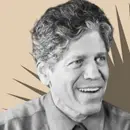


“If you have a space of democracy that is closing, you have infinitely more leverage to act before it closes than after.” — Paul Rogat Loeb
The Impossible Will Take a Little While is an anthology of essays, speeches, memoirs and poems about perseverance & hope in troubled times. Edited and introduced by Paul Rogat Loeb, the anthology came out in 2004, in the middle of the Bush years and the Iraq war, and now has 125,000 copies in print. Colleges assigned it across the curriculum. One of the founders of the Natural Resources Defense Council told Loeb he reached for it at the points where he had hit the wall and wasn’t sure he could keep going.
In 2026, many of us feel we’ve hit a wall and aren’t sure we can keep going. So it’s apt that Loeb has reworked his book to suit what seems to be our particularly troubled times. Classic essays from Havel, Mandela, Neruda and King’s Letter from Birmingham Jail all remain in the anthology. But this edition has also been comprehensively rebuilt. New work includes Navalny’s prison journals, essays from Jesmyn Ward & Rutger Bregman and a chapter on the South Korean coup. What’s changed over the last couple of decades, Loeb says, is the routinization of surveillance, the attacks on democratic institutions, and the daily reality of climate disaster.
Hope, Loeb reminds us, isn’t blind optimism. His most hopeful stories in the new anthology are about people who weren’t heroes. In Seoul in December 2024, as troops moved to shut the parliament, one detachment stopped for ramen noodles. They had their orders, Loeb says, but food came before politics. In Norway in 1942, eleven thousand teachers simply declined to teach fascism. So history often isn’t made by Havel, MLK or Mandela-style heroes. Hope, then, lies in the action and sometimes inaction of ordinary people. In Seoul noodle restaurants or Norwegian classrooms or on the streets of Minneapolis.
FURTHER READING
• Paul Rogat Loeb, ed., The Impossible Will Take a Little While (Basic Books, 13 October 2026). Full contents and excerpts.
• Loeb also wrote Soul of a Citizen and Generation at the Crossroads, and founded the nonpartisan Campus Election Engagement Project. More.
• The Korean chapter is Jungmin Choi’s “Lightsticks and K-Pop”. The Norwegian teachers are Loeb’s own essay, “Refusing to be Quislings”.
• The Berlin story AK asks for is the Rosenstrasse protest of February 1943.
FIVE TAKEAWAYS
1. He Doesn’t Believe the Arc Bends
Asked whether the arc of history bends toward justice, Loeb says no. It can bend, depending on how we act. What he has instead is Havel’s distinction, written in 1986 when the Czech dictatorship looked permanent: optimism expects things to turn out, hope is what lets you act when they might not.
2. Panels on the Ground in Pakistan
Solar output doubled in two years, then again in one. Pakistani farmers skip the permits and the installers and simply lay panels on the ground — a third of the grid displaced in a year, and panels now turning up in wedding dowries. But prices collapsed because the German Greens pushed through subsidies. Citizen action made the technology cheap.
3. Berlin, 1943: The Wives on Rosenstrasse
Pressed on whether readers might cast themselves as martyrs when Mandelstam’s Russia and the present are nothing alike, Loeb concedes it at once. Then the counter-example: the non-Jewish wives of Jewish men gathered outside a Berlin collection point until the men were released. He won’t claim it could have beaten the Nazis. Only that it happened.
4. King’s Letter Was About the Elites
Rereading Letter from Birmingham Jail, Loeb says it clicked. King’s target — the white man of goodwill whose silence does more damage than the Klansman — maps onto the elite law firms and university presidents. Ordinary people, he says, have come out of this year better than the elites.
5. Act Before the Space Closes
In Buenos Aires he met a young Russian couple. She protested when Navalny came home; then the protests shrank, the cost rose, and now none of them do. The lesson is leverage: a closing democracy gives you infinitely more of it than one that has closed.
ABOUT THE GUEST
Paul Rogat Loeb is an American writer and activist who has spent forty years on civic engagement and social change. He is the author of Soul of a Citizen, Generation at the Crossroads, Hope in Hard Times and Nuclear Culture, and the editor of The Impossible Will Take a Little While, now in a revised third edition from Basic Books. He founded the nonpartisan Campus Election Engagement Project and guides.vote, has lectured at more than 400 campuses, and lives in Seattle.
ABOUT KEEN ON AMERICA
Nobody asks more awkward questions than the Anglo-American writer and filmmaker Andrew Keen. With 3,000 episodes since the show launched on TechCrunch in 2010, Keen On America is a daily conversation about the ideas, books and arguments shaping the United States. New episodes every day.
00:00 - Intro
00:31 - Everyone we book is miserable
02:01 - Seattle has inherited San Francisco weather
02:28 - Why are these times worse than 2004?
02:56 - The Dixie Chicks, and dissent leaving country
04:23 - Eroded then, attacked now
06:07 - Does the arc of history bend toward justice?
06:42 - Havel: hope is not the same as optimism
08:34 - Are we living in Havel’s Czechoslovakia?
09:17 - The Plastic People of the Universe
10:10 - ICE, due process, and creeping toward it
10:50 - South Korea: Yoon’s self-coup
12:30 - Sixteen thousand, and a climb over the wall
13:30 - The soldiers who stopped for ramen noodles
15:29 - What is an anthology even for?
16:03 - Twelve years running election engagement
18:00 - Gus Speth hit the wall
19:30 - Rochester, Minnesota, and the sensor hallway
21:45 - Have the people done better than the elites?
23:17 - Letter from Birmingham Jail, reread
24:30 - Law firms, universities, Profiles in Cowardice
25:30 - Chicago, the whistles, the suburban moms
26:30 - Norway 1942: the teachers refuse
28:00 - Torture gymnastics, and Quisling loses it
29:00 - Red tasseled hats in Minneapolis
29:42 - But don’t dismiss elites: Havel was one
30:04 - Haakon, Wilhelmina and a generation of namesakes
30:31 - McKibben, solar, and technological breakthrough
31:29 - Curitiba, and the piece he kept
32:30 - Pakistan: panels on the ground, panels in the dowry
34:00 - The German Greens made it cheap
35:56 - Maybe the times are less troubled than we think
36:30 - Auden in a dive on Fifty-Second Street
37:00 - Citizenship as a state of being
38:20 - Slacktivism and the thirty-second conscience
39:12 - Manipulation, AI and closed enclaves
40:30 - MoveOn, Indivisible, real-world relationships
41:45 - Brazil: unions halved, the void filled
43:11 - Could conservatives make this book?
43:39 - The NRA project at Kennesaw State
45:04 - Henri Nouwen and the wounded healer
45:43 - Is there a danger of ahistoricism?
46:32 - Rosenstrasse: the wives who got them back
47:20 - This is not Stalin’s Russia
48:06 - Navalny, laughing in prison
49:30 - The Russian couple who stopped protesting
50:00 - Act before the space closes
50:58 - A governor decided by a hundred and thirty votes
51:02 - What goes in the book in fifteen years?
53:53 - Closing
00:00:31 Andrew Keen: Hello, everybody. It's been a beautiful fall here in San Francisco. Warm days throughout October. I wish I could tell you the world was good, but it seems as if everyone we have on the show is miserable one way or the other. Recently, we had the New York Times writer Janet Reitman who's written a book called The Inheritance, an American Tragedy in Five Acts that dates the fall of America from, 9/11, from 2001, and we've done all sorts of books about how dreadful everything is. In fact, a few months ago, we had the— Another New York based writer, Gal Beckerman, on the show about how to be a dissident, how again— How to go against authoritarianism, autocracy. His model was the Czech playwright and dissident Václav Havel. And that, I'm afraid, in spite of all the beautiful weather here in San Francisco, is the theme of, our conversation today, with Paul Rogat Loeb, who is the editor of a book called The Impossible Will Take a Little While, Perseverance and Hope in Troubled Times. It's an edited volume that originally came out in 2004 and now has been reissued, re— Revamped, rearchitected. Paul is joining us from, Seattle. See, Paul, the sun never shines in Seattle, does it? It's always—
00:02:01 Paul Rogat Loeb: No. Actually, we have, well, we— With climate change, we've now inherited San Francisco weather. So we have fog in the morning and then— For at least [unclear] the year, and then it burns off. And then the afternoons can be pretty glorious. It actually is right now. I just came back from picking up my bicycle from some repairs. So, yeah, it's actually quite nice out. That's, which we are savoring because we might have six months of fog and overcast.
00:02:28 Andrew Keen: Well, maybe the apocalypse is around the corner coming tomorrow. The subtitle of your book, I have to admit, I find rather annoying. This idea of perseverance and hope in troubled times. Why do we live in any more troubled times today in, in the fall of 2026 than we did in 2004 when this book came out. Why do some people always think that we live in troubled times?
00:02:56 Paul Rogat Loeb: Well, it's interesting because now people are almost— 2004 was the Bush administration. It was the Iraq War. With lots of attacks on dissent. People remember the Dixie Chicks and what happened to them.
00:03:12 Andrew Keen: What happened to the Dixie Chicks?
00:03:14 Paul Rogat Loeb: Well, they basically banned all their records from country. They were topping the country charts, starting to cross over. Natalie Maines made a comment about being— How Bush made her ashamed to be a Texan.
00:03:26 Andrew Keen: But that doesn't sound to me like a very good argument for describing the times as trouble.
00:03:31 Paul Rogat Loeb: Well, so there— Well, but it's interesting because it actually has influenced the pretty much banishment until recently of dissent from country music, which, you know, which is a whole lot of folks. So for the mainstream country music stations, it was kind of a shot across the bow of saying don't go there, or this might happen to your career. So I look at that, and yet people now say, oh, oh my god. Those things are so much better. And I would say that what people are focusing on a couple of things. One is just that— And, again, I'm not right. I'm writing about the hope, but I am acknowledging where things are. And democracy is at stake in a way. It was absolutely eroded in 2004 and in 2000, I'd argue. But—
00:04:23 Andrew Keen: It was absolutely what— Sorry. What did you say? It was absolutely—
00:04:26 Paul Rogat Loeb: Eroded and attacked. I think.
00:04:28 Andrew Keen: Was eroded and attacked?
00:04:30 Paul Rogat Loeb: Democracy was. I mean, you had people being thrown off the voter rolls, voter suppression, massive surveillance, lots and lots of things like that.
00:04:40 Andrew Keen: But— Well, those are big things to say, Paul, and to— I don't— I lived in America in 2000 and 2004. I don't remember mass surveillance.
00:04:49 Paul Rogat Loeb: Well, it wasn't to the— That— That's the shift. It wasn't nearly to the extent that it is now. And the attacks on democratic institutions were not nearly to what they are right now. And that doesn't even leave climate change, which certainly was being talked about by all the scientists and acted on by environmental activists. But the degree of climate disasters that are just now completely routine globally, we were not seeing that to that level in 2004. I mean, we saw Katrina in 2006 [ed.: 2005], of course. But, it's just— So I would say that things have gotten really worse. But my focus is not particularly on how things have gotten worse because, as you've said, there are a lot of other people who are talking about how terrible things are, and they're talking about that fairly relentlessly. And I do think it's good to describe what is going on, so that's not a bad thing. But, nonetheless, I— I'm— That's not the vantage point that I'm primarily coming from, which is much more how have people acted throughout history to make change in seemingly impossible situations, and what can we learn from that?
00:06:07 Andrew Keen: One of the essays, in the collection, and it's a very rich anthology, is an essay by Bill Moyers, "The Progressive Story of America". It suggests in MLK style, I guess, that the arc of history always bends somehow towards justice, particularly perhaps in the American sense. Isn't— Or aren't world views like yours just forms of ideology that suggest history always gets better and that America is somehow the vehicle of all that? And if it isn't, then something's gone seriously wrong.
00:06:42 Paul Rogat Loeb: I'm not actually sure that I would embrace the notion that history automatically bends to justice. I would say that it can bend to justice depending on how we act, but I don't really subscribe to a notion of inevitable progress. I'm not sure if I ever did, but certainly in the last twenty years, I've been become much less likely to do so. So, I— When I talk about persevering, finding hope, making change, it's— I try to be as clear eyed as possible. And essentially, because in the intro, you mentioned Václav Havel. And Havel is— I would argue if there's sort of one essay that's foundational to The Impossible Will Take a Little While. It's the one from Havel where he's talking about— He's writing it in 1986, so three years before the communist dictatorship, which at that point looked pretty entrenched, is overthrown in their nonviolent revolution. And he's talking about the ways that they've acted. And what— The phrase that he uses that I always really like is hope is not the same as optimism. Optimism is the belief that things are necessarily gonna turn out as you want, and hope is something much deeper. I'm paraphrasing a little bit. But it's hope is what allows you to then be able to act whatever the results. And to me, particularly in times like this, that's a much more realistic notion of hope than the assumption that things will automatically get better because, frankly, I'm not sure they will, but I also do think that they can, that they can, depending on our actions, if that makes sense.
00:08:34 Andrew Keen: You talk about times like this, whatever that means. You're writing— Obviously, you're talking to me from, Seattle. I'm in San Francisco. This reissued, republished book is done by Basic Books. It's in English, so it's primarily for an American audience, although I know there'll be people around the world who will also buy it. What are the times like this? Are you suggesting, Paul, that somehow we're living in, in a system, a political system similar to the one that Václav Havel lived in, in the Soviet occupied Czechoslovakia?
00:09:17 Paul Rogat Loeb: I wouldn't say we're at that point because that was pretty blatantly a dictatorship. And they, you know, they were doing things. I mean, I'd love the story of how they sort of united around— The dissidents united around the defense of a rock band, Plastic People of the Universe, which the authorities just— They deemed their music not socially constructive. And at one point, they were, organizing to get prisoners out of the— Out of jail and got mocked even by people like Milan Kundera, who are certainly not favorable toward the regime. And when the prisoners got out, they said, well, they didn't actually free us, but they— The solidarity allowed us to keep going. So I don't think we're there yet, but, I mean, if you're talking about somebody who's been plucked off the street by ICE without any due process, including, you know, including some US citizens, And, you know, may— And maybe the US citizens get out. Sometimes they do and not always, or ship to a country that they never lived in and thrown in a brutal jail, like, is in El Salvador. We are creeping towards something that is closer to what that dictatorship was. We're not there yet. We have elections. Obviously, we have an enormously important one coming up in, you know, less than a month. But nonetheless, the degree that we can simply feel confident that America is a democracy, I think that we have to be honest that it's a certainly highly threatened democracy. And certainly, the folks who evaluate the level of democracy as a sort of continuum in various countries have just dropped us way down the scale because of what's happening. Now one of my favorite stories in The Impossible Will Take a Little While's new edition is about the attempt to end the democracy in South Korea by the president, Yoon, and the way that the ordinary citizens pushed back. And so [unclear] democracy had elections, had pretty vibrant civil society. And Yoon was doing things like— Who was elected. He was doing things like, prosecuting journalists and filing libel suits and trying to shut down media outlets and kind of from— Familiar kinds of things using the equivalent of our justice department weaponizing it against opponents. And a month after Trump gets reelected, Yoon decides to do a coup—the technical word is a self-coup because he's in power and it's— He's trying to end democracy. And so he declares martial law, and he bans unions, bans strikes, bans certain, you know, organizational gatherings, announces restrictions on media, pretty much all the kinds of things that dictatorships do. And he sends the military in to shut down the parliament because the constitution said that the parliament, if it had a quorum of attendees, could by majority of vote— Of the vote end martial law, and he didn't wanna see that happen. So he— And this is— I think it was 10:00 at night. It's, you know, most people weren't there. Troops are suddenly— He makes this announcement. Troops are suddenly on the way. The parliamentarians rush towards the parliament, so they're live streaming from their cars or taxis or I think [unclear] subways, whatever. 16,000 people gather. They help the parliamentarians climb over the walls, or push through the soldiers, and enough of them finally gather that they can actually have a vote, and including people of Yoon's party, they basically end the martial law. And then people stick around, and they demand impeachment and eventually trial of Yoon. And at one point, I think about a week later, a million people gather on, in central squares of Seoul. And Yoon is now in jail as his defense minister and, some of the generals who allied with him. And what's interesting to me, and I would argue heartening, is that certainly the civilians showed immense courage, but some of the soldiers didn't exactly go along either. So there was a detachment that was supposed to, confiscate the— And shut down the servers that would allow an electronic vote in the parliament. And they decided to detour to eat ramen noodles at a convenience store, which I just love the image. It's like, okay. We've got our orders, but we're kind of hungry. We would like a snack. So we're gonna go to—
00:14:19 Andrew Keen: Have you been to Korea? I think, every second, every second store is a restaurant or a noodle shop. So maybe—
00:14:26 Paul Rogat Loeb: Yeah. Yeah. So, I mean, let's go stop and get some noodles. And other— There were sort of mid level officers like majors and captains who they obeyed the orders to take the mil— Troops and the military buses to the parliament, and then they just said we're staying inside. The— Inside the buses and not deploying. Somebody was authorizing helicopter takeoffs, and he just sort of came up with some excuse. Maybe it was airspace or something. Said, sorry. The military helicopter can't take off. Somebody else was, authorizing the issue of ammunition and said, well, we— You decided bureaucratic rules. We've got too little ammunition in reserve here. We have to keep our reserves. I'm sorry. You'll have to go out without any ammunition. And so that kind of what everyone calls it slow walking, passive resistance by the military, I find that very, very heartening. And, again, they successfully reversed that coup. And to me, that's the model for other countries if similar things end up happening. So it's one of my favorite—
00:15:29 Andrew Keen: As I said, your book originally came out— The anthology came out 2004. I think it was reissued in the mid teens and then has been redone for a particular moment now. What's the point of these kind of anthologies? Do you think some people read books like this and go out on the streets? And had they not had the opportunity to read an essay by Martin Luther King or Nelson Mandela or Pablo Neruda or Marian Wright Edelman, they wouldn't do anything? What— Why put these sorts of books out?
00:16:03 Paul Rogat Loeb: Well, it's an interesting question because it's— When you're writing books, it's not linear. And I just— I took twelve years off to run nonpartisan election engagement organizations where a lot of the work was extremely linear and we weren't like, elect this side or this other side, but nonetheless, we could say, look, at the school, we worked with colleges and universities, and between 2014 and 2018, the number of students doubling, which was not only us, other groups as well, went from 19% to 41%, which is just enormous. So that was really quite linear. And you're right, books aren't linear, but I think what happens, and I've— One advantage of having a book out for a long while, or my earlier other book that's done very well, Soul of a Citizen, is you do get feedback from lots of people. And the feedback—
00:17:00 Andrew Keen: And the Soul of a Citizen and you've got the same kind of title, living with conviction in challenging times. I'm not sure what the difference is between challenging and troubled times. I'm guessing troubled is a bit worse than [unclear].
00:17:13 Paul Rogat Loeb: Probably in some ways to try and avoid confusion between the books. But right— They're both saying, look. Things aren't so great.
00:17:21 Andrew Keen: Dark times, bad times, Paul.
00:17:23 Paul Rogat Loeb: Bad— Terrible times.
00:17:25 Andrew Keen: See— Seattle weather times. Rainy weather.
00:17:28 Paul Rogat Loeb: San Francisco fog morning times.
00:17:30 Andrew Keen: Yeah.
00:17:30 Paul Rogat Loeb: Yeah. That's right. It's— What is it? Mark Twain saying the coldest summers I've ever experienced are in San Francisco [ed.: commonly misattributed to Twain].
00:17:38 Andrew Keen: Summer. Yeah. Summer of San Francisco times. Although I like that because the rest of the country, you talked about climate change. The rest of the country is over a 100, and it's always 60 degrees in San Francisco in July and August.
00:17:50 Paul Rogat Loeb: So you count your blessings. We do too. So I'll give you a couple of examples, which is, you know, one is people in particular for The Impossible. There's the question of, well, once people start getting involved, do they continue? Or is it just this revolving door where you go to the march, you go to the demonstration, whatever it happens to be, you volunteer an election, then you're just gone. And I was talking— There was a it was a conference called Power Shift, which was a climate— Student climate change conference that I was speaking at in DC. And, it's kinda cool. I got to be on the stage with Nancy Pelosi and some other folks. And afterwards, there was a intended civil disobedience, but they didn't arrest anybody. So it ended up just sort of being you go there and, camp out to try and get the capital, the energy plant that services the capital to move off of coal. And there's a guy named, what is it, Gus Speth, who was kinda one of the giants of the environmental movement, founders of— One of the founders of National Resources Defense Fund [ed.: Natural Resources Defense Council]. Just somebody who'd been just doing huge amounts. And he said, you know, I just wanna thank you for this book because there were points where I just hit the wall and I wasn't sure I could keep going. And then I read some essays out of it. I'd pick it up to sustain my spirits, and that would let me keep going another day. And I was sort of stunned because, again, this is somebody I'd looked up to very much, and you sort of assume that the heroes are kind of invulnerable and always confident and all that. But I— I've heard from a lot of people that when they hit that wall, the exhaustion, demoralization, overload, that The Impossible Will Take a Little While, actually, it's been very beneficial to keep them going. And then on the other side, they're the people who've never been involved before. And my— Probably my favorite story— Book's gotten quite a lot of uses as a Soul of a Citizen in classes. And it— My favorite story for The Impossible came from it was— It's Rochester Community and Technical College in Rochester, Minnesota. And so it's basically— I mean, I guess the Mayo Clinic is there, but it's a pretty small town environment. And they assigned the book across the curriculum, and the students just jumped into it. So the health classes read an essay by, Diane Ackerman. It was a memoir of being on a suicide hotline and Terry Tempest Williams' book story about her family being devastated by radiation and from atomic tests and having breast cancer. And the speech students rehearsed it, out loud, and people made play— Students made little mini plays of it. And the— My favorite was probably the digital art stew— Students created a hallway where you walked along the hallway. Hallway had motion sensors. And as you went along, different students were reading different quotes from the book. And it was just really— When I spent a few days there, and they just said, this gets me— This gives me a possibility. I never really thought of being involved, but I'm going to try. Now did that particular person end up continuing on, and what did they do, and how did that play out? I don't obviously know that, but I've certainly been told, and, actually, I have, just encountered folks who have done very, very powerful work and said, yeah. This book has been extremely influential to me. So, again, it's probably not linear, but at the same time, people have said it's extremely useful.
00:21:45 Andrew Keen: Paul, how have the American people done? You mentioned Minnesota and the streets of Minnesota. We've done a lot of shows on that. We did one recently with the Washington DC based, Skye Perryman, the author of Ordinary People [ed.: Ordinary People, Extraordinary Times], How to Reclaim Your Power, Fight for Freedom, and Reimagine Democracy. In many ways, I think, similar theme to yours. And I don't think you have a Perryman section in the book. You might look at that book for another edition. She argues, and other people have argued on the show, that the American people have actually— Well, certainly, when it came to Minnesota, the behavior of ICE, the murderous behavior of ICE there on the streets of, Minneapolis, the American people have done rather well. She seemed quite proud in some ways. In some ways, she argued and others have argued that ordinary people have come out of this, latest Trump saga looking a little better than the elites. We did a show also recently with Jacob Weisberg who has a new book out called Profiles in Cowardice.
00:22:50 Paul Rogat Loeb: He—
00:22:51 Andrew Keen: [unclear] title. Yeah. He finds eight apologists for people who were originally critical of Trump, including, George W. Bush, John Roberts, who he thinks have been extremely cowardly, in Trump 2.0 [unclear]. So for people like Weisberg, the elites haven't exactly distinguished themselves. Do you think that the people have done better than the elites?
00:23:17 Paul Rogat Loeb: I would very much agree. When I was— One of the structures of The Impossible Will Take a Little While is that I have sort of nine sections and I write introductory essays that are my chance to reflect on all of it. And—
00:23:30 Andrew Keen: And they've got an— I mean, it's an incredible selection. I don't know how much time it took you to put this thing together.
00:23:36 Paul Rogat Loeb: Yeah. A lot. But, I—
00:23:38 Andrew Keen: And some of those sections, I mean, Courage Is Contagious, The Turning of History, Radical Dignity, Seeds of the Possible, so all sorts of interesting titles.
00:23:49 Paul Rogat Loeb: So when I was working on Radical Dignity, one of the essays in it that had been in there from the beginning is my favorite Martin Luther King essay, which is Letter from Birmingham Jail.
00:23:58 Andrew Keen: A classic, of course.
00:24:00 Paul Rogat Loeb: He talks about the— How they— Again, I'm gonna paraphrase, but the silence of the white people of goodwill, I think he said the white men of goodwill possibly, is more damaging to the Negro cause than the Ku Klux Klanner and the White Citizens Council person. And I reread that. I was re— Sort of working on the intro, and it just clicked into place. And I said, well, you know, he's really talking about the elite law firms, the Columbia University, the other schools—
00:24:30 Andrew Keen: Right. And Weisberg includes the president of Dartmouth and one of the heads of one of the elite law firms as examples of—
00:24:39 Paul Rogat Loeb: Absolutely. And they are absolutely the analogs to the ministers, the white ministers who wrote a letter to King saying, well, of course, we believe in your cause, but you need to be more patient and you need to wait and you need to basically not do any of the things you're doing. And it just felt like a direct through line to that. And then on the other hand, you do have the ordinary citizens, and there's an interesting lineage on Minneapolis. I— The book came out, when I finished it, Chicago— ICE had just descended on Chicago. So there's a very powerful piece by Chicago Tribune reporter about how people responded and the whistles and how they made those as sort of just a cultural symbol, but also something that really was very functional in alerting people, how people who were just kind of suburban moms never been involved, how they got involved. It's a great piece. But then Minneapolis happens, and one of the things that I noted was that there's a piece that I wrote, about the— Because I— It would just— I wanted one that would sort of fit what I'm— The direction I was looking for, which is how the Norwegians during World War II, particularly the teachers, resisted the Nazis. And it's a really powerful story that's not that well known, at least now in days. But, essentially, the— People know the term Quisling for traitor. It came from Vidkun Quisling, who was a— The head of the Norwegian fascist party, who the Nazis installed to run Norway. And they were— Quisling was trying to make a— Essentially, a fascist regime out of Norway, possibly the notion that they're fellow Aryans. And so everybody has to be part of these fascist organizations, and the students have to be part of the equivalent of the Hitler Youth and on and on and on. And they gave directives to the teachers as to what they had to teach, which is basically fascist values. And they had to enroll the students in the equivalent of the Hitler Youth and teach this about the occupation and about Germany and all the rest of that. And the teachers flat out refused, and they organized clandestinely and literally the spy type stuff of a sort of piece of paper inside a matchbook handed off at a train station. And they had a letter that they had drafted that basically said, we are Norwegians. We will teach as we always had. We will not betray our values, and we'll not enroll our students in an organization that doesn't reflect our values. And 11,000 out of 14,000 teachers in the country signed it. And they— Basically, the Nazis didn't really know what to do about that. They threatened the teachers with firing, loss of their pensions, etcetera. They closed down the schools, but then these kids are running chaotic, and they drafted some of the Norwegians in the war effort, but then they hit people had to go watch their kids. So that didn't work. They send 1,100 of them to labor and concentration camps, where they had to do what they call torture gymnastics in the snow. And none of it worked, and the teachers just absolutely did not cave. Finally— And the pressure was building to get them returned. Finally, the Nazis released them, and Quisling gave a talk at a high school that had been kind of a center of opposition on the outskirts of Oslo, and he just lost it. And he said, your teachers have ruined everything for me, and we might have had our own country. And now none of this works. And he basically abandoned the entire project to draft the teachers into the Nazi occupation. They just gave up. So here's what gets interesting. I'm circling back to Minneapolis, which is Minneapolis and Minnesota in general, as we know, has lots of Norwegians. And some of them had heard the story of the Norwegian resistance from grandparents or great grandparents or other relatives. It was my best friend who's a Norwegian American who told me and reminded me about it. And when ICE started coming down, they learn from Chicago, they learn from Los Angeles, they learn from Portland, from the other cities where ICE tried to occupy, but they also learned from the Norwegians resisting the Nazis. And explicitly— I mean, not everybody, but the people who had that lineage were explicitly citing it in their participation. And there was even a— I guess it was a craft store where there were certain these little red hats with tassels that became symbols of the Norwegian resistance during the— During that Nazi period. And she started creating those, selling them, distributing them, putting templates online. Literally, tens of thousand, I think it was, of those hats ended up, getting distributed. And so what I love is you have some moment of extreme courage eighty years ago, and then here it is. Yeah.
00:29:35 Andrew Keen: I can't resist, Paul. Trust the Norwegians to know how to deal with ICE.
00:29:40 Paul Rogat Loeb: Yes.
00:29:42 Andrew Keen: But of course, there are other examples. We can't always dismiss elites. I mean, Havel himself was an extremely well educated young man. He was part of a Czech elite. In Denmark during the war, in terms of resisting Nazism, the king and the people resisted. So— And sometimes— Sometimes, you know, history is a funny thing. It doesn't always report the same stuff.
00:30:04 Paul Rogat Loeb: Not a huge fan of kings, but what the Norwegian king did was courageous, admirable, and impactful. And, in occupied, in Netherlands, the queen Wilhelmina did something similar. And all of a sudden, all these people started naming their children Wilhelmina as an activist. Whole generation of, you know, of young women named Wilhelmina. So absolutely. And I would—
00:30:31 Andrew Keen: Politics, obviously— Is a human thing. And as, Skye Perryman reminds us, ordinary people can behave in extraordinary ways. What about when it comes to environment? You've mentioned it a couple of times. You've even brought up Bill McKibben, who's in the collection. He was on the show recently. Oh, good. And he was surprisingly optimistic about, solar energy. His latest book is Here Comes the Sun, a Last Chance for the Climate and a Fresh Chance. He's not a natural optimist, Bill, but he's cautiously optimistic now given advances in technology. Is the environment when it comes to our dark times, our troubling times that you talk about, Is the environment different in the sense that sometimes it requires technological breakthroughs that are beyond individuals in contrast to politics?
00:31:29 Paul Rogat Loeb: I've thought a lot about that. I mean, I used McKibben's section. He's actually the only person besides myself who has two different pieces because he had done this wonderful piece on the Brazilian city of Curitiba that pioneered, bus rapid transit for the world as well as a bunch of other sort of environmental urban initiatives. And I looked at it and it's like, god. That's still a really powerful piece. And I had done a coda where I visited Curitiba about fourteen years later and sort of marked how they developed with the city's expanding growth and affluence and nonetheless kept their values. And then Bill comes out with this, here comes the sun. And I read it, and I just— This is fantastic. And, of course, I mean, I consider myself— Well, I am highly engaged, highly engaged environmentally, and I did not know a lot of the stuff he talked about. The, I mean, the rate of— He described how from the first seller— Solar cell, I guess, in the fifties to 2022, I think it was, they created a certain amount of energy, and then they— Of solar energy. Then in two years, they doubled it. Then in one year, they doubled it again. Then that's through '25. '26 will have more than doubled it. And so all of a sudden, this is taking off at a meteor— Meteoric rate. And my favorite story is the farmers in Pakistan where they basically— Because of proximity to China, they— The solar panels were just dirt cheap. So they bought them. They didn't— When I had bought solar panels for my house, it was permitting and inverters and complicated installation on my roof. They've been going for twenty years, so that's good. In Pakistan, they simply lay them on the ground and connect them to a tiny battery and use that to power lights and cell phones and computers if they had them and displace diesel fuel that was both costly, immediately polluting, and contributing to climate change. And, you know, McKibben writes that now there's a— People get married in Pakistan, the dowry of the bride includes generally a couple of solar panels and an inverter. And so— And that he also described that taking off similarly in Africa where it just, like, in Pakistan, a third of the electrical grid got displaced in a single year. So it's skyrocketed. Now you asked that question, which is a really good one, about technical innovation. And, obviously, you have to give credit to the engineers who have worked on it, and you got a credit to the people who developed the solar companies and all the rest of that. But there's also a way in which it sort of circles back to citizen activism. So McKibben also talks about how one of the whole reasons that we hit this point where there's so much production that the prices can just absolutely plummet is that Germany, the Greens managed to get enough power in parliament. They have a parliamentary system, so they're not splitting the vote. And they push through extremely strong subsidies for renewables. I think it was a combination of direct subsidies and prices you would pay for the electricity— Get paid for the electricity you generated. And so there was so much demand that all of a sudden, the Chinese factories could hugely expand production, and that was a big part of what dropped the prices. And then I would argue that we also contributed to that here because there's an awful lot of states that had renewable energy mandates where they would just say that the utilities are— You gotta get 20% of your energy from renewable energy and from renewable sources. And so as a result, people started— I was a beneficiary. I, because they're usually combined with subsidies. So, I guess it was whatever, 25% of my costs were covered by tax breaks. And I was, because I guess I was an early adopter. I was expanding the production stream, and, all those folks doing that in the US as well contributed to the technology being able to succeed in the marketplace enough to advance and have the results that McKibben's been describing. So I look at that and find that very, very encouraging. And it is, as you say, it's a combination of technological advancement.
00:35:56 Andrew Keen: So maybe— But also— Maybe our times aren't quite as troubled as certainly on the environmental front as some people might think. You talk about citizens, and you've— We're all citizens or most of us are citizens of one country or another. But what about the international dimension here? One of the essays you include is from W. H. Auden, who wrote his famous poem, "September 1, 1939". I think he wrote it in New York. I guess he was a British citizen, but he was outside Europe. Given the troubling international situation, but perhaps in Ukraine or Gaza or elsewhere, how does citizenship in your view, Paul, and in terms of these essays in the book, how does it get beyond formal citizenship? Are you thinking of us as citizens of the world? So when W. H. Auden was sitting in that dive in New York City, he was writing as a citizen of the world.
00:37:00 Paul Rogat Loeb: Yeah. I— It's a low— It's a word— That's probably— In— When the first version of, Soul of a Citizen came out in '99, it felt like a less loaded term. And I remember thinking, what do I call it? Soul of an Activist. That just sounds terrible. And just— And Soul of an Organizer, that sounds really technical. And I meant citizen really not in the formal legal sense, but in the sense of here you are in a place, whatever your legal status, you're living here. Do you take responsibility for that place? So it's not a formal legal distinction. It's really rather a state of being in a place. And so to me, that's how I use the term. And, obviously, it has lots of other meanings that are being used and sometimes used to divide us and to deport people who've been in a place twenty five years and established families and businesses and part of congregations and just send them off to some country they'd never lived in. But I use it really as a sense of taking responsibility for where you happen to be.
00:38:20 Andrew Keen: Paul, you, you put this anthology together initially in 2004. That was just as social media was beginning. There's been a lot of criticism of social media in the context of its opportunity for what some people, critique as slacktivists. Everyone lends their voice, their signature, their name to some sort of issue that concerns them. It bothers them for thirty seconds, and then they move on. Right. Do you have warnings in this book or in your mind about the dangers of lending your name to some cause for thirty seconds and then going out to dancing to your local restaurant? Does it need to hurt people, or can we do it painlessly?
00:39:12 Paul Rogat Loeb: It's a good question. I would say that there's sort of two streams of danger. I mean, the first, obviously, is the potential for manipulation, which we've seen— Well, we've seen internationally, where things that are not true get broadcast and rebroadcast. And, of course, AI makes it much, much easier. And so the potential for the ease of lying spreading to sort of closed enclaves who simply believe everything that they're— That they— Some friend happens to tell them, that's huge. And lots of people, of course, have written about that. At the same time, the— What you're talking about is a, I don't know, is it gonna call it a more subtle phenomenon, perhaps? More seductive, which is where you think you're actually involved, but are you? And to me, the challenge is it's not that signing your name to the online petition is bad, But the question is where does it lead? And if it leads to just, okay, one more name on an online petition that probably is gonna get discounted by most folks, it varies somewhat. I mean, some of the corporate petitions have actually had more significant impact because people are saying, look. I buy your product, but I am no longer going to buy your product. And that has changed behavior of corporate— You know, very large corporations sometimes. But I think fundamentally, for any movement to be effective, it has to be grounded in real world relationships. And so organizations have struggled with this. I mean, I wrote about the genesis of MoveOn.org in my Soul of a Citizen book, which started almost accidentally because it was during the, the impeachment of Bill Clinton for the Monica Lewinsky stuff. And two people, a husband and wife, just sort of said— Send a letter to— It was kind of a kind of chain letter. It was sort of petition, but it was— They sent it to the relatives saying just, okay. Let's just move on, censor and move on. Bad move. Not admirable, but, like, doesn't this country have some other things to deal with? And then it bloomed just because it took off into this organization. But the— Or any organization became large and quite impactful, but always has struggled certainly with how do you get people offline as well. I would argue that maybe Indivisible has probably been more successful of late at actually fostering face to face relationships. Or if they aren't quite, in person face to face, it's a local chapter gathering over Zoom and talking and getting to know each other, and it's not the anonymity of just adding your name. But I think it— I think it's critical. I mean, one of the pieces that I found terrifyingly compelling that I read in the last, I guess, in the last week was a New York Times piece about Brazil, where they described how the social movement that— They were trying to explain Bolsonaro's success, and they described how union membership had dropped in half when Lula was initially elected and how the sort of organizations on the ground that were the backbone of his initiatives, partly because he was out of commission, partly because he was getting older, lots of reasons, had just really, really atrophied, and the void was being filled by a combination of evangelical churches that were aggressively right wing and also by, social media. And I was just like, oh, this is not a good— This is not I mean, this is not a good result.
00:43:08 Andrew Keen: Yeah. I mean—
00:43:09 Paul Rogat Loeb: but also not a good process.
00:43:11 Andrew Keen: Right. You've put your politics— I mean, you're not shy to articulate your own politics. No. I mean, could there be a collection of conservatives putting together essays on The Impossible Will Take a Little While? For example, essays on abortion and abortion rights, and thirty years ago, it seemed impossible that you could overturn Roe versus Wade, and now you can. Is there a credible conservative, sibling, cousin, maybe distant cousin to this collection?
00:43:39 Paul Rogat Loeb: Interesting because some of the pieces are— And I actually wrote about this in my main introduction, and I said, well, some of the pieces are— A, I do want people of varying different perspectives. I mean, I was going back to a campus example. This was Soul of a Citizen, and they were assigning to all the freshmen at Kennesaw State, which was then in Newt Gingrich's home district. And one of the, the classes all had to do sort of service or advocacy projects. One of them picked an NRA project to push for concealed, legal concealed carry— Maybe it was open carry. Lee— Legal carry— Carrying weapons onto campus. And the professor sort of was just dismayed, and she said, well, I'm telling you this because you wanted to know everything that happened. Not sure it's a good thing. And I said, well, on some level, I'm terrified of being on a campus with a bunch of 18 year olds packing. That is not a good thing in my view. Nonetheless, the fact that these students got inspired by it, I actually think that's a good thing. So—
00:44:44 Andrew Keen: Yeah. Maybe we can— Maybe if they put their anthology out, they could redo the title a citizen's guide to fear in a time of hope.
00:44:53 Paul Rogat Loeb: Right. Right. Exactly. And you will never have hope because there will always be fear.
00:44:57 Andrew Keen: There's the opportunity for conservative viewers, and this is— Got a couple more questions, Paul. You've been very generous with your time.
00:45:04 Paul Rogat Loeb: Yeah. And I would say that there were a couple of— I mean, there's a piece by a, a guy named Henri Nouwen. He came up with the idea of the wounded healer, and it's about somebody who cannot speak or talk— I'm sorry, speak or see or hear who is taken care of, who gives them hope, and he mentions in passing about hope for the unborn. And I don't particularly agree with that perspective, but it was coherent with his view, and his story was really powerful. And so I kept his story in even though, you know, it had some elements I didn't agree with.
00:45:43 Andrew Keen: Paul, is there a danger in this kind of collection a kind of ahistoricism? Americans don't tend to be the most historical people when it comes to their own literacy. One of the essays in the book is by, a Nadezhda Mandelstam, of course, who lived through the nineteen thirties. And I'm not defending what happened on the streets of Minnesota, or Minneapolis, earlier this year, but it's quite different from what happened in Stalin's Russia, where hundreds of thousands of people got carted up in the middle of the night to death camps and millions of people died. Or for that matter, I don't think you have any essays from the Holocaust. So certainly, I didn't see one. Maybe there is one. Yeah.
00:46:32 Paul Rogat Loeb: I actually do. I have, there's this very interesting case study where the, the Nazis in Berlin imprisoned— They were sort of imprisoned and took to the camps people in successive tranches, and they got to the people who were married to German Aryan citizens. And so they took them to downtown. They took them to a police station in Berlin, and their spouses gathered on the streets in growing and growing numbers. And they actually backed down and freed them and pulled a couple of people back from the camps. And I'm not saying that, oh, well, of course, you could have defeated the Nazis that way entirely because I'm not sure that you could have. But it is an interesting story.
00:47:20 Andrew Keen: And— Right. But my question— I take your point. But my question is, is there a danger that some people reading collections like this might imagine, might sort of turn themselves into martyrs and think they're living in such dark times, millions of people disappearing in the middle of the night, where, again, as I said, I'm no great fan of the current American administration, but it would be hard to argue that it's in any way Stalinist. Right. So should we be a little careful, when we read collections like this to understand that somebody like, Mandelstam was writing in an entirely different time, an entirely different world.
00:48:06 Paul Rogat Loeb: Certainly true. Yeah. No. Certainly, that is true. At the same time, one of the pieces I really liked, which is sort of surprising to me that's in there at all is by Alexei Navalny.
00:48:18 Andrew Keen: Yeah.
00:48:19 Paul Rogat Loeb: And the friend said to me— He said, well, you know, she said, you know, you should really include this. I'm like, but he died in Putin's prison. That isn't very hopeful. And she said, just read and see. And I— I'm reading it, and I'm laughing out loud. And my wife is saying, like, what are you laughing? What are you reading? It's just— I'm reading Alexei Navalny's prison memoirs. And because he had this powerful humor, I mean, I remember saying, well, they— Somebody here must have said, who read George Orwell's Nineteen Eighty-Four and thought, cool, guys. We can do that here. And somebody— They care so much about me. They're standing by my bed to make sure I don't wander off in the night, and on and on and on. And there was a one point he says, in the narrative that he's talking about the factions and the opposition before Putin completely consolidated power. And, again, I'm gonna paraphrase because I'm not great at remembering quotes exactly. But he said, essentially, we've gone from a situation where we're debating about who should we be standing with and take photos with in the resistance to, one where people are simply snatched off the streets, and disappear— You know, it disappeared for the merest opposition. So I look at it as a cautionary tale. I mean, I remember I was we went to Buenos Aires and to Montevideo, Uruguay this year, and I met a young Russian couple. And I was sort of guardedly saying, well, what's it like? Because they're from a kind of dictatorship at this point. And she said— I said, do you know, did you have any qualms? She said, well, when on— Actually, when Navalny came back, there were big protests, and I joined those protests. But then they got smaller, and the cost got more difficult, And now no— None of us do. And so part of my lesson was, if you have a space of democracy that is closing or being threatened with closure, you have infinitely more leverage to act as Navalny wrote before it closes than after the mechanisms of a dictatorial state get far more established. So to me, that's an argument to be, you know, certainly for our midterms. I have a story where I tell of getting three votes out, volunteering on election day in my state of Washington, and then my governor being decided by 133 votes and, my realizing I'd gotten 150 of them out by myself and that had 50 fewer people join.
00:50:58 Andrew Keen: You could have replicated you. So final question, Paul.
00:51:01 Paul Rogat Loeb: Yeah. Yeah. Exactly.
00:51:02 Andrew Keen: The book— The original, collection came out, The Impossible Will Take a Little While back in 2004. So it's been twenty two years. Correct.
00:51:12 Paul Rogat Loeb: Yeah.
00:51:13 Andrew Keen: I hope you'll still be— It will all be around in twenty two years. But even in ten years, if you were to put this volume out again, it's obviously been shaped by the current assault on democracy in Russia, America, Brazil, many other places. What would you imagine? I mean, it's obviously impossible to tell, but speculating now. If you were to put this book back out in fifteen, ten, fifteen, twenty years, what will be things that aren't in them? What will be the— Some themes in— Not in this book that may appear? Would— Might it be AI, for example?
00:51:48 Paul Rogat Loeb: It's a very good question. I mean, one of the things I struggled with when I was writing pretty— I mean, I think it's about 20,000 words of inter— 25,000 words of introductions was I wanted to speak to this time, but I also didn't wanna get locked into it because the history of both this and Soul of a Citizen, both The Impossible Will Take a Little While and Soul of a Citizen is that people kept on using the books, and you just didn't want them to feel dated. And I, you know, I just went through clearing my shelves at the behest of my wife, clearing out old books. The topical books from twenty years ago, a lot of them didn't age very well. So they just put them in boxes literally a week ago. And so my feeling is that, you know, we're not gonna be sure what the— All the issues are. Certainly, AI is gonna be huge. But the question of whether or not somebody decides to act on what they believe, and do they find the courage? Do they recognize that they need to connect with others? Do they need to keep on when they hit some setbacks? All of that will continue, which means that most of those— I mean, I don't see Nelson Mandela dating because I read that. You read it in any time, and it gives you courage and inspiration. And that's what I wanted to do. And so in some sense, because the stories are transferable, the stories of courage, that I would hope that they would be transferable. And then, yes, I would probably be talking about this particular context and time that has shifted— I hope shifted to the better. We'll see. But the core inspirational stories remain inspirational because of their about fundamental human attributes. So, you know, if you go to theimpossible.org [ed.: the book's page is paulloeb.org/take-awhile] and look out and check out pieces of the book and whatnot, I think that would still be true fifteen years ago [as spoken].
00:53:53 Andrew Keen: Yeah. I mean—
00:53:54 Paul Rogat Loeb: We hope it would.
00:53:54 Andrew Keen: Ten or fifteen years' time, it's still gonna be raining in, Seattle. Still be, sunny in San Francisco, Paul.
00:54:01 Paul Rogat Loeb: Oh, no. We'll be— We'll have weathers like The Bahamas now then. You know? Wow. It's not that.
00:54:06 Andrew Keen: Well, that's even more reason to be cheerful. Paul Rogat Loeb, nice to talk to you. Are you the editor of, a re— A reissued, revamped, The Impossible Will Take a Little While, perseverance, Perseverance and Hope in Troubled Times. I think talking to you makes the time seem a little less troubled, and the book will make our time seem a little less troubled. Thank you so much, and best of luck with the book.
00:54:33 Paul Rogat Loeb: My pleasure. Anytime.