The Hope Machine (Holy Shit, My Life is Over): Bill Gross Gives Away 1.2 Million AI-Generated Ideas
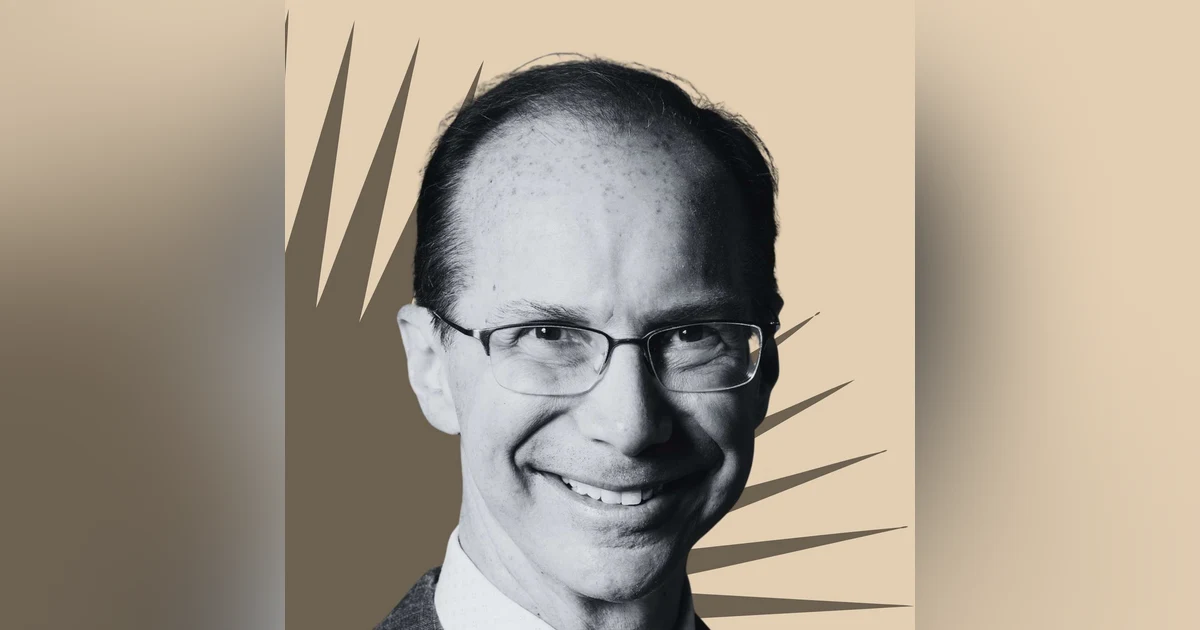


“My whole life has been coming up with ideas myself, and now AI can do that better than me.” — Bill Gross
INTRO
Bill Gross has been Mr Ideas Man since 1996 when he founded Idealab in Pasadena and started the hand production of startups. Today, he launches Idealab AI where the hand production of startup ideas is replaced by the algorithm. He fed seventeen million documents — news stories, expired patents, SEC filings, complaints on Reddit — through a thirty-thousand-token prompt built around the thirty-one methods he has used all his life, and out popped 1.2 million business ideas. The first batch cost a thousand dollars in tokens and produced thirty-two thousand ideas in an hour. He is giving all of them away.
“Holy shit, my life is over,” he thought.
Then he decided it was a superpower instead. Mr Ideas Man had come up with his greatest (and final?) idea.
His showcase algorithm-produced idea is a five-dollar-a-month app that locks in today’s gas price by hedging the pooled subscriptions on the New York Mercantile Exchange. Bill’s own system scored it 8.9 out of 10 against 32,000 rivals.
The business model inverts the usual one. Entrepreneurs pay nothing. Corporates with large R&D budgets and fat patent portfolios license the platform to mine their own IP, and they fund the giveaway. Universities are next. Bill is talking to one that would pay students fifty thousand dollars to come and build a company, rather than charging them fifty thousand to study one. As Chris Marquis argued in yesterday’s New York Times, business school as we once imagined it is over.
So where does the hope machine come in? I asked Bill whether the MAGA crowd might object to an American giving away his best ideas to the rest of the world. He was unmoved. Idealab AI is defiantly global from day one, and he is most excited about its power in Africa, the Middle East and South America, where young people and ideas are abundant.
“Bill, this is a hope machine,” thus exclaimed Ahmed El Alfi, the founder of the Flat6Labs accelerator in Cairo, having come to Pasadena to get a sneak preview.
I asked Bill what the machine can’t do. “Judgment,” he said. Which means mentors, advisors and investors matter more now, not less. But what about questions from interviewers? Hmmm. Holy shit, my life is over. Maybe Uncle Bill can build me a question machine.
FURTHER READING
• Idealab AI launched on the day of recording. Bill gave the address on air as idealab.ai and his own email as bill@idealab.ai. The thirty-year parent company is at idealab.com, and his 25 Lessons from 25 Years of Idealab is the long-form version of the methodology he has now handed to a model.
• Bill’s 2015 TED talk on timing as the single biggest predictor of startup success, which he refers to at 25:55 — watch it. He says the new platform now does this analysis automatically.
• On the IP argument at 17:58: ProRata.ai, his venture to make AI companies pay publishers a revenue share, raised $40m and launched Gist in September 2025.
• Matthew Botvinick of Anthropic, whom AK raises at 08:39, on the risk AI poses to democracy — listen to that episode, and his book AI and Political Freedom (Princeton, 2026).
• Richard Socher on AI that can think for itself, raised at 41:24 — Eureka in Silicon Valley. His book is The Eureka Machine (PublicAffairs, 2026).
• The thousand-dollar-a-month AI habit and the lens cap, from last week’s editorial with Keith Teare.
• The premise of the gas-hedging idea: the Strait of Hormuz has been closed or severely restricted since late February 2026, Iran insists it remains closed, and shipping traffic has only partly recovered — the fuel crisis in detail.
• Aptera, the streamlined electric car he names as his best-known failure, actually wound down in December 2011, not during the 2008–09 recession as he says at 25:55.
• “Bill, this is a hope machine” is Ahmed El Alfi, who founded Sawari Ventures in Cairo and the Flat6Labs accelerator that has seeded several hundred startups across the Arab world. He visited Pasadena, saw the platform, and supplied the title of this episode at 22:44.
• On the universities at 19:29: Christopher Marquis, a previous guest on this show, published “I Teach at a Business School. It’s Time to Shut Them Down” in the New York Times the day before this conversation was recorded. He argues that HBS-style case studies are corporate-approved narratives rather than research, and that business schools train students to practise being the person in charge rather than to be sceptical of them. He was last on in November 2025 — Strategic Hibernation.
FIVE TAKEAWAYS
1. Why this only works now, and did not a year ago. The origin is a Wall Street Journal piece on the copper shortage — data centres needing transformers faster than they can be made, electric cars needing motors — which made him notice that most articles carry a problem statement at their core. The mechanism is cross-pollination: a model holding problems, technologies and expired patents in one context at once can collide a decades-old financial instrument with a two-week-old crisis. He is emphatic that this is new. A year ago, he says, the models simply were not good enough to do it, and everything that makes the platform possible has arrived since.
2. Nobody tested the best idea the machine made. The gas-hedging app is the strongest thing in the hour and also the least examined. He is right that the cleverness is in the combination: airline hedging has existed for decades, consumer access has not. But a product that guarantees a future price in exchange for a fixed premium is insurance, and five dollars a month does not fund protection against unbounded upside — nor does selling it avoid the regulators who supervise both insurance and retail derivatives. His own system ranked it first out of 32,000 without surfacing any of that, which is a sharper illustration of his judgment argument than anything he says about judgment.
3. He insists he has no moat, and appears to mean it. Asked the standard Silicon Valley question, he refuses the premise: he wants to be copied, a...
00:30 - A special Monday: what launches today
00:52 - Idealab AI, and 1.2 million ideas given away
01:29 - The copper shortage, and the problem inside every article
02:20 - 7,000 articles, $1,000 in tokens, 32,000 ideas
02:40 - “My life is over”
03:05 - What is an idea?
03:30 - Locking in the price of gasoline
04:30 - Airline hedging, retailed to drivers
04:48 - Why not just ask Claude yourself?
05:17 - Thirty-one methods and a 30,000-token prompt
06:20 - Seventeen million articles, patents and complaints
07:02 - A search engine for entrepreneurs
07:08 - Type in your skills, your passion, your LinkedIn
07:58 - Is the secret sauce the taxonomy?
08:39 - Botvinick, democracy, and job creation
09:00 - The Global South, and youth without structure
09:30 - Is this the dot-com boom again?
09:50 - Eyeballs then, revenue now
11:27 - Claude against ChatGPT
11:56 - How will the frontier labs react?
12:09 - Token demand that creates value
12:50 - The front door of the innovation economy
13:31 - Too good to be true: what is the business model?
13:39 - Licensing to corporate R&D
15:11 - What McKinsey and Accenture should do with it
16:15 - The hyperscalers and the data-center build-out
17:18 - Is this an IP play? Will people sue?
17:58 - ProRata, and paying publishers
18:58 - But you are surfing off Claude
19:29 - Universities under assault
19:57 - Imperial College, ASU, hackathons
20:41 - Paying students $50,000 to come
21:40 - The business class he taught at Caltech
22:12 - Giving away our best ideas to the Chinese?
22:44 - “Bill, this is a hope machine”
23:31 - Entrepreneurship is still brutal
00:00:30 Andrew Keen: Hello, everybody. It is Monday, October the 19th, 2026. Not just any Monday, but a special Monday, at least according to my guest, an old friend of the show, Bill Gross, the founder of Idealab, who, at least in his words, has the biggest idea of his life, which he's launching today. So, Bill, what's happening today?
00:00:52 Bill Gross: Well, today we're launching Idealab AI, and we've come up with a way to develop 1.2 million and growing really powerful business ideas, and we're giving them away to the world because we think this can have the biggest positive impact. And it's using AI to create jobs, not destroy jobs, and it's also giving a lot of people hope because I'm really hopeful myself that this can lower the bar for entrepreneurship and give a lot of people a chance to take their passion, find their purpose, and really build something fantastic.
00:01:22 Andrew Keen: So tell me the story of this. I know it's been germinating in your mind for several months. How did you come up with the idea?
00:01:29 Bill Gross: Well, my whole life I've been looking at how can we use technology to solve important problems, and I've started many companies over the years, 175 and counting, and all of them have a core aspect of looking for 31 different methods that I've had to develop an idea based on solving a problem. And recently, because Claude has gotten so good, I've been using that to help me use my methodology to tackle new idea generation, but one thing struck me. I was reading an article in the Wall Street Journal about the copper shortage, and I realized that most articles I read actually have a problem statement at their core. In this particular case, copper shortage was because data centers need transformers faster than they can be made, and electric cars need motors. But I realized, what if I could take the articles that I've read and give them to Claude and say, "Can you find the core problem statement in this, and then use my methodology to come up with a technology solution?" So I took 7,000 articles from the last two weeks of reading that I had done, and I handed it, and an hour later, and $1,000 in tokens later, I had 32,000 incredible company ideas. And at first, I was kind of shocked. I thought, kind of like, holy shit, my life is over because my whole life has been coming up with ideas myself. And here now, AI can do that better than me. AI has gotten so good in the last year at being able to put these kinds of things together, I was shocked, but then I realized this is maybe a superpower. Taking this and bringing this to the world could be a way to solve problems at a scale that I never could have imagined before. So I got very, very excited about that.
00:03:05 Andrew Keen: What is an idea, Bill?
00:03:07 Bill Gross: Well, an idea is taking something from column A and something from column B, maybe two disparate things, and coming up with a unique solution. I'll give you one example. In that first 32,000 set of ideas, we made a search feature so we could drag some sliders and choose some different things. So you could choose, well, I'd like an idea that's digital only, or I'd like an idea that can start for under $50,000, or I'd like an idea that has positive impact on more than 100 million people right now, and is an urgent problem. So I drag the sliders to say that, and the idea that came to the top with a score of 8.9 out of 10 of the 32,000 ideas was, I've been reading a lot about the war in Iran, and the Strait of Hormuz is closed, and gas prices are going up, and more than 100 million people are complaining about the price of gasoline. So what about if you make a mobile app where people pay $5 a month, they lock in today's gas price, so they don't have to worry about the price going up anymore, and then you take the accumulated $5 and hedge gasoline on the New York Mercantile Exchange and lock in gas prices for people, and basically what you're doing is bringing airline-level hedging to consumers, and that blew my mind. Basically, what that had done was take the idea of hedging. It didn't invent hedging. Hedging has been around, but it's never been available for consumers, and it took a problem of today that is a new urgent problem, and merged those two things together, so that's one example of where a powerful new idea can come from. Now you still have to build a company around that. There's a lot to do beyond that, but that's an example of where a great business idea can come from merging different things from different categories because AI can have all of that in its brain at once. It's really, really powerful.
00:04:48 Andrew Keen: So Bill, people are listening to this and thinking that's an intriguing idea, but why couldn't I just go to Claude? Go to the—go to the brain. Go directly there and say and ask Claude, as we all do every day, a fundamental question. You would ask Claude. I want to hedge gas prices because of the instability in its price. Can you help me? What are you doing that Claude directly can't do?
00:05:17 Bill Gross: Well, if you go to Claude and say the war in Iran is going on and gas is too expensive, give me some ideas. I don't think it will come up with this hedging idea. It might, but I don't think it would. If you say hedging, that would—it might be able to do it, but I didn't even think of the hedging aspect. That's the whole cleverness of this. So how did Claude come up with the idea in our system? Because I gave it my framework of 30—31 different methods of coming up with ideas, and because I fed it 17 million articles with problems and technologies and solutions, it was able to cross pollinate those together to come up with that particular solution. So I hope that more people will do things like that. Like I want this to be copied. I'm giving this away to the world because I really want this to help solve problems. And I think that now AI is so powerful that if you give it enough information at once, and what we've done is taken that methodology and turned it into something like a 30,000 token prompt that takes all this stuff and looks for the solutions. That's really why this is so powerful, and I really think it can be a game changer. And I never thought that AI could be that good at this. And literally a year ago, it wasn't. Like this has all happened in the last year. So if you were to ask why now, well, it just got good enough to be able to come up with these incredible ideas. And basically, after the 7,000 articles I fed it, which led to that one idea I told you about, but 32,000 others, I've since fed it 17 million articles, including expired patents and SEC filings and complaints on Reddit and Twitter and other social media and all these different technologies that I found from science journals, so that now has this mix of richness to be able to come up with ideas, and I have 1.2 million ventures. So the 1.2 million ventures are what we're giving away to the world.
00:07:02 Andrew Keen: So in a way, you're creating a verticalized search engine for entrepreneurs.
00:07:08 Bill Gross: Yes, it really is a search engine that generates ideas based on problems in the world and technologies that can solve it, but then it allows you to type in your own skills or passion or LinkedIn profile and find the 100 that are closest to you. So what I'm really hoping is that people will go to this, and it's free, so people can go search and go type in, hey, I'm passionate about climate tech, and I'm a mechanical engineer. Show me some ideas for that. Or I'm a poet, and I really want to do something that enhances. And we'll show you ideas about that. There's so many in there. There's probably several hundred thousand climate ideas. There's several hundred thousand ad tech ideas. There's just so much in there because there are many problems in the world. There's problems in there about inequality, about healthcare. Any one of those can be turned into something that can be an enterprise that can possibly help address that problem.
00:07:58 Andrew Keen: So, is your secret sauce, Bill, in what you're doing here your taxonomy?
00:08:03 Bill Gross: I think it's a taxonomy, and I think it's the structure that we put together to look for technology enablers and problems and have them meet in the middle somewhere where there's a solution that can bring real, real power to that, and to build a viable business out of it. Obviously, there are many ways to change the world. Entrepreneurship is just one of them. Entrepreneurship is so great because it unlocks human potential and it also doesn't force anything on anybody. People pull the solution for you. If you make something that people really want, that solution gets pulled. So it allows you to scale something in a way that you can't do otherwise, and make a business out of it too.
00:08:38 Andrew Keen: A couple of weeks ago, we had Matt Botvinick from Anthropic. He's in charge of researching democracy at Anthropic. He just has a new book out about how to fix democracy. Will this play in politics too?
00:08:53 Bill Gross: I really think so. I think this will really, really help change the narrative from AI is job destruction to AI can be job creation. AI can give people purpose and passion, and I also think this can help in a lot of regions in the world: Global South, Africa, Middle East, where there's a lot of youth, a lot of energy, but not quite the organizational structure to help them figure out exactly what problem should I be working on and how can I solve something maybe for my region or for the cohort of people that I really care about. So I'm really, I really think this can play in democracy and in really helping the economy everywhere.
00:09:30 Andrew Keen: You founded Idealab in the '90s during the dot-com boom, or in a—some people think, at least—an equivalent AI boom. You've lived through a number of different cycles, Bill. In this, you and I both have. Is what we're going through now in some ways similar to the dot-com boom of the '90s?
00:09:50 Bill Gross: Well, it is definitely similar because the investment in this is incredible, and the excitement about is incredible. I think there's something different about this because the value that it provides is so clear and so powerful. And I'll give you an example. So we started Idealab in 1996. We built a lot of e-commerce companies, and e-commerce companies began taking off, and a lot of our companies went public, and they were very successful. And then there was a big overbuild, overbuild fiber, connectivity, switches, whole bunch of things, because people expected it to have unlimited wealth creation. Eventually, it did build out to that. Like eventually, the internet completely changed society for sure. But there were a lot of companies that raced into the late '90s, building companies that really only brought in eyeballs or visitors, but not revenue. So there wasn't as much revenue for some of those companies, and that caused a bit of a crash. Today we're seeing revenues that are insane. The revenue growth of the AI companies is unheard of. We've never seen anything like this. Billions and billions of dollars. Not just—these are not just eyeballs. These are actual users paying real money because they're getting real value. And as an example, we're paying hundreds of thousands of dollars, if not millions of dollars, in token fees because we're building something of real value that will deliver value to consumers and to people around the world. So we will keep paying that because the value we get back is much more than that. So I think we're seeing a huge investment race, but we're seeing something that touches every bit of the knowledge economy. So it really is huge. So I really am a big believer in really making a big positive change for society with AI.
00:11:27 Andrew Keen: In your own way, you've massively invested in Anthropic in Claude—
00:11:27 Bill Gross: Yes.
00:11:27 Andrew Keen: I'm curious, Bill. You're a tinkerer. You're one of the most enthusiastic tech guys I know. Did you compare Claude directly with ChatGPT? I assume you found that.
00:11:45 Bill Gross: Yes. Well, we do use both of them. That they're both great. They're neck and neck. They each are better at different aspects of the process, so we use both of them.
00:11:56 Andrew Keen: And how would you imagine these front—as they're called—these frontier companies? How are they going to react to this? Will they see it as an opportunity, as a threat?
00:12:09 Bill Gross: I think they'll love this. I think that what we're doing is, one, we're spending a lot of money, but I think we're hopefully going to cause hundreds of thousands, if not millions, of businesses to start that all will be heavy token users. So I think this is exactly the perfect use case of AI, which is find problems in society, build companies to address them, use tokens where possible to address them, use people for the human judgment. Humans are still essential at every phase of this company. The companies are not autonomous; they just are assisted by the token count. And I think it's going to be fantastic. I think this is actually the use case that maybe they all dreamed of.
00:12:50 Andrew Keen: Is this a dream to become the front door, so to speak, of the innovation economy?
00:12:55 Bill Gross: I really hope that this could be a front door, but I really want this to be an assist to other people as well. So we're working with a whole bunch of colleges. We're working with other incubators. I'd love to work with every VC firm. This isn't only for startups. This is for existing companies too. If you have an existing company, you should type in your goals into our system. See other companies that we've generated that have similar aspects, and take the best ideas from them because we're not charging anything for this. We really feel that these ideas should be out there in the public. So we really want people to improve their ideas, improve their businesses with this system.
00:13:31 Andrew Keen: Some people, Bill, are going to be listening to this and checking their pockets and thinking this sounds too good to be true. What's your business model?
00:13:39 Bill Gross: Well, the aspect of it that is true is that my whole life I've wanted to have as much positive impact on the world as I can, and after graduating from college, I started a series of businesses one at a time, grew them, built them, and sold them. And then, when the internet took off, I had 12 business ideas I wanted to start, and I couldn't figure out which one to start. And I decided to start all 12 because I thought I could have more impact by doing that. And that's what led to starting Idealab in 1996. And then, over the years, we built 175 companies, and I'm really proud of the impact that those have had. This now gives me a chance to have way more impact than that. This allows me to have a chance to share entrepreneurship with more people. I go around talking about entrepreneurship all the time. I share my lessons learned. I try to help other people benefit from my experience, my hard-won losses as well. We started 175 companies, and not all of them succeeded. We probably have 50 failures, so I learned a lot of lessons from that, and I try and share those. So I'm just passionate about sharing these stories about entrepreneurship. But the business model for the company is to give away the ideas for free, but to large corporations like large R&D companies, any company with maybe more than $100 million in R&D revenue, R&D expenses, and with a big patent portfolio, I would like to license my platform to them, so they can take their own IP trade secrets and use our system to develop business ideas for themselves. And those companies, because they're very profitable, they can afford to pay, and I hopefully can use that to fund this effort, so I can give away the ideas for free to entrepreneurs.
00:15:11 Andrew Keen: Bill, there's got to be some people who are going to be sweating when they hear about this. I'm guessing that the guys at Accenture or McKinsey are going to be thinking to themselves, "How can we continue to charge tens of thousands of dollars a day for consulting fees when Bill Gross at Idealab is giving this stuff away for—"
00:15:30 Bill Gross: I think they'll use my platform to enhance it and make it more powerful for them. I'm not doing the whole consulting project of building a company. I'm giving the germ of the idea. So I would like to think that those consulting firms will use this system and take IP or our knowledge from a particular one of their clients, put that in and generate something even more useful. So think of it in the same way that they might use Claude or OpenAI to make their support better for a company. They should use my system to do that as well. So I think that they should love this. I hope they do. I want them to. And in fact, if they're listening, reach out to me and tell me how I can make this better for you because I want to be a partner with—partner of yours.
00:16:15 Andrew Keen: We talked about the frontier labs who have been in the news endlessly. They're under pressure. Of course, a couple of them are going to do their IPOs in the next few months. What about the hyperscalers? How will they respond to this?
00:16:28 Bill Gross: Well, again, I think they'll love this. I think that what this is doing is making more valuable token demand, not token demand to make a new image or social media influencer video, but token demand to add real value to the world. I think that these companies are going to be adding real value, and they'll have high demand for compute. So I think this is actually a good use of that data center build out. Many of the companies, I think I said several hundred thousand of the companies out of the 1.2 million, are climate-related companies. Some of them will be climate-related companies that make data centers more efficient. Some of them will be climate-related companies that make renewable energy more efficient. So all of those will help, and all of those will use that compute to make society better.
00:17:18 Andrew Keen: What about on the IP front? The frontier companies now are under assault on the legal front. They're in all sorts of courts, and they're arming up with lawyers. A lot of criticism of the original frontier models is that a lot of the data that they use was stolen. Is this, so to speak, Bill, an IP play? Are people going to be suing you, claiming that you stole their ideas?
00:17:58 Bill Gross: I feel that the frontier models should share revenue with the content providers that they learn from. So I really feel that they should do that. I have a whole company focused on that. My company ProRata is focused on trying to help publishers get a fair share from content of theirs that was read either with or without their permission from the AI companies. I definitely think that is part of the business model that I want to put forward, and I'm doing that at Idealab AI as well. So I really believe that the frontier models should pay revenue share just the way other businesses do in the music industry. Revenue is shared at YouTube. Revenue is shared at Apple News. Revenue is shared, and now I think maybe with the IPOs they'll have enough capital to be able to do that. And plus, their revenues are going up. Their revenues are growing like crazy. So maybe if they were crying poor at the beginning that they couldn't afford to pay it, I think now they will be able to.
00:18:58 Andrew Keen: But you're surfing off Claude. What happens if Claude doesn't agree to pay those revenues? Then won't you find yourself in court too?
00:19:06 Bill Gross: I don't think so. I think what we're doing is only using content in our system that is publicly available and freely usable, and I think that what we're using with Claude takes advantage of that. But it will remain to be seen. But I definitely feel that what we're doing is fully consistent with the views that I have at ProRata.
00:19:29 Andrew Keen: It seems one thing that's changed in the last 30 years since the dot-com boom of the '90s, Bill, is that the business model and the idea of universities and the whole point of going to universities has come under assault. I know you see this as something that can help you, and I know you've been talking to a number of senior people at universities around the U.S. who are excited by what you're doing.
00:19:57 Bill Gross: I really feel that this can help universities give students something they can do both during their time at school, but also after they graduate. And I'm working with universities to try and put this right into the program, so right into the entrepreneurship program, we want to sponsor hackathons. We're working on something with Imperial College. We're working with ASU.
00:20:18 Andrew Keen: That's Imperial in London.
00:20:19 Bill Gross: Yes, and I really feel that I want to take this to every school in the world that can benefit from this. So, if this is a chance for me to invite any school to reach out. I would love that because it's free, and we really want to try and find ways that we can inspire more entrepreneurship and more students to tackle problems that really match their passion.
00:20:41 Andrew Keen: You've got a great anecdote. You don't need to reveal the name of the university, but in the old days, people were expected to pay $50,000 to go to college, and I know some universities, or at least senior people in universities, are rethinking their purpose and suggesting that kids can be paid $50,000 to go to college using platforms like yours.
00:21:03 Bill Gross: Yeah, we're talking to one college where they would like to do exactly that. Instead of asking students to come and pay to go, they would like to have students come and build a business while they're there, and they'll give them money to do that. And there's funding available to do that, and the university could have upside in that, small upside, kind of like a Y Combinator. But think about if a class curriculum could integrate choosing your idea and building it over the few years that you're taking that course. That would be incredible, even if you don't sustain that business after you graduate, although that would be fantastic if you do, think of the learning experience of building a team, learning how to choose an idea, learning how to test it, all the aspects of building that business. Those will stick with you for the rest of your life. So that would be an education that is so much more valuable than a theoretical business class. Like I once taught a business class at Caltech, and in that class, we over the course of the term we had people think up an idea, put together a business plan for it, and pitch it to the class. But it was very theoretical because there was no actual business being built. Think about if you could actually take that experience and make it an actual business being built. That would be incredible.
00:22:12 Andrew Keen: Bill, you're based in Pasadena, Southern California. Some people might be listening to this. Maybe people who sympathize with JD Vance, Pete Hegseth, Steve Bannon, and think, "What? We want to give away our best ideas to the Chinese?" Is this going to be a global platform? Are you gonna—are you going to shield America off from the rest of the world? The current American administration, I think, is perhaps a little less generous than you when it comes to the giving away of ideas.
00:22:44 Bill Gross: We are definitely making this a global platform. This is available to everybody anywhere on the earth, and I'm especially excited about it in other places that maybe are more disadvantaged. Of course, many, many U.S. people will take advantage of this, but the chance for someone in Egypt or someone in South America, somewhere in the Middle East, to be able to take this—I show this to someone from Flat6Labs in Cairo, and his name is Ahmed El Alfi. He visited us in Pasadena, and he looked at this and said, "Bill, this is a hope machine. This is something that can just give so many people hope around the world." So I'm excited about that. And basically, if someone somewhere is addressing a world problem, that still benefits the United States wherever it happens. It still benefits the United States. So I'm excited about that.
00:23:31 Andrew Keen: Entrepreneurship, though, is still a very tough business, with or without this new Idealab platform. It's still—I don't know what the numbers are—one in 10, one in 1,000 entrepreneurs are going to be successful, and most of the rest fails. Are you going to address this on your platform? Are you going to add the caveat that everyone's responsible for their own ideas, and most actually fail in the real business world?
00:23:57 Bill Gross: Absolutely, and we want to try and help people improve the odds. So I'll tell you the story of Idealab. When we started Idealab in 1996, our success rate was maybe one in 10, and then after about three or four years, our success rate was one in four, and now after 30 years, our success rate is more like two in three, and we still have failures. There's no question, but getting the success rate up comes from a few things: one, filtering the idea a lot further before you start, making sure the idea is actually meeting a real demand, a real need, and then second, learning how to test the idea quickly and iterate quickly. I often joke that I shouldn't have called it Idealab because that worships the idea so much. I should have called it Iterate Lab because iterating is probably more important than the idea itself. So why can someone iterate better now? AI allows you to do much faster, smaller tests, so that you can iterate and be more responsive. So we're going to help these entrepreneurs learn how to do that. Our platform will help people with that and show people the way with that. And of course, I'm evangelizing that, and that I think can get the success rate up from the really low numbers you just described to a much, much better level. It still will never be 100%. There's no way you can bat a thousand in starting companies, but because you can iterate so much more inexpensively and so much more quickly, you can do what I used to do in five months, in five hours. You literally can take five months of a test experimentation with consumers and all that, and you can learn something about cost of customer acquisition, for example, in [an] automated fashion in one day, and that really allows you to hone your idea and have a much, much better chance of success.
00:25:37 Andrew Keen: You had many noted successes at Idealab and also some failures, which were equally well known, especially in the dot-com boom and then bust. Had this platform been around in the '90s, Bill, how might your own history be different?
00:25:55 Bill Gross: Oh, this would have helped me so much. It's incredible. One of our biggest successes was a company called GoTo.com. We invented pay-per-click advertising that took off. We licensed some of the patents to Google. We sold the company to Yahoo. That was a wild success. Another one that was a big failure was a company called Aptera. We started an electric car company, super streamlined electric car company, and it failed right during the recession in 2008, 2009 [ed.: Aptera Motors shut down in December 2011]. And I learned a lot about timing, testing, understanding the market. If we had these tools that are available now with AI, we would learn so much more about is the market really ready for this idea at this moment? I gave a whole TED talk about timing around 10 years ago, about how important that is. Our system now does a whole bunch of analysis on timing. The gasoline idea I told you earlier, that idea rose to the top of our system because the timing is so perfect because the Strait of Hormuz is closed right now. Of course, that's obvious to most people, but the ability for our system to use AI to look at all the news articles and figure out is the timing right for this right now, or the technology is in place for that right now, it can do that so much more effectively than a human can. So it really is powerful for making the success rate of ideas go up, and that's what I'm hoping for.
00:27:10 Andrew Keen: What can't the platform do? Many VCs, in particular, we've had many of them on this show. Invest instinctively. They invest because they like the person, because the person did this rather than that. Will your platform be able to address those intangibles?
00:27:27 Bill Gross: It will not. The most powerful thing of the business after the idea is definitely the founder, and to understand the commitment of a founder, the dedication, and most of all, the judgment. An idea for a business is just a starting point. There are thousands, if not millions, of decisions that have to be made with human judgment. What market should I go after? What region should I target? What should my logo look like? Where do I want to start? Should I invest in this versus this? All those judgment features still come down to the individual. Now we can help give them a head start with a good idea. We can help them iterate faster, but their judgment decisions are still going to make the difference in the company. So we—the AI cannot help with that. That really comes down to the individual. So in that sense, mentors, advisors, investors are just as important as ever. Maybe more so because now errors in execution won't matter as much. Understanding how to optimize a Facebook campaign versus a LinkedIn campaign versus a Twitter campaign that won't matter as much, but the judgment call—calls you make to figure out which ones of those you should do, that matters more. So good mentorship, good VCs, good investors working with entrepreneurs, helping them make those good decisions—that's going to matter even more.
00:28:45 Andrew Keen: So in a way, and this is an age-old debate on our new brave new AI world, in a way, the human factor is even more valuable. I think so, and I would assume that the smart consultancies, the McKinseys and the Accentures, if they get it, would want to work with you.
00:29:02 Bill Gross: Yes, yes, the human factor is huge, and exactly as you said, it matters more now because the AI can take away some of the logistics, mechanics, risk, and brings it down to the human judgment, and that's the most valuable part.
00:29:17 Andrew Keen: Will there be a judgmental quality? Some people believe that these frontier labs shouldn't be private; that they're public utilities. Will you push some entrepreneurs towards the nonprofit route?
00:29:35 Bill Gross: I definitely—out of the 1.2 million ideas, there are probably 100,000 which are nonprofit ideas, meaning there's a really important problem in the world. It needs this solution. Here's some technology or systems that can address it, but I don't see how to make a very profitable business. So it should be a nonprofit. So I would love to steer people to take those. Again, that's a perfect place where, with a really good plan, you can then raise the money for the nonprofit, still make a positive impact in the world. My whole goal is just to solve as many world problems with as much impact as possible. So I think it's going to be both profitable businesses and nonprofit businesses.
00:30:08 Andrew Keen: How are you going to solve the problem, Bill, or at least your platform, address the problem of government, of the fact that no one trusts government anymore. We're not quite sure what it represents or what it should represent. We know it should be doing something, but we're not quite sure what.
00:30:28 Bill Gross: Well, I'm really hopeful that government will embrace this too. I'll give you one example. Right now, if you get laid off from a job, you get unemployment insurance in almost every state, I believe, and that unemployment insurance continues while you're looking for a job. But if you start a company, it gets cut off. Well, I think that's stupid. I think if you start a company, maybe you should get more. You should have some investment from the government. So I don't know if that will happen, but I know people are working to try and address some of those issues. And I love the idea that if someone gets let go from a job, but they have a passion, something they really care about, and they can find an idea in our system or elsewhere. It doesn't have to be from our system, but if our system inspires them, there should be funding available, so I think governments can see that this is really powerful for job creation. This is the ultimate way to take people and really help the economy, even locally. So hopefully governments will step in. We'll see what happens. But I'm going to try and raise venture money to step in, and that for sure will step in. But I think governments should be participating in this as well.
00:31:30 Andrew Keen: It's been a lot of talk, Bill, of sovereign wealth funds, which are literal financial machines. But in a way, in a less tangible way, what you're trying to do is also a kind of sovereign wealth fund.
00:31:45 Bill Gross: I would love it if, basically, regions, cities, countries, colleges, all put together funds to help people in their cohorts be successful at business. That would be incredible, and I think that can really, really help the economy. And I think again, going back to what you said earlier, that's the ultimate use of foundational model tokens. Just think about how valuable that can be if those tokens are being used to solve real, real-world problems.
00:32:13 Andrew Keen: You haven't said it, but I'm guessing from the way you're presenting this is you don't see AI economics or our brave new AI world as a zero sum game. You believe that this new technology can actually expand the pie. Is that—
00:32:29 Bill Gross: I really think it does. There's some people who say that to make AI pay back, we have to have 8% to 9% GDP growth. I don't think that something like that is impossible. Think about how powerful this is. This has changed my life dramatically. This is a superpower tool like nothing I've ever seen. I'm a woodworker. I like building things, and I compare, say, a handsaw to a table saw. Think about what you can do. AI is that for my brain power, way, way bigger than the difference between a handsaw and a table saw, and I just think that this is one of the most amazing things I've ever seen in my lifetime. I really have seen so many revolutions across the years, from the PC revolution, internet revolution, mobile revolution. This just dwarfs that because it just touches every aspect of our thinking, and it really, really is exciting.
00:33:20 Andrew Keen: But does it have a business model? A few days ago, we had my old friend Keith Teare, the That Was The Week publisher on the show. He confessed that he spent $1,000 a month on all his AI platforms.
00:33:33 Bill Gross: I probably do that as well.
00:33:34 Andrew Keen: But—and I said, "Well, what do you do with that?" I said [as spoken: he said], "Well, I can buy a—with the bots now, I can figure out how to get a sub-$40 lens cap on Amazon," which I'm sure is true. Firstly, I'm not entirely convinced that it's much of a time saving, but secondly, I'm not sure the economics are there. $1,000 to spend to save a few dollars on a lens cap.
00:33:59 Bill Gross: $1,000 to save a little bit of lens cap is not worth it. But $1,000 to change the entire world of how you build businesses—that is worth it. So I feel like I found a way to turn those tokens into value. I'm really excited about it.
00:34:12 Andrew Keen: So this new Idealab, Bill, is launching today. What are the next steps?
00:34:19 Bill Gross: Well, we're calling it Idealab AI because basically for the last 30 years it was Idealab.com running companies sort of one at a time, and this is Idealab AI really using AI to expand the reach of that, and the next step is: I want to partner with everybody I can to make this successful. I want to partner with any—anyone, all the things we talked about: cities, colleges, other incubators, VCs, anyone who can help me spread this for positive good.
00:34:45 Andrew Keen: Is that a dangerous, too big an idea, even for a guy like you?
00:34:48 Bill Gross: This is a big idea. This is the biggest idea I've ever had. I feel like this is the culmination of my whole career, my whole life. I'm—since I was six years old, I've been playing around with ideas, and this is a chance for me to just take it to a level that I never could have dreamed was possible. And I'm really excited about it. I'm going to go around the world sharing this with everybody I can. So thank you for giving me a chance to share it here today.
00:35:11 Andrew Keen: But isn't the challenge for you figuring out not what to do, but what not to do, given the opportunity, given the numbers of partners in enterprise, in government, in education?
00:35:24 Bill Gross: Yes, there will definitely be a challenge of what not to do. What not to do is, we can't build these businesses ourselves, so that's why I decided to give these away. We can't just go ahead and try and pick seven businesses and try and—out of 1.2 million—and make an impact there. So definitely, we're not in the business of trying to compete with any of these people. We really want people to just find the best thing they can do and scale it wherever they are.
00:35:48 Andrew Keen: Some people are going to be watching this and thinking, "Well, I could have done this, or I could do it now." What's your moat, to use another Silicon Valley [unclear]?
00:35:58 Bill Gross: I would like to say, if you feel that you should do it. So, for example, when we started Idealab, we wanted people to copy the incubator model that we did. There are now, I think, 1,000 startup studios around the world that have learned from us, hopefully benefit from what we did, and I love people to copy what I'm doing. So if other people have ideas on how to do this themselves, please do it. If other ideas [as spoken] have ideas on how to improve it, please do that or reach out to us. So I feel like if you're trying to address world problems, they're big. So we need everybody, all hands on deck. I'm not trying to say there's a moat here, and we're blocking anybody else from doing this. We want as much support as possible, but I would love as many people to learn from this and do it themselves too.
00:36:41 Andrew Keen: What would you say, Bill, to the populist right or left, to the Bannonites, the Bernie Sanders crowd, who argue that all this AI is only compounding inequality, and even platforms like yourself, like Idealab AI, I mean, it may work out, may make a few people rich, but it isn't going to distribute wealth.
00:37:04 Bill Gross: Well, there's two aspects of what they're talking about. One aspect of what Bannon and Bernie Sanders are talking about is AI safety, so I definitely agree that we have to have all the safeguards to make sure that AI doesn't have a runaway danger to humanity. But on the aspect of equality, I feel that's exactly what I'm working toward. I'm trying to make something that allows an individual to be able to do something on their own that they couldn't have done otherwise. So I'm definitely mainly doing this to try and enhance equality and give more people a chance. So it's the opposite. I don't think that what I'm doing helps the hyperscalers or helps the big companies. I think it helps the little guy much more. So I definitely am doing this for reducing inequality.
00:37:50 Andrew Keen: And what would you say to the little guy, Bill, who says, "I don't want a data center in my backyard. I don't want to have anything to do with this. I'm happy with my life, and I don't want to participate in any new platforms. I'm happy with my old work, my old job. I don't even want to deal with AI."
00:38:08 Bill Gross: Well, I think that not having a data center in your backyard is a very valid feeling, but not taking advantage of AI to make your life better or to make the world better—that I don't think is a good idea. I think that everybody should try and figure out how can they embrace this to make their own life better and to make the world better. And I think there's ways to do that without having a data center in your backyard.
00:38:28 Andrew Keen: Where are we, Bill, in the narrative of this revolution, you've lived through—you lived through the dot-com boom. You're right at the beginning. You could have been Google before Google. Are we in the—we—there's always this joke, or I always give the joke that it's always too early in Silicon Valley until it's too late. Are we too early or too late?
00:38:48 Bill Gross: I think that there definitely is a backlash on AI right now because of two things: the data center in my backyard problem and the worry about safety. And I think those are both valid, but I think we are still early in the game of how much AI is going to impact humanity. And I think if we work hard at it, it will impact humanity for the positive. So I'm working on the positive side. I think with every new technology, people say this over and over again. There's positives and negatives. I feel that the only way to make a technology come out positive is to work harder on the positives. So I'm working as hard as I can to take the AI tools that are available and make it be a positive for humanity.
00:39:30 Andrew Keen: No, I'm not sure I express my question clearly. How—where are we in terms of the narrative of AI as a mature or immature technology? My sense, for example, is that we're still used to using AI on a keyboard in text forms, but we'll move quite quickly towards video and audio forms. Are we still in the early stage of this technology?
00:39:57 Bill Gross: I think we are because, as you said, we're still mostly typing, doing a little bit of talking. Like the voice AI is quite good, but most people are not using that. We will have brain interfaces. We'll have AI in our AirPods. We will have AI much more natively accessible to us, and I definitely think it will enhance our thinking in very powerful ways. So we're still early in the game that we're still using keyboards to use this primarily.
00:40:22 Andrew Keen: Whenever I see you, Bill, you're full of energy. You seem particularly full now, as you say. It's the most exciting idea you've had. How do you maintain your energy, this exuberance—is it just natural? Do you take pills? Drink something special in the morning?
00:40:36 Bill Gross: No, no. I'm just very excited when I see something that could be this impactful. It just gets me really excited. The old famous line from Archimedes about "Give me a lever big enough, and I can move the earth." I feel like this is now a lever that you can do something you never could have done before. I think back to—I think of Leonardo. Leonardo had his notebook with all his incredible sketches, but his ideas would only reach as far as his horse would take him. Like he was in Florence and he could barely make it to Rome, or barely make it to Turin. That's how far his ideas could spread. And now with these tools, your idea can touch the whole planet. So that's just very exciting to me. The idea that you can use your brain power and influence things across the whole globe—it's very exciting. So I think that's what gives me the motivation.
00:41:24 Andrew Keen: It's interesting you brought—you bring up Archimedes. We did a show with Richard Socher, another very prominent Silicon Valley technologist, investor, entrepreneur, who has a new book out called Eureka [ed.: The Eureka Machine]. He shares your optimism, but his optimism is based on AI being able to essentially think for itself. In that context, what will Idealab AI—how will that shape Idealab AI? Will you just feed something in, and then all these bots will go off and do it?
00:42:01 Bill Gross: Yeah. Well, I'm not quite at that stage yet of AI will think for itself, but I think he's ahead of me. I'd like to meet him and learn more about what he's thinking. I'm still at the stage where AI is the power tool that assists your thinking, and you apply the judgment, and AI does some of the process part for you faster and easier. But I do think that what you just described is coming, and I don't have a clear view of exactly how that will play out.
00:42:27 Andrew Keen: So it launches today, but there are going to be a number of people watching and listening to this show who will be intrigued one way or the other. How can they find out more?
00:42:36 Bill Gross: Yeah, so go to Idealab AI and play around with the database. I'd love—we'd love to hear from you, ideas to make it better. This is a work in progress. This is just our announcement date. We want to make this as powerful and as useful to people as possible. So please write us with any ideas or challenges that you find in using it. Please help us spread it. If you know people that—or organizations that can help us spread this and make it more useful to people, please tell us. And my email is bill@idealab.ai [unclear: address as heard, not verified]. Reach out to me directly. I'll do my best to get back to you as well.
00:43:05 Andrew Keen: Well, Bill, it's always so refreshing to talk to you. I'm not sure I'm quite as optimistic as you are; I think nobody is quite as optimistic. But best of luck with this venture, and we'll talk. We'll probably see you at DLD maybe in January. So we'll talk again then. Thank you so much.
00:43:20 Bill Gross: Thank you.