The Godfather of American Realism: David M. Sacks on Hans Morgenthau
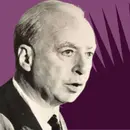


“States seek power, but that doesn’t give you the license to do anything you want with your power.” — David M. Sacks
INTRO
What is realism in international politics? It all depends whom you ask. And on this show, we’ve been asking a lot of people recently. For Charles Kupchan, it means a new Concert of Europe, with the great powers keeping order among themselves. For Jackson Lears, it means America giving up its empire. For Stephen Kinzer and John Mearsheimer, it means recognizing that America brought war to Ukraine. For Eliot Cohen, it’s all about learning to think like a strategist. Everyone, it seems, is a realist now. Especially the idealists.
Including, apparently, Mr. Realist himself, Donald Trump. “Too often,” he said in Shenzhen this week, “past leaders avoided talking to nations with whom they had disagreements.” With Xi Jinping on one side and his “good friend” Vladimir Putin on the other, the president announced, “Together, we are choosing a different course.” Xi supplied the unpalatable history lesson. When great powers are at peace, the world is secure. When they clash, the world is in chaos. Three great powers at one table. It sounded eerily like Kupchan’s Concert-of-Europe 2.0.
So what would Hans Morgenthau, the godfather of American realism, have made of it all? From a classically assimilated German-Jewish family, Morgenthau was spat on in his Coburg schoolyard in 1922 and watched Hitler’s thugs march through town while the police did nothing to stop the violence. Laws don’t matter, he concluded. Power does. And so when he came to the United States, Morgenthau founded the school of realism in international politics.
But in The Realist, the Council on Foreign Relations’ David M. Sacks (no, not that David Sacks) argues that we’ve misread him. Morgenthau’s understanding of power, Sacks explains, required both practical and ethical limits. He’d have seen Putin as a revolutionary power that no slice of Ukraine will satisfy. Above all, Sacks says, Morgenthau would have asked the question that none of the three leaders in Shenzhen are capable of answering ethically. What, exactly, is all this power for?
FURTHER READING
• The Realist: Hans Morgenthau and the Purpose of American Power (Henry Holt, 2026), by David M. Sacks.
• Live coverage of the Trump, Xi and Putin summit in Shenzhen, New York Times, November 18, 2026.
• “Morgenthau: A Realist Ethic”, by Ved Shinde, The Interpreter, November 2, 2026.
• Politics Among Nations: The Struggle for Power and Peace (Knopf, 1948), by Hans J. Morgenthau.
• The Purpose of American Politics (Knopf, 1960), by Hans J. Morgenthau.
• KEEN ON AMERICA episodes on realism and power: Charles Kupchan on governing the 21st-century world, Jackson Lears on how the American republic became an empire, Stephen Kinzer on how America brought war to Ukraine, Eliot Cohen on how to think like a strategist, Edward Luce on Zbigniew Brzezinski, and Roger Berkowitz on Hannah Arendt and the power of friendship.
ABOUT THE GUEST
David M. Sacks is a senior fellow for Asia studies at the Council on Foreign Relations, where he works on US-China relations, Taiwan and security in the Indo-Pacific. He studied international relations at Carleton College and Johns Hopkins SAIS. The Realist: Hans Morgenthau and the Purpose of American Power is published by Henry Holt.
ABOUT KEEN ON AMERICA
Nobody asks more awkward questions than the Anglo-American writer and filmmaker Andrew Keen. With 3,000 episodes since the show launched on TechCrunch in 2010, Keen On America is a daily conversation about the ideas, books and arguments shaping the United States. New episodes every day.
LIVE IN SAN FRANCISCO: How to See America. Who Stole America’s Pride? Arlie Russell Hochschild in conversation with Andrew Keen, Manny’s, December 8. Tickets: https://www.eventbrite.com/e/how-to-see-america-who-stole-americas-pride-tickets-2003996604791
00:00 - Intro
00:31 - AK: Hans Morgenthau, not that Morgenthau
02:09 - A recommendation from Henry Morgenthau
02:43 - AK: why write about Hans Morgenthau?
03:26 - Politics Among Nations, and an eight-year biography
05:20 - AK: what is a realist?
06:06 - From Thucydides to a systematic theory
07:57 - AK: what did Morgenthau add?
08:39 - Scientific Man vs. Power Politics, and power with limits
11:42 - AK: how did Germany shape him?
13:05 - Spat on in Coburg, 1922
14:33 - Hitler marches into town
16:39 - AK: was he a fan of Bismarck?
16:42 - Bismarck, Weber and Nietzsche
19:22 - Meeting Carl Schmitt
20:14 - AK: Morgenthau and the First World War
20:41 - A ten-year-old in Munich, 1914
22:34 - AK: tempted by Zionism or socialism?
23:15 - The Six-Day War and Zionism
24:00 - AK: did Kissinger copy him?
24:28 - Kissinger’s seminar, and the Vietnam rift
26:26 - AK: the Concert of Europe
27:30 - Diplomats, democracies and Wilson
29:07 - AK: did he propose to Hannah Arendt?
29:49 - A proposal, and a love letter
30:55 - Defending Arendt after Eichmann
31:38 - AK: did he ever assimilate?
32:18 - Writing in English, and Lincoln
34:16 - AK: what about FDR?
34:27 - Hamilton and Lincoln
34:59 - AK: Truman and the Cold War
35:18 - Against the Truman Doctrine
35:58 - AK: what about Korea?
36:08 - Acheson’s defensive perimeter
37:05 - AK: Stalin and totalitarianism
37:29 - Spheres in Europe, revolutions in Asia
38:38 - AK: Mearsheimer, Lears and Ukraine
39:57 - Not today’s realism
41:44 - America’s inheritance, and Carr’s mistake
44:08 - AK: the normative realist?
44:28 - A frustrated idealist
45:16 - AK: China and Taiwan
46:16 - The balance of power in East Asia
48:46 - Closing
00:00:31 Andrew Keen: Hello, everybody. Names matter. Some names matter more than others. Many of you be familiar with the name of David Sacks, who is on the show today, but not that David Sacks, the chair [ed.: co-chair, with Michael Kratsios] of the President's Council of Advisors on Science and Technology, the guy on X with over—almost 2 million followers. Another David Sacks, just as important, just as interesting, and actually, a David Sacks with a book out a few days ago [ed.: the book's US publication date is November 10, 2026]. David Sacks, my guest today, David M. Sacks, as opposed to the David Sacks who's a close friend of Donald Trump, is a senior fellow for Asian studies at the Council on Foreign Relations. And he's the author of an intriguing new book called Hans Morgenthau and the Purpose of American Power. This isn't actually the first show we've done on Morgenthau. We did one with Andrew Meier who has a... who had at least a new book out called Morgenthau: Power, Privilege, and the Rise of an American Dynasty, about the Morgenthaus of New York City, who are amongst the least, according to our headline when we ran the show, one of the most powerful families in New York. But as it happens, this Hans Morgenthau is not part of that Morgenthau family. That's not confusing enough, David. Welcome to the show.
00:01:59 David Sacks: Thanks for having me.
00:02:00 Andrew Keen: So, names do matter, don't they? You said to me earlier that you used to be more famous than the other David Sacks, but now perhaps he's a little better known.
00:02:09 David Sacks: A little better known with a slightly bigger bank account. On the Morgenthau point, you know, one interesting thing is that when Morgenthau was, you know, struggling to really, make ends meet in New York and find a job, he did reach out to then treasury secretary Henry Morgenthau and saw if, he could write him a recommendation or put him in touch with somebody and get him a job. And even though they had never met and were not related, Henry Morgenthau did write a letter of recommendation for Hans Morgenthau, but, unfortunately, that did not go anywhere. It didn't result in a job.
00:02:43 Andrew Keen: So, the name of your book is The Realist. And as it happens, it's a small world, increasingly smaller. One of your colleagues from, the Council on Foreign Relations, Eliot Cohen, who I know used to... And maybe he's not at the Council on Foreign Relations, but I know he used to be very much involved with Johns Hopkins SAIS where you studied, was recently on the show with a new book called The Strategist. So, it's a book about how to think about war and politics like you. Eliot Cohen is a guy who's hopped in and out of government, in and out of academia, an expert on foreign politics. Tell us about this man, the realist, Hans Morgenthau. Why did you choose to write a book about him?
00:03:26 David Sacks: Sure. Well, you know, like anybody who takes an intro to international relations class, even in the year 2026, you are asked, to read at least excerpts of a book called Politics Among Nations, which was Hans Morgenthau's most famous book. It came out in 1948. And the opening sentence of that book is international politics, like all politics, is a struggle for power. I remember reading that as an undergraduate studying international relations, and I was just, really drawn to Morgenthau's writing. There was a clarity to his writing and a clarity to his thought that I didn't really see in other political theorists and other people who'd written about how the world works. I didn't really think much more about Hans Morgenthau after that introductory class, and it wasn't until much later when I Where...
00:04:17 Andrew Keen: By the way, where was that introductory class? Where did you do that?
00:04:20 David Sacks: At Carleton College in Minnesota. And so I didn't think much more about Hans Morgenthau. I revisited him in graduate school at SAIS, But again, you know, considered myself a realist, was drawn to his work, but didn't really think that he had necessarily an interesting life worth exploring. And it wasn't until much later that I kind of went down a rabbit hole and saw the outlines of his life, and I basically just said to myself, well, this sounds really interesting. I should go read a biography of Hans Morgenthau. You know, I'd read biographies of George Kennan, Henry Kissinger, other realists who were part of this kind of intellectual milieu after World War Two, and I couldn't find a biography of Hans Morgenthau. So I thought, you know, this is a whole. This is a man who it seems lived a very interesting life who contributed to our field in a way few others have. So maybe I should just try to write his biography, and eight years later, here we are.
00:05:20 Andrew Keen: Well, congratulations. It's a nice way of summing it up. And speaking of biographies of realists, another great realist was, the Polish American diplomat Zbig Brzezinski. Ed Luce just wrote a long book about him, another old friend of the show that's been very well reviewed. Before we get into the life of Hans Morgenthau, David, what is a realist? I mean, that's a word that often gets thrown around, and maybe we'll talk about the nature of realism in foreign policy thinking, especially on the American front, later in this conversation. But did Morgenthau invent the notion of realism in international politics?
00:06:06 David Sacks: Well, what Morgenthau tried to do and what he said he was doing in Politics Among Nations was to build a systematic theory rooted in realism. And so, of course, realists trace their intellectual heritage all the way back to Thucydides, who wrote about Athens and Sparta and that conflict. You know, they would then go on to Machiavelli, Hobbes, and others. You know, Bismarck was somebody that Morgenthau studied and looked up to. But Morgenthau was the first to really make it a coherent and systematic theory that was then brought into classrooms around the country. Politics Among Nations was assigned in over 120 classrooms, 120 universities during the Cold War, you know, sold, you know, over 150,000 copies across the country, translated into languages, and sold around the world. And so I think where Morgenthau really did make his contribution was in, you know, trying to really make it a core theoretical construct. What realists would say, you know, is that what they purport to be is to separate what is from what ought to be and studying the world as it exists. Realists draw a distinction between the desirable and the possible, and they contrast themselves to, you know, people that they would call the idealists or the utopians who, believe that you can, in some sense, you know, realize universal moral principles. And the realists would caution against that and say that, you know, international politics is about avoiding the worst outcomes. It's not necessarily about achieving the best possible outcomes. And they would argue that you have to work within the forces, inherent in human nature to improve the world and within history rather than, outside of it.
00:07:57 Andrew Keen: As you suggested, Morgenthau was borrowing from many different traditions, from Thucydides and Hobbes and Machiavelli in particular. Did he bring anything original to this? I mean, you say he packaged it up as a theory, whatever that means. I mean, they were theorists too. Certainly, maybe not Thucydides, who's a historian, but Machiavelli and Hobbes, especially Hobbes were theorists. So what unique thing did, Morgenthau bring to this conversation apart from, of course, being around in the America of the late—nineteen forties when social science was trying to make theories of everything?
00:08:39 David Sacks: Well, I think that that's, a key point, which is where he was writing, when he was writing. And, you know, Morgenthau's first book in English called Scientific Man vs. Power Politics came out in 1946. And that was really a response to the notion that was deeply rooted in American social sciences that you could borrow the methods of the natural sciences to understand the social world. And of course, there was a push towards empiricism, quantification. You know, let's build variables and try to isolate what makes war happen. We can then manipulate that and somehow we can get rid of conflict. And Morgenthau was really responding to that. And he was the person who really was able to separate, I would argue, international politics from other fields and say, politics has its own logic. We have to study it on its own terms. You cannot really get a true understanding of how international politics works by looking at it through the lens of international law or looking at it through the lens of economics or sociology. And so one of Morgenthau's key contributions was putting in place a theory and a set of arguments that enabled international relations to break off from that. So as I trace in the book, you know, when Morgenthau came to America, you couldn't really study international relations. You would have to become a lawyer, study international law, look at the covenant of the League of Nations, you know, other documents, and then you could understand the way that the world worked. Morgenthau said, you know, that does not work. We need to look at it on its own terms. So that was a key contribution. One thing that I also, put in my book, which, you know, the subtitle tries to get at the purpose of American power, is that I think Morgenthau is often seen as an amoral thinker, but there was actually a big normative element, of Morgenthau's theory. And he wasn't trying to romanticize power, and say, you know, we should just seek to maximize our power, and that's the best course of action for a nation. So he pushed back against advocates of realpolitik. You know, he said that power needs limits. And actually, what we need to do is find normative constraints on power to set parameters of how states define their interests, limit the scope of what they do with their power. Because the struggle for power without those kind of constraints or those boundaries, if it were to become really limitless is a brutal world. And so Morgenthau was trying to avoid that. And actually, what I think happened after Morgenthau is that his successors stripped out the normative components. They tried to build what was, you know, a more, quote, scientific theory. But that was lost along the way. And so part of what I'm trying to do is also restore those elements of classical realism that were key to Morgenthau's thought, but I think his successors largely abandoned.
00:11:42 Andrew Keen: Yeah. I think that's an important, project. One of the reviews of your book talked about a realist ethic, which is, I think, another way of talking about maybe the... This normative notion. But before we get to the future, of realist theory and its implications on American foreign policy, in particularly East Asia, given your interest and expertise in that area, I'm curious as to how Morgenthau's background shaped his ideas in two senses. He was, a German Jew coming to the United States with a particular series of experiences, of course, in, the interwar period. So I'm curious as to that about how his experience of, fascism in Germany influenced his thinking on international politics. But secondly, like so many other shapers of intellectual fashions in America after the Second World War, he was a European migrant. He came with his own ideas, his own reading, his own intellectual background. What readings or what tradition shaped his thinking on international politics? So two important questions, I think, in terms of positioning Morgenthau within the tradition.
00:13:05 David Sacks: Yeah. So, you know, Morgenthau was born in the winter of nineteen o four into an assimilated Jewish family. His father was a deeply patriotic German nationalist, who did not see any problems for Jews on the horizon. Morgenthau thought that his father really did not understand the way that their German neighbors and colleagues saw them and thought that he was really kind of living in a fantasy world. For Morgenthau, this really, though, as you noted, became apparent right after World War One as Jews were blamed for Germany's loss. There was the rise of antisemitism in Germany, and there's a searing moment that I recount in the book from when Morgenthau was 18 years old, where he's given the honor of addressing his classmates in his high school. And he goes out into the courtyard, steps on a platform and starts talking. And, some of his neighbors turn their backs on him. Others hold their nose at him, you know, as he is a, quote, stinking Jew. And as he leaves the square, he is spat on, and he is really, seen as somebody who is not a part of the [unclear]—
00:14:13 Andrew Keen: What year was this?
00:14:14 David Sacks: That was 1922. That was in the summer of nineteen twenty two. And then actually just...
00:14:20 Andrew Keen: And that was at a relatively, so to speak, healthy period in Weimar Germany after the terrible... Well, after all this... The civil war, after the First World War, and even after some of the inflation, I'm guessing.
00:14:33 David Sacks: And just a few months later, Hitler comes to Morgenthau's hometown of Coburg, and it's Hitler's first march outside of Munich. Actually, that weekend in Coburg is recounted in Ian Kershaw's biography, of Hitler. And Kershaw says that it was a pivotal weekend for the Nazi movement because Hitler saw that it could travel beyond Munich, that it was tapping into something within Germany. And Morgenthau sees Hitler really take over his town. He sees the policemen stand aside. He sees Hitler, you know, ignore the laws and the prohibitions against his marching through Coburg. And I think that what happened to Morgenthau is that he saw that, you know, the laws on the books were all fine and good, but what really mattered was the power behind those laws and the people who are willing to enforce those laws. And, of course, Morgenthau was then forced to study law because of hyperinflation. He wanted to become a writer or a poet, but as his family's finances were ruined, his father pushed him into law, and he clerked for a left wing labor lawyer. And the judiciary, which was overwhelmingly conservative, you know, really despised this lawyer that Morgenthau was working for. They lost a lot of the cases, and Morgenthau reflected on that and said, what mattered was not the legal merits of your case. What mattered was political power. And so that was a key lesson for Morgenthau. And another thing was that he was a supporter of the Weimar Republic, but he saw that it was unwilling or unable to use its power to quash this anti-democratic, anti-liberal fascist movement. I think there was a lot of frustration from Morgenthau that you see it gaining steam. You see that it doesn't buy into these democratic, enlightenment ideals. And the Weimar Republic was unable to do anything or unwilling to do anything about that. So I think those were formative experiences for Morgenthau. In terms of what he was actually reading and engaging with intellectually, as I mentioned, you know, I think that Bismarck was hard to escape if you were a German of course.
00:16:39 Andrew Keen: Was he a fan of Bismarck? Did he admire him?
00:16:42 David Sacks: He did admire Bismarck. He had... He took a course on Bismarck's statecraft. He said that he was very pleased to know that kind of his impressionistic judgments, were those that Bismarck also had.
00:16:56 Andrew Keen: I mean, the quintessential, realist, Bismarck, of course.
00:17:02 David Sacks: Right. And it's, it's interesting. I'll just note two points on Bismarck. I mean, one is that there's this great letter that I have from Morgenthau's wife, to him. And this is in the early years after he's moved to America. And he does a radio program, and I don't have the transcript of that radio program because it was in the nineteen forties. But his wife said, you know, I listened to you on the radio show. You were great, but you quoted Bismarck way too much. You need to stop doing that. And all the way up through the Vietnam War, you know, Morgenthau became one of the earliest and most outspoken critics of US intervention in Vietnam. And he wrote a piece on the Vietnam War. And he asked rhetorically, you know, what would Bismarck do if he was in America's shoes? And of course, the answer to that question was what Morgenthau would have done. So, you know, he did have an admiration, for Bismarck, and that was another formative experience. And then the other one that I would just point to very briefly would be, Max Weber.
00:17:59 Andrew Keen: Yeah. I was thinking of Weber because of his famous speeches after, the war on the ethic of realism versus different sorts of ethics. So, yeah, Weber particularly comes to mind.
00:18:14 David Sacks: That's right. And the ethics of responsibility, which is something that Morgenthau really embraced. Right? It's... Is that politics is tragic, and it's about having the courage to act knowing that there is no perfect option, knowing that you are potentially committing an evil to prevent an even greater evil. And the ethics of responsibility, I think, is something that Morgenthau really embraced. You know, there's another book that was an intellectual biography of Morgenthau that came out, many years ago from a scholar named Christoph Frei. And he really wrote a lot about Morgenthau and Nietzsche. And there's something there and there are some diary entries from Morgenthau that are where he really expresses admiration for Nietzsche. You know, this... The notion of a lust for power hardwired into humans is something that you could potentially say was drawn from Nietzsche. But I also think that, you know, looking at Morgenthau as a figure solely or mostly influenced by Nietzsche is a, is a simplification. And then the final person is Carl Schmitt, you know, who was writing...
00:19:19 Andrew Keen: Very, very controversial figure, particularly these two.
00:19:22 David Sacks: Controversial figure, you know, wrote about international law. He wrote, of course, a book called The Concept of the Political. And Morgenthau's thesis was in essence a response to that and a critique of Schmitt. After Schmitt read Morgenthau's thesis, he actually, invited Morgenthau to meet with him and discuss it. And Morgenthau went to his apartment, spoke with him and came away really unimpressed. Maybe that's revisionist history. He only wrote about it directly many years later, but did, of course, try to distance himself from Carl Schmitt, because as you know, he was somebody who really did, you know, become a Nazi and use that to justify, Hitler's, you know, Hitler's ascent to power.
00:20:14 Andrew Keen: David, you mentioned Max Weber who became increasingly ambivalent about the First World War. I think he supported it at first, but became, in some ways ambivalent because of its mismanagement. What was, Hans Morgenthau's position on the war? I'm guessing that as someone who admired Bismarck, he saw a kind of post-Bismarckian chaos or incompetence in German foreign policy.
00:20:41 David Sacks: Yeah. So, you know, when World War One broke out, Morgenthau was only 10 years old. So it's hard to have, for him to have a really informed view of the world. But I think like nearly all Germans, you know, he thought that the war would be, simple and quick and Germany would be victorious. He wrote about how they were vacationing in the Bavarian Alps in that summer of nineteen fourteen. And, you know, there was a lot of buzz. Is war gonna happen? Is it gonna break out? They end up going to Munich on their way home to Coburg, when war does break out and the family joined pro-war rallies just kilometers away from Hitler in Munich at that time. And so, you know, Morgenthau was young. He was impressionistic. He did think that, you know, Germany would be victorious and that Germany was rightful in going to war, you know, and should be victorious. And Morgenthau's father was a medic who served on both fronts, during World War One. So like Morgenthau, like most Germans, were shocked when Germany, lost World War One and the Treaty of Versailles was imposed on them.
00:21:49 Andrew Keen: You didn't blame it on the Jews there, did you?
00:21:52 David Sacks: No. But I also, you know, don't, you know, I think that there are some people who would say, okay. Well, if Morgenthau wasn't Jewish, though, he would have been part of that right wing conservative, element in German society, and I disagree with that as well. Right?
00:22:06 Andrew Keen: So he wouldn't have bought or he didn't buy the stab-in-the-back theory, whether it was Jews or Bolsheviks or some other disreputable group.
00:22:15 David Sacks: And he would say, look. My father served in the German army, you know, on both fronts. His father was firmly believed in the German empire, you know, gave Morgenthau the middle name, of Kaiser Wilhelm's youngest son who was an avowed anti-Semite. So—
00:22:34 Andrew Keen: Yeah. They had no—no—there's an irony of ironies. Well, I'm curious before we and there's so much here, David, but, was he ever tempted by alternative theories to realism, Zionism as a Jew, socialism, or was he always contemptuous of both of those?
00:22:53 David Sacks: You know, he was always a firm realist. He didn't really flirt with anything else.
00:22:59 Andrew Keen: I mean, you're like that. A lot of people can be thinking... Listening to this, I was gonna call you Hans, David, and saying, well, this guy's using the word realist. We might use another word, reactionary.
00:23:15 David Sacks: No. I don't think so. I was just gonna say that, you know, I... Another interesting moment in Morgenthau's life, though, is that he did... You mentioned Zionism, and he did become a Zionist. You know, and he wrote... He spoke towards the end of his life about how the Six-Day War really was a transformative moment for him, where it made him see that the Jewish state was real, and that to lose Israel would be a tragedy for Jews. And so towards the end of his life, he did a lot more teaching in Israel. He went back and forth. And then during the Yom Kippur War, he became one of Kissinger's, most vocal foils.
00:24:00 Andrew Keen: You mentioned the K word. I knew this was gonna come. As I said, we did a show with Ed Luce on this big new Brzezinski, the Polish Kissinger, or at least the Polish rival to Kissinger. If we weren't using the Hans... If we hadn't mentioned Hans Morgenthau, David, we might be thinking in a way that we're talking about Kissinger. When did... Well, did... It sounds like Kissinger just basically copied everything that Morgenthau thought and wrote. Is there any truth to them?
00:24:28 David Sacks: So Morgenthau... So Kissinger was younger than Morgenthau. They were not of the same generation. So Morgenthau was really the star as Kissinger was making a name for himself. Kissinger, as you probably recall, ran a summer institute students from all over the world. And Kissinger recruited Morgenthau to be one of the professors in that summer school. And Kissinger, of course, used this to build connections to the most well known—
00:24:54 Andrew Keen: Classic. Yeah. Classic Kissinger.
00:24:57 David Sacks: And so Morgenthau met Kissinger on the Harvard campus in the early nineteen fifties as part of this seminar. And I looked at Kissinger's old, syllabi when he was at Harvard, and he assigned Politics Among Nations in full to his students. And he wrote in the syllabus that it formed the intellectual backbone of the course. So Kissinger, you know, read Morgenthau. There's a lot of letters where he says, I read your article on this. I agree with every word. I agree with what you're saying. And Kissinger really did admire Morgenthau. Kissinger also eulogized Morgenthau at his funeral when he died in 1980. But they did have a major rift over Vietnam. As I mentioned before, Morgenthau was one of the earliest and most outspoken critics of the war, and Kissinger advocated for the war. And when he was president Nixon's national security adviser, of course, oversaw major escalation in Vietnam. They debated the war in 1966 in Look magazine, which was a nationally, you know, well known and distributed magazine. They went back and forth, over Vietnam in the pages of various journals as well. And that, you know, hurt their relationship. So did their differences over the Yom Kippur War, but they were mostly able to compartmentalize that. And, of course, as I noted, you know, Kissinger delivered a very generous eulogy of Morgenthau.
00:26:26 Andrew Keen: Yeah. And we'll move on to Morgenthau's realist critique of Vietnam. Of course, Kissinger hid behind his own particular version of realism to justify that. But before we get there, we did a... Another show a couple of weeks ago with a colleague of yours at the Council on Foreign Relations, Charles Kupchan. His new book is called Bringing Order to Anarchy: Governing the World to Come. He so prides himself as a realist, and he went back to the Concert of Europe, to Metternich, and the other conservative statesmen of post-Napoleonic Europe who brought in at least his idea of order to anarchy. What was Met—what was—what was Morgenthau's take on the Concert of Europe and the role of men like highly conservative, diplomats like Metternich and the Czar and the Prussian monarchy in maintaining order in post, post-Napoleonic Europe?
00:27:30 David Sacks: Well, he invoked many of the same figures in his writings. And, you know, if you look at Morgenthau's earliest writings, he, you know, wants to go back to the days where diplomats were able to settle the world's disputes and, you know, behind closed doors without the pressures, of their populations. And he thought that democracies made it more difficult to carry out a consistent and, respectable foreign policy. Those views evolved over time as he assimilated, and became an American, really. But you can find those same elements where he is, railing against Wilson, you know, saying that, you know, the world was a much safer place when you had princes who were kind of fighting up about limited stakes and all agreed to certain conceptions about how the world, should be run and what was off limits in terms of behavior. And he feared that democracies, again, kind of put leaders into a corner and force them to make suboptimal, decisions. But on Vietnam, you know, he became part of that pressure. Right? Pressuring Nixon to change course, hoping that, you know, that people could, advocate and organize and force their governments to change course. So that did change for Morgenthau.
00:29:01 Andrew Keen: Taught, taught for most of his life at the University of Chicago. Is that right?
00:29:05 David Sacks: That's right.
00:29:07 Andrew Keen: It is a small world. A few weeks ago, we also did a show with Roger Berkowitz who runs the Arendt Center at Bard College on the power of friendship. His new book is called A World We Share: Hannah Arendt and the Power of Friendship in a Broken World. Like Morgenthau, Arendt came out of Germany having experienced, antisemitism. Like, like, him as well. She was a Zionist or at least a complicated Zionist, and she had a very close relationship with Morgenthau. Was there a moment where he actually asked her to marry him?
00:29:49 David Sacks: That's right. So, you know, Arendt's biographer, Elisabeth Young-Bruehl, who was also her student, wrote in her biography of Hannah Arendt that Morgenthau proposed marriage to her. As I detail in the book, you know, that claim doesn't have a footnote. Elisabeth Young-Bruehl did interview Morgenthau for the book, but, that was done off the record. There's no transcript of their interview, unfortunately. But, you know, I imagine that Arendt could have confided that in her former student or one of Arendt's friends. I did find essentially a love letter that Morgenthau wrote to Arendt, that's clearly written after he has felt rejected where he said, you know, don't dismiss what we have. Don't just chalk it up to old age. You know, I love you. I love you in a way that's appropriate for our age, etcetera, etcetera. You know, they did go on European vacations together.
00:30:45 Andrew Keen: Just to—this was, of course, after the death of her husband, and he had some rivals. I think W. H. Auden also asked her to—to marry him. So, so—
00:30:55 David Sacks: Just to rewind the tape a little bit. I mean, because you mentioned the UChicago connection. Morgenthau really did recruit Arendt to come to the University of Chicago. And when Arendt arrived on campus, it was right as Eichmann in Jerusalem came out. And there was, of course, a furor, on her depiction of the banality of evil and on Eichmann. And the faculty largely avoided Arendt. They didn't wanna be seen with her. And Morgenthau very conspicuously, sat right next to Arendt, for lunches, and other meals in the faculty club. And he defended her whenever she came under attack for the rest of his life.
00:31:38 Andrew Keen: Berkowitz talks about this culture of mostly German, Jewish, almost all German Jewish exiles. I'm assuming that Morgenthau shared that, that they brought the world that they experienced in Germany with them. It's bizarre world where, as you say, Morgenthau's father fought for the Germans in the First World War, was a hero, and then, of course, you had the rise of Nazism, and he was spat on in his own school. Did he ever assimilate to America, or was he always a German Jewish exile of one kind or another? You know, this was...
00:32:18 David Sacks: It was, of course, complicated. But what's interesting to me is that Morgenthau, you know, I looked at all of his correspondence with everybody he ever wrote to in his papers. And there were many, many times where Morgenthau would get a letter from a German acquaintance written in German. And, of course, this person, you know, wants... You know, he's most comfortable in German, and Morgenthau would always respond in English. And to me, that was very telling that he wanted to put down a marker that I'm an American and I'm gonna talk to you in English. He almost never went back into German, when he was writing, you know, privately. Whereas Arendt often goes back and forth because she was always more comfortable in German than she was, in English. Yeah. I think, you know, culturally, of course, Morgenthau's wife cooked German food for the family. Morgenthau enjoyed spending summers in Europe, and he did return to Germany, on many occasions. But I think he really did assimilate into America to an extent that Arendt did not. So Abe Lincoln became a hero of Morgenthau. And towards the end of his life, he tried to write a book on Lincoln's political philosophy. He came to admire Lincoln much more than he admired Bismarck or any European statesman, and he thought that he was really one of the most brilliant—
00:33:36 Andrew Keen: Right. Because he was such a realist, because he know... He knew when to fold and when to twist.
00:33:42 David Sacks: He was a realist, and he also had an ethical core. And I think for Morgenthau, that was just as important. Right? And he wrote about Lincoln as a man who is not possessed by power, but possesses it. And for Morgenthau, that was a very rare thing for any person to have, to not become so intoxicated with power, but to be able to channel it into the right ways. And Morgenthau knew that he never could do that.
00:34:09 Andrew Keen: Sounds like the current American president, David.
00:34:12 David Sacks: I do not think that Morgenthau would be very sympathetic. No.
00:34:16 Andrew Keen: I don't think we can... I don't think there's any doubt about that. What was his take on FDR, by the way? I would have thought he would have seen him also like Lincoln as a man who knew how to balance ethics and power.
00:34:27 David Sacks: It's a very good question because he didn't really write extensively on FDR. He was just getting his footing in the US when FDR was president, and only became an American citizen towards the end of FDR's life. So his writings, in terms of topical foreign policy issues really pick up with the Truman administration and go on. He doesn't go back to FDR that often, but he would go back to people like Hamilton and Lincoln. And those were his two favorite American, statesmen.
00:34:59 Andrew Keen: And then I'm guessing that unlike, Zbig, he wasn't consumed by certainly anti-Russian thinking or the Cold War. What was his take on the emergence of the Cold War? Was he a critic of Truman and maybe Truman's decision to drop a nuclear weapon on Japan?
00:35:18 David Sacks: He criticized Truman for the kind of universalism of the Truman Doctrine, for the notion that any communist victory is a defeat for the United States, and the United States should oppose communism wherever it pops up around the world. And, of course, Truman didn't translate that into practice, and he was much more careful about implementing the Truman Doctrine. But for Morgenthau, you know, that was not strategic thinking. Morgenthau thought that the United States should only oppose communism when that... When communism in a specific country threatens US interest there.
00:35:58 Andrew Keen: So was he, you mentioned that he was a critic of Vietnam for that reason. What about on Korea? Was he a supporter of the Korean War?
00:36:08 David Sacks: He did not write as much about the Korean War, but he did endorse later Dean Acheson's defensive perimeter, which did not include Korea.
00:36:17 Andrew Keen: But how could he not write much about it? I mean, he was at his pomp in the nineteen fifties. This was a war that cost Americans—America hundreds of thousands of lives [ed.: roughly 36,000 American servicemen died in the Korean War]. It dominated the foreign politics of the postwar age. How could he avoid it?
00:36:30 David Sacks: That's right. Well, he wrote his book on kind of US foreign policy, during the height of the Korean War called In Defense of the National Interest. But even in that book, he doesn't come in one way or the other and say that the United States should, you know, unify the Korean Peninsula by force or just seek an armistice. He didn't really get into that. I don't think that he thought that that was critical to the balance of power in Asia, which he did view as a vital US interest. So he was more focused on, you know, Japan and, and other elements of US strategy in Asia.
00:37:05 Andrew Keen: And then what was this... What was the... Coming back to Zbig and the Soviet Union, what was his take on Stalin and indeed on totalitarianism? He supposedly, asked Hannah Arendt to marry him, the woman who, of course, wrote, The Origins of Totalitarianism. Was he defiantly anti-Soviet, anti-communist? What was his positions?
00:37:29 David Sacks: No. He thought that Stalin was basically pursuing traditional Russian interests and that communism was a tool for Stalin to do that. And so Morgenthau explicitly endorsed a sphere of influence in Europe for the Soviet Union and for the United States. And Morgenthau, you know, made clear that the United States should, you know, have a strong conventional and nuclear deterrent and make clear to the Soviets that if they made a move on Berlin, they would be at war with the United States. But he also believed that, you know, the Soviets would have a sphere in which they have largely a free hand, and that military deterrence was the right approach in Europe. In Asia, he thought that, you know, the US needed a different strategy. He did not think that military deterrence would work. He thought that the revolutions in Asia were genuine revolutions, not directed from Moscow or Beijing, and that the United States had to have a more affirmative political agenda and support those revolutionary forces rather than trying to maintain, a status quo that was not viable.
00:38:38 Andrew Keen: David, let's fast forward to today. We did a show recently, on The Founders' Nightmare. Jackson Lears is a very distinguished historian. He had a... The cover piece in Harper's this month, The Founders' Nightmare: Recovering America's Anti-Imperialist Roots. He was a leading critic in Vietnam, and is a major critic of America's involvement in supporting Ukraine in the current war, so a critic of American involvement in NATO. He raises the specter of realism in his argument, and we talk quite a lot about John Mearsheimer, who now has become, I think, America's best known realist. What... So two questions here, and you sort of touched on this or implied this earlier. Is what now is called American realism, which is defined perhaps by Mearsheimer and his crowd, is that Morgenthau's version of realism? And if Morgenthau was around today, would he share the argument of people like, Jackson Lears that, every major power should have its sphere of influence, so should leave the Russians to do whatever they want in Ukraine and not get involved?
00:39:57 David Sacks: I don't think so. I think that Morgenthau would have a fundamentally different view of these issues than what we would consider to be the realist view.
00:40:06 Andrew Keen: This is the Mearsheimer view today.
00:40:08 David Sacks: Yeah. And so, of course, you know, as you noted, Mearsheimer and Ken Waltz and others, you know, they really tried to strip out the normative elements of—
00:40:17 Andrew Keen: Right. Ken Waltz was a professor of political science. Again, one of the fathers of American realism at Berkeley actually taught me when I was there. Nice guy. I'm not sure about his realism. Certainly, more sane than the idealist of Berkeley, a man called Ernst Haas, who seemed mad, but that's another story, another conversation.
00:40:36 David Sacks: And so for Morgenthau, there is a normative element that I think is missing from what we call realism today, which is really just structural or neorealism. And, for Morgenthau, you know, states seek power, but that doesn't give you the license to do anything you want with your power. And actually, again, it's about building normative constraints on power. And it is also about marrying your power to a purpose and to what Morgenthau spoke of as transcendent values. And so I think that his critique of the Trump administration and I think his critique of the modern realist as well would be there is no sense about what power is supposed to accomplish. And Morgenthau did believe that we should be trying to move the world towards more justice, and that for America, there was a purpose to our country's foreign policy that was determined when this country was founded all the way back with the—
00:41:39 Andrew Keen: But not a unique one. I mean, he wouldn't have argued that America was unique in that sense, would he?
00:41:44 David Sacks: He did argue that America was unique. I mean, he has an essay where he wrote about how, you know, civilization, western civilization, you know, remembers the Romans and the ancient Greeks because of, you know, the things that they passed on in terms of democracy, republican government, rule of law, etcetera. And he did explicitly say that America was the inheritor of that tradition. And as a result, American foreign policy had to always be informed by the core values of America. Now what Morgenthau would say, though, is that you have to understand the dynamics of power to achieve any of those things. You know, disregarding power and saying that's not important is not gonna bring you closer to justice or closer to realizing these values. It's only through the means of power that you're able to do so. And so I think Morgenthau would say that that's missing on Russia Ukraine. I do wanna say, you know, one thing, which is that, you know, E. H. Carr, of course, wrote a very famous realist text called The Twenty Years' Crisis. It came out, you know, in 1939, right as the Nazi invasion of Poland was underway. And Morgenthau read that book. He was influenced by the book. But he actually was one of the most perceptive critics of Carr and wrote articles about Carr where he took him to task for not having a transcendent point of view and for having, you know, what he would call, some moral relativism, in his political thought. And by that, it was that that Carr viewed Hitler as any other leader. And you can reason with him, you could cut a deal with him, and he would accept the postwar, order at some point. And so, of course, that was the logic behind... Part of the logic behind appeasement. And I think that if Morgenthau were to look at Putin's Russia, he would view it as a revolutionary power. And giving Putin a certain part of Ukraine is not going to basically make him satisfied, and he'll go home and play by the rules of the balance of power. Again, you know, the balance of power for Morgenthau is a critical thing, but there is a normative foundation to the balance of power the leaders have to share, and I don't believe that Putin shares that at any level. And so I—
00:44:08 Andrew Keen: You keep on mentioning the N word, normative. You call your book The Realist, but maybe an alternative title might have been The Normative Realist because the more you talk about him, the less of a conventional realist or a literal realist he seems. He seems increasingly, if not an idealist, certainly a mix of realism and idealism.
00:44:28 David Sacks: I think that that's an accurate description of Morgenthau. I mean, some people, you could call him, like, a frustrated idealist at some level. I mean, Morgenthau was a hard-headed realist who said that the United States has to maintain a balance of power in Europe and a balance of power in Asia, and it has to remain the preeminent power in the Western Hemisphere. And that is a very realistic view. But he also said, well, what is this power serving? And what is the point of all of this? And for him, it was about, you know, American democracy, and protecting, you know, the American way of life and American freedom as he wrote in 1960 when he wrote a book called The Purpose of American Politics. So for Morgenthau, it wasn't either or. It was and or it was both.
00:45:16 Andrew Keen: Finally, as I said, you're a senior fellow for Asian studies at the Council on Foreign Relations. So you're an expert on East Asia, on Taiwan. We had a recent show with Kishore Mahbubani, an old friend of the show. His book Has China Won?, which came out in 2020. He's come out with a new issue arguing that China has indeed won, although he seems to say that America's won as well. He's relatively optimistic about the situation in Taiwan. Your namesake, David Sacks, is more ambivalent, certainly someone who's hawkish on China, wants America to be more aggressive in terms of competing with China on the AI front. What does Morgenthau or a good reading of Morgenthau inform us? What should it tell us about how America... What America should and shouldn't do in terms of China and Taiwan in your view?
00:46:16 David Sacks: Well, Morgenthau, again, in his book that he wrote called In Defense of the National Interest, asserted that the United States has a core interest in maintaining a balance of power in East Asia. He viewed this as a key industrial part of the world, and the United States has to prevent this part of the world from, from... Has to prevent a, a hostile hegemon from emerging in this part of the world. And I think that on that front, he and John Mearsheimer would be in agreement, and John Mearsheimer had said as much, I believe. And so when Morgenthau spoke about China, you know, we should remember that China was incredibly impoverished. It was just coming out of a brutal civil war, and then Mao plunged the country into a famine and then the Cultural Revolution. So for Morgenthau, the notion that China would become a peer competitor of the United States was something that was so far off. You didn't have to spend much time thinking about it. But what he did say was that the United States should make clear to China that if it attempted to become a regional hegemon, it would be at war with the United States. And the United States had to prevent China from becoming a regional hegemon. He did, advocate that the United States should, station its offshore military power along the first island chain, most notably Japan, Philippines. And on Taiwan, you know, what I talk about in the book is that Morgenthau was a little wishy-washy on Taiwan. At some points, he seemed to say that Taiwan was part of the defensive perimeter. At other points, he would say that, well, you know, Taiwan is historically a part of China. We can hold on to Japan and the Philippines and still balance Chinese power. So Morgenthau was not, really consistent on this question. But I do think if we use as a starting point that the United States in a realist view has to prevent the emergence of a rival hegemon in East Asia, the question now for the United States is how does China gain hegemony in East Asia? How does the United States prevent that? And in my personal view, speaking, not in terms of somebody who studies Hans Morgenthau, but just generally speaking, I do think that it is that Taiwan is a core component of that given how much we rely on Taiwan for tech, and for the AI build out, but also geographically where Taiwan is located and what it means for US alliance relationships throughout the region.
00:48:46 Andrew Keen: Well, there you have it. Names matter, whether it's David Sacks, our guest, or his new book, The Realist, about Hans Morgenthau, not part of that Morgenthau, New York family, but nonetheless enormously influential in terms of development of realist thought thinking on American foreign politics. But I think as David acknowledged, there's an ethical quality to, Morgenthau's work, which makes him maybe the normative realist or the ethical realist, which makes him, I think, probably a little bit more attractive to many people watching, listening to this show. David, congratulations on the book, and, lovely to have you on the show. A very interesting conversation.
00:49:25 David Sacks: Thanks for having me.