The Deadliest of Plagues? Gary Slutkin on Violence as Our Most Contagious Disease
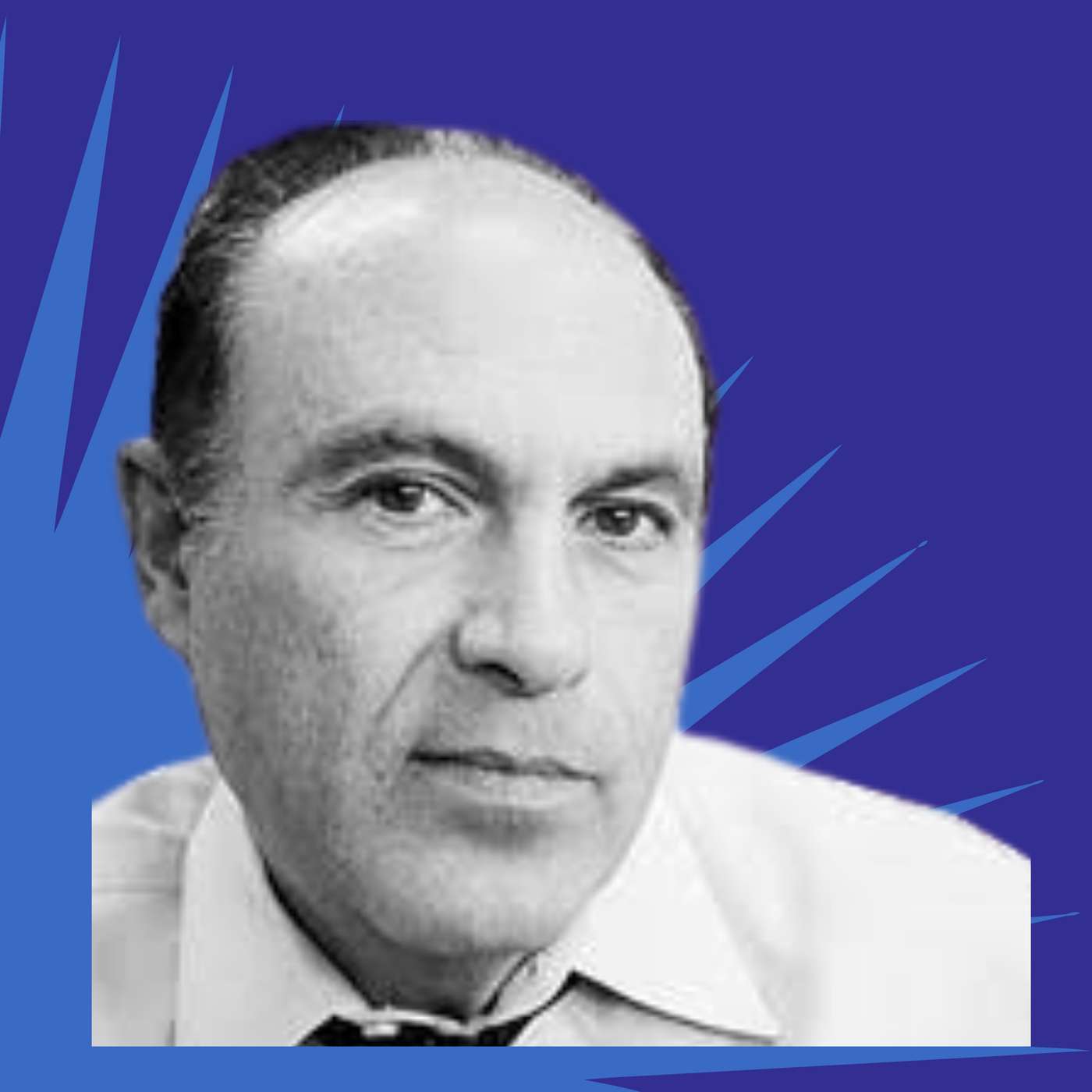


“Violence has been misdiagnosed. And there’s a misdiagnosis that has caused us to not be able to control it as we could.” — Dr. Gary Slutkin
Human violence appears ubiquitous. In Iran. In Gaza. In Ukraine. In Sudan. In American cities and homes. So widespread, indeed, that it seems naturally hardwired into us. Our species-being, so to speak.
But, for Dr. Gary Slutkin, there is nothing inevitable about human violence. Slutkin — an epidemiologist who spent years fighting cholera, tuberculosis, and AIDS in Africa before focusing his medical mind on violence — argues that violence is neither a character flaw nor a moral failing. Rather than being baked into our natures, Slutkin sees violence as a contagious disease. It meets the clinical definition of a plague, he says. The more violent our homes, communities, media, politics, the more virally it spreads.
Slutkin’s new book, The End of Violence: Eliminating the World’s Most Dangerous Epidemic, makes the case that violence has been misdiagnosed for centuries. We analyse it as a crime problem, a character problem, an inter-state problem. So we punish, incarcerate and bomb. But none of these approaches confront the contagion. This can only be done, Slutkin argues, with what he calls “violence interrupters” — people from within the infected community who find the most at-risk individuals and cool things down before they escalate. Communities that have applied this approach have seen reductions in violence of 40 to 70 percent, Slutkin boasts, with Cherry Hill, one of Chicago’s most dangerous neighbourhoods, experiencing 450 days without a shooting.
There will be a time, he promises, when the plague of human violence will be mostly overcome. I hope Dr. Slutkin is correct. But suspect that his brave new violence-free world, like Huxley’s, might be simultaneously utopian and dystopian.
Five Takeaways
• Violence Meets the Clinical Definition of a Contagious Disease: Slutkin is not speaking metaphorically. Violence meets the definition of a disease: characteristic signs and symptoms causing morbidity and mortality. It meets the definition of contagious: it causes more of itself. One violent event leads to another — in a home, in a community, in a region, in a war. The more you are exposed to it, the more likely you are to do it. This is the same mechanism as measles, as cholera, as COVID. Susceptibility varies — for violence, it has to do with how much you feel humiliated, how much social pain you carry, how much grievance a leader has taught you to feel. But the operating system is the same.
• Violence Has Been Misdiagnosed: For centuries, we have treated violence as a moral failing: a matter of bad people making bad choices. The response has been punishment, incarceration, war. None of these interrupt the contagion. In fact, incarceration concentrates the infection. The misdiagnosis has cost millions of lives. The correct diagnosis — epidemic disease spreading through exposure — changes everything. You don’t blame a cholera patient for drinking contaminated water. You don’t punish a COVID patient for breathing. You interrupt the spread. You treat the susceptibility. You cool it down.
• Violence Interrupters: The Epidemic Control Playbook: Cure Violence Global trains and deploys violence interrupters: people from the same community, who speak the same language, who have often been involved in violence themselves. Their job is to find the most at-risk individuals — the ones most likely to shoot or be shot next — and intervene before the next event. The approach works. Communities that have applied it have seen reductions of 40 to 70 percent. Over a dozen American cities are at fifty- or sixty-year historic lows. Cherry Hill in Chicago went 450 days without a shooting. Baltimore, New York, and other cities have had similar results.
• Authoritarian Violence Disorder: Chapter eight of The End of Violence is called “Infections of the State.” Slutkin’s argument: authoritarian leadership is itself a form of epidemic violence. It spreads violence outward into its own population — through ICE raids, through threats, through the approval and scripting of violence by others. It also spreads it abroad, through war. Violence doesn’t know borders. The mechanism is the same: exposure increases transmission; grievance and humiliation increase susceptibility. Trump’s Iran war is not just a war. It is authoritarianism causing war. And the spread doesn’t stop at the border.
• Uganda Dropped HIV 85 Percent with Behavior Change Alone: In 1987, Slutkin arrived in Uganda, then the most infected country in the world, where a third of the population had what was then a 100 percent lethal disease. Using the epidemic control playbook — no medicines, just behaviour change interventions — they dropped the rate 85 percent. The same approach drove down Ebola, drove down TB long before medication existed. Slutkin’s point: we do not need pharmacological intervention to eliminate violence. We need the right people doing the right interventions with the right understanding of how contagion works. We have done it. We can do it again.
About the Guest
Dr. Gary Slutkin is an epidemiologist and the founder and CEO of Cure Violence Global. He is the author of The End of Violence: Eliminating the World’s Most Dangerous Epidemic (Health Communications, Inc., 2026). He is a Professor of Epidemiology and Global Health at the University of Illinois Chicago and a former WHO epidemiologist.
References:
• The End of Violence: Eliminating the World’s Most Dangerous Epidemic by Gary Slutkin (2026).
• Cure Violence Global — Slutkin’s organisation. cvg.org.
• Episode 2887: Steven J. Ross on The Secret War Against Hate — the historical companion on American violence and authoritarian disorder.
About Keen On America
Nobody asks more awkward questions than the Anglo-American writer and filmmaker Andrew Keen. In Keen On America, Andrew brings his pointed Transatlantic wit to making sense of the United States — hosting daily interviews about the history and future of this now venerable Republic. With nearly 2,900 episodes since the show launched on TechCrunch in 2010, Keen On America is the most prolific intellectual interview show in the history of podcasting.
00:31 - Is violence natural? Or is it a contagious disease?
02:13 - Violence comes and goes like an epidemic — not a human universal
04:02 - Is violence rational? Hobbes, Leviathan, and the epidemic model
06:25 - Steven Pinker’s blurb: is the epidemic in retreat?
07:11 - Epidemic waves: violence behaves like smallpox, cholera, COVID
11:31 - Trump, ICE, and violence as a tool of authoritarianism
12:07 - The definition of violence: threat, power, force, deprivation
15:00 - Authoritarian violence disorder: chapter eight
18:00 - Violence doesn’t know borders: exposure and susceptibility
22:00 - Violence interrupters: who they are and how they work
26:00 - Cherry Hill: 450 days without a shooting
30:00 - The misdiagnosis: why punishment doesn’t work
35:00 - Uganda: 85 percent drop in HIV with behavior change alone
40:00 - Ebola, TB, plague: the epidemic control playbook
44:00 - What does a world without violence look like?
47:40 - Elimination, not eradication: the realistic goal
50:42 - No medication needed. Behavior change is enough.
00:00:31 Andrew Keen: Hello, everybody. It doesn't matter when you look at the headlines — it's always the same story, in a way. Violence. Everywhere in the world, there's violence. It's like a contagion. Doesn't matter whether it's the violence associated with the American invasion of Iran, violence in Africa as we speak. There are explosions and gunfire as armed groups launch coordinated attacks across Mali, violence associated with bombs, violence, even personal violence, human-on-human violence associated with murder. It is indeed like an epidemic. And my guest today actually treats violence in the world as if it was an infectious disease. He's a doctor, and he used to study and fight against infectious disease. And now he's shifted his attention and treats violence as a kind of infectious disease. His name is Dr. Gary Slutkin. He founded an organization called Cure Violence Global, and he has a new book out. It's called The End of Violence: Eliminating the World's Most Dangerous Epidemic. And he's joining us from San Francisco, up the road from me on the coast, the city of love. Gary, some people might look at this book and your work and think, well, it's all very noble, but why is it an epidemic? Isn't it natural to humans? We spent our entire history as a species fighting one another. Is that wrong?
00:02:13 Gary Slutkin: Well, we have, as a species, a long history of it, but it isn't in every place. It's not a human universal. And in so many places we've been able to be rid of it or almost rid of it. In fact, we have a lot of experience even in communities that our organization has worked in to reduce it to even zero for a year to three years. But if you look at the difference between countries and if you look over history, what you really see is it coming and going. In other words, behaving like an epidemic, like other diseases or pandemics, even like plague or cholera, which in many cases we've put into the past. So it's not a human universal at all. It's just something that arises when people pick it up from each other, like other contagious or infectious diseases. And until we get a handle on it and interrupt its spread, it continues to spread. But when we do the right things and cool it down, and especially when we now have an opportunity to reunderstand it — not as a matter of bad people, but as a matter of an epidemic health issue — then we see that, in fact, violence has been misdiagnosed. And there's a misdiagnosis that has caused us to not be able to control it as we could.
00:04:02 Andrew Keen: Gary, is violence rational? The great seventeenth-century English writer Thomas Hobbes, who, of course, in his Leviathan spoke of the state of nature as a war of all against all, suggested that there was an element of reason to violence, but we don't want violence. Is there something rational or irrational about violence, or are those the wrong words to use to describe it?
00:04:34 Gary Slutkin: Well, there's so much to say about this. Violence behaves in a predictable way according to how much you've been exposed to it, how much you think it's expected of you, and what your susceptibility is. So is COVID rational, or is cholera rational, or is measles rational? It's behaving instead through an operating system of how much you are around others who have it. As we operate mentally, even if we've copied it and we're susceptible to it because of grievance or humiliation or whatever, we put in an explanation after the fact. But the principal way — and this is what The End of Violence book explains and describes — is the way that it's actually interacting with us. And this is historical, to have this new realization, that the more you're exposed, the more likely you are to be infected. Same for measles. Same for COVID. Same for plague. Same for anything. The more you're exposed, the more it's in your community, the more it's in your home, the more you're exposed to it even through media or through an infected leader who is spraying it around. That is the predictor of whether you're more likely to do it. And then there are other variables, as there are for other contagious phenomena, as to whether you have an immune response to it or not.
00:06:25 Andrew Keen: Gary, your book comes with a very nice blurb from Steven Pinker. He says, "Gary Slutkin is one of the most important thinkers and activists in the vital effort to understand and reduce violence." Pinker, of course, is well known, in some ways quite controversial, for arguing that the history — or certainly the modern history — of humanity is one of a reduction of violence. In your view, is he right? Is Pinker right to suggest that there's less violence today, perhaps in 2026, than there was in 1926 or 1826? In other words, is the epidemic in retreat?
00:07:11 Gary Slutkin: Well, any of our viewers can look at this just by Googling the waves of violence over time, or even looking in Steven Pinker's book. What really struck me when I was coming back from working on other infectious diseases and began to look at the curves of violence is that violence comes and goes. And the coming and going of violence occurs in waves. That's the standard epidemic wave of rising and then peaking and then coming down. If you look at the waves of smallpox over the last hundred years before it was eliminated and, in fact, eradicated, and if you look at the waves of violence in the United States or even the world over the last few centuries, you see these curves that go like this — the behavior of an epidemic. So if you take any moment, like right now, we have a pandemic in a not-so-early phase with epicenters in Ukraine and Eastern Europe, in the Gulf, around Iran, in Israel, Gaza. Multiple hot spots — what we call epicenters in epidemiology and in public health — throughout Africa, as well as in Central America. And some of these are growing quite a bit right now. We all are seeing this, and we're seeing the spread. So there isn't a simple answer to this. It's really a matter of whether we can put into place in each of these hot spots enough of the correct approaches and interventions that reduce it, as we have for many other contagious diseases and as we have also for violence. Let me just add this about the United States right now. There are over a dozen cities in the United States that are at fifty- or sixty-year lows, or at historic lows. And that isn't a coincidence. That's a result of the epidemic control approach being applied, part of it or all of it, some of it — and the funding of epidemic control in the form of interrupters, in the form of community responses. Basically, the epidemic control playbook, going by dozens, maybe even hundreds, of names now. So reverting back to your question about Steven Pinker, who is himself one of the greatest thinkers on many things, including violence — the trends come and go, as they do for other epidemics. If you look at TB right now, or AIDS, you're seeing it going down very consistently. Although there are some relapses going on now because some of the approaches, as a result of the foreign AIDS cuts, are causing upticks. So there are several things within this answer. One is, violence behaves exactly like an epidemic disease. In fact, it meets the definition of disease — it meets the definition of contagious. Characteristic signs and symptoms causing morbidity and mortality. Not a definition I wrote. Morbidity and mortality just means disability and death. Contagious means it causes more of itself. And if you want to look at it causing more of itself, look at what's happening in Iran right now. In and around it, in this period, one event leads to more of it. Look what happens in a community. Look what happens in a home. One event leading to another.
00:11:31 Andrew Keen: Let's use the example of America. You talked about reduction of violence in many American cities, but the current administration seems to play on many Americans' — not all Americans, but many Americans' — paranoia about violence. And in fact, one of the reasons it would seem the current president was elected was because of people's fear of violence. So is that a form of violence, Gary, to play on people's paranoia about violence? And would that explain perhaps the behavior of ICE, or what's happening now in Iran?
00:12:07 Gary Slutkin: Yeah. There's a lot in that question too, Andrew. Thanks. So let's start with the definition of violence. It is the use of threat or power or force to cause, intentionally, physical injury, or even deprivation, or even psychological injury. So to the current administration, or to any authoritarian or authoritarian-type disorder, what you see is violence coming from it in multiple directions. The war in Iran is part of the work of authoritarianism. So it isn't just a war. It's authoritarianism causing war. And likewise, within the state, not just outside the state, but within the state as you mentioned. Violence being done into communities. You mentioned ICE. And also the provocation of others, not just within the government, of others giving the approval. And in fact, sometimes the signals, or even the scripts, of doing violence — this is what the book reveals in chapter eight. Chapter eight is called "Infections of the State." Within this chapter is something which we're calling authoritarian violence disorder. So as you've pointed out in the introduction, there are many types of violence. There's the mass shootings. There's violence in the home. There's child abuse. But there's also a violence of the state, and it shows up by violence to the population and outside the population. But just to this one last point in this part of our conversation: diseases don't know borders. They go where they go. They don't start with a person. They continue through us — the way COVID does, the way plague used to, the way measles didn't, but now does in this country. It works its way into who is proximate, who is close. It can be physically close, or it can be socially close or felt close. And then who is susceptible. Some of this — pointing to other people — is who has grievances, where their grievances increase their susceptibility. We learned about exposure and susceptibility with COVID. The closer someone is to you who has COVID, the closer someone is to you who has measles, the more likely you are to get it. Same for violence. In your home, in your community, how close you feel to, let's say, an authoritarian leader, how close you feel — because the brain works through not only physical, but also felt, proximity. So that's exposure. And then the other way all contagious and infectious diseases work is, given that exposure, are you more likely to then really get the full-blown syndrome and then do it yourself? And that relates to your vulnerability, your susceptibility. With COVID, we learned that it had to do with metabolic problems or age. But for violence, that susceptibility has to do with how much you feel humiliated. You feel pain. You feel grievance, social pain. And a lot of the country does. But a leader can make your pain feel worse and can make you feel that those people are to blame for it. That's the way this works. It works on its own through our brains, the way COVID works through the respiratory system, the way cholera works in the intestinal system. It works just like a contagious disease. And when we know that and we understand that, we then say that's good news. Because now we know how to manage epidemics. We know how to do it. We're not blaming people. We're not judging people. We're not overly punishing people. We are now interrupting its spread.
00:17:05 Andrew Keen: Gary, I want to come to the cures after the break, but a couple of quick questions. Firstly, how does your theory — because, of course, it is a theory of violence — how would it explain mass murderers, Ted Bundy, people, especially men, who go around murdering many people, sometimes in communities which are actually relatively peaceful? Is there an element of chance there, just as some people caught COVID with just one freak experience? It's not always as rational or as scientific as we would hope, is it?
00:17:46 Gary Slutkin: So let me just take the first sentence you said. In science, a theory is not hypothetical. We have something called germ theory. We have something called evolution theory, or quantum theory. So this is that kind of a full shift into the best descriptor of the process itself. To the other part of what you're asking, which is so important: some of these people who are, in a way, mass murderers — and this isn't just one person. Sometimes mass murder can occur from a country leader, as we saw in World War I and World War II, or a few such leaders, where such things happen through their followers or through obedience. But for these isolated cases with names such as these, some of them are people who have very, very bad childhoods. Child abuse leads to this. There's this African proverb, which leads one of the chapters actually on susceptibility — that the child who is not embraced by the village will then want to destroy the whole village. So this kind of pain and the need to get out of that pain — there's a pain center, and there's a get-out-of-pain center, which is largely dopamine, which is largely insatiable and goes to cruelty and destructiveness to scale. That's the reason for a number of these, if we look at their histories. Some of the rare cases there are someone who didn't have that kind of a background.
00:19:46 Andrew Keen: Gary, final question before the break. You said, intriguingly — and I think this makes a lot of sense in terms of at least your thesis — that diseases don't know borders. Where does your border in terms of defining violence end when it comes to the self? What about violence against the self? It goes without saying people sometimes cut their wrists or commit suicide. But what about people who, at least according to psychologists, spend their life abusing themselves, making themselves miserable, blaming themselves? Is your thesis in The End of Violence that we can also eliminate self-harm?
00:20:29 Gary Slutkin: Yeah, for sure. In fact, there have been a lot of projects and interventions to reach out to people. It's the same playbook: detecting and interrupting a potential event. That's what's done in the community by Cure Violence and by other community interventions, and also by hotlines or people in the neighborhood or friends or family who will know someone who is thinking about it — to detect it, and to offer them some kind of connection, buying some time, cooling them down, and helping them get out of it. But let me just add that suicide is one of the 10 or 12 syndromes. In fact, exposure to any of the types — child abuse, community violence, violence in a home, war — causes suicide to be more likely. Suicide itself has been shown to be contagious, and we see clusters of suicide after Marilyn Monroe, after any that's publicized. Let me just add one more thing. These mass shooters — it's an overlap with suicide. About 60, about 70 percent of mass shootings are done by people who either have suicidality, or were intending to or expecting to die in the event. And the majority of them do. So these are overlapping syndromes from war to suicide to you name it.
00:22:37 Andrew Keen: Yeah. It's interesting. When I talk to you, I'm sure you're familiar with Camus's 1947 novel, The Plague, which, of course, is extremely metaphorical. It became a fashionable book to reread during COVID. But, of course, what Camus was talking about, I think, was a broader kind of plague of violence, with a central doctor, Dr. Rieux. In some ways, I'm guessing, Gary, do you kind of model yourself on guys like Rieux?
00:23:09 Gary Slutkin: I don't think I remember enough about that.
00:23:14 Andrew Keen: Well, maybe reread the book. We are speaking with Gary Slutkin, MD, the author of The End of Violence — a fascinating, very controversial thesis that presents violence as a kind of epidemic, which means that we can end it. We're going to talk about solutions, ways of ending violence, perhaps in a medical sense, after the break. I'm going to take a quick break, and then we'll be back with Gary Slutkin, MD, the author of The End of Violence. Don't go away, anyone. This is not a commercial break. That's because we don't have commercials on this show. I'm not going to waste your time trying to sell you inane products. However, I do have a pretty good deal for you. I'm writing a book about the United States. It's due out in 2028. And if you become a paid subscriber on my Keen On America Substack, you'll not only get very cool notes and photographs and videos from this project, but I'll also send you a personalized signed copy of the book when it comes out in 2028. So go to keenon.substack.com and become a paid subscriber. That's keenon.substack.com. And now back to our conversation. We're speaking with Gary Slutkin, MD, the author of The End of Violence. He has a fascinating thesis in the book, and in his life, I guess, that violence is a contagious disease. He spent much of his life as an — I'm not going to even try and pronounce that word — a guy who fights against epidemics, as a doctor. So, Gary, I know you've written a number of academic papers on all this. And as I said, you founded a group called Cure Violence Global. Where do we begin to cure it? Where do we begin to address violence as if, as you seem to be suggesting, it's like COVID or like cancer?
00:25:34 Gary Slutkin: Not like cancer. More like measles or flu or cholera or plague.
00:25:43 Andrew Keen: Okay. So it's not an illness. It's a contagious disease.
00:25:48 Gary Slutkin: Yeah. It's a contagious disease, disorder, or illness. There are contagious cancers — some of them arise out of contagious diseases — but for the most part, I'm talking about contagious disease. The way to begin is the same way that I learned to begin when I was running the tuberculosis program for San Francisco, when I was working with cholera in Somalia, and when we were setting up the global program on AIDS for Uganda and the other countries — exact same playbook. You map it out. You look where the hot spots are. You find out where spread is occurring now. So you start with that. Then you need to hire a group of people and develop a system around this group of people who can look at those hot spots, hire people from those hot spots to then interact with where the spread is going on, to stop the further spread. And then there's a whole bunch of other aspects to it. The book, especially in chapter six, which is called "Interruption of Spread," and chapter seven, which is about norms in the system to set up to do this — which Cure Violence has been doing for 25 years — shows that in a community (we'll just look at community violence now), there are people who are thinking about doing a shooting. And there are people who are hired because they have access to those people. They are from the same group; they grew up together. They trust each other. And these people, which are now called violence interrupters — which became a new category of worker for the world, of which there are thousands now, maybe tens of thousands — these workers approach those people, and they're already known by them. And they're talking about, what are you thinking of doing? What are you thinking about? And then there will be a conversation, which could be full of all kinds of swearing, that shifts their perspective to where they now can not do that shooting and still feel physically safe and socially safe among their peers. At the same time, if this is two groups, or you could say two countries, or you could say this is a potential mass shooter or whatever, at the same time, you're now helping that person save face among his peers. And that may mean that he — and it's usually he, because 85 to 95 percent of this disorder is one of men and boys — they now can feel that they're let off the hook. They feel that they have saved face because of an explanation they can give: that it wasn't worth it, or that this was a mistake, or this guy didn't mean it, or that they're more afraid anyway. And then on the other side, the same thing is happening — there's a violence interrupter or more cooling people down. So the matter is settled. The violence didn't happen. There are no more shootings going on in that area. Everyone is still connected. And as a result of this kind of activity, we have had about 20 studies, and in about 60 cities in 20 countries, experience where 40 to 70 percent drops are common, where 80 to 90 percent drops have occurred multiple times — including even in Mexico and Colombia and Honduras, as well as in New York City and Baltimore and Chicago. And about 25 communities — it's probably way more than that, that's just who we know about — they've gone to zero.
00:30:44 Andrew Keen: Gary, this is all very intriguing, but I wonder whether there's one step before that in terms of ending violence. You've got some very heavy hitters supporting your book and your work, including, as I said, Steven Pinker and Nicholas Kristof, the New York Times writer. But is there a step before this? Do you need to convince people like myself, my audience, people who are not familiar with your work, or even with any sort of scientific understanding of epidemics, as well as, of course, political figures, that violence is an epidemic? You obviously have your thesis. Some people might scratch their head and think, well, that's kind of weird, I've never thought of it like that. Other people might argue against you. What's your experience of presenting this argument to the world?
00:31:45 Gary Slutkin: That's such an important question. Not everybody wants to see it that way, because we as a society are very judgmental, and we want to see people who are doing this as bad. Our frame of this is moralism. That was the same frame that we had for leprosy and plague and typhus and typhoid. And we would put these people in dungeons. We put the widow down a well — all kinds of crazy things, because we didn't understand it. Those things were a little bit easier to reunderstand because they were affecting the lungs or the intestines, and when we figured them out, we developed new strategies. And that's why we hardly even think about these other problems that I just mentioned, because we put them in the past. So it was reunderstanding them that was important to make the shift in strategy and to make the progress. It was very hard for people to believe and accept that the Earth goes around the sun. We just don't see it that way. Or even that evolution has occurred. So it's similar to that, because it's not our everyday experience or the way our mind works. But it's not only scientifically — because I could see scientifically 25 years ago that violence was behaving this way. What we started to do, and the reason why I founded this organization, was to prove that treating it this way worked. And it works better than anything. I never said that there wasn't anything else, but it works — when three times in Chicago, when the funding for this was dropped, it went back up, and there wasn't anything else that the government had or that anybody else had. So it's the right thing because of the science, and because we were able to demonstrate that treating it in this way works repeatedly. Chicago, Baltimore, New York, Detroit, North Carolina, Los Angeles, Honduras. San Pedro Sula was the most violent city in the world in 2014. It had 10 times the rate of killings of Chicago. Not twice. 10 times. And with this really strong team, the Latin American team of Cure Violence, it was dropped 90 percent. Killings were dropped 90 percent in the first two years. That city now is like number 43, not the first, and it has maintained the 79 percent drop. Similarly, in Cali, Colombia — and not in the whole city in Cali; San Pedro Sula is the whole city. But in communities in Mexico, Colombia. And we've shown interruption also in conflict zones in Iraq and in Syria during the war. In the notes to the epilogue of the book, The End of Violence, I spent a lot of time on this. I looked at the different types — what I call syndromes, because they're all one problem that bleeds into each other. Every single one of them has solutions. Child abuse, violence in the family, political violence, war. Every single one of them has solutions. If you look hard enough, World Health has information on this. CDC previously had information on this, as did many academic groups. But if you look really hard at what caused the reduction, it was an epidemic control approach.
00:36:23 Andrew Keen: Gary, you believe — and this is obvious — that violence is a contagious disease. You're a doctor. Historically, you're a doctor of contagious diseases. You've written all sorts of scientific papers on this; your website's full of them. What's been the response of the scientific community? Is there a debate now going on among scientists? I'm assuming that not all experts on contagious diseases believe that violence is the equivalent of AIDS or COVID.
00:37:00 Gary Slutkin: I love this question too. I posed this in 2011 — we did a workshop on the contagion of violence with the Institute of Medicine and the National Research Council. And that was the first full paper that I wrote, that violence is a contagious disease. And I went to a number of experts in epidemiology and infectious diseases, including John Mills and David Heymann — very recognized people who had been chief of infectious diseases and so on. They said, "Gary, don't call it infectious, but it is contagious." I said, "Well, why don't you want me to call it infectious?" They said, "Because we don't want to treat it." But there's no doubt about its contagiousness and its behaving as an epidemic. In fact, there are well over 100 studies, and many of them are even in that Institute of Medicine book. You can look it up — Institute of Medicine, Slutkin — and you will see in the reference section: the contagion of family violence, the contagion of child abuse, the contagion of suicide, the contagion of mass shootings, the contagion of community violence. There's so much data on this. But what wasn't so absolutely clear, although I did write about it then, was how they cause each other. Just think about this one for a second. If you have been abused as a child, you are more likely to abuse your own child than people who are not. That makes no sense in any other way, because you should be the person for whom that's the last thing you would do, because you know how horrible it was. But in fact, it's because you picked it up. You picked up — as Ralph Guzman says — the script. The script. We have copying mechanisms in our brain. Those copying mechanisms do not know good from bad, right from wrong, safe from unsafe. They just copy. So there's no other explanation for that. I'll give you one more. People who are exposed to war — Israelis, Palestinians, for example — when they go home after the war, they're more likely to do violence against their spouse, against their children, in their community. In fact, 25 percent of mass shootings occur from veterans. So why would someone who was shooting at his enemy now do violence to his wife or his children? Because of the contagion. I mean, if you being a—
00:40:09 Andrew Keen: —contagious disease. You've already said that 85, maybe even higher percent of violence is done by men. Why?
00:40:19 Gary Slutkin: Yeah. I write about this in The End of Violence book too. There are some biological differences in brain structure, but I don't think that's it. I write what those structures are. Let me just place this in there. We learn through the microscope about how microbes are there. We've learned in the last 20 or 30 years through fMRIs and other kinds of things how social pain works, how social reward works, and how mirror neurons and things like this work. So we have an invisible science that the first few chapters of the book describe as well. Remind me what you just asked me about.
00:41:11 Andrew Keen: Why 85% of all — oh, yeah — is committed by men.
00:41:15 Gary Slutkin: I don't believe that the biology of this is the reason why. Because if you look at Japan or Iceland, or multiple countries in Europe or in Asia, they have men, and they're not doing the violence. They're not doing the mass shootings. They're not doing violence in their home. I mean, they are, but it's way, way, way, way less. There are even cultures that have transformed themselves from being violent to not so — even some of Europe, and even the story of Tibet. So what I'm saying is that men are more susceptible, but they require exposure and require susceptibility.
00:42:06 Andrew Keen: I mentioned The Plague earlier, this wonderful book by Camus, which presents science and scientists and doctors as being like, I guess, Sisyphus rolling a stone up a hill and continually falling back down again. What is the role of nonscientists, Gary, in all this? There's a new movie this week featuring John Lennon and Yoko Ono, a famous concert from New York City. John Lennon, of course, very famous anti-violence activist, cultural figure. How do you see the role of many other anti-violence activists who aren't scientists in all this?
00:42:59 Gary Slutkin: Yeah. We need them, because what is important about any epidemic process or any disease is to understand it. This is like we had with AIDS. We needed Hollywood. We needed figures to talk about it and to explain it and to get it out of moralism — not necessarily into science, but into understanding it, so you know how it spreads by exposure, what kind of exposure, and what it isn't, you know, just bad people; what to do and what not to do. Punishment makes this worse. It aggravates it. But having someone to help you, to cool you down, or for you to remove yourself from exposure, or to even just know that exposure can affect your mind, is part of the what to do, what not to do. So that is why we needed to understand COVID. What is this thing? Well, it's an invisible thing in the air. And if you're outside, it's diluted. So there's an educational role. You don't have to call it whatever you want to call it. But to understand this — we have something at World Health that we call the stuck problem, but we also have it on the wards in medicine, where someone isn't getting better. In World Health, we saw problems that weren't getting better. And the reason that they're not getting better is because we had the diagnosis wrong. So the way out of it is to help people understand what it actually is, how it spreads, how it isn't, what to do, what not to do. We also need some kind of specialists, but we also need paraprofessionals who are specialists. Everyone should have violence interrupters, or a violence interrupter program like Cure Violence or other community violence interventions, in their neighborhood — so that if there's violence in their community, that can also work on family violence. There are all kinds of other systems that need to be put into place, because you can't do everything yourself. So to advocate right now, to advocate for community violence intervention is very relevant, because all of the funding that has helped drop this is being removed, as it is in other countries for other contagious diseases like AIDS and TB and so on. So we need the popular — you name it — musicians, podcasters such as yourself, voices to speak for violence being something that spreads. Call it what you want, something that behaves in an epidemic form, and that it can be stopped with this approach. You can call it the Cure Violence approach. You can call it the community interruption approach. And the same is true for war. In chapter eight, I mention four war scholars who began to talk about war as a contagious disease. They even used terms like, we should be working this as epidemiology. Someone I work with, who was an assistant to two secretaries-general of the United Nations, is saying we need this system in the UN. And these systems work — these systems for epidemic control. That's how child mortality was dropped. That's how we got rid of smallpox. That's how we have been dropping AIDS and TB and malaria, through global systems. The people who have set up those global systems — several of them were mentors to me, or I learned from them or worked for them. The person who trained me at World Health was Daniel Tarantola, who had eradicated smallpox from Bangladesh.
00:47:40 Andrew Keen: Gary, finally, let's say you get your way, and we all agree that violence is a contagious disease, and we cure it. We get rid of it.
00:47:53 Gary Slutkin: Hard for you to say, but thanks. Good.
00:47:57 Andrew Keen: What does the world look like when there's no violence? Of course, Aldous Huxley wrote his Brave New World, which imagined, I guess, a world without violence — or most of the world where there was no violence, but people were heavily medicated. They were all on soma. What's the role of medication in a world, a post-violent world? Do people need to be taking pills that stop them being violent, or can we cure ourselves of it, and it will be anything but a brave new world?
00:48:33 Gary Slutkin: Yeah. I'm glad you asked that, and also in that way. I'm not talking about no violence. I'm talking about elimination — not eradication. Elimination, which means that it goes to a very, very — this is a very specific definition. Actually, there are two overlapping definitions. It means going to such a low level that it's no longer a public health problem, and/or that it goes to zero for long periods at a time, as measles was in this country for the last two or three decades until recently. But what it means is that you have a system where, when it begins to show up or there's about to be a case, you have the system that stops it. That's what happens, by the way — and a lot of people wouldn't know — with plague. There is a case now and then, but it doesn't go anywhere because the health people know how to stop it from spreading. Same thing for Ebola in Uganda, which we don't hear about very much anymore. It shows up now and then in Uganda, but they recognize it. They have a system, health workers like violence interrupters, and they will cool it down, in whatever case, for two. They won't go anywhere. And that's what happens in a lot of communities now in Chicago, in Baltimore, in New York. I remember being in Cherry Hill when they had 450 days without a shooting or killing. Very, very dangerous place before that. And they were now a year and a half. There have been times when they've gone three years, and other communities have gone three years. But if you talk to the people who are there, the violence interrupters and the program staff, they're still working. They're still talking to people, making sure everybody is cool. If anybody's thinking about it, they're talking with them and keeping it cool. It's a little bit like a fire department, but I don't always like to make that analogy. But you have a—
00:50:42 Andrew Keen: We don't need to be on anti-violence medicine.
00:50:45 Gary Slutkin: No way. This is not behavior change. We dropped the rates of HIV in Uganda 85 percent. This was the most infected country in the world at that time. This was in '87, when actually we found out that a third of the population had a 100 percent lethal disease. All that 85 percent change happened with behavior change alone. No medicines. Same thing for Ebola. TB was dropping like crazy long before we had a medication, when it got reunderstood as a contagious problem. So behavior change alone, with the right interventions, with the right people doing the right interventions, is where we get to and have shown that we can get to — being able to drop this 80 percent, 90 percent, into zero for extended periods of time. Not that someone won't get angry, not that someone won't think about it, but that there's a system in place that is not a punitive system. It's a system that knows how to interact with people to deal with what they're dealing with.
00:52:08 Andrew Keen: Well, there you have it. Fascinating new book, The End of Violence. It comes with a lot of support from people like Steven Pinker, Nicholas Kristof. It's out now. It's an attempt by its author, Gary Slutkin, MD, to eliminate the world's most dangerous epidemic. I wish you all the luck in the world, Gary, convincing everyone that violence is indeed a contagious disease. And if it is, we can get rid of it. Thank you so much.
00:52:41 Gary Slutkin: Thank you, Andrew.