The Canceling of the American Cootie: Greg Lukianoff on Why We Discount People We Dislike
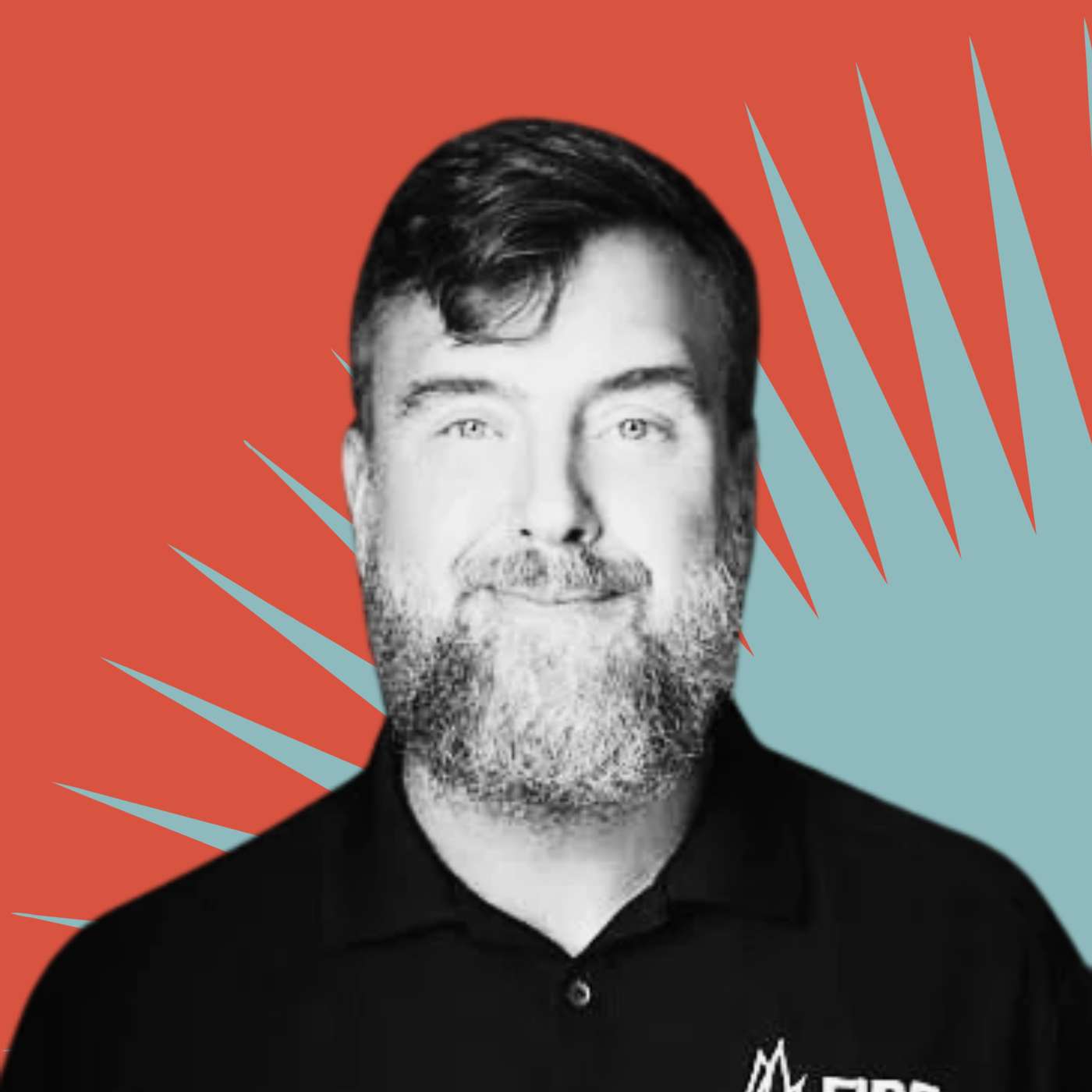


“I feel like I’m cheating when I’m defending people I agree with.” — Greg Lukianoff
Three years ago, free speech advocate Greg Lukianoff, CEO of the Foundation for Individual Rights and Expression (FIRE), came on the show to discuss The Canceling of the American Mind. Co-authored with Rikki Schlott, the book argued that the crisis of free speech in America existed mostly on the campus left with students shouting speakers down and administrators doing nothing about it.
Three years is a mighty long time in American politics. Today, as Lukianoff recently argued in the Washington Post, the crisis of free speech has gone off campus and is now being spread by mostly conservative politicians.
FIRE has quantified this new virus of intolerance. It points to over two hundred attempts in the last year to punish the opinions of a scholar, student or speaker. The state of free speech in America has never been worse, Lukianoff asserts, citing the case of a former cop in Tennessee who did thirty-seven days for forwarding a meme of an actual Trump quote.
Greg Lukianoff has an uncute term for this intolerance. Political cooties. It’s the habit of discounting an argument because of who’s making it. A word on cooties for non-Americans. It’s playground slang for an imaginary disease you catch by touching the wrong child. But its etymology is actually more grown-up. British soldiers in World War One invented it to describe body lice. Then the doughboys carried the word (not the lice) back to 1918 America. From real to imaginary vermin in a single generation.
Lukianoff admits he caught the bug himself, once writing off the conservative opinions of Alan Charles Kors, a man who helped found FIRE. So what to do? He thinks identifying today’s epidemic of intolerance is the key. Maybe there’s a book in it. The Shaming of the American Cootie?
FURTHER READING
• “Universities normalized attacks on free speech. Now it’s all-out war.” (Washington Post, October 29, 2026), by Greg Lukianoff.
• Lukianoff’s Substack, where The Academic Filibuster is being published in installments.
• The Coddling of the American Mind (Penguin Press), with Jonathan Haidt, and The Canceling of the American Mind (Simon & Schuster), with Rikki Schlott.
• KEEN ON AMERICA episodes cited: Jacob Weisberg on eight profiles in cowardice, and Greg Lukianoff’s previous appearance.
ABOUT THE GUEST
Greg Lukianoff is president and CEO of the Foundation for Individual Rights and Expression, which he has led since 2001, and a graduate of Stanford Law School. He is the co-author, with Jonathan Haidt, of The Coddling of the American Mind, and, with Rikki Schlott, of The Canceling of the American Mind. He is currently serializing The Academic Filibuster on Substack and writing Reality Test with the neuroscientist Heather Berlin.
ABOUT KEEN ON AMERICA
Nobody asks more awkward questions than the Anglo-American writer and filmmaker Andrew Keen. With 3,000 episodes since the show launched on TechCrunch in 2010, Keen On America is a daily conversation about the ideas, books and arguments shaping the United States. New episodes every day.
00:00 - Intro
00:31 - Jacob Weisberg, eight collaborators, and Sian Beilock
01:40 - Is something rotten in academic culture?
02:37 - Why he disagrees about the president of Dartmouth
03:00 - The rankings, and the schools actually doing badly
03:47 - Beyond free speech: cost, AI, and why anyone goes to college
04:19 - The Academic Filibuster, and publishing a book on Substack
04:43 - Yale’s very positive review of Yale
05:10 - How America funded higher education as stupidly as possible
05:40 - No check on bureaucratization, and the hundred-thousand-dollar year
06:02 - AK: these are privileged institutions. Who cares about free speech?
06:53 - The global picture, and why he has never seen it this bad
07:20 - Surveillance plus AI: Iran, China, and Harari’s Nexus
07:50 - Dawn raids in Germany, arrests in the UK
08:15 - All politicians have penises
08:40 - Slippery slope as a tendency, not a fallacy
09:25 - The two books, and what has changed since
10:14 - The threat is always from both sides. It is a question of degree.
10:28 - The Trump administration is the biggest change
10:50 - Suing a pollster, and the Ann Selzer case
11:30 - Brendan Carr, the FCC, and Homeland Security at the door
12:00 - After Charlie Kirk: the worst case he has seen
12:30 - Larry Bushart, a meme, and thirty-seven days in jail
13:57 - AK: maybe we will be cellmates
14:10 - How Trump 2.0 changed the universities
14:50 - When administrators used to say no
15:40 - 2014, and the year they stopped
16:20 - From the on-campus left to the off-campus right
16:50 - Two hundred cases in a year
17:10 - Why hundreds of cases is historically unprecedented
17:40 - Rushdie in 1989, and what one case used to mean
18:10 - AK: why do people want to shut others up?
18:38 - A reversion to the historical mean
19:30 - When everyone was a small-l liberal
20:20 - Two illiberal wings, and the marginalized middle
21:15 - AK: does this require admitting we might be wrong?
21:38 - Charles Sanders Peirce and fallibilism
22:20 - Mill’s Trident: wrong, right, or partly both
23:00 - Holding a true belief as a prejudice
23:26 - AK: how do we avoid postmodern relativism?
24:17 - Alan Charles Kors, Harvey Silverglate, and discounting a colleague
25:30 - Internalizing the habit at Stanford Law
26:08 - What cooties are, for the British
26:40 - Political cooties, named
27:20 - People we love can be hysterically wrong
27:40 - Why it infects clever people worse
28:00 - The Judge Duncan shout-down at Stanford Law
29:23 - Tirien Steinbach and the juice of free speech
30:21 - What the students actually shouted
30:48 - AK: which subjects are now beyond the pale?
30:58 - Israel, gender, and the sacred cows of the right
32:04 - The Charlottesville hoax and the Russia hoax
33:00 - What a trusted expert class would have to look like
33:56 - AK: are we heading for an AI technocracy?
34:17 - Reality Test, with Heather Berlin
34:58 - Should universities go back, or reimagine?
35:48 - If comedians can be this edgy, we are fine
36:17 - What edginess looked like in 2007
36:50 - Disconfirmation as the way to earn back trust
37:37 - AK: how do you defend a judge you fear?
38:17 - The Skokie lawyers, and what they were really defending
39:00 - Defending people you agree with is just self-interest
39:22 - AK: is this existential for universities?
39:44 - Why nobody will hire their graduates
40:15 - Closing
00:00:31 Andrew Keen: Hello, everybody. Few weeks ago, we had the swashbuckling journalist Jacob Weisberg on the show. He has a new book out. Eight Profiles in Cowardice [as spoken: Profiles in Cowardice: A Study of Collaboration in the Trump Era]. And, of course, there were eight people in the book, those that you won't be surprised to hear about, people like Jeff Bezos, Mitch McConnell. But also in the list, and I was surprised by this, was a woman, Sian Beilock, who is the president of Dartmouth College. According to Weisberg, at least, Beilock is an example of a university administrator who rolled over in the face of Trump—Trump 2.0. And it spoke to me at least of the rottenness of our academic culture. I think Beilock is a symptom of that. One man who's very good on the rottenness of our academic culture is an old friend of the show. Greg Lukianoff, the CEO and president of FIRE and an author— bestselling author, The Coddling of the American Mind, and most recently, The Canceling of the American Mind. And he has a new piece out in The Washington Post, called "Universities normalized attacks on free speech. Now it's all-out war." So Greg has done a lot of thinking about the corruption, the rottenness in our academic culture, and he's joining us from Long Island. Greg, I know that you are the recipient of a 2026 honorary degree from Dartmouth, where Sian Beilock runs the show. I don't wanna personalize it about her, but, is there something rotten in academic culture these days? Is something gone seriously wrong?
00:02:37 Greg Lukianoff: There is, but I definitely have to disagree with your previous guest. Like, the extent to which Sian Beilock, you know, is collaborating, so to speak, with the administration is because she actually thinks there is something wrong in higher ed, and she's been trying to fix it. And as far as— We do this massive study of higher ed, and it's not our opinion on people. It's this huge algorithm, and it's the biggest, collection of the largest survey of student opinion ever done. And it's each year, because we keep on making it bigger. The largest database of professor— Attempts to get professors fired, attempts to, punish students, deplatforming when student— When students or donors outside, prevent people from, speaking on campus, and speech codes. And, Dartmouth finished number six out of it. You know, if you're gonna be targeting some schools that are doing terribly, Penn or Columbia or Barnard.
00:03:47 Andrew Keen: Well, don't send your kids to Penn Barnard. They're all so expensive. I mean, coming back to this bigger question, I mean, you— You've done a lot of thinking. You yourself went to top schools. You graduated from Stanford Law. Is there something— I mean, when— Your focus is on free speech at universities, and— about that. But there are so many other problems. The problems of cost, the problems of AI and why people go to college. What's happening here in historical terms?
00:04:19 Greg Lukianoff: So that's a great question, and I'm working on this giant piece called The Academic Filibuster on Substack. I'm actually basically publishing a book on Substack, because I want to, I didn't wanna wait on it. I wanted to write exactly what I wanted to write, and I wanted to get it out quickly. And it's largely in response to this really positive, review that Yale did of itself.
00:04:43 Andrew Keen: Surprise. Surprise. I think Yale is always the worst of the worst.
00:04:46 Greg Lukianoff: Yale has been the worst of the worst, so I was more shocked than anybody. I mean, I have a whole chapter devoted to how lousy Yale is in The Canceling of the American Mind. But 10 professors got together at the urging of the new president, and they basically said, here are the problems we have. This is why trust in institutions has plummeted. And the first thing they cover actually is cost. And so I did a really deep dive into figuring out exactly how we got here, and I think we could not have funded higher education more stupidly if we tried. Because, essentially, if you want to, you know, control costs, you have more or less two options. You can, let market forces work or you can subsidize it, but you have to make sure that it doesn't kind of turn into a racket where people are just kind of charging the same price like a cartel together. You need to make sure that they're not bureaucratizing the hell out of themselves so the costs and bureaucratization and overhead just goes through the roof. But we decided to do neither and just kind of do this ridiculous system starting in about 1972, that had no real control on bureaucratization or cost. And that's how you end up with a $100,000 a year university, at least among the elites.
00:06:02 Andrew Keen: So why should we care about, free speech in the university? These are privileged— I don't wanna sound like Trump, but these are privileged institutions. You have to pay hundreds of thousands of dollars a year. It's increasingly unclear why you go— Because there aren't any jobs at the end. Or if the jobs exist, you don't need to go to college because you can just get a subscription on Claude. What's the big deal about free speech? And, I know you also coauthor stuff on your Substack. You did one with Scott Galloway. Is America still a free speech country, which seems absurd, especially coming from Galloway who never stops talking. I mean, is there a bit of paranoia here on the free speech side too? I mean, who cares, Greg?
00:06:53 Greg Lukianoff: I don't think so. I mean, I've been doing this. I'm actually working on a talk. We're doing our first big convention at FIRE on Thursday. And when I look at the global picture, I've honestly never seen it this bad. You know, of course, in the unfree world and particularly— What China and Iran in particular and Russia to a lesser extent has taught us is the particular kind of nightmare scenario for freedom, for human liberty in general. You can generate through using a combination of surveillance tied to artificial intelligence. You know, Yuval Harari has a book called Nexus that taught me things about, like, what they're able to do in Iran in terms of turning off women's cars if they're seen on camera, not necessarily anyone else around not wearing their hijab correctly, that they could see that and they could literally just turn off your car so you can't drive it for a couple of weeks. And you've got the whole sort of, like, social credit system in China. We've also, in the European Union, you know, got people showing up, to— In Germany, you have people showing up to— For morning raids, in one case for calling a politician a penis, which is just about as silly and stupid as you could be imagine. This was covered on 60 Minutes, to be clear.
00:08:15 Andrew Keen: I mean, I would say, at least on my show, all politicians have penises.
00:08:20 Greg Lukianoff: Exactly. Exactly.
00:08:22 Andrew Keen: Even the women.
00:08:25 Greg Lukianoff: And then, of course, you have people getting arrested in the UK now. I mean, we had a story last weekend about someone getting— A kid getting arrested for portraying a public official as a bunny, because apparently, that was, like, too insulting. So I would say, globally, free speech is in real trouble. And the shining star of freedom of speech, globally has always been the United States, and we are completely blowing it here as well, particularly under Trump, but also to a lesser extent on campus. So, I'm 52. This is the worst I've ever seen it. And I think freedom of speech is fragile. So when you start seeing, I tend to call it a slippery slope tendency rather than fallacy. As soon as you basically say, that offended me and therefore, you will have cops showing up at your door, you're— It— It's a tendency because basically, like, essentially, there's no limit to that.
00:09:25 Andrew Keen: So you— As I said, you wrote those two bestselling books, one with Jonathan Haidt, The Coddling of the American Mind, and the second one with Rikki Schlott. Rikki Schlott [unclear].
00:09:37 Greg Lukianoff: New book coming out, by the way. It's actually—
00:09:38 Andrew Keen: We have to get her back on the show. [unclear]
00:09:40 Greg Lukianoff: [unclear] It's not dating. It's actually much— It's a much, more interesting, topic because she's, you know, she's 26 at this point.
00:09:48 Andrew Keen: So, but what's changed since then? As I said, you've got this new piece out in the Post. "Universities normalized attacks on free speech." My understanding— And then you said, now it's all-out war. The problem used to be on the left. Now it's on the right. Are you arguing it's on both sides now that both the left and the right have become so censorious that they're not allowing anyone they disagree with to speak?
00:10:14 Greg Lukianoff: I would say that the threat is always from the left and the right. It's just a question of degree. And that depends on what year you're talking about. Who— Who's worse?
00:10:24 Andrew Keen: Well, now, I mean, what's changed since you wrote those two books?
00:10:28 Greg Lukianoff: Oh, the Trump administration is the biggest change. And the Trump administration came in, you know, claiming to care about free speech, and I knew that was BS. I— And particularly, I'm not always cynical about every politician. I just tend to be particularly cynical about him.
00:10:48 Andrew Keen: Which isn't hard to be cynical about him.
00:10:50 Greg Lukianoff: Yeah. No kidding. So he came in, you know, and I think it was more other people in the administration talking a good game on free speech. But even before he was, reinaugurated, he launched a defamation lawsuit against a pollster who had gotten a poll wrong about him in Iowa.
00:11:10 Andrew Keen: So Yeah. Why was the Iowa— Yeah. It's astonishing.
00:11:14 Greg Lukianoff: And that's our case. That— That's the Ann Selzer case out of Iowa where he was suing her under a consumer protection act, which if you're looking for that to make sense, it makes no sense. So there is no way to explain it. But we finally won that case about two weeks ago. But the Trump administration, particularly through Brendan Carr and the FCC, has been going after media. They're— They've been sending Homeland Security people to people's doors if they say mean things about ICE. I wrote about that in the New York Times. And then the absolute worst case I've ever seen in which it was sort of inspired by a campaign that Trump was doing, but, wasn't directly done by Trump, which was in— After the murder of Charlie Kirk, which is horrifying, and I will do nothing to diminish, you know, how horrifying that was. But at the same time, the Trump administration jumped on this to go after anybody who'd said anything, you know, arguably obnoxious in some cases about the death of Charlie Kirk. But in some cases, saying things as simple as the kind of stuff I say about Charlie Kirk, which is that I disagreed with him about any number of things, particularly in his attitudes about, free speech of people he disagreed with. And I wrote about this also in the New York Times. There was a former cop in Tennessee named Larry Bushart. He had sent out a meme in response to a request to do a, like, a candlelight vigil to, after the death of Charlie Kirk. And he sent back a meme that was a picture of Trump saying we have to get over it, which Trump had said pretty insensitively in response to a, school shooting in Iowa. Now here's also where this is going to make no sense. The school shooting in Iowa was at Perry High School in Iowa, but the cop was in Perry County, Tennessee. And somehow, a local sheriff who hated this guy's guts got a judge who presumably also hated the— Of this guy's guts. He was kind of like the liberal gadfly of his small town, former cop. And he, that somehow circulating this meme, since it was related to a school shooting, was somehow implicitly threatening a school shooting at Perry County College— At Perry County High School in Tennessee. He— And he was in jail for 37 days. And this isn't a close call. You can't— The— There's no law in which you could actually argue, at least with a straight face, that something this ridiculous actually isn't protected speech. There's no question sending a meme of the president saying something he actually sent.
00:13:57 Andrew Keen: He didn't even mention the p word. Yeah. And he still got sent to jail. Maybe you and I, Greg, were gonna be cellmates. So coming back, you know, I take your point on Trump, and I know you don't like him any more than I do or most of our audience. But coming back to this issue of universities, how has the— How has Trump 2.0 changed universities? My understanding is that the left used to be censors. They probably still are. But now the right has acquired its tools and is trying to shut down the universities in terms of, speaking, about, stuff that the right doesn't like. One of the examples you gave in your Post piece is the University of Washington's August decision to cancel a speaking appearance by Hasan Piker. So tell me what's happening on the right and how that's shutting down free speech too in the universities.
00:14:50 Greg Lukianoff: Yeah. And just for a little context, I've been doing this for twenty-five years. And earlier in my career, when there would be threats either coming from the on campus left, or the off campus right. It works out that way because there's just not that many conservatives on campus, and the right tends to be more animated to go after speech on campus. A lot of leadership and a lot of administrators went— When there are these attempts to get speakers canceled, for example, or to get professors punished or students punished, the leadership actually said, more or less go to hell, but usually nicer than that. Like, we're not gonna punish somebody. We're just not doing this. So I know that it is possible for administrators to say no to this stuff. But around 2014, something I talk about in my book, The Coddling of the American Mind, you had administrators, you know, really kind of, in some cases, flat out encouraging students to go shut down speech, or in other cases, when students had shut down speech, not punishing them for stuff that would get any other student kicked out. And so that had been sort of the dominant thing up until about 2023. It changed a little bit then with Israel-Palestine because that was more of an administrators versus other administrators. That was almost like a inter-left civil war. But since Trump's been in power and in the past two years, we've moved from the dominant, you know, motivator of censorship being, you know, from the on campus left. It's now from the off campus right. And, so we've had two years in a row where we have had the deplatforming, the demand for professors being punished, students being punished coming from off campus, usually politicians. And this past year, what I wrote in the Washington Post is we have over 200 examples, which is the first time we've seen that. And I know that sometimes people have this number in their head. Like, but there's 6,000 universities. No. In the US, about half the students who go to four year colleges attend over four—
00:16:50 Andrew Keen: You got some nice charts, which are— Well, I mean, I guess they're not very nice, but they look nice.
00:16:55 Greg Lukianoff: Yeah. They're composed of [unclear]—
00:16:57 Andrew Keen: A cens— Censorship of speech at universities has surged. Right? So Yeah. But it's still even— We've got 207. I mean, that's [unclear] too many, but it's still not an epidemic, is it?
00:17:10 Greg Lukianoff: Oh, [unclear: 207?] is real bad. Like, it used to be earlier in my career if you had one big censorship case on campuses. Actually, if you had one big censorship case that people knew of in the US, that would be a big deal. I mean, think about, like, what happened to Salman Rushdie. Salman Rushdie in 1989, you know, he gets a [unclear: fatwa] against him for writing The Satanic Verses, and that's international news. And it should be international news, and that's just one case of someone going after a speaker. There, when I look at, you know, earlier parts of my career, I think there were, like, three attempts to get people punished for speech that they said after 9/11 on campus that were successful. Those were national news, and they should be because everybody gets that if, like, one person is censored once, that's gonna shut up the overwhelming majority of people. When you start getting into dozens of examples, that's terrible. When you start getting into hundreds of examples, particularly at our most prestigious college, that is pretty— That's historically unprecedented.
00:18:10 Andrew Keen: Just remind us, I know you've spoken about this a lot, Greg, why people on the left or the right, particularly on the right these days, but we can't exclude the left, wanna shut people up? Why won't they let others talk about, I don't know, whether it's Gaza or Trump or, trans or whatever it is that offends them? Why won't they let others talk about them? Why can't they just leave it be?
00:18:38 Greg Lukianoff: Well, I think, and I don't know how old you are, Andrew, but I think this is, a kind of reversion to the historical mean of censorship being much more normal because it's hard to understand why you need to hear what people you disagree with think or say. It's much easier to be like, I'm mad right now, and this person needs to shut up, which is why we had to have, you know, an amendment for it, which basically is something very hard to vote away. It— It's a— It's an extremely strong right because our instincts are so strong to go after people, we disagree with or who offend us. But what I'm afraid of has happened on the political spectrum in the United States is that essentially for most of my life, everybody was more or less a small-l liberal, which particularly, you know, post, Berlin Wall falling, I felt like liberalism had won. And that includes things like due process, freedom of speech, you know, checks and balances, right to vote, all of these things that Democrats and Republicans didn't really disagree with, at least not much, for most of my life. Now, unfortunately, I feel like that more sort of illiberal kind of centralized government left in many ways represented by Hasan Piker— Hasan Piker, who I'm currently, you know, defending, and happy to, but definitely disagree with all that kind of stuff. And the kind of more old fashioned kind of ethnonationalist right, which is something like more that I used to think of as something being more European, not as much the United States. And now we actually have two wings, neither of which are good on the rights of the other side. And the lib— The left libertarians, or the left liberals, you know, are kind of marginalized in— On our side, and the libertarian right is marginalized. So I see this as a really scary trend that I— That I'm gonna do my damnedest, and FIRE is gonna do its damnedest to help reverse. But it— But what scares me about it is it's— Like I said, it's kind of a reversion to the historical mean. So getting it back to something that holds us to a higher standard of defending small-l liberalism, and reminding people that the only way you demonstrate you care about free speech is raising your hand and say, I can't stand that dude, but I think he has free speech rights. That's the only way you show that you really believe in that. And nobody seems— Well, not quite nobody. But, a lot of people don't seem to be willing to do that anymore.
00:21:15 Andrew Keen: But does it require us, Greg, ultimately, and maybe this is the job that university isn't doing, to recognize that we could always be wrong, however convinced we are about Gaza or Trump or tariffs or sexuality or the absence of sexuality that whatever we think or say, we might actually be wrong?
00:21:38 Greg Lukianoff: Absolutely essential, and that's, and I'm glad you mentioned that because it's central to the way I look at all of this stuff. There's this great American thinker called, Charles Sanders Peirce who's called a fallibilist. And, basically, so much of, like, understanding the right direction for humanity starts with understanding how deeply flawed we all are and how self deceiving we all are and how we can convince ourselves we are right of the most absurd things with utter, confidence. Because we were designed by evolution not to understand what was real, but to understand what was in our interest for status and mating and all this kind of stuff. So we have to develop systems that actually challenge our artificial certainty. So liberalism, one of the reasons why I love it so much, small-l liberalism, you know, it has embedded in it this level of sort of intellectual or epistemic humility that essentially, like, I know I'm wrong about stuff. So there— As John Stuart Mill pointed out, you know, that there— What I call Mill's Trident. There's only three possibilities. Either I'm wrong, either I'm right, or I'm partially wrong. And, actually, that middle one is the most common, or partially wrong, partially right. And that free speech benefits all three, because if you're wrong, of course, you need to be in a regime where you can hear that. If you're partially right, it really helps to hear the ways in which you're wrong because then you get a more refined picture of the world. And even if in the unlikely, situation you're right about everything, you will still understand your beliefs the same way someone holds a prejudice if you never have anyone challenge it. So I do think that our deep human failings is one of the reasons why we need so much about— So many aspects of liberalism, especially freedom of speech.
00:23:26 Andrew Keen: So how do we maintain that and not fall into the trap of kind of postmodern moral relativism? I know one of the people that you're a bigger admirer of is an old teacher of yours or an old colleague at FIRE. Alan Charles Kors, you write about him in one of your latest Substack pieces, the novel you're writing or the book you're writing on Substack about—
00:23:50 Greg Lukianoff: It was a bit more novel.
00:23:51 Andrew Keen: Yeah. Well, a truthful political novel, or a factual political novel. What is political cooties, and what is— How can somebody like Alan Kors, who's a kind of twentieth-century version, I guess, of John Stuart Mill, how can he help us maintain, on the one hand, the skepticism, but also a faith that what we're saying is actually right and correct?
00:24:17 Greg Lukianoff: Yeah. Alan Kors, is someone I have just the utmost respect for, and he's a professor of the Enlightenment. He's one of the world's leading experts on the Enlightenment and on Voltaire. So he's an incredible intellect, and he's one of the cofounders of FIRE. But he's more conservative leaning. So when I was, like, leaving, like, the ACLU of Northern California and coming out to Philadelphia to work there, I realized that to a degree, I'd sort of internalized the habits of kind of discounting him a little bit because he was more conservative, whereas the other cofounder of FIRE [ed.: Harvey Silverglate] is, you know, friends with Allen Ginsberg, you know, like, that's got sterling liberal credentials. So I tended to listen to him more.
00:24:56 Andrew Keen: Wow. [unclear: likely "Harvey"] looks like Ginsberg.
00:24:58 Greg Lukianoff: He does. He does. He absolutely does.
00:25:01 Andrew Keen: Well, they didn't sound like— Or he doesn't sound like him.
00:25:05 Greg Lukianoff: I don't know. Like, of course, he was incredibly— Incredible speaker and also very funny just like— Ginsberg could be. But when it comes to, like, what, you know, Alan, but what I realized about Alan is— And he— He'd become pretty cynical about the way higher ed was operating even already in the eighties. And what I realized is I discounted some of his cynicism because he was more conservative leaning. And after a while, I'm kinda like, hold on. Wait. I internalize, and I tend to try to be a good thinker. You know, I try to be honest. I try to read as much as possible. But, you know, particularly in law school, I'd internalize it at Stanford. I'd internalize this kind of idea that essentially you should kind of discount people that you think might be on the right, not as— Not just morally, but even their arguments and ideas. And I'm like, that's about as sophisticated as the, like, I don't know if they have this idea in Britain, but of cooties, which was essentially, like, when kids, you know, are like in—
00:26:08 Andrew Keen: And that's C-O-O-T-I-E-S.
00:26:10 Greg Lukianoff: Yeah. Are about four years old. They'll claim that someone has cooties. Usually, girls have cooties. It's an imaginary disease that you can catch if they touch you. It's about as dumb as could be imagined. It's about as stupid. Like, my kids at four were like, don't mention cooties to me. Like, they were already rolling their eyes out of it. And I'm like, so hold on. Have I internalized an idea that essentially that— Yeah. Sure. I can dislike this person. But disliking someone has nothing to do with whether or not intellectually speaking, they are right or wrong. And we spend so much time in higher ed and in society, both on the left and the right, really not arguing with each other, but rather pointing out it's like, oh, you're a libtard, or, oh, you're a right winger, like, with some kind of insult, to basically rather than actually arguing the argument that they're making. So I'm really trying to give this kind of, like, political discounting a name as serious as I think the intellectual seriousness of the tactic is. It's nothing more than political cooties. People we disagree with, can be right, and people we love can be hysterically wrong.
00:27:29 Andrew Keen: And it— One of the weird things is it seems to infect smart people in some ways, perhaps even more than people who we don't traditionally associate with intelligence.
00:27:40 Greg Lukianoff: Predict— Particularly where you live, I see.
00:27:43 Andrew Keen: I mean, on the West Coast, you bring up— I know you were at Stanford Law. My wife was there too. The Judge Duncan shout-down in your Substack piece, you talk about that. Tell us about that and what that tells us about from the left, this problem of free speech.
00:28:00 Greg Lukianoff: Yeah. The Judge Duncan thing was so embarrassing, because I— You know, I'm a proud Stanford Law alum. And, Judge Duncan, and I wanna be clear here. He's, like, our— One of our biggest opponents from a First Amendment standpoint. Like, if we get something in the Fifth Circuit before Judge Duncan, we're like, oh, you know, we're gonna lose now. So he's— Like, I'm not a big fan of his jurisprudence, but he is a Fifth Circuit judge, which is a big deal. He— And he is, however, a Trump appointee. And he'd spoke— He was going to speak at Stanford. He'd been invited by the Federalist Society. And I wanna be clear. Conservative judges speak at Stanford all the time. It's usually a complete nonevent. Nobody thinks anything about it. Of course, they're going to. Like, what are we, children? But in this case, somehow this became kind of a cause célèbre on campus. An administrator named Tirien Steinbach, you know, got really involved with it. And at first, there was an attempt to get him disinvited. That didn't work. So when he did actually show up, about a fifth of the class showed up, and they said horrible things to him too, protected, to be clear, but nonetheless, things like, we hope your daughters get raped, to him, which is like, wow. Okay. You know, fellow alum, that's not usually the way we talk to a judge.
00:29:23 Andrew Keen: Yeah. That's not usually the sorts of things people tell each other at, Stanford Law School.
00:29:29 Greg Lukianoff: So about a fifth of class shows up, they shout him down for exactly ten minutes, and then an administrator comes up. She later tried to claim she just, she's just doing it on the spot. But, of course, she's unfolding a speech she'd already prepared, about whether or not— And she tried to be folksy about it. If the juice of free speech is worth the squeeze of the pain this Fifth Circuit judge is causing our community. And it was just clearly, you know, say, like, a setup, which Judge Duncan actually, you know, call— Called out. And then after she leaves, then it's just, you know, Judge Duncan, puts up with being, you know, shouted at and, asked about whether or not you can find the prostate. Not kidding. The, or— Sorry. Actually, whether you can find the clit. Sorry if this is a family show, but that's what they were asking him. And—
00:30:21 Andrew Keen: So there were no penis remarks? There were only clit and prostate [unclear]?
00:30:25 Greg Lukianoff: There probably were penis remarks somewhere in there given the sophistication and the—
00:30:30 Andrew Keen: Yeah. I mean, again, it— It's also— Is— I mean, this one is, I think, in some ways bound up with race. There are— One of the other third rails now is, Israel— Antisemitism, Gaza.
00:30:48 Greg Lukianoff: No harm to them.
00:30:49 Andrew Keen: Are there some subjects that have just become so beyond the pale intellectually in and out of the university, Greg, that people are quite incapable of talking about them?
00:30:58 Greg Lukianoff: Oh, I think we have more of them than ever right now. I feel like we did a better job. I'm not saying there was ever any some mythical golden age of freedom of speech in the United States, but you— But I think it's also equally ridiculous to claim that we weren't better about talking about some of this stuff. Like, the way we talk about, Israel's right at the top of the list. Anything related to transgender, you know, I've definitely seen that treated as a sacred topic that you have to come in agreeing first. That— I mean, one of the things I'm talking about in this is a president of the anthropological society, you know, saying that they didn't host something on gender differences in— Or sex— Biological sex differences in, I think, sports, because that would be like teaching astrology was what she argued. That essentially, like, the claim that there are differences between men and women, would actually be like teaching astrology. And I'm like, oh, okay. I don't even know where to go with that. But, you know, on the right, you know, they have all the— They have their sacred cows too about, like, the election and about, you know, like, the Charlottesville hoax and the Russia hoax. They call all of these things—
00:32:04 Andrew Keen: What's the Charlottesville hoax?
00:32:06 Greg Lukianoff: The Charlottesville hoax is that, when Trump said that there were very fine people on both sides.
00:32:13 Andrew Keen: Yeah. Yeah. Yeah. On the neo-Nazi speech thing.
00:32:18 Greg Lukianoff: Yeah. And that was the—
00:32:20 Andrew Keen: The march for, quote, unquote, freedom.
00:32:23 Greg Lukianoff: Yeah. Well, it was the— I forget what it was called.
00:32:25 Andrew Keen: The March for something.
00:32:26 Greg Lukianoff: Right. No. It was specifically— So Unite the Right. It was called the Unite the Right rally in Charlottesville. And what they're arguing that it's not a bad point is that, essentially, he said that very fine things, but then actually lower in that same speech. He talked about, like, the neo-Nazis being loathsome or something like that. But that doesn't change the fact that given there were only, you know, neo-Nazis and counter protesters there saying that there were very fine people on both sides was a little bit like, okay. You're showing sympathy at least for the unambiguous bad guys here, you know, in this case. So— But they act like this is a hoax. Like— Because, yes, fine. The coverage of it, sometimes got things wrong. The BBC actually, spliced together a talk that Trump gave that actually made him sound worse, which is not a great, look for them either. But at the same time, it's not a hoax. You know, it's like when people talk about, like, the Russia hoax, it's kinda like, so he's not weirdly deferential to Putin and hasn't been like this whole time? So we do have, in a time of hyperpolarized, what we really needed was sort of, like, an expert class that kind of everybody trusts across the spectrum to be like, well, at least this institution or this person never steers me wrong and is always trying to be objective and calls balls and strikes just like [unclear]—
00:33:56 Andrew Keen: Yeah. I take your point, but are we setting ourselves up? You recently gave an interesting speech about the real fight on AI is who gets to decide what's true. Are we setting ourselves up for, an AI technocracy where if we can't agree on anything, we can't even agree what you can and can't say, we'll rely on AI?
00:34:17 Greg Lukianoff: Well, that's one of the reasons why I'm working on a book, with Heather Berlin, a neuroscientist, called Reality Test, to try to figure out a way that doesn't— That makes sure that the inputs and outputs of AI are actually as tied to reality as possible, and that's gonna require flesh and blood people in institutions that check and recheck. And the whole book is devoted to why we need it and how we can do it and how—
00:34:41 Andrew Keen: When's the book out? We have to get you on.
00:34:43 Greg Lukianoff: Oh, the prop— You know, we, probably in a couple of years. And the— I'm still— I have to finish up this, self-inflicted book, The Academic Filibuster, first, but then I'm getting right on it.
00:34:58 Andrew Keen: So if we're not— It's— So coming back to AI, I mean, what's the— I mean, you spend all day, every day of the week, Greg, dealing with this. What's the answer, being more tolerant? I mean, when it comes to the universities, do we need to go back? I mean, in your Washington Post piece, you talked about the mistakes made in 2014. You've written about this extensively. The universities need to just go back to pre-2014 or maybe pre-9/11. I mean, we've talked endlessly on this show about the impact of 9/11 on free speech and tolerance in America. Was there a moment in American history that we should be nostalgic for, or do we need to drop our nostalgia and try to reimagine an intellectual freedom in the twenty-first century?
00:35:48 Greg Lukianoff: I think it's possible to have both. I definitely think going forward, it's drop nostalgia and move forward and think of new ways to do it and new ways to appeal and think it through. I do, however, think— I remember looking around in 2007 even being like, if comedians can be this edgy, we're fine. You know, like, that essentially I felt like not even that long ago that we were in a much healthier—
00:36:10 Andrew Keen: Pretty edgy now? I mean, they spend all their time making fun of Trump.
00:36:14 Greg Lukianoff: I mean, is that really edgy, to make—
00:36:17 Andrew Keen: So what would be a model of edginess that you admired in 2007 that we don't have now?
00:36:23 Greg Lukianoff: I think practically everything that was on Comedy Central at the time, not just South Park. I mean, the Sar— Sarah Silverman Program, which tries to get her canceled. I mean, I feel like It's Always Sunny in Philadelphia has kinda picked up where Sarah Silverman left off. But, you know, that show isn't as celebrated as I think it should be. But to be clear, nostalgia is not the answer. And I think the answer more than anything else is disconfirmation. That essentially, the way you earn back trust in a set of shared facts is through process. But essentially, if people think that the things that they're— The expert class and people are trying to tell them are true have been severely tested by the best arguments against them and the best facts against them. That can really start to win back trust, and it's exactly the kind of system that we need. But that requires being like, is this sacred cow that we believe true? Look at the best data. And, honestly, I think there are ways in which AI used cleverly, used thoughtfully, used with wisdom, can actually help that process because, of course, AI used without that wisdom could be the great tool for totalitarianism. So since it's a tool, it can be used either way, and I really wanna push it towards being used for positive human hands.
00:37:37 Andrew Keen: Well, that's what you do at FIRE. How do you— I mean, finally, Greg, how do you do it? I mean, how would you, for example, support somebody like Judge Duncan, who you don't like, who you fear in some ways if one of your cases showed up, in his courtroom? How do you calibrate those two things? You clearly don't like people either of the extreme right or left. You don't like the antisemites. You don't like, the racists. You don't like the intolerant people on the left. How do you hold your nose and work for them and at the same time have views of your own that are coherent?
00:38:17 Greg Lukianoff: I don't even feel the need to hold my nose because I remember I'm not defending them. I'm defending a system and an idea and a principle that, I remember, you know, talking to the people who defended the Nazis at Skokie— I'm lucky enough to know a lot of them. And that, you know, when someone would say, oh, this is the lawyer who's defending the Nazis, and, one of them would always correct someone. No. Actually, I'm defending freedom of speech. I'm just doing that by defending the Nazis. Because when you understand it as a principle that is much more fragile than we understand, it doesn't really bother you. That, actually, honestly, kind of like, I feel like I'm cheating when I'm defending people I agree with. Defending people you agree with is just self interest. The only way you actually, show that you believe in it is being like, listen. I think this guy is totally wrong, but I think it's still worth knowing what his opinion is. And at bottom, he has free speech rights, whether, that's a human right. And whether you like what he has to say or not, that's what we have to defend.
00:39:22 Andrew Keen: And finally, finally, is this an existential question, challenge for universities? I mean, they don't think of it in these terms. It seems as if it's an uncomfortable issue that they'd rather avoid. But if they don't get this right, if they don't reestablish campuses, universities as places of real free speech, are they pretty much finished as institutions?
00:39:44 Greg Lukianoff: I think probably, yeah. And, of course, like, there are different schools. I think— I tend to think big state schools are much more intellectually healthy, for example. But I do think that if people really stop trusting them to produce people who are willing to look at the world as clearly as human minds are capable of doing, people aren't gonna wanna hire their graduates, and people aren't gonna wanna shell out the money and go into huge debt to go to these places. And that is an existential crisis for higher ed.
00:40:15 Andrew Keen: There you have it. Any university presidents listening, watching, you're in trouble unless you start becoming a little more tolerant and letting people on both on the left and the right express themselves in ways that you're uncomfortable with. Greg Lukianoff does an excellent job, I think, protecting free right— Free speech in America. He's the president and CEO of the Foundation for Individual Rights and Expression, FIRE. And, Greg, I'm sure peop— You would appreciate people going to your website, maybe even donating to help you continue your good work. As always, great to have you on the show, and we'll have you back in the near future. Keep up the good work. Thank you so much.
00:40:51 Greg Lukianoff: Great seeing you, Andrew. Take care.