The Banality of Good: Scott Curran on Musk, Bezos and MacKenzie Scott


A few days ago, B-school prof Chris Marquis came on the show to argue that we should shut the business schools down because students arrive wanting to do good but graduate with banal corporate jobs. Today’s guest, Scott M. Curran, went to law school but then spent a decade doing good as general counsel of the Clinton Foundation. So doing good is his thing. His calling.
“There are two ways to run this world,” Curran told me. “Guns or lawyers.” No prizes for guessing his preference. In his new book Better Good, Curran argues that it’s not the seminar room that hammers the good out of us. It’s the banality of our monthly mortgage payments. So maybe the best way to build the good is by bringing mortgage rates down.
Anyone who has ever sat through a TED conference knows that good can be a four-letter word. But it doesn’t have to be that way, Curran argues. Yes, he acknowledges, Musk’s foundation barely clears the five per cent a year the law requires, and Bezos has far more and gives much less. But good, he argues, can be found in the most unexpected places. The luxury watchmaker Rolex, of all corporate ironies, is wholly owned by a charitable foundation — the watches being just its fundraising arm.
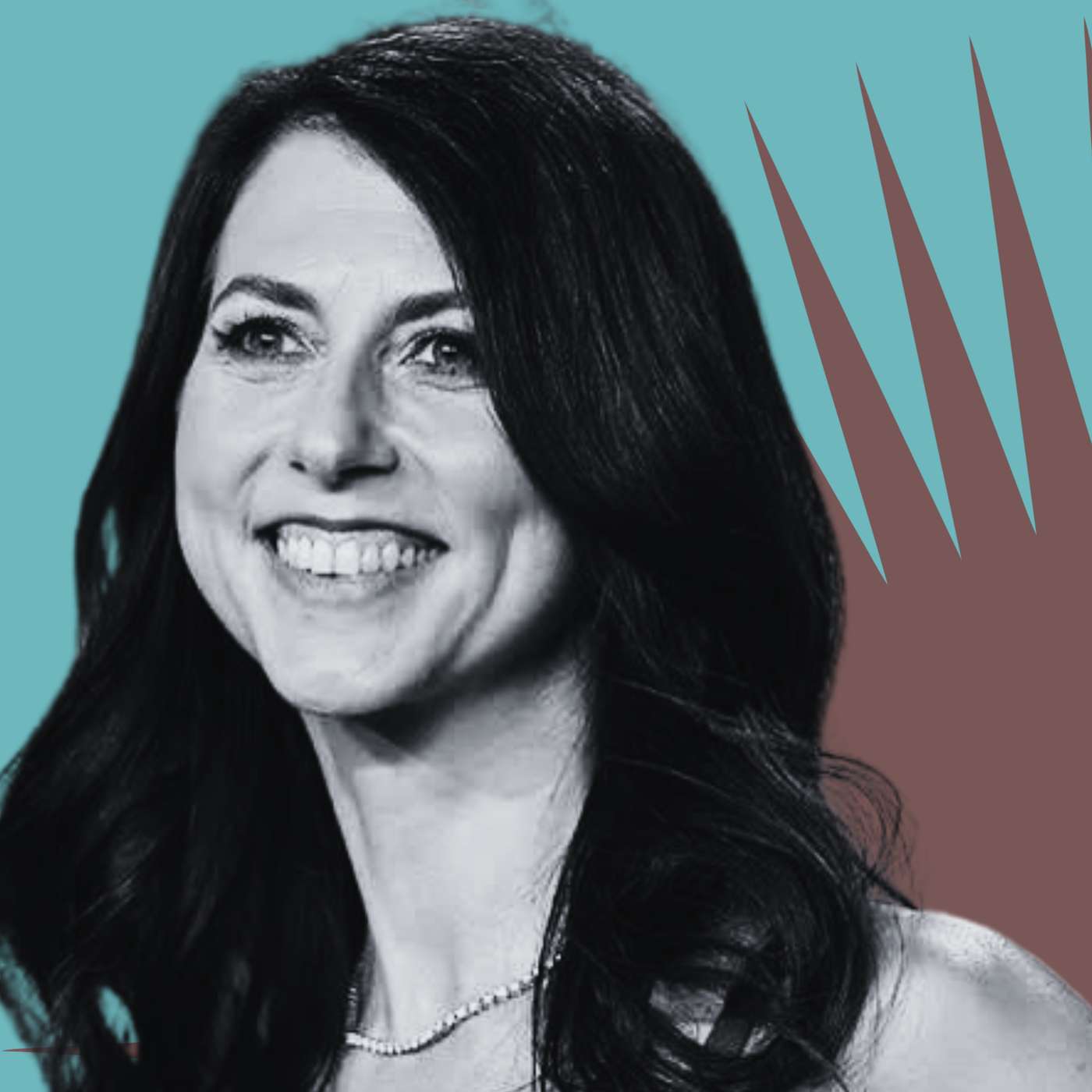
And then there’s Bezos’ ex-wife, MacKenzie Scott, who has given away over twenty billion dollars with almost no strings attached. So philanthropy can still work, Curran argues. MacKenzie Scott didn’t even go to B-school. And she probably doesn’t wear a Rolex. Or have a mortgage.
FURTHER READING
• Better Good: A Simple System for Creating Lasting Impact (Simon & Schuster), by Scott M. Curran.
• Curran’s website.
• KEEN ON AMERICA episodes cited: Chris Marquis on shutting down the business schools, and Eric Ries on why good companies go bad.
ABOUT THE GUEST
Scott M. Curran is a lawyer and social impact adviser who spent a decade at the Clinton Foundation, latterly as its general counsel, as it grew from a library fundraising effort into a global operation working in forty countries. He now advises foundations, nonprofits and companies on doing good more effectively, and teaches social enterprise law. Better Good: A Simple System for Creating Lasting Impact is published by Simon & Schuster. He lives outside Chicago.
ABOUT KEEN ON AMERICA
Nobody asks more awkward questions than the Anglo-American writer and filmmaker Andrew Keen. With 3,000 episodes since the show launched on TechCrunch in 2010, Keen On America is a daily conversation about the ideas, books and arguments shaping the United States. New episodes every day.
00:00 - Intro
00:31 - Chris Marquis, and the case for shutting the business schools
01:20 - Continuing the conversation about the good
01:54 - He did not go to business school
02:22 - It is not the seminar room. It is the mortgage.
03:00 - The same trend in law schools
03:45 - AK: the good is a four-letter word. What does it mean?
04:16 - A deliberately broad and non-precious definition
04:40 - Every tech titan thinks he is changing the world
05:52 - AK: I am still not clear what you mean
06:09 - Holding a door, picking up litter, the kettle at Christmas
06:57 - AK: how do we get beyond relativism?
07:51 - Versions of good that others regard as perverted
08:20 - The Musk Foundation and the minimum requirement
09:00 - Chemicals released when we do good, and doing it in groups
09:30 - Government, nonprofits, business: the three-sector frame
10:01 - AK: do you buy Hobbes and the social contract?
10:27 - Rising tides, and the institutions that let them lift
11:00 - What do we expect of humanity’s first trillionaire?
11:40 - To whom much is given
12:10 - Cadburys, Guinnesses, Rockefellers, Carnegies, Waltons
12:55 - AK: have you seen the four-hour Musk film?
13:30 - Carnegie and Gates: amass, then give away
14:00 - AK: why does wealth now seem to make people angrier?
14:41 - Wealth amplifies who you already are
15:20 - Giving is highest, by share of income, among those with least
15:50 - Echo chambers, and Howard Hughes
16:30 - The quiet high-net-worth givers nobody hears about
17:00 - The coming intergenerational transfer of trillions
17:35 - AK: is paying taxes a good?
18:29 - Yes, absolutely, and here is the list
19:00 - AirPods, the pharmacy, the elevator certificate
20:00 - Bagged lettuce, salmonella, and the FDA
20:40 - The billionaires who have not actually left California
21:21 - AK: compare Bezos and MacKenzie Scott
22:13 - Givers and receivers inside the nonprofit sector
23:30 - Twenty billion, no strings, a check in the post
25:00 - Jeff has more and has given less
25:59 - AK: what makes a good company?
27:10 - Awareness and intentionality
28:00 - Businesses are not designed for good
29:00 - Patagonia, Chobani, Newman’s Own — and Rolex
30:30 - Nonprofits acting like businesses and vice versa
31:00 - Greenwashing, purpose-washing, and finding them where they are
32:21 - AK: isn’t Ellison more honest than Benioff?
33:32 - Hold them accountable
34:30 - Which ones are the Hollywood writers writing about?
35:30 - The Walmart argument, and the neighbors who objected
37:00 - Walmart is neither wholly good nor wholly evil
38:03 - AK: what about the shapes OpenAI and Anthropic are bending into?
38:50 - Why he likes an AI company owned by a nonprofit
40:00 - Omidyar, Emerson Collective, and why CZI is an LLC
41:00 - AI as a spotlight on social enterprise, and the case for regulation
42:15 - AK: great lawyers, or good ones?
42:27 - Guns or lawyers. That’s it.
43:00 - Who is actually holding the line
43:39 - Weisberg, Paul Weiss, and the collaborators
44:00 - The Clinton Foundation years
44:49 - How he stumbled into the Clinton world
45:28 - The inaugural class at the Clinton School, 2005
46:30 - An intern at thirty, and the accidental legal department
48:00 - From a library fund to forty countries
49:00 - Leaving in 2016, and the political football
50:00 - A former president using every available day
50:37 - AK: but the book is about everybody
51:30 - The tale of two Daves
52:32 - AK: nine elements doesn’t sound simple
52:35 - Your social impact footprint
53:39 - Closing
00:00:31 Andrew Keen: Hello, everybody. A few days ago, we did a show with a very well-known professor of business, Scott Marquis [as spoken: Chris Marquis], who wants to kill business schools. He had an influential piece in the New York Times recently entitled "I Teach at a Business School. It's Time to Shut Them Down." It's very much associated with a new book he's—he has out also called The Profiteers: How Business Privatizes Profits and Socializes Costs. Chris argued that people come to business school wanting to do good, and then business school takes all the goodness out of them and forces them one way or the other into corporate careers, and we all lose from that. So business school is undermining the good, sabotaging the good. We are continuing a conversation about the good today with my guest, Scott M. Curran, who has a new book out on the good itself. It's called Better Good: A Simple System for Creating Lasting Impact. Scott is a veteran of business and of politics. He used to be the general counsel at the Clinton Foundation, and he's now a social impact consultant. He's joining us from the suburbs of Chicago. Scott, you didn't go to business school. Right?
00:01:54 Scott M. Curran: I did not go to business school. I didn't.
00:01:56 Andrew Keen: But you buy this thesis, maybe not so much on business school, but all professional schools, whether it's law or business school, you went to law school, that universities, somehow undermine the good. We all go wanting to do good in the world, and then we end up in business schools, graduate schools, or maybe corporate life, and it's hammered out of us.
00:02:22 Scott M. Curran: I understand the criticism. I don't agree with it. Why? I think that we fall into patterns, and I think the patterns are the risk. I don't agree that school or industry by their nature hammers it out of us. I think that the patterns associated with earning a living and paying our bills, which seem to become harder to do and more expensive to do can sometimes detract from the better nature of our humanity and our desire to do good. And so reality shows up in the form of a rent payment or a mortgage payment or the obligation to return value to shareholders if we run businesses. But I don't think it undermines the innate human goodness that is present in each one of us and has been throughout human history. We never would have gotten out of the caves together if we weren't wired for it, and we are. And I think there's certain realities of business unique from government and nonprofits that demand to focus on returning a profit. And so I think that trend can become a factor for how some of us, spend less time focused on, the doing of good, but I don't believe there's anything inherent in school or business school or law school. And I see the same trend in law schools, to be clear. I think a lot of people go to law school, expect you to do a great amount of good in their careers and then wind up in their careers doing less, you know, traditional good than they expected.
00:03:45 Andrew Keen: So for some skeptics, the good or good is a four-letter word, the g word. What does it mean? I mean, it's used all the time by everybody. You've entitled your book Better Good, so you've given it some thought. You said earlier that we wouldn't have got out. I'm quoting you. We wouldn't have got out of the caves without being good. Is it being collaborative? Is it being innovative? Is it being warlike? Is it being ambitious? What does the good mean?
00:04:16 Scott M. Curran: Yeah. It's not being warlike, though I think some people believe they fight wars for good. But— And we hear good versus evil in the context of war and much more. But, no, I think I intentionally take a broad and non-precious approach to good and the definition of good in the book. I've spent my career working with people who say they're doing good. I have yet to meet a tech titan or anyone else who doesn't think that they're changing the world. Usually, they mean for the better. I think there's social impact in everything, but I think most people believe that what they're doing, in the world is for good. And that is everything from how we spend our time, talent, and treasure in our daily lives with our families, in our communities, when we go to work, and with other organizations that we— With which we serve or provide support, I believe that we are mostly all in the pursuit of doing good. So it is all the ways in which we show up in the world to do whatever it is that we believe is our version of good. And for some people, those are very simple acts. For other people, they are grand gestures or major undertakings. And then, for most of us, as I offer in the book, it's a combination of those things. And, unfortunately, we have a tendency, especially against big headlines and headwinds that we face in reality, and I live in reality. This is not a Pollyanna-ish, or a toxically positive view of the world. I'm— I live in the same real world that everybody else does. But I believe on the whole, most of us believe we are in pursuit of something good and have the capacity to do good every day, and I believe that's true. So it's big things, it's small things, and it doesn't have to be, either. It can be both, and I believe it often is.
00:05:52 Andrew Keen: Yeah. I have to admit I'm still not clear what you mean. Big things, small things. I mean, as you know, everybody dresses up everything they do in the good. You mentioned that the tech titans or it's an Altman or a Musk or a Bezos all believe they're doing good even when they're clearly not. So
00:06:09 Scott M. Curran: Let me be clear then. Let me make it crystal clear for you. It's everything you do that you think is doing good. Holding a door open for someone, sharing a smile with someone, picking up a piece of trash on a walk at each time you walk your dog or go for a walk in your community because you think it's good for the world. Those things are all true. It's helping someone when they need a hand of any kind, whether that's a family member, a neighbor, a colleague, coworker, someone else in your community. It's tithing at a house of worship. It's contributions you might make, whether that's at the checkout where you can round up for checkout or drop a few pennies in a kettle at Christmas time. It's writing checks or making other contributions of your time or talent to the organizations you care about. There is a very long list of what constitutes good, and there should not be any lack of clarity about what it is.
00:06:57 Andrew Keen: Yeah. But, yeah, I take your point. But then how do we get beyond the relativism here? You've written about, you— You've written a piece about why Elon Musk doesn't care about his philanthropic legacy. I mean, he might argue he does. He might argue that giving hundreds of millions of dollars to decimate the US government or going to Germany to speak at AfD rallies or supporting British neo-fascists in terms of, getting rid of their immigrants, that this is all for the good of white English people, good for capitalist America. How are we to determine, Scott, what is and isn't good? Are there some people that you believe, maybe Musk, who claims to be doing good but isn't? I don't wanna mention the current American president because too much is talked about him, but he might be another example.
00:07:51 Scott M. Curran: Yeah. I think it is true that there are people who have a version of good that others may regard as perverted or, psychopathic. And I don't— You know, I'm not a mental health professional, so I can't look into those people. I'm happy to speak to the piece I wrote about Elon, which was specific to the fact that there's a $14 billion foundation that exists today and has exist for some number of years, which places it among the largest in the United States. That seems to be by New York Times reporting and other analysis barely. And I mean barely meeting the minimum requirements despite the fact that it has all the resources necessary to do so. So that piece was written about an existing foundation that is already present in our society and has certain obligations that he does not seem to, in my opinion, care about getting right. So we can have that conversation in the right context. As to everything and anything Elon does in his life or anybody else, whether an elected official, a business official, or a philanthropic leader, or someone who is at times a philanthropic leader, or fancies themselves one, we should analyze those things on their merits in each case instead of painting with one brush any more than we should, you know, what a single definition of good looks like. Because what looks good for you and your family or what you might regard as doing good may differ vastly from what anyone else does in any given sector. What I try to do in the book is break it down by our human inclination, which is humans collaboratively work together for the betterment of their individual circumstances and societies. We would not have gotten out of the caves together and evolved over the years we've been on this planet had we not. And there are certain chemicals in our body that that are released when we do good or even just see other people doing good. And then we like to do good in groups. And the three main groups in most civil society are made up of government, nonprofits, and businesses. For the most part, everything falls in one of those three categories. The businesses by definition and design are not designed for good. Government and nonprofits are by definition and designed supposed to do good. So that's the framework I provide to start the book, and then the rest breaks it down based on my experience working across those three sectors.
00:10:01 Andrew Keen: You've mentioned this idea of getting out of the cave, and you perhaps suggested that there's some collaborative social element there. Do you buy the sort of the traditional social contract theory articulated by people like Thomas Hobbes that we began in a state of nature. Maybe life was nasty, brutish, and short, and then we figured out how to work together, and that's what the good is.
00:10:27 Scott M. Curran: Yes. Yes. I do. Absolutely. I think that the fact that humans have survived on this planet and that we, despite our flaws and fallacies and foibles, which are many, we are very imperfect animals, we have nonetheless developed our societies to primarily provide for the common health and welfare of one another. And, you know, in what we regard as civil society, we've created these institutions that ultimately help us do the good we want to do each day in our individual lives, as families, and communities, and societies. And when it's working well, it tends to work well for the majority, and we lift those people. We like the idea of the rising tide lifting all boats, and we like the systems that allow that. I think you are opening the door to a really interesting conversation, one that I'm interested in having and that actual Elon Musk article started as. I actually originally wrote that piece, when the SpaceX IPO was occurring, and it was likely that he would become humanity's first trillionaire. And the question I was pondering was what are society's expectations of humanity's first trillionaire? We know historically, that to whom much is given much is required. That we have the sort of social contract that when somebody reaches a certain level of success based in no small part on what society makes possible for that success, we expect to see something in return. And that could be as simple as how they pay taxes back in, and we build roads, bridges, schools, and other things that allow others to have the same opportunity. Or we expect a philanthropic commitment of some sort or another, or we might give them a tax advantage if they make a philanthropic commitment. And because they have so much, they have an outsized opportunity to provide that kind of philanthropic commitment to society. That part of the social contract, in modern times may or may not be fraying depending on which one of these individuals we're looking at. And we can go back to the Quakers and the Guinnesses and the Cadburys, and we can look at the Hersheys in the United States, and we can look at the Rockefellers, the Fords, the Carnegies. And then in modern-day times, we can look at the Waltons and the Bezoses or the MacKenzie Scotts and the Oprahs and look at how that social contract is evolving and what our expectations of those in those positions, still are or maybe evolving to become.
00:12:55 Andrew Keen: One of the odd things about Musk, I'm not sure. Did you see the movie, the four-hour movie about him? It's
00:13:02 Scott M. Curran: I've not yet seen it. I've read several biographies on him, but I just—
00:13:05 Andrew Keen: Yeah. I— It's definitely— Well, I mean, especially for you, I think it's— You— You'd be intrigued by it. But, one of the things I went to see it last week. It's four hours, so it requires some time. One of the things that strikes me is that we always associate— You mentioned, I wanna come to Bezos and MacKenzie Scott later, his ex-wife. But one of the things I think we have historically taken for granted about wealth is it makes us more generous. Maybe it brings out the good in us. The two historic Americans who come to mind are Andrew Carnegie and, the Microsoft founder, Bill Gates. I mean, of course, they're both controversial figures, especially Gates these days, but they spend half their lives amassing money, often not in a particularly nice way, and then the second half of their lives giving it away. The striking thing about Musk is, if anything, and maybe this is maybe less of a reflection on him and more on the world that we live in, is it seems that— And maybe the same is true of other Silicon Valley titans like Marc Andreessen, is that the wealthier and the more powerful they become, the less generous they seem to be, the angrier they become. Is that a— You're a student of philanthropy. I'm sure you've spent time with guys like this. Is there something about our world that brings out the worst in wealthy people these days, which historically wasn't the case?
00:14:41 Scott M. Curran: I think there's a lot of analysis to go in that. I start with the presumption that wealth amplifies who we already are, and I think the generous become more generous. And we know that in the US, at least giving, is highest per— As a percentage of household income among those who have the least. So I think that, again, my basic assumption is that most humans are wired for good and want to do good. I do think that there are some people who become detached, from either their upbringing, reality for the rest of us, and then they have the means to surround themselves with people who tell them what they want to hear, and they find themselves in echo chambers. I mean, this is not new to Elon either. Right? I mean, Howard Hughes became a recluse and was wildly successful and innovative in his life and in his work. But I think wealth can amplify who we already are, but I also think it can create conditions that detach us from the human condition, and that can dehumanize the wealthy in that regard. And I have spent a lot of time around high-net-worth people, many of whom do a tremendous amount of good very quietly and not for the fanfare. And there's lots of arguments today being had in the industry of philanthropy alone, which can become its own echo chamber, arguing about who's giving enough and whether or not we're giving enough for the right amount for this moment or any moment and whether foundations should exist perpetually or not or whether they should blow it all out of the coffers today or somewhere in the middle. But I do believe that ultimately, if you stay connected to your communities and to your humanity, most wealthy tend to do a tremendous amount of good in the best ways they know how. I'm hoping we can help them all do it better. I wrote the piece about Elon, not because I think he's going to read it or be persuaded by it, but because we're about to see an intergenerational transfer of wealth that we have never seen in human history that amounts to the trillions with a t. At the same time that we're seeing extraordinary new wealth created through IPOs and the new tech booms, including but not limited to the likes of SpaceX and or, AI companies. And so what I'm hoping we can do is amplify the better parts of how humans have historically and currently done good well and then encourage them to do it better following the same pattern that their predecessors have. And that is hiding in plain sight in front of everyone, which was ultimately the point of the book, is that I've seen how the best in the world do good, and I don't just mean the famous. I mean, people in communities who will never be famous for the good that they've done, but whose models and whose work should be. So I think wealth can detach people from reality, their connection to it, and therefore their care for it. But I think that's a wealth myopia and not a question about inherent goodness of wealthy people at all.
00:17:35 Andrew Keen: Is that good in paying taxes? We're talking before the midterms. Before, I— I'm in California. So the most controversial thing on the ballot here is the billionaire— The billionaire tax, which
00:17:48 Scott M. Curran: Sure.
00:17:49 Andrew Keen: Is being fought, by many people in Silicon Valley. What's your take? What's your position on the billionaire tax? And those billionaires— And there are some who are, I think, the Nvidia guy, Jensen Huang has been quite clear. He said, I'm— I've been very lucky. I won the lottery. I— I've lived the American dream. I'm happy to pay my taxes. Is paying taxes in itself in Better Good, Scott, a kind of good, especially in an America where as a strong libertarian community who thinks that any taxes is a bad thing?
00:18:29 Scott M. Curran: No. I absolutely believe that paying taxes is a good thing, and I know that can be taken out of context as a sound bite and may, but I absolutely believe that it is a part of our collective contribution to the common good. There is no question. And I offer that as a simple point, to anybody. I love a good skeptic. I love somebody who asks whether government is still good or could ever be good again, etcetera. I'm not an apologist. I'm not a one-size-fits-all, and I'm not a rose-colored glasses person. I am a very stubborn optimist, But, you know, I love getting on an airplane, putting in my AirPods, and not thinking twice about what happens between point of departure and point of arrival. I love going to the pharmacy and picking up my medication, bringing it home, and taking it without thinking twice about whether it is what the bottle says it is. I like driving on roads and bridges. I don't feel an obligation to get out and inspect. And I like riding in elevators that I see a little certificate on showing when it was last inspected. I like that potholes are filled in my local community and on interstate highways. And I like knowing that the water coming out of my tap on any given day isn't going to kill me or my family. These are all functions of a well-functioning government funded by tax dollars. The FAA, USDA, FDA. I like knowing when bagged lettuce has salmonella in it and is being recalled. I don't see that as government overreach or interference with the private sector. I like getting in the airplane and not worrying that the private sector is gonna get up there and just figure it out themselves. So while I think I would love to return to the time in America where we simply had reasonable differences of opinion, maybe even some debate about federal tax policy or billionaire taxes, and having a conversation about the social contract that, hey. I agree with Jensen that— You know? And by the way, there's a whole lot of billionaires who haven't left California despite their protests. They love living there. The weather is nice. The infrastructure is good. Access to the ocean and beaches are nice except when, of course, high tides are washing away homes in Malibu. But I think by and large, yes. I'd love a great conversation about tax policy. I'm not a tax lawyer. I don't pretend to be one. I am married to one. But, yeah, I absolutely think we can and should return to our reasonable differences of opinion about tax policy in the United States. It seems almost quaint these days. But, yeah, I believe paying taxes and having roads and bridges and infrastructure that works and having some pickup— Somebody pick up my garbage and all I have to do is put it out on the curb each week. That's a beautiful function of government in a civil society, and I think we all love it.
00:21:21 Andrew Keen: You mentioned, MacKenzie Scott a couple of times. I know she features in the book as well as Jeff Bezos, his former wife. I mean, I guess some people might say, well, she got lucky. She married him and then— And acquired much of his wealth, although one could probably also argue that without her, he wouldn't have done quite as well. Are there alternative models for philanthropy? She's been remarkably generous. Bezos himself is controversial. He's promised a lot of money, some of which he's given away, some of which he hasn't. He seems more focused perhaps on muscling himself up these days and having glamorous, second wives and parties than giving his money away. How would we compare, Jeff Bezos and MacKenzie Scott in your view of the good?
00:22:13 Scott M. Curran: I think MacKenzie's doing an incredible job and deserves the admiration and accolades she's received because— Especially in the— And, again, remember, I look at civil society as government, nonprofits, and business. So if we're looking in the nonprofit space, we have basically, there's lots of types. And I do teach a law school class in this, so I'm happy to go deep, but I'm trying to keep it simple right now. In the nonprofit space, we have what we generally regard as philanthropy, the— Those who give the grants, who give away the money. And then we have operating nonprofits, which are usually the recipients of those grants who go out and do the work to improve the condition that they're devoted to, whether that's finding, new treatments for disease or taking care of animals in the community or running food kitchens or helping the homeless, whatever the case may be. We have sort of the givers and the receivers of it, but all operating under this nonprofit tax construct, which we can go deep into. And I know you have with other guests, including people I know, like, respect, and admire. And there's lots and lots of conversations about having— Being had about the state of philanthropy and to the— One of the points of your question, the alternative forms of philanthropy these days of which there are many, and they don't just exist in the nonprofit space. But as far as Jeff and MacKenzie go, I can't speak for them and I don't work with them. So these are just my opinions. But MacKenzie has given away— You know, if you think about what I said earlier, Elon Musk has a $14 billion foundation approximately, which puts it in one of the largest as one of the largest foundations in our country. And he's barely meeting the 5% giving requirement each year that is required of every single foundation in the country. So it's not like it's harder for him than it is others, and he has every resource imaginable to be able to do it well or I would argue much, much better. And in the meantime, MacKenzie has already given away over $20 billion. Now how she got the money? She got it as part of the divorce settlement. She got a portion of the Amazon ownership. And Amazon has done incredibly well because people like me have a Prime membership and purchase from it all the time. And so it's done well, and so she's done well. But she has given away money at an extraordinary rate with virtually no strings attached. She has literally saved many, many nonprofits that might otherwise have failed, and she has empowered others to do their work better than they ever could have imagined without her support. And she's had virtually no hoops for any of them to jump through. Many of them have simply received a check in the mail. It's the thing of dreams for many small or growing nonprofits to receive. Jeff, on the other hand, has given away far less and has far more. And people can draw their conclusions about either of them as individuals, as they like and or their lifestyle. MacKenzie is notoriously private. Jeff is clearly not. I don't question their motivations or their personalities. I just note and observe that they're both capable of doing great things with their wealth, and they seem to be doing it. Jeff in fairness is doing— And Amazon, are doing things. Whether they're enough, whether they're the right amount, that's part of the debate we get to have and part of my focus on how they can do what they're doing better. A perfectly— Not in a way that satisfies one group or another or that meets one requirement or another. Just— I think the conversation around better is both comfortable and accessible for anybody regardless of their standing or station, but including but not limited to Jeff and or MacKenzie. But I think MacKenzie is pushing a tremendous amount of money, into philanthropy in very meaningful ways with virtually no strings attached. And I think Jeff has some catching up to do if we're gonna make that comparison.
00:25:59 Andrew Keen: Yeah. If he was on the show, he might talk about his space travel. That's again another conversation. You mentioned earlier, Scott, that when we, quote, unquote, got out of our cave, we established three kinds of institutions, nonprofits, government, and for-profit companies. We've done lots of shows on the good or what should the good be associated with for-profit companies. We did one recently with Eric Ries, whose new book, Incorruptible: Why Good Companies Go Bad and How Great Companies Stay Great. I'm sure you— You've read that, and you're familiar with Eric's book. I mean, in our conversation with Chris Marquis, we talked about Patagonia. Patagonia always comes up, of course, the Spanish cooperative Mondragon and lots of other companies. I know in your book, you talk about a number of corporations that address the good, the yogurt company Chobani, Starbucks. What distinguishes a good company from a not so good company, Scott? How would you define the two?
00:27:10 Scott M. Curran: Well, so I would say whether they're trying. Whether they're— I mean, if I'm gonna start really simple with a simple framework that I include in the book, you know, awareness and intentionality really, really matter, in my world. And if I— It— When it— When and where I find businesses that are aware of their opportunity to do good as a corporate citizen and that they are intentional about it, that to me is the sign of a good company that understands they are corporate citizens with rights and benefits and that they have an impact. I believe— I use the concept of social impact throughout the book as well. Everything has an impact. This podcast has an impact. You have an impact. I— Well, we hope it does. We sure do. And it does. And that's part of it. Is that I'm saying you don't have to be a big business, a big brand, or a big brain to have an impact. Every single one of us does every day in how we show up in this world, period. Hard stop. And I love that conversation. But when it comes to business, I like to make a point. Government and nonprofits by definition and design are supposed to do good for their stakeholder constituents. Businesses by definition and design are intended to return value to shareholders, period. There is no actual legal obligation for them to do good in the way that I'm referring to it as far as a positive social impact beyond, of course, their obligations to comply with the law, treat people humanely, etcetera, etcetera. And there are differences in the world and across different countries and societies about where those levels are and where they should be set, how much is enough, how much is too much, etcetera. But in this space, this narrower space, and I— I'll even concede perhaps a privileged space of profitable businesses that choose to show up as good corporate citizens above and beyond any legal mandate, if they're aware of their impact and their opportunity to do— To be a good corporate citizen and intentional about it, they are on— They are already on the— On my spectrum of doing good well on their way to the better side of it. If somebody is ignorant to it, fully skeptical at all times, refuses to believe that businesses are capable of doing good, they are not. That— That's just— It's simply factually inaccurate, and we can break that down with real examples. But then there's businesses that we all know. You mentioned some of them. Patagonia, Chobani. Newman's Own is another example, and a wonderful example. Not only an example of a company that does good by definition in design, I'd offer— Also offer this one usually surprises people if they're not already aware of it, Rolex. Now Rolex itself sells premium watches at a high high high cost, but it's a 100% owned by a nonprofit foundation. So all the— While Rolex itself may, quote, unquote, not do good, it just sells watches, the sole shareholder is a foundation that does a tremendous amount of good. So there's a spectrum and a continuum. And in the law school class I teach, I start day one by saying, nonprofits are acting more like businesses than ever before. Businesses are acting more like nonprofits than ever before. And in between, we have a thing called social enterprise. I spent an entire semester teaching that. And so I do agree that the businesses that are trying even imperfectly, and I've not yet met a perfect business anywhere or a perfect person anywhere, I believe that they are intentional and aware of their ability to do good and the ways in which they try to do good. Yes. We live in a world where greenwashing is a thing. Purpose-washing is a thing, performative PR is a thing, and some people are lying and faking it. Well, that's also true in the nonprofit space, but it doesn't mean all nonprofits are bad either. So we have to live in a world where we find them where they are, live in reality, and then encourage them towards better. And several of these businesses that are often subject to appropriate criticisms for their business for their supply chain, for the way they treat people, workers, or communities, or other stakeholders, even they, generally, in my experience, are trying to do the good they do better. So I love talking about those examples. I'm happy to jump into any of them as you like. But I do believe in that in a world of Citizens United here in the United States where we say that corporations have certain rights akin to citizenship, where we talk about corporate citizens all the time, where nobody's mad at the local eye doctor or small business in your community supporting the little league or a restaurant giving a portion of proceeds one night to benefit the park district or a community food kitchen. Nobody is mad at that. No currently popular and somewhat effective political slogan attacking corporate good undermines the reality that virtually every single person in any community anywhere in this country and usually around the world, and the data supports this, by the way, is mad at a good corporate citizen. They're not. They're only mad at certain kinds and certain degrees, and we've seen that quite publicly. And that's another conversation we can have about whether some businesses go too far and whether it works against shareholder interest or shareholder value. And those are the conversations that people like to have usually in very loud ways in the political arena.
00:32:21 Andrew Keen: Although I mean, are you saying that just saying you wanna do good is, if not sufficient, certainly better than saying you don't wanna do good? I mean, if you wanna compare two kinds of entrepreneurs, somebody like Larry Ellison, who's never pretended he wants to make money other than to buy wives and yachts and have a good time, versus other entrepreneurs like Marc Benioff, Dan Schulman, who used to run, PayPal, now runs Verizon. These are people who always associated their names with the good, but Benioff in particular is a very controversial figure. Isn't it better to be just like Larry Ellison and just don't pretend rather than a Benioff who we did a show a few years ago about Davos Man, and Benioff came out as item number one of Davos Man who spoke continually against Davos. I mean, I don't wanna personalize it. I know that people are always more complicated than they seem. But, what should we make, Scott, of guys who claim to be doing good, who jump on the nonprofit social enterprise bandwagon, but don't?
00:33:32 Scott M. Curran: Yeah. I love this question. Thank you for asking. Hold them accountable. We should hold them accountable. And we have greater opportunity than ever before to do that because we are all connected. We all have these devices that access data and information, and we have the ability, you know, even on individual basis as it shows like this, conversations like these, our ability to dive into data, to dive into mandated reporting, whether those are— That's on the for-profit side and corporate disclosures or on the nonprofit side and 990s that are disclosed, which is what the New York Times reporting about Elon Musk's foundation revealed, and allowed us to see. So I strongly agree that number one, we have this growing community of uber-wealthy and corporate titans, many of whom cloak themselves in the language and appearance of doing good. I, again, have rarely ever met a tech founder or seen a pitch deck that didn't say how they were going to change the world. They almost always meant it for the better. Very few of them ever wanna position themselves as the villain, but I would say between the people you have named, you know, which ones are the Hollywood writers writing movies about? Whether those are docudramas where we're actually— Where Aaron Sorkin is writing now, you know, has written and produced two movies about Mark Zuckerberg himself, or if we are, you know, anonymizing and fictionalizing a character, that was actually based on a real person, we know which ones are which. And, you know, then we can hold the others who say it, and we might question whether they're really doing it, accountable. And what I'm not precious about is the ability to do good and do well at the same time. Salesforce does almost everything it does to make a profit. It also does a lot of good. I— This is somewhat controversial when I say this, and I've had even neighbors who I love dearly challenge me on my book saying, I can't believe you gave a single speck of the ink to Walmart. So great. Let's talk about it. I share a lot of the same concerns about Walmart and their business practices. And I also live in the real world where Walmart is the primary employer in many communities, and it is the number one grocery store and the place where people can go and get a health-related checkup, whether it's for their vision or buy a gallon of milk or school supplies for their family, etcetera. And that if Walmart disappeared from those communities, so too would a lot of employment and low-priced products. Do I think they should pay their people well? Yes. They should. But does the fact that we all have legitimate questions and concerns about Walmart mean that Walmart never does any good? No, friends. I'm sorry. It does not. Those two things can exist at the same time, and I love that we're having a conversation about how they can do whatever good we may or may not agree they do better. That's the point. We cannot be in this one-size-fits-all universe or zero-sum Walmart is either a 100% evil or a 100% good. It— It's not. It's neither of those things. It contains multitudes and so do the other people, businesses, and brands that we can talk through, which is the conversation I think we should be having and having in a healthier way is that we do have corporate citizens. They are corporate actors. And maybe they're more of an actor than they are a citizen. Then let's hold them accountable to it. And that might be on a tax basis. That may be in the ways they show up and do good. That may be in calling out greenwashing, if it's greenwashing, or purpose-washing, if it's purpose-washing. Or if they set up a foundation and it can't really eke out its minimum 5% giving without giving its own money to its own interest, we should call that out too, which was the point of the New York Times reporting that led to my writing about Elon Musk is that there is an accountability framework and system and these three gears of government, nonprofits, and businesses all working together. We're all part of the same ecosystem. And we have the ability to do the good we're doing better. The question increasingly seems to be whether we have the will, the accountability, and the enforcement mechanisms when those are required to see the good be verified and verifiably better if they're not doing it right or as well as we might demand of them. And we can, in the business context, take our dollars elsewhere, and we do.
00:38:03 Andrew Keen: What do you make of the unnatural shapes that OpenAI and maybe Anthropic seem to be bending themselves into to be simultaneously moneymaking and nonprofit companies, companies that are doing good and maybe in their mind at least destroying the world. Is there something symptomatic about this increasing lack of clarity between for-profit and nonprofit companies that comes out in all the controversies, especially over OpenAI and all the fights over Sam Altman, but also with Anthropic, which is on the verge of a $1 or $2 trillion IPO, and its whole foundation is supposedly saving humanity from AI.
00:38:50 Scott M. Curran: Yeah. Yeah. I mean, this is the question of our time, and I have a lot of thoughts on it. I'm trying to give you a succinct answer, but, you know, they— Ostensibly, like most other tech companies before them say that this is gonna be technology that changes humanity for the better. Very few of them ever start by saying this is gonna be technology that changes humanity for the worse. And here we are dealing with the reality that we can use this technology for an incredible amount of good, discovering cures, treating diseases, you know, finding efficiencies, you know, creating connection, doing all the things that tech companies say that they'll do. And in some ways, creating legal structures, whether that's structuring the AI company as a nonprofit to begin with, which I was fascinated by and I'm a big fan of. No differently than I am a fan that Newman's Own Foundation is a 100% owned by a found— I'm sorry. Newman's Own, the food company, is owned by a foundation. So all of its proceeds, go to a foundation that then distributes them to organizations that do good. I love the idea that a— An AI company could be that, that they are now exploring those hybrid entities, the social purpose entities, the social enterprises, whether that's the business creating a nonprofit, the nonprofit creating businesses, and donating a percentage of the stock to good. And we've seen this before. Omidyar Network, Laurene Powell Jobs and the Emerson Collective, Chan Zuckerberg Initiative. I've talked about this openly, and I think I wrote about it in the book as well that, you know, Chan Zuckerberg Initiative is an LLC. It's not a 501(c)(3). It's an LLC. And there's a few reasons for that. And, you know, they did that because lawyers helped them meet a few different needs. So I think AI is going to be a massive multiplier in raising awareness among the world about the ways in which business can do good. I think it's also going to be an appropriate target for the kind of scrutiny and accountability I'm advocating for and also government regulation, by the way. There's no question the government has a role to play here, whether or not it's playing it now and to— At all or to the appropriate degree, if any, is a currently hotly debated topic. And I think we all probably have our thoughts and feelings about that. There absolutely should be regulation of AI. There's no question. Not among reasonably smart people. Conflicted people have different answers, but there— We should check that conflict. So, yeah, AI is definitely amplifying the spotlight on what it means to be a social enterprise in the most macro way and in actually specific ways. And we're seeing news almost weekly about the ways in which they are going to contribute 5% to a public benefit corporation or to, a nonprofit. There's already a structure in place, which I think has OpenAI, its foundation at a $140 billion at the very, very least. And so we're about to see these things magnify and amplify substantially. And by the way, it's gonna take a lot of really great lawyers, to help all of society as well as government, as well as business, as well as philanthropy navigate this space. And it's gonna require typically, government-led regulation and enforcement mechanisms to hold them accountable to the social— Positive social impact they're saying, they're going to make. So there's a lot to unpack in the AI space based on sort of the entire spectrum of what AI is gonna do.
00:42:15 Andrew Keen: I know your wife's a lawyer. You say really great lawyers. You didn't say really good lawyers. I'm not sure if they— As someone who's been married to two lawyers, I'm not sure if there's such a thing as a good lawyer, but that's another book, another subject.
00:42:27 Scott M. Curran: I have something to say about that, though. There is no more important time in—in the history of human existence to be a lawyer. So to every lawyer listening to this— And we've seen this loud and clear. There's a reason we saw the current administration go after law firms almost immediately out of the gate. There are two ways to run this world. Guns or lawyers. That's it. It's either the threat of force or the rule of law. Civil society is governed by the rule of law. And who are the custodians of that rule of law? Lawyers. I love a good lawyer joke as much as the next person, but let's be crystal clear. It is the likes of judges and primarily nonprofit legal organizations, including but not limited to Democracy Forward that are currently right now holding the line that is preserving civil society, the balance of powers and good government. So shout out to all the lawyers out there and those who are still standing up, whether that's in a law firm or a courtroom or in a nonprofit for the rule of law, which is what makes our civil society civil. So there are not only good lawyers out there. There are great lawyers. Yes. There's some bad ones. But right now, there's never been a more important time to be one and to be a good one.
00:43:39 Andrew Keen: Yeah. And we did a show recently with Jacob Weisberg who has a new book, Profiles in Cowardice: A Study of Collaboration in the Trump Era. And one of the collaborators was the head of Paul Weiss, who he thinks is a particular coward, so I think he's in the same camp as you. Speaking of AI, you sort of hinted at this. The Clinton Foundation recently ran a piece on, AI giving rise to an ownership economy, which is an interesting idea. And speaking of the Clinton Foundation, of course, it's founded by one of America's most famous lawyers, their forty-second president, Bill Clinton. And his wife, of course, is another lawyer. Both— They— I think they met at Yale Law School. What is your experience at the Clinton Foundation and presumably your personal knowledge of Bill and Hillary? What do they tell you about doing good? They're enormously controversial characters. Again, don't need me to tell you that. Are there examples of, when it comes to your sort of argument that no one's perfect and we're all flawed, I'm guessing you're thinking of Bill and Hillary?
00:44:49 Scott M. Curran: No. I'm not thinking of them. I mean, I'm happy to put them in the same list I put myself. I'm not perfect. You're not perfect. Nobody is. But, the— I did not come from the Clinton world. I was not part of the Clinton administration. I sort of— I took a mid-career pivot. I left corporate law practice in my fifth year, and I rolled the dice on a new graduate program. There was a new presidential school. Most people are familiar with the Kennedy School of Government or the Woodrow Wilson School, and the like. Well, there was I applied on a bit of a whim to be in the inaugural class of the University of Arkansas Clinton School of Public Service, the nation's first degree that awarded a master's degree in public service. And I was intrigued when—
00:45:28 Andrew Keen: What year was that?
00:45:30 Scott M. Curran: 2005 is when our inaugural class arrived in Little Rock, Arkansas. And so I only meant to go for nine to eighteen months, give or take, and I wound up staying in for five years. And while I only expected that the Clinton School from the University of Arkansas would be on my resume. It turns out I sort of kept stumbling into the Clinton world further, and I started at the Clinton Foundation in 2006. I was 30 years old. I was one of the only non-college students, at— In that internship class. And, thankfully, one of my colleagues who sat with me as also as an intern, was an Air Force and Goldman Sachs veteran named Nishant Roy, whose name and quote appears on the cover of my book with me. He's now the chief impact officer at Chobani. We both had storied careers in between. But I stumbled into this fast-growing foundation of a then young— He was the youngest former president in US history at the time or modern US history. And he was using his time and his platform, in my estimation, to do as much good as he possibly could. And, again, I didn't have the background of the politics. I was too young to vote in his first election. I was in '92. I was still in high school. And in his second election, I was in, I think, in college or law school, and I wasn't paying attention, because I was busy with my studies, and I don't recommend that. I hope my kids will do better than me. But I didn't have a connection to the Clintons. And so I wound up in that world of the foundation, not in the politics, but in the philanthropy. And what I saw was a former president with a considerable platform, and this is post-2001, September 11, 2001, where George W. Bush was very busy fighting the war on terror. And so Bill Clinton had this opportunity to show up as a statesman in this sort of philanthropy and social impact space. And, you know, very long story short, over the next decade from my time there between sort of late 2005, early 2006 to 2016, this thing grew from a small nonprofit focused on raising money for a presidential library museum in Little Rock, Arkansas to a global nonprofit— Operating nonprofit working 40 countries around the world with 4,000 employees and volunteers in 35 US states on over a dozen different initiatives. And I started doing program work. I started working on rural— Focus on rural philanthropy in the United States, and I accidentally one day started doing legal work when the CEO walked past my office and said, wait a minute. You're a lawyer. Read this. And I say that was the day we accidentally started the legal department. I left ten years later amidst the scrutiny and tumult of the 2016 election, which wasn't my first one. You know, Hillary ran for office in—ran for the presidency in 2008 and lost the primary to Barack Obama. But in 2015, I had a strong feeling she would be running again for the 2016 election, And I started planning my exit in late 2014. I failed miserably. I didn't leave until 2016. But I loved loved working in a global nonprofit with thousands of people working all over the world with incredible partners from governments the world over, philanthropy across every dimension of philanthropy, the private sector. We were doing social enterprise before it really had a name, and I got to learn it. I got to sit in the seat of the counsel's office and help colleagues the world over doing incredibly good work on a myriad of issues that I could list for twenty minutes. So it was an incredible experience, and it was really wonderful to see. At first, it was the William J. Clinton Foundation. It was just him. And Chelsea was still in school and coming up and was not yet part of the foundation, and Hillary was busy being a senator and then a secretary of state was decidedly removed from the foundation during those years, quite famously. And then eventually, when she was no longer holding office, she came into the foundation and Hillary— I'm sorry. Chelsea came into the foundation. It was a really wonderful experience to see people use their platform and their passion for purpose. And, you know, my experience and what I often offer to people who are skeptical or ask questions, you know, the Clintons mean a lot of things to a lot of people, and I understand that. I live in the real world. But I saw somebody who could have just been getting corporate speeches, just selling books, and just making a ton of money and otherwise playing golf or sitting on a beach, using every single day available to him to do the most good he possibly could. Who wouldn't be excited about that? And so that's become my frame when people ask me, would you work with fill in the blank? And they usually offer a controversial name or character. But in this case, I worked at the Clinton Foundation, and it was the ride of a lifetime. I talk about it quite a bit in the book. I'm very proud of it. But look, in 2015, 2016, it was getting turned into a political football. There was rumor and innuendo, pay-to-play allegations, both sort of generically and specifically. And I thought, well, shoot. I either am gonna get through this time or I'm gonna go to jail about something I didn't know about. And I'm not in jail because we knew whose name was on the door the whole time. We were a great nonprofit, and they're still a great nonprofit. And none of it stuck. So very proud and always happy to unpack it.
00:50:37 Andrew Keen: The tagline of the Clinton Foundation is "Putting People First." So far, we've talked about top-down people, the MacKenzie Scotts, the Jeff Bezoses of the world, the Elon Musks, the Sam Altmans. But to end, you've been very generous with your time, Scott. I know the book is as much about everybody, all of us, people watching and listening. You argue that we can all do good. You don't have to have millions, billions, trillions of dollars. So what is this new book, Better Good, what does it tell us in realistic terms about how we can all do some small element of good? Bobby Kennedy, of course, made that famous speech that history is made by all of us doing small things. What does your book suggest?
00:51:30 Scott M. Curran: It definitely agrees with that sentiment, and it unpacks it across a framework. And I initially set off to write a very technical book for the nation's 2 million nonprofits that don't have access to the kind of general counsel or specialty counsel that I've been— Had the good fortune of curating and seeing at work. And so my goal was to start off with a technical book. I wrote this wider book because I observed a trend across all of the individuals, whether they are to your point, you know, famous household names or big businesses or brands or whether they're household hero or household, leaders and community leaders or people in your own community who you recognize as being people who do good. I talk about that in the tale of two Daves, and I explained one Dave who has an extraordinary story, and then a Dave in my own community who's just known to be the guy who volunteers everywhere for everything all the time. And the point is this, we all have a social impact footprint, every single one of us. We— And I break it down through nine elements in the book and make it super simple for anybody to see and tell great stories about famous people and non-famous people alike, who prove this point.
00:52:32 Andrew Keen: Nine elements? That doesn't sound very simple.
00:52:35 Scott M. Curran: Oh, it's dead simple. And it'll change your life. It'll change your work, and it'll help you support the organizations whether you work there as an employee or you support them as a volunteer or a board member, whatever. It's super simple. And it's that every single one of us has more impact than we— We're already doing more good than we give ourselves credit for. We have the ability to do it better than we might think we do. The book helps you with how, and through that framework. Just look at it through those nine pieces, and it's super simple. And that it matters more, a lot more than either we give ourselves credit for or than the headlines might suggest. Because the headlines are heavy and the headwinds are strong. And so we might think that what we each do individually may not make a difference, but it does. And it matters across every single bit of our lives and our work. And so the framework is very simple. If there's time, I'm happy to unpack it. If not, people can just skim through the table of contents and see it right there and take something away from that framework that way. But every single one of us is doing good, more than we give ourselves credit for. We have an ability to do it better, and it really matters a lot.
00:53:39 Andrew Keen: Well, if you wanna make the world a better place, Scott Curran will show you how in his new book, Better Good: A Simple System for Creating Lasting Impact. Good, interesting conversation, very far-ranging. And congratulations, on the book, and best of luck, making the world a better place. Thank you so much.
00:54:03 Scott M. Curran: And to you as well, Andrew, and thank you for the opportunity.