The American Way of Violence: Mike McIntire on Guns, Greed, and a Daily Trickle of Bloodshed
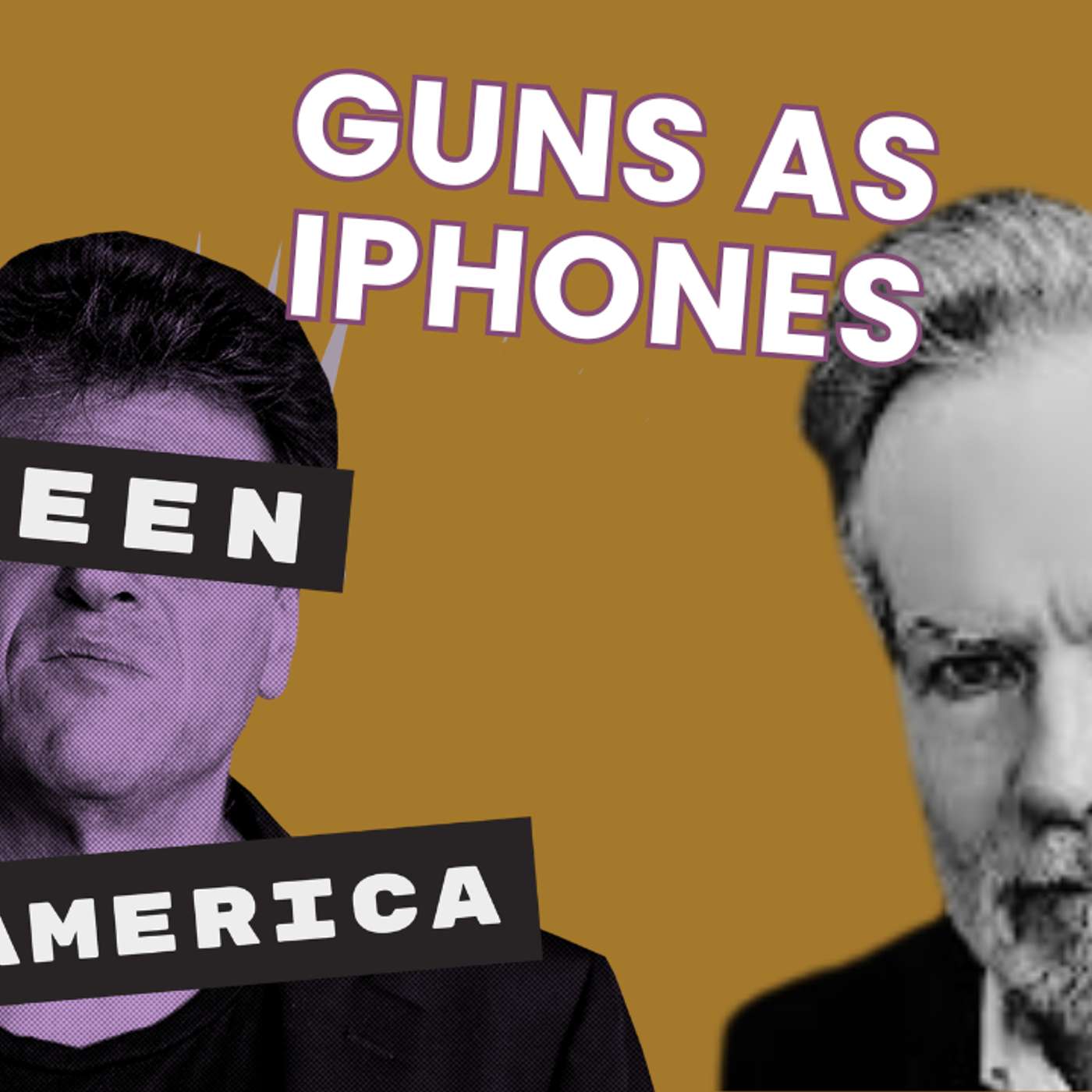


“You didn’t have to look someone in the eye while you extinguished their life, and you could do it from a distance.” — Mike McIntire on what the gun changed
Is there an American way of violence? Earlier this month, the film critic David Thomson blamed gory Hollywood movies, like Coppola’s Godfather, for glorifying it. Today’s guest has an even more brutal answer. According to Mike McIntire, the three-time Pulitzer Prize-winning New York Times investigative journalist, it’s the gun itself that can be blamed for the perpetual American plague of violence.
Yes, the gun did it. In his new book Ricochet: Guns, Greed, and the American Way of Violence, McIntire observes that every developed country has violent movies, violent video games, and significant mental illness. But what no other country has are schoolchildren, grocery shoppers, and churchgoers massacred on a regular basis. Up to forty thousand Americans die from guns every year — half of them suicides — and yet we treat these uniquely dangerous machines as if they were iPhones.
How did this catastrophe happen? McIntire’s answer focuses on the law as much as the culture. English common law imposed a duty to retreat in the event of conflict. Then, amid the centennial jingoism of 1876, an Indiana court declared that “retreat” was not “the tendency of the American mind.” A “true man,” explained an Ohio court, doesn’t fly from threats. Stand your ground was born — and with it, a legal redefinition of what it means to be an American.
And then there’s the NRA — founded in 1871, ironically, by a former New York Times correspondent as a marksmanship club, and radicalized a century later. Its greatest coup was reframing the Second Amendment from militia clause into individual right — a maneuver that Warren Burger, a Republican chief justice, called the “biggest fraud” ever perpetrated on the American people. And today even the NRA looks moderate compared to new online radical right-wing gun rights groups.
McIntire, a gun owner himself, doesn’t preach. Instead he describes his first murder scene as a young cop reporter — the dead man peacefully lying in the grass, one small round hole in the side of his head. Clean, efficient, clinical. Like an iPhone app. That’s the American way of violence. The gun did it. And will continue to do so until America retreats from its deadly love affair with the firearm.
Five Takeaways
• It’s the Gun Itself. Every developed country has violent movies, violent video games, mental illness, and toxic social media. What none of them has, McIntire argues, is a repetitive, constant problem of schoolchildren, grocery shoppers, and churchgoers being massacred. Up to forty thousand Americans a year die from guns — half of them suicides — and firearms account for three-quarters or more of all homicides. Yet America treats these uniquely dangerous things as ordinary consumer goods, bought, sold, marketed, and carried around like an iPhone or a wallet. Whatever role Hollywood plays — and McIntire takes David Thomson’s argument seriously — you have to start with the one thing that is actually different: the gun.
• A Daily Trickle of Bloodshed. When a plane crash kills two hundred people, there is a massive media and government response. When two hundred people die in scattered shootings across fifty states in the same period, there is a local news story, and then nothing. Gun violence in America has slipped into the category of acceptable losses — background noise. The conundrum for gun-safety advocates is how to sustain attention on a crisis that only becomes visible when the next Sandy Hook or Parkland arrives.
• No Duty to Retreat. English common law, imported into the colonies, required you to retreat from a public confrontation before resorting to lethal force. Amid the centennial fervor of 1876, American courts began overturning homicide convictions on new grounds: retreat, declared Indiana’s Supreme Court, was not “the tendency of the American mind,” and a “true man,” added an Ohio court, need not fly from an aggressor. The repeating rifle helped make the old duty obsolete — you cannot outrun a bullet — and stand your ground became canon. Every week, somewhere in America, the defense still succeeds.
• “The Biggest Fraud”: Rewriting the Second Amendment. The founders’ great fear was a standing army; the amendment preserved a well regulated militia — trained and disciplined, not unlimited. Beginning in the 1970s, the NRA underwrote sympathetic scholarship, law reviews, and court cases in a deliberate long game to recast the amendment as an individual right — moving guns from common law, where legislatures can regulate, into constitutional law, where they largely cannot. Warren Burger, the Republican former chief justice, called it the biggest fraud he had ever seen perpetrated on the American people. Now the Supreme Court’s “common use” test — found nowhere in the Constitution — means a weapon popular enough may be unbannable, with AR-15 bans next on the docket.
• The Death Star Eclipsed. McIntire’s cache of internal NRA documents traces the organization’s path from post-Civil War marksmanship club — cofounded by a former New York Times correspondent — to radicalized lobbying juggernaut, complete with pro-gun Democrats like John Dingell on its board. Today it has been outflanked by no-compromise groups like the Firearms Policy Coalition, which at any given moment is pushing more lawsuits against state gun laws than the NRA. Guns remain the third rail — Beto O’Rourke said “hell yes” to taking away AR-15s and has not held office since. The irony in McIntire’s prescription: gun-safety advocates should copy the NRA’s own generation-long legal strategy.
About the Guest
Mike McIntire is an investigative journalist at The New York Times and a member of three Pulitzer Prize-winning reporting teams, whose work has exposed everything from Russian election interference to the hidden financial incentives of policing. He is the author of Champions Way: Football, Florida, and the Lost Soul of College Sports. He lives in Ridgefield, Connecticut. His new book is Ricochet: Guns, Greed, and the American Way of Violence (One Signal/Atria, July 2026).
References:
• Ricochet: Guns, Greed, and the American Way of Violence by Mike McIntire (One Signal/Atria, July 2026). Jane Mayer: “McIntire is both a superb reporter and storyteller.”
• A Sudden Flicker of Light: A Revisionist History of Movies by David Thomson — the recent Keen On guest whose argument about Hollywood and American violence opens the conversation.
• The American Way of Death by Jessica Mitford — the classic anatomy of the American funeral business that lends this episode its central question.
00:31 - Introduction: is there an American way of violence?
02:24 - Movies, video games, mental health — or the gun itself?
04:56 - Beyond Parkland and Sandy Hook
05:31 - A daily trickle of bloodshed: the plane crash analogy
06:53 - Jessica Mitford and the American way of death
07:35 - Stand your ground vs the duty to retreat
10:48 - Culture, colonies, and the law
11:22 - 1876: jingoism codified — the "true man" doctrine
13:01 - Did the Civil War flood America with guns?
13:58 - The repeating rifle changes everything
16:29 - What makes Ricochet different
16:54 - A gun owner with three Pulitzers
17:21 - The cop reporter and the body in the grass
19:33 - The NRA: greed or ideology?
20:07 - Internal documents: the path to radicalization
21:17 - From marksmanship to militancy: Dingell and the seventies
22:48 - Is the Second Amendment argument credible?
23:15 - Standing armies and well regulated militias
26:01 - The AR-15 and the common use test
28:38 - Groups to the right of the NRA
29:12 - The Firearms Policy Coalition and "no compromise"
31:10 - The death star eclipsed
31:34 - Cage matches, gun influencers, and troubled young men
32:45 - Lessons from Prohibition?
34:13 - Americans don’t like bans
36:07 - The NRA as a model for its enemies
36:54 - The abortion parallel: the long game
37:38 - The third rail: Beto O’Rourke’s
00:00:31 Andrew Keen: Hello, everybody. Is there an American way of violence? Early this month, early in July, we had the great film critic David Thomson on the show, Thomson without the p, his new book, A Sudden Flicker of Light: A Revisionist History of Movies is quite self-critical. He acknowledges that maybe he was wrong about the movies, that they brought out America's most violent side, the model he uses, or the exhibit A for his argument in, A Sudden Flicker of Light is The Godfather, which in his view glorifies violence, although it's not just The Godfather. And he traces a lot of this cult of violence to the raised fist photographs of Donald Trump, his famous “fight, fight” photographs, in response after he was shot at, back in 2024. Anyway, this idea of an American way of violence is also the subject of our conversation today with, New York Times, investigative journalist. He's won a Pulitzer Prize three times, three different teams. He has a new book out on gun culture. It's called Ricochet: Guns, Greed, and the American Way of Violence. Mike McIntire. The book is out this week. Mac—Mike McIntire is joining us from his home in Ridgefield, Connecticut. Mike, before we start, talking about the arguments that you have in Ricochet, do you think that David Thomson has a point? I'm not sure if you've had a chance to look at his new book, A Sudden Flicker of Light. He thinks I mean, he doesn't blame everything on Hollywood. He's a much more sophisticated writer than that. But he is deeply fearful of the way in which Hollywood has glorified violence in America.
00:02:24 Mike McIntire: Well, thanks for having me, Andrew. It's an interesting debate. I mean, what is at the roots of our, in this particular case, our gun violence problem, which is a subject of my book. And there's plenty of room for debate about, you know, the role of guns themselves or, you know, mental health, violent video games, movies, toxic social media. One of the things that I get at in my book is that, you know, if you look around the developed world, almost every country has some degree of the same problem. Right? So every country has this issue with crime, with—
00:02:59 Andrew Keen: Gun violence. Had a mass shooting a few years ago. So if the Norwegians can do it, anyone can.
00:03:05 Mike McIntire: Yeah. And all of these issues that other countries might have, you know, that's similar to ours in terms of, violent movies, violent video games, mental health issues, the one thing they don't have, Ricky [unclear], even the exception of your example you just cited, notwithstanding, is a repetitive, constant problem with school children, grocery shoppers, churchgoers being massacred on a regular basis. There are certainly outliers that happen occasionally, but the United States is far and away, you know, way out in front on that kind of ignominious, mile marker. But, you know and so I think that raises a question as to what is it that's different about the United States and its relationship to violence than compared to other countries. And one of the things certainly is the easy availability, prevalence, and at times, arguably, your irresponsible marketing of guns. You just don't have that outside the United States. And it helps you know, I think once you understand that, it kinda helps explain why we have up to forty thousand people a year, half of them suicides, dying from guns, and why, you know, guns are responsible for seventy five, eighty percent of all homicides. So these are, you know, uniquely dangerous things, and yet we kind of treat them in the United States almost as any other consumer good to be bought and sold and marketed and kept around a house or on your person, almost like an iPhone or a wallet. So these are things which I think contribute to America's kind of unique relationship to violence in a way that other countries don't experience it. And so I think the issue of Hollywood and video games and mental health are all certainly valid points of debate. But I think you have to get at this one issue, which is different from what other countries experience, and it really is the gun itself.
00:04:56 Andrew Keen: The gun itself. I mean, we all know the terrible tragedies at Sandy Hook and Parkland. Every year or two, there seems to be a new kind of outrage. But, Mike, you mentioned, the numbers. Perhaps you might tell us, should we be more concerned with individual deaths, suicides, domestic flare-ups, more than these headline-making events like Parkland and Sandy Hook, which are obviously catastrophic for those involved, but may not tell the whole story?
00:05:31 Mike McIntire: I think that's a really good point. It is something I do discuss in the book. There is kind of a daily trickle of bloodshed, right, that I think doesn't get the attention that these terrible, you know, one-time tragedies do. And there's an analogy here, which I think is useful. I mean, if you have a plane crash, God forbid, in which two hundred people die, you're gonna have a massive media and government response. But when two hundred people die in, you know, random isolated shootings in 50 states in a similar period of time, you just don't get the same kind of attention. There may be a local news story, and then that's it. So I think that, yeah, there is a problem where in the United States, gun violence has almost come to be seen as in, like, the, in the category of acceptable losses, you know, which is sort of like background noise. And how you get at that problem is really kind of a conundrum. I mean, gun safety advocates have been wrestling with this for years, trying to figure out, you know, how do you get sustained attention to this crisis, and not just simply, you know, wait for the next mass shooting to happen until you and then try to pass a law or, you know, get some people to pay attention. I don't know what the answer is to that. It's really you know, again, it's kinda one of these things that is somewhat unique to American culture. We've just come to sort of accept this.
00:06:53 Andrew Keen: Yeah. You talk about a daily trickle of bloodshed. That might have also been the subtitle of the book. The actual subtitle is Guns, Greed, and the American Way of Violence. Is there an American way of violence, though, Mike? We've—one of the classic books about America was Jessica for—Jessica Mitford's wonderful book, The American Way of Death, about the funeral business in America. Do people shoot and kill each other differently in America, or is it just the guns, the prevalence of guns, the ubiquity of guns, which accounts for what you call this daily trickle of bloodshed?
00:07:35 Mike McIntire: I think there are a lot of unique aspects to the American relationship with violence. And I wanna say, first of all, this is not intended to be some sort of screed about America being a violent country. I mean, every country has its own history of violence to one degree or another. And it's unique to that country and it is with America as well. I think the best way to answer that question is just point to one particular legal concept, which has taken root in the United States, and you don't find it elsewhere around the world oftentimes. It's called the stand your ground. And, you know, basically, this is that the concept is that you have a right to defend yourself with lethal force against somebody who is accosting you in public. And that might sound reasonable except old English common law, which was imported into the US colonies, dictated that you have a duty to retreat before you can resort to lethal force in a confrontation with someone in public. And in practical terms, what that meant was if you, you know, were accosted by somebody on the sidewalk and you got into a heated argument and that person was unarmed, but maybe they balled their fist and started approaching you—before you could pull out your gun and shoot them dead, you had an obligation to just try to remove yourself from the scene and avoid, you know, a homicide. That was the governing concept up until the late nineteenth century when you started seeing in American courts around the country, cases of homicides being overturned because judges were basically declaring that, yeah, there was a duty to retreat. That's how they did it in England. That's not how we do it in America. You have no obligation to flee when confronted by an aggressor. And that over time became basically a canon of, you know, law in the United States, which is really kind of informs the way that we conduct ourselves in public today. There's every day of the week or every—at least every week around the country, there are cases in which someone kills somebody or shoots somebody, in an argument. There's some sort of dispute in public, and they make their claim that it was, you know, a case of stand your ground. They didn't have to try to remove themselves from the situation. And oftentimes, they succeed with that defense. This is really kind of a radical change historically in how, you know, in public conduct when it came to arguing self-defense. And that is not something you find in many other countries around the world. It just isn't—it's kind of unique to the United States. I think in many ways, it does kind of give some insight into the American mind, if you will. That actually was a reference in one of these court decisions I'm talking about from the late eighteen hundreds. There was a supreme court in Indiana which said it was not really a tendency of the American mind to retreat in the face of aggression. Another court in Ohio had a similar ruling and said that a real man, a true man doesn't have to fly in the face of, you know, threats. So, you know, you can sort of see here a little bit of—
00:10:43 Andrew Keen: You know, flair—
00:10:44 Mike McIntire: what—how we're defining the American character.
00:10:48 Andrew Keen: What about the cultural element, Mike? It's easy to retreat into stereotypes and cliches about the colonial quality of American lives, settler community, cowboys, obviously, relations with the native peoples who were mostly wiped out intentionally or otherwise, and, of course, slavery. How much of it the this argument about standing your ground is a cultural one? I mean, you can always fall back on the law, but law itself in many ways is a product of culture.
00:11:22 Mike McIntire: I think it really did spring from, a deeper root cause. First of all, these court cases I'm referring to in the late eighteen hundreds, they I think I find it interesting that they really coincided literally with the celebration of the centennial of the country, 1876. And so it was just kind of almost like jingoistic fervor in the air about what it meant to be an American. And I think these court cases were sort of reflecting and codifying, you know, what was happening out in the land. And you raised some interesting points about you mentioned slavery. You mentioned, you know, the native peoples in America. You do have to kinda take these things into account when you're fully, you know, addressing the American experience with violence. Right? So, look, if you know, there are two sides to this. You—we couldn't have freed ourselves from the tyranny of King George without a violent revolution. We couldn't have ended the institution of slavery without a violent civil war. But neither could we have reached the point to rebel against the crown if we hadn't first subjugated a continent, and often violently. And neither could we have freed the slaves if we hadn't first embraced that violent institution of slavery for centuries. So I think acknowledging these things and kinda like, yeah, recognizing there are two sides to this and our complicated relationship with violence is important when you look today and try to understand why it is that gun company marketing, for instance, is often wrapped up in images of heroism and patriotism and what it means to be a man. And, you know, all of these things are kind of informed by our long complicated relationship with history, and guns are integral to all of that.
00:13:01 Andrew Keen: Yeah. I wanna come to that. I mean, obviously, it's the core of the book and of people's interest and concern with gun culture. But you mentioned the nineteenth century. I know you introduced some interesting characters, some of whom I'd never heard of, St. George Tucker, for example, late eighteenth, early nineteenth century American lawyer who was very instrumental in gun rights. You, write about guys like Harlon Carter, twentieth century figure, right up to John Dingell, a Massachusetts—a Michigan Democrat. But I wonder whether the Civil War, given that it was, I think, the bloodiest conflict in human history by the middle, at that point in the middle of the nineteenth century [ed.: the concurrent Taiping Rebellion was deadlier], did the Civil War contribute to the fact that so many people owned guns, especially given the numbers killed and maimed?
00:13:58 Mike McIntire: I think that what you see after any major conflict, the Civil War certainly qualifies and so does more recently, you know, World War two and the Korean War, is you do see the civilian populace being flooded by leftover guns, basically. And that did happen after the Civil War. Guns flooded the countryside. And you saw at the same time other things happening. You had the federal government attempting to try to extend promised civil rights to freed slaves in the South who were continuing to be terrorized by armed, you know, militias. And at the same time, you had the expansion out toward the western part of the continent, in which oftentimes there was just a whole degree of lawlessness and law enforcement was almost absent. So people were sort of left on their own to defend themselves, on the frontier. All these things were kind of happening at the same time while guns were really kind of, you know, really becoming much more prevalent in American society. And not only that, the types of guns were changing. So right around the time of the Civil War, you had the repeating rifle being introduced, which greatly changed the whole dynamics of, you know, using guns, in a conflict. No longer did you have to, you know, fumble around with, a musket and, you know, putting ball and paper and gunpowder into a barrel. You had the ability to shoot, you know, multiple times without reloading. And that was a pretty significant technological development, which, you know, actually, you know, contributed in the following years after the Civil War in changing some of the legal landscape around stand your ground that I was talking about. Because, you know, if you think about this for a minute, the idea of requiring people to retreat from an aggressor would make sense if that person maybe was armed only with their fists or maybe even a knife. You might be able to just run away from that person. But if they have a gun, you can't. You know, they could shoot you in the back while you're attempting to flee. So there were courts that actually were saying that, you know, the introduction of the firearm was basically making the duty to retreat obsolete. And this was happening after the Civil War. And so, you know, the point being that, yes, I think that conflicts often has a residual impact on society that takes the form of just more firearms going into circulation.
00:16:29 Andrew Keen: Yours is certainly not, Mike, the first book written on American love affair, if that's the right way of putting it, with guns, or the last, tragically, because we know that in the future there'll be more catastrophes and more terrible tragedies on this front. What are you saying or doing in Ricochet that's different from other books on, America's relationship with guns and violence?
00:16:54 Mike McIntire: So what I try to do is couple of things. One of them is to kinda bring my own experience to bear. And, you know, I'm a gun owner myself, and I say that not to pretend I'm an expert. But I just make that point because I think a lot of, you know, gun rights proponents might automatically think a New York Times journalist is gonna come at this with an anti-gun perspective or something, and then that's not rumble [unclear].
00:17:15 Andrew Keen: And you got those three Pulitzes. I bet the more Pulitzes you have, Mike, the less chance there is of you owning a gun.
00:17:21 Mike McIntire: Yeah. The more right. The more suspect I become, guilty as charged. So, you know, I but beyond that, I mean, I've spent much of my forty years as a newspaper reporter writing at one time or another about these issues, about gun violence and gun rights. And since my earliest days as a cop reporter on my first daily newspaper job, I used to take a scanner with me when I go out and I could stay abreast of police calls that might come in. I'd only been on the job maybe a couple of weeks, and I heard a call of, you know, a body on the side of the road. It happened to be nearby. I was out in my car, so I took a drive over there. And sure enough, there was a body of a dead black man lying in the grass. And I was actually the first one there. The police hadn't even shown up yet. So for me, for a while, it was just the two of us. And I'm standing there looking at him with my notebook, and he looked almost peaceful, like he could have been taking a nap, except he had a small round bullet hole in the side of his head. And, pretty soon the cops showed up and kind of shooed me out of there. And it wasn't even a big story in the end, which I think says a lot about the issues we're talking about. It was not uncommon. I didn't have to write much about it, sadly. But what it did leave me with is, you know, I'd always thought the first time I'd come across a murder scene that it would be a violent, bloody, gory affair. And this was so clean and efficient and almost clinical, and that was because of the gun. And it made me realize for the first time how much the firearm itself had kinda changed the size [as spoken] of aggression. It made it so much easier and simpler to kill. You didn't have to look someone in the eye while you extinguished their life, and you could do it from a distance. And so once I understood that, it just really kinda stayed with me and kind of that's been something that's kind of informed my thinking about gun violence all these years, and that is something I wanted to bring to bear when I wrote the book is just, you know, my own thoughts on this, my own experience as a journalist covering this. And so I think that's probably the I think the biggest aspect of the book, which I'd like to think kinda contributes to people's understanding of the issues.
00:19:33 Andrew Keen: We've done books before or conversations with authors who have focused on the NRA, National Rifle Association. What is his name? Wayne LaPierre. I think we've even done a whole show on him. Someone wrote a biography of him a few years ago. Is the NRA central in your narrative, or do you focus more in terms of this subtitle, guns, greed, and the American way of violence? I assume the greed refers to the manufacturers of guns, as much, if not more than organizations like the NRA?
00:20:07 Mike McIntire: It's a little bit of both, to be honest. The NRA certainly at various times in their recent history has had a financial motivation for trying to get more people involved in gun ownership. But I think with them primarily, it's been more political and ideological. And it is a, an important part of the story. It's not the story of guns in America, but the radicalization of the National Rifle Association is very important to understanding where we are now. And so I do dedicate some time in the book to discoveries that I made as a investigative reporter, which were, you know, basically a cache of internal documents from the NRA spanning decades that, for the first time, really kind of outlined their path to radicalization. The NRA started after the Civil War, cofounded actually by a former New York Times correspondent, as a civilian marksmanship group. You know, it was intended to kind of help people get better at
00:21:07 Andrew Keen: Yeah. Founded in 1871 to advance rifle marksmanship. So, it's changed dramatically over the last hundred and fifty years, to put it mildly.
00:21:17 Mike McIntire: It certainly has. And most of that change was really over the last fifty or sixty years. So from much of its existence, it was dedicated mostly to issues like conservation, hunting, sports shooting. But beginning of the seventies, it really changed. And, a lot of that was due to some of the characters that you just mentioned a few minutes ago, John Dingell, for one, congressman from Michigan who was also on the board of directors of the National Rifle Association.
00:21:41 Andrew Keen: And let's remind ourselves that Dingell is or was a Democrat, so it's not just the Republican Party.
00:21:48 Mike McIntire: Yes. That's right. I mean, there was a time, and this started to fade out by the time you reached the eighties. But if you go back as recently as the nineteen sixties in the United States, it was not uncommon to have, you know, very pro-gun Democrats in Congress. John Dingell probably was the most the archetype of that. Today, it's much more partisan. You don't get the same kind of bipartisan interest in gun ownership that you did back then. But, you know, the yes. The NRA really, really changed its stripes and, dedicated itself to just completely not just opposing gun laws, not playing whack-a-mole every time an attempted law was passed, but trying to win the bigger argument, the long-term campaign to reframe how we view the Second Amendment to the Constitution, which is the one dedicating the ability to bear, you know, bear arms, and eventually, you know, win Supreme Court rulings that kind of cemented this new view of what the Second Amendment was.
00:22:48 Andrew Keen: Is that a credible argument, Mike, the Second Amendment argument?
00:22:53 Mike McIntire: That an individual right is guaranteed in the Second Amendment?
00:22:58 Andrew Keen: Well, the as you say, the NRA uses it. Many advocates of gun rights suggest that it's written into the Constitution. When I asked you about this American way of violence, you didn't talk about the Second Amendment. You didn't mention it.
00:23:15 Mike McIntire: Well, so let's talk about the Second Amendment a little bit. You know, if you go back to the founding of the United States, the big concern, the big bugaboo for the founders was the fear of a standing army. You know, we're at—right? We didn't want a professional standing army that could be used, by a despotic ruler against the people. Because there was no model in the world stage to look to at that time of a professional army being answerable pulled [unclear] to the people through their elected representatives didn't exist. So the idea was to maintain the ability of people, American citizens, to come together collectively in the form of a well regulated militia in defense of the state when necessary. And in this case, well regulated means trained and disciplined, not necessarily limited. And I think it's pretty clear from the wording of it that was the intent. Now this is not to suggest that the founders didn't believe that people didn't have a right to have guns for other purposes. They just didn't view that as an existential issue, the same way they did with a fear of a standing army. And so the Bill of Rights was intended to safeguard against these existential threats. The problem with interpreting it the way it's been reinterpreted today is that if you think of the Second Amendment as not just preserving the ability to come together as a militia, but guaranteeing the right of anybody and any individual citizen to bear arms for any lawful purpose, not necessarily for militia, but for sport shooting or self-defense. If that's how you view the Second Amendment, then it becomes constitutional law as opposed to common law. And constitutional rights are very, very difficult to, as they should be, to regulate legislatively. If something's governed by common law, then legislators and Congress, law state, you know, lawmakers can perhaps pass, restrictions or limits that they think are acceptable on these things. This attempt to the successful attempt to reframe our thinking of the Second Amendment and remove it from just a militia-centric view and instead say that it preserves a individual right to have guns is central to why it's so difficult today to regulate firearms in the United States. And just to give you one quick example of how controversial this is, a former chief justice of the Supreme Court, Warren Burger, who's a Republican, had once commented that this attempt to reframe our understanding of Second Amendment, in his words, was the biggest fraud he'd ever seen perpetrated on the American people. So that's the former Supreme Court justice saying this, not me. And I think that gives you some idea of how, you know, controversial this topic has been and continues to be.
00:26:01 Andrew Keen: Yeah. And it doesn't seem as if much has changed. Earlier this month, you had a piece, on a Supreme Court case on AR-15s, which could hinge, to borrow from the title of the Times piece, could hinge on their common use. You talk about the AR-15 as making it not just dangerous, but unusual. Has anything changed on the legal front? I mean, this court, of course, is extremely conservative. But is there any evidence that the court might be rethinking some of these gun laws? Or are things becoming even more radical, Mike?
00:26:41 Mike McIntire: Really good question. It's always hard to kind of read the tea leaves with, you know, any supreme court. I think in this case, you'd probably have to assume that they don't have a big reason to reverse themselves on some of the recent opinions they've made that greatly expanded gun rights in the United States. This particular issue that you're citing from the story I wrote recently, it was about, yes, it's about bans of assault weapons around the country. The court's gonna be taking this up for the first time. And I think it's very likely that they will probably overturn these bans. But interestingly, if they do, it probably won't be based on any kind of debate around public safety. Instead, it'll be hinge on—it'll hinge on this test that you referred to called the common use test. And this is one of these tests that the court has developed, which you can't find it in the Constitution, certainly not in the Second Amendment. And yet they've come up with a couple of these and some of their pro-gun rights decisions, which are intended to try to help courts navigate questions of whether or not a certain type of gun should be allowed to have and where he can use it and when. In this case, we're talking about AR-15s. And so the common use test, it basically says that if a type of gun is commonly used, if a lot of people have it, if it's popular, then it's protected by the Second Amendment and you can't ban it. I think a lot of average Americans would be surprised to find out that this is sort of how gun policy is being shaped as opposed to facts on the ground. And I think it gives a little bit of insight into so much of the criticism of some of the pro-gun rights rulings that have come down from the Supreme Court and that they kind of create these formulas that are kind of hard to find any kind of historical, constitutional, support for them.
00:28:38 Andrew Keen: Mike, in our conversations on the NRA over the last few years, one or two of our guests have suggested that, ironically enough now, there are groups to the right of the NRA. The NRA now is almost a centrist organization. That's not a defense of the NRA, but there are more and more extreme gun rights advocates, who, who make the NRA look mainstream and establishment. Like, is there any truth to that?
00:29:12 Mike McIntire: Yes. Absolutely. There's been a, you know, development of newer groups that are arguably more aggressive, than the NRA. In fact, there's one called the Firearms Policy Coalition, which actually, is most of the time is responsible at any given moment for pushing more lawsuits against, state gun laws than the NRA has going. And they've actually been probably more successful than some of the recent, you know, NRA, legal, attempts to change things. So there are groups like that and I think that reflects a little bit of, you know, some of the things we're touching on earlier is where gun culture has been going in America. It's been kind of gradually becoming a little more extreme with the idea that, you know, there's still a never-ending expansion of rights, no compromise. That's actually the term—the motto of one group, you know, the no compromise gun group. And I, you know, I think that the NRA certainly blazed this path, for groups like this back in its heyday, but it definitely has been eclipsed in many ways. Some of it of its own doing, it has some internal scandals, has been—had some investigations that went on. I think some of that could be the result of often happens when any group kind of becomes too big and comfortable, and I think that could have been you know, some of that was self-inflicted. But I think that, you know, the NRA was the death star of lobbying in Washington for many, many decades.
00:30:48 Andrew Keen: To use a term, to borrow a term. Yeah. Right.
00:30:52 Mike McIntire: But I think today, it's not the major actor that we're seeing. These groups like the Firearms Policy Coalition are the ones who are filing cases that are getting elevated to the US Supreme Court. They're filing amicus briefs, in support of cases, and they're the most active and probably the more successful.
00:31:10 Andrew Keen: You're also the author, of a book, Champions Way: Football, Florida, and the Lost Soul of College Sports, which did rather well. How much of this, so to speak, has split has bled into the broader culture of sports and the way in which violence seems to be a central feature of games like American football?
00:31:34 Mike McIntire: Well, you don't have to look very far to see, you know, the what the role of violence is in culture. We just had, you know, basically a ultimate fighting cage match on the you know, in front of the White House as part of our two hundred fiftieth anniversary celebration. One of the things I do get into in the book has been, you know, the role of, gun industry marketing and sales, not just in trying to make money for themselves, but also sort of shaping the culture around guns. And you do see, you know, a lot of, like, hyper-masculine influencers, gun influencers online on TikTok and Instagram and YouTube. And they're really kind of promoting, an image of guns that I think resonates with a certain segment of the population. And I think that segment of the population happens to include a demographic, you know, troubled young men that are often at the root of so much of the gun violence problem in the United States. So I think it is all kind of part and parcel of a larger cultural phenomenon, but when you inject guns into it, it kind of makes it just inherently more dangerous.
00:32:45 Andrew Keen: Right. And, of course, that's another theme that we've had many shows about from people like Richard Reeves. Finally, Mike, I mean, you're clearly I mean, you're an investigative journalist, so you don't have an agenda. But, clearly, you're no great fan of gun culture. You don't think it's a good thing. You don't think that America has benefited from all these guns, whether it's the interest groups or the armament companies that are supplying these guns. In terms of your history of all this, what models can we use from American resistance to guns? I wonder whether maybe even the Prohibition movement could provide some lessons for how to address this. It wasn't successful, but Prohibition was also driven by dislike of violence, often driven by women. Are there examples in the past of popular, perhaps even populist movements, which critics of this gun culture could use to try to mobilize American sentiment against what you're describing in Ricochet?
00:33:58 Mike McIntire: Well, first, I just wanna point out that, you know, if you're we're talking if you were to ask a gun rights advocate in the United States whether they think that's necessary, of course, they would say no. So there are two sides to this.
00:34:08 Andrew Keen: But you do think it's necessary. You wouldn't be against this, I assume.
00:34:13 Mike McIntire: Well, I mean so as a journalist, I mean, I do have to kinda maintain in terms of, you know, how I view these. I will say that I think it's probably self-evident. I this is what I found. Right? And I'm drawing upon forty years of observation and experience as a journalist and as a gun owner myself, to basically present my findings, if you will. And people can take away from that what they want from the book. But I think to your point about, you know, Prohibition and other examples, one thing I think is important to remember about Americans, they tend to not like to ban things. And, you know, I mean, Prohibition, of course, you know, was repealed, after that failure.
00:34:54 Andrew Keen: It wasn't a success, but it was an interesting movement on lots of fronts.
00:34:58 Mike McIntire: Oh, absolutely. Because, I mean, it was driven by genuine serious concerns about the debilitating effects of alcohol, not just on the workplace, but in and in public life, but in the home. You know? And as you point out, women were, you know, often the target of domestic violence that resulted from it. So, there are certainly, you know, compelling reasons why it was put into effect in the first place. But in the end, you know, majority of Americans voted to get rid of it. So I think that we saw that similarly with a national ban on assault weapons in the US. That's only happened once. Happened in 1994, and it had a ten-year expiration date. The hope and the—and objective among gun rights or gun safety advocates at the time was it would be renewed in 2004, but it wasn't. It was abandoned, and it never did return. So we've kind of, you know, seen this movie before, if you will. I mean, there's been attempts to kind of, like, just use the—
00:36:00 Andrew Keen: Yeah. Well, we've seen that. I mean, that goes back to David Thomson. We've seen many of these kinds of movies before. That's the problem.
00:36:07 Mike McIntire: Well, that's certainly true. I mean, I one of the things I do talk about in the book in terms of if you were a gun safety advocate looking for some plan to try to change the landscape around, you know, gun culture and the legal landscape around guns. I think, ironically, a useful model is the NRA itself. You know, they launched a very successful, but very, you know, deliberate detail long-term strategy beginning in the nineteen seventies to reframe our legal understanding of the Second Amendment, which is so crucial to all of this. And they did that by, you know, underwriting and supporting, sympathetic scholarship, court cases, law reviews, all with a goal of getting cases eventually elevated to the Supreme Court and law—
00:36:54 Andrew Keen: It's rather like the abortion struggle too or the anti-abortion struggle.
00:36:58 Mike McIntire: You can—that's absolutely right. It's a good—because, you know, you can find a number of, you know, issues that really kind of bubbled up at the dawn of the conservative legal movement and the Reagan era in the United States, and which all had the same sort of MO. Right? The same goal was a it was a long-term objective of, you know, changing what had seemed like a settled view of something, whether that's abortion, whether it's campaign finance law, whether it's the Second Amendment. And there's no reason why, you know, people who wanted to do the opposite couldn't try to mount the same type of long-term project, but it would probably take a generation for it to succeed.
00:37:38 Andrew Keen: Is there a third rail, though, in politics when it comes to gun rights, Mike? I mean, the Parkland High School [sic — Marjory Stoneman Douglas High School] shooting spawned a series of young activists, survivors of that particular outrage. You don't read that much about it anymore. For Democrats, for example, running in 2028, would it be dangerous for a Gavin Newsom or another of the leading candidates, Pete Buttigieg, to address the issue of guns? Why is it such a again, to borrow some language from the gun industry, why is it so self-destructive?
00:38:18 Mike McIntire: It definitely is a third rail as you say. There have been examples of politicians in the United States who have attempted to take on this issue. You know, one was Beto O'Rourke, from Texas. He once famously said, you know, hell yes. We're gonna take away your AR-15s, when he was running for president, and he hasn't held elective office since. You know, there've been other politicians who've tried to kinda pursue this line with varying degrees of success. I think the one lesson you can take away from this is that the gun lobby itself has been very successful in, I think, advancing a climate of fear around this. And so you get a lot of gun rights owners—gun rights proponents and gun owners who, you know, sort of buy the line that the government is the enemy of freedom. And if you, you know, were to elect certain people, they're gonna come take your guns away. And the gun lobby has been very, very adept to kind of, you know, I think promoting this view. And I think it's put a lot of fear not only into gun owners, but also politicians who might try to do things differently.
00:39:27 Andrew Keen: Well, there you have it. That's why it's such an important subject, and that's why I think it's such good news that a, an investigative journalist with the credibility and experience of Mike McIntire, the winner already of three Pulitzer Prizes, has turned his gaze to this subject. The book came out yesterday. Ricochet: Guns, Greed, and the American Way of Violence. I'm not sure I wanna congratulate you, Mike, on the book, or maybe it's the wrong word to use. But thank you so much for appearing on the show and for doing the legwork, probably very depressing in many ways, on this horribly important subject. Thank you so much.
00:40:08 Mike McIntire: Well, thank you for having me. It's been great.