Thank You for Your Service? Saira Mohamed on What a Country Owes Its Soldiers
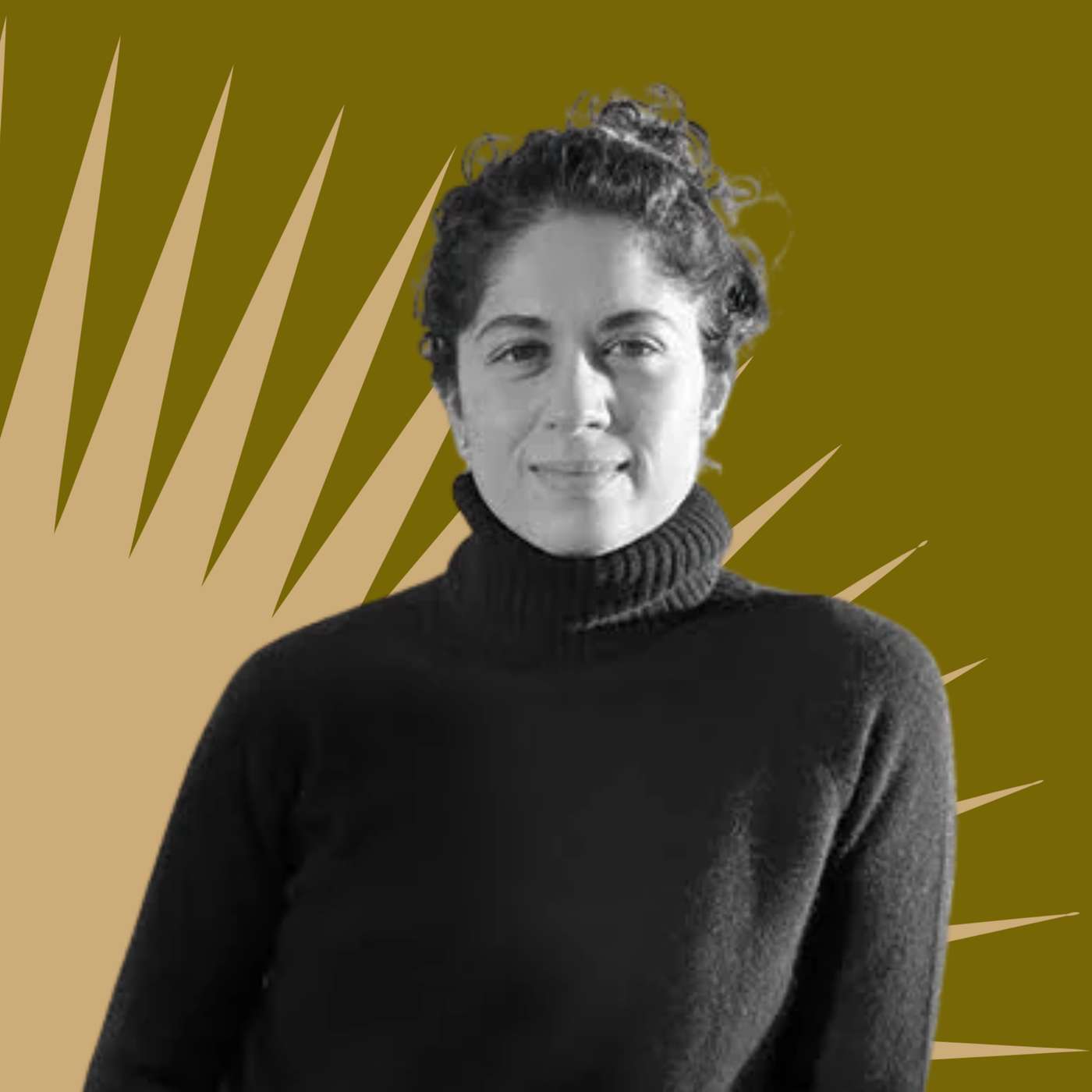


“Soldiers don’t stop being people when they put on a uniform.” — Saira Mohamed
INTRO
America loves its soldiers. Or at least we say we do. “Thank you for your service” has become a national litany, mumbled equally mindlessly in airports and at sports stadiums. But what, exactly, are we thanking our soldiers for? And what do we actually owe them?
Not much. At least according to the law. Berkeley law professor Saira Mohamed’s new book, What a Country Owes Its Soldiers, is a devastating account of how America really treats its troops. Service members can’t sue the government when its negligence maims or kills them. They volunteer to join, but they can’t volunteer to leave, not even when the war is illegal. And the commanders who order them to commit crimes are almost never charged with abusing them.
Thank you for your service. Do what we say. And don’t complain.
Mohamed’s answer is refreshingly simple, especially from a law professor. Treat soldiers as people. Not as Hollywood heroes (or villains). And certainly not as instruments of a Department of War that fires its lawyers as roadblocks and describes the military’s official rules of engagement as “stupid.”
Treat them as human beings, owed the same basic protection as the rest of us. Because, Mohamed reminds us, the damage done by ordering them to do terrible things doesn’t stay on the battlefield. So what a country owes its soldiers is also what it owes itself.
FURTHER READING
• What a Country Owes Its Soldiers (Harvard University Press), by Saira Mohamed.
• Saira Mohamed, faculty profile, Berkeley Law.
• NAZA (2026), documentary directed by Yuval Abraham and Rachel Szor.
• Nuremberg and Vietnam: An American Tragedy (1970), by Telford Taylor.
• KEEN ON AMERICA episodes cited: Jasper Craven on West Point, Joel Christensen on Christopher Nolan’s Odyssey, and Ruben Gallego on Lima Company in Iraq.
ABOUT THE GUEST
Saira Mohamed is the Agnes Roddy Robb Chair in Jurisprudence, Ethics, and Social Responsibility and Professor of Law at UC Berkeley, where she works on international law, criminal law and human rights. She previously served as senior advisor in the Office of the U.S. Special Envoy for Sudan and as an attorney-adviser in the State Department’s Office of the Legal Adviser, and was vice president of the American Society of International Law. What a Country Owes Its Soldiers is published by Harvard University Press.
ABOUT KEEN ON AMERICA
Nobody asks more awkward questions than the Anglo-American writer and filmmaker Andrew Keen. With 3,000 episodes since the show launched on TechCrunch in 2010, Keen On America is a daily conversation about the ideas, books and arguments shaping the United States. New episodes every day.
LIVE IN SAN FRANCISCO: How to See America. Who Stole America’s Pride? Arlie Russell Hochschild in conversation with Andrew Keen, Manny’s, December 8. Tickets: https://www.eventbrite.com/e/how-to-see-america-who-stole-americas-pride-tickets-2003996604791
00:00 - Intro
00:31 - AK: Vance, the midterms, and the forgotten soldiers
01:47 - A basic obligation of protection
02:30 - AK: an American book?
02:57 - US law and the soldier as instrument
04:53 - AK: reverence and neglect
05:38 - The last twenty-five years, and a warrior caste
08:21 - AK: class, gender and race
08:38 - Not an army of the poor
10:05 - AK: the administration’s war on the military hierarchy
10:34 - Purging career officers, women, minorities and lawyers
11:25 - AK: idealizing soldiers, disrespecting them
11:46 - Hegseth, warriors and defenders
13:29 - AK: Stephen Kinzer, war films and The Odyssey
14:57 - Moral injury, from Odysseus to the war on terror
17:28 - AK: Colin Powell, and Mohamed’s background
18:19 - Studying war as a lawyer
19:24 - AK: a progressive shift on the military?
19:53 - The draft, the all-volunteer force, and who can leave
22:52 - AK: national service?
23:16 - Skeptical of the draft; brain injuries and government responsibility
25:31 - AK: Stephen Miller and a military drama?
26:01 - Troops at the polls, and the damage to the oath
27:57 - AK: NAZA and Israel’s officers
28:36 - Telford Taylor and the UCMJ’s maltreatment article
32:09 - AK: AI, Project Maven and the law
33:10 - Superior responsibility, drones and moral injury
36:52 - AK: a president with military experience?
37:46 - War is everyone’s responsibility
39:20 - Closing
00:00:31 Andrew Keen: Hello, everybody. In post-midterm America, it seems as if everyone has become anti-war, even JD Vance who announced that the Republicans only lost the midterms because of the war. But when it comes to the war, people are thinking of its impact, this current war at least, in Iran, on American consumers, the price of gas, the price of mortgages, the cost of living. Very few people are talking about American soldiers, especially people on the right like JD Vance. And the question, of course, is how should a nation treat its military, particularly when that military is involved in endless wars? That's the subject of our conversation today with our guest, Saira Mohamed. She teaches law. She's a very distinguished legal theorist at UC Berkeley. She's the Agnes Roddy Robb Chair in Jurisprudence, Ethics, and Social Responsibility, quite a title, and she's joining us from Berkeley today. Saira, congratulations on the new book. It came out a few days ago. What does a country owe its soldiers?
00:01:47 Saira Mohamed: Thanks for having me here today, Andrew. What a country owes its soldiers is a basic obligation of protection, just like the country owes to every other person. So this sounds pretty simple, and yet it seems to be very hard for our country to grasp that basic obligation. And that's why I wrote this book because soldiers don't stop being people when they put on a uniform. And in our country, we profess to respect and honor our troops, and I think that this respect and honor can be made good by treating them as real people.
00:02:30 Andrew Keen: We were joking earlier. I did your lower third incorrectly. The title of the book is What a Country Owes Its Soldiers, and I thought I would capitalize the "a," although Harvard University Press doesn't. A country, of course, is America. Is this book written very much from an American point of view in the context of American military, or is it a broader kind of thesis?
00:02:57 Saira Mohamed: It is a book about the US military, and I wrote it intentionally that way, though I did start the research thinking about this question more globally. So the reason that it ultimately became a book about the US military is because I really wanted to dive into specifics here. I wanted to dive into the specifics of US law because this book is about the legal obligations of the government toward military personnel. And so that means that I was looking at a whole host of US laws, anything from the laws that prevent US military personnel from suing the government when they're injured or when they're killed because of basic negligence on the part of the government, the laws that require superiors to not give illegal orders, even though those laws are often ignored. So I wanted to really dive into the specifics there, but I also wanted to think about how we got to this place in this country of professing so much respect for service members, but also having this set of laws that really treats them as cannon fodder. It treats them as instruments who can be used by the government however it pleases. And that's a very specific story of not just US law, but US culture. And so that's really why I decided to focus this book on the US military, because that cultural piece is so important. And because I think that this is a set of questions where we actually can change our practices. I have a lot of hope here that something can be done. And so because of that, I really wanted to think about the US military in particular.
00:04:53 Andrew Keen: In historical terms, Saira, is that symbiotic, this strange relationship between, as you say, professing so much respect for the military, especially in, I guess, post-Vietnam America where the military got a really bad press in many respects, perhaps fairly, certainly understandably, and the fact that in practice, the military is so poorly represented. You said that it— It's a mirror of American culture. We can think of other spheres, maybe, teachers as well and other public servants. Is that one of the core, shall we say, philosophical symbiosis in America?
00:05:38 Saira Mohamed: So I do think this is a more recent phenomenon. I— This sort of strange relationship between the reverence and the disengagement, this is really a feature of about the last twenty-five years. So we have this major shift after Vietnam in our switch to an all-volunteer military. And then a number of years in which it seems like the government and the military leadership and the public are trying to figure out how do we think about the military. So this is an era in which there's some fear expressed that, you know, if military personnel have benefits that are too generous, then this is gonna become a landing ground for people who are only joining because they have need, right? So, you know, we don't want to draw in too many poor people or women, so we got to be really careful about how much we're going to offer them. So there's kind of a struggle over what the military is. And then really, once we get into the post-9/11 wars, that's when this culture of "thank you for your service" really takes off. And what's so different about this period of time from, say, Vietnam, World War II, is that we have a much smaller military than we used to, and we also have a military that's much more isolated from the rest of society. So there is no more draft, of course, but the military has become something of what some people call a warrior caste or a family business. You know, the greatest determinant of whether a person [unclear] base or a reserve center. And so there's this isolation of the military from other parts of society, and at the same time, there's kind of a change in public attitudes towards the military in that we're putting military personnel up on a pedestal, but the average American doesn't really know anything about the military and doesn't pay a lot of attention to what the military is doing either. And so this, this relationship between the, the reverence and this tolerance for really poor treatment is more of a feature of the last twenty-five years than it was a feature of the period of time when, you know, people probably knew a neighbor, a teacher, a family member who was in the service or had been.
00:08:21 Andrew Keen: So it's a class thing and, of course, a gender thing and particularly a race thing. And, of course, again, it's not gonna come as a surprise to most of our viewers and listeners given the last fifty-year history or perhaps the whole history of the United States.
00:08:38 Saira Mohamed: The demographics of the military are actually changing. So that, that idea of, you know, the military is a mercenary army of the poor. Right? That is not really what the military looks like now. So middle incomes are most represented. The poorest people in this country are underrepresented in the military as are the richest people in this country. And that's in part because of this correlation between poor health status and poverty, right? So, you know, we—the military can also offer a pretty amazing engine of social opportunity, and that's an engine that's not available to a lot of people actually. So the race and class piece of this is actually different, right now from, you know, how we might've thought about it in the seventies and eighties. Now those race and class dynamics are also changing in gender, too, you know, as we have people being driven out of the military right now. I mean, we have seen this purge of minorities, of women, and as the kind of—the culture of the military changes, I think we're gonna see more of that too.
00:09:55 Andrew Keen: Yeah. I mean—
00:09:55 Saira Mohamed: And we'll see where things go. Right? Like, in the last——
00:09:58 Andrew Keen: Eighteen days will [unclear]. And who knows whether even Hegseth will still survive by the time we put this—
00:09:59 Saira Mohamed: Exactly.
00:10:05 Andrew Keen: —put this conversation up. You use the p word, purge. What do you make then in the context of not just this book, but your broader analysis of the way in which the current administration, it seems to me— And please correct me if I'm wrong. I'm not speaking as an expert. Seems to have gone to war in some ways quite literally with the military hierarchy in this country.
00:10:34 Saira Mohamed: Yeah. I mean, the administration has gone to war with that military hierarchy. There does seem to be an effort to get rid of people, career people, quite accomplished people, to get rid of women, to get rid of minorities, obviously to get rid of trans persons in the military. At the leadership level, there's been a really strong and I think alarming push to get rid of lawyers too. I mean, that was something that started right at the beginning of this administration. And all of this, I think, is in an effort to get rid of restraints on the president and the secretary of defense. It's an effort to get rid of restraints on the use of the military and on the use of war.
00:11:25 Andrew Keen: Yeah. And, of course, with the current president and his, quote, unquote, minister of—secretary of war, they epitomize this bifurcation, this paradox of, on the one hand, idealizing soldiers and on the other hand, having profound disrespect for them. Yeah.
00:11:46 Saira Mohamed: And it's a particular mold of soldiers that they are lionizing. Right? Like, you know, Hegseth uses this language that, you know, that he's championing warriors and, you know, condemning defenders, right? Like, this is part of his attempt to rename the department, the Department of War. And he associates defense, right, with softness, that he has really come after. And so I don't think that even the rhetoric of lionizing the military with these guys holds up, because they're championing a particular model and it's a model that's quite damaging to the service members themselves. So, you know, this idea that rules of engagement are stupid or that, you know, that the lawyers, the JAGs are to be avoided, that they're roadblocks, this goes against everything we know about how the law helps service members. The law provides for guidelines about what to do. It's a way of making sense of this awful work that is war. And when you get rid of that, the people who suffer are, of course, the people who are going to be hurt, say, the civilians who are being killed. It's also the service members themselves. So when you take away, you know, what Hegseth calls roadblocks, the people that you're hurting are the service members that he claims to be helping.
00:13:29 Andrew Keen: Yeah. Couple of days ago, we had the former New York Times correspondent, Stephen Kinzer, who has become a great critic of American foreign policy, particularly overseas wars, and he covered wars. And he said, I understand wars. I've been on war fronts, and I know how hellish they are. You talk about warriors. Of course, one of the big movies this year is Odysseus [as spoken: The Odyssey], which is a Hollywood—or one, maybe relatively progressive take on what a warrior should be. Again, it's not, I'm guessing, Saira, particularly coincidental, but guys like Hegseth and Trump are great fans of war films and war media.
00:14:15 Saira Mohamed: Yeah. I actually didn't know that about them, I'll admit. I think there's a lot to be learned from war films and war media, and also it's a really interesting thing to look how they might change. So you mentioned, you know, this summer's blockbuster The Odyssey, which of course is a reinterpretation—
00:14:28 Andrew Keen: Did you see it?
00:14:36 Saira Mohamed: —of the story. I did see it. And I thought it was really interesting that the— You know, I assume we're okay on spoilers now that we're——
00:14:46 Andrew Keen: Absolutely.
00:14:47 Saira Mohamed: Four months past release.
00:14:49 Andrew Keen: And I don't think it's that kind of movie where people are— Most people should know the ending. If they don't know the ending, then they probably shouldn't be going in the first place.
00:14:57 Saira Mohamed: But the ending is different, right, from the story that we all read in high school. I mean, the ending in the film is about the moral injury on the part of Odysseus. He broke the rules and he did something that conflicts with his own sense of morality, his own sense of the ethics of war and society. And that is what is haunting him. That's the reason that he can't go back home. That's the thing that is so painful for him that he is the one responsible for breaking these rules. And that's totally different, right, from the original story. You know, here, this is all about the damage that it does to the wrongdoer himself. And that's something we don't think a lot about in our society, right? Like when we ask people to do terrible things, we're really we're damaging them, right? We're hurting them. And it's hard for a person to emerge from that kind of wrongdoing and go on living their life as if nothing happened. And that's especially true, we know this from psychological research, that's especially true when a person has done something that they were told by an authority figure was the right thing to do, right? So we have service members who were interrogators during the, you know, war on terror who said, look, I did these things because someone told me they were necessary to protect my country. I did these things because I thought it was the right thing to do. And then I find out that it was never necessary. It was never going to be effective. I find out that this stuff is actually criminal, right? And that kind of pain of being betrayed by leaders, that's significant. Now, none of this is to say that the people who are tortured aren't the primary victims, right? Like that, absolutely, I don't wanna move away from that, but there's real damage that's being done by leadership that we're not paying attention to. And so that's part of what I'm trying to get at in this book is there are real obligations when it comes to civilian and military leaders to take care of service members in very basic ways, and one of them is don't order them to commit crimes.
00:17:28 Andrew Keen: And don't lie. I mean, Colin Powell, of course, comes to mind who— On the one hand, I don't know. It's not for me to say whether or not he knew he wasn't telling the truth. Certainly, a man who, I think, from most political perspectives is relatively respected, but still, he was someone who didn't tell the truth and who— in his own behavior and what he said, resulted in America going to war. Coming back to your observations about the Odyssey, I think you're absolutely right, and it's why many conservatives didn't like the movie. What do you bring, Saira, to this? I mean, you're a professor of law, fancy professor at one of the top law schools in the country. Do you have any military background or any of your relatives, servicemen?
00:18:19 Saira Mohamed: I don't have a military background. My father was in the Indian army briefly, but he didn't really ever talk about his military service. So I really come to this from an academic perspective. My, my contact with the military is through talking to people who are in the military about my work, talking to students. We have a wonderful community of service members and also veterans here at Berkeley. And I've studied war for a really long time. You know, this is primarily my focus. As a law professor, I've worked for many years on war and other situations of mass violence and those situations, you know, crimes against humanity, right? Genocide, those often overlap with situations of war. So I've been studying war as a matter of the law of armed conflict, human rights law, and international criminal law. And that's really my entry point into all of this.
00:19:24 Andrew Keen: Do you think— I mean, you're a professor at Berkeley, which was in the late sixties ground zero when it came to demonstrations against the American involvement in Vietnam. It still remains a progressive campus. But in the way you're talking and perhaps even this book, do you think it reflects perhaps the beginnings of a shift in how progressives think of the military and the American military in particular?
00:19:53 Saira Mohamed: I hope so. I mean, I think what I'm writing about here crosses party lines. You know, what I'm looking for is for people to understand service members as real people, you know, not these kind of otherworldly heroes who we can put on a pedestal and then ignore everything that they're doing, not as pure instruments for the government to just use and abuse however they please, but to understand them as real people. And that is something that I know, you know, Republicans and Democrats can both get on board. I do think there's something of a tradition, right? When we think about kind of anti-war sentiment, right now we might think about that primarily through the lens of people who are very concerned about the victims of war, right? The civilians, the people who are losing their lives and their homes and their families and who wanted nothing to do with this conflict that has been just foisted upon them. But in anti-war traditions, there also is concern about the people who have to fight the wars. So you mentioned Vietnam earlier, and that is where I think we see this very strong tradition in the left as well of concern about the people who are in the military. This is part of what's pretty interesting, I think, about this shift from the draft to an all-volunteer force in '73. During this period of the Vietnam War, when people were being drafted and all of these people were dying, there was a more kind of rigorous conversation that was happening nationally about what the government actually owed to service members. And then the draft ended, and we switched to what we know as an all-volunteer force. And a lot of those conversations kind of stopped and got replaced with this idea that anybody who's in the military has chosen to be there. And so whatever happens to them is their choice. And we don't have to worry about it because they've chosen to be there and they can just leave if they don't want to. Now, that's a terrible set of positions, I think, for a couple of reasons. One is that we should care about how the government treats people, whether they've put themselves in this position or not. And two is, once you join the military, you can't just leave. Right? People have service contracts. People can't just opt out because there's an illegal war happening. They could be prosecuted if they try to do that. So we call it an all-volunteer military. It's a voluntary choice to enter, but once you're in, right, you can't freely leave the way that you can leave another job.
00:22:52 Andrew Keen: Where are you on the national service argument? We've had many people on the show arguing that the only way in which America can really reform its military culture and, actually, its foreign policy and end all these wars overseas is by making sure that all classes, all genders, do national service and are therefore at risk in case of overseas war.
00:23:16 Saira Mohamed: Yeah. It— It's an argument that we encounter a lot, right, that only if everyone is touched by war will we actually care as a country about what the military is doing. I am skeptical that a draft can get us there, because of how the draft worked, especially during the Vietnam War. I mean, it was a system of deferments, right? More than it was kind of an even system of military service that was spread across the country. And so I do worry about that idea of bringing back a draft in order to more fairly spread out the burdens of military service. I also worry that when we talk about spreading out the burdens of military service, right? This idea of like, we need something to instill a sense of civic responsibility and joining the military is going to be it. I worry that that is taking us away from the flip side of this idea of civic responsibility and that's about government responsibility because what we are not seeing right now is any sense of responsibility on the part of the government to take care of service members properly, right? To give them equipment that is not deteriorating, to prevent injuries when they can be prevented. You know, there's been really startling reporting over the last couple years about brain injury, for example, and not just about brain injuries, you know, that leaders know about, but about safety protocols that are not actually being implemented, so people are coming away from combat or training with severe brain injuries that are going to affect them for the rest of their lives. We don't see any sense of obligation on the part of the government when it comes to not ordering people to do illegal things and not ordering them to deploy to illegal wars. And so that's the kind of responsibility that I think needs to be more robust. And I think all of us as a matter of civic responsibility can be demanding more of our government.
00:25:31 Andrew Keen: I wonder whether this might play out in the last two years of the Trump administration. There were military officers who many people believe headed off a coup in Trump one. And given Stephen Miller's recent appointment as chief of staff, one wonders whether in the end, there'll be some sort of drama involving the military in America. I know that's not really probably central to the— This new book, but have you contemplated those scenarios?
00:26:01 Saira Mohamed: I have contemplated them, and I think that it's really important for anyone who cares about the military to think about what it is doing to the military itself, for leaders to be toying with the idea of, you know, using troops to fight the results of an election. You know, I think many people breathed a sigh of relief when I think it was Dan Caine said in September, October [ed.: General Dan Caine's letter to Senator Elissa Slotkin was made public on August 31, 2026], you know, we are not gonna use military at polling sites. That should have never been on the table, right? Like, we should not have to be relieved when that's announced, and that's profoundly damaging to our country, and it's profoundly damaging to the military themselves, right? These are people who have taken oaths. These are people who have joined the military because they think of the military as protecting rights, protecting constitutional rights of Americans, protecting human rights of people all over the world. I use that language, not from my own work, that's language that comes from military manuals, right? That's the mission. And so, you know, when we see even the idea being toyed with that military personnel are gonna be used for unconstitutional illegal operations, I hope that we can all recognize that that's doing damage to the service members themselves, and, you know, this isn't just a matter of kind of abuses of power. This is abuse of this authority that leaders have over people in the military. And it's that violation of trust that we should all be truly disturbed by.
00:27:57 Andrew Keen: Yeah. Speaking of other movies, I'm not sure if you've seen the new Israeli documentary, NAZA.
00:28:03 Saira Mohamed: I have not.
00:28:05 Andrew Keen: Yuval Abraham and Rachel Szor, which interviews a number of anonymous Israeli— I mean, your book is mostly about America as opposed to Israel. But what— It's a movie about Israeli moral behavior in the Gaza war, and it reveals the kind of psychological damage that illegal behavior on the part of Israel has done to many of its senior officers.
00:28:36 Saira Mohamed: Yeah. I have not seen the film, but the examples that I have read about and what I've read about the film, it does sound quite familiar. It does sound like it is dealing with these same sets of issues. And there's this language, again, from one of these military manuals. It's quoting Telford Taylor, who was a prosecutor at Nuremberg, and he wrote back in the 70s, he was writing about Vietnam. He said, you know, part of the purpose of the law of war is to protect service members from the corrosive effects of mortal combat. Right? So we're back to the same idea. We have these rules in place to protect service members themselves. And when people are asked to be doing things that are cruel, that are inhumane, it's damaging them. It's not only hurting the victims of that behavior. And, you know, this is something that we can actually do something about, right? So, you know, this isn't just about kind of shifting our understanding of morality. There are legal answers to this. And so, you know, in this book, I'm dealing with the fact that the law really comes up short in a lot of ways when it comes to protections for service members. But the law also has, you know, the seeds for a different way of treating service members, and in some cases, the law is already there. So the Uniform Code of Military Justice is the criminal code for the military. There's an article in this UCMJ that punishes a superior for maltreatment or oppression of a subordinate. Now this is an article that's usually used when people are abusing prisoners because a subordinate can be anybody under the control of that superior. It used to be that we understood this idea of oppression as also including ordering a subordinate to commit a crime. Now, no one uses it for that anymore. You can look at all these charging documents, you know, from Abu Ghraib, from other abuses that were pretty high profile in which there was a commander who ordered subordinates to commit a crime, you know, shoot on unarmed civilians, for example, torture detainees. And in those cases, we could have said that those people were guilty not only of the torture, right, not only of the killing, but also guilty for abusing that relationship that they had with the subordinate, because it's supposed to be a relationship of protection, right? They have power over them, they have authority over these people, and they're expected to exercise it in accordance with the law. But the choice has been to not prosecute people for abusing that relationship. That's something we could change. And I think that would significantly change our understanding of what it is that leaders are supposed to be doing. Right? They're supposed to be exercising that position of authority in accordance with the law, and they're supposed to be protecting the people who are bound to obey them.
00:32:09 Andrew Keen: Does the law need to catch up, Saira, with our current technological realities? In the Israeli film, NAZA, there were a lot of moral questions about how many innocent lives are worth killing a Hamas operative. And now we have the technology or the Israelis have the technology, and probably some of it is actually American technology that enables us to do that. We have an upcoming show on a Financial Times book of the year [ed.: shortlisted for the 2026 FT Business Book of the Year], a book by Katrina Manson called Project Maven about the Pentagon and AI. How does all this new technology and its moral dimensions, its moral implications, change the reality of not just being a military officer these days, but the law itself?
00:33:10 Saira Mohamed: Well, in some ways, it doesn't. These are questions that are old— As old as time, right? Like we can go back to the Odyssey with these questions and the technology might change how a war is prosecuted, but it doesn't necessarily change the experience of the people who are involved, and it doesn't necessarily have to change all of the legal obligations. So there are definitely areas in which I think the law does need to catch up. So I think there's really interesting work that's being done in how to think about what's called superior responsibility. So this is what we traditionally use to hold a superior responsible when they fail to control their troops. You know, so if the commander says like, well, you know, I didn't know what they were doing. I didn't know that they were running around and killing people, because I just decided not to find out what they were doing, that person can be punished for, it's kind of like a dereliction of duty. And there's new questions that are coming up right now about how to think about something like superior responsibility when a person is delegating choices, you know, not to their subordinates, not to their men, but rather to a machine, right? But some of these questions are the same as they've always been. And, you know, we can look at even the shift to drone warfare as a really great example here. So, these questions about moral injury, right, like of doing something and having to live with the guilt of wrongdoing, people thought, you know, with drone warfare, we can sort of spare service members some of the pain and suffering and certainly the physical danger of combat. And what we learned is that that experience of moral injury was quite significant. And in some cases, even more severe for the people who are operating drones. And that's because instead of, you know, carrying out attacks from 30,000 feet, they were watching a person who was on that target list. They were watching them live their lives for weeks. They were watching them hang out with their kids. They were watching them go to a wedding. They were watching them enjoying their life with their family, and then they have to kill them. And then in some cases they find out that the person they killed was the wrong person. They weren't supposed to be on the list. They killed them and they killed their children at the same time. I mean, the suffering there is still real. The other part of this that remains the same is the rules on targeting and proportionality in armed conflict. So just because we have maybe AI that can do some of this decision making, right, put aside right now the question of whether it's doing it responsibly or not, we still have rules that say you can't target civilians, right? Those rules are unchanging. They should remain unchanged, and we still have rules in the law of war that put a limit on how much damage you can do to civilians or civilian objects, kind of in exchange for a military target. And those rules are the same whether a person is making the decisions or whether the person is shoving off those decisions onto some artificial intelligence.
00:36:52 Andrew Keen: Finally, Saira, as we now begin to think of the 2028 presidential election, lots of people are gonna be throwing their hats into the race, including, I'm guessing, some military or people who have been in the military. Of course, America have had military leaders in the past. Eisenhower comes to mind, the guy who invented the term military-industrial complex. Do you think that America could do with someone—when it comes to what a country owes its soldiers and perhaps in a sense what it owes itself, that America could do with a real military leader, not a— not a military leader, but a civilian leader who has real experience of the military, unlike previous presidents whose familiarity with war and the military comes from the movie theater?
00:37:46 Saira Mohamed: I do. I mean, I think we've seen a lot of people come up, even in this most recent election, but in the last few years, who have military experience, who look like really promising leaders, people who have, in some cases, national security experience, too, who look like promising leaders. At the same time, I strongly believe that we can't leave war and national security only to the people who have direct experience with it, right? Like war is the most serious, it's the greatest thing that a country can do with its power. It is done in all of our names. And so we shouldn't be looking for a person who has military experience so that we can say that person can deal with it and I don't need to think about it anymore. We all need to be thinking about this and we all need to be thinking about the experience of service members, not just the people who have been through this, right? It's all of our responsibility and it's the responsibility of the country and the government as a whole to protect the lives and health of military service members. And so that means we should all be thinking about these experiences. We should all be thinking about what it is that we are doing in this country with our military, whether we are led by a person with military experience or not.
00:39:20 Andrew Keen: Yeah. We had, a few years ago, we had the Arizona senator Ruben Gallego on the show, a centrist, who had a book out back then on Iraq and military service. And, indeed, implicit in the book is what a country owes its soldiers, and I think in his view, America had naturally [unclear: possibly "hadn't necessarily"] been giving it to its soldiers. So it's an interesting conversation, very important and interesting new book by my guest, Saira Mohamed. She teaches at Berkeley. She has her new book out, What a Country Owes Its Soldiers. It's a Harvard University Press book. Saira, thank you so much for appearing on the show, and thanks so much for bringing these morally complex issues to the surface. They don't always fit into traditional political categories, so I'm particularly grateful for you. Thank you so much.
00:40:09 Saira Mohamed: Thank you, Andrew.