Symbolic Capitalism vs. Symbolic Democracy: Will the $10 Trillion AI Startup Change Everything?
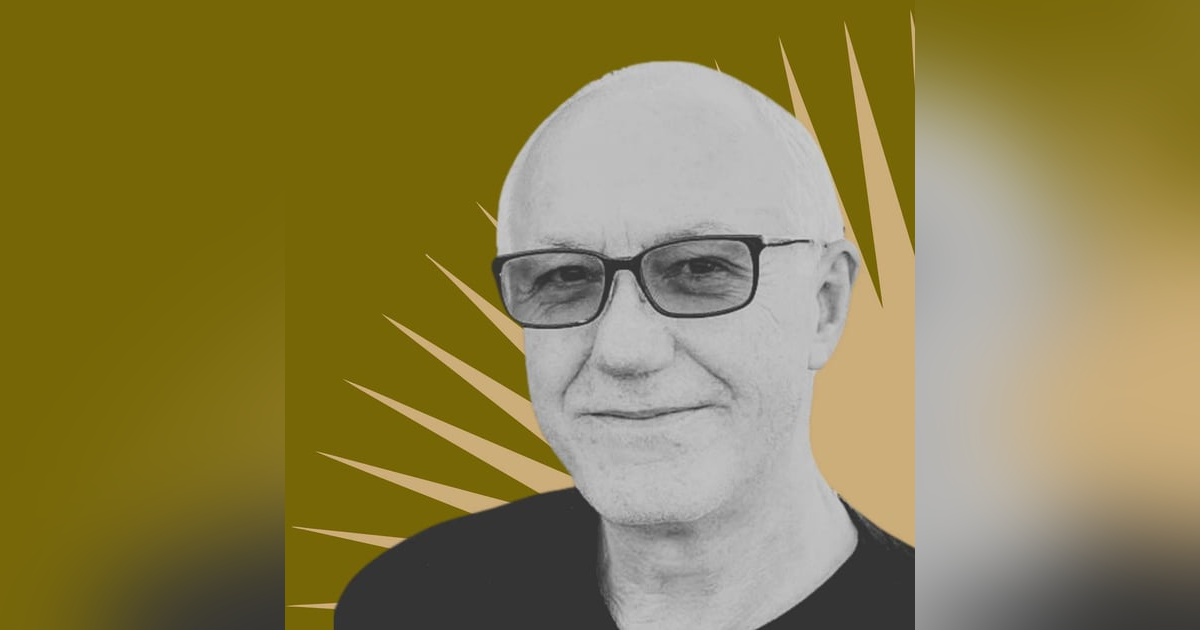


“I don’t know if any rational person ever became a billionaire running a disruptive company.” — Keith Teare
Is capitalism by permission of democracy, or is democracy by permission of capitalism? That’s the question Keith Teare and I have been circling for a while on our weekly tech roundup, and this week it triggered a full-blown discussion of our 21st century economic and political fate.
Earlier this week, Vinod Khosla — one of Silicon Valley’s most successful venture capitalists — posted on X that “capitalism is by permission of democracy.” Keith agrees. I’m not so sure. My sense is that as AI start-ups approach valuations that rival the GDP of nation states, the old equation inverts. Governments no longer permit capitalism. Capitalism permits government. The Sam Altmans and Elon Musks of the future, running 10 or $15 trillion dollar startups, won’t lobby politicians. They’ll replace them. Dario Amodei’s confrontation with the US government, then, is a sneak preview of the future. Indeed, as what Om Malik calls a “symbolic capitalist”, Amodei is a good example of the type of engaged capitalist who will usurp traditional politicians. That’s the good news. The bad news is that other examples of symbolic capitalists include Elon Musk and Peter Thiel.
Five Takeaways
• Keith Says OpenAI Will Be Worth $10 Trillion in Five Years: I told him I’d take him to dinner if he’s right. He said I’d have to do more than that. His logic: NVIDIA promises $1 trillion in new revenue by the end of next year, Anthropic did $5 billion in new revenue in a single month, and the three expected IPOs — Anthropic, OpenAI, SpaceX — would together raise more money than the entire IPO market of the last decade. The Netscape moment, if it comes, won’t be a moment. It’ll be an earthquake.
• Fundrise Is the Canary in the Coal Mine: A fund holding private shares in Anthropic, OpenAI, SpaceX, Databricks, and Anduril went public this week at $34 and closed above $100. Retail investors paying three times net asset value for companies that aren’t even public yet. Keith says that’s not irrational — it’s the market pricing the future. I’m less sure. History is littered with futures the market got catastrophically wrong.
• Om Malik Reframes the Entire Debate: His essay on “neo-symbolic capitalism” argues that value in the 21st century derives from symbols, narratives, and reputation rather than products. In that framing, Amodei’s fight with the government isn’t a miscalculation — it’s brand-building. Musk is the master of it. Altman tries to wear every hat simultaneously. Peter Thiel is in Rome talking about the Antichrist. And the billionaires who signed the Giving Pledge now want out.
• Keith and I Disagree on What $10 Trillion Means: Keith says the government retains power regardless of corporate size. Being big doesn’t give you political power unless governments are corrupt. I think that’s naïve. If AI companies approach valuations that rival the GDP of nation states, the old equation inverts. Government doesn’t permit capitalism. Capitalism permits government. The Amodeis and Musks of the future won’t lobby politicians. They’ll replace them.
• Contrarianism Is at the Very Core of Innovation: The one thing Keith and I agree on this week. Every billionaire is irrational. Musk is on the spectrum. Thiel believes in the Antichrist. Amodei thinks he can fight the US government and win. Keith concedes: no rational person ever became a billionaire running a disruptive company. The question is whether that irrationality is a feature of capitalism or a threat to democracy. We disagree on the answer.
About the Guest
Keith Teare is a serial entrepreneur, investor, and publisher of That Was The Week, a weekly newsletter on the tech economy. He is co-founder of SignalRank and a regular Saturday guest on Keen On America.
References:
• That Was The Week — Keith’s editorial on public markets and price outcomes.
• Om Malik on neo-symbolic capitalism — the essay that reframes the Amodei debate.
• Episode 2835: Why Dario Amodei Might Be the 21st Century’s First Real Leader — last week’s TWTW, where the Amodei debate began.
• Episode 2836: Is Elon Human? — Charles Steel on the curious mind of Elon Musk, referenced in the conversation.
• Fundrise (VCX) — the IPO that triggered this week’s discussion, trading at 300% above NAV.
About Keen On America
Nobody asks more awkward questions than the Anglo-American writer and filmmaker Andrew Keen. In Keen On America, Andrew brings his pointed Transatlantic wit to making sense of the United States — hosting daily interviews about the history and future of this now venerable Republic. With nearly 2,800 episodes since the show launched on TechCrunch in 2010, Keen On America is the most prolific intellectual interview show in the history of podcasting.
Chapters:
- (00:00) - Introduction: AI and unreason define the world
- (01:49) - Markets as prediction machines: NVIDIA’s $1 trillion promise
- (04:42) - The three IPOs that would dwarf a decade of IPOs
- (05:50) - Fundrise (VCX): retail investors paying 300% premium
- (09:23) - Keith’s prediction: OpenAI at $10 trillion in five years
- (11:44) - The Anthropic debate continues: tactics vs. morals
- (14:22) - Silicon Valley’s behind-the-scenes support for Amodei
- (16:42) - What happens when an AI company rivals a nation’s GDP?
- (23:05) - Om Malik on neo-symbolic capitalism
- (28:10) - Musk as the master of symbolic capitalism
- (30:08) - Bezos, Project Prometheus, and the Prometheuses of AI
- (32:07) - Peter Thiel, the Antichrist, and the Giving Pledge collapse
- (35:27) - Vinod Khosla: capitalism by permission of democracy?
- (38:23) - Or democracy by permission of capitalism?
00:00 - Introduction: AI and unreason define the world
01:49 - Markets as prediction machines: NVIDIA’s $1 trillion promise
04:42 - The three IPOs that would dwarf a decade of IPOs
05:50 - Fundrise (VCX): retail investors paying 300% premium
09:23 - Keith’s prediction: OpenAI at $10 trillion in five years
11:44 - The Anthropic debate continues: tactics vs. morals
14:22 - Silicon Valley’s behind-the-scenes support for Amodei
16:42 - What happens when an AI company rivals a nation’s GDP?
23:05 - Om Malik on neo-symbolic capitalism
28:10 - Musk as the master of symbolic capitalism
30:08 - Bezos, Project Prometheus, and the Prometheuses of AI
32:07 - Peter Thiel, the Antichrist, and the Giving Pledge collapse
35:27 - Vinod Khosla: capitalism by permission of democracy?
38:23 - Or democracy by permission of capitalism?
00:00:03 Andrew Keen: Hello, everybody. It is Friday, March 20, 2026. Another week in Silicon Valley — more madness, more investment, more obsession with AI. This week, Jeff Bezos announced his intention to raise a $100 billion fund to transform companies with AI. These aren't naturally AI companies. Bezos himself looks increasingly — at least in some of the pictures that appear in media — like a Hollywood star. Meanwhile, our obsession with gambling is picking up. Major League Baseball named Polymarket its exclusive prediction market partner, and Polymarket is also in the news for opening a bar in Washington DC. And of course it's been in the news recently because anonymous bettors on Polymarket cashed in on the Iran strike hours before it happened. So AI and unreason — our obsession with betting — seems to be defining the world. But for Keith Teare, the publisher of the That Was the Week newsletter, the markets are perhaps a little more rational than some of us might think. His editorial this week is on public markets and price outcomes. It's a bit of a boring title, Keith, but it's an interesting thesis. You're suggesting that the markets are actually pretty rational, especially when it comes to these private AI companies. Of course, the expected IPOs of Anthropic and OpenAI later this year are expected to be the supposed Netscape moment for our AI economy.
00:01:49 Keith Teare: And SpaceX, of course, I think.
00:01:51 Andrew Keen: And SpaceX, of course.
00:01:54 Keith Teare: Yeah. Look, the point of that title — you're right, it is boring — but public markets are prediction markets, and they're driven by sentiment. And the sentiment is driven by a belief in what's going to happen next. So what's going to happen next sets the price of any asset. It's interesting: over the last week, NVIDIA had its big GTC conference and predicted that it will do $1 trillion in new revenue between now and the end of next year. Markets initially put the stock down because they'd already said they'd do $500 billion this year. Then the CEO corrected himself and said no, this is a trillion of new revenue between now and the end of next year — and the market put it back up again. So markets are really weathervanes on the future.
00:02:55 Andrew Keen: And your argument, Keith, is that markets are entirely rational?
00:03:00 Keith Teare: No. They're rational in the long run. They're entirely subjective in the short run.
00:03:05 Andrew Keen: Public and private, or just public?
00:03:09 Keith Teare: All markets are subjective in the short run and rational in the long run. And who is that famous person who said that —
00:03:18 Andrew Keen: Keynes —
00:03:18 Keith Teare: — they're a voting machine in the short run and a weighing machine in the long run.
00:03:22 Andrew Keen: Keynes famously also said "in the long run, we're all dead" — so maybe the reason of the market in the long run isn't that important. But —
00:03:30 Keith Teare: It's a good prism through which to look at all these different things going on, because indiscipline doesn't get rewarded by markets, and markets are where you get your paycheck. So almost every player, including governments, keeps an eye on the market for good reason.
00:03:53 Andrew Keen: Yeah. And I'm still waiting for Donald Trump's Liz Truss moment when the markets respond. It seems like we're on the verge of a Liz Truss moment when it comes to Trump in the Middle East. But when it comes to the markets, Keith, and this idea of the public markets not yet making their decision on AI — I wonder if they have. I was looking at Google stock, and if you look at their numbers over the last year there's nothing that dramatic. They've been climbing steadily from around $150 to about $300. So haven't the markets already determined the value of AI? If they're bullish, or relatively bullish, on Google, why wouldn't they be equally bullish on OpenAI and Anthropic?
00:04:42 Keith Teare: Well, the markets always have a current opinion. You're right about that. And they also have a view of the future. And if you look at the three IPOs we mentioned — should they happen at the scale that's being rumoured — those three companies would raise more money going public than the entire IPO market for the last ten years. So the market is about to deploy cash at a scale that's unheard of into AI. So even though the markets have already spoken, they haven't finished speaking.
00:05:24 Andrew Keen: The way you present the market in your editorial, you seem to be suggesting that the public markets — and the people who would buy shares of Anthropic and OpenAI and perhaps Google — are entirely rational. But aren't they slightly crazy? I mean, what about all the irrational exuberance of previous booms and busts — from Tulipmania to dot-com?
00:05:50 Keith Teare: Yeah, well, look. The editorial was triggered by an IPO that happened yesterday for a fund that's somewhat similar to SoftBank, called VCX. It's called Fundrise, and the ticker is VCX. Its shares started trading at $34 and ended the day at somewhere over $100. Today it's at $104 — so it's a 300% gain, which is also, because it's a fund, a 300% valuation above the net asset value of what it holds. So yes, retail investors are paying three times what the shares are worth. And guess what the shares are? Anthropic, OpenAI, SpaceX, Databricks.
00:06:39 Andrew Keen: And Anduril as well, which is —
00:06:41 Keith Teare: Anduril. So it's a proxy for what the market thinks these companies are really worth. Think of that as future asset value. Now if you've got this window of current asset value and future asset value, and the market is prepared to pay something of the future asset value today, then these assets are going to trade at a premium — like VCX is.
00:07:06 Andrew Keen: Yeah. But you're talking to me like you're some sort of algorithm, Keith. We all know that there's so much irrationality when it comes to these sorts of things.
00:07:17 Keith Teare: Well, that's a good question. Do you think it's irrational that people are paying three times the real value for VCX, or is it rational? And the answer only lies in: well, what will it be worth in future?
00:07:34 Andrew Keen: Yeah. I take your point on Fundrise, but there aren't that many retail investors — cab drivers or day traders — buying Fundrise. They're waiting for the OpenAI and Anthropic IPOs. Those are going to be the Netscape moment, for better or worse, rather than Fundrise. How much money has Fundrise raised, by the way?
00:08:04 Keith Teare: Nearly $1 billion. It's big. And it's worth double-clicking a little bit. It has a long history of selling private market shares to smaller investors through a vehicle that's been around for a few years. It has roughly 100,000 investors on its platform prior to going public.
00:08:30 Andrew Keen: It's a middleman, it's a kind of —
00:08:33 Keith Teare: No, no, no. It's an active investor directly in the companies. It does invest in the companies, and it's actually quite an unusual animal. It's not a big institutional bank. It's a bottoms-up kind of trading platform.
00:08:57 Andrew Keen: Well, let's get to your take on these imminent IPOs — Anthropic, OpenAI, SpaceX. You talk in your editorial about the keyword being trust, suggesting that whether it's the formal markets or the Uber drivers, they don't currently trust OpenAI, SpaceX, and Anthropic. Is that right?
00:09:23 Keith Teare: Well, that was last week's discussion, where we acknowledged — we called it love and hate last week, but you could call it distrust and trust. Many of these things have common roots. I think the people buying VCX definitely do trust. The people unaware of it are maybe just in the middle. And then the people who are especially not buying it or shorting it distrust. The current state of play is that all those opinions exist alongside each other. So ultimately we have to put our finger on the pulse of the future and ask what's going to happen next. My view is that what's going to happen next — and I'll stick to this — is that OpenAI, currently valued just under $1 trillion, is going to end up being valued around $10 trillion.
00:10:23 Andrew Keen: In the long run — when, approximately?
00:10:27 Keith Teare: I'd say within the next five years.
00:10:30 Andrew Keen: Well, if we're around in five years and OpenAI is valued at $10 trillion, I will take you out for dinner.
00:10:38 Keith Teare: You have to do more than that.
00:10:41 Andrew Keen: What do you mean?
00:10:42 Keith Teare: Andrew.
00:10:43 Andrew Keen: What do you want me to do — go to bed with you? I mean, that would be $10 trillion. Are you trying to punish me or —
00:10:51 Keith Teare: — reward you?
00:10:51 Andrew Keen: Yeah. I think I'm trying to beat you up.
00:10:54 Keith Teare: Look, here's the thing — why wouldn't it be? That's a good question. If NVIDIA truly does a trillion dollars in new revenue — and by the way, Anthropic did $5 billion in new revenue in one month. $5 billion in new revenue in one month. These companies are pulling in revenue like there's no tomorrow. So the markets will —
00:11:25 Andrew Keen: Well, there is always a tomorrow. And in the beginning of economies, it doesn't last forever.
00:11:33 Keith Teare: Well, it kind of does last forever. Why not? I mean, if you build something substantive that's enduring because it's actually useful — it actually might be forever.
00:11:44 Andrew Keen: Well, you may think it's $10 trillion. I'm not sure it's worth having a serious discussion on this. Let's talk about your take on Anthropic. You come back to the issue of Anthropic and its fight with the government. That story is still in the news.
00:12:08 Keith Teare: Yeah.
00:12:10 Andrew Keen: My sense is you're not really 100% convinced on your own position. Is that fair?
00:12:17 Keith Teare: Well, it depends which position.
00:12:19 Andrew Keen: Well, your position is that Anthropic is a corporation and it shouldn't interfere in the business of government. And if the government wants to buy its product, then it shouldn't tell it what it can and can't do with it.
00:12:29 Keith Teare: Well, I'm not giving Anthropic advice. I'm pointing out that it's going to get punished for it by markets as well. Ultimately, because —
00:12:39 Andrew Keen: Although it hasn't yet. In fact, it's been rewarded.
00:12:43 Keith Teare: It's rewarded because it's living in a bubble of people who agree and think in the same way. And whilst it's private, that can be sustainable. As soon as it's in public markets, that will not be sustainable. You look at Anduril — which is the opposite of Anthropic — and Anduril is already public, and public markets are pricing it. Anduril landed a $20 billion contract with the US military this week. And it's trading at forward-looking multiples that you might say are crazy.
00:13:18 Andrew Keen: Although, to compare Anduril and Anthropic might not be entirely fair on Anthropic. Anduril is a military tech company, so it has to trade with the government — whereas Anthropic could conceivably become a multi-trillion dollar company without doing business with the US government.
00:13:33 Keith Teare: Yeah. And that's why I said it depends what position. I'm a user of Anthropic. Claude Code, Claude Cowork, and Claude itself are in my daily work every single day, for large parts of the day. I'm a huge fan of what they've built. By the way, I don't really disagree with Amodei about weaponised AI either. So most of my points are really about how you navigate these differences, not whether you have them. And I don't think he's doing his company any favours by his choices. That's really all I'm saying.
00:14:22 Andrew Keen: Although, as I said, there was a piece this week on CNN about how Anthropic may benefit from his fight with Trump. I don't think Amodei is that crafty — thinking that if he stood up to Trump it would benefit his company.
00:14:42 Keith Teare: Well, look, it's popular to have his point of view. There's no doubt about it. And I've been there in the past where I've taken points of view in my business. I remember when the DOJ sued Microsoft for being a monopoly — Microsoft was my partner, and I took the opposite view: that Microsoft was about to be disrupted by Google and the internet, and the DOJ didn't need to do anything. It was an unpopular view, but I did the opposite. It is common that CEOs have points of view, and he's got a point of view. It's fine.
00:15:22 Andrew Keen: You're in Palo Alto, so you know lots of VCs and entrepreneurs. There was a piece this week in the New York Times about Silicon Valley mustering behind-the-scenes support for Anthropic. Do you think there's some degree of unspoken support for what Amodei is doing with Anthropic in Silicon Valley itself?
00:15:46 Keith Teare: Well, I don't know if it says it explicitly, but actually what that describes is OpenAI lobbying on Anthropic's side behind the scenes. It does not want Anthropic to be deemed a risk. And if you ask why, it comes to a much bigger discussion about the relationship between AI tech companies and nation states. It does seem clear that even though AI is not a weapon in the way that Anduril is, AI is inevitably going to play a role in weaponry. And there's really no way of avoiding the fact that in a world of conflict with nation states fighting each other, they are going to use AI to conduct business.
00:16:42 Andrew Keen: Yeah, I mean, that goes without saying. But I wonder — and you and I have talked about this before — whether the old equation of government somehow being more powerful than corporations, and corporations being in the business of supporting government, is going to be turned on its head. If you're right — and I'm a little sceptical, but who knows — in ten years, anything can happen. If OpenAI is really worth $10 trillion in ten years' time — the current most valuable company in the world is what, Apple? It's about four or —
00:17:21 Keith Teare: It's Nvidia now.
00:17:23 Andrew Keen: So it's Nvidia, but it goes backwards and forwards between Nvidia and Apple at around the $4 or $5 trillion mark.
00:17:29 Keith Teare: Saudi Aramco is the other big one.
00:17:30 Andrew Keen: Right. Well, that's another story.
00:17:34 Keith Teare: By the way, we have a commenter from YouTube who says: "Given that 20% of the world's capacity of LNG was destroyed and data centres bombed in the Gulf, is this the popping of the AI bubble?" — and the answer, from Profit Generation Lab, is no. It is not. I don't even think it's a bubble, but it definitely isn't going to pop. In fact, the opposite: it's going to double at least year over year for the next five years. And by the way, that's how you get from $1 trillion to $10 trillion, Andrew. One becomes two, two becomes four, four becomes eight.
00:18:13 Andrew Keen: Yeah. Well, as I said, to me it's a fantasy. I mean, you can go and watch a Disney movie if you want. But when it comes to valuing companies in the future — OpenAI isn't even worth a trillion, it's not even a public company yet. But if we do have an AI company — whether it might be Google, already at $4 or $5 trillion, or OpenAI, or even Anthropic, worth $10 trillion in five or ten years — how will that change the relationship between the corporation and the government?
00:18:55 Keith Teare: Well, look. Global GDP is about $120 trillion, of which the US is the largest portion —
00:19:10 Andrew Keen: What is it, about $40 or $50 trillion?
00:19:13 Keith Teare: I'd rather not throw out a number off the top of my head. US GDP right now is $31 trillion.
00:19:25 Andrew Keen: Okay. So if what you're saying is right — and it's beyond speculation, as I've suggested — if OpenAI or one of these AI companies is worth $10 trillion, then Anthropic is probably worth $8 trillion and Google is probably worth $15 trillion. They basically make up the entire economy.
00:19:53 Keith Teare: Well, the global stock market is basically $127 trillion — roughly one year's GDP for the world. The US is about half of that. So what you're saying is that OpenAI could itself represent about 15% of the US stock market's value as it stands today. Of course the stock market's value will grow. Now, in order to be worth $10 trillion, its revenues would have to be something in the order of $10 trillion divided by 20 — so about $500 billion.
00:20:42 Andrew Keen: Yeah, but I'm not interested in getting into the mechanics of the valuation — that's not interesting. You're not answering my question. How does that alter the power dynamic between the government and corporations? At the moment the government is trying to push Anthropic around, and Dario Amodei is pushing back with some degree of success. He's supported by some people in Silicon Valley. It certainly benefits Claude users. One wonders in the long term what the impact will be. If these trends continue and these AI companies grow in their valuation — what does that mean in terms of their relations with government?
00:21:34 Keith Teare: Well, let's ask the question about NVIDIA, which is the world's biggest company. How does it impact the government? The answer is: not very much. The government could stop it selling its chips to China, because ultimately the law trumps the company. And so what you hope is that lawmakers are immune to being bribed. We all know that lawmakers do get — in quotes — bribed, through lobbying groups and so on. So far, at least, most of the AI companies have shown limited interest in lobbying. They do lobby, but it's not a lot of money, relatively speaking. So I think the answer to your question is really a question more about government than it is about the AI companies. The AI companies will only get power if you have corrupt governments where those companies want to leverage that corruption to their own self-interest. I don't think of it in that framing. I think AI is a human good, and I think most governments — especially the US government — want it to succeed.
00:22:52 Andrew Keen: Yeah, but that wasn't my question.
00:22:54 Keith Teare: My answer is: the government will retain the power. Being big doesn't give power unless governments are bribable.
00:23:05 Andrew Keen: We shall see. If there is some war or crisis over Taiwan and NVIDIA's role in all this, it will be interesting. Another piece that you linked to — which maybe speaks more to my position this week — is your friend Om Malik. He writes on neo-symbolic capitalism in what I think is your first essay of the week, and he quotes Patrick Collison, the CEO of Stripe. I think our difference this week, Keith — and I'm in the Om Malik camp here — is that you view capitalism still in a rigorously rational and mechanical arithmetic way, and the market simply responds to the reality of the world. Whereas Om and I see things in a much more — Om uses the word "symbolic," I might even say irrational — way. The behaviour of these people, whether it's Musk or Bezos or certainly Dario Amodei, isn't quite as rational as you suggest. Why did you include Om's essay on neo-symbolic capitalism? I'm assuming you don't agree with him.
00:24:25 Keith Teare: There are elements I agree with. I think the discussion about the near future and the relationship between capital, labour, and government is probably one of the most important discussions that could be had, and he's participating in it. I don't think the criterion for me including an essay is agreeing with it — it's whether it's speaking relevantly to the topic.
00:24:50 Andrew Keen: And let's just be clear about what Om is arguing. I'm quoting from Google Gemini on symbolic capitalism: "Symbolic capitalism refers to an economic structure where value is derived from producing, managing, and consuming symbols — such as data, brands, narratives, and culture — rather than physical goods." Driven by a professional managerial elite, this system emphasises reputation, prestige, and symbolic capital over traditional manufacturing. And a lot of it is borrowed from the French cultural theorist Pierre Bourdieu. So what I think Om is arguing is that whether it's Patrick Collison at Stripe or other entrepreneurs, they're all driven by adding to their reputations, and the traditional metrics don't really make any sense.
00:25:51 Keith Teare: Well, it's interesting, because in that framing, Dario Amodei is a representative of what Om is discussing. He's used social media as a platform to build reputation by having a point of view against government. And that's really a very different set of events than his products and the revenue they're generating. Whereas OpenAI is focused mainly on growth and revenue and hasn't been on a pulpit trying to build reputation. So I think —
00:26:28 Andrew Keen: Sam Altman is also in the symbolic capitalist game — except he tries to wear every hat at the same time, and that's his problem.
00:26:40 Keith Teare: Well, let's say that symbolic capitalism and capitalist capitalism are kind of opposites to some extent — but they coexist.
00:26:48 Andrew Keen: Which is what Om is saying in his essay.
00:26:51 Keith Teare: Right. And Om, being a media guy, puts a lot of this down to the new form of media. Interestingly, Andreessen Horowitz had a big piece this week called "What is New Media?" — I can't remember if I put it in the newsletter or not, but it's a good podcast. And Om is saying that reputations are built by direct messaging to an audience through social media, not by doing a press release. And this amplifies the symbolic capitalism focus, so that most leaders of industry are more and more focused on their reputation and imagery. He's not wrong — but he's also wrong, because none of that works unless you're making money. Think of Musk. Musk is an interesting character study in this context, because Musk has drawn the ire of not just you but many, many people due to his statements and actions around DOGE in particular. Yet he's making so much money through Tesla and SpaceX that it really doesn't matter. And so he's the counter-symbolic capitalist in a way.
00:28:10 Andrew Keen: Well, just to be clear — I wouldn't disagree with you there. Om says that Musk is the master of symbolic capitalism. He executed a perfect plan for creating a perpetual machine for symbolic capital, and the whole Valley took notes. I mean, the two aren't necessarily in contradiction. You can have profitable companies and at the same time be a symbolic capitalist, like Musk.
00:28:39 Keith Teare: Well, true. But then I question the labelling of "symbolic capitalism." I just think it's effective marketing.
00:28:47 Andrew Keen: Well, I wonder whether they're increasingly becoming the same thing. My interview of the week — entitled "Is Elon Human?" — was with Charles Steel, an investor who's written a book on the curious mind of Elon Musk as an investor. He's much more sympathetic to Musk than I am. But I wonder whether symbolic capitalism has become real capitalism — and maybe that's why Dario Amodei has been so, quote-unquote, brave in taking on the government. Because the great industrialists — or post-industrialists — of the twenty-first century will need to take on government. And in a sense they're stepping into the vacuum where government used to exist. That comes back to my question of what happens if an AI company is worth $10 or $15 trillion in five or ten years. They're going to be able to rival government. And given the lack of trust and faith and credibility in government, one wonders whether the Amodeis of the future will become the Prometheuses. It's perhaps no coincidence that Jeff Bezos' new fund is linked to his Project Prometheus.
00:30:08 Keith Teare: Well, there's a lot in what you just said, Andrew. Let's focus on trends. I think a lot in global terms, and I think it's inevitable that the largest global companies in the future will have larger valuations than the GDP of any country — possibly even bigger than the US's GDP. And why? Because the globe is a lot bigger than any nation. And if you are dominant on the globe for something that people pay for — especially expensive things like AI — you're going to become big. That to me seems inevitable. And therefore capitalism ultimately is a numbers game. All these other things are still true — there are layers of economics, then politics and civil society, and the way it all gets played out in the media. All of those live together. But at the base is economics, and economics is a numbers game. So the winners win the numbers game and get to own much of the layer above — unless politics is independent and truly democratic. And therein lies the challenge facing all of us: how do you get a policy that can be trusted with the future? I have points of view about that — very different from the current situation, where we have wars raging left and right. But that is a contested space where opinion will clash with other opinion and result in some kind of outcome. And in the absence of that, you get uncertainty — and uncertainty kills economics.
00:32:07 Andrew Keen: But uncertainty is the very definition of economics. I don't know whether you're expecting these billionaires to be entirely rational. Another of your stories this week is on a TechCrunch piece about the billionaires who made a commitment to the Buffett-Gates Giving Pledge — committing to give their money away. Peter Thiel is leading them. Now they want out of the promise that was made back in 2010. Meanwhile this week, Thiel — who in an economic sense is clearly a genius, and perhaps equally prescient as Elon Musk — has been in Rome talking about the Antichrist. There was a piece in the New York Times suggesting that some people in the church want to perhaps declare Thiel himself the Antichrist. So do we need to get out of this idea that somehow entrepreneurs are rational? I mean, they are in market terms — but maybe the great geniuses are also mad, like Thiel with his obsession with the Antichrist, or Musk with the fact that, for better or worse, he's on the spectrum. Is this one of the issues? Maybe the public markets have to acknowledge this. Maybe one reason to be a little dubious of Dario Amodei is that he's a bit too rational and reasonable — he needs a bit of the Peter Thiel or the Elon Musk in him.
00:33:48 Keith Teare: Look, they're all irrational. That's why they get where they get. I don't know if any rational person ever became a billionaire running a disruptive company. Contrarianism is at the very core of innovation. And so they all have their irrational side — and I would include Dario. I mean, it is totally irrational to believe you can fight the government and win.
00:34:16 Andrew Keen: Lots of people have done it historically, and some of them have won.
00:34:19 Keith Teare: Very few. The loser-to-winner ratio is —
00:34:24 Andrew Keen: Right. The whole transcendentalist tradition in America — from Thoreau and Emerson to MLK — so he's not alone in this.
00:34:31 Keith Teare: Well, I would say none of those beat the government. The government embraced and extended their message and eventually owned it. They got incorporated. And so — not surprisingly if you're successful, like rap music — you get incorporated and become part of capitalism. And otherwise these people would be leaders in the same way that Oliver Cromwell went with an army and stole most of Ireland for the English. They didn't steal anything. They built things. And their success probably fuels their lack of rationality, and their egos are bigger than any of our egos — except maybe mine. And that is at the very core of their being. That said, they don't run the country, and they won't run the country.
00:35:27 Andrew Keen: Well, but this comes back — and you and I have been circling around this. I think in some ways they already do, and they certainly will in the future. Let's end with another great symbolic capitalist: Vinod Khosla. His post of the week — which is, of course, a platform for symbolic capitalism on X — I'm quoting him: "AI will necessitate a change in tax structures — capital gains taxes, ordinary income taxes, and more." And then he goes on: "Capitalism is by permission of democracy." But I would actually reverse that. I think democracy is by permission of capitalism. Isn't that the old Marxist framing, Keith?
00:36:19 Keith Teare: You know, I —
00:36:20 Andrew Keen: But before you get to that — Vinod is a classic symbolic capitalist, isn't he? He understands the system as well as Musk or Thiel or any of the others.
00:36:32 Keith Teare: Yeah. And he's a thoughtful, intelligent guy. I think there are two things to talk about.
00:36:36 Andrew Keen: I mean, thoughtful and a symbolic capitalist aren't necessarily incompatible.
00:36:42 Keith Teare: Correct. I think there are two things to talk about. The first is his framing of capital and labour. I think there's a book in that — and I'm almost tempted to write a book called "Capital and Labour" in the context of what's going to happen next, because that is probably at the very core of what's going to change. And when that changes, he's right that taxation makes no sense as it is thought of today, because income will not exist. And if there's no income, there's no tax. He wants to get rid of capital gains — which is the other side, the capital side. But he wants to find a mechanism to channel the wealth from the success of AI to society, which is a worthy desire. I think it's a great desire.
00:37:29 Andrew Keen: And you've articulated that. We've all articulated that — it almost goes without saying. Even the Andreessens and Thiels and Musks of the world want that.
00:37:38 Keith Teare: Right. So that's one thing. The second thing is: how will it happen? What are the mechanisms through which that could happen? And I can only come up with one answer, which is government. Because any other answer — it would either be philanthropy, like the big winners in AI just agreeing to donate money to society. That doesn't seem very likely. It's certainly not reliable.
00:38:07 Andrew Keen: Yeah. And we know the reliability — given the news this week of all the billionaires pulling out of giving their money away.
00:38:13 Keith Teare: Right. So more likely, the answer has to be government and a mechanism defined by government — which, sadly, government isn't even discussing.
00:38:23 Andrew Keen: So what became of the Marxist in you, Keith? You really do believe that capitalism is by permission of democracy. The Marxists would always argue —
00:38:31 Keith Teare: — that power —
00:38:31 Andrew Keen: — is by permission of capitalism.
00:38:33 Keith Teare: No. Well, let me address that — I didn't actually address that. I think democracy, historically — certainly as we understand it today, not slave-owning democracy in Athens, but democracy where there's a middle class —
00:38:50 Andrew Keen: Or nineteenth-century slave-owning American democracy.
00:38:54 Keith Teare: Right. When you get a middle class — which is the precondition, which capitalism creates — and as the middle class grows and goes to college and is educated, it tends to influence the outcome of elections more and more. Even Trump is symptomatic of the middle class influencing an election. And that tells you that democracy thrives on economic success. Now there are examples where that isn't true — India is always quoted, although India is in the middle of economic success now. But usually, democracy requires a healthy capitalism.
00:39:45 Andrew Keen: Isn't that a bit of an old-fashioned idea? It doesn't seem to work in China, for example. Everyone expected Chinese prosperity to result in democracy. The reverse is true.
00:39:54 Keith Teare: Actually, I didn't say that prosperity equals democracy. I said democracy can't exist without prosperity — or usually doesn't.
00:40:05 Andrew Keen: What about the UK?
00:40:08 Keith Teare: Well, the UK is fairly prosperous. It's still in the top ten in the world. It's just relatively in decline.
00:40:17 Andrew Keen: There we have it. Keith believes — borrowing from Vinod Khosla, the great symbolic venture capitalist — that capitalism is by permission of democracy. Maybe "Symbolic Venture Capitalism" should be the title of your book, Keith. Like Khosla, Keith believes that capitalism is by permission of democracy. I believe that democracy is actually by permission of capitalism. And my sense is that as our century progresses — and if Keith is indeed right that the OpenAIs of the future will be worth $10, $15, $20 trillion — then that will increasingly be the case. Certainly we will return to this subject, Keith. It's one we've been circling around and come back to time and time again. Thank you so much. Very interesting conversation this week.
00:41:07 Keith Teare: Thank you. Bye, everyone.