Something Is Rotten in America: Robert N. Watson on Shakespeare’s Tragedies and Trump
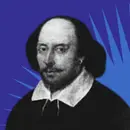


“It seems like we’re in kind of a farce moment. It’s just a little dangerous.” — Robert N. Watson
INTRO
Everyone seems to be reading the Shakespeare tea leaves these days to figure out the future of America. In the Wall Street Journal, Allysia Finley finds something rotten in the state of MAGA. Donald Trump is King Lear after the midterms, a fool for flattery, with JD Vance and Stephen Miller cast as his Iagos. In the Financial Times, Ed Luce predicts that the battle for Trump’s succession “could turn Shakespearean.” And then, in a twist even the Bard might have rejected as too crass, the president makes Miller his chief of staff.
So what would Shakespeare make of late-2020s America? Every generation, the UCLA scholar Robert N. Watson reminds us, imagines that Shakespeare was writing about it. That’s what makes Shakespeare great. Freud found himself in Hamlet. Marx in Timon of Athens. We now find Trump in all things Shakespeare. Especially his tragedies.
In his new book, Shakespeare’s Tragedies, Watson presents Shakespeare as a contemplative dissident. “To be or not to be,” Watson insists, isn’t about suicide. Hamlet is deciding whether to risk his life to fix a rotten state, a choice Watson says his UCLA students recognize all too well. And writing under the shadow of the censor, Shakespeare still smuggled in Lear’s rage at inequality and, in his own handwriting, a speech defending immigrants.
History, Marx said, repeats itself first as tragedy and then as farce. Watson sees Trump’s America as a farcical tragedy. Like Richard III, Donald Trump seems to believe that a little more ruthlessness will keep him on top. Maybe Trump should read Shakespeare in the same way that Shakespeare seems to have so comprehensively read Trump. Or, at least, Robert N. Watson’s Shakespeare’s Tragedies, a book so accessible that even Trump might enjoy it.
FURTHER READING
• Shakespeare’s Tragedies: What Makes Them Great (Stanford University Press, 2026), by Robert N. Watson.
• “Something Is Rotten in the State of MAGA”, by Allysia Finley, Wall Street Journal, November 9, 2026.
• Edward Luce on the battle for Trump’s succession, Financial Times, November 2026.
• The Comic Matrix of Shakespeare’s Tragedies (Princeton University Press, 1979), by Susan Snyder.
• Tyrant: Shakespeare on Politics (W. W. Norton, 2018), by Stephen Greenblatt.
• KEEN ON AMERICA episodes cited: Maggie O’Farrell on childhood, art, money and marriage in 16th-century Florence, Patrick Radden Keefe on London Falling, David Thomson on Hollywood and America, Tim Disney on his surreal remix of Disney, and Alan Judd on the death of Christopher Marlowe.
ABOUT THE GUEST
Robert N. Watson is a professor of English at UCLA, where he has taught Shakespeare for decades. His books include Shakespeare and the Hazards of Ambition, The Rest Is Silence and Back to Nature. Shakespeare’s Tragedies: What Makes Them Great is published by Stanford University Press.
ABOUT KEEN ON AMERICA
Nobody asks more awkward questions than the Anglo-American writer and filmmaker Andrew Keen. With 3,000 episodes since the show launched on TechCrunch in 2010, Keen On America is a daily conversation about the ideas, books and arguments shaping the United States. New episodes every day.
LIVE IN SAN FRANCISCO: How to See America. Who Stole America’s Pride? Arlie Russell Hochschild in conversation with Andrew Keen, Manny’s, December 8. Tickets: https://www.eventbrite.com/e/how-to-see-america-who-stole-americas-pride-tickets-2003996604791
00:00 - Intro
00:31 - AK: Shakespeare for the late 2020s?
01:53 - Freud, Marx and feminism all found him first
03:40 - AK: is Hamnet true?
04:15 - Hamnet, and why “to be or not to be” isn’t about suicide
06:23 - AK: Dylan, and the mystery of genius
07:16 - Who was Shakespeare?
08:29 - AK: where did he learn tragedy?
08:58 - Classical revival, morality plays and Hegel
10:37 - AK: a Socratic Shakespeare?
10:49 - Horatio, dialogue and colliding voices
12:15 - AK: disappearing in an age of narcissism
12:32 - Withholding judgment in a divided society
12:55 - AK: Elizabethan England and America today
13:19 - Othello, grace and the Protestant–Catholic divide
15:10 - AK: what is a tragedy?
15:52 - A fall from greatness
16:49 - AK: fate and agency
17:30 - Macbeth, and the line editors gave away in Romeo and Juliet
20:46 - AK: Shakespearean coincidences
21:04 - Greenblatt’s Tyrant and Shakespeare now
21:44 - AK: the comedy in the tragedies
22:57 - Othello’s comic first act, then “Enter Iago”
25:28 - AK: tragedy and narcissism
25:56 - Coriolanus and the measles
27:52 - AK: is Shakespeare a dissident?
29:45 - Essex, Richard II and the censors
32:29 - AK: Socrates, Shakespeare and natural death
32:41 - Thomas Kyd, and the immigrants speech
34:16 - Brecht, and the 1934 Coriolanus riots
34:46 - AK: Stephen Miller and Trump’s Shakespearean tragedy
35:21 - First as tragedy, then as farce
37:43 - AK: can Trump prove Shakespeare wrong?
38:42 - Richard III and the arc of history
39:24 - Why don’t the henchmen see it coming?
40:54 - AK: when reality outruns fiction
41:31 - Why drama isn’t futile
42:57 - AK: David Thomson and Hollywood
43:43 - Kurosawa’s Throne of Blood
45:34 - AK: Shakespeare in the age of AI
46:52 - Hamlet and the disinformation age
00:00:31 Andrew Keen: Hello, everybody. In the increasingly surreal America of our post-midterms, you often hear the phrase that fiction has replaced reality or to understand the nature of the world, you have to read fiction. We often talk about that on the show. And we also, from time to time, discuss the idea of America and particularly, you know who being a Shakespearean tragedy, whatever that means. Well, we're gonna talk Shakespearean tragedies today with an expert, professor of English at UCLA, very distinguished academic, Robert N. Watson, taught for many years, and he has a new book out. So, right on time, perfect timing: Shakespeare's Tragedies: What Makes Them Great. And Bob Watson is joining us from Los Angeles just above UCLA. Bob, congratulations on the new book. Very intriguing. We're gonna talk Shakespeare, but I wanna make it the Shakespeare for the twenty twenties, the late twenty twenties in America. Is that a bit cheesy, or is there an argument to be made that maybe Shakespeare was writing for the late twenties in America?
00:01:53 Robert N. Watson: Yeah. It's uncanny. I mean, as long as people have been making cheese, it's been the moment when suddenly it looks like Shakespeare is relevant. He — he's so capacious and so detailed. And over time, everything that comes along, suddenly, it looks like something that Shakespeare had been thinking about that we just hadn't gotten around to considering. So, yeah, definitely, he looks current right now for all those kinds of sociopolitical reasons. But it — it's just part of the amazement of what Shakespeare somehow did because when, you know, when psychoanalysis came along, Freud said, wait a minute. Shakespeare did this in Hamlet. And then Marxism comes along, and suddenly you look at Merchant of Venice — Timon of Athens, and Shakespeare already had that. And Karl Marx loved Shakespeare and found that. I've done some work on Midsummer Night's Dream that suggests that the first scene of the play, somehow, people didn't notice, but was saying a lot what, say, a second-wave feminism was saying back in the 1960s about marriage, patriarchy. All that stuff — kind of stuff was there. So — you know? And Hamlet, of course, is endlessly applicable. Julius Caesar has been brought in to bear on, the current administration because of a controversial show in New York. But it's just something that Shakespeare seems to do, to have — be able to be seeming like part of this moment because he had thought about certain fundamental things about human beings and human interaction that turn out to be applicable, whatever vocabulary develops, to talk about them later.
00:03:40 Andrew Keen: You mentioned, Hamlet. I'm sure you're all too familiar with Maggie O'Farrell's book and the movie Hamnet. O'Farrell was actually on the show a few years ago, not talking about Hamnet, talking about another book. This is a book and a film, and I rather enjoyed the film, I have to admit, as a non-Shakespeare scholar about Shakespeare, I guess, learning the language of tragedy from the own tragedy of his own life. Is there any truth to that, Bob? The Hamnet thesis, O'Farrell's Hamnet thesis?
00:04:15 Robert N. Watson: You know, parts of it are plausible. Then certainly the connection of the name with their neighbors, Hamnet, struck something. And the demise of his own child, whatever, necessarily plague, but whatever it was, that took that boy of the twins that he had, that certainly had an effect. I mean, I actually think, realistically, there's more of that in a play like Twelfth Night where there's dizygotic twins, a boy and a girl, and each one thinks the other one is lost. Or even in The Winter's Tale where, a son is lost and has to be replaced through marriage. But I think, emotionally, it makes a certain amount of sense to think that that had to be hanging over Shakespeare at the moment, and he perhaps felt like the ghost of a father who hadn't been able to save the son, but in some sense had dragged the son down. So I think it's a sensitive reading. I thought the movie was very emotionally powerful. I thought the lead actor, she was terrific, absolutely terrific. And her ability to carry the movie with basically just her face up close sometimes was great. I had a very specific Hamlet objection to it, which is only that it treats the to be or not to be speech as, about the father, Shakespeare, wanting to commit suicide by jumping off the cliffs of the Thames River. And I actually think that's a widespread but mistaken reading. I think the speech is to be or not to be is not really about suicide. He's actually deciding whether or not he should go ahead and try to kill the king even though he'll probably die trying to fix the world or whether just to put up with the fact that the world's unjust. And it's a problem that a lot of my students are wrestling with, you know, day after day and week after week in the current world. So I don't like to encourage students to think that the answer is suicide. I think I like to hear them to hear that Shakespeare himself in that moment was showing somebody who had to decide, am I gonna give my life over to fixing this evil thing that has happened in my country?
00:06:23 Andrew Keen: Yeah. And speaking of the universal significance of Shakespeare, a few months ago, we did a show with Patrick Radden Keefe whose new book London Falling is about a drowning or a supposed drowning on the — in the Thames. It's a best-selling book. I mean, it's not really Shakespeare, and I'm not sure if he may — if he mentioned Shakespeare, but maybe there's the ghost of Shakespeare as there is everywhere. Before we went live, Bob, we talked a little bit about Bob Dylan. You noted that I'm wearing a Dylan T-shirt and that you're a fan too. And I'm always mystified by how much work Dylan has done. Not all of it great, but most of it. And Shakespeare, of course, if anyone emulates Dylan, it's Shakespeare. Was there really such a guy? I mean, how do we explain the output, the astonishing genius of a single man?
00:07:16 Robert N. Watson: Yeah. I mean, I have, you know, temptations toward every theory, including the extraterrestrial. But it's a product of a variety of things that go on. It's a product of a humanistic culture was coming along, of a peculiar genre that was emerging that Shakespeare, I think, at some point for his own survival, decided he would work in his survival spiritually, but also his survival just in terms of not starving in the new conditions of urbanized Renaissance London. I think you cannot explain certain forces of genius, and these people are mysterious. Something's going on in there. We have the proof of it in their work, but Shakespeare in particular is so impossible to pin down, which is partly why people forever and ever are trying to nominate somebody else who was really Shakespeare, and that would be the answer. Everybody wants a key. Actors, famous actors want their own key because Shakespeare's been done so much. But I think we don't really have any chance of understanding what it is. We just have a chance of appreciating the value it provides us.
00:08:29 Andrew Keen: Yeah. We've done shows on Christopher Marlowe and that whole question of who wrote the plays and who's responsible. Where did then Shakespeare learn tragedy? Where — I mean, even before that, what exactly is a Shakespearean tragedy? Were there tragedies before, quote unquote, tragedies before Shakespeare? Was he dipping his hand into a tradition? Was he inventing it himself?
00:08:58 Robert N. Watson: He was — he'd received a fair amount of it from the Renaissance revival of classical literatures, but there was plenty of it around, plenty of precedents around in the emergence of theater, in the decades when Shakespeare was growing up. Morality plays were in various ways — it's kind of allegorical stories that had a tragic aspect. So he — and he was drawing on a lot of stories coming out of various places in Europe, especially Italy, that had fundamentally tragic structures. So Renaissance revival of classical learning, Renaissance conditions, including tragically transformative conditions where individuals were caught between different forces in reconcile — Irreconcilable forces, that's, as Hegel would tell you, you know, the fundamental function very often of tragedy that you're stuck with two commands from the world, and you can't afford to obey both of them. Whichever one you don't obey, though, will punish you.
00:10:03 Andrew Keen: So in a way, without wishing to go all Hegelian on you, you're suggesting that Hegel's dialectic is Shakespearean?
00:10:11 Robert N. Watson: Yeah. I think so. I think Shakespeare is almost in — constantly in a kind of dialectic. This is why he's so hard to pin down is he's always ready to see what the opposite case is, and he will draw you very deeply into something that affirms your own belief system. And then he'll just swing it around, And you'll find yourself identifying with a person who has been exposed, as having not just a faulty worldview, but a potentially tragic worldview.
00:10:37 Andrew Keen: So, taking another guy with — beginning with s in the Western tradition, is there a Socratic quality to Shakespeare?
00:10:49 Robert N. Watson: Yeah. I mean, I think the idea of dialogue as a way of getting at important truths. It's profoundly Shakespearean, isn't it? It's — he's up there. He doesn't have characters who are just there to be a straw man for somebody else's system. But there are moments where — I mean, I even think that Horatio in Shakespeare's Hamlet is a very Socratic character. He's always that minor character in Hamlet's debates with himself who says, indeed, could that be so? How true? He's always just throwing in these little affirmations. But, the idea that you can get a better truth by having a variety of voices collide with each other is part of why drama turned into such a powerful genre, particularly in period of transformation as intense as Shakespeare's late Renaissance England.
00:11:39 Andrew Keen: Yeah. And the irony is that whereas Socrates had Plato, Shakespeare was both Plato and Socrates.
00:11:51 Robert N. Watson: Yeah. He's, you know, he's everywhere. He is speaking — within his work, he is speaking as all of these different voices speaking to each other. And within that, he does disappear and, therefore, you know, makes people dig around for some way to ground him into a single identity. But it's not available. It's just so I can sort of see it behind me.
00:12:15 Andrew Keen: It's — I mean, it's easy. Yeah. I mean, so to be Shakespeare, you have to disappear. And as we all know, especially in our age of narcissism or characters who seem more and more narcissistic, it's very hard to disappear. Isn't it, Bob?
00:12:32 Robert N. Watson: Yeah. And you also have to be prepared to question the legitimacy of your own beliefs in a sharply divided society and a society where, you know, you have social media that feedback to you affirmations of your belief. You have AI chatbots that will tell you you're right about what you're thinking. That ability to withhold judgment and to be willing to reconsider is a pretty precious resource, but it's a spare — a scarce one.
00:12:55 Andrew Keen: And is this — and I don't wanna make too many trite historical comparisons, but is the England, Elizabethan England, so fatally divided between Protestantism and Roman Catholicism, between parliament and the monarchy and all the rest of it? Is that in some ways not entirely foreign to the America of the late twenties?
00:13:19 Robert N. Watson: Oh, I think that's absolutely right. And, of course, it was — you know, in a play like Othello, I mean, you have the racial difference, but you have, the battle between Christianity and Islam. But, one of the things I do in one of my chapters on Othello in the book is really about how the Catholic Protestant divide in the period is actually being brought into the play, and the play itself is inviting you to be kind of a Protestant because what you see had to happen for this tragedy to turn instead into the comedy it is for about the first half and be — have a happy ending would be to accept divine love or whatever forms it comes as a gift rather than something you need to deserve. You need to earn it. That was Protestantism's complaint about Catholic soteriology. That is the theology of salvation was that if you could do all of your sacraments, if you did your mass and your penance and so on, that you were essentially earning your place in heaven. And the Protestant — the revolutionary Protestant view coming in the sixteenth century said, no. You don't — you've sinned in the Garden of Eden. You don't deserve the son of God to die a miserable death to save you. That's just an unbelievable miracle of love. You have to believe that. But if you're a character like Othello who has reasons to wonder whether, you know, beautiful, young, white aristocrat Desdemona really could possibly be in love with him, you start looking at yourself, your worthiness, then the whole thing can kind of collapse. And that's what the villain Iago really exploits in a kind of way that would match the way Protestants claimed Catholics misled souls into understanding God's love.
00:15:10 Andrew Keen: Yeah. And, of course, a later sociologist, late nineteenth century sociologist, who I know also knew Shakespeare, wrote about the — the Protestant ethic and the origins of capitalism [ed.: Max Weber, The Protestant Ethic and the Spirit of Capitalism, 1905], which might be the subject of another book. You mentioned Othello, which is formally known as The Tragedy of Othello, the Moor of Venice, that apparently, at least according to Wikipedia, Shakespeare wrote in around 1603. Let's go back to the t word, Bob. What does it mean? What is a tragedy? Is it a story with, meaning as an educational story designed to make people behave themselves?
00:15:52 Robert N. Watson: Yeah. That does make it sound awfully, awfully didactic, but it certainly can have that function. I mean, I think a tragedy as commonly conceived, is a story of significant scale in which someone, a central figure, falls from some position of greatness or happiness into an unsurvivable disaster. And so it's sort of a wheel of fortune model, the fall from prosperity, any kind of cautionary tale that shows you what it is, that would actually happen to a person who, with probably the best intentions, ends up discovering that their lives have gone irreparably wrong.
00:16:49 Andrew Keen: Bob, you talked about this Protestant Catholic debate about the nature of things, about humans and the world. Is there implicitly, at least, the Protestant quality to Shakespeare to the least this idea of tragedy, that history isn't preordained, that we all have a degree of agency? Otherwise, what would be the point of trying to educate people in tragedy? If history is already prewritten, then we can't control anything. We can't control our fates, and then all drama is a form of entertainment.
00:17:30 Robert N. Watson: Yeah. Othello says toward the end of the play, who can control his fate? So he's raising the same question that you are. I mean, I think there is within Shakespeare some kind of a didactic intent, and some kind of a recognition that things could — just a little bit of luck and a little bit of courage gone in a very different direction from the tragic one that concludes. So I don't think, I mean, I don't think there's a necessary structure of resignation there. You certainly have plays like maybe Macbeth being the clearest example where it seems as if maybe this has all been fated because the witches, the weird sisters, play gives you some hints that, perhaps this is just a pick — sort of a nasty diabolical trick, a misleading, and he could, and you see moments when he could have had a happy outcome. I think Shakespeare does it to us over and over again in Romeo and Juliet where, yeah, it's all gonna go wrong, and you're told from the very beginning with the chorus that it's all gonna go terribly wrong. And they're gonna take their lives, and it's gonna be ending in that kind of sadness. But for some reason, audiences, you sit there thinking, wait a minute. You know, maybe the messenger will get there in time. Maybe he'll wake up in time before she kills herself [as spoken: maybe she'll wake up in time before he kills himself]. And so back and forth, there are possibilities of something good coming out of it. And I write a bit in the chapter about Romeo and Juliet. Actually, I think there's one that's been missed, because of the way editors have reassigned a line in the play where it seems like Juliet's father says, no. You know, I — we should stand up for Romeo. Romeo's a good guy. Juliet doesn't hear it. Nobody else hears. And so editors have taken that out from all the original Shakespearean texts and given that line instead to Romeo's own father, which looks like it makes all kinds of sense except Shakespearean sense, which is that there's one more story where actually — and there's a lot of evidence when you stop and think about it that Juliet's father would actually probably have approved of this if only Juliet had known. This actually, of course, the great Shakespeare scholar Taylor Swift, actually takes off on this because she — she's the only one, I think, who gets it right because she has a song about Romeo and Juliet that ends up with him asking father, and everything's gonna come out happy. And that, of course, gets parodied a lot in Dickens and other people, people finding ways to make Romeo and Juliet end happily. But I don't think Shakespeare is actually believing that, you know, fate is tragically determined, that people don't have a chance to do something else to escape. They may face impossible choices, and they may be destroyed by them. But the absolute determinism of that kind of philosophical position seems to me anathema for somebody who wants you to be able to learn from these stories the ways to try to navigate yourself out of the more dire outcomes that are available.
00:20:46 Andrew Keen: And, of course, that was so central an issue and a feature of Elizabethan England, which also bore the United States. So, again, lots of, shall we say, Shakespearean coincidences in this narrative, aren't there, Bob?
00:21:04 Robert N. Watson: Yeah. As I say, you know, MP — but, yes. But every period and every country, to some extent, has felt that this somehow knows about us, tells a story that we need to hear. But it is true that at the moment, you know, one of the ways that people are gonna be able to talk to each other about what's been going on, in our country is through Shakespeare. Stephen Greenblatt, of course, famously doing some of that in his book Tyrant. But a lot of people are finding ways, one way or another, through productions as well as through, say, critical commentaries to say Shakespeare is a voice we need now to try to understand the potentially tragic moment we're in.
00:21:44 Andrew Keen: Yeah. And there's an upcoming book, which we'll be doing in the new year, on the rise of Roman Catholicism in the United States with characters like JD Vance. So the games or the debates between Protestants and Roman Catholics, I think, are seeing a renaissance, excuse the pun, a renaissance in the late twenties. Bob, one of the things about Shakespearean tragedies — again, I'm speaking as very much an amateur. I'm not — I haven't even seen all of them when I think of something like Romeo and Juliet or a lot of the plays, is there's always — it always seems to me to be comedy in these tragedies. And when we think of the America of November 2026, it seems partly tragic, but also extremely comedic. What for Shakespeare was the relationship between tragedy and comedy? Were they always the same thing? I mean, coming back to Marx and Hegel, for Marx, tragedy and comedy were always bound up with one another in historical terms.
00:22:57 Robert N. Watson: Yeah. One of Shakespeare's favorite tricks is that he's a real mashup man for genres. And so he weaves, and the tragedies almost always have, you know, a familiar comic story behind them, many out of classical New Comedy, what was called New Comedy from ancient Greece. So, you know, with Othello, you go through the first two acts of the play, and it's been a comedy. You know? There are these young people or people — they're young men or older man, younger woman, but they fall in love with each other. And they're threatened because her father doesn't want them to get married. That's classic stuff out of the ancient comedies. And they have a storm at sea. They're separated. And all these adventures happen, and they're finally reunited. And there's a beautiful celebration ceremony, and God has killed all the Turkish fleet that's gonna attack. And you think the scene, you know, and it ends even with a couplet just like you'd always get at the end of a Shakespeare comedy about how, you know, the happy couple will now go to bed together. And, you know, the Herald says, you know, the purchase made, the fruits are to ensue. He says — Othello says —
00:24:08 Andrew Keen: A Hollywood ending. Right?
00:24:10 Robert N. Watson: The profit's yet to come 'tween me and you, and we're off to bed. And then the very next thing is stage direction. Enter Iago. And it's like, okay. Enter tragedy. Enter the cynical voice that — and sometimes they feel like it's Shakespeare who looks at that romantic comedy formula and says, yeah. But there's another way to look at this. And Romeo and Juliet sends up these signals. There's a wonderful book called The Comic Matrix of Shakespeare's Tragedies by a woman named Susan Snyder. Nice little book. And she shows just how many times across Shakespeare's works the tragedy — even King Lear. You know, you've got this story. And, again, it's this cranky old father, and he ruins the possibilities of a daughter's marriage. And it looks like, you know, things are going bad, but you keep — keeps giving me hints. Oh, things are gonna be this dark. It's gonna get dark. And, like, Edgar is always, you know, saying, oh, we've hit bottom, hit bottom, and it looks like it's getting better and things might get solved. And then it all falls away into the abyss. So Shakespeare was very good at using the comic matrix to create a situation in which he can explore how it is that the potential comedy of people's lives goes so horribly wrong.
00:25:28 Andrew Keen: And, I mean, again, with one eye on our current surreal situation in the United States with the current president, can one make some generalizations, Bob, that tragedy or the comedy of tragedy comes out of people's unrealistic high opinions of themselves or their inability to grasp their own insignificance?
00:25:56 Robert N. Watson: Yeah. And villains are often very good in Shakespeare plays at playing off people's egoism, people's egotism. He sets it up to recognize there are many inflated people who are set up to explode, precisely by, you know, that kind of weird, narcissistic overconfidence that's been so, you know, direly present at the top of this country. I was — when you were saying that, I was thinking about a very specific one, but there's a moment in Shakespeare's Coriolanus where he's complaining about a decision about letting sort of tribunes of the common people come into the senate and have some kind of influence of the country. And he says it's just as stupid as if we — as if we chose to have people get measles.
00:26:47 Andrew Keen: So we're supposed —
00:26:48 Robert N. Watson: — to skip the [unclear] measles. And I thought, oh, yeah. That would be kind of a dumb thing to be doing at some point. So I don't mean that they're usually that specific, but I think Shakespeare does recognize that, you know, the power of a kind of narcissistic personality and the ability of those kinds of personalities to control, the whole discourse of a wide range of people is, you know, it's a compelling thing in Shakespeare. And it's — I mean, you know, this is part of what's peculiar. Shakespeare, you know, I try to defend that he's much more a good servant to what I would think of as very good progressive causes. But he's not a big fan of direct democracy. He doesn't think that works very well. And, you know, Karl Marx liked him anyway, as I said, but, but he's somebody who recognizes that the political system has dangers because human psychology is the way it is.
00:27:52 Andrew Keen: Is there a dissident quality, though, in your view historically to Shakespeare? I mean, he was living in an England of, if not absolute monarchy, certainly, an authoritarian style of monarchy before the civil war, before the existence of parliament [ed.: Parliament long predates the Elizabethan era]. The monarch at the time was the daughter of Henry the Eighth, one of the great tyrants in history, who was relatively, was no — I mean, this wasn't the view of Stalin, in Khrushchev's age. I mean, Henry the Eighth was still viewed in positive ways in Elizabethan England. So is there a politics to Shakespeare in these tragedies, in the comedy of these tragedies?
00:28:45 Robert N. Watson: Yeah. I'm not sure what I think about that. Is there another way you wanna say it, and I could try to see what I can [unclear].
00:28:54 Andrew Keen: So I didn't express the question correctly, or you're just not sure that —
00:28:58 Robert N. Watson: What do you mean, not correctly? I just say that I probably lost my thread of thinking about it. There was something you were saying at the beginning I thought maybe —
00:29:04 Andrew Keen: Well, I mean, my question is, is there a — we — we've done lots of shows recently on dissidents of one kind or another, especially in America where some people fear the beginnings of authoritarianism, the end of democracy. Given that Shakespeare [unclear] authoritarian system, certainly, than the late twenties in America, an authoritarian monarch, a cult of the monarch, even if she was rather complicated, the daughter of Henry the Eighth, one of the bloodiest tyrants in European history. Is there a politics to Shakespeare's tragedies?
00:29:45 Robert N. Watson: Yeah. I think there is. I think that King Lear is extraordinarily subversive, understanding how power works. There's great sympathy across Shakespeare's works to what the lives were of ordinary people, to the injustices that are being pushed from above. And he had to figure out ways to do that that evaded the kind of pressures you're talking about from above because, you know, there was censorship and there was punishment. In fact, Shakespeare himself and his company were pretty close to getting in some very terrible trouble because, just before the Earl of Essex tries to rise up and overthrow Queen Elizabeth, the night before they're planning their big attack, they hire Shakespeare's company to put on a play called Richard the Second in which the king is forced to turn over his crown, to a — you know, more powerful, less effeminate, noble.
00:30:35 Andrew Keen: There's a novel there. Maybe Mag — Maggie O'Farrell could follow up Hamnet with that one.
00:30:40 Robert N. Watson: Yeah. So it's there. And they, you know, they get called into the Star Chamber, which is not some place you'd wanna get called in about this.
00:30:46 Andrew Keen: Yeah. To put it mildly, the Star Chamber was hardly the e — the Supreme Court.
00:30:50 Robert N. Watson: And, of course, Greenblatt and others have been talking about Christopher Marlowe as somebody who, you know, was a little more subversive and a little less contained about it and ends up perhaps being murdered, you know, by the spy apparatus of the state. So one of the ways that you can talk about Shakespeare's elusiveness is that it's a way he enables himself to make certain kinds of commentary, but he's often running very close to that edge because the things that, you know, that the speeches that the king — and the role of blustering King Lear — make about the wrongness of income inequality was not gonna be popular with powerful people. The whole revelation of just how arbitrary the role of king is rather than the divine right that King James, who became Shakespeare's patron in 1604 [ed.: 1603], wants to be. That's all busily, powerfully there in the Henriad, in the Henry plays, that Shakespeare has staged. So he was good at somehow — you know, I talked about how you can't pin down who he is, and I think that served and enabled him to be the kind of writer he is who raises lots of questions, who questions — you know, and keep going back to Othello, but, you know, there's racism. But he does a very deep interrogation of kind of what's wrong with that. And in fact, you know, Iago, the villain, who is the one who does most of the kind of racial slurring in the play, is given a soliloquy where he says, you know, actually, I think Othello is pretty great. But like a lot of demagogues across history, he uses racial slurs and racial prejudices to get other people to help him do the bad things he wants to do.
00:32:29 Andrew Keen: Yeah. And, of course, in contrast with Socrates, who we talked earlier about, Shakespeare died a natural death. He wasn't put to death by his state.
00:32:41 Robert N. Watson: Right. And it's — and Thomas Kyd, who was a big influence on Shakespeare, he ends up, again, you know, as a very young man being essentially tortured to death for his writings [ed.: Kyd was tortured in 1593 and died the following year, aged 35]. So it was not an easy time to be a subversive writer.
00:32:57 Andrew Keen: It certainly wasn't. It wasn't an easy time to be a writer. Thomas More, who himself, of course, also persecuted heretics of one kind or another — what he saw as heretics, was also put to death by Henry the Eighth, one of the other great writers of the period.
00:33:12 Robert N. Watson: Yeah. And, of course, people — sorry.
00:33:14 Andrew Keen: Quickly — go on.
00:33:15 Robert N. Watson: People talk about — you know, you've been hearing probably a lot lately, Ian McKellen did a famous reading of it, but the one speech we have that we believe — that people believe is in Shakespeare's own handwriting of the speech is this amazing great speech about why hating immigrants, stealing their stuff, trying to drive them out of your country is a brutal injustice. So, you know, it's all there. And it seems at every moment that Shakespeare is offering it to us, but he did have to offer it in the context of a society, a government that was very clear in its willingness to censor and punish people who made suggestive — suggestions of subversive ideas. But Shakespeare managed, it seems to me, to navigate it.
00:34:04 Andrew Keen: Yeah. It's one of his great skills. Although I'm sure in a moral sense, probably people on the left and maybe even the right might criticize him for that, but that's what makes Shakespeare Shakespeare.
00:34:16 Robert N. Watson: Yeah. People can get very frustrated. You can decide. I mean, Bertolt Brecht thought he had to rewrite Coriolanus because it wasn't quite left.
00:34:22 Andrew Keen: Yeah. Who would wanna read Brechtian Shakespeare? It's by — it's a contradiction in terms, isn't it?
00:34:28 Robert N. Watson: And I think in 1934, in Paris, there were huge riots because one company did, you know, Coriolanus and another one did Coriolanus, and one was right wing and one was left wing [ed.: the 1934 unrest centered on a single Comédie-Française production of Coriolan]. So, you know, Shakespeare — everybody wants to use him, but you have to realize you're dealing with something very slippery that could turn inside out on you.
00:34:46 Andrew Keen: And that's what makes it so interesting. Bob, in America now, the current president seems to have doubled down. He's appointed Stephen Miller as his chief of staff. In other words, he's saying to America, maybe his audience or his — what he imagines his audience is, I'm not stopping. I'm not giving up. Is your take now that the — shall we call it the Trump's Shakespearean tragedy is almost inevitable that there's — it's almost like a parody of a Shakespeare tragedy.
00:35:21 Robert N. Watson: Yeah. Because it has these farcical elements. I mean, all the way back to the, you know, Four Seasons Total Landscaping announcement.
00:35:29 Andrew Keen: Right.
00:35:31 Robert N. Watson: You know, it — you have kind of this, you know, narcissistic baby who's throwing things around. And yet at the same time, it's, you know, it's coated in all the grand kind of gold, you know, decorations and being enforced like people — with people like Miller who are — have just kind of seem to have a terribly deep, sadistic drive. And I think — so I think, you know, we are at the state — you know, I'm sure people have been invoking this, but, you know, you sort of say history, first time, is tragedy. The second time is farce. And it seems like we're in kind of a farce moment. It's just a little dangerous. Yeah.
00:36:15 Andrew Keen: And as Marx is, of course — yeah — critique or — of Hegel, saying, that history repeats itself first as tragedy and then as farce. Yeah. But maybe all Shakespearean tragedies are also — we talked about comedy farces and that there is no difference between a tragedy and a farce.
00:36:36 Robert N. Watson: Yeah. Well, Shakespeare has certainly that capacity to be weirdly comic in these very devastating moments. There's all kinds of queasy little jokes in, say, King Lear where, you know, you only mostly think of the grand or of the horror of the total nihilistic loss of that. By the way, a play that became much more famous once thermonuclear annihilation became possible in the 1950s. Another way Shakespeare, you know, sort of seems to be ready for wherever we find ourselves. But, yeah, it's queasy to be in this situation where it seems to me, at least in the United States under this government, you have something that on one level really feels like a farce, and yet it also has force. And how that's gonna play out when, you know, the conflicts of the next few years come up as they surely will, I'm not at ease. I just am a lot more hopeful that we'll have a meaningful democracy functioning in 2028 than I was, you know, not that many days ago.
00:37:43 Andrew Keen: It's almost as if — and I — and I'm sure this isn't the case because I know that Trump is not a big reader certainly of Shakespeare, and I don't suppose Stephen Miller is either. But it's almost as if Trump and Miller and a few of the other diehards have been reading Shakespeare and thinking to themselves, we're gonna prove him wrong. We're gonna double up and triple up and quadruple up. We're gonna keep on putting our chips on the table and prove that tragedies aren't inevitable, that Shakespeare's moral view of the universe, can be undermined. Martin Luther King, of course, famously talked about, the arc of history bending towards justice. I guess Shakespeare's version of that famous MLK saying is that the arc of history bends towards tragedy.
00:38:42 Robert N. Watson: Yeah. Yeah. I — you know, with King — "now is the summer of our discontent" — that's out of Richard the Third, at the beginning of his famous I Have a Dream speech [ed.: King's phrase was "this sweltering summer of the Negro's legitimate discontent," echoing Richard III's "Now is the winter of our discontent"]. But Richard the Third is an interesting instance for this because, you know, he thinks he can hold on to this. He thinks he can make it work. And if he can just be more and more and more ruthless.
00:39:10 Andrew Keen: This is the Richard the Third, the, yeah, the — you can challenge the gods. You can challenge fate. You can stand up to them and win, which is really what Trump seems to be doing these days.
00:39:24 Robert N. Watson: Yeah. And for that, you know, it's not just Elizabethan Jacobean comedy. Just read ancient literatures, and they're gonna be telling you over and over again. I'm sorry, but that doesn't work. The other thing I can never understand is why so many of the, you know, henchmen like Miller following this guy and willing to do anything for him haven't seen the movies, all of the movies, read any of the books where, you know, the supervillain just wants the henchmen are going to be —
00:39:56 Andrew Keen: Yeah. I mean, I thought that. But time after time, there's every — you know, there's Michael Cohen. There's, so many characters like this who have believed him, I mean, including his wives and his kids, and he's thrown them all under the bus.
00:40:13 Robert N. Watson: Yeah. And, you know, how you don't know that you'll be next because it seems to me — I mean, it's already started happening in the last few days.
00:40:19 Andrew Keen: — is another classic example because by the time this interview comes out, who knows if Hegseth will even still have his job.
00:40:26 Robert N. Watson: Oh, well, I will certainly miss him. But, yeah. Yeah. No. And, yeah, that's what's gonna be happening. But you deal with a malignant narcissist, and you are prepared. You are there to be sacrificed for, you know, anything that will benefit him. And so I think they're just on that ship. But I think people will find that they pay some price in reputation, but maybe more than that as years go on.
00:40:54 Andrew Keen: What do we make, though, of a world, and what would Shakespeare make of a world that's almost seems truer than fiction? We've had some conversations, for example, about Don DeLillo, who's — who had a remarkable take, in books like White Noise on America. And then America became like that and almost undermines his own literature. Does the current weird state of America, this comic tragedy, unplaying [as spoken] on a daily, sometimes hourly basis on our screens, does that undermine Shakespeare? What does this tell us about the power or perhaps the irrelevance of drama?
00:41:31 Robert N. Watson: Yeah. I just — I mean, drama, theater, you know, is not necessarily a thriving industry at the moment.
00:41:42 Andrew Keen: Well, Hollywood's still doing alright.
00:41:44 Robert N. Watson: Yeah. Hollywood's doing alright. I think the people who work there are having some struggles. But, no, Hollywood's doing alright with that. I just don't think drama is inherently that pessimistic or even that futile. I think that the ways that people learn from their literature, from the stories, from the works of art is important. I think the reasons why, you know, younger generations find ways to change the things that were wrong in the world and why it seems maybe, at least as of not that many days ago, it's clear that a lot of young people had decided something needs to change away from all the aspects of this kind of malignant government. So I think I don't see really a sense of futility. I don't feel a sense of futility about it, and, you know, I always probably keep my morale up by feeling that in teaching Shakespeare teaching drama, you're creating kinds of citizens who will be able to take a deeper look at these things, more sympathetic look at the rest of the human race and other lives on earth, and do something about the political situation that will make it less dire than we see it going or have seen it going in the last few years.
00:42:57 Andrew Keen: Bob, a couple of months ago, we had the great movie writer, David Thomson, neighbor of mine in San Francisco. He has a new book out suggesting that many of the contemporary problems with America, violence and authoritarian politics are bound up with Hollywood and the nature of film. I mean, of course, there's no obligation for Hollywood to be Shakespearean. Trump himself is a big fan of Hollywood, of movies like Sunset Boulevard. Do you think that — historically, I know it's a bit of a big question and a rather vague question, but has Hollywood done a good job adapting, borrowing from Shakespeare?
00:43:43 Robert N. Watson: Yeah. I mean, you know, my personal favorite Shakespeare movie is Kurosawa's Throne of Blood, his version of Macbeth.
00:43:49 Andrew Keen: Which is, of course, not a hot Hollywood movie. Anything but a Hollywood movie.
00:43:53 Robert N. Watson: [unclear] Studios. Not the same thing as Warner Brothers. But, I feel that it's been an ongoing project. I do think that people participating in, you know, artistic communities and communities where you're telling stories, overall have made important efforts, have kept people awake to certain kinds of possibilities. Sometimes it's a bit heavy-handed. Sometimes it's a bit cloying. But doesn't that seem to you like that's one of the main things? I know it makes Hollywood into a bit of a satire. And it's true also, as you say, you know, of Don DeLillo and so on. There are moments where trying to be surreal about it doesn't work anymore because it's already surreal. But I think —
00:44:33 Andrew Keen: We did a show with Tim Disney, the grandnephew of Walt Disney who's written this sort of surreal take on America, but it's a kind of weird remix of Disney. I don't know if he would be comfortable with that.
00:44:48 Robert N. Watson: Yeah. I just feel — I mean, I just feel that the artistic media are a place where certain kinds of subversion can survive, and they can find their ways into people's minds and hearts. And it does seem to me that there's been an effort there. I'm not saying that, you know, Spider-Man 8 is gonna solve everything we've been looking at over the last x number of years. But I don't feel that Hollywood in itself is answerable for, you know, the broader failures of education in the culture, the broader failures of sympathy in the culture. I feel that there have been efforts that probably have been meaningful in that direction, and I think there will continue to be.
00:45:34 Andrew Keen: Well, speaking of movies, I'm really, excited with Elsinore. It's coming out. Andrew Scott. It's a adaptation of, a theatrical story in England of a man with HIV/AIDS who gets to act in Hamlet. It's a reminder. I haven't seen the film yet. It's not out, but it will be out in the next couple of weeks. I'm looking forward to seeing it. It's a reminder of the human qualities of Shakespeare and the human implications of Shakespeare. At some point, probably in the not too distant future, we won't have to talk about Trump anymore. But we probably, Bob, are still gonna talk about Shakespeare and humanity, especially in our age of AI. Let's end. I mean, I'm not sure if, we wanna go back to Hamlet. But in our age of AI, why — leaving aside Trump, why is Shakespeare so important? As we scratch around to figure out who we are as human beings and how we distinguish ourselves from machines and how we're supposed to define or redefine ourselves, our values, our work, our lack of work in an AI age, How can Shakespeare be helpful?
00:46:52 Robert N. Watson: You know, I actually think — I actually have, the last of my Hamlet chapters in the book. Yeah. I talk a fair amount about Shakespeare in the — information age and how he's kind of anticipated, in a weird way, a lot of the problems of false information, of information overloads, of misrepresentation and the impossibility of defining certain kinds of identity, the way disinformation travels around, the — all the kinds of riddles that are there in a play like Hamlet seem to me to have been early anticipatory commentaries on some of the problems that you're talking about in this, you know, information and disinformation age that we're trying to navigate right now. So I just think Shakespeare — I mean, you know, you take, like, the complete works of William Shakespeare. They're kind of a whole massive book about what human beings are, what human beings do, and what we might be able to do to be human in a better sense. And, you know, that's why I've been happy to spend my life reading him and teaching him.
00:48:15 Andrew Keen: And that's why we all need to read, Robert N. Watson's new book, Shakespeare's Tragedies: What Makes Them Great, not just in Shakespeare's time, but for our own age, our age of Donald Trump and AI. A really wonderful conversation. Bob, thank you so much, and best of luck. Maybe you can follow up. What was your next task? Maybe, I'm sure there's much more to write about. But, for the moment, the book is out. It's called Shakespeare's Tragedies. Thank you so much.
00:48:48 Robert N. Watson: Thanks so much. Enjoyed talking with you.