Something Has Gone Terribly Wrong: Peter Wehner on Trump's Unholy War

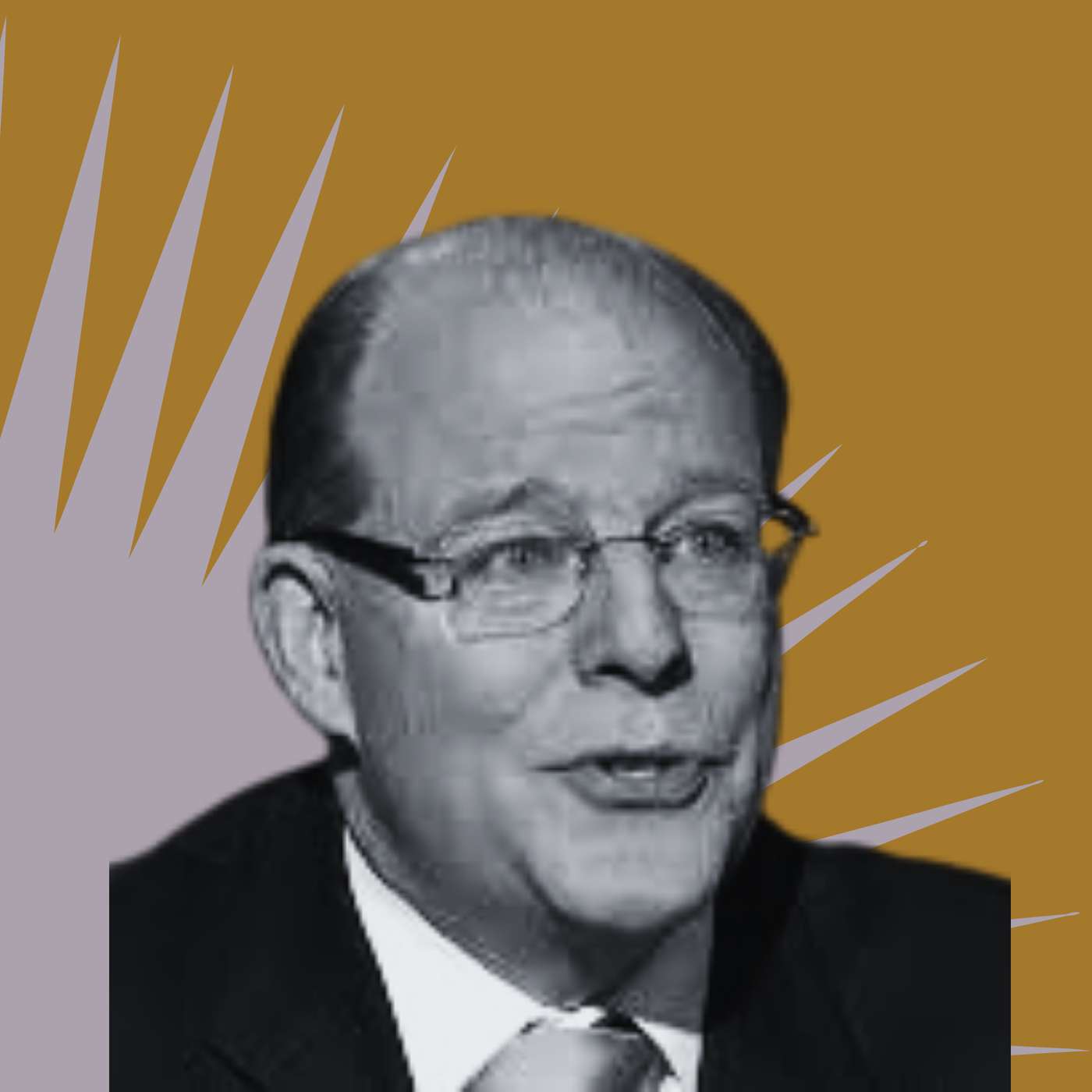


“They weren’t interested in being on the side of God so much as they are insistent that God is on their side.” — Peter Wehner on Hegseth and Trump
According to Peter Wehner, something has gone terribly wrong in America. And that something, Wehner has been warning us now for more than ten years, is Donald Trump. In his latest Atlantic piece, “Hegseth’s Unholy War,” Wehner aims his moral rifle at Trump’s latest outrage, the Iranian conflict. Citing Hegseth’s prayer at the Pentagon for “overwhelming violence of action against those who deserve no mercy,” Wehner argues that the Bible, in his Crusader-like hands, has been weaponized into a theological cover for bloodlust.
Something has gone terribly wrong with the intersection of faith and American politics, Wehner believes. The evangelical church, which once commanded real moral authority, has largely become what he calls a defamation of Jesus. Thus the significance of Pope Leo XIV’s public opposition to Trump. Rather than a social media spat, Wehner sees this Papal indictment of Trump as a kind of moral war which has been brewing for some time.
In a recent New York Times op-ed co-authored with Jonathan Rauch, Wehner argued that the Trump administration has reached its psychotic stage. Having filled key institutions with Hegseth-style lackeys and hoodlums, this psychosis is now infecting not just the federal government but the whole world. Thus Iran. It’s the kind of fiasco you wouldn’t expect from middle schoolers planning a field trip, Wehner says. His fear is that as Trump is humiliated by both the Papacy and Tehran, the President of the United States will have what psychologists call an extinction burst — a five-year-old’s out-of-control tantrum. Yes, something has indeed gone terribly wrong in America.
Five Takeaways
• Hegseth’s Unholy War: At a Pentagon worship service, Hegseth prayed for “overwhelming violence of action against those who deserve no mercy,” invoking imprecatory psalms — emotional laments written from the perspective of the powerless — as theological cover for the most powerful military force in history. Wehner’s sharpest line: Hegseth and his allies are not interested in being on the side of God; they are insistent that God is on their side. The Bible becomes not a text for self-examination but a weapon aimed outward. Wehner’s diagnosis: Hegseth has a bloodlust, unresolved resentments, and a conversion that is at least in part real — but real in the sense that he has locked onto a particular brand of faith to validate things he already believes.
• Something Has Gone Terribly Wrong: The evangelical church, which once commanded moral authority, has become — by and large, in Wehner’s view — an awful depiction of the Christian faith and a net negative contribution to American civic life. Figures like Franklin Graham, Tony Perkins, Robert Jeffress, and Al Mohler have become vocal Trump supporters, using the name of Jesus to validate cruelty and crudity. Wehner’s explanation: too many people who know better are afraid to speak out — afraid their congregations will split, afraid of the institutional costs. But the silence is not neutral. A watching world has seen these evangelicals and concluded: you are a bunch of hypocrites who act worse than the people you criticize.
• Pope Leo XIV vs. Trump: Wehner thinks this is not a tiff. It is an intellectual war, and it has been carefully planned. Pope Leo — an American pope, significantly — represents a set of contrasts almost too clean to be coincidental: a moral man against an amoral one, a person of faith against a person of no faith, someone who uses language with care against someone who cannot help but dehumanize his critics. And an institution-builder against an institution-destroyer. Wehner credits Leo with performing a necessary function that almost no one else in American public life is capable of performing — confronting Trump on explicitly moral terms with unblemished authority.
• Vance: The Mask He Wears: Wehner distinguishes Hegseth from Vance: Hegseth is, in some sense, a true believer; Vance’s conversion to MAGA was transparently cynical, driven by enormous ambition. That makes him more morally culpable, not less. But Wehner also notes a psychological dynamic: when you live a life at odds with what you truly believe, cognitive dissonance is painful, and the mind mitigates that pain by rationalizing, by beginning to believe what you say. You become the mask you wear. Vance, Rubio, Graham, Johnson — these are people who knew better, decided to make a figurative deal with the devil, and convinced themselves they could do more good than harm.
• The Republican Party Has Become a Dark Force: Without the Republican Party, none of this could have happened. The party is hugely accountable. Trump is sociopathic — colorblind when it comes to morality, probably unable to help himself. But the Republicans in the party did know better and went along anyway. Mike Johnson, very big on proclaiming his evangelical faith, is a pathetic and disreputable figure. His reputation has been stained beyond belief. Wehner’s verdict on the party’s future: if it has any association with the current iteration, it deserves condemnation. The roots of MAGA go too deep for a snapback. This may get more chaotic after Trump leaves than less. History will get it right, Wehner believes. These people were on the wrong side of their faith, their morality, their politics, and their justice. And it will be known.
About the Guest
Peter Wehner is a contributing writer at The Atlantic and a senior fellow at the Ethics and Public Policy Center. He served in the Reagan, George H.W. Bush, and George W. Bush administrations. He is the author of The Death of Politics and several other books. He lives in McLean, Virginia.
References:
• Hegseth’s Unholy War by Peter Wehner, The Atlantic, April 2026.
• “Pete Hegseth’s Moral Unseriousness,” by Peter Wehner, The Atlantic, April 2026.
• “The Trump Administration Is in a Psychotic State,” by Peter Wehner and Jonathan Rauch, The New York Times, April 10, 2026.
• The Barmen Declaration (1934) — Bonhoeffer’s theological break with the German Protestant church under Nazism, discussed as a historical precedent.
About Keen On America
Nobody asks more awkward questions than the Anglo-American writer and filmmaker Andrew Keen. In Keen On America, Andrew brings his pointed Transatlantic wit to making sense of the United States — hosting daily interviews about the history and future of this now venerable Republic. With nearly 2,900 episodes since the show launched on TechCrunch in 2010, Ke...
00:31 - Trump vs. the pope: from Attila the Hun to Donald Trump
01:59 - Hegseth as crusader: bloodlust and unresolved resentments
03:28 - Pete Hegseth’s moral unseriousness: a serious position held by an unserious man
04:43 - Something has gone terribly wrong with faith and politics
06:51 - Hegseth vs. McNamara: the whiz kids and the secretary of war
08:26 - What can be done about someone who claims to be religious?
09:33 - The silence of evangelical Christians who know better
11:52 - The crusades and the question of a new schism
12:59 - Constantine’s costly legacy: when Christianity got power
16:26 - The Barmen Declaration: can Christians excommunicate MAGA Christianity?
17:41 - Bonhoeffer, Niemöller, Barth — and the Minneapolis moment
20:18 - The loss of moral authority across all institutions
21:49 - Pope Leo XIV: a moral man against an amoral one
22:49 - The elements of a real drama: faith vs. no faith, care vs. dehumanization
25:18 - Is the pope the only person of unblemished moral authority?
25:46 - Franklin Graham: the bootlicker and the defamation of Jesus
27:06 - Should Wehner become a Catholic?
30:00 - JD Vance warns the pope: becoming the mask you wear
30:46 - Vance vs. Hegseth: cynicism vs. true belief
31:19 - The Shakespearean quality of Vance
33:33 - Tucker Carlson apologizes: the crack-up begins
35:02 - The Trump administration in a psychotic state: the Rauch-Wehner thesis
35:31 - Trump 2.0: no guardrails, chaos in Iran, the extinction burst
38:34 - Trump pincer-attacked by Tehran and Rome: who else has done this?
40:24 - What happens to the evangelicals when this ends? Cheap grace.
42:18 - History will get it right. It’s an easy one.
44:47 - Senior military contempt for Hegseth: war crimes and just war tradition
48:19 - The Republican Party: hugely accountable, complicit, a dark force
50:02 - Could Wehner ever go back? Not any time in the foreseeable future.
00:00 -
00:00:31 Andrew Keen: Hello, everybody. History seems, once again, to be repeating itself. This time it's Donald Trump taking on the pope. There was an interesting piece in Politico — "From Attila the Hun to Donald Trump: A Brief History of the Pope's Battling World Leaders." You might throw in Henry VIII there, and many other world leaders. And of course, there is a historical resonance — some of it slightly absurd, much of it very disturbing — about the most recent war in Iran, or America's war in Iran. My old friend Peter Wehner, one of America's most conscientious writers and commentators, particularly on Trump — both in moral and intellectual terms — has a very interesting new piece in The Atlantic, "Hegseth's Unholy War," Hegseth being of course the minister of war in the Trump regime. Pete argues that the defense secretary seems less interested in being on the side of God than on insisting that God is on his side. And it always seems to me as if Hegseth is a bit of a crusader. Pete, welcome back to the show. It's nice to see you.
00:01:46 Peter Wehner: I see you.
00:01:46 Andrew Keen: Is history repeating itself? Is this latest episode of American involvement in the Middle East just one more chapter in the history of the crusades?
00:01:59 Peter Wehner: Well, what's the line — if history doesn't repeat itself, it rhymes? Given who Pete Hegseth is, who we know him to be, I do think there is probably an element of the crusades within his framework. I think that's driving some of what he's interested in. I think it goes deeper than that too. As it relates to Pete Hegseth, I think it's tied to his psychology. He's working out a lot of unresolved issues, and those are challenging enough for an individual. It's a lot more serious if you happen to be secretary of defense and have a lot of weapons at your disposal. But there's a kind of bloodlust with Pete Hegseth. I think he has very clear stated resentments. If you read his book, he had resentments toward the military — when he served in Iraq, he felt he was mistreated. He's a person with a MAGA mindset, in an authentic rather than a cynical way. And so a lot of who he is as a person is playing itself out. Part of that is that he's become associated with a movement run by a pastor named Doug Wilson, which is fairly radical — I would say malicious — in many respects. And so I think he is justifying a lot of what he is doing in the name of Jesus, even though in the process I think he's defaming the authentic name of Jesus.
00:03:28 Andrew Keen: You wrote another piece on Hegseth a couple of weeks ago in The Atlantic, "Pete Hegseth's Moral Unseriousness" — at least that was what the Atlantic editor chose to headline it. How much seriousness should we give to a guy like Hegseth, Pete? You noted — and you put it in your own very polite way — that he's working out some things about himself. Someone like myself might put it in slightly less polite terms. He strikes me, if we want to talk about the crusades, as a very low-level crusader —
00:04:10 Peter Wehner: Yeah.
00:04:11 Andrew Keen: — from the tenth or eleventh century, the kind of guy who would get drunk and go in and rape and pillage Constantinople or Jerusalem or wherever else he happened to turn up. I want to come to Trump in a few minutes — we've had many conversations on Trump. But for you, are you torn between, on the one hand, dismissing any kind of claims to morality and, on the other, critiquing whatever religious high ground he claims?
00:04:43 Peter Wehner: Yeah, it's a good question. To your first question, I'd say he is unserious as a person, but he holds a serious position. If he weren't secretary of defense — or, as he likes to refer to himself, secretary of war — I wouldn't spend any time on him. He's certainly an intellectual lightweight, a person who doesn't seem to be acquainted with ideas in any regard. In that way, he's very Trumpian, fits very easily into the MAGA universe. He's light as air in many respects, but Trump appointed him secretary of defense, and that has a certain gravity to it, as we're seeing. In terms of the morality, and how seriously we should take his take on faith and morality — I think to some measure we need to, again because of the position he holds. But in that respect, I think he's indicative of a broader phenomenon. Something has gone terribly wrong with faith and culture, with the intersection of faith and politics. We need to understand that, because a lot of damage is being done by people who claim to be Christian. I think Hegseth is an avatar of a certain kind of person. There's a whole spectrum of people who are doing damage. He's one of them. I don't know him — I've never met him, so I'm speaking from afar — but my hunch is his conversion is at least in part real. He thinks it's real. And what he is doing is using scripture to validate his bloodlust and to affirm things he already believes. That happens to a lot of people all the time, but I think this has a fairly particular manifestation. Again, I think that's tied to the movement he's a part of. Because his life is desolate, he's searched for ways to try and bring it together, and I think he's locked in on a particular brand of faith to do that.
00:06:51 Andrew Keen: In terms of American history, he's a very different kind of character, say, from Robert McNamara, who became the poster child for the moral catastrophe in Vietnam — who ran Ford, was a Harvard graduate, really smart, very serious. Hegseth seems the reverse of someone like McNamara.
00:07:12 Peter Wehner: Oh, I think that's right. Weren't they "the whiz kids," I think they were referred to during the Kennedy years?
00:07:18 Andrew Keen: Yeah. And of course, the phrase "the best and the brightest" came from that book — he was in that book, or if he wasn't, he could have been.
00:07:25 Peter Wehner: Yeah, absolutely. John F. Kennedy had a very high regard for McNamara — he was among the people I think he had the highest regard for. I think that was true to some extent at least of the early Bobby Kennedy. When RFK turned against the Vietnam War — which was sort of the mid-sixties, '66, something like that — you'll know more than I do, because you're working on a book on him. But they had a very high regard for McNamara, as you said. He had run Ford Motor Company, he was esteemed academically and elsewhere. As it turned out with Vietnam, he made some key analytical errors, probably came to believe things — wishful thinking — and then there was the issue of deception as the Vietnam War unfolded, and whether they were actually reporting facts on the ground in a way that was accurate. So McNamara was a story more of a Greek tragedy element.
00:08:26 Andrew Keen: Yeah. We've even done shows on a recent biography of McNamara. I like your phrase, Pete — I know you've probably said it before, certainly to yourself if not to me: something has gone terribly wrong. You write very much from a religious perspective. You're doing a wonderful series in The New York Times of interviews, conversations with distinguished theologians. You have a recent one with David Bentley Hart on why Hart is not an atheist — because he thinks the philosophical arguments against it are unanswerable — for serious religious figures like yourself. What can you do about someone like Hegseth who claims to be religious? As you would know, you can't prove he isn't. You can't prove that he doesn't sit at night and commune with God. What are we supposed to make of — I mean, Trump is another example, although I don't think he's quite as morally callous as Hegseth, at least in terms of Christianity.
00:09:33 Peter Wehner: Yeah, I'm not exactly sure. One thing that I think can be done and needs to be done is that individuals who have a different interpretation and understanding of the Christian faith need to speak out. There's been way too much silence, certainly among evangelical Christians, in my view. The pope, who's Catholic, obviously, has taken a different approach — he's confronted Trump in moral terms. And so it's a very fascinating battle that is shaping up there. But among evangelicals, I think far too many people who know better — who will privately tell you they're horrified by what Trump and Hegseth stand for, that the use of Christianity to validate their actions and approach, their cruelty and crudity, really bothers them — far too many of them are afraid to speak out. It's complicated as to why, but I think fear: fear for themselves, fear that their congregations will split. And why is that? Because there are a lot of people, as we know from the data — even white evangelicals who voted for Trump — who are very much on board. But there are a whole group of people — Franklin Graham and Eric Metaxas and Tony Perkins and Mike Huckabee and Robert Jeffress — I could go through a list of people who claim to be followers of Jesus, claim to be evangelicals, who are very vocal Trump supporters. And that to me is a defamation of Jesus. It's a defamation of the Christian faith. I do what I can as a follower of Jesus, an imperfect one for sure, but I do what I can to try and be true to what I believe. And I believe what they're doing is a distortion — almost a kind of Nietzschean will-to-power, a transvaluation of values. And the fact that this is not self-evident is just a striking thing. I suppose it reinforces a belief I've increasingly had as I've gotten older, which is that the way to understand human life and politics is much more through the prism of psychology and human emotions than through rationality, or in this case, serious theology.
00:11:52 Andrew Keen: I know you're not really a historian of the church, and I didn't ask this question before, so you might not be prepared for it, Pete. But when it came to the crusades, for example — which still remains probably the great moral stain on the Christian church, on the Catholic church, and the way the crusaders behaved — were there attempts by the theological establishment of one kind or another to distance themselves from tenth- or eleventh-century characters like Hegseth, who just claimed to be Christian and behaved in an absurdly violent and gross way in the name of God and the church? I mean, obviously, in a way, that's also the foundation of the Lutheran reaction against Catholicism. Is there potentially a kind of schismatic quality to what's happening these days?
00:12:59 Peter Wehner: Yeah, it's a deep question. I think there were voices historically, but I think certain wrong turns were taken throughout Christianity. It oversimplifies it, but Constantine, in the fourth century — I think that ended up being pretty costly. It's interesting if you study church history. The early Christian church spread like wildfire — and we're talking from the time of Christ really up until right around the time of Constantine. It didn't have political power. In some respects it didn't have cultural power; in other respects it did. But it was the power of the witness of Christian lives and Christian community, especially toward the dispossessed, the people who were viewed as the sort of bottom of the barrel of society. In my interview with David Bentley Hart, who has an extraordinary mind, including his knowledge of the patristics, the early church fathers — that was what was so revolutionary about what Jesus summoned into the human consciousness: a particular care for and love for the people who were aliens and sojourners. When Christians manifested that in their lives, it had a tremendously powerful effect. It's part of the reason why the faith spread the way it did. Once Christianity became associated with power, it started to make accommodations — moral accommodations and other accommodations — which really hurt the faith. And then what happens is that the state wants to control the church. This happened, obviously, with Nazism, both with the Protestant church and the Catholic church, making deals. The church makes the deal because they think, well, we'll get favorable treatment from the state, or at least we won't be persecuted, but then the state demands certain allegiance to what it believes. There have been voices throughout — whether it's the Inquisition, or the crusades, moments of awful antisemitism — where people would speak out. But my understanding — and I'm not a church historian — is that that's rare. And the reason it was rare is because there was fear that the institution would turn on them. In a very different realm, Andrew, if you look at geocentrism and heliocentrism — whether the Earth revolves around the sun or the sun around the Earth — there was a very deep commitment. And in this case the people who grounded their beliefs in scripture said, no, the sun has to revolve around the Earth. There are verses in Psalms and elsewhere that prove it. That's what they argued. So when Copernicus and Galileo came along and questioned it, what happened? Well, they got into a lot of trouble with church authority. So this is not new, what we're going through — whether we're at a point of a schism, I don't know. But I would say that the evangelical church is going through some real convulsive moments right now, and something is going to emerge out of it that's different from what we've seen in the past. But what the evangelical church stands for today, by and large, is, I think, an awful depiction of the Christian faith. And I think it is net-net more of a negative than a positive contribution to our civic life and to American politics.
00:16:26 Andrew Keen: Yes. This clearly happened before. At the beginning of your piece in The Atlantic, you quote Shakespeare, of course, who was writing during the Reformation. Should Christians of all types, from Roman Catholics to people like yourself, get together and say, look — you evangelicals, you do whatever you like and say whatever you like, but we don't want you using the C-word. [unclear] another word. Go somewhere else. In the same way, in a sense, the Catholic church did in the sixteenth century.
00:17:11 Peter Wehner: Right.
00:17:12 Andrew Keen: I know it sounds rather absurd. But is it conceivable, Pete, that at a certain point Christians — to borrow some language from Marx — Christians of the world unite. You have nothing to lose but your name, or your faith. And at a certain point, you have to say to these people, we just don't want any association in name or tradition with you.
00:17:41 Peter Wehner: Yeah, no, it's a very fair question. You have historically something called the Barmen Declaration, which Dietrich Bonhoeffer was a part of, and that's precisely what happened. Niemöller to some extent, Karl Barth — but Bonhoeffer most particularly broke with the Protestant church in Germany and said, no, this is not what we stand for. Now there have been people at many different moments who have tried to replicate the Barmen Declaration. That was sui generis because of the circumstances of Nazism. There are people — I have a close friend, Mark Labberton, former president of Fuller Theological Seminary, who helped write and signed and urged others to sign a statement in the aftermath of what happened in Minneapolis, when the two killings from the ICE agents took place. And people signed that and actually went to Minneapolis for protests. And that made a difference. That galvanized the conscience of the country, and ICE backed down, and Trump backed down. That was one of the few good news stories of resistance that we've seen during the Trump era. I'm completely in favor of it. I will tell you, Andrew, that one thing that is different now than in the past, and that complicates the equation, is that there's been such a loss of authority across the board in virtually every institution. This is not specific only to America, but it's true certainly in America. And you do not have the kind of authoritative voices that you did. Sixty years ago, if Billy Graham had taken a stand, or somebody like John Stott, who's a very significant figure in the evangelical world, or going back earlier than that to, say, C.S. Lewis — figures like that — if they had spoken out, that would carry weight. You just don't have those kind of figures now. And that's not true only of Christianity or religion. It's true of intellectuals. When William F. Buckley — and I wasn't a particular Buckley fan — but if Buckley spoke out in the sixties, or even in the nineties, when he basically said Pat Buchanan has to be excommunicated from conservatism because of his antisemitism, there were people who had the authority to say that and people would listen. Today, because of the massive mistrust that exists along almost all institutions, there aren't those kind of figures who could speak out and command that sort of moral authority.
00:20:18 Andrew Keen: Well, something has gone terribly wrong when it comes to moral authority. I don't know anyone in America who has more of it, and has been braver in expressing themselves from the earliest times of the Trump administration — Trump one, Trump two — than Pete Wehner. Pete, we're going to take a short break, and then I want to come back and talk about not Hegseth, but Trump and the pope. So hold on, everyone. We'll be back in two seconds.
00:20:43 Andrew Keen: This is not a commercial break — that's because we don't have commercials on this show. I'm not going to waste your time trying to sell you inane products. However, I do have a pretty good deal for you. I'm writing a book about the United States. It's due out in 2028. And if you become a paid subscriber on my Keen On America Substack, you'll not only get very cool notes and photographs and videos from this project, but I'll also send you a personalized signed copy of the book when it comes out in 2028. So go to keenon.substack.com and become a paid subscriber. That's keenon.substack.com. And now back to our conversation.
00:21:49 Andrew Keen: We're speaking with Pete Wehner — I was going to say Pete Hegseth, that was a terrible feat — author of "Hegseth's Unholy War." Pete, we spent the first half of the show talking about Hegseth, crusades, excommunicating guys like Hegseth. The man who has done more perhaps than anyone, certainly in this latest chapter on the Iran war, is the pope. "Even Catholic Trump supporters apparently feel conflicted over the president's tiff with the pope," according to CNN. I think it's more than a tiff. One might describe it as an intellectual war. CNN argues that Leo's target is bigger than just Trump — he's rebuking what they call the MAGA Jesus. What do you make, Pete, as a very careful observer of religious life, of what the pope is doing? Is this spontaneous? Has it been planned?
00:22:49 Peter Wehner: I don't think it's spontaneous. I think this is being thought through pretty carefully. My sense of Pope Leo — who I don't know, but as an observer from afar, and knowing how the Catholic church works — I don't think this is him riffing, if you will. To some extent his predecessor, Francis, did. I don't think Leo tends to do that. I think it's a pretty important moment, and I agree with you: I don't think this should be seen exclusively or even primarily through the frame of the Iran war. I think that's proximate cause for the conflict, but I think it's been brewing for a while, and Pope Leo has been making statements for a while — and significant that he's an American pope, of course — that have been setting down some markers. And I think this has the elements of quite a drama around it, for what I think are fairly obvious reasons, but just to state them: you have a man who is moral pitted against a man who's amoral and immoral. You have a person of faith against a person of no faith. You have a person representing an institution in Leo and the Catholic church versus a person who loves to destroy institutions and has no affiliation, no regard for institutions or their traditions. And then you have a person, in Pope Leo, who uses his language and his rhetoric with care, and does not personalize or dehumanize even as he disagrees with people — versus Donald Trump, who is very much the opposite. He's a person who can't help but dehumanize his critics and his opponents and who seems to thrive on conflict. I think those are some of the elements that make this quite an important moment — apart from the fact that you have the most important religious leader, and the most well-known religious leader in the world, in the pope, versus the most powerful person and probably the most well-known person in the world in Donald Trump. So I think this is a big deal, and I don't think it's going to dissipate anytime soon, knowing Donald Trump and his reactions to some of the criticisms from the pope. This isn't a fight he's going to be inclined to avoid.
00:25:18 Andrew Keen: Yeah. The Hill ran a piece about "The Holy War America Needed" — a war of the pope, perhaps, against certain kinds of immorality. Do you agree? Is the pope really the only person of unblemished moral authority who can take on Trump and Hegseth and all these other outlaws? Some people might even consider them criminals, certainly when it comes to war crimes these days in Iran.
00:25:46 Peter Wehner: Yeah, he's not the only one, but I think for institutional reasons he's the most obvious one, and that's why I'm glad that he's speaking out the way he is. It just has the drama of a single person pitted against another person, even though obviously Pope Leo represents the Catholic church. So he's the most important moral voice I could think of. Quite honestly, there just aren't many other moral voices that I could see doing it either — either because those voices have been to varying degrees corrupted. Somebody like, say, Franklin Graham, who's the son of Billy Graham, significant within the evangelical world, has become just a bootlicker for Donald Trump to absurd degrees, and is doing enormous harm to the gospel of Christ, again, in the name of Christ. I don't think he's cynical about it. I think the poor man is just deluded beyond belief. But there aren't those kind of figures in America who seem willing or able to stand up. So there's Pope Leo, and he's doing it. So all honor and credit to him.
00:27:06 Andrew Keen: Does it sometimes perhaps suggest that you should cash in your theological chips? You might not quite be a Catholic, but ultimately all these religious groups come down in some ways to politics. And even a guy like yourself, who's been a continual moral thorn in the side of the Trump regime right from 2015 — you're one of the very first people to warn us about what was going to happen, Pete; you've been pretty much accurate on most of the stuff you've written and predicted and warned us about — should you just join in, become a Catholic, not worry so much on the theology and focus on the politics?
00:27:47 Peter Wehner: Yeah, it's an interesting question. I should say, just as to my own personality, I've never been much of a joiner, and denominations have not been central to my walk of faith. For some people it's a very big deal; it hasn't been for me. The Catholic church, I think, has a lot to commend and a lot to apologize for as well. Theologically I'm not quite there, but I'm not quite theologically in the evangelical world either. Sometimes I feel like I'm slightly in my own world, borrowing bits and pieces from different theological traditions — some from Catholicism, some from Eastern Orthodox, some from evangelicalism. I'm quite sure that me joining the Catholic church or not joining the Catholic church would have no impact at all. I'm making the critiques that I make, and I make them whether I'm a Catholic or a non-Catholic. I try and write in a way, and present myself in a way, such that the critiques stand on their own, whether they're rooted in faith or in political philosophy or in just moral common sense. I think that probably determines the degree to which they have resonance, whether they're persuasive or not. So I think if I joined the Catholic church, it wouldn't make the Catholic church any stronger. I don't think it would make my argument any stronger or weaker. I'm just — I'm a pilgrim and a sojourner trying to figure out my way through faith. Even in that theological series that you referred to, that I do in the Times, and in some of the essays on faith that I've written, the truth is I'm working out some issues and questions and doubts that I have too. I have a lot of them. That's just the way I'm hardwired. And I'm not worried about airing those things in public. I'm interested in having those conversations and trying to ascertain the truth as best I can, and often that involves talking to people who are smarter than I am and who hold views that are different from mine and are part of traditions that are different from mine.
00:30:00 Andrew Keen: One person who did join the Catholic church, and probably regrets it now, is JD Vance. He's been warning the pope — the head of the church that he's a member of, and he may be flirting with excommunication too — that the pope, quote-unquote, "should be more careful when talking about theology." I'm not quite sure what he means. What do you make of Vance? He's not quite a charlatan like Hegseth. He's not a low-level crusader going around rampaging, pillaging, looting, and raping. He's more of a — I don't know. How would you describe him historically? He's not coming out of this looking very good, I don't think.
00:30:46 Peter Wehner: No, I don't think he's looking good at all. In terms of understanding JD Vance, I would say he's more cynical and less of a true believer than Hegseth. I think his conversion to MAGA world and to Trump was transparently cynical, and tied to an enormous ambition for power. So in some ways, I hold him more morally culpable than a kind of true believer — say, somebody like a Marjorie Taylor Greene or somebody like that.
00:31:19 Andrew Keen: In that sense, there's a sort of Shakespearean quality, if that's the right word, to Vance.
00:31:28 Peter Wehner: Yeah, I think so. I don't think he's a particularly impressive figure. I don't think he's a particularly beloved figure in MAGA world either. His own journey has taken some interesting turns in terms of his conversion to Catholicism — he's really become burrowed into various subcultures within the Catholic world that I think are troublesome. I do wonder, with Vance and others too, Andrew, that over time, they make these moves cynically — it's driven by cynicism — but there's a line that you become the mask that you wear. And I think that's partly because, psychologically, the pain of cognitive dissonance — the pain that most people who are not sociopathic have when you live a life at odds with what you really and truly believe, or when you embrace immorality and unethical conduct and unethical attitudes that you know are — that creates for most people a lot of internal tension. And so you try to mitigate that tension. Your mind tries to mitigate that tension, and you begin to rationalize what you believe. You begin to believe what you say. And I imagine with Vance, some of that is going on. And then you have an echo chamber, the kind of people he surrounds himself with, who I'm sure are affirming many of his worst instincts and some of his worst theological attitudes. But look — at the end of the day, I would say Vance is like Marco Rubio and Lindsey Graham, and you go down the list: these are people who knew better. They're cowards, essentially. They decided to make a figurative deal with the devil. They justified it to themselves. They convinced themselves, probably, that being close to power and in positions of power, they could do more good than harm, that they could mitigate the worst tendencies of Trump.
00:33:33 Andrew Keen: More harm than good.
00:33:34 Peter Wehner: Or more — yeah, sorry — they could do more —
00:33:36 Andrew Keen: That was a Freudian slip, Pete.
00:33:38 Peter Wehner: Yeah. Let me put it this way: I don't think they're worried about the harm they're doing in the name of good. I think that's probably pretty obvious at this point. You know, the betting right now — it's way too early — is that JD Vance would be the favorite to replace Donald Trump whenever Trump leaves the scene. I'm not quite as convinced. He has obvious institutional advantages, but I don't think he's a particularly compelling figure, and as I said earlier, I don't even know that he's that compelling in MAGA world. We'll see what plays out. But my hope is that there is a comeuppance for Vance and for a lot of the Trump followers. By the way, it's apropos that you've seen recently that Tucker Carlson is now apologizing to his listeners on his podcast for having made the case to reelect Trump, which I think is notable. Tucker Carlson is an abhorrent figure, I think, in a lot of ways. But I do think this is interesting, because what I think it signifies is that there is a crack-up. There's obviously a crack-up in the MAGA movement. We see that playing out virtually every day, from different quadrants within MAGA world. But you're also seeing figures who are now willing to break with Trump. And I think that's because he has the stench of being a loser.
00:35:02 Andrew Keen: And you wrote an excellent piece on this with Jonathan Rauch, another old friend of the show. You and he have often contributed to The New York Times, always writing particularly appropriate, timely pieces. You believe now that the Trump administration is in a psychotic state. I mean, it always seems to be in a somewhat psychotic state. What makes it particularly psychotic? Is it its weakness? Is it cracking up, Pete?
00:35:31 Peter Wehner: I think it is cracking up. The case that John and I made — John was really the key person in this particular essay; he was the one who had the best insight, and I want to make sure I say that. I'd say the difference between Trump 1.0 and 2.0 is exactly that — the psychotic state. Trump, even in the first administration, while he was problematic and did things I think were troubling, there were some guardrails — whether you're talking about people like the generals, like John Kelly or others in the Trump orbit, who didn't allow him to get away with some of his most bizarre and insane ideas and impulses. Trump 2.0 is very, very different, and Trump was intentional about that. He really had a choke hold on the key institutions — CIA, DOJ, FBI, the Department of Justice. And he's filled them with lackeys and sort of hoodlums and stooges, to advance his cause. But what's happened is that the psychosis that I think Trump is quite obviously dealing with and has been for many years is now going outward, and downward, and really infecting the federal government in ways that it didn't in 1.0. And so the administration itself — we saw this with the Iran war. Whatever you think about the merits of going to war with Iran, there was a case that could be made. I'm not sure it was a persuasive case, but there was a serious case that could be made. But the way this was done and executed and explained or not explained — you can just see the chaos. It's utter insanity. It's the kind of thing you wouldn't expect from a group of middle schoolers planning an operation, let alone people in the federal government. And so the state itself has become psychotic, disoriented, unable to operate within reality. And that has a tremendous cost, as we're seeing. I think, by the way, Andrew, what is now happening is that Trump is colliding against a world he cannot shape and will not bend to his will. It happened with NATO. It's happening now with Iran. And my fear with Donald Trump is that he's going to have what psychologists call an extinction burst, which often refers to children with disordered personalities. When they lose control of situations they're used to controlling, or they are used to getting away with things, and then parents, or school authorities, or others say no, you can't do it — there's what's referred to as an extinction burst, which is this anger and outrage, and because of the loss of control, they become out of control.
00:38:34 Andrew Keen: Yeah. And as any parent — you're a parent, I'm a parent — we all know what it's like dealing with an out-of-control five-year-old. In that excellent piece you wrote with John, you end by saying that the Iran war has most vividly demonstrated the scope of the problem of this breakdown, this psychotic state. Thinking out loud, Pete — what's happening now is that Trump is facing a pincer attack from, on one hand, the Shiite theocratic regime in Tehran, and on the other hand, the pope. It's bizarre. Who else in the history of the world has united both Islam and Rome — Shi'ism and Roman Catholicism?
00:39:28 Peter Wehner: Well, there you go. It turns out Donald Trump has this capacity to bring the world together in a way that no previous historical figure did. He's a healer of the breach.
00:39:38 Andrew Keen: Yeah, even Shakespeare wouldn't have come up with this narrative. So it's coming to an end, I hope, at least — we all hope. I'm sure most people listening to this and watching this hope. What's going to be the outcome, Pete, for — there are always these pieces on Trump's religious supporters, Catholics or otherwise, feeling conflicted. But will there be blood spilt after this shameful episode comes to an end? What's going to happen to your evangelicals — they're not your evangelicals, but these evangelicals that you've been criticizing so loudly for the last twelve years?
00:40:24 Peter Wehner: Yeah, I'm very curious to see what plays out, Andrew. I don't know. Some of them will probably pretend they never did what they did. Some of them will explain it away, probably like Tucker Carlson — apologize and seek to move on. I don't imagine many of them are going to search their souls for what they did, and confront why they did it, because I think they would peer into something very dark, and something they just don't want to believe about themselves. I think a lot of them will opt for what Bonhoeffer called cheap grace — just, to use an evangelical word, repent and move on. Some of them will explain away what they did by saying, well, of course we did — we were never fully comfortable with him, but the left was an existential threat to everything we know and love, and so he was the only available option. So I think a lot of those rationalizations are going to go on. I will say that their witness on behalf of what they claim to care most about — which is Jesus, and the teachings of Jesus, and the fact that he's the Christ figure — that's been just decimated. And a watching world has seen this unfold, and they look at these evangelicals and say, you guys are a bunch of hypocrites. You act worse than the people you criticize.
00:41:55 Andrew Keen: And I think there must be stronger words than hypocrite. I don't know what the word is — probably, it being a family show, we can't use it — but hypocrisy doesn't cover it sufficiently.
00:42:07 Peter Wehner: Yeah. No. Look, they've done tremendous damage, and they've done it knowingly and unknowingly — it's been a combination. I hope there's a comeuppance for it. I hope there's accountability.
00:42:18 Andrew Keen: Well, there always is, Pete. I mean, you have a theological mindset, one way or the other, with a little bit of Shakespeare thrown in. That's inevitable, isn't it, in the history of our species? You never get out of these things completely.
00:42:34 Peter Wehner: Yeah, I agree with you. I think ultimately history gets it more or less right, and this is a pretty easy one for history to get right. These people were on the wrong side of their faith. They were on the wrong side of morality. They were on the wrong side of politics. They were on the wrong side of justice, and they're going to be known to have been on the wrong side of those things. The interesting question to me is whether that's going to be known not a hundred years from now, but five years from now. I imagine it will. I think this Trumpian moment is breaking apart. Now, how it ends, there are real concerns — but it is breaking apart. And my belief has long been that in the end, truth and reality assert themselves. They can't be subordinated forever, and the truth will out. This story will be told, and it'll be told more or less in the way it should be told, accurately. And a lot of these people I've named on the show, including others like Al Mohler, are going to be figures who are, I think, reviled in a lot of ways, for what they did and for the immorality that they promote.
00:43:48 Andrew Keen: And in the name of —
00:43:50 Peter Wehner: — in the name of Jesus.
00:43:51 Andrew Keen: In the name of good. In the name of Jesus. There is indeed an afterlife. They may burn for a long time. A couple more questions, Pete, before we have to go. You're always very generous with your time. You're talking to me from McLean, Virginia — not far from the CIA, from the heart of military America, from the Pentagon. Hegseth has been more and more involved in war, but particularly in disputes, conflicts with the military, with senior military figures. I know you're not a military guy, but my guess is that there is a deep distaste for what these people are doing among senior military figures.
00:44:47 Peter Wehner: One hundred percent. Yeah, that is absolutely true. I know people who are high-ranking in the military. It's hard to overstate how much contempt they have for Hegseth, how much harm they think he is doing. And I think they are thinking very, very hard about what can be done to contain the damage and to contain Hegseth if he flies off the handle, including military orders. I mean, Hegseth and Trump talk openly about war crimes — celebration of war crimes. And that is something that, if you know virtually anybody in the military, high-ranking, it is anathema to them. They care very much about morality. They spend much of their life and career trying to think through how we can be an effective military force, kill when we have to kill, but do it within the traditions of just war, and within the boundaries and parameters of morality. Those aren't easy questions. People have made mistakes, but these are people of enormous moral seriousness, distinguished thinkers, and distinguished human beings. And they helped build the American military into what it has become, which is an extraordinary force. There was accountability within the military, and, as I say, a moral seriousness. To see somebody like Hegseth and Trump just come along and pour kerosene and light matches and speak and celebrate war crimes — I mean, Hegseth's history — what did he do in Trump's first term? He basically lobbied Trump to get people who were convicted of war crimes off, and succeeded in doing that. So that's what you're dealing with. And so this drama — we've talked about the drama of the pope and Trump, but you very much have this drama too: Pete Hegseth against the highest ranks of the military. And they're smart people, they're good people, and they're effective people. I hope they carry the day, and I wouldn't be surprised if Hegseth has a relatively early exit.
00:47:05 Andrew Keen: Oh yeah. I've been saying for a while now that he'll be gone by Christmas. I think so. Finally, Pete — if there is all this accounting, I guarantee you, if the regime, as you and John are suggesting, is in a psychotic state, and it does really just melt down at some point — maybe Trump will be carted off to an insane asylum, who knows what will happen over the next year or two — there will be many, many articles about the end of the Republican Party, finish, blah blah blah. You're an old Republican. You got involved in all this with Reagan. You and I have had many conversations about this. You worked in the Bush administration. Two final easy questions for you, and we'll talk about this, I'm sure, many more times in the months to come: how accountable is the Republican Party for this? And does it have a future? What has to happen for the Republican Party to have a genuine future? It's not the Nazi Party, but there certainly is a terrible moral stain on it when all this ends.
00:48:19 Peter Wehner: Oh, absolutely. It's hugely accountable for what's happened. It couldn't have happened without the Republican Party. I would say this about Trump: he's sociopathic. He clearly has a disordered personality that should have been obvious to everybody for most of his life, certainly when he ran for office. I don't think he sees things in moral categories. You and I have talked about this before — I think he's colorblind when it comes to morality. He doesn't know any better. The Republican Party and the people in the Republican Party did know better, and they still went along with it. You take a guy like Mike Johnson, speaker of the House, very big on proclaiming his evangelical faith — he's a pathetic and disreputable figure. His reputation has been stained beyond belief because of how he's acted. Those are the people, and there's a range of them — from Vance and Josh Hawley to Lindsey Graham to Rubio, who we talked about earlier. These people were all complicit in an extraordinarily cruel and malicious political movement, which has done enormous damage to the ideals they said they cared about, to the country they said they loved, and to the world they inhabit. They are unbelievably accountable for this, and they're absolutely complicit. In terms of the future of the Republican Party — that remains to be seen. If it has any association with the current iteration of the Republican Party, then it deserves condemnation.
00:49:59 Andrew Keen: Could you ever imagine going back?
00:50:02 Peter Wehner: Well, I could imagine it. I suppose if it became a fundamentally different party, if it repudiated what happened and new authentic figures came in who tried to rebuild it, I wouldn't be opposed in principle to that. I have no interest in going back to the Republican Party any time in the foreseeable future because of, A, what it's done to the country and to the ideals I care about, to the faith that I care about — but also because I think the remnants of the MAGA movement are going to continue. You're not going to have any kind of snapback or fundamentally new party for the foreseeable future. The roots of MAGA go much too deep. The fact that Trump might end up disintegrating will be good in some respects, but those MAGA sensibilities that have been built, and the whole infrastructure that has been built up around Trump and MAGA world, are not going away. In fact, this could get more chaotic after Trump leaves than less chaotic. This may be some version of what happened after the French Revolution — when a revolution eats its own. We're seeing that happen, as I said earlier, on almost a daily basis, as one MAGA figure goes ferociously after another. So, look — for the time being, I think the Republican Party is a horrifying political party that's done tremendous damage, and people should say it. They should say it more, and they should keep saying it until there's some fundamental break with what it has become, which is a dark force on American life.
00:51:53 Andrew Keen: There you have it: the Republican Party has become horrifying. Something has gone terribly wrong in America. No one's been telling us this with more authority, I think, or consistency than Peter Wehner over the last decade. Pete, as always, great to have you on the show, and I'm sure this drama still has, for better or worse, a series of chapters left. We will talk in the near future. Keep well, keep safe, and keep speaking out. Thank you so much.
00:52:22 Peter Wehner: Thanks so much, Andrew. It's always a delight and interesting to talk to you. Thanks.