Really? Stephen Kinzer on How America Brought War to Ukraine
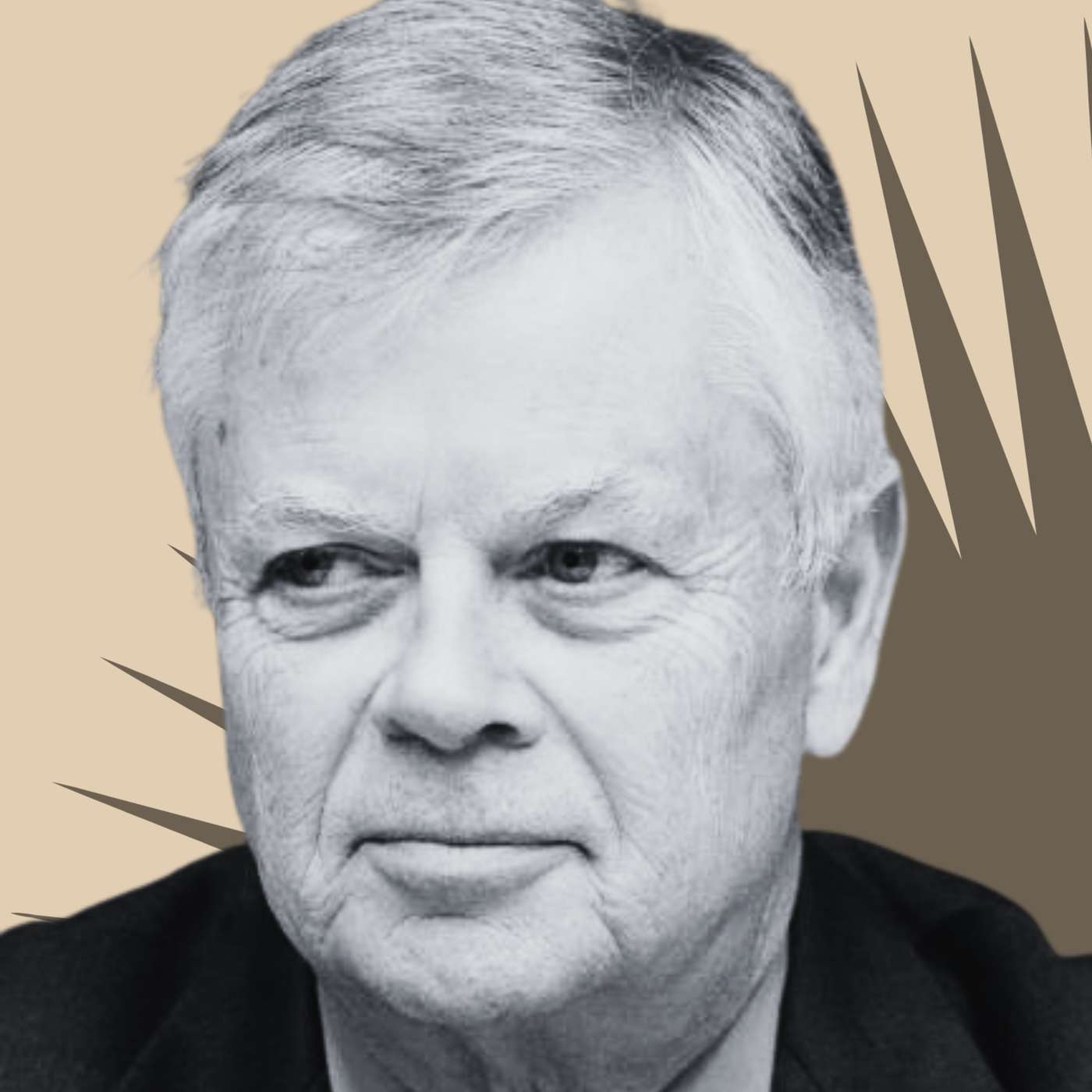


Who started the war in Ukraine? In the two months after Russia’s February 2022 invasion, the New York Times described it as “unprovoked” 327 times. Four times a day. That’s by Stephen Kinzer’s count. Which means — according to Kinzer, at least — that the New York Times blamed the war on the Russians.
Kinzer, the veteran Times foreign correspondent now at Brown’s Watson School, has a revisionist take on the war in Ukraine. His new book, Boiling Point, is a seventy-five-year history of what Kinzer calls America’s project to push Ukraine into conflict with Moscow. It begins with CIA commandos parachuted into Ukraine after the Second World War. After independence came the dollars. Bucketfuls, from the National Endowment for Democracy, Freedom House and George Soros’s Open Society Foundations. Then Clinton’s push to expand NATO. And then years of American training for Ukrainian troops. Wars, he reminds us, have causes.
Kinzer insists his book is history, not polemic. But it rings like finger-pointing. Every finger at the United States. Bill Clinton expanded NATO to win Polish American votes, he tells me. Joe Biden didn’t want peace. The end result being that “Ukraine is not the master of its own fate.” America is that master.
So seventy-five years of America’s anti-Russian Ukraine policy boiled over into just another American war. Really?
FURTHER READING
• Boiling Point: How America Brought War to Ukraine (Henry Holt, 2026), by Stephen Kinzer.
• “To Settle the Ukraine Crisis, Start at the End”, by Henry Kissinger, Washington Post, March 5, 2014.
• The Russia Hand: A Memoir of Presidential Diplomacy (Random House, 2002), by Strobe Talbott.
• KEEN ON AMERICA episodes cited: Charles Kupchan on governing the 21st-century world, Jackson Lears on how the American republic became an empire, Michael Dobbs on Reagan, Russia and the race to automate armageddon, and Edward Luce on Zbigniew Brzezinski.
ABOUT THE GUEST
Stephen Kinzer is a senior fellow at Brown University’s Watson School of International and Public Affairs. He spent more than twenty years as a foreign correspondent for the New York Times, serving as its bureau chief in Nicaragua, Germany and Turkey. His books include All the Shah’s Men, Overthrow, The Brothers, The True Flag and Poisoner in Chief. Boiling Point is published by Henry Holt.
ABOUT KEEN ON AMERICA
Nobody asks more awkward questions than the Anglo-American writer and filmmaker Andrew Keen. With 3,000 episodes since the show launched on TechCrunch in 2010, Keen On America is a daily conversation about the ideas, books and arguments shaping the United States. New episodes every day.
LIVE IN SAN FRANCISCO: How to See America. Who Stole America’s Pride? Arlie Russell Hochschild in conversation with Andrew Keen, Manny’s, December 8. Tickets: https://www.eventbrite.com/e/how-to-see-america-who-stole-americas-pride-tickets-2003996604791
00:00 - Intro
00:31 - AK: Kupchan, Lears, and a third voice on Ukraine
02:39 - Wars have causes: a 75-year history
04:24 - AK: are you comfortable with that subtitle?
04:56 - “Unprovoked,” 327 times in the New York Times
06:55 - AK: what about Mearsheimer?
07:17 - Dissenters shut out of the mainstream
07:48 - AK: what a foreign correspondent brings
08:44 - Seeing American policy from the other side
11:49 - AK: why leave the Times?
12:11 - The golden age of foreign correspondence
13:53 - AK: what was Ukraine to you?
14:32 - From covert CIA plots to the National Endowment for Democracy
17:42 - AK: was Ukraine always part of Russia?
18:16 - Shifting borders, and Frank Wisner’s CIA
20:01 - AK: is there a Ukrainian nation?
20:35 - Two nations inside Stalin’s borders
21:43 - AK: the 1990s and independence
22:26 - Kissinger’s bridge between East and West
23:37 - Diplomats and old grievances
24:52 - Clinton, the Holocaust Museum and NATO expansion
27:12 - AK: did America create Putin?
28:00 - Bill Burns and the brightest of red lines
28:50 - AK: why is NATO anti-Russian?
29:03 - Imagine China training troops in Mexico
30:20 - AK: spheres of influence?
31:05 - AK: why Ukraine, not the Baltics?
31:14 - “Here’s some more shit for your face”
32:00 - AK: the Budapest Memorandum
32:33 - Nuclear codes, and Gorbachev’s pinky promise
34:24 - AK: should Germany have stayed divided?
34:53 - A new Congress of Vienna
35:27 - AK: Kupchan’s Concert of Europe
35:44 - Indivisible security, and the tent
36:51 - AK: what kind of peace now?
38:07 - Istanbul, and an armistice like Korea
39:43 - AK: you sound like Trump
40:00 - Zelensky whipsawed, and the lesson of Nicaragua
40:43 - Closing
00:00:31 Andrew Keen: Hello, everybody. Over the last couple of weeks, we've been doing a number of shows on American foreign policy. How should America behave in the world? Few days ago, we had Charles Kupchan on the show, very much of an establishment Washington DC figure, teaches at Georgetown, member of the Council on Foreign Relations, very fancy sounding institution. He has a new book out, Bringing Order to Anarchy: Governing the World to Come. I'm not sure he's necessarily suggesting that America should govern the whole world, but he certainly believes that it has a responsibility to bring peace, and I guess prosperity to the world. He's certainly someone very sympathetic, to the Ukrainian side in the current war there. Then we had a very different kind of voice. Jackson Lears on the show. He's a long time very distinguished historian, teaches at Rutgers University. He has the cover story of this month's Harper's Magazine, "The Founders' Nightmare: Recovering America's Anti-Imperialist Roots," in which he strongly believes if not that America should be isolationist, it certainly shouldn't be interfering in other countries' affairs. And he's much more skeptical, I think, of, American involvement or American support for Ukraine. I'm pretty sure which side of this debate my guest today stands on. Stephen Kinzer teaches at Brown University at the Watson School. He lives in Boston. Longtime New York Times, foreign correspondent, the author of many books, and has a new book out. Very controversial, Boiling Point: How America Brought War to Ukraine. Stephen is joining us from the South End in Boston. Stephen, congratulations on the new book. Are you really saying that America brought war to Ukraine that if it hadn't been for America, the Russians wouldn't have invaded?
00:02:39 Stephen Kinzer: There's sometimes a view in America and probably in other countries as well that wars or crises simply explode out of nothing. That they're just caused by some evil person that has a terribly irrational aggressive streak. But actually, wars usually don't start that way. You—wars have causes. So, my book is not a book about Ukraine and is not a book about the Ukraine war. In fact, it ends when the war begins. My story is a history, of the seventy five year American project aimed at pushing Ukraine into conflict with Moscow. So, my book is a history. I'm not producing a rant or a screed. And the book does not necessarily lead you to any conclusion about the justice or injustice of the war or the wisdom of supplying more weapons for Ukraine's defense. All I'm hoping with Boiling Point is that people will understand where the crisis came from. This is one of the last great untold spy versus spy stories of the modern age, and it has such a relevance because it ultimately produced the war that's raging today. So my book, Boiling Point, is just a seventy five year stretch, a history that takes you through all the different phases of American intervention in Ukraine, starting with our dropping of armed commandos into Ukraine in the nineteen forties with the hope that they would start a guerrilla rebellion, right up to arming Ukraine, in the years before the, Russian conflict exploded.
00:04:24 Andrew Keen: I often ask this question, Stephen, to authors with provocative titles or subtitles to their book. The subtitle of your book is How America Brought War to Ukraine. Is this a subtitle you're comfortable with? Because you know that books appear on bookstores on tables, and people will be browsing through and thinking, oh my god. America bringing war to Ukraine? That's a really controversial and interesting subject. So are you comfortable with that subtitle?
00:04:56 Stephen Kinzer: Absolutely. I've always been—countering established narratives. That's what I spend my whole career doing. I think most of us understand that what we see and hear from our political leaders is not what really happens. There's something more going on behind the curtain. And I've devoted myself to trying to find out what that is. Often, I come to conclusions that contradict official narratives. So the, phrase that really drove me to write this book was one that was repeated ad nauseam right after the, Russian invasion of, February 2022. And that phrase is unprovoked invasion. I actually did a search to see how many times the New York Times used the phrase unprovoked invasion in the two months after the Russian invasion in 2022. And it came back saying that the phrase had appeared in the New York Times 327 times in those two months, which is about four times a day. Now some of them may have been in editorials or commentaries, but many of them were in the news pages. It was like saying the February invasion or the military invasion. You call it the unprovoked invasion. That narrative is so powerful. It was repeated by every major news outlet and almost every leading politician of both American political parties. So, naturally, when you propose a challenge to some established narrative that's so widely diffused, you're gonna have pushback because we have not heard any opposing views. Different approaches to understanding the Ukraine war have been systematically marginalized from the mainstream press. So, yeah, I am challenging a narrative, and I'm used to that.
00:06:55 Andrew Keen: You know, and I take your point, and I'm very curious on this narrative. Although, I mean, there are lots of figures in America who have challenged that. I mean, Mearsheimer comes to mind. I talked about him, with Jackson Lears. So there is an alternative argument. I mean, you're not the first person to be making this argument.
00:07:17 Stephen Kinzer: You're absolutely right, but I must tell you that people like Mearsheimer who've been making this argument are largely excluded from the mainstream press. Their views are not given anywhere near, equal time with the views of our main political establishment, which is a view that is also shared by our main media establishment. So if you wanna see Mearsheimer, you have to go on to his YouTube channel. But if you wanna hear the narrative, the Ukraine war was unprovoked, you just need to look into any major American newspaper or news source.
00:07:48 Andrew Keen: So if you wanna hear Stephen Kinzer, you have to come on Keen On America. Stephen, you're a former foreign correspondent. We had another one, Michael Dobbs. I'm sure you're familiar with his work from the Washington Post on recently as a new book out about what he sees as an almost existential war, nuclear war in 1973. Of course, he wrote the book on the Cuban Missile Crisis. What does your experience as a foreign correspondent bring to a kind of book like Boiling Point? You teach at the Watson School at Brown. You're not a conventional academic. That's not where your training comes from. It comes from being a foreign correspondent. What do you bring to this that a traditional academic, maybe someone like, Charles Kupchan or even Jackson Lears miss?
00:08:44 Stephen Kinzer: Well, first of all, I didn't learn about world affairs and American foreign policy the way most people in Washington did. They got their degree at Georgetown or American University, then they worked on the congressional staff. They worked at a think tank. Maybe they worked, in a government agency, then they became co deputy vice secretary of something. They see the world as exclusively from the perspective of Washington. But I learned about the world as a correspondent. I was working in the places that are the subjects or the victims of American foreign policy. So I saw that policy from the other side. So that's one thing that I think I bring to it. The second thing is that, I've seen war right up close. I have covered wars. I know what war is. And what it is is the worst thing in the world. And you're certainly seeing that in Ukraine every day. Tens of thousands of Ukrainian kids are dead leaving widows and orphans. Just this week, I'm reading about, grain warehouses being bombed and power plants being bombed so Ukrainians can starve and freeze in the dark. It is absolute savagery. And I—I'm very frustrated that in the corridors of power, not just in Washington, but probably many other countries, war is considered just another reasonable policy option. Or in the case of Washington, sometimes the only policy option, the preferred policy option. So my horror at war is another thing that led me, to this position. And, you know, there's a third piece that I wasn't even really aware of while I was writing the book. But I've become to thinking that maybe subconsciously there was another factor that pushed me, to write this book that is rooted in my work as a foreign correspondent. So in the nineteen eighties, I was the New York Times correspondent covering the Contra war in Nicaragua. And one of the things that we all understood about the Contra war was that although this war was devastating the country and it cost tens of thousands of Nicaraguan lives. This war had nothing to do with Nicaragua. Nicaragua just had the bad luck to be the place where superpowers decided to foment conflict. And I think that I, in the back of my mind, saw Ukraine in a similar way. I don't think most American promoters of the Ukraine war project really care anything about Ukraine. The Ukrainians to them don't matter. They're just like collateral damage on the road to fighting Russia. All our interest is geopolitical. We wanna turn Ukraine into a battering ram against Russia to fulfill a long standing American obsession. So I do think that my work as a foreign correspondent and as a war correspondent, and particularly having watched that proxy war in Nicaragua, did shape the way I approach, the, Ukraine situation in my new Boiling Point book.
00:11:49 Andrew Keen: So I wanna come to Ukraine in one second. Final broad question, Stephen. Why did you stop working for the Times? Why aren't you a foreign correspondent? You seem the natural foreign correspondent. I'm not—I'm sure you sometimes are rather frustrated with the classroom, with the bureaucracy of academia.
00:12:11 Stephen Kinzer: Actually, I had a great run as a foreign correspondent. And looking back on it, I think I was working in the golden age of foreign correspondence. Don't forget there were no cell phones. So I was on my own. Nobody was calling me every day and saying, what are you doing? I was sitting in my bureau in Istanbul when I was the New York Times bureau chief there. And I remember sending, for example, a note back saying, I'm supposed to be covering Central Asia, so I'm gonna go off to Kyrgyzstan for two weeks. And the guy writes back, what's the news? What's happening in Kyrgyzstan? And I write back, I have no idea, but I'm going for two weeks. And he writes back, sounds great. Bring a photographer. You wouldn't get that anymore. So I think I had, my fill of it. I also think it's a young person's job. And I think also, I got to the point where I asked myself, what did it all mean? I've seen so much history go by. The last gasp of Marxist people's revolution in Central America, the collapse of communism in Europe and Yugoslavia wars, the emergence of Turkey and Central Asia, the Caucasus. I saw so much go by that it went by so fast. So I wanted to step back and try to ask myself how it all fits together. And that also is the approach that I took to writing Boiling Point. A lot of what I have in that book was already known in pieces, but it was never put together in a coherent narrative. And I think that is one of the main jobs of a historian. That is to place facts in connection with each other so you understand how they produce to give an outcome.
00:13:53 Andrew Keen: You've noted that the book is about the last seventy five years of Ukrainian history. You've also said that you were inspired in part to write this book or think about war through your experience of war in Nicaragua. You've noted you spent some time in Istanbul. You—I know you covered some of the wars, and post, the post Yugoslav wars. What for Stephen Kinzer, as a foreign correspondent, how did you think of Ukraine? What was its significance in your mind as the Cold War unraveled?
00:14:32 Stephen Kinzer: So my field is not Eastern European studies or Ukrainian history. My field is the history of American intervention. And I have followed that story, through many interventions. And I've come to understand how the United States intervenes in foreign countries. But in Ukraine, we have intervened in a completely new way. So in the old days, in the twentieth century, the CIA plots to overthrow and weaken regimes all came from the same playbook. Whether it was Arbenz in Guatemala or Mosaddegh in Iran or Lumumba in the Congo or Sukarno in Indonesia, all the projects went the same way. You had a core of CIA officers posing as US diplomats. They would fan out among the political community. They would start bribing journalists and start bribing military officers, break up unions, create artificial organizations, newspapers; protests would break out. And in the end, it would reach a critical mass, the government would fall, and the CIA would have achieved its goal without anyone knowing that the CIA had been involved. So that project fell apart in the nineteen seventies when many of these operations did become public, and that was a great scandal for the CIA. As a result of that, in the nineteen eighties, some of the aides to President Reagan, along with some of their colleagues in Congress came up with a conceptual breakthrough. And that was the problem with those previous operations is that they were covert So that when they were discovered, it was very embarrassing. What we should now be doing is get rid of covert. Make our intervention overt so that there's no secrets to be revealed. That led to the creation of something called the National Endowment for Democracy, which was funded with hundreds of millions of dollars of US taxpayer money. And that organization fanned out into different countries, most notably Ukraine, and dumped huge amounts of money along with other groups like Freedom House and, Open Society Foundations to influence, Ukrainian politics. And that project began in 1991 right when Ukraine became independent. You might remember that there was great optimism about Ukraine. It was gonna become the East European version of France, which was realistic. It's the same size as France, has great agricultural land, it's industrialized, highly sophisticated population, and most important, a clause in the constitution guaranteeing that Ukraine will be permanently neutral [ed.: the pledge of permanent neutrality was in Ukraine's 1990 Declaration of State Sovereignty, not the 1996 constitution]. That was the security umbrella under which this new East European France was gonna emerge. But it became the American project to get rid of that. We didn't want Ukraine to be neutral. And all of our work from 1991 for the next decade plus was aimed at changing the regime in Ukraine from being neutralist to being pro Western.
00:17:42 Andrew Keen: Yeah. You mentioned Freedom House, National Endowment for Democracy. I know some of the people there. I'm not sure they would necessarily share your take, but that's another question, maybe another show. Let's just remind ourselves, Stephen, of the history of Ukraine and just very briefly in the Russian empire and then in the Soviet Union just to remind because as you know better than I do, many Americans are not necessarily that strong on history, especially Ukrainian history. So has or was Ukraine always part of Russia?
00:18:16 Stephen Kinzer: Ukraine has had very, fluid borders over centuries. There is no specific place that must be Ukraine and a place where Ukraine begins and ends. It all depends on the most recent war or the most recent political arrangement. Ukraine, like neighboring Poland, has been a target for Russian imperialism over a long period of time, all the way going back to Catherine the Great. So, Ukrainian nationalism began emerging like nationalism in much of the world, particularly in Europe, in the nineteenth century. And it was inevitably anti Russian, Just like in Latin America, nationalism is mainly anti Yankee. So it's natural that people in Ukraine would be anti Russian as given the brutality with which Russia has treated Ukraine over centuries. You can't, minimize the validity of the anti Russia passion that drives many Ukrainians and many Ukrainian exiles. It's not a fantasy that, Russia has been extraordinarily brutal to Ukraine over the years. So on this basis, the CIA decided that, Ukraine was the ideal place to make trouble for the Soviet Union inside the Soviet Union. The first person to decide this was the founding chief of covert operations for the CIA, Frank Wisner. And he was right. See, the Ukraine is the place where there's more anti Russian fervor than anywhere else in the old Soviet Union.
00:20:01 Andrew Keen: To remind ourselves, this was while Ukraine was still part of the Soviet Union. It's also worth noting, many historians have written about this, the terrible suffering of certainly people living in Ukraine, maybe Ukrainians during—and particularly during the Stalinist period, and Anne Applebaum, of course, has famously written about this. Is there such a thing in your mind, Stephen, as a Ukrainian culture or Ukrainian person? I know there are some Russians who dispute this.
00:20:35 Stephen Kinzer: I think that Ukraine's prob—one of Ukraine's problems now is that its borders enclose essentially two nations. The eastern part of the country is mainly Russian speaking and wants protection from Moscow. But the western two thirds of the country is, under the political influence and, of the political belief that Russia is the ultimate enemy. Being anti Russian is a non negotiable part of the Ukrainian Western, identity. And they see the Russians, including those that are in their own country, as a kind of a fifth column. So making any concessions to the Russian minority is a hateful idea to the other Ukrainians. That has driven the Russian speakers, away and made them fearful. They wanna be under Russia's control. That leads to a great geopolitical conflict. And so, the fact that Ukraine's borders have been shifting so much and that its current borders were essentially drawn by Stalin, is a root of its current problem.
00:21:43 Andrew Keen: So—okay. So it's very controversial. Ukrainian people, if there's such a thing, certainly suffered terribly under the Soviet Union. Not a lot of love lost between many Ukrainians and Russians for one reason or another. Then we have the breakup of the Soviet Union in the, in the early nineties. What was the fate of Ukraine then? And are you suggesting that this overt operation, America's intervention, which became more overt than covert under Reagan. They suddenly focused on you—on the Ukraine as the place that the Americans could undermine the Russians. Is that the core argument in your book?
00:22:26 Stephen Kinzer: Henry Kissinger famously wrote a column in which he said that, Ukraine should be the bridge between east and west, not a place that East and west would fight over. But this idea was hateful to the Americans because the whole purpose of our Ukraine policy had always been to push Ukraine into conflict with Russia. And if there's—if there are peace accords, if there's understandings, if the government in Ukraine is neutral, United States cannot achieve its goal. So the, final success, following that Maidan uprising of 2013, 2014
00:23:05 Andrew Keen: Hold on. Let—let's go back. I take—we'll cut to Maidan uprising in a minute. But let's go back to the nineties when the Soviet Union broke up and Ukraine became an independent state. Maybe we can look at the American administration then in Clinton. Are you suggesting that the Americans driven by some sort of obsessive anti Russian feeling or strategy, chose Ukraine, this post Soviet Ukraine, as the place where they would concentrate all their anti Russian activities?
00:23:37 Stephen Kinzer: We had a core of diplomats at the highest level of American foreign policy who had family roots in Eastern Europe and in the Soviet Union, and they certainly believed that. They wanted to drive, the United States into the position of being the instrument of their vengeance against the country they had brought—been brought up to hate.
00:23:58 Andrew Keen: I'm assuming you're thinking of people like Brzezinski. Ed Luce, of course, wrote an excellent book on him. We had him on the show. He's an old friend of the show. But just coming back to the nineties, what about the optimism about the Soviet Union, Reagan and Gorbachev's relationship, the promise of Russia? I mean, some people are rather skeptical now of the globalization that supposedly involved. But are you suggesting that America never wanted to become, if not friendly, certainly friendlier with the Russians, that they were always obsessed with undermining Russia?
00:24:36 Stephen Kinzer: No. I wouldn't say that. I think this core of diplomats like Victoria Nuland and, Zbigniew Brzezinski and Madeleine Albright and Tony Blinken, and Dick Holbrooke, a whole group of them, they were obsessed with, subverting—by the way, it's—
00:24:50 Andrew Keen: [unclear] in this, of course.
00:24:52 Stephen Kinzer: But I don't think the political leaders were. So here's how the [unclear] towards NATO expansion started in the early nineteen nineties. Bill Clinton became president. He had never thought about the world in any serious way. One of his opponents famously said that all he knew about foreign policy, he learned from eating breakfast one day at the International House of Pancakes. He didn't have the broad view that his predecessor George H. W. Bush—
00:25:17 Andrew Keen: Yeah. But Clinton, of course, was a Rhodes scholar at Oxford. I think you're perhaps not being entirely fair. I mean, he wasn't—
00:25:23 Stephen Kinzer: Let me finish—let me finish the story. Let me finish the story. So Clinton appeared at the, opening of the United States Holocaust Museum in Washington. There, he was approached by President Václav Havel of Czechoslovakia [ed.: by April 1993 Havel was president of the Czech Republic; Czechoslovakia had dissolved that January] and President-elect Wałęsa of Poland [ed.: Lech Wałęsa had been president of Poland since December 1990]. They both told him, we're afraid of Russia. We wanna come into NATO. Clinton went back to the White House and told his national security adviser, Tony Lake, to get moving on that project. Now this alarmed many people in Washington. There were—it was a parade of people through the White House and writing letters. Bill Bradley, Sam Nunn, Pat Moynihan, George Kennan, a whole list of foreign policy luminaries begged Clinton not to do this. So why did he do it? I think it was for domestic political reasons. It wasn't because he shared the anti Russia obsession of these diplomats. Clinton was running for reelection in 1996. He had one of the most powerful lobbies in America, the defense industry, which was salivating at the prospect of expanding NATO, pushing him in that direction. And he also needed the votes of Polish American, Ukrainian Americans, Slovak Americans in Pennsylvania, Indiana, Ohio, Illinois, key swing states. If he had done, say, the statesmanlike thing, what his predecessor, George H. W. Bush, had advocated and said, well, it's not a good idea to be pushing NATO right up into Russia's face. That could explode twenty years from now. He would've lost the election. So I think you can blame Clinton if you wanna blame one individual, but maybe it's more fair to pull back and see this as an example of how grotesquely domestic politics can misshape foreign policy.
00:27:12 Andrew Keen: And, of course, all the characters you seem to list of Democrats, maybe not on the left of the Democratic Party, but certainly foreign policy, establishment figures within the Democratic Party. Are you also implying in this book, and in your arguments, Stephen, that Vladimir Putin and Putinism was a consequence of America bringing war to Ukraine? After all, in the nineties, Putin was an obscure ex KGB officer. He only came to power later, and even when he came to power, no one took him very seriously. What's the relationship between the argument you make about Ukraine and American overt interventionism in Ukraine and the rise of Putin?
00:28:00 Stephen Kinzer: I honestly believe that when it comes to NATO expansion and how Russia would react to it, it didn't matter who was president of Russia. We even have evidence for this in that famous cable from the American ambassador to Russia, Bill Burns. He said that everybody he had met in Russia, from the knuckle dragging reactionaries in the Kremlin to the most sophisticated Europeanized intellectuals, saw NATO expansion as an absolute mortal threat to Russia. And he called it the reddest of all red lines [ed.: Burns's 2008 cable called Ukrainian entry into NATO "the brightest of all redlines" for the Russian elite]. That's a cable from the US ambassador back to Washington. So we knew very clearly that this was something that was gonna provoke a response from Washington [as spoken: Moscow]. But we felt that for political reasons, some people had and, emotional reasons other people had, we wanted to go ahead with that project.
00:28:50 Andrew Keen: But why is NATO or why was NATO an anti Russian organization? I mean, there—I remember even talk at some point of inviting Russia into NATO.
00:29:03 Stephen Kinzer: No country likes to have a military alliance of which it's not a member encamped on its border. Now we heard Joe Biden and his, comrades say time after time, every country has the right to choose its own security partners, and no other power should have the right to veto that. So by that logic, since we have been training Ukrainian troops, bringing Ukrainian soldiers and intelligence officers to the United States for training, and even conducting joint military maneuvers with the US Army and Ukrainian Army on Ukrainian soil, we should accept the same thing. What would that be? Imagine Mexico making a military partnership with China. China sends military trainers to train the Mexican army. Mexican soldiers go to China for training. And then the Chinese and Mexican armies have joint maneuvers in Sonora right next to Texas, and maybe they open a military base in Veracruz, which is 800 miles from the American mainland. Would we tolerate that? Would we say, well, every country has the right to choose their own security partners. And if Mexico wants to be partners with China and have Chinese army in Mexico, we accept that. We would never do that, nor should we. But we're expecting Russia to do the equivalent.
00:30:20 Andrew Keen: Is one of the implicit arguments in Boiling Point, Stephen, that all the great powers, whether it's China, perhaps in Taiwan or Russia or in Ukraine and maybe the Baltic States and the United States in Central and Latin America have their own spheres of influence, and they each have a right to do whatever they wanna do in their own neighborhood?
00:30:41 Stephen Kinzer: That might be some people's observation, but my book is—has nothing to do with that. My book is just a recounting of history. I'm not trying to make a case. I'm not trying to persuade anybody of anything. I just want people to understand the history that happened. And that is a history that many people don't know, and that makes it difficult for them to have a truly educated opinion about current events in Ukraine.
00:31:05 Andrew Keen: So why didn't Russia invade the Baltics or Poland as opposed to Ukraine? Is it because America focused so much on Ukraine? Is that your argument?
00:31:14 Stephen Kinzer: First of all, Ukraine is much bigger and poses a much more real threat. But I also think that, Russia didn't feel self confident enough. Russia was very weak. When you say we were friendly with Russia in the 1990s, there's some truth to that. The reason we were friendly is because we had our foot on Russia's neck. They had to do everything we said. I remember clearly—I have this as a quote in, Boiling Point. Bill Clinton saying, well, we just keep telling old Boris, here's some more shit for your face. That was the way we looked at Russia, and we thought that Russia was never gonna get back up off the ground. That was a very foolish and shortsighted view, and it helped produce the situation we face today.
00:32:00 Andrew Keen: So, again, let's come—we've been circling this a little bit. Let's get to the war. Just remind us, Stephen, of your argument. Are you suggesting that the—you know? I mean, one of the other arguments, which I've always been intrigued with, is the idea that the Americans misled the Ukrainians into giving up their nuclear weapons. Could you just get into that a little bit in post—in this post Soviet world and how this, in some ways, perhaps contributed to the Russian invasion or certainly the Russian war in Ukraine.
00:32:33 Stephen Kinzer: And there was something called the Budapest memorandum under which, nuclear missiles were removed from Ukraine with the promise that other countries would protect Ukraine and Russia would not invade. And this was not a treaty, so no country entered into any obligations. And the nuclear weapons that were removed from Ukraine could not have been used by Ukraine. All the codes and all the technical details were still being held in Moscow. So I don't think that was a major factor. However, if Ukrainians feel betrayed because, an agreement was broken even though it wasn't a formal treaty, I understand that. And it's the same way the Russians feel about the agreement that was made in 1990 between Gorbachev and western leaders. That agreement was Russia will allow West Germany to join with East Germany, unify, and join NATO. In exchange, NATO agrees not to expand, quote, one inch further east. So years later, when NATO began expanding east, the Russians complained. And I have a wonderful quote in, in the book in which, one of the NATO officials is asked by the Russians, how can you break your word? You promised us that you weren't going to expand. And he said very logically, well, those were just private comments by individuals. They don't constitute alliance agreement. And that shows that Gorbachev must have been the world's worst negotiator. Because instead of saying, that sounds like a great plan. Let's write it down and sign it. He just shook hands with Russia's historic enemies and made what the kindergarten kids call a pinky promise. I think that's the real reason why Gorbachev is reviled, in Russia today because he let the Americans get away with a promise. And I think that American promise was sincere, but never formalized it.
00:34:24 Andrew Keen: I mean, can't you extend your argument and say, well, maybe even American promises to reunify Germany, which were in many ways misled the Russians. Even that was a mistake, and it shouldn't have happened. I mean, there's a kind of a implicit argument in your—in what you're saying that if the borders of the Cold War or post of Cold War Europe had remained the same, that would have actually been in everyone's interest?
00:34:53 Stephen Kinzer: Well, the first place I repeat, my book is not an argument. I'm not trying to make a case. I'm just telling history. Now I do believe that there's never gonna be stability in Europe until there's a new security architecture that takes the security interests of every country into account. This was the huge mistake that the world made at the end of the Cold War. We should have done something like what Metternich did at the end of the Napoleonic wars. They had the Congress of Vienna. Everybody was there. They decided what would be the arrangement for Europe, and that arrangement kept the peace for a hundred years.
00:35:27 Andrew Keen: That's why you're on the same page as Charles Kupchan. I'm not sure if you've seen his book, but he also argues that we need to go back to the Concert of Europe. But a lot of people would be chilled with that, the idea of Putin and Trump and Xi meeting and deciding borders.
00:35:44 Stephen Kinzer: Well, I believe that, leaders of all countries should be involved in this. There's a principle called indivisible security, which says that no country should be allowed to increase its security at the expense of another country's security. How do you organize that? How do you, what regulations do you need to keep peace among nations in Europe? That's something for all European leaders to talk about. And the reason we never promoted a project like that is that we thought instead of having a conference with all the leaders, let's just have it decided by us. We're America. We just won the Cold War. And as Madeleine Albright said, we stand—we stand taller. We see further than other countries. So we felt we didn't need to consult with anyone else. And the result is naturally that the people that are cut out of the security agreement get angry. I'm thinking back to, Lyndon Johnson's famous profane line. It's better to have them inside the tent pissing out than outside the tent pissing in. So the Russians wound up outside the tent because the security arrangement that would have balanced them with other European powers never emerged.
00:36:51 Andrew Keen: You've been very generous with your time, Stephen. I know you gotta run. Final question. We are where we are, for better or worse. You've noted that you're as upset by the tragedy of the Ukrainian war as anybody else. I mean, every day, there are headlines about Zelensky and Putin and, of course, Trump who has his own peculiar take on the war. Given the mistakes that have been made, in your view at least, that you outlined in Boiling Point: How America Brought War to Ukraine, so how America has a degree of moral responsibility for this war. What needs to happen now? Are you in favor, for example, of some sort of peace where Russia takes the Eastern part of Ukraine and then Ukraine joins, I don't know, the EU or even NATO. How do we get beyond this tragedy of war? You've seen it upfront as you note as a foreign correspondent. So you understand war as well as anybody.
00:37:53 Stephen Kinzer: First of all, I don't get into that in my book. My book is all about the history of what led to the war.
00:37:59 Andrew Keen: Yeah. But that's—but—
00:38:00 Stephen Kinzer: I—as you ask—think—
00:38:01 Andrew Keen: Right. You have to think that way given that you're writing on a war that's still going on.
00:38:07 Stephen Kinzer: So I think the, outlines of the peace accord have been very clear. We don't—it's not the question of figuring out what the peace accord would be. It's a question of having a political will to want peace. That—we haven't gotten to that point yet. So only a few weeks after the war began, Russian and Ukrainian negotiators met in Istanbul, and they came up with what looked like a very promising peace plan. This horrified Joe Biden. He didn't want peace, and he deputized Boris Johnson, the British prime minister, to go to Kyiv and tell Zelensky, don't sign. And now today, I'm just seeing in the recent days, Trump has said several times, boy, Zelensky could have solved this war many times over. That's true. But I can imagine Zelensky thinking to himself, wait a minute. I was ready to end the war, but you guys came over and told me not to. Now you're yelling at me because I did what you said. So I think the outlines of a peace accord are not the problem. I can see this war ending in some way like Korea or maybe in Cyprus where you never have a real [unclear] treaty, but you have an armistice and people stop killing each other. And maybe the current line of the—between—that divides the two armies would be a temporary or frozen line of conflict or peace. So I think the problem isn't figuring out what peace would look like. The problem is getting leaders to get to the point where they really want peace, and we're not there yet.
00:39:43 Andrew Keen: But you sound like Trump. I'm sure you don't wanna sound like Trump. I'm guessing you're not a big fan of Donald Trump. But that was the presentation of Trump and JD Vance in that famous Oval Office meeting with Zelensky. Are you suggesting that they were doing the right thing?
00:40:00 Stephen Kinzer: I really pity Zelensky because he's being whipsawed back and forth. He is not the key to peace. The key to peace is in—mainly in Washington and, to a certain degree, in Moscow. Those are the two countries that have to come to an agreement. I hate to say that because—but Ukraine is not the master of its own fate. It's—takes me right back to Nicaragua again. That war was only gonna keep going as long as the big powers wanted to fight each other. When they stop fighting, the war ended. So I think if we get to that point in Ukraine where the two powers decide they fought each other long enough and killed enough Ukrainians, then only then will we have the possibility to get to a peace accord.
00:40:43 Andrew Keen: Oh, there we have it. And it's called Boiling Point by one of America's great provocateurs, Stephen Kinzer, former New York Times correspondent, now academic of Brown University. How America Brought War to Ukraine. Some people, I think, will be themselves brought to a boiling point by Stephen's argument. Others will be very sympathetic. Stephen, real honor to have you on the show. I appreciate your forthrightness. You're certainly, one of the least shy guests we've had on the show. Thank you so much.
00:41:12 Stephen Kinzer: It was great to be with you. Thanks.