Read Fifty Books a Year: Deborah Kenny on Nurturing a Well-Educated Child
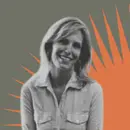


“A mark of an intelligent person is humility. If you have the right amount of humility, then you’re seeking out knowledge from others rather than thinking you’re going to invent something new. It’s really about executing well on ideas.” — Deborah Kenny
When her husband died of leukemia, leaving her a single mother of three small children, Deborah Kenny read Viktor Frankl’s Man’s Search for Meaning. She discovered her own meaning not in what she could get out of life, but what life was asking of her. And so she founded the Harlem Village Academies — a collection of K-12 charter schools in New York offering both free Montessori and the International Baccalaureate education.
Kenny’s new book, The Well-Educated Child, is the distillation of what she’s learned in twenty-five years as a teacher. But it’s simply summarized. Read books, she instructs. The more the better.
Kenny’s three-part definition of a well-educated child — quality thinking, agency, ethical purpose — requires reading fifty books a year. She did it with her own three children after her husband died — the closet door coming off its hinges and exiled in the garage for five years because she didn’t have the time to call a handyman. But her kids fell in love with reading. And she’s done the same with every cohort at the Harlem Village Academies over the last quarter century. The crisis in American education isn’t primarily a crisis of resources, Kenny says. It’s a crisis of will.
Frankl’s Man’s Search for Meaning changed Deborah Kenny’s life. If you want to change your kid’s life, get them reading. A book a week. That’s how to nurture not just a well-educated child but a responsible citizen.
Five Takeaways
• Viktor Frankl and the Question That Changed Everything: After her husband died of leukemia, leaving her a single mother of three young children, Kenny read Frankl’s Man’s Search for Meaning and found the question she’d been looking for: not what life has to offer you, but what is life asking of you. Her answer was to found the Harlem Village Academies — five charter schools in Harlem offering Montessori and the International Baccalaureate free of charge. The origin story matters because the book’s argument isn’t abstract. Kenny has lived it, as a grieving parent and as an educator, for twenty-five years.
• Fifty Books a Year: Kids should be reading fifty books a year — at least an hour a day — and this should never change. Not passages, not graphic novels, not summaries: books. Great books that have stood the test of time, alongside books children get to choose for themselves. Kenny did it with her own three children after her husband died — the closet door came off its hinges and stayed in the garage for five years because she didn’t have time to call a handyman, but her kids fell in love with reading. She has done it with every cohort at the Harlem Village Academies for twenty years. It is not unrealistic. It is essential.
• If You Can’t Argue the Other Side, You Don’t Understand the Issue: Kenny’s X post that caught Andrew’s attention. Socratic seminar — the ability to argue a position you disagree with, back it up with evidence, and then live in the same community as the person you just defeated — is not a pedagogical technique. It’s the definition of democracy. The polarisation crisis is, at its root, an education crisis. Elected officials no longer need to solve problems; they only need to stoke tribal loyalties. The fix is teaching children to enjoy disagreement — to take pride in an intellectually rigorous argument rather than treating opposition as hostility.
• Pay Teachers Like Doctors: The Harlem Village Academies are the only schools in New York State offering both Montessori and the International Baccalaureate, free of charge. They run on teacher dedication that, Kenny admits, is not fair to the teachers and is not scalable. Her honest answer: if we want this level of education for everyone, we have to pay teachers like doctors and lawyers — three, four, six times what they currently earn. Teaching should be the hardest profession to enter and the most respected. The fact that it isn’t is not an argument against the vision. It’s an argument for changing the system.
• Humility Is the Mark of an Intelligent Person: Kenny’s educational philosophy borrows rather than invents. Montessori, the International Baccalaureate, Socratic seminar, the great books — none of these are new. She chose them precisely because they have stood the test of time. The mark of an intelligent person, she argues, is humility: if you have the right amount of it, you seek out knowledge from others rather than assuming you’re going to invent something better. The job is not to innovate. The job is to execute well on what we already know works — with the will and the consistency to actually do it.
About the Guest
Dr. Deborah Kenny is the founder and CEO of Harlem Village Academies and the founder of the Deeper Learning Institute. She is the author of The Well-Educated Child (Zando, April 21, 2026), with a foreword by John Legend, and Born to Rise (2012). She holds a PhD from Columbia University Teachers College.
References:
• The Well-Educated Child by Dr. Deborah Kenny (Zando, April 21, 2026).
• Man’s Search for Meaning by Viktor Frankl — the book that changed Kenny’s life and led to the founding of Harlem Village Academies.
• Episode 2873: Sophie Haigney on agency, Silicon Valley, and the high-agency ideology — the companion argument to Kenny’s more constructive take on the same word.
About Keen On America
Nobody asks more awkward questions than the Anglo-American writer and filmmaker Andrew Keen. In Keen On America, Andrew brings his pointed Transatlantic wit to making sense of the United States — hosting daily interviews about the history and future of this now venerable Republic. With nearly 2,900 episodes since the show launched on TechCrunch in 2010, Keen On America is the most prolific intellectual interview show in the history of podcasting.
Chapters:
- (00:...
00:31 - What does it mean to be well educated? Three definitions
03:02 - The state of American education: an all-time low
05:26 - Social media, screens, and the reasons for the crisis
07:37 - Viktor Frankl, grief, and the founding of Harlem Village Academies
09:13 - Should books change your life? On reading fifty a year
11:29 - Socrates, attention spans, and the tools that never change
12:48 - If you can’t argue the other side, you don’t understand the issue
15:14 - Elitism, meritocracy, and the disrespect for expertise
21:02 - Fifty books a year: realistic or a pipe dream?
23:38 - Who decides what a quality book is? Great books vs chosen books
24:14 - The closet door: parental prioritisation and single motherhood
26:15 - Montessori, International Baccalaureate, and the wisdom of the ages
28:12 - Waldorf schools, free education, and the funding question
30:32 - How to scale: paying teachers like doctors
35:12 - Optimism, will, and why nothing worthwhile is easy
38:10 - John Legend, the foreword, and what comes next
00:00 -
00:00:31 Andrew Keen: Hello, everybody. It's Friday, 04/17/2026. Good Friday afternoon question: what does it mean to be well educated? I like to think, of course, that if you're well educated, you're going to be watching this, because we have a bunch of well educated listeners and viewers — but maybe I'm being a little self-centered. My guest today knows a lot more about what it means to be well educated. In fact, she has a new book out. It's called The Well-Educated Child. It's out on Tuesday. And Deborah Kenny, or Dr. Deborah Kenny, is a very distinguished educationalist. She's been involved in the Harlem Village Academies. She's joining us from New York where she lives. Deborah, congratulations on the upcoming book. So let's begin with that question. What does it mean to be well educated?
00:01:31 Deborah Kenny: Well, it's a pleasure to be here. I define well educated in the book, and in the work that I do as a lifelong educator, in three ways. Number one, quality thinking. Number two, agency. And number three, ethical purpose. What I mean by quality thinking is that a young person needs to be able to discern between shallow or bogus information, misinformation, and truth. They need to be knowledgeable and skeptical, and to have a grounding in a very solid base of information before they decide to form an opinion about something. In other words, they should have humility. All of those things comprise quality thinking. The second is agency, which means that you take initiative, you follow through, you're resourceful, you care about the quality of your work, you're driven, and you're self-directed. And the third component of being well educated, in my view, is a sense of ethical purpose, which means that you have discerned your calling in life, and you understand that you have a short time on this earth, and you want to do something with your life to make a difference in the short time that you have. And so you have a sense of purpose.
00:03:02 Andrew Keen: Interesting. I'm not sure how original those are. I've talked to a lot of educators. They would certainly talk about ethical purpose, maybe humility. Agency is another question. Maybe we'll get to that later. We do a lot of shows on agency, and there seems to be a pushback on this idea of agency. We did a show about it earlier this week suggesting that it's become a little bit of a Silicon Valley quality, and maybe it undermines the social. But we'll come to that later. As I said, you're very much involved with the Harlem Academy. Are you the founder?
00:03:45 Deborah Kenny: Yes, I'm the founder — but all the credit goes to the teachers. They're the ones on the front line. But I am the founder, yes.
00:03:54 Andrew Keen: So what's the state, then, of education more broadly? I know you've done a pretty good job — maybe you can explain what you're doing at Harlem Village Academies — but what's your sense of the quality, the state of education in America these days? Do most kids get a decent education? Most Americans as they're growing up in K through 12, are they being well educated, Deborah?
00:04:21 Deborah Kenny: I believe absolutely not. And in fact, the surveys and the research show that most Americans are dissatisfied with the quality. It's reached an all-time low of dissatisfaction with the quality of American public education, and there are really two levels to it. One is the basics. Kids across America are not even reading or able to do basic math on grade level. So that's a travesty. But I see even more so in the way that college students are shouting ideas rather than having deep intellectual arguments, and then can't back up their ideas. So that, to me, is even more concerning. And on both levels, we have, I believe, a crisis on our hands.
00:05:26 Andrew Keen: You're not the first or the last person to identify and be concerned with that crisis. But what is the reason? Is it because of the poor quality of education? Can we blame everything on social media? I know you have some strong feelings on social media and AI. And how much more of a crisis is this now, today, in April 2026, than it was ten years ago or twenty years ago?
00:05:53 Deborah Kenny: Oh, I think it's absolutely worse because of social media. But to your question of, can we blame it all on education? No. There are obviously parents and society and culture. There's all sorts of factors. But education is the thing that we can control as a society. And a society's values are a reflection of its educational system. So I think it's the one lever we have to further society, and it's something that can be exceptionally powerful, or it can be detrimental. So it's worth spending an enormous amount of time and resources to get it right. But, like you said, that's not original.
00:06:43 Andrew Keen: Yeah. Well, as you know, there's not much original these days in any area. You noted that the education system reflects the society itself. So if you take that logic, maybe we should be working on the society rather than the schools. If the schools are a mirror of the society, then the only way to improve the schools is by improving the society — or is that a little simplistic?
00:07:09 Deborah Kenny: Well, it's a chicken and egg, right? But the more direct route is — the younger you start, the easier it is. Because once somebody is off into the world, people tend to stay usually pretty close to the way they're raised and the way they're educated.
00:07:37 Andrew Keen: Personalize this a little bit, Deborah. I know you've got a PhD from Columbia University — sorry, from the University of Pennsylvania. You were educated at Columbia. You could have done many different things. I'm guessing that teaching isn't the most lucrative of things. Why have you spent your life in the school business, in the education game?
00:08:03 Deborah Kenny: Well, I found it to be my calling. After my husband died many years ago from leukemia, I spent some time really soul searching and trying to figure out. I didn't have any concern about myself. I just came across a passage in the book Man's Search for Meaning by Viktor Frankl. And in the midst of that suffering, he spoke to me. I thought that what he said — that it's not what life has to offer you, it's what is life asking of you. And that resonated. And I thought, well, okay. In the midst of this profound grief, what is life asking of me? And I started reading books by Jonathan Kozol, who wrote a scathing indictment of American public education — this is from decades ago. And I thought, well, maybe there's something that I can do. And that's when I decided to start a school.
00:09:13 Andrew Keen: It's interesting that a book changed your life — reading Viktor Frankl. Again, I don't think you're the first or the last person to be deeply influenced by his book, being so influenced, of course, by what he went through in Europe. Should our lives be shaped by books, Deborah? And some of your friends and, indeed, some of the students you've taught — have their lives been changed by certain books that they might pick up? You said earlier, and we'll come to this, that kids aren't reading anymore. I've been hearing that for many years. In fact, I think ever since schools existed, people have complained about kids not reading.
00:09:57 Deborah Kenny: Well, it's worse now than it ever was. And yes, books can and should change your life. This is why I'm so concerned that now what's happening in schools is that less and less and less books are being assigned. And instead, kids are given short passages, and the attention span is declining. All of this is absolutely serious and needs to be addressed. Kids should be reading a book a week. Kids should be reading 50 books a year, at least an hour a day, and that's the only way to become properly educated. And that's never going to change. The great ideas, the great thinkers, the great literature, the great authors must be core — and could not be more important now, with the shallowness and inane banter that is filling social media.
00:11:04 Andrew Keen: Yeah. 50 books a year is quite a library. I'm not sure how many people are able to do that. What about the old argument, Deborah, that we always relativize these things? There was a time, pre-books, pre-printing, when great minds like Socrates argued that reading would kill our minds — that it's much better off to sit around and talk.
00:11:29 Deborah Kenny: Yeah, yeah.
00:11:30 Andrew Keen: What would you make of those kind of arguments? And in the next generation or two generations' time, people will probably be looking back and thinking, if only we had the internet, if only we had social media and AI, things would be better.
00:11:44 Deborah Kenny: I love the way you think. So I think that Socratic dialogue is one of the pillars of a great education. And I do understand that in every generation, they think it's the next thing that's going to ruin us. At the same time, that's not a reason to throw in the towel. So first of all, the majority of a student's day — of a young person's time in school — should be spent reading, writing, thinking, and in Socratic discourse. Obviously, problem solving in math. Creating, and thinking, and reading, and writing in discourse — those are the things that should take up their time during the school day. The idea that, well, they said it was bad, so is it really bad? I don't agree with that. I think that we have to look at where we are and figure out where we need to be, and then work like crazy to get there.
00:12:48 Andrew Keen: Okay. You had an interesting post on social media, on X of all places, arguing that if students can't argue the other side, they don't understand the issue. Is one of the consequences of this crisis of education, Deborah, a crisis of democracy?
00:13:07 Deborah Kenny: Well, it's interesting you say that, because I just wrote an essay for Time magazine that's coming out on Monday specifically on that topic. So yes, if you are unable to be friends and live in a community with other people while disagreeing with them, then you're unable to sustain a democracy. Therefore, we need to teach children to be passionate about arguing in an intellectually sophisticated way. And that means that they learn the art of argument. That's what we teach in Socratic seminar. Again, not an original idea, but an important one — where you have to back up your ideas. You have to be able to orally defend your thinking, and you do not just go along with what's popular. You don't follow the mob. You take pride in, and enjoy having, a disagreement, and then coming away from it and still living in the same community with those other people. That is literally the definition of what a democracy is. Democracy doesn't mean everybody agrees, but it also doesn't mean that disagreement becomes hostility, which is what we have now with polarization. And it's causing people anxiety, and it's affecting our political system. What I argue in the Time magazine essay is that it causes the political system to become less effective, because elected officials are kind of off the hook. They don't need to solve problems. All they need to do is rant against the other side and stoke the toxic culture, and people will vote for them because they're, quote, on my side. Well, that's not effective. That's not a way to run a democracy either. So there are a lot of reasons why that's important.
00:15:14 Andrew Keen: To use the M-word, Deborah — mob, which, of course, was a familiar word in antiquity. Socrates and Plato used it a lot to justify, perhaps, rule from above by wise philosophers. Is there an element of elitism, for better or worse — I'm not necessarily against elitism — in an education system that works? Do we need to fall back on the promise of a meritocracy, of some people being smarter than others?
00:15:52 Deborah Kenny: I don't think the two of those are mutually exclusive. Maybe say more.
00:16:04 Andrew Keen: Well, the Greeks weren't particularly keen on democracy. They saw it as mob rule. And I'm not suggesting you're against democracy, but some people have argued — a lot of books have been written on this — that democratization, or this radical democratization, particularly in the context of social media, is antithetical to a working democracy. And one of the consequences of all this social media is undermining expertise: doctors, lawyers, journalists, philosophers, educators like yourself.
00:16:46 Deborah Kenny: Yeah. So I think that's sort of like saying, what's more important, eating well or exercising? They both need to coexist, and they're both important. And that maybe was a crude analogy. You mentioned earlier the idea of meritocracy. These are always a work in progress. It is always difficult. But I am concerned about the disrespect for expertise. I am concerned about the erosion of standards of excellence. And we have, I think, declined in the last twenty years — when you look at different fields, whether it's journalism, or education, or medicine, there's been an erosion both of the expertise among the leadership in those fields and in other fields as well, and an erosion of respect for, like you said, the elite, the expertise, as if that's a bad thing. No — it's a good thing. It's good to have — you know, who do you want performing your medical procedure? Yes, someone with profound expertise and a lifetime of experience. Who do you want teaching your child? So I think that's something that we have to right the ship on.
00:18:32 Andrew Keen: We have much to right the ship on. Dr. Deborah Kenny is the author of The Well-Educated Child. I'm going to take a short break, and then I want to come back and talk specifically with Deborah about what we're going to do about this. She has a lot of experience. She's not just an armchair theorist. She's been involved in founding schools, particularly the Harlem Village Academies, which have been very influential. So we're going to get to that after the break. We'll take a short break, and we'll be back with Dr. Deborah Kenny, author of the upcoming book, The Well-Educated Child. Don't go away, anyone. Lots more good education to come.
This is not a commercial break. That's because we don't have commercials on this show. I'm not going to waste your time trying to sell you inane products. However, I do have a pretty good deal for you. I'm writing a book about the United States. It's due out in 2028. And if you become a paid subscriber on my Keen On America Substack, you'll not only get very cool notes and photographs and videos from this project, but I'll also send you a personalized signed copy of the book when it comes out in 2028. So go to keenon.substack.com and become a paid subscriber. That's keenon.substack.com.
And now back to our conversation. We're talking with Dr. Deborah Kenny, author of The Well-Educated Child. We spent the first half of the show laying out the problems with American education. Kids aren't being educated. Deborah suggested that to get a decent education, you need to read 50 books a year. Deborah, how are we going to do that? Is that realistic? A lot of people think, maybe that's right, but that's totally unrealistic in today's world. I know you have spent a lot of time founding and working with the Harlem Village Academies. Is that what you've successfully done there? Are kids there reading 50 books a year?
00:21:02 Deborah Kenny: So, yes and yes. First of all, I did it with my own kids when they were growing up, and we've done it with our kids in the schools for twenty years. I could spend a couple of hours telling you how we go about it. But it is absolutely realistic, and it is absolutely essential. In fact, I can't think of anything more important. Just to make the point, though — quality books, not just quantity.
00:21:31 Andrew Keen: Who's to define a quality book? My daughter, when she was growing up, would read a lot of graphic novels, which I always thought were comics, and I've come to realize they're actually enormously educational. Who's to determine what is and isn't an appropriate book to read?
00:21:48 Deborah Kenny: See, I haven't met you before, but what I love about you is your skepticism. And it's an informed skepticism, as the educator Ted Sizer calls it. I'll bet you read a lot. It sounds like you do. It's a delight. I love the challenges of your questions. So there are books that have stood the test of time. And what we do, and what I think is critical, is that the great books that have stood the test of time — along with books that children and young people choose. So in other words, there should be required reading, and then there should be reading that kids get to pick their own books. Both are absolutely critical, for different reasons. So you have to spend a lot of time with kids, bringing them through. You can start reading a book to them, and then they get hooked on it and they want to finish it themselves. You can say, oh, if you liked Harry Potter, you would like Chronicles of Narnia. You take away the television, take away the screens. Let them get immersed in amazing books that build their vocabulary, their knowledge of the world, their understanding of great ideas that have influenced society for hundreds of years. They have to have that foundation of knowledge in order to be able to then form opinions that are backed up by deep understanding.
00:23:38 Andrew Keen: A lot of people are going to be listening and thinking, yeah, we're not going to disagree with Dr. Kenny. She obviously knows what she's talking about. On the other hand, I'm a one-parent family. I don't have a lot of time to invest in books. We live a long way away from libraries. How much of the thesis in The Well-Educated Child is a menu for wealthy parents, two-parent families from New York or San Francisco or Washington DC?
00:24:14 Deborah Kenny: Well, first of all, I was a single mother starting at age 37, many years ago when my husband passed away, and the kids were 11, nine, and eight. And it was a commitment. I'm not going to say it was easy, but their education — both moral education and intellectual — was my number one priority. And so I didn't get to do other things. There were closets that remained broken in my house for seven years till I finally got around to fixing them. You cannot do everything. But as a parent, you make a choice. You only have your kids for a short amount of time, and then you have the rest of your life to do everything else.
00:25:00 Andrew Keen: I hope that wasn't a water closet, Deborah, was it?
00:25:04 Deborah Kenny: No. The number of things that stayed broken in my house for all those years, no. In fact, the closet door literally came off the hinges. And instead of — I didn't have the time, so I didn't call a handyman. I just took the door and put it in the garage. Then, you know, five years later, I got it fixed. The house didn't get painted when it should have. All sorts of things went by the wayside. But my kids falling in love with reading, and being interested and interesting, and having hobbies, and doing things that would, yes, sound countercultural — like, I didn't allow them to watch TV until they were in fifth grade — made them intellectually curious. We do it with all our kids in the schools that I run. We inspire them to read, and it is an effort, but the result is just profound. It's worth it. Nothing worthwhile is easy.
00:26:15 Andrew Keen: How much of the school is rooted in conventional or, if not conventional, counter-conventional education principles? I know that you work to some extent on Montessori principles. Of course, the Waldorf educational philosophy that was pioneered by Rudolf Steiner, a Viennese educator, is also quite fashionable in the US. How much have you invented at the Harlem Village Academies versus borrowing from Montessori and Waldorf schools?
00:26:50 Deborah Kenny: I would say the majority is things we learned from the wisdom of the ages. There's very, very little we've invented. There are some systems, some ideas. I think it's the dedication of the teachers and the persistence and the drive. But for the most part — in fact, I purposefully decided to bring in Montessori and the International Baccalaureate, because they've stood the test of time, because they've been around for so long and have an infrastructure. And the things that they have in common — teaching kids to have a long attention span, to concentrate for hours and hours, fostering intrinsic motivation and agency, doing really challenging work, writing research papers — none of these things are new. In fact, one of the things I write about in The Well-Educated Child is that a mark of an intelligent person is humility. If you have the right amount of humility, then you're seeking out knowledge from others rather than thinking you're going to invent or create something. It's really about executing well on these ideas.
00:28:12 Andrew Keen: My kids both went to a Waldorf school between Santa Rosa and Sebastopol, Northern California. It's quite a well-known one. They got a good education. However, my daughter liked it, my son didn't. One responded, one didn't. But it was expensive. I know that your school is free of charge. Sounds like you've done the impossible. It's one thing to pay teachers very well and charge wealthy people to send their kids there in Northern California or the Upper West Side. It's quite another to give an education for free. How have you done this?
00:28:58 Deborah Kenny: Well, it's true that it is unique. We're the only schools in New York State that offer Montessori and the International Baccalaureate. And I can give you an answer in one word: it's our teachers. Our teachers are incredibly dedicated and care so much about the kids, and they believe in the vision. I do believe that this is possible and necessary to happen everywhere. I am an abiding optimist. In Chicago, for example, Rahm Emanuel, when he was mayor, did put the International Baccalaureate into the high schools there, so it can be done at scale. And the idea that a quality education is only accessible to the wealthy and privileged is exactly the wrong idea. So, obviously, it's critical that we bring deeper learning to everyone. That's the foundation of equity. That's part of why I wrote the book — to share with everyone what I learned over the last twenty-five years, so that they have a chance to bring these more sophisticated ideas into their own lives, whether as parents or as teachers.
00:30:32 Andrew Keen: You mentioned Rahm Emanuel. I think he's going to be running for president this year or next year. Interesting character. Divisive character. Some people love him, some people don't. And you mentioned that this can be done at scale in Illinois. How do you do it at scale? How have you established this high-quality Montessori-style education by paying your teachers well, by making it free? Where's the money coming from? Is it from grants, from nonprofits? How are you, to use a Silicon Valley term, monetizing all this? I know it's a nonprofit, but how do you pay teachers, especially in New York? Harlem, the Upper West Side — you need a lot of money to survive.
00:31:23 Deborah Kenny: Yeah. That's such a good question. In the conclusion to my book — The Well-Educated Child is a labor of love, and I gave this a lot of thought. And I was honest with the readers. I said, listen. As a society, if we want this level of education for everyone, we've got to pay teachers like doctors and lawyers. Teachers need to be paid more across the board. And so I think it's wrong to say that we can do this everywhere without putting the money behind it.
00:32:02 Andrew Keen: Well, you've answered the question. How have you done it at your Village Academies?
00:32:07 Deborah Kenny: Well, no, I didn't mean to — I didn't mean to do so, but more to speak to the idea of how it can happen across the board. I'll be in the school building late myself. I'll see other teachers here late. I think people just work above and beyond, and it's so impressive. But it's not fair to the teachers, and I don't think it's scalable.
00:32:36 Andrew Keen: So how are you funding the Academies? Are you getting grants from the state, from the federal authority?
00:32:45 Deborah Kenny: The way it works is that charter schools are funded only partially by the state. In New York — I don't have the exact current figures, but there's always a gap. It can be 20%, depending on the year. And so the majority of the funds come from the state, and then to make up the gap, charter schools will do individual fundraising. But our teachers are not paid as well as they should be. I mean, that's the reality. I think that our teachers — and all teachers — should be paid three, four, six times what they're paid now. And I mean that seriously. Why should doctors be paid more than teachers if teachers are shaping the future leaders of society? And I mean that in all seriousness — it's something that needs to be looked at. It should be the most respected profession, really, really hard to get into. It should be highly competitive. And the fact that we're a group of five schools that is an exception, I think, is a testament to the fact that from day one — the founding teachers up until today, and all the way through — we had people with such profound dedication that they're willing to sacrifice a lot to get the kids what they need. But why should teachers have to continually sacrifice? And not only is it not fair to them, but it does undermine ultimately the quality of education, because at a certain point maybe they'll get burnt out from that sacrifice and not stay for forty years. But someone who's an expert, who's had twenty-five, thirty years of experience — you want them to stay in your school, right? And so, I stand by it.
00:34:45 Andrew Keen: Yeah. I don't think I would argue with you, although I'm not sure how realistic it is. We've done shows on that, of course. The book was written recently — we did a show on it — comparing the pay and respect of American teachers to, I think, Finnish teachers, who are the best paid and the most respected. And changing America in that sense seems so unrealistic. So much of a pipe dream that there has to be other ways of doing it.
00:35:12 Deborah Kenny: I'm an abiding optimist, and the idea of starting our schools, people said, was unrealistic. The idea of doing the Montessori and International Baccalaureate, they told us, was unrealistic. So when I hear that, I kind of don't hear it, because anything worthwhile is going to be difficult, in my view.
00:35:40 Andrew Keen: Well, let's end with how to scale Dr. Deborah Kenny. That might be the real question here. I don't think anyone is doubting what you're doing. Of course, the newest technology, AI, might scale you — although I'm guessing you're probably not keen on creating lots of virtual Deborah Kennys. How do we scale people like yourself, education visionaries, Deborah — to replicate yourself, not virtually, not in digital form, but in physical form around the country? I'm sure there are other examples of people like yourself. Because if we are to get the well-educated child, what we clearly need is the committed and well-educated teacher. How do we do that?
00:36:30 Deborah Kenny: Well, there are a lot of great educators and leaders in schools around the country. We're not the only ones. And the way to do it is to make a commitment. Actually, Linda Darling-Hammond, who's a scholar, who's led the charge on this very topic, I think is the person to look to for the wisdom on this question. And what she talks about is investing very significantly in professional development and taking it seriously. The idea might, as you've said a couple of times, not be original, but that doesn't mean it's not a great idea. And she talks about seven or eight different factors that are critical, and it includes giving teachers enough time in the day to hone their craft. And so that actually goes back to paying teachers more, because you need more people in the building. You need to pay for more people, so that they can have time to really get the development that they need on an ongoing basis, so that they are growing and thriving and really learning at a cutting edge. And it's — it doesn't need to be unique to be powerful. This idea is simple, but it's about having the will to do that in a consistent way.
00:38:10 Andrew Keen: Well, there you have it. The book is out on Tuesday — The Well-Educated Child. It's worth noting that it comes with an introduction by the great John Legend. Are you friends with Legend? Does he send his kids to your school? How did you get associated with him, Deborah?
00:38:27 Deborah Kenny: Well, when he lived in New York, when we met, he didn't have any kids. And now he has four kids, but he's out in LA. I don't remember how we originally met, but we've been friends for about fifteen years. He is very smart and very passionate about education. And the foreword that he wrote is exquisite, just like his music.
00:38:53 Andrew Keen: We'll have to get him on the show. You have to ask him. I know you and he are going to be on the Today Show on Tuesday, so worth watching. Deborah, congratulations on the book. I think you came out of this show with an A. Very well done. And we will look forward to talking again. Thank you so much.
00:39:12 Deborah Kenny: Thank you.