Prosperity Road: Anthony Badger on Hoover, Roosevelt and the Making of the American State
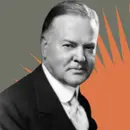


“Hoover is probably the most intelligent president the United States has ever had. That is not necessarily a guarantee of political success.” — Anthony Badger
Given our preoccupation with American decline, it’s nice to sometimes remind ourselves of the reasons for the country’s rise to superpowerdom. Anthony Badger, the former Paul Mellon Professor of American History at Cambridge, has dedicated his life to charting the rise of the United States as the world’s leading economic and military power. His new book is Prosperity Road: America, 1920–1945, from Hoover to Roosevelt. There is, thankfully, no mention of Trump or MAGA in it.
Badger’s interest in the United States came through Huey Long, who he read about as a schoolboy in gray nineteen-fifties Britain. What intrigued him was not Long’s showmanship but his delivery. Plenty of Southern populists made grand promises. But the Kingfish actually delivered on some.
In Prosperity Road, Badger reminds us of America’s astonishing domestic transformation in the first half of the 20th century. In 1920, he notes, most Americans’ entire experience of the federal government was the mailman and the occasional man in uniform, and almost nobody paid income tax. By 1945, all Americans had a social security number, worked under the Wagner Act or drew a price support, and lived within sight of a public works project. And they came to trust it. By 1958 some 73 percent told pollsters Washington could be relied on to do the right thing. That trust, Badger dryly notes, is not something that would go on forever.
On Herbert Hoover, Badger is a revisionist without being excessively sentimental. The most intelligent president America has ever had, he says of the Stanford-educated engineer. But, like Jimmy Carter, Hoover was a technocrat with little political touch and an excessively thin skin. Not exactly Huey Long.
Oddly enough, he is less effusive about Roosevelt. Badger describes him as no intellectual, an actor, a patrician who somehow persuaded working Americans he was on their side. “He’s the first president who understands that my boss is a son of a bitch,” Badger quotes a textile worker on FDR.
I asked what we, in 2026, should make of all this. Hoover and FDR were serious people, Badger notes. And they both had a concept of public service that has proved very difficult to recreate in recent years. That said, he reminds us that the New Deal grew out of the near collapse of the country in 1932. So perhaps Prosperity Road hasn’t quite run out of asphalt. Although Anthony Badger is certainly less optimistic about the United States than he was when he fell under the spell of the Kingfish seventy years ago.
FURTHER READING
• Anthony J. Badger, Prosperity Road: America, 1920–1945, from Hoover to Roosevelt (Harper, 13 October 2026). Kirkus review. Note that Badger has reused his own title: his first book, in 1980, was Prosperity Road: The New Deal, Tobacco, and North Carolina — so a search on the title alone will return the wrong book.
• Badger was Paul Mellon Professor of American History at Cambridge from 1992 to 2014 and Master of Clare College from 2003 to 2014; he has been a professor at Northumbria since. Read at Sidney Sussex, took his doctorate at Hull in 1974. His Cambridge faculty page. The book on race AK raises at 44:00 is Why White Liberals Fail: Race and Southern Politics from FDR to Trump (2022); he has also written The New Deal: The Depression Years, FDR: The First Hundred Days and Albert Gore, Sr.: A Political Life.
• Huey Long, the figure who drew Badger into American history, was shot at the Louisiana State Capitol in Baton Rouge in September 1935 and died two days later — the building AK mentions visiting.
• Greg Steinmetz on Roosevelt’s pursuit of Andrew Mellon through the Internal Revenue Service, which Badger calls one of the low points of the administration — that episode. His book is The President and the Oligarch: Roosevelt, Mellon, and the Triumph of Big Government.
• The two episodes AK opens on: Janet Reitman on The Inheritance: An American Tragedy in Five Acts, and Eliot Cohen on The Strategist.
• Three details worth checking against the tape. J. Edgar Hoover became director of the Bureau of Investigation in 1924; the Bureau was founded in 1908 and renamed the FBI in 1935. The trust figure Badger attributes to Pew comes from the American National Election Studies, which recorded 73 percent in 1958; Pew publishes the series but did not conduct those early surveys. And the “unsordid act” description of Lend-Lease is Churchill’s.
FIVE TAKEAWAYS
1. They had been friends, and then there was the business with the crutches. Badger reconstructs the Hoover–Roosevelt feud as a personal story before it is ever a political one. The two lived near each other in Washington during the First World War and were close enough that Roosevelt praised Hoover privately and publicly, when Hoover was the star of American politics — the humanitarian who fed Belgium, the self-made millionaire engineer who looked like the man of the future. Then the snubs. Hoover denied the president-elect Secret Service protection on leaving office, and at a White House reception Roosevelt was made to stand in a very uncomfortable position while on crutches. Both men were thin-skinned; Hoover, Badger says, was particularly thin-skinned, and he answered the Democrats’ Depression attacks with real anger.
2. The line past which activism became fascism. The most interesting thing about Hoover is not that he did nothing but that he believed in activist government up to a point and could never explain where the point was. Past it, in his own word, intervention became fascistic — and nobody except Hoover was able to locate the line, which is why he looked to contemporaries like a man refusing to act. Badger’s counterfactual is the generous one: had Hoover served the two terms he fully expected, we would remember a reforming president who made government more efficient and the relationship between government and industry more rational. Instead he arrived at the one moment when things went badly, and discovered he could not bear people doubting his sincerity.
3. The welfare state was built by the people Roosevelt hired. Asked who actually built it, Badger does not say Roosevelt. He says Frances Perkins, and adds that it is very difficult to think about the American welfare state without noticing that the experts were women. Social Security brought almost no immediate benefit to anyone, and he finds it remarkable that they were willing to t...
00:00 - Intro
00:31 - A fortnight of American decline: Reitman and Cohen
01:20 - A historian who is not American
02:16 - Huey Long, read about as a schoolboy
03:30 - Baton Rouge, and why not the European populists?
04:01 - The Southern populist who actually delivered
04:37 - An army the size of Portugal’s
05:44 - Six years to superpower
06:10 - The federal government was the mailman
07:00 - Social security numbers, the Wagner Act, public works
07:46 - The other Hoover: J. Edgar
08:50 - Prohibition, Nazi spies, and a light touch from FDR
10:19 - Why Hoover and Roosevelt came to hate each other
11:10 - They had been friends
11:41 - Saving Belgium, and Keynes at Versailles
12:08 - Secret Service protection, and a snub on crutches
13:34 - The patrician and the engineer
14:18 - The most intelligent president America ever had
15:20 - A Hoover made for Silicon Valley
16:36 - More important than Harding and Coolidge
18:15 - Did Hoover build any of the modern state?
18:32 - The line past which activism became fascism
19:47 - The anti-statist Republicans of the twenties
20:48 - Has he been hard done by?
21:00 - A technocrat, like Carter
22:07 - Did he know he was in a casino?
22:43 - The sick industries, and the high-wage advocate
24:27 - Mellon, Steinmetz, and the IRS vendetta
25:29 - Roosevelt the actor
26:35 - Polio, and the collusion of the press
27:12 - “My boss is a son of a bitch”
28:27 - What FDR tells us about American democracy
29:08 - Conquering the Depression, defeating fascism
30:50 - Did Roosevelt learn from Mussolini?
31:24 - No — he learned to hire well
32:26 - Who actually built the welfare state?
33:31 - Frances Perkins, Social Security, and the long view
34:30 - Robert Wagner, and a deliberately one-sided law
35:40 - What did Roosevelt want?
36:01 - The presidential library, and the postwar plan
37:15 - Was he Teddy Roosevelt’s heir?
37:40 - The shadow he cast over the Democrats
38:55 - The burden of New Deal nostalgia
39:24 - What the New Deal actually built
40:20 - Not Scandinavia
41:08 - How Americans changed their minds about government
41:55 - Even the Republicans had to accept it
42:30 - Seventy percent trusted Washington
42:45 - The GI Bill
43:40 - Reagan, who began as a New Dealer
44:00 - A Jim Crow coalition and an idolized president
45:11 - Hoover’s Southern strategy
46:02 - Why black voters switched in 1934
47:00 - Programs aimed at poverty, not at race
47:20 - The appointees who handed down Brown
47:42 - The unholy coalition
48:41 - Isolationist and internationalist, reversed
49:33 - Roosevelt invents national security
51:50 - Fitzgerald, luck, and a Europe destroying itself
52:52 - Lend-Lease, an unsordid act
54:00 - Reopening the banks with no Plan B
55:14 - What 2026 can take from Prosperity Road
56:58 - Serious people, and a concept of public service
57:43 - The political discourse of the thirties
58:30 - “It’s pretty dismal, but it’s always been dismal”
59:14 - Would a young Badger study Trump instead?
01:00:14 - A sentimental historian
01:00:58 - Closing
00:00:31 Andrew Keen: Hello, everybody. In recent shows, we seem to be talking about a fall of the United States, a crisis, a collapse in some ways. We did a show recently with the New York Times Magazine writer, Janet Reitman, who has a new book out, called The Inheritance: An American Tragedy in Five Acts, which is a history of the United States post-9/11. And even more conservative Americans like another recent guest on the show, Eliot Cohen, a former figure in the Bush White House, who has a new book out, The Strategist, seems to be rather pessimistic about America's place in the world. We are talking about America's place in the world today, but in a more historical context with one of America's leading historians. He's not American. He's based in the UK, but he's written many books on American history. And he has a fascinating new book out, called Prosperity Road: America, 1920–1945, from Hoover to Roosevelt. No mention of Donald Trump or Barack Obama or any— anyone else on our mind these days. Anthony Badger is joining us from just outside Stansted Airport in, just north of London. Anthony, congratulations on this new book. You've dedicated your life in many ways to books about the United States. You were an undergraduate at Cambridge. You did your graduate work at Hull. You taught at Cambridge for many years. What is it about America that fascinated you so much that you've spent your life studying it?
00:02:16 Anthony Badger: Well, it was originally because I read something as a schoolboy about Huey Long. And, Huey Long, to a British observer of the nineteen fifties and nineteen sixties, was a sort of colorful phenomenon, that was very difficult to imagine in the rather gray confines of British politics. And so, when I discovered as a student that Huey Long mattered, and was a significant figure in the nineteen thirties, that's what got me interested in American history. And I came of a generation, that looked to America for both, economic and cultural leadership, and which we were largely persuading our students— not persuading our students. Our students were interested in America because so much was happening there, whether it was in terms of racial conflict or whether it was in terms of the sheer, prosperity of the United States. It seemed as— it seemed a country that was freer of, tradition, than Britain. And its politics, certainly, as they are today, are certainly much more colorful, than in Britain.
00:03:30 Andrew Keen: Certainly. Huey Long was very colorful, remarkable character. I was just in Baton Rouge. I went to, the state house where he was assassinated. You could have looked overseas, though, to continental Europe, Anthony, couldn't you, and found equivalents of Huey Long, right-wing populists? You might have found them in Italy or Germany. What was it about Huey Long that particularly intrigued you in comparison to populists elsewhere, colorful populists?
00:04:01 Anthony Badger: I think it was the fact that he got things done in the South, and I hadn't realized when I started out just how conservative a region the South was and how unusual Long was as a populist politician who actually delivered. There were plenty of populist politicians in the South, but very few of them actually delivered on their promises. And Long, for all his re— weaknesses, was also, you know, a major national figure. And for, the southern populist, that was an unusual position to be in.
00:04:37 Andrew Keen: Yeah. Fascinating character. Hollywood, of course, has caught on to his narrative, made several films about him. Let's get to the book. Prosperity Road: America, 1920–1945. Anthony, one of the things that always astonishes me about America, and it's hard to be astonished about America, is the fact that I think it was in 1920, or certainly before the First World War, just before the First World War, America had the standing army, the size of Portugal or Sweden. And we know, of course, by 1945, it had become not just a great power, but perhaps the world's only great power, certainly a nuclear power that recolonized Europe in its own way. Is that the most astonishing thing that took place in America between 1920 and 1945? You bookend 1920 and 1945 America with, Herbert Hoover and FDR. But is that the most astonishing fact, or am I exaggerating its significance?
00:05:44 Anthony Badger: I don't think you're exaggerating its significance. The, America was, had as late as 1939, had a tiny army, and yet within, you know, five or six years would be this global superpower. And a generation that grew up, in the, you know, in the twentieth century, but in fact, the people who fought World War II mainly grew up in places where they had never, been involved with the federal government, where they had never seen, they never traveled outside their own state, let alone outside the United States. And so this was— the war in that sense was a transformational, occurrence. But in terms of the federal government, I mean, the other great, achievement of the interwar years was not only turning America into a global superpower, but was conquering the Depression at home. And the federal government, which for most Americans had been really— their experience of the federal government was really like seeing the mailman, occasionally a man in uniform, and that was about the limit. Very few of them paid income tax, anything like that. And so— and yet the federal government by 1945 would be a daily presence in American— in the life of ordinary Americans. They all had social security numbers. They were working in industries which were regulated under the Wagner Act. They were in agriculture and getting price supports and subsidies. They lived in communities where there were always, there was evidence of, the federal government and its public works programs, in every community in the United States. And it's an enormous transformation. And, Americans came to— I won't say they came to love the federal government, but they came to trust the federal government. And that, of course, is not something that will go on forever.
00:07:46 Andrew Keen: Yeah. And we'll come back to that. You may not be interested in the government, but the government is interested in you. The subtitle of the book is from Hoover to Roosevelt. Of course, it's Herbert Hoover. But I guess, Anthony, equally, it could be J. Edgar Hoover, the founder of the FBI [ed.: Hoover became director of the Bureau of Investigation in 1924; the Bureau was founded in 1908 and renamed the FBI in 1935], a figure of immense significance in American history. We've done whole shows on J. Edgar. Is he symbolic of this growth of the state, especially in the way in which, as you know, most Americans in 1920 didn't— had had no experience of the federal government? And by 1945, Hoover had created a security apparatus, which, some people saw as the beginnings of, of the modern surveillance state. So is Hoover also not Herbert Hoover? We'll come to him later. But is J. Edgar Hoover symbolic of this enormously transfer— transformative period in American history?
00:08:50 Anthony Badger: Yes. Although I'm not sure that he was, how conscious he was of doing that, it's certainly clear that in terms of, you know, crime and the wars on crime, this was a period which, gave credence to that impression of prohibition, and the attacks on organized crime was something which gave Hoover a lot of publicity, and gave him a lot of tools. And, of course, Roosevelt gave Hoover a fairly light touch during World War II. I mean, the security concerns about Nazi spies and concerns about Japanese Americans, all of these things, allowed the FBI to, expand, and Hoover, of course, was, never gave up— never missed an opportunity to do that. And then when you throw in the communist element, which is largely after 1945, Roosevelt didn't really take anti-communism terribly seriously, and, wouldn't have taken Herbert Hoover terribly seriously on that subject. But he was very concerned about subversives and particularly Nazi subversives. And so Hoover would have welcomed the— you know, would have taken— grabbed the opportunity to expand that security apparatus in ways that he, rather than elected politicians, wanted to go.
00:10:19 Andrew Keen: Mentioned Trump and Obama earlier. They, of course, they famously don't like one another, and perhaps a historian will come along and write a history of America in the first quarter of the twenty-first century along in the narrative of personal dislike between Trump and, and Obama. You've done this in a way with Prosperity Road. I hadn't known before reading the book about how the degree of dislike that existed, between, Herbert Hoover, and FDR. Woodrow Wilson is a kind of middleman, I guess, in a weird way here. Why did Hoover and FDR dislike each other? Was it personal? Was it ideological? Or was it both?
00:11:10 Anthony Badger: It was, originally personal because they were, had been great friends or certainly close enough friends lived close to each other in Washington during the First World War. Hoover— Roosevelt professed great admiration for Hoover, and Hoover was, in a sense, the star of American politics, in the nineteen tens and the nineteen twenties because he had this— he was this great humanitarian. He was a great, self-made millionaire engineer.
00:11:41 Andrew Keen: Saved Belgium or at least saved many starving people in Belgium.
00:11:44 Anthony Badger: Yes. And Russia. And, Europe at the end of, the First World War. John Maynard Keynes thought that hoo— Hoover was by far the most impressive person, in the Versailles negotiations at the end of the First World War.
00:12:00 Andrew Keen: And, of course, Keynes was particularly, contemptuous of Wilson. So—
00:12:08 Anthony Badger: Yes. Yeah. And, so, I mean, the— it seemed as if, you know, Hoover was the man of the future, and Roosevelt, praised him, both privately, and publicly. But they then had a sort of different political track in the nineteen twenties. Roosevelt is a vice presidential candidate, for the Democrats in 1920, Hoover going into the Republican administration of Warren Harding. But then there are personal things. Roose— Hoover never forgave Roosevelt, in the end for his policies, but initially, it was denying him [unclear]— denying him Secret Service protection, when he left office. Hoover— Roosevelt felt that he'd been snubbed by, Hoover. He'd been made to stand in a very uncomfortable position at the White House reception, when he, of course, was, on crutches, as a result of his polio. And it— these personal sort of snubs, and then Hoover was— well, both were quite thin-skinned, but Hoover was particularly thin-skinned. And he reacted with great anger to the attacks on him being made by the Democrats during the Depression.
00:13:34 Andrew Keen: How would you conceptualize the differences? I mean, we can talk political ideology. Sorry. FDR, of course, was a patrician from one of the leading East Coast families, a very wealthy man who, as you've intimated, his life was changed by polio, maybe softened. Many historians we've had many on the show arguing this was the defining thing in his life. Hoover, would it be fair to call him self-made? He went to Stanford University. He was maybe, above all, an engineer, whereas FDR was the politician. Is that how to distinguish the two men?
00:14:18 Anthony Badger: I think that's a perfectly good way of distinguishing them because, Hoover was, an engineer, a technocrat, and he didn't really have the sort of common political touch, but he was far more intelligent than Roosevelt. I mean, Hoover, I would argue, is probably the most intelligent president that the United States has ever had. And, that is not necessarily a guarantee of political success. He combined that with a, you know, sensitivity to criticism, that really you can't afford to have, in the White House. When things go badly, they— for most of Hoover's time, things went very well, until depression. And he was— he found that, he found that the fact that people didn't sort of take his, word for things and that people didn't respect his sincerity, he found that very difficult to take.
00:15:20 Andrew Keen: Maybe he's rather like the, Brazilian economy, Anthony, always the thing of the future. You described him as the man of the future. You know, he probably would have been very comfortable in Silicon Valley. Of course, he didn't live to see Silicon Valley or characters like Marc Andreessen maybe who share his ethic of the engineer. When it comes to tragedies, we talked earlier about an American tragedy in five acts, according to Janet Reitman in post-9/11 America. The standard narrative, at least from a non-academic or non-expert historian of the twenties, is that Hoover was the third act of the American tragedy, in the twenties. The first act, of course, was Harding, then Coolidge, and then Hoover. Is that fair? Should we see the twenties as this almost like a casino-like situation where one Republican administration after another, put more and more money on black and the, the roulette wheel kept showing red, or they kept on winning and then in the final throw, they lost everything?
00:16:36 Anthony Badger: I think I tend to think of Hoover as being more important than Harding and Coolidge even during their administrations. They— he was a dominant figure, as secretary of commerce. He had his fingers in every area of American policy. And, he would have said that, he had shown during the nineteen twenty to twenty one recession that you could use the power of the federal government, constructively, to even out the rise and fall in the American economy. You could even out the cycles with rational policy, with encouraging public works, with, timing of public spending. You could successfully ease the burden, of economic, change. And he had no— I don't think there was any doubt that he had a fairly robust sense of the limitations of the federal— of the American economy in the nineteen twenties, as it did his secretary of treasury, Andrew Mellon. What they were unable to do was to react to when it showed— when the crash and the Depression that followed showed that traditional meth— methods, and indeed traditional activist methods of the type that Hoover had used simply, at the end of the day, could not cope with the scale of the Depression.
00:18:15 Andrew Keen: Did Hoover engineer any of the modern American state in the late twenties or even during the Coolidge and Harding administration, or was he simply opposed to the idea of a federal state?
00:18:32 Anthony Badger: Oh, no. He wasn't opposed to the idea of a federal state as such. It was— I mean, he believed in federal government, and he believed in an activist federal government. The thing about Hoover was that there was always a stage at which federal government activism, moved over from being simply encouraging American individualism, very positively encouraging, actively encouraging American individualism, so all sorts of interventions. But there came a point when he believed that the command element of the federal government would tip over into, dictatorship or, something that was hostile to the American capitalist development. And he would have used the term fascism. And— but everybody else looking at it, it was very difficult to see the delineation between what Hoover was suggesting in terms of activist policies, and— which he regarded as favorable. And then the degree of activism, which he then regarded as fascistic, it was very difficult for many people to see what the distinction was.
00:19:47 Andrew Keen: Yeah. It's ironic, isn't it, given how many contemporary people have accused one kind of Republican or another of being a fascist, of how the Republican Party of the nineteen twenties was more instinctively anti-fascist or certainly anti-statist than the Democrats.
00:20:05 Anthony Badger: Yes. Yeah. And, and Hoover was an internationalist, in many ways, and was very, very conscious of the, damage that Versailles Treaty had done or the postwar settlement had done to the stability of the world economy. And he was constantly trying to engineer a settlement. He wasn't an isolationist. He wanted to engineer a settlement, of the debt question of the problem of reparations and the problem of the massively expensive armament programs. He was tireless in his efforts to try and find a solution to those international problems.
00:20:48 Andrew Keen: Am I getting a sense, Anthony, that you feel that Hoover was rather hard done by some of your fellow historians that we remember him unfairly?
00:21:00 Anthony Badger: No. Not really. I mean, I think, I mean, he was a technocrat, and with the limitations of what happens when you have technocrats in power. It's a bit like Jimmy Carter, I think, in that respect. But he, he was very slow to, acknowledge that his policies weren't working. And he would cooperate with Congress or he would persuade Congress and Congress would persuade him to take steps on public works spending, on relief spending. But it— but he will— he always did it grudgingly. And, he therefore never got the political credit for what he did, and, he tended to, you know, blast his enemies. And it's— it was noticeable by 1932 how many regular Republicans, were fed up, with the way they were treated by Hoover. Hoover had a contempt for, in a sense, professional politicians, and, they didn't like that.
00:22:07 Andrew Keen: Yeah. As most technocrats do, there are two critiques, of course, of Hoover. On the one hand, you know that he didn't understand the Great Depression, and he didn't address it properly. But you also know that he was very influential in the Harding and Coolidge administrations that created the irrational exuberance of the twenties. Did he understand that? Did he understand that he was in a casino and that even if he kept on winning or America kept on winning in the end, the house would win?
00:22:43 Anthony Badger: I don't think he thought that the stock market was, you know, this be all and end all of the American economy. I mean, what he was more concerned about, were the sick industries in the nineteen twenties that were failing to fulfill their potential because they were, the railroads, the, oil industry, and they were failing to fulfill their potential. And they were caught in a sort of, dog-eat-dog deflationary policy, which was lowering prices and lowering wages. He was very much a high-wage advocate. And so his interventions as much as anything were to stop this sort of excessive competition in those industries. And, it was no surprise that, I mean, Hoover on the whole was supported by organized labor or the [unclear] workers, in the nineteen twenties. It was part of the coalition, the Republican coalition that was put together in the nineteen twenties. So I— I'm not sure that he didn't really— that he would have regarded the prosperity of the twenties as a casino. But he did regard stock market speculation as did Andrew Mellon regarded the stock market speculation as, as irresponsible. And you can certainly argue that neither Mellon nor Hoover warned enough against it. But whether they could have done much about it, if the Federal Reserve could have been persuaded to be more intelligent, then, you know, they might have been more successful.
00:24:27 Andrew Keen: It's interesting you bring up Andrew Mellon, the former US secretary of the treasury, I think, in all three Republican administrations. We recently did a show with Greg Steinmetz, The President and the Oligarch: Roosevelt, Mellon, and the Triumph of Big Government. I'm not sure if you've had the opportunity to see this book yet, Anthony. I think you'd find it quite interesting. It actually fits in with your narrative. It actually speaks of, you mentioned that, Hoover had a very thin skin. It speaks of, FDR's, tendency to take everything very personally and what Steinmetz at least sees as his witch hunt against Mellon, which took place throughout much of the thirties. He died an unhappy man. He was always a bit of a miserable man, Mellon. Tell us about FDR. He wasn't quite as thin-skinned perhaps as Herbert Hoover, but he was a more complicated figure than some people think as well, wasn't he?
00:25:29 Anthony Badger: Yes. He was certainly no intellectual, but he had a sort of had a genuine interest in other people, and, sort of picked up ideas from all over the place. I— the attack on Mellon or the use of the Internal Revenue Service to go after Mellon was certainly, one of the, lower spots of the Roosevelt administration. And he did, Roosevelt certainly harbored grudges, whether they were about where he should be buried. And the dean of Washington National Cathedral who wanted presidents to be buried there, he so upset Roosevelt when he suggested that Roosevelt should be buried there, that Roosevelt may— said that he never wanted to see that man again. But interestingly enough, I doubted the dean of the National Cathedral actually realized that that's what had happened. And so again, it shows that Roosevelt could be so— was an actor.
00:26:35 Andrew Keen: It's interesting. You've mentioned, a couple of times that he was no intellectual coming from a former Cambridge professor. I'm not sure that's the highest compliment. You also mentioned he's an actor. A lot of people have compared Roosevelt with Reagan. You've compared, Hoover with Jimmy Carter, another failed president, maybe a bit too smart and serious for his own good. How and why was Roosevelt, FDR, an actor? Was it because of his illness, because he had to present himself to the American people in a way that wasn't entirely truthful?
00:27:12 Anthony Badger: There's certainly the element of deceit in the way in which— or the collusion in which his, illness was covered throughout his career. I mean the collusion with the media or the media's acceptance of Roosevelt's, incapacity and that they weren't going to exploit this, was certainly, part— I'm not sure if that was necessarily an act that came as a result of the polio. I mean, he was after all— you know, he'd been a vi— A six— A vice presidential candidate in 1920. He was not a at first a very good public speaker, but by the end of that nineteen twenty campaign, he was. And so that ability of Roosevelt, as a patrician to persuade ordinary Americans that he understood their position. As one textile worker said, "He's the first president who understands that my boss is a son of a bitch." And, that was— it was— he was paternalistic but genuine in that sort of sense of concern for ordinary Americans.
00:28:27 Andrew Keen: What does that tell us about American democracy? Of course, foreigners have been coming to America for centuries. Tocqueville started tradition of trying to make sense of American democracy. But does FDR's mastery of American democracy and of that relationship with ordinary Americans as a patrician, as someone who invented and reinvented himself, was— who mastered the media, like, his was radio, Reagan, of course, was television, What does that tell us about the nature of American democracy, both historically and also particularly in the nineteen thirties?
00:29:08 Anthony Badger: I think it, in a positive sense, it shows you that a, a president can come in at a time when, you know, fascist or authoritarian leaders were appearing all over the place, and that in a time of emergency, a president can utilize the levers of government, work with Congress, and appeal to the people, and use his electoral mandate, I think that in a sense shows a sort of healthy side of American democracy. That, I mean, American democracy managed to conquer the Depression. It managed to defeat fascism. And with a unity, of— I mean, at a time of considerable tension and class tensions within the United States, Nevertheless, there was a basic democratic unity, which enabled them to fight World War II. So I think it's a tribute to the American system, and it's a tribute to leaders like, like, Roosevelt. And if Hoover had not— if Hoover had had the two terms that he expected to have, I think we would be remembering him as a reforming president, who, you know, made government more efficient, made the relationships with business and industry more rational.
00:30:50 Andrew Keen: Yeah. As they say, Anthony, with that and 25¢, you can have a cup of coffee. Hoover wasn't, of course, the only person to loathe Roosevelt. By the end of, his life, he was loathed by many Americans, particularly on the right, who— many of whom accused him of being a kind of fascist. He may not have quite used the— that language, although some did. Did Roosevelt in his own way, maybe consciously or otherwise, did he learn much, maybe not so much from Hitler, but from Mussolini?
00:31:24 Anthony Badger: No. I don't think so. I mean, I think he— what he learned was that you had to have good people around him. I mean, if he wasn't an intellectual, he nevertheless surrounded himself with people who are, highly intelligent and highly policy oriented. And I think one of the striking things about the nineteen thirties, in the United States, and, you know, [unclear] would have fitted into that category as well. But the politics, at the end of the day, was about policy. And, they managed to put together policies, that enable them to, to build a new, new military state, but also policies that enable them to, create a welfare state. And, that's no small achievement. And I think they got that from themselves rather than from, Hitler or Mussolini.
00:32:26 Andrew Keen: Roosevelt, of course, as you note, was surrounded by very smart people. As you've said, he wasn't an intellectual that maybe that's one of the reasons why nonintellectuals make such good politicians because they have the ability to surround themselves with good people. I guess Reagan in that sense was the same. Who in your view— I mean, Eleanor, of course, is always treated as his conscience, and one wonders how powerful she really was. Who in your view shaped this building of the welfare state? Were there people on the left or at least progressives who always knew what they were doing with Roosevelt, FDR, in terms of addressing the Great Depression and building a new welfare state, if that's the right term, or was it just happenstance? Was it because of the crisis that suddenly they realized they had to do this? In other words, was there an ideological element to FDR's kitchen cabinet?
00:33:31 Anthony Badger: Certainly, right at the start, it was an ideological element about how you ought to, manage the economy. But on the crucial things like the welfare state, I mean, what you've got is a longstanding progressive concern about social insurance, and that the vicissitudes of ordinary life ought to be mitigated by the government. Now that was a— that had been around in states like Wisconsin since the turn of the century. But what Roosevelt recognized that, and he, you know, he basically gave people like Frances Perkins, and it's very difficult to think of in terms of American welfare state, without thinking, that this is a welfare state in which the experts [unclear] women. And the, Social Security provision, is something that Roosevelt was certainly supportive of. He gave them the green light to go ahead with it, when in fact— I mean, Social Security, for an example, it— that bought brought people very little immediate benefit. And it— it's remarkable that they were prepared to take a longer-term view. The other person I think needs to be— always needs to be, sort of highlighted is Robert Wagner. I mean, the Wagner Act of 1935, which guaranteed— basically guaranteed the right of collective bargaining to American workers. It's a remarkable piece of legislation. It is in a sense a one-sided piece of legislation that restricts employers in all sorts of ways and gives, you know, privileges to trade unions, and difficult to imagine that that could have ever been passed by an American Congress except in 1935. And so you have this, Roosevelt gets these people around him, but he does give them their head, and at crucial times, you know, makes the decisive interventions in support of what they're arguing for.
00:35:40 Andrew Keen: What did FDR want? Did he wanna be a great president, in comparison with Hoover? It sounds as if Hoover was this rather thin-skinned technocrat who always knew— thought he knew best. Was FDR obsessed with historical legacy?
00:36:01 Anthony Badger: One way, yes. Because he, I mean, he was the man who really created the modern presidential library system. But— and he understood that people would want to be interested in history. But I think he wanted to be remembered mainly as at least until international affairs took over, their concern. He wanted mainly to be, remembered as someone who brought a much greater number of people into the American polity, a much greater number of people, ordinary Americans, into getting the benefits of government and getting the benefits of economic growth on a more, equitable basis. And I think he never lost that concern. And it was a concern that he was— he still had in 1944, 1945, when he was looking at what he thought was gonna be the postwar world and what he thought would be an extension of the sort of social democratic policies that he'd enacted in the thirties and, you know, filling in the deficiencies, filling in the gaps that had been left then.
00:37:15 Andrew Keen: He didn't come from nowhere. I mean, he didn't just emerge. There is a tradition in America. Should we— if, if Hoover is the third leg of Coolidge and Harding, Should we think of FDR as the next chapter after Teddy Roosevelt, or is that a wrong way of thinking of it?
00:37:40 Anthony Badger: I tend to think that, although, you know, Franklin Roosevelt always, in a sense, cited his relationship with Theodore, I don't think— I don't see the New Deal really as coming out very much out of the Teddy Roosevelt tradition. But there were people around in the— who've been there in the Wilson administration and others, who are still there in the '19— or Roosevelt brought back in the nineteen thirties. Now I see Roosevelt more going forward because, we have a— the tradition in the United States, of looking back on Roosevelt, if you're— certainly, if you're a Democrat, with a nostalgia and a celebratory attitude. And that for the longest time, basically, Democratic politicians, and Democratic leaders, worked in the shadow of Roosevelt. And he was the dominant model for, Democrats right through until Obama was thinking about how to use his first hundred days in office, in, in 2009.
00:38:55 Andrew Keen: Yeah. He's been a burden for progressives because he's created this deep nostalgia for the New Deal state. You've written extensively on it. You've written prize-winning books on the New Deal. So you know as much about it as almost anyone, Anthony. How would you summarize the New Deal? Was it the social welfare system that people on the left in America now long for, or is it more complicated?
00:39:24 Anthony Badger: If I was looking for, other than welfare, if I was looking for what did the New Deal achieve, in domestic policy, it would be in terms of the infrastructure in the United States, whether it was cheap power, water resource development, the creation of the Sun Belt, which depends heavily on the availability of credit to entrepreneurs in the South and the West, which they'd been denied before, and the rescuing of American education, and the beginnings of a home-owning democracy. These are the longer term, trends alongside economic security for ordinary Americans, which was at least the goal, of Roosevelt's domestic policies.
00:40:20 Andrew Keen: So it's not social democracy, Scandinavian-style socialism?
00:40:27 Anthony Badger: No. Although there were many New Dealers who looked at, Scandinavia with a favor. But I mean, they were— America was coming from a long way behind. I mean, it was very much a welfare outlier or a welfare laggard in modern industrial states. And, the New Deal caught up with that in many ways. But, you know, if we were looked at housing, if you looked at health insurance, and areas like this, it had a long way to go. And, presidents since Roosevelt, in a sense, Democrats since Roosevelt have been trying to take it further, and they found it very difficult.
00:41:08 Andrew Keen: You noted in 1920, most Americans had no experience, knowledge of the federal government beyond perhaps the person who delivered their mail. By 1945, you had the existence of this welfare state or this New Deal state. How did it— I know it's a general question, but in broad terms, how did it change Americans' thinking about government? FDR, of course, was enormously popular when he died, although there were many also who loathed him. Was there a consensus of the value of government by— but certainly of government schemes, of government infrastructure by 1945, is that the most revolutionary thing that happened in these twenty-five years?
00:41:55 Anthony Badger: I think so. And I'd— maybe we'd use two examples. One is that, in 1944 and 1948, I mean, the Republicans basically had— and it was largely true of Eisenhower in '52, had basically to endorse, the whole gamut of Social Security and welfare, state that they were going to inherit from the New Deal. That was one sign of that consensus. And the second is that in the early nineteen sixties, the Pew Research Institute survey showed that over 70% of Americans believe that the federal government could be relied on to do the right thing [ed.: the trust figures Pew Research Center publishes for this period come from the American National Election Studies, which recorded 73% in 1958]. They trusted the federal government. That's very different from today. And when you look back as to why that was, it was that they conquered the Depression. They defeated Hitler. They'd stood up to the Soviets. And— but, but, also they had seen one particular piece of legislation work, with enormous effectiveness. And that was the GI Bill, which provided medical and, educational benefits for GIs from World War II, and homeownership. I mean, it made it much easier for people to get mortgages and to own their own homes. And that idea of a home-owning democracy in which large numbers of people go to university, was something that Americans could rejoice in the late nineteen fifties and early nineteen sixties, and that ultimately goes back to New Deal measures.
00:43:40 Andrew Keen: Yeah. It makes Reagan's remark about— I think it was a joke about the government, the thing you most fear, sound so revolutionary, especially since Reagan had started out as a New Dealer, or as an admirer of FDR. You've written extensively, Anthony, on race and Southern politics. You wrote a book, Why White Liberals Fail. One of the astonishing things strikes me about FDR is this— I don't know whether it's a contradiction or this parallel reality. On the one hand, you cobbled together a political coalition of northern liberals, African Americans, and southern segregationists. America remained a Jim Crow state in this period. And yet, on the other hand, he was absolutely idolized by African Americans when he died. I think African Americans, more than any other, community in the United States, was distraught with grief. How would you summarize the history of race and race relations in this time in the context of both Hoover and Roosevelt. Wilson, of course, was notoriously bad, at least from a progressive point of view, on race. Was Hoover indifferent to racial injustice?
00:45:11 Anthony Badger: I wouldn't say he was in— indifferent, but he was very much a— he had had very much a southern strategy, and, he— which had been successful in 1928. And that was a southern strategy that appealed to white Republican southerners or white southerners who could be persuaded to vote Republican. He didn't have people around him who really, prodded him in a different direction. And by the time he was wrapped up in the Depression and measures to tackle the Depression, I think race became a much less, significant feature for him. I'm sure personally, he was probably less racist than many, presidents.
00:46:00 Andrew Keen: Which isn't saying much.
00:46:02 Anthony Badger: No. And, but the point was that there was no political incentive for Hoover to do very much for African Americans since African Americans where they could vote, in other words, in the northern cities, were always voting for the party of Lincoln and the party of— that have freed the slaves. It was different for Roosevelt. I mean, most, the great switch in African American voting comes not in 1932 with the election of Roosevelt, but comes in 1934 when they could— in the Northern cities, they could see the benefits of New Deal programs. And these weren't New Deal programs targeted at race. They were New Deal programs targeted at poverty. And, African Americans, their loyalty to Roosevelt springs partly from the fact that, they received the benefits, from the New Deal in the northern cities programs that were all operated on a relatively nondiscriminatory basis. They got more help in the South than they'd ever had before from either state governments or the federal government. And the more, and some of their leaders saw that if a federal government could intervene to, solve the nation's economic problems, maybe the federal government could intervene, to solve the nation's racial problems, which, of course, ultimately is what happened. And Roosevelt is going to appoint people to the Supreme Court, not because of their stance on racial issues, but they would be the people who eventually passed the— handed down the Brown decision in 1954.
00:47:42 Andrew Keen: Yeah. So it perhaps reflects FDR's genius in that everyone seemed happy. People who were the most, unholy of bedfellows. He managed to create this astonishing coalition, which I guess is a model for future politicians.
00:48:01 Anthony Badger: Yes. And you're right to say, I mean, conservative southerners were at the, at the heart of the legislative success of Roosevelt, in 1933 to 1936. And they remained loyal to Roosevelt and, of course, but also became— were great internationalist supporters of Roosevelt's foreign policy, after that. So even when they were deeply skeptical of, New Deal labor policies, and New Deal racial policies. Even when they were skeptical of that, they nevertheless remained loyal to Roosevelt and to the Democratic Party.
00:48:41 Andrew Keen: You, you noted that Hoover was an internationalist. FDR, as always, is a bit of a sphinx. It's hard to tell. We had a historian on recently who argued, who's just written a book, suggesting that, actually, the American people were less isolationist than FDR. How did America's position in the world change in this period? I mean, it's self evident, and I noted in the beginning that this is the most self evidently revolutionary change, America going from a regional power to the dominant global power, the only, perhaps, global power in the world after the Second World War. Was Roosevelt an isolationist, and was Hoover the quintessential internationalist, which ironically, given the history of the period, turned out in such an odd way?
00:49:33 Anthony Badger: It— it's— you're right to point out that it, in a sense, roles get reversed. Initially, in the New Deal, Roosevelt was a nationalist in terms of economic policy. I mean, what he— where he was skeptical about internationalist foreign policy was that he didn't think it really addressed the issues that were confronting the American, economy. And he didn't want to be— have his hands tied by policies, which he thought, for instance, would mean that he had to balance a budget, and that, you know, New Deal programs would not— would be stillborn. But, of course, he had an early sense of the [unclear] threat that Hitler posed. And however tortuous is the foreign policy in the nineteen thirties, it was that Hoover— that Hitler and authoritarian regimes like his had to be faced down and that it mattered to American national security that they did so. He had a concept of— just as he had a concept of economic security, he had a concept of national security, which was a phrase that really only started to be used by Roosevelt in the late nineteen thirties. That's not part of the American discourse before that. And his— it was an expansive notion of national security that America couldn't prosper in a world of dictators, and, or, regimes that were authoritarian both in economic terms, and human rights terms. And at the end of the day, that was the sort of notion that triumphed in the United States. At the same time as Hoover was saying, essentially, the United States, doesn't have any reason to be involved in these areas, that the security of the United States is guaranteed by two great oceans. The isolationist, of course, had a perfectly plausible case in the— in those terms. But Roosevelt saw the threat in a more long-term view, and one in which, you know, it would be impossible for the United States to prosper, in a world in which, authoritarian regimes controlled the economies in large sections of the world.
00:51:50 Andrew Keen: One of the great writers of the period you write about, Fitzgerald famously said there are no second acts in American life. He's often being criticized for that. Luck plays an enormous role. It seems FDR, the role of luck and bad luck is really astonishing. On the one hand, he was enormously lucky, I guess, to be born into that, wealthy family. I guess he was lucky or maybe unlucky. He also had the kind of mother he had who doted on him, and he had terrible bad luck with polio. But he also had the good luck, didn't need to run America at a time when Europe was destroying itself. To what extent was this success, the economic success, and then the global success of America simply bound up with European self-destruction. In other words, you had two stages, featuring a play simultaneously. One on American prosperity, what you call Prosperity Road, and then the self-destruction of Europe.
00:52:52 Anthony Badger: It certainly helped, but it also, of course, require the Americans to intervene to rescue Europe economically after World War II. And it's, in a sense, lucky. I mean, the British paid a heavy price for fighting against Hitler, and it in a sense destroyed their empire. It, destroyed their economy. For Russia, it was even worse. So in that sense, the rose— I mean, the Americans took advantage of the opportunity. But it was also one in which they did so in a relatively pretty self, selfless and disinterested way. I mean, of course, they— in the long run, America benefited from this global position. But they— you— that is— that's not at odds with saying that they were, that they follow remarkably farsighted and generous, attributes of foreign policy. I mean, if you take something like Lend-Lease in early nineteen forty-one, and it's an extraordinary act of, described as an unsordid act [ed.: Churchill's description of Lend-Lease]. I mean, it's an extraordinary act of, support for, the British who by no mean— people were by no means certain that the British would in fact win. And Roosevelt's luck is often, you know, it's a question of whether it's optimism, self-perpetuating optimism, or just simply luck. I mean, he needed to believe that somehow the British would hold on without initially, hopefully, without American direct military intervention. And he was right that the British managed to hold on. In 1933, he had to gamble that, that American banks could be reopened safely. He didn't know that, and they had no Plan B in 1933 if they hadn't reopened safely. So in that sense, he's, you know, he— he's both lucky and he creates his own luck.
00:55:14 Andrew Keen: Mhmm. Well, there's always the luck you create. Their luck is interesting that, Eliot Cohen, who we talked to a few days ago. He sees Winston Churchill as the great strategist. I think you might disagree, maybe [unclear] FDR. I think, that's another book, another, another conversation. Anthony, you've been very generous with your time. I have to ask the final obvious question. We've talked about the generosity of America, this remarkable twenty-five-year history when America went from being a country where no one even knew what the federal government was to this dominant power, New Deal power, global superpower, nuclear power. As America in some ways stumbles today, great debates about making America great again or going back to Roosevelt. Some people see, Trump as the solution, others as the problem, particularly when it comes to the lack of generosity in his foreign policy and his attitude towards the world. What should we learn from this period? You're a very distinguished historian. What can we learn in 2026, the America of 2026, from Prosperity Road. Can we go back to that road, or has it been demolished and replaced by a superhighway or by the Internet or by something else? Should— and there are so many people, of course, on the left who still remain deeply nostalgic for Roosevelt in this period. Other Republicans perhaps go back to Hoover. I'm not sure what Trump would make of any of this. What are the lessons for today of Prosperity Road?
00:56:58 Anthony Badger: I think they're lessons where serious-minded people, pioneered in policy innovation, both, at home and abroad. And they were serious-minded people backed up by, professional, relatively disinterested administrations. The administrative state that Roosevelt created in the nineteen thirties, has had many flaws. Bureaucracies are never perfect. But there was a concept of public service, which has been difficult to recreate in recent years.
00:57:40 Andrew Keen: To put it mildly.
00:57:43 Anthony Badger: And, the, there was a level of political discourse. I mean, as you say, many people loathe Roosevelt, but the political discourse of the nineteen thirties is so different from the political discourse of today. I mean, when you have so many in 1932 and the early New Deal, so many Republicans supporting Roosevelt, and that, both in terms of legislative support and in terms of popular support, these are— it's very— gonna be very difficult for any American leader to recapture that sense of, of democratic unity, which existed in the United States in the nineteen thirties and forties. America has always— people— I once lectured on, how dismal is the future of American politics, and the answer was, it's pretty dismal, but it's always been dismal. No greater Jeremiahs about the future of American democracy than in 1932, and yet we got a New Deal. Whether now when there are plenty of Jeremiahs, which I would share about the future of American democracy, whether that can be replicated, whether the resilience of American democracy, can see itself through this current, turbulence, I think is, I'm not so confident about.
00:59:14 Andrew Keen: But you don't regret getting dragged into spending your life studying, America, having been intrigued by Huey Long? I guess there are some people who might even compare Long with Trump. So would a younger, Anthony Badger perhaps, just thinking about what to spend their life writing and thinking about, get dragged into studying America through Donald Trump?
00:59:39 Anthony Badger: I think if a young historian looking at the modern world can't avoid thinking about Donald Trump and the United— or can't avoid thinking about the United States and to think about the United States in the last, fifteen years, you can't avoid talking about Donald Trump. And in a sense, as a sentimental historian, it's easier to be writing about Hoover and Roosevelt than it would be to write about Donald Trump.
01:00:14 Andrew Keen: No. You're the first distinguished historian we've had on the show, Anthony, who described himself as a sentimental historian. I'm not sure that's a fair description. I think you're a very hard headed but very wise historian. This new book is a really important book because it covers a period in American history, the most dramatic period in its history. Prosperity Road: America, 1920–1948 [as spoken: 1945], from Hoover to Roosevelt. It's a very understated title describing a remarkable period, not just in America, but in world history. As always, well, you are the first time you've been on the show, Anthony. Real pleasure to— honor to have you on the show, and love to get you back. You bring so much wisdom about America. Thank you so much.
01:00:58 Anthony Badger: Thank you.