Politics in the Age of Total Control: Jacob Siegel on the Information State that Came Home
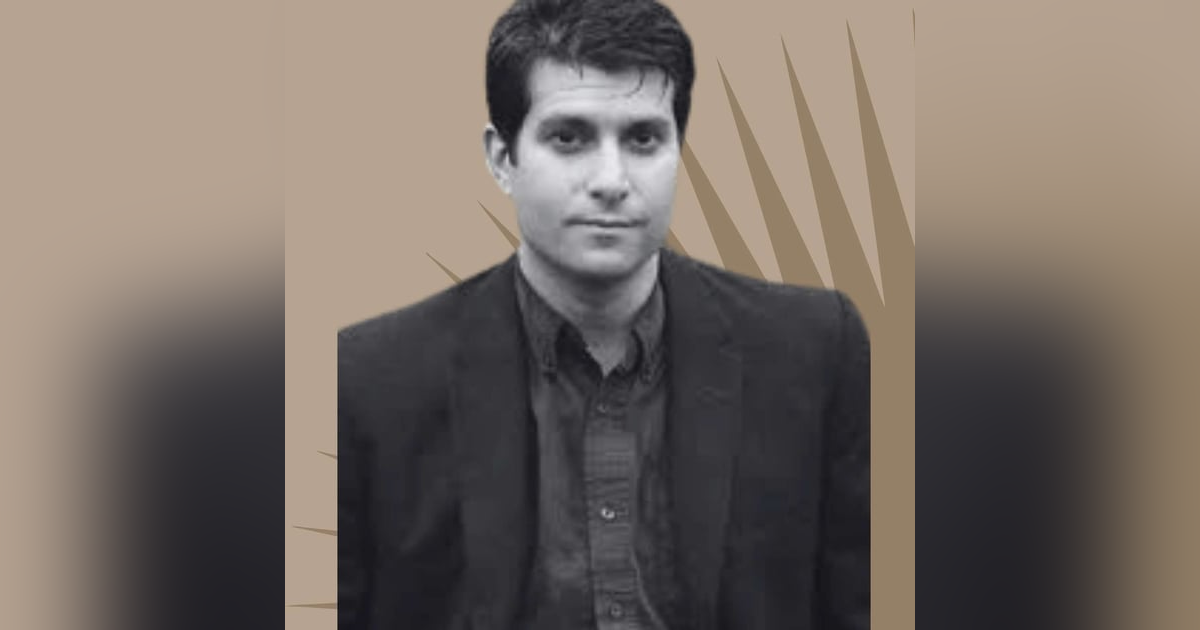


“What conclusion do you draw if you see a system that continues to grow more powerful despite failing at the things it says it’s going to accomplish?” — Jacob Siegel
Jacob Siegel grew up in Brooklyn, studied history at Boston University, enlisted in the US Army after September 11, and fought in Iraq and Afghanistan. In Afghanistan, as an intelligence officer, he had the latest drones, sensors, Palantir databases, and predictive models at his fingertips — but still couldn’t get a coherent answer about what, exactly, America was trying to accomplish in its war with the Taliban. To him, the technology was as extraordinary as the incoherence of the war.
In his new book, The Information State: Politics in the Age of Total Control, Siegel argues that within a few years of coming home, those same tools were being used on American citizens. This “Information State” was born in Herat and Kandahar. It came home to our iPhones.
But Siegel’s Information State isn’t the conventional leftist critique of Big Tech. Siegel argues that the Obama administration elevated the war on terror’s surveillance apparatus into an art of progressive government — not as Orwellian censors but through a sprawling network of NGOs, fact-checkers, and media organisations that made authoritarian control look like liberal consensus. Ben Rhodes, one of the principal architects of the Information State, called it the echo chamber. Trump’s version is cruder, more monarchical, more wannabe Orwellian. But the infrastructure, Siegel says, is the Internet itself. Digital society has spawned its own form of government regardless of who’s in charge. This Kafkaesque system grows more powerful despite failing at everything it claims to do. You may not be interested in the Information State, but it sure is interested in you. Such is politics in the age of total control.
Five Takeaways
• The War on Terror’s Tools Came Home: Siegel was an intelligence officer in Afghanistan with drones, sensors, Palantir, and predictive databases at his fingertips — and couldn’t get a straight answer about what America was trying to accomplish. Within a few years of returning, those same tools were being used on American citizens. The information state was born in Herat and Kandahar.
• Obama Built It. Trump Inherited It. Neither Owns It: The Obama administration elevated the war on terror’s surveillance tools into an art of government — not as Orwellian censors but through a progressive gloss of rationality and correct social ideals. Trump’s version is cruder, more monarchical, more direct. But the infrastructure is the Internet itself. Digital society spawns its own form of government regardless of who’s in charge.
• The System Grows More Powerful by Failing: This is the Kafkaesque horror at the heart of the book. A system that never achieves its stated goals — winning in Afghanistan, rationalising society, controlling public opinion — yet continues to grow larger and more powerful. If a system is rewarded for failing, the system itself has become the purpose.
• Twitter Under Musk Is a Horrifying Factory of Schizophrenia: Siegel is no Musk apologist. He thinks the early campaign against mass censorship was a good step. But the result — Musk’s Twitter — is social dissolution, not liberation. Removing government control didn’t solve the fundamental problem of how we mediate social relations online.
• The Human Subject Has Been Diminished: The digital world has relocated human agency into opaque systems. The crisis of the American man — and, Siegel concedes, of the American woman too — is bound up with a technological transformation on the order of the printing press. Industrial-era social relations cannot persist under digital conditions. The information state is the first draft of what comes next.
About the Guest
Jacob Siegel is a contributing editor at Tablet magazine and co-editor of the anthology Fire and Forget: Short Stories from the Long War. He served as a US Army officer in Iraq and Afghanistan. The Information State is published by Henry Holt.
References:
• The Information State by Jacob Siegel (Henry Holt, 2026) — the book under discussion.
• Episode 2845: Let’s Ban Billionaires — Noam Cohen on the Know-It-Alls and the theft of civilisation. Siegel’s argument from the other side.
• Episode 2847: America’s Suez Moment? — Soli Özel on the Iran war. The information state meets real war.
About Keen On America
Nobody asks more awkward questions than the Anglo-American writer and filmmaker Andrew Keen. In Keen On America, Andrew brings his pointed Transatlantic wit to making sense of the United States — hosting daily interviews about the history and future of this now venerable Republic. With nearly 2,800 episodes since the show launched on TechCrunch in 2010, Keen On America is the most prolific intellectual interview show in the history of podcasting.
Chapters:
- (00:00) - Introduction: the wages of bitterness and the information state
- (02:52) - Brooklyn, Boston University, and the unfocused student
- (05:05) - September 11 and the American man who enlisted
- (06:02) - Anatole Broyard, not Nathan Zuckerman
- (08:09) - McCarthy, the Red Scare, and the fertile fifties
- (11:17) - Iraq, Afghanistan, and the disjunction between technology and war
- (14:44) - Palantir, drones, and the dream of total control
- (15:45) - The war on terror’s tools come home to America
- (17:00) - Obama’s progressive information state: not Orwellian, worse
- (20:35) - Six Espionage Act prosecutions and the echo chamber
- (28:09) - Trump’s quasi-monarchical version vs. Obama’s sprawl
- (32:10) - Gramsci, cultural hegemony, and the single national ruling class
- (34:02) - The Kafkaesque horror: a system that grows by failing
- (43:50) - Twitter under Musk: a horrifying factory of schizophrenia
- (44:32) - The crisis of the American man and the diminished human subject
00:00 - Introduction: the wages of bitterness and the information state
02:52 - Brooklyn, Boston University, and the unfocused student
05:05 - September 11 and the American man who enlisted
06:02 - Anatole Broyard, not Nathan Zuckerman
08:09 - McCarthy, the Red Scare, and the fertile fifties
11:17 - Iraq, Afghanistan, and the disjunction between technology and war
14:44 - Palantir, drones, and the dream of total control
15:45 - The war on terror’s tools come home to America
17:00 - Obama’s progressive information state: not Orwellian, worse
20:35 - Six Espionage Act prosecutions and the echo chamber
28:09 - Trump’s quasi-monarchical version vs. Obama’s sprawl
32:10 - Gramsci, cultural hegemony, and the single national ruling class
34:02 - The Kafkaesque horror: a system that grows by failing
43:50 - Twitter under Musk: a horrifying factory of schizophrenia
44:32 - The crisis of the American man and the diminished human subject
00:00:01 Andrew Keen: Hello, everybody.
00:00:02 Andrew Keen: Last month, there was an interesting piece in Tablet magazine called "The Wages of Bitterness," which asked what went wrong with the American man, by my guest today, Jacob Siegel.
00:00:16 Andrew Keen: Jacob also has a new book out this week.
00:00:18 Andrew Keen: It's called The Information State: Politics in the Age of Total Control.
00:00:23 Andrew Keen: Jacob Siegel is joining us from central Israel, where he lives.
00:00:28 Andrew Keen: Jacob, are these two pieces connected?
00:00:32 Andrew Keen: What went wrong with the American man, and this new dystopia — what you call the information state?
00:00:38 Andrew Keen: Are they bound up with one another?
00:00:42 Jacob Siegel: They are, though.
00:00:42 Jacob Siegel: I mean, it wasn't part of my conception in writing them that I would trace their connections.
00:00:49 Jacob Siegel: But, yeah, I think unavoidably they're connected — in part because what I'm describing in the book has a lot to do with the failures of the global war on terror, and also specifically the ways in which the war on terror has sort of returned home into the domestic political arena in the US, and the damaging effects of that inward turn.
00:01:15 Jacob Siegel: And I guess also there's a connection in the sense that this experience of the war on terror — which was personal for me, because I was a US Army officer and I was part of it —
00:01:28 Jacob Siegel: I fought in it in Iraq and in Afghanistan — was also formative in terms of my understanding of this evolving new kind of digital society and governmental system that I call the information state. Which is really this new apparatus of public-private power — sort of through the vehicle of the state, but not exactly synonymous with our understanding of what a liberal nation-state is — that draws in many of these informational tools I first became acquainted with through the war on terror, but then reapplies them to engineering the domestic political situation.
00:02:13 Andrew Keen: Tell me a little bit about yourself.
00:02:15 Andrew Keen: You threw in some biographical details.
00:02:19 Andrew Keen: You noted that you'd been in the US Army.
00:02:21 Andrew Keen: I was looking you up before.
00:02:22 Andrew Keen: For some reason, you're not on Wikipedia, but you're on Elon Musk's new Wikipedia rival, Grokipedia.
00:02:31 Andrew Keen: Sounds as if you've had an interesting life.
00:02:33 Andrew Keen: Tell me how you got involved in the US Army, and how your own narrative connects with the information state, and how perhaps even you yourself, Jacob Siegel, are an example of what has gone wrong — or perhaps right — with the American man.
00:02:52 Jacob Siegel: So I grew up in Brooklyn, New York.
00:02:55 Jacob Siegel: Had a good life — middle-class family, a very learned family.
00:03:02 Jacob Siegel: My father was a historian and a writer.
00:03:06 Jacob Siegel: But I grew up in an era and in a part of New York where things had not yet become so socially siloed.
00:03:15 Jacob Siegel: There was still a sort of vibrant mixing of people from different classes and backgrounds in the New York that I grew up in.
00:03:23 Jacob Siegel: It hadn't yet emptied out the private-sector middle class, which is something I watched happen a little bit later in my life.
00:03:31 Jacob Siegel: But my childhood was — really New York, Brooklyn, and the sort of cultural scene in New York — the formative experiences.
00:03:42 Jacob Siegel: I went off to college.
00:03:43 Andrew Keen: Where did you go to college?
00:03:46 Jacob Siegel: Boston University.
00:03:47 Jacob Siegel: I was studying history and international relations at Boston University. I had literary pretensions.
00:03:56 Jacob Siegel: I was an unfocused student.
00:03:59 Jacob Siegel: I read a lot, but throughout high school and up until college, I was unfocused.
00:04:07 Jacob Siegel: I was a bit of a person who found myself getting into some trouble in some places and maybe couldn't always realize my potential in various ways.
00:04:21 Jacob Siegel: But I think, Andrew, you cut right to it.
00:04:27 Jacob Siegel: Was I happy?
00:04:28 Jacob Siegel: Probably not.
00:04:29 Jacob Siegel: I don't think I was particularly happy.
00:04:34 Jacob Siegel: I wasn't acutely unhappy either, but I was unsatisfied.
00:04:41 Jacob Siegel: I had a restlessness and a sense that I had something to prove, and also that there was something incomplete about my experiences up till that point — when I was, let's say, twenty, twenty-one — which leads us up to September 11, 2001.
00:05:05 Jacob Siegel: I was in college at the time.
00:05:08 Jacob Siegel: Almost immediately after the attacks, I returned back to New York.
00:05:11 Jacob Siegel: I was volunteering at Ground Zero.
00:05:13 Jacob Siegel: I spent a few weeks in New York volunteering.
00:05:18 Jacob Siegel: And then very quickly, once the US started to get on a war footing, it wasn't that I had any strong ideological conviction that the war was right or wrong, or any particular sense of the politics of it at the time.
00:05:34 Jacob Siegel: What I had was an overwhelming sense that if America was going to war, I should be a part of it — that I was an American, that this was my duty — and also —
00:05:42 Andrew Keen: You were an American man, of course — to bring the —
00:05:47 Jacob Siegel: Very much so.
00:05:47 Andrew Keen: Very much.
00:05:48 Andrew Keen: "Wages of Bitterness" piece — the American man.
00:05:52 Andrew Keen: I wouldn't say the American man goes to war, but the American man stands up for the American nation.
00:05:56 Andrew Keen: Right?
00:05:57 Jacob Siegel: Yes.
00:05:57 Jacob Siegel: I was an American man with a sense of myself as an American man.
00:06:02 Jacob Siegel: You know, there's a great memoir by a former New York Times literary critic, Anatole Broyard, called When Kafka Was the Rage, which is his memoir about his experiences as a literary man in Greenwich Village after returning from World War Two.
00:06:19 Jacob Siegel: It's just a beautifully written, very poignant, kind of sensual memoir of those years in Greenwich Village, and of the intellectual and literary ferment of the time.
00:06:32 Andrew Keen: Is there a kind of — do you think of yourself in Roth-ian terms? The more I look and listen to you, there's a Nathan Zuckerman quality perhaps to your life.
00:06:43 Jacob Siegel: No.
00:06:43 Jacob Siegel: No.
00:06:44 Jacob Siegel: Not at all.
00:06:45 Jacob Siegel: No.
00:06:47 Jacob Siegel: More in Broyard terms, if anything, actually.
00:06:51 Jacob Siegel: But what Broyard says in that book is that he's talking about being surrounded by these fellow Greenwich Village intellectuals.
00:06:59 Jacob Siegel: At the time — people like Delmore Schwartz and this sort of very vibrant New York intellectual scene in the postwar years.
00:07:07 Jacob Siegel: And he says that they were all estranged from America, and that it was a very central part of the postwar experience to feel one's estrangement from America — and that he did not feel estranged.
00:07:20 Jacob Siegel: He felt estranged, if anything, from their estrangement.
00:07:24 Jacob Siegel: And Broyard had a fascinating backstory that I won't fully get into here, but I related to that.
00:07:30 Andrew Keen: I'm not too familiar, but I know you wrote an interesting piece for UnHerd — again, a spin-off of your new book on disinformation — called "The Great Disinformation Hoax," where you write about the fifties and Senator Joseph McCarthy.
00:07:47 Andrew Keen: What was his take on the Red Scare and that narrative?
00:07:51 Andrew Keen: And how did that connect perhaps to your broader narrative of being an American male?
00:07:58 Jacob Siegel: So that piece was actually for Tablet. The UnHerd thing — I think it was just an interview I did with them.
00:08:05 Jacob Siegel: That was a guide to understanding the hoax of the century.
00:08:09 Jacob Siegel: "Thirteen Ways of Looking at Disinformation" was the original Tablet piece that my new book, The Information State, is based on.
00:08:16 Jacob Siegel: McCarthy created a kind of atmosphere of pervasive paranoia within the American political system that was attached in a direct way to something that was real — which is that there were real, ongoing attempts by the Soviet Union to implant active agents within the US government.
00:08:48 Jacob Siegel: There were active measures.
00:08:49 Jacob Siegel: There were active efforts at subversion.
00:08:52 Jacob Siegel: We know this from Whittaker Chambers, Alger Hiss, and so on.
00:08:57 Jacob Siegel: There were real, active communist agents within the US government.
00:09:00 Jacob Siegel: This was not just some kind of right-wing fever dream or McCarthy's fever dream.
00:09:05 Jacob Siegel: But McCarthy took that real threat and inflated it into a kind of all-encompassing, pervasive paranoia in a way that I think was damaging.
00:09:19 Jacob Siegel: As far as how that relates to American manhood — the American male character from the nineteen-fifties has these larger-than-life embodiments in Don Draper and this sort of Mad Men character.
00:09:38 Jacob Siegel: But those postwar years, which are now very much identified with the Red Scare and with McCarthyism, were unbelievably fertile, active years in American life.
00:09:50 Jacob Siegel: There were a lot of different versions of American manhood.
00:09:52 Jacob Siegel: This is when Jack Kerouac was writing.
00:09:55 Jacob Siegel: It was also the explosion of the American suburbs.
00:09:59 Jacob Siegel: The baby boom was sort of expanding out from the cities into the suburbs.
00:10:05 Jacob Siegel: So it's a very fertile period.
00:10:07 Andrew Keen: Yeah.
00:10:07 Andrew Keen: And to go back — I know you're not maybe quite so keen on equating yourself with Nathan Zuckerman, but this was also the moment, of course, for Philip Roth and his notion of the American man, the American Jewish man.
00:10:23 Andrew Keen: But anyway, go on.
00:10:25 Jacob Siegel: Yeah.
00:10:25 Jacob Siegel: No.
00:10:25 Jacob Siegel: I just — I think The Counterlife is the Roth novel that speaks to me.
00:10:32 Jacob Siegel: I think Roth's a brilliant writer, and I think The Counterlife is one of the great novels of the twentieth century.
00:10:37 Jacob Siegel: But Roth was not a formative influence on me.
00:10:40 Jacob Siegel: He wasn't somebody I identified with.
00:10:45 Jacob Siegel: The first few things I read by Roth, I didn't really relate to.
00:10:50 Jacob Siegel: But that character of the New York City-area Jewish intellectual who's also very much deeply embedded in the American scene of the moment — that certainly was something I related to.
00:11:07 Andrew Keen: Okay.
00:11:07 Andrew Keen: So let's — and I apologize for leading us on these side streets — but let's retrace your main story of the information state.
00:11:17 Andrew Keen: So you're not particularly happy, or you're dissatisfied perhaps, with your life at Boston University.
00:11:24 Andrew Keen: The planes hit on 9/11, and you join up.
00:11:28 Andrew Keen: Tell me a little bit more about what that experience was like and how it led to this argument you make in The Information State about politics in the age of total control.
00:11:40 Andrew Keen: I'm not sure who has the total control.
00:11:43 Jacob Siegel: Sure.
00:11:43 Jacob Siegel: Yeah.
00:11:43 Jacob Siegel: It's an effort at total control.
00:11:46 Jacob Siegel: It's the dream of total control that no one ever fully realizes, but that's the sort of guiding aspiration of the political-technological system we live inside.
00:11:59 Jacob Siegel: As far as myself — I enlisted in the Army within a few months after 9/11.
00:12:06 Jacob Siegel: In 2006, I deployed to Iraq.
00:12:08 Jacob Siegel: I was in Iraq for close to fifteen months.
00:12:12 Jacob Siegel: It was a long, difficult deployment.
00:12:17 Jacob Siegel: I was with a few different units over that time.
00:12:21 Jacob Siegel: And it was a searing experience that I had to spend a number of years just trying to sort out on a personal basis when I got back from Iraq.
00:12:34 Jacob Siegel: It didn't really go directly into this book, The Information State.
00:12:41 Jacob Siegel: But a few years after getting back from Iraq, I deployed to Afghanistan — my second deployment, in 2012.
00:12:49 Jacob Siegel: And when I was in Afghanistan, I had this experience where I was — I was an intelligence officer for an infantry battalion.
00:12:58 Jacob Siegel: So I was really in the heart of it, and I had these unbelievably powerful technologies of surveillance, of informational analysis and prediction, various kinds of sensors, databases, at my fingertips.
00:13:18 Jacob Siegel: And yet in 2012, when I was in Afghanistan, I could not get a straight answer about what we were trying to accomplish in Afghanistan, and how this related directly to America's national interests, or whether it was even achievable.
00:13:33 Jacob Siegel: My own unit — we were involved in training the Afghan security forces.
00:13:39 Jacob Siegel: But the thing we were trying to transform the Afghan security forces into, which was a sort of penny-ante version of the American Army — essentially a much lower-level version built on the same essential model — was clearly something that was not working.
00:14:00 Jacob Siegel: And the Afghans in the area who we were trying to train to emulate this model were not really interested in it — in part because where I was in western Afghanistan, there was not a lot of feeling of direct connection to the government in Kabul.
00:14:16 Jacob Siegel: There wasn't much of a feeling of a unified national identity that everyone was participating in.
00:14:22 Jacob Siegel: So that if you were in Herat or Kandahar or Paktika Province in the east, you all felt a common identity —
00:14:29 Jacob Siegel: it simply didn't exist.
00:14:31 Jacob Siegel: And yet at the same time — there was this incoherence on the ground.
00:14:34 Jacob Siegel: There was this essentially stumbling war effort on the ground that had already been going on for a decade by the time I got there.
00:14:44 Jacob Siegel: And yet at a level above what was happening on the ground, there were these extraordinarily powerful instruments of what appeared to be informational mastery over the whole country.
00:14:58 Jacob Siegel: So from a single tactical operations center, we had drones in the sky.
00:15:04 Jacob Siegel: We had various kinds of sensors.
00:15:07 Jacob Siegel: We had human intelligence sources.
00:15:08 Jacob Siegel: All of these were feeding into these centralized databases.
00:15:12 Jacob Siegel: Those centralized databases could be queried in the same way that you and I would query Google today.
00:15:18 Jacob Siegel: They also fed into these predictive analysis models — like Palantir and various things like this — that were supposed to tell us where the war was heading next.
00:15:27 Jacob Siegel: And so there was this extraordinary disjunction between the power of these tools I had at my fingertips and the kind of stumbling incoherence of the war effort itself.
00:15:40 Jacob Siegel: And when I got back to America, I had been thinking about this.
00:15:43 Jacob Siegel: I was trying to make sense of it.
00:15:45 Jacob Siegel: And then within a few years, those same tools that I had not only seen but directly used in Afghanistan started to show up in America — as instruments of domestic politics, as ways of surveilling American citizens.
00:16:03 Andrew Keen: So this is your politics in the age of total control.
00:16:07 Andrew Keen: Jacob, as you know, there are many books on this subject.
00:16:11 Andrew Keen: Most of them are written from the left.
00:16:14 Andrew Keen: I blurbed — or we did the original — In fact, I blurbed The Age of Surveillance Capitalism. Many books about how Silicon Valley is now watching over us, but they're mostly written from the left.
00:16:29 Andrew Keen: Yours, perhaps, is a little more complicated.
00:16:32 Andrew Keen: You're writing not so much about Trump, but in some ways about Obama.
00:16:36 Andrew Keen: You note that you were in Afghanistan in 2012 when Obama was president.
00:16:41 Andrew Keen: Would it be fair to argue that your book is not the conventional sort of Orwellian critique of politics in the age of total digital control?
00:16:52 Andrew Keen: It's more nuanced, perhaps more conservative?
00:16:56 Jacob Siegel: Yeah.
00:16:57 Jacob Siegel: That's certainly fair.
00:17:00 Jacob Siegel: I don't know that conservatives would like to label me that way necessarily, but certainly it's not the standard leftist account — in part because one of the things I'm showing in this book is that the technocratic information state I'm describing is itself built out of a progressive political ideal.
00:17:24 Jacob Siegel: The premise that society can be rationalized and organized through information technologies — so that this chaotic thing, public opinion, can be disciplined and harnessed to proper social ends — is a progressive political ideal.
00:17:49 Jacob Siegel: The Obama administration — the reason why I spend so much time on them — is because that is the administration that elevates these incipient technologies of surveillance and of informational control into a kind of art of government and politics.
00:18:11 Jacob Siegel: And they do this successfully in part because they attach a very attractive progressive political gloss to it.
00:18:20 Jacob Siegel: They don't do it as Orwellian censors.
00:18:23 Jacob Siegel: They don't do it as sort of reactionary right-wing authoritarians.
00:18:29 Jacob Siegel: The way that this mass surveillance system gets built out into a totalizing digital system is in part through the idea that in doing so, we'll be able to bring people the correct progressive social ideals about race and about gender — and we'll be able to harmonize this large and otherwise disorganized American society so that we can get important things done.
00:19:00 Jacob Siegel: That's part of what makes the Obama information-state era so crucial.
00:19:07 Andrew Keen: I mean, I take the argument.
00:19:09 Andrew Keen: Your review in Publishers Weekly — they described it as a hit-or-miss debut.
00:19:17 Andrew Keen: They weren't totally convinced.
00:19:18 Andrew Keen: Can you give me — this sounds good, I guess, and certainly right-wing media, maybe your readers at Tablet or The Free Press, might appreciate it.
00:19:27 Andrew Keen: But give me some examples.
00:19:29 Andrew Keen: I was around in the teens during the eight years of the Obama era, and I never felt as if there was any politics in the age of total control.
00:19:40 Andrew Keen: I felt quite free to say and do what I wanted.
00:19:43 Andrew Keen: What exactly — could you give me some examples, Jacob, of how this actually impacted people?
00:19:51 Jacob Siegel: Yeah.
00:19:51 Jacob Siegel: Certainly.
00:19:52 Jacob Siegel: You might not have been saying anything that was threatening to the —
00:19:57 Andrew Keen: Actually, I was.
00:19:58 Andrew Keen: You know, I was probably the most prominent —
00:20:00 Jacob Siegel: It depends.
00:20:01 Andrew Keen: I —
00:20:01 Jacob Siegel: I don't know. I didn't follow all of your statements at the time, but it's possible that what you were saying wasn't something that they thought was threatening.
00:20:09 Jacob Siegel: But they —
00:20:09 Andrew Keen: — did that.
00:20:10 Andrew Keen: Let me — you just said that.
00:20:11 Andrew Keen: Let me just come back on that.
00:20:13 Andrew Keen: Back then, I was one of the most prominent and controversial critics of big tech, and of the very information state that you describe — very critical of the big tech companies that you write about in the book.
00:20:28 Andrew Keen: So I was someone who had a great deal of visibility.
00:20:33 Andrew Keen: But anyway, go on.
00:20:35 Jacob Siegel: Okay.
00:20:37 Jacob Siegel: I don't know the history of your positions in those years, but I do know that the Obama administration prosecuted more journalists than any other presidential administration over the previous century.
00:20:52 Jacob Siegel: And I know that the Obama administration's approach to handling public opinion was through something that Obama's very close adviser, Ben Rhodes, described as the echo chamber — which was a way of organizing a kind of new astroturf consensus, pulling in various kinds of experts and media figures into what would appear to be an organic consensus around a political issue.
00:21:24 Jacob Siegel: This is something that Rhodes talked about — he was quoted at length about it in a profile written of him by the journalist David Samuels.
00:21:34 Jacob Siegel: So the effort to control public opinion — which is a central plank of what I'm describing as the information state — was not something happening surreptitiously that you couldn't see unless you were examining obscure phenomena.
00:21:52 Jacob Siegel: It's right there in the prosecutions.
00:21:54 Andrew Keen: Right.
00:21:54 Andrew Keen: I mean — I have to say, David Samuels has been on the show, and Ben Rhodes has been on the show too.
00:22:02 Andrew Keen: But it's one thing to try to shape public opinion.
00:22:06 Andrew Keen: It's quite another to put journalists in jail.
00:22:08 Andrew Keen: You said that Obama put —
00:22:11 Jacob Siegel: Well, they did both.
00:22:12 Jacob Siegel: They did —
00:22:12 Andrew Keen: — both.
00:22:12 Andrew Keen: But let's talk more concretely.
00:22:15 Andrew Keen: Could you give me some examples of journalists that the Obama administration put in jail?
00:22:22 Jacob Siegel: Yes.
00:22:23 Jacob Siegel: Certainly.
00:22:23 Jacob Siegel: Give me one second.
00:22:24 Jacob Siegel: I want to just —
00:22:25 Andrew Keen: — because none come to mind, at least for me — certainly compared to what's happening now in the US.
00:22:31 Jacob Siegel: I said "put in jail" — or — I don't know if I said "put in jail."
00:22:34 Andrew Keen: Well, you need to be more concrete in terms of what they did.
00:22:39 Jacob Siegel: Okay.
00:22:39 Jacob Siegel: I'd be happy to do that.
00:22:44 Jacob Siegel: So there was a journalist who worked for Fox News, for instance.
00:22:51 Jacob Siegel: I want to get the name right — so you'll have to give me a moment and I'll pull it up.
00:22:55 Jacob Siegel: It's James Rosen, I believe, was his name.
00:22:59 Jacob Siegel: But the fact that there were more prosecutions of journalists under the Obama administration — this is not a matter of debate.
00:23:12 Jacob Siegel: It's a matter of public record.
00:23:14 Jacob Siegel: Give me one moment here.
00:23:17 Jacob Siegel: I'm going to quote from The Information State.
00:23:20 Jacob Siegel: Six government employees plus two contractors, including Edward Snowden, were subjected to felony criminal prosecutions based on the 1917 Espionage Act under the Obama administration.
00:23:33 Jacob Siegel: More than double the number carried out under all previous administrations combined over the previous century.
00:23:38 Jacob Siegel: In 2013, the Obama Justice Department investigated a leak by obtaining the records of twenty phone lines in the offices of the Associated Press, as well as the home and cell phone records of AP reporters.
00:23:52 Jacob Siegel: The AP itself was not even the target of the investigation — and so on.
00:23:56 Jacob Siegel: Separately, reporters' phone logs and emails were secretly subpoenaed.
00:24:00 Jacob Siegel: And here's the Fox News reporter I mentioned — who was accused in an affidavit of being an aider, abettor, and/or conspirator of an indicted leak defendant, exposing him to possible prosecution for doing his job as a journalist.
00:24:14 Jacob Siegel: Another Fox News reporter, James Rosen, had his travel activity, phone records, and personal emails monitored in a different investigation of a suspected leak — and there's also James Risen from the New York Times.
00:24:28 Jacob Siegel: So Risen's —
00:24:29 Andrew Keen: — been on the show.
00:24:32 Andrew Keen: There are a couple of thoughts I have on this, Jacob.
00:24:36 Andrew Keen: Firstly, are you defending Snowden?
00:24:39 Andrew Keen: I mean, Snowden was a traitor, wasn't he?
00:24:41 Andrew Keen: I mean, they had every right to pursue him.
00:24:43 Andrew Keen: He gave away state secrets.
00:24:44 Andrew Keen: So we can't blame Obama for that — or politics in the age of total control.
00:24:49 Andrew Keen: Whether Snowden existed in Bush One or Two, or Clinton, or Obama, or Biden, or Trump —
00:24:58 Andrew Keen: all these administrations are going to go after a guy like that, aren't they?
00:25:01 Andrew Keen: And he wasn't — anyway.
00:25:02 Andrew Keen: I mean, Snowden was a military contractor.
00:25:05 Andrew Keen: He wasn't a journalist.
00:25:08 Jacob Siegel: Yeah.
00:25:08 Jacob Siegel: That was — I brought up Snowden in reference to prosecutions under the Espionage Act.
00:25:13 Jacob Siegel: But you're absolutely right.
00:25:15 Jacob Siegel: Snowden absolutely would have been prosecuted by any administration.
00:25:21 Jacob Siegel: So taking Snowden out of it — however, granting your point that Snowden doesn't indicate the age of total control or any kind of exceptional political agenda under the Obama administration — the larger pattern that I described and cited in the rest of that quote holds.
00:25:40 Jacob Siegel: There was a pattern of prosecution of journalists.
00:25:43 Jacob Siegel: I think much of it was politically motivated, and that prosecution of journalists took place within a larger political environment that prioritized the shaping of the information environment and the shaping of public opinion — in ways that may have been an extension of past attempts at shaping public opinion, which I detail in the book.
00:26:10 Jacob Siegel: I don't suggest that Obama invented these things out of whole cloth.
00:26:15 Jacob Siegel: The whole point of the book is that I'm telling a story that starts as early as the seventeenth century, and really gets going in America with the Wilson administration.
00:26:24 Jacob Siegel: But I think the Obama administration brought this to a new level, in part by utilizing tools of the war on terror that had been really expanded under the Bush administration and then were harnessed for domestic political ends by Obama.
00:26:43 Jacob Siegel: And if Snowden is taken out of this entirely, the rest of that pattern still holds.
00:26:50 Jacob Siegel: Let me make one other point, because I think there's a bit of a category confusion going on here.
00:26:56 Jacob Siegel: When I describe politics in the age of total control, I'm not saying that the American political system ever arrived at a perfected form of totalitarian politics.
00:27:09 Jacob Siegel: I'm describing an ambition that's intrinsic both in the informational systems being deployed and in an evolving form of government and political ideology.
00:27:22 Jacob Siegel: But there's a constant back and forth that I'm trying to trace in the book between the creation of these totalizing information systems and political systems, and the revolt from an uncooperative public.
00:27:38 Jacob Siegel: That's really the story of the book.
00:27:39 Jacob Siegel: It's not about the perfection of this state of total control, or the suggestion that the US is a prison state on the order of North Korea or something like that.
00:27:52 Jacob Siegel: It's really about this back and forth — this tension between the aspiration towards a kind of total control, and the unruliness of the public and its unwillingness to go along with that — and where that tension leads.
00:28:09 Andrew Keen: I have to ask this question.
00:28:11 Andrew Keen: I'm sure my audience will want me to ask you.
00:28:15 Andrew Keen: Jacob, your book is mostly a sort of narrative about this history, this development of the information state.
00:28:26 Andrew Keen: But you noted its origins perhaps in the Obama administration, or the record number of attempts by the administration to go after journalists.
00:28:38 Andrew Keen: How does it compare with the Trump years?
00:28:41 Andrew Keen: Trump One, or particularly Two — the years we're living in now.
00:28:45 Andrew Keen: My guess — I haven't written the book, so I don't have the numbers at my fingertips —
00:28:52 Andrew Keen: but my guess is that the Trump administration has gone after far more journalists than the Obama administration.
00:28:58 Andrew Keen: What's your sense?
00:28:59 Andrew Keen: Have you researched this?
00:29:02 Jacob Siegel: No.
00:29:02 Jacob Siegel: I think you're wrong, but, you know, if you —
00:29:05 Andrew Keen: Well, you mentioned six.
00:29:06 Andrew Keen: I mean, I can probably pick up six.
00:29:09 Jacob Siegel: No.
00:29:09 Jacob Siegel: I mentioned six prosecutions related to the 1917 Espionage Act.
00:29:16 Jacob Siegel: That's specifically about the Espionage Act.
00:29:18 Andrew Keen: And that was the Wilson era.
00:29:21 Jacob Siegel: Correct.
00:29:22 Jacob Siegel: The book is not a defense of the Trump administration.
00:29:25 Andrew Keen: No.
00:29:25 Andrew Keen: No.
00:29:25 Andrew Keen: And I appreciate that.
00:29:26 Andrew Keen: And I don't want to always drag — because we always drag Trump into everything.
00:29:29 Andrew Keen: But I'm just curious as to your sense.
00:29:30 Andrew Keen: So you think the Obama administration —
00:29:32 Jacob Siegel: I think the Trump administration's relationship to the press is toxic and dysfunctional, and that there's an effort — there's a kind of overt authoritarian tendency to some of it.
00:29:45 Jacob Siegel: I don't think that's a controversial thing to say.
00:29:48 Jacob Siegel: What's the crucial difference between the Trump administration and the Obama administration — in particular in reference to what I am describing, which is a technocratic form of state control that crosses over from the federal government apparatus into the NGO sector and into the private technology sector.
00:30:12 Jacob Siegel: That's what I mean when I'm describing the information state as a new form of government, a new kind of political dispensation.
00:30:22 Jacob Siegel: In the Trump administration, there is a much more overt center of power that doesn't involve this kind of sprawling, opaque network of auxiliary NGOs and fact-checking bodies that get embedded in media organizations, et cetera — which was the case under the Obama administration and continued in the Biden administration, and was what made the information state distinctive in that era.
00:30:54 Jacob Siegel: The quality of the informational control in the Trump era is more direct.
00:30:59 Jacob Siegel: It has to do with the Trump administration's relationship — and Trump's personal relationship — with a handful of very powerful figures in the tech world: Elon Musk, most notably, but also people like David Sacks and Alex Karp of Palantir, and with the effort to use the tools of AI in particular as a way to advance the administration's agenda unilaterally.
00:31:29 Jacob Siegel: So there's a difference in kind between this sprawling technocratic system that bases its legitimacy on an idea of hyper-rationality and progressive government — which was what the Obama administration perfected — and the much more overt, direct, sort of quasi-monarchical authority of the Trump administration.
00:31:56 Jacob Siegel: You can certainly make the argument that the Trump administration has done any number of bad and illegitimate things, but that's the part of it that's germane to the argument I'm making here.
00:32:08 Andrew Keen: Yeah.
00:32:08 Andrew Keen: And I think that's a fair response.
00:32:10 Andrew Keen: It seems to me there's a kind of Gramscian quality to your information state, Jacob.
00:32:17 Andrew Keen: I'm not sure if you've read Antonio Gramsci, the —
00:32:20 Jacob Siegel: I'm familiar with Gramsci.
00:32:21 Andrew Keen: The Italian Marxist theorist of cultural hegemony.
00:32:26 Andrew Keen: Is this what you're arguing — that it wasn't just Obama?
00:32:32 Andrew Keen: It was all the NGOs.
00:32:34 Andrew Keen: It was, at that point at least, Silicon Valley, which was considered on the left rather than now on the right.
00:32:40 Andrew Keen: Yes.
00:32:40 Andrew Keen: A couple of days ago we did a show about how Silicon Valley is now supporting Trump.
00:32:45 Andrew Keen: But are you suggesting that this is a kind of — if not a Gramscian plot?
00:32:52 Andrew Keen: Because Gramsci didn't write about plots.
00:32:54 Andrew Keen: It wasn't sort of Leninist.
00:32:55 Andrew Keen: There's something almost like an unspoken arrangement — where you talk about this sprawling technocratic system being created by a sprawling technocratic elite: the Ben Rhodes of the world, the Obamas of the world, the people who ran Google, the people in Washington DC and New York and San Francisco who run all the nonprofits.
00:33:19 Andrew Keen: Is that the core argument here? A kind of — maybe not even Gramscian — control of everything that is so overt and daring that we don't even notice it?
00:33:33 Andrew Keen: We wake up one morning, and we're — we're with the bug.
00:33:38 Andrew Keen: Yeah.
00:33:39 Jacob Siegel: I mean, I think the Kafkaesque — Andrew, are you there?
00:33:47 Andrew Keen: Yeah.
00:33:48 Andrew Keen: Go on.
00:33:48 Andrew Keen: That was Kafka interfering.
00:33:50 Jacob Siegel: Yeah.
00:33:51 Jacob Siegel: Clearly.
00:33:52 Jacob Siegel: The Kafkaesque quality is that the system is both totalizing and yet ineffective and inefficient.
00:34:00 Jacob Siegel: This is the real horror.
00:34:01 Jacob Siegel: Right?
00:34:02 Jacob Siegel: You come up with this superhuman technology that's supposed to — excuse me — rationalize the entire world.
00:34:14 Jacob Siegel: It ends up not being able to do fairly straightforward things very well.
00:34:19 Andrew Keen: Kind of like what the US got up to in Iraq and Afghanistan.
00:34:23 Andrew Keen: You got all this sophisticated technology, and you can't even control relatively undeveloped societies.
00:34:29 Jacob Siegel: Exactly.
00:34:30 Jacob Siegel: And that's a sort of —
00:34:31 Andrew Keen: — jump in here then, Jacob.
00:34:33 Andrew Keen: Why write about it if it's so ineffective?
00:34:37 Jacob Siegel: Well, that's like saying, why write about Iraq and Afghanistan, or Vietnam for that matter, isn't it?
00:34:41 Jacob Siegel: I mean, they can still be historically significant.
00:34:44 Jacob Siegel: The phenomenon is still historically significant even if it doesn't achieve what it aims to achieve.
00:34:52 Jacob Siegel: Part of what makes this phenomenon so historically significant is that its power grows despite its continuous record of failing to achieve its own purported ends.
00:35:10 Jacob Siegel: What can we draw from that?
00:35:11 Jacob Siegel: What conclusion do you draw if you see a system that continues to grow more powerful despite failing at the things it says it's going to accomplish?
00:35:22 Jacob Siegel: What I draw from it, in part, is that the system itself begins to assign its own values to the humans around it.
00:35:31 Jacob Siegel: The technological system becomes not totally self-determining, but self-determining to some significant extent — whereby even if it doesn't do what it's supposed to do, it continues to be rewarded.
00:35:46 Jacob Siegel: It continues to grow larger.
00:35:48 Jacob Siegel: The Gramscian aspect of this, if there is one — I think it's that I'm describing the growth of a class with its own particular interests. There's a sociological phenomenon here.
00:36:02 Jacob Siegel: I don't use —
00:36:03 Andrew Keen: The dominant class.
00:36:04 Andrew Keen: You said this is a dominant technocratic class of —
00:36:07 Jacob Siegel: Right.
00:36:08 Jacob Siegel: Right.
00:36:08 Jacob Siegel: And I don't use the term "deep state."
00:36:10 Jacob Siegel: I think that it's clouded by too many murky connotations.
00:36:17 Jacob Siegel: But there's a sociological phenomenon here.
00:36:19 Jacob Siegel: There's a class — which is, in America in particular — you've had the consolidation of a single national ruling class over much of the twentieth century.
00:36:30 Jacob Siegel: And this single national ruling class — increasingly they all attend the same universities.
00:36:36 Jacob Siegel: They all pass through the same credentials.
00:36:38 Jacob Siegel: They —
00:36:38 Andrew Keen: — didn't go to Boston University, did they?
00:36:42 Jacob Siegel: Some of them might have.
00:36:43 Jacob Siegel: There might be some people who went to Boston University, but eventually there's a sort of convergence —
00:36:49 Andrew Keen: of —
00:36:50 Jacob Siegel: — a sort of hegemony of cultural tastes, of attitudes, of presumptions about the world.
00:36:56 Jacob Siegel: This is distinct from what had preceded it, which was a network of local elites whose power was then negotiated through tensions in a national system.
00:37:11 Jacob Siegel: Right?
00:37:11 Jacob Siegel: That's the preceding system that you might say reached its apotheosis under FDR's New Deal, where there are these competing interests and then there's a single national government that sort of reconciles those competing interests — which represent these different local constituencies.
00:37:28 Jacob Siegel: So you've had the radical flattening of local difference, and the consolidation of a single national ruling class.
00:37:35 Jacob Siegel: That's the sociological phenomenon.
00:37:37 Jacob Siegel: That then intersects with the technological phenomenon I'm describing, which is a global communications infrastructure — which from its inception is aimed at the control of public opinion and human behavior.
00:37:53 Jacob Siegel: So once you have this single national ruling class with a kind of technocratic ideology, which is present in progressivism going back to the nineteenth century, and this then converges with a global communications and surveillance network — which is the Internet — that's where you get the information state.
00:38:13 Jacob Siegel: But there's not a total rupture between liberal democracy and the information state.
00:38:20 Jacob Siegel: We're living in a period where they're overlapping.
00:38:23 Andrew Keen: So your argument is that Silicon Valley is actually inside the sprawling technocratic system — that they're on the other side?
00:38:32 Andrew Keen: I mean, we've had so many arguments about how Andreessen and Thiel and the Palantir guys and Musk, of course, are all in the Trump camp.
00:38:42 Andrew Keen: But you're arguing the reverse — certainly under Obama.
00:38:45 Jacob Siegel: Well, Andreessen was for Obama before he was for Trump.
00:38:48 Jacob Siegel: Andreessen himself is a sort of illustration of how Silicon Valley has shifted.
00:38:53 Jacob Siegel: Andreessen was one of the early, prominent Silicon Valley backers of Obama in 2008.
00:39:01 Jacob Siegel: Obama ran as the candidate of Silicon Valley in 2008.
00:39:07 Jacob Siegel: He came to Google headquarters to deliver his speech.
00:39:10 Jacob Siegel: Palo Alto was a huge source of funding for his campaign, and he very effectively brought the culture of Silicon Valley into harmony with the culture of progressive Washington DC — Obama-era Washington DC.
00:39:27 Jacob Siegel: You mentioned surveillance capitalism — Shoshana Zuboff's book.
00:39:31 Jacob Siegel: I think Zuboff does a very good job of detailing and documenting how, under the Bush administration, there was this condition of surveillance exceptionalism — as she describes it — whereby there was an extraordinary growth in the power of companies like Google and Facebook to do mass surveillance through a kind of carve-out created for them by the Bush government, which wanted to increase the power of private social media companies to do essentially mass surveillance on a for-profit basis, because it recognized that this augmented the power of the security state.
00:40:11 Jacob Siegel: But Bush did that as a cultural outsider.
00:40:14 Jacob Siegel: He never jived with Silicon Valley.
00:40:16 Jacob Siegel: Obama inherited that system and then brought the culture together.
00:40:22 Jacob Siegel: And this is well documented — as early as two —
00:40:25 Andrew Keen: — years ago.
00:40:26 Andrew Keen: Eric Schmidt — I think he was at the time the CEO of Google — I think he visited the Obama White House —
00:40:32 Jacob Siegel: — more.
00:40:33 Jacob Siegel: Right.
00:40:34 Andrew Keen: I think Schmidt visited the Obama White House more than anyone else outside the Obama family.
00:40:39 Andrew Keen: But, Jacob — given what's happened since Obama — does this, again — I take your point, and I'm probably in broad terms there's something in your theory of the information state.
00:40:52 Andrew Keen: But given what's happened since — given that Silicon Valley has shifted entirely, or seems, at least from many people's perspective, shifted entirely away from this — to the Trump White House.
00:41:04 Andrew Keen: They all showed up for his latest inauguration.
00:41:07 Andrew Keen: Does it suggest that none of this really mattered?
00:41:09 Andrew Keen: I mean, how does it fit into the current American situation?
00:41:15 Jacob Siegel: Well, I don't think it's true at all that Silicon Valley has shifted entirely to Trump.
00:41:20 Jacob Siegel: I think the vast majority of Silicon Valley remains essentially anti-Trump — would rather see a Democratic president — but Trump captured or co-opted a very significant, very influential kind of counter-elite.
00:41:36 Jacob Siegel: But most of Silicon Valley then responds to the signals.
00:41:39 Jacob Siegel: So Zuckerberg sees that Trump is coming into office, or that there's a backlash against the Biden administration, and Zuckerberg begins to speak out openly about regretting his participation in fiascos like the Hunter Biden affair — censorship of the reporting on the Hunter Biden laptops.
00:42:00 Jacob Siegel: That doesn't — in other words, political winds shift. I don't think that means there's a more elemental shift in the political makeup of Silicon Valley, or that it's mostly pro-Trump now.
00:42:14 Jacob Siegel: I think the infrastructure of the information state is the Internet itself.
00:42:22 Jacob Siegel: It's not the ideology grafted onto this structure by the Obama administration or the Trump administration.
00:42:34 Jacob Siegel: The basic conditions of digital society are what produce the information state.
00:42:41 Jacob Siegel: And as far as the Trump administration changing the basic conditions of digital society — they're very, very minor.
00:42:49 Jacob Siegel: So I think that what we're seeing now is that we have a new kind of digital society which naturally spawns a new form of government — in the same way that private property relations spawned a particular form of government, feudal relations spawned a particular form of government.
00:43:12 Jacob Siegel: Digital relations spawned a particular form of government.
00:43:15 Jacob Siegel: This goes back and forth between left- and right-wing manifestations.
00:43:21 Jacob Siegel: The Trump manifestation carried out a pretty effective early campaign to eliminate some of the more onerous mass censorship and speech restrictions which had been imposed over the previous decade.
00:43:38 Jacob Siegel: I think that was a good step.
00:43:40 Jacob Siegel: I still don't think that solves the fundamental problem of how we mediate social relations on the Internet or on social media companies like Twitter.
00:43:50 Jacob Siegel: Look.
00:43:50 Jacob Siegel: I think Twitter under Elon Musk is, like, a horrifying factory of schizophrenia and just general social dissolution.
00:44:05 Jacob Siegel: I don't think the Musk model of Twitter suggests there's been some great victory — nor do I think the Musk model of Twitter was the inevitable direction it had to take after essentially being disconnected from the kind of covert forms of government control that had been going on under the Biden administration.
00:44:32 Andrew Keen: End where we began — with your "Wages of Bitterness" essay: what's wrong with the American man?
00:44:38 Andrew Keen: Some people might read the subtitle of your new book — The Information State: Politics in the Age of Total Control — by connecting it perhaps with your own narrative, and suggesting that there is a gendered quality here. The crisis of the American man — and we have books about it.
00:44:58 Andrew Keen: We've done shows with Richard Reeves.
00:45:01 Andrew Keen: All this sense of powerlessness of the American man.
00:45:05 Andrew Keen: They're not quite where they were perhaps in the age of Joseph McCarthy.
00:45:09 Andrew Keen: Is there something in that?
00:45:11 Andrew Keen: Could one argue that this dystopia you're introducing — politics in the age of total control — is actually a kind of male nostalgia? That "total control" is something that simply recognizes the new reality, which also explains the crisis of the American male.
00:45:41 Jacob Siegel: Yeah.
00:45:41 Jacob Siegel: Someone can argue that.
00:45:44 Andrew Keen: But you wouldn't?
00:45:46 Jacob Siegel: Am I nostalgic for Joseph McCarthy as —
00:45:48 Andrew Keen: No.
00:45:49 Andrew Keen: I didn't suggest you personally, but I'm suggesting that — and you're not alone.
00:45:56 Andrew Keen: I mean, there are so many pieces, so many books and articles about our new politics in the age of, quote-unquote, total control — whether it's Google or Trump or Obama or this sprawling technocratic elite — and it's all part, maybe, of men not being particularly comfortable with the new controls.
00:46:17 Andrew Keen: I mean, we could have a whole show about MeToo and all these other movements.
00:46:25 Andrew Keen: Is there a connection between —
00:46:28 Jacob Siegel: the —
00:46:29 Andrew Keen: — the crisis of the American male and this sense, at least, of total control — of the Internet, of our digital world?
00:46:37 Jacob Siegel: Well, I think the digital world has quite dramatically reduced the power of human decision-making and human agency, and has relocated it into systems that make that agency and decision-making harder to trace, more opaque. And there's been a diminution of the human subject — the human as a subject has been diminished in the technological age.
00:47:12 Jacob Siegel: I'm a man, so I write from the perspective of being a man.
00:47:20 Jacob Siegel: And I think there is a particularly male dimension to that.
00:47:25 Jacob Siegel: I also think there's a dimension of that which is particular to women, and that could be written from that perspective as well.
00:47:32 Jacob Siegel: But beyond that, there's also simply the phenomenon that we've witnessed recurrently throughout history whereby great technological changes reorder social relations in ways that then give rise to new economic systems, which give rise to new political systems and ideologies that go along with those political systems.
00:47:58 Jacob Siegel: Digital society is a transformation that seems to me to be on the order of the printing press.
00:48:05 Jacob Siegel: And it makes sense in historical terms that the industrial-era social and political relations that many of us grew up inside of — and that some of us are nostalgic for — are not going to be able to persist in those historical forms under digital conditions.
00:48:25 Jacob Siegel: My book is an effort to grapple with that, and to explain how a first draft of the new political reality was the information state, which grew out of the war on terror.
00:48:44 Andrew Keen: Well, there you have it.
00:48:44 Andrew Keen: The book is out this week.
00:48:46 Andrew Keen: The Information State by Jacob Siegel, our guest — Politics in the Age of Total Control.
00:48:52 Andrew Keen: We are in an age of total control.
00:48:54 Andrew Keen: I thought that was a very free-ranging conversation.
00:48:57 Andrew Keen: No one censored what either Jacob or I said.
00:48:59 Andrew Keen: Jacob, congratulations on the book.
00:49:01 Andrew Keen: I have to get you back on.
00:49:02 Andrew Keen: Lots more to discuss.
00:49:03 Andrew Keen: Thank you so much.
00:49:04 Jacob Siegel: Thank you for having me.