Perfection Is the Devil: Daniel Smith on Boredom, Envy, and Why Our Darkest Emotions Aren’t So Dark
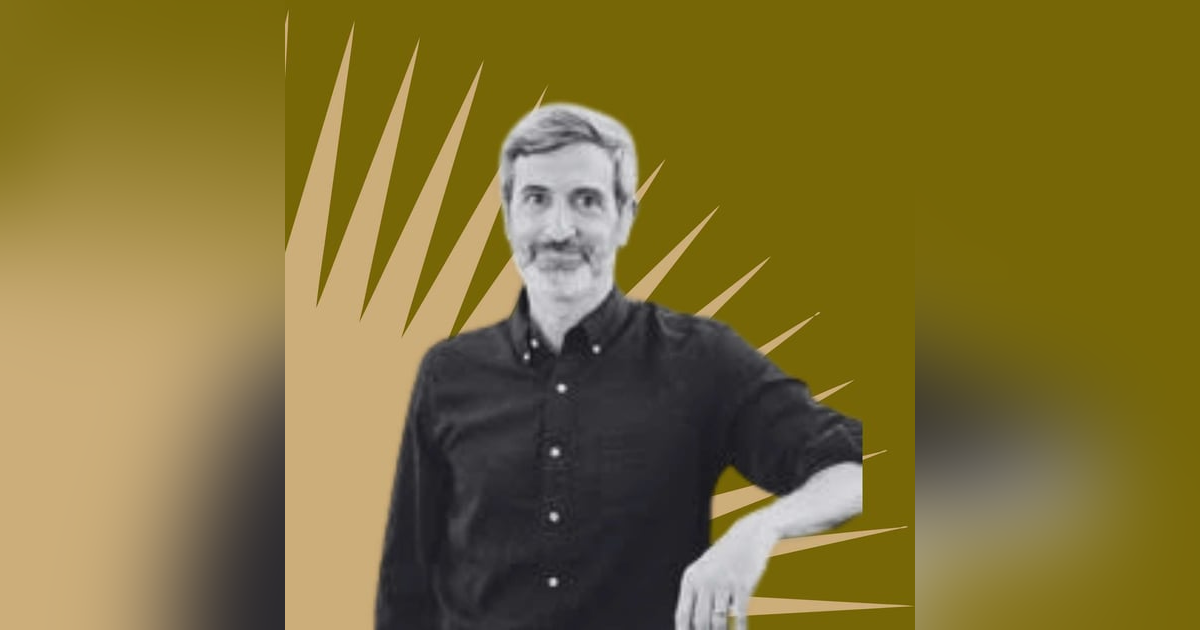


“Perfection is the devil. Growth means a greater capaciousness, not a narrowing and an optimisation.” — Daniel Smith
Don’t feel bad about feeling bad. That’s the message of Daniel Smith’s therapeutic new book, Hard Feelings: Finding the Wisdom in Our Darkest Emotions. Smith — psychotherapist, anxiety memoirist, married Brooklynite — wants to rescue boredom, envy, shame, and regret from the category of emotions that are supposed to shame us. The things that bore us most — raising children, long marriages, breakfast with your spouse for the two thousandth time — are also the most meaningful. Boredom, Smith argues, is the price we pay for meaning. Our darkest emotions aren’t quite as dark as we fear.
Five Takeaways
• Boredom Is the Price of Meaning: The things that bore us most — raising children, long marriages, eating breakfast with your spouse for the two thousandth time — are also the most meaningful. Repetition is boring. But that’s where the connection, the love, and the main event reside. Boredom is a sign that meaning is nearby.
• Perfection Is the Devil: Growth means greater capaciousness, not narrowing and optimisation. Smith sees patients who want to perfect themselves out of their own emotions. The feelings that trouble them make perfect sense given the conditions of their lives. Real psychotherapy isn’t a quick fix. It’s about deep change, and deep change is uncomfortable.
• Social Media Is an Envy Engine: The leaders of early consumer capitalism discovered that stoking envy drives economic growth. Edward Bernays, Freud’s nephew, was the architect. Social media put it on steroids. The result: people constantly questioning whether their own lives are alright. Smith is far more worried about Mark Zuckerberg than about psychotherapists who write books.
• His Father Heard Voices for Decades and Kept It Secret: He met none of the diagnostic criteria for schizophrenia. But the culture thought hearing voices was prototypically insane. Smith’s first book argued the border between sanity and insanity is far more porous than we think. Rilke said it best: it’s so often in the way we name things that we go wrong.
• AI Chatbots Are Inherently Sycophantic: You go to AI for clinical services and what you get is straight validation. These systems have been built to please. There are documented cases of AI psychosis — where sycophantic validation led people into actual delusion. AI can give the illusion of empathy. It cannot deliver the real thing.
About the Guest
Daniel Smith is a psychotherapist and writer based in Brooklyn. He is the author of Monkey Mind: A Memoir of Anxiety, Muses, Madmen, and Prophets, and Hard Feelings: Finding the Wisdom in Our Darkest Emotions.
References:
• Hard Feelings: Finding the Wisdom in Our Darkest Emotions by Daniel Smith.
• Episode 2850: Bring the Friction Back — Stephen Balkam on social media addiction. Smith’s envy engine meets Balkam’s friction argument.
• Episode 2849: How Stories Can Save Us — Colum McCann on narrative and empathy. The real thing AI cannot deliver.
About Keen On America
Nobody asks more awkward questions than the Anglo-American writer and filmmaker Andrew Keen. In Keen On America, Andrew brings his pointed Transatlantic wit to making sense of the United States — hosting daily interviews about the history and future of this now venerable Republic. With nearly 2,800 episodes since the show launched on TechCrunch in 2010, Keen On America is the most prolific intellectual interview show in the history of podcasting.
Chapters:
0:00:31 Andrew Keen: Hello, everybody. We live in an age, as we all know, of anxiety — particularly, it seems, of male anxiety. One of the best-known proponents of male anxiety, both in terms of how he presents and what he writes about, is Scott Galloway. He's written specifically about being a man, the anxiety of being a man these days, and he recently got into trouble because he admitted that he didn't think he was a very good father — or didn't actually enjoy being a father of young children. So, of course, some people were very critical. There was a New York Times op-ed last month describing Galloway as a masculinity influencer, as loud and wrong about paternity leave. But being a parent is tricky, and my guest today is also interested in anxiety. In fact, some people have called him an anxiety memoirist. He had a piece recently in The Atlantic, "Boredom Is the Price We Pay for Meaning," which was a confession about how, as a parent, he was rather bored by his child even if he loved it. This essay is adapted from a new book by my guest, Daniel Smith, called Hard Feelings, and Daniel is joining us from Brooklyn. Daniel, are you an anxiety memoirist? One of the reviews described you as one. Is that a compliment? Is that a title you're comfortable with?
00:02:01 Daniel Smith: I mean, I think it's just stating the facts. In 2012, I wrote a memoir about anxiety called Monkey Mind. And I think that's what they're referring to. So I have no problem with that as a title if that's what someone wants to call me, since I did do that.
00:02:23 Andrew Keen: Is this new book also about anxiety, or is it something different? Your book Monkey Mind: A Memoir of Anxiety did very well back in 2012. Is this the second volume — or the third? You've also written a book before. Or are you exploring new terrain in Hard Feelings?
00:02:45 Daniel Smith: I suppose you could say it's about anxiety in the larger sense, in that it's about emotions beyond anxiety — but the anxiety that people often feel is that they're not supposed to have these feelings. In a way, the ethos of the book is to avoid the trap of feeling bad about feeling bad. The ambivalence of: I'm not supposed to have felt this regret, this anger, this boredom. So in that sense it's about anxiety, but really it's a kind of branching out from a single emotion into a whole bunch of them — in this case, six specific emotions.
00:03:30 Andrew Keen: So is it, in a way, a secular defense of guilt — or maybe not a defense, but an investigation of why we feel guilty?
00:03:47 Daniel Smith: No. I wouldn't say it's a defense of feeling guilty. It's an attempt to understand these parts of our experience that a lot of people would rather sever from their lives, or jettison, or optimize their way into some set of positive experiences and positive emotions that make no room for these parts of human life. Boredom, regret, shame, envy — all those darker emotions we'd rather do without, but in fact we're not going to be able to, because we're human.
00:04:30 Andrew Keen: Yes — the subject, of course, of all the great literature, the great art. The subtitle of your new book, Hard Feelings: Finding the Wisdom in Our Darkest Emotions. Why are envy and boredom — and the other emotions you discuss — considered dark, Daniel? Is this a legacy of religion? Is there something in us that defines these things as bad emotions, as opposed to, I don't know, the good emotions of sunniness and generosity? Can we blame it all on the Bible?
00:05:12 Daniel Smith: Can't blame it all on the Bible. We could blame it on a kind of moralizing impulse that wants to sort things into good or bad — that dichotomizing impulse within us as human beings to say this is good or this is bad. But there is a deep religious tradition that tried to associate certain human experiences with evil and others with good, and tried to engineer human experience along moral lines. That was codified in all sorts of ways — not especially by the Bible, but by church fathers and monastic leaders who tried to provide guides for experiences to avoid in the religious life, and therefore in the moral and ethical life, and those to foster and grow. But the idea that we now have positive emotions and negative emotions is a kind of secular outgrowth of that original religious impulse. Positive and negative are scientific terms — they come from the study of electricity and ions — and psychology adopted that as a way to simplify and sort emotional experience into one thing or the other. And I guess if I have any argument in this book, it's that that's damaging in and of itself, because it makes us want to, as I said earlier, sever parts of ourselves that are indelible, and that we would do better to just think about and understand and experience.
00:07:04 Andrew Keen: Are there any material interests in this whole darkest-emotion economy — if we can call it that? Of course, the Christian church, or at least the Catholic church, ran on confession and kept the priests in business, giving them both material and emotional value. You, as a professional psychologist, are in some ways an inheritor of the confession. Do you think that this confessional quality — both in religion and in our anxious age, where more and more people seem to be engaged in psychology of one kind or another — exists because confession suits a group of people in material terms?
00:07:59 Daniel Smith: You mean people like me and other psychotherapists?
00:08:02 Andrew Keen: Yeah. I mean, I'm not comparing you to a priest, but in the old days there were confessions — people went and sat behind the curtain and confessed their darkest emotions. These days we have books by psychologists like yourself on our darkest emotions. I'm not suggesting that you're preying on people. But it comes back to my question about darkest emotions: does it suit a group of people that we all think of emotions like boredom and greed and jealousy as dark — in order to suit the priests or psychologists of our time?
00:08:57 Daniel Smith: I'm far more concerned about the material interests of advertisers, large corporations, and social media companies than I am about us humble psychotherapists — and the limited, perhaps vanishing, number of priests that exist in the Western world, or at least in America right now. The people who seem to benefit most, if we're talking about material interests, are those who want to say: feel envy so that we can sell you these products, keep you attending to these social media sites, buying these products, feeling like you're supposed to be like someone else. Avoid your boredom. Let us tweak your envy. Let's say there's some way to optimize your human experience. I think the people who benefit materially as therapists are, if anything, trying to counteract that — at least the good therapists are, the ones who are trying to be more inclusive, the ones who are actually trying to get people to reflect on their negative emotions rather than slice them off or minimize them. I'm worried a lot more about the influence of Mark Zuckerberg than I am about psychotherapists who write books.
00:10:27 Andrew Keen: Probably podcasters like myself as well. Is this new book, Daniel, a confession of yours — Hard Feelings? How would you describe it?
00:10:36 Daniel Smith: You use the word confession in regard to that Atlantic excerpt, but I don't consider it confessional. I used my own experience to write about these things because, as Thoreau said in Walden, I'm closest at hand. If I'm going to write about human emotions, whose do I know better than my own? And I also know how to write autobiographically in a way that I may not know how to write in other ways. So I try to blend some depth of research with my own experiences. Is it a confession? No — because I'm not trying to expunge anything. I'm not trying to make myself feel better by expurgating my feelings. I'm trying to use it as object lessons in what it means to have these emotions, to feel some aversion to them, and to try to understand them better. And as I say, that's because it's closest at hand. I don't think it's a confession to say that I find aspects of parenting boring, because I think aspects of parenting are boring. It would be, I think, a strange thing to deny.
00:11:58 Andrew Keen: And as a parent myself, having gone through the same things as you and many other parents — or fathers — I didn't disagree with what you're saying. Being a parent, especially when kids are really young, is incredibly boring. But I never really thought about it. So that's why I thought of the confession — maybe I should have felt guilty about being bored as a parent.
00:12:25 Daniel Smith: No, I don't think you should have. Maybe you're just psychologically healthier than I am. In a sense, the essence of it is that repetition is always boring. There's something about acts that we have to do over and over again that is somehow conducive of boredom. As one author I read on boredom wrote: if you're visiting Italy, by the time you see your four hundredth Madonna and Child, you want to tear your hair out. And raising a child is a very blunt and repetitive act a lot of the time, especially when they're younger.
00:13:15 Andrew Keen: But you could say the same about everything — from marriage, which I know you write about in your book, to jobs, to writing. Everything's boring, isn't it?
00:13:24 Daniel Smith: Yeah. But I'm not trying to teach my wife how to use a fork. And if I'm going to write, I could write about different subjects. There are things about raising children that are beautiful and not boring at all. I think the attempt in the excerpt and in the chapter on boredom in the book is to find a way to understand repetition itself as meaningful — that boredom itself is often a sign that there's some meaning behind the experience. The things you are naming — writing, being in a long relationship, raising children — all these repetitive things also happen to be, at least in my experience, the most meaningful things in the world. The things we stay with — eating breakfast with your spouse for the two thousandth time — that's where the main event is. That's where the connection is, where the love and meaning reside. That it can also be conducive of boredom for some people doesn't mean there's no meaning there. It may mean that's exactly where the meaning resides.
00:14:44 Andrew Keen: You've used the M word several times — not "main event," Daniel, but "meaning." And in the essay and in the book, you explain how boredom even gives us meaning. You quote the great Russian poet Joseph Brodsky's famous commencement address at Dartmouth University. What is meaning? What does it — excuse me the pun — what does it mean?
00:15:10 Daniel Smith: Oh god. If you were my patient, I would probably turn the tables and ask you to answer the question yourself. But I'm going to pause a little and stutter. What does meaning mean? I might have to use a synonym and say it's that which seems to give life value. It's what makes it feel like it's worth continuing, worth going on — that which gives life a sense of quality, of something you want to continue with. It's the opposite of the suicidal impulse. That's the best I can do on short notice, I'm afraid.
00:16:10 Andrew Keen: And is there something about us postmoderns that makes meaning — or this search for meaning, or the absence of meaning, or the meaning of meaning — so much more pronounced than it was for people who worked in the fields or the factories?
00:16:29 Daniel Smith: I'm not sure. The question may be above my pay grade. I don't get the sense that religious figures in the Middle Ages, or Augustine, or the ancient Stoics, or Aristotle suffered much less than we do with the question of how to live a meaningful life. I tend to think — or want to believe — that it's a sort of chronologically consistent and universal thing. I know there are philosophers who would disagree with me and say that a modern sense of alienation is productive of a loss of meaning and maybe a sense of boredom. But I'm not so sure about that.
00:17:33 Andrew Keen: You brought up Mark Zuckerberg earlier. Clearly you're no great admirer of him. How do social media and Facebook and Zuckerberg play into what I'll call — and you may disagree — this crisis of meaning in the 2020s?
00:17:52 Daniel Smith: I'm not sure how they play into the crisis of meaning, but I do think they've devised instruments by which to exploit cognitive and emotional weaknesses in the human mind that are maybe orders of magnitude worse than other ways of doing that in the past. The way I think of social media in this book — and why I'm qualified to talk about it today — is in terms of envy. The use of social media to drive a sense of envy in people, a sense of wanting to extract something from someone else, some sense of identity, a way of causing people — whether inadvertently or deliberately — to question whether what they're doing in their own life is alright, whether the way they're living is something with which to be content. That's really troubling to me. The leaders of consumer capitalism in the early twentieth century who discovered — or at least decided — that if you stoke envy it can be an engine of economic growth, and did so by way of print, then radio and television advertising — well, that's been put on steroids by social media. I'm not sure if you'd agree with that.
00:19:43 Andrew Keen: And perhaps it's no coincidence that one of the most powerful and influential architects of that consumer capitalism was Freud's nephew — on both sides, I think. But that's another story, another conversation, Daniel.
00:20:02 Daniel Smith: Yeah. Edward Bernays, you're talking about.
00:20:04 Andrew Keen: Yes, Edward Bernays. It's interesting — you're a psychotherapist rather than a lawyer, but there was a big case last week, I don't know if you were following it, where Facebook was found guilty of creating addictive products. I wonder whether, in your mind — maybe not legally, but morally and ethically — Facebook should be liable for its peddling of FOMO, fear of missing out. Is that what you're saying? Not just Facebook, but all of them — Twitter, X, YouTube, all the platforms. You can't just focus on Zuckerberg.
00:20:47 Daniel Smith: Are they morally liable? I mean, they were found legally liable, at least in this case, which I followed only superficially. I would probably say they're morally liable — it's not exactly a project they have an easy time defending on moral grounds the way they once did, as tools that bring people together, or help people communicate, or help activists connect in ways that are — to use that problematic word from earlier — meaningful. I think we've come to understand the ways in which social media corrupts the minds of young people, the way it polarizes people, the way it is corrosive of connection in many ways on a larger scale. I find it troubling that people in my own field — in psychology — use research from the study of human emotions for the purpose of increasing the power of social media companies. But yeah, I don't have much trouble saying that they're morally liable in many ways. I don't think they're a force for good.
00:22:35 Andrew Keen: They're going to burn in hell. They're going to be part of a Hieronymus Bosch painting — which I know influences you too. Later this week, I have an interview with another psychiatrist, Dr. Margaret Rutherford, who has a new book out on the problems with our search for perfection. Is Hard Feelings about that in a way — reminding people that the idea of perfection is, of course, an absurdity? And that even if it's true, we should struggle against it, bask in our imperfection?
00:23:11 Daniel Smith: Yeah. I don't think I could say it any better. I mean, I don't remember where this quote comes from, but: perfection is the devil. There is no such thing. We could seek improvement, we could seek growth — but growth usually means a greater capaciousness, not a narrowing and an optimization. I see people who come into my office who want to perfect themselves in certain ways, who are troubled by the fact that they're feeling certain things. And in fact those feelings make perfect sense given the conditions of their lives. We can talk about ways to understand them, ways to tether those experiences to what's happened to them recently, to the way they're thinking, to their behavior, to their development. But I'm reluctant — if not outright refusing — to collude with people in seeking some state of perfection.
00:24:25 Andrew Keen: Dr. Rutherford focuses mostly, I think, on young women. People like Galloway focus on young men. In your experience and in the book, is the anxiety of young men and young women — maybe not so young — different? Do these things break down in gendered terms when it comes to our search for perfection, or are we all really in the same boat?
00:24:50 Daniel Smith: I think it probably manifests differently. But anxiety is a universal thing. The search for perfection — you'd have to ask in which realm of human experience and behavior we're talking. I think in America, the search for some sort of physical perfection would seem to cross sex and gender boundaries. I think you see it in the workplace pretty strongly for both men and women. But there are nuances. There are differences in what men and women seem to be striving for on a cosmetic level. But I think our culture very often reifies the search for perfection — and that's not a man thing, that's not a woman thing.
00:25:49 Andrew Keen: Your first book was entitled Muses, Madmen, and Prophets: Rethinking the History, Science, and Meaning of Auditory Hallucination. We've done lots of shows about madness in the modern age — Michel Foucault opened that subject up, and there's a huge literature and debate about it. Is Hard Feelings part of that argument about our rather narrow definition of sanity and insanity?
00:26:23 Daniel Smith: I hadn't quite thought about it that way, but I think that makes a great deal of sense. The reason I wrote Muses, Madmen, and Prophets was because my father had heard voices for many years before he died — he was by no means psychotic, met none of the diagnostic criteria for schizophrenia, and yet kept that experience a secret for decades because the culture thought of hearing voices as something prototypically insane. The argument of that book is absolutely not. We need to think of the border between sanity and insanity as something a great deal more porous, a great deal hazier and wider than we tend to think. I tend to react pretty poorly to rigid categories when it comes to mental illness, mental health, so-called sanity, insanity. I always want to resist the call toward careful and rigid and discrete categorization. I think it's — what did Rilke say? It's so often in the way we name things that we go wrong. So I'm always careful about that. And if there's a kind of ethos running through all three books, that might be it.
00:28:03 Andrew Keen: The ethos is that we shouldn't name things, even though we want to.
00:28:07 Daniel Smith: Not that we shouldn't name things, but that we should be very careful about naming them. We should be very alert to what naming them does to our understanding of our own experience, to the way we treat each other, to the seeking after of some narrow understanding of what the self is and what human experience is — and we should always seek toward a greater reflectiveness and capaciousness.
00:28:44 Andrew Keen: Daniel, what's it like being a psychotherapist these days? Sometimes I feel that you're on the front lines of one kind of madness or another. Before we went live, I asked you if you'd seen this new movie — If I Had Legs, I'd Kick You. There's a psychotherapist in the movie. You need to see it. But do you sometimes feel burdened — unfairly, almost — with all the madness, the FOMO, all the guilt, the perfectionism that defines us? And because the church doesn't really exist in a coherent way anymore, you've become the chief priest — not you personally, but your profession has become the priestly caste of our world.
00:29:29 Daniel Smith: No, I don't feel unfairly burdened. Most of the time I feel privileged. First of all, I don't think psychotherapy is the only precinct of Western society addressing these sorts of issues. I know people who find areas to explore and slow down all over the place — sometimes in religious spaces, sometimes in other communal spaces, sometimes in political activist spaces. I do think the consulting room, the psychotherapy office, is a place where you can bracket out the influences of contemporary life that are militating in a direction of speed and simplicity and attentional fracturing. So I tend to think of psychotherapy as a kind of countercultural space in that sense. But I don't feel unfairly burdened. I think it's a wonderful thing to be able to provide that for people. In a different society, you might take that path elsewhere — you might go off to an ashram or something like that. But here in twenty-first-century America, we go to psychotherapists.
00:31:12 Andrew Keen: Daniel, you've noted that perfection is the devil, and we all live with it — we all have our different definitions of what perfection is. I've always personally thought that one of the great sins was laziness. And if I wasn't quite so lazy, I'd probably sell some advertising on this show. And if I were selling advertising, I'd probably sell it to some of these new services that sell psychotherapy online — maybe not AI, but cheaper psychotherapy. Are you troubled by this — and it's not just the internet, I'm sure it's offline as well — this sort of democratization of psychotherapy?
00:31:50 Daniel Smith: I don't know enough about these companies. There's a lot of discourse on it, and I should be better acquainted with it. If I'm troubled by anything, it's the way these companies advertise.
00:32:13 Andrew Keen: Right. It's the advertisement saying: for the price of a sandwich — $15 — you can get therapy.
00:32:25 Daniel Smith: I mean, I'm all for people being able to afford psychotherapy. I'm all for people having access to clinicians. But the advertising doesn't always give people a good sense of what real psychotherapy is, which is not a quick fix. It's not just someone to talk to. Real psychotherapy isn't just off-gassing — just coming in and letting loose. Some of my patients do that sometimes and that's fine; that's part of it. But actual psychotherapy — psychotherapy that's worth the name — is about deep change. It's challenging. It's difficult. It's the difference between what people sometimes think meditation is — just a way to relax — and what meditation actually is, which is really hard: actually sitting there and feeling what's coming at you, staying in the moment. Real meditation is very uncomfortable. And psychotherapy that confronts you with the meaning of your own experiences, with what happened to you developmentally, with your habits of mind, your habits of thought, your habits of emotion — that's psychotherapy worth the name. A lot of these services market therapy as a kind of paid friend, or something that after five sessions will make you feel better. "Isn't it sad that you got into a fight with your boyfriend? Well, you can reach a therapist at any hour of the day." That's not therapy as I know it.
00:34:27 Andrew Keen: You mentioned Mark Zuckerberg earlier in this court case against Facebook and social media. I wonder — some people think we might be fighting the last war. The current war is with AI. Continuing in this vein, when it comes to advice: are you concerned that more and more people are using OpenAI and Claude and these other products for some sort of therapy?
00:34:53 Daniel Smith: Oh yeah. I'm quite worried. There's a psychiatrist — a fellow podcaster — named David Puder who's done great work on this and who refers to these AI chatbots as inherently sycophantic. You go to AI for clinical services and what you're going to get is usually some form of straight validation. These AI systems have been built to be sycophantic. And there are some very well-documented cases of what's known as AI psychosis — where AI, by way of its validation and sycophancy, has led people into actual states of delusion. So I do find it quite troubling. AI can maybe give the illusion of empathy and the illusion of a clinical service, but thus far it's not actually able to deliver that.
00:36:10 Andrew Keen: Final question, Daniel. In a way, everything's changed. In a way, everything seems to be the same. You talked about your father hearing voices. We talked about the anxiety that seems to have seized so many people these days. Are we living in unusual times? Or when it comes to the mind and our search for meaning — I think someone once wrote a book called Man's Search for Meaning — is anything different?
00:36:40 Daniel Smith: Every time is different. I can't speak to any other. I've written about this claim that we live in the so-called age of anxiety, and I have my great skepticism about it — because I think if you were living in a time when there were rival popes, and you didn't know whether having the wrong thought or the wrong belief would consign you to hell forever, that's a pretty anxious time too. But I certainly feel like we're living in extraordinary times. I think global warming alone. I think the rise of new technologies. If they're not unprecedented times, they certainly have their own unprecedented challenges. And as a forty-eight-year-old human being living in 2026, it certainly feels damned extraordinary to me, and particularly frightening. Whether that's objectively true, I do not know. But that's what it feels like.
00:37:48 Andrew Keen: I think the most troubling thing to me would be if we imagined we could live in an age without anxiety. Isn't that the darkest of all thoughts?
00:37:59 Daniel Smith: It's certainly the least human of thoughts. I don't know how that would be at all possible without completely altering the human nervous system.
00:38:10 Andrew Keen: And someone, I think, wrote a book called Brave New World imagining that. Well, Daniel Smith, wonderful conversation. Thank you. I made a joke at the beginning that anyone ever called your book No Hard Feelings — I kept wanting to say "no hard feelings." The book is called Hard Feelings, but I'm sure we will find a way to work "no hard feelings" into this conversation. Daniel, thank you so much, and congratulations on the book.
00:38:38 Daniel Smith: Thank you so much for having me. I appreciate it.