On the Social Reckoning: Noam Cohen Watches Aaron Sorkin’s Facebook Sequel
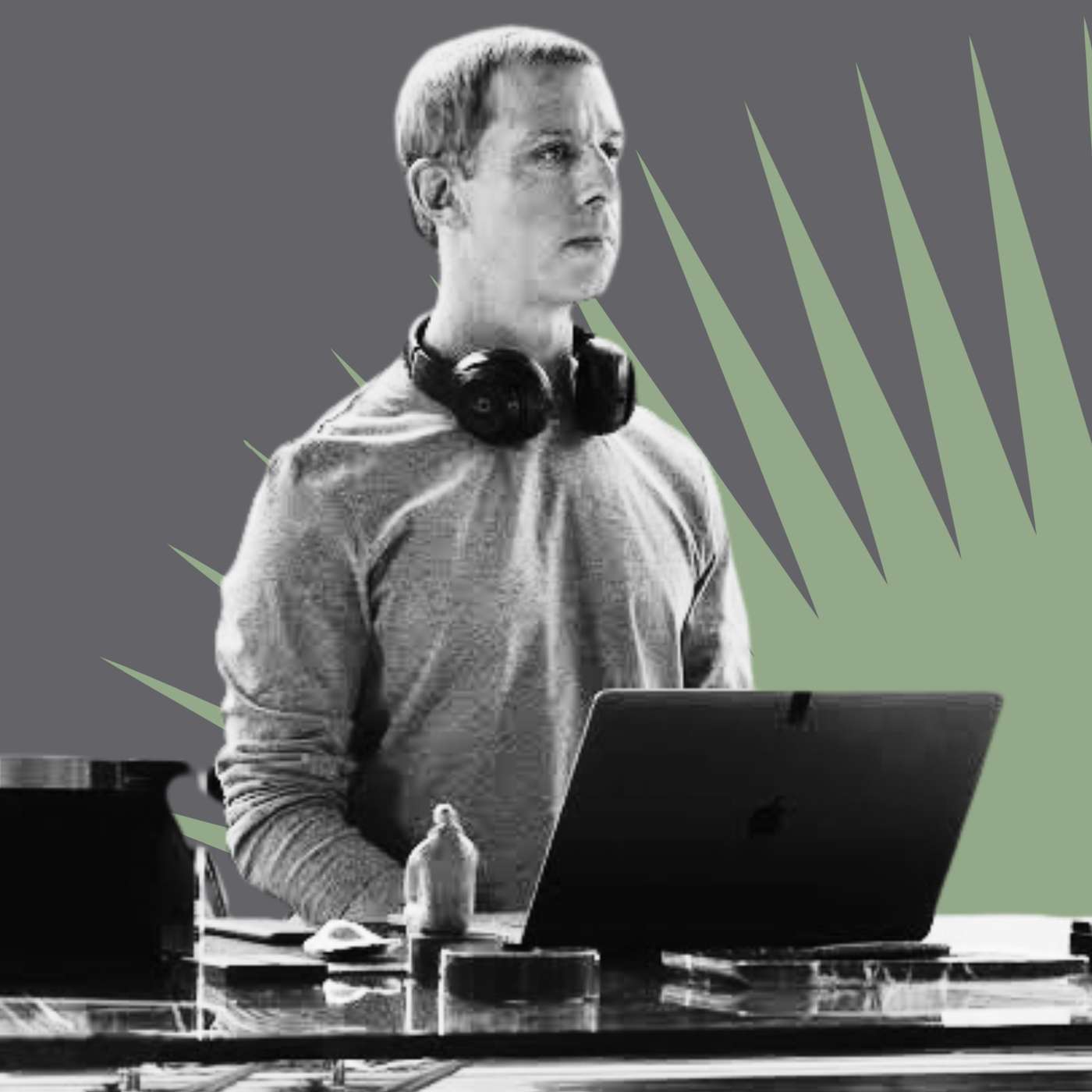


“Why would you want the guy who is good at coding to decide what we all do? Why would you want the guy who built the pyramids to actually run Egypt?” — Noam Cohen
The war movie is back in vogue. Only this time it’s Hollywood turning its guns on Silicon Valley. There’s the four-hour Musk doc, an upcoming Sam Altman satire entitled Artificial, Nathan Fielder’s love/hate Elizabeth Holmes picture, and now The Social Reckoning, Aaron Sorkin’s assault on the Facebook-Zuckerberg complex. The Sorkin movie is, of course, a follow-up to the 2010 biopic, The Social Network, which he wrote. Sorkin both writes and directs the sequel. If he turns it into a trilogy, Sorkin should probably star as Zuck.
Brooklyn-based Noam Cohen, former New York Times tech writer and author of The Know-It-Alls, has seen both Sorkin movies. His critique is that The Social Reckoning is a passive-aggressive legal brief with the wrong defendant. He notes that Zuckerberg is barely in it. The movie’s heroes are a Wall Street Journal journalist and an internal Facebook whistleblower. But the drama, Cohen argues, is about whether anyone can reach a man who built the attention economy, but pays attention to nobody. The problem is that Zuckerberg is played by Jeremy Strong as a robot. So it’s an AI movie without the bots. The only drama in Strong’s Zuck is his absence of drama.
Noam Cohen thinks that Sorkin’s The Social Network got the origin story wrong, which he explains more fully in a recent Harvard Magazine piece. Cohen, who also went to Harvard, argues that Facemash didn’t represent Zuck’s wounded masculinity. Instead, it was a test of how to lure an audience, and those first weeks of TheFacebook were spent tuning the thing for addictiveness. So there’s nothing accidental about the accidental billionaire.
My own take on Sorkin’s two movies is that in the first, Zuck comes across as the randy son of a NY dentist, while in this latest one, he matures into that dentist. The kind who barely talks, pulls out all your teeth, and then charges you a fortune. All for your own good, of course. As if he’s doing you a favor. Just as Hollywood is doing all of us a favor by turning a NY dentist’s son into the Antichrist. Do we really need this kind of altruistic war movie? I think not.
FURTHER READING
• The Social Reckoning (Sony/Columbia, 9 October 2026), written and directed by Aaron Sorkin. Jeremy Strong as Zuckerberg, Mikey Madison as Frances Haugen, Jeremy Allen White as Jeff Horwitz, from Horwitz’s Facebook Files reporting.
• “How Facebook Escaped Harvard” — Noam Cohen’s Harvard Magazine piece, and the source of the argument he makes here.
• Cohen is the author of The Know-It-Alls: The Rise of Silicon Valley as a Political Powerhouse and Social Wrecking Ball (The New Press, 2017).
• Richard Cooke, The Last Best Place on the Internet: A Human History of Wikipedia (Norton), which Cohen reviewed; his Bloomberg piece is “Wikipedia Taught Us How to Trust AI”.
ABOUT THE GUEST
Noam Cohen wrote about technology for the New York Times for many years and is the author of The Know-It-Alls: The Rise of Silicon Valley as a Political Powerhouse and Social Wrecking Ball. He writes for Harvard Magazine, Bloomberg and others, and lives in Brooklyn.
ABOUT KEEN ON AMERICA
Nobody asks more awkward questions than the Anglo-American writer and filmmaker Andrew Keen. With 3,000 episodes since the show launched on TechCrunch in 2010, Keen On America is a daily conversation about the ideas, books and arguments shaping the United States. New episodes every day.
00:00:31 Andrew Keen: Hello, everybody. The big news is that Hollywood seems preoccupied with Silicon Valley and, our tech bros, our big tech world, the Musk—four-hour Musk—documentary is out. I'm gonna be seeing that. We'll do a show on it. There's a new movie out about Sam Altman called Artificial. We'll also cover that. And the remarkable movie about Elizabeth Holmes called You Could See Everything [as spoken: You Can See Everything]. Holmes, of course, the founder of Theranos, the very controversial figure. And meanwhile, there's another film about Mark Zuckerberg and Facebook. This one's called The Social Reckoning. It's written and directed by Aaron Sorkin. It's a follow-up, of course, to The Social Network, which he wrote and didn't direct. It's an intriguing film in some ways, and it speaks to our current moment. I thought it'd be a good time to talk to an old friend of the show, Noam Cohen. He used to write for The New York Times. He's the author of an excellent book on Silicon Valley called The Know-It-Alls, and he's just written something on Facebook, for Harvard Magazine, "How Facebook Escaped Harvard". Noam is joining us from Brooklyn, and he has seen both films, The Social Network and The Social Reckoning. So, Noam, what do you think of The Social Reckoning? Were you disappointed?
00:02:01 Noam Cohen: I mean, there was some disappointment. I think, you know, Jesse Eisenberg who so embodied, Zuckerberg in the first movie, you know, understandably didn't wanna reprise that role. And so you have, you know, Jeremy Strong, who's amazing as an actor, but it's very, very stiff, and it's very… I guess I was shocked how little Zuckerberg is in the second movie. It's not really about Zuckerberg. It's about journalism, I guess. And so in that sense, it's a little bit disappointing. It's much more, it's very, totally, very dark and serious. Not that The Social Network didn't have this dark… The original film didn't have dark aspects, but there was a sort of silliness and there was sort of a… It was much more of a human drama. This is really just, like, what are we doing? We have a scary person in charge of everything, and he's sort of like a robot, and you can't get through. And the kind of dynamic of the movie is, like, can anyone get through to him? You know, the woman who—
00:02:55 Andrew Keen: Or is there anything to get through to?
00:02:56 Noam Cohen: I mean, that's…
00:02:57 Andrew Keen: Yeah. Exactly. Yeah.
00:02:58 Noam Cohen: And the woman who's the center of the movie, you know, played by Mikey Madison, is like a… Is someone inside of Facebook who really is trying hard just to get their attention. Like, you're doing bad things. I believe in our company. We have to alter it. And she… To get his attention really goes to a journalist, and the journalist can't get their attention. No one can really get his attention. And there's like a…
00:03:19 Andrew Keen: Yeah. Irony. That… I mean, again, irony on irony, no. I mean, he can't get his attention. He, of course, creates our attention economy. Can't connect with him.
00:03:28 Noam Cohen: It's really ironic. It's true. Yeah. I—
00:03:30 Andrew Keen: I mean, and so in a sense, maybe The Social Network was right in that it presented him, this is a controversial film at the time, controversial book based on Ben Mezrich's The Accidental Billionaires, suggesting that, Zuckerberg built the original Facebook to make friends because he struggled, especially with women. So oddly enough, he's grown up, but he hasn't really grown up.
00:03:56 Noam Cohen: Yeah. I don't think… But I think that's where it relates to the piece I just wrote for Harvard Magazine. I think that's like an untrue, depiction of what happened. He wasn't trying to make… You know, as people point out, you know, that basic… He already met his wife to be. He clearly, you know, had, like, issues on how he sees women and there was this project, you know, this product before this, before Facebook that was ranking. It ranked men and women, but it was very objectifying. I'm not saying they're saying he didn't have issues. But, like, to me, the larger point… And also even the "accidental" in Accidental Billionaires, I think, isn't right. He had a plan to connect the world. Like, that very early on, he, like, likes having people use his sites. He wants them to be successful. I would say that this earlier project, you know, Facemash that ranked hot or not, was really a test case of how do you get an audience. And, like, hey. You get an audience if you can say harsh things about people, if it's about yourself, if you can… You know, he learned how to lure an audience. And that is the point of this piece that basically in the first few weeks of TheFacebook, as it was called, on the Harvard campus before it spread like wildfire throughout the country, he was working and tweaking ways to build an audience and make it, like, absolutely addictive. And the irony to close the circle, Simon Rich, the person who actually wrote the script for the Sam Altman movie, you know, I'm quoting my piece because he was on…
00:05:16 Andrew Keen: This is Artificial, by the— He was on campus. The… Exactly.
00:05:23 Noam Cohen: He was a student at Harvard when TheFacebook was launched, and he said— He thought at the time, it was like a zombie movie that he saw his roommate become just addicted to his computer, that he just saw it spread across the campus, and he was like, I will never join this thing. So I think that there… I think the first movie, The Social Network, really made into a personal drama and, like, isn't it… You know, look at him against the Winklevosses, the perfect Aryan twins and, you know, look at… You know, very… Look at him trying to get girls, making it very human. But in fact, like, something had happened and it wasn't accidental is, like, social media was unleashed like a virus on the world. And, like, that happened then. And so it's kind of frustrating to me that this early movie, in looking back, didn't really tell the right story. It told a kind of fun human story, and it did create a picture of him that, you're right, is borne out in later life what Mark Zuckerberg is like, but it didn't capture the… This horrible thing was let loose. And I think that is—
00:06:19 Andrew Keen: Well, in a way, I mean, you— As I said, you wrote The Know-It-Alls: The Rise of Silicon Valley as a Political Powerhouse and Social Wrecking Ball, one of those relatively early back in 2018 critiques of Silicon Valley. But I think in retrospect, if we go back to The Social Network, which was a 2010 film—
00:06:38 Noam Cohen: Mhmm.
00:06:39 Andrew Keen: At the height of the Web 2.0 boom, insanity, the fetishization of social media, the height of the Arab Spring, and all the rest of it. This was the first…
00:06:52 Noam Cohen: I—
00:06:52 Andrew Keen: I don't know if it's the first film. Certainly, one of the first, media products that challenged, the promise of, certainly, of Web 2.0. I mean, The Social Network is quite critical of Zuckerberg, for better or worse. I mean, some of it may be fictional, but it's the first time that people actually said what you're telling us isn't true.
00:07:16 Noam Cohen: Yeah. And he's superior to us, and he looks down on everybody. And that was definitely how Jesse Eisenberg played him, you know, I think accurately. So you're right. I mean, it did, like, really create a very accurate picture, I think, of Mark Zuckerberg. I guess I wish it was a little more… Little less neutral about what he was doing. And, obviously, it was like, you know, he's on there at the end clicking again and again for friends. So I don't wanna like… It definitely was a critical lens. Clearly, Zuckerberg saw it as critical. But I think now when you look at what the new movie is, I mean, it is just like, it's like a relentless legal brief against social media.
00:07:56 Andrew Keen: I mean, it's truly dark, and I think in the context of the Musk movie and the Altman movie. Although the Altman movie, I haven't seen it yet, is supposed to be a little bit more sympathetic. And, certainly, the Holmes movie. I mean, this isn't making news. Every movie that comes out about Silicon Valley is darker and darker, and as you say, The Social Reckoning, is a very dark film.
00:08:21 Noam Cohen: Yeah. I mean, I… It is… I think partly it speaks to this sort of, this powerlessness that people feel. I think they're thinking the public will want to see. I… No. I mean, it… You have to, like, acknowledge that The Social Reckoning is not a success. Right? It's not nearly the…
00:08:36 Andrew Keen: No. It got terrible reviews. I mean, it's incredible. [unclear]… But it's done badly. It's lost money. It…
00:08:42 Noam Cohen: Yeah. And the audience is not there for it. And I do wonder… I mean, you know, there is, like, I… There is this sense of that we are in the hands of these crazy people. Now Elizabeth Holmes was sort of defeated, but, like, again, showing her as being, you know, off her rocker and then Musk, you know, with this… The saw, you know, with the power saw. I mean… And then we have, like, Altman, you know, another scary figure than Zuckerberg. You know, it's really like trying to… Like, it does feel like the culture is saying, what have we gotten into? Like, you know, this is this… The know-it-alls, this class of people really have taken control of our society and, like, what… How do we get out of this? Like, what even… Who are these people? How do you shake them? You know, that was… I mean, I think the movie, you know, we found out The Social Reckoning, did try to end on a happy note. I mean, or, like, a positive note, but the truth is nothing changed. Right?
00:09:34 Andrew Keen: Yeah. I mean… And just… We'll ruin it for anyone who hasn't seen it. And it… But… It's not really. So, I think that it ended on two happy notes or two more positive notes. The first was Zuckerberg's decision to throw Trump off Facebook, after January 6 or during January 6, and the second was the… An ending in which the fictional Frances Haugen, the Facebook whistleblower, played by Mikey Madison. I think it was Haugen's lucky day that she got Madison to play her. And, Jeremy Allen White, who plays The Wall Street Journal, writer, Jeff, Jeff Horwitz, who I'm sure you know.
00:10:22 Noam Cohen: Uh-huh.
00:10:22 Andrew Keen: They… At the end, there was some sort of muted sense of victory that they'd stood up to this guy. So it did end in a way on a vaguely hopeful note, maybe not positive note. Is that fair?
00:10:38 Noam Cohen: Well, I mean, I think particularly it was, like, the fact that even though these Facebook Files were about audience growth, like you're saying, our attention seeking, the fact there also was the leak about teenage girls and Instagram, and that, of course, has just led to this lawsuit, which Facebook settled for $17 billion. So, yeah, that is, like, sort of… Look. You can affect them. But, of course, the truth is, like, to me, when I heard that, I was traveling when that $17 billion settlement story was announced. And to me, it was more like… $17 million—no, maybe… billion with a b… Sorry. Billion with a b. To me, it was more again, this idea that it didn't even matter. Like, it's like that is how unmovable this, like, boat is. That, like, they can settle for $17 billion, and it's just nothing changes, and it's almost like a cost of doing business. So sometimes it wasn't like this incredible thing the giant has been tamed, but instead, like, wow. The giant can just flick off, you know, a lawsuit like a… Like fleas. And in that sense, it isn't really hopeful. But they did end on that note that, like, look, this thing was exposed. And, I think that's kind of what the creepy thing is that they really seem beyond be… Beyond being affected by, you know, anything.
00:11:51 Andrew Keen: Yeah. And, I mean, it's easy to be critical of films and of people financing films, but, Sorkin hasn't come out of this looking particularly good. I mean, if you're gonna make a film about Facebook, make it about… As you sort of imply, make it about the people whose lives supposedly have been ruined, not by, Frances Haugen, who's presented, by Mikey Madison as this sort of quirky, weird woman with strange eating habits. But explain why Facebook is so historically important. It just comes across in The Social Reckoning. It's just another big corporation that's doing bad things, and they could have found equal corporations in the oil industry or the biotech industry or many other industry.
00:12:43 Noam Cohen: Yeah. And making the journalist and leaker the hero is very, like, just Sorkin like and…
00:12:47 Andrew Keen: Well, you're a you're an ex… Well, you're a former New York Times guy. Horwitz comes out of this looking very cool. I thought that—
00:12:55 Noam Cohen: For sure.
00:12:56 Andrew Keen: I thought that, Jeremy Allen White… I mean, he certainly… He played it well, maybe overplayed it a little bit, but, he was excellent, didn't it?
00:13:06 Noam Cohen: Yeah. Yeah. [unclear] on journalism. I guess he's… You know, obviously, Sorkin's thought a lot about journalism too and written, like, right, The Newsroom and things. You know, he had one line… I loved one line where he, you know, where it's all about getting the documents. It is like, how do you be an investigative reporter? He really did show that. And, like, again, as a journalist, I found that really interesting. It's not a Facebook movie, but… And, you know, and he had this line where, you know, you're telling me a story. You're not… You didn't give me a story. You're telling me a story. And that was all about trying to get her to actually get the documents that would be pivotal to what they call The Facebook Files that became this huge series. I just thought that was such a great, like, distinction, which he's great at, Sorkin, on these lines that are… And the other line he talked a lot about was, like, about friction and how they want a world without friction and, like, they're gonna… You need friction. And that… I thought that also was just a great distillation of the problem with what I was trying to get at my book, The Know-It-Alls. It's like this idea that they believe in efficiency above everything else. And that leads to questions about AI and everything. It's like, the friction is good. I used to, like, look to as a model. I don't know if you know this movie, by Agnès Varda called The Gleaners and, like, just a model of gleaning. Like, the idea that, like, you shouldn't… You know, in the Bible, it says you shouldn't pick every piece of… You should… You only get one chance to harvest. You don't go back and, oh, I missed that spot. I missed that spot. Because in fact, you're supposed to leave that for the gleaners, like, for people who come around looking for food because they don't have a farm. And it's, like, same idea, like, the same idea of efficiency being the only thing that matters. And he, again, nailed it in the movie. So there were certain parts that he, you know, he builds up to a lot and has certain lines that are just phenomenal. But, like, yeah, overarchingly, it didn't really tell, the Zuckerberg story. It didn't really tell the people who suffer from it. It was more just a drama about being a journalist. You know? Maybe it really was like a Woodward and Bernstein kind of story. It references, like, the Penny—[unclear].
00:14:48 Andrew Keen: I mean, at the end, the Woodward and Bernstein thing comes out with the winking at one another in the courtroom. Oh, shit. I mean—
00:14:56 Noam Cohen: Right. Absolutely.
00:14:57 Andrew Keen: Yeah. Mhmm. I mean, Hollywood, like so many others, always seems to be fighting the last war.
00:15:04 Noam Cohen: Yeah.
00:15:04 Andrew Keen: The big news about Facebook has got nothing to do with Facebook. It's got to do with its new AI, Muse, its algorithm, its supposed helper or personal assistant, which is all the news. It's getting very good reviews. It's been strongly downloaded. I think it's still the top download, on the Apple and Google stores. And it's kind of weird. As you know, Zuckerberg is presented in the film as a… As an AI almost. I mean, he… He's completely expressionless. He doesn't have any emotions. He's not presented as a family man. He's not presented as a human being at all by Jared Strong [as spoken: Jeremy Strong]. I mean, he does a good job. Presumably, that's how Aaron Sorkin wanted him to present Zuckerberg. But it's a rather odd representation, isn't it?
00:15:51 Noam Cohen: It captured that physicality. I thought that was why… I remember I saw the trailer. I thought, wow. He really got… You know, Eisenberg got the whole thing. I mean, the whole megillah, as they would say.
00:15:59 Andrew Keen: But, I think— Eisenberg—I mean, I think he was brilliant in that.
00:16:03 Noam Cohen: I think he's worried that, like, people would, like, think that's… He's… They're the same people, and he doesn't want to be, like, this… Identified this way his whole life. I think he was offered a lot of money to do it, right, by Sorkin. But I thought Strong captured the new kind of, like, Zuckerberg MMA fighter, like, real, like, you know, muscle up and, you know, ramrod straight. And so that part was really… You know, and that is another, like, just other, weird, like, turn that Zuckerberg has made, right, to become this—into fighting. And I, you know, I once actually tried to write a play, Andrew, about imagining a fight between, like, Zuckerberg and Elon Musk and really looked deeply in his whole MMA, career, you know, and his, like, the tournaments he entered and how he once was put under a choke hold that made him fall asleep, but he swore it wasn't true, you know, the sleeper hold. So I feel like it captured this new reinvention of Zuckerberg as, like, this hyper masculine… I don't know. It was accurate. I think the scary thing about him and Musk and, you know, Holmes no longer relevant, but Bezos, where they're, like, kinda muscled up or hyper, like…
00:17:07 Andrew Keen: Yeah. Bezos in particular. I mean, Bezos…
00:17:09 Noam Cohen: You can't… It says, you know, you can't get me. You can't reach me. You know, again, can't connect.
00:17:14 Andrew Keen: Well, it's the idea. It's the promise of immortality. I mean, when you look at Bezos now, physically, he's a different person physically. He's a different being from the Jeff Bezos—
00:17:29 Noam Cohen: Zuckerberg too. Absolutely the same as Zuckerberg. I mean, as much. You know, I mean, Zuckerberg is all… You know?
00:17:35 Andrew Keen: Do you think that the fact that they bulked up so much, especially Zuckerberg, is a way of almost expressing anger without actually smacking someone in the face.
00:17:46 Noam Cohen: Well, they—
00:17:47 Andrew Keen: Even now, how much critique there is of him in media and in politics.
00:17:51 Noam Cohen: I mean, wow. I mean, that's… I mean, as soon as the first way he does get smacked in the face, I remember telling someone about, like, when I was working on this play, you know, and they couldn't believe that he actually got hit in the face. But, you know, he got his nose broken. He does actually get hit. I mean, that… And he thought—
00:18:05 Andrew Keen: Did he challenge Musk, or did they challenge each other?
00:18:07 Noam Cohen: Right. Did Musk sort of challenge him? That's what I'm saying. I once wanted to look at that. Now Musk is not nearly as— It was a joke. Zuckerberg would have really beaten him, and Musk was—
00:18:14 Andrew Keen: Unless, Musk brought his chainsaw. There you go.
00:18:17 Noam Cohen: Musk was convinced [unclear]—that because he was so much bigger physically, because he's, like, six-two and weighs. God knows what he weighs. Anyhow, Zuckerberg is small—that he would beat him. You know, he had… He said he had this move called the walrus where he would just roll onto… Roll on top of him like a walrus and there was nothing Zuckerberg could do. This is what he told Joe Rogan. They were both around Joe Rogan talking about this fight. I mean, it's really insane. So I do think there is a sense. He says, like, he likes getting hit because it's like… It… It's a feedback loop, and it teaches you, and it's like reality. It's almost like he's… Because he is—
00:18:48 Andrew Keen: But that's… Yeah. And the movie really in a metaphorical sense… A metaphorical sense is just a long narrative about hitting Mark Zuckerberg one way or the other. I mean, most of—
00:18:59 Noam Cohen: Reaching him— Not reaching him. Right?
00:19:00 Andrew Keen: Well, kind of reaching him. I mean, he… In the end, they reach him. In the end, he—
00:19:04 Noam Cohen: Because of—
00:19:05 Andrew Keen: He acknowledges that he has to do something. Maybe he takes away Trump's Facebook page.
00:19:13 Noam Cohen: Remember that line he says, I'm not two years out of the dorm anymore.
00:19:17 Andrew Keen: Yeah.
00:19:17 Noam Cohen: People here know I make a decision, and that's what's final. You know what I mean? I do think… So I'm saying, I think the MMA stuff is a way of kind of finding another zone where he can have interaction, and not be actually challenged on what he really wants to do. So it's like, I… You know, it's kind of like slumming or whatever. You know, he gives great respect to the MMA, Brazilian jiu-jitsu, you know, trainer. Like, he's able to find a zone that is, like, he can give both respect and also, not have him really enter his own life, you know, his own world. I do think it's like… It definitely has something, some escape for him and some sort of—
00:19:55 Andrew Keen: It's a way of cutting himself off from the world in the same way as he's built. He's bought a series of… I live in San Francisco, and he doesn't live that far away, but he's bought an entire street or entire block, so you can't actually reach the guy. He's unreachable in the film. Right. I wonder when I was thinking, maybe it's a rather cheeky way of thinking of it. In The Social Network, Zuckerberg was presented truthfully as an undergraduate at Harvard, and he came across as the son of a New Jersey dentist, like so many—
00:20:27 Noam Cohen: —others. Westchester dentist. Yeah.
00:20:28 Andrew Keen: Right. So many other… You went to Harvard. So, you know, I'm sure you know lots of sons and daughters of dentists. In the new film, he comes across as the dentist himself, doesn't he?
00:20:37 Noam Cohen: Meaning what? I don't follow.
00:20:39 Andrew Keen: Well, he's rather unreachable. He's not the friendliest dentist.
00:20:44 Noam Cohen: You find, like, a dentist is… I mean, it's funny. My brother has some theory that dentists are very—because they're always talking and no one—
00:20:50 Andrew Keen: Mechanical. I mean, he comes across as the dentist. You walk into the dentist's or you sit in the dentist's chair, and you have this dentist. He's not, like, Musk. He's not waving a chainsaw, but he's waving something. And he tells you he's gotta take a few teeth out or give you a filling or do this or that, and that's the end of it. Rather emotionless.
00:21:08 Noam Cohen: Emotion… Right. In that sense, clinical. Yeah. I know what you mean by that. And, like, yeah. I do think… I mean, I think his dad was kind of a wacky dentist. Again, it was just how… Yeah. I mean, like, much more. Having read this profile, which quotes his parents a lot, they, yeah. I mean, he, what causes him to be… I do think it's, like, some attempt at, like, truly changing things. You know, like, truly being historic. I think he's always been interested in the Romans and the Greeks and, like, really… I guess from his point of view, it's like you get one shot in his life, and can you imagine he could actually, like, rewire the world? Like, sure. You know, it's not about nuance, and he always is, like, eye on the prize. I guess that's what I'm saying. It's like kind of having a conversation. I think people falsely, like, talk about it being neurodivergent or something. Like, they often will use that as a way of describing these know-it-alls. I feel it's really bad and dangerous to sort of just say, oh, they're, like, you know, neurodivergent. That's why he can't talk to them. It's not. He has a vision of what he wants to accomplish.
00:22:05 Andrew Keen: One shot. To quote Robert De Niro from The Deer Hunter, you get one shot.
00:22:11 Noam Cohen: Yeah. And, like, he's not gonna, like, use it with a bunch of—
00:22:14 Andrew Keen: He used it right. I mean, his one shot created this remarkable company. I mean, what's it worth now? Several hundred… Oh, it's $1 trillion.
00:22:23 Noam Cohen: No. It's more than a trillion. It's more than trillions.
00:22:25 Andrew Keen: Sorry. Yeah. Several… What I meant was that he has a personal fortune of several hundred billion.
00:22:30 Noam Cohen: Well, that's a whole interesting question even, that, with a different tangent, about what… When you control an entire company, right, this whole issue coming up in, like, in taxing wealth. Right? They're very upset and fearful that, like, the California tax could tax what they… You know, why would you say that Zuckerberg only owns a certain percent of Facebook? He controls it. He owns the entire company. Like, nothing can happen without his approval because he has the control and… Yeah.
00:22:53 Andrew Keen: It's his model, [unclear], that reinvented ownership. It's one that, all Silicon Valley entrepreneurs now try to—
00:23:00 Noam Cohen: And they're—
00:23:01 Andrew Keen: —controlling the company.
00:23:02 Noam Cohen: They're frightened that you will… That it'll actually be… You know, I remember I was talking to lawyer friends about this because, like, what… You know, how much would you… Would it cost to buy what Zuckerberg has? It would not be the share price value. Like, I want all his shares. I get to decide everything for Facebook. That's worth roughly what the company's worth within reason.
00:23:19 Andrew Keen: So you could pay… So it would cost more than several hundred billion. It would cost you a trillion or two. So he's, you know, in his own way, he's probably a trillionaire up there with, his friend, Elon Musk.
00:23:30 Noam Cohen: I… You know, and… Yeah. And the fact that they often talk about how they're bigger than any country. Right? That was a quote. I think they like to see themselves as being…
00:23:38 Andrew Keen: Bigger than the world. I mean, Musk boasted recently that he wanted SpaceX to be worth more than the rest of the world put together, which is somewhat ambitious.
00:23:47 Noam Cohen: Yeah. I mean, these are really… Yeah. It… It's just the unconstrained quality of this. Like, I called it a wrecking ball in my book. The idea that these are people who cannot be reined in, and I think that is the overwhelming feeling, actually, now I think about it, I got from The Social Reckoning.
00:24:03 Andrew Keen: Yeah. And I mean, he did something that he did. [unclear] He could've—I mean, Jeff Bezos has retired and gone to live with his second wife and travel around the world and play games all the time. I mean, Zuckerberg clearly is motivated by something. I mean, what's his… That was the other thing that I don't think The Social Reckoning really addressed was what does Zuckerberg want? I mean, in the film, he was presented as someone who simply wanted Facebook to be profitable, and he only cared about the bottom line. But I think it's more than that.
00:24:33 Noam Cohen: No. Yeah. In fact, he… I mean, he claims a lot that he doesn't care about money at all. I don't think that's true.
00:24:39 Andrew Keen: What I mean by care about is that… I mean, once you're worth several hundred billion, I guess money isn't really that relevant. But my point is that there must be more than just… I mean, the way he's presented in this film is not in your sort of visionary sense. He's presented as anything but a visionary in The Social Reckoning.
00:24:57 Noam Cohen: Yeah. But I do think, you know, there was this famous memo that was leaked about, right, the growth memo that, like, was from his deputy, his guy, Boz. Right? Bosworth, who was his TA at Harvard, and he sort of explained that, you know, they… They're all about growing. That's the only thing that matters. And I'm saying that was true even at Harvard in those first weeks. It was all about growing and growing. And, actually, in that piece, there was a quote, which I really like from a student at that time who said that, you know, he… They did some things that were really sketchy to get more interest. [unclear] early days of Facebook. Right? The thing they did was they allowed you to see who had been looking at your page. And this woman was talking about how, like, she had kind of, like, had a crush on a guy, and it was clear to him that, like, she had been there a lot. And then he… He knew it a little bit, but it was like… People really objected to that, and they complained, and they took it down in the early days of Facebook. And she said back then, he was like a peer. Like, he cared what other students thought about TheFacebook and changed things. And she said, but right now, he has no peer. And that's kind of the problem we have. Like, there is—
00:25:56 Andrew Keen: No one…
00:25:57 Noam Cohen: Right. I think he wants to connect. But even then, it was always about growing the audience. I think he sees himself like Augustus. He talks about it very openly. Augustus, he sees not as, like, some Genghis Khan, but, like, rather this functionary who created a Pax Romana, harmony throughout the known world. And, like, that's what he's doing. He's connecting the world, and such great things are gonna come from AI and from connection and from, digitalization. I mean, he just is a believer. I mean, that's partly because he just loves computers. Again, why would you want the guy who is good at coding to decide what we all do? Like, why would you want the guy who built the pyramids to actually run Egypt? It doesn't… The two don't correlate, but that's what we kinda have with the guy—
00:26:39 Andrew Keen: [unclear] king. We've been talking about Jensen Huang and Nvidia as a kind of engineering king. Although I think we have to credit… The one thing I think one must credit Zuckerberg with is his ability to recognize failure and move on. I mean, the shift from Facebook to Meta was, in retrospect, and 3D, was a mistake, but he's got beyond that. He seems to be succeeding now with AI. So you have to credit the guy with his ability to, in Silicon Valley terms, pivot successfully.
00:27:13 Noam Cohen: Absolutely. Because the focus is just on growth. So everything… No. You might argue it's heartless because he also, like, had built up a whole AI unit and just cut it loose for a different one. But, yeah, he absolutely is ruthless on what his task is. I do think it's an overarching task of connecting the world, and that will trump everything. And he, yeah, he moves fast and breaks things. He believes in iteration in general, which in general is an incredible thing that works well in coding and works well in lots of things, iteration. Just doesn't work well in a society because you can't really break things and then rebuild them. And I didn't see… You can dwell on the… I mean, I honestly, I didn't even notice exactly that he eventually banned, Trump on January 6. I mean, I know he did do that. The movie—
00:27:53 Andrew Keen: Quite short-term, because— And then Trump went off and created his own social network. And I don't think he even wants to be on Facebook or…
00:28:00 Noam Cohen: But he… But the emphasis was on how long it took him to do it and how he kept sort of stuttering and, like, what's going on? He wasn't like… He is not all in on our society. He's not all in on—
00:28:10 Andrew Keen: Yeah. There was no real conversation. You just… The camera kept on panning in. I mean, in the end, he gave in. Let's end like the movie on a slightly positive note. The one guy who nobody's making a film about is my old friend Jimmy Wales, the, quote unquote, cofounder of Wikipedia. There's a debate about who really founded it. You wrote an interesting piece for Bloomberg recently, Noam. "Wikipedia Taught Us How to Trust AI". Wikipedia still is a remarkable story. I've flashed up lots of Wikipedia pages. They don't charge me. They don't go after me for taking their images. Perhaps that's why there is no movie on Jimmy Wales because he's the last good story on the Internet. You reviewed a book by Richard Cooke, an Australian writer, The Last Best Place on the Internet: A Human History of Wikipedia. So is Wikipedia and Jimmy, are they the last good news on the Internet before the apocalypse? Before—
00:29:14 Noam Cohen: I used to say that for sure. I mean, I think now… I do think I was opening up the concept that maybe… You know, this is me. Like, I remember as a young person loving Napster and then realizing that…
00:29:24 Andrew Keen: You weren't stealing stuff while you were on Napster?
00:29:27 Noam Cohen: No. I absolutely [was]. I kinda thought, well, it's all for, like, spreading truth and knowledge. And now I've kind of come to see why I'm…
00:29:34 Andrew Keen: That was very convenient.
00:29:35 Noam Cohen: Yeah. For sure. And now that I'm, like, a producer of things. So, likewise, I mean, I was trying to make the argument. I think the book does to a degree that in a lot of ways, Facebook [as spoken; context suggests Wikipedia] did provide an important breakdown of, like, standards. Right? There is a sense that you don't really… There's no author in Wikipedia.
00:29:50 Andrew Keen: Right. There's no trust. I mean, the one thing that, The Social Reckoning underlines is you can't trust Zuckerberg. There's nothing there to trust.
00:29:57 Noam Cohen: Well, I do think you can trust Wikipedia, but the thing is you can't… You don't trust it through sort of normal mechanism. I mean, the piece I wrote began with, like, one of my favorite sort of stories about the Internet really, which is the writer, Nicholson Baker, this great novelist.
00:30:10 Andrew Keen: Been on the show, actually, if you…
00:30:12 Noam Cohen: Okay. You know, and so he had a brief Wikipedia phase. Right? In 2008, he dropped everything for weeks, just wrote Wikipedia articles. And the thing I love is that he wrote these kind of beautiful passages for articles. One of them was about periodicity. You know, how you divide up periods in history. And he wrote it in flowery prose that was beautiful. And then Wikipedia editors systematically would rewrite it into very boring, you know, encyclopedia prose. And, like, that was sort of… To me, it… That made sense, and he knew it. He knew you know, it's not a personal venue. It's a group effort. But it sort of spoke to me how, like, there is a different version of writing and narrative that goes on Wikipedia than had gone on before. And it's really powerful. It shares so much information, but it also kind of, you know, stifles the individual voice. And that… So I do think that… That's something that AI obviously does an incredible amount. Like, it's just a collective power, but, you know, there's no actual authorial voice. There's no real vision in it. So that's something that I… I'm, like, thought about. But that said, you know, I think Wikipedia is an unbelievable story, but, again, it doesn't really fit the Hollywood story. I think Jimmy—
00:31:17 Andrew Keen: Jimmy is totally out of the zeitgeist. Jimmy is the last trusted decent fellow with— He didn't with power.
00:31:24 Noam Cohen: Yep. He didn't, like, use it to, like, have some vision of whatever. You know? It's a very beautiful vision of, like, sharing knowledge. Shouldn't the entire globe have access to knowledge. That's very different than Zuckerberg's.
00:31:34 Andrew Keen: He's genuine. I mean, there was a big controversy recently that, Mark Zuckerberg was filmed drinking a pint of Guinness, and he clearly didn't know what he was doing. The one thing we can say about Jimmy Wales, who lives in London now, is he knows how to—
00:31:48 Noam Cohen: He does.
00:31:48 Andrew Keen: Drink a pint of Guinness.
00:31:50 Noam Cohen: Yeah. He's… There's… So in some ways, it doesn't make as good a story, but it is a better… You know, I think we need to get a little bit less drama maybe in our tech leaders. That would be good. A little more, you know, kind of calm, you know, concerned leadership.
00:32:03 Andrew Keen: Yeah. It'll be good when Hollywood moves on to the next big thing.
00:32:05 Noam Cohen: That's a good one.
00:32:06 Andrew Keen: Finally, Noam. And what does The Social Reckoning get out of ten for you?
00:32:13 Noam Cohen: Seven.
00:32:14 Andrew Keen: Seven? I would give it five. You really give it a seven. Okay. I guess… I mean, wow. No. Don't let me influence you.
00:32:20 Noam Cohen: I mean, five to me isn't like a fifty. I mean, you know, it's like, you know, I think The Social Network—
00:32:23 Andrew Keen: That's American grading versus British grading.
00:32:26 Noam Cohen: Exactly. Alright. Call it six. We'll split the difference. I mean, you know, six is nothing to write home about.
00:32:30 Andrew Keen: Remember that?
00:32:30 Noam Cohen: Yeah. I enjoyed every minute of it. The dialogue is great. It's like there were some really deep lines I will always remember. So, you know, it was fun to look at. No doubt about it. But it was not in any way. It didn't really, like, land the… You know, hit the landing or anything. So call it six.
00:32:45 Andrew Keen: I would… Yeah. I would… I don't agree. I mean, I think it was competent, decent, but instantly forgettable. It was the kind of film you watch on an airplane when you've got nothing better to do. It's not worth it. There are too many good films out there to waste your money in the movie theater, but that's—
00:33:00 Noam Cohen: —just shocking. Yeah. I didn't think it'd be that I didn't think it'd be that unmemorable. That's… Yeah. That's… I think you're very right, though.
00:33:04 Andrew Keen: It's true. Well, one thing we can say about Noam Cohen is he's not forgettable, like The Social Reckoning. Noam, always a pleasure to have you on the show. You were one of the early critics of—of Silicon Valley with The Know-It-Alls, and you're a good friend of the show. We'll have you back in the not too distant future. Thank you—
00:33:22 Noam Cohen: —so much. [unclear] Okay. Of course. Bye bye.