Murders in the Wiregrass: Matt Kessler on DNA, Doubt and the Deep South
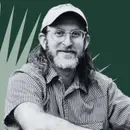


Ah, the American South. So romantic. A few days ago we were in Clayton, Georgia, hearing about the dissident Lillian Smith, whose house was burned down for telling the truth about Jim Crow. Today we go south-west into Alabama, to Ozark, in the Wiregrass, the boondocks of the boondocks — a region named for a scrub that grows where nothing else will. Except for murder.
The Wiregrass, as the Birmingham, Alabama–based journalist Matt Kessler explains, has poor soil, no cotton, almost no plantations, and therefore, none of the southern decorum either. He has spent nine years there researching The Wiregrass, a new true-crime investigation into a case nobody has satisfactorily explained.
On 31 July 1999, JB Beasley turned seventeen. She and her friend Tracie Hawlett set out from the Alabama town of Dothan (peanut capital of the world) to go party-hopping in the Wiregrass. Searching for a field party with a keg, the two young women got lost. They stopped at a closed filling station in Ozark to use the payphone, and someone gave them directions that didn’t sound suspicious.
“Right out of the lot, left at the McDonald’s.”
The surveillance tape shows them leaving in the right direction. Their car was found by the roadside the next morning. At two in the afternoon somebody finally opened the trunk. Both girls were inside, shot in the head. Southern gothic murders most foul.
So what happened? The bodies sat in that trunk for five hours in a steaming Alabama summer, before an officer from out of town had the smart idea to open it. Trained officers then searched the car without gloves. A lead investigator tried to tow it back to Dothan, which would have destroyed the crime scene. Years later the car was quietly released and resold, with no paperwork stating who authorised it. A man named Johnny Barrentine confessed and was let go when the DNA did not match. And when Kessler rang the Ozark police for the file, he was told that everything before 2000 had been “accidentally” destroyed. Oops.
Twenty years on, a genetic genealogy search matched semen from the scene to Coley McCraney, a married preacher with no criminal record. He was convicted on four counts of capital murder in 2023 and is now serving life without parole. McCraney admitted to the sex, but denied the killing. The DNA is the only material evidence since nobody found a weapon. Kessler believes in his innocence, and suspects the police are implicated, though the officer he calls a person of interest will stay unnamed until you buy the book. Ah, the South.
FURTHER READING
• Matt Kessler, The Wiregrass: A Tale of Murder and Retribution in the Deep South (Grand Central, 6 October 2026). Kirkus calls it “a meticulous, urgent account of a case officially closed, but far from settled.”
• The official record, against which his account should be read: the Alabama Attorney General’s statement on McCraney’s sentencing in June 2023, following conviction on four counts of capital murder.
• In September 2024 the Alabama Court of Criminal Appeals upheld the conviction. The defence had argued that Rena Crumb should have been allowed to testify that an Ozark officer, not McCraney, killed the girls — the same account Kessler describes here. Crumb subsequently recanted, and the judge ruled her evidence hearsay. The case is now before the Alabama Supreme Court.
• Keri Leigh Merritt on Lillian Smith and the Georgia side of the same story, the episode AK opens on: listen or watch.
FIVE TAKEAWAYS
1. The reporting is far stronger than the theory it is marshalled behind. The most valuable hour of this conversation is the texture, and it is first-hand: a Klansman soliciting donations on the town square in the eighties like the Salvation Army; black families teaching their children to carry what they called driving around money for the inevitable bogus stop; locals pressing handguns and window-shattering hammers on a reporter they thought was in danger for asking questions. None of this requires anyone to accept his conclusion. It establishes something narrower and more damning, which is that this was not a department capable of investigating anything.
2. The investigation failed at almost every point where it could fail. The bodies lay in a closed trunk for five hours in high summer before an officer from Dothan, there on his own initiative, opened it — several whistleblowers told Kessler that any experienced investigator would have known what he was smelling. Local officers then searched the vehicle without gloves. One tried to tow it to another jurisdiction. The heat destroyed the evidence so thoroughly that no time of death could be established. Some years later the car itself was released and sold, and no document records who authorised that. Kessler says he cannot tell whether this is incompetence or concealment, which is the honest answer.
3. A pattern of police sexual coercion runs underneath the case. A Police Explorers programme at the local high school, nominally training juniors and seniors for the job, was shut down by an incoming deputy chief because officers had been sleeping with the students. A school administrator told Kessler of pupils arriving in his office in tears after officers traded bogus speeding tickets for sexual favours. During the reporting, the police chief and a supervisor were forced out over coercing the wives of officers on parole. AK’s question is the sharp one: whether two girls from the bigger town simply refused to play along.
4. The conviction rests on DNA and almost nothing else. A genetic genealogy search of the kind that caught the Golden State Killer led police to Coley McCraney, who gave a sample voluntarily and was arrested for double murder and rape. There is no weapon and no other material evidence. Put on the stand by his own lawyer against his wishes, he placed himself in the girls’ car and could not satisfactorily account for the evening seventeen years earlier. Kessler accepts the DNA is his and argues the encounter was consensual, which is where his real intellectual claim sits: that DNA at a scene is accepted prima facie as guilt without anyone asking what it actually shows.
5. He accuses the police, and is candid that he cannot finish the sentence. Asked directly what happened, he says he believes a local officer was involved, names one as a person of interest, and then declines to identify him on air — you will have to read the book. He is scrupulous about the rival theory, having found nothing in a quarter of a million files to support the rumour that the girls stumbled onto a drug flight. Listeners should know what the hour does not mention: Rena Crumb, whose secondhand account of a drunken confession is central here, later recanted, and the appeals court that upheld the conviction in 2024 ruled her evidence hearsay....
00:00:31 Andrew Keen: Hello, everyone. We are back in the Deep South. Few days ago, we did a show about the American dissident, Lillian Smith, the subject of a wonderful new biography by a guest, Keri Leigh Merritt, An Inconvenient Woman, an ex... The extraordinary life of Lillian Smith, the Southerner who defied Jim Crow. She was from Clayton, Georgia in Northern Georgia, and she was a subject of much vilification and violence. They burnt down... The racists burned down her house several times. She lost a lot of papers. And we are continuing the theme of the South, perhaps racism, and certainly violence. Rather than Clayton, we're going down to Ozark, a city in Southern Alabama in the Wiregrass region. It's not that far from Northern Georgia, certainly both parts of the South. It is deep, Deep South, with my guest today, Matt Kessler, who has a new book out called The Wiregrass, and it's about a terrible crime that was committed in Ozark and his attempt to make sense of it. Matt is joining us from Birmingham, Alabama, where he lives and writes. Matt, congratulations on the book. It came out a few days ago. [ed.: The Wiregrass publishes October 6, 2026.] Tell me a little bit about the Wiregrass region. It's the, it's the, the title of your book, The Wiregrass. What is the Wiregrass region of Southern Alabama like?
00:02:13 Matt Kessler: It's the southeast part of Alabama. You know, historically, it was a really poor area, and Wiregrass was a derogatory term like boondocks. And, initially, hog farming, and then that turned into peanut farming, and that's been their big cash crop. I would say that it... It's different than the rest of the Southeast or different than the rest of Alabama because most of Alabama is known for its southern decorum, but in the wiregrass, you really don't have that. It's more of a rancher's mentality. And I think this offers, like, a really interesting perspective of southern perspectives without this kind of veneer of decorum.
00:03:03 Andrew Keen: It's very interesting. Have, the Gone with the Wind.
00:03:06 Matt Kessler: No. The coral. No. No. It's definitely not Gone with the Wind. There were few plantations, very few plantations. I mean, it's bad soil. So there were... There was no cotton in the region, and it's really kind of developed after the Civil War. And then fertilizer is... When... At the turn of the century, when fertile fertilizer comes, that's what helps the region prosper. But it... It's never rich. It's never... It's never rich.
00:03:34 Andrew Keen: You're from, Mobile, Alabama, of course, the subject of a great Bob Dylan song on the coast. How coastal is Wiregrass? Did it have a lot of association with a port city like Mobile?
00:03:49 Matt Kessler: It doesn't. It's close to Panama City Beach, but you feel... You see that you are close to the coast because it... It's really unique. I've traveled... I've lived in a lot of different parts of the country, and what strikes me about the region is it's agrarian. You have a lot of farming, but you also have these kind of, fluorescent skies, big thunder clouds, massive storms that I only really associate with coastal living. So you are close to the coast, but there is... There... You have to drive to a beach, and it doesn't feel like a beach town. It's very much a farming community.
00:04:33 Andrew Keen: Yeah. I've actually been to Panama City, which is on the Panhandle. Right? I mean, it's not
00:04:38 Matt Kessler: Exactly.
00:04:39 Andrew Keen: It's... I'm not sure if it's in Florida. It's certainly on the Florida border. So we're talking fairly obscure. I mean, your book, The Wiregrass, for better or worse, is not a travel book. It's not really about The Wiregrass. It's about this, terrible crime that took place, the murders of JB Beasley and Tracie Hawlett, a double child murder in August 1999. Tell me about this murder, Matt, or this double murder.
00:05:12 Matt Kessler: So JB and Tracie, they were 17. It was actually JB's seventeenth birthday. And, it was the weekend before school started their senior year of high school. It was a really hot day, really hot weekend. And
00:05:30 Andrew Keen: And to say that in Southern Alabama, it's gotta be pretty hot.
00:05:35 Matt Kessler: Like, you can see the humidity type of heat. And, what they were planning to do, it was her seventeenth birthday, Saturday night, and so they wanted... Tracie worked at the JCPenney. She got off around nine, and the idea was that they were gonna go party hopping. So, like, for your listeners, if you think of suburban American teenagers party hopping, that usually means, you know, driving from one house then ten minutes to a different subdivision, you know, to another party. It's not at all what that means here in the Wiregrass. What was popular at that time were field parties, which are just big parties out in abandoned or cropped fields. And so you... They would people would bring a keg. I mean, I went to these myself as a teenager. Didn't realize it was unique, but people would bring a keg. You know? Someone would play music out of their, car stereo as loud as they could until their battery is about to die, then someone else would get a turn. Nothing sinister.
00:06:40 Andrew Keen: I gotta ask this question because
00:06:42 Matt Kessler: Yeah.
00:06:43 Andrew Keen: I'm sure it's in the back of everybody's mind. It's worth reminding everyone that JB Beasley and Tracie Hawlett were both 17 year old white women, very white, in fact.
00:06:55 Matt Kessler: Yes.
00:06:56 Andrew Keen: The... These, Wiregrass, events that you talk about, these parties, I'm assuming they were either white or black. Was there much intermingling of the races, in Ozark?
00:07:13 Matt Kessler: Yes and no. I think that's a really complicated question. At the field parties, those were predominantly white parties, but, I would say that race relations are probably different than most people from the outside would assume. And especially at this time, a lot of people told to... Told me, their classmates, their friends, that this was a real kind of watershed year for interracial dating and
00:07:42 Andrew Keen: This is 1999.
00:07:44 Matt Kessler: 1999. And they attributed that, kinda shift in perspective to, you know, the popularity of MTV and sitcoms that had characters who dated interracially. And so I think, you know, cable TV was so popular at that time. I think teenagers were kind of pushing back on their parents. And the other thing is their parents, grew up in the Jim Crow South. I mean, a lot of their parents, went to public schools that actually were not integrated until the seventies even though that it was long past that they should have been. And, but they didn't live through that. You know? And so, it was a time when people were... I mean, interracial dating has always happened in the South, but it was a time, I think, when people were becoming more open about it. But to your point, the field parties, I would say predominantly white. It would... There would be some, you know, some... Maybe a little bit of, you know, some black friends, but mostly, like, a larger group of white friends, I think, at the field parties.
00:08:52 Andrew Keen: Given, of course, the history, I mean, there's been much written and thought about, of why working class blacks and whites don't unite politically, culturally, socially, sexually, and certainly economically. Is the absence... Or is it... Is there an argument to be made, Matt, that given that the Wiregrass area is much poorer than the rest of Alabama, which again is saying something given that Alabama is one of the poorest states anyway, and that there isn't this old aristocratic, Gone with the Wind crowd there, the relations between blacks and whites in the Wire... In the Wiregrass, and given also the... Perhaps the absence of the slavery legacy, have relations historically between blacks and whites in the Wiregrass been slightly different from, I don't know, well, Clayton in northern, eastern Georgia where, Lillian Smith lived or Birmingham, where you are or Montgomery, which was, of course, the capital of the Confederacy. I mean, did the KKK have a... Was there much of a KKK presence historically in the Wiregrass?
00:10:03 Matt Kessler: Yes. I, actually, I talked to someone who said in his small town in this area, he actually saw, in the eighties, the KKK walking around town square, soliciting donations on Saturday morning like it was the Salvation Army. But, you know, it is different. That's not to say it's better. But the... Just for... To talk about the development history of the region, land was really cheap after the Civil War. So you had poor black families, poor white families moving to the area at the same time. So you had them historically competing for the same field hand jobs, and what that meant is there are often be class tension. But at the same time, there'd be class unity. So that they would come together at certain points in ways I think that would surprise people, but then also there'd be a lot of rivalry because there's a lot of competition for the same jobs. So it... It's fraught. I would say it's fraught. And fast forwarding to today, what I noticed was kind of a very different attitude towards race than... So I've lived in Los Angeles, and I've lived in Chicago. And in some ways, I found it really refreshing there. I saw a lot of interracial couples. I saw many interracial friend groups. And what was most striking was that people would talk about race openly. And it kind of just like it... Not in, you know, not in a sensitive way, and they wouldn't tiptoe around... Tiptoe around the issue. I mean, just very nonchalantly to say, you know, call things out. And there wasn't the sensitivity around race, which was really refreshing. But on the other hand, I thought there was a cynicism about the future of the town and any possibility. I don't think there's any hope for any possibility—
00:12:01 Andrew Keen: This is [unclear]?
00:12:02 Matt Kessler: —improving. This is the entire Wiregrass region, I would say, and it's different than the rest of Alabama in that regard too. And one thing also that really unites, I think, the communities, the black and white community, is a shared mistrust of the local police. There's a lot of corruption in these police departments. A lot of people are unwilling to talk about, their interactions with the police, like, out in public spaces at bars, which was really surprising and new for me, but they, like, pulled me aside and talked to me. Some, like, were nervous on my behalf that I was looking into this case. They tried to offer me, like, window shattering hammers or hand... Like, a couple times handguns, which I, you know, I passed. But—
00:12:50 Andrew Keen: You mean to give you some protection?
00:12:53 Matt Kessler: Protection. Yeah. They were dismayed that I was, you know, didn't have any weapons on me as I was reporting. But I think this case... So the book is built around this trial—
00:13:08 Andrew Keen: Right. So let's—
00:13:10 Matt Kessler: [unclear]
00:13:10 Andrew Keen: So let— let's so, Matt, let's get back to the trial. Sorry. I've led you on.
00:13:14 Matt Kessler: Oh, no. No. But I was just gonna say quickly. No. But I was just gonna say quickly, I think it brought together unusual bedfellows. Like, I think you hear, like, a case of interracial dating, perhaps, you know, a relationship between a black man and a white woman. And you think, okay. The black community is gonna rally around him, and the white community is gonna say he's guilty, but that's not how this played out. There were a lot of unusual kind of class allegiances in this case. Right. So that's why I think long history.
00:13:50 Andrew Keen: Right. Makes it interesting. Maybe you should have called it unusual bedfellows on lots of levels. So let's get back to the murder. So the... These 17 year old white girls are killed, murdered. How were they murdered, and what kind of, what... Where were the bodies discovered?
00:14:08 Matt Kessler: Yeah. This is gnarly. So back to their birthday party or their birthday, they were driving around party hopping. So they were trying to travel 70 miles in one night to go to multiple parties.
00:14:21 Andrew Keen: That's a lot. Right?
00:14:22 Matt Kessler: That's a lot. I mean, that's, like, two and a half, three hours of travel. I mean, and they, you know, they left at ten, and they had a, like, an eleven curfew. There's no way they were gonna make that. So they call home, and they get lost. They call home. They say they get lost, and that's really... Someone at the gas station gives them in the small town. So they're from Dothan, which is a bigger town, and they are in the small town of Ozark. And someone just happens to pull into the parking lot of a closed gas station where they're using the payphone to call home.
00:14:55 Andrew Keen: And [unclear] pre-iPhone, of course, so we—
00:14:58 Matt Kessler: Didn't have—
00:14:59 Andrew Keen: —phones on them.
00:15:01 Matt Kessler: Exactly. And so they said, you know, the directions back to Dothan are very easy. You take a right out of the parking lot. You take a left at the McDonald's. They know exactly where they're going. You know, there's surveillance footage from the gas station that shows them leaving in that direction. And then, you know, they don't show up in the morning. Their car is found. The parents are concerned. The car is found on the side of the road in Ozark very close to the gas station at 9AM. And then at 2PM, the police open the trunk, and they find both bodies in the trunk, and, both girls had been shot in the head. And it's a gnarly, gnarly crime, and it's a confusing crime. There's no sign of theft. There's no visible sign of rape. They're fully clothed. And so the police are bewildered. They don't know what's happened. The community is bewildered. This becomes the biggest cause. The biggest news story in the town, it's front page news, like, pretty much every day for a month, then every subsequent update gets a headline, a front page headline. The town raises, I think, the town raises $15,000, which is a lot.
00:16:20 Andrew Keen: This is Dothan or Ozark?
00:16:22 Matt Kessler: In Ozark. Individual donations. And I think that's Dothan and Ozark chipping in together to kind of help the police find the murderer. And, basically, the... There's a wrongful arrest. That doesn't make it very far. It raises suspicions about the police because people have suspicion about the police for a number of reasons which we can go into. And then, basically, the case goes cold, until about 2016.
00:16:52 Andrew Keen: So let's talk about the police. You've mentioned that this was a town where... I'm quoting you where, I think you said in the book where corruption is rampant and cynicism reigns. You were given a gun by people you talk to protect yourself presumably from the police. How was the police or how is the police in Ozark or in the Wiregrass area? How are they corrupt? Is it like out of a Coen, you know, a Coen Brothers film, a couple of old guy, fat guys sitting around in cars, catching people speeding and using the money to get a local drink?
00:17:31 Matt Kessler: Well, I'll start with the black community. So, people I spoke with in the black community in Ozark, when they were raised in the eighties, they... Their uncles always and aunts always told them they had to drive around with what they called driving around money in case the cops pulled them over on a bogus charge, and they'd have to pay their way out of it, you know, because they had no recourse otherwise.
00:17:56 Andrew Keen: But... Sorry to jump in again, Matt. I'm assuming, at least in the eighties, the majority of policemen in Ozark were white then.
00:18:03 Matt Kessler: That's right. Yeah. That's right. And then, one big thing is that they had a program at the local high school called police explore... Explorers. And nominally, what this program was for was to train high school juniors and seniors who are interested in becoming police officers, you know, the tricks of the trade. But what... I spoke with, someone who came in later as the deputy chief. He had a great reputation, and that his first... One of his first acts was to shut this program down because it had been... It was notorious as a kind of a grooming, a program for grooming. Like, a lot of officers slept with... Dated, slept with high school juniors and seniors.
00:18:48 Andrew Keen: Sexual grooming—men grooming young women.
00:18:51 Matt Kessler: Men grooming females. Yeah. And, that sowed a lot of, distrust in the community. And then,
00:18:59 Andrew Keen: Understandably. So was it just white girls or black girls too?
00:19:03 Matt Kessler: I think both from what I understand. Then you will have, like, your typical, you know, officers selling the drugs that they've confiscated. I heard a lot about that. I had... I heard, one, school administrator. And so moving forward, this is, you know, in the nineteen nineties at the time of the crime. But moving forward, these problems persisted. Gosh. One school administrator told me just, you know, recently, he had students coming in to his office in tears, crying because, officers pulled them over again with these bogus, speeding tickets and kind of what he claims coerced them into sexual favors to get their way out of it. And then, I think the big thing, is that the... During... While this... I was reporting this case, the police chief and one of his supervisors were forced to step down. And the reason they were forced to step down is because they got in trouble because when they had officers on parole, they're... They would force or, let's say, coerce their... These officers' wives into sleeping with the supervisors to shorten the term of their parole. So there were a lot of problems.
00:20:34 Andrew Keen: To put it mildly. And was there any history or evidence of JB Beasley and Tracie Hawlett having any sexual associations with the police, either being groomed or knowing policemen? What was their own histories?
00:20:48 Matt Kessler: No. Not at all. The... JB and, Tracie, this is Ozark. And so just to put this in perspective, Dothan is... People called Ozark when you... Krazo because Ozark spelled backwards is Krazo. And people said when you drove and you looked at it through the rearview mirror, you'd see Krazo. But, Dothan is... But, you know, the thing is that Ozark has a charm to it. It's a small town with a town center. It really... It... A courthouse. It's really walkable. It's a charming town. Dothan is what you probably would imagine a big, you know, suburban American city, not big, but, like, 50,000 people or so, with a lot of box... Corporate kind of box stores, and that is where... It's about 25 miles away, thirty minute drive. That is where JB Beasley and Tracie are from. And there is a rivalry between these two communities, and it got much worse, after these murders. And so, no, they have no affiliation with this whatsoever. So they are...
00:21:54 Andrew Keen: I mean, can one assume... And I don't wanna come on to what happened with the, with the case, but, I mean, obviously, anyone who's murdered is an innocent one way or the other. But can we assume that these two women, these two 17 year old women were sort of accidental victims of these events?
00:22:19 Matt Kessler: I think... Yeah. I certainly would believe so and argue that. There were rumors. One of the rumors, and this was a former investigator who shared this rumor, his theory... It's a conspiracy theory. Ozark is near the Gulf of Mexico like we talked about earlier. It has a small airport with a corrupt police force. It certainly had a history of narcotics coming in and out of that airport. You can see that in newspapers. There were... But, I mean, for... From what... We don't know when that ended, but there were rumors that perhaps JB and Tracie had seen something that they shouldn't have seen, stumbled upon something that they shouldn't have stumbled upon. I don't believe that to be the case whatsoever. I... This was, this was a theory started by, a former investigator named Michael Williams. His father had actually been in the Dixie Mafia, and he had kind of been, like, involved in drug narcotics... Narcotics trafficking, and he had kind of flipped and become the good son. And, I... You know, I don't... I've never have... I've looked into this. I've, looked at two... Quarter million internal police files. I've never seen one—
00:23:49 Andrew Keen: Right.
00:23:49 Matt Kessler: —[unclear] evidence.
00:23:51 Andrew Keen: Okay. So, Matt, you're... You've mentioned that people gave you weapons to protect yourself presumably from—
00:23:58 Matt Kessler: Tried to. I didn't think so.
00:24:00 Andrew Keen: Yeah. So, clearly, there's some history there of the police intimidation. You've talked about Yeah. Sexual grooming. You've talked about the corruption of the police. How did the police deal with this double murder? I mean, did they basically, give the appearance of trying to address it but did very little?
00:24:25 Matt Kessler: Yeah. That... That's a really complicated question because it's a... It's not like just one monolithic unit. You know, you have multiple officers, and, you obviously have some really good officers there. And, however, having said that,
00:24:48 Andrew Keen: [unclear] said that, get your gun and protect yourself from retribution.
00:24:53 Matt Kessler: Yeah. There were a lot of mistakes. That is just... I mean, that's just a fact. And then I don't know if this is just officers in over their head or a cover up. So the... For example, one of the most egregious mistakes is after the bodies were discovered, which I would add the bodies were in the trunk for five hours, and it took a Dothan officer coming on his own behalf and to pop the trunk and find the bodies, which is kinda crazy.
00:25:28 Andrew Keen: Why didn't the Ozark police pop the trunk?
00:25:30 Matt Kessler: Ugh. You're gonna ask that question a million times. There's no answer. And then when the officers... He was sent away. He's definitely a good character, a good officer in this story. He's sent away to go look at something else, and then the local officers all searched the vehicle without gloves on. And if you can answer why that's the case, you've got me. I have no idea how trained... Multiple trained officers examine a vehicle without gloves on.
00:26:01 Andrew Keen: So—
00:26:02 Matt Kessler: I—
00:26:02 Andrew Keen: It comes back to my... I mean, on... That's absurd, but also, I mean, you don't have to be a policeman to understand that if you find a car, you would pop the trunk.
00:26:11 Matt Kessler: Oh, no. I mean... And then not to get too gnarly again, but to add to that, there's just the smell. I mean, like, this... That... That's what was... When I interviewed the good cop, and he was just bewildered that no one had thought of this, and he said any investigator... I had multiple whistleblower cops talk to me about this, and they just had any investigator with any experience would have known the smell of spoiling blood, you know, and would... They would have recognized that the trunk had to be popped.
00:26:43 Andrew Keen: And, also, I mean, even if you take the worst case scenario and these people knew there'd been a murder or even done the murder themselves, I mean, they had to have known that, eventually, someone would come along and open the trunk of the car.
00:26:56 Matt Kessler: Well, I mean, if you wanna go down the conspiracy theory rabbit hole, one thought is it's so hot in the trunk. It kind of destroys the crime scene, and that's actually a fact because they don't... They're unable to estimate the time of murder because the bodies overheat... They get so hot.
00:27:13 Andrew Keen: I don't think anyone should, before reading your new book, I don't think anyone should, be having their lunch. It's probably not very edifying. So... Okay. So the police... I mean, it sounds like a truly a co... One of the more absurd Coen Brothers movie of these completely incompetent or corrupt or maybe both police.
00:27:34 Matt Kessler: Let me give you just a couple more examples. One of the lead investigators initially tried to tow the vehicle back to Dothan. I mean, that would have completely destroyed the crime scene. And then a couple years after... Like, a unknown time after the murders, let's just say maybe four or five years when it's not so much on the radar, the vehicle goes away. They release the vehicle, and it's resold. And there's no authorization papers. No one can say who authorized it or why. The crime scene is gone. So I don't know. There's just a lot of questions. And then, you know, the... I alluded to a wrongful arrest, and this guy was let go really quickly, but, his name was Johnny Barrentine. That was a clear case of a coerced confession in a really gnarly interrogation with a man who... A real... A really simple guy who's illiterate, ninth grade, didn't make it past the ninth grade. And, you know, there's just so much kind of piled on when you look into the mishandling investigation.
00:28:47 Andrew Keen: Borrow one of your words. You've used it several times already, Matt. It was gnarly in every sense of murder, the investigation, or the absence of investigation. So this might have just been another example of absurd incompetence on the part of a local police. Lots of suspicions, but no action, lots of, lots of smoke, no fire. Then the Yeah. The car disappears, gets sold, so there isn't even a crime scene anymore. But that's not where it ends. In a sense, for you in the Wiregrass, this is where the case begins.
00:29:21 Matt Kessler: Yeah. I don't know about this while this is happening. You know? I'm way, way far away. And so this is where I come in. I am in the Deep South. I'm in Oxford, Mississippi, freelancing for The Guardian. I am not looking for a cold case. I am looking for a story about a citizen journalist. And so I'm checking the daily papers, and I stumble upon
00:29:50 Andrew Keen: What year is this?
00:29:51 Matt Kessler: Two years ago? 2016. Oh, '20 This is 2016.
00:29:54 Andrew Keen: So this is seventeen years after the murder.
00:29:57 Matt Kessler: Exactly. And I stumble upon a story where local police officers from Ozark are suing, a citizen journalist named Jon Carroll for defamation, and I look into it. And so what kinda sets Jon... The website really brings a lot of attention to this case again. So the one thing that happens is that he talks to a whistleblower cop, and the whistleblower cop says the police were acting really weird around this thing. He was... He joined the force, like, maybe six months after the murders, and he said the Ozark police were acting really strange. They pushed people off. He said that he saw planes flying in and out of the airport at 2AM, and, one of the investigators, like, meeting them there for what seemed to be drug exchanges, narcotics trafficking. And he said that one day... One evening, he was traveling around, and they went to the murder scene. And he wanted to just look for evidence because, they were murdered. JB Beasley and Tracie Hawlett were murdered, on the side of a road, and it's overgrown, a lot of woods. And so, you know, he wanted to just search again. And he said the officer... The supervising officer that he was on duty with just broke down and started crying and said this never should have happened. This never should have happened. And he got really, really suspicious. Then, another incident happened that Jon Carroll reported, on his website. A woman named Rena Crumb, she came forward, and she said that one of these officers, showed up at a cop party and drunkenly confessed that he'd accidentally killed JB Beasley and Tracie Hawlett because he'd been having an affair with JB, and things had gotten out of hand, and he wasn't trying to, and they had a fight. And he said things got out of control. And so Jon Carroll put... Posted that on his website. It was... He thought of his website. He was very inspired by Julian Assange. He wanted to run what he called the WikiLeaks of the Wiregrass. And so he just posted this, and he let people say their piece. The officers sued for defamation. The stories went down. I got interested. And so what I did was I called the local police. I called the Ozark police department, and I said, I wanna do a public records request. And they said, we don't do that. And I said, you do. Like, you have to. You do public records request. And then they said, well, what year is the crime from? And I said, well, this involves an incident from 1999. And they said, oh, well, no worries. All of our files before 2000 were accidentally destroyed. And so that... That's when I got really suspicious, and that's, you know, that's when I started looking into this thing full time. And so I wasn't sure what I wanted to do. I wanted to... I was interested in the citizen journalism angle, and I wanted to run a profile on Jon Carroll and talk about the things he was doing and all this stuff. He was hesitant. And then what happened was there's a lot of pressure on the police, and this was about the time of the Golden State Killer. And what they did was they did an investigative genetic genealogy search. There's a little bit of semen left at the crime scene on one of the victim's clothes, and they traced it back to a local black man who had a sterling reputation. His name is Coley McCraney. He was friends with the police chief. The police chief called him in and asked if he'd help with this investigation by giving his DNA. Coley McCraney consulted with his wife and said, sure. Okay. Didn't think... According to him, didn't think twice—
00:34:09 Andrew Keen: And a preacher.
00:34:11 Matt Kessler: No criminal record. No criminal record. He had a nineteen year marriage, middle class family, very happy. Didn't think twice about it. He gets calls like, oh, would you please come back to the station? You know, we wanna talk to you again. He... Out on the road. You know, he's traveling. He's... So he's coming back from Louisiana, I think, and he's he starts calling. He's like, yeah. I'll come by the station. Nobody picks up. He's like, I'll come by the station. Nobody picks up. Then as he gets closer, he sees the blue lights. He worries that he was speeding, and he is shocked when the officers tell him he's been arrested for double murder and rape.
00:34:56 Andrew Keen: Let me just jump in one... With one thing, because it's a remarkable story on lots of levels, and we still haven't finished it yet. But, you mentioned earlier that there was no evidence of any kind of sexual crime. But at least according to Wikipedia, and you mentioned, some of the evidence just earlier in terms of McCraney. Was there a suspicion that there was a, that one of the women was raped by the killer?
00:35:28 Matt Kessler: Yes. So let me... I kind of, just to kinda streamline the story. I don't go into all the deep... The different nuances. But... Yes. So what happened was if you go back, they... In 1999, the police arrest this man, Johnny Barrentine. They claim he confessed. They claim the truth will come out. They find no other material evidence. This is about a month after the murders. And then as he's awaiting trial, this is, like, maybe two and a half months after the murders, the Alabama Department of Forensic Sciences says, listen. We looked at the clothes. We examined the clothes. We have found semen stains on one of the victim's clothes and body. And so what Johnny Barrentine's lawyer said was, we're gonna do a test, and you're gonna see that's not from Johnny Barrentine. They did a DNA test, and sure enough, that was not from Johnny Barrentine. He's released. Then the police basically start over. Now we're in January. The cry... The crime was in August or July 31, August 1. So we're in January. They're kind of in a lot of trouble because the farther you get from the murders, the harder it is to solve it. And you have two camps. One camp is that whoever left the semen was the killer. That was... That's the motive. He pulled them over to rape them. It was sexual assault, and he killed both afterwards. You have another camp, and this is... I speak extensively with, an FBI appointed, task force officer who... She's of this camp, that there's no sign of rape. There's no motivation for rape. The sexual act occurred earlier that evening, and it's... How are you gonna link the two? So this is divisive internally among the police, but the DNA... Whoever left the DNA was the killer, that argument wins out. And I would argue that one reason that wins out is because they don't have a weapon, and anyone else that they find can argue like Johnny Barrentine did. That's not my DNA. I wasn't there.
00:38:04 Andrew Keen: So they have no... I mean, they can't go back and look at, these, Wiregrass parties these girls went to. And if one of the girls did have a sexual encounter and learn more about that, did they make any effort on that front?
00:38:21 Matt Kessler: So they tried to go to... For one party that they never made it to. And then there are questions about—
00:38:29 Andrew Keen: What do you mean they didn't make it? Their car broke there?
00:38:32 Matt Kessler: No. Well, it's way out in the woods. It's all the way on the Alabama, Georgia border. And, actually, what happens is they pull into the wrong house, and some creepy guys say, hey, girls. Get in the back of our truck. They get freaked out, and they turn around, and they drive all the way back to town. And so then they wanna meet up with their other friends, these boys that they were kinda dating, and they say, look. We wanna meet you at this next party. This one was actually a house party, not a field party. Sorry. This gets convoluted. It's nuanced. Three parties happening that night. Two field parties and one house party. So this is where things go awry a little bit. They definitely never make it to the first party. But at the second field party, close to the scene of... Close to the gas station and where the car is found near Ozark, you have someone who says, look. I saw Tracie that night, and he describes her perfectly. And he says, she looked like a lost lamb. She was standing on the outskirts of this party. She was waiting for her friend, and her friend was in the party. And I was on the outskirts of the party talking with her, and she looked a little freaked out. And I've talked with a lot of people, her classmates, and they said this is the perfect description of how she would have acted at a party. You have investigators' notes that someone tells someone at the party tells an... One of the investigators JB was dating a local black man. That is written down, but it's not like a full report. It's just a note in pencil. That's the full line. That thread gets totally dropped. They never really... The police just drop that. They never really look into that. It's done. It's done.
00:40:32 Andrew Keen: Yeah. I mean, the more you talk about it, Matt, the more both simultaneously absurd and confusing it becomes. The subtitle of the book is A Tale of Murder We know the murders happened and retribution in the Deep South. What happened to McCraney? So McCraney gets arrested for the murder fifteen, sixteen years afterwards. Does he go to trial? Does he go to prison?
00:40:55 Matt Kessler: Yeah. He stays in jail, the county jail, for four years awaiting trial. I mean, part of that is just COVID. And then the trial goes terribly. And, his attorney does not hire forensic experts. His attorney does not, his attorney puts him on the stand even though he doesn't wanna take the stand. And so according to McCraney, what he says is that he does not remember, but he is placed in a position where he has to come up with a story where he was not planning to come up with a story. So he's got, you know, a couple days, and he'd been thinking about this for four years. He didn't wanna lie. He didn't remember at the... Even according to McCraney, he turned down a plea deal, before the trial started. But when he's placed in that position by his attorney during the opening statement, his attorney says, you'll hear from my client in his own words what happened that night. McCraney is like, I wasn't prepared to take the stand. Anyway, he's placed in a position where he has to come up with a story. His testimony is not satisfactory to a lot of people, but I would argue that he's placed in a position prime for false memory. You know, like, trying to put the pieces together to the best of his [unclear] seventeen years ago.
00:42:26 Andrew Keen: So, I mean, we need to wrap this up, Matt. So in your view, you've spent nine years on this book. You've... Know as well as... You know this tragic case as well as anyone except maybe the... Some of the policemen. I mean, is McCraney clearly a victim of injustice? Is it conceivable? I mean, he's still in jail. Is it conceivable that he actually did commit the crime?
00:42:54 Matt Kessler: I argue that he has been wrongfully convicted. However, I would say that it's a complicated trial. There are a lot of people I really respect who believe that he's guilty. I believe he's innocent. I believe there's a lot of proof, it's a... That shows that he's innocent. But if... It's a complicated story, and I think you really have to dig into this story and process.
00:43:20 Andrew Keen: I mean, two girls... Two, clearly, two innocent girls died. Yeah. They were shot and stuffed in the boot of a car, and then that was found the next day. It's not that complicated. What's your sense of who commit... Is this an example of... You... You've hinted several times at the police, corruption, the local airport being used for, flying in and out drugs. What... What's your sense of what really happened? Is this really a story about a corrupt local police force in the obscure Wiregrass region of Southern Alabama?
00:43:59 Matt Kessler: I think so. What I would argue is that this police force had a history of not only dating teenage girls, but pulling them over, coercing sexual acts. I have a lot of whistleblower police officers who were concerned that there was foul play here. Yes. That is my argument. I believe that justice has gone awry, and I believe that a local officer... That would be my case. I would argue that the police are involved.
00:44:34 Andrew Keen: Is it conceivable? I mean, I'm just thinking out loud here. It really may not be, credible. But given that these two girls were from Dothan, which is, as you say, a large town, certainly compared to, Ozark, more sophisticated, that they wouldn't play along with the police, that they resisted, that they wouldn't go along, whereas local girls would have just acknowledged that was the nature of things. The police was corrupt. As you said, black kids in, Ozark were given driving money to pay off the police whenever they were stopped.
00:45:12 Matt Kessler: I would say that. JB Beasley, especially, was fiercely independent, very tough. And then the other thing is that, one of these officers that's a person of interest, I would say, had recently arrested, Tracie's mother. So Tracie
00:45:31 Andrew Keen: Wow. So that it gets... It's getting more concrete. And who's this officer?
00:45:36 Matt Kessler: I... If you wanna know more, you'll have to read the book.
00:45:40 Andrew Keen: You're not giving me what the... The book is out, and it's called Wiregrass. If you wanna know the name of the officer, you have to read the book. And then, what's the current state of play? I mean, the book's gonna have an impact. It's a major new publication. It's published by Grand Central, so... By Hachette. So this is not an obscure book. It's not self published. What's the current state of play? I mean, McCraney is in jail. The justice system thinks that he was the killer. Is it conceivable that this case could be reopened?
00:46:16 Matt Kessler: I... Alabama's tough. You know? The court system's tough here, and I would argue that McCraney needs new evidence to come to light. I think it's out there, but he needs new evidence to come to light. Otherwise, it's tough. He's got a tough road out of the process.
00:46:36 Andrew Keen: [unclear] have on McCraney is DNA. They don't have anything else, do they?
00:46:39 Matt Kessler: The only evidence they have on... The only material evidence they have on him is DNA. And then the jurors did not believe that his story was credible. And in his story, he placed himself in their vehicle that evening. And so that was enough for the jury, but the only material evidence is DNA. And the only thing the material evidence proves is that they had a sexual encounter that evening. There's no proof of force. There's nothing else. There's no murder weapon. Nothing.
00:47:13 Andrew Keen: But using... borrowing, Matt, your words again, that's pretty gnarly evidence. Yeah. I mean, what are the statistical chances on the DNA front that it... The... I mean, how many other men, and I assume they would have always been male, would have shared that DNA?
00:47:34 Matt Kessler: I mean, it's... I think it's his. Don't get me wrong.
00:47:38 Andrew Keen: So he did have... In... Your take is that this guy, McCraney, maybe you noted earlier, one of the girls had a black boyfriend, that he was somehow involved with one of these women.
00:47:51 Matt Kessler: Yeah. I believe that there... It was a, consensual sexual encounter. I do. I do.
00:47:59 Andrew Keen: And is it conceivable then... Because you've presented his arrest as almost circumstantial. Is it conceivable that the police knew of that association and, therefore, eventually, because the case got resurrected by this blogger, that they went after him. Why wouldn't they get McCraney in the first place if they knew about it?
00:48:19 Matt Kessler: No. No. He came out of left field. No one had any notion that he had any association with JB or Tracie. And so I talked with one whistleblower cop. I really respect him. And he still felt there are all these problems with the local police department, but he felt that Coley was guilty because there was no history of correspondence between the two. And he said, you know, I know there are all these problems, especially when you talk about interracial dating, the penal system. It's unfair to black men, you know, and especially when interracial dating gets involved. But this is a black officer himself, but he needs to see proof of correspondence before he could believe that Coley was innocent. I don't need that. I disagree with him on that, but I... Like I'm saying, I respect that opinion. I understand it.
00:49:17 Andrew Keen: So, the book is called The Wiregrass, A Tale of Murder and Retribution in the Deep South. You note that the story is, about the contemporary rural South where people fear the police, resent the government, and believe they must rely on themselves for self defense. What conclusion can we make then about this rural South that it's somehow different from the rest of the country or perhaps in some ways typical? You've lived not just in Alabama, Matt, but all over the place. You... You're, you've lived in California. Is this typical, or is this classically weird southern gothic story?
00:49:59 Matt Kessler: You know, I would say that this is... It's a microcosm of the country as a whole. And I would say that, especially in regards to race relations, I felt that in some ways, what I was seeing there was what was happening in the country at large. There's a lot of mistrust about the police, deterioration of the social fabric. I would say, a kind of cynicism about race relations and the future of improvement, but also a kind of hopefulness too that in the interpersonal relationships, I think that they are strong. So, I just don't know. I guess my concern moving forward, larger picture, is that DNA evidence is accepted prima facie. You know? Like, it's just... It's too easily accepted. Like, we just believe, okay. If there's DNA at the crime scene, that means guilt. We don't have to ask with any further detail what that DNA is telling us about what happened at that crime scene. So that... That's my bigger concern, I guess.
00:51:09 Andrew Keen: So you're basically saying that this guy, McCraney, certainly had sexual relations with one of the girls, but you don't believe he's the murderer.
00:51:16 Matt Kessler: Correct. And I certainly don't believe there's... That they prove their case. Like, I mean, I certainly don't believe that, you know, proof of a sexual encounter is proof of murder and rape. Like, absolutely not.
00:51:29 Andrew Keen: Well, there you have it. It's out. The Wiregrass, A Tale of Murder and Retribution in the Deep South. Has all the makings, Matt, of a YouTube or a Netflix series? I'm guessing it... That will come out too, won't it?
00:51:43 Matt Kessler: I have no idea.
00:51:45 Andrew Keen: Well, congratulations on the book. I hope it does. It's a fascinating story. Shines a light on the very troubling nature of, poor small towns in the Deep South. Matt, congrats... Matt Kessler, author of The Wiregrass. Congratulations on the book. Real, real honor to have you on the show. I'm not gonna check your DNA, though, Matt. That's for sure.
00:52:07 Matt Kessler: Thanks very much, Andrew. It's been really fun.