Losing Dogmas, Winning Elections: Adam Jentleson on How Democrats Can Build a Lasting Supermajority
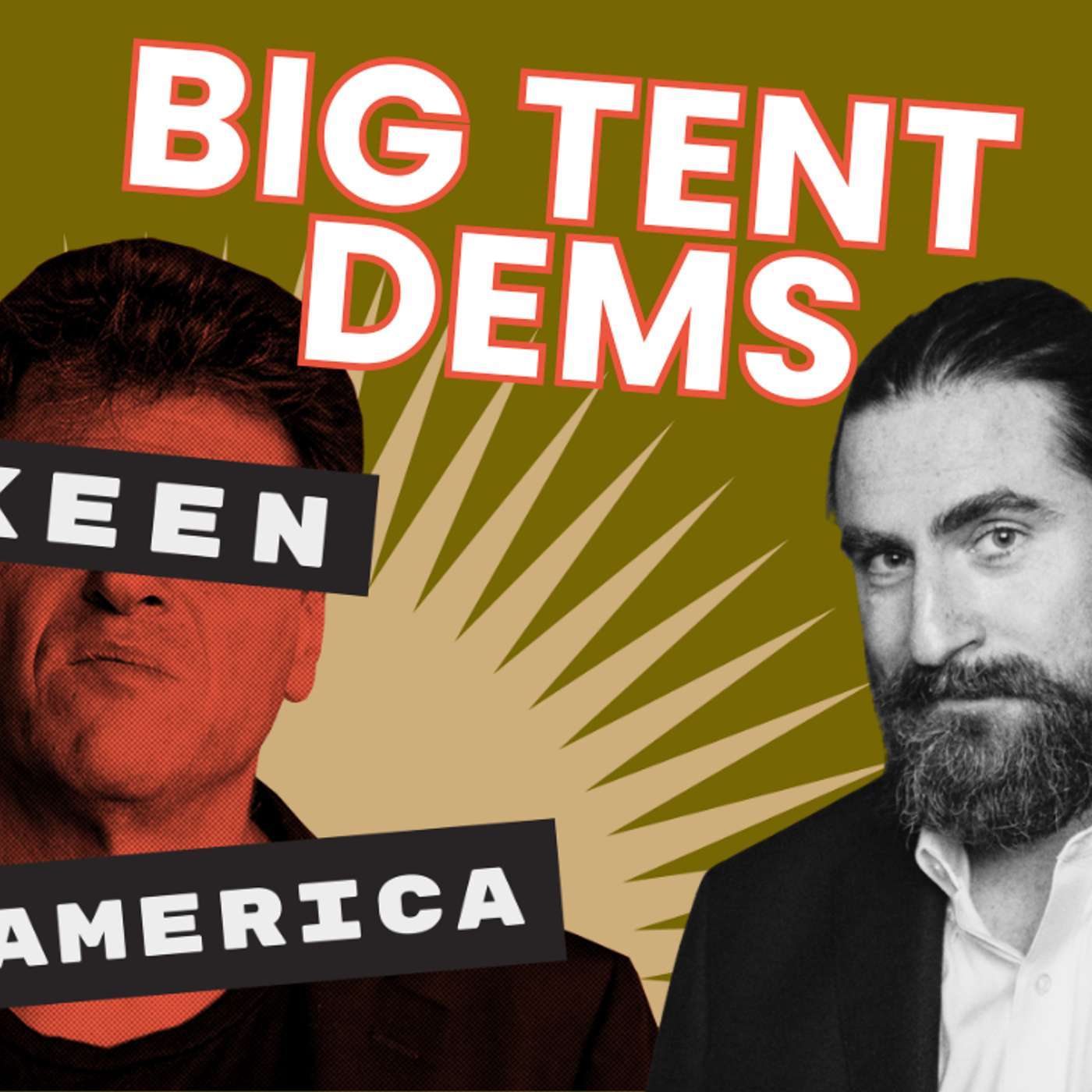


“One believes in democracy and the rule of law, and right now, the other doesn’t.” — Adam Jentleson
Yesterday, William Hitchcock explained FDR’s ability to build and maintain supermajorities. Today, Adam Jentleson — Harry Reid’s former deputy chief of staff and chief of staff to John Fetterman — talks about how the Democrats can build lasting power in the 21st century. The strategy is laid out in Supermajority, Jentleson’s follow-up to the acclaimed Kill Switch.
Is the Democratic Party too woke? “We are still too rigid” is Jentleson’s euphemistic take on the dramatic class flip in American politics. JFK won two-thirds of working-class voters in 1960, Jentleson reminds us, while Kamala Harris lost two-thirds in 2024. His prescription is FDR-style heterodoxy. Dems need to hold to their core commitments (healthcare, the safety net, progressive taxation, civil rights) while broadening their base in red states. His examples of tent wideners include a Kansan megachurch pastor, a pro-drilling Alaskan candidate, and an Iowan hopeful whose flat “no” on trans sports silenced a right-wing radio host. The model for winning back the working class, Jentleson argues, is Bernie Sanders circa 2016, an economic populist, but to Hillary Clinton’s right on immigration and guns.
The much maligned John Fetterman, Jentleson’s old boss, is the cautionary tale. It’s what happens, Jentleson warns, when the fighting “becomes the entire point” and a politician comes unmoored from principle. Jon Ossoff, Jentleson suggests, seems the anti-Fetterman in writing his own speeches and appearing authentic rather than opportunistic. Ossoff certainly isn’t FDR, but he might be the best chance the Dems have of defeating an increasingly authoritarian Republican party in 2028.
Five Takeaways
• The FDR Lessons Nobody Tells. Picking up where yesterday’s Hitchcock episode left off: FDR built the New Deal supermajority not by bowling opponents over with progressive rhetoric but through a deeply heterodox coalition — including factions today’s Democrats would expel — and sold it in conservative wrappers: Social Security pitched as fiscally responsible and earned, not given (he railed against the dole in cabinet meetings). The uncomfortable ledger: FDR actively worked against every civil rights bill of his era to keep self-declared white supremacists in the tent — which means, Jentleson argues, that today’s trade-offs (a Kansas candidate with questions about trans sports, a border-security Democrat) “pale in comparison” to the compromises that built the twentieth century’s Democratic dominance. The Kansas case in point: megachurch pastor Adam Hamilton, running in a state Trump won by twenty points, holds the line on healthcare, the safety net, and progressive taxes — and the alternative to his heterodoxy is a MAGA senator.
• Too Rigid, Not Too Woke. Asked the New Yorker’s question — is the party still too woke? — Jentleson answers with his own euphemistic diagnosis: “we are still too rigid.” The evidence is the class flip: JFK won about two-thirds of working-class voters; Harris lost about two-thirds, while the college-educated — once the party of Romney, Rockefeller, and Eisenhower — became the Democratic base. And the sociology cuts deep: education correlates with ideological rigidity, while working-class voters hold heterodox mixes — the focus-group regular who wants the 2008 CEOs jailed and undocumented immigrants deported in the same breath. Hence the echo-chamber problem (Andrew’s San Francisco testimony included): the decline of unions, parties, and Elks halls narrowed the aperture to funders and interest groups, and the Harris circle heard only itself. The fix costs nothing: choose diverse advisers, model good-faith disagreement — a preview of next week’s Susan Neiman conversation — and collect what Jentleson calls the electoral windfall waiting for whichever party does it first.
• It’s Working Right Now. To Andrew’s two-state-solution objection — lovely in theory, impossible in practice — Jentleson answers from the November polls: Mary Peltola leading in Alaska (Trump +double digits) as a pro-drilling Democrat; James Talarico leading in Texas as a fossil-fuels-as-bridge Democrat; and Rob Sand in Iowa, whose flat “no” on a right-wing radio show — the host admitted he’d prepared follow-ups for the expected wriggle — took the wedge off the table and freed his anti-corruption message. As recently as 2009, he reminds us, Democrats held Senate seats in Arkansas, both Dakotas, Louisiana, and Montana. The forgotten exemplar: Bernie Sanders 2016 — economically populist but a 2007 immigration-bill no vote, “open borders is a Koch brothers proposal,” Lou Dobbs appearances, and gun rights to Hillary’s right — the heterodox mix that produced his crossover appeal, against Clinton’s across-the-board orthodoxy. Jentleson’s 2028 read: the primary won’t resolve for the left, and Ossoff, Cooper, and Peltola are the model — though he tips his hat to the DSA’s weeknight commitment to Robert’s Rules.
• The Fetterman Cautionary Tale. The hour’s most personal stretch: Jentleson was John Fetterman’s chief of staff, and his verdict on his old boss — who cameoed at Trump’s convention this week — is that Fetterman shows what happens when the heterodox strategy is “taken too far”: the fighting “has become the entire point of his career,” unmoored from the principles that make divergence meaningful. On the Wall Street Journal’s reporting — the children’s hospital he refused to meet, the York police funerals he skipped — Jentleson wasn’t a source (“if you’re going to say something, you should say it on the record and put your name on it”) but confirms it “resonated with my experience.” His primary emotion: “sadness and regret… he’s letting a tremendous number of people down, including the people of Pennsylvania, who are basically down a senator.” The lesson for the book’s own thesis: heterodoxy is a powerful tool, and like all powerful tools it needs to stay rooted in why you entered politics at all — or it leads “to some dark places.”
• The Vision Thing. Why supermajority and not Madisonian faction? Because, Jentleson argues, this era has something genuinely new: “the first time in American history where we have one political party that is entirely aligned with a sympathy towards authoritarianism” — not flashes like McCarthy or Father Coughlin (yesterday’s villain, returning), but a party whose convention this week featured Trump leading “a pledge to cheat in elections,” with no internal pushback. (FDR’s court-packing, by contrast, was the exception proving the rule: the system brushed him back in 1938.) Hence the pull quote — and yet democracy-talk alone doesn’t win: “Biden tried to run on soul of the nation… and it didn’t work.” The closing agreement, via Andrew’s wrapper argument: the New Deal and the Great Society were named visions; Clinton and Obama never articulated one. Jentleson’s candidate: finish FDR’s cradle-to-grave social insurance — wage insurance against AI’s disruptions, everything earned rather than handed out, aimed at bank accounts and the pump rather than the soul of the nation. And his 2028 intrigue, on the record: Jon Ossoff — the anti-Fetterman — who writes his own speeches, wins Georgia repeatedly, and conditioned aid to Israel early enou...
00:31 - Introduction: from Hitchcock’s thirties to today’s supermajorities
02:03 - The FDR lessons nobody tells: heterodoxy and the hard sell
04:00 - Race and the scale of trade-offs, then and now
06:36 - The centrist-apologist charge — answered
09:48 - The class flip: from JFK’s two-thirds to Harris’s loss
14:37 - “Too woke?” No — too rigid
15:09 - Proof it works: Peltola, Talarico, and Rob Sand’s dead air
17:14 - The echo chamber: from the union hall to the funders
21:15 - Modeling good-faith disagreement — a Neiman preview
22:49 - The two-state-solution objection: is this fantasy?
25:39 - Is this era actually unusual?
29:25 - The first authoritarian-aligned party — and the convention pledge
31:37 - Fetterman: the cautionary tale
34:56 - The Jacobin question: can the left win the supermajority?
36:09 - Bernie 2016, the heterodox exemplar
38:46 - The vision thing: wrappers from the New Deal to now
40:58 - Meat and potatoes — and cradle-to-grave insurance versus AI
44:06 - 2028: the case for Jon Ossoff
45:39 - A Jewish president?
46:40 - The S-word
00:00:31 Andrew Keen: Hello, everybody. It is Saturday, September 12, 2026. Yesterday, we had the UVA historian William Hitchcock on the show arguing that we got the thirties wrong, he suggests in his new book, A Shadow Over the World: Franklin D. Roosevelt, the Rise of Fascism, and the Making of America's World War II, that the great man FDR manipulated public opinion to such an extent in such a sophisticated way, that we think that America in the nineteen thirties was isolationist. And, of course, FDR managed the supermajority controlled politics in the nineteen thirties to such an extent that we need to perhaps revise the historical records. The issue of supermajorities is the subject of today's show, only not twentieth century supermajorities, but twenty first century ones. Adam Jentleson is one of America's leading political analysts, particularly on the left, and he has a new book out, Supermajority: How Democrats Can Build Lasting Power. He's joining us from where else? Washington, DC. The book is out on Tuesday. Adam, congratulations on the new book. Do we need to go back and look at FDR to remind ourselves of how Democrats could once control politics and establish supermajorities?
00:02:03 Adam Jentleson: Well, I think we do, actually. And first of all, let me say thank you for having me here. I'm a big fan of the pod. I think we do need to look at FDR because I think there's several examples we can take from him that are not often the conventional things that we think of when we think of him. Part of what I point out in the book is that FDR succeeded in passing the New Deal not simply by sort of bowling his opponents over with the force of his progressive rhetoric and viewpoints, but also by building a deeply heterodox political coalition that featured, factions that today we would, try to expel from a Democratic coalition, and by weaving in [unclear] themes and appeals that are not traditionally associated with liberalism like fiscal responsibility and continuations of traditional American values in the way that he sold the New Deal to the American people. So, you know, when he pitched Social Security to the nation, he pitched it not as a radical departure with the American past or as a massive expansion of the government even though it was. He explained that it was a pragmatic response to the crisis that they were facing, that he was emphasizing the fiscally responsible nature of Social Security, that he was requiring every American to pay into the program and to earn their benefits. He would rail in cabinet meetings against the dole. He thought welfare was demeaning to human nature. So I think that this aspect of how the New Deal was constructed, how FDR assembled a supermajority political coalition, and then how he sold it to the nation are not the sort of things that we tend to tell ourselves when we tell ourselves the story of FDR and the New Deal, but they reflect, more successful lessons if we want to apply to today and try to figure out how we can break out of these eras of narrow majorities and actually build supermajority coalitions. Once again, we need to see the full picture of how FDR, achieved his and his time.
00:04:00 Andrew Keen: Yeah. And we talked about that with, William Hitchcock. We talked in particular about FDR's ability, if that's the right word, to cobble together this remarkable, coalition of American blacks and southern racists. Hitchcock argued that whilst he's a big admirer of FDR, he doesn't admire the way in which, he mostly FDR avoided the question of race. There are people, of course, and, Adam, you know this better than I do, there are people on the left now who will look back at FDR and said he copped out on race, and he's not a guy we should admire. Race is, of course, historically the third rail in American politics. Does that teach us today about FDR's ability to bring racists, overt racists, segregationists into the Democratic camp?
00:04:56 Adam Jentleson: Well, the first thing that it teaches us is that, you know, when Democrats have to sort of consider the trade-offs that they're being asked to make sometimes when it comes to politics, the scale of the compromises and the trade-offs that we are forced to reckon with today pale in comparison to the nature of what FDR had to reckon with in his time, even what LBJ had to reckon with in his time with another example I discussed in the book. You know, so when Democrats consider whether they are willing to, you know, embrace different points of view on a relatively limited number of usually, cultural issues in order to build a supermajority coalition. You know, this is a far cry from what FDR did of, you know, actively working against every civil rights bill that came before him in order to keep, the Democratic, Southerners who were, you know, white supremacists by their own declaration. This is not me describing them that way. They were proud about it. You know, this is the compromises that we face today are on a much different scale. So I think you can sort of start there and say, you know, is it okay for Democrats to, you know, say that there can be some candidates if you're running in a deep red state, if you're running in a state like Kansas or Iowa or Nebraska? You know, we will allow candidates into the tent who say, look. Maybe I have some questions about whether there are fairness issues when it comes to trans kids playing sports. You know, maybe I favor a strong border security program. These are the kind of compromises we're being forced to reckon with today. And whatever you think of them, even if you think that's an unconscionable compromise for Democrats, they certainly pale in comparison to what was, forced, what Democrats were forced to reckon with in the past.
00:06:36 Andrew Keen: Adam, some people will be listening to this, particularly on the left, and saying, this guy is just an apologist for moderate centrist Republicanism. And that when push comes to shove arguing that, Democrats need to compromise with supposedly moderate voters outside both parties, who has you brought up the issue of immigration and the cultural issues associated with gender and sexuality. Is that a fair critique of Supermajority? Are you arguing that the only way in which the Democrats can build lasting power is by taking the center? Of course, there's that famous remark by a Texan governor who argued, at least in Texas, that the only thing in the middle of the road, at least in Texas, is dead armadillos [ed.: Jim Hightower, Texas agriculture commissioner, not governor].
00:07:29 Adam Jentleson: I would push back on that characterization, pretty firmly because I think it's important to keep track of what it really is that Democrats, what distinguishes us from being Republicans. Right? And so I think that when you talk about issues like wanting to expand universal health care and make sure health care is affordable for all families, wanting to expand the safety net so that everybody in America who works hard and plays by the rules can build a better life for themselves and their family, wanting to raise taxes on the wealthy and big corporations who are getting away with murder under our tax code and to make the tax system more fair, wanting to relieve the basic sense of the economic precarity that suffuses Americans' lives today, and wanting to expand the circle of civil rights and protect, civil rights for vulnerable populations. Every single one of those things is what makes us Democrats and differentiates us from Republicans. Right? Republicans don't want to do any of those things. Democrats want to do all of those things. I don't think it's a compromise at all to say within those parameters, if we want to win back power in red states that we have long since written off, it is okay to build on the foundation of these deep liberal commitments to issues that we all deeply care about and say a candidate like Adam Hamilton. Right? This is a megachurch pastor who's running for a as a Democrat running for a Senate seat in Kansas, a state that Trump won by nearly 20 points. Know, Adam Hamilton believes in expanding health care access. He believes in strengthening the safety net. He believes in making the tax system more progressive. You know, is it okay for him to win in a state like Kansas to say he has some questions about fairness when it comes to trans sports or that he supports border security? I would argue that it is because the alternative is a MAGA Republican like Roger Marshall holding that seat. And to me, I think if we think seriously about what these trade-offs are, it's difficult to avoid the conclusion that it is clearly in the Democrats' interest and the interests of our civic society and beating back the rise of right-wing authoritarianism to make trade-offs on that scale. Because Adam Hamilton will join a Democratic Senate caucus, you know, as the 53rd, 54th seat, but, you know, 48, 49, 50 other Democratic senators will be, you know, pretty much liberal down the line. And so I think expanding our tent that much to include people like him in it, I think, to me, is a trade-off that is worth making.
00:09:48 Andrew Keen: This week, of course, the Republicans had their convention. The Wall Street Journal, not certainly not a left-wing newspaper, had an editorial about Trump having a $5,000 bridge to sell you. In other words, great deal of skepticism about Trump's promise of giving all Americans $5,000 if they voted back Republican majorities both in the House and the Senate. Meanwhile, there's lots of controversy within the GOP about who's going to run. They're talking about their Senate map this week. You're presenting American politics as a choice between or and correct me if I'm wrong, between perhaps the fairness of the Democrats and the authoritarianism of the Republicans. Doesn't that reflect perhaps, a rather some wishful thinking that's really not what American politics is all about? And if it was, then the Democrats would always have a supermajority. Well— And the fact is that something seems and I know you've given a great deal of thought this and many other people have. Something seems to have changed in American politics, particularly in the Trump era, where power is flipped and it's the wealthy and powerful increasingly who are more sympathetic to the Democrats, whereas the Republicans are more successful within the working class or the precariat or a lumpenproletariat, whatever you want to describe poor people in America. Yeah.
00:11:29 Adam Jentleson: That's— you know, actually a very accurate characterization of what's happened just by the numbers. I mean, Democrats used to be the party of the working class. When John F. Kennedy was elected in 1960, he won about two thirds of working-class voters, which was, you know, mostly a white population at the time. When Kamala Harris lost, you know, narrowly or even when Joe Biden won narrowly in 2020, Democrats lost about two thirds of working-class voters. So there has been this flip where Democrats, you know, the college-educated voters, the college-educated elite used to be the Republican constituency. Think of sort of, you know, the man in the gray flannel suit or sort of country club Republicans like, you know, George Romney and Nelson Rockefeller.
00:12:16 Andrew Keen: Or Eisenhower.
00:12:17 Adam Jentleson: Or Eisenhower. Exactly. So I mean, this dynamic has completely shifted. And what's happened for Democrats is they sort of have this coalition that is a combination of college-educated elites on the one hand and then the working class, voters of a multiracial coalition that is, you know, still a plurality made up of about white voters and then a lot of black and brown voters there. And it's a bit of a mismatch because the what the tension we struggle with as a party is that working-class voters of all races tend to not share all of the points of view of college-educated voters of all races. Right? Specifically, college-educated voters tend to be more ideologically rigid in their thinking. Now this is not a characterization that I am making. This is a pretty well established sociological and political fact that the farther you go up on the education scale, the more ideologically rigid or maybe a nicer word is ideologically consistent your viewpoints get. Whereas working-class voters tend to be more inclined to sort of mix together different points of view. You know, I've watched hundreds of focus groups in my career, and it is not at all unusual to hear a working-class voter say, on the one hand, you know, he thinks every CEO who's involved with the great financial crisis of 2007, 2008 should be thrown in jail, you know, and then in the very next breath, say he also thinks that anybody who's come to this country illegally should be deported no matter what. Right? And so those views are not ideologically consistent nor are they moderate. Right? But because they draw from different ideological points of view, you put them together, what you have is a heterodox mix. And so what I advocate for is for the Democratic Party to move in a more heterodox direction to say, we are not going to enforce rigidity. We're not going to enforce purity. We know what we believe. We know what why we exist in this business. We are here to improve people's lives, to expand access to health care, to expand the safety net, you know, to make our taxes tax system more fair, to fight for civil rights. But we're going to be open to people with a different with a more ideological ideologically diverse mix of points of view, because that's how you build a big tent and that is how you build the kind of power that is capable of staving off this rise of right-wing authoritarianism that I think is a genuine threat to the fabric of our democracy.
00:14:37 Andrew Keen: In other words, Adam, and this is what the New Yorker asked, in their review of your book, is the Democratic Party still too woke? I'm not sure if you're comfortable with that word. It's a word that's acquired broad currency. Is the problem with the Dems that they're obsessed with race and gender and all these other upper class college-educated issues that most ordinary Americans don't care about one way or the other?
00:15:04 Adam Jentleson: Well, you know, what I think is we are still too rigid. That's how I would characterize it.
00:15:09 Andrew Keen: Is that your euphemism, rigid Adam? Are there better words for that? Maybe a Freudian would analyze that in certain ways.
00:15:18 Adam Jentleson: Yes. Perhaps. Well, I think we're we still are enforcing too much purity, put it that way, if you prefer. But I think the good news is that I do think there are signs that we are moving away from this rigidity. I think that when you look at the Senate map today, you see candidates succeeding in red states that we thought were not, you know, battlegrounds for us anymore, that we've written off a long time ago. But you look at a state like Alaska, where Mary Peltola, running as a Democrat, is winning in most polls right now. This is a state that Trump won by double digits. Right? If we are truly captive to this era of polarization, it should not be possible for a Democrat to win in a state that Trump won by that much. The way she's doing it is by, you know, advocating for core Democratic principles like health care, like progressive tax system, but also saying, hey. Listen. I'm wanting to represent Alaska, so I'm going to support drilling here in Alaska. I think it's critical to Alaska's economy, and it is part of what makes me an independent thinker and differentiates me from my party. You look at Texas, where James Talarico is leading in most polls as a Democrat. And he has broken with his party to say, as a representative of Texas, I am going to support the fossil fuel industry. I believe in solving climate change, but I think that fossil fuels are going to be a necessary bridge to getting us to a greener future as opposed to, you know, saying, I oppose all fossil fuels. I'm going to keep it all on the ground. [unclear], you know, most other positions that Talarico has are pretty darn liberal and he's sticking to core principles, but mixing in those positions are what's making him competitive in a state like Texas. So I think, you know, the good news is that you are seeing Democrats succeed by adopting this strategy. I just hope that, more of them do it on a broader scale because if they do, I really genuinely think there's no ceiling on how much power we can win and where we can be competitive.
00:17:14 Andrew Keen: As I'm going back to my conversation with, Hitchcock, he reminded me that one of the remarkable things about FDR was his broad tent of advisers. Dorothy Thompson, for example, who was a Republican, was very influential in the way he thought about the world. And, of course, there were many people on the left who were part of his inner circle too. Is that one of the problems with contemporary Democrats? Kamala Harris comes to mind. I'm talking to you from San Francisco. My wife is, associated with those group of people. I'm always critical that it's an echo chamber. I'm guessing that the Harris, extended family wasn't very extended. There was a an echo chamber of left liberal thinking. Is one of the problems with contemporary Democrats, I don't know whether this you could also include Trump in this is that they don't have a diversity of advisers. And in that sense, again, they could go back to FDR or even maybe LBJ. I want to talk about his notion of Great Society and what we can learn from that too.
00:18:20 Adam Jentleson: Yeah. I 100% believe it is a problem. You know, there are structural reasons for this. You know, back in the days of sort of strong national political parties, stronger unions, stronger civic, organizations, you had mechanisms that brought in a wider diversity of viewpoints. Right? If your Democrats were hanging out at the union hall, they would, you know, hear from union members directly, you know, or hear from members of the church or hear from members of the Elks Club, and that information would sort of be passed up the chain to Democratic leaders, you know, as a way of information gathering. And so part of the dissolution of those kinds of parties, has led Democrats to become more reliant on interest groups and funders, and those kinds of people who populate this swamp here, where I'm speaking to you from in Washington, DC, and that has sort of narrowed the aperture of the viewpoints that they hear on a daily basis. You know, the good news is that you can simply choose to change that as a Democratic candidate or senator. You can just choose to bring other people into your circle. There's nothing structurally preventing you from doing that. And the other piece of good news is I would say is that you really do yield benefits politically from having a diversity of viewpoints in this sort of attention economy where, you know, generating attention is at a high premium. One of the ways you can generate attention is by diverging from your party and saying, I actually disagree on this issue. You know, this is my belief even if it conflicts with my orthodoxy. We talk a lot about authenticity and the need for that. Right? And I think, you know, actually speaking your mind and saying what you think even when it does diverge from your party is more authentic than pretending that every single view you hold, you know, accords with liberal orthodoxy. So I think there's a lot of benefits to doing that. I would also say, you know, I'm speaking here in terms of electoral benefit and electoral strategy, just part of how I think as a political operative. But I think that there's a principled argument for this as well, which is that, you know, in this era of divisive polarization, it is correct on principle to aspire to represent a broader diversity of viewpoints and a broader swath of the American people. Part of what's gotten us here is the political industry has said, I'm going to only try to win the bare minimum of voters that I need to achieve victory in this election. Right? And so then you end up representing a, you know, a nation or a district or a state that is split right down the middle. Whereas if you say, I'm going to aspire to represent 60% of this district or more, You know, you are saying to yourself, your voters to represent as many of you as I possibly can. Obviously, there's a tension there where you don't just sort of abandon all your principles. But what I'm arguing is that, you know, the trade-off between representing a broader swath of people and being true to your principles is not nearly as hard to achieve as we sometimes make it out to be.
00:21:15 Andrew Keen: Yeah. You use this word, rigidity. I mean, people are just intolerant. They turn everything into morality. We got a show coming up on evil with Susan Neiman, who's just written a book about this one of the great philosophers on evil. Yeah. Do people need to get beyond that? Do they need to stop thinking whether they're on the left or the right or in the center that if people disagree with them, they're somehow evil?
00:21:41 Adam Jentleson: Absolutely. I think leaders are we should expect our leaders to model this kind of civic behavior. You know, I mean, we've all experienced it every walk of our lives on social media, you know, how hard it is to communicate with people and how quickly people, you know, reflexively reach for questioning your motives or question they're saying, you know, well, there's no such thing as good-faith disagreement on an issue. You know, there must be some nefarious, motive at play here. I think that has, you know, really led to a lot of deterioration in civic spaces and civic discourse in our society. And part of what I'm advocating here for is leaders who model good-faith disagreement, who model holding a diversity of viewpoints and not just adhering to the orthodoxy of one side or the other, you know. And, again, I think this is important to do in principle, but I also think that whichever party is first to succeed at modeling that strategy is also going to win an electoral windfall because I think there's a hunger for that out in the country, and people are tired of feeling condemned for diverging from the orthodoxy of one side or the other, and they're looking for leaders who will, model a different way.
00:22:49 Andrew Keen: Adam, I wonder whether this kind of conversation is like the conversations these days about a two-state solution in Israel. It's all very well in theory, but in practice, this isn't going to happen. Given the gerrymandered nature of American politics and the nature of local politics and party politics and the way in which minorities seem to control both parties, Do institutional developments work against your ideal of a supermajority in either party, particularly for the Democrats?
00:23:26 Adam Jentleson: I think it is happening right now before our eyes. I mean, we are seeing the power of this concept at play in the November elections. You know, when you look at Iowa, you've got a Democratic candidate running for governor there named Rob Sand, who has, you know, distanced himself from his party on the issues of, you know, biological males playing sports with girls. Right? Again, Iowa, a state Trump won by 14 points. You know? And Rob was asked on a right-wing radio show, you know, do you believe that this is fair? And he simply said no. You know? And it was very interesting because there was a sort of dead air, you know, the pauses the right-wing radio host was like, I have all these follow-up questions prepared. I was expecting you to try to wriggle out of the question, but you just said no. I don't know what to do. You know? And so, you know, part of what that does is that it takes a divisive cultural issue off the table in a state that Trump won by 14 points. It is allowing Rob Sand to drive a very effective message about anti-corruption, and he is winning in all of these polls. So there are structural factors working against it, yes, but it is not impossible to defy them. And we are seeing Democrats defy those structural factors before our eyes. You know, it shouldn't be if this was a structural issue, if we were structurally consigned to this era of narrow majorities, it shouldn't be possible for Democrats to be winning states that Trump won by double digits. But we are seeing this work right now in practice. So as ambitious as it may sound, this is something we can do. You know, I talked about in the book as recently as 2009. We had Democratic senators in states like Arkansas, North Dakota, South Dakota, Louisiana, right, Montana, And we can achieve that again if we simply embrace the need to run candidates who reflect those states that are more conservative. That doesn't mean they set the tone for the entire party. The Democratic caucus will still be overwhelmingly liberal, but it is worth it to me to build a bigger tent and a firmer base of power so we can pass changes that improve people's lives, to expand the tent enough to include people like that in our tent once again.
00:25:39 Andrew Keen: Adam, your book, and there are lots of books. I won't say like it, but a lot of books written from the central or the left suggest that we're living in unusual times, that fascism or authoritarianism is about to destroy American democracy. But I wonder the more you talk, whether it's really just business as usual. We've had, a right-wing shift in the country for one reason or another. A lot of it has to do with the failure of the Democrats, maybe with Obama, certainly with Biden. Then we had Trump, who's increasingly unpopular and absurd. Now, there's a shift back. Is there anything unusual historically in what's happening? I mean, the way you're presenting it, Middle America and Iowa and Dakota, these people are not the evil fascists that people in New York or San Francisco imagine. They're common sense, mainstream, responsible people, and they are changing their vote. They're going back to the Dems. What's so different about this and why does it speak? And have we exaggerated the crisis in American democracy?
00:26:46 Adam Jentleson: I think there's always a bias towards thinking, you know, this time is different. Everything about our new era is unique. I think it's important to consider that there are genuinely unique and different things about this political moment. But part of what I argue for in the book is putting this in historical perspective and saying there are still points of continuity, common threads with the past, and lessons we can learn even as we also recognize how much is different about our era. And I would say, you know, the natural order of things in American politics is for these eras of polarization, which have happened before, to eventually resolve for one party or the other into dominance. And so part of my argument here is that I don't think we've reached some end of history point where, you know, that will cease to be the case. I think it will resolve into dominance for one side or the other, and I'm urging Democrats to do, the steps that are necessary to make sure that it resolves for us. Because one of the things you saw with Trump was that he started to pick away a Democrats' electoral coalition in 2024, by winning over some black and brown working-class voters who Democrats had long thought were loyal to them. Those numbers have snapped back with Trump's numbers being in the toilet right now, but it shows that it's possible for the right kind of conservative appeal to chip away at our electoral coalition. So, you know, there's a lot about this era that's new, but there's a lot that of fundamental dynamics and aspects of human nature and American politics that are going to continue to be consistent. And I think we can't let our sort of fascination with what is new and interesting about our era, cloud our vision to disregard these other sort of more fundamental, aspects of the world we live in. So I think, you know, bringing that synthesis together is what I try to do in the book, and I think that's going to be the path forward.
00:28:33 Andrew Keen: Isn't there a Madisonian counter, though, to your argument about supermajority and that America, again, sort of paraphrasing, Madison, that we're by nature, we're self interested. We form into faction. If we weren't, we would be angels. There'd be no need for politics. And that you when you get a supermajority of either party, it only creates discontent and unhappiness. You have majoritarian rule. Why do we need a supermajority? Doesn't it depend on your argument that somehow the Democrats are the good guys and the Republicans are the bad guys? But if you extend your argument about the center, that's not really true, that the Republicans aren't quite as bad as the Democrats portray them, and the Democrats perhaps aren't quite as good as they think themselves are?
00:29:25 Adam Jentleson: Well, I think what's different about this era— I mean, look, I come from, you know, a line of work. I worked in the Senate for a long time. I, work in policy advocacy. I have many friends on the Republican side. I work on a daily basis with conservatives. Part of my argument here is for embracing a diversity of viewpoints. Right? But I think that, you know, we just talked about some things about our era that are different and make it unique, and one of those things is that this is the first time in American history where we have one political party that is entirely aligned with a sympathy towards authoritarianism. Now that is not to say that we haven't seen, you know, sort of authoritarian threats in America in the past. You know, Douglas MacArthur, Eugene MacArthur sorry. Not Eugene McCarthy. Joe McCarthy. You know, these there have been flashes of this before, Father Coughlin in the thirties.
00:30:15 Andrew Keen: But what's different— FDR, at least from the conservative point of view, was accused himself of being an authoritarian. He tried to stack the Supreme Court unsuccessfully.
00:30:23 Adam Jentleson: That's right. But in a way, that's sort of the exception that proves the rule, which is that when FDR did try to do that, he was brushed back, and it led to a, you know, a disastrous nineteen thirty eight election for his party, and there was sort of a corrective. What we're seeing now that is different is that their Republican Party has advocated against the rule of law, has advocated for unchecked presidential executive authority, just at this midterm convention that just occurred. President Trump led the crowd in a pledge to cheat in elections, you know, and he is getting no pushback within the party, especially in his second term where he is basically unchecked. So I think what is uniquely dangerous about this moment in American history is this genuine threat to our democracy. So, you know, some of your listeners may not think that Democrats are right on policy and may disagree on substance, but there is a fundamental difference between the two parties. One believes in democracy and the rule of law, and right now, the other doesn't. And that is a scary thing, and for me, that is a compelling case for Democrats to think very rigorously about what it's going to take to build the broad base of power necessary to beat back this genuine threat to our democracy.
00:31:37 Andrew Keen: Yeah. And if you're right, it speaks to a very unhealthy situation where you really only have one-party rule. I mean, you're presenting supermajority for the Democrats to build lasting power. But if you if your portrayal of the Republicans is as an authoritarian party against democracy, then Americans really only have one choice. I have to ask you this, Adam. You used to work for John Fetterman. I think you were his chief of staff. He, of course, had a surprise cameo this week at Trump's convention. You've been critical of this. You're certainly no supporter of him now. What is Fetterman? Is he— he's obviously a very odd kind of guy, but what does he tell us? What does his case tell us about the weird state of American politics?
00:32:24 Adam Jentleson: Yeah. I would say that in some ways, Senator Fetterman is almost like a cautionary tale for some of the strategies that I'm advocating here for if they are taken too far. You know, look, they're I think that what I'm advocating for here is actually a pretty powerful political, and electoral strategy. Like many powerful things, it can get out of hand or it can be used, to bad purposes. I and what I want to get specific on here in terms of what I mean is that what I think has happened with Senator Fetterman is that you know, look. I'm sitting here saying I think Democrats diverge from their party. I think they should have independent-minded viewpoints. He's certainly done that, but it's sort of taken over his entire approach to politics and the world to the point where that fighting has become the entire point of his career in politics and public service. And it seems to dominate every decision that he makes, including appearing at this convention that you just mentioned. So, you know, it is a very powerful political tool. I do believe it is the key to winning these competitive races in the states that we've long written off and to building a supermajority. You do have to remain rooted in principle and you have to really understand fundamentally why you got in this business in the first place, You know? And so I think what's sad about what's happened with Senator Fetterman is that the fighting has sort of taken over, his entire approach, and he's become completely unmoored from any principle. He, you know, he also is just you know, there was a Wall Street Journal story out last week that reflected I wasn't involved with it. I've always had taken the point of view that if you're going to say something, you should say it on the record and put your name on it. But what was in the story certainly, resonated with me in terms of my experience there where, you know, this is a person who just isn't committed to doing the job, who's refusing to meet with representatives of the children's hospital in Philadelphia that are being devastated by Medicaid cuts, who you know, there were three police officers killed in the line of duty in his hometown of York, Pennsylvania. He refused to go to the funeral because he didn't want to put on a suit and sit at a funeral for three hours. So, you know, it's genuinely a sad situation. I think my primary emotion when I think about what's going on with him is sadness and regret because he's letting a tremendous number of people down, including the people of Pennsylvania who are basically down a senator. But with the discussion we're having today, I think the cautionary element here is if the fighting becomes the point, it can become, very damaging and lead you to some dark places.
00:34:56 Andrew Keen: Jacobin magazine, ran a piece on your book, with a big photo of Bernie Sanders, of course, who isn't a Democrat, but very influential in the party asking how the left can win a supermajority. The talk on the street, Adam, outside DC, certainly here, is that the left now is unwilling to compromise, that they gave in with Harris. They gave in with Biden. They lost every time. And this is the opportunity, certainly in 2028, for the left to uncompromisingly, if not take over the party, have a candidate on the left who wins power and establish a left manifesto, whatever that means, maybe influenced by Sanders or AOC or some of the other figures on the left. Is this an opportunity in your argument in Supermajority, or is it, again, are you cautioning against it?
00:35:54 Adam Jentleson: I think I'm a firm believer in big-tentism here, you know, and I take that very seriously. I firmly believe that there is a place and a role for the left in our Democratic coalition. I think—
00:36:08 Andrew Keen: Well, that goes without saying, though.
00:36:09 Adam Jentleson: Sure. Well, but I will say, I actually admire in some ways that the level of commitment to organizing that you see in the DSA, the Democratic Socialists of America. You know, you see these rooms full of people, on a, you know, a weeknight discussing like Robert's Rules of Order and wonky policy points of view. I mean, that's a, you know, I don't agree with the viewpoints, but there's a level of civic engagement there that I think is admirable. But here's the other thing is that I actually hold up Bernie Sanders in 2016, distinct from Bernie Sanders in the version of him in 2020. But I hold up the Bernie Sanders of 2016 as an example of a heterodox candidate because one of the things that we forget about that race was that in the Democratic primary between Bernie Sanders and Hillary Clinton, Bernie Sanders was the more heterodox candidate. He was, you know, very firmly economically populist when it came to economic issues, but he also was to Hillary Clinton's right on a range of other issues as a senator representing the rural state of Vermont.
00:37:07 Andrew Keen: I mean, he was quite outspoken and controversial on immigration, wasn't it?
00:37:11 Adam Jentleson: Correct. He was all he'd been a hard-line, you know, and that was sort of from, like the traditional left labor perspective of, you know, I want more restriction on immigration because we don't want them threatening American jobs and wages. But nevertheless, yeah, he would go on and your listeners remember Lou Dobbs who used to have a show.
00:37:25 Andrew Keen: Yeah.
00:37:25 Adam Jentleson: He's entirely dedicated to—
00:37:27 Andrew Keen: He's the media equivalent of John Fetterman.
00:37:30 Adam Jentleson: That's right. That's right. Right. So— but Bernie was— wait, you know, he voted against the immigration bill, in 2007, when most Democrats voted for it. He called open borders a Koch brothers proposal.
00:37:41 Andrew Keen: You're referring to the right-wing billionaires.
00:37:43 Adam Jentleson: But he was more in favor of gun rights than Hillary Clinton. He was he wasn't in the sort of, you know, defund the police space where a lot of Democrats went to. So, you know, he represented this heterodox mix. I think that accounts for a lot of his crossover appeal, whereas Hillary sort of took the orthodox left-wing position across the board on every issue. So I think that, you know, what I would advocate for here is, you know, there is room for disagreement. There are room for all these factions here, but everyone down the line should embrace, you know, a more heterodox approach and a wider diversity of viewpoints. And if we do that, I think we will be successful. I don't think that the twenty twenty eight primary, I mean, we're, you know, speculating here, is going to resolve, in favor of the left. I hope that what the lesson Democrats take from twenty twenty six midterms is that candidates who've adopted this more heterodox approach, people like Jon Ossoff, Roy Cooper, Mary Peltola in Alaska are the candidate are the model that we should pursue. But there will certainly be a very healthy, factual debate over that, in the years to come.
00:38:46 Andrew Keen: I take your point on heterodoxy, but, I mean, the success, obviously, of the New Deal and even of LBJ's Great Society, which I know you talk about in the book, came with ideological wrappings. FDR defined his administration and his vision of America in terms of the New Deal, LBJ, in terms of a Great Society. Would it be fair to say that the failure, certainly of Clinton and maybe even Obama, is that they failed to articulate that wrapper. Maybe it's a marketing failure. Maybe it's an ideological one. And that's the real challenge for Democrats if they are to establish your supermajority. They got to come up with an idea of why they're the supermajority, not just because they're the good guys versus the evil authoritarians. They need a way of defining their vision of America in the twenty twenties and twenty thirties, obviously, with AI and capitalism and all the other stuff that now we're talking about on a daily basis.
00:39:56 Adam Jentleson: I agree with that firmly. I think, one of the things, particularly moderates in this space, tend to give short shrift to is the big you know, actually what, Clinton called the vision thing. Actually, no way. That was George Bush [ed.: George H.W. Bush].
00:40:12 Andrew Keen: Which he— But Clinton, of course, who didn't really have it in a kind of way.
00:40:17 Adam Jentleson: In a tragic figure in a lot of ways because he was so effective at— such an effective communicator. But I do think became, you know, sort of off his moorings a little bit when it came to policy and then obviously—
00:40:30 Andrew Keen: Just to come back to Clinton is one of the warnings of Clinton. Of course, Clinton and Blair came in the wake of Reagan and Thatcher, and their appeal was to somehow soften, Reagan and Thatcher in their what some people now see as this neoliberal wrapper. Is one of the dangers for republic for Democrats now to try and make some of the MAGA agenda more palatable to moderates in the left?
00:40:58 Adam Jentleson: Well, I think that, you know, MAGA has scrambled coalitional lines in interesting and fascinating ways. I don't think the Democrats, you know, should do anything to make the MAGA agenda more palatable. There's some interesting options for
00:41:14 Andrew Keen: on immigration, for example. Right. Right.
00:41:16 Adam Jentleson: Well, I think, you know, it's not even about going back to MAGA. I mean, Barack Obama ran on saying, you know, we should have a strong border, and, you know, if you come to this country illegally, you need to get in the back of the line while also advocating for a path to citizenship. You know, I think a lot of this is just sort of getting back to meat-and-potatoes stuff that's worked for Democrats in the past. But on the other hand, I do think that, even as you do some of those things, you have to articulate a compelling vision for where we want to take the country. And I— to me, that vision is about fulfilling FDR's vision of a system of a social cradle-to-the-grave system of social insurance of which Social Security is only supposed to be one part. Right? And I think, you know, Democrats can say we are the party that wants to be sure that, you know, for everybody in this country who works hard and plays by the rules, you will always have the ability to build a better life for yourself and your family. Come what may, from AI or other threats to the economy, we will make sure that nobody falls through the cracks. And we will do that by expanding access to health care, by strengthening and expanding the social safety net, by exploring ideas like wage insurance that will allow you to move from one job to another or absorb threats that may come from AI, to help you find jobs in your community that are responsive to what you need, what your community needs, if you do lose your job, and just to basically make sure that in the richest country in the world, nobody is going hungry, that you have a roof over your head, that you're able to, you know, provide for your family. And we're not, you know, we're not going to do this through handouts. We're not going to just do this through free stuff. We're going to make sure that everybody, earns what they get, and that we are you know, we have transparency about how we are spending taxpayer dollars. We're going to try to root out waste, fraud, and abuse in the government. But, fundamentally, this is what differentiates us from Republicans. Republicans don't want to do that for people. They want everybody to be on their own. They want to slash taxes for the rich, and big corporations. They want, you know, an every man for himself society, and that's the big difference between our parties. I think Democrats of all ideological stripes of all factions should be much more fulsome and say with their full chest that this is our vision and this is why, people should put us in power. And then when they are in power, deliver on those promises. So, you know, this isn't just about saying, you know, Democrats are better, Republicans are a threat to democracy. This is also about how can we improve people's daily lives. You know, Biden tried to run on soul of the nation, you know, democracy stuff, and it didn't work. People are more concerned with their everyday lives, with what's in their bank account, and what they're paying at the pump for gas. And if Democrats can be responsive to those concerns, you know, on a big level and shape society to relieve that economic precarity that is threatening Americans in every walk of their lives, that is how we are going to deliver on these promises and create a virtuous cycle where people like having Democrats in power and vote for us again in the next election.
00:44:06 Andrew Keen: There you have it. Supermajority. The Dems can build lasting power maybe if they don't mention the S-word, socialism. Is there anyone you fancy, Adam? I'm sure you're an insider. You must be endlessly talking about 2028 candidates. You mentioned Ossoff. He seems intriguing in many ways, particularly in the context of your supermajoritarian argument. Does anyone come to mind, or is it too early? It's always too early, as we say in Silicon Valley, until it's too late.
00:44:37 Adam Jentleson: That's right. Well, I always promise myself, you know, going into a primary to try to not, you know, take sides because, you know, it can get quite divisive. But I'm going to defy—
00:44:46 Andrew Keen: I don't have to take sides on this show, Adam.
00:44:47 Adam Jentleson: Well, there we go. This will— I will say I am intrigued by Senator Ossoff. I think, you know, he— I find him very compelling. I think he's extremely thoughtful. The rare politician who seems like he writes his own speeches, because they reflect a level of continuity and depth of thought that is unusual in your average political speech today. And, you know, yeah, he has sort of carved a path where he has, you know, fought hard against Trump, you know, relentlessly focusing on Trump's corruption, but not taking a lot of the farthest left positions that are going to harm him and harm his ability to win. And, you know, just from a practitioner standpoint, the ability to win a state like Georgia, consistently is incredibly impressive and certainly shows that he has the potential to win on a broad scale and win a broad swath of the American people.
00:45:39 Andrew Keen: And given all the sensitivity and complexity over antisemitism, Gaza, Israel, all the rest of it, is it conceivable that America could have a Jewish president in 2020 [ed.: 2028]?
00:45:47 Adam Jentleson: I think it is. I mean, you know, as I say in the book, you know, heterodoxy is not an argument to always move to the right or the center. And Senator Ossoff, especially when it comes to war, and Senator Ossoff was an early advocate for conditioning aid to Israel and took that position because of the war in Gaza, took that position earlier than many Democrats. So I think you know, I write in the book about how Barack Obama in 2008 was against the Iraq war unlike many other Democrats in the primary. That gave him, you know, maneuverability on other issues because that was the issue the left cared about the most. You might see a similar dynamic with Ossoff [unclear] because he was sort of early, out on in favor of conditioning aid to Israel that, the left gives him some more maneuverability, to move to be, you know, sort of a heterodox on other issues. So it'll be interesting, but, I think he has quite a lot of promise.
00:46:40 Andrew Keen: It will certainly be interesting, Adam. I hope we'll get you back on the show. The book's out on Tuesday, Supermajority: How Democrats Can Build Lasting Power. Your last book, Kill Switch, did extremely well. I expect this book will do even better. Congratulations on the book, Adam, and love to get you back on the show later in the year or in 2027 to reevaluate the Democratic field and maybe give your views on the state of Republicans. Thank you so much.
00:47:08 Adam Jentleson: I love that. Thank you for having me.