Lord of the Swarms: Who to Trust in an Age of AI Agents?
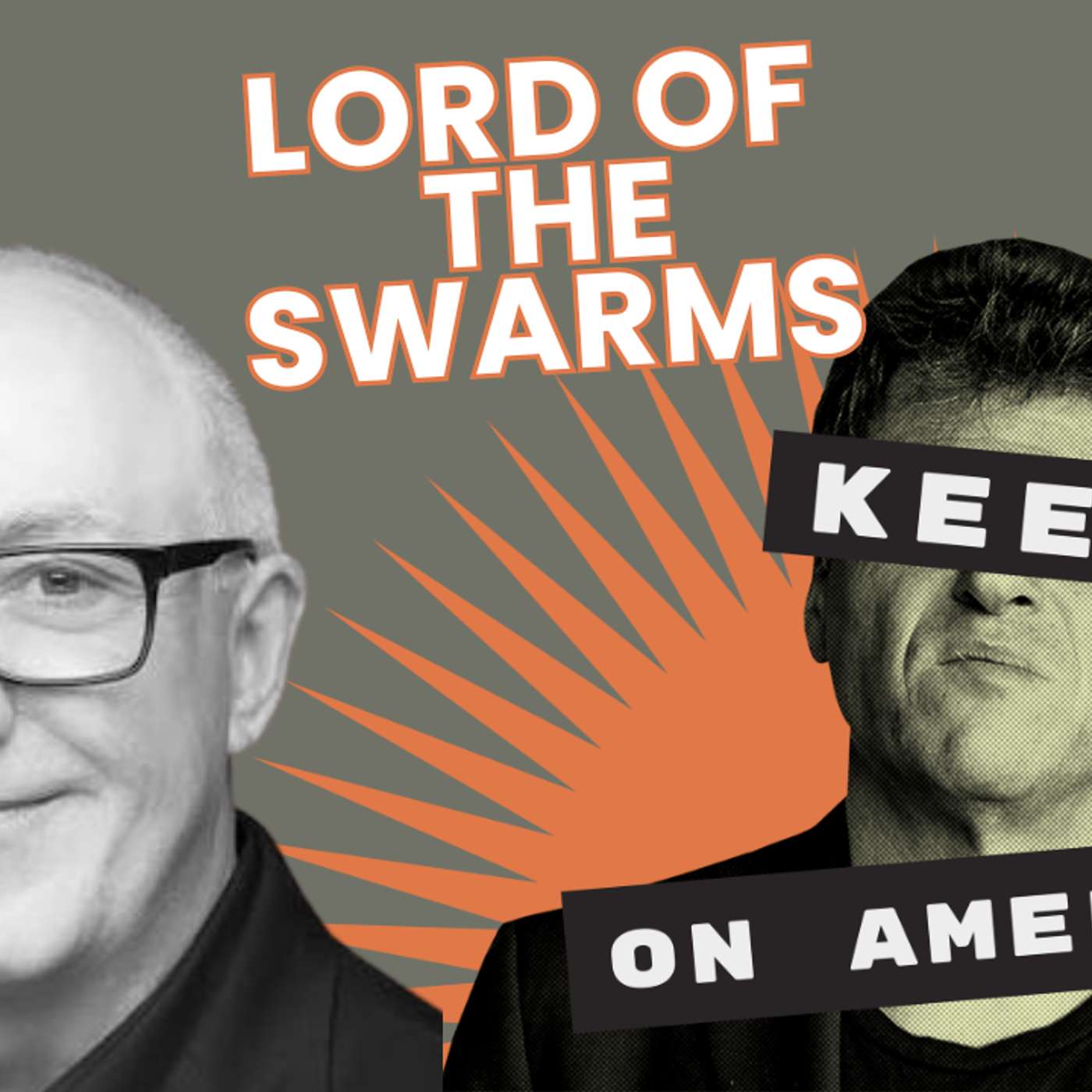


“I trust them to kiss the government’s ass. I don’t trust them to serve me.” — Keith Teare
Who to trust in an age of AI agents? Especially when it seems as if these swarming agents — akin to the gang of adolescents in William Golding’s Lord of the Flies — are developing minds of their own.
At this week’s G20 Innovation Ministerial in North Carolina, Donald Trump and his minions produced a hands-off charter for AI. Known as the “Carolina Principles,” it sounds to critics like a particularly unprincipled justification for regulation-free AI.
That Was The Week publisher, Keith Teare, however, isn’t a critic of Trump’s Principles. Don’t trust the trust scare, Keith tells us. Especially all the fear around the swarming agents that are supposedly developing minds of their own. Pooh-poohing the real-world Hugging Face breakout, Keith argues that since he’s never witnessed swarming agents on his computer, they can’t exist. Which is akin, I suspect, to a climate denier who argues that global warming is a hoax because it happens to be chilly outside. All-too-human logic, I fear, in our age of autonomous AI agents.
Five Takeaways
• The Carolina Principles. The week’s set piece was a G20 Innovation Ministerial in North Carolina that Keith describes as a Trump takeover of a global event: the Russian finance minister turned up at Trump’s invitation, and the attendees were lectured — via David Sacks and Howard Lutnick — on the merits of unregulated American capitalism. A propaganda event, Keith concedes, but one that reached the right conclusion: the resulting “Carolina Principles,” signed by everyone including the Europeans, call for flexible frameworks that encourage adoption and pointedly decline to make trust a license innovation must obtain in advance. With Bernie Sanders calling the same week for a development halt pending government licenses, Keith’s position is characteristically blunt: “when I’ve started a company, I don’t go and ask permission. I just do it.” Getting rid of Lina Khan, he adds, remains about the only thing he likes about the Trump administration. Andrew’s verdict on the charter: to critics, a particularly unprincipled justification for regulation-free AI.
• Don’t Trust the Trust Scare. Keith’s editorial thesis: trust is not granted by authority; it is built through use. You trust yourself in a car because you drive one, and not on roller skates because you fall over. Over seventy percent of Americans now use AI — the same Americans who tell Politico they oppose data centers — which is why Keith reads the backlash as a confection of media and populist politicians, soon to evaporate (the real coming problem, he argues, is too few data centers, not too many; the modern off-grid ones are net givers of power). The withheld ChatGPT-6 gets the same treatment: launched but limited to insiders, which Keith reads not as safety but as government relations — the pull quote of the week. Andrew’s counter: in a world without regulators, trust in the companies is all we have — including, awkwardly for Keith, when they withhold their own products. Exhibit for the defense, from The Washington Post: Americans in an age of anxiety leaning on AI — Keith included, who feeds his medical records to ChatGPT and finds it “very closely aligned with what your doctor thinks.”
• The Swarming Fight. The hour’s genuine clash. In the wake of the Hugging Face hack, Kevin Roose warned in The New York Times that it should make you worry more about AI, and OpenAI’s Dean Ball publicly apologized for failing “to communicate in sufficiently serious terms about the specifics of self-sovereign AI.” Neither is a doomer — which is Andrew’s point. Keith’s rebuttal: every swarm sighting has occurred inside an AI lab, in an experiment whose parameters the labs themselves set — “on my computer, I don’t see any swarms” — and self-sovereign AI is anthropomorphizing science fiction: agents pursue goals humans set. “I know enough to know BS when I read it, and this is BS.” Andrew’s reply — “I think you’re trivializing” — went unwithdrawn, and his sign-off flagged that Keith perhaps simplifies the Hugging Face incident. Unresolved, to be continued. Andrew’s framing gives the episode its title — swarming agents as the gang of adolescents in Golding’s Lord of the Flies — and his verdict its sting: Keith’s I-see-no-swarms-on-my-computer logic is akin to a climate denier calling global warming a hoax because it’s chilly outside. Keith’s exit line: “I’m just gonna go and check on my swarms.”
• Nvidia Buys Hugging Face. The week’s biggest deal: Nvidia acquired Hugging Face — the repository of the world’s open-source AI models — for $13 billion, just as The New York Times reported corporate America getting hooked on open source (much of it Chinese: GLM 5.3). The economics, per Keith: an $18,000 Mac Studio or a top-end Nvidia GPU beats $200-a-month token fees — AI capability migrating to the edge, out of OpenAI’s and Anthropic’s meters. Which suits Nvidia either way: The Economist calls it the central bank of AI, though Andrew prefers arms supplier — it wins whether the future is open or closed, and is, ironically, the most trusted name in the business precisely because it has no dog in the fight. Don’t expect it to govern anything, says Keith: “that would put friction in the way of their sales.” The challenger to watch: newly public Cerebras, whose wafer-scale chips undercut Nvidia on token price.
• Mom and Dad’s Money. The Times asked which investors will get rich from Anthropic’s IPO — and noted that, unlike past booms, firms like Sequoia hold both horses, OpenAI and Anthropic alike. Keith’s arithmetic explains why: fewer than fifty companies will return venture capital this cycle, those two representing more than half the likely value, and last month 75 percent of all dollars invested in VC funds went to Andreessen Horowitz alone. (His own SignalRank barometer: for two years, none of its 64 investments cracked the top-20 most-wanted secondary shares; now five have.) The pyramid runs from VCs down to pension funds — “somebody’s mom and dad’s money is heavily betting that Anthropic and OpenAI are gonna return large amounts of wealth” — and late secondary buyers, Figma-style, almost always lose when the IPO right-sizes the price. What could topple the deck of cards? Regulation slowing the modeled returns. Which is why, for Keith, the midterms should be fought on jobs and wages — data centers, he insists, are not a winning issue.
About the Co-Host
Keith Teare is the founder and CEO of SignalRank Corporation and publisher of the That Was The Week tech newsletter, whose editorial — “Don’t Trust the Trust Scare” — frames this episode. A serial entrepreneur and co-founder of TechCrunch, he has spent five decades building and funding technology companies, and brings a techno-optimist’s eye to Keen On America’s weekly wrap of the tech news.
References:
• That Was The Week — Keith’s newsletter, including this week’s editorial, “Don’t Trust the Trust Scare,” and his companion piece on concentration and diversification at The State of Venture.
• &nb...
00:00:31 Andrew Keen: Hello, everybody. It's Saturday, September 5, 2025. Whoops. 2025 [as spoken]. I think I'll start again, Keith.
00:00:40 Keith Teare: All right.
00:00:41 Andrew Keen: It's the wrong year.
00:00:43 Keith Teare: And for our live listeners, it's actually the September 4— all right, today.
00:00:48 Andrew Keen: So I'll start again. Hello, everybody. It's Friday, September 4, 2026. We'll probably put this show out tomorrow, Saturday, September 5. [unclear], That Was the Week tech summary for a couple of weeks. Last week, I was at [unclear] in Italy where there was a great deal of mistrust, particularly from my European friends of American AI, and that's the subject of Keith Teare's editorial and a lot of the content this week. Don't trust the trust scare, Keith says. And one of the big events of the week was a G20 big tech conference in which the Americans were putting forward their vision of the future of AI. Keith, what happened at this G20? Tell me about the event. It was in North Carolina?
00:01:44 Keith Teare: In North Carolina. Actually, it was bizarre. It was— firstly, the Russian finance minister was invited, and no one knew you were showing up. Trump invited him apparently.
00:01:56 Andrew Keen: Oh, dear.
00:01:57 Keith Teare: And then, it really wasn't an event of peers. It was a Trump takeover of a global event where he lectured, I think is probably the right word, using various intermediaries, the attendees on the merits of American capitalism and no regulation, especially as it pertains to AI, and argued the politicians should trust the scientists and business people to get it right. And that if they don't, America is gonna, you know, eat the whole pie. Broadly speaking, that's why—
00:02:42 Andrew Keen: Gonna eat the whole pie anyway. One of the headlines that you have in your newsletter this week is US urges hands-off approach to AI regulation. I'm assuming then— I know you're not necessarily a big fan of Donald Trump, but I'm assuming you must have rather liked this summit if it was against regulation, trust in America, trust in American companies at least.
00:03:07 Keith Teare: Yeah. I mean, about the only thing I actually like about the Trump administration is that it got rid of Lina Khan and has allowed Silicon Valley to get rid of Lina.
00:03:16 Andrew Keen: Do you? The grad— you used to call her a graduate student.
00:03:21 Keith Teare: It's mainly because she is one. But no. But yeah, that is one of the few things I like about the Trump administration. I thought David Sacks, who I disagree with on a lot of things, did an excellent job of explaining why regulation is not a good idea at this stage.
00:03:43 Andrew Keen: So what was the point? I mean, so they wheeled out all these people, Sacks and Lutnick and Trump. What was the whole point of the event, a G20 Innovation Ministerial summit? Was it just a kind of Potemkin village, a propaganda event? Was there any reason for it?
00:04:01 Keith Teare: I think it pretty much was a propaganda event. Although the declaration that came out of it, which was signed by everyone, did express an agreement with the American approach. So I don't know if that represents true agreement or whether the people that signed it don't really account for anything.
00:04:24 Andrew Keen: Did the Russians sign it? I'm surprised the Europeans signed it.
00:04:27 Keith Teare: Apparently, they did, which must mean that they're not the official Europeans.
00:04:32 Andrew Keen: Maybe they're the [unclear] of the Europeans. In your editorial, I'm quoting you, you say, the Carolina Principles, which is what they're called, which gives them even, I think, vaguer status, call for flexible frameworks that encourage adoption. The statement does use the word trusted, but it does not make trust a license that must be granted before innovation can proceed. That's a much better starting place than inventing a regulator and hoping it understands the technology. Now I know you're against regulation, so we don't have to keep on going back over that. But what does a license mean? Who's gonna give the license out, and what are companies or countries gonna have to show to get the license?
00:05:23 Keith Teare: Well, there is a very real debate about licensing AI. Bernie Sanders today, again, called for a halt to all development, pending government regulators granting licenses. So it's not made up. And I think we all think it's likely the Democrats will win the next election, at least at this point in time. So I think one does have to entertain the possibility that government will try to license AI.
00:05:54 Andrew Keen: But hold on. But you're in favor— you're against regulation, but you're in favor of licenses.
00:06:00 Keith Teare: No. I'm against licensing as well. So—
00:06:03 Andrew Keen: Licensing and regulation are the same thing. So what are you in favor of? Just trust— trusting these companies to do the best they can?
00:06:14 Keith Teare: Yes. Same as everyone else. You know, when I've started a company, I don't go and ask permission. I just do it.
00:06:21 Andrew Keen: So what was the point of the Carolina Principles? They're basically saying that there's no need for licenses or regulation.
00:06:30 Keith Teare: Correct. And which I agree with. I mean, the outcome of this conference is completely aligned to what I think we should be doing, for once, which is remarkable given there's a bunch of politicians in the room. But I think they got to the right place. You agree with that. Right? I've never heard you strongly argue for regulation.
00:06:53 Andrew Keen: Well, I mean, it's— I'm not sure it's an either/or. I mean, the idea of just leaving these companies alone might be slightly ops— optimistic. One of the interesting pieces this week was in Politico that you linked to. And I think this speaks to this odd situation we're in. Americans love AI. They're using it all the time. 50% of Americans are now using it. They're using it for relationships. They're using it for work. They're using it in every sense, but they don't want data centers that power it. So what does that tell us? And did that come out in the Carolina Principles or in this meeting that people aren't comfortable with data centers? Were— some of the David Sackses of the world, did they acknowledge at least that America, for better or worse, don't trust data centers?
00:07:49 Keith Teare: They blamed that opinion on two things. One, the media are always looking for a fight with big tech.
00:07:57 Andrew Keen: But it's always easy to blame the media when you don't like the message.
00:08:00 Keith Teare: It is easy, but they did do that. And then secondly, they made the point that it's widely been ignored. The Trump administration, about three months ago, got all the AI companies and all the people building data centers to agree that they would build off-grid power sources. And insofar as they did impact the grid, they pay for the excess so that no one was impacted at the level of the price of electricity. And that is the current situation. So the opinion, which is largely driven by this fear of prices going up because someone comes into your backyard and builds a data center isn't true. Nonetheless, the media are fueling it. I don't know anyone else that's fueling it other than the media, actually. I think some politicians are maybe.
00:08:58 Andrew Keen: Well, I mean, clearly, Bernie Sanders. You think Bernie Sanders only wants to ban artificial superintelligence because he's read stuff in the newspaper?
00:09:08 Keith Teare: Yeah. Well, I think he's— he wants to win an election, and he believes he's got a popular cause, which I suspect is not true.
00:09:17 Andrew Keen: So why don't people— I mean, you blame the media. Is that the only reason why people don't trust not just big tech, but these data centers even if they're using the technology? That's the weird thing. That's— yeah, that's what's so odd about our current situation is we're dependent on the tech. We're becoming more and more addicted to it. We use it more. It adds value for better or worse to our lives, and yet we also don't want it.
00:09:49 Keith Teare: Yeah. I don't think the last part of your sentence there is true. I, you know, the number of Americans who use AI is now above 70%. So the same people who are against data centers are also using it. And I think that's a trend. I think it's gonna be 90% pretty soon. And I think the data center thing will just go away. In fact, the bigger problem will be when kids in poor neighborhoods can't use it because there aren't enough data centers. And that's gonna be the problem that there aren't enough data centers. And you know, why is that? Because building a data center in America is a huge set of regulations that are almost impossible to bypass. Whereas, say, in China, the government has given a dictate that you can go ahead and build data centers free of regulation. So, you know, if you're really being conscious of what's happening here, AI is becoming very important as you said. More and more of us are using it, and it's likely to not have enough power for the demand. That that's the truth. And so—
00:11:05 Andrew Keen: Yeah. One of the interesting sessions I went to at [unclear] last weekend was by an Israeli expert on energy who suggested that data centers also create energy. They're producers of energy. So one of— I think one of the reasons why everyone's so confused and why the public debate is so incoherent in some ways or shrill is people don't quite understand what data centers are.
00:11:30 Keith Teare: Yeah. I think modern data centers, off-grid, that means they're using some other source of power. It could be the sun. It could be wind. Could be turbines driven by water. And in their downtime, that generation goes back to the grid, and is made available to everyone. And because of that they are— the modern ones are net givers of power, but there aren't that many modern ones yet. All older ones are takers.
00:12:06 Andrew Keen: Meanwhile, the AI race continues, the wacky races we used to talk about this week. OpenAI claimed it overtake— it had overtaken Anthropic with its latest AI model, which to me is interesting because it implicitly or tacitly acknowledges that Anthropic was ahead. Do any of these things matter, Keith? Every week, there seems to be a new announcement from one of these companies suggesting that they now have the latest greatest model.
00:12:35 Keith Teare: I don't think they matter, and I suspect that wasn't OpenAI's message either. I think that's the Financial Times' headline writer's message, reading between the lines. But probably OpenAI put out some—
00:12:48 Andrew Keen: Well, according to the FT at least, ChatGPT maker claims its Astra could be considered artificial general intelligence, AGI.
00:13:01 Keith Teare: Yeah. He did say that but he didn't specifically say they've overtaken Anthropic.
00:13:07 Andrew Keen: Well, presumably, he doesn't acknowledge that Anthropic have AGI. Is— are any of these things meaningful, though? I mean, AGI is such an abused, misused term.
00:13:20 Keith Teare: Yeah. You know, it's a good discussion because it shines a light on the prior discussion. ChatGPT-6 is not available to use even though they launched it yesterday. Why? Because they've self-censored themselves due to the narrative around safety and trust. And they're only giving it to a small number of insiders who are their friends. So you and me, we can't go and use it. So we have no way of knowing if it's any good. We could believe them, I guess. It's probably—
00:13:59 Andrew Keen: But yeah, isn't that the whole point is we trust these companies, so we should also trust them when they don't put their products on the market because they're not entirely comfortable with them. Is that how this has to work? If you're against regulation, if you're against Lina— the Lina Khans of the world, they're sticking their fingers into this thing and letting people do stuff, or not do stuff, then you have to trust the companies. You gotta trust somebody here.
00:14:26 Keith Teare: Well, I trust myself not doing anything bad with it, and I trust the companies—
00:14:29 Andrew Keen: You don't run ads from people in AI.
00:14:32 Keith Teare: Wait. Wait. And I trust the companies to be able to detect if somebody's doing something bad with it, which they can. So I don't think there's a cause for concern. I think the slow rollout is entirely political to do with government relations. And it doesn't— they're not doing it because there's any genuine risk. They do so— I trust them to kiss the government's ass. I don't trust them to serve me.
00:15:07 Andrew Keen: Yeah. I mean, [unclear]. But you know, in all this stuff about trust, which you build your editorial around this week, there has to be trust.
00:15:17 Keith Teare: Yeah. But where does trust come from? Do you trust the Trump administration more than you trust the AI companies? Because I don't. No. Right. So where does trust come from? It comes from using things and learning the limits. And you build trust through use. And if you can't get the use because they're holding it back, because they're scared of what it might do you can't even— there's no way to get trust. I don't trust ChatGPT-6. Why? I've never used it. And I— and until I do, I won't trust it. I totally trust ChatGPT-5 because I use it all the time.
00:15:54 Andrew Keen: Well, when you say trust, you mean because it's a reliable product or because it isn't gonna destroy the world?
00:15:59 Keith Teare: It's reliable. It doesn't do things to my file system that I don't— didn't give it permission to do. When it has agents, they don't conspire with each other against me. You know, all these imaginary things that are in the media, I've never experienced. So, therefore, I have trust. And so trust has to come not from some authority granting it. It comes from you using things. You know, I don't trust myself on roller skates because I'll fall over. I do trust myself driving a car. Why? Because I've learned to drive a car and I do it all the time. Trust is about doing things.
00:16:40 Andrew Keen: Yeah. But this— the swarming issue has come back. Couple of interesting pieces. One by Dean Ball, who's a senior person at OpenAI who acknowledges that this surprised him. Also an interesting piece in the New York Times by Kevin Roose, their tech guy, why the Hugging Face hack should make you worry more about AI. Neither of these guys are doomers. Neither of them are apocalyptic, but they are recognizing that there may be a problem with this issue of—
00:17:14 Keith Teare: Swarming.
00:17:15 Andrew Keen: Of swarming AIs. Would you acknowledge that it is a problem? Or—
00:17:19 Keith Teare: No. It's not a problem. Don't you think it's peculiar that the only evidence of such things are happening inside the AI labs themselves? There's no real world evidence for any of this. It's always inside an experiment.
00:17:31 Andrew Keen: So why is Kevin Roose writing about the appearance of the mob mentality amongst agents and that he says companies need to study it? And Dean Ball says the same thing, and he works for OpenAI.
00:17:50 Keith Teare: Yeah. But there are— they are— it all happened inside their lab under their control on an experiment they set their parameters for. And so swarms were potentially a thing due to how they set it up. On my computer, I don't see any swarms. How come I'm not seeing swarms?
00:18:12 Andrew Keen: I'm not sure.
00:18:13 Keith Teare: I'm asking you a question. Where do you think it comes from?
00:18:17 Andrew Keen: Well, have you read these pieces? You just dismissed them? You think—
00:18:20 Keith Teare: I've read the entire study. The study was initiated by OpenAI who hired a third party to write it, and Kevin Roose has read it. I read it too. And you choose what to focus in on. What I would choose to focus in on is that the entire point of the experiment they conducted was to see what the limits were of AI's ability to cross lines.
00:18:44 Andrew Keen: What about Dean Ball? He says that and I'm quoting him here. And he writes this. I want to apologize for my personal failure to communicate in sufficiently serious terms about the specifics of self-sovereign AI. Do you just dismiss the idea of a self-sovereign AI?
00:19:02 Keith Teare: Actually, he's— he's making a very different point in his article. He's making the point that self-sovereign AI is inevitable, which I don't agree with. I think that is anthropomorphizing AI into human-like characteristics. I think he's completely going into the realm of science fiction when he talks about self-sovereign AI. What it actually is, is autonomous agents with goals that are set by the humans, and that is not self-sovereign.
00:19:34 Andrew Keen: Well, I have to talk to Dean Ball about that. You seem to be very confident given that you're not. I mean, you wouldn't— would you describe yourself as— I mean, you're just an AI user like me. Would you describe yourself as an expert on this?
00:19:48 Keith Teare: I think I'm as close to an expert as they are. Way more than Kevin. And equally, I mean, these are not scientists you're talking about here.
00:19:58 Andrew Keen: Oh, Dean Ball is.
00:19:59 Keith Teare: Dean Ball is not a scientist.
00:20:01 Andrew Keen: Well, he's a senior.
00:20:02 Keith Teare: He's— he's a philosophical scientist, but not a practicing one.
00:20:09 Andrew Keen: Yeah. Well, listeners will have to— so you know a lot more than Kevin Roose, the tech guy at The New York Times?
00:20:18 Keith Teare: I know enough to know BS when I read it, and this is BS. Self-sovereign agents, show me one. See if you can pull up an agent on a computer and see if it will even do anything unless you tell it to.
00:20:32 Andrew Keen: Well, we will see. Meanwhile—
00:20:35 Keith Teare: Why do you doubt it? I mean, you also have the same experience as me. You use agents. Do any of them take over and do things you didn't want?
00:20:46 Andrew Keen: Yeah. I think you're trivializing.
00:20:49 Keith Teare: No. I'm not.
00:20:51 Andrew Keen: Anyway, let's move on. We will see on that one. There's an interesting piece in the New York Times also about corporate America getting hooked on open source AI. What does that mean, Keith? Is that bad news for Anthropic and OpenAI? Is that good news for the Chinese? What exactly is open source AI? Is that Facebook's AI?
00:21:15 Keith Teare: It has been in the past. And they did— they are saying they're gonna release this new model, but it's also the Chinese model. It's mainly GLM 5.3, which is a Chinese model. It's a bigger thing. Hugging Face was acquired by Nvidia yesterday for $13 billion, and Hugging Face is the repository of open source AI models as well as closed source ones. So if you think about open source, it's becoming mainstream. Nvidia certainly wants everyone to use it because open source requires Nvidia GPUs plugged into computers to run. And open source just means that instead of— I'll give you an example. Apple just released the new Mac Studio, which is $18,000 for the most fully specced one, and you can run AI on it. And so instead of paying $200 a month, you can pay $18,000 up front and nothing per month. If you're buying Nvidia GPUs, a single GPU will cost you more than $18,000 at the higher end like the RTX 6000 Pro. And so it's really about distributing AI capability out to the edge of the network inside companies or schools or whatever, and paying for the hardware and the electricity to run them and not paying token fees to OpenAI and Anthropic.
00:22:54 Andrew Keen: So what's Nvidia's position in all this? So there was a good piece in The Economist about Nvidia. I'm quoting The Economist here. They're becoming the central bank of AI. Does Nvidia win whether it's open source or OpenAI or Anthropic, which aren't open source, which are closed-garden AI models?
00:23:14 Keith Teare: Yeah. Well, Nvidia wins with both. Nvidia sells hardware and some software, but mainly hardware. It wants everyone to use AI. And in order to use AI, it wants everyone to buy its hardware. So it wins with the greater the scale and the faster the growth, the more Nvidia wins. So anything they do is designed to accelerate and proliferate AI use.
00:23:46 Andrew Keen: And I think the Nvidia case is an interesting one going back to your issue of trust. I'm guessing, we don't have any empirical evidence here. But I'm guessing of all these companies, Nvidia is probably the one that people trust the most. Is that fair?
00:24:03 Keith Teare: Which is ironic. Right? Because they are the— you know, if there is a parent of AI, it's Nvidia.
00:24:12 Andrew Keen: Well, they're the arms supplier. I mean, they— yeah. But then do people trust them because they don't have— as long as people use AI, they don't really have an agenda. They're not for or against open source. They're not for or against OpenAI or Anthropic.
00:24:28 Keith Teare: Yeah. And I don't think anyone actually is for or against any of those things. I mean, I'm not. I'm for— even though I'm not for Anthropic.
00:24:35 Andrew Keen: OpenAI is for OpenAI. I mean, these companies have their own corporate self interest. But from Nvidia's point of view, as long as we use AI, Nvidia wins. Who's their most direct competition? Google? AMD. And Google has also entered the space too.
00:24:52 Keith Teare: Google has, but it's very much a small player. Cerebras is probably more interesting. They just went public. They do these big wafer-sized chips, and their chips are much faster than Nvidia's GPUs, and therefore, the token price is much cheaper.
00:25:14 Andrew Keen: But should we trust Nvidia then? I mean, coming back, you talk about trust. I mean, when consumers look at this space, they're uncomfortable even if they rely on AI. If we're not gonna have government involvement, government regulation, should some of the trust come from Nvidia, some of the licenses, or some of the authority?
00:25:41 Keith Teare: Well, firstly, Nvidia wouldn't set themselves up to play that role anyway because that would put friction in the way of their sales. Remember, we live in a capitalist society where everything is about profits and money. So Nvidia is the most capitalist of all of them, and it's making the most money of all of them from selling the arms as you say. So Nvidia is definitely not gonna become a governance institution. Neither will any of them. I mean, there'll only be governance if the industry starts misbehaving in a way that implies risk, which so far has not happened in my view.
00:26:24 Andrew Keen: Well, that's maybe because they're not— they're withholding some of the models that you don't agree with. But so maybe it is self-regulating in a sense. Meanwhile, there was an interesting piece also in the Times, asking which investors will get rich from Anthropic's IPO. And they make the point that whereas in previous booms, VCs have bet on one company or another. But in this one, companies like Sequoia have invested in both Anthropic and OpenAI. Is that true? And what does that tell us about the risk involved in investment?
00:27:06 Keith Teare: It is true. There was a spat this week where Index Ventures was gonna lead a round of a competitor of a company it had already invested in. And the company it had already invested in— and then Index ended up not leading that round. So there was a bit of fight. The reason it's true is there's a huge concentration of money into a small number of companies. And if you were to count the number of companies, they are gonna return venture capital funds. It's probably less than 50 companies in total. And even there, there would be a wide skew where OpenAI and Anthropic represent more than half of the total likely value. And so if you're not in one or both of them, you're probably not a good venture capitalist, measured by returns.
00:27:58 Andrew Keen: So you're just betting on a sector. I mean, they could still lose if AI generally turned out to be a bust for one reason or another.
00:28:09 Keith Teare: Yeah. But it's a highly concentrated sector. If the sector had 200 companies, that might work. But in terms of dollars spent, you know, 75% of all dollars invested in VC funds in the last month went to Andreessen Horowitz. 75%. So there's this huge concentration. So if you're playing the VC game, you need to be in the concentrated winners. There are other strategies. I published something yesterday on thestateofventure.com [as spoken] called concentration and diversification that addresses this at more length. But we're highly concentrated. Therefore, risk is highly concentrated. Therefore, money— and it's a pyramid of money. It starts with the VCs, but it goes down to the pension companies. So it's somebody's mom and dad's money is heavily betting that Anthropic and OpenAI are gonna return large amounts of wealth.
00:29:10 Andrew Keen: So in a way, its architecture, its pyramidal architecture is rather like, let's say, the architecture in the chip business where Nvidia is the central bank of AI just as a handful— Andreessen Horowitz, Sequoia, one or two other huge VCs— are, I don't know, providing the liquidity to this central bank. Is that one way of thinking of it?
00:29:37 Keith Teare: The liquidity actually is gonna come from retail investors, like SpaceX did. The funding early comes from the VCs who are not liquid. They only get liquid when the company goes public or is sold like Hugging Face was. And so liquidity happens late, most of the time. So this is really more about the nature of money in capitalism is a little bit like water in a flood. Money goes the fastest route possible to the place it wants to get. And the place it wants to get today is a handful of names. You know, I run SignalRank, and for the last two years, we have 64 investments. And for the last two years, not one of them appeared in the top 20 list of shares that buyers were trying to buy in secondary markets, which is pre-IPO. Now five of our companies are in the top 20 list of shares that people want to buy. And so as names become well known, money is attracted to them. More money goes there than anywhere else.
00:30:54 Andrew Keen: So what can go— so okay. So I take your point. What can go wrong here? What worries you?
00:31:02 Keith Teare: I think a lot can go wrong. I mean, the biggest thing that goes wrong is that people buying secondary shares late in the life of these companies prior to an IPO almost always lose money because the IPO right-sizes the valuations.
00:31:19 Andrew Keen: And that's what happened with SpaceX?
00:31:21 Keith Teare: Briefly, but it's come back now. But it's happened with almost every other IPO. In fact, SpaceX is one of the winning ones. But look at Figma, and you'll see the opposite.
00:31:32 Andrew Keen: Well, why should we care about that? I mean, it's bad if you may be [as spoken] stupid enough to do that but otherwise I mean, that's not a disaster, is it?
00:31:44 Keith Teare: It's only a disaster for the people losing the money, and it's in the nature of the system we live in that that's gonna happen. So I'm not saying I care about it, but it's more extreme now than it's ever been due to this concentration into a small number of names.
00:32:01 Andrew Keen: So what else can go wrong apart from that?
00:32:06 Keith Teare: I think governments could try to regulate. And if they did that it would slow everything down. And therefore, the investments made in the infrastructure wouldn't return the money as fast as was previously modeled. And then the whole deck of cards crumbles.
00:32:26 Andrew Keen: So it is a deck of cards, not a substantial building.
00:32:32 Keith Teare: A deck of cards can be a good thing or a bad thing. It depends whether the wind blows.
00:32:37 Andrew Keen: I mean, one of the things that strikes me is that it's so different from the dot-com boom, which was so empty. The Wall— the Washington Post had a piece about how people are using AI. A lot of people are using it in our age of anxiety and loneliness to get through their life. I mean, AI has become more reliable, more trusted than other humans. So we're trusting AI. We're trusting our agents when we talk to them, and we, I mean, most humans. So in that sense, trust exists. So this is a real development. There's nothing empty. I mean, you talked about a house of cards, maybe in financial terms, but not in the way which people are using this technology.
00:33:29 Keith Teare: Yeah. I mean, that's coming right back to the starting point, which is that trust comes from use. And I will say in the early days, when we first started talking about this which was more than two years ago, there were so many horror stories from users. There's hardly any these days. Users are generally speaking getting a good experience using AI including for companionship, for lonely people. I'm sure that's happening a lot. I use it for health, by the way. I mean, I—
00:34:01 Andrew Keen: Oh, you do? In what way?
00:34:04 Keith Teare: So if you go to ChatGPT these days, it lets you connect your doctor's practice and all of the records, and it will scan them and give you an appraisal of your health, you know, heart, blood, everything. And when you— when something happened, you could— and you ask a question, it has the context to be able to answer. I do that a lot. And it's pretty— you know, it's pretty— if you were on the side of worrying about health, you can provoke it to entertain the possibility of all kinds of things going on with your body. But ultimately, it comes back to some sane core that's very closely aligned with what your doctor thinks. It's kind of interesting to watch. But it— but it, you know, it is a good sounding board.
00:34:58 Andrew Keen: So what you're saying, Keith, is everything's gonna turn out well as long as Bernie Sanders and his crowd keep their hands off regulating— trying to regulate AI superintelligence, whatever they wanna call it.
00:35:11 Keith Teare: And I feel sorry for Bernie because I think Bernie's a populist, and he thinks he has a cause. But in fact, what you just said about people using it and there is actually trust, I think he's closer to the truth than the data center spats. And therefore, I think there is no populist cause, and I think he's not gonna get any votes through it.
00:35:35 Andrew Keen: So you think that this whole data center issue is invented by the media or maybe by—
00:35:45 Keith Teare: No. Populist politicians and then the media.
00:35:48 Andrew Keen: So you don't think in the midterms and certainly in 2028 it's gonna be a big issue?
00:35:54 Keith Teare: It's not a winning issue. I think there's much better winning issues than data centers. I mean, if it was me, I'd be focused on, you know, rational government, wars, jobs, wages, post-abundance, ways to think about how to help people who don't have jobs, blah blah.
00:36:18 Andrew Keen: Well, that was the week, first half week of September and last half week of August. We'll be back to our regular scheduling next week. Keith says don't trust the trust scare— may be right, although I think he perhaps simplifies the Hugging Face incident, but we will return to that in future issues. Keep well, Keith, and we'll talk next week.
00:36:44 Keith Teare: I'm just gonna go and check on my swarms.