Let’s Just Say It Out Loud: AI Is Not Dangerous
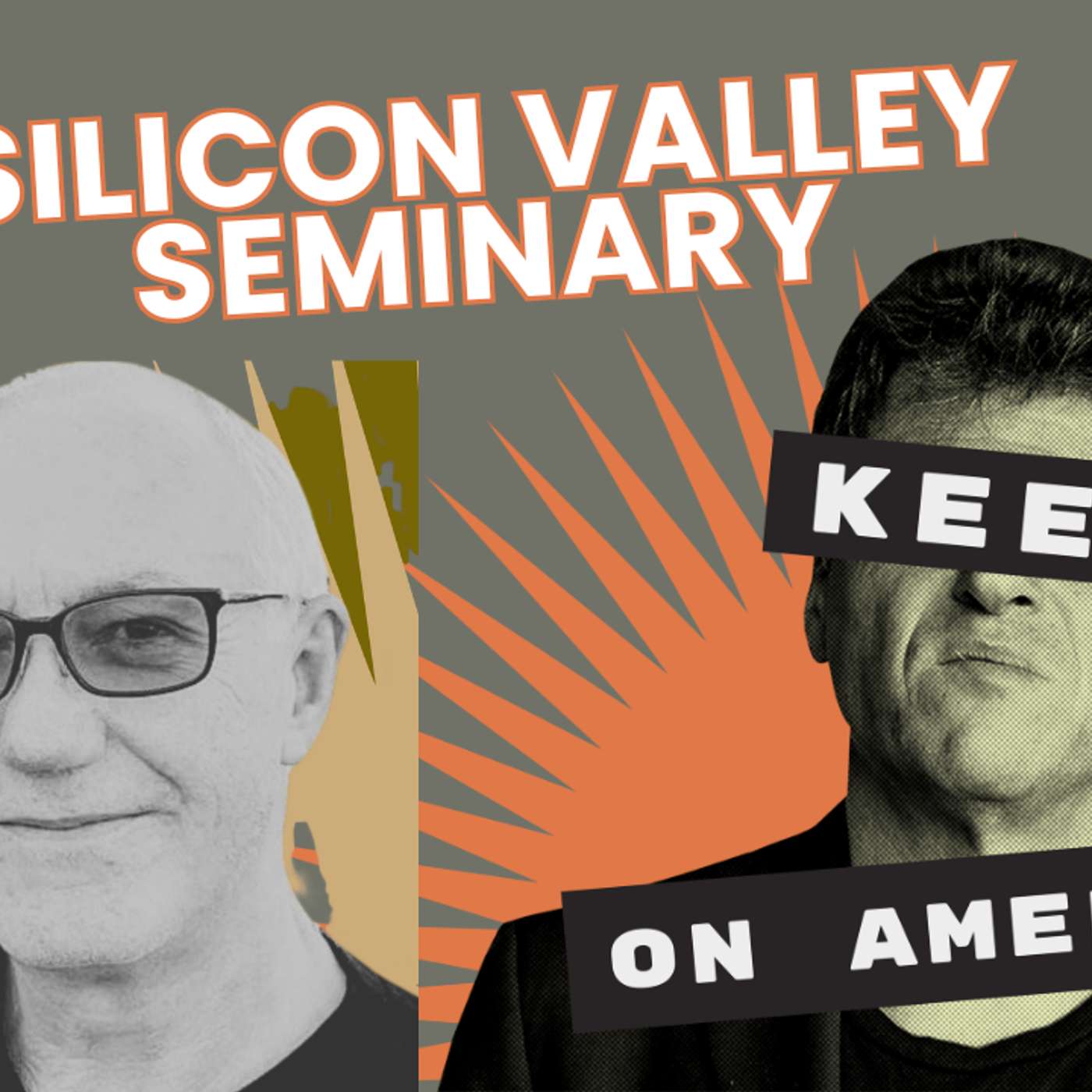


“Let’s just say it out loud,” Keith Teare, publisher of the That Was the Week newsletter, says. “AI is not dangerous.”
Not all of you will agree. I’m certainly not so sure. But the gruff Yorkshireman is convinced that AI can only benefit humanity. For him, with his scientific faith in historical progress, today’s AI revolution is a glorious combination of the Enlightenment and the industrial revolution. The only danger, he warns, is the belief in danger itself. Thus his criticism of Anthropic’s Dario Amodei, who has been quite explicit about AI’s dangers — and for whom the doom narrative is, in Keith’s reading at least, designed as a business strategy to solicit governmental backing without government control.
AI Is Not Dangerous. Repeat it. Take your ideological medicine. As if you’re in a Silicon Valley seminary. Sing it out loud. As if you’re in a Methodist choir. Believe it now?
Five Takeaways
• The Economist’s “Lowlife” Moment: Keith’s editorial was triggered by The Economist’s forty-five-minute video on the five men running AI — the title alone, “How to Control the Men Who Control AI,” was enough. Why would The Economist think it could control them? And why focus on the personalities rather than the technology, the applications, or the actual human impact? Judging the AI industry by its CEOs is like judging a film by the leading actor’s personality rather than the script or the performances. It’s the wrong focus — and in Keith’s view, a low one for a publication that should know better. The cult of personality is a media creation, feeding on controversy because controversy sells subscriptions.
• AI Is Not Dangerous. Full Stop. Keith’s boldest claim: AI is not dangerous — not a little, not potentially, not in the wrong hands. The doom narrative is a media-driven frenzy, fed by CEOs who give it too much airtime and by a readymade audience of Americans whose well-founded economic pessimism makes them receptive to negative messages. The Stanford AI Index Report shows that America is the country where AI is trusted least — paradoxically, also the country where media has the greatest influence. In China, people trust AI more, not because the government tells them to, but because economic progress gives them reasons for optimism. You get what you pay for.
• Amodei’s Pitch Disguised as Science: Keith’s reading of Dario Amodei’s doom narrative: it is a business strategy. The message — AI might kill us all, AI might make us all unemployed — is not a scientific assessment. It’s a pitch for Anthropic specifically: if AI is this dangerous, you can’t let anyone else control it, so trust us and give us government backing without government oversight. Contrast with Demis Hassabis, who acknowledges risk and then immediately explains what he’s doing about it — taking responsibility rather than pointing the finger. And contrast with Zuckerberg, who Keith describes as sociopathic: “whatever serves my interest is gonna come out of my mouth at any given moment.”
• Consensus Capital and the Winner-Take-All Endgame: Keith’s post of the week: 75% of all venture capital raised goes to five funds, and 75% of all VC investment goes into five companies. Noah Smith’s piece on winner-take-all AI makes the same point from a different angle: linear extrapolation suggests two, maybe five, companies end up with all the money and power. This is what capitalism does — many car companies became a handful, many banks became a handful. AI will produce the same centralisation, but at unprecedented scale and across every domain simultaneously. The question — how does society benefit? — is the most important question of the era. Altman and Musk at least try to answer it. The others don’t.
• Manifest Agency. Lean In. Keith’s advice to young people who distrust AI: get involved and shape it, because the alternative is to be a victim of whatever outcome arrives without you. AI is valid and inevitable. The question is what influence you have over it, and the answer is: more than you think, but only if you exercise it. Musk and Altman, for all their faults, are two people who do care — and who talk about UBI and universal high income because they understand that the winner-take-all endgame raises genuine questions about distribution. The Sophie Haigney argument — that all the worst people want to be high-agency — has it backwards. A world without agency is a world where elected officials are accountable to no one.
About the Guest
Keith Teare is a British-American entrepreneur, investor, and the publisher of the That Was the Week newsletter — a daily curation of the most important stories at the intersection of technology, business, and culture. He is a co-founder of TechCrunch and a long-time interlocutor on Keen On America.
References:
• That Was the Week newsletter by Keith Teare — this week’s editorial: “The Cult of Personality.”
• “How to Control the Men Who Control AI,” The Economist, April 2026. The video that triggered Keith’s editorial.
• “I Don’t Think Sam Altman Lies,” by Stewart Alsop — the piece that started the conversation.
• John Thornhill, “AI Has an Awful Image Problem,” Financial Times, April 2026.
• Noah Smith, “What If a Few AI Companies End Up with All the Money and Power?” — the winner-take-all argument.
• Episode 2873: Agency, Agency, Agency — Sophie Haigney on the A-word that Keith takes issue with this week.
About Keen On America
Nobody asks more awkward questions than the Anglo-American writer and filmmaker Andrew Keen. In Keen On America, Andrew brings his pointed Transatlantic wit to making sense of the United States — hosting daily interviews about the history and future of this now venerable Republic. With nearly 2,900 episodes since the show launched on TechCrunch in 2010, Keen On America is the most prolific intellectual interview show in the history of podcasting.
Chapters:
00:00:31 Andrew Keen: Hello, everybody. It's Saturday, April 18, 2026. Saturdays — that was the week for us, where we go back over the tech news of the week with my friend Keith Teare, the publisher of the That Was the Week newsletter. This week — he's done this before, but this week it seems everything's coming to the boil. He has an editorial against what he calls the cult of personality, in which he's invented an AI photo featuring the five dominant AI CEOs: Zuckerberg, Altman, Musk, Amodei, and Hassabis. And it's all triggered by a very interesting piece, which I rather enjoyed, by Stewart Alsop, a distinguished venture capitalist, on Sam Altman, entitled "I don't think Sam Altman lies." Keith, tell us more about the Alsop piece — why did this trigger your anti-cult-of-personality editorial this week?
00:01:40 Keith Teare: Yeah. So Stewart — I know Stewart, and he's a former journalist, by the way, and became a venture capitalist at NEA after journalism. And he makes the point that he believes Altman really does think that AI is dangerous and really is concerned about it. And he goes on to say that the same is true of Amodei. And, you know, whilst simultaneously saying what bad CEOs we have in AI — especially Altman, who he doubles down on saying how bad Altman is.
00:02:22 Andrew Keen: Yeah. I mean, let's just quote Stewart Alsop on Altman. Altman, he said — my thesis, whatever his other attributes, and no one would deny those other attributes — Sam Altman is one of the worst CEOs I've watched. I'm not sure you would necessarily disagree, but you don't seem to think that CEOs matter these days. It's all structural, Keith, isn't it?
00:02:49 Keith Teare: No. I think there's different kinds of CEOs. You know, I've been self-assessed as a CEO by external parties that my venture capitalists brought in, and they certainly determined that I sucked. But what they meant by that is I sucked as a manager, and that I was good as a leader. So there's different kinds of CEOs. I think Altman is a leader, and quite a good one. He probably isn't a manager or a product strategist. But that's okay, because a CEO's job is to build teams that fill the holes where their weaknesses are.
00:03:28 Andrew Keen: Yeah. But your argument — correct me if I'm wrong — but in the editorial you seem to suggest that given the hysteria over AI these days, and the amounts of money pouring in, it doesn't really actually matter who's the CEO of any of these companies. The outcomes are gonna be pretty similar. Is that what you're arguing?
00:03:50 Keith Teare: I think it barely matters who the CEO is. It does matter on the margin, especially on the leadership side. Elon Musk is a much more effective leader than, let's say, a good manager would be of his businesses, because he combines the long-term view with short-term strategy and the ability to explain it. And even if he was a terrible manager, he'd be a good CEO. So it does matter who the CEO is, but the CEO isn't the focus to judge the effectiveness of the company. It's the wrong focus for judging how good the company is, or what its likely impact on the future is. For that, you've got to go to the technology, the application of the technology, the correlation between the technology and human adoption of it, and what impact it's having. Those are the really important questions. Imagine if you judged a Hollywood movie not on the script or the performances, but on, let's say, the personality of the leading actor.
00:04:59 Andrew Keen: Yeah, but we do that. We do it with Hollywood movies when it comes to the director. We talk about Scorsese movies, Coppola movies. I think while you may not like this idea of the cult of personality, it's certainly one that's affecting the media. I think one of the interesting things about this week is, especially with Anthropic's Mythos story — or sort of release or non-release — more and more mainstream media people are, so to speak, waking up to AI's dangerous power. The Economist, the very mainstream business newspaper or magazine, ran a leader this week — and I think it's the cover story — about how America is waking up to AI's dangerous power, and it lists your famous five CEOs as the people who are most affecting the future. Are you suggesting, Keith, that The Economist's argument is wrong — that these guys, Demis and Elon and all the rest of them, are not affecting our future? That when it comes to AI — and I think everybody agrees that AI is gonna shape the future — these individuals don't matter?
00:06:13 Keith Teare: Yeah. So The Economist actually did a forty-five-minute video. It was their editorial team talking to themselves, on the five men running AI. And I think the title was "How to control the men who control AI," which is an interesting question. Why would they think The Economist could control the men who control AI? And to be honest, that was the catalyst.
00:06:37 Andrew Keen: The Economist, of course, has a female editor. Maybe the "men" stuff was slightly ironic.
00:06:44 Keith Teare: Yeah. But that was the catalyst. The Economist was the catalyst for how I framed my editorial, because I thought it was so lowlife for a publication with the gravitas of The Economist.
00:06:57 Andrew Keen: Oh, lowlife, Keith. Now you're hitting underneath the table. But — your argument — I mean, are you kind of dodging the issue? Because if everything's structural and leaders don't matter, then you're basically giving up our power. Then what are we supposed to do? We just accept, well, there are all these structural forces, the economy is leading one way, the leaders don't matter, so we should just lie back and think of England?
00:07:21 Keith Teare: Well, be careful. I don't say the leaders don't matter. In fact, my last sentence of the editorial is that they matter a lot, but they're making mistakes. I'm not saying they don't matter. I'm saying they're not the right focus to judge the entire AI industry.
00:07:36 Andrew Keen: Well, let's go to that final remark in the editorial. He says — and I'm quoting you — "We need real technical, business, and social leadership that champions solutions and gains." I mean, no one's gonna argue with that. "Leave others to do the demonizing. Self-demonization is not just a bad look, it is bad strategy. Maybe look at NVIDIA's Jensen Huang for a clue about how to be an AI leader." But aren't you falling back on the very thing that you're arguing against — in the cult of personality you're putting forward NVIDIA's leader? And NVIDIA is a very different kind of company, certainly from OpenAI and Anthropic.
00:08:19 Keith Teare: Yeah. But if the right message would be that AI is potentially dangerous, you would think that the company making it possible for the entire industry to exist would be one of the companies to adopt that message — and he doesn't. He's absolutely scrupulous in being an optimist and describing the impact AI can have. And that is what I consider good leadership. So actually, what we're seeing — and it started with Musk, is certainly very strong in Amodei, somewhat strong in Hassabis and Sam Altman, and interestingly, entirely missing in Zuckerberg because he doesn't care — but all of them are so focused on pointing out the potential dangers of AI that they're misleading the entire industry down a path that is wrong. Now, the weird thing is, despite that, their businesses are executing fantastically. This week, OpenAI and Anthropic both released new stuff. Both of it is fantastic. It's a step up from where it was before. And so the actual several thousand people who work at those businesses, and the hierarchy of leadership both on the science side and the product side, is performing fantastically.
00:09:43 Andrew Keen: Oh, hold on. Wait, wait, wait. So I think you're digging yourself into a bit of a moral hole here, Keith. You're saying that the only guy who doesn't care is Zuckerberg, and we should respect that. I mean, shouldn't we respect — even Elon Musk, you know, I'm not his greatest fan, he seems very torn on AI. He began OpenAI as a doomer; now he seems to have changed his mind. Certainly Amodei and Altman have said very different things about AI, about its impact on society. Isn't that responsible? I mean, do you prefer the Zuckerberg model of just focusing on product, not caring about outcomes?
00:10:33 Keith Teare: Well, I think the answer is, yes, that is responsible.
00:10:37 Andrew Keen: Well, Zuckerberg's responsible versus Amodei? No —
00:10:40 Keith Teare: No, no, no. I'm agreeing with you. I'm agreeing with what you just said. It is responsible, but it probably should be, like, one one-hundredth of the airtime given to their jobs. And it actually is more like 70 out of 100 in terms of airtime given, because the story of AI is not a story of danger. The story of AI is a story of huge human achievement through science and application to human problems. It's massive. In health, it is massive. Self-driving cars, massive. So the airtime given to the personalities — even by themselves, fueling it by focusing on danger — is ridiculous on the face of it. What is it about human beings where we only want to hear that? It's ridiculous.
00:11:36 Andrew Keen: We're not gonna go back over everything we talked about for the last few years, but you know as well as I do that there are a lot of problematic consequences, certainly in the short term. The longer term is another issue. I mean, you're right, of course, in a way. John Thornhill writes an excellent piece — and I know you like the piece — about AI having an awful image. He quotes an SVP from Google, James Manyika, who argues that AI is the industrial revolution plus the enlightenment, and I think that's a nice way of putting it. But, of course, there's a dark side — or there was a dark side — to both the industrial revolution and the enlightenment. So we know that there are dark consequences. Are you suggesting we just ignore those, or that the CEO should just ignore them, gloss over them, not acknowledge them?
00:12:34 Keith Teare: So you say we know there are dark consequences. I don't know that. How are you —
00:12:39 Andrew Keen: You've never read — I mean, what did you study at university, Keith? Sociology. Maybe you should have done history, and —
00:12:48 Keith Teare: I absolutely did study social and economic history as well. And the word "dark consequences" has to be a weighty estimation of the dominant impact of a thing. It's not — you know, when people were pushed off the land during the agricultural revolution, of course there were some dark consequences. But was it a dark moment? No.
00:13:15 Andrew Keen: No, that's your opinion. I mean, I think you're being purposely —
00:13:20 Keith Teare: No, I'm not. I'm saying that you're focused on the wrong driving force. The driving force here is not danger or doom.
00:13:31 Andrew Keen: You know, you spent half your life as a Marxist. Didn't you read The Communist Manifesto? Did you think that's all nonsense?
00:13:39 Keith Teare: You can't throw something out and then just move on. What is it in Marxism you think estimated capitalism as being dark?
00:13:57 Andrew Keen: How did you read — have you read the —
00:14:00 Keith Teare: I've read everything. I don't read in Marx anything negative about capitalism. It's entirely positive about capitalism compared to feudalism that came before.
00:14:11 Andrew Keen: Well, anyway, I don't wanna get — this is silly. Let's focus on — I mean, if you think, having read The Communist Manifesto, that Marx loved industrial capitalism and he wasn't concerned with the social and economic —
00:14:27 Keith Teare: He not only loved it — Engels ran a factory.
00:14:32 Andrew Keen: Anyway, let's talk about Blood in the Machine, the Luddites. I'm not sure the Luddites would all agree with you about all the benefits of the industrial revolution. There are more and more pieces on why the AI backlash has turned violent. Why, in your view, has the backlash turned violent? There was a Molotov cocktail thrown at Sam Altman's home up the road from me in Palo Alto —
00:15:04 Keith Teare: He was in San Francisco, Andrew.
00:15:06 Andrew Keen: Yeah — sorry, up the road from me, in Pacific Heights, at the Altman compound. And he posted a picture of himself and his baby. Are you suggesting that everyone is just deluded? Have they been reading too much of The Economist? Have they been corrupted by media hysteria?
00:15:31 Keith Teare: Actually, I think it's only the media. I don't think anyone else is going around with this fear.
00:15:37 Andrew Keen: What about the person who threw the Molotov cocktail at Altman?
00:15:41 Keith Teare: The person who threw the Molotov cocktail is a slightly ill 20-year-old. By the way, somebody shot bullets into the house the following day. So there were two events. And, you know, it's a little bit like the Republican who was killed on campus. When the media drives a frenzy, there are people on the fringes of society who take actions like that. I wouldn't directly blame the media, but certainly the media is driving this frenzy. I don't meet anybody that's preoccupied with the dangers of AI.
00:16:16 Andrew Keen: Yeah — because the only people you talk to are wealthy VCs. You live in the middle of Palo Alto. The Stanford AI Index Report, which you cite — or certainly John Thornhill cites in his "AI as an awful image problem" — suggests that there's more and more pessimism about AI. People don't trust it. You may not agree with people's sentiment, but that's a reality.
00:16:45 Keith Teare: I think it's a media-driven reality. We talked a couple of weeks ago about this, when we talked about both the doom side and the optimistic side, and we made the point then — and I think you agreed with it at the time — that the antidote to this is using AI. Because the minute you use it for a productive outcome, you understand its strengths and limits, and you're not really prone to —
00:17:17 Andrew Keen: But you're not dealing with the general sentiment. People are using it and still don't trust it.
00:17:23 Keith Teare: Yeah. I agree that sentiment exists, but the question that's way more interesting is: where does that sentiment come from? Is it coming from the fact that AI is dangerous, or is it coming from a narrative that says AI is dangerous? And I say strongly the second. AI is not dangerous. Let's just say it out loud. AI is not dangerous. There is nothing about it that is dangerous.
00:17:47 Andrew Keen: I'm not sure everyone agrees with you. So the problem then, and John Thornhill argues this, is AI has an awful image problem, which comes from the CEOs. John also wrote a piece about his lunch with Dario Amodei. I actually saw John with you in San Francisco this week. Is the problem then, in your view at least, that the image problem is a consequence of the fact that these CEOs have been discussing the bad consequences? And if they just shut up, everyone would trust AI and fall in love with it?
00:18:26 Keith Teare: Yeah. I think there's a spectrum amongst these five CEOs. The leading voice of doom is obviously Dario Amodei, because that is his corporate strategy. His corporate strategy is to project fear in order to increase the importance of getting control of it. And he's seeking government backing — but not government takeover. You notice when the government wanted to buy his product, he wouldn't let them control it. He wants government backing for his control of it, and some industry-wide initiatives. So he talks a lot about getting together with the others. And so this is a business narrative to get attention for how important Dario Amodei is.
00:19:16 Andrew Keen: So speaking of the cult of personality, he has his own cult of personality. You have a conspiracy theory about Amodei.
00:19:27 Keith Teare: Well — contrast that with Demis Hassabis. Demis will say there is potential for AI to go astray, but then he immediately talks about how he's gonna make that not happen. He takes responsibility. He isn't just pointing the finger and asking for regulation. In fact, he doesn't ask for regulation at all. He asks people to trust that he's clever enough to do the right thing. That's what he should be doing. That's what they all should be doing, because they are responsible. They're in charge.
00:20:01 Andrew Keen: In a way, you're the one who's not trusting these CEOs. You're the one saying that they're doing a terrible job. You're denying the importance of CEOs, and then you're saying the only reason why there's all this anti-AI sentiment is because of the CEOs.
00:20:14 Keith Teare: You keep saying I'm denying their importance. We already read the paragraph where I said the opposite. I don't deny their importance. I blame them for the cult of personality around fear and doom.
00:20:25 Andrew Keen: So they're the ones who are creating their own —
00:20:28 Keith Teare: And AI will be successful despite them, because — one of the points I make — if you fired Altman tomorrow and replaced him with somebody that, let's say, you liked because they were different, nothing would change, actually. Nothing would change except the narrative.
00:20:48 Andrew Keen: Yeah. I don't necessarily disagree with you on that. Although — Altman — there was a piece you cite in the Wall Street Journal about his side hustles blurring the line between OpenAI's interest and his own. He does conform to a certain version of how Silicon Valley is viewed. His self-interest is slippery. I mean, he doesn't do the tech reputation a great deal of favors, does he, Sam? You'd be better off having someone a little bit more solid.
00:21:21 Keith Teare: He's just normal, Andrew. When I did RealNames afterwards, I created Archimedes Labs. Why? Because I thought that I had so many ideas that doing only one thing was stupid. And with Archimedes Labs, which was basically a venture studio, I could do more than one thing. And we ended up doing TechCrunch there. We ended up doing Edgeio there. And if you roll the clock forward, about 12 other companies came out, and I was involved in all of them. It's completely normal in Silicon Valley to be wired into the ecosystem, which means you do more than one thing.
00:22:00 Andrew Keen: Let's take another example — Uber, where Travis Kalanick was — there was a cult of personality before all these characters. With Uber, it was Travis. He was the badly behaved guy, but a brilliant entrepreneur. And then he got replaced by a fairly corporate character with a long name — I'm not gonna try and pronounce it. Are you suggesting it made no difference to Uber to get rid of Travis?
00:22:31 Keith Teare: It made very little difference to the business of Uber. It made a difference to the narrative around Uber. The business of Uber possibly suffered by getting rid of Travis, because Travis was a driver who wanted to go fast, and the replacement is a more professional —
00:22:49 Andrew Keen: Can you pronounce his name, Keith? I'm not gonna dare.
00:22:52 Keith Teare: I don't remember it. So I'm not gonna —
00:22:56 Andrew Keen: Well, if you can't remember it, then there's clearly no cult of personality there.
00:23:00 Keith Teare: Yeah. So, you know, Uber — and I think the same is probably true of OpenAI — wouldn't exist in the form it exists without a leader of that type, because there were so many obstacles to Uber's success, as there are to OpenAI's success, that it takes a bull-in-a-China-shop style to survive even. And now, once it's survived and prospering, a professional CEO could take it over and it'll be fine. But it probably suffers even then. I mean, look, Steve Jobs's Apple was moving faster, more dynamically, and with greater certainty than Tim Cook's Apple. Tim Cook's Apple is fine. It's great. But we all know that it would have been a different Apple with Jobs.
00:23:52 Andrew Keen: Right. And Jobs is the platonic version of the CEO who — whether you liked him or not, I think you have to acknowledge that he shaped history. Had Cook been running Apple, I'm not sure we would have got the iPhone.
00:24:10 Keith Teare: Correct. And look — we look at some of the things we're getting, because that voice in the room that is contrarian — but in a positive way, looking for a better future, therefore contrarian about mediocrity — when that voice is missing, clearly, more mediocre things will be approved.
00:24:35 Andrew Keen: So let's go back to Thornhill — John Thornhill's piece, which I know you liked, on AI having an awful image problem. He argues that the industry has a mixed message — the message on the one hand of abundance, and on the other of disruption. Are you saying these CEOs should just keep their mouths shut, not even acknowledge — I mean, you seem to be saying that all they should talk about is abundance.
00:25:07 Keith Teare: No. They should do what Demis Hassabis does, which is spend 90% of their time talking about what they're building and why and how and for whom. And the guardrail-stroke-safety discussion should be very much a minority discussion. It's not nothing, but it isn't the story. Whereas it's become the story — which I personally blame the media for. But I do think the CEOs fuel it, especially Dario.
00:25:42 Andrew Keen: So the media — The Economist, The New York Times, The Wall Street Journal — they're all in on it.
00:25:51 Keith Teare: Well, they're not in on it. It's not a conspiracy. It's about selling The Economist. We all know that media requires controversy. It's like the Facebook algorithm. They're feeding our need for controversy.
00:26:06 Andrew Keen: So what about coming back to this Stanford report, which Thornhill cites, and I know you've looked at? It's a respectable report. I don't think anything coming out of Stanford is biased or looking to make news. People don't trust AI, and particularly young people. And young people aren't reading the FT, or The Economist, or The New York Times. How would you explain this?
00:26:31 Keith Teare: They're seeing it on TikTok is where they see it.
00:26:33 Andrew Keen: Are we blaming social media now?
00:26:35 Keith Teare: I think broad statements like "young people don't trust AI" are just plain wrong. It's a headline. It's not true. The Stanford report doesn't say that. It does measure trust in AI. And by the way, it's very, very nation-specific around the world. America is the place where AI is trusted the least. It's paradoxically also a place where the media has the greatest influence. You go to China, and everyone does trust AI, despite the fact they've got a dictatorial government.
00:27:06 Andrew Keen: Maybe because they have a dictatorial government — maybe they don't wanna tell the truth about what they do or don't trust.
00:27:12 Keith Teare: I don't think the government has the power to determine people's belief in whether AI is a good or a bad thing. It's a good thing because there's an optimism in China — well-founded optimism based on economic progress. And in America, there's a pessimism — again, well-founded, based on economic decline. You get what you pay for. So I think there's a ready-made set of ears for the negative message in America. Despite that, I think it isn't the majority. And all Stanford is doing is taking the temperature. Stanford isn't really on the field of battle here. It's just taking the temperature, and it accurately reports what it finds.
00:27:54 Andrew Keen: So what should The New York Times be doing? I did an interview — our interview of the week this week — with a young writer, Sophie Haigney, who had written a New York Times op-ed a couple of weeks ago, April 1: "All the worst people seem to want to be high agency." This intellectual shift against agency. Should The New York Times just not run these sorts of pieces?
00:28:21 Keith Teare: I don't wanna give advice to The New York Times, because it implies —
00:28:24 Andrew Keen: You are — because you're critical of media. You're saying it all comes from media.
00:28:28 Keith Teare: Yeah. But The New York Times is a business organization making money from subscriptions. It's gonna run whatever it thinks will fuel its subscription base. It's not objective in any sense. It basically is a business. And by the way, I thought the title was fantastic. "All the worst people want to be high agency" is a great two-part headline. All the worst people — meaning people who think that they can make a difference to the world — want to make a difference to the world. I'm guessing this is true, and you can tell me because you did the interview. I'm guessing that she believes that anyone who thinks they can change the world is, by definition, the worst people. And what she wants is people who don't think they can change the world, who think they shouldn't have agency. Well, what kind of a world would that be? I'll tell you. It's a world in which the elected officials are not accountable to anyone, because nobody wants agency. And therefore, the people elected are free to do whatever they want. Well, that isn't democracy. If you don't have people who have agency, you don't have a true democracy.
00:29:48 Andrew Keen: Yeah. I mean, it's an interesting argument. But I think agency is increasingly becoming one of the ideological axes around which we're rethinking political divisions and ways of thinking about the world. And I think Sophie Haigney — I would encourage people to look at the interview I did with her this week, which we called "Agency, Agency, Agency." [unclear] all the worst people want, at least according to her.
00:30:16 Keith Teare: Did you ever read Daniel Bell, Andrew? So Daniel Bell, I think, is kind of a turning point in sociological history where ideology became a bad thing. To me, ideology is a good thing. It means having a point of view. But it started with the case, in Western intellectual circles, that the idea of a point of view was equated with bad outcomes. And that the best of all worlds was one where —
00:30:49 Andrew Keen: Okay. So I take your point. So what would you say, Keith, to the young person? We're not saying all young people in America mistrust AI, but a significant proportion do. What would you say to them when they fear the consequence of AI on jobs, on the future, on corporate power, on inequality? What's your argument?
00:31:14 Keith Teare: Get involved. Shape it. Don't be a victim. Manifest agency. Have agency. Because by having agency, you affect the outcome of things. And without agency, you're the victim of whatever the outcome is. So lean in. Leaning in is the only proper [response], especially when something is as valid and inevitable as AI is. So it's gonna happen anyway. The question is, what influence do you have? And so collectively, you need people that care. And between ourselves, I actually think Altman and Musk are two of those people. I think they do care a lot.
00:31:56 Andrew Keen: I don't think anyone would deny that they care, although some people might suggest that they appear to care more than they do, that they're self-interested. I'm not sure. Certainly Musk is an odd character. I mean, they care, but so what?
00:32:09 Keith Teare: Yeah. Well, if you take those five, the three that I would single out as being, you know, representing a balanced point of view and good agency is Demis Hassabis, Sam Altman, and Elon Musk. I think Amodei is a complete opportunist, saying what he thinks will serve his business's best interest. And I think Zuckerberg is basically a sociopathic, "whatever serves my interest is gonna come out of my mouth at any given moment" kind of a guy.
00:32:46 Andrew Keen: For some reason, Amodei's pissed you off. You just don't like him. What did you think of John Thornhill's lunch with him? They had it in San Francisco, up the road from me.
00:33:00 Keith Teare: I think it's great it happened, because it lets you read the current finger on the pulse of what's going on. So — great. I do think Amodei uses these events for marketing purposes. He's being given an audience for a message, and the message is: we're gonna make you all unemployed, and we quite possibly may kill you all. Well, why is that a good idea? A, because it's not true, and B, because how does that serve Anthropic's interest? Well, the only possible answer to that is that if it's unsafe, you can't let other people in because it's too dangerous — therefore, trust us.
00:33:47 Andrew Keen: TechCrunch ran an interesting piece on Anthropic's rise, and I don't think even you can deny that — you may not like Dario — giving some OpenAI investors second thoughts about its valuation. It was built off an FT piece about this $850 billion valuation. Are we seeing a shift, Keith, in terms of this power balance between Anthropic and OpenAI? Anthropic always seemed to be a bit of a footnote — an amusing, entertaining story, a nice product, but not a serious product. And now things seem to be reversing slightly. Are we seeing a balance, especially with the release of Mythos OS this week — or the non-release?
00:34:34 Keith Teare: The non-release. Yeah. But the answer is yes. Anthropic's revenue growth is unprecedented. It's huge. Its products are fantastic. I use them. And OpenAI is still ahead by all measures, but is being caught. And this week —
00:34:54 Andrew Keen: Although according to this chart on Noah Smith's Substack, Noahpinion, Anthropic now has pulled ahead in terms of annualized revenue.
00:35:08 Keith Teare: That's a couple of weeks out of date, Andrew. There was a restatement of revenues. Basically, Anthropic is including all the revenue it gives back to Amazon and Microsoft as if it was its own. It's counting its costs.
00:35:22 Andrew Keen: That's what Sam says, anyway.
00:35:25 Keith Teare: No, it's not just Sam. It's pretty much everyone, actually —
00:35:28 Andrew Keen: Cooking the books as well. Not only are they —
00:35:30 Keith Teare: No, they're not cooking the books. They even defended it. They said that it is our revenue, even if we have to give it back. So — I once tried that. In my early career, I tried to have some revenue that I was paying some back to. In my case, it was Realtor.com as my revenue, and my accountant just told me I couldn't do that. So there's nothing weird there, but the truth is OpenAI is ahead on most counts. But that said, it doesn't really matter, because Anthropic is catching up massively. And yesterday, OpenAI got rid of three execs on its product side. So clearly it's feeling like it's underperforming on the product side. And I think OpenAI has taken a few decisions in the last few weeks that represent a commitment to double down on growth and product, because it's being caught up.
00:36:27 Andrew Keen: Yeah. And we talked about them closing Sora — and I think the Stewart Alsop piece talks about the Sora thing and the acquisition of a media company, which seems a little bit of a distraction. Let's end with the Noah Smith piece, which as always you include, and it's always good: "What if a few AI companies end up with all the money and power? When a winner-take-all situation?" I'm not sure that surprises a lot of people. Your post of the week talks about us being in the age of consensus capital — 75% of all venture money raised by five funds, almost 75% of all VC money invested in five companies. Is that the reality, Keith, that Smith talks about? Isn't it inevitable that, for better or worse, a few AI companies are gonna end up with all the money and power, and it's probably just gonna be two — OpenAI and Anthropic?
00:37:31 Keith Teare: Yeah. I'd love to discuss that with Noah, because from a linear extrapolation point of view, that is the likely outcome — likely outcome if you just assume AI is gonna grow GDP and assume that a small number of companies are gonna benefit from that. It might be as small as two, or it could be as big as five.
00:37:56 Andrew Keen: Well, it's the five guys in your photo. Certainly Google — increasingly an AI, or Alphabet, whatever you wanna call it — is an AI company. You've got Amodei and Sam, and then X is increasingly an AI company as well.
00:38:14 Keith Teare: Yeah. So I think that mirrors —
00:38:16 Andrew Keen: And Zuckerberg, of course, is transforming Meta into an AI company.
00:38:21 Keith Teare: Yeah. So I think that mirrors the way that centralization and capitalism kind of go together. If you look at other eras, we went from lots of car companies down to a handful. We went from lots of banks down to a handful. In the normal course of capitalism, competition creates centralization, and that centralization is where money and power live. That's endemic. The only difference is that AI is so dramatic and so impactful across pretty much every domain that the scale of the money and the scale of the power is gonna be bigger than ever before. Well, that begs the question — which is how does society benefit? Which I think is the main question of the era.
00:39:06 Andrew Keen: Yeah. And Thornhill focuses on that. He argues that AI needs to clearly make the argument of how this technology is gonna make society better — which almost goes without saying.
00:39:23 Keith Teare: Yeah. And there are good answers to that question. And weirdly, Musk and Altman are the two who talk the most about what they think. Yesterday, actually, Musk talked a lot about what he calls universal high income. And of course, Altman has Worldcoin, which is his approach to universal basic income. None of the other three —
00:39:44 Andrew Keen: [unclear] — from The Wall Street Journal.
00:39:48 Keith Teare: Correct. But none of the other three really talk about it, because they're more pure capitalists. It's interesting that Musk and Altman are the two who even want to talk about it.
00:40:02 Andrew Keen: Well, we will see. This is certainly a subject that we've talked about many times, and we will come back to it again. According to Keith Teare, AI is not just about the CEOs. I think he's right. We need to get beyond this cult of personality. Unlike him, I don't blame it all on media, but maybe media has some responsibility. We will talk again next week, Keith — as long as AI hasn't destroyed the world. What's the chances of that?
00:40:33 Keith Teare: Oh, I would say, like, 0.00009% — and Dario would say, you know, a lot more than that.