Just a Shot Away: Mark Binelli on Martin Scorsese’s Life in Film
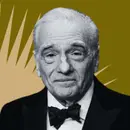


“You don’t accidentally end up with five wives.” — Mark Binelli on Martin Scorsese
We are filming in New York today, which is appropriate for a show about Martin Scorsese. Mark Binelli’s Just a Shot Away is out today, the first substantial biography of the great New York City film director. Binelli got no cooperation from Scorsese with the book, which isn’t really surprising given the author’s interest in the Scorsese family’s connection with organized crime. Binelli himself is more generous about the refusal. A big book about his life that he wouldn’t have had control over, he says, offered Scorsese no obvious upside. Control, of course, being the key word. Binelli directs Just a Shot Away, not Marty.
The surprising thing is how close the mob actually was to a working-class Sicilian-American family like the Scorseses. Not as a recreation of Goodfellas or even Mean Streets, but more as the mechanism by which an Italian family in Little Italy got a job in the garment district or settled a dispute with a neighbor. Binelli suggests that Scorsese’s father was not a gangster. But his uncle worked for one, a bootlegger and hitman who let the young Scorsese film part of his first feature on his roof.
Then the two obsessions. Films, which Scorsese could recall with a memory his friends called freakish, in an era before Google, YouTube or Wikipedia. And the church, which came relatively late in his adolescence — his parents were barely observant, and he only found Catholicism when the family moved back to Elizabeth Street. For Scorsese, of course, the cinema became the church and both his life and work are always a shot away from God.
What all this cost is the other half of the Scorsese story. Five wives, two daughters he was barely a father to, and a rock ’n’ roll style decade of drugs. It’s an astonishing history of one of America’s greatest 20th-century artists. And Binelli tells it all with the loving grace of both a wide-eyed fan and a sophisticated cultural historian. “You talkin’ to me?” De Niro’s Travis Bickle asks in Taxi Driver. Binelli suggests that Martin Scorsese has been talking to all of us for the last sixty years.
FURTHER READING
• Just a Shot Away: Martin Scorsese’s Life in Film (Metropolitan Books, 3 November 2026, 544pp). Binelli writes for The New York Times Magazine and is the author of Detroit City Is the Place to Be.
• The two documentaries Binelli wishes Scorsese had made more of: Italian American (1974), on his parents, and American Boy (1978), on his friend Steven Prince — drug procurer, bodyguard, roommate.
• Jonathan Taplin produced both Mean Streets and The Last Waltz, and has been on this show several times.
• Scorsese on Scorsese, from the other side: Italianamerican aside, the key primary sources Binelli drew on are archive recordings — including Scorsese and De Niro brainstorming the earliest version of Raging Bull.
ABOUT THE GUEST
Mark Binelli is a contributing writer for The New York Times Magazine and the author of Detroit City Is the Place to Be and the novel Sacco and Vanzetti Must Die!. He grew up in a Catholic family outside Detroit and lived for years in Scorsese’s old neighborhood, on the corner of Spring and Mulberry.
ABOUT KEEN ON AMERICA
Nobody asks more awkward questions than the Anglo-American writer and filmmaker Andrew Keen. With 3,000 episodes since the show launched on TechCrunch in 2010, Keen On America is a daily conversation about the ideas, books and arguments shaping the United States. New episodes every day.
00:00:00 Andrew Keen: Hello, my name is Andrew Keen. Welcome to Keen On America, the daily interview show about the United States. Hello, everybody. We are on the road today in New York City, a great cinematic town, rivaling perhaps my town, San Francisco. And perhaps New York City's most famous filmmaker is the subject of a biography that's out today by my guest, Mark Binelli. His book, A Shot Away [as spoken: Just a Shot Away]: Martin Scorsese's Life in Film, is the first meaty biography of the great man, Scorsese himself. Mark, congratulations on the book.
00:01:02 Mark Binelli: Thank you so much for having me.
00:01:04 Andrew Keen: Am I being too generous to Scorsese to describe him as New York City's most famous cinematographer [as spoken: filmmaker]?
00:01:14 Mark Binelli: No, I think that's wholly accurate. I would say, you know, he stands apart in so many things, including, you know, representing his hometown. I mean, he's so of New York City, and it permeates all of his work, even films that don't take place here.
00:01:34 Andrew Keen: One of the enlightening things about the book — and it's full of enlightening information, narratives about Scorsese's life — is how wedded Scorsese is, or was, to downtown New York. We're talking in Harlem, uptown, but the New York that Scorsese was born into is a very different New York. Mark, tell us about the world that Martin Scorsese was born into.
00:02:07 Mark Binelli: Sure. Well, one of the reasons that writing this book appealed to me at the outset was I used to live in his neighborhood, many years after he did. I was on the corner of Spring and Mulberry Street, right in Little Italy, just a few blocks away from where he grew up on Elizabeth Street. It's very, very different now. Anyone who's been there recently will know it's basically an extension of SoHo. But when Scorsese was growing up there, it was a really insular, you know, enclosed world — basically three blocks: Elizabeth, Mott, Mulberry, bordered on the north and south by Canal Street and Houston Street. So, you know, you're talking about this tiny, tiny area, but people — you didn't have to leave, essentially. And Scorsese himself, when he went just a few blocks west to NYU, he felt like he was in another world. It was a place where, block by block, different groups of Italians settled. So you had the Calabrians on one block, say between Prince and Spring. You had the Sicilians, where the Scorseses were from — that's Elizabeth Street. And, you know, it was of course a world that was completely controlled in many, many ways by the wise guys. One of his friends who I spoke with said that they used to joke about how they lived in occupied France, meaning that the wise guys sort of —
00:04:05 Andrew Keen: And the wise guys, of course, is a euphemism for the mafia. The book is a four-year labor. You've really done your footwork, Mark. There'll be headlines, I suspect, about the associations you make in the book between Martin Scorsese's father and the mafia. Was his dad a gang man?
00:04:30 Mark Binelli: He was not, but, you know, everyone was connected by just one or two degrees to the major mob families. So his father worked in the garment district, but he got the job through mafia connections. That's how they controlled the whole garment district; that's how you got those jobs. When there was a problem with a neighbor when they lived in Corona, Queens, he had to go to his sort of mafia connection, the guy he had a problem with had to go to his mafia connection, there was a parley, and then they solved the problem. His father's brother was much more involved in crime. He was a bootlegger. He worked for this notorious gangster in the neighborhood — his nickname was [unclear: "Chalutz"] — who, you know, was a murderer. He was a notorious hitman, but he also ran numbers and did other things. And Scorsese knew this man very well. He was the uncle of one of his best friends. And so his first full-length feature, which he made in college, Who's That Knocking at My Door — this guy [unclear] let him film part of it on his roof. So that was a surprise to me, how close he was to serious gangsters — capos, you know, like I said, killers. They were all around him.
00:06:09 Andrew Keen: Yeah. In a funny way, one might have expected it more of Coppola than Scorsese, because of course he made The Godfather. But —
00:06:20 Mark Binelli: Yeah, Coppola was very much a tourist in that world. His father, I believe, played in an orchestra, and he was from a very kind of middle-class, comfortable existence. And Mario Puzo, who wrote The Godfather, admitted later he never even met any mob guys. He just made it all up.
00:06:37 Andrew Keen: Yeah. And as you note in the book, De Niro as well, whilst he comes across certainly on screen as a tough guy, also had a much more bourgeois upbringing than Scorsese.
00:06:48 Mark Binelli: Although the interesting thing about De Niro that I learned was that, yes, he grew up in the Village. Both of his parents were in the arts, and so on the one hand he was raised in this very bohemian world, but he was really interested in Scorsese's world. He ended up befriending some kids on a playground — I spoke to De Niro very late in the game — he met some kids on a playground and started hanging out in that neighborhood. And eventually, when he was a teenager, he was hanging out at one of the social clubs there, a very mafia-frequented social club called the Alto Knights. A few years ago he made a film called The Alto Knights. But he told me funny stories about how the wise guys would sit around every week and watch The Untouchables, the old TV series [unclear], when it came out. They loved The Untouchables. And he was there as a teenager, and they sort of tolerated his presence. He said everybody got along. So he was not of that world, but — he wasn't an actor yet — maybe in an early kind of display of his talent at taking on other characters and blending in, he was definitely able to infiltrate that world.
00:08:08 Andrew Keen: I think we've been so richly immersed in that world through the movies of Coppola and Scorsese and others that it's very hard to separate fact from fiction, the world from cinema. And the world of Marty Scorsese that you write about is highly cinematic — maybe it's because you describe it in that way. His mother, for example, who of course does feature in some of his films, could have been a creation, if not of Hollywood, certainly of the movie world.
00:08:41 Mark Binelli: Oh yeah, she's great. If anyone has seen Italian American, his excellent 1970s documentary about his parents — she's so funny, and she's such a great talker. And you see, watching her, where he gets some of his storytelling abilities, his sense of humor. A lot of that comes from his mom, very clearly. But yeah, for the book I got hold of some great stories. They've been dead for a while, but some great stories that they told other people, through archives and recordings, that hadn't been told before. I mean, she was born on Elizabeth Street, grew up in that same world, and she witnessed murders — you know, a drive-by shooting.
00:09:39 Andrew Keen: And she's a good cook.
00:09:41 Mark Binelli: She's an excellent cook, yes. And —
00:09:43 Andrew Keen: Loved Marty. I know there are a lot of stories about his drug use in the book, but his parents, and certainly his mother, never quite believed that their dear son was capable of taking drugs.
00:09:55 Mark Binelli: No, I think — one of his ex-wives told me that they — they had already split up, but they had a daughter together, and so this first wife, Laraine, was concerned. She could see from afar that he was going through something, and there were lots of tabloid reports of him, you know, kind of falling apart. And she talked to his parents at one point, and his father especially, I think, said, "Oh, he's okay. He needs to blow off steam." In a way he was the golden boy. He was the younger son, but he was very sick when he was young. They were very protective of him and treated him accordingly.
00:10:44 Andrew Keen: Every kid these days, especially those who go to NYU — I know myself, because my son went there — wants to be a movie maker. The vast majority, of course, don't make it. Some who are lucky do. But one of the things that strikes me about your biography of Scorsese is that he deserved to make it. Here was a guy who was completely — in the way, at least, you present him — completely immersed in movies from the youngest age. He knew more about movies than anyone. Is that the defining quality of his life, the fact that this boy growing up in downtown New York fell in love with the movies, quite literally?
00:11:28 Mark Binelli: I would say it's a defining quality, for sure. And it's his ability — his friends at the time described an almost freakish ability to recall directors, scenes, stars, the years the movies came out. And this is in the '50s, the early '60s. You can't just look this stuff up on IMDb. You can't easily —
00:11:52 Andrew Keen: Yeah, and this was before the internet, before Google, before instant [unclear], before even video stores.
00:11:57 Mark Binelli: So imagine just watching a film once at the theater. In his case, he would watch and rewatch films when they would show them on television and sometimes replay them. There was one show in particular called Million Dollar Movie that would show the same film seven or eight times over the course of the week, so he would rewatch films that way. But short of that, unless you're buying ticket after ticket, you're not seeing the movie more than once. But he had this photographic recall of basically everything he'd seen, and he saw everything. So yeah, that is definitely a defining characteristic of him. It was a sort of daunting task for me approaching his life — certainly as a cinephile, but as someone who could never, ever, ever come anywhere near his level of cinephilia. So —
00:12:49 Andrew Keen: Yeah, I mean, the level is astonishing. In the early part of his career — before, again, the internet, before YouTube or Netflix — when he was living in Hollywood, he would have all-night movie parties where he would get hold of — it was quite hard to do — the original reels of movies that he fancied seeing. And every night when he was living with Robbie Robertson, he would have movie night. It was like an all-night cinema, except a personal one for Marty Scorsese.
00:13:19 Mark Binelli: Yeah, there was a former — he taught at NYU for a while after he graduated, and a former student of his who'd gone out to LA, and a couple of other guys, basically had this underground film rental club. They had gotten hold of lots of prints of movies. Studios back then were just throwing the prints away, especially some of these old B pictures, or you could buy them pretty cheap. And so he would ring up Robbie at the studio and say, "Hey, this is what we're going to watch tonight. What time are you going to be home?" It was sort of like they were a married couple. "I'm going to order pizza. Okay, you've got to be here by —"
00:13:58 Andrew Keen: Yeah, yeah. Pizza every night. Yeah, according to your book, anyway.
00:14:02 Mark Binelli: Yeah. And, you know, they were also partying, of course, doing a lot of drugs. There were women. But they liked to tease Scorsese about how he would bring women to the house and then bore them to tears by talking about old movies constantly. So —
00:14:21 Andrew Keen: Yeah. And you have this great anecdote in the film [as spoken: book] where Coppola comes over one night — and this was maybe at the nadir of the drug years — and he insisted that they get a chef, because they weren't eating enough. What was his musical — sorry, his movie taste then? I mean, as you say, he knew everything, so there's a remarkable eclecticism. But how would you define his taste?
00:14:46 Mark Binelli: It's a pretty catholic — you know, small-c catholic — taste. I mean, he loved lots of different types of movies. He grew up in the late '40s and throughout the '50s, his sort of prime moviegoing years as a kid, and he was seeing all of the major studio pictures back then. But then on television in New York City there was a program, I believe every Friday night or every Saturday night, where they would show old Italian films, so he would watch those with his grandparents. So he fell in love with the early neorealist pictures. And then he starts film school at the perfect time. It's 1960, so the French New Wave is just coming over here. Filmmakers like Fellini and [unclear] are doing some of the most interesting work. So he's seeing all these art films. NYU at the time was very documentary-focused, so he ended up seeing a lot of the really seminal documentaries from that period — the Maysles brothers, Frederick Wiseman. And then another big influence was the sort of grittier New York filmmakers who were just coming up, people like John Cassavetes, who was a huge influence. So I think that is one of the things that makes his work so interesting. He's able to synthesize all of these very disparate influences, and then they're filtered through his very unique sensibility — as we were talking about earlier, as this Italian American from this very enclosed world, with this religious upbringing, but also surrounded by violence at all times. And so his sensibility, combined with all of these different sorts of films that he loves — we end up with the Scorsese that we know.
00:16:50 Andrew Keen: You mentioned before that his love of movies was one defining quality of his life. What are the others?
00:16:55 Mark Binelli: I would say the church. An interesting thing I learned was that his parents were not particularly religious. I mean, they were Italian Americans, so they were nominally Catholic. But he actually grew up in Corona, in Queens — spent the first eight years of his life there. The family had come up on this very kind of rough block in Little Italy and had gotten a little bit of money. His father got the job in the garment district, so they moved essentially to the suburbs. Corona was still an Italian neighborhood, but there were houses and trees and grass. And those first eight years of his life, he didn't really go to church much. It wasn't until the father had some problems in Corona — some people say with a woman — that they had to return to Little Italy, and he started going to the parochial school there. That was when he was first exposed to Catholicism, and that became a huge, huge part of his life. I mean, he went to seminary briefly. And I think the theatrical elements of the Catholic Church in particular — it's sort of the —
00:18:30 Andrew Keen: Ceremonial. Yeah.
00:18:32 Mark Binelli: There's something very similar to going to sit in an old movie palace and wait for the curtains to open, or sitting in old St. Patrick's Cathedral, where he was going to church as a kid, and you look around at all the sort of Gothic trappings and the organ music and the incense. It's not so different.
00:18:54 Andrew Keen: And you have a memorable anecdote of when Marty recognized that he wasn't meant for the church. What was that, Mark? You can be frank.
00:19:09 Mark Binelli: I think you're talking about — yeah. He goes to seminary. It was ninth grade, essentially. He went to seminary for one year, he didn't last, and ended up going to a Catholic school. But years later, in a conversation with Paul Schrader, he admitted that he had a problem with — how shall I put this? — self-pleasure, let's say. Which, I guess, the fact that that was sort of tormenting him tells you how seriously he took his faith, and how oppressive the church was at the time.
00:20:02 Andrew Keen: Yeah, and it shows how effective church doctrine is when it comes to guilt. And there's a lot of guilt in Scorsese's life. The way you present it, he's married five times, many, many women, extreme drug use. He doesn't come across — maybe you'll disagree — he doesn't strike me as a particularly moral fellow for most of his life. A rather poor parent, for example; he barely existed for his daughter, as you noted earlier. How would you summarize Scorsese's morality, or absence of morality, in terms of how he's lived his life? Now he's in his 80s, so it's unlikely he'll change very much.
00:20:52 Mark Binelli: I think it was a constant struggle for him. I agree to an extent. He was a terrible father for the older daughters — the youngest, he's been much more present in her life. He would admit he was not a good husband or partner. You don't accidentally end up with five wives, I think. But with him, I think the reason we have Scorsese — the Scorsese we love, this filmmaker that we love — is because of his kind of monomaniacal focus on his career, his ambition, his overweening ambition to just make it, to get out of this sort of ghetto that he came up in, and to do what he just felt so driven to do. And that came at the expense of everything else.
00:21:54 Andrew Keen: So there's a kind of Faustian quality, almost, to his career.
00:21:57 Mark Binelli: To an extent, yeah. I think he's expressed regrets at the choices he made early in his life to not have as much of a relationship with his older daughters. And I think what you were saying about morality — it's interesting thinking of it through the lens of the Catholic Church, and specifically of Italian Catholicism, which I grew up in. I was raised Catholic.
00:22:31 Andrew Keen: Have you had five wives, Mark?
00:22:33 Mark Binelli: Sorry?
00:22:33 Andrew Keen: Five wives.
00:22:34 Mark Binelli: I have not had five wives. No, I'm still on number one.
00:22:38 Andrew Keen: I won't ask you about your teenage years.
00:22:41 Mark Binelli: But yeah, I went to Catholic school from kindergarten through 12th grade, so I think I understand it. And with Italians in particular, there's a heavy, heavy leaning on the confessional. You can sin, you can have fun, and at the end you'll be forgiven.
00:23:08 Andrew Keen: And that's the five wives. You can keep on starting all over again.
00:23:12 Mark Binelli: There you go. So, yeah.
00:23:16 Andrew Keen: Let's get, then, to the films. I mean, you wouldn't have written the book if he was just a womanizer and a guy who liked to party. You mentioned a couple of his earlier student films. One of the things that strikes me about your narrative — I hadn't realized it, and it's an essential book, by the way, Mark, you've done a remarkable job — was that he was always catching up with his contemporaries, particularly Coppola and De Palma. So even if he was first in a way, in another sense he was last. Is that a fair way of chronologizing his career in the context of the 1960s and this emergence of a new-wave American cinema?
00:24:04 Mark Binelli: Yeah, especially early on, I think he felt like he was scrambling to keep up with his peers. I mean, Coppola was a couple of years older than those other guys, and he was a sort of weird prodigy, where he was making films —
00:24:17 Andrew Keen: And of course he went to USC film school [ed.: Coppola studied film at UCLA], so he's the West Coast one.
00:24:27 Mark Binelli: Yeah, and I think he was still in college when he already got a studio contract — by his senior year or something crazy like that. So Coppola was the sort of older-brother figure to a lot of them, but De Palma was a peer. Scorsese got to know him at a summer workshop at NYU, and he quickly took off. He made a couple of countercultural comedies in the late '60s that did really well. And Scorsese just saw people around him making it, and he felt kind of stuck. He got married very young, he was just finishing college. He had so much promise early on. His student shorts were winning awards. He won a Producers Guild award, they had him flown out to Los Angeles, so he's sitting on this dais with, like, Alfred Hitchcock and Cary Grant and all of his idols.
00:25:30 Andrew Keen: Yeah, you've got this great anecdote about Cary Grant trying to encourage him to make inappropriate remarks.
00:25:37 Mark Binelli: Yes, yes. And so you can see — how old was he at the time, 24 or something [ed.: Scorsese was 22]? You get a taste of that and you're like, okay, I made it, I'm on my way. And then it doesn't immediately happen. Just different things. He was supposed to have a sort of internship, and the studio went bankrupt. Then he decided to go back to graduate school and make a feature as his graduate thesis, and he was really being cheered on by his mentor at NYU, Haig Manoogian. They thought, okay, we're going to take the golden boy, the prodigy here, and we're going to make a proper feature film. And there were just a number of setbacks with that — they couldn't sell it — and before you know it, the decade, the '60s, is almost over. And at that point he's working on Woodstock, and he kind of starts thinking he's the co-director, and really making his presence known to an obnoxious degree, by his own telling, and he's fired from that project. And then he goes out to LA to work on some films that also didn't really work out. It wasn't until Mean Streets, really, that his promise was fulfilled — and even that film didn't do that well at the box office.
00:27:01 Andrew Keen: Yeah. You note at the beginning of the book that another defining feature of Scorsese's life is his ability to blow himself up, and that was certainly the case on the Woodstock documentary, where, as you say, he got fired, and it turned out to be one of the most successful music documentaries of all time. Mean Streets' producer was Jon Taplin, a friend of mine who's been on the show many times before. How essential is Mean Streets in the Scorsese narrative?
00:27:32 Mark Binelli: Oh, I think it's hugely essential. The student film he made that eventually did get distribution, Who's That Knocking at My Door, was almost a trial run for Mean Streets, but it was very self-consciously arty, and it just doesn't quite work. There are really brilliant moments, but it doesn't quite work. The next film he makes, Boxcar Bertha, is for Roger Corman, the famous B-movie producer and director. And Boxcar Bertha also has some moments, and Scorsese does a lot with a little, and it's very interesting to watch. It's important for what's to come, but it's also ultimately a C-level B movie. Mean Streets is really his first truly personal film that works, and it's very autobiographical. It's set in 1963, and it follows Scorsese and his friends — the characters are all amalgamations of Scorsese and different friends of his, and all the events are basically real. And like I said, the film didn't break records at the box office, but enough people saw it and liked it to recognize that this was a major talent, and they continued to give him work after that.
00:29:09 Andrew Keen: Yeah. One of the other things I didn't know about Scorsese's life was how close he was to Harvey Keitel. In some ways they grew up together. Keitel's background was a kind of Jewish version of Scorsese's Sicilian working-class background. How essential do you think Keitel is to Mean Streets?
00:29:32 Mark Binelli: I think he's quite essential. He was originally cast in that earlier student film I mentioned, Who's That Knocking. And like you said, he grew up in Brighton Beach in Brooklyn, in a sort of rough Jewish equivalent of Scorsese's neighborhood. He was much more of a tough guy than Scorsese in real life, and he plays the sort of Marty avatar in both those films. And Mean Streets in particular — he and De Niro together are just electric. The improvising they do together is like nothing else to that point. That's one of the things about Mean Streets: the way that he works with actors really comes through, I think, for the first time in that film — what he allows his actors to try. And what comes out of that is kind of amazing for such a young filmmaker.
00:30:53 Andrew Keen: And of course, the relationship that he will always be best known for is the relationship with Robert De Niro. They met as youngsters; they grew up together. His next film [ed.: Alice Doesn't Live Here Anymore (1974) came between Mean Streets and Taxi Driver], of course, is perhaps still the best known of all the Scorsese films: Taxi Driver. Unforgettable De Niro. I'm sure you've watched the film many times, Mark. When we look back at that film, or when we rewatch it, was Scorsese's genius manifested in the way he allowed De Niro to basically portray the character he wanted, with that famous hairstyle that I think he wandered into the studio with one day?
00:31:41 Mark Binelli: You know, a lot of it is in the script. But yeah, he's very generous with actors, and De Niro was completely locked into this role. He had himself attempted a script about a sort of similar Bickle-ish character that really went nowhere, but when he read the script he felt like this was what he was trying to do, and he understood it quite well. And then you had Paul Schrader, the screenwriter, who had kind of lived it in his own way. He was living out of his car and drinking peach schnapps or whatever it is that De Niro is drinking in that movie, and having extremely dark thoughts. And Scorsese himself could really understand the darkness at the heart of that. One of the many interesting things about that film, I think, is how depressingly contemporary —
00:32:49 Andrew Keen: Right, I was going to say. I'm not sure if it was meant to be in this sense, but there's a remarkable prescience to this film, given the psychotic quality of American life and the number of lunatics running around trying to assassinate one politician or another.
00:33:06 Mark Binelli: I mean, it could have been made yesterday. You think about all the sort of incel stuff that's happening. It's really very prescient.
00:33:20 Andrew Keen: And of course Jodie Foster also was controversial in that film — the sexual element. I mean, it's a shocking film, isn't it? Still today.
00:33:28 Mark Binelli: It remains shocking in a way that few — you watch something like The Texas Chain Saw Massacre from around that same period, and it's kind of funny, almost, at this point. But Taxi Driver remains genuinely shocking for all sorts of reasons, including how young Jodie Foster was in playing the prostitute character.
00:33:51 Andrew Keen: And I think, in a way, Scorsese's work has certainly maintained a contemporary relevance, which, say, De Palma's mostly hasn't. Is that fair?
00:34:00 Mark Binelli: Sorry?
00:34:01 Andrew Keen: Scorsese's work seems to have — certainly the early work seems to have maintained a contemporary relevance that some of his contemporaries, like De Palma, for example, haven't.
00:34:14 Mark Binelli: I think De Palma has his fans. I'm not as big of a De Palma fan as I am a Scorsese fan, but people love those films. But I think the difference between Scorsese and all of his New Hollywood peers — pretty much with the exception of Spielberg, I would say — is he's still vital today. I mean, he's finishing a film right now with DiCaprio. His last film, Killers of the Flower Moon, was excellent. Spielberg is really the only other guy from that period. I mean, Paul Schrader is still making films; they're much smaller, more modest. But De Palma, Coppola, a lot of the others have really struggled to even get funding, and the work has not been, in my opinion, consistent. Whereas Scorsese's career over all these decades remains kind of sui generis. There's not really anything else like it.
00:35:15 Andrew Keen: Which is remarkable in a way, because, as you note in the book, he managed to piss off a lot of people in Hollywood — certainly not Spielberg, in terms of his — I don't know whether it's fair to call Spielberg a goody two-shoes, but certainly Scorsese didn't edit himself when it came to dealing with Hollywood executives of one kind or another.
00:35:39 Mark Binelli: No. And the other difference is Spielberg — I think that was probably just his taste as well — was very, very happy to make these huge crowd-pleasing films that were making the studios millions and millions of dollars. Scorsese wasn't doing that. It's funny you mentioned Taxi Driver — it was a big hit against all odds. It did remarkably well. His next film, New York, New York, was expected to be a huge hit and was one of the big bombs of his career.
00:36:20 Andrew Keen: And that was, in some ways, I think, also the nadir of his life — his flirtation, or affair, with Liza Minnelli, and all the drugs. It wasn't the best period of his life.
00:36:31 Mark Binelli: No, no. And his marriage was falling apart. He was having an affair with —
00:36:36 Andrew Keen: Which marriage?
00:36:38 Mark Binelli: Yeah, this was number two. He was having an affair with an assistant, doing so many drugs. It was a crazy, crazy time. And the film is a weird — that second wife, Julia Cameron, said they used to joke about how the film was the most expensive home movie ever made, because it was basically their relationship on screen, but it's like, this is $20 million.
00:37:06 Andrew Keen: Mark, I don't want to put words into your mouth, but my reading of the book is that you argue that if he does have a masterpiece, it's Goodfellas. Is that fair?
00:37:19 Mark Binelli: I would call that his masterpiece, especially up to that point in his career. It's a brilliant summation of everything he's done up until that point. He uses all of the techniques of the French New Wave that influenced him really early on. He uses all the sort of naturalism and his generosity with actors. And he finally allows himself to go deep on the sort of mafia lore that he knows better than anyone — because of the way he was raised, I think, to never talk about it, to be very careful about naming names or revealing anything, he really shied away from it. I mean, in Mean Streets, yes, there was a mafia character, but it was mostly about the guys hanging out in the neighborhood. It wasn't until Goodfellas that he finally allowed himself to go deep into that world that he knew as well as Henry Hill did. I mean, he wasn't out there as an accomplice to murders, but he was one degree of separation from people who were. So he knows that world so well, and can get the details so perfectly — from the shirt collars that they're wearing to the cars they would drive. Lorraine Bracco said at one point that she wanted to have her character wear a pair of jeans, and he said, no, no, no, a mafia wife would never, ever wear jeans. And then I think they finally settled on white denim. But yeah, for my money, that is the summation of his career up to that point. It's like everything coming together in a perfect way. And you could argue — I considered stopping the book at Casino — you could argue that he goes one step further with Casino and really takes it even further. I love that film as well. But for me, Goodfellas is pretty much a perfect film.
00:39:30 Andrew Keen: It's a very sad film, isn't it? Much sadder than Mean Streets, even if Mean Streets is grittier.
00:39:36 Mark Binelli: It's funny — it is sad, but he allows himself — [unclear] — the Ray Liotta character is clearly an antihero, and he gets his comeuppance at the end, but Scorsese also very clearly loves him and can't help but give a little wink at the end. I mean, it ends with Sid Vicious's version of "My Way," and that's not a song that is condemning everything we've seen up until that point. It's Scorsese admitting that doing drugs and that whole lifestyle that Liotta led and had to leave behind — the lifestyle that Scorsese also led and had to leave behind — he's admitting it's a lot of fun, too. There's something appealing about it. So yeah, it's complicated.
00:40:52 Andrew Keen: Mark, what about the politics of Scorsese? He doesn't strike me — certainly in the book, you don't present him as a strongly political figure. Can one make some generalizations about the politics of Scorsese's cinema?
00:41:12 Mark Binelli: One thing — you're right, he's not overtly political. The one film, one of his shorts in college that he made in '67, The Big Shave, is a very clear sort of anti-war film. Short of that, from there up until, I would say, Killers of the Flower Moon, he does not wear his politics on his sleeve at all, not in the films. One interesting thing about him, though, is that, again, comparing him to his peers in the New Hollywood — Coppola, De Palma, George Lucas, Spielberg — he's the one person who's really from a working-class background, and that, I think, comes through. So there's a kind of innate politics to representing that world, even if you're not advocating for specific issues or making an issue movie. The fact that he knows that world so well is, I think, notable.
00:42:30 Andrew Keen: It's astonishing enough that he made so many feature films. The other thing that most people who are not so familiar with Scorsese's work — is that he's also perhaps the leading documentary filmmaker of rock and roll. His movie The Last Waltz, which was also produced by Jon Taplin, is a masterpiece. Is this in parallel, Mark, with Taxi Driver and Mean Streets and Casino and all the other movies, or is it almost like a separate life?
00:43:09 Mark Binelli: No, it's very much — I mean, interestingly, when he went to film school, film school was kind of a new thing at that time. There was basically UCLA and USC out in California, and, being where they were, they were much more plugged into the studios — you could see a way into that world. NYU was seen as the sort of artier, grittier, more vérité, documentary-focused school at that time. And so he came up really steeped in that, and worked on Woodstock, did a lot of editing. A lot of his peers went into the documentary world. And it's a little sad to me that he didn't follow through on this, but he had this idea early on to make lots of documentaries. He's fired from Woodstock, but then he ends up doing Italian American, about his parents, and another great short documentary called American Boy, about his friend Steven Prince — a very interesting character: drug procurer, bodyguard, roommate. It's a great film if people haven't seen it. And then, as you mentioned, he makes The Last Waltz, which is really one of the great, if not the great, concert documentaries. But he had plans to make other short documentaries along the lines of Italian American and American Boy. He talked about maybe doing one about a pimp — almost profiles, almost like sort of magazine profiles — and he just never, unfortunately, really followed through on that. Later on he did a really nice one about Fran Lebowitz. And then he did some other great rock documentaries — a couple of Dylan documentaries that I think are fantastic. [unclear] in particular, I think, stands out. But I wish he'd made more documentaries.
00:45:17 Andrew Keen: In the book you spend a lot of time on his curious relationship with Robbie Robertson, the iconic figure in The Band, one of the great figures in rock and roll history, the ultimate rock and roller in his lifestyle. The way you present him, there's certainly an argument to be made — is Scorsese a representative of the merging of the celebrity of the '60s music world and the movie world?
00:45:50 Mark Binelli: To a degree. I mean, he's the sort of [unclear] boomer, in a way. He's technically not a boomer — he was born in '42 — but his '60s really mirror that ascendance of the rock and roll world and lifestyle, culminating in Woodstock. But then he comes out to LA, and one of the first projects he works on is editing a rock film called Medicine Ball Caravan. And then, yeah, when he fell in with Robbie Robertson, initially just to make this concert documentary, The Last Waltz, they immediately found each other simpatico. They just hit it off. And when their marriages both kind of fell apart around the same time, they ended up becoming roommates, and then brothers in arms and in mischief. So yeah, it was a time when film directors were becoming sort of like rock stars. But then he ends up being a roommate with the real thing, and he gets a quick lesson in how much farther you can go in that sort of excess.
00:47:14 Andrew Keen: Is there a nostalgia, Mark, to this book — in the career of Scorsese, which is not possible to replicate these days, and in what you write about? Maybe not quite as sad as Goodfellas, but is there a sadness to this book in the way we think about contemporary America?
00:47:38 Mark Binelli: To some degree, I guess. Especially considering the state of the motion picture business these days — how fragmented it is, how difficult it is to get people to go to theaters, how much the sort of superhero movies, IP [unclear], have come to really dominate what's made. It's very difficult to think of a major studio releasing a film like Taxi Driver or Raging Bull.
00:48:12 Andrew Keen: Although it could be done on the internet. I mean, you could certainly put it on YouTube, or even, conceivably, Netflix.
00:48:19 Mark Binelli: Sure. And that's what — The Irishman was made for Netflix, and he did Killers of the Flower Moon with Apple. But yeah, I'm certainly nostalgic when I read about his moviegoing in the '50s and how there were all these different theaters in New York City that are long, long gone — all these revival houses. You could just walk up and down 42nd Street and see double, triple features. That makes me nostalgic, not having experienced it firsthand. So, yeah.
00:49:03 Andrew Keen: You didn't get Scorsese's agreement to sit down with you. So this book is highly researched — I'm guessing very reliable. Is there anything missing, though, given that you never had the opportunity to talk to Marty himself?
00:49:22 Mark Binelli: I mean — yeah, his voice. His voice firsthand, from him, is missing. I would have loved to have him for the book. I did get recordings of him telling stories that nobody has heard before. Recordings of Isabella Rossellini —
00:49:40 Andrew Keen: Daughter, of course, of Roberto and —
00:49:43 Mark Binelli: Third wife. I got recordings of him and De Niro brainstorming at the earliest inception of Raging Bull. So I have a lot of excellent [unclear], stuff like that. But yeah, I would have loved to sit down with him. I did approach his camp, and for, let's say, over a year, never got a no, but I never got a yes. It's kind of the very classic Hollywood game, and ultimately they said no — which, from his point of view, I definitely understand. It's a big project about his life that he would not have had control over, so he probably didn't see a big upside to it.
00:50:30 Andrew Keen: The book is called A Shot Away [as spoken: Just a Shot Away]. If there was one question, Mark, that you could have asked Marty that you didn't get the opportunity to, what would it be?
00:50:39 Mark Binelli: Oh wow, that's a great question. Probably — I have a few more questions about his family. One of the sort of black holes for me is his relationship with his brother. His brother apparently — from some information I got — was very abusive to Scorsese when they were kids, would beat him up a lot after school. And I know they didn't have a great relationship as adults. But I'd love to just hear more about his brother.
00:51:16 Andrew Keen: I think we all would. The book is A Shot Away [as spoken: Just a Shot Away]: Martin Scorsese's Life in Film. It's out today. Thank you so much.
00:51:24 Mark Binelli: Oh, thank you for having me. It was great.
00:51:26 Andrew Keen: Hi, this is Andrew again. Thank you so much for listening or watching the show. If you enjoyed it, please subscribe. We're on Substack, YouTube, Apple, Spotify, all the platforms. And I'd be very curious as to your comments as well — on what you think of the show, how it can be improved, and the kinds of guests that you would enjoy hearing in future. Thank you again.