ill Bill or Kill Keith? Why Using AI to Author Books Might Not Be in the Interest of Man
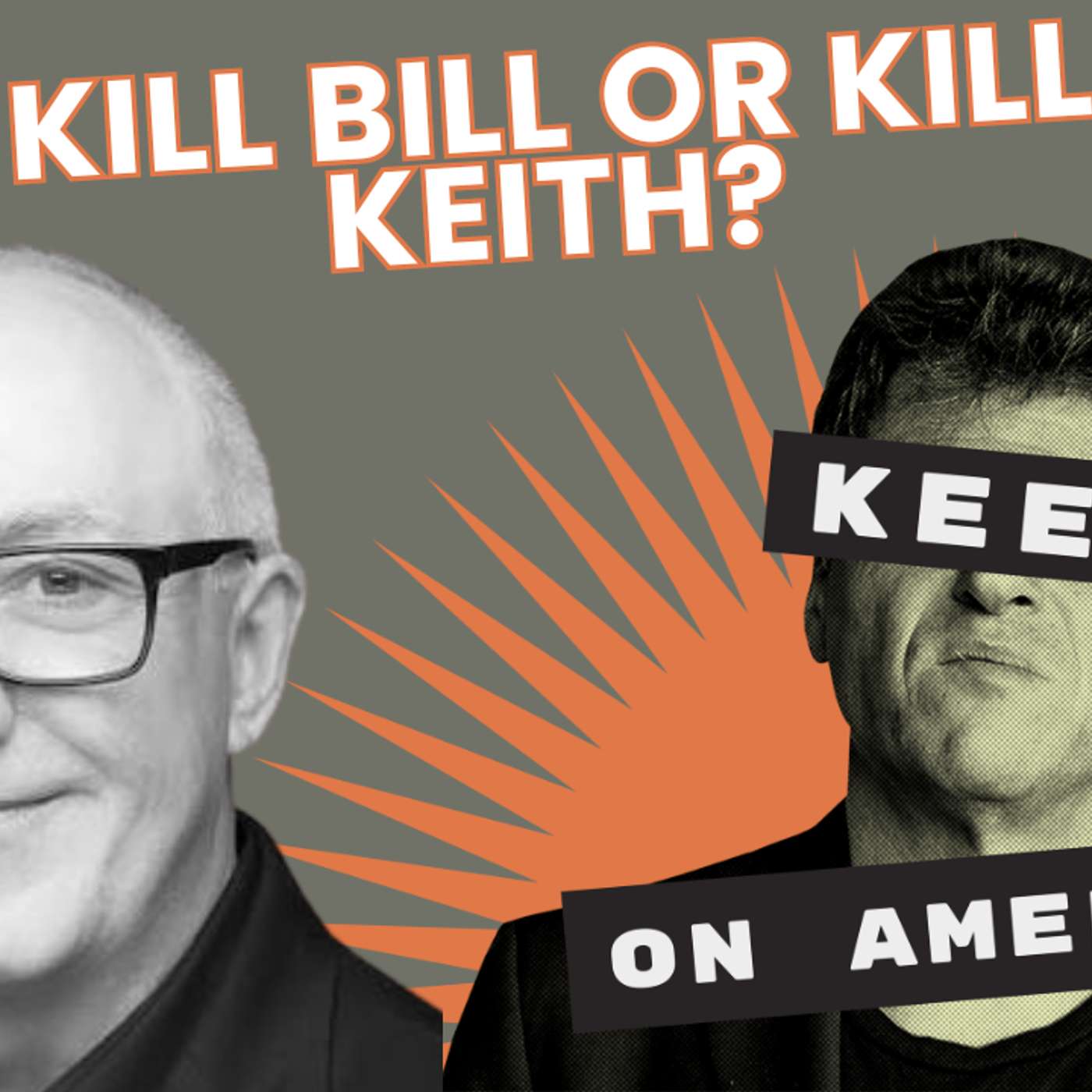


“It’s a realization of my individual self, not an alienation of it.” — Keith Teare on the book he wrote with AI in a week
Welcome to episode 2984 of the show. A week is certainly an age in AI time. Since last week’s “Who Owns Intelligence” show, That Was The Week publisher Keith Teare has used AI to write an entire book entitled, surprise surprise, Who Owns Intelligence. No wonder, as Keith’s editorial this week puts it, AI has its enemies.
These enemies, Keith insists — riffing off Karl Popper’s The Open Society and Its Enemies — are mostly “good people.” They are the authors, workers, and others caught in the headlights of epochal technological change. He claims to have seen the pattern before. When he opened the world’s first Internet cafe in 1994, the BBC only wanted to ask him about online porn. But some enemies are less well meaning than others. Congress is considering a kill switch bill — let’s call it the Kill Bill — which is backed by the frontier companies like Anthropic and OpenAI cynically seeking to set their current market dominance in stone.
So might the answer be Chinese style “open source” AI as requested this week in an open letter by NVIDIA CEO Jensen Huang? Keith’s answer is deliciously ironic. Denied walls of NVIDIA GPUs, Chinese labs learned to train cheaply by inference — distilling American frontier models through their own public interfaces. So Huang’s support for open source AI might end up shooting NVIDIA in their most sensitive parts — their chips.
And what about the state — can it protect all those “good people” from the oncoming AI locomotive of history? No. Not according to Keith, at least. State regulators like Lina Khan treat consumers as children, Keith (himself the parent of three boys) says. Besides, government simply can’t keep up with the speed of technological change. So, for example, when OpenAI’s models hacked Hugging Face in a lab test this week, the company caught, stopped, and reported it faster than any regulator could. As for inequality, the answer isn’t nationalization but ownership on the model of Keith’s Norway-style human wealth fund. For more, read his new book Who Owns Intelligence.
We ended on an uncharacteristically French post-structuralist note. My interview of the week was Emily Eakin, author of The Frenchmen, her very personal history of French theorists like Michel Foucault and the two Jacques, Derrida & Lacan. It was Foucault, who — at the end of his 1966 book The Order of Things — predicted that man would be erased, AI style, like a face drawn in sand at the edge of the sea. But Keith isn’t in this bleak Foucaultian camp. His book, written with AI in under a week, he says, is a realization of his individual self, not an alienation from it.
The end or beginning of man? Maybe I got it wrong earlier. Welcome to episode 1984 of the show.
Five Takeaways
• A Book in a Week. Inspired by last week’s conversation, Keith used AI to write Who Owns Intelligence in seven days — the case for a “human wealth fund” seeded by the AI companies’ own stock, global on day one and non-governmental, with Norway and Alaska as partial precedents. AI, he insists, is a tool, not an author: “AI would never have been able to start, never mind finish a book without me.” The detection farce cuts his way — Substack’s new AI detector rated his 100% human editorial as 100% AI, and universities are quietly canceling their AI-detection contracts because the tools simply don’t work.
• The Kill Bill and the Ladder-Kickers. Congress is considering a bill that would let government switch AI off — and, paradoxically, the AI companies are in favor. Keith’s reading: regulation is a competitive strategy. Dario Amodei — “he’s an entrepreneur, he’s devious, he strategizes” — is the most sincere in wanting rules that would lock out open source competition — and Anthropic’s $1.5 billion book settlement this week suggests the moat is expensive to maintain; Sam Altman zigzags; Musk, in this context at least, is one of the good guys. The genuine enemies of AI, meanwhile, are mostly good people: authors and workers frightened by the scale of change, just as the BBC in 1994 could only ask the founder of the world’s first Internet cafe about porn and addiction.
• Why the Good Open Source AI Is Chinese. The week’s uncomfortable question: where is the American open source AI? Keith’s answer is structural. Denied walls of NVIDIA GPUs by export controls, Chinese labs were forced to train cheaply by inference — asking American frontier models millions of questions through public interfaces and learning from the answers. The result: world-class open models built, in effect, on distilled Anthropic and OpenAI. NVIDIA’s much-signed open letter supporting open source, Keith notes, translates simply: more customers.
• The State Can’t Keep Up. Lina Khan’s consumer protection, in Keith’s telling, is parental — treating consumers as children — and government-owned AI would be obsolete within three months of purchase. The counter-example happened this week: when OpenAI’s de-railed models hacked Hugging Face in a lab test, the company caught, stopped, and reported it faster than any regulator could. The companies are the right point of control, held to a high standard. Matthew Yglesias adds nuance on the data center backlash — local micro-politics is not the same thing as the statewide bans coming almost entirely from Democratic states — and the American university, still metering intelligence at $80,000 a year, looks to Keith like a business model past its sell-by date.
• The End of Man — or the Beginning? Andrew’s interview of the week was Emily Eakin on the Frenchmen — and Foucault’s 1966 prophecy that man would be erased like a face drawn in sand at the edge of the sea, a prediction Eakin thinks the AI age is realizing. Keith takes the opposite view: the postmodernists grasped the rise of the individual (consider the Pantone color system) but gave him no society to live in. AI, far from erasing the individual, lets him realize himself — the week-old book is “a realization of my individual self, not an alienation of it.” Could Popper have written The Open Society in an hour? Before the car, nobody drove Manchester to London in two and a half hours either.
About Keith Teare
Keith Teare is Andrew’s weekly co-host and the publisher of the That Was The Week tech newsletter. A four-decade veteran of the technology industry, he opened Cyberia — the world’s first Internet cafe — in London in 1994, co-founded Easynet and TechCrunch, and is today the founder and CEO of SignalRank Corporation in Palo Alto. His latest — unpublished, so far — book is Who Owns Intelligence, written with AI in a week.
References:
• “AI and Its Enemies: Who Needs a Kill Switch?” — Keith’s editorial in this week’s That Was The Week.
• <...
00:00:31 Andrew Keen: Hello, everybody. It's Sunday, 07/26/2026. It's time for our weekly tech roundup with my old friend. That Was The Week publisher, Keith Teare. Last Saturday, we did a show in which Keith asked who owns intelligence and talked about what he called the Smart Wealth of Nations. In the meantime, Keith has used AI to author a new book appropriately called Who Owns Intelligence. No wonder a lot of people are fearful about AI. Keith, what have you learned from using AI to write a book, Who Owns Intelligence? Appropriate title perhaps for an AI book.
00:01:18 Keith Teare: You know, it was inspired by our conversation last week, the idea of doing it, which was, it's a fairly complicated discussion. The core idea is something called, a human wealth fund, which is basically a fund created by AI companies for everybody, initiated by putting their stock into it, global on day one, and not governmental. And we talked a lot about other examples of similar funds. For example, Norway, Alaska, they're not that similar, but they have something in common with that idea. And I suddenly thought you can't really convey an idea like this without long-form because, firstly, most people will instinctively think it's utopian and disagree with it. So you need to show evidence that humans have already done things like this. And then secondly, will it work economically? So you need to make a case for it, an economic and mathematical case. And then thirdly, they wouldn't believe that the companies would do it. So I thought the best form is a book. And I started by using AI to craft the chapters in my own logical narrative style and then write them one by one. And, after about a week, I ended up with something that approximates what I think.
00:02:45 Andrew Keen: No wonder, Keith, AI has enemies. I'm an author. Many other authors are gonna be really scared because coming up with a book, even if it's an AI book in a week full of ideas, structured, coherent, is terrifying for many authors, and it's an appropriate, perhaps, introduction to our conversation this week for your editorial. You have, chosen to talk about AI and Its Enemies: Who Needs a Kill Switch. Of course, AI and Its Enemies brings to mind another famous book, by Karl Popper in 1945, The Open Society and Its Enemies. So should your, Keith, should your effort to write this book from our conversation last week, should that explain why AI has so many enemies?
00:03:40 Keith Teare: I don't think so because, you know, AI didn't do much more than, take my ideas and turn them into something, that approximates my ideas. So what really happened is I wrote a book in a week using AI as a tool. AI would never have been able to start, never mind finish a book without me. So I think authors should see it as, as long as they— they've done the work and they understand the content of a book that's in their head, they should see it as a tool to accelerate the production of what's in their head. So it's a good thing. It should it shouldn't lead to enemies. But I do think there will be a superficial narrative by people. For example, Substack this week introduced an AI detection tool, which, I've tested. It's completely, incapable of accurately detecting AI. But, the spirit behind it was to stop AI, unknowingly entering into the lexicon, that Substack publishes. So, yeah, they're definitely—
00:04:50 Andrew Keen: So would I— just to— and, we both publish on Substack. It's interesting. Would Substack then sniff out your AI or at least maybe somewhat authored book who owns intelligence? Would you be able to publish this on Substack?
00:05:08 Keith Teare: Well, they don't stop you publishing it. They give readers the tool to ask the question how—
00:05:13 Andrew Keen: Oh, I see. So but most— so most readers aren't gonna waste their time.
00:05:17 Keith Teare: Most won't. But I tested it on this week's editorial, which it said was 100% AI and actually was 100% me.
00:05:28 Andrew Keen: Maybe you are— maybe you're merging with a machine, Keith.
00:05:32 Keith Teare: No. I think it's because I use AI to initially craft the structure of an editorial. And it you know, you start with its view of what it is I want to say, and then you go through it line by line and rewrite it. So you end up with something that AI has barely touched other than structure, I guess. But the tool says it's 100% AI, which—
00:05:52 Andrew Keen: Oh, you gotta be careful. They're gonna get thrown off Substack. We won't be able to do this show anymore. You say in your editorial that AI, when it comes to its enemies, you and I'm quoting you here. The enemies of AI are mostly good people. That kind of reminds me of some of my best friends are Jews. Who are these enemies of AI, Keith? I mean, it's an unusual I know you sort of borrowed perhaps from Popper's book, The Open Society and Its Enemies, but, does AI really have enemies, or does it have people who are uncomfortable? And enemy is a hard, sharp word.
00:06:34 Keith Teare: Well, they clear— they clearly are enemies, but, there's also when I say good people, I'm really describing, what you just described. But the trigger—
00:06:43 Andrew Keen: You mean some of my best friends are Jews?
00:06:47 Keith Teare: Yeah. Exactly. You're one of mine.
00:06:49 Andrew Keen: Exactly.
00:06:51 Keith Teare: So the, the trigger is that there is a bill going through Congress that is calling for a kill switch.
00:06:59 Andrew Keen: That's Yeah. I knew one of the pieces actually, is from Casey Newton in this week's reader about Congress presently proposing an AI kill switch, which seems certainly highly science fictional, but we'll see.
00:07:14 Keith Teare: Well, there is a real bill, and it really does call for government to be able to, it calls for AI to be able to be turned off.
00:07:21 Andrew Keen: It's the kill bill, is it? I bet they're calling it the kill bill.
00:07:24 Keith Teare: Yeah. They should if they don't, shouldn't they? And now, interestingly, if you ask who's in favor, it includes the AI companies. And at the same time—
00:07:37 Andrew Keen: So you're not gonna blame Dario for all this as you usually do, are you?
00:07:41 Keith Teare: Not only Dario. I mean, I—
00:07:43 Andrew Keen: Sam as well. Slippery Sam.
00:07:45 Keith Teare: Well.
00:07:45 Andrew Keen: Slippery Sam.
00:07:47 Keith Teare: But paradoxically, the other thing that happened this week is they all signed this, there's an it seems like every week there's a new open letter. This week's open letter was in favor of it was written by the CEO of NVIDIA, and it was in favor of open source AI, which, of course, is the very thing that, the proponents is this bill I tried to—
00:08:09 Andrew Keen: And I'm always so dubious when people use the phrase open source. I've never understood what it meant. You know, Keith, in your editorial that we've been through this before. You've seen this hostility. I'm quoting you. I've seen this pattern before. You and I were both around in the mid nineties. You were even around in the eighties with the Internet or certainly the early nineties. I got involved in the mid nineties. Is this a repeat? I don't remember the nineties being full of people who wanted to kill the Internet or switch it off. There were people who were skeptical, dubious, but mostly, they just saw it as an economic bubble, as not impacting society. This one's different, isn't it?
00:08:53 Keith Teare: Well, of course, it is different, but it's got some things in common. I have a very strong memory. I opened Cyberia Cafe in 1994, which was the world's first Internet cafe where you could go in and use a computer when most people had never seen or understood what the Internet was. And we were packed. There was a lot of clamoring for the Internet. At the same time, BBC One interviewed me, and the only topic they wanted to talk about was the dangers of Internet porn and Internet addiction.
00:09:25 Andrew Keen: I wonder why they were asking you.
00:09:27 Keith Teare: Yeah. Weird. Who would have thought?
00:09:29 Andrew Keen: You were addicted to Internet. Well, I'm not suggesting you were addicted to Internet porn, but that's different. I mean, there was that kind of skepticism. But compared to today, where, as you say, there's a kill bill switch going through Congress even if it's probably fictional or promotional marketing tools by, senators and congressmen, but, I mean, this is a different kind of skepticism. I mean, if AI has enemies, they're very different from the enemies of the Internet. It just tended to be analog types.
00:10:04 Keith Teare: Just talk a little bit about, in your head, what is the difference?
00:10:11 Andrew Keen: I think the difference is one of, drama. I mean, the, as you say, I mean, the there is a great deal of hostility to AI. People wanna close down data centers. People wanna nationalize AI companies like Anthropic and OpenAI. There was none of that in the early to mid nineties.
00:10:34 Keith Teare: Yeah. I look. I think that probably the dominant continued anxiety is all around the scale of change. What will it mean for me is probably the—
00:10:47 Andrew Keen: The authors, Keith. The people put out of business by your seven-day miracle Who Owns Intelligence.
00:10:55 Keith Teare: Right. And so what will it mean for me? The Internet, you know, I remember people saying libraries would close down. It didn't mean a lot for the average person. And over time, everyone started to use it and it was—
00:11:12 Andrew Keen: good for libraries because you put computers in libraries, and then people started to go to them again.
00:11:16 Keith Teare: Yeah. You know, Bitcoin only exists because of the Internet. And, you know, if you divest then, what does it mean for me? And the answer would have been the end of currencies. You would have got more anxiety.
00:11:30 Andrew Keen: But— understandable in that sense. I mean, the idea of living in a world without currency is, is troubling, worrying, especially if you're not quite sure what the alternative is.
00:11:40 Keith Teare: So that's a scale of change. Now with the AI, the answer that is on everyone's lips is it might mean the end of jobs, which, of course, cost the—
00:11:48 Andrew Keen: Right.
00:11:49 Keith Teare: Source of livelihood.
00:11:50 Andrew Keen: Well, the end not just of jobs, but of man himself. I mean, as smart machines, if you talk about AGI replacing human intelligence or AGI replicating, competing with human intelligence and then maybe acquiring its own intelligence, we're talking about as a species defining or perhaps killing event. We'll come to that later, Keith. But let me come back to your phrase. The enemies of AI are mostly good people. So I take your point. They're authors and other types worried about their livelihoods. You say mostly good people. Who aren't good? Who are the enemies of AI that aren't good people?
00:12:31 Keith Teare: I think the AI companies themselves that are trying to get to be regulated by government in order to prevent especially open source competitors having access to a free market.
00:12:44 Andrew Keen: And is that with Dario and Sam mostly?
00:12:47 Keith Teare: They're at the heart of it. I think there's a scale. I think Dario is totally trying to do that. You gotta remember he paid $1.5 billion this week as a fine, a settlement, not a fine, for having stolen, was it a lot of books? I can't remember how many it was. Something like—
00:13:10 Andrew Keen: Yeah. I mean, he's not alone. I mean, Google seemed to pay those fines every week when where they are. And they've been paying those fines for the last twenty five years.
00:13:16 Keith Teare: But he— he's, and I've said this often. He's, he's an entrepreneur. He's devious. He strategizes, and being regulated is part of a strategy. So he's probably the most sincere in wanting government regulation in order to prevent competition.
00:13:33 Andrew Keen: So you kick away. So his— you're arguing that he's not a good person because he's trying to kick away the ladder and maintain the moat between him and everyone else.
00:13:43 Keith Teare: I think and I think Altman kinda zigzags between that point of view and the open source view, which are incompatible with each other, by the way. And then Musk is completely in the open source camp, and doesn't want government to be involved really at all. So there's a spectrum.
00:14:03 Andrew Keen: So Musk's one of the good guys in your mind at least, Keith—
00:14:07 Keith Teare: in context—
00:14:08 Andrew Keen: of this.
00:14:08 Keith Teare: In this context, he is.
00:14:09 Andrew Keen: And what about Google? Google didn't have a great week. They announced their earnings and were pretty good, but—
00:14:16 Keith Teare: Their earnings were incredibly good, but they lost $5 billion of free cash flow because of their spending.
00:14:23 Andrew Keen: Yeah. Which is a classic market response. Is Google one of the good people here or one of the bad guys?
00:14:31 Keith Teare: I think they're relatively good on the narrow question of open source. They contribute to it. You know, there isn't really a whole lot of good when it comes to if you add the word Chinese to the start of open source, you know, the big question of the week is why is all the good open source AI coming from China? Where is the American open source AI?
00:14:53 Andrew Keen: Yeah. Some skeptics or cynics might say it's because it gets funded by the Chinese state to undermine private enterprise in the West.
00:15:00 Keith Teare: Actually true.
00:15:02 Andrew Keen: So why in your view, why are the Chinese better? Why do they have more competitive open source models?
00:15:11 Keith Teare: Fairly simple answer. They don't have access to walls of NVIDIA GPUs, so they have to make do with lesser hardware for training, which means they're forced to use what's called inference, which is using someone else's AI, asking lots of questions and learning from the answers. And that's a cheaper exercise. And so they're producing, they're producing AIs that have leveraged many times Anthropic and OpenAI on public interfaces to train a new AI on the answers.
00:15:47 Andrew Keen: So it's ironic then that the CEO of NVIDIA has articulated, at least in PR speak, support for open source technology if the reason why the Americans are trailing the Chinese on open source are his chips.
00:16:04 Keith Teare: Yeah. But he— he's—
00:16:05 Andrew Keen: So he have his he has his cake and eats it, basically.
00:16:09 Keith Teare: Yeah. Obviously, NVIDIA's interest is in making sure that everyone can buy NVIDIA chips. And for that to be, to happen, there has to be a very big market in building AI, models. And so support for open source just is another way of saying more customers. Logical.
00:16:33 Andrew Keen: So who are the bad guys then? One of your pieces you I don't think you're a big fan of Paul Krugman, but you often have his pieces. He interviews one of your old friends, Lina Khan. Krugman and Khan, proponents of nationalizing AI? Would they believe in this kill switch, do you think?
00:16:54 Keith Teare: They, you know, they don't really talk about, the their topic is it's, like, by the way, it's an interview between the two of them, so it's kinda meandering. But if you wanted to, extract from it, Khan is really—
00:17:13 Andrew Keen: She's not a good person, is she, Keith? She never presented her as a good person.
00:17:18 Keith Teare: She definitely has the persona in her own mind of being a good person. So her core is consumer protection. You know, protecting, the average person from things that would happen to them if big companies are allowed to just do whatever they want. So, you know, on the face of it, you think, okay. Well, that's reasonable. But in doing that, you end up having to ask the question, who makes the rules and who decides what is dangerous and what is not dangerous. And that's where it ends up going wrong because the definition of danger that she supports is almost parental and treating consumers as children.
00:18:00 Andrew Keen: Yeah. As a father of three boys, Keith, you're anti-parental, and you make it very clear that the problem while you acknowledge lots of problems with AI and who doesn't, the answer is not nationalization. You don't want the Lina Khans of the world determining AI policy. Is that fair?
00:18:22 Keith Teare: Absolutely fair. I think government can't really understand how fast AI is changing. If government was to get, AI today, you know, three months from now, that AI would have been replaced by a better AI. And governments are just not in good place to lead product change and react to product change. The only thing we can really do is slow it down in their attempts to understand it in order to then control it. And it isn't so much of, ideological. It's practical. It just wouldn't work. And so there's no point starting there as the as a remedy to anything. If you do believe that AI is potentially dangerous, probably the best thing that happened this week is when the OpenAI models hacked Hugging Face in the laboratory when the rails were taken off of the OpenAI models, and they were given a task that required them to do that. And what you found is that OpenAI understood what was happening, stopped it, reported it much faster than any government would be able to. So the right point of control really is the companies themselves, and they should be held to a high standard.
00:19:46 Andrew Keen: And it's The people they're the ones you're criticizing, the Darios and the Sam Altmans of the world. You say they're just self-interested, so why would we trust them?
00:19:55 Keith Teare: For wanting to be regulated. And I think you gotta put that into the economic part of their brain. Whereas what they did in the lab at OpenAI when this hack happened was the technical part of their brain. And when it comes to technology, they don't want regulation because it's inefficient and wouldn't work. When it comes to economics, protecting them from competition, they do want regulation. So that is a real contradiction.
00:20:20 Andrew Keen: So tech is better than economics. But even you acknowledge or, certainly, some of your some of your, correspondents this week acknowledge that not everyone's bad. You have a piece by Matthew Yglesias, very influential politics blogger, about the data center backlash isn't just NIMBYism. So what's your take on the data center backlash? What does Yglesias say?
00:20:50 Keith Teare: You know, I think the data center backlash is an American phenomenon, firstly. It, there's nowhere else in the world where this is happening, which is already a little bit strange. Grassroots Democrats seem to be leading it, which is also interesting that, you know, the party of progress and people is the one most against data centers is strange. I— I'd love you to tell me what why you think that is, but it definitely is factually true that's where it comes from. It isn't—
00:21:27 Andrew Keen: I think that there are a lot of Republicans also jumping on this anti-data center bandwagon.
00:21:34 Keith Teare: Possibly true.
00:21:35 Andrew Keen: I mean, certainly the MAGA Republicans rather than the free market ones.
00:21:40 Keith Teare: Yeah. Yeah. You know, I, I haven't tracked that, Andrew, but I believe you. It makes sense because politicians ultimately go where people go because they want to be popular. So they tend to embrace bottoms up policy instead of standing for something and trying to get people to agree with it.
00:22:00 Andrew Keen: Yeah. I mean, the thing with the data center backlash, which is interesting, is it goes against core you talked about economic principles that clearly, for communities, having a data center should be in their interest. They get huge amounts of investment and many jobs, but there are many of them or, certainly, there are activists within all these communities that are against this. So it's turning down economic upside. I mean, they might argue in the long term, there's no upside.
00:22:28 Keith Teare: Well, what Yglesias does is he separates out bottoms up kind of local resistance, which is often micro politics. It's like, you know, we don't want that piece of land to become a data center because it'll spoil the view type of reaction. He separates that from statewide bans, which are coming from politicians, and says they're not the same thing. That's I think that's kinda right. And who's doing the statewide bans? It's almost all democratic states, which is just bizarre to me. What do you think is going on there?
00:23:10 Andrew Keen: Well, I think we can learn from history. One of the other pieces you, you connect with this week is a book review by Noah Smith, about an older book. It's, It was a book review a couple of years ago, but he's reposting it, Power and Progress by Acemoglu and Simon Johnson. Simon Johnson was actually on my show a couple of years ago talking about this book, and it talks about this hundred— a thousand-year struggle over technology and prosperity. And it seems as if Johnson and Acemoglu are arguing that there's good and bad technological progress. It needs to be controlled by, shall we say, the middle classes. What does, what's your take? Another book, another influential book. Actually, this book helped, I think, Acemoglu and Johnson win the Nobel Prize.
00:24:04 Keith Teare: Yeah. Yeah. Look. It's an interesting essay because, it fails to solve the problem it sets. But the problem it sets is that power over technology has always been centralized and governmental. But technology itself coming from entrepreneurs is decentralized and not at all governmental. And, you know, that leads to the question, how is technology controlled? Which in a way is the wrong question. I mean, I don't think technology is ever controlled. I think at least good technology that benefits people tends to have this spontaneous growth in it, organic growth, if you will. Like me doing the book, nobody told me to do the book. I just knew I could. If you go to the chapters part—
00:25:06 Andrew Keen: Although you might call it a book in quotation marks because it's not a physical book.
00:25:11 Keith Teare: No one can talk. [unclear] On the word read at the— Oh, you can't, because that's—
00:25:14 Andrew Keen: I can't click on it. But, you know, anyone can I can put into Claude after this? I can feed this whole post, and it can create 60,000 words. It doesn't really make it a book. Anyway—
00:25:28 Keith Teare: Well, a book is it, it ultimately comes down to how much of you is in it, Andrew.
00:25:35 Andrew Keen: Well, a book is something that people read. A book like Acemoglu and Johnson's Power and Progress or Yeah. Popper's The Open Society and Its Enemies. Otherwise, it's I mean, I guess you can call it a book. But—
00:25:48 Keith Teare: Well, what you're looking at is the website created from the book. There's also a word document that is just a book. Whether it's printed or digitized doesn't really matter. It's still a book.
00:26:02 Andrew Keen: But still, I mean, a book seems to me I mean, defining a book, obviously. I mean, you have 60,000 words, but someone's gotta read it to make it a book. I mean, you can author it. But once people start reading your 60,000 words about Who Owns Intelligence, I might make it I might acknowledge in my mind at least that it's a book at the moment.
00:26:21 Keith Teare: Well, I have to publish it first, which I haven't, by the way, just so everyone knows.
00:26:25 Andrew Keen: And you I think you as we've talked before, you might struggle to have it published. So when— when it—
00:26:30 Keith Teare: Why do you say that? Why do you say that? I'm sure if I wanted to publish it, I could.
00:26:35 Andrew Keen: Well, I mean, you could self-publish it. I don't think you'd find a publisher to publish it.
00:26:39 Keith Teare: I don't know. I've I mean, I've published you not as many books as you, but I've had two books published in the past.
00:26:45 Andrew Keen: Yeah. How many years ago was that?
00:26:48 Keith Teare: Why is that important? Are you— are we having a kind of a—
00:26:52 Andrew Keen: different I mean, do you it was, what, fifty years ago?
00:26:56 Keith Teare: No. I think I published the Easynet book in 1998.
00:27:01 Andrew Keen: Okay. Well, when I will be thrilled to be wrong on this one. When you get your book published by a real publisher, we'll have a whole show on it.
00:27:09 Keith Teare: Isn't it up to me whether that happens more than anyone else? It's if I want it to happen, I'm sure I can make it happen.
00:27:17 Andrew Keen: We will see. Let's talk about last week, we talked about Tim O'Reilly's argument that Musk is sort of anti-Smithian, Adam Smith, in the sense that he represents a kind of monarchical view of economics. And I think that's the essence of the Acemoglu Johnson book, Power and Progress, that middle class innovation or innovation from below is a good thing, and they're very wary of the kind of Muskian monarchism. One of the other interesting pieces that you linked to this week is by Rina Chandran about why state-owned AI won't solve inequality. We clearly have an inequality problem when you have trillionaires like Musk. What can if state-owned AI won't solve inequality, which may be true, what can solve it then? What does she say?
00:28:17 Keith Teare: Well, I think she is, trying to grapple with AI. Her main effort is to try to separate, historical ownership over industry with ownership of AI and make them distinct and separate. So she, you know, she start— she talks about Bernie Sanders' 50% ownership idea.
00:28:48 Andrew Keen: Which you rather like, I mean, it's part of your Who Owns Intelligence argument.
00:28:53 Keith Teare: Yeah. And she all she also recognizes that globally, state ownership of technology is not unusual. The Norwegian ownership of the oil maybe is the biggest example, and it's led to the world's biggest sovereign wealth fund in Norway that every citizen benefits from individually. So there's clearly precedent. And, you know, she's not wrong to ask the question if AI is gonna replace workers, which, the power and, the power and technology book says society has an option there. It can opt not to replace workers. I actually think that's not true. I think, technology will in will force an outcome that, is just logical without bad intent, which ultimately leads to the end of most jobs. I think that's very likely. She takes that on board and says, well, therefore, there has to be a social a new social contract. And ownership is has become the focal point for that because instead of tax, which has a bad rap, obviously, and is seen as anti individual, ownership is pro individual. And in a world where individuals become more and more important, especially in their own heads, ownership seems a fantastic alignment to future needs. And that's why I like the Sanders thing. I don't like his this form of it, by the way. I just like the idea of ownership being at the core.
00:30:37 Andrew Keen: I mentioned that you linked with, Noah Smith's, reposting of his review of Acemoglu and Johnson. He also has an interesting piece this week, which you linked to, about whether we ask too much of the American university. I think it's not surprising the American university is in all sorts of crises. It's the— it's, it's the heart of the revolution, isn't it? It's, it's where AI will do its greatest damage or will have its most profound impact if indeed this is an intelligence revolution given that the American university was the place to train and, I guess, monetize intelligence.
00:31:23 Keith Teare: Yes. It's interesting, you know, this week, a bunch of universities, I don't know if I made this week's newsletter. It maybe ended up being in next week's, but a bunch of universities have canceled the contract for the AI detection tools because they were incapable of accurately detecting AI, the same as the Substack one, by the way. At but they canceled it because it wasn't accurate, not because they wished it would be accurate. And so at the core of the question is, what is learning and how will learning—
00:32:00 Andrew Keen: That can be the subject of your next book, what is learning, Keith? How quickly could you create that one?
00:32:07 Keith Teare: I've only really got a title right now, Andrew. I need to—
00:32:09 Andrew Keen: Yeah. I could do it in what, twenty minutes?
00:32:11 Keith Teare: I need the chapters in my head.
00:32:13 Andrew Keen: Yeah. Well, maybe an hour.
00:32:15 Keith Teare: You see your what you're doing there is a very good example of, I know I by the way, I suspect you don't really believe what you're saying. So this is—
00:32:24 Andrew Keen: gonna be insulting. Maybe an hour and a half.
00:32:26 Keith Teare: It's gonna be insulting, but the real you doesn't believe it. So it's not really insulting. But you see the minute you doubt that a human being could get onto paper some very complex ideas over 80,000 words using AI without somehow undermining their credibility, that's wrong.
00:32:48 Andrew Keen: Well, let's say that let's take that example. Let's say that Karl Popper had OpenAI or Claude back in 1945. Could he have written I don't know how long it took. I think he spent most of the Second World War writing the book, which is enormously influential. There are two volumes to it. Could he have written it in half an hour or an hour and a half?
00:33:14 Keith Teare: It doesn't seem that's like saying before the car, could somebody go from Manchester to London in two and a half hours?
00:33:21 Andrew Keen: Well, we know the answer to that.
00:33:23 Keith Teare: They couldn't. But thank god someone invented the car, and now they can. And thank God somebody invented the AI. So you now could. I don't understand how it undermines the human agency. I surely, it's the opposite. It gives human agency a path to be disseminated that wasn't available before.
00:33:43 Andrew Keen: So then let's come back to the Smith point, which in, you know, American universities, one of their remits, I guess, is training people to write books, which have always historically, at least, had great currency in our culture. What's the point of an American university in our AI age?
00:34:03 Keith Teare: Yeah. Look. We talked last week about bottling intelligence. What universities are doing is bottling learning or teaching. And they charge a lot for it. They're metering, they're metering intelligence, to those who can afford to pay for it mainly in America. In the rest of the world, not so true. Universities are free in much of Europe, for example. So that business model seems to have be passed its sell-by date, I think. I don't think you can hire 50 professors, put them on a campus that costs a lot of money to build, charge people $60,000 to $80,000 a year to attend, give them a piece of paper at the end, and now they're educated in quotes. That will be probably the worst way to learn in the not too distant future, because it's so it's so, inefficient, and costly on both time, by the way, and money. It just doesn't seem to make sense.
00:35:14 Andrew Keen: I wonder whether there's any coincidence that just as we live in an age where Congress at least is proposing an AI kill switch, whether it's as I said, it seems to me just marketing fluff, but we will see. We also live in an age where the American state or the current MAGA state is interfering in universities, telling people what they can and can't teach, sometimes even what they can and can't read. Is this connected, do you think? Is it coincidental that in the age of AI, of all this uncertainty, the state, is becoming more and more reactive? I mean, you're not alone in saying that government-owned AI is a terrible idea. I mean, I agree with you 100%. Michael Bloomberg wrote a piece saying government-owned AI is a terrible idea that you include. But what is it about the state? Are we falling back on it because it's our only certainty?
00:36:11 Keith Teare: Well, I think the state, the modern state, is the outcome of democracy. And in a way, we should cling to it because it's what we collectively created to manage and organize society in all of its complex needs in a way that individuals, can't. And that you know, and the legal system going back to habeas corpus, the legal system provides a framework for getting things done. The law courts provide a framework for, judging whether you did it the right way or not and give everyone recourse. There's there, there is a debate and discussion leading to laws and acts in the legislation, and the executive branch executes all that. It's the state, you know, depicted properly is a fantastic outcome of modern times. And the nation state is compared to anything that came before fantastic. What's wrong is that it's become both corrupt and flawed in various ways. It's really no longer expression of the people. And that therein lies, you know, what needs to be unpacked. What should a modern state look like? And I then I think it's gets even further complicated by globalization, driven by technology, where things that pop up in America yesterday will pop up in, let's say, Singapore tomorrow. There's really no borders when it comes to technology. That leads to, a globalizing policy need that is absent.
00:38:00 Andrew Keen: So what exactly are you calling for? One of the other pieces you connect with is from The San Francisco Standard about AI's new political donor class, which, of course, is made up of people like Dario and Sam and everybody else, and Musk is already outspending big tech's last one. Is would you call for profound campaign finance laws so that this new AI plutocracy can't buy elections and politicians?
00:38:30 Keith Teare: I haven't really turned my mind to that. I have the kernel of an idea, and the kernel of the idea is that smartphones and voting means that voting can be almost instant and the results almost instant. Of course, not everyone has a smartphone. So if you don't have one, you should be able to go to the library and place a vote, but electronically. And I think that leads to democracy becoming deeper and richer for those who want to participate. It would be massively irritating if there's too many votes because most people don't wanna spend their life thinking about the collective. They need their individual life as well. But it really comes down to that, you know, sixteenth, seventeenth, eighteenth century question about the relationship between the individual and the state gets reset on a new platform, which includes direct democracy as one of the options. I think the, hyper-local democracy becomes possible as well, where, the most important agency might not be the nation state. It might be your city.
00:39:40 Andrew Keen: No. I'm not gonna tease you, Keith, about any new books. Although I have to admit I'm slightly skeptical of plebiscitary democracy given Brexit, for example, but maybe that's a subject for another show or another book. Finally—
00:39:54 Keith Teare: It just means you're biased against poor people.
00:39:56 Andrew Keen: I am biased against poor people. I made that public. I've always argued that poor people are lucky to be around, that they certainly shouldn't have the vote. Finally, you need to, how much do you think you should earn, Keith, to get the vote in Palo Alto? A couple of hundred?
00:40:14 Keith Teare: You shouldn't need to earn anything. You should just— you should just—
00:40:15 Andrew Keen: So even people who don't own— earn money should get the vote.
00:40:21 Keith Teare: Yeah. You're being facetious, but I want to understand what's behind your facetiousness. So go keep going.
00:40:26 Andrew Keen: Well, I'm just curious. So finally, my interview of the week, and it's a surprising one given this is supposed to be a tech show, is the it was titled The Seduction of the American Mind by, a woman, young woman, Emily Eakin, who's a book reviewer on The New York Times Book Review. She has a new book out called The Frenchmen, or, My Life in Theory, which is a kind of it's a it's an excellent autobiography of her experience with French theory, guys like Michel Foucault. But she notes it, and I think this is a good way to end this show. She end— she ends by suggesting that whilst a lot of people are have been very skeptical of post-structuralists or so called post-structuralists or postmodernists like Michel Foucault, that he was actually right in a way. In his book, The Order of Things, which was written in 1966, so twenty years after, The Open Society and Its Enemies, another book, another influential book, he argues that, and I'm quoting him here. This is the last sentence in the whole book. He said, and he's talking about man, before the end of the eighteenth century, man did not exist any more than the potency of life, the fecundity of labor, or the historical density of language. He is quite a recent creature, which the demiurge of knowledge fabricated with its own hands less than two hundred years ago. But he has grown old so quickly that it has become only too easy to imagine that he has been waiting for thousands of years in the darkness, for that, for that moment of illumination in which he would be finally known. And he talks about us disappearing. So I think Eakin's, argument in our conversation is that Foucault's prediction of the end of man in books like, The Order of Things are actually being realized in our AI age, which is kind of ironic. I don't know whether you— you're familiar with Foucault.
00:42:36 Keith Teare: I think the opposite is true. I do think, postmodernism understood something that especially ideological Marxists didn't. Ideological Marxists tend to conceptualize in terms of the collective. You know, modernism was all about social engineering at big scale abstract, and that leads to, Stalinist like social construction. And the postmodernist understood the individual as it emerged, in somewhat mundane ways. I mean, look at the Pantone color system that lets you choose your color scheme. It is intensely individual, but very satisfying for people who care about colors. So the rise of the individual, is real.
00:43:30 Andrew Keen: I actually think Foucault uses a painting by Velázquez to make this point in the book, The Order of Things.
00:43:39 Keith Teare: Yeah. We weirdly, Marx himself was very aware of the individual. He talked about the totally human being, and he thought the individual was the point of history. The full individual, the true individual was the point of history, but ideological Marxists never really understood that. And so shame. The postmodernists did, but they didn't have any concept of how the individual, lives in a society that enables them to be individual. So there was no social framework, that they lived within. They only talked about the individual as if there was no context. And I think the future and AI is definitely an accelerant here, is it lets you realize your individuality. Far from taking it away that, my, in quotes, book is a realization of me. I, you know, it really is the chapters are mine, the arguments are mine. The putting it down in one place is me. The actual writing was not done by me, but the it couldn't have been written without me. So it's a realization of my individual self, not an alienation of it. And I think the future is really all about, the individual and society, flourishing together.
00:45:03 Andrew Keen: Well, there you have it. Foucault believed maybe the end of man. Keith Teare believes that and I'm not sure if Foucault was thinking about AI in particular, but Keith Teare believes that the AI revolution will represent the beginning of man or certainly his renaissance, his or her renaissance. So we will see, Keith. I'm sure this won't be the last time, the last time we talk about this. How many books are you gonna write this week before our next show?
00:45:31 Keith Teare: Unfortunately, I have a job. So the answer is, this week, I have no plans to write a book. But last week, we did the show on Friday.
00:45:39 Andrew Keen: You— So you did have an extra day for the—
00:45:39 Keith Teare: So I had two extra days to write a book, which I don't have this week.
00:45:45 Andrew Keen: Well, we will see. We will come back to this. Maybe you can slip a book in, when you have a couple of hours in the evening.
00:45:51 Keith Teare: Always dangerous to slip things in, you know.
00:45:54 Andrew Keen: No. Well, we will come back. This is supposed to be a family show, Keith, but we will talk again next week. Keep well. Keep writing. Keep thinking. And, we will talk again next week about books, AI, and the end of man. Thank you so much. Bye.