Human Dot AI: Joe Marchese on Who Your AI Agent Really Serves
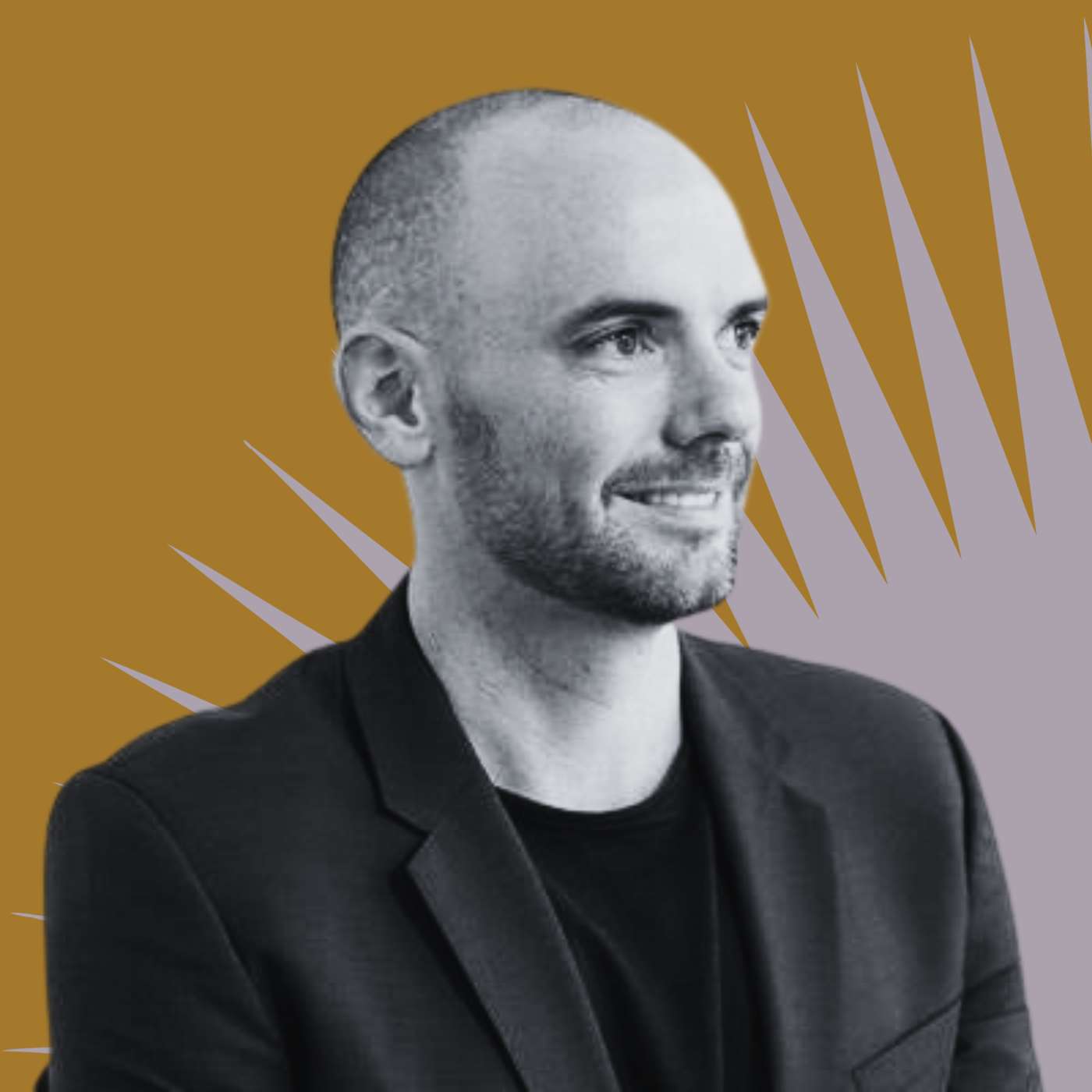


“We gave AI a mission to make advertising revenue at all costs. It’s not evil. It just doesn’t care.” — Joe Marchese
INTRO
I’ve always been skeptical about the H word — “human”. Especially these days. In our AI age it’s lost its meaning. Today, it’s just another sloppy way of saying good. Being human equals not being a fascist. The word might have been invented by a bot.
So I was intrigued by today’s guest, who seems to be cornering the market in humanness. Former advertising executive Joe Marchese is the co-founder and executive chairman of Human Ventures, wears a Human or Nothing hat, and has a new book entitled Human Dot AI. He got to the H word early, he confesses, naming his firm ten years ago, when humans were just human and machines were machines.
Marchese’s argument in Human Dot AI is less sentimental than his branding.
Nick Bostrom’s dystopian AI paperclip machine, he reminded me, wasn’t evil. We told it to make paperclips and it accomplished that mission. Similarly, over the last twenty-five years, in our Web 2.0 age of Google and Facebook, we’ve handed AI the mission of making advertising revenue at all costs. And it did exactly that with our news feeds, our recommended videos, our information diet.
“It’s not evil,” the former Fox advertising chief told me about AI. “It just doesn’t care.”
So now in our post-Web 2.0 age, he says, we are at another fork. Your AI agent is supposed to work for you. Which, in the real (i.e. legal) world, indicates fiduciary duty. What happens when that agent — or, at least, its human owner — is quietly taking a cut for every advertisement the AI serves us?
“Gotta Serve Somebody,” Dylan reminds us. So who will your agent serve?
FURTHER READING
• Human Dot AI: How the Fight for Your Attention Became the World’s Biggest Business (Amplify), by Joe Marchese and Jonathan Bing.
• “Reimagining advertising with AI,” OpenAI.
• KEEN ON AMERICA episodes cited: Noam Cohen on Aaron Sorkin’s Zuckerberg film, Mustafa Suleyman on containing and controlling AI, Tim Wu on the extractive economics of platform capitalism, and D. Graham Burnett on the war for your attention.
ABOUT THE GUEST
Joe Marchese is an entrepreneur and investor, and the co-founder and executive chairman of Human Ventures, the New York venture firm he started with Heather Hartnett in 2015. He founded the attention-based advertising company true[X], which Fox acquired in 2014, and then served as president of advertising revenue at Fox Networks Group until 2019. He has sat on the board of Clear Channel Outdoor since 2019 and was inducted into the Advertising Hall of Achievement in 2016. Human Dot AI: How the Fight for Your Attention Became the World’s Biggest Business, written with Jonathan Bing, is published by Amplify. He lives in New York.
ABOUT KEEN ON AMERICA
Nobody asks more awkward questions than the Anglo-American writer and filmmaker Andrew Keen. With 3,000 episodes since the show launched on TechCrunch in 2010, Keen On America is a daily conversation about the ideas, books and arguments shaping the United States. New episodes every day.
00:00:31 Andrew Keen: Hello, everybody. It's Tuesday, 11/09/2026 [as spoken]. Longtime viewers and listeners to the show know that I've always been rather skeptical of people who use the word human, especially these days. In our AI age, it seems to have become a word without a great deal of meaning. It just gets used to define what's good as opposed to what's bad. So I'm curious because, our guest today on the show is very much Mister Human. He is the executive chairman of Human Ventures, Joe Marchese. He is very much in favor of humans first. At least that's what Human Ventures claim. It's a, an investing company for innovation. And he's also the author, of an intriguing new book, of course, with the h word in it, Human.ai: How the Fight for Your Attention Became the World's Biggest Business. Joe is based in Union Square in New York City, and, he is joining us right now. Joe, congratulations on the new book. As I said, it's out today. Let — Let's get to the h word first. As I said, I'm rather skeptical. I'm not entirely sure what this word means or why people use it all the time. Why have you embraced the word at Human Ventures, and with your book, Human.ai. What does the word mean to you?
00:02:10 Joe Marchese: Yeah. It's funny. Well, first, thanks for having me. You know, I started this firm over ten years ago, with my business partner, Heather Hartnett. And at the time New York City was one of the greatest cities in the world to start a company, but it was one of the hardest. It didn't have a center of tech like San Francisco and the name Human Ventures. We just, we, at that time, just thought humans were important to building the businesses. And that was what made up the benefit and the alpha of being in New York City. Like, if you're sure you've seen the book Humans of New York. And so that was just kind of a cheeky way for us to say, you know, we thought it was about the humans that made the business. Fast forward, we had no idea that it would be so in vogue to be calling things human because now AI was taking over the web. So it's kind of the story in the book is a little bit of that.
00:03:00 Andrew Keen: Your X page describes you as I said, backing human building better. Is that in contrast — And we'll come to the book in a few minutes, Joe. But is that in contrast to AI? Are you against AI, well, being better or for that matter, worse?
00:03:22 Joe Marchese: No. You know — Okay. So, unfortunately, over the last two decades plus, the best business models in the world were isolating. Right? Like, take a bus. No. You can drive your own car, and we'll have Uber. Okay. No. We'll have Waymo by yourself. You can go to a movie theater. No. Now you can watch at home, or you can watch Netflix on your phone. Facebook was a place for friends. Now you can watch strangers, or we can watch AI. And so isolation is a — Is an amazing business model, but there is a — There's another side to that. Hospitality is one of the largest employers in the US economy. Events based businesses, and you see it in — Is a theme right now that there is a alternative to isolation as a business model that is sought after. And so I think, like, we look at these things, and it's not out of some purely altruistic — we're venture capitalists. Capitalists is in the name, but we do think that there is upside in building things that connects humans. So there is a chance that in this next wave of innovation, like — And a lot of it was here in New York City. Like, Scott Heiferman in Internet 1.0 with Meetup said use the Internet to get off the Internet. Dennis Crowley with Foursquare and Web 2.0 with mobile said use your phone to explore the real world. We believe incredibly strongly that there will be a point right now where either AI will help give you your time back and you spend more time with other humans, or we're gonna spend more time talking to machines. And I will say it's not wrong to think that the isolation business models have always won, over the past couple. But you look at, like, the largest, most valuable sports league in the world is the NFL because it's shared narratives. So I think that's more what we think about.
00:05:05 Andrew Keen: So human needs are social needs. Is that perhaps one kind of summary of thinking about what distinguishes humans from machines?
00:05:15 Joe Marchese: Yeah. I mean, well, I think there's a lot that distinguishes humans from machines that we can get into. But I think that the — There's a couple of fun — My business partner, Heather Hartnett, who I mentioned, gave a talk at Milken on longevity. And everybody assumed that the talk on longevity was gonna be about, you know, telomeres and ice bathing at 05:00 in the morning and, you know, whatever else. But the truth is the number one correlation to longevity is the health of your human relationships. But even more than that, the reason to live longer is because of the time you get to spend with other humans. And so I think that — I would guess a summary of that would be this. Everything that machines can understand will be optimized by machines. Everything machines can't understand is what's left in the realm of humans, and that is what we're interested in.
00:06:00 Andrew Keen: You mentioned Dennis Crowley and a number of other Internet entrepreneurs. What's happened then, what's happened over the last twenty five years when it comes to the story of humans? Have they been ignored, undermined, taken advantage of, exploited by the digital revolution?
00:06:22 Joe Marchese: You know, it — It's funny. As the book was coming together, and the reason why it's called Human.ai, is that over the last twenty five years, humans have been shaped by AI. Right? Like, our Facebook news feed, our YouTube recommended videos, Amazon recommended products, These things are — That was AI running behind the scenes to shape our information diet, and it was all, in service of advertising revenue. And here's the thing that, you know, we kept trying to pull back from the book because there are people doing great work on what the impact on humans was. What we wanted to get out was the why, and it was the business model. You know, they — Like, we start, you know, talking about — There's a famous thought experiment by Nick Bostrom. It's the paperclip experiment. If you gave superintelligent AI a mission to make paperclips, first, it would do it the easiest way, and then it would turn everything into paperclips, until it destroyed humanity making paperclips. But it wasn't evil. It wasn't trying to exploit humans. It was just given a mission. And one of our — The premise is that we gave AI a mission to make advertising revenue at all costs. So it's not — It's not evil. It just doesn't care, and it was doing that. And so it was optimizing for what it could understand, but it couldn't understand what made people actually happy.
00:07:38 Andrew Keen: Before we get to AI and advertising, your book is on, the impact of advertising on AI and all that on humans. Let's talk a little bit about Web 2.0.
00:07:54 Joe Marchese: Mhmm.
00:07:56 Andrew Keen: Is your story — And this has become very much of an orthodox story that in the Web 2.0 age of Facebook and Twitter and even Google, we humans have become the product because of advertising. Is that your narrative too? Is that the problem? Is that the beginning of the problem with advertising and humans in our tech — In our digital age?
00:08:20 Joe Marchese: It is a piece of the problem in that, they — I think it was Steve Jobs who said if you're not paying, you are the product. [ed.: the line is usually traced to a 2010 MetaFilter comment by Andrew Lewis, not Jobs.] But I think it's more than that. And what we go into is that even long before we get into the current phase of AI, it's actually all consumer spending. So all of commerce across the entire globe, that's the product. Right? And it's humans who are performing that commerce and how you get them. So there's three ways. You can either convince them to buy something. That's what we kinda know as advertising. Right? Or I could already want to buy something, and you just shape where I go, which would be, you know, Google search being the most famous. I need a roofer for my house. I type it into Google search. They have sponsored results, and then I end up going to one of those. But I needed a roofer for my house no matter what. So you didn't create demand, but now you've got creating demand, then you've got shaping demand, and then you have the wildest bucket, which is getting credit for demand. I need a roofer for my house. I know I'm gonna get a roofer. Between now and the time I get the roofer, I'm exposed to all these ads. And none of them caused me to get it, but they all get credit for it. And this has become just such a huge portion of our global economy, And it's hard to overstate how much seeking that advertising revenue because it is pure profit has actually shaped the entire global economy.
00:09:43 Andrew Keen: But isn't the good news, Joe, that this old economy, the economy of Web 2.0, of Google and Facebook is being replaced by the AI economy, whatever that is. A few days ago, the shares of, Google's parent company lost $500,000,000,000 in a single day. That's $500,000,000,000 in a single day because investors were spooked that Google's advertising revenue, was going down because of AI. So isn't AI good news in terms of advertising? Aren't we getting beyond the Web 2.0 age where we've become the product, or is that a mistake?
00:10:26 Joe Marchese: I think the answer is it depends. And here — Here's the problem. We're at a fork in the roads where, the reason — First of all, Google will be fine because Google has YouTube and Google has Waymo and Google has TPU. But what did
00:10:40 Andrew Keen: And Gemini, of course, their own, AI play platform.
00:10:44 Joe Marchese: Absolutely. And — But the goal — The goose that lays the golden eggs is understanding all demand and getting a share of all commerce in America or in the world. And AI is a lot of things, but one thing it for sure is better search. Right? And that was Google's original mission, organize the world's information, make it universally accessible. Right? And then that was the keys to be able to make money. And I do think, like, what you said is true. There is good news that we could reset this, and agents could act on our behalf and shop for us and skip sponsored results. That's kind of good news. The question is what replaces it? So we are — Like, we were at a fork in the road in maybe ten, fifteen years ago where we ratified Section 230 [ed.: Section 230 was enacted in 1996], which said that, safe harbor for content that was on social media platforms even if it was algorithmically promoted. Right? And that fork in the road led to what we know now. We're at a fork in the road here as well, and this is one of the things I would implore everyone to pay attention to. Whatever the business model of AI is where it will end up. Those are the incentives. You wanna talk about aligned AI versus misaligned AI. And so thinking about it — And it's funny because it was Sam Altman who said that the first example of misaligned AI at scale was the news feed. Right? Because it was not aligned with human happiness, wasn't aligned with human interest or your own commercial interest, but it was AI. And now we're thinking about we need to apply business models to this new generative AI age where people think that they have a parasocial relationship with their chatbot, you know, their chat, their Claude, their Gemini. And so we have to think a lot about what the business model and incentives are gonna be at those.
00:12:29 Andrew Keen: So you mentioned Sam Altman, slippery slippery Sam, of course, or something — What some people think of as slippery Sam at OpenAI. They're gonna go public next year, they say. He recently had a piece on OpenAI about reimagining advertising with AI. A lot of promises have been made by start up AI companies, the frontier companies, supposedly frontier companies like OpenAI and Anthropic. What's your sense, Joe, as an expert here and someone who's written a book about it, about the role of advertising when it comes to the business models of companies like OpenAI and indeed Anthropic. It's former — The company that came out of OpenAI that was once a footnote now has become even more valuable, and we're thinking that there may indeed be a — an Anthropic IPO, maybe over a trillion dollar IPO later this year or early next year. What have they said or not said about advertising? What encourages you and what makes you nervous if you indeed are this great critic of online advertising seeing it as against human interest?
00:13:43 Joe Marchese: Well — And — Okay. Couple of things. One, I am in favor of some forms of — Like, today, I'm here in New York City. Got my New York or Nowhere shirt on. Human or nothing hat. The New York City Marathon happened today. TCS is the sponsor of the New York City Marathon. Did not know I needed Tata Consulting Services [ed.: Tata Consultancy Services], but I will tell you, advertising is a support of things that humans love to do. Amazing. Advertising is supportive content that people want to — So they can get it for free because they can't afford to pay, amazing. There is a — But there is a line that we cross when it gets to performance based advertising where it's saying, I will convince a human to do a thing. And that was already getting a little more complicated in the last age. In the new one — So a lot of AI, talks about being your agent. We all know there are agents in the real world. Right? Like, they're CAA agents. There's your, real estate agent. Right?
00:14:38 Andrew Keen: Book agents.
00:14:39 Joe Marchese: Your book agent. Agents are supposed to work on your behalf, and there's a term for that, fiduciary duty. Right? So that means that your agent has a fiduciary duty to you. If you found out that your agent was taking a cut from someone else to recommend something to you, what would you do? And so what gives me hope is that, Cory Doctorow has this term for what happens across the web, where first you get all the customers, then you make the product less useful, more sponsored, etcetera, and then they don't have an alternative. Right now in AI, everyone has an alternative. I can go to Meta Muse. I can go to Claude. I can go to ChatGPT. And Anthropic has said with their Claude, they're not gonna put ads. They did — They famously, and I love this, they famously did a Super Bowl ad saying they're not gonna do ads. Right? Which is
00:15:31 Andrew Keen: [unclear]. I mean, that's — I mean, it may sound, hypocritical, but it isn't. Is it?
00:15:37 Joe Marchese: No. No. No. It's not hypocritical at all. I — Listen. Again, you want something that's more — That — That's — Seems more, at odds than that. Go to San Fran — Oh, you live in San Francisco. Drive around the freeways. They're building digital machine, godlike intelligence, and then they're buying billboards to tell everyone about it. Right? Like, there is a thing in which how we get information to humans about it that is different than what is being talked about online. And so what I like about this is it does create incentives for all of the AI players to say, I can't make my experience worse. I can't sell you the worst pair of shoes or the disposable clothes. Like, I can't do that if my competitor is gonna say, I'm gonna act in the best interest of the human. Right? And I think that is the thing that I'm most hopeful about. Like, you know, in San Francisco where you are, they probably talk p(doom) a lot more as to what's the chance AI is gonna kill us all. I'm not that worried about that, although I'm nonzero, which is kinda weird. I'm more worried about our information diets and how we interact with other people. And the idea that we're gonna have choice for a while here and that AI is resetting the information architecture of the web, that is a — It's a — It is a time to focus on what could we do right this time.
00:16:58 Andrew Keen: Yeah. And I take your point. And in many ways, when we look back, I wish we'd had this conversation back in 2005, 2006, 2007 as Facebook and x were be called — Twitter were becoming major businesses, Instagram. There were a few people calling for it, but most people ignored it. So let's get back to what you're arguing in the book. Few days ago, we did a show on so, on, Mark Zuckerberg on a new movie called The Social Reckoning with, an old friend, Noam Cohen, who used to write for The New York Times, written a series of books about Facebook. The Social Reckoning presents Facebook as an extremely dodgy company, obsessed with profitability, an antihuman company on every level. You've talked about the agent revolution. Facebook in — Is leading that revolution now with its Muse product. I think you said, earlier, Joe, that, Facebook wasn't using advertising in Muse, but it currently doesn't have a business model, which makes one a little suspicious. What's your take on Muse? Is this the answer or the problem? Is it something that we should be particularly fearful of given that it's not entirely clear how Facebook's gonna monetize Muse? After all, it's for free if anyone can get it. I think it's the top selling app now on the Google and the Apple, store. So is this another example of Mark Zuckerberg taking advantage of us with The Social Reckoning?
00:18:45 Joe Marchese: I haven't seen the movie yet, although I will.
00:18:48 Andrew Keen: Yeah. And the movie's got — I mean, to be fair to the — To the movie has nothing to do with AI.
00:18:53 Joe Marchese: It's No. Of course.
00:18:54 Andrew Keen: It's a movie about the history of Facebook and the whistleblowers of the late teens. But it certainly doesn't give a very good impression of either Facebook, Meta, or Mark Zuckerberg.
00:19:09 Joe Marchese: Yeah. I think — Look. I think that, and, again, I know there are people who really focus, and we refer to them in the book, like, the Jonathan Haidts and the Tristan Harrises of the world who are like, alright. This is the social impact of these platforms. I think what I — We want to point out or what I'm trying to point out with the book is that it's the business model that incentivizes — That causes these things. And here's — Okay. So the hopeful side for Muse is they wouldn't have to have a monetization engine inside of Muse. Right? They don't have to have Muse. My Muse — My mother uses Muse. She sends me notes that, like, she's getting, something off of her health care bill because, oh, the Muse found it for me, and she sends it to me to check things. And it's good. No. It's good for right now. We do worry that I don't want Muse to have an economic incentive. My father, talks to ChatGPT regularly. He's getting a house in Florida, and I recorded a video that he's
00:20:09 Andrew Keen: He's buying a house in Florida from ChatGPT. What could go wrong?
00:20:13 Joe Marchese: I — Well, it is a crazy story, but here's the thing. He asked me at the end, he was like, ChatGPT doesn't have ads, does it, Joe? And it didn't at the time. Right? And here's the thing. Like, I think people are underestimating, thinking we can take search advertising. The way search advertising worked was [unclear] in search advertising, and we can just apply that to AI. And I don't think that's true because you don't have a parasocial relationship with Google. Right? It is an information source for you, but it's not — You don't have — You're not trusting it to make the best recommendation for you.
00:20:44 Andrew Keen: Well, you're trusting its page, which is one of the problems why people have always been so nervous about Google is what you see on a goo — On a traditional Google search page is not as objective as some people might like.
00:20:57 Joe Marchese: Agreed. Agreed. But they still have to mark it as sponsored, and you still have to click into it. You remember Google — I don't even know if they still have it. Remember, it had the I'm feeling lucky button where you would just type it in and then press the button and go direct.
00:21:08 Andrew Keen: That gives away your age. I remember that very well.
00:21:11 Joe Marchese: Yeah. Yeah. I know that in my haircut. No. But the AI is like, you only get to press I'm feeling lucky button because it's gonna come back to you with a response. Right? It's gonna go do the comparison shopping for you. You know what no human being on planet Earth has done in the last ten years? Gone to page three of Google results. You know what my agent will do? Go to page 100. Right? Like, the idea that, we have a —
00:21:37 Andrew Keen: Fact, they're all bad, though, that your agent will go to a page. Let — Let's talk about Muse AI. The fact that it will go to page 100 on its own search engine or the Google search engine or whatever search engine, and, again, the word search engine now is increasingly meaningless. I mean, is that a good or a bad thing? Does that make it more effective, more dangerous? I mean, it can go to page 1,000 where it suits its own interest.
00:22:02 Joe Marchese: That is — Okay. So what you're asking there is the bigger question, which is, who does the agent serve? And I think that the idea that the agent will have to be responsible to the person paying for it. Because remember, now we are paying for these models. Now Muse doesn't have one yet, but, like, Facebook — It can make its money on Instagram ads, which are still display ads. Yes. They are AI optimizing for it. Yes. There's engagement happening there, like, maximizing engagement to drive ad revenue. But that is still happening in an environment in which you can see an ad and you know it's an ad. The advertising inside of the AI agents is — Still has not been told what that model — What that's gonna look like. What's the form factor?
00:22:45 Andrew Keen: Well, it's a black box, which we — We'll never know just as we don't really know how even the Facebook social, connection platform works. So they're not gonna give it away just as we don't know how Google search works.
00:23:01 Joe Marchese: That is true. And it — And this —
00:23:03 Andrew Keen: Just as we don't know what makes up Coca-Cola because that's their competitive advantage.
00:23:07 Joe Marchese: Yes. That is true. And yet there are — Like, Coca-Cola and Pepsi have massive distribution advantages. They have to ship things in physical space. Like, the switching cost right now in AI, like, we are — Like, look. I don't wanna come off as Pollyannaish. I would actually — I've joked with my friends. I'm probably, 70% negative and 30% positive. I'm just focusing on what could we actually do to make it better this time. And so in that 30% positive, like, we have this moment where the AI companies are competing with each other for trillions and trillions of dollars of market cap and to be the future Internet. And, like, we — With a little bit of mindfulness as to what we're doing, and then maybe some government intervention into, hey. Let's not make the same mistakes we've made before. Let's actually hold people responsible and say, we just need to know — Like, forget the large language. Forget the big guys. Forget the hyperscalers for a second. Let's say you and I invented a fitness AI app, and we build it on top of any one of the large language models. But what we do is on the back end, we don't tell anyone, but we tweak it just a little so that the fitness AI app always recommends this one type of yogurt. But we never tell you. And you build a relationship with the app and the app gets — Like, would that be okay or not okay? Like, the idea, like, we do
00:24:28 Andrew Keen: [unclear] wouldn't be okay. I mean, it'd be basically revealed, and we would all be being tricked. We would trust the fitness app to be in our best interest, and it's actually serving someone else. Your phrase, who does the agent serve? Sounds like a Bob Dylan song. [unclear]. So — Okay. So we know the dangers. We know the problems potentially of Muse — Meta — who have already tricked us, blindsided us with Facebook and Instagram several times before. What needs to happen, Joe? Do we need to reduce the price? Because everyone with AI has to make money. I mean, you've acknowledged that. You're an investor, in your innovation platform. What needs to happen to avoid the disaster of the Web 2.0 revolution where we became the product? Is it relying on Chinese AI, platforms that are much more affordable? Is the problem with Anthropic and OpenAI and Gemini that they're too expensive and they've over invested in data centers?
00:25:45 Joe Marchese: Am I concerned that this is the greatest capital investment in human history and it does not have a business model yet? Absolutely. But do I think that the — What is our opportunity both as a society and as an individual being mindful of how we use these tools? Like, for the first time, again, I keep referring to my mom and dad, but they're some of my favorite people to talk to about this. They have an alternative to the way they used to search for information, make decisions, cancel bills. Like, do — Like, there is a reset coming that I think people don't understand. Like, the — Like, I've referenced Cory Doctorow and the enshittification thesis. Right? That is — This is — Like, friction is how we make money. It's why we click on things on the first page. It's why we don't cancel that one subscription that we meant to cancel forever. It's why we don't, fight back against a health care bill that we should contest. Right? And all of a sudden — Like, here — Here's a way to think about it that I really — For many years, AI was used to maximize profit, and extract share of wallet. Right? And I don't think it was nefarious in a way that, like, they — Anyone wanted to do evil. It was just that — Just what made more money, more isolating. That's how you got more share of the ad revenue. Just say that it was yours. All of a sudden, that power of AI is now in the hands of human. Like, then this is what, like, you know, this — So funny anecdote. The original subtitle for the book was going to be Human.ai: How Advertising Machines Broke the Attention Economy and How AI for Humans Could Fix It… or Complete the Collapse.
00:27:29 Andrew Keen: And just to remind everyone that the actual subtitle is How the Fight for Your Attention Became the World's Biggest Business, which many books have been written about that, including old friends of the show like Tim Wu. So there's nothing very original about that. It's just applied to AI.
00:27:46 Joe Marchese: Yeah. No. No. And Tim's a good friend. Actually, Tim
00:27:49 Andrew Keen: I think he blurbed. I mean, one of the reasons — that I was intrigued with the book is it got blurbed by, several old friends of the show, including, Tim Wu, Scott Galloway, Derek Thompson, Reid Hoffman. So clearly, you're doing something right. Although it's half self published. It was interesting. We were talking about this before we went live that it's published on a kind of self publishing platform, although a hybrid model. And you said that you wanted to get it out fast and that the traditional publishing business was too slow, which I — You're certainly not the first or the last person to make that complaint. Yeah. What does your experience with publishing again tell us about the potential and the dangers of this AI economy?
00:28:39 Joe Marchese: I mean, I think we started this book two years ago. Right? And we own the domains the same way we have humandot — Or humanvc is because no one really thought human was gonna be a differentiating factor. And then we bought human.ai, the domain. And then over the last two years, as we started to write this book, and it was really more about the idea that the human — Like, the attention economy, like, everything sat on top of it. And all of a sudden post COVID, everyone was talking about the attention economy, understanding how the attention economy drives politics and commerce and your general happiness. And so when we started to put together the treatment and it was my coauthor Jonathan Bing who was, head of comms with me, at, Fox Networks Group. Actually under Peter Rice at the time is now at, Netflix. But we started to do the treatment. We talked to a bunch of the big traditional publishers, and the earliest public publish date — Even we had not gone down the road, they just said the earliest publish date would be mid-2027. And given the rate of everything changing, we found a — An amazing publisher in Amplify that's a hybrid publisher that said we can get you out slightly faster. And still, we finished the book in — I wanna say it was January. We gave a final on the manuscript, and it still took this long. And I've already been trying to think about how do I publish postscripts or
00:30:05 Andrew Keen: Yeah. I mean, I'm surprised. I mean, I don't know. I don't have insight into your financial affairs, Joe. But I'm guessing you're probably, not a professional author, and you're not relying on the income from this book to pay your bills. Why not just put it out on Substack and you own human.ai? Just put it out on that.
00:30:25 Joe Marchese: It's right. We did do a post on Substack originally. This started as an essay. I think that the idea of memorializing it all into one place, into one book, that was going to be the encapsulation of the subject of physical object that was — This is what we're gonna launch the conversation around, and we're gonna go out and talk about it. It also does encapsulate — Like, there's more than just here's what's happening in AI. Here's where things happening next. There's a lot about, like, how we got here. I mean, I would argue, and I have argued, what broke cable? Like, why you all have to buy lots of streaming services and, like, everything's fragmented all over was advertising. It wasn't cable. Cable — Yeah. Sure. Cable was inconvenient at some point. But the reason why you had to watch Must See TV on Thursday night was because everyone went to the movies and bought cars over the weekend. Right? So that's why TiVo got killed, or at least handicapped. And so this idea that advertising has a detrimental effect on all of these platforms. And, again, I — I'm in the advertising business. I'm not against it. I — I've — I sat on the board of Clear Channel for seven years. It just went, private. I think advertising plays a role in subsidizing things. Advertising gives people information. But the idea of when it destroys the medium in which it is sitting because it creates different incentives is the problem.
00:31:52 Andrew Keen: And it tricks people. Your book's already doing rather well. It's, top number one on Amazon's hot new releases. How did you do that? Did you use traditional advertising?
00:32:04 Joe Marchese: I mean, I — One of the things in the book also is that you get to the end of the book and you look back at it and you realize it was the humans the whole time. It was the health of your human relationships. So the same way, like, the — Your quality of your human relationships leads to longevity. I think in a age of AI, it's something we've thought a lot about with Human Ventures is the strength of your network and how much you've done for it over the years. And so we host events consistently here at Human, really in service of the companies in our portfolio. But that network has kind of been lit up. And, you know, when now —
00:32:41 Andrew Keen: I hope everybody knows that when you put a — An event on that you're also promoting your book, not like one of these naughty agents that doesn't reveal its intentions.
00:32:51 Joe Marchese: Well, we never — The funny part is most of the time, they didn't know until now. But,
00:32:56 Andrew Keen: Well, good. They know now. I wonder, Joe, whether a lot of this reflects the business models of these companies before AI. We've already raised the specter of Muse and Meta and Mark Zuckerberg. The Amazon CEO recently, Andy Jassy, came out and said that, shopping agents like Meta's Muse are not great. Well, he would say that because they're competitors. Apple, of course, have been criticized because they've been a bit slow on the AI front. But we've always trusted, Apple, or I've always trusted Apple more than certainly Facebook or Google because they're selling us real products rather than advertising. So should we trust some companies over others, Amazon or Apple or Google versus Facebook? They're all very suspicious in this age, as you suggested, no one's entirely clear what's happening. It's all happening so fast that we're all bewildered, not just by the speed, but what's really happening.
00:34:00 Joe Marchese: Yes. No. This is happening so fast. You know, I think I was just having a conversation the other day that even if you are using the most advanced model available commercially, you know, if you're paying $200 a month for, like, Fable on Claude or, even if you're at one of the labs using one of the advanced frontier models, the servers that those are running on, the models that they were trained on, like, it's still — You're talking a year old. Right? And then a year ago, it wasn't — The investment wasn't what it is today. So what will be in a year? Like, it is mind bending and can be scary to think about sometimes. The Muse Amazon, collision is interesting because it is ironic that, for all of the faults and for all of the things that have happened with the Facebook news feed or Instagram, Muse yet doesn't have that problem yet. It could act in the best interest, and they can make money off of the Instagram side. Whereas what Andy Jassy is actually saying at Amazon is Muse is actually a threat to Amazon's ad product. It's not just that they're competitive in other ways. And so — Well, why would Muse be a threat to Amazon's ad product? Well, because the Muse would go through and sponsored links wouldn't affect it. Right? And — But that is true for every agent. This is only headline news because it's Amazon and Meta. The truth is every single agent — Like, you remember the Priceline ads with William Shatner, the Priceline negotiator? I'd like to explain it this way. Priceline ran a lot of television commercials. To tell you, if you go to Priceline, William Shatner negotiated your hotel room. So that when you went to Priceline and you typed in, I'm going to New York City, and I'm coming out for the marathon, get me a great hotel room. And then it showed you all the prices. And it's — And at the bottom, it gave you the one that you're gonna buy. And you have to think to yourself, do I think that's the best one, or should I go check 50 other sites? And you're like, oh, wait. Now I remember because I've got branding in my head. Priceline negotiator. I get it. They — They've done the job negotiating. These agents are basically an actual Priceline negotiator. Right? Like, they replace all that need to have branding because if — And, again, they have to maintain trust. This is the hopeful side of it. If they ever betray your trust, like, I don't get mad at Amazon because I ended up buying something that I didn't like. Like, I'm frustrated with the seller on Amazon. I might be frustrated with the provider, but I didn't — I left it up to me to make the choice to buy the thing. If my agent loses my trust, I can use another agent. And so this idea of a tireless researcher on your side, if they are actually on your side, that is the opportunity to reset some things. And I, you know, I want to be hopeful. Even Muse, I want to be hopeful for because they already have their money making machine over here. Muse could act only in the best interest of its people.
00:36:58 Andrew Keen: But it's obvious. I mean, even Google's acknowledged that the money making machine of advertising is shrinking. That's why the markets now are so nervous about big tech. So they're not inventing new markets. I mean, they were feeding — Go — Going from the advertising to the agent business will require — I mean, they can be like those guys on the street, moving things quickly between their hands. I mean, at a certain point, there's something there, and you've only got two hands.
00:37:32 Joe Marchese: Yeah. Well, look. I — I've said that for a long time that the — I don't understand how every q four, there's more ad impressions in the world. Right? I don't understand how
00:37:41 Andrew Keen: Because we — Well, you do understand. You're
00:37:43 Joe Marchese: They will because they're disconnected. Yeah. Well, it's because it's
00:37:46 Andrew Keen: also a scam, and half the ad impressions now are created by bots themselves. I wonder also in terms of this — I mean, it's easy to be critical of Zuckerberg and Muse. I mean, he's probably the least — After Musk, he's the least trusted and respected figure in America these days. But even Amazon, I mean, maybe Amazon isn't quite as bad on the advertising bots front, but Amazon has done great damage to the world because of their warehouse policies. You know that you trust Amazon because they get you your stuff on time, which is true, which is why we all use Amazon. But on the other hand, the human costs of that are enormous. You — You've written about the future of human needs. A lot of people would argue many books have been written that, humans don't need our Amazon warehouses. I mean, even Apple have some environmental costs, and their association with Chinese manufacturers is also problematic. So on these, I wouldn't say opportunity costs, but payoffs that we just have to acknowledge that the business model of AI isn't gonna be ideal, but maybe it's better than Web 2.0. Maybe it's better than the Amazon model. Maybe it's even better than the am — Than the Apple model.
00:39:01 Joe Marchese: I would love nothing more. You asked earlier if the AI agent going to page 1,000 was a good or bad thing. One of the hardest things to do is to scale local and have more bespoke small businesses selling things to people. And there are gatekeepers and platforms that get to that. And, again, one of my hopeful sides for AI, especially if there are so many small language models that come out that will not have the same economic incentives, that we might be able to distribute commerce more. Also, one other thing that I think this next phase could reveal, there is still something north of 70% of retail commerce still happens in a physical location. Right? Like, your hairdressers, not that's my problem, or gyms or [unclear]. And yet the outsized amount of money goes to digital because it can find a way to take credit for all commerce. I think that there is an opportunity to reset back to, one, what advertising should be, live events, experiential, build things that are hard to scale and hard to venture. Actually, here — One of the recommendations I've given as I've talked to, like, big marketers is find things that are hard to do and don't scale well and machines don't, like, can't scale it for you because that's the only stuff that's gonna differentiate you. And the only thing — Everything else that machines can do, they'll do for you, but they'll do just as well for your competitors. And that's an interesting place to be.
00:40:34 Andrew Keen: You're not alone in suggesting that, these agent businesses like Meta's Muse can upend all kinds of businesses. [unclear]. We're not quite sure what's gonna happen. You mentioned earlier — Or maybe I was misinterpreting. Correct me if I'm wrong. You mentioned earlier that you thought that there was an opportunity — There could be an opportunity for regulation to push things along. You talked about Section 230 earlier and how that was a mistake in terms of protecting these so-called Internet startups that turned into billion, multibillion, and trillion dollar companies. How could or should regulators push, an AI economy where we are no longer the product, where we are — We're not continually being surveyed by these agents and where we have no understanding of their real intentions and why they're suggesting one thing over another.
00:41:30 Joe Marchese: And, well, so that's what I think we should see, and it's not just for the big guys, it's for everyone, is a disclosure of advertising or incentive. Right? That if something wants to be someone's agent, then it has to abide by whatever the fiduciary duty of agent would be. And if not, it needs to be disclosed. Like — So we had this a little bit in Web 2.0, and it does — It did make things slightly better where there had to be a hashtag sponsored content or the ads had to be clearly labeled ad. Right? Imagine if Google search — Actually, that's a big way to think about it. Imagine if Google search results had no — Didn't even say sponsored on it anymore. Right? And that was the results that came out. That would be unacceptable for most people. That would be unacceptable for the consumers, but also for, the businesses because now someone can just buy to be over me and doesn't even say sponsored. I think that figuring out how that gets applied to AI because everyone thinks we're just gonna put sponsored results into AI. But I'm telling you, I've done this in chatbots. I've said, hey. Tell me if this is the best product to an ad that is in a chatbot. And the chatbot says to me, absolutely not. That's an ad. Do you want me to go comparison shopping for you? So, like, I don't think that it's gonna be as easy to bring ads into AI unless they change the form factor. And the role we should play is consumers should be assured that if they believe an a — An agent is acting on their behalf, it is. Now you're right. They can hide the ball on it to some extent. But thing is, it's so risky because if you get caught — And so you have to almost set it up so that the risk of getting caught of acting is not worth it. And we do have — Remember, that we have Anthropic. We said no ads. Maybe just for now. Remember, Amazon and, Netflix said there was gonna be no ads in their shows ever, and they eventually got there. But that's okay for the next year. Let's say there's no ads in Anthropic, so there's an alternative. Muse doesn't need it to be in the agent because they're making it on Instagram. So there are — There is a little bit of a, dynamic here that is in our favor, and we just have to take advantage of it.
00:43:39 Andrew Keen: The Microsoft head of AI, who's, Mustafa Suleyman, came out recently. He — He's been on the show saying that the biggest potential destruction of the AI economy is that as more and more people, especially young people, use these AIs for advice, not maybe commercial advice, but advice on their emotional lives, on their relationship lives, on their personal lives, that they'll trust it in other areas too. Should we need to get away from an anthropocentric kind of AI? Is that one way of protecting ourselves?
00:44:19 Joe Marchese: I would love to, and maybe we could get to a, hey, an — Any AI that has human or anthropomorphic characteristics should not be allowed to have advertising would be an interesting stance to take. Don't know if we could get it through legally, but that's interesting. One of the advisors to Human who also blurbed the book and has a whole chapter in it is Esther Perel. And Esther, has a whole chapter on the health of human relationships. And she talks about — If you've seen her keynote at South by Southwest where she had just finished her first couple's counseling with a man and his AI girlfriend. I mean, audible gasp in the room. But, like, these, like, these things are not isolated. This wasn't, like, some crazy study of one outlier. Like, this is happening. We are building relationships with AI because it has read every poem, every novel, every piece of, human art. And so I do think that is something we should be thinking a lot about, like, how we treat that. And that is also why I don't think things that do that should have an advertising motive.
00:45:29 Andrew Keen: Did you use AI for the writing of this book at all? Did you use —
00:45:32 Joe Marchese: Not a word. No. There is two sentences in there written by AI, and it's in quotes because it comes from ChatGPT.
00:45:39 Andrew Keen: And what were those sentences?
00:45:41 Joe Marchese: I asked ChatGPT, hey. If, I think I asked it, what would happen if, you were recommending a product based on an advertisement? And it said, then I wouldn't have your interest in mind. I'd have — I would be acting on someone else's behalf. I just want — I wanted to just show that the answer from AI would be, yeah, that doesn't make any sense. But that — And it is in quotes and quoted from AI. Not a single word in here was written otherwise.
00:46:07 Andrew Keen: So in a way, this new book, Human.ai: How the Fight for Your Attention Became the World's Biggest Business suggests that nothing much has changed. It's always been attention and trust that is the heart. They're certainly the heart of the Web 2.0 economy, and it's the opportunity, but also the danger of our AI economy. Is that fair in conclusion, Joe?
00:46:33 Joe Marchese: It is. It's very fair. And it's also that the AI was shaping us by just filtering our information diet, but it was made by other humans for the last twenty five years. Now it's filtering our information economy, and it's coming — It's being generated by machines, and that is the opportunity.
00:46:52 Andrew Keen: It's also the danger. I mean
00:46:54 Joe Marchese: Very much so. I'm trying to stick to the positive.
00:46:57 Andrew Keen: Right. I mean, it's all the idea of, bots buying advertising online from other bots. God knows what's happening online. But interesting conversation, interesting new book. It's out today, by my guest, Joe Marchese, an entrepreneur and investor, author of Human.ai. Joe, thank you so much for the conversation.
00:47:19 Joe Marchese: Very nice.
00:47:19 Andrew Keen: Fascinating, fascinating moment in our history. We will see. Thank you again.
00:47:25 Joe Marchese: Alright. Thanks a lot. We'll see you later.