How We Disappear: Thomas Mullaney’s All-Too-Personal History of Information
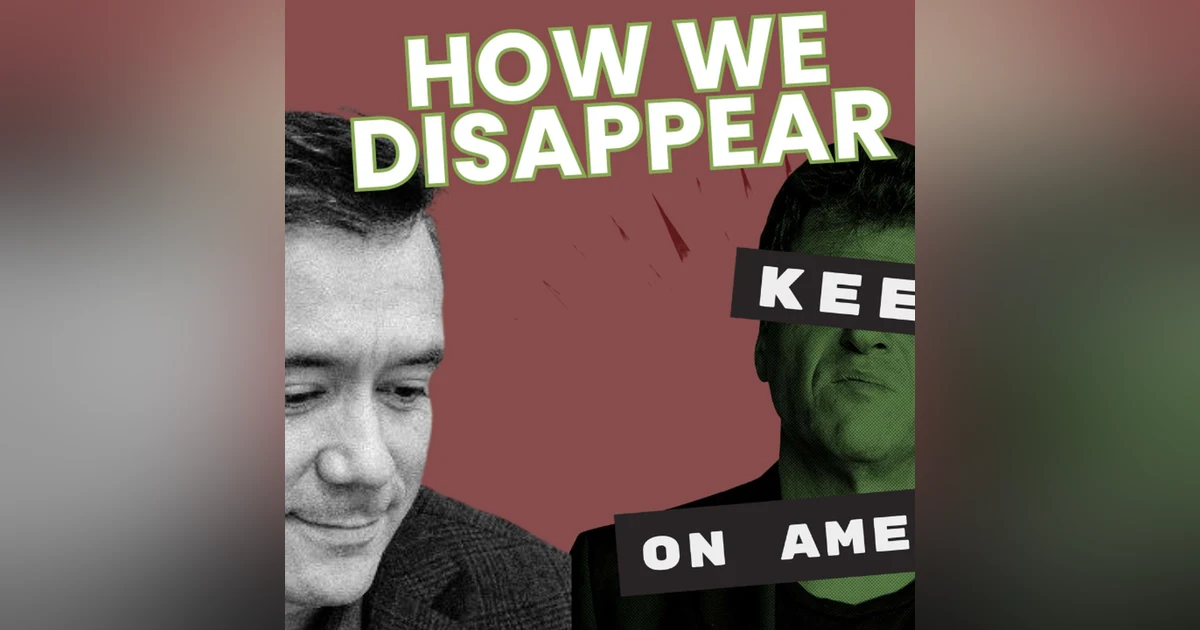


“The second law of thermodynamics is not to be negotiated with.” — Thomas S. Mullaney
The second law of thermodynamics is non-negotiable. The universe will end. Every human being dies. Everything decays and every record disintegrates. So why record history? Why bother remembering? These are the questions that the Stanford historian Thomas S. Mullaney addresses in his intriguing new book, How We Disappear: A Personal History of Information.
How We Disappear is triggered by grief. Mullaney’s father — a man he never fully understood, an exile in an estranged household — died unexpectedly in 2017. Sitting in his father’s office surrounded by the “paperwork of death,” Mullaney’s training as a historian crystallised into an all-too-personal project of disappearance. It’s a book about what Mullaney calls “intransitive disappearance” — not the spectacular, cataclysmic kind of traditional historiography (wars, book burnings, genocide) but the everyday, uneventful ways things fall apart. Like Thomas Mullaney’s dad. Existence as obsolescence, erosion, sinescence and the slow drift of the unremarkable into nothing.
History, in Mullaney’s account, is a Sisyphean fight against this nothingness. We tell stories to survive and maintain the polite appearance of coherence. If you actually tried to reconstruct experience — the thing-in-itself — you would need an infinite library of trillion-page books. Existence, for Mullaney, is a swirl of stimuli and daydream. History tries to domesticate this Borgesian swirl. So does consciousness itself. That’s why, as Mullaney memorably puts it, “historians do the dirty work of necromancers.” Which is to say they try to negotiate with the second law of thermodynamics.
Five Takeaways
• Intransitive Disappearance: The Everyday Way Things Fall Apart: Mullaney’s central concept: intransitive disappearance. Not the spectacular, cataclysmic kind — book burnings, genocide, the destruction of the Library of Alexandria — but the everyday, drifty, uneventful ways things disintegrate. Obsolescence. Erosion. Sinescence. The unremarkable drift of the unremarkable into nothing. He became obsessed with these forms of disappearance — a pack rat across every discipline he could think of — for twenty-five years. His father’s unexpected death in 2017, sitting in his father’s office amid the paperwork of death, crystallised what had been inchoate into a book.
• History as Domesticated Experience: The Trillion-Page Book: If you tried to actually reconstruct experience — the actual thing, unfiltered — you would need a trillion-page book that would make Naked Lunch look like a kindergarten primer. You’d have to say how many hairs were on his head; whether he favoured his left foot over his right; the scent of his aftershave. Experience, unfiltered, is an n-dimensional vortex of stimuli and daydream. Anytime you read a work of history, you are reading experience that has been domesticated into narrative — with turning points, main characters, thematic arguments. Historians know this. Every practising historian knows that the ideal of reconstructing human experience can never be reached.
• The Vocal Defence of History: Why Do It If You Know It’s Impossible? Mullaney’s answer to the subversive question: history is just the professional counterpart of what every human being does every second of their existence. You, right now, telling yourself the story of your experience, are already well into postproduction. Your experience of being a person in a chair talking to another person on a couch — that is already domesticated. Human beings need to tell stories to live, to maintain continuity, to maintain coherence. Historians do the same thing under certain rules and protocols. The futility of history is the futility of consciousness itself. Neither is a reason not to try.
• The Second Law of Thermodynamics Is Not to Be Negotiated With: The universe will end. Every human being dies. Everything we create decays. Every record disintegrates. Mullaney is unsparing about this. He is also, in his strange way, cheerful about it: we don’t need to last forever to have meant something. The meaning is not in the permanence. It is in the making. He would like the Silicon Valley immortality seekers — Kurzweil, the others, all those negotiating with thermodynamics from Palo Alto — to read the book, to face the facts, and then to find the alternative: rejoining physical reality and finding very deep meaning in that.
• AI Bots of Deceased Parents: Stop: Andrew raises the obvious question: what would Mullaney say to the people in Palo Alto building AI bots of your deceased mother and father, so they can exist forever for your children and grandchildren? Mullaney’s answer is one word: stop. Human beings do not have the wetware — the biological critical apparatus — to maintain distance from a deep fake of their deceased parent. It short-circuits us. It bypasses our limitations. He cannot fathom, outside of very specific, closely monitored therapeutic settings, an argument in which this is a good idea. Paul Postman’s phrase: we are amusing ourselves to death. And there is very little critical reflection coming out of the neighbourhoods where this stuff is being made.
About the Guest
Thomas S. Mullaney is Professor of History at Stanford University, a Guggenheim Fellow, and the former Kluge Chair in Technology and Society at the Library of Congress. He is the author of How We Disappear: A Personal History of Information (W. W. Norton, June 23, 2026) and four previous books on Chinese history and technology, including The Chinese Typewriter: A History (winner of multiple awards). He lives in Palo Alto, California.
References:
• How We Disappear: A Personal History of Information by Thomas S. Mullaney (W. W. Norton, June 23, 2026).
• Jorge Luis Borges — referenced; the infinite library, the map that equals the terrain.
• Neil Postman, Amusing Ourselves to Death — referenced in the closing discussion on AI and human limitations.
• Kara Swisher — referenced for her CNN series on Silicon Valley immortality seekers.
• Ray Kurzweil — referenced as an exemplar of tech-utopian immortality thinking.
About Keen On America
Nobody asks more awkward questions than the Anglo-American writer and filmmaker Andrew Keen. In Keen On America, Andrew brings his pointed Transatlantic wit to making sense of the United States — hosting daily interviews about the history and future of this now venerable Republic. With nearly 3,000 episodes since the show launched on TechCrunch in 2010, Keen On America is the most prolific intellectual interview show in the history of podcasting.
00:31 - Introduction: is this a subversive book against history?
01:45 - Either the most subversive thing or the most vocal defence of history
02:00 - Why do history if you can never reach the ideal?
03:03 - Palo Alto: some people think they can elude the second law
03:43 - Written against the tech utopians who want to live forever
04:17 - Triggered by loss: the death of his father
04:50 - Twenty-five years in the making, crystallised by grief
05:20 - Intransitive disappearance: the everyday, drifty, uneventful kind
10:00 - The paperwork of death; sitting in his father’s office
15:00 - History as domesticated experience
20:00 - The trillion-page book that would actually reconstruct experience
25:00 - How many hairs were on his head? The scent of his aftershave?
29:48 - There is an insanity in trying to reconstruct experience
30:00 - The professional cadre of necromancers
35:33 - Borges: labyrinths and infinite libraries
36:38 - Influence: Neil Young and Shostakovich but we’re a punk band
37:23 - AI bots of your deceased parents: stop
38:00 - We don’t have the wetware to maintain critical distance
40:00 - Amusing ourselves to death: Postman’s phrase
41:38 - Historians do the dirty work of necromancers
00:00:31 Andrew Keen: Hello, everybody. My guest today, Thomas S. Mullaney, is a distinguished historian at Stanford University. He's a expert on Asian Chinese history, Chinese technology. Many of you will be familiar with, his work on a hunt for the rarest of Chinese typewriters. It was a book called The A History, which won all sorts of awards. But he has a new book out this week, which, in some people's minds, might actually be blowing up his own discipline of history. The book is called How We Disappear, a Personal History of Information, and Tom is joining us from Palo Alto, where he lives. So, Tom, is this, a subversive book against your own discipline of history? Are you suggesting that we disappear, that the subtitle of the book is a personal history of information suggests that we're all sand falling through our fingers and nothing can really be remembered?
00:01:45 Thomas Mullaney: Well, it's either the most subversive thing that I could write as an historian or the most vocal defense of what it is that we do. I don't think there's any historian certainly that I have ever met in my profession who doesn't already know that what we claim to do as historians is in some sense an ideal that can never be reached, the reconstruction of human experience, however you want to frame it. And then naturally, that raises the question, well, kind of why do it? And it's a similar question for life. You know, if you if death awaits us all, what is what is the point of in the living? And so this book is my attempt to try to explain to myself and then to readers what is it and why is it valuable, what we do as historians, but also, why is life worth living if, and it's not a it's not a it's not a claim. We know the universe dies. The second law of thermodynamics is not to be negotiated with, and so what is the point of it all? So, in some sense, it's a defense, a vocal defense as much as it is potentially a bit subversive.
00:03:03 Andrew Keen: Although you're talking to me, don't meet need me to tell you this, from Palo Alto where there are some people, some very rich people, I think, who believe they can elude that second law of dynamics, thermodynamics.
00:03:17 Thomas Mullaney: Yes. I think there are some at least who claim this publicly. I've never met any of them in person, so I don't know their innermost thoughts.
00:03:26 Andrew Keen: People who, Kara Swisher has a new series out on CNN. She's a critic of these people Mhmm. About wanting to live forever. But, so I guess in a way, this is a book written against those tech utopians.
00:03:43 Thomas Mullaney: It is. I hope they'll read it and, you know, maybe arrive at the conclusion that it, will face the facts, I guess, has come to terms with it, but then realize that whatever the urgency or ambition that led them to wanting to live forever, that there is an alternative, which is kind of rejoining the reality the physical reality, but still finding, very, very deep meaning in that. We don't need to last forever to have meant something.
00:04:17 Andrew Keen: Yeah. And I'm somehow skeptical that guys like Ray Kurzweil will read this kind of book, but that's another story.
00:04:25 Thomas Mullaney: I'm skeptical that anyone will read this book, so I'm aware that's I'm
00:04:27 Andrew Keen: Not. We're getting a lot of coverage. I think, a lot of people will read it. It's it's a very interesting book. So it's a book triggered by very personal loss, the loss of your father and then of your mother. Tell me a little bit about how the loss of your parents inspired, if that's the right word, this book, How We Disappear.
00:04:50 Thomas Mullaney: Well, it didn't inspire it. It, in the aftermath of, especially my father's death and then, and then into my mother's death. It kind of crystallized it or put it into frame. So, this book is about twenty five years in the making. My father died in 2017, so, obviously, we're not the timelines are different. But there is something that started in me for whatever reason a very long time ago where I began to take notice of or repeatedly take notice of, and then you could say, obsess with, the way I call it in the book is intransitive disappearance, forms of disappearance that are not spectacular, like libraries going up in flames or of book burnings or genocide or these cataclysmic singular acts of destruction, but the more drifty, sort of loose and everyday and uneventful ways that things disintegrate, fall apart, sinesse, obsolescence, and so forth. And I, I became sort of a pack rat of everything I could get my hands on from every discipline I could think of, every walk of life. And so what that meant by definition is that this book was never going to happen, and was impossible. It just it was too it was going in too many directions. So I have my career. I've I wrote, I guess, three monographs in that time, a number of other volumes. And it was but the sudden impact of my father's death, which no one we were not expecting as a family. My mother had always been the one that confronted cancer, defeated cancer, was, you know, reconfroned it. So, it was, something kind of out of left field. And, it that's the moment when all of my training as an historian kind of came crashing through the bedroom windows and the walls and the roof, into my own life sitting in his room, in his office, his own office. My parents were estranged. I called them sort of not divorced by that point. So this was his everything. Everything was in there. And, it wasn't immediate. I mean, the immediacy of death was just sadness and confusion and sleeplessness and kind of the paperwork of death. There's a lot of paperwork that's that accompanies the death of a loved one. But it was somewhere in the wake of all of that I think something switched, and I decided that maybe I would try both to understand my family, which I have never understood, and take one last shot at understanding disappearance. And that was the more proximate birth of the book.
00:07:45 Andrew Keen: But, of course, it's always more complicated than that. The idea of losing a parent is also one, I guess, in a way for you that in a way you found your parents when they died.
00:07:59 Thomas Mullaney: I found, I found a good deal about them, and I also found effectively things that made me aware of everything that I've lost. So I there's a there's an episode in the book where I describe finding a court transcript. My father is a 19 year old was wanted for arrest and went and sort of turned himself in. It was a case of mistaken identity. Apparently, there was another Thomas Mullaney that has had assaulted someone, and he was just there to clear his name. But I have this two page transcript of my father as a 19 year old, and I can kind of hear his voice. And so in one sense, I have him. He's there. But then the question becomes, where is his voice the day before, the day after? Where is where is my 13 year old father, my 22 year old father? So there is this every act of finding in the book is also and primarily something that reveals just how much I don't know and may never know. With my mother, there's a secret to her life and her identity I described in the book. I do find in the course right before she died kind of the facts of the matter of those secrets, but the real secret, she succeeded in keep in taking to the grave and will never be known. And that was the secret of why she felt the need to keep a secret in the first place. And that'll make more sense if anyone reads the book. It's not self evident, why she carried this big backpack of rocks around her whole life. And, she succeeded in taking that one to absentia or wherever we wanna say the afterlife for some listeners, perhaps. But, so it was, it was interesting as an historian to turn the things that I have owned, always studying people out there and other than me and other times and places, but this was about bringing that to this most intimate of relationships, the father, the mother.
00:10:05 Andrew Keen: Tom, why and I've got members in my own family rather like this. Why do we obsess over collecting materials in our life and not be willing to give them up? Is it the fear of death, the excitement about death, a kind of narcissism? Mhmm. What is it about life that encourages some of us, at least, to aggregate and maybe obsess over data things, associate
00:10:38 Thomas Mullaney: Something with our life and
00:10:39 Andrew Keen: The lives of others?
00:10:41 Thomas Mullaney: I think it when it's let's make a distinction between the stuff that belong to somebody else that you can't part with versus, you know, your own stuff. I think the stuff that belong to maybe one's own parents or one's grandparents, and, I think something that drives that is very similar to why historians archive, which is historians archive far more than and librarians archive far more than we will ever, ever consult. So what we're saving is not some knowledge that we know is there. We haven't read every page in the national archives. No one has. It's it's saving the possibility of interpretation at some future point by some future researcher who we may never meet. We're we're we're trying and I think that even individuals in their own lives do that as well. And if anyone has ever any listener, you know, has gone through the stuff of a dis of a of a departed loved one, there is that feeling. I don't know what this is, and it may have been meaningful. If I decide to get rid of it, that's the end of the story. The possibility of its meaning will never reveal itself. But if I just hold on to it, the, you know, I don't know. I'm I'm keeping the ball in play of meaning. I think there is some aspect of that. For individuals, it's all tied up in all sorts of different things. I mean, one is just the suburban American basement, you know, and the attic and so forth. Just there is no cost to purging. There is a perceived cost of getting rid of something. Maybe I'll need that later. And in some sort of, you know, suburban American, you know, house somewhere, you know, there's so many spaces that can that can take up the place of, like, the equivalent of a of a kitchen junk drawer. And so why make the decision, ever? And, maybe I will need it at some point. So there's, again, a similar idea. It's it's we're playing this game of probabilities. Right now, I don't need this thing. But who knows? Maybe there'll be another pandemic in which I'll need those x y z's I collected over the last, you know, the last 10 you know, since the first pandemic that I lived through and etcetera. And then what ends up happening is the human beings' habits, hang ups, game of probability becomes the job of the next of kin when we die. And suddenly, you know, they're inheriting, just stuff, and they and no one really knows what to do with the stuff of a deceased loved one. It's it's just, it's so full of unknowns, and that's why it's so painful to make the decision to throw to throw things out. Because you know you're throwing away the possibility that was something. You're throwing away, what's the, you know, the citizen cane. You're throwing away rosebud. You might be throwing away rosebud and not know it.
00:13:55 Andrew Keen: Although rosebud in the movie, at least, didn't tell us anything. That's the whole point of rosebud.
00:14:00 Thomas Mullaney: Yeah. Yeah. Yeah. Yeah. But,
00:14:03 Andrew Keen: So in a way, Tom, perhaps for the benefit of future generations, we shouldn't be collecting things because it's a kind of punishment to children to inherit all this stuff that's either overabandoned or meaningless.
00:14:23 Thomas Mullaney: I do think that, I think there's truth in what you've just said. And I in the sense that, I've come to talk about this more, but I there is in some recent span of time, at least in The United States, where I think it's we're we're sort of behind the curve on this in terms of, we think, globally, but the idea of discussing end of life, that now it is, more common than not. My mom my mom never believed in sharing as anyone who reads the book will find out, never believed in sharing anything about her interiority really with those around her, and withheld and concealed and did, you know, many things in her life for whatever reason. And I give her the benefit of the doubt as to why, but she did want to talk about what I want when I die. Do I want to be, you know, resuscitated in the in this event? Do I want where do I want to pass? Under what circumstances? I think this is an enormously positive thing that people have started to do. It's a it's an awful conversation. It's a strange conversation. So I know people that have had the conversation. They don't have any there are no ailments to speak of, or they're very early in a in a process. What we have yet to begin is the same kind of conversation about disappearance, and that has to do with our stuff, not our bodies. That has to do with, you know, just having the conversation that would be the parallel. Here is a conversation about what I consider to be a dignified death, and then there could be a conversation, this is what I would consider to be a dignified disappearance, a disappearance that accords with my values as a human being. And if we did that, then, it would make sense. There would be a reason to decide in our lives about getting rid of some things or because you're right. As it is, we are so afraid of disappearance. I would argue that we're more afraid of disappearance than death in many cases, that we don't wanna deal with that at all. And then you're right. That becomes just a punishment to some you deal with it. So it's just kicking the can down the road to another generation of you figure out what all of this was and meant and adds up to. I don't I don't want to or, so, I think there's truth to what you've just said.
00:16:58 Andrew Keen: Yeah. And it fits in some ways to a broader cultural conversation we're having about disappearance. A historian on the East Coast has just written a book about, American gerontocracy. I'm sure you've you've seen the book. And his argument is that old people in America, sort of literally and symbolically, from Biden and Pelosi onwards, don't know how to leave the stage. So you're talking about the same thing in a broader sense about leaving the stage, are you, in this book, How We Disappear?
00:17:44 Thomas Mullaney: We so the, the I use I don't know. I've forgotten. I've been writing this book for so long that I forget what I've written. But, even if not, it'll be a useful
00:17:58 Andrew Keen: And by the way, sorry, just to interrupt. Yeah. It's Sam Moyn, Samuel Moyn. I'm sure you know his work. He teaches, law at Yale. Right. But he's a historian.
00:18:09 Thomas Mullaney: No. It is, so there's a there's a there's a, you know, song that maybe some of your listeners enjoy or on their playlist, lust for life. Right? Iggy Pop, lust for life. So this, like so many others songs of his, is in is in some way informed by, reflection on drug addiction and darkness and sadness and giddiness. You know, think of Velvet Underground and these sorts of or certain Eric Clapton songs. Okay. Well, if anyone here remembers, you there was a what was it? I forget which cruise line got licensed the rights of using lust for life, and you can turn on your TV and see, you know, people win bikinis with beach balls and margaritas, and in the background is lust for life. Or the Beatles song, you have to admit it's getting better. And that, I think, is LG. You know, the electronics and television company, you gotta admit it's getting bit. Okay. The verse of that song is I used to what is it? I used to beat my woman and keep her from the ones she loved. And then the chorus is this very dark melodic. You have to admit it's getting better and so forth. So there's so I'm I'm bringing this up because songs have a particular set of degradation pathways of disappearance, which is songs are eminently sampleable and get end up getting cut up and reframed. So reframed in some cases that you can take a song about drug addiction and turn it into something about kind of hedonistic pleasure cruises with no consequences, or you can take a song about misogyny and, you know, the darkness of relationships and turn it into something to sell flat screen TVs. That is a form of disappearance. That is a form of disappearance that many, many people actually undertake. They are sort of sampled and reordered and cut up into pieces and made to mean things that they never meant in their life. Now is that a good thing, or is that a bad thing? That depends that it that in that case, the it's really in the eye of the beholder of the person. There are some people who would say, I have no problem disappearing the way a song disappears. I'm I'm as long as someone is singing my melody in some capacity, sure. Put me in a cruise commercial. Put me repurpose me, resample me in this way. I'm not precious. I'm not you know, that doesn't matter to me. And that for another person, they might say, I that's a fate worse than death to me to be resampled to mean things I never meant and so forth. And so right there, I'm just using that as an example. Right there, that's a conversation about one's values, about how they live one's life, what's important to them. And that can guide the decision of what to keep and what to throw or what how to explain or how not to explain. There are writers who very famously want all of their unpublished manuscripts burned. You know? They want to canonically live the way they understood their finished works to be. They want their finished works to be them in posterity. And some people might say that kind of sounds like me. If I were an I would I would want the same thing. Speaking for myself, that to me is a fate worse than death. The idea of just being this simplistically sum total in, in my in you know, to the extent that anyone thinks about me after my death, I want them to be as confused about me as I am about myself in my life because I am very confused most of the time with regard to myself. So it'd be a weird thing to imagine that, yeah, this is a person who is sum total explainable through, I don't know, the four books they published in their life when I know that every book that I've ever published in my life was just this gasping attempt to get over a finish line And that most of the time, the rest you know, their 99% of my life is just kind of the coffinist, you know, loose ends. And, so that's something that I think there is an opportunity to think through is dignified disappearance.
00:22:43 Andrew Keen: [as spoken] Richard, I think, Sam Moyn's point in his book on gerontocracy. You're in Palo Alto, the center of our technological revolution. The subtitle of your book is a personal history of Information. You've written on the history of technology elsewhere in China. I wonder, Tom, whether you agree with this and whether it's ironic that the more technology we seem to have, the more we want to record ourselves, the less the more we disappear. So the ubiquity now of photography online, on Instagram, for example, is more about disappearance than appearance. What's the connection between technology then and memory or technology in the absence of memory? Seems as if we have the more technology we have, the less we remember.
00:23:40 Thomas Mullaney: Yeah. It's like the classic, fear of the written word. So the way I you know, the central argument of the book ties to this, and it is, entropy comes first, information comes second. Like, disorder is the is the rule, is that or tending towards disorder is the is the rule. And any form of order putting things in formation is something that happens, you know, to that, preexisting tendency. And what that means is, we have to do an immense amount of work at the cognitive level, at the social level, but also at the atomic and the molecular level, the cellular level to keep our lives in formation. It's constant unceasing effort and upkeep, and on a day to day life, there are two things that a human being has to achieve if they're gonna get through the day. The first thing that we have to achieve is coherence. I need to form some sort of avatar that is Gesundheit. That is Thomas S. Mullaney. And I've got to format out of just this unbelievable cacophony of stimuli that are constantly bombarding me all the time. Atmospheric pressure, the feeling of the fabric of my shirt on my skin, just like gamma rays, like, the amount of stuff that we are ruling out, that we are filtering out, in order to kind of put together this, this sense of order is immense. It's staggering. And the other thing that we've gotta be able to do is continuity. Continuity is not a given. The fact that, you know, I'm sitting here, and in one minute you know, I'm Thomas S. Mullaney. I'm I live in Palo Alto. I'm a professor of Chinese history. The fact that in one minute, I will continue to be Thomas S. Mullaney, a professor of history in Palo Alto, is actually not something that is absolutely taken for granted. That is also something that requires immense upkeep. The fact that you and I are speaking this language called English, which is a bunch of bleeps and bloops, that's that every generation we have to re up and resubscribe to and pass on to the next generation, just speaks to the enormity of the effort that goes into keeping everyday life in formation. So you can think of that as sort of subsistence level agriculture of life. We need a subsistence level information just to be just to be you, just to be me. But as you're pointing, there's there's surplus information. There are smartphones. There are things that we build with you know, you know, there's poetry. There is, there's, GPS. There's all of these additional things, and there's some bandwidth. There's some that's a gradient, I would say. In some levels, unquestionably, the human ingenuity of putting more stuff into formation to make even more meaning and to do different things with our lives, I think unquestionably has this positive valence. It cycles back. But then there's this bandwidth, and I don't know where exactly to draw the line, but I know it when I see it of just this is we're just trying to find games to play with this thing we have made, and we're trying to find a place in life for this, to the point now where, at its extremes, it's killing us. You know, whether we talk about AI data centers and water and, you know, things of this nature, we have pushed the information of life way beyond anything like what is, let's say, necessary and even, meaningful into some other in some other range of it. And it's it's, which I think I don't know how that story, plays out. But, certainly so you come back to your earlier point of individuals who think that they can record every last part of their life, that they can live forever, that they can capture it all. It started to seep into our imaginations where that is simply a falsehood. It simply will never be. It the story will not turn out like those individuals are imagining it. And I don't know if you can jostle someone from that kind of fantasy at that at that stage of the game. I don't know if it's possible to come back to first principles when you when you've gone that far. But, at the baseline, human beings I think human beings are human beings price precisely because of this ability to put things in formation. And that's what I've, you know, that's what I especially when I teach my classes on the history of information from Stanford, I say, listen. We're not just gonna talk about satellite dishes and Sputnik and, you know, COMSAT and, the history of the book. We're also gonna talk about, things that classically do not get included in, textbooks on the history of information.
00:29:00 Andrew Keen: Is there an element of insanity in all this? There's a wonderful short story, I don't know if you've read it, by Calvino, The Adventure of a Photographer, about a man who went around photographing everything and everyone obsessively. I mean, it was written in the pre Internet age, but it's perfectly suitable for our for our Instagrammable times. Is there an element of madness in the arguments you make in this book? Did you it sounds like you, in the death of your parents or in wanting to hang on to them or understand them, went through, I wouldn't say insanity, but, certainly, it leads us in that direction, doesn't it?
00:29:48 Thomas Mullaney: Well, it leads, in the direction. My insanity came earlier in my life. So by that point, it was you know, I was I had I had done that hero's quest and come back from it and, but so not in the not in their death, was that part of it, but rather it was if we if we entertain the idea that history is that history is in some sense a reconstruction of dead experiences, dead past, dead individuals, those that are gone from us. If we follow that logic to its actual unsparingly to its logical conclusion, there is an insanity in that. There is an impossibility and an insanity in that because and you and you immediately start noticing you know, I gave you, the reader, the basic biography of my father. I told you where he was born. I told you where he grew up. I told you that he, you know, he was drafted into the military. I told you that he did this job. I didn't tell you how many hairs are on his head. I didn't tell you if all of his teeth were straight or crooked. I didn't tell you, anything about the, you know, the scent of his aftershave, or did he favor his left foot over his right foot when he walked? And someone might say, well, Tom, stop. Stop. Stop. Stop. Come on. Well, that's that's that's irrelevant. It's like, no. No. No. No. No. No. No. You don't get to you don't get to pull that card out of the deck. If what we're talking about is the reconstruction, then it's all on the table. It's all on the table. And once we say it's all on the table, meaning that we can't just say, you know, just the important stuff. Once we put that stuff all on the table, then it we are we are on the hook to explain where all that stuff goes. Where does all that stuff go? And, and, you know, when I talk with my students, I always there's there's this one classic in our in our field, and every field has its classic that makes this claim that, you know, it is it is reconstructing human experience. And the way I try to explain to my students, I said, if you ever read a book that try that actually reconstructs human experience, it'll be a trillion pages long, and it will make Naked Lunch look like a kindergarten book. It'll be insane because experience, unfiltered experience, is not two guys talking on a podcast. It is not a difficult day. It is, an n dimensional vortex of stimuli and daydream. You know, it's it's it's not, it's not domesticated. Mhmm. Anytime you read a work of history, you're it is experience that is then being kind of domesticated into a narrative with turning points and main characters and secondary characters and phases and thematic arguments and so forth. And that's the point to come back to the idea, is this a subversive book? For every historian, every practicing historian, they know everyone knows that we're never actually writing experience even if that's one of our stated objectives of trying to tap into it. But then that raises the question, then why are you doing it? Why do something under a certain flag if you know you can never uphold the ideal of that flag? And the answer to that is we do that in our everyday life as well. If you right now were to tap into your so called experience, you'd you'd lose it immediately. Like, even your experience of you as just person sitting in a chair talking with another person sitting on a couch, that's already well into postproduction, to use a kind of music term. That has been that is well postproduced. We are we are our books. We are the same thing to our own experience, what a history book is to historical experience. And, I think, generally, I don't think an one human being would ask to another human being, hey. You know, you're a human being. You're supposed to be experiencing things, but you're not really experiencing things. You're telling stories about things, and that's not the same thing. So why do you do that? Isn't that futile? Just the same way that someone might say to win a story and, like, why bother if you can't uphold this? And the answer is for the human being, well, if the story is living, that's not that's not secondary. Human beings need to tell stories to live and get through our day and maintain continuity and maintain coherence. Historians just do that as, like, a profession, a job under certain rules and ordinances and protocols, we're the professional cadre, but what we do is remarkably the sim the same, I would say, as what every human does every second of their existence. So, that's where my defensive history, I guess, kicks in. My vocal defensive history is it's just the professional counterpart of this absolutely essential human need that every one of us does all the time.
00:35:33 Andrew Keen: Yeah. I mean, the more you talk, the more, the work of somebody like Borges comes to mind, the idea of labyrinths and infinite libraries.
00:35:44 Thomas Mullaney: Mhmm. And maps that equal the terrain and all of these counter you know?
00:35:48 Andrew Keen: I assume that you're influenced by that and that way of writing about the world or maybe not writing about the world.
00:36:00 Thomas Mullaney: I don't know. I mean, in I have a background in music, and all I ever know is, you know, there's two ways to describe influence. There's how do you talk about it when you're in Fader Magazine versus how do you actually talk about it. So a lot of times, influence is what does a band sound like. And from a marketing standpoint, it's a good idea to say, we are the love child of insert band one, insert band two. But in fact, if you actually know the guys, it turns out that they grew up listening to, you know, Neil Young and Shostakovich, but they're a punk band. You know? So you there's influence and then there's influence.
00:36:38 Andrew Keen: So you're the love child of everyone. Gosh. Or maybe nobody. So, Tom, what and I can imagine your skepticism here or dismissive dismissiveness. What would you say to all the people in Palo Alto, all the big tech companies now on the in the AI revolution who are using or some of them at least think that they can use their technology to make us live forever so that we'll have maybe bots of your parents, your mother, or your father who will exist forever for your kids and for the kids of your kids.
00:37:23 Thomas Mullaney: Stop. I don't I see no, there is something, there is something that once we start playing with that and you and it's already started. I mean, you I'm sure you have seen these variously algorithmically created, so called moving photographs of Gandhi or, you know, a picture of Abraham Lincoln where he's sort of turning or something of this nature. It is, it short circuits we have to remember, and I talk about this in the book, human beings have been playing with our own limitations as a as an organism forever. You know? So think about, I talk about, if you take a if you take a torch and you light up one end of it and then turn you know, spin it in a circle really rapidly, we know we're not really seeing a circle of fire, but we are seeing a circle of fire. And the only reason we're seeing a circle of fire is that we have figured out that, you know, our visual system, our brain can't can't take a picture fast enough in order for it, you know, for those for the myth for the for the trick of this magic trick to be revealed. That's that's that's cinema. That's moving pictures. It doesn't matter if you say to yourself, this is a bunch of static images in close sequence. It's like, you know, I see what I see. It's moving. And but there at some level and we can do it so far that we're horrified that we have bad dreams from seeing a movie, you know, for years and years. Like, we can we can produce these effects in ourselves. But now we're getting to this place where well, we never know the limits of the human organism, I suppose, but there is reason to worry that we are so far exceeding that it's hard to understand what the value at that point is. That we've with that, we would we could reach a place where we simply don't have the critical facilities as a just a human being. Not smarter or less intelligent, more educated, less educated. Every human being everywhere just does not have the wetware, to be able to critically look at a at a deep fake of their deceased mother. It just messes it has the possibility of so messing with one, and so short circuiting and bypassing just our limitations and our, you know, as an organism that I can't really, really think out of deep medical closely monitored psychiatric treatments, some sort of very specific use case where this might have therapeutic value. The idea of unleashing that on ourselves, I cannot fathom an argument in which I'm convinced that's a good idea. I just can't. I just I that and so if it's a bot of your mother and father, that's that's what it is. It is a bot of it, and that's all it ever can be. But our bodies are just not built to critically keep that distance. And you'll see you see that now with the stories even in LLMs at their current yeah. I know they're amazing. But even at their highly, highly limited technical abilities right now of people forging emotional connections with them and children making major decisions based on chats and so forth. We are getting to a place where, you know, to use the another well cited it's like, we're we might be amusing ourselves to death. And I think that there but the pace of it is there's no I don't know that there's, I haven't observed much critical reflection on coming out of the neighborhoods where this stuff is made.
00:41:38 Andrew Keen: Well, there you have it. Amusing ourselves to death, is something I think that, Thomas Mullaney warns us about in How We Disappear, a Personal History of Information. He's noted that historians do the dirty work of necromancers. They're in the business of death. And, so it's nice to have an undertaker on the show, Tom.
00:42:03 Thomas Mullaney: Thank you for having me. I appreciate it.