How to Survive Living Next to Rome: John Ralston Saul on Canada, Trump and the Coming US Civil War
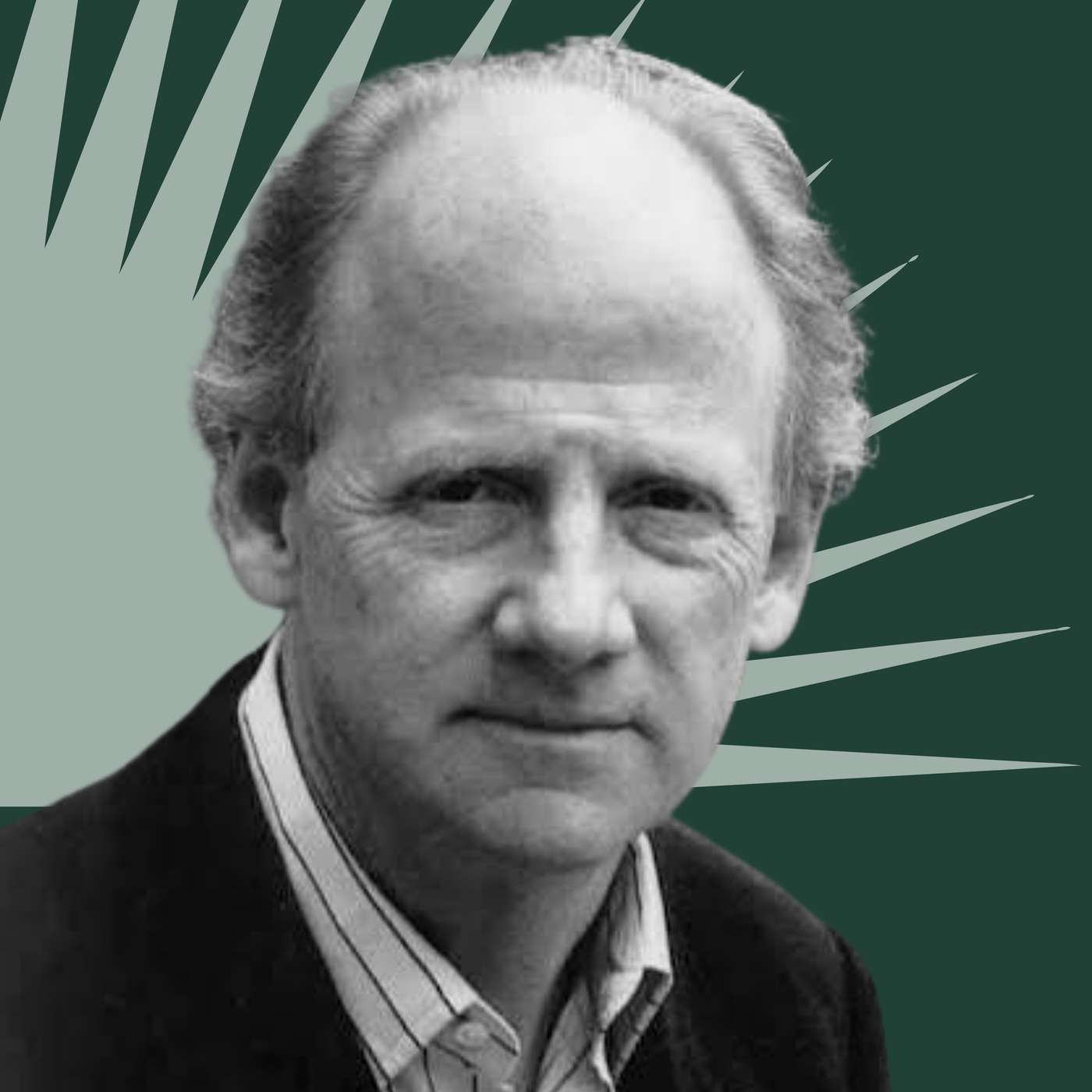


“Nobody in the United States wants to call it that. But I write history, and I know what a coup d’état looks like.” — John Ralston Saul
As the leaves turn, it’s becoming Canada week. Yesterday we had the Newfoundland-based Paris Marx offering an incisive critique of American Big Tech. Today, it’s my old Canadian friend, John Ralston Saul — novelist, essayist, former president of PEN International — speaking to us from the top floor of his house in an autumnal Toronto.
Like another frequent Canadian guest, Stephen Marche, Saul offers a sharp critique of the United States which, he reminds us, is a geographically smaller country than Canada. Not that size matters, of course.
Saul thinks of America as Rome. Canada’s great achievement, he says, is surviving as Rome’s neighbor for over two hundred years. In contrast with Chile, Mexico or Guatemala, Canada hasn’t been invaded or subverted by its clumsy imperial neighbor. When America sneezes, the rest of the continent gets pneumonia. Except Canada. Even in autumn.
Is Trump an aberration? Not according to Saul who offers Grover Cleveland as the 19th century DJT. Like Stephen Marche, Saul thinks there will be a civil war in the United States within twenty-five years. But he doubts it will be a repeat of the 19th century Civil War of Shermanesque armies against armies. More likely a continuing breakdown of the legal system, and of the willingness of individuals, states and the federal government to obey the law. More like the chaos of Caligula than Caesar vs Pompey.
On the tariffs Saul is cheerful. Canada sent half its goods south before the 1988 free trade deal and three quarters after it, he reminds us. So Trump’s tariffs have frightened the Canadian provinces into dismantling the trade barriers they kept against each other. Duh.
“We thank him for his stupidity,” Saul says of Grover Trump.
John Ralston Saul once wrote a book about Canada entitled A Fair Country. So I suggest a book about America should be called An Unfair Country. He laughs. He’d call it The Great Drama. With perhaps the subtitle: Not As Big As Canada.
FURTHER READING
• John Ralston Saul writes at his Substack, including the piece in French on a post-Trump America that AK raises at 05:11. He co-founded and co-chairs the Institute for Canadian Citizenship — the organization behind inclusion.ca — with Adrienne Clarkson, and served as International President of PEN from 2009 to 2015, the first Canadian elected to the role.
• The books AK asks about: Voltaire’s Bastards: The Dictatorship of Reason in the West was published in 1992, not 1993, and The Collapse of Globalism and the Reinvention of the World in 2005, not 2018. A Fair Country: Telling Truths About Canada followed in 2008. Full bibliography.
• Chrystia Freeland’s Unreliable Boyfriend (Simon & Schuster, June 2026), the account of Canada–US relations AK quotes twice. The phrase has a history: a British MP used it about Mark Carney when he governed the Bank of England.
• Stephen Marche on the possibility of civil war — his episode of this show. His book is The Next Civil War: Dispatches from the American Future (2022); the phrase AK reaches for at the top is the title of the episode rather than the book.
• Kurt Andersen on whether America should break up — that episode. His novel is The Breakup (Penguin Random House, 2026).
• On Canada and Europe at 33:13: France’s foreign minister raised the possibility of eventual Canadian membership in March 2026, and an associate-member arrangement has since been floated. Saul thinks full membership is neither likely nor desirable, and expects a negotiated special relationship instead.
• Andy Burnham became British prime minister in July 2026, which is the context for the exchange at 36:02 about the UK drifting back toward Europe.
• Two numbers worth checking against the tape: Saul gives the EU’s population as 500 million, where it is closer to 450 million, and places Baffin Island as the next island over from Greenland. The narrowest crossing is actually Nares Strait, between Greenland and Ellesmere Island, about 26 kilometres across; Baffin lies farther south across Baffin Bay. Neither alters his argument.
FIVE TAKEAWAYS
1. He is sitting where Lester Pearson’s bed used to be. Asked why Carney can take on Trump when other leaders cannot, Saul reaches back to the last prime minister he thinks comparable, and the answer turns out to be literal: Pearson rented the floor of the Toronto house Saul now works in, as a newly married young professor. The parallel is that both arrived with international standing already earned — Pearson the Nobel for Suez before he ever won an election, Carney the Bank of England through a crisis. Pearson had a lisp, wore bow ties, looked professorial, and was, in Saul’s phrase, tough as they come and a great drinker. He also brought in Medicare, which Saul makes concrete: a bone marrow transplant, five weeks in a private room, zero dollars and zero forms.
2. Canada never had its civil war, and he thinks he knows why. He calls Canada the oldest continuous democratic federation in the world, running from 1848 without the internal bloodletting that the United States, Latin America, France, Germany, Italy and Spain all went through. His explanation is not national virtue but national calculation: Canadians understood that if they indulged in that kind of violence, the only beneficiary would be the country across the border, because it would leave them weakened. Survival produced restraint. It is the sharpest thing he says about his own country, and it sits directly against his forecast for America.
3. A generation of Canadian executives were trained as branch managers. The part of the tariff story that is harder than tariffs. For a hundred and fifty years, he says, Canada worked at counterbalance — markets and relationships elsewhere so that no single partner could dictate terms. Canada was a serious player in Asia in the 1920s and 1930s. That habit was abandoned after 1988, and what replaced it was a business class that became, in effect, subsidiary management: people whose professional question was always what the Americans are doing. Opening doors in Europe and India is the prime minister’s work, and Saul is blunt that the executives who have to walk through them are the wrong people. His prescription is almost quaint: we have...
00:00 - Intro
00:31 - Canadians looking south: Marx, Marche, Freeland
02:09 - The top floor of a house in Toronto
02:33 - Enemy, friend, or unreliable boyfriend?
02:58 - Your map is wrong — Canada is the bigger country
03:17 - Nine thousand kilometres, and no invasion since 1814
04:20 - Chile, Guatemala, Mexico: the politics of empire
05:11 - How long has America actually been the ruling empire?
05:53 - Is Trump an aberration? Grover Cleveland
07:03 - Two terms split by a term — sound familiar?
07:41 - Most presidents are forgotten within twenty years
08:30 - Citizens United, and money in democracy
08:45 - A civil war within twenty-five years
09:05 - Armies, or a breakdown of the law?
09:57 - Carney’s counterbalancing alliances
10:41 - The shortest empire in history?
11:20 - America is poor in water
11:40 - Canada has everything the United States needs
12:03 - Greenland
12:27 - And the next island over
13:06 - Why the EU stepping in mattered
14:10 - Are ordinary Canadians feeling it?
14:58 - Doug Ford
16:02 - Positive and negative populism
16:45 - If you live next to Rome
17:30 - The 1988 free trade fight, and what was predicted
18:30 - The gift: provincial barriers finally coming down
19:00 - “We thank him for his stupidity”
19:30 - A hundred and fifty years of counterbalance
20:30 - From fifty percent to seventy-five is colonial status
21:00 - The CEOs are the wrong people
21:33 - Can Trump save Canada?
22:08 - The oldest continuous democratic federation
23:00 - Why Canada never had its own civil war
23:27 - Democracy on the line
24:30 - Twenty-five years to repair
25:00 - It was an attempted coup d’état
25:35 - Why Carney can take on Trump
25:59 - The Lester Pearson comparison
26:39 - Sitting where Pearson’s bed used to be
28:00 - Diefenbaker, and shouting in the Commons
28:45 - Medicare, and a transplant that cost nothing
30:05 - From the Bank of England
30:08 - He flew to Paris, not to London
31:00 - Macron’s hug in the courtyard
31:35 - Middle powers
31:58 - What does Carney think of America?
33:13 - Could Canada join the EU?
33:43 - No — but a special relationship
35:00 - Three coasts, forty-two million, the Northwest Passage
36:02 - Britain’s predicament
36:42 - The Athens–Rome thing
37:00 - Two great British attributes
37:36 - What about the food?
38:08 - Burnham, and the slow walk back to Europe
38:30 - A jilted Canada?
39:10 - Are the British any good at being serious?
39:25 - All great tragedies are funny
39:37 - America: catastrophe, not tragedy
40:04 - If he wrote a book about America: The Great Drama
40:30 - Built on contradictions from the beginning
41:00 - Slavery, then a century of segregation
41:28 - Guns, and how many homes
41:30 - Kurt Andersen, and the case for a breakup
42:26 - Should America break up?
42:37 - The rebuild falls to the under-fifties
43:00 - A Supreme Court that is actually a court
43:57 - Take the money out of elections
44:25 - Closing
00:00:31 Andrew Keen: Hello, everybody. It's Wednesday, October 21, 2026. [ed.: recorded October 15, 2026; date as spoken is the scheduled air date] Yesterday, we had the young Canadian journalist, technology critic, Paris Marx, on the show. He has a very impressive new book out called Hyperscale: The Ambition and Excess of Big Tech's Data Empires. Paris Marx is looking down on Silicon Valley from the West Coast of Canada. And, of course, Canadians have tended to be very perceptive, full of insights when it comes to looking at America. Another of our favorite guests on the show is my old friend Stephen Marche, longtime critic of America. His book, The Arrival of the American Future, the Next Civil War [ed.: The Next Civil War: Dispatches from the American Future, 2022], has been enormously influential. It seems as if there may be something up in the water in Canada when it comes to looking down at the United States, its big brother, or maybe as Chrystia Freeland, a Canadian writer and politician recently wrote, in terms of describing America, an unreliable boyfriend. Anyway, another of my oldest Canadian friends is one of its leading writers. John Ralston Saul is a former chairman of, cofounder— sorry, president of PEN [ed.: PEN International] and the cofounder of inclusion.ca, author of many impressive books, and he's joining us today. John, where are you?
00:02:09 John Ralston Saul: I'm in my office on the top floor of our house in Toronto.
00:02:14 Andrew Keen: And, the weather is turning, John. It's starting to turn towards winter.
00:02:19 John Ralston Saul: Winter is coming upon us. I mean, I guess it's late autumn or whatever, but it's cool.
00:02:24 Andrew Keen: Late autumn in Canada is a serious thing, not like in California. We don't have autumn. So, John—
00:02:30 John Ralston Saul: I know. You're the warm place.
00:02:33 Andrew Keen: Easy question to kick off with is you've spent your life writing one way or the other, not about America, but certainly about many of the themes in America, enlightenment, globalization. When Canadians look down on the United States from up there, do you see, as Chrystia Freeland notes, an unreliable boyfriend? Do you see an enemy, a friend? What do you see?
00:02:58 John Ralston Saul: Well, first of all, I just point out that your map, it all depends on what angle you take the map from. Your map shows Canada is smaller than the United States.
00:03:07 Andrew Keen: Oh, is this penis envy, is it?
00:03:10 John Ralston Saul: Whereas Canada is physically bigger than the United States by a reasonable amount. So—
00:03:15 Andrew Keen: So this is, probably an American map?
00:03:17 John Ralston Saul: It must be an American map. Absolutely. It's just a minor point. You know, I think, you know, if you're Canadian, you know that we have a 9,000-kilometer border including Alaska, with the United States. You know that we haven't been invaded by the United States since 1812–14. You know that you have to judge your leaders on the basis of how good they are at maintaining some kind of half-decent relationship. Sometimes it's quarter-decent, but, you know, some sort of relationship so that we don't become like every other country in Latin America, a place that's invaded by the United States. You know, the history of that, I don't have the numbers in front of me, but they're pretty convincing, including Mexico, of course, where a number of leaders have fall— have been made to fall because of interference from—
00:04:20 Andrew Keen: So another Venezuela, another Cuba, in other words.
00:04:23 John Ralston Saul: Well— or Mexico or you just go through Latin America. I mean, Chile. I mean, there's— the list is long. So, I mean, we— I think that Canadians are fairly conscious about the need to be careful in the way that we handle the United States. This is all aside from the fact that the cliché about many of my best friends are American. You know? Of course, we all have, you know, US friends, and most of us have traveled there and so on. But that's quite different from the politics of empire. And the United States is the ru— for the moment, the ruling empire in the world. May not last much longer, but it is and has been since, what, '42?
00:05:11 Andrew Keen: Well, you know the answer to that better than I do. 1942, '41, '45. John, I don't wanna turn this into another conversation on Trump. You've written extensively on him. You just had an interesting piece on your Substack in French about post-Trump, which is very intriguing. Do you see Trump as an aberration when you look— I mean, you're obviously, I'm half joking or mostly joking. You can't speak on behalf of Canada. But as you look down on America, is Trump an aberration, or is he par for the course what one would expect given the nature of American history?
00:05:53 John Ralston Saul: Well, I think there are two things. One is that there have been lots of presidents who were like Trump. You know, Grover Cleveland. I mean, there are a number of them if you go back to history. So that sort of message that he keeps putting out about physical— geographical expansion is a fairly standard, discourse from many American presidents going right back, not, to the beginning, really. And there are moments when it's worse. There are moments when it's better. That, you know, this is— United States is interesting because it's a country like Russia, which tends to expand geographically, not leaping like Britain. It's a funny little island. Right? They leaped in their boats and so on to other parts of the world, whereas US spheres of influence or occupation are done physically. And, of course, we have, as I said, 9,000-kilometer border. So, you have to be naive and foolish in Canada to forget that. Never forget that. That doesn't mean that it's gonna happen or that it's gonna happen tomorrow, but it's there. You—
00:07:03 Andrew Keen: It sounds like you've got a long memory, John. I mean, you're a historian, and you talk about Grover Cleveland. Most Americans, I think, would guess that as a baseball team. I mean, is that the best you've got in terms of comparisons with Trump? He was late in the nineteenth century, not a particularly significant or successful American president. Anyone since come to mind? Reagan, for example? Reagan, for example. Anyone since is Trump-like?
00:07:31 John Ralston Saul: Well, for— first of all, he was more significant than people remember now because he did two terms separated by a term. Sound familiar?
00:07:40 Andrew Keen: Mm-hmm.
00:07:41 John Ralston Saul: He was very important. He was quite successful. And, you know, most American presidents are forgotten within twenty years, more or less. There are only four or five that really mythologically remain as in people's minds as this is the kind of person we'd like to think of as one of our presidents. You know? Obviously, Washington and FDR. There are a few. And I doubt very much that Trump will remain as more than a kind of, from the American point of view, sort of an unpleasant joke. Or— and that's the other side of the question. Does he actually represent a new phase in the history of the United States where the shape of the Supreme Court, their ruling Citizens United, which meant that money had a gigantic role to play in the future of democracy or the undoing of democracy. And I could go on with the list, or is the United States on the edge of a very serious crisis? And, you know, one of your former, guests you mentioned, talked about a possible civil war in the United States. I personally belong to the group that thinks that the United States will have a civil war sometime in the next twenty-five, let's say.
00:09:02 Andrew Keen: I guess— so you're in Stephen Marche's camp when—
00:09:05 John Ralston Saul: Yeah. Now will that civil war be actually armies against armies, or will it just be a continuing breakdown of the legal system and a breakdown of the willingness of individuals and local or state or federal government to obey the law and get away with it. You know? So, I mean, the next ten years are gonna be— five years are gonna be really, really interesting because you have a president who is constantly breaking the law. And what will be— will this be rectified, as a lot of people think, by the next president? I personally think it won't, and therefore, there will be a major crisis. You know? So from the Canadian point of view, all of that's very problematic. I mean, we have— we're— and that's why we, you know, we've got a prime minister who's going around building up, counterbalancing alliances, for example, with Europe or with India.
00:09:57 Andrew Keen: Yeah. And I wanna come to Carney in a few minutes. Yeah. That was going on. A, an important figure, obviously, in Canada, but also perhaps in the world. John, as I said, you've written many books, many bestsellers. Two of your best-known books are your critique of what you call the dictatorship of reason, Voltaire's Bastards, that came out in 1993 [ed.: 1992], and then one of your later books, The Collapse of Globalism, that came out in 2018 [ed.: 2005]. When you write these big cultural critiques of the enlightenment and reason and globalization, are you thinking America— is America the symbol of all the promise and problems of modernity? Is that one way of thinking about the United States?
00:10:41 John Ralston Saul: Well, you know, the reason I put dates on the arrival of the United States in a leadership position is because it hasn't actually been in a leadership position for very long. So far, if it doesn't last, it'll be one of the shortest international empires, shorter than the British, shorter than the French, shorter than the Chinese. We don't know that it's in a particularly good position to last. Yes. It has certain advantages, but, it is— it's poor in water. It's used up its water very rapidly. It was using it up. It doesn't have a lot of the natural resources that you need in order to maintain power. You know? And so that's why Britain and France went out and got these empires, and that's why some Canadians are worried about the glance of Washington towards Canada because we have all of those things. We have— you know, it's the exact opposite of what Mr. Trump says. We have— he says Canada doesn't have anything we need. The truth is Canada has everything that the United States needs in terms of natural resources. And that's just a fact. It's not an opinion. But facts, as you know, are not his strong point.
00:12:03 Andrew Keen: So the Greenland situation is particularly re— resonant [unclear], I'm guessing, in that sense. He continues to make, one kind of promise or another or claim about Greenland recently. He said that oil, gas, and mineral exploration in Greenland is set to begin. And according to the AP, it's not that simple. But he's sort of making similar threats in some ways to Canada, isn't he?
00:12:27 John Ralston Saul: Yeah. Well, when the Greenland incident began, people like me looked at it and said, if he succeeds, if he gets Greenland, if you look at your map, the next island over is Baffin Island. Sometimes, I think it's 25 kilometers away or 20, depends on which part of it you look at. [ed.: the narrowest gap between Greenland and Canada is Nares Strait, opposite Ellesmere Island (about 26 km); Baffin Island lies farther south across Baffin Bay] Yeah.
00:12:51 Andrew Keen: And when we're looking at our map, which shows a smaller Canada when in fact Canada's bigger, then you can see right next to Green— right next to Greenland is a green part, a green part at least on this map, which is Canada, Baffin Island.
00:13:06 John Ralston Saul: So if he got Greenland, you know, the— that kind of ambition would have led them simply to, move their gaze slightly to the west, and the next thing would have been Baffin Island and the Northwest Passage. So it's extremely important that the EU stepped in and, said, no. No. Greenland's part of Europe. You can't do that. And, you know, they were essentially obliged to back off, because suddenly, it wasn't a few thousand people. Suddenly, it was 500 million very rich people [ed.: the EU's population is about 450 million], in a larger market than the United States, really. And for many reasons, picking a fight with Europe is not the smartest thing that Washington could do because they also need to sell even though it's a very inward-turned country in terms of, buying and selling. It doesn't export. It's not so dependent on export as, say, Canada is. We've always been an export-dependent country.
00:14:10 Andrew Keen: What kind of impact is the MAGA movement and the MAGA administration having, on Canada? Lots of talk about the impact of tariffs from the United States. Most of the reports are about the US. But are we seeing or are you seeing, John, a real impact on the day-to-day lives of ordinary Canadians of Donald Trump's policies? Your rather feisty Doug— Doug Ford recently warned that Trump's tariff war with Canada is here to stay, so it's gonna be part of the furniture, so to speak. Is it impacting day-to-day lives of Canadians?
00:14:58 John Ralston Saul: I mean, Doug Ford is a real character. I'm not a particular fan. On this particular subject, he's been very good, but I think he's also distracting attention from a lot of the things he's doing on the right in Ontario, which is basically a center, center-left province.
00:15:15 Andrew Keen: A kind of— is he the closest thing that Canada has to Donald Trump, Doug Ford?
00:15:19 John Ralston Saul: Well, it's an old political family, his family. They've been around for a long time. I don't trust them. But, you know, he also is smart enough to know that this— what's going on between United States and Canada, the gov— the initiatives of the United States, of Washington, can have a negative impact on the economy of Ontario, which is the most industrialized economy in Canada. I mean, the car industry is one part of that. So he's— I— you know, he's doing what he thinks is best, and that's fine, and, speaking up. I think the, you know, the prime minister is another school, a much more sophisticated school.
00:16:02 Andrew Keen: This is Mark Carney, of course.
00:16:03 John Ralston Saul: Less populist. If you like, what Trump and Ford have in common is they're both populists in the traditional sense. I break them up into negative populists and positive populists because, you know, all democracies are about populism. And there's no question that Mr. Trump is a negative populist. He, you know, his interests are advancing through destruction of others. I think that's the core of his politics. Doug Ford is a much more day-to-day kind of, you know, in the—
00:16:41 Andrew Keen: So— but back to my question. I mean, are Canadians feeling it?
00:16:45 John Ralston Saul: No. We're not. No. I mean, I shouldn't say that. I think some prices are going up. But everybody— it's interesting that this is a— okay. If you live next to Rome, you have to be pretty conscious. You can't sort of go to bed and think, oh, another day has gone by and tomorrow's another. You always have to be thinking, we live next to Rome, 9,000-kilometer border. So you always have to be thinking what will happen, what will they do, how will we deal with it. And, so that's why the— on the one hand, this crisis has— is the first real crisis since the 1988 debate over free trade between United States and Canada. And what people like me said at the time was, of course, we're in favor of free trade. This is not a free trade agreement. This is an agreement to integrate into the United States in a way which will leave us as this kind of semi-colony. And we must be very, very careful about how this is all done. So here we are X decades later, and Mr. Trump has done exactly what we all said would happen eventually. It just sort of tried to throw it in the air. And, so what's happening is the Canadians are saying, okay. Guess we better take down some of the tariff barriers between the provinces, which are ridiculous. I mean, it's really— talk about provincialism. I mean, the way the provinces protect each other from each other. Well, those are supposedly coming down. So the first thing that Mr. Trump has done with his tariffs is to do an enormous favor to Canada, by finally getting these provincial leaders to start getting rid of things that prevent them from trading with each other. Sort of easier in a way to trade with the United States than with each other in some cases. So I think that's good— really good for Canada, and we thank him for his stupidity. And, no. What can I say? But the other thing that's more interesting is that we've always— I mean, since— for a hundred and fifty years, we've always been working at, finding counterbalancing markets and relationships. Not anti-American. Just saying, okay. We've got this relationship with Rome. Now we need a relationship here and a relationship there so that we're not dependent. So there's a counterbalance. We lost that idea of counterbalance and counterweight, after the '88, decision to integrate economically. And, now, it has been woken up again, and we're realizing that we have to go out there and work really, really hard to build up our relationship economically and politically with Europe. As I said in the beginning with India, we always had a relationship with China. I mean, we were one of the first people to recognize when nobody had recognized communist China. We were one of the first— not the first— one of the first to go in and recognize it. There are lots of other places we can buy and sell. And so what we need to do, we used to sort of have 50% of our goods going to the United States. Well, that's okay. I mean, that's a perfectly— you know, we're selling a lot of natural resources and some high-tech stuff. But since '88, it's gone up to 75%, and that is suicidal. That is colonial status. So the job of Canadians, Canadian businesses, the Canadian government is to get it back down from 75% to 50%. And that's what is being worked on. And so the numbers already show a faster growth in economic relations, for example, with Europe, but there's an enormous, enormous amount of work to do. And some of the businesses are so integrated into the US that I'm not sure that they know what to do. Partly, they became like subsidiaries even if they were owned in Canada, became like subsidiaries. And so their CEOs are entirely the wrong people. They're used to sort of what are the Americans doing or, what are they— what should we do in order to sell more there? We— what we need is to reinvent an economic class we used to have, which was very, very international and looking for markets everywhere in the world. I mean, in the 1920s and '30s, Canada was very— a big player in Asia, for example. You know? I mean— and then after '88, we started to forget all of that to a great extent. So we have to go back, reopen those doors. Well, the prime minister's got the doors open. The businessmen have to learn how to go through those doors.
00:21:29 Andrew Keen: Mm-hmm.
00:21:30 John Ralston Saul: We've gotta be speaking languages other than English.
00:21:33 Andrew Keen: Right. I wanna come to the prime minister's such an important figure. But so you really share this argument that in a way— and The Economist ran some features on this recently, that in a in an odd kind of way, Trump may save Canada, address this absurd question with tariffs and the states and force Canada to really make it, say, a player, a significant player in the twenty-first-century world that before Trump, America was too dependent. Sorry. Canada was too dependent on the United States.
00:22:08 John Ralston Saul: Yeah. I mean, I think it's a shock for the people who became very comfortable in this sort of subsidiary relationship. And these are the kind of business people who probably don't know much history. They don't know much about the his— economic history of the country. They don't know what the country has been capable of when it was much— had a tiny population and was much, much weaker. Well, you know, now we're the old— this is a terrible sentence. We are the oldest continuous democratic federation in the world. Oldest continuous democratic federation in the world. We didn't have a civil war. We didn't set about murdering each other by the hundreds of thousands the way the United States is. It broke up, and then it got itself back together again. But we have got through from 1848 to today without— with some nasty moments. Like, every country has nasty moments. So— but we've never had this kind of terrible internal violence, which, you know, United States has had, all of Latin America's had, France has had, Germany's had, Italy's had, Spain has had. We've got through without that partly, I think, because we knew that if we indulged ourselves in this kind of violence, the only people who would, get an advantage from it would be the United States. We were weakened.
00:23:27 Andrew Keen: John, you and I have talked on many occasions about democracy. You've been on our How to Fix Democracy show many times. You wrote recently on your Substack that democracy's on the line. How important in broad terms is Trump's assault, his disregard, his disdain for democracy, not just theoretically, but in terms of Canadian democracy?
00:23:57 John Ralston Saul: Well, I mean, it's most important in terms of US democracy, which has had, yes, you know, its ups and downs, in terms of who's allowed to vote, not just slavery, but who's allowed to vote and all that. So I think it's an enormous attack on US, democracy, and that's something which US voters are gonna have to really make up their mind about, not just in the midterms, but in the next presidential election and then the next midterms. This is something which will take twenty, twenty-five years to repair. You know, it's the old cliché. We all know that takes ten minutes to pull something down. It takes decades to build it back up again. I mean, United States has a lot of complexity and richness and ideas. You know? And so it's perfectly capable, I think, of pulling itself back together, but it— this is gonna be one of the toughest if it's able to do it. And if the people who don't really believe in democracy in the United States, are willing to go along with it. I mean, just remember, you know, there was an attempted coup d'état in Washington, and Mr. Trump was just behind it. Right? That's— that, you know, nobody in the United States wants to call it that. But I'm sorry. I write history, and I know what a coup d'état looks like, and I know what an attempted coup d'état looks like. I've looked at them all over the world, and I've been there when some have taken place. And that was an attempted coup d'état. That's what that was. So, you know, those people have now— they're now out of jail. They've been— they're being admired by some of the leadership. This is a big crisis.
00:25:35 Andrew Keen: Compensation economically as well [unclear]. Let's talk a little bit about, Mark Carney because he's become, I guess, in a way, the symbol of resistance to much of what's happening, certainly what— much of what Trump's doing in the US. What is it about Carney that allows him or has allowed him to take on Trump much more successfully than other global leaders?
00:25:59 John Ralston Saul: Well, I mean, you know, he's a very, unusual figure. So first, we haven't had a prime minister like this since Lester Pearson. So that was in the, you know, in the sixties. And, you know, and they share this, which is part answer to your question, which is that when Lester Pearson became prime minister, he won, at the same time, basically, the Nobel Peace Prize for his work in the Middle East. See, he was— Lester Pearson was he was one of the people who made the United Nations possible. He was one of the—
00:26:31 Andrew Keen: Remind us a little bit more about him, John. I mean, I know you knew him personally, but most of our viewers and listeners won't be familiar.
00:26:39 John Ralston Saul: Well, he was this, I'm like, I'm sitting on the third floor of our house. And when he was a young professor, he got married, moved out of the college, and rented this floor. So I'm sitting exactly where Lester Pearson's bed sat after he was married. So there you are. No. I can only say good things about him. And he lived here for about three years, and then he, was, asked to come to Ottawa to be part of this newish but growing, foreign affairs department, external affairs department, diplomatic corps. And he was brilliant, and he rose really pretty fast and became sort of the senior diplomat, became the deputy minister. And that's when he was brought in to play this key role in the Middle East, got the Nobel Peace Prize. Then he was convinced to— he was minister of foreign affairs at that point, and he was, convinced to, sorry. He was deputy minister, senior civil servant. [ed.: Pearson was deputy minister of External Affairs 1946–48, then entered politics as Secretary of State for External Affairs in 1948; he won the Nobel Peace Prize in 1957 as minister and became prime minister in 1963] And he was convinced to run politically. And, of course, he knew nothing about being in politics, and he had a terrible speaking voice. He had his— he had a lisp, and he sort of wore bow ties and looked very nice and professorial. But in fact, he was tough as they come and a great drinker and an international maneuverer. So he was a very famous figure at the international level. People called upon him in different parts of the world to help with crises. You know? And he played an enormous role at the UN, a very influential role. So after a couple of years of not doing very well in the House of Commons, and I was a kid, I used to go up to Ottawa and sit in the galleries and watch him debating John Diefenbaker, who was a very radical, screaming at each other in the House of Commons. They hated each other. They were total opposites. But funny enough, they stood for the same kinds of things. They just hated each other in a very personal way. So, anyway, you know, he won his two elections, never got a majority, and brought in, health care, national, you know, Medicare, you know, complete national Medicare. I mean, listen. Three, four years ago, I had a bone marrow transplant. Right? And before that, I was obviously very sick with, blood cancer. And, I sat— I had a bone marrow transplant in the— at the hospital just down the road, great cancer hospital. I had, five weeks in a room that had to be private because you have no immunity, etcetera, etcetera, etcetera. You know how much that cost me? Zero. You know how many papers I had to fill in? Zero. That's Canadian Medicare at its best. And I— there are many, many people who will talk to you about that. So he brought that in. He pushed us much more into peacekeeping, which at that point was a very important thing for the military. He put it— brought in a whole pile of social policies, which in the United States would be considered very left-wing, but which in Canada are considered to be center, center-left. And in a way, he's responsible for modern Canada. And in a way, Carney, what's interesting about Carney in a way is he, like Pearson, was very— is very famous in Europe, in England.
00:30:05 Andrew Keen: Yeah. Former head of the Bank of England.
00:30:08 John Ralston Saul: Yeah. But when he was head of the Bank of England, he got them through an enormous crisis and had to cooperate a great deal with Europe. So when he became prime minister, the first thing he did after he formed his cabinet was he got on the plane and flew to Paris. Now every other Canadian prime minister would have flown to London or Washington. He flew to Paris, and he went straight to the Élysée. I mean, he had an appointment, obviously. And, Macron and he spent quite a bit of time together, and then he came out into the courtyard, the two of them, where all the cameras were in that, you know, that eighteenth-century courtyard. And Macron very intentionally hugged him very firmly in public to say, we're with you. We're with you. We understand. Europe is with you. So— and a lot of people just thought, well, what's that? But it— I know the French very well. I lived there for many years. That was a very intentional political act on his part. So, Carney is someone who is recognized and known widely in Europe and in other parts of the world and trusted because he took Europe— parts of Europe through a crisis in a way that showed calm expertise. He's a banker, former banker, both private and public, but he seems to have a capacity for, international affairs, economic in particular.
00:31:35 Andrew Keen: I mean, he's reestablishing the credibility and importance of middle powers, certainly Canada, maybe Europe. What do you think Carney— I mean, I don't know how well you know him, but what do you think— but I— I'm sure you've spent some time with him, and you seem to know everyone in Canada. What do you think he thinks of America?
00:31:58 John Ralston Saul: Well, since he's a very smart man, he says very, very little. And what he says is, I think, extremely considered. He's— I think everybody knows what his position is. And, I mean, just the other day, a couple of days ago, he said yet again something about what the situation was. I think he— my guess is that, you know, remember I said at the beginning, Canadians wake up in the morning and say, what have they done across the border? You know, this is a guy who pays very close attention and is thinking all the time what's gonna happen next. And I— my guess is that he has a very deep concern. My guess is that if I can see profound instability south of the border, I mean, he's gotta see it, and he's getting reports. I'm not getting reports. I'm going on intuition, which I believe in. But, I think he must be very concerned about what's happening south of the border. And I'm not even sure that his primary concern would be about what effect it will have on Canada. His primary concern will be about what will such instability in the United States mean in the United States and, therefore, internationally.
00:33:13 Andrew Keen: There was an interesting New Yorker piece earlier this year. What if Canada joined the EU? Lots of talk about that. Carney recently announced that he's gonna attend the EU State of the Union. Is this all symbolic, John? Does it disregard geography? I mean, Canada obviously is part of North America rather than Europe. Is it conceivable in your mind as a historian and as a geostrategic thinker that Canada could indeed join the EU?
00:33:43 John Ralston Saul: No. I don't think that Canada will join the EU because joining the EU has all sorts of implications, which, in terms of social management and things, which really would drive Canadians crazy. So we're— as, you know, we're somewhere in between the European approach and the US approach. So, I mean, we don't want either in that sense. And I, you know, I have a house in France. I spent a lot of time in France. I did my doctorate on de Gaulle. Canadians would not want that. You know, there are 500 million people on something that— on a piece of land that can fit into the province of Ontario. I mean, you know, we want—
00:34:23 Andrew Keen: And that's the American map, with Canada shown— where Canada's smaller than the US.
00:34:28 John Ralston Saul: That's right. So, I mean, I think that we, will not become part of Europe, but they're going to negotiate a deal. They're negotiating a deal, which will give Canada a special relationship with Europe. And we'll see exactly what that includes, but a lot of it will be economic. And I think they'll be— the— some of it will be to do with job movement, allowing Europeans into Canada more easily and Canadians into Europe more easily. So, you know, this is a counterbalance movement, and it's very wise. It's very sensible because we don't know what's gonna happen south of the border, and we're concerned. We'll do everything we can to keep our relationship going with Washington, but we won't do everything. We'll do everything but not everything. We're not gonna give up sovereignty. We're not gonna weaken ourselves. And to the contrary, I think Canada is back in the mindset, the pre-1988 mindset that we're— we need to be, multipolar, if you like. And remember this. I mean, I said already, we've got the wood, the mines, the natural resources. We've got all of that, the oil and gas. We've got the Northwest Passage. We've got three coasts. I mean, almost no country has three— is on three oceans. We're 42 million, which, of course, is small compared to the United States. But if you make a list of Western democracies, Canada is not the smallest. It's up in the top third in terms of its population.
00:36:02 Andrew Keen: Yeah. And speaking of special relationships, you've talked a lot about France, Canada, the United States, the EU. But what about the United Kingdom, which, of course, has a special relationship— claims to have had a special relationship with the US, although it seems often one-sided, and then does have a special relationship with Canada. Given the UK's current predicament, geostrategic predicament caught somewhere between Europe and North America, wouldn't Canada's natural ally be the UK? I mean, what kind of relations does Carney have with Burnham? I would have thought that temperamentally, they would have got on rather well.
00:36:42 John Ralston Saul: Probably. I mean, you know, the UK always wanted to have a special relationship with the US. It was always the Athens–Rome thing. Right? And so they've— that's— if you go— dig down one of the reasons that the UK took— in the end, got out of the EU, you know, Europe, was because they thought they had this special relationship with Washington. And what the— what Trump has proved is they don't have a special relationship with Washington. I mean, Washington's happy to have the British army, which is a very good army, particularly the Parachute Regiment and the SAS. They're happy to have them go in and fight some wars that the United States doesn't have to go in and fight with an army that maybe isn't as professional. I mean, if Britain has two great attributes, its armed forces and its tailors for men. You know?
00:37:36 Andrew Keen: What about its food?
00:37:38 John Ralston Saul: It's better than it used to be. Yeah. But it, has a very, very sophisticated armed force. And, so— but they have realized in the last— since Trump came back that they were wrong, that they don't have a special relationship. And so now, Burnham and many others realize they're gonna have to move slowly back towards Europe. There is no other option. There is no other option for them. They're just an island. Right?
00:38:08 Andrew Keen: Sounds like, what Mrs. Thatcher said. There is no option. And coming back to Chrystia Freeland's book, Unreliable Boyfriend, I'm getting the sense, John, that Canada feels a little jilted when it comes to the US and the UK, that the U— that the UK should have settled for Canada rather than had eyes bigger than its stomach for the US.
00:38:30 John Ralston Saul: You know, my mother was a war bride, and I did— I think I said I did my PhD between London and Paris. And, I think there are a lot of smart people in Britain who realize that, you know, they lost the last battle inside the UK about Europe. But I think gradually, the Brits are realizing that they need to do something serious. They can't go along pretending they're happy.
00:39:03 Andrew Keen: I mean, one thing as you know better than I do about the Brits is we're not very good at being serious.
00:39:10 John Ralston Saul: Oh, I don't know. Very— listen. This— I should— I said, you know, I forgot to say the best sense of humor in the world is British. Right? So I think they— I don't know.
00:39:20 Andrew Keen: Is that a manifestation of seriousness or unseriousness? It depends how you define a good sense of humor.
00:39:25 John Ralston Saul: No. No. I mean, listen. As a writer, there is no question that a sense of humor is the single most important thing. All great tragedies are funny. I mean, the— it's the British—
00:39:35 Andrew Keen: Even the United States?
00:39:37 John Ralston Saul: Well, I don't know that that's a tragedy. I don't— it's a catastrophe. But I don't—
00:39:43 Andrew Keen: So I don't know. Well, another conversation, John, we can distinguish between catastrophes and tragedy. Finally, you wrote a book on Canada, which was called, A Fair Country: Telling Truths About Canada. If you were to write a book about the United States, would you call it An Unfair Country?
00:40:04 John Ralston Saul: It's a really good question. I might call it something like The Great Drama. I mean, you know, it's been a drama from the beginning. Yeah. I mean, if you look at the difference between the Protestants, you know, do-gooders in the Northeast and the southern slave owners who came here almost at the same time in the Southeast, you're looking at a country which was built from the beginning on profound contradictions, and none of those contradictions are going away. So it's a permanent drama. And, I mean, the very fact that, you know, hundreds of years of slavery was followed by, what, a century of segregation? You know, like, hundreds of thousands of Americans died in the civil war, and the outcome was segregation. So it's a country which has enormous internal dramas, and that's why people are saying it could end up in a civil war. It could. It would be tragic. It would be horrible. But you have to just keep reminding yourself that the gun laws or the absence of laws, mean that there is the capacity for violence inside the United States, inside how many homes, how many houses have guns in them. This is not what you have in a democracy.
00:41:28 Andrew Keen: Finally—
00:41:29 John Ralston Saul: True.
00:41:30 Andrew Keen: Right. Finally, finally, I like this idea of America as the permanent drama. Certainly, there's always a new chapter. It's rather like Trump and social media and reality television. We had another of our old friends on the show, Kurt Andersen, a very good American writer. His latest book is called The Breakup. It's interesting that so many people now write about, America in romantic terms, but his is a novel. He suggests that America can and should break up. And in fact, we have a nonfiction book coming up, later this year, which also speaks in favor of the idea of a breakup. Could you imagine America— I mean, you've already made the point that you think there will be some sort of civil war like Stephen Marche predicts in America in the next ten or twenty years. But might it be in everyone's interest if America breaks up?
00:42:26 John Ralston Saul: You ask really good questions. I don't think so. I mean, I think that when you have a drama that's been going for four centuries— is it— is that right? Have I done my math right?
00:42:36 Andrew Keen: Yeah. It's about right.
00:42:37 John Ralston Saul: Yeah. People are used to the drama, and there are great high moments. I think that it— there is going to be something which is gonna fall in the la— laps of people who are 50 and under, which is a rebuild in order to prevent it from falling apart or breaking up. And I think one of the first things if— you know, one of the most important things, but it can't happen for quite a while, is to have a supreme court, which is actually a court, not a political party. And, it's always been one of the weaknesses of the United States that the Supreme Court was so politicized. Like, our Supreme Court justices are also named by the government, but it's neutral. Now some people don't like their decisions, but it nevertheless plays a very careful neutral role. It's the culture of the Supreme Court, which is— lies at the heart of what's wrong in the United States. So I think, you know, the— I'll know that the United States is gonna save itself when they reverse the decisions on funding in elections because that's what lies at the heart of breaking up the country, that people can spend hundreds of millions of dollars to alter the wishes of the people.
00:43:57 Andrew Keen: Well, there you have it. John Ralston Saul claims to have many friends in the United States. Some Americans might be watching this and thinking, with friends like these. But, John is a wonderful guest and a wonderful friend. And, John, I'm thrilled to talk, and I'm thrilled to, see and hear you looking so well. So we'll get you back on the show in the not-too-distant future. When the civil war breaks out, we'll get you and Stephen Marche on the same show, and we'll have a lot of fun.
00:44:25 John Ralston Saul: Thank you very much. It's great to be on your show.