How to Be a Dissident: Gal Beckerman on Why Pessimism Is the Most Important Human Quality
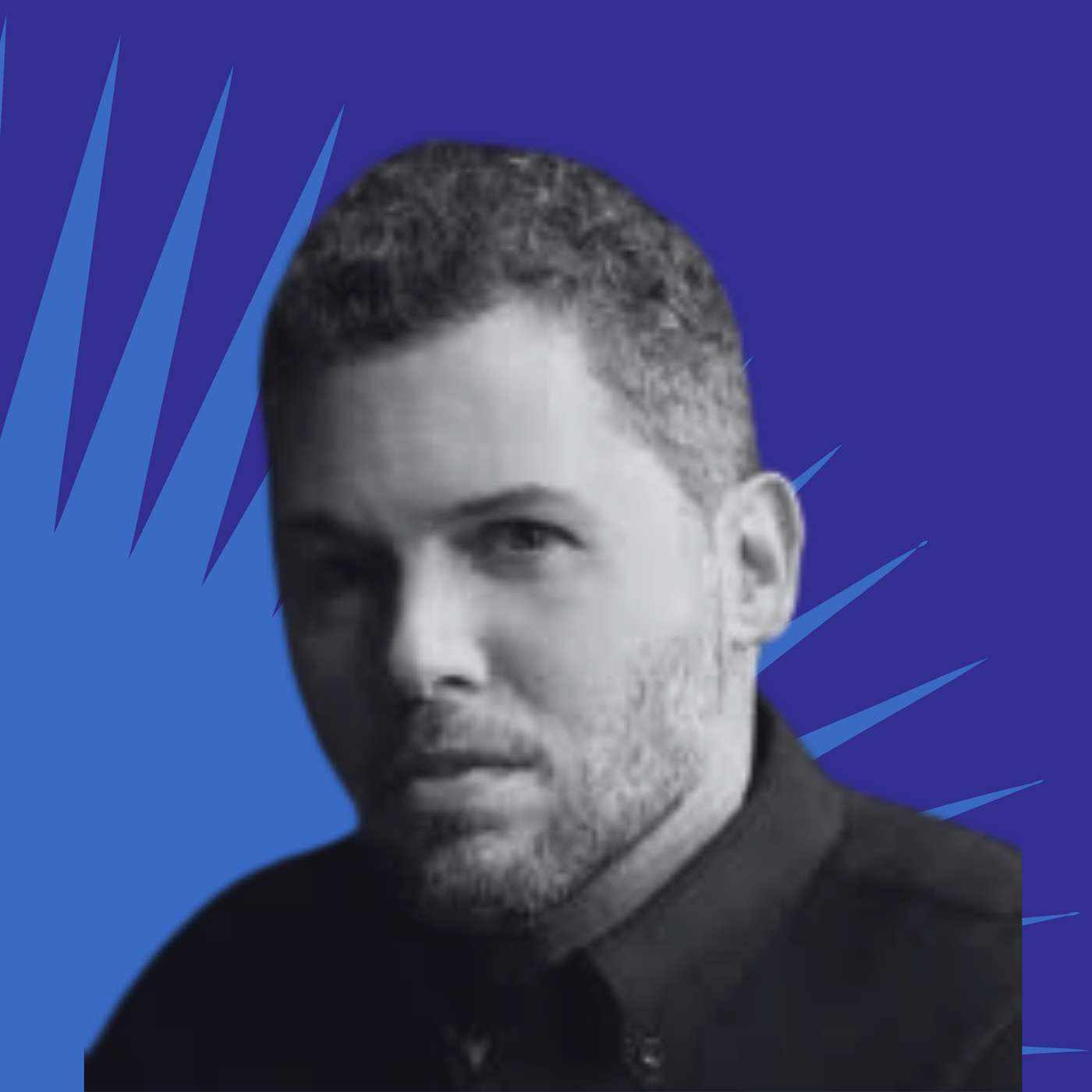


“Pessimism is not fatalism. Fatalism is the belief that things will always necessarily be worse. Pessimism is the belief that things will probably get worse. Within that ‘probably,’ it opens up space for action.” — Gal Beckerman
In the first months of Trump II, Gal Beckerman watched American society do something that shocked him: comply. In one pathetic example after another, prominent law firms, universities, and senior federal employees buckled to every Trumpian whim. America appeared unable to resist authoritarianism. There were no dissidents.
Thus How to Be a Dissident. Beckerman’s new manual of resistance is inspired by history’s more insistent dissenters — from Mandelstam and Solzhenitsyn to Navalny, Ai Weiwei, Thoreau, Havel, the Mothers of the Plaza de Mayo, and demonstrators on the streets of Minneapolis. The quiet manifesto focuses on what Beckerman considers the ten most essential qualities of how to be a dissident: Be alone. Be pessimistic. Be funny. Be reckless. Be watchful.
Pessimism, above all. Not fatalism — the belief that things will always necessarily be worse — but the belief that things will probably get worse. Optimism, in Beckerman’s mind, undermines urgency and thus enables passivity. Pessimism forces resistance. It’s the first lesson in how to be a dissident.
Five Takeaways
• Moral Nausea: Beckerman’s term for the feeling most of us recognise but most of us suppress: seeing something wrong — a neighbour treated badly, a homeless person in a terrible situation, a dead child in a newspaper — and knowing ourselves somehow implicated. Most of us swallow it back down. We don’t do anything. We try not to think about it. The dissident is the person who doesn’t. What separates them, Hannah Arendt argued after studying Germans who resisted the Nazis, is a single question: can I live with myself? If the answer is no — if living with myself would mean living with a murderer — the dissident acts. That question, and the refusal to avoid it, is what makes a dissident a dissident.
• The Pre-Political: Havel’s definition of where dissidence begins: not in ideology or revolution, but in the defence of whatever allows a human life to feel normal. For Havel, it started with a rock band — the Plastic People of the Universe, arrested for playing unauthorised concerts in communist Czechoslovakia. They weren’t political. They sang about drinking beer. But they were gathering people together outside state sanction, and that was enough. For Iranian dissidents: being able to drive unaccompanied, or not cover one’s hair. For the Tiananmen tank man: getting home to make dinner. The dissident defends those pre-political conditions — the normal life — when the state moves to violate them.
• Mandelstam’s Answer: Osip Mandelstam composed a poem mocking Stalin in the early 1930s — at the height of Stalin’s repressive era — and never wrote it down. He repeated it to his wife, Nadezhda, night after night in bed until she had memorised it. When it reached the secret police, he was arrested and brought to the Lubyanka. The interrogator asked: why did you do this? He could have denied it. Blamed his wife. Said it was a game of telephone. Instead he said: I wrote it because I hate fascism. It’s as simple as that. Beckerman opens the book with this moment because it captures the dissident at their most elemental — a man who, when asked the Arendt question, answered honestly.
• Navalny Goes Back: After being poisoned by Putin and spending months recovering in Germany, Navalny returned to Russia, knowing almost certainly that in the best case he would be in prison for a very long time, and that Putin would most likely find another way to kill him. Which he did. Why go back? Navalny’s answer, in his memoir: he had made a promise to the Russian people. How could he stand on the sidelines while asking others to sacrifice so much? The scene Beckerman describes from the prison: Navalny finds a moment away from the cameras, pulls his wife Yulia aside, and tells her he’s accepted that he’s probably not getting out alive. She says: I know. I’ve thought the same thing, and I’ve accepted it. He kisses her. He needs to know she isn’t engaging in magical thinking. Optimism, in this context, would not have helped him.
• Be Pessimistic: Beckerman’s most counterintuitive prescription, and his favourite. The assumption is that anyone engaged in quixotic world-changing behaviour must be an optimist. Beckerman argues the opposite. Pessimism — not fatalism — is healthier. The distinction matters: fatalism says things will always necessarily be worse. Pessimism says things will probably be worse. The “probably” leaves room for action. If you assume someone else will solve climate change, or that authoritarianism will inevitably collapse, you wait. The pessimist acts now, with what time they have, because they know things probably won’t work out otherwise. It is, Beckerman suggests, akin to accepting death: the ultimate pessimistic reality we all face, which is also the only thing that makes each day matter.
About the Guest
Gal Beckerman is a staff writer at The Atlantic and the author of How to Be a Dissident (Crown, April 21, 2026), The Quiet Before: On the Unexpected Origins of Radical Ideas, and When They Come for Us, We’ll Be Gone: The Epic Struggle to Save Soviet Jewry (Sami Rohr Prize winner). He has a PhD from Columbia University and lives in Brooklyn.
References:
• How to Be a Dissident by Gal Beckerman (Crown, April 21, 2026).
• Nadezhda Mandelstam, Hope Against Hope — the memoir Beckerman calls one of his favourite books.
• Alexei Navalny, Patriot — the memoir Beckerman draws on for the prison scene with Yulia.
• Episode 2869: Jacob Mchangama on The Future of Free Speech — the companion episode on the crisis of free speech that contextualises this one.
About Keen On America
Nobody asks more awkward questions than the Anglo-American writer and filmmaker Andrew Keen. In Keen On America, Andrew brings his pointed Transatlantic wit to making sense of the United States — hosting daily interviews about the history and future of this now venerable Republic. With nearly 2,900 episodes since the show launched on TechCrunch in 2010, Keen On America is the most prolific intellectual interview show in the history of podcasting.
00:31 - Why dissidence? Watching people comply in Trump II
02:19 - Are we all being asked to become dissidents?
04:19 - The comparison problem: America vs. actual authoritarianism
06:43 - The romance of the dissident — and why most of us trend toward conformity
07:29 - Moral nausea: what we feel and what we do with it
09:19 - Thoreau goes to jail: presumptuousness and the higher standard
12:11 - Can everyone be a dissident? Hitler as a dissident?
15:11 - Havel and the pre-political: what dissidence actually defends
18:28 - Kundera vs. Havel: the legacy of life vs. the legacy of work
21:03 - Dissidents who turned out to be state informants
21:49 - Why Navalny went back to Russia
24:04 - Russia and the martyr tradition
24:44 - Mandelstam’s poem: “I wrote it because I hate fascism”
28:01 - Shostakovich and walking the fine line
29:55 - Jafar Panahi: making his own condition the subject of his art
32:37 - Is being a dissident the same as being a liberal?
34:48 - Minneapolis and the pre-political response to immigration enforcement
35:37 - The Tiananmen tank man: just a man trying to get home
36:41 - Spinoza, Kant, and Mill: the philosophical lineage
37:16 - History without the squeaky wheels: the utilitarian case for dissidents
38:54 - Women in the book: Arendt, Tubman, the Mothers of the Plaza de Mayo
39:57 - Is dissidence a gendered quality?
41:23 - Behind every great dissident: Navalny and Yulia in the prison corridor
43:55 - MLK, RFK, and the children of Birmingham
47:57 - Be Pessimistic: why it’s the most important quality
51:04 - Camus, Sisyphus, and accepting death
00:00:31 Andrew Keen: Hello, everybody. It is Tuesday, 04/21/2026. A couple of weeks ago, we did a show with the free speech activist and evangelist Jacob Mchangama. Coauthored an interesting new book called The Future of Free Speech. And according to him, we're living in an age of a crisis of free speech. For one reason or other, we don't have the freedom to say what we want. We might then, if we believe what he's saying, be entering an age where the only way to argue back is by being a dissident, and that is the subject of our show today. There's a new book out. It's out today. It's called How to Be a Dissident, by Gal Beckerman, old friend of the show, a writer on The Atlantic, who's joining us from his home on the East Coast. You're in New York, or — or Brooklyn, Gal?
00:01:35 Gal Beckerman: I'm in Brooklyn, which, you know —
00:01:38 Andrew Keen: Like all the other dissidents in —
00:01:39 Gal Beckerman: America. Right? We're concentrated within a very tight area here. Easy to take out, you know, if one wanted to, in one fell swoop.
00:01:49 Andrew Keen: Yeah. You shouldn't joke about that. You never know. Gal, are we living in an age of a crisis of free speech? Is this book that you've written — I mean, we'll get into the details. You write a lot about Soviet dissidents like Solzhenitsyn, Russian dissidents like Navalny, Chinese dissidents like Ai Weiwei. But is this a book designed for everybody these days? Are we all forced to become a dissident?
00:02:19 Gal Beckerman: I'll tell you why I decided this was an important question to try to answer for myself, at least, which was that in the first few months of the Trump administration — of this current Trump administration — I think us in the States, we were all kind of a little bowled over when we saw how quickly people at all levels of society — I mean, particularly elites, actually, in academia, very prominent law firms, people who had pretty secure jobs in the federal government — began to just acquiesce to exercises of raw power and intimidation from the government. I certainly was surprised, because I don't think that I had lived through in my lifetime a period where Americans kind of had that impulse to just sort of keep their head down. In fact, it challenged a lot of the mythology that I had about Americans being such rugged individualists — that the idea of conforming in the way that I saw all around me seemed like it could never happen, but it really did. And I was searching for a way to understand how myself or anybody else could — what you do in that moment, what you do in that moment when you're asked to sort of do something that goes against your conscience, or where your moral compass is pointing. How do you actually respond? And so it seemed to me that it was worth it to look at people who historically have been in that situation and responded in ways that I've always thought were brave and courageous, to try to understand them, but also to look around the world, because there are many situations much more dire than the United States, certainly, where people do face this kind of crossroads, and they make certain decisions that I thought would be interesting to look at.
00:04:19 Andrew Keen: Some people might push back a little bit, Gal, in the sense that, yeah, of course, you were right, especially in the first months of Trump II — the regime, if that's the right word, or the administration — tried to bully everyone, universities, law firms. Some pushed back, some didn't, some bent over. But as someone who brings out a daily podcast, talks to authors, many American authors, I'm struck by the fact that comparing what's happened over the last eighteen months in the United States to authoritarian regimes historically or around the world today is slightly absurd. Would you agree with that, or is that —
00:05:11 Gal Beckerman: I would agree with that. I'm not suggesting that at all. I'm merely saying that I felt in that moment that nobody here in America was prepared for even the lightest form of authoritarianism — which, there are many historians and people who are much more authoritative than me who were saying that we were beginning to see something like that: an exercise of executive power, a control of free speech, certain parts of society that felt like they were much more policed than they had been before. We are not in Iran or China. Okay? I'm not suggesting that, or the Soviet Union, or Nazi Germany. But I feel that in order to understand how to behave, how to think in a moment that feels new, certainly to me, there was value in sort of understanding how these folks who I characterize in the book as extremes — right? I say it right at the top. I say, these people we're looking at are extreme examples of how one responds under pressure, and the pressure that they're responding to is extreme as well. But maybe there is something that we can learn — the book is set up as a set of qualities of these folks that I'm trying to understand. Maybe there is something we can learn by looking at the extreme that will help any one of us in a moment of such intimidation and pressure.
00:06:43 Andrew Keen: Do we all want to be dissidents? There's a certain romance about it. One of the people who blurbed your book was Tim — or is Timothy Snyder, a very distinguished historian, especially of Eastern Europe and Russia during the dark days of Stalinism. He famously left America, I guess, claiming to be a dissident, fleeing to Canada. Some people were rather critical of him, suggesting that he overdramatized it. Is there a romance about being a dissident, especially these days when we all sit behind our screens on our keyboards, Gal, and can pretty much, for better or worse, on the Internet, say what we like?
00:07:29 Gal Beckerman: I mean, there might be a romance about the idea of being a dissident, but I would suggest actually that the more natural and hardwired human instinct is to conform. I think that — I mean, that's how our species has survived as long as it has, because we tribally sort of look to keep our heads down so that we can all sort of get along and generally move in the same direction. So I think there might be — we might all want to sort of imagine ourselves to be brave in a certain way, or imagine that if push came to shove and we were put in a difficult situation that we would respond like an Alexei Navalny. But I'm not sure that actually deep down most of us have that in us, which is another reason why I thought it's important to actually understand what a dissident is. Because, you know, I think we all have these moments, Andrew, of what I call in the book moral nausea. And it can be something that you see or experience in real life — the way that your neighbor is treated, or a homeless person that you see on the street in a terrible situation — or it could be opening up the newspaper and seeing a dead child somewhere and understanding that in some way you're implicated. And what do we do with that moral nausea? I would suggest that most of us swallow it down. Most of us don't do anything. Most of us just sort of try not to think about it. So to me, that's not giving in to the romance of dissidents. I think that the vast majority, if you ask me, of human beings, and human nature itself, trends more towards conformity and complicity.
00:09:19 Andrew Keen: What are dissidents like? They're not always the most likable of people. You write about what you see, at least, as a classic dissident, David — sorry, Henry David Thoreau, who famously lived in nature, though of course he also famously got his mother to do his washing for him. Are they likable characters? Some of the characters in the book — Solzhenitsyn as well, Milan Kundera — they're controversial figures for one reason or another.
00:09:48 Gal Beckerman: I agree. It was one of the things I first had to contend with. I remember talking to a writer friend who I really respect, and I said, I'm gonna do a book about dissidents. And he said, I have to admit that I find them irritating, self-righteous, obnoxious. And I had to take that apart a little bit and try to understand what that quality is that gets projected. I have a chapter in the book — in fact, it's the chapter in which I write about Thoreau — and it's about presumptuousness, because I think what makes the dissident unique and special and important, actually, in the progress of human history, is that they are people who are sort of living in reality with the rest of us, but they are projecting the world that they want to live in, the better world they want to live in. And they are already acting and behaving and responding as if they lived in that world. So Thoreau, for example, in that chapter, goes to jail because he refuses to pay his taxes. He refused to pay, in the eighteenth century — in the nineteenth century — there was a poll tax that every American had to pay if they wanted to vote. So it was almost a sort of requirement of being an active citizen, and he was an abolitionist. He was against slavery, and he said, I'm not going to pay a tax that's going to contribute to a government that countenances slavery. So he refused to pay his tax. He said, I'm already going to live in the world that I want to live in, a world without slavery. And his friend, Ralph Waldo Emerson, said, look at this guy, this hypocrite, who's casting aspersions on everybody else, who thinks he's better than everybody else. Oh, isn't he — what about the other things that he's paying tax on? He sort of took it as a personal affront, even though he too was an abolitionist. So it can create a feeling that you think that you're somehow living by a higher standard than everybody else. And you are. But I think it's important to have people in society who hold themselves to a higher standard, because even if it annoys us often, it sort of pressures us to think carefully about the things that we take for granted.
00:12:11 Andrew Keen: So if we take that Thoreau example and fast-forward a couple of hundred years, there are people who won't pay taxes in America, Gal, for lots of different reasons. Some maybe because of the war in Iran, some because they don't like the federal government, or the bureaucracy, or social services. Is your definition of making Thoreau into a dissident because he refused to pay his taxes — I know there's more to it than that, as you explained in the chapter and in this excellent piece in The Atlantic. But does that allow everyone to become a dissident? I mean, if you have a shotgun and you're living in the hills of, I don't know, West Virginia or Kentucky, and you refuse to pay your taxes, are you as much a dissident as Albert Camus or Spinoza or Thoreau?
00:13:05 Gal Beckerman: Well, first of all, I think that the notion that there'd be a vast number of people who wouldn't pay their taxes — I don't think that's true. I think it is still a rare thing for somebody to go against the law, to go against their neighbors, to do something like that. But I do see in the book, and I want to emphasize this, dissidents as a sort of human mode is value-neutral. I even go as far as saying in the book that Hitler in the nineteen twenties could be considered a dissident. Here is somebody who had a different vision of the world, was willing to take enormous risks, get himself jailed, to achieve it. By my definition of what a dissident is, and just as you just described, that is a dissident too. But in this book, I make it very clear that there is a certain kind of dissident that I'm interested in. Because it's not a dissident who is acting in a dissident way out of self-gratification, or so they can dominate other people. Hitler had a liberating vision, but that liberating vision involved killing another people so that they could be liberated. Right? So the dissident that I'm interested in is, like Thoreau, aware that the freedom that they seek for themselves is something that they want for everybody else, and that everybody else's freedom is wrapped up in their own. Thoreau had a very simple formulation for dictating his actions. He said, I don't want to do anything that involves me sitting on the shoulders of another man. So he said, I don't want to take the privilege of being a US citizen if it's going to involve the subjugation of black people. That is the type of dissident that I'm interested in and that I think, frankly, we have to learn from. Because this word dissident has been thrown around. I mean, Trump called himself a dissident after he lost the election. And —
00:15:06 Andrew Keen: Right. So January 6 could —
00:15:09 Gal Beckerman: Be seen — January 6.
00:15:11 Andrew Keen: As — like, you mentioned Hitler, and you do bring that up at the end of the book. I wonder — another way of defining a dissident — and you write a lot about Václav Havel, the Czech dissident who became a statesman, president of his country. I wonder whether the Havel example is an interesting one, in the sense that — and you know much more about Havel than I do — that he behaved as a dissident whether or not he was fighting the Russians or the Czech communist government or being president himself. In other words, Havel was kind of a born dissident whether he had power or not. In contrast, say, with Hitler, who may have been a dissident as a young man growing up, but then when he acquired power, certainly wasn't.
00:16:03 Gal Beckerman: Right. And that goes — I'm really glad you brought up Havel, because he is a real touchstone for me in this book. Havel has a wonderful and, in many ways, simple definition of what it means to be a dissident. It gets at the question of what I'm talking about, too, when I talk about dissidence. He says that dissidence begins with something that he calls the pre-political. Right? So this is not a revolutionary, it's not an ideological struggle. It's something that he calls the pre-political. What is the pre-political? It's any aspect of life that feels normal to you, that allows you to exercise your human freedom. So for Havel, it was, are you allowed to wear your hair the way you want to? Can you read whatever books you want to? Can you talk and criticize with other people? Can you pursue your economic interests? Havel always likes saying that the dissident movement in communist Czechoslovakia began because of a rock band called the Plastic People of the Universe, who had been suppressed and arrested and sent to jail. And so the big dissident movement — and these were not political actors, they sang about drinking beer — but they were seen as subversive in some ways because they were gathering people together in sort of secret concerts that weren't sanctioned by the government. So to Havel, this is a perfect example of the pre-political: being able to listen to whatever music you want to listen to. The dissident is the person who defends those pre-political ideas. When I talked to Iranian dissidents, they said to me, all we want is to live a normal life. Right? A normal life, which sounds like a vague phrase, but to them meant — to a woman there, certainly meant — not to have to be forced to cover her hair if she didn't want to; to be able to drive or go someplace unaccompanied by a male relative. These were what they called a normal life, these pre-political notions. And I would suggest, if you want to talk about it too, that some of the dissident action that I've seen in America even in the last few months is also a response to people feeling that what they take to being normal and pre-political is being violated in some way.
00:18:28 Andrew Keen: Yeah. And you're right about that in Minnesota and Minneapolis, the streets of Minneapolis. We'll get to that. I want to talk also about the other very famous Czech, quote-unquote, dissident, Milan Kundera. Very different from Havel, and you write about them both in the book. I wonder — in my view, at least, Kundera's legacy is not his life, but his books, which are tremendous, whereas Havel is the reverse.
00:18:56 Gal Beckerman: Right.
00:18:56 Andrew Keen: You think that sometimes one can be — I mean, I guess Solzhenitsyn, who you also write about in great detail, is both. But you think that perhaps the greatest dissidents are the ones whose legacy, like Havel, is their life rather than their creative work.
00:19:15 Gal Beckerman: That's a really good question. I think it can be both, or either. It just sort of depends. I think Kundera was a great diagnostician of what it means to live under an ideological regime or under ideological strictures, and how much that can constrict a human being and a human being's desire for freedom. And he wrote about it so incredibly, kind of at the existential level. But, you know, as I say in the book, in order to be able to write those books, he felt like he needed to not be in Czechoslovakia at a time where — his books were banned and he could be thrown into prison. Havel — they had a lifelong debate about this question between the two of them. Havel felt that it needs to be, as you put it, like a full-bodied, lifelong, living form of resistance. And so for him, it was important to go to jail and collect petitions and do the hard work that he had to do. I would be hard pressed to tell you that one was more important than the other. I mean, in an ideal world, there's almost a symbiotic relationship. You engage in action, but there also has to be some thinking and deliberation about what is the point of that action. So you need the Kunderas. You need people who are also going to provide the thinking behind the on-the-ground frontline activity.
00:21:03 Andrew Keen: There certainly was a moral purity, or a simplicity, about Havel in comparison to Kundera. I know there have been some questions about Kundera's own behavior and his associations. There were, of course, a lot of, quote-unquote, dissidents in Eastern Europe who, after the fall of the Berlin Wall, and we began to understand the ubiquitousness of the secret police, were also state informants. You do deal with that in the book. How would you make sense of that — that some prominent dissidents, particularly in Eastern Europe after the war, Soviet-occupied Eastern Europe, turned out to be both dissidents and working for the state?
00:21:49 Gal Beckerman: I don't necessarily get into that, but to me, it's just an indication of how hard it is to actually stay true in a pure way to your moral cause, when the other side of the equation is self-preservation, worries about your family, worries about how your actions are going to impact the other people who are innocent, so to speak, who aren't taking up your cause. I think all of those are incredible human pressures that one would have to suffer in order to stay true. I write in the book a lot about Navalny, because he was an important dissident for me. And I write about his decision, which I found baffling, which I still had to really sit with — to go back to Russia after he'd already been poisoned by Putin, very nearly killed. He really just barely escaped with his life. And to go back to Russia knowing, after about six or seven months of recuperation, knowing almost certainly that in the best-case scenario he would be in jail for a long, long time, but that it was likely that Putin would find another way to try and kill him, which we know that he did just a few years after that. So why did he go back? He could have stayed in Germany and been an outside force. He was amazingly brilliant on social media. He could have continued to be a thorn in the side of Putin. Why did he go back? And if you read his memoir, he's not — I mean, in the memoir, for public consumption, I'm sure there were many more doubts and fears under the surface, but it seems very clear to him. He said, I made a promise to the Russian people. I have these convictions. And if I am anything, if I'm a man of my word, if I'm true to these convictions, then how can I just stand on the sidelines while I'm asking people to sacrifice so much?
00:24:04 Andrew Keen: Maybe an ultra-dissident — another way to describe an ultra-dissident, an extreme dissident, is a martyr. You write considerably, and I think this is the most fertile ground for dissidents historically, about the Russian dissidents. You just talked about Navalny. As I said, you begin the book with a section on Solzhenitsyn, who you're a great admirer of, and then Osip Mandelstam, a Russian poet, another very distinguished dissident. What is it about Russia, Gal, that brings out the dissident in people?
00:24:44 Gal Beckerman: That's a good question. Well, first of all, I think that there are cycles of repressive governments there that sort of create a good background for just this activity. But maybe it goes a little bit to the romance that you were talking about before. There is a tradition there of the person who stands up against the state, and who becomes a martyr as a result. Maybe when you have that as part of your cultural legacy, it becomes easier to embody that role when the situation presents itself. When I looked at the individual circumstances — it might be true that there's something in the Russian soul, so to speak, that sort of demands this behavior. But when you look at it, it's no less brave. I mean, this is a guy — he was a poet. It was the beginning of Stalin's most repressive era in the nineteen thirties. Mandelstam was seeing what other people were seeing in Moscow at the time, especially in intellectual circles first, and then there's a wider blast radius of just fear. This real fear of people knocking on doors at night, taking people away, not knowing what you had said that could get you in trouble. And Mandelstam was a poet. He was a creative person, and he began to write a poem about Stalin that was a kind of mocking poem, but it really tried to capture this environment of fear. But he did a really interesting thing. Maybe he thought he was being safe, but he never wrote the poem down. He just composed it in his head. His wife, Nadezhda, who wrote an incredible memoir forty, fifty years later called Hope Against Hope — which I highly recommend, it's one of my favorite books — she was, like, the receptacle for these poems. They would lay at night in bed, and he would repeat them again and again to her until she remembered them, so that there would be some record of what he had composed. And he shared it with a few other friends. But in any case, this one poem about Stalin managed to sort of go viral, so to speak, and got to the secret police, got to Stalin, and he was arrested and brought to an interrogator. He was sat down at the Lubyanka prison and asked the question, why did you do this? And I thought about this a lot, this moment, because he could have said, what are you talking about? Like, this is just a passing thought in my head. Could have —
00:27:38 Andrew Keen: Blamed his wife. Yeah. She wrote the poem, not him.
00:27:42 Gal Beckerman: She wrote it. Right. Or he could have said, it was a game of telephone. That's not what I meant. I don't know who you heard it from, but there's no record of him writing this poem. And instead, he looks at the interrogator and he says, I wrote it because I hate fascism. It's as simple as that. He just hated what was happening to his country.
00:28:01 Andrew Keen: How would that — I don't think you write about him in the book, but how would that compare, say, with Shostakovich and his enormous fear of Stalin and his complicated relationship with the state, and the complicated relationship of his work with the state?
00:28:20 Gal Beckerman: Well, there are many people, like Shostakovich, who try to walk a fine line. Because they didn't want to give up their opportunity to create their art.
00:28:34 Andrew Keen: Well, they feared dying. They feared death camps. They feared going to Siberia. It was more than just not being able to write their music.
00:28:40 Gal Beckerman: Well, they could have found a way to leave or to defect or to escape, but they didn't want to be away from the country that would nourish their creativity. I write in the book about Jafar Panahi. He's an Iranian director who got into such trouble —
00:28:58 Andrew Keen: The film director.
00:29:00 Gal Beckerman: Yeah, a film director. They got into such trouble with the regime that they banned him from making films for twenty years. And yet he continued to make these films that theoretically were meeting the rules that had been laid down for him, including making one film that was called This Is Not a Film, which was just his iPhone propped up in his house while he was piddling around his apartment, not making a film. And that's how badly the impulse is to continue to create. In that film, and in a few other films he did that were in that same vein, he had become a subject of the state — a subject of the state that was encircled and not allowed to express himself. And so he made his own condition the subject of his art.
00:29:55 Andrew Keen: I wonder — I don't want to turn this into a music conversation, it's just a throwaway remark — I wonder whether Shostakovich's own ambivalence came out in his work, which is perhaps one reason why we still listen to the music. We are talking to Gal Beckerman, an Atlantic writer, author. His new book is out today, How to Be a Dissident. Doesn't even have a subtitle. Excellent title. We're gonna take a short break, and then we will come back. I want to ask, Gal — you can think about it during the break — whether being a dissident requires one to be a liberal or perhaps a libertarian, or whether we can't make political generalizations about what it means to be a dissident. We'll be back in two seconds. This is not a commercial break. That's because we don't have commercials on this show. I'm not gonna waste your time trying to sell you inane products. However, I do have a pretty good deal for you. I'm writing a book about the United States. It's due out in 2028. And if you become a paid subscriber on my Keen On America Substack, you'll not only get very cool notes and photographs and videos from this project, but I'll also send you a personalized, signed copy of the book when it comes out in 2028. So go to keenon.substack.com and become a paid subscriber. That's keenon.substack.com. And now back to our conversation. We are speaking with Gal Beckerman, the author of How to Be a Dissident. The book is out today. Gal, before the break, I asked you about whether we can associate an ideological word, so to speak, with being a dissident. I mean, Solzhenitsyn was anything but a liberal. Thoreau, of course, was in his own way a libertarian. Is ultimately being a dissident — whether the dissident would acknowledge it or not — being a liberal? You write in the book about some of the founding fathers of liberal thought, like the Dutch philosopher Baruch Spinoza. Does it, in a sense, require one to be a liberal?
00:32:37 Gal Beckerman: I don't think so. Not in the way that I'm thinking of dissidents. I can understand where the question is coming from, and I certainly think that the examples that I point to would suggest that libertarianism, or a certain kind of pursuit of one's own freedom and the freedom of other people to live their own lives, is often the impulse that triggers dissidents when that is restricted or prevented or violated in some kind of way. But I really want to stay away from thinking about this purely in ideological and political terms, because I do think — and look, maybe I'm naive here, but I do think that there is a set of conditions for a human life that a vast number of people can actually agree on, an idea of human dignity that a lot of people can agree on. I know that there are lots of ways that people, one step up from that, can argue about something like abortion, for example, which would be interesting to take up as an example. Is somebody who is anti-abortion — can they be a dissident in my book? But I do think there is a whole range of human behavior that people respond to at a much more gut and elemental, and, like I said, pre-political level. And what happened in Minneapolis, if we can talk about that for a minute — people, not because they hated Trump or even have a vision of what immigration policy should look like in America, I believe they just responded to what they saw happening to their neighbors. They saw children who were afraid to go to school, people who were locked up in their house because they were afraid, they saw an aggressive harassment of other people that felt like that violation of human dignity. I believe that's what they were responding to.
00:34:48 Andrew Keen: No, I take your point. I certainly am the last person to disagree with you about Minneapolis. But why isn't that just politics? Why is that being a dissident?
00:34:58 Gal Beckerman: Because the reaction is not a political one. The reaction is not around a set of — oh, I think immigration policy should be x, y, z, or I have an ideological view about how open our borders should be. It is much more a response. It's a reaction to something that they're seeing and experiencing that feels like a violation of the human. And I realize that these terms sound a little bit vague. But I have a kind of a metaphor in my book — or not a metaphor, but an image — that I think captures this for me, at least, which is the man standing in front of a tank —
00:35:37 Andrew Keen: Yeah. Yeah. In China.
00:35:39 Gal Beckerman: Heading into Tiananmen Square in 1989. There is the ideological political interpretation of that picture, which is: here is a man who's opposed to authoritarianism, and he's putting his body in front of the tanks, which are about to go crush and seriously massacre pro-democracy activists. But I also see something else in that photo, which is a man who's just trying to live his life, who's probably on his way home to make dinner for his wife, wants to listen to an album when he gets home, was thinking about a conversation that he had. Just living his life, he's on his way home, and the tanks are blocking his path. They're blocking his path, and the dissident, or any human being, has a decision they make in that moment, which is: do I move out of the way, or do I stand there and force the tanks to move out of the way? Because they're the ones who are getting in my path on my way home. And the dissident is the person who does that. So I don't know if that helps clarify a little bit where I'm coming from.
00:36:41 Andrew Keen: Well, it certainly underlines your own, I think, moral approach to this. As I said, you write about Spinoza. You don't write, I don't think, about Kant, but there's a Kantian quality to your argument. In contrast, say, with the fathers of liberalism like John Stuart Mill, who took a utilitarian argument and suggested that dissidents benefit society, so we need to create a world which enables dissidents. Is there space in the book or in your argument for that —
00:37:13 Gal Beckerman: Absolutely.
00:37:14 Andrew Keen: — Mill, utilitarianism?
00:37:16 Gal Beckerman: Absolutely. I mean, I don't know if I'm coming to it from the same place as Mill, but I do think — and I've done this sort of thought exercise — what is history without these squeaky wheels? Without people like Thoreau, it is either some kind of subjugation or it's stasis. How do we shift in one direction or another? And I'm not even going to use the word progress, but I'm going to just say, how do we change? We change because, if most of us are inclined to conform and to go along and to accept the most powerful forces that tell us what to do, you need these weird — and I use the word very deliberately — weird individuals who just can't. I quote Hannah Arendt in the book, who was trying to understand Germans who resisted the Nazis, and she theorized about this for most of her intellectual life. But there's one basic thing that she came back to, which is that these were people who asked themselves, can I live with myself? And if their answer was no, I can't live with myself, because living with myself would mean living with a murderer, then they just said, no, I'm not gonna do it. But to be somebody who even asks yourself that question — can I live with myself? — I think that's what distinguishes the dissident.
00:38:54 Andrew Keen: It's interesting that you bring up Arendt, the first female we've talked about in this conversation. We've talked about a lot of men: Mandelstam, Solzhenitsyn, Navalny —
00:39:05 Gal Beckerman: There are plenty of women in the book.
00:39:07 Andrew Keen: Havel, and so on. Arendt, of course, was no great friend of feminism, or certainly of American feminism. I know you do talk about women in the book. You talk about the Mothers of the Plaza de Mayo, the mothers of the disappeared in Argentina. So there are women in the book. But is it possible to argue, Gal, that there is a gendered quality — that men like to be heroes? And you talk about Navalny sacrificing his life. I don't know — did he have kids, or has he got kids?
00:39:38 Gal Beckerman: Yeah. He has two kids.
00:39:39 Andrew Keen: So one wonders, as a father, whether it ever occurred to him that it might be better from his kids' point of view to stay in Germany. Is there a danger — I'm not suggesting you fell into it — but is there a danger of turning being a dissident into being some sort of heroic individual, very male?
00:39:57 Gal Beckerman: I don't see it that way. To me, there are plenty of women in this book and in the history of dissidents. Some of the major abolitionists at the front line —
00:40:09 Andrew Keen: You talk about Tubman. I forgot about her.
00:40:12 Gal Beckerman: Yeah. The major abolition movement leaders in the nineteenth century were women, who were also fighting for their own freedom. I talk about a woman named Sepideh Gholian, who is an Iranian dissident who is sitting in prison at this moment right now. I don't see this as a particularly male attribute. In fact, if we wanted to talk about — well, I don't want to stereotype women or men in this way, but there is a kind of — I think being sensitive to what makes that normal life, what makes a human life possible — those conditions — I don't think that breaks down male or female. In fact, women have had such a long history of repression that they — which is why I think they're so sensitive to the issue of abolition — they might be more inclined to understand what it is to feel denied those basic abilities to live.
00:41:23 Andrew Keen: I wonder — I don't remember who said it. It's probably Churchill, but maybe it wasn't Churchill. Maybe it was Churchill's wife. Behind every great man is a great woman. You mentioned Mandelstam and the fact that he dictated his great poem to his wife. We did a show a few years ago on an excellent new book — or it was at the time — a book about Orwell's wife.
00:41:47 Gal Beckerman: Yeah. There you go.
00:41:48 Andrew Keen: Havel, of course, in particular, and Kundera were notorious for their associations with the female sex. Do you think that perhaps behind every great dissident, maybe, is a great wife, or perhaps even a great husband?
00:42:04 Gal Beckerman: It might be the case. I know that one of the stories that really touched me a lot with Navalny is — Navalny's wife, Yulia, was, again, thrust into this terrible situation, like his children, after he'd made the decision to go back. Navalny has a scene that he describes in prison, the first time that she was able to visit him in prison. They found that they were, for a moment, away from the watching eye of the cameras that were everywhere in the prison. And he pulled her aside, and he said, look, I need you to understand that I've kind of accepted that I'm probably not getting out of here alive. Even if in the best circumstance Putin's regime somehow collapses, they'll kill me before I'm able to actually leave here. And he says this to her, and she responds to him, yeah, I know. I've thought the same thing, and I've accepted it. And he's filled with enormous love and admiration for her. He talks about how he embraces and kisses her in this hallway away from the cameras, because he needs to know that she accepts the most likely possibility of where this is headed. That in order to move forward every single day and do what he needs to do to remain strong and resilient, he needs to accept that death is most likely at the end of this path. And he needs to know that she does too. So to him, it's a great reassurance that she's not engaging in magical thinking about what might happen, or being optimistic in a way that actually doesn't help him to fortify himself every day.
00:43:55 Andrew Keen: You write a lot about recent American history, political American history. Hannah Arendt was very strongly criticized for her critique of some of the human rights demonstrations, civil rights demonstrations in the South in the early sixties. And you write in the book — you don't write about this in the context of [unclear], but a disagreement between MLK and Bobby Kennedy, RFK, about whether or not children should be used as dissidents, or maybe as a human shield for dissidents. What's your — perhaps you might tell the story and tell me whether you agree that perhaps RFK's critique of MLK, or that particular episode, is right or not.
00:44:52 Gal Beckerman: Right. Well, it wasn't even just RFK. It was the parents of these children. So, just to tell the story for a moment — this is one of the civil rights campaigns, the desegregation campaigns in the South in 1963, in Birmingham, a city that was notorious for the level of segregation and oppression of black people there. They had a sheriff named Bull Connor, who seemed to be sadistic in his degree of repression. They decided that they would stage a campaign there to try to break segregation, particularly in the downtown of the city. And it wasn't going well because they were running out of volunteers. So a young, charismatic civil rights activist — one of King's lieutenants, a man named James Bevel — came up with the idea. He said, well, why don't we use the children? The children have less to lose. They don't have jobs to lose. They're more enthusiastic. They're willing to rush towards the front line. And King was tortured about this, because the parents, of course, said — many of these middle-class parents said, why are you using our children for cannon fodder here? Nobody knew that they wouldn't potentially get killed or seriously hurt. They happened not to, but they could have been. Because, as we know from the images — some of the most famous images of the civil rights movement — they were attacked with water cannons, with dogs. But King made a calculation that this recklessness, which is how I describe it in the book — I call it recklessness because it is a certain kind of belief that if you push things to an extreme, if you create a certain amount of tension and conflict, that it's going to illustrate, as it did, just the complete injustice of the situation. That if you engineer an environment where the injustice is brought down upon someone, as it was in this case on those children, then everyone will be able to see the thing that has been going on every single day for so long. But it is a risk. I say in that chapter that certain people engage in that kind of recklessness out of a kind of pathological self-destructive tendency. There are people who set themselves on fire when — maybe they're just suicidal, or have mental health issues — but they do it presumably for a cause. This recklessness can be taken to an extreme, and can have the wrong motivation. So it's really interesting to analyze and think about what the various moral calculus is when you are engaging in this kind of action.
00:47:57 Andrew Keen: Being reckless is chapter six of How to Be a Dissident, and the book is structured in a very nice, attractive way. Every chapter is about being something: being alone, being pessimistic, being funny, being rational, being watchful. Gal, maybe we can end with your — not your favorite chapter, but — if there's one thing we should be — I know you'll tell me, well, it's not one thing. But if there's one thing above all the others, the first amongst equals, it's not to be reckless, I would assume. No. Is it?
00:48:31 Gal Beckerman: Pessimistic.
00:48:34 Andrew Keen: Yeah. That's chapter two. Why pessimistic? It's not a very American idea. Is it?
00:48:40 Gal Beckerman: I would think it's —
00:48:41 Andrew Keen: — an answer. It's not an answer. Is it part of the apple-pie mythology of being American? But that's another question. Why pessimistic?
00:48:49 Gal Beckerman: Well, I really thought about this a lot, because to me, it feels counterintuitive. I think most people assume if you're going to engage in this kind of quixotic behavior of wanting to change the world, that being optimistic would be what people would naturally assume one should possess — a kind of "everything's going to be alright." But I think, actually, I came to see that having an attitude that allows you to just assume that things will probably not be okay is healthier. It opens up room for action. If you think that somebody's going to come along and solve climate change at some point, authoritarianism is going to collapse — there's no way that that will — people will allow that to happen — it can lead to a lot of passivity. So I think having a sense that things will probably — which, I want to say also, pessimism is not fatalism. Fatalism is the idea that things will always necessarily be worse. Pessimism is the belief that things will probably get worse. Right? So within that "probably," it opens up that space for action of saying, well, things are probably gonna get worse, which means I should do what I can do right now to make a difference on the thing that I care about. To me, it feels a very healthy, very human, and sober way of approaching reality. In some ways, it's — I write in the book about how it's akin to accepting death. Right? Because that's the ultimate pessimistic reality we all have to face up to. We're not going to live forever. We need to do what we can do right now with the time that we have every single day in our lives. So I think for activists, and people who are dissidents, that's doubly important — to act in a way that feels like you are being true to the thing that is speaking to you in your gut, to the thing that you can't but do, and not, you know, sort of dream that things are going to turn out okay.
00:51:04 Andrew Keen: There you have it. Be pessimistic. I know you also write in the book about Albert Camus' book, The Myth of Sisyphus, which is perhaps the most articulate existential version of being pessimistic. Fascinating conversation. The book is out today. It's called How to Be a Dissident. If you want to be a dissident, you need to get it. Gal, as always, lovely to have you on the show. You've been on before, and I hope we'll get —
00:51:29 Gal Beckerman: — you again.
00:51:29 Andrew Keen: Thank you so much.
00:51:30 Gal Beckerman: It's a great show. I'm always happy to have a conversation with you.