How Iraq Turned Some American Soldiers into Monsters: Helen Benedict on the Unintended Consequences of War
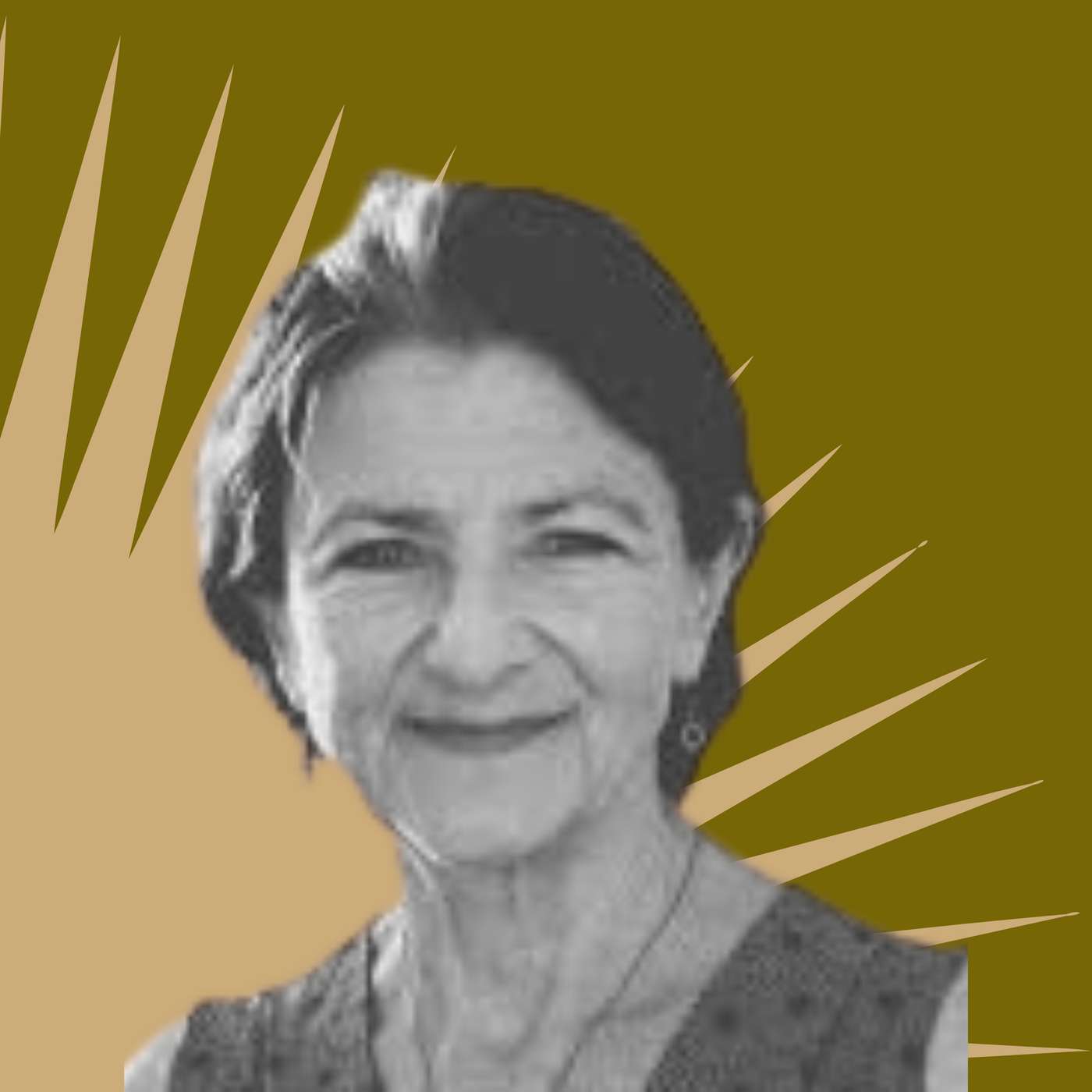


America is once again at war. Helen Benedict is one of our most distinguished writers on the moral consequences of war. Her new novel, The Soldier’s House, is set in the aftermath of the Iraq war. But it could, equally, be about the aftermath of Afghanistan. Or even Iran. “The war turned me into a monster,” veterans tell Benedict, again and again. “How am I supposed to face my wife, my children, when I know I’m a monster?”
On George W. Bush, Benedict is unambiguous. “He was a war criminal,” she says. On the Iraq war, she is equally clear: America went in on lies and killed nearly a million Iraqis, used depleted uranium in violation of international law. Today, Trump is repeating the same catastrophic playbook in Iran.
In The Soldier’s House, Benedict shows how Iraq turned some American soldiers into monsters. “War is morally corrosive — especially a war where the soldiers can find no justification for what they’re doing,” Benedict says. That’s the unintended consequence of even the most morally clean war. Expect the same in Iran. If Trump’s half peace becomes a George W. Bush total war.
Five Takeaways
• He Was a War Criminal: Benedict’s verdict on George W. Bush, stated flat and without hedge. He went to war on lies. He killed, depending on who’s counting, somewhere near a million Iraqis. The Americans and the British used depleted uranium in violation of international law — polluting the land and spreading poison, producing an epidemic of birth defects among Iraqi civilians and, some veterans claim, among their own children. The forgiveness of Bush — common on the left since Trump — is, in Benedict’s view, memory loss. He was not better than Trump. He was better in some things and just as bad in others. The bar is not very high.
• The Other Half of the Story: The Iraq war produced reams of American writing about American soldiers. For years, nobody thought to write about how the civilians felt. Benedict’s novel is structured to correct that: Naima, the Iraqi widow, is given equal weight and depth as Jimmy, the American veteran. The point is to push back against the worldwide demonization and scapegoating of Muslim refugees by creating characters who are just as human as anyone we know — who could be your friend, your sister, yourself. She had soldiers and Iraqis read the manuscript to ensure accuracy on both sides.
• Why Fiction, Not Nonfiction: Benedict had already written the nonfiction: The Lonely Soldier, three and a half years of research and interviewing. But no matter how intimate the interviews, she always felt she couldn’t get deep inside the experience. In interviews, people put up self-protective barriers: things they don’t want to remember, things they are ashamed of, things that are private. Fiction allows her to go where nonfiction cannot. Take everything learned in research. Apply imagination to it. Fill it out. Illustrate the interior experience of war from moment to moment. That is the territory of the novel, and nothing else.
• Moral Injury: The War Turned Me Into a Monster: Benedict’s central subject across all her books on war is moral injury: the damage done to a person’s conscience when they do things they know, deep down, they had no right to do. A war without justification is maximally corrosive because the soldier can find no frame in which the violence makes sense. It just becomes about violence. Soldiers come home carrying that. It affects everyone who knows them. It affects towns, villages, countries. We bring the war home with us. Every poet who has written about war has said so. Benedict’s novels make it visible.
• The Afghan and Iraqi Interpreters: A Betrayal: Trump’s abandonment of Afghan and Iraqi interpreters — people who risked their lives and their families’ lives working for the US military — is both morally appalling and strategically stupid. Benedict has met many soldiers and marines who agree. They made promises: I will save your family. I will protect you. Now they are forced to break those promises, and it hurts them. Trump started closing these programs in his first administration. The current proposal to send Afghan interpreters and their families to the Democratic Republic of Congo, or return them to the Taliban, is a betrayal of everything America promised. Nobody is going to trust us at all.
About the Guest
Helen Benedict is a Professor of Journalism at Columbia University and the author of The Soldier’s House (Akashic Books, April 2026), The Good Deed (Dayton Literary Peace Prize finalist), The Lonely Soldier: The Private War of Women Serving in Iraq, and many other works of fiction and nonfiction. She is a dual British-American citizen and lives in New York City.
References:
• The Soldier’s House by Helen Benedict (Akashic Books, April 2026).
• The Lonely Soldier: The Private War of Women Serving in Iraq by Helen Benedict — the nonfiction companion to the novel.
• The Good Deed by Helen Benedict — Dayton Literary Peace Prize finalist; about the Greek refugee crisis.
• Episode 2882: Peter Wehner — Something Has Gone Terribly Wrong in America — the companion episode on Hegseth’s unholy war, referenced in the interview.
About Keen On America
Nobody asks more awkward questions than the Anglo-American writer and filmmaker Andrew Keen. In Keen On America, Andrew brings his pointed Transatlantic wit to making sense of the United States — hosting daily interviews about the history and future of this now venerable Republic. With nearly 2,900 episodes since the show launched on TechCrunch in 2010, Keen On America is the most prolific intellectual interview show in the history of podcasting.
Chapters:
00:00:31 Andrew Keen: Hello, everybody. America is at war again. It's not exactly news. Everybody knows that. Earlier this month, Pete Hegseth joined a campaign rally in the home district of a soldier killed in the Iran war. It still sounds a little weird, the Iran war. We think, of course, of the Iraq war — but Iran, Iraq, these are certainly not the first foreign wars America's been involved with. In fact, a few days ago, I went to see — or rather saw again — Paul Thomas Anderson's film The Master, which is about the psychological impact of the Second World War on veterans or on a certain veteran. And that's the subject of our show today. We're talking about a new novel by Helen Benedict, a very distinguished journalist and author of both fiction and nonfiction. She has a new book out about an Iraq War veteran called The Soldier's House. Helen is joining us from New York City. She teaches journalism at Columbia University. Helen, congratulations on the new book.
00:01:43 Helen Benedict: Thank you so much.
00:01:45 Andrew Keen: You wrote an interesting piece in The Nation arguing that the Iran war is built on Bush-era lies. Are we back at Iraq potentially? We're on the brink, perhaps, of American forces in Iran?
00:02:00 Helen Benedict: We might be. This country is very good at getting into wars and then not being able to get back out of them. As in Iraq, you know, we were told at the beginning that this was going to be a quick war. If you remember, Bush said at the beginning of the Iraq war, too: we'll be right in and out. Seven long years later, we were still at it, and it dribbled on after that. So there's always the fear that it's not going to be so easy to extract. And in many ways it's even more confusing this time, because the purpose of this war — or the goal — has never been made clear to anybody. So where does that lead us? That's the worry.
00:02:51 Andrew Keen: One wonders whether the purpose or the goal is even coherent in the minds of people like Pete Hegseth and Donald Trump. Let's get to the new book, The Soldier's House. As I said, you're a progressive writer. You're certainly not pro-war in any way, certainly not the Iraq war. Is this book in part a warning about foreign misadventures and the promise of quick wars?
00:03:22 Helen Benedict: It is, in the sense that I'm always pushing against the idea that war is glamorous or heroic, or an effort towards good. In Iraq, Bush said we were going in to liberate the people — just as Trump said about Iran. Neither of them was interested in liberating anyone, and the idea that you can liberate people with bombs is pretty absurd. So I am pushing against that idea, but I'm also illustrating how very long the reach of war is. It reaches into the lives and minds and bodies not only of the occupied, the victimized, and the wounded, but also of the perpetrators. As many a poet has said, we bring the war home with us. And it affects us. It affects everyone who knows us. It affects our villages, our towns, our country.
00:04:29 Andrew Keen: I'm not sure if you've seen Paul Thomas Anderson's The Master, but it reminded me, at least, that in the supposed prosperity and normality of the 1950s, the shadow of the Second World War hung rather darkly over America. America, of course, is not the first or the last country to be involved in wars. Is there something, though, particularly unique about these series of wars in America after the Second World War, the various Cold Wars in Korea and Vietnam, of course, and then these Middle Eastern wars? Or is it typical of great powers? We've done lots of shows on whether America is the next Rome, and on the imperial decline of America. Is it just typical of imperial powers to get involved in these overseas wars, which often turn out to be not just tragic but dumb?
00:05:31 Helen Benedict: It probably is very typical. I would say one thing that's very striking, if not unique, about all America's wars since World War Two is that we blew it. We failed in every one. We haven't won a war since then. We lost in Vietnam. We lost in Iraq. We lost in Afghanistan and so on. I'm not enough of a historian to tell you whether that's been true for many other enterprises. But I'm a dual citizen, British-American, and the Brits were involved with the Iraq war as well. So mistakes were made — horrible mistakes — on both sides of the Atlantic. And we were told many lies — the same lies about weapons of mass destruction that weren't there, and liberating people, as I mentioned, and saving women, which was also a farce. So maybe the rhetoric of why we go into wars is changing with the modern era — or rather the lies change — but the results seem to be the same over and over again, which is pretty disastrous.
00:06:43 Andrew Keen: As I said, you wrote this piece for The Nation about the Iran war being built on Bush-era lies. Bush Junior seems to have gotten a reasonably good press after Trump. But are you reminding us, in part — not just in this Nation piece but in the new book — that Bush came with many problems, and was a failed, catastrophic president, certainly when it came to foreign policy?
00:07:13 Helen Benedict: Most importantly, he was a war criminal.
00:07:17 Andrew Keen: Explain why and how.
00:07:20 Helen Benedict: Because he went to war on lies, for no reason, and he killed, depending on who's counting, somewhere near a million Iraqis. The Americans and the Brits used depleted uranium, which is against international law — which polluted the land and spread poison through it. So there was also an epidemic of birth defects among Iraqi citizens. And some American war veterans claimed to have had the same problem. It's not been proven. But I spoke to quite a few who'd had children — women who'd become pregnant, and also fathers — and the children, conceived while they were in Iraq, turned out to have birth defects. I wrote a nonfiction book where I explain all that in more detail. I don't go into that in The Soldier's House. But the child in it has lost a leg in a bomb. And that's the other kind of wound that can come out of these wars. So if you go to war on a river of lies, and you kill hundreds of thousands of people and wound and deform hundreds of thousands more — I call you a war criminal.
00:08:46 Andrew Keen: Is that one of the reasons you wrote The Soldier's House — to remind people about the catastrophic consequences of war, legitimate or otherwise? As I said, Bush seems now to be treated quite generously, even particularly perhaps on the left, because he's less personally distasteful than Trump — which is no great achievement. Are you reminding progressives? Because many progressives were actually sympathetic to the war. I think of somebody like Christopher Hitchens, a fellow Brit of you and I — and many other people, if not on the hard left, certainly on the soft left, were sympathetic to the war, suggesting that Saddam Hussein was a tyrant and that the Iraqi people wanted him overthrown.
00:09:43 Helen Benedict: I actually don't agree with that. There were a few people who thought that, and most of them changed their minds later when they saw what was really going on. It's one thing to recognize that there's a brutal dictator. It's another thing to bomb the hell out of the civilians around him, who are not the brutal dictator. Hitchens — I consider him an outlier, not typical of anyone, actually. But I do want to say that there's a whole other aspect of this novel. Yes, I'm reminding people that we've done this before, and that Iraq was a terrible mistake. And I think the forgiveness of Bush is really memory loss. In the face of the barrage of things Trump is doing, people are forgetting the bad things Bush did. And I'm never going to say he was better. He was better in some things, and just as bad in others. But there's a whole other side, which is that the soldiers are only one half of this story. The other half is the Iraqi civilians. And it was a really important motivation for me to push back against the worldwide demonization and scapegoating and stereotyping of refugees, especially Muslim refugees, by creating characters in the novel who are just as human as anyone else we know — who could be your friend, your sister, yourself. So that's the other side of it. We do have a habit, us Westerners, of writing about our own wars only from our point of view. We did it in Vietnam. We did it with Korea. We did it with Iraq for a long time. And it can take a while — sometimes a whole decade — before anybody thinks, well, how did the civilians feel about this? So I wanted to go to the Iraqi side and get their view of it, as well as the American side, to push back against that trope we fall into so easily.
00:11:54 Andrew Keen: Your last book was The Good Deed, which was a finalist for the 2025 Dayton Literary Peace Prize — about a refugee crisis in Greece, very much connected with the series of wars in the Middle East. Did you go to Iraq to do any research for The Soldier's House?
00:12:18 Helen Benedict: No. I wrote it while the war was still going on. And as an individual journalist without a paper behind me, or the money to hire a bodyguard or anything, I couldn't go into the middle of a war on my own. At the time I was writing it, I couldn't go. But if you remember, the Iraq war was the first war that was covered by people who had smartphones. So soldiers and Iraqi civilians alike were constantly documenting the war in real time — putting it up on YouTube, writing blogs, and so on. So there was lots of footage to watch and lots of sources where I could see what was going on, through the screen — and not polished up by Hollywood. So that was very useful for my research. I also interviewed lots of Iraqis. And I interviewed many, many soldiers who'd served in Iraq. I read their diaries. I looked at their photographs. I did what you do as a researcher to put the picture together and make it as real as possible. And I also had soldiers and Iraqis read it over in manuscript, to make sure I was getting everything right. When it came to the Greek book, I did go to the refugee camp and spent quite a long time on the island of Samos, at the camp. So that was much more on-the-ground research.
00:13:54 Andrew Keen: Why did you write a novel as opposed to nonfiction? As you said, The Good Deed is a novel, but very much based on your experience on the island. You've written a number of nonfiction books. Why did you choose to write a fictional book about the Iraq war and an Iraq veteran, as opposed to a nonfiction one?
00:14:21 Helen Benedict: Well, I had written a nonfiction first, The Lonely Soldier. And I spent some three and a half years researching that, interviewing people in depth over and over again. But no matter how intimate our interviews got, I always felt that I couldn't really get deep inside the experience of what it felt like to live through a war. Because when you are interviewing people, they have certain barriers they put up — self-protective barriers. There may be things they don't want to remember. Things that are too difficult. Things they are ashamed of. Things they feel private about. And then on your side, you don't want to re-traumatize them, exploit them, or expose them to danger. I found the same thing when I interviewed refugees. And I wanted to get inside the experience, so that readers could really feel what it was like from moment to moment to go through this. And that's the territory of fiction. So I wanted to take everything I had learned in my nonfiction research and apply my imagination to it — fill it out, to illustrate the interior experience of war.
00:15:48 Andrew Keen: The book is the story of an Iraq War veteran who saves the lives of his assassinated Iraqi interpreter's widow, child, and mother, by bringing them to his Upstate New York home. I'm not sure how much else you want to give away about the story, Helen — because we want everyone to read the book. But is it about a heroic Iraq War veteran? Tell me a little bit about this veteran.
00:16:16 Helen Benedict: So his name is Jimmy Donald. He and his interpreter, Khalil, got really close working together in Iraq as often happens with military people and their interpreters. I heard about this a lot. Because you're protecting each other's lives. You're going through battles together. You're enduring being blown up together — all sorts of things. And when Khalil is killed — because he's working for Americans — Jimmy feels extremely guilty, and is grieving him a great deal. And he feels like the only way he can make any sort of reparation is to rescue the family, who are also receiving death threats because of their tie to Americans. So he's trying to make amends — even though he's having a really hard time getting it right, because he's facing the task of how do you make amends for somebody's death, and how do you make amends for an unjust war. He's got a monumental task. He is a good-hearted man, but he makes mistakes. I don't believe anyone's an absolute hero. And he did get hardened by war to some extent, and he did things he's not happy about. And then on Naima's side — the widow — she feels she's been rescued by the enemy. She's being rescued by the man who she really holds responsible for killing her husband, and his father. And she's living in a land she holds responsible for destroying her own. And yet she has a son, to give a future to. So she's got the struggle of trying to move forward, so that she can create a safe life for her child and go back to being a doctor — which is what she was back home — at the same time as dealing with her anger. So they've both got these struggles when they're living together in the same house. And things get pretty tense.
00:18:25 Andrew Keen: I can imagine. You talked about wanting to write this novel because you wanted to speak of the impact of the war on Iraqi civilians. I know it must be very hard to generalize, but what's your sense, at least, of the Iraqi people's memory of this war?
00:18:47 Helen Benedict: The people I talked to were mixed. Nobody liked the war itself. And as it went on, it got more and more destructive. It destroyed the middle class. It destroyed buildings. We've seen this. We've seen this in Gaza. We're seeing it again right now in Lebanon and Iran. Nobody likes having their buildings crushed and their families killed and their limbs crushed and so on. But at the beginning, there were people who really did — they hated Saddam, they wanted democracy, and there was some hope that America would help them gain democracy. Then they got more and more disillusioned. But I did come across that, and that was one of the reasons people volunteered to be interpreters, or to help the Americans in certain ways. But there were other reasons too, because between the sanctions we'd imposed for many years and the war, we had just turned the country into rubble. It was almost impossible to work or make money. And the military was offering a lot of money to people to be an interpreter — more than they could make. You could make as much in a month being an interpreter as you might make in a whole year. So some people were doing it out of economic frustration, out of desperation. So there was a range of reasons. And in fact, even my characters, Naima and her husband, don't agree on the way they view the war and America.
00:20:27 Andrew Keen: We've done shows with Iraqi veterans, Afghan veterans, as well as some Afghan and Iraqi civilians who have, as you say, different views on the war. One of the more heart-rending aspects, I think, of Trump's immigration crackdown is his overt turning his back on Afghan and Iraqi interpreters — supporters of the US. Do you make much of that in the novel? And I assume you share my concern on that.
00:21:11 Helen Benedict: Oh, yes. It's appalling. I've met many soldiers and marines who feel the same. They made promises. I will save your family. I'll protect you if you work for me. Now they have to break those promises, and that really, really hurts them. And yes — Trump started doing this in his first administration with Jeff Sessions, closing down the programs we'd built up to bring over interpreters and others who'd helped us in both Afghanistan and Iraq. And now this new thing being discussed — about sending Afghan interpreters and their families to the Democratic Republic of Congo, or back to the Taliban — is extremely cruel, and such a betrayal of everything we promised. I've heard people say: how are we ever going to win any allies if we betray them like this? So there's the humane level, which is appalling and horrifying. And then there's the strategic level, and it's just really stupid. Nobody's going to trust us at all.
00:22:26 Andrew Keen: One wonders whether there's a surreal novel in an Afghan or Iraqi translator who gets sent to the Congo. That would be both tragic and, in a tragic way, at least, amusing. America — again, I don't need to tell you this, Helen, you've been living here long enough — is a very forgetful place, especially about previous wars, small countries overseas — or what Americans think of as small countries overseas. Do you think it'd be fair to say that the country has pretty much forgotten, or chosen to forget, the Iraq war?
00:23:02 Helen Benedict: I think a lot of people have. Most of my students weren't even alive when the Iraq war happened, or they were really tiny. And how many schools teach any student about the Iraq war, or recent history? Even during the Iraq war, when young people were being recruited by the Bush administration, most people didn't know where Iraq was, or what it was, or anything. Didn't know anything about it. So there's a lack of education that's adding to all this, I think.
00:23:43 Andrew Keen: And is it being forgotten in the same way as the war in Afghanistan has been forgotten? There was, of course, in the Biden presidency, this shameful withdrawal from Afghanistan — or what appeared to be a shameful withdrawal. But do you think of Iraq and Afghanistan, the wars there, in the same context of withdrawal and failure?
00:24:10 Helen Benedict: I think Iraq is more forgotten. It ended, quote, longer ago, under Obama. Afghanistan went on a lot longer. And then, because of the shocking withdrawal and the instant re-emergence of the Taliban, it's been in the news much more recently than Iraq — which hasn't been mentioned for ages, until now, where it's been drawn into a war again, with Iran and Lebanon. So all of a sudden, you know, the word Iraq is appearing in the press again, But there was a long silence.
00:24:54 Andrew Keen: I think the equivalent to Iran is probably more Vietnam than Iraq. You have a moral position, Helen, on war. You've written considerably about it. Many of your books have been about one kind of war or another. Would you describe yourself as a pacifist? Where would you have been in 1939, for example, on the Second World War?
00:25:21 Helen Benedict: I don't think I'm a rigid pacifist. War is really terrible, but it's very hard for me to think of any war that had more justification than the Second World War. And I know that's an arguable position. I know there are historians and strategists who say we could have worked that out through diplomacy, without killing so many millions of people, perhaps. But since then, I can't think of a single war that makes any sense to me. I'm less against the whole notion of war in a sweeping, blanket way than I am against the glamorization of war, and the idea that there's something glorifying about it. And that there's a bunch of heroic Rambo types running around saving people — which is a very Hollywood vision of it. And I think that's dangerous.
00:26:27 Andrew Keen: We did a show a couple of weeks ago with a progressive historian who's very critical of what he calls Cold War liberalism, and is ambivalent, certainly, about the rah-rah support for Ukraine in the war against Russia. I know it's maybe not quite your area. You're more focused on the Middle East. But what do you make of some of these — what we might think of as Cold War liberals, or post-Cold War liberals — who glorify the Ukrainian struggle against Russia?
00:27:03 Helen Benedict: It's a big question, very far from my book.
00:27:06 Andrew Keen: Well, you can decline it. It's probably an unfair question, Helen. I'm not suggesting you should answer.
00:27:13 Helen Benedict: I think Putin is to be resisted, as much as possible. I'll just say that.
00:27:24 Andrew Keen: Fair enough. And as I said, I apologize. I don't think it was a particularly fair question — but I'm known for my unfair questions. Earlier this week, we did a show with Peter Wehner, a very distinguished American moral thinker, who talked about what he calls Trump's unholy war in Iran. He said something has gone terribly wrong. He wrote a very emotive piece in The Atlantic on Hegseth's unholy war. What do you make of Hegseth and this fantasy? Every American Defense Secretary now — they're called Secretaries of War — fantasizes about war and, I guess in a sense, morally glorifies war. But how should we think of Hegseth in this series of narratives about failed American wars? Is he the last gasp — the absurd conclusion to all the glorification of war?
00:28:38 Helen Benedict: It's a mystery to me that anybody can watch or listen to him without bursting into despairing laughter. He's a buffoon. He's underqualified. He's undereducated. He's got fanatic, extremist religious views. I don't think he has the faintest idea what he's doing. He's undermining his own military all the time, and it's really dangerous. He's like an overgrown child. It's extremely dangerous to put somebody so irresponsible and ignorant in such a position of power. And I think many people in the military agree with that. It's glaringly obvious.
00:29:26 Andrew Keen: That's something I talked to Pete about as well. You obviously talked to a lot of soldiers for this book, The Soldier's House. As you said, you've covered these different wars in the Middle East. Do you get a sense of where they — the American military — are, in terms of Trump and Iran and Hegseth in particular? Are they as shocked as most of us are?
00:29:53 Helen Benedict: I think they don't like to see all those highly qualified generals and colonels being fired just because they're Black or women. I don't think that goes down very well, except with the hardcore white supremacists who are in the military too. They don't like seeing their own undermined like that. Progress that's been made to build respect for women in the military, for gay people in the military, for trans people in the military, has been drastically undermined by what he's done. Years of work undermined. I think there must be a lot of unease — except for people who are like him.
00:30:42 Andrew Keen: You were also involved in the making of The Invisible War. Did you write that? Were you —
00:30:52 Helen Benedict: No. They got the idea by reading my work.
00:30:55 Andrew Keen: Right. So it's about a shocking cover-up in the US military of the treatment of female soldiers. The gender issue, of course, is particularly sharp and relevant in terms of these American wars in the Middle East, where women's roles are quite different. Does this play a role in The Soldier's House, either in terms of any female soldiers, or of refugees — Iraqi refugees' sense of what America's like as a woman?
00:31:29 Helen Benedict: It does, because Jimmy's wife, Kate, was also a soldier serving in Iraq. They both served at Camp Bucca, which was a prisoner-of-war camp by the Kuwaiti border — originally built by the British and then passed on to the Americans. And Kate is sexually assaulted by a superior officer while she's there, which has a very long-term effect on her. And I'm not going to give anything else away — you'd have to read the novel to find that out. But that background — when I wrote The Lonely Soldier, it was about women who served in Iraq. And a big part of the story is about the extraordinary frequency of harassment and assault and rape of women, committed by their comrades in the military. So that knowledge does infuse the novel. And it's part of that long reach of war I was talking about. Because war is morally corrosive — especially a war where the soldiers can find no justification for what they're doing, and feel no sense of rightness about what they're doing. It just becomes about violence. We talk about moral injury — doing harm to people who, deep down, you know you have no right to do harm to. I've heard so many veterans say to me: the war turned me into a monster. I feel like a monster. How am I supposed to face my wife, my girlfriend, my husband, my children, when I know I'm a monster?
00:33:14 Andrew Keen: There's a class —
00:33:15 Helen Benedict: — big part of my novel. Sorry.
00:33:17 Andrew Keen: And there's a class element here, of course, ever since Vietnam. It would seem, certainly, that it's the poor who go to war wearing an American uniform. Is that something you deal with in The Soldier's House — a war fought by the poor, perhaps for the rich, in America?
00:33:40 Helen Benedict: A bit. It's a little bit exaggerated, actually. When I started to look into who would join the military, it's not only the poor. There are certainly a lot, but there are people who join the military because it's in their family tradition — and they're not necessarily poor. They can be very middle class, or even more. But Jimmy is quite poor, and he lives in a poor part of Upstate New York. And he did not grow up with money — nor did Kate. So —
00:34:12 Andrew Keen: A bit miserable, Helen, isn't it? Well, let's try and end on a positive note. Maybe that's inappropriate — but it's American to end on a positive note. I asked you earlier why you chose to write it as a novel. Is the novel, perhaps — given the failures, the catastrophes of these recent wars — a good vehicle if one wants a more positive outcome? Maybe not a Hollywood ending, but an ending with some degree of hope and optimism.
00:34:49 Helen Benedict: Of course. I want to make it clear: this is not a downer of a novel. This novel is as much about love — and mother love, and reconciliation, and reaching for forgiveness, and getting past horror — as it is about war. It's not a polemic. It's not a nonfiction book about politics. It is about human beings. And there's a little child in it who's so important, because he becomes the bridge between Jimmy, the soldier, and Naima, the Iraqi woman — because they both love him, and they're both invested in his healing, and in making him happy. So they move forward. I don't believe in happy endings that are all tied up with a pink ribbon, because life's not like that. But I do believe in hope. And everyone I've ever met who's gone through a lot of horror still believes in hope. So that's a big, important part of it too.
00:35:53 Andrew Keen: Well, maybe that can be the title of this conversation: “I do believe in hope,” Helen Benedict. The book is already out. It's out this week. The Soldier's House — important new book by one of our leading writers on the moral consequences of war, both in fiction and nonfiction. Helen, really lovely to have you on the show. I hope I haven't made you too miserable. Best of luck, and congratulations on the book. I'm sure we'll be hearing a lot more of it, and I strongly encourage people to read it. It's an important book. Thank you.
00:36:24 Helen Benedict: Thank you.