Good Bobby, Bad Bobby: Evan Thomas on the Greatest Riddle in 20th Century American Politics
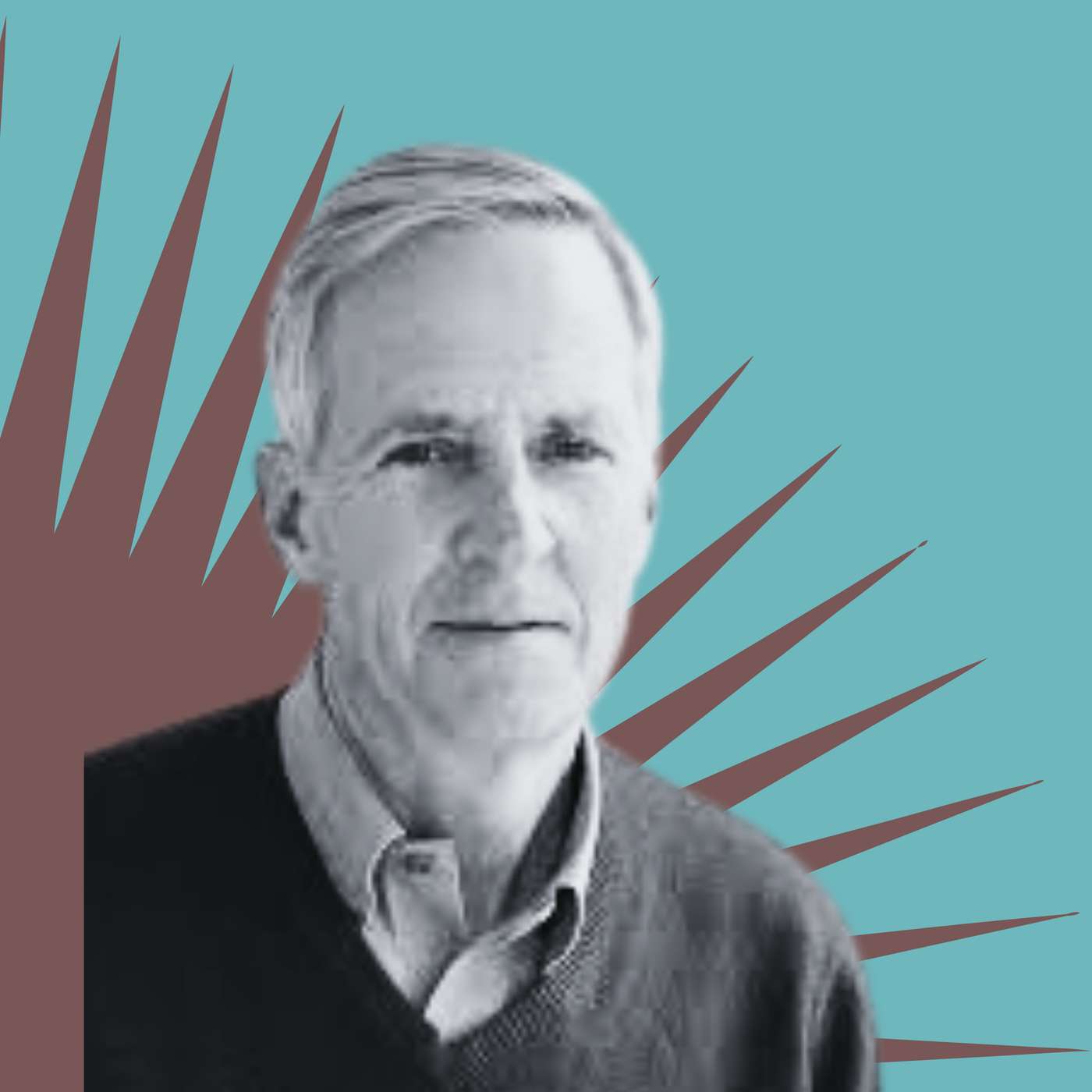


“He didn’t just say it, he meant it, he felt it — and the combination of the power guy, the ruthless power guy, and the profound idealist was fascinating, and also hard for him.” — Evan Thomas on Bobby Kennedy
Who was the greatest riddle in 20th century American political life? Judging from the ever-expanding library of Bobby biographies, Robert Francis Kennedy ranks very high on that list. Indeed, according to Evan Thomas, one of RFK’s most acclaimed biographers, this third Kennedy son is, indeed, the most sphinx-like riddle in 20th century America.
In his classic 2000 biography, Robert Kennedy: His Life, Thomas unravels the good and the bad Bobby. But, rather than presenting parallel narratives, his portrait treats the Machiavellian and the idealist as the same riddle. Raised by his father to exercise raw power, RFK discovered that mid-century America wasn’t living up to its own ideals. The contradiction of the ruthless Kennedy machine politician and the profound idealist was what continues to make him so intriguing to Americans of every political stripe.
Bobby concurred with Churchill’s dictum that courage is the greatest virtue because, without it, you can’t have the other virtues. So he lived a life of ridiculous physical and moral courage — taking insane risks that would terrify ordinary mortals. And, of course, his most insanely courageous act was his last — running for President in 1968 knowing that he was likely to be assassinated. Where have you gone, Bobby Kennedy? A nation turns its lonely eyes to you.
Five Takeaways
• The Central Paradox: Power Guy and Idealist in the Same Man: Bobby Kennedy was raised by his father to be the henchman of the Kennedy machine — doing the dirty stuff in Boston politics to keep Jack floating free and grand. He was pretty ruthless about it. At the same time, in mid-century America, he discovered that the country was not living up to its own constitution, and he wanted to make things right, and genuinely felt it. The combination of the machine politician and the profound idealist was what made him so endlessly fascinating. It also made him hard for himself: a man permanently at war with his own nature.
• Courage: The Only Word That Mattered: No word was more important to Bobby Kennedy than courage. Churchill: it’s the greatest virtue, because without it you can’t have the others. Kennedy believed in physical courage, emotional courage, mental courage. He was a runty little kid at the wrong end of the dinner table — Jack and Joe and Kick at the golden end with the father, Bobby with the nuns and the mum. He got kicked out of prep school for cheating. He was not the athlete, not the golden one. Real courage comes from suffering. It took courage just to overcome being the loser. That was the source.
• Making Up for Missing the War: Physical and Moral Courage: Bobby missed World War Two, basically. He got in at the very end and ended up scraping the deck of a destroyer in the Caribbean, far from combat. His brother Jack is a war hero on steroids — PT boat cut in half by a Japanese destroyer, rescues his men, written about in The New Yorker and Reader’s Digest. Joe volunteers for a secret dangerous mission to replicate Jack’s glory and dies. Pretty high bar of courage. Bobby spends the rest of his life making up for it — swimming the Colorado River, climbing Mount Kennedy in the Yukon, jumping overboard off the coast of Maine to save Jack’s jacket. Sometimes stunts. But increasingly, moral courage — which is the greater thing.
• The Mob, Joe Kennedy, and the Beehive: When Bobby starts poking around in the mob as a Senate aide, J. Edgar Hoover is only too happy to point out: keep going here, you know where it’s going to end up. With Joe Kennedy. Bobby’s investigation of Giancana and Frank Sinatra starts grazing against his own father. Thomas’s reading: whether conscious or unconscious, there is an element of rebellion. Bobby, appointed henchman, doing the dirty stuff for pop, resenting it, starts poking the beehive that might expose him. It never fully landed. But it started. And Hoover used it to blackmail the Kennedys.
• The Ripple of Hope, and RFK Jr. as Tragedy: Bobby’s trip to South Africa — apartheid everywhere, the freedom movement barely existing, everybody in prison. His speech: every time somebody does something brave or heroic, it causes a ripple, and that gives you hope. A young Margaret Marshall, later Chief Justice of the Massachusetts Supreme Judicial Court, was in the audience. He gave us hope where there was none. That is the ghost Andrew went looking for at Hickory Hill and didn’t find. The contrast with RFK Jr. is, for Thomas, simply sad. Poignant. His own family has disavowed him. Caroline Kennedy made a broadcast accusing him of crimes. The idea of Robert Kennedy Jr. is tragic.
About the Guest
Evan Thomas is an American writer and historian. He was Washington bureau chief of Newsweek for ten years and a writer and editor there for thirty-three years. He is the author of ten books, including Robert Kennedy: His Life (Simon & Schuster, 2000), Being Nixon, Road to Surrender, and, with Walter Isaacson, The Wise Men. He has taught at Harvard and Princeton. His biography of Churchill is forthcoming from Simon & Schuster in December 2026.
References:
• Robert Kennedy: His Life by Evan Thomas (Simon & Schuster, 2000).
• The Wise Men by Evan Thomas and Walter Isaacson (Simon & Schuster, 1986) — referenced in the closing.
• Robert Coles — Bobby Kennedy’s psychologist friend, referenced in the conversation.
• Hickory Hill, McLean, Virginia — the Kennedy family home Andrew visited on this trip to Washington DC.
• Bobby Kennedy’s “Ripple of Hope” speech, University of Cape Town, South Africa, June 6, 1966.
About Keen On America
Nobody asks more awkward questions than the Anglo-American writer and filmmaker Andrew Keen. In Keen On America, Andrew brings his pointed Transatlantic wit to making sense of the United States — hosting daily interviews about the history and future of this now venerable Republic. With nearly 2,900 episodes since the show launched on TechCrunch in 2010, Keen On America is the most prolific intellectual interview show in the history of podcasting.
00:00:30 Andrew Keen: Hello, my name is Andrew Keen. Welcome to Keen on America, the daily interview show about the United States. Hello everybody, we're on the road today in Washington, DC, in conversation with an old friend of the show, Evan Thomas, a distinguished American writer, historian, commentator, last on the show, talking about his book about President Truman and his decision to bomb Hiroshima. He's also the author of one of my favorite books, certainly my favorite biography of Robert Kennedy, His Life, which came out in 2000. Evan, welcome back to the show. Why did you write this Bobby Kennedy book? It certainly wasn't the first or the last biography.
00:01:34 Evan Thomas: Endlessly fascinating person. I mean, it's hard to find a more interesting person in 20th century American politics than Bobby Kennedy, because he's a Kennedy, but also because of who he was. I thought I can't write that, because Arthur Schlesinger has written the biography of Bobby Kennedy, but Walter Isaacson, actually a friend of mine, co-author of mine, said, "No, no, no, you can, you can, you know, the world is ready for another Bobby thing. Also, Schlesinger, who was brilliant, was too close to Bobby; he was practically a member of the Kennedy family. There's room for another, and there was, so you know, I spent three or four years reporting, and wrote the book.
00:02:14 Andrew Keen: You say he's one of the most interesting men in 20th century American history. What does that mean to be an interesting man? Evan,
00:02:22 Evan Thomas: well, it means that he's torn between conflicting impulses. One is a power impulse. He's a Kennedy raised by his father to exercise raw power, and he was pretty good at that, and pretty harsh about it, and pretty ruthless about it. At the same time, in mid-century America, he's discovered iniquity and race; he's discovered that our wonderful country was not living up to its own constitution and its own heritage, and he wanted to make things better, and he really — he didn't just say it, he meant it, he felt it, and the combination of the power guy, the ruthless power guy, and the profound idealist was fascinating, and also hard for him,
00:03:12 Andrew Keen: use the word interesting, other words come to mind as well, heroic, tragic. There is a heroic, tragic quality to his life. Well, there was. Is that fair?
00:03:27 Evan Thomas: Absolutely, he loved heroes. I mean, he was always an actor on his own stage, because he was fascinated with heroes, and he was fascinated with the idea of courage. There was no more important word to him in the English language than courage. What did Churchill say? It's the greatest virtue, because without it, you can't have the others. So he believed in physical courage, emotional courage, mental courage, and he wanted to be an actor on the stage. It was complicated because he starts out as the helper of his brother. He's the behind the scenes guy, he's not on stage, he's behind the scenes making it happen. Then his brother Jack dies suddenly, and he's got to be front and center. This was hard for him; it wasn't natural for him, but in his own kind of awkward, touching way, he embraced it. And just at the time he was killed, he was coming into it.
00:04:21 Andrew Keen: Where does courage come from, or where did it come from? In Bobby, I know you spent some time with Robert Coles, his psychologist friend, a man who gave Bobby Kennedy's inner life a great deal of thought, professionally and personally, is courage a consequence of dysfunctionality?
00:04:40 Evan Thomas: Yes, I mean, courage comes from suffering, real courage comes from being afraid, and when Bobby was little, he was afraid, he was a runty little boy, sort of down at the wrong end of the dinner table. The good end of the dinner table with the father is Jack and Joe and Kick. They're the golden kids, the golden trio, the golden trio. Down at the other end of the table with the nuns and mom and all that are the other kids, and Bobby was the runty one, regarding himself as a loser. He gets kicked out of prep school for cheating. He's not the athlete, he's not as good looking, so he suffers as a kid. He has to overcome a lot, and that is a source of courage, because it took courage just to overcome being a loser.
00:05:29 Andrew Keen: What was it, Evan, about physical courage that marks Bobby out, of course. In your book, you write about a number of remarkable episodes, and he did the 50 mile walk. He climbed Mount Kennedy [in the Yukon], never having trained, this seems to be an astonishing quality. Is it? Was he, was he making up for the fact that he never went to war like his two older brothers?
00:05:58 Evan Thomas: Absolutely, he was making up for it. I mean, his brother Jack is a war hero on steroids. I mean, promoted by the father,
00:06:06 Andrew Keen: literally on steroids. I think
00:06:08 Evan Thomas: that was a slip, a Freudian slip — literally on stairs, you know. His brother was on a PT boat, cut in half by a Japanese destroyer, rescues his men, written about in The New Yorker, then Reader's Digest, promoted for his courage. So his other brother dies trying to, trying to replicate the younger brother's courage. Joe is jealous that Jack was a war hero. Joe volunteers for a secret and dangerous mission and dies. So that's a pretty high bar of courage right there. And Bobby misses World War Two, basically. He gets in at the very end and ends up scraping the deck of some destroyer in the Caribbean, far from combat. So he misses his chance to show his own personal courage. He spends the rest of his life making up for it, sometimes with stunts, climbing a mountain, but sometimes with moral courage that is a greater thing than physical courage.
00:07:11 Andrew Keen: Well, certainly the moral courage, as you note in your book, seem to have been developed certainly after his brother's death. But what about one of the things that struck me about your biography of him and others is that he never seemed to value his own life very much. I mean, so many of the incidents, the swimming incidents, the skiing incidents could have resulted in his own death.
00:07:37 Evan Thomas: This seems to be a family issue, because Kennedy's seem to die more readily than other families doing reckless things. So, there, I don't know where this recklessness comes from exactly. It seems to be family-wide. It's not just Bobby, but Bobby did, I mean, you know. Here's an example. Bobby is mourning Jack's death, and he's wearing Jack's old jacket, and he's on a boat, and the jacket blows overboard. Bobby, without thinking about it, leaps overboard to rescue the jacket. He could have drowned. It was, I think, it was off the coast of Maine. The water is about 55 degrees. It took a while to bring the boat around. It was not clear that he was going to make it — all to save his sainted brother's jacket, just without even thinking about it, you know. Bobby was fearless in a lot of ways and relished it. I begin my own book, with this scene of whether he's going to swim across the Colorado River or not. The Colorado River is a raging torrent, and he's there with a guy named Whittaker, who climbed Mount Everest. Can't beat that for courage, but George Plimpton, who likes to do stunts, is also with them. They don't want to go across that river, it's too dangerous. Bobby does. There's a photograph of him frothing surf all around him, you know, swimming for his life, because he just had to do it.
00:09:04 Andrew Keen: Do you think the most long-lasting episodes of courage in his life were his ability to, on the one hand, take on his father, and, on the other hand, escape his mother.
00:09:21 Evan Thomas: You don't have to be a psychologist to see the basic elements here. His father was this overbearing figure who dominated everybody, sought to dominate everybody, and Bobby was sort of appointed to be his henchman, working with him to make Jack great, to make Jack president. And so Bobby had to do a lot of dirty stuff in Boston politics. I don't know if he actually paid the bribes, but certainly I was aware of them — to do the hard stuff to keep Jack floating free and grand and brave, so Bobby does the dirty stuff for pop. Bobby does it and resents it. And there's an episode later in his life when he's a Senate aide, where Bobby starts poking around on the mob, and there is again, I don't think you have to be a shrink to see there's some element of conscious or unconscious revenge, because when you start poking around in the mob, you're going to make your way to Joe, and in fact he did, I don't think Joe was mobbed up, but Joe was around mobsters, and there was a risk when Bobby starts poking that beehive, he's going to get closer to Dad. I think Doris Kearns Goodwin, one of the great Kennedy scholars, has voiced this directly — that this is an element of rebellion, whether it was conscious or unconscious, who knows. But he certainly, when he went looking for the mob, there was a chance he was going to bump into his father, and he did. Facts on this are a little murky, but when he's looking at Giancana, at Frank Sinatra, his father starts showing up, and J. Edgar Hoover, the head of the FBI, is only too happy to point out to Bobby that, hey, Bobby, Attorney General Robert Kennedy, you keep going here, you know where it's going to end up — with Joe Kennedy. It never got to the point that they found Joe Kennedy was complicit in some crime. I don't want to overdo this, but it starts grazing against it,
00:11:24 Andrew Keen: and of course it was the one area where he took his brother on too, telling him that he couldn't see Frank Sinatra anymore, and he had to be a little bit more careful with some of his dalliances.
00:11:35 Evan Thomas: Yeah, well, Hoover, the great Maleficent J. Edgar Hoover, one way he stayed [in power] was —
00:11:45 Andrew Keen: great, Evan,
00:11:47 Evan Thomas: the greatly, the greatly awful J. Edgar Hoover. One way he stayed in power was blackmail, picking up dirt on senators and elected officials, so that they couldn't get rid of them. So Hoover was only too happy to find out through wiretaps that Jack Kennedy, President Kennedy, had a sexual relationship with Momo Giancana's girlfriend, you can't make it up, it's so extreme, and this Hoover was only too happy to tell the Attorney General, "Look what we found." And so Bobby had to warn his brother, "Don't get too near Sinatra." Sinatra was close to Giancana, in fact, there's a scene, a wonderful scene, where the President was supposed to visit Sinatra — his helicopter, I think, in the desert, and Bobby cancels all that, and Sinatra is out there with a sledgehammer, breaking up the helipad where the President's helicopter was supposed to land, Bobby had to be the brother protector and keep his brother away from this taint.
00:12:57 Andrew Keen: Could have been a scene from The Godfather. What about the mother? Evan, your biography introduces Bobby as a boy, as very much his mother's boy, the mother, mother's boy. The mother wasn't very well treated by the father. The older boys didn't have much interest in her. How did Bobby escape the mother?
00:13:20 Evan Thomas: I don't think Bobby ever did escape the mother. He was, he was, he was a mama's boy. Bobby was, I think, the most genuinely Catholic — at least compared to Jack; I don't really know about the other siblings. Well, I guess the other daughter is Eunice, and she was pretty Catholic. In any case, Bobby certainly inherited his mother's piety and disapproved of Jack's misbehavior and tried to rescue him from it. Later in Bobby's life, I think Bobby himself may have gone astray. Facts are a little murky with
00:13:59 Andrew Keen: Marilyn Monroe.
00:14:00 Evan Thomas: Not, I think not. Actually, I know that's the legend is that Bobby and
00:14:05 Andrew Keen: Kim Novak,
00:14:06 Evan Thomas: I think not the movie stars, but I think possibly in other areas, and this is a murky, murky area. I don't want to go down this road too far, because I don't think we have the facts, but Bobby mostly was involved in protecting his brother, or at least his brother's reputation, and disapproving of his brother's repeated liaisons.
00:14:28 Andrew Keen: Politically, what's his legacy? Evan, easy question.
00:14:34 Evan Thomas: He could have been the one to create a Democratic Party that unites white working-class populists with African Americans, Indians, he had that capacity to reach across that divide. These are people who are in need, need government's help, and he was that rare politician who was able to appeal to both camps, who often don't really like each other, and Bobby had that transcendent quality in him, because people felt in him that he was on their side, that he related to them. He may have been a rich kid, a rich young man, a rich middle-aged man, but he felt what they felt — which was despair sometimes, which was hope, sometimes, but he personally related to them. You can see this in the '68 campaign in the state of Indiana, where he's able to carry both black wards and blue collar white wards. That was very unusual for a politician, and that was sort of the hope of the Democratic Party. The modern Democratic Party has sort of splintered on this. The modern Democratic Party — by embracing, at least parts of the party embracing, wokeness, has had the effect of driving away people who are Trumpers. Those modern Trumpers — they were Bobby voters, blue-collar MAGA Americans. A lot of them would have voted for Bobby Kennedy.
00:16:21 Andrew Keen: Yeah, it's ironic. And, of course, the equivalent of wokeness in the 1960s were Harvard intellectuals, and I know Bobby wasn't a great fan of them, as they weren't great fans of him,
00:16:33 Evan Thomas: that's complicated story. Because Bobby went to Harvard, and
00:16:36 Andrew Keen: not as a scholar,
00:16:37 Evan Thomas: no, no, not as a scholar, but some, there were some Harvard scholars, Arthur Schlesinger being one, being kind of the quintessential Harvard scholar who was for Bobby. So Harvard had a fondness — and Harvard scholars, some of them — but Bobby could be resentful of pointy-headed intellectuals. He didn't like snobs. He didn't like intellectual snobs. That part of him bridled. He had a chip on his shoulder against the sort of Leonard Bernstein liberal — the New York Times. He didn't like the New York Times that much; he thought it was
00:17:12 Andrew Keen: the anecdote was from your book, but he thought it was anti-Catholic.
00:17:17 Evan Thomas: Yes, that was funny — he said, "How come you're always pointing out that somebody's Catholic? You're not pointing out if they're Jewish, you know?" He had, he had a chip on his shoulder about — he thought the Times was anti-Catholic, and he bridled a little bit too much at it. I don't think his criticisms actually were correct, but he felt it. It was a visceral thing for him.
00:17:38 Andrew Keen: When we look back at great figures in American history, I know you went to law school in Charlottesville, the home of Thomas Jefferson. Is there a Jeffersonian quality to the complexity of Bobby Kennedy, the fact that he appealed in a populist way, and yet he was an aristocrat, just as Jefferson, not only was a populist, but a slave-owning populist, an aristocrat.
00:18:01 Evan Thomas: Yeah, yes, certainly, the image of Jefferson sleeping with an enslaved woman, and having children by them, while he's extolling equality, and you know, but I think Jefferson was more of a hypocrite than Bobby. I think Jefferson was more in denial about it. Bobby, I think, suffered. There was more angst and anguish in Bobby. I think he was more aware of the contradictions that he was, that he was living. I think that Bobby would have found Jefferson to be a little bit too cute and to be a hypocrite, not truthful with himself. I think Bobby was rawer than Jefferson,
00:18:52 Andrew Keen: who were his American heroes, apart from his father and brothers,
00:18:58 Evan Thomas: who were Bobby's heroes? Any soldier in combat, you know, he would have liked people like Francis Marion, the Swamp Fox in the Revolutionary War, more than he would have liked, say George Washington, not that he was against them, you know. He certainly was drawn to fighters, I mean, he admired Lincoln, freed the slaves, that would be a big thing for Bobby. I don't remember Bobby, though, as I think about it, indulging in a lot of hero worship of great American statesmen. I don't think that's really that was his thing. He may have referred to them in speeches, but that's not what he was really thinking about. His focus was more on people who had to show physical courage, like soldiers, and also civil rights figures. People were brave, he went, he went south in the early 60s, and you know, the Democratic Party — people forget the Democratic Party in the early 60s. The base of the Democratic Party was the white South, so they had to get along with governors and white elected officials. Bobby goes down there and he shakes his head, and he says, you know, we're going to have to change this, because we're going to have civil rights laws that these white leaders are not going to like. That was an incredibly politically brave thing to do when you take your political base and you say. Sorry, we are now going to end Jim Crow, which is the central belief and faith of your political base. That is a very brave thing to do. And Jack, the President, Jack Kennedy, was not very happy about it. He was, he did it, he went along with it. He gave a famous speech, a very memorable speech, in 1963 saying we have to have civil rights laws, we have to end this inequality, but he's had to be dragged kicking and screaming by his own brother, sort of confronted with the inequity and inequality of life in the South. Jack didn't really want to see it, because he knew politically it was going to be hard for his party, they did it, John F. Kennedy also believed in courage, and he showed courage in this case, but he didn't want to do it. It was Bobby who kept prodding him and forcing him to do it.
00:21:20 Andrew Keen: And, of course, one of the rewards for that, after his death, is that they renamed the Justice Department building on Pennsylvania Avenue Robert Kennedy Building, I was there earlier today, Evan, and there's a, there's a, there's a big poster of the current American president. What do you make of that irony? It
00:21:43 Evan Thomas: was heartbreaking. I mean, Bobby would be appalled, but yeah, I should say, Bobby would understand Trump at some level. I mean, Bobby had a populist streak. We talked about this. I mean, Bobby had an ability to reach to all sorts of disenchanted people who are fed up with the establishment. Bobby got that, even though Bobby was himself the establishment in some ways. So Bobby would have understood the appeal of Trump? Remember, Bobby was an aide to Joe McCarthy in the early 1950s. Joe McCarthy, Donald Trump, I mean, there's not that much difference, and
00:22:20 Andrew Keen: of course they're connected through Roy Cohn.
00:22:22 Evan Thomas: They are now. Bobby hated Cohn — almost had
00:22:26 Andrew Keen: a physical fight, almost had a
00:22:27 Evan Thomas: physical fight, I think, on the Senate floor or on a committee room, so Bobby hated Cohn, but Bobby was working for Joe McCarthy. Joe McCarthy and Donald Trump are on somewhat similar tracks, and so I think Bobby would have gotten Trump, but he would have hated what Trump appears to be doing to the rule of law and the system of justice and to norms. Bobby Kennedy was a great patriot and believer in America and believer in the Constitution, and he, you know, he violated the Constitution himself a few times, but he basically believed in the American system, and I think he would be worried and upset that it's under threat,
00:23:10 Andrew Keen: and of course the law is so important, it's particularly ironic that Trump puts his picture on the Department of Justice. Bobby, as I mentioned earlier, went to the same law school as you did at University of Virginia in Charlottesville. The law, as an ideal, I mean, he was never a scholar, and of course, his what was the joke his brother made when he made him Attorney General, and said we want to give him a little bit of training before he goes and works in a law firm.
00:23:41 Evan Thomas: Yeah, this is a complicated subject. Bobby Kennedy should not have been Attorney General. The President of the United States should not have appointed his brother to be Attorney General, and one reason why he did it was because the father said you've got to protect — he cared about controlling, so that's very Trumpian.
00:23:55 Andrew Keen: He was right, the father was very, very
00:23:58 Evan Thomas: Trumpian to have Bobby Kennedy be the attorney general is sort of a Trump thing. It's like having your brother do it, so that is Trumpian. And Bobby also did some very illegal things, approving of wiretaps that today we would, or would be against the law, or we would disapprove of —
00:24:15 Andrew Keen: of MLK, of course,
00:24:16 Evan Thomas: yes, so I don't want to venerate Bobby as the great upholder of the rule of law. On the other hand, Bobby really went pretty far towards giving meaning to the equal justice clause in the 14th Amendment, I mean, it's Bobby who really revs up the federal government's role in the civil rights movement. They passed the 1964 Civil Rights Act. Johnson does after Jack Kennedy dies. Bobby starts all that. Bobby is the guy who is attacking Jim Crow and segregation and de jure segregation in the South. Bobby Kennedy, as Attorney General, he is doing this. That is a vindication of the Constitution and the 14th Amendment and the rule of law. Both Bobby's are true, the Bobby who wiretaps and the Bobby who brings justice to the South. They're the same guy.
00:25:08 Andrew Keen: Well, is there something about the Kennedys that brings out the worst in Trump, of course. He's trying to rename Jack's cultural center in Washington, DC, too.
00:25:19 Evan Thomas: You know,
00:25:20 Andrew Keen: not that the worst in Trump — I don't know whether
00:25:24 Evan Thomas: we could do Trump bashing. What's the point? What's the point?
00:25:30 Andrew Keen: You think there's envy? Does Trump want to be the
00:25:34 Evan Thomas: Kennedys? Duh, of course he does. He likes glamor, he likes good looks, you know. He would love to be Kennedy. He's not, but of course a part of him envies the glamor, the celebrity, the mythic quality of the Kennedys. Yeah, I mean, Trump would not be the first politician to fall for that. The Kennedys, we've over, of course, we've over venerated the Kennedys. They weren't as grand as we made them out to be, but they have been the idols of many politicians, because they were good looking, and they gave great speeches, and they actually did accomplish a lot.
00:26:14 Andrew Keen: I know when you finished your book, you, you went to visit the grave and Arlington Cemetery, the RFK grave, a very simple grave in contrast with his brothers, and it had quite an emotional impact. Why? Yeah,
00:26:28 Evan Thomas: it made me cry, because here you have this fantastic Jack Kennedy's grave with the eternal flame, looking out over imperial Washington, all the buildings up there on the hillside at Arlington, and then off in this corner, kind of off out of sight, is this simple white cross, and it just has a few words on, I think, a stone next to it — where Bobby talks, in his own eulogy to Martin Luther King, where he talks about fate, and he quotes Aeschylus. Bobby was not a great scholar, but he actually read the ancient Greeks, or read about the ancient Greeks, and it was very moving, this sense of tragedy, and how we learn from tragedy. Bobby's own life is a tragedy. He's killed just when he has a chance to become president, before he can be truly fulfilled. But there was both a modesty to it and a simplicity, and it just was moving to me.
00:27:28 Andrew Keen: And, of course, it's particularly moving in the sense that Arlington itself brings out all the complexity of American history, because his and his brother's graves are just below the big house of Robert E. Lee, which speaks — speaking of tragedy in American history.
00:27:47 Evan Thomas: America is one vast contradiction, that's what I love about it, I mean, it's like human nature — everything that's good about us and everything that's bad about us all caught up in one country. I think America is truer to humanity than any country in history, because it's the freest expression of human nature, it's the richest and the poorest, and everything all wrapped up at once. It's like a giant Shakespearean tragedy, and you know, as a country now, I think it's mostly — I don't want to emphasize the tragedy part. I'm patriotic. I think America is the greatest country in the history of the world. I do believe this, but it's had a lot of tragedy, and it's done a lot of terrible stuff. It's very human in that way.
00:28:34 Andrew Keen: And does that make Bobby the ultimate American story? As you said, that America is this massive contradiction. Bobby himself is a reflection of that.
00:28:45 Evan Thomas: Yes, I think he is, and I want to emphasize more good than bad. Bobby did a lot of bad stuff. America's done a lot of bad stuff, but the basic essence of somebody who wants to do good. He said on the night he died, he met with reporters, and he said, you know, politics is an honorable profession. He asked them if they read Lord Buchan. “Who are you talking about?” Lord Tweedsmuir, I guess he was called — British —
00:29:12 Andrew Keen: brother loved that book as well, yeah,
00:29:14 Evan Thomas: and the reporter, who, who are you talking about? But the message was that politics is not dirty, although Bobby could play dirty, but it's honorable, and we need to embrace politics and honor it to do good, that's what Bobby was all about, and he did a lot of good. He did some dirty stuff. He was a flawed human being. I don't know what he would have been like as a president, but his instinct and desire and basic essence, as in our own country, was good.
00:29:47 Andrew Keen: What do you think he would feel about the current state of America,
00:29:52 Evan Thomas: heartbroken, but also I don't, I think Bobby was somebody who didn't give up. He was a fighter, I mean, he had been down when you are a scrappy little boy who's kicked out for cheating and your father trying to cover it up, you know, you've got to fight back. And I think Bobby was a fighter, and I think he would have — I'm sure, I don't think, I know — he would have said things are bad, things are pretty terrible, but this is America, we're going to do better, we're going to pull up our socks and find our essence, our retrievable essence, that you know, we are a great country, and notwithstanding what's going on right now, we can do better, and we will do. He would have been optimistic, I have no doubt about that. At the same time, Bobby Kennedy, there was a kind of tragic sensibility about him, there was a fatalism. I doubt he was surprised by his own death. He, you know, he defied assassination. He would be, get these warnings, you know, there's a guy with a gun on a roof not far from here. He would go out, he would ignore it. There was a fatalistic quality to him, yet he was an optimist. How do I reconcile that? I can't.
00:31:14 Andrew Keen: You said you cried when you went to see his, see his grave, his simple grave. If he was looking out at America today, do you think he'd cry?
00:31:26 Evan Thomas: Oh, sure, sure. And then he'd get angry — he was an emotional guy. I think he would, but then he would want to do something. He'd be out there trying to figure out how do we fix this,
00:31:39 Andrew Keen: how to make America not great again, but work again. Is there a ghostly quality, Evan? I visited on this trip, also Hickory Hill, which was the real Camelot, it would seem, in the 1960s where all the parties, the Schlesinger, all the dignitaries, throwing each other in the swimming pool, the food, the wine, the fun, the family, the animals. You go there now, and there's nothing there.
00:32:08 Evan Thomas: I'm sure. I don't know who owns it now, but it's probably just some rich developer. I have no idea who owns Hickory Hill, but it was alive, alive in those days. There were excesses there, you know. Those, I think they got carried away throwing people in the swimming pool. Maybe that was especially when
00:32:26 Andrew Keen: the reporters were themselves disabled. You have that story in your. yes,
00:32:31 Evan Thomas: there's a terrible story. Actually, he jounces the diving board in this guy. Actually, there's a personal story. My father was Bobby Kennedy's editor, and he had multiple sclerosis, and my father went down to see him, and Bobby made him go for a walk to test him, to test him to see how brave he was, that seems a little excessive to me, but my father kind of shrugged. That's the way Bobby was. He measured your courage,
00:33:00 Andrew Keen: and how do we deal with those ghosts, Evan? When we go metaphorically to Hickory Hill, and there's nothing there.
00:33:08 Evan Thomas: Well, we don't give in to tragedy. I mean, you know, you can be a Bobby. He had a great — when he went to South Africa, he said, you know, it may look like despair here, because apartheid is everywhere, and the freedom movement barely exists. Everybody's in prison, but you can't give up, because every time somebody gives a speech about this, I won't be as articulate as he was, but every time somebody tries, it's like a little drop in the ocean, it causes a wider ripple, and everybody, every time somebody does something brave or heroic, or tries, no matter how dark it may seem, that starts something, and that gives you hope, and it gives you faith. Bobby was somebody who believed, for all his fatalism, believed in hope, and he wanted, he did a magical job of bringing that hope. A woman named Margaret Marshall, who later became head of the Massachusetts Supreme Judicial Court years later, but was just a college girl in South Africa, was there for him, and she said it was so amazing. He gave us hope where there was none, where there was none. He stood on cars, he gave a simple speech, it gave us hope where there was
00:34:24 Andrew Keen: none. And that was, of course, his ripple of hope speech in South Africa. Finally, what about the son? One of the things that sometimes occurs to me, I know a lot of our viewers and listeners probably not great fans of RFK Jr, but I wonder whether Bobby Kennedy reflected America at its best in the 60s or its vitality, its exuberance, and RFK Jr. from the same family, from the same blood, the same name somehow reflects the other side of the coin.
00:34:59 Evan Thomas: It's hard to be the son of a famous person, you know. I feel for Bobby Jr. I think he's got problems, obviously he does. So it's all kind of sad. It's poignant to see members of the Kennedy family disavow Bobby. Caroline Kennedy did a broadcast in opposition to him as head of HHS that basically accused him of crimes, against her own family. It is kind of shocking; his own family has disavowed him. He's a tragic one. If you want to use the word tragic, the idea of Robert Kennedy Jr. — it's tragic.
00:35:44 Andrew Keen: Finally, Evan, you've written a number of biographies. You co-wrote with Walter Isaacson — what is it, The Wise Men —
00:35:53 Evan Thomas: That was — that was The Wise Men. The Wise
00:35:57 Andrew Keen: man, you've always focused on the human, of course, there's other ways of doing history, thinking in sociological, economic, structural terms, is Bobby Kennedy the best argument for writing about history in terms of biography of narrative of people.
00:36:16 Evan Thomas: Well, he is in the sense that you can get into contradictions. People are endlessly contradictory. American history is endlessly contradictory, and to put it into neat, tidy categories is difficult, because you have human beings who are constantly confounding neat, tidy categories, you know, people who seem like monsters actually can have a decent core. People who seem decent can be phonies and hypocrites, and that is our nature. I mean, the person who best understood this was a fiction writer, Shakespeare. I often find, especially in my old age, that I learn more from novels than history books, because the novelists have the freedom to roam back and forth between these, our duality, I mean, you know, the fact that we're all things at once,
00:37:00 Andrew Keen: and of course more than any other, certainly 20th century American, probably Bobby Kennedy earned the Shakespearean epithet, didn't
00:37:09 Evan Thomas: he? You could say so, I would say so.
00:37:11 Andrew Keen: Well, Evan Thomas, real honor to have you back on the show. I know you're working on a book on Churchill, another RFK style figure, so we'll get you back on the show. When's the book out, Evan?
00:37:21 Evan Thomas: December 1. So —
00:37:22 Andrew Keen: you back on in early December. Real honor. Thank you so much.
00:37:26 Evan Thomas: Thanks for having me.
00:37:29 Andrew Keen: Excellent, you're a star. Thank you. Hi, this is Andrew again. Thank you so much for listening or watching the show. If you enjoyed it, please subscribe. We're on Substack, YouTube, Apple, Spotify, all the platforms, and I'd be very curious as to your comments as well on what you think of the show, how it can be improved, and the kinds of guests that you would enjoy hearing or listening to in future. Thank you again. Thank you.