Get the F*** Out of Your House: Yotam Marom on How to Raise the Volume on the Politics of Powerlessness
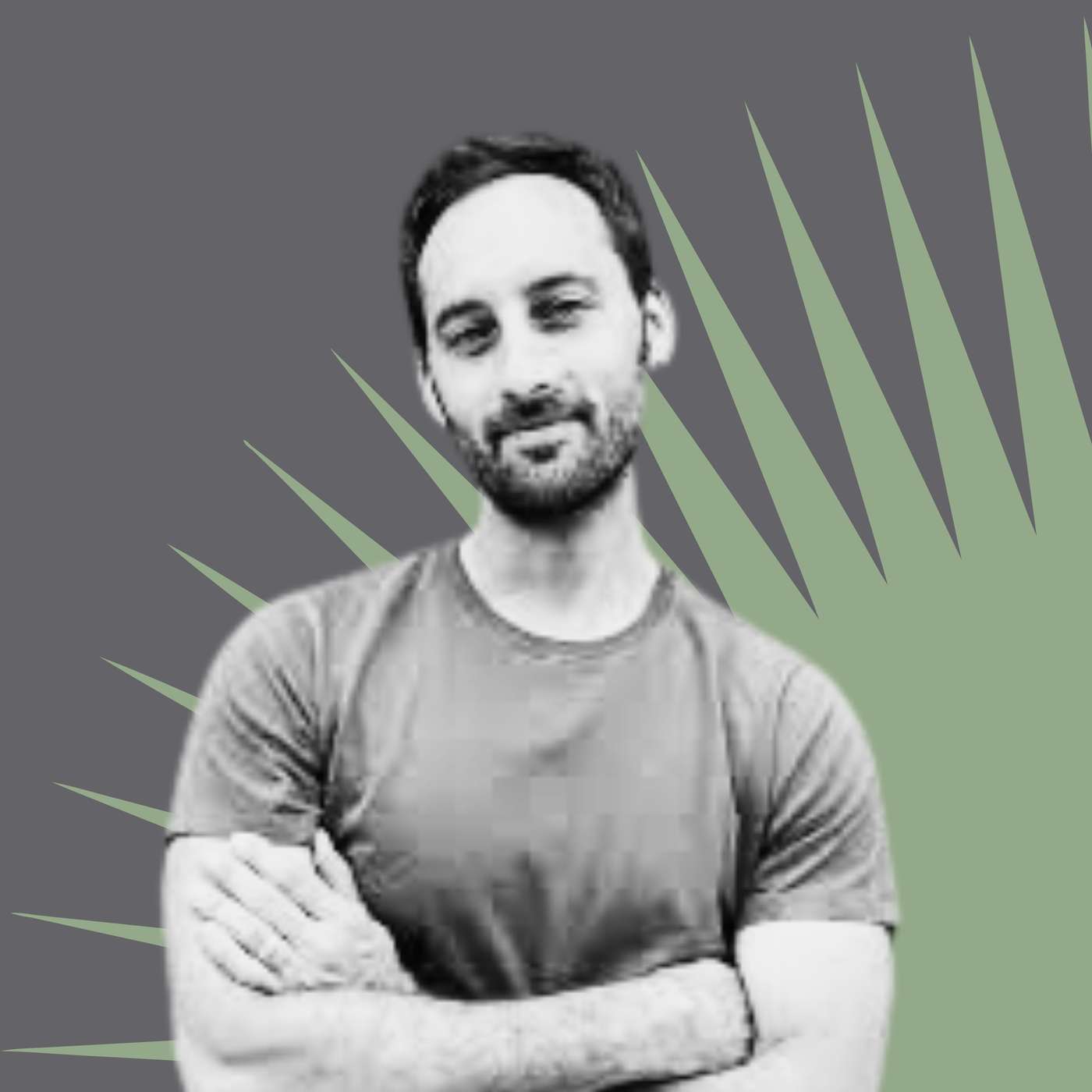


“Get the f*** out of your house and join an organisation. Groups are how we make movements. They’re how we make political and social change. They’re how we transform. Nobody does anything of value alone.” — Yotam Marom
If you’re feeling politically powerless, you’re not alone. Yotam Marom — full-time organiser, facilitator and veteran of Occupy Wall Street and Black Lives Matter — has spent his adult life on the front lines of progressive movements. His new book, For Louder Days: Reaching Beyond the Politics of Powerlessness, explains why progressive movements keep losing — and what to do about it.
Marom’s diagnosis is that the left has developed a “politics of powerlessness” — an attachment to purity, insularity, and performing resistance rather than building power. In contrast, the right understands that people’s pain is real, and channelling it into something organised is the only route to political change. The liberal model of showing up every few years, voting, and then going home is insufficient. And the left too often sabotages itself by dodging conflict and choosing righteousness over action.
His prescription is to “get the f*** out of your house” and join an organisation. Groups are how societies change and where people find meaning, purpose, and connection. So go on the streets. Turn up the volume. Your days will be louder and more meaningful.
Five Takeaways
• The Politics of Powerlessness: Why the Left Keeps Losing: Progressive and left movements have repeatedly put enormous numbers of people into the streets — and repeatedly failed to convert that energy into durable political power. Marom’s explanation: a politics of powerlessness has taken hold. It prizes purity over winning, insularity over coalition, righteousness over effectiveness. It avoids conflict because conflict feels dangerous. It avoids leadership because leadership feels hierarchical. The result is movements that are morally serious and politically weak. The right, by contrast, is very good at taking pain and converting it into organised power.
• The Right Channels Pain. The Left Needs to Do the Same: Trump’s most effective political move, in Marom’s analysis: he tells people that they’re being screwed — and he’s right about that. Then he continues to screw them. But the left cannot simply counter this with policy arguments. The people who voted for Trump are not wrong that the system has failed them. Income inequality is growing. Politicians don’t listen. There is no leverage. Marom’s argument: the left needs its own version of this — speaking directly to people’s pain and offering a genuine path to power. Bernie, AOC, and Mamdani know how to do this. They’re not the only ones.
• Liberal Democracy Is Necessary but Insufficient: Voting, electoral participation, civic engagement — these are important and necessary parts of a healthy democratic society. But they are not sufficient to make big political change. The right understands this and has been exploiting it for a decade: the failure of the liberal establishment to deliver for ordinary people is the fuel for right-wing populism. Marom’s answer is not to abandon liberal democracy but to supplement it with the kind of mass social movement that has historically produced the big political changes: the labour movement, the civil rights movement, the suffragette movement.
• Conflict and Leadership Are Good, Actually: Two of the left’s most self-destructive habits, in Marom’s experience as a facilitator: avoiding conflict and avoiding leadership. Groups that learn to face conflict with dignity and care come out with better strategies. Leaders who accept the responsibility of leadership — who are willing to be visible, to take risks, to be wrong in public — give movements something to coalesce around. The fetishisation of horizontalism and the terror of hierarchy have kept many progressive organisations small, fractured, and ineffective. Leadership is not domination. It is responsibility.
• Get the F*** Out of Your House: Marom’s prescription for individuals who feel powerless: join an organisation. Not a party, not a mailing list — an actual organisation where people gather, disagree, decide things together, and act collectively. It doesn’t have to be a national political organisation. It can be a union, a community organisation, a neighbourhood group, a mutual aid network. The point is the group. Groups are where political change happens. They are also where people find meaning, purpose, and connection. Nobody does anything of value alone. Not political change, and not a good life.
About the Guest
Yotam Marom is a full-time organiser and facilitator based in Brooklyn, New York. He has been active in movements since the US invasion of Iraq in 2003, played leadership roles at Occupy Wall Street, and co-founded IfNotNow and the Wildfire Project. He is the author of For Louder Days: Reaching Beyond the Politics of Powerlessness (The New Press, June 2, 2026). He lives in Brooklyn with his wife and children.
References:
• For Louder Days: Reaching Beyond the Politics of Powerlessness by Yotam Marom (The New Press, June 2, 2026).
• Episode 2919: David Masciotra on A Country of Strangers — referenced at the opening.
• Episode 2903: Ece Temelkuran on Nation of Strangers — referenced at the opening.
• Christopher Clark, Revolutionary Spring: Europe Aflame and the Fight for a New World, 1848–1849 — referenced in the closing exchange.
About Keen On America
Nobody asks more awkward questions than the Anglo-American writer and filmmaker Andrew Keen. In Keen On America, Andrew brings his pointed Transatlantic wit to making sense of the United States — hosting daily interviews about the history and future of this now venerable Republic. With nearly 2,900 episodes since the show launched on TechCrunch in 2010, Keen On America is the most prolific intellectual interview show in the history of podcasting.
Chapters:
00:31 - Introduction: the politics of powerlessness — Masciotra, Temelkuran, and Marom
02:13 - Is America a country or world of strangers?
02:27 - The loneliness epidemic: decades of right-wing attack on civic institutions
03:21 - Is liberalism insufficient? The limits of showing up to vote
03:51 - The right exploits the failure of the liberal establishment
05:25 - Is the right more effective at getting people out?
06:15 - Progressive movements have put enormous numbers in the streets
07:00 - The right channels pain. What the left needs to do.
08:37 - Marom’s biography: Hoboken, 9/11, Occupy Wall Street
08:59 - Calling vs career: his parents’ reaction
09:37 - From the anti-war movement to Occupy Wall Street
12:00 - IfNotNow: young Jews ending American support for occupation
12:30 - The Wildfire Project: building movement infrastructure
13:13 - Is he just a professional member of Antifa?
20:00 - The politics of powerlessness: purity over winning
25:00 - Conflict and leadership: the left’s two bad habits
30:00 - What Occupy got right and what it got wrong
35:00 - The role of public visible leaders
38:00 - The joy of movement: connection, purpose, and the rush
39:45 - Christopher Clark and 1848: the exhilaration of failure
40:50 - What should individuals do? Join an organisation.
42:02 - Get the f*** out of your house
43:14 - Conclusion: For Louder Days is out this week
00:00:31 Andrew Keen: Hello, everybody. If you're feeling powerless, particularly on the political front, you're not alone. We've done a lot of shows recently on the sense of powerlessness. We did one recently with my old friend, the Chicago-based cultural critic David Masciotra, on a nation, a country of strangers — how he imagines Americans have become separated from one another and what that's done to our politics. It's not just in America. Seems to be a global phenomenon. My old friend Ece Temelkuran was on the show, a Turkish exile based in Berlin. Her new book is appropriately called Nation of Strangers: Rebuilding Home in the Twenty-First Century. And for Temelkuran and for Masciotra, home is all about politics — rethinking and perhaps reorganizing how we deal with power and the state and governments around the world. My guest today, I think, is very much in the Temelkuran-Masciotra camp. Yotam Marom is a full-time organizer and facilitator. He's spent a lot of time in movements like Occupy Wall Street and Black Lives Matter, and he has a new book out. It's all about reaching beyond the politics of powerlessness, and it's called For Louder Days. He's joining us from Brooklyn, New York, one of the louder places in America. The book is out on Tuesday. Yotam, welcome to the show, and congratulations.
00:02:11 Yotam Marom: Thank you. Thanks for having me.
00:02:13 Andrew Keen: So Yotam, have we become, to borrow Masciotra and Temelkuran's language, a nation or a world of strangers? Is that the big political challenge these days?
00:02:27 Yotam Marom: It's certainly one of the challenges, for sure. I mean, I'm not as scholarly as some of your guests — not as much of an expert — but the loneliness, the stranger epidemic that we're facing in the US, is the result of decades of right-wing attack on civic institutions. People just used to be part of more things, more communities — things that helped them find meaning in their lives, and also things that helped them be part of political activity. And it's been a pretty concerted effort to chip away at that. So for sure, people are more lonely, more atomized, more individualized, and it hurts our movements in a big way. It hurts political movements, especially progressive movements.
00:03:21 Andrew Keen: Is there an incompatibility — your term — between what you call progressive movements, which you've been part of for a lot of your life, and liberal movements? We've done a number of shows on the crisis of liberalism, the limits, perhaps, of liberalism. Is liberalism insufficient — democratic liberalism, where we show up every year, every couple of years, every four years, to vote? Is that the wrong way of thinking about politics these days?
00:03:51 Yotam Marom: I definitely think we've reached the limit of it. I think what you're describing as liberalism — where we show up and participate in these kinds of increments — is part of a healthy society, but it's not how we make big political change. And I don't think it's enough to make up a healthy political society. I think the right understands that and has been using the failure of the liberal establishment to get its way for a long time. A lot of what's been successful on the right for the past decade or so has been basically pointing to the failure of liberalism and neoliberalism, and they're not wrong about that. People — income inequality is growing. People can't afford to live the lives they want to live. They don't feel empowered. They don't feel the politicians are listening to them. They don't really have any leverage over them. And their answer is not my answer. But yeah, I do think there's a pretty serious limit to the kind of democracy that maybe the establishment of the Democratic Party would like us to participate in. And the answer is movements — big social movements that are made up of people taking agency over their lives and being politically and socially active.
00:05:25 Andrew Keen: What is it that the right — people call it the radical right, the far right, there are all sorts of ways of describing it — what are they doing? I wouldn't say necessarily right, but more effective in some ways in bringing out louder voices. We know that they brought out the louder voices in Charlottesville a few years ago. It's very controversial. They seem in some ways — and this isn't necessarily a criticism, it's just my observation — that they're more effective in bringing people out. Is it because they're better organized? They're more passionate? Or perhaps people are sometimes, when it comes down to it, more right-wing — more willing to go out and demonstrate against immigrants than for immigrants?
00:06:15 Yotam Marom: Yeah, it's a good question. I mean, look — I actually don't know that they're more effective at getting people out in the streets. In the last — I guess it's been almost fifteen years since Occupy Wall Street, where I played a leadership role, and a bunch of movement moments since then — progressive and left movements have put people in the streets countless times. A bunch of different types of movements, different issues, some really record-breakingly large movements. We won some things. We built some things. But for the most part, those movements did not translate into power. I think what the right is really good at is mobilizing people and then leveraging that into power. And their project is pretty different from ours. What we're witnessing now is a kind of — or not kind of, it's an extremely destructive project, where there's a handful of people who are basically dismantling the government for the benefit of a bunch of billionaires. That's a much easier project once you get power than rebuilding a society that has crumbling infrastructure and bad schools and bad roads and all that kind of stuff. These are just different projects — require different kinds of buy-in. I think they are really good at harnessing people's pain and speaking directly to people's pain. I don't think they're the only ones who know how to do this. Bernie knows how to do this, AOC knows how to do this, Zohran knows how to do this. That's what's successful about left populism in the same way that it's successful about right populism — its relationship to people's actual pain. People are really hurting in a bunch of different ways. So the right channels that pain. I mean, this is what Trump is a master at — he's basically like, they're all fucking you over, and he's not wrong about that. But then he continues to fuck everybody over. Anyway, the far right especially is really good at getting at people's pain and using it in the end against them also. I mean, that's the sadness of what's going on here.
00:08:37 Andrew Keen: Tell me a little bit about — I'm not sure, I wouldn't call it a career, I'm sure you don't call it a career — as an organizer and facilitator. As you said, you were on the front lines of Occupy Wall Street. You've been involved with Black Lives Matter, many other organizations. How did you find this calling? Perhaps calling is a better word than career.
00:08:59 Yotam Marom: Calling is nice. Although my parents are happy that I, like, managed to make a life out of it. But they were like, you better go to grad school. And then I figured it out, so they're alright. I was politicized in late high school during 9/11 and the subsequent invasions of Afghanistan, Iraq, Haiti — the beginning of these forever wars. And those really politicized me, and I had a couple of really good high school teachers who took me under their wing and helped me find my way politically.
00:09:37 Andrew Keen: And where did you go to high school? Is that in —
00:09:40 Yotam Marom: In New Jersey. In Hoboken, New Jersey, just across the river from the city. So I spent a lot of time in New York. And there were these epic anti-war protests that really filled me with life, and I wanted to be part of the movement. I was really hooked. I had a circuitous journey through some other things — left Jewish communal stuff. We could take a bunch of detours here. But ultimately, I became part of movements as just a participant. I had some skills and was at the right place at the right time a few times in some of the precursors of Occupy Wall Street — student movement in New York City and some of the stuff that led to Occupy. And then in Occupy Wall Street, I played a big role leading some of our largest demonstrations and thinking about strategy with folks. At the end of that, there was a moment where a bunch of us who had played leadership roles made an assessment that it was an incredible moment — huge and empowering, a ton of momentum, and there would be more moments like that. But the left didn't really have institutions that could make good on that momentum and turn it into something durable, and we'd need to go build organizations and different kinds of institutions. So I went and built a training organization that was meant to support a bunch of the other groups that were coming up at that time. I spent the next bunch of years as a facilitator-trainer, supporting groups like the Dream Defenders — a statewide Black and brown organization in Florida that came up after the murder of Trayvon Martin and occupied the state capitol — and groups like Occupy Homes in Minnesota, which was taking over foreclosed homes, helping people who were being evicted from their homes actually stay in their homes, and trying to take political power in Minnesota and Atlanta and stuff like that. A bunch of different organizations like that. I also ended up playing roles — I was just around for the movement moments that happened in that period, like Movement for Black Lives and the airport shutdowns after Trump was elected. And I helped start an organization called IfNotNow in 2014, which is basically an organization of young Jews trying to end American support for the occupation and apartheid and now genocide. So over time, what my work actually became was supporting groups as a facilitator. And most of what I do now, aside from this book, is I work with the leadership teams of movement organizations and help them craft their strategy and work out their group-dynamic stuff. Groups have lots of stuff that they've got to work through — conflict, intentions, discussions about power, and whatever else groups need to be healthy. So I do that with leadership teams of different kinds of organizations and social movements. That's how I spend a lot of my time. The book is really a lot of lessons from that — lessons from my own time in the movement, but also as a facilitator. Most of it is driven by stories, and the stories are from those moments with these groups.
00:13:13 Andrew Keen: Yeah. I don't know if we have much of an audience with the MAGA people, but if they were watching, some of them might think, oh, this guy's just a professional member of Antifa. Is that, in a way, right? Maybe a compliment?
00:13:29 Yotam Marom: I mean, when we think about Antifa, we're talking about an anti-fascist movement. I am a proud member of a mass anti-fascist movement. Most people are against fascism. Definitely most Americans are against fascism, and I'm part of that movement. And yeah, I've made a life serving movements like that — and yeah, a career, I guess.
00:13:54 Andrew Keen: I was thinking, in terms of your book For Louder Days, it brought to mind George Orwell's famous argument in Inside the Whale about activism and politics, which he wrote at the time of the Spanish Civil War and the threat of fascism. Is history repeating itself? I know you're not really an academic — you're more of an organizer and, as you say, a facilitator. But is history repeating itself? I don't want to get involved in semantic questions of the F-word, but are we back in the late thirties and forties in some ways?
00:14:29 Yotam Marom: I fucking hope not. I mean — if you ask my dad, he's like, it's 1933 out here, 1937. Every time I see him, he's like, no, it's 1937. Now it's 1937. And —
00:14:44 Andrew Keen: Where's your father? Your father's Israeli, right?
00:14:46 Yotam Marom: Yeah. My parents are Israeli. But, you know, my parents are the children of Holocaust survivors, and that's very much in our family story, and we're keenly aware — oh wow, do people say "keenly" to you a lot?
00:15:03 Andrew Keen: Yeah, they do.
00:15:05 Yotam Marom: I'm so sorry. I feel acutely aware of what can happen and the directions that societies can go, actually extremely quickly, really mostly by compliance. I don't know that we're repeating things. I think things happen on their own and it's like spirals of that. But yeah, it doesn't look good. We've seen societies that appeared to have institutions that could withstand this kind of collapse — we have seen societies like that, indeed, collapse into really pretty heinous structures and systems. And yeah, this could very well be the direction that we're going, but it's not inevitable.
00:15:54 Andrew Keen: Right. It's certainly not a — does that compound the pain and the frustration here — that we, I'm speaking collectively of "we," we know what's happening, we feel powerless, and yet we can't address that? Is that what your book is all about? It's for people who feel powerless but don't know how to get out of that powerlessness trap.
00:16:22 Yotam Marom: Yeah. I think it is really reasonable to feel powerless or despairing or hopeless in a historical moment like this. I think I feel it all the time. There are definitely days that I wake up and I'm like, we're cooked. On top of rising fascism and all this other stuff, this planet is cooking, and it's happening rapidly. We're so past the markers we would have needed to hit. There is no scenario where we come out of this thing unscathed, where there isn't some amount of pain and loss — even in a best-case scenario of movements being able to help us out of this crisis. So yeah, lots of people feel powerless and hopeless, and that is not an unreasonable feeling, but it isn't actually grounded in reality. That's a feeling. The reality is that people have faced incredible hardship over the course of human history, and the future is not written, and we get to make of it what we want to make of it. When we're hopeless and despairing, we are less inclined to build powerful movements. We're less inclined to do good strategy. We're less inclined to build healthy organizations. We're less inclined to be politically active. And those are the things that then make it a self-fulfilling prophecy that, in fact, we won't get our asses kicked. But it doesn't have to be that way at all. Even in this moment that is, in some ways, extremely bleak, there are a bunch of ways that we can look around and say, whoa, people do not give up. In the stories that came out of Minneapolis in the face of Operation Metro Surge — where the federal government of this country basically besieged a city and state in this country and its citizens and noncitizens — those people fought back in ways that were not only heroic. I see the pictures here of Alex Pretti and Renée Good — those are legit heroes, but also just strategic, really brilliant. And they fended off this thing. Not without loss — I mean, that's the thing we have to prepare ourselves for: there's going to be loss one way or another. But we can win. Just like they can win. It's a battle. The book is a set of lessons and tools from real stories of movements where we're confronting this thing — this what I call the politics of powerlessness, which is this tendency to accept our place on the margins and then turn inward and turn on each other instead of facing outward at the public and against our opponent. So the stories are really about confronting that thing in us and the ways out of it, in all sorts of categories like leadership and identity and belonging. How do we basically build a movement that masses of people can belong to, that can win? And I really believe that we can win. I really believe movements are the only path.
00:19:48 Andrew Keen: When you say "we" — I mean, that's the party of Yotam Marom, of progressives, of humans? Well, who do you mean?
00:19:59 Yotam Marom: That's a good question. I don't have a party yet, but maybe by the end of the book tour.
00:20:06 Andrew Keen: Well, you've got some big fans — Rebecca Solnit, [Michelle?] Alexander, heavy-hitting writers and political activists. Love your work.
00:20:14 Yotam Marom: Yeah. No, I'm very lucky to be in such good company. Look — I want a society in which people get their basic needs met, and in which their potential can be fulfilled. I think it's an absolute crime and a shame how much human potential gets wasted by these systems of capitalism and white supremacy and patriarchy. And I think those systems cause immense and completely unnecessary suffering, basically for the benefit of a handful of, you know, pharaohs.
00:20:59 Andrew Keen: You have another word for the B-word, billionaires. You call them pharaohs. Which goes back to ancient Egypt, of course.
00:21:07 Yotam Marom: But billionaire is fine, or oligarchs, or whatever. I want a society where people get to participate in decisions that affect their lives in meaningful ways, where they get their basic needs met, where they get to flourish. I would settle for a society where people have health care and can live inside homes and can go to schools that aren't collapsing. In the midterm, I would like basic shit that any self-respecting country should have. And the question of what's my party, or what's my affiliation — I think there's a fight happening over the Democratic Party, over the future of the Democratic Party, and whether the Democratic Party can be something that represents those values and be something that can actually win. I want that to happen, but I don't think that's enough either. That battle is a big one, and yeah, we won't all agree about what exactly that looks like.
00:22:20 Andrew Keen: Yeah. I'm guessing you're not a huge fan of Gavin Newsom and that kind of marketable, centrist Democratic candidate. Or, indeed — recently we had a southern politician from Charleston, a Democrat, Joe Cunningham, on the show, Life of the Party. He's talking about reinventing the Democrats, making them more — I want to say more populist, but more accessible to the white working class. Do you have any faith left? I mean, you mentioned Bernie Sanders, who's associated with the Democrats, ran for president as a Democrat, or tried to run for president, then of course there's Mamdani. Do you still think that the Democratic Party can be a vehicle for guys like yourself?
00:23:10 Yotam Marom: Yeah, I do. Look — I don't think the Democratic Party is, like, a thing. I don't think it's like a party in the way that people who grew up in other countries are trained to think of parties. And neither is the Republican Party. These are battlegrounds where different factions are fighting over control of basically a piece of infrastructure. We just live in a country where there are only two parties and one of those two is going to govern. That can change over time, but it's not going to change right now. So those are the terrains of struggle. The Democratic Party is a field. It's not a thing. And yeah, I think there are factions inside that field that represent what I believe is good and possible in this political moment, and I back them. I think it is possible for those groups inside the party to lead the party. And I think it's in everybody's interest. The thing about the so-called centrist approach to democratic politics is that I think it is just an inevitable boomerang to the kind of right-wing reaction that we're seeing right now. The establishment, business-as-usual Democrats are not able to deliver what people actually need. The only way to deliver what people actually need is massive, sweeping structural reforms — like New Deal and Green New Deal-type interventions in this economy and society — and establishment Democrats, for a whole variety of reasons including that their donors are for the most part not interested or capable of doing that. The result is that people get their hopes up and then they get disappointed. And then somebody like Trump comes around and says, look, they never gave a shit about you anyway, let's fuck this whole system up. And they vote for him. And then he does indeed fuck the whole system up, but just for the benefit of a handful of billionaires, the same ones. And we go back and forth in that way. So I don't think that faction is capable of getting us out of this thing. But I do think that there's plenty of roads. And again, I think maybe the most important thing for me to say is I'm not a pundit, and I'm not a Democratic Party operative, and really my expertise is about movements. So what I think is the most important thing is big social movements — big social, political, economic movements that are made up of organizations that keep them steady, that are full of people who are spending a lot of their time engaged in social-change work. And the rest, like what happens in the Democratic Party, follows from that. There is no viable Bernie Sanders primary without something like Occupy Wall Street before it. There is no Zohran Mamdani winning the election without movements in New York City laying the ground for that — like some of the organizations that I've supported, and the DSA and all that kind of stuff. It was just like grassroots political power, not to mention big movements that change the country's common sense. That's what movements often do — they change the common sense. What Occupy Wall Street did was basically popularize a story that there is a class war happening between the 99% and the 1%. And that changed the country's common sense, and it made it possible for someone like Bernie, who had been saying that for years but basically shouting in the wilderness, to come up and say that on a big stage, and for people to be primed to hear him say it. That's what movements can do, and then movements can do more than that. They can actually win tangible gains. They can support politicians. They can hold politicians accountable. So the question of Gavin Newsom or whatever — that is secondary to me. The primary question is, how do we build big movements?
00:27:23 Andrew Keen: Yeah. It's funny — in a way, Yotam, your book seems to be a repeat of history, even back in the oughts, in the early 2000s, organizations responding to the WTO and all that sort of thing. One of my old friends is Micah Sifry. I'm sure you're familiar with him. He's been on the show lots of times — an old left-wing activist very much involved in the tech movement. I've known him for many years. Had — I'm not saying you, but had these kinds of — and I'm not suggesting that these kinds of books, I don't mean that in a patronizing way, but the type of books about political organization written twenty years ago — ironically enough, they would have all focused on one thing. They would have focused on the role of the internet and the potential of the internet. And of course, the digital revolution was very much on the minds of Occupy Wall Street, of the Arab Spring. How have you changed on digital technology? When it comes to getting to what you call louder days, reaching beyond the politics of powerlessness — is the powerlessness that many people on the left feel a consequence of our faith or historic faith in technology, which has disappointed so many people? You know, Facebook in 2007, 2008 was seen as a very progressive technological movement. Today, of course, most people loathe it.
00:29:02 Yotam Marom: That's a good question. For sure, technology — these are tools that people can use for whatever, and often they're used against us for profit and for getting our data and all that kind of stuff. They can also be used to build distributed, decentralized movements, as they have. And yeah, I think one of the products is that people feel more lonely in this society than maybe some decades ago. Though again, I'm not a scholar on that. But look — I think what the book is trying to get at is, in the face of a really powerful opponent and a pretty bleak set of conditions that we're facing, in our movements we often accept our powerlessness and turn inward. And the book is trying to be an intervention in that. I did that for many years of my life as an activist, and I think it hurts us. It turns out that we build weak and self-marginalizing movements when we behave that way, and those movements really can't win. So this really is a book for people who want to learn lessons from movements on how we can do better. What I'm calling a politics of powerlessness — I came up, like I was telling you, I was politicized during the anti-war movement. And when I was being politicized, I never had the faintest idea that we were going to win. In the very beginning, I went to those big anti-war protests — there were anti-war protests that were record-breakingly large before the war even began. And there was a moment there where we were like, we're gonna fucking stop this war. And then we didn't, and the war didn't stop. And the war — I mean, just an incredible toll, real crimes against humanity. What happened to me, and I think happened to a lot of us in that time, was accepting that we were going to be a sideshow — that we're not really able to change society. We are, like, a morally righteous voice in the wilderness, and that's understandable. It's understandable to look up and say, wow, we're getting our asses kicked, there's no way we're actually going to win, but it's our duty to keep fighting. It's not an unreasonable reaction, but what it causes you to do is behave pretty poorly. It really disincentivizes — that kind of approach, that sense that we're going to be powerless no matter what — what it incentivizes is being self-righteous, building groups that feel good to the people who are in them but pretty hard to join, pretty unwelcoming. It incentivizes hard political lines that are really just very hard for everyday people to understand or adapt to or learn quickly enough. It incentivizes punishing each other and calling each other out and attacking one another. It disincentivizes the hard work it takes to make good strategy, which is really all about telling the truth — being honest about ourselves and about our opponent and the time on the clock of the world. And it disincentivizes taking real risks to welcome people into our movements. We were talking about the right earlier — there is a way that portions of the right know how to do this extremely well. Evangelical churches, for example, are extremely welcoming. Whatever else is going on there, they want you to come. This is a thing that a friend of mine, Eric Blogg [unclear; name not independently verified], is writing about. They really want you to join, and they really trust themselves to be able to transform you once you're there. And left movements often are the exact opposite — we really think you've got to transform before you come, and you have to prove how good you are in order to stay. That's a death sentence for mass movements. We can't build mass movements that way. People are all sorts of messed up, and it takes people time to adjust and learn and be part of —
00:33:46 Andrew Keen: Do people have to? I mean, can't you be part of a mass movement and not change? Why do you have to be convinced? In terms of the advice you give as an organizer, and in the organizations that you're part of, isn't one of the problems of the left that they want to ideologically change people? Isn't it sufficient that they just show up?
00:34:14 Yotam Marom: Yeah. Yes and no. I mean — wow, it's a good question. I guess the question for me is, when do people need to be pushed to transform, and for what, and to what end? I can just say that I've transformed an enormous amount through my time in the movement, and it's made me better — it's made me better in the movement, and it's also made me a better dad, and it's also made me a better partner. There are all sorts of ways that I was, like, more sexist when I joined the movement.
00:34:44 Andrew Keen: More tolerant. You noted that your family are Holocaust survivors. Your parents are from Israel. I know that you've worked with Standing Together, and the book talks about the Jewish ceasefire movement. How do you deal, for example, with when you're marching on behalf of Palestine or Gaza and you see other American Jews marching on behalf of Israel and Israeli Jews for one reason or another? Does that make you more or less tolerant — or do you think that tolerance is important, or is that the wrong word to use?
00:35:30 Yotam Marom: I don't know. Maybe it's the right word to use. For sure, I'm much more open-minded at this stage in my life than I was twenty years ago when I was starting out in the movement — that might just be the product of being just a tiny bit more mature than I was back then. But I do think that healthy movements are able to keep their eyes on the prize and focus on systems and not individuals. I've had a lot of fights with friends and family members about the genocide in Gaza, which many of them still don't think is a genocide. On a personal level, I can't say that I'm like, well, I guess everybody has their own opinion. You know what I mean? But on the level of a movement, I think we need to be better about seeing the difference between an opponent and someone who's in the middle who can be moved — and the difference between all of that and systems. I'm up against a system in which the United States gives political cover and arms to a rogue state to commit genocide. I could argue with my family members about genocide as much as I want, but it really doesn't make much of a difference about that. And I don't want to waste all of our time. I think movements should be open-minded enough to understand why people behave the way they behave. That doesn't mean we have to justify it or legitimate it. There are lots of people out in the world I disagree with. I can disagree with them and even not want anything to do with them, and even think that they're my opponent, and still have some respect for how they became what they became. Some sympathy for the ways that people are hurting, and some clarity about what my role is — which is to build powerful, big, welcoming movements that masses of people can belong in.
00:38:05 Andrew Keen: It's interesting. I mentioned Ece Temelkuran, as I said, an old friend of mine. I remember her once saying to me — she was at Taksim Square, very much involved in the Arab Spring [actually the Gezi Park protests of 2013] — and she said it was the happiest, I'm not sure if she used the word happy, but certainly the most exhilarating period or moments in her life. Do you share that, in terms of the sell, if you like, for louder days, of getting beyond the politics of powerlessness? I wouldn't say it's fun, but it's meaningful, isn't it? I mean, it gives meaning to our existence.
00:38:41 Yotam Marom: Absolutely. I don't know what I would be if not for the movement. Some of the most transformative, fulfilling, even pleasurable times that I've ever had in my life were in those big moments where you really feel connected to people. You really feel like you're on your purpose. You're meant to be doing what you're doing, and you're using your life well. You can sort of see and feel and imagine what it might be like for that to be more permanent — for us to have societies where people really get to thrive. Absolutely. I mean, also just fucking what a rush, to be surrounded by tens of thousands of people in a big protest moment. These are really moving, transformative moments. They're not the only ones — I've had some of those moments also with my wife and my kids, and that's all part of a healthy life.
00:39:45 Andrew Keen: I'm not sure if you've read Christopher Clark's book on 1848, Revolutionary Spring. 1848 was mostly a failure, but he speaks of the exhilaration and meaning that many of the participants experienced. So to end your time — for people for whom your message resonates, when they listen to you and they think, yeah, he's right, I'm really suffering from this politics of powerlessness — well, leaving aside organizers, you're as I said an organizer, so you work with people within organizations, but for individuals, what should they do? You can't just go and join your local organization or your local political party. What would you advise people? I mean, of course, they should pick up your book, For Louder Days — it's out this week, so that's a good start. It won't cost you a lot. But what else should they do?
00:40:50 Yotam Marom: You know, I actually do think they need to go join an organization. I actually think that's the biggest thing. And maybe not everybody has access — although look, there really are organizations everywhere. Political organizations, progressive organizations, community organizations — issue-based or neighborhood-based or workplace-based unions. I really think the bottom line is, nobody does anything alone. Nobody does anything of value alone. Societies don't change by individuals doing things alone, and people don't feel that great when they're alone. I think groups — groups are what's important. Groups are how we make movements. They're how we make political and social change. They're how we transform. They're where we find meaning and connection. They're where we get feedback. They're how we fulfill our purpose. They're where we find intimacy and pleasure. I actually think, yeah, you need to get the fuck out of your house, and you need to go be with other people. And luckily — look, I know I live in Brooklyn, but there are, like, I don't know, eight Signal threads right now and WhatsApp threads on my phone of people scurrying around the neighborhood getting ready for —
00:42:02 Andrew Keen: Organizations grow on trees in Brooklyn. I'm not sure —
00:42:06 Yotam Marom: But I do think — you look at a place like Minneapolis, and you look in lots of other places around this country, where people basically organize themselves and each other to be good neighbors, to be good people, to support each other, and to defend their communities. There are lots of ways to do that. And okay, maybe it's not joining a political organization and becoming a soldier. Maybe it's, you know, you go to the checkpoint down the street that the activists set up in Minneapolis, and you bring them muffins. I don't know. But it's to connect to the group, to be part of something. I think that's the way.
00:42:47 Andrew Keen: Yeah. You've explained to me, Yotam, why authors are so miserable. Nobody does anything alone, but of course, writing a book —
00:42:53 Yotam Marom: I know. It is a —
00:42:54 Andrew Keen: — very solitary existence. I don't know how you did it.
00:42:57 Yotam Marom: You know what? I did it in chunks. The rest of the time, I was out in the streets getting my ass arrested, or supporting and facilitating organizations. The writing was from that and based on that. And I'm glad to be out here again.
00:43:14 Andrew Keen: Well, there you have it. Yotam Marom says: get the fuck out of your house, get into organizations. That's the rather vulgar description of his new book, For Louder Days: Reaching Beyond the Politics of Powerlessness. A very important book — certainly about a very important subject. Yotam, thank you so much, and congratulations on surviving the solitary experience of writing a book. You came out of it, if not unscathed, certainly —
00:43:43 Yotam Marom: I'm alright.
00:43:44 Andrew Keen: — wiser. Thank you, sir.
00:43:46 Yotam Marom: Thank you. I really appreciate it. Thanks for having me.