From One Mad King to Another: Don Watson's Shortest History of the United States
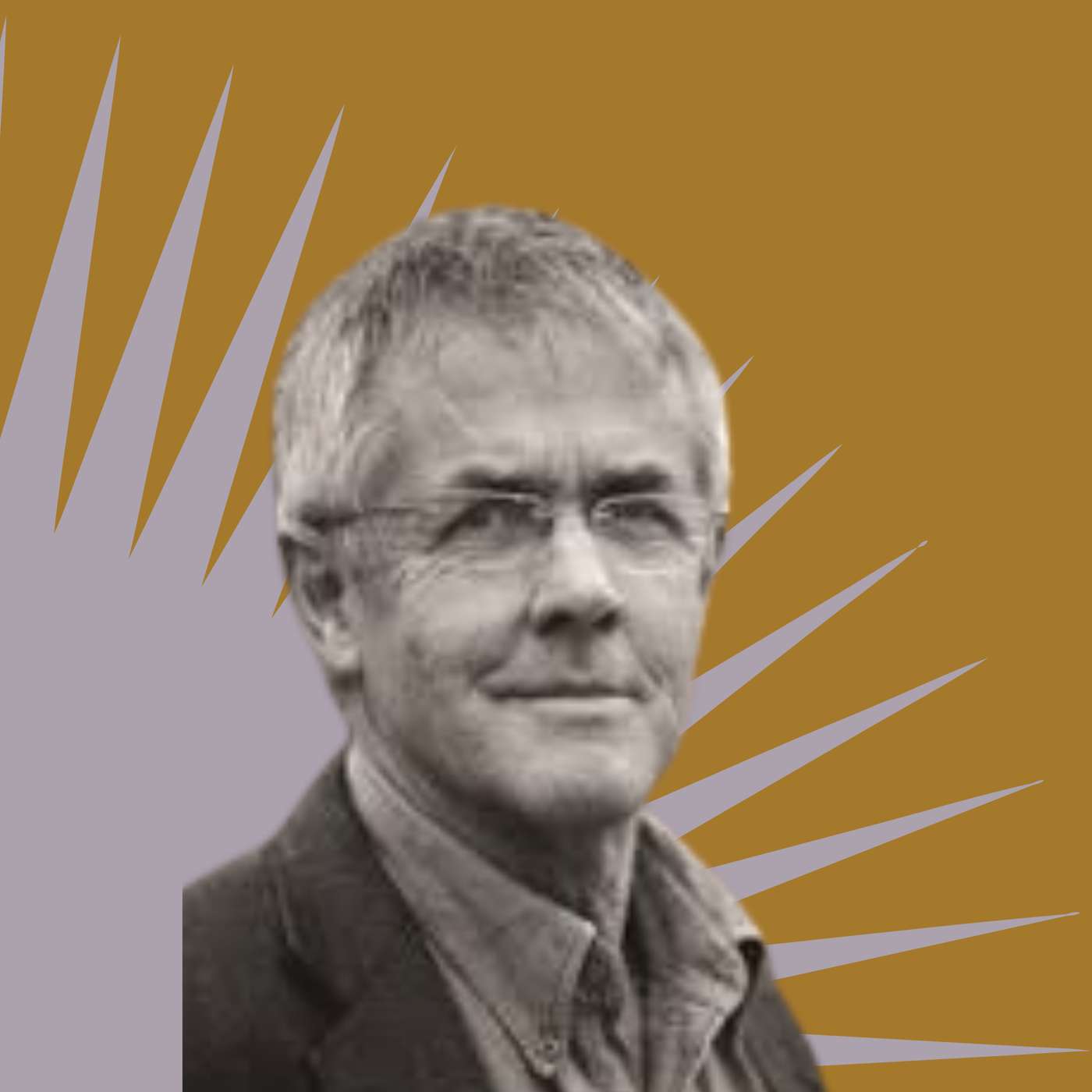


“Politics is the systematic organisation of hatreds.” — Henry Adams, quoted by Don Watson
America is celebrating its 250th anniversary this July. In The Shortest History of the United States, Australian writer Don Watson has squeezed these 250 years into 60,000 words. Beginning with Mad King George, he ends with Mad King Donald. In between: the Puritan North, the plantation South, the miracle of the Constitution, the nightmare of slavery, the Civil War, the Gilded Age, two world wars, and the long arc from republic to empire that Americans have never quite admitted to themselves.
Watson argues that America is a profoundly idea-driven place — unlike any other country on earth. The Bible and the Enlightenment documents of the revolution set the bar impossibly high. The Declaration of Independence, the preamble to the Constitution, the Gettysburg Address, the Second Inaugural: these are documents of aspiration that no group of people could ever live up to. Which is precisely why the American moral minefield has never been cleared. The greatest American politicians — Lincoln, FDR — are those who managed to cobble together the most improbable coalitions. The most profound American contradiction — building a country of liberty on the backs of 600 slaves — is one they were always aware of but could never move on from, because the republic couldn’t survive without the South. The republic always came first. Even Calhoun, ardently pro-slavery, said he would hang any man who tried to split it.
Is Trump different? Watson doesn’t think so — not fundamentally. Trump is a chip off the old American block: a huckster, a Roy Cohn-formed Queens opportunist, playing the same game of racial pot-stirring and imperial presidency that has always lurked beneath the surface. The US was founded out of the overthrow of a mad, tyrannical king. From one mad king to another. Six words. The shortest history of America.
Five Takeaways
• Eden with Savages to Remove: Watson begins in Australia, where he lives, to establish a point of contrast. Every new-world country has an appalling history of violence toward indigenous peoples. But America is different in one key respect: it found extraordinary land. Lewis and Clark head west and discover the Great Plains, cross the Rockies, see the great rivers, and return to the Mississippi. There is always somewhere to push west. It’s Eden — with some savages to remove, who are easily accounted for in biblical terms. This is the first and most consequential American story: a cornucopia that licensed everything that came after.
• The Bar Was Set Impossibly High: America is exceptional in being an idea-driven place. The Bible is there. The Enlightenment documents are there: the Declaration of Independence, the Constitution, the Gettysburg Address, the Second Inaugural. These are documents of incredible aspiration that no group of people is ever going to live up to. “A more perfect union” drives them on and damns them simultaneously. Watson’s formulation: America is a moral minefield precisely because it set the bar so high. Every infraction of that rhetorical overlay becomes a scandal. Tocqueville grasped it in the 1830s, having barely left the East Coast. His observations are more relevant now than when he wrote them — which means either he was a genius, or America hasn’t fundamentally changed in two hundred years. Probably both.
• The Republic Always Came First: A crucial distinction Watson draws: the Civil War was not fought to preserve democracy. It was fought to preserve the republic. Even Calhoun — ardently pro-slavery — said he would hang any man who tried to split it. Manifest destiny, Watson argues, lies latent within the founding: Jefferson and Madison both said the republic couldn’t survive without pushing west. West takes you to the Pacific, and beyond. It’s an empire from way back — but one that has never recognised itself as an imperial power. And a republic, Watson notes, that has always been an elected monarchy: the powers of the American executive exceed those of any existing European monarchy, and can be expanded, as recent events demonstrate, pretty much at will.
• Trump Is a Chip off the Old Block: The question: is Trump different, or has he always existed? Watson’s answer: he’s a profoundly American individual, a huckster shaped by Roy Cohn and Queens, who is playing an old game. The US was founded out of the overthrow of a mad, tyrannical king. The “no kings” rallies of recent times are interesting precisely because the struggle against a monarchical presidency has been perpetual. Watson’s Gatsby comparison: Trump is Gatsby without the romance — born to be a huckster, not a dreamer. Henry Adams wrote in the 1880s that politics is the systematic organisation of hatreds. That has not changed. Nor has the deep-sea-fish quality of ordinary American life, insulated from the world beyond its own provincial borders.
• Mark Twain, FDR, and the Miracle of Cohesion: Watson’s favourite American: Mark Twain. Beautiful voice. The irony. Huckleberry Finn as a seminal novel. Anti-imperialist in the end. Got his politics pretty much right. Among presidents: FDR, who saved and modernised the United States, who believed political leaders can’t afford to stand still — you have to stay ahead of the regressive and self-interested forces. Watson’s broader verdict: American history is a miracle of cohesion. You can read it as wild turbulence, or you can marvel that it holds together at all. Filaments of goodwill. Recognition of the necessity of holding together. Always threatening to fall apart. Never quite does.
About the Guest
Don Watson is an Australian author and screenwriter, former speechwriter to Prime Minister Paul Keating. He is the author of The Shortest History of the United States (The Experiment, 2026), American Journeys, Recollections of a Bleeding Heart, and many other books. He lives in Melbourne.
References:
• The Shortest History of the United States by Don Watson (The Experiment, 2026).
• Democracy: A Novel by Henry Adams (1880) — “Politics is the systematic organisation of hatreds.”
• Democracy in America by Alexis de Tocqueville (1835) — still the most quoted work on how American democracy works.
• Caste: The Origins of Our Discontents by Isabel Wilkerson — the argument that American political life is a caste system.
• Episode 2871: Beverly Gage on This Land Is Your Land — road-tripping through America for the 250th anniversary.
About Keen ...
00:00:31 Andrew Keen: Hello, everybody. There's a great publishing house that puts out a series called The Shortest History. Lots of subjects in these shortest history books, and we've done a number of shows on them — from the shortest history of Israel and Palestine with the British-based Michael Scott-Baumann, to a fascinating conversation on the shortest history of eugenics with Eric Peterson, to the Australian-based expert on AI, the shortest history of AI, a very topical subject, with Toby Walsh. Today we're doing another shortest history, but this one is particularly ambitious given the size of its subject. There's a new book out this week in the US. It's called The Shortest History of the United States, and its author is Don Watson, a US expert who lives in Australia, in Melbourne. Don's joining us from Melbourne. Don, this is a rather ambitious project, isn't it? The Shortest History of the United States. How many words is the book?
00:01:43 Don Watson: It's a bit over — about 60,000, I think. They normally aim for 45, but I couldn't do it.
00:01:50 Andrew Keen: I think 60,000 is quite an achievement. So in terms of this shortest history of the United States, where did you begin?
00:02:00 Don Watson: I began with the Amerindians, I suppose, briefly. I did the first twenty-five thousand years in a couple of paragraphs, as you do.
00:02:12 Andrew Keen: Well, that's a great achievement.
00:02:13 Don Watson: And then the Spanish. I got held up on the Spanish for a long while, because I'd never really read much about the Spanish in North America. It doesn't make the most pleasant reading, but I was fascinated. I spent too long there and then had to apply for an extension and take a little longer to write the rest. It is a kind of nightmare of reduction — of concision. But in a funny kind of way, it's fun as well. Whatever else you say about American history, there's never a dull moment.
00:03:05 Andrew Keen: That's for sure. And of course it's a moral minefield, both the pre- and the post-revolutionary history. I mean, obviously you live in Australia — my daughter lives in Melbourne, where you are. I was just there a few months ago. I went to a fascinating museum on the early history of Australia, the prison colonies, and the treatment of the indigenous people. So Australia isn't exactly new to the idea of a moral minefield. But is there something particularly complicated and troubling about the historical moral minefield of the United States, Don?
00:03:53 Don Watson: I think every so-called new world country has an appalling history of violence towards the indigenous people. Australia is no exception. In fact, it's only really in the last thirty or forty years that the real truth of the frontier in Australia has become available for everyone to understand and fully appreciate. And there are all sorts of other moral travesties in the development of any country, I suppose. America is fundamentally different because it cut the ties with the UK. Australian history for a very long while is really the history of an outpost of the British Empire. The US made its own way. And it's settled with two dominant cultural forces — the Northeast Puritan communitarian, high-moral-ground sort of settlement, and then down below, the plantation economy. Slavery adds a further dimension, of course. The US spends a good deal of its time from the very beginning not only removing indigenous people, betraying them, slaughtering them, fighting wars with them, but also trying to remove the French and the Spanish as it expands westward. It's different in many, many ways. Australian explorers went out and came back exhausted, having found largely a desert. American explorers went out and found land fit for settlement. Extraordinary land. You know, Lewis and Clark head off, and when they get to the Pacific they've found the Great Plains, they've been over the Rockies, they've seen the great rivers — the Columbia and the Mackenzie — and they come back to the Mississippi, for God's sake. So there is this splendor of America unlimited. There's always somewhere to push west.
00:06:45 Andrew Keen: And you mentioned that the founding fathers were Puritans from New England, and even the settlers in Virginia were Christian — perhaps less bound up in biblical scripture than the Puritans of the North. But is there something more than coincidental about the biblical quality of the America you're describing — this cornucopian place full of remarkably rich nature? It's Eden, isn't it, in a weird way? And the biblical narrative is uncannily relevant — the Fall included.
00:07:35 Don Watson: Yeah. It's Eden with some savages to remove, but they're easily accounted for in biblical terms anyway. And that's another difference, another thing which makes the United States — I'm tempted to say — exceptional: the Bible is there. It's a strangely idea-driven place in ways that most countries are not. It's also there in the usual rapacious imperial way from the beginning — the Puritans were not averse to making a dollar. But there's a religious overlay. There's a great book by Perry Miller about the life of the mind in the US — an idealist historian. You couldn't apply a comparable framework to any other country I can think of. So this pragmatic, hard-nosed, materialist society has this unusual overlay of religious or Enlightenment virtue, and it has documents to go with it. In some ways it's a moral minefield because it set the bar so high — both through the Bible and through the documents of the revolution: the Declaration of Independence, the preamble to the Constitution, the Constitution itself, and Lincoln — Gettysburg, the Second Inaugural, and so on. These are documents of incredible aspiration that no group of people is ever going to be able to live up to. So there's always that divide. The very idea of "a more perfect union" sort of drives them on. And yet any kind of infraction of that rhetorical overlay becomes the moral minefield we're talking about.
00:10:03 Andrew Keen: Whether it's Silicon Valley people who want to be good and rich, or MLK who believes in the arc of justice when it comes to history — it makes them all very American. Your book's subtitle is From Revolutionary Roots to Global Superpower: The Remarkable Rise of the World's Oldest Democracy. One of the things you use to describe America is the story of a nation that contains multitudes — with reference, of course, to Walt Whitman. Is that the defining quality then, Don — this idea of multitudes, often profoundly contradictory?
00:10:58 Don Watson: I've often thought, well, it's not really a country. It's really 300 million sovereign individuals fighting for either wealth or some kind of moral perfection that will get you into heaven. It's a multitudinous country — that's clichéd beyond tolerance, really. But it's held together, on the one hand, by these documents, the anthem, the flag — all of which, for people from the UK or other European countries, is one of the first things that strikes you about America: flags everywhere. It's also held together by political compromises — the compromise over slavery, the Missouri Compromise of the 1820s, the great compromise around 1850. Those compromises are essentially to save the country from civil war, to bridge the plantation South and the North. And this is done again and again. It's a struggle to hold the joint together. And I think at the moment we're seeing yet another such struggle.
00:12:19 Andrew Keen: We'll come to the current American president in a minute. Does that mean that when we define the great American figures, especially politicians, their achievement — whether it's Lincoln or FDR — is cobbling together these unholy alliances? FDR, for example, bringing together Black Americans and white reactionaries in the South. Is that the genius of the great American politician — and Lincoln, of course, doing it in all sorts of very odd ways and keeping the country together through the Civil War?
00:13:04 Don Watson: Yes, it is. The problem we're seeing now is that you have the states — it's a federation, a massive federation. Australia has a federation of six states. The United States is a federation of too many states. The Constitution is there to decide where the power really lies — with Washington or with the state legislatures. Much that Washington would like to do, the states don't want done. That fight is endless. There is also the standard contradiction that any capitalist democracy has: between capitalism and democracy. It works spectacularly well up to a point, but there is a structural struggle between the tendency of capitalism toward oligarchy, outrageous wealth, and relative public poverty — which reaches a high point in the late nineteenth century, the Gilded Age, the titans of industry — and it's reached another such point now. So I think of American history as a miracle of cohesion. You can think of it as a wild, turbulent, chaotic place, or you can think the other way — that somehow it is held together by some filaments of goodwill, or recognition of the necessity of holding together. But it is always threatening to fall apart.
00:15:04 Andrew Keen: Which gives it its narrative excitement. As I said, the subtitle is From Revolutionary Roots to Global Superpower: The Remarkable Rise of the World's Oldest Democracy. Americans are very proud of that, very proud of their revolutionary roots. Do you think this rise to global superpower is a sort of unintended consequence of the two great European wars of the twentieth century? And that in an odd way, America — for better or worse — wasn't really ready or suited to being a global superpower, which might explain some of the problems it's having these days with China, in Iran, Ukraine, and with Europe?
00:15:54 Don Watson: It's always had trouble reconciling the idea of the republic — which is the founding principle of the place and must be preserved even ahead of democracy. The Civil War is fought not to preserve democracy, but to preserve the republic. Even the pro-slavery leaders like Calhoun in the 1840s, and Jackson — Jackson in particular said that while he was absolutely pro-slavery, anyone who would split the republic, he would hang from the nearest tree, in a manner of speaking. So it's the republic that must be protected. And republics and empires are not really meant to go together. But lying within the whole idea of manifest destiny is that America must expand — it's as early as Jefferson and Madison saying that for the republic to survive, the place must push west. And west, of course, takes you beyond California and into the Pacific and the rest of the world. It's an empire from way back, used to dominating, but it's never recognized itself as an imperial power.
00:17:28 Andrew Keen: It's an anti-imperial empire. Exactly. The great contradiction.
00:17:33 Don Watson: In the same way, Andrew, there's something parallel in that it's a republic, but also in one sense an elected monarchy — because the powers of the executive are greater than the powers of any existing European monarchy, and can be expanded, as we've seen recently, pretty much at will. I remember being there in about 2003, at which point — because of 9/11 — George W. Bush was polling at about 90%. The courtiers had gathered around him, and he was as if a monarch. So the "no kings" rallies of recent times are really interesting, because it's been a perpetual struggle never to let the presidency become a monarchy. It's always been latent.
00:18:36 Andrew Keen: And of course there's a lot of politics involved. Progressives often conveniently forget it's not just Trump who has built the power of the presidency. It was Biden, Obama, many other Republicans —
00:18:52 Don Watson: FDR, above all.
00:18:54 Andrew Keen: FDR, of course, was the original imperial president. Don, we've done many, many shows on America — my show is called Keen On America, so that goes without saying. And the subject we tend to come back to more than any other, when it comes to all the contradictions, the complexities, the tragedy, the injustice of American history, is slavery and race. How do you deal with this in The Shortest History of the United States? Do you see it as the original sin, the thing that defines the United States? As you note, the Australian treatment of indigenous peoples, or the Spanish treatment of indigenous peoples in Latin America, aren't in some ways different. But the history of America and slavery are so deeply bound up together.
00:19:53 Don Watson: There are two elements to it. One is the institution of slavery itself — the fact that the Declaration of Independence is written by a man who had 600 slaves, no less.
00:20:11 Andrew Keen: This is Jefferson, of course.
00:20:13 Don Watson: Yes. And the man who probably had more to do with shaping it in the end, Madison, also had slaves. The first half-dozen presidents had slaves. The notion that you can build a country on slavery while declaring yourself a country of liberty is a profound contradiction — one they were aware of, but which no one was going to move on, because you couldn't hold the republic together and get rid of slavery without losing the South. All sorts of compromises were made as a result. The other element is racial prejudice within America — racism — which, it seems to me, and as we've seen demonstrated recently, is a sort of ineradicable element of American political life, including among those who would declare themselves colorblind, who condemn racism in others, but who are probably, in some ways, susceptible to someone like Trump, who stirs the racial pot, and who don't really admit to their own prejudice. I don't know how it can ever be eradicated in the States. I recently read Isabel Wilkerson's book Caste, where she argues that American political life is actually a caste system.
00:21:58 Andrew Keen: Do you agree with her? She compares it overtly to Nazi Germany and to the caste system in India. Do you think that's true?
00:22:08 Don Watson: I thought at first it was too wildly overstated, but I'm half convinced. It seemed to me less important to judge the thesis than to take in the examples she quotes and the argument she makes. It reminds me of a man I got to know in New York years ago who came from the Philadelphia ghetto, and I went around New York with him. He was saying, you can see it in their eyes, even among liberals. I guess his argument was a sort of Ralph Ellison, Invisible Man, Richard Wright, James Baldwin position — that it never goes away.
00:23:00 Andrew Keen: We did a show last week with the very prominent historian Beverly Gage. She's written a wonderful, Pulitzer Prize-winning biography of J. Edgar Hoover, and she has a new book out — road-tripping through America for the two hundred and fiftieth anniversary — called This Land Is Your Land. She covers a lot of the same ground as you. You yourself wrote back in 2008 a very successful, acclaimed book about America. How did you first become acquainted with it? You're Australian born and bred, talking to us from Melbourne. Some people might think a shortest history of the United States should be written by an American.
00:23:47 Don Watson: That's what I'm talking about.
00:23:49 Andrew Keen: Do you remember growing up, watching or listening to American media — shows, reports from America? And how did you end up writing that first American book?
00:24:08 Don Watson: Well, like everybody else in the Western world, at least, I grew up watching American culture — in a little country hall on a Friday night going to the pictures. It would begin with the Queen, and we'd all stand for "God Save the Queen" as she sat on her horse. And then the queens and kings of the screen came on. The Queen would be followed by Bugs Bunny or Tom and Jerry — then we could all relax — then by a Hopalong Cassidy movie or a B movie. Often, we didn't know it at the time, but a really good film noir, and then the main feature, which might be High Noon or whatever. So we were inundated with American culture while remaining dutiful to Britain. My interest in writing about the United States began when I went on a book tour for a book that wasn't about America — through the States. I decided I'd go back to LA and catch a flight home by train. So I took a train from Chicago to LA, and I realized that Americans talk so freely to strangers, and among themselves, that just by traveling on Amtrak — which takes a very long time because it stops a lot, not necessarily at stations — there was a way of getting under the skin of the US. So I went back the following year and wrote the book by traveling just about all the Amtrak routes, then getting in a car and driving to places where Amtrak didn't go. I became really quite addicted to the place — to a sort of sense of overwhelming hospitality, with always the chance of being hit on the head. A wonderful feeling of freedom with just a little bit of danger as well. I was constantly excited by it.
00:26:34 Andrew Keen: The stereotype or cliché is that Americans are remarkably friendly, and especially these days, when America doesn't have such a great reputation around the world. I think Americans remain pretty friendly. Is that what you experienced when you did your American journey?
00:26:53 Don Watson: Oh, yes. Overwhelmingly. There were a few touch spots — in Arkansas, and in Philadelphia at one point.
00:27:03 Andrew Keen: Philadelphia is always a nasty place. They're very unpleasant there, to everyone — not just Australians.
00:27:10 Don Watson: Well, anywhere you travel, you can go up the wrong street. And there were places where you felt — hello, I've walked in the wrong direction here, I better head out. But I really fell for Americans, not just because they were hospitable, but because of that interesting cousinly thing — they're sort of like you, but not like you. You felt like you were witness to something both familiar and unfamiliar. So much of American culture had already been brought to us — by Walt Disney, or by the musicals. You'd be singing selections from Oklahoma or South Pacific, all the Rodgers and Hammerstein material, the ballads of the 1950s. I can still sing dozens of American songs that were on the radio in Australia in the 1950s. The extent of their soft power — as they now call it — I don't think they're aware of.
00:28:32 Andrew Keen: It's Joseph Nye's famous term. You know, you took a little advantage of the publisher — it's not exactly the shortest history in the Shortest History series. You squeezed the history of the United States into 60,000 words. A couple of questions on the book. First — did you change your mind about any of the stories of American history from writing it? And did you have to leave out things you'd have liked to include?
00:29:07 Don Watson: Huge amounts. Every paragraph could probably be expanded into a book. I felt I needed to put the bare bones of America — from the Spanish to the present — in the book, but that can become rather tiresome for any reader, let alone the writer. I wanted to put some of the viscera in, if you know what I mean — enough pungent anecdote, an anecdote that actually spreads out and has more meaning than it perhaps initially seems. I wanted to fill it with what it seems to me good history is always full of. But you couldn't fill it too much, because you needed to go back and say who the president was at the time, what had happened, what the latest amendment to the Constitution was, and so on. There was a kind of — I haven't a metaphor for the writing of it — but it's a little bit like crochet, I suppose, not that I've ever done crochet. Just threading it together.
00:30:28 Andrew Keen: Or maybe like quilting, which is an American art.
00:30:31 Don Watson: Yes.
00:30:34 Andrew Keen: Don, were there books that particularly influenced you? You obviously did a lot of reading, and I know the book comes with a bibliography. What do you think is the best book — apart from your own, of course — on the history of the United States? Tocqueville is often cited. What other books really influenced you?
00:30:50 Don Watson: Well, Tocqueville is certainly there at the heart of it all. And Tocqueville is remarkable — he writes in the early 1830s, having never gone west of the Mississippi, spending only two or three months in America. And he writes a book that is still the most quoted work on how American democracy and society works. If you dip into it now, you keep finding things that seem more relevant now than when he wrote them — which means either that he's a genius, or that America has fundamentally not changed in nearly two hundred years.
00:31:28 Andrew Keen: I think probably both are true.
00:31:30 Don Watson: Exactly. As for other books — twentieth-century historians — that's very hard to say. The fact is I was referring to several of them at the time and I can't really think of any of their names now. I'd have to turn around, Andrew, and look at my bookshelves.
00:32:04 Andrew Keen: One contemporary historian we've had on the show is Nick Bryant. I know you're a friend of his. He even lives in Sydney now — he was for many years the BBC's correspondent in Washington. He's been on the show a couple of times. His latest book is The Forever War: America's Unending Conflict with Itself — the history behind Trump and JD Vance. Nick Bryant came to America as a lover of it, I think, and he's a little more ambivalent now. Do you think what's happening with Trump — and you mentioned that not much has changed since Tocqueville or Andrew Jackson or Lincoln or FDR — is there something different about Trump that changes America, or has it always existed?
00:32:53 Don Watson: That is the question, really, apart from what will happen tomorrow or the next day. I think it would be a huge mistake not to realize that he is a chip off the old American block — that he is a profoundly American individual, and that his approach to the presidency has roots going back a very long way. Some of them he's sort of manufactured, like making McKinley a hero — he was really a fairly nondescript president. But in the broadest terms, the US was founded out of the overthrow of a mad, tyrannical king. And what have they got now?
00:33:51 Andrew Keen: Well — I don't think he's tyrannical. He's a wannabe tyrant.
00:33:55 Don Watson: He may not be mad — I'm not sure. That's what we really don't know. We've thought he was mad almost from the beginning. He was arguably mad when he said he could shoot someone on Fifth Avenue and they'd still vote for him. Whether there's method in it or not remains an open question. But he's a huckster. He's many, many things.
00:34:32 Andrew Keen: He's a great American type, I think. A lot of people consider The Great Gatsby to be the quintessential American novel of the twentieth century. There's a Gatsby-like quality maybe to people like Donald Trump and Jeffrey Epstein. We did a show recently with Michael Wolff, a very popular writer who described Epstein and Trump as Gatsby without the romance.
00:34:56 Don Watson: Yes. It's true. The story of Gatsby is in part that he comes out of the Midwest and hits the bright lights. Trump comes out of a semi-criminal, Roy Cohn-influenced Queens background. In that, I think he's quite different — he was born to be a kind of huckster.
00:35:23 Andrew Keen: Who are your favorite Americans, Don? You're clearly not a big fan of Trump. I don't think we have many viewers or listeners who much care for him. But who do you really admire?
00:35:33 Don Watson: Mark Twain would be just about my favorite.
00:35:39 Andrew Keen: Why?
00:35:42 Don Watson: I just think he has a beautiful voice. He managed to change himself over the course of his life — he grew into a different view of the world and of his country. I love his irony. I think Huckleberry Finn was a seminal novel that changed an awful lot about what we read in the twentieth century. He grew to be sad and bitter towards the end, which seems to me perfectly understandable. He was an anti-imperialist. In the end, I think he got his politics pretty much right. And he was very funny — there's that. Among the presidents, I ended up admiring FDR enormously from writing this book. I wish our own prime minister, and perhaps the British one and many of the Europeans, would take a leaf from his book — particularly his view that political leaders can't afford to stand still, that you have to stay ahead of the regressive and self-interested forces. I think he saved the United States and modernized it. Not perfect — he would be tiresome if he'd been perfect.
00:37:09 Andrew Keen: He was anything but perfect, both politically and personally. And what do you think — you mentioned Mark Twain and his ability to shape his life — is America's greatest contribution to the world? Not Hollywood or Silicon Valley or democracy, but the idea of agency: of individuals shaping their own lives? Maybe it's a kind of ideology — the personalized form of democracy?
00:37:42 Don Watson: I think that's very true in the US. The first long essay I wrote on the US was called "Rabbit Syndrome," and it actually compared John Updike's Rabbit — from the Rabbit quartet — with Australia: this enormous potential, huge appetites, sporting prowess. And in the end, Rabbit can't really fulfill his potential. He can't get over his appetites and do what ideally an American does — wholly fulfill his abilities. I always felt that way about Australia, that we were so stuck on the British, that with all the possibilities here, we lumbered along rather fecklessly. Americans always seem to me to have far more self-possession about them — in idealist terms, far more aspiration. Whether that's fair enough as an idealist notion, I don't know. I mean, if you compare even our anthems: at that point we were singing a song to the British Queen, whereas the Americans were singing this sort of ecstatic anthem — almost impossible for any untrained person to sing, but it reaches levels of ecstasy, that thing, when someone like Whitney Houston sings it. So I'm trying to remember what your question was in the first place.
00:39:41 Andrew Keen: I think you answered it. Finally, Don — you know better than I do that America is celebrating its two hundred and fiftieth anniversary in July, in a couple of months' time. I hope you'll be celebrating, perhaps with some fireworks and hot dogs on the Melbourne beach — or, well, there are no beaches in Melbourne. Maybe go down to Sydney.
00:40:08 Don Watson: We have very nice beaches in Melbourne, and you don't have to go far for one.
00:40:11 Andrew Keen: Well, go on your Melbourne beach — it might be a bit chilly. But I think one of the great chroniclers of twentieth-century America is Alistair Cooke, the British voice of Letter from America, who spent many, many years charting the country for a BBC audience — the sort of original version of Nick Bryant. But Cooke famously said that American history is cyclical, that it goes between decadence and vitality, which are continually at war with one another. On the two hundred and fiftieth anniversary of the American Republic, do you think that's true? Is American history cyclical or linear, Don? Final question.
00:41:04 Don Watson: I've made it. I would say linear, in a funny kind of way — although it may nevertheless repeat itself. Whether it's the first time as tragedy and the second time as farce, I'm not too sure about that. But there is always a sense of momentum in the place, as an historian reading the documents and the books. There's a sense that it grinds on and on. And in some ways it's always in a state of semi-denial. If you read Henry Adams — his novel Democracy comes to mind — he says a couple of things that I think are really quite profound. He says: politics is the systematic organization of hatreds. And I think that is profoundly true at any level, but particularly in the US, and particularly now. He also says that ordinary Americans — beyond those in the engaged political classes — are, by his metaphor, like deep-sea fish: they don't see much beyond their own provincial lives and have no awareness of the world beyond.
00:42:32 Andrew Keen: Not even aware of the water itself. They take it for granted. We haven't even talked about localism. You talked, Don, about American history grinding on and on — certainly onwards and upwards, or maybe downwards after 2026. One thing we can say for sure is that your Shortest History of the United States doesn't grind on and on. It's limited to 60,000 words — a very sharp, succinct overview of American history. It's quite an achievement. It's out this week in the United States and I think in Europe. So, Don Watson, happy anniversary, congratulations on the new book, and thank you so much for your unusually sharp insights into the history of the United States.
00:43:21 Don Watson: Thank you. Thanks for having me.