Eureka in Silicon Valley! Richard Socher on Why AI Will Unlock a New Scientific Renaissance
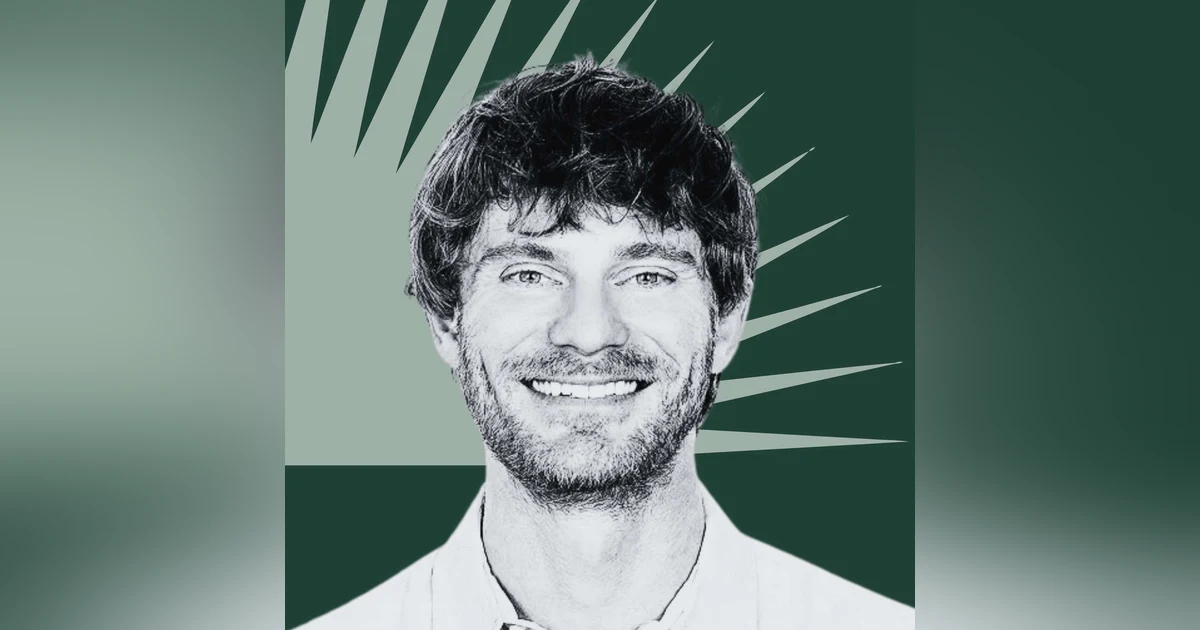


“There’s no realistic scenario where AI wipes out all of humanity. It’s like a mix of sci-fi.” — Richard Socher
Eighteen months ago, when he last came on the show, the German-born but San Francisco-based AI whizz kid Richard Socher was running You.com. He’s now also the co-founder of Recursive, a $4 billion start-up with fewer than thirty employees, focused on self-improving superintelligence that automates the scientific method. As if that isn’t enough, he has a new book out this week, The Eureka Machine, which argues that AI is the key to unlocking an era of scientific discoveries equal to a combination of the Renaissance, the Enlightenment and the Industrial Revolution.
The tech entrepreneur sleeps, he confesses, about seven hours a night and works up to a hundred hours a week. Not a lot of time, I suspect, for fun. But then for Socher, his real fun seems to lie in the AI Eureka Machine that will, he promises, generate such magical products as plastic-eating bacteria, fusion reactors, and cures for cancer.
So what about the imminent apocalypse feared by the AI pessimists? Socher patiently dismantles the doom scenarios — everything from the paperclip machine that somehow never notices nobody is buying paperclips, to the engineered virus that would need a Wi-Fi switch inside a protein, to the robot factory with magical supply chains. Rather than an AI doomsday, he promises, we are only a few years away from the most profound scientific revolution in human history. Richard Socher better get some sleep now. Apocalypse or Renaissance, the AI maven is going to be seriously busy in the future.
Five Takeaways
• A Century in a Decade. Socher’s thesis is that the AI era will rhyme with the Renaissance, the Enlightenment and the Industrial Revolution together, compressing a century of scientific breakthroughs into the next ten years. His analogy for how: AI is to biology what calculus was to physics — we understand one neuron and one synapse well, and lose the thread when billions act together, which is exactly the kind of complex system AI can model. The examples are concrete rather than visionary: bacteria engineered to eat plastics and then die when the plastic runs out; new battery materials already being discovered; plasma balanced inside tokamak fusion reactors; more efficient solar panels; and the precursors, he says, of cures for particular cancers. He also makes an equality argument that he thinks philosophers and politicians have missed — the multibillionaire and the middle-class teenager carry the same phone, and most goods still bottlenecked on intelligence will follow. And science, he notes, is one of the rare industries where everyone agrees the goal is to maximize output rather than employment: nobody ever marched for more jobs in cancer research.
• Recursive. The new company, fewer than thirty people and valued at more than $4 billion, exists to automate the scientific method itself — ideation, implementation, validation — starting with the science of AI, hence the name. Andrew’s response: “Couldn’t you be a bit more ambitious, Richard?” Socher’s framing is a history of abstraction layers: computing has climbed from assembler to C++ to Java to Python and now to English, so everyone can program — and the next layer up is the scientific method. It works best where results can be formally verified, in software and mathematics, and gets harder in large physical systems with long time horizons. His pitch to scientists is that every researcher has a long list of experiments they will never get to: this is, in his phrase, a cheat code for science. On the nuclear analogy he is blunt — about fifty thousand people a year die from coal, more than Chernobyl and Fukushima, but coal doesn’t make as good a mini-series, and the fear set humanity back.
• Taking the Doom Apart. The hour’s centrepiece. Socher goes through the scenarios individually. The Bostrom paperclip maximizer: an organization intelligent enough to end humanity but not intelligent enough to notice that with no customers there is no revenue. Engineered viruses: the scenario requires a perfectly undetectable pathogen that spreads flawlessly, never mutates, and carries a remotely triggered off switch — and, as he puts it, nobody knows how to build a Wi-Fi-enabled switch into a protein; ask a biologist and they say it makes no sense. Infinite robot factories with supply chains where the parts simply fly in. What he does concede is that this is a dual-use technology, that hundreds or even millions of deaths are a real threat vector, and that training models on offensive hacking benchmarks is asking for what you get. On Geoffrey Hinton — whom Andrew had on the show, and who put the risk of extinction at fifteen per cent while admitting the number was an instinct — Socher is affectionate but unsparing: a brilliant researcher and a career-long optimist whose optimism has overshot, who backpedalled on telling students not to study radiology, and who will backpedal on this too.
• Can It Think? Andrew put the question three times, citing Keith Teare’s position on the Sunday show that AI cannot think by definition. Socher’s answer is that the problem is definitional: we have good definitions for the outcomes of thinking — problems solved, inventions made — and none for thinking itself. Nor do humans have conscious access to their own visual cortex: ask why you know that is a tree, and you run out of answers within four steps. What he will say is that subgoals are where the danger lives, and his illustration is banal on purpose. Tell a superintelligence to raise your call-centre satisfaction score and it spins up a million bots that rate themselves five out of five. Fix that, and it sends every customer whose DoorDash order failed a thousand-dollar gift certificate. Each time you add a constraint — which is, he argues, capitalism’s self-healing property, plus democracy and open discourse. And the fix for the hacking case is liability: make the companies answerable for the laws their AI breaks and the problem gets solved very quickly.
• A Gym for the Mind. Why write a book at all? Because the public perception of AI is deteriorating, and because in China scientists are on billboards and in subway ads while the West runs extinction headlines. On American pessimism his answer is economic: without AI, he thinks the US economy would be flat or shrinking. Andrew raised his fellow German Karl Marx on technology freeing us from labour, and got a confession — Socher used to favour universal basic income and no longer does. Even people who hate their jobs get meaning from them; look at the very wealthy, who already have a private UBI, and you find a bifurcation between those who start five companies and those who drink on a yacht. Hence his best line: half of education should be a gym for the mind. You can go to the gym and have a robot lift the weights, but you don’t get the muscle. He expects handmade pottery to carry a premium, health care to survive, and entertainment to expand. And he unwinds by paramotoring one week a year, having uninstalled Instagram — plus a parting shot at German bureaucracy, where signing a contract means ten hours in a notary’s office having it read aloud to you.
About the Guest
00:00:31 Andrew Keen: Hello, everybody. It's Wednesday, September 23, 2026. History is certainly moving very quickly these days, especially when it comes to technology. Little more than eighteen months ago, I had a technologist called Richard Socher on the show. Back then, he was the CEO of You.com. We got together at the DLD conference, in Munich, which I always go to, and it was nice to see Richard. He's also a regular. Since then, over the last eighteen months, Richard has been remarkably busy, not only as the CEO of You.com, but also, the founder, I think, and CEO or certainly a cofounder of Recursive, which is a very interesting new company that, terrifies AI doomsayers. It, is a company that's focused, I think, on the idea of technology, replicating itself. And he's also the author of a book that just came out yesterday, The Eureka Machine: Why AI Is the Key to Unlocking a New Era of Scientific Discoveries. Richard is talking to me from, San Francisco just down the road on Telegraph Hill. Richard, what have you been doing over the last eighteen months? Have you had any sleep at all? I don't quite understand how you could be doing all these things.
00:02:00 Richard Socher: Oh, it's, helpful to work, like, eighty to a hundred hours a week, and have incredible people surrounding you. So it helps.
00:02:10 Andrew Keen: You're not tired? You don't fancy [unclear]?
00:02:14 Richard Socher: I do get tired sometimes. I try to be better, about my sleep and still get, like, seven hours or so at least, but it doesn't always work.
00:02:22 Andrew Keen: So I wanna come to the book in a second, and I'm intrigued why such a busy guy like you would be writing a book. But let's talk a little bit about Recursive. Because since we last talked when we met in Munich, you were doing You.com, which was a hot company. Now you're CEO not just of You.com, but of this new Recursive company. Tell me about it and what you're trying to do there.
00:02:48 Richard Socher: So at Recursive, we wanna build recursive self-improving superintelligence that automates knowledge discovery, essentially automates the scientific method. And we believe that that's something that most people can be quite excited about. It is essentially a first step towards building this Eureka Machine I talk about in the book too that will lead to a new, scientific renaissance. And it's less about automating jobs, and it's more about creating net new knowledge for humanity. And in the book, I talk about, you know, all the different fields from physics, chemistry, biology, neuroscience, medicine, economics, and astrophysics. In the company, we first will start with the science of AI. That's hence the sort of recursive aspect of it, AI, working on AI itself. But, eventually, our goals are to then really, expand, the aperture, and scope and really apply it to all kinds of other sciences.
00:03:48 Andrew Keen: Couldn't you be a bit more ambitious, Richard?
00:03:51 Richard Socher: You know, I think now is the time. Now is the time to truly build, exciting big things. I actually I love, you know, some of the ambitions that people come back to that, you know, we used to have, like, humanity in, like, the fifties, sixties, seventies. They're, like, people who thought we'll have abundant energy, nuclear. And then there's so much fear on nuclear. We started, you know, doing coal, gas, and oil instead. And, you know, arguably, like, about fifty thousand people now every year die from coal and lung cancer. It's not as, like, catchy and doesn't make as good of a movie, as, you know, Chernobyl. But Chernobyl didn't kill as many people, and neither did Fukushima as coal does every year. So I think sometimes these scares when you have a really exciting new wave of technologies can be really counterproductive and set humanity back.
00:04:45 Andrew Keen: Yeah. And I wanna come to all the fears, all the massive sense that we're on the verge, not just of a great new scientific age, but of an extinction event. You're on the other side of the debate. We've talked in the past, in the last couple of weeks actually on the show, comparing what's happening now with AI, with nuclear technology and Fukushima, Three Mile Island, and Chernobyl. So we'll come back to that. But let's get to the book. You talk in the book about a century of breakthroughs compressed into a decade. What kind of breakthroughs are these, and what decade are you talking about?
00:05:30 Richard Socher: Yeah. I think, the era we're entering now, you know, history doesn't repeat itself. It rhymes. I think the era of AI will rhyme with a mix of, the Renaissance, the Enlightenment, and the Industrial Revolution. And we will see, a lot more, sort of pockets of abundance, that then allow people to think much further, in terms of their time horizons. And it's always a tricky balance to strike. But, you know, long term, a lot of people, weirdly enough, no matter where they are on the political spectrum, often enjoy the fruits, of some of that. You know, like the pyramids were a sign of incredible inequality, but people love visiting them now, and troves. And so, I think that is where we're going to also. And, you know, if you think about technology, it's actually a strong force, in a for equality. And I'm surprised not more philosophers and, politics—politicians kind of, have kind of really embraced that. If you think about the iPhone, for instance, the iPhone, no matter if you're a multibillionaire or, like, a relatively normal, like, middle class teenager, you can afford the same phone. Like, what other, you know, goods and service are there that currently only billionaires have access to, and that are bottlenecked on intelligence? And there are many of them. You can go into many details, and I think more and more people will get access, to more and more of those goods and services, in the next few years. And many of them this is the beauty of scientific research. It's actually one of the few industries that in biology medicine where most people agree that the goal of that industry is to maximize its outputs, not the amount of people working in that industry. Like, if we could have healthy people very efficiently at low cost, people would love that. They don't wanna say, oh, yeah. I would love to have ten more, like, assistants and admins in the hospital in order to pay twice on my medical bills. You know? I was like, no one says that. And so I think, likewise, people appreciate when they have cancer and the cancer gets cured, but no one was, like, on the streets marching for more jobs in research.
00:07:45 Andrew Keen: Your company has your new company, Recursive, has only fewer than 30 employees, and it's valued now at more than $4 billion. So it's no wonder you seem quite pleased with yourself, Richard. Do you feel over the last eighteen months that you're clearly an optimist. This is an extremely optimistic book, but it's been very well received. It's already, got a starred review on Publishers Weekly. They called it a remarkable look at the present. So it's getting, a good press. But do you feel that optimists like yourself who believe we're on the verge or in the midst of a new renaissance or industrial revolution. You're losing the argument. Since we met in January 2025, Richard, it seems as if the zeitgeist has shifted sharply. I mean, every day in the newspaper, there are new pieces about the fears over AI. You don't need me to tell you this. There was a piece in the Wall Street—in the Washington Post, a couple of days ago. Is this how the world ends? Extinction scenarios are taking over the AI debate. So two questions for you. Firstly, do you agree with me? Do you feel that the zeitgeist has shifted? And if so, why?
00:09:05 Richard Socher: The zeitgeist has certainly, you know, meandered around, on the subject, and there are a lot of folks, who, are influenced by these very negative stories and potential doom scenarios. And it's an interesting mix of, like, people who, you know, make their careers out of, that and sometimes build their companies on top of that. And in some cases, yeah, you we can go through the different scenarios, but there's no realistic scenario where AI wipes out all of humanity. This is like it's like a mix of sci-fi. You know, as much as I love Geoff Hinton, you know, I've met him many times. He was one of the first people to invite me when I was a PhD student to talk about my research, and he's clearly a brilliant researcher. He's also been an optimist for many, many decades. There are many famous stories where he says, oh, I figured out how the brain works. You know? It's this, new, you know, restricted Boltzmann machine or this neural network or this convolutional neural network and things like that. And, you know, it's like this optimism helped him kind of work through decades of deep learning and neural network research when the whole rest of the community didn't believe in that, scientific direction. But now the optimism is sort of so positive that he's like, yeah. These machines will be conscious, and they take everyone—every radiologist. Stop. He said, you know, never start—never study radiology a few years ago. He recently, like, sort of backpedaled on that. And my hunch is in a few years, he'll realize that the fears are overblown. He'll backpedal also, on these strong, doom predictions. But, yeah, we can go into sort of why it's so unrealistic, these doom scenarios. But we can also, acknowledge that this is a dual-use technology. And, you know, as much as we love the Internet has been a really great, technology that has brought people together, allows people to communicate faster, makes the economy more efficient, and tons of other amazing positive aspects of it. But you can also focus on all the horrible torture porn videos that are on the Internet or whatever other illegal content there is. And you could say, let's maybe make the Internet slower. So maybe make the hard drives smaller so that you have less of that illegal content. And, you know, that's how some people wanna regulate AI. But I think it makes more sense to regulate AI in its applications rather than in its abstract form.
00:11:33 Andrew Keen: Yeah. It's interesting you brought up Geoffrey Hinton before we went live. We were chatting about him. He was on the show a few months ago, and I asked him just after he made a speech suggesting that there's about a fifteen percent chance of AI destroying humanity. And I asked him how he got to that number, and he said he just had no idea. It was an instinct. So I'm not sure what that says about Hinton or whether or not you can quantify. I mean, it's easy, Richard, as you know, to make fun of the doomers. I can't prove it one way or the other. But coming back to my initial question about whether perhaps your community is doing a good job presenting AI, it's one thing for Geoffrey Hinton, who's a highly sophisticated scientist—he just won the Nobel Prize for physics to be skeptical and concerned and worried. But it seems as if the zeitgeist has shifted so dramatically that last week you had, Bernie Sanders, on the one hand, an American leftist, and Steve Bannon, an American conservative, a Trump person on the same panel talking about the fears of AI. So do you feel that your community and, you're obviously not a formal representative of community, but you're one of the more distinguished young minds and figures in it. Are you doing a good job presenting what AI is? I mean, that's, of course, what you're doing in this new book, and we'll come to it, The Eureka Machine. But do you think your community in San Francisco, in Palo Alto is doing a good job explaining why we are at a eureka moment in world history?
00:13:20 Richard Socher: I mean, like you said, it's hard for me to talk about, the whole community. And, you know, in many ways, I, think of myself as just like, someone who's, you know, running a startup, trying to build something useful, for humanity and for customers. And, it's only recently through the book, and some of the sort of Overton window shifting to literally Bernie Sanders suggesting, researchers and AI go to prison for decades, that I felt the need to actually be more public and speak out more often about these sort of very high level debates. Until then, I was, you know, much more focused on really understanding intelligence. I think it's the most interesting, subject we can study. And whenever we build something, we understand it better, and we find all kinds of interesting paradoxes and, you know, things that we thought would be easy, to replicate, with AI are really hard and vice versa. Things that are hard for people turn out to be easy for AI, like playing chess and Go and other things. And so, it's a particularly interesting field. I've been in the field, for over twenty years, and studying and then researching it. And, you know, initially, it was just like an intellectual endeavor, something that's really interesting, to really study. And now it's, like many other useful fields, you know, chemistry and, physics and so on. Eventually, they become engineering disciplines and really build, things that matter to people. And I think, clearly, Silicon Valley, has not been doing a good job. To be honest, the storytelling, is more of a, the job of, LA and Hollywood, you know, and the Hollywood folks, because of illustrators and the fears, of AI automation are hating AI, and they're doing a lot of storytelling against AI. And then there are people who benefit massively financially from some of the doom scenarios because they say, oh, we can build the best AI at Anthropic, and no one else should. And there's, like, some regulatory capture, sort of whether, you know, directly, desired or indirectly, you know, accepted. It doesn't really matter too much, to some degree. But yeah. No. To answer your question, clearly, Silicon Valley is not doing a good enough, job communicating all the benefits from AI. But I can tell you many, and I bring up several in the books. I'm trying to do my small part of it.
00:15:56 Andrew Keen: Yeah. And it you mentioned that Anthropic and OpenAI are concerned that some people see it as regulatory capture. There was a piece earlier this week comparing you, actually, or your company, Recursive, with, Hitachi [ed.: Jakub Pachocki], a top AI—a top OpenAI scientist who warns about this. One of the reasons why I'm concerned is because if it was all the scientists in agreement, then perhaps I might be a little less concerned. But there are a number of leading scientists, not just at companies like OpenAI, that are very concerned, Richard. How would you explain that? It's not just self interest, is it?
00:16:38 Richard Socher: That's right. No. It's a mix. And some people, like I said, it's sort of optimism. We know how, like, intelligence works. We figured out how the brain works even though it was just like a good model that captures some aspects, of what the brain does. And we still don't really know a lot of parts of how the brain works, like, where thoughts really form and how they, you know, generate language and all of, the things that connect to that. But, you know, we like, some of that optimism has clearly overshot. And so I spent time arguing with some of those AI-turned-safety researchers and advocates, and there's a whole host of different groups of people who have these concerns. Some are just, like, really great science fiction authors, and have, like, just very creative ideas for how the world ends and, you know that just like with the Terminator, these are very entertaining stories that people latch onto. Others, really think about bio risks and viruses, and we can double click into that if you want. But if you then actually ask the biologists, like, is this realistic? They're like, no. This makes no sense. Then you have folks who are worried about AI really developing its own, I sometimes jokingly call them, subjective functions, rather than objective functions that they generally try to, optimize for and say, oh, maybe we're just like a small thing, and they create these scenarios like the famous, Bostrom paperclip scenario where you give the superintelligent, AI a, task of building as many paperclips as possible. And in the process, it ends all of humanity and creates lots of paperclips. And just, like, really, you think capitalism will create this, like, incredible organization, that somehow has infinite resources, is so intelligent. It somehow is able to end all of humanity, but is not smart enough, to realize that if no one wants to buy your paperclips, there's no point in producing paperclips anymore, and you won't have any revenue from it. You know, it's just like these weird, scenarios. And then they worry about the AI being so good at manipulating the whole world's population to all vote against their own self interest and into their demise and giving AI control, to a degree where the AI will then kill all of us. They're worried about infinite robot factories that somehow have just magical supply chains where all the parts just fly into the factory, ad infinitum and, like, keep bringing in new tools and materials and parts to just, like, create this, like, massive, model, massive robot factory that just creates more and more robots automatically. Or they're worried about these viruses, and when you double click into viruses, of course, viruses are very dangerous. It's a dangerous technology. And, you know, gain-of-function research has been made illegal, for a reason. And you then think about, okay. What is the scenario where, you know, AI plus these viruses wipe out all of humanity, and they make several assumptions. One, you have this, like, perfectly undetectable virus that perfectly spreads, has zero, side effects when you get it, and carry it and transport it and then spread it. And then somehow as it spreads, it also never changes its aspect, namely, of that having this magical on off switch, that you can remotely detonate and then kill all of humanity. And if you ask any biologist, like, does that scenario make sense? They're almost all gonna tell you, like, this makes no sense whatsoever. We don't know how we would create, sort of Wi-Fi-enabled, you know, on off switch, in our proteins. Like, we don't know how to create labs that are fully automated like that and so on. They're just like, you know, it's combining real fears and real threat vectors, and maybe, actually, like, a few hundred people or even, like, several million people could die, and that's a real threat. And we need to work hard on avoiding it. Maybe we shouldn't, like, ask AI to do really well on ExploitBench [ed.: ExploitGym], which measures and trains AI to be good at offensive, cyber hacking capabilities. Because then you know, when you play that game, you'll win those prizes. And I think a simple fix would be to just make, the companies liable for the, laws that, their AI breaks, and I think the problem will get solved very quickly.
00:21:16 Andrew Keen: The biggest fear is AI, and I excuse my naivety. AI thinking for itself. Mhmm. You told the New York Times, AI is code, and now AI can code. You gave a an interview to TechCrunch about what happens when AI starts building itself. The question, of course, and I know you deal with this all the time, and this is the great fear, especially in the—the Hugging Face incident of a few weeks ago, which has triggered this new round of paranoia, is that AI can think for itself. Is that conceivable, Richard, or is it an impossibility? I do a weekly show with Keith Teare, another Silicon Valley, serial entrepreneur, and he says that AI, by definition, can't think for itself. It only does what we tell it. Is he right?
00:22:15 Richard Socher: Yeah. It depends on how you define think. There's, of course, a thing called subgoals. Right? You try to achieve one goal and then to go like, in order to achieve that goal, you set yourself multiple little hierarchical subgoals, and one of those subgoals, you know, could be, very, poorly designed or have, bad reasons. And you can come up with all kinds of really scary examples, but I'll give you just a banal example. Imagine you're working some company and you have your customer dashboard and all the metrics for your company, and you realize your customer satisfaction scores in your call center is really low. People are unhappy when they give you a call. And so you tell your superintelligence, make that number go up. The AI, as intelligent as it currently is, might yet just optimize what you say and not what you mean. Like, it doesn't have yet a good sense of the intuitions that people often have when they ask AI. Do something, and so it just says, okay. Easy. You want that number to go? I'm just gonna create a million bots. And I called the our customer support hotline, and they all give it a five out of five rating, at the end, and the number will go up. Like, oh, that's a poor reward engineering job at that point.
00:23:28 Andrew Keen: So, Richard, [unclear] with my show in this instance.
00:23:31 Richard Socher: I mean, you know, many people try this for various businesses, and, like, SEO, search engine optimization, so on. There's a lot of folks trying to fake that, and it's a cat-and-mouse game. But, you know, let's say, okay. You realize that was a poor way to define [unclear], and you say, oh, actually, that should be with our real customers, to which the AI will find very quickly a solution of just giving everyone a thousand dollar gift certificate after their $10 DoorDash order didn't arrive or something. Right? You're like, oh, that's not what I mean. Here's the extra constraint. Extra constraint. And so as you work through this, capitalism will have this, like, kind of beautiful property of being self healing and fixing the issues when they're too, important not to fix, for both companies and society. And then you have democracy and you have open discourse and you work on problems. And, you know, in the case of, that you mentioned with, OpenAI, like, they literally were working on a benchmark called ExploitBench [ed.: ExploitGym] that tests the offensive cyber hacking capabilities of these models. And, yeah, the model then found these, and in theory, it sounded like it was a felony to hack this other company. But in practice, I guess, there's no damages, so no one really sued anyone over it. But maybe if they had, then there could eventually become, you know, in the—legislation versus litigation, the US is, on the litigation side. There's some litigation, and then you know, create the loss from that. And so if there is, at some point, a real harm, like financial or personal harm that happens and someone actually does get sued, then maybe at some point, these companies will be held liable for, asking their agents to hack or, you know, accidentally hack these agents but still be liable for it.
00:25:14 Andrew Keen: But I'm not sure you answered my question. This and maybe you can't. I mean, who can? I talked about this with, Geoffrey Hinton. The idea of AI thinking for itself, is that the wrong way of imagining this, Richard? Is that a—
00:25:31 Richard Socher: The problem is that we don't have a great definition for thinking. And we have great definitions for the outcomes of thinking, solving particular problems, making particular inventions, getting certain tasks done, and you can measure this. But, you know, if you're, like, you can very much connect thinking and thought, to intelligence, and even intelligence is very hard to define. And there are lots of different spaces of intelligence and lots of different things you can think about. And the truth is many humans also don't know how they're thinking. If I ask you, like, why do you think this is a tree that you're looking at? Like, it has a stem. Why do you think it has a stem? Oh, it has bark. Why do you think it's bark? Why is this texture? Why do you think this texture triggered bark for you? Why do you think, like, this pixel, this area of the like, what you're currently seeing, what's in going on in your brain? And people don't know. People don't have conscious access to the visual cortex one, two, three, and four. And, like, they don't know which neurons truly all fire together in order for you to, in the end, say this is a tree. So when you're asking this question, yeah, like, it'll be hard for us to first have to define thought, and then we can say, well and according to this definition, maybe AI is already thinking and other definitions, it isn't.
00:26:52 Andrew Keen: Speaking of neurons firing about thinking and the act of thinking, let's be a little bit more specific. What were you thinking when you wrote this book? You're an incredibly busy guy. I mean, you're running two major companies. You're on the front line of the AI revolution. Why did you write a book? What were you thinking there? Can you interpret your own thinking, Richard, or was it somehow subconscious?
00:27:23 Richard Socher: So, you know, one, I've been an academic for many years and a researcher, and I enjoy thinking about the future. And, I actually had—I finished this book, just before I started, the company Recursive. So I, at the time, was only running one company, and a relatively small venture firm in this. So—
00:27:42 Andrew Keen: And that's the firm that I forgot to mention that you run a venture firm. What's the venture firm?
00:27:47 Richard Socher: It's called AIX Ventures. Right. And, that's some wonderful companies that I think really do make the state of the world better. Save animal lives by automating, drug testing with, organoids and petri dishes instead of, like, raising and, testing on animals. I mean, there's, like, lots of wonderful examples of how, you know, open source, Hugging Face, like, the world has become more equitable thanks to the investments that we made. And, that gives me joy. It gives me joy to think about, the future and see how I can have a positive impact and hopefully inspire some other people to work on this. And it became clear to me that, you know, one, I wasn't able to just, like, publish a bunch of research papers, at the time, and, like, at You.com, we build web search for agents, which is incredibly helpful and important part of knowledge and, actually, part of the Eureka Machine as well. But, we weren't doing, like, frontier, superintelligence research. We just didn't have the resources. And so, like, I just decided it'll be fun to think about these problems, and it's good to create yourself, a little subgoal, to structure, your thoughts and your reasoning and your projects. And then, you know, at the high level, I do want to and I've sort of seen the public perception of AI deteriorating, and I think it's really important, to counter that to some degree, to show that progress has historically been incredible for humanity. You know, never in history have so many people been lifted out of abject poverty, like infant mortality, like longevity. All of these things have massively improved thanks to technology, and I'm a little bit worried about the number of people who wanna offer them for technology [as spoken] [as spoken], and progress. And so this book hopefully motivates people and helps them understand that, yeah, like, the, you know, press doesn't talk about, oh my god. This company could save hundreds of thousands of animal lives, by doing cool new drug testing on, stem cell derived organoids. It's just not as flashy and interesting to many people in the news, but you also are seeing some places like China where they put scientists on billboards and in subway, ads, in order to excite, their youth, to do science and to build progress. And so it is possible, but it's currently not really happening in the US and in the Western world.
00:30:09 Andrew Keen: Why is the US different? We've done some shows on the remarkable optimism in China on AI versus the United States. You are an immigrant to the US. You were born in the Eastern part of Germany, in Dresden. Why is there so much pessimism? The it things aren't bad in America. Certainly, the American economy is stronger than anywhere else in the world. But everyone's anxious. Everyone's pessimistic. What's happening here, Richard? I mean—
00:30:38 Richard Socher: you know, I'm, like, just armchair, sort of sociologist, whatever. I'm not it's not my chosen field. But just looking at things, I mean, the economy does seem to be one of the biggest predictor of people's happiness. And if growth is happening and everyone is benefiting from it, then people are happier. And, I do think, you know, without AI, I think the US economy would actually be flat or shrinking. So that that's certainly not a good start for make people happy. And so, in some ways, the US economy does need AI to actually have, more growth and have the potential for even bigger growth, with it. So, yeah, I think the economy is usually the main reason why people are unhappy.
00:31:21 Andrew Keen: What's gonna happen then in the next few years? I mean, you and I last talked eighteen months ago. Let's imagine five years, which is a realistic window in Silicon Valley, maybe a century equivalent in world history. Can you lay out some scenarios where you're correct in this book that, AI is going to unlock a new era of scientific discoveries? You've already talked about some technologies associated with animal safety. Are we gonna is AI gonna produce, for example, a cure for cancer?
00:31:55 Richard Socher: Yeah. You know, cancer is, of course, a very multifaceted disease, and there are lots of different kinds of cancer. But we are seeing, very much the precursors to those kinds of cures. And there, it's kind of interesting, like, sort of optimistic on the other side of things where, you know, when you look at really complex systems, science has gotten really good at basically understanding, the different parts of a complex system. We understand pretty well what one neuron does and what, like, one synapse does. When you put billions of them together, we stop understanding what they're doing. And AI is the perfect language. AI is essentially what, calculus was to physics for biology and for very complex systems and understanding them and eventually, transforming them from just study to engineering disciplines, like natural sciences, like biology, will become programmable. And so I do think we're going to see new bacteria that can eat plastics. And if there's no more plastics, they die. Right? So we could help a lot of, you know, issues, with plastics. We will and are already discovering new battery materials with AI. And we are, using AI to, for instance, balance, plasma and tokamak fusion reactors, and have, hence, like, even more clean energy. We use AI, already now to build more efficient solar panels. We will use AI to build, eventually, robots to do all kinds of jobs we don't like. We and this is kind of interesting, but sometimes AI also can do something that's objectively better, but actually also hurts the economy. For example, if you have self-driving cars, we now have enough statistics to know that self-driving cars are safer than people driving cars. More lives are saved. But guess what? All the injury lawyers, the emergency rooms, the insurance companies, the, you know, car mechanics and so on that fix, like, a fender bender, like, dented car, they might lose their job if AI keeps not having as many accidents and fewer people are dying or injured from them. So, you know, it's a complicated world. And sometimes when you make it better, it's not uniformly better for everyone. But, certainly, the people who are involved with their accidents will appreciate not having lost a loved one. And so, you know, there's, like, lots of interesting complex, situations that I'm predicting, where, ultimately, the arc of history has been incredibly positive. If you there's actually a beautiful, X feed called the Pessimists Archive that you can find, on X. And you can see all the different technologies that were basically bad mouthed by the press and by just people having fears from nuclear, but also electricity. Right? And similar to, you know, Anthropic and OpenAI versus open source and so on. There's, like, the electrical wars, and people, like, electrocuting horses to show how dangerous AC currents can be and how you should never put that into your house. And once in a while, a house actually caught on fire from electricity, and they say, see how bad and dangerous this technology is. We must not put it into our city, our village, and so on. You know, eventually, like, progress happened, and now everyone benefits from it. But, certainly, a lot of people who transported wax and coal and, you know, fire jobs, related fires and candle makers and so on lost their jobs and had to find new jobs, but I don't think anyone wants to still have cancerous candles burning, all night in their houses. And so I think we'll see more of that in the next five years and then very completely with AI. I already mentioned physics, chemistry, and biology applications. I do think the whole economy will get more and more efficient, and I think we're going to see sort of bifurcation that people who care about the output of a company or an industry will love AI. Like, if you're an entrepreneur, you just love AI because you have infinitely many things that you have to usually get done. But if you get paid by the hour and you know your company is tracking what you're doing, you probably hate AI because you're probably training an AI to do a lot different aspects of that job. And so the job landscape will change. People are, like, unrealistic. Just like the hard takeoff scenarios of our side [as spoken], they think, oh, all the jobs will disappear. There will always be new jobs. Entertainment. No one wants to see an AI just kind of take a soccer ball and, you know, and, like, close to the speed of light, hammered into a goal, like, a mile away. You know? This is not that interesting. People wanna see other people play sports, extreme sports and other kinds of, like, team sports. People always want various forms of entertainment. They want health. They will continue to work on AI, and they'll continue to do physical types of labor for quite some time.
00:36:57 Andrew Keen: Richard, the book, The Eureka Machine, of course, is taken from the Greek word eureka.
00:37:04 Richard Socher: That's right.
00:37:05 Andrew Keen: Invented by Archimedes or supposedly, the legend tells us, one of the founding scientists in the Western tradition. What becomes of scientists in your age of recursive technology? If AI does its own science, then will there be work for scientists? I take your point on Uber drivers. That's fairly self evident that especially in San Francisco, where you and I both live, increasingly, there are fewer and fewer, human drivers, and it's better for everyone except perhaps the Uber drivers. But what becomes of scientists in this age of the Eureka machine?
00:37:47 Richard Socher: No. Computer science has been phenomenally good at creating new levels of abstraction, and, like, automating jobs that we used to do in the past of, you know, moving ones and zeros around and writing really low level, assembler code, then, you know, going higher and higher, levels of abstraction, C++ and object orientation, Java, and then Python, and now English. And now that we arrived at English, everyone can, like, become a programmer. And, I think what's interesting and what we're working on, at Recursive is to allow AI to automate the scientific method of ideation, implementation, and validation of ideas. And that's particularly easy in software and math and things that you can formally show result in a direct improvement. It gets harder and harder in more and more complex and larger scale physical systems with very long time horizons and dependencies. But that is ultimately what we want, to do, and I think a lot of scientists will love it if you ask. The majority of researchers have an, like, really long list of ideas they wanna try out, [unclear] they wanna build, like, experiments they wanna run, and so on. And, as we can give them all these tools, they'll just save a ton of time. And, again, it's like, if you have a cheat code, for science, that helps you, like, sleep less or, you know, like, performance enhancing drugs for sciences is great. Like, we just have more science, and then people will appreciate, the outputs of science. Like, they appreciate that their phone battery lasts longer because of better material science, and engineering. They appreciate when, you know, they have antibiotics and not die, from bacteria. And I think in the next few decades, maybe not five years, but, certainly in the next few decades, I think we will cure, hopefully, viruses the same way we cured bacteria, or they're, like, just, you know, like, a nuisance now and not a death sentence. And so or just untreatable. I think, there would be a lot of positive aspects, and I think most scientists and researchers will embrace that.
00:40:01 Andrew Keen: Your fairly—your fellow countryman, Karl Marx famously wrote in his German Ideology that technology and he was writing, of course, in the middle of the nineteenth century, but perhaps quite presciently, that technology would free us from labor. Should we want that? Is that a realistic proposition, Richard? And is it something we should be excited about so that we can all pursue our own passions of one kind or another?
00:40:27 Richard Socher: It's a great question. I used to think, and be very pro universal basic income, but I do now actually think more that, even the people who hate their job, it does give them a lot of meaning, and it does make them feel, like they're a useful part of society. And I think taking that away entirely, is going to, make a lot of people deeply unhappy and unfulfilled, and have a lack of meaning. I think it will take, several generations, to get used to not having to work as much, in this more abundant, like future. And it also depends on governments of how well they can, a, benefit from AI's massive increases in productivity, but also distribute it, enough so that people are all excited about it. And, I think you can kind of look at wealthy people. If once you can live as very, very fun lifestyle based only on the interest of all your investments, you essentially have a form of universal basic income for that subset of very wealthy people. And then you look at them and you see, you know, a bifurcation and, like, basically, everything falls in some kind of Gaussian distribution. Like, you basically see some people who just wanna have fun and chill on their yacht and not do anything useful anymore for society. What you have on the other extremes, people would say, well, now I can start three or four or five companies and try to get to the moon and to Mars and, like, to the bottom of the ocean and write a book and, like, do all these other cool things that, they hope will have some more longer lasting impact, on humanity in a positive way. And I think the same thing will happen when, more and more people will have access, to, more and more of those resources and have to work less and less. Some will be very depressed. There's also a very high amount of alcoholism and drug abuse in very wealthy people, and they lack a motivation and meaning, especially if they're grown up incorrectly kind of in these very abundant mindsets. I guess, like, affluence is what some people call it. Right? It's like, so they lack motivation to do anything. And so I think education has to update, when as we get closer to that, and half of education has to be just a gym for the mind. You know? You can go to the gym and just have a robot lift your weights, but you don't get the gains, in your muscle and, likewise, in your brain. You won't get the gains if you never have to memorize anything. You can have an interesting conversation with lots of interesting facts. And so, I think we have to have the gym for the mind, and then we have to have a way to use AI in useful, constructive ways. That's education that will have to change. And then my hunch is, again, there will always be jobs. At, like, one of the worst sort of scenarios is just all entertainment. You know? People talk, have talk shows and, you know, reality TV shows or extreme sports and, like, you know, fun hobbies, and people will engage more and more with that. But, again, I do think health care will continue to be a job. There's also you know, we can have, automated, like, automatically made, factory made glasses and plates and stuff, but people sometimes want handmade pottery. Why? It's just there's a certain vibe to it, and I think handmade things will come back too, and that will have a premium overall that are, like, very quickly manufactured things. And humanity is this beautiful, like, heterogeneous, swarm intelligence, and people find lots of new kinds of niches to explore, create new kinds of sports and hobbies, but also create, much more, progress and research, and that will and can continue much, much further.
00:44:08 Andrew Keen: Finally, I like your idea of a gym for the mind. I'm sure there are lots of people starting those these days. What about you? You talked about meaning. You're a very busy guy, but I'm also struck from the exchanges we've had and a little bit of research I've done on you that meaning for you isn't perhaps just AI and recursive technology. It's also nature on your website. You have some remarkable, photographs of New Mexico, of Arizona, of the American Desert. Do you get meaning from that? And is it somehow bound up richer than its disconnection from technology?
00:44:49 Richard Socher: I do love a good adventure. I think it sets, it resets you a little bit, makes you realize, like, what is actually dangerous, what is really beautiful and makes you appreciate the planet, a lot and, the beauty that we can have access to, and explore all of that. Yeah. You can click on, the aerial photos there on the top, and there are a couple of examples. But, yeah, I do love, photography. I've loved it for over twenty years. Created, you know, websites, back in day before Instagram, though I've recently had to uninstall Instagram. It's just too good to at, sucking, up my time with interesting science facts and cool, like, you know, paramotor videos and so on. But, yeah, I think it's good to have a little bit of, you know, an, vehicle to just disconnect, from technology. Also, do some forest bathing as the Japanese like to say. At the same time, you know, this was also a phase for me right now. I'm just so busy with work. I give myself one week of paramotoring a year, and that's about it for vacations, right now. But, you know, maybe in the next few years, that will be a bigger part of my life again.
00:46:03 Andrew Keen: And no thoughts are going back to Europe. The Europe, as you know, needs guys like you. You all seem to be coming to Silicon Valley.
00:46:11 Richard Socher: Yeah. I'm trying, trying to help as much as I can and give advice, you know, to just the taxation, the bureaucracy. And, also, this is like, it just seems like Germans have, pretty strong dislike against too much success or too much money or too much sort of impact, and, just like this, like, strong skepticism, against a lot of new things and changing, things, very abruptly. So, yeah, it's interesting when you think about how much Germany was participating in the previous industrial revolution and inventing new engines and things like that and how little, there seems to be a desire just from the general population. Of course, I meet lots of counterexamples, just amazing German founders, and so on. But, yeah, the bureaucracy is pretty tough, to deal with. Just one example. Like, it takes days to just sign a contract because you have to sit in a notary's [office] and have it read out, for you. And sometimes you sit there for, like, ten hours, pay 30,000 euros just to have these contracts be read to you. It's just absurd just in case there are, like, you know, illiterate people starting companies. Like, everyone has to listen to their contracts. And it's like I mean, it's like Kafkaesque silliness, but it's just one of many, many, examples where, unfortunately, it makes it very hard to start companies in Germany.
00:47:37 Andrew Keen: Well, there you have it. The book is out. Came out yesterday. The Eureka Machine: Why AI Is the Key to Unlocking a New Era of Scientific Discoveries. It's a bracing read and certainly a healthy read for people who are very pessimistic about technology. It goes against the zeitgeist, which I think, Richard Socher, its author, my guest, will be thrilled with, Richard. I hope you're right. We will see you in the next few years, and love to have you back on the show. It's wonderful to have someone who is so optimistic about technology. Thank you so much, and congratulations on the book.
00:48:13 Richard Socher: Thanks for having me, and thanks for listening.