Don’t Fight the Last War: Why Anthropic vs US Government Matters
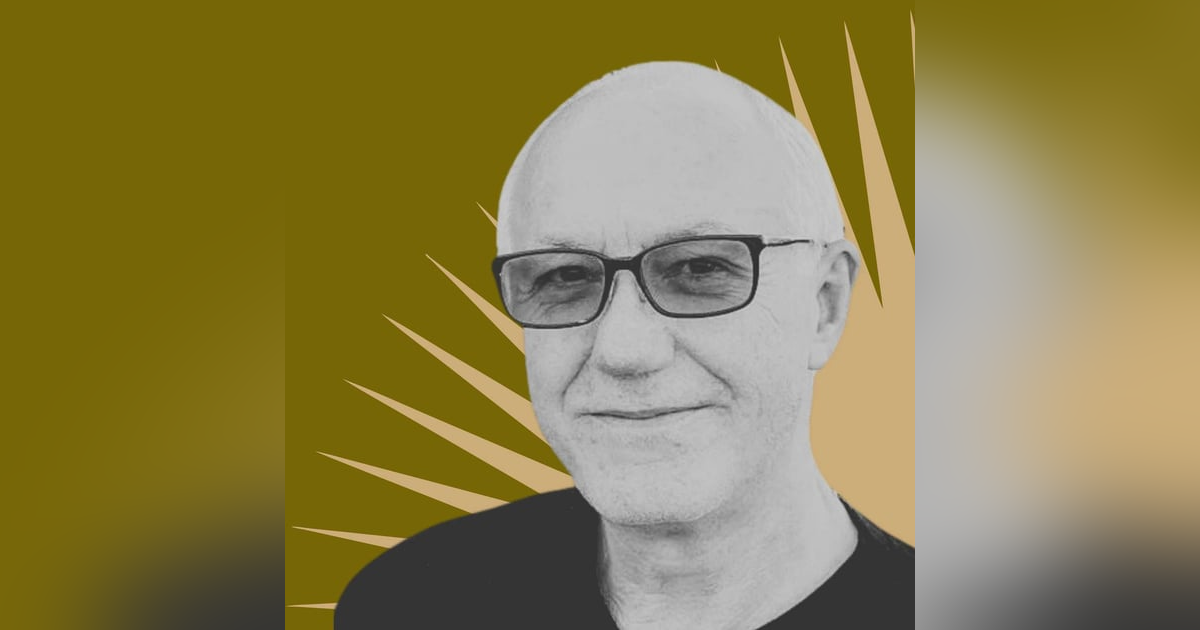


“Happiness is a rare commodity. There’s a lot of fuel for the claim that unhappiness is caused by some software, when in fact the roots of unhappiness are way deeper than that.” — Keith Teare
If it’s not warfare in Iran, then it’s lawfare in California. Out here in Silicon Valley, it’s been a week dominated by two trials of big tech. First, Meta and YouTube were found liable for designing products that addict children. While the young female social media victims hugged outside the Los Angeles courthouse, the Wall Street Journal dismissed it as a Big Tech shakedown. Then, up the road in San Francisco, a federal judge granted Anthropic an emergency reprieve from the Pentagon’s unprecedented designation of the company as a supply chain risk.
For That Was the Week publisher Keith Teare, the social media trial was fighting the last war, while the Anthropic vs US Government trial is about the future of war. Anthropic took the bait, Keith says. Governments, he believes, should get to decide how to use the products they buy from Silicon Valley. Anthropic wanted to sell to the government but dictate how their technology gets used in battle. The Istanbul-based Soli Özel warned us earlier this week that events in the Middle East are going to get much bloodier. But I wonder if warfare in Iran and lawfare in California are separate fronts in the same battle over tomorrow.
Five Takeaways
• The Social Media Trial Is Fighting the Last War: Meta and YouTube were fined $6 million — financially meaningless, culturally significant. Keith argues that addiction is successful demand management and every product manager seeks it. The root cause isn’t the algorithm — it’s alienation. The law is always one step behind technology.
• Anthropic Took the Bait: A federal judge granted Anthropic an emergency reprieve from the Pentagon’s supply chain risk designation. Keith thinks Anthropic is right on the product but wrong on the politics. Governments get to decide how to use weapons. End of story. Anthropic wanted to sell to the government but dictate how the buyer used what they bought. That’s juvenile.
• Would You Buy a Used Car from Sam Altman? OpenAI killed Sora and shelved its adult mode. Keith calls it maturity, not failure — a recommitment to the core business. Altman’s personality doesn’t lend itself to being liked, but measured by outcomes, he’s fantastic. The AI documentary exposed everyone as adolescent — except Demis Hassabis, the stone-cold scientist.
• Claude Enters the Third Era of AI: Chat was era one. Directed agents were era two. Autonomous agents that act when you’re not present are era three. Claude’s new Dispatch feature, Gmail connectors, and calendar integration are all about that third era. The product is excellent. The politics are a distraction.
• Intelligence Is Getting Cheaper. Fear Is Wrapped Up as Principle: The stock market is repricing the future: software companies down, AI companies teed up for IPOs. OpenAI, Anthropic, SpaceX, and xAI will probably all go public this year. For kids in school today, AI is already ubiquitous. The life cycle of companies may shrink from decades to single-digit years. Time, Keith says, to grow up.
About the Guest
Keith Teare is a serial entrepreneur, investor, and publisher of That Was The Week, a weekly newsletter on the tech economy. He is co-founder of SignalRank and a regular Saturday guest on Keen On America.
References:
• That Was The Week — Keith’s editorial: “Growing Up: Winning Wars Involves Losing Battles.”
• Episode 2847: America’s Suez Moment? — Soli Özel on the Iran war from Istanbul at midnight. Warfare in Iran meets lawfare in California.
• Episode 2850: Bring the Friction Back — Stephen Balkam on the same social media trial from the child safety side.
• Episode 2842: Symbolic Capitalism vs. Symbolic Democracy — last TWTW on the $10 trillion AI startup. The Anthropic thread continues.
About Keen On America
Nobody asks more awkward questions than the Anglo-American writer and filmmaker Andrew Keen. In Keen On America, Andrew brings his pointed Transatlantic wit to making sense of the United States — hosting daily interviews about the history and future of this now venerable Republic. With nearly 2,800 episodes since the show launched on TechCrunch in 2010, Keen On America is the most prolific intellectual interview show in the history of podcasting.
Chapters:
- (00:31) - Introduction: two big trials in California
- (01:47) - The Meta/YouTube verdict: $6 million and a cultural earthquake
- (03:11) - Is every product designed to be addictive?
- (05:24) - The roots of addiction: alienation, not algorithms
- (08:23) - Happiness is a rare commodity
- (09:51) - Anthropic’s emergency reprieve: the most important event of the week
- (11:16) - Free speech or weapons control? Anthropic took the bait
- (13:00) - The AI documentary: How I Became an Apocalyptomist
- (15:04) - The decade-long Altman-Amodei feud
- (16:34) - Why are they all such children? Demis Hassabis as the adult
- (18:50) - OpenAI kills Sora and shelves porn mode: maturity or retreat?
- (23:11) - Claude’s new era: Dispatch, connectors, autonomous agents
- (25:07) - The social media trial is fighting yesterday’s war
- (26:22) - Prediction markets: the casino eating the world
- (28:53) - Intelligence is getting cheaper. Fear wrapped up as principle.
00:31 - Introduction: two big trials in California
01:47 - The Meta/YouTube verdict: $6 million and a cultural earthquake
03:11 - Is every product designed to be addictive?
05:24 - The roots of addiction: alienation, not algorithms
08:23 - Happiness is a rare commodity
09:51 - Anthropic’s emergency reprieve: the most important event of the week
11:16 - Free speech or weapons control? Anthropic took the bait
13:00 - The AI documentary: How I Became an Apocalyptomist
15:04 - The decade-long Altman-Amodei feud
16:34 - Why are they all such children? Demis Hassabis as the adult
18:50 - OpenAI kills Sora and shelves porn mode: maturity or retreat?
23:11 - Claude’s new era: Dispatch, connectors, autonomous agents
25:07 - The social media trial is fighting yesterday’s war
26:22 - Prediction markets: the casino eating the world
28:53 - Intelligence is getting cheaper. Fear wrapped up as principle.
00:00:31 Andrew Keen: Hello, everybody. It's Saturday, March 28, 2026. As always, I'm talking to you from San Francisco. That Was the Week — our summary of tech news. Two big trials in California on the West Coast this week. One in which Meta and YouTube were found negligent — in big trouble. They were fined. Campaigners were thrilled. Women hugged one another outside the court. Meanwhile, down the coast in San Francisco, a federal judge granted Anthropic an emergency reprieve from the Pentagon's unprecedented designation of the company as a supply chain risk. Although this morning, Politico came out with a piece suggesting that Anthropic is still in trouble. And in terms of these two court cases, Keith Teare has focused on the Anthropic case for his editorial this week. Keith, you barely mentioned the Meta/YouTube thing. Do you just think it's irrelevant? Do you think it doesn't matter?
00:01:47 Keith Teare: I think it's a small issue. I mean, if you look at the fines levied, it was like $3,000,000 times two — so $6,000,000. In the big picture, it's a nothing event from a financial point of view, but obviously that's measuring in money. If you measure it in opinion, I think it is quite a big event. The issue is addiction.
00:02:17 Andrew Keen: Right. That's why I was expecting your editorial this week to be all about that, because I know you don't see much danger in this technology in terms of its addictive qualities. So I was struck by how much you might have objected to the jury's decision.
00:02:39 Keith Teare: Well, I do think it's intentionally addictive.
00:02:45 Andrew Keen: You mean YouTube and Meta and all the others are designing these products to be addictive?
00:02:51 Keith Teare: Yeah. Their entire business model is about monetizing engagement, and you can't get engagement unless people are compelled to engage. So by definition — just like TV, just like newspapers — they're also designed to be addictive. They just fail. Any media business...
00:03:11 Andrew Keen: So any product, then, is designed to be addictive? In the way you're arguing this, anything — whether it's a piece of cake or a car or the infinite scroll on social media — there's no difference between any of them?
00:03:27 Keith Teare: Yeah. I mean, look. If the world is about supply and demand, you try to boost demand for your product. That's a given. You wouldn't be a very good product manager if you didn't. So addiction is successful demand management, and every single product manager, no matter what the product, is seeking to achieve that. I don't even think that has solely to do with capitalism, although it is also to do with capitalism. In social media, they've gotten better and better. The recent experience of scrolling through short videos is relatively recent, but it's just the latest incarnation of those attempts. So the real question is: why do consumers get addicted? And the reason is nuanced — there's a lot of possible discussion inside of that. Typically, the more alienated you are from other things, the more you glue onto the things that amuse you or please you or feed your need for a pleasure zone. You could say there's a direct correlation between the current zeitgeist — especially for younger people, where the received wisdom is they won't be as wealthy as their parents — and the ability to become addicted to trivial things. What's really hard, and this is where I think the jury was wrong, is to blame social media for the underlying alienation and the consequences of it. They feed off it for sure, and they're expert at doing that, but they don't cause it.
00:05:24 Andrew Keen: Yeah. And as you know, my wife runs litigation at Google, who own YouTube, so she was heavily involved — she was down at the trial for the closing arguments. The Google/YouTube argument, of course, was that the young woman involved in this case had her life pretty much ruined by a bullying, abusive father and mother and sister and everything else that could possibly go wrong before she ever saw YouTube or Meta. Keith, I know you've got a family friend who was on the other side, arguing from Stanford Medical School — we won't mention names, a psychologist. Do you reject any kind of psychological analysis of the addictive qualities of social media and the infinite scroll? Do you think that's irrelevant?
00:06:26 Keith Teare: Look, I am very close to that friend — a person I like a lot, but we disagree and we talk about it openly. She was an expert witness for the prosecution. She imagines a world in which humans are perfect, and then she measures actual humans against that paradigm and diagnoses why they're not perfect. For her, the world is a constant effort to achieve perfection in human beings who are not dopamine addicts. Her root cause is dopamine — and what produces dopamine is the things you get addicted to. She covers a whole spectrum: not just social media, but drugs and alcohol and everything. Clearly, if you go back through all of human history, you're going to find that humans are not perfect.
00:07:34 Andrew Keen: Maybe — and you're rejecting any kind of psychological analysis or investigation?
00:07:42 Keith Teare: I'm not doing that. I think it clearly can be damaging to be addicted to social media. I don't have TikTok on my phone for good reasons — if I do, I will look at it and waste time, so I take it off. There's an area of knowledge and activity there that's completely legitimate. But it's a bit like the labor of Sisyphus, in that humans are always going to find distractions for their alienation. If it isn't one thing, it'll be another. The root of the problem is happiness.
00:08:23 Andrew Keen: Where are they alienated from? You're using your old Marxist terms — they always creep up, Keith. What does alienation mean?
00:08:30 Keith Teare: Alienation is a term used by many traditions of thought, including Marx — that's true — but he uses it in a different way than I am. I'm talking about a psychological disposition to feel displaced and to want comfort.
00:08:49 Andrew Keen: And certainly there is a sense of alienation and anxiety out there. I was struck by a couple of things about the trial. Firstly, the way it's become an event where you're either for or against tech — and the fact that Google and Meta were found guilty was celebrated by people who weren't even following the trial. The celebration outside the courthouse seemed slightly odd, and perhaps reflects a broader cultural element. Anyway, moving on. Maybe it wasn't the most important trial for Keith. The most — and I'm quoting you in your editorial — the ruling in San Francisco on Anthropic is this week's most important event. You keep coming back to this. The last three weeks we've been talking about Anthropic and the government. Why is this such a big deal in your view?
00:09:51 Keith Teare: It's a big deal because the future is going to be a future in which AI is autonomously doing lots of things that today humans do. What's being contested is the canvas on which it's allowed to do it. The future is being defined in front of our eyes. As it happens, that particular trial didn't really address that core issue. It addressed what Anthropic asked it to address: whether the punishment from the Trump administration was caused by a desire to constrain Anthropic's free speech rights — that by designating it a supply chain risk, what Trump was really doing was limiting free speech. No matter how much you hate Trump, I think that is a stretch as a motivation. The motivation clearly was to have full control over AI's use as a weapon. I'm sure it made the administration unhappy that Anthropic wouldn't go along with that, then went very public with their views, and then furthermore filed this lawsuit. None of that would have been pleasant. But the underlying motivation isn't a free speech motivation.
00:11:16 Andrew Keen: But there's the politics — and you know it wasn't just Anthropic. All the big tech companies were supporting Anthropic in this case. I think one of the unspoken elements is that big law has failed to stand up to Trump. The big universities have largely failed. Some have done a better job than others. So in a sense, the politics of this is about the willingness of Silicon Valley — or at least some of Silicon Valley, excluding obviously Thiel and Andreessen and others — to stand up to Trump. Do you admire that? Or is it — the subject of your editorial this week is "growing up" — is this rather immature on the part of Anthropic?
00:12:13 Keith Teare: In this domain of discussion, I think it's entirely juvenile. It so happens that on this particular case, Trump is right. So standing up to Trump has zero merit here, because Trump's in the right. Governments get to decide how to use weapons. That's it. End of story.
00:12:38 Andrew Keen: But companies can determine whether or not they sell their products to the government.
00:12:44 Keith Teare: Well, yeah. But they didn't do that — Anthropic did the opposite. Anthropic wanted to sell to the government. They didn't choose not to. They wanted to sell to the government but stipulate how the buyer used what they bought.
00:13:00 Andrew Keen: Yeah. I saw — you haven't seen it yet, maybe we can talk about it in more detail next week — I saw yesterday the AI doc, "How I Became an Apocalyptomist." It's a new documentary about AI which features Dario Amodei and all the other players, Sam Altman as well. I was struck by the immaturity of everyone in the business. I'm not a big fan of Altman, but Amodei is also in his own way rather childish.
00:13:37 Keith Teare: Look, it's so tempting when you despise an administration as much as this one is despised — for good reasons. A trap is set. The trap that's set is: do your best to attack me, and in so doing I'll expose who you are. That's worked on what you might broadly think of as the left for now about twelve years — the left behaving badly in an attempt to distinguish themselves from the administration they hate. There are lots of examples of it. The elections end up being won by your enemy because you've exposed yourself as not worthy of being elected yourself.
00:14:31 Andrew Keen: Although I'm not sure these elections are going to be one way or the other, and Trump can't run again anyway. I'm not sure the next elections are going to have anything to do with Anthropic's case against the Pentagon.
00:14:44 Keith Teare: Yeah. But I do think they've taken the bait, and they're in the trap. They're stuck. I mean, Anthropic has a great product — don't forget that. It may be the best product.
00:14:59 Andrew Keen: Oh, you never used to say that, Keith. You used to say OpenAI was the best.
00:15:04 Keith Teare: You know, it's pretty hard to say which is the best. They're both excellent. But Anthropic is certainly up there. Yet the entire discussion is about the government and Anthropic, which is ridiculous from their point of view. They should want it to be about enterprises adopting it and making gains. That should be the narrative everywhere.
00:15:29 Andrew Keen: There's a piece you missed in the newsletter this week because it just came out this morning — in The Wall Street Journal by Keach Hagey, who's a very well-connected tech reporter for the Journal — on the decade-long feud shaping the future of AI. I'm sure she's working on a new book. This intense dislike between Altman and Amodei — not just Dario, but his sister Daniela, who I didn't realize from the movie is also a very big player at Anthropic, maybe on the business side. There is — and this comes out in the Hagey piece and certainly in the AI doc — a kind of adolescent quality to everyone involved. Doesn't matter who it is. The only person who came out of the AI doc looking like an adult was Mr. Google, Keith. We talked about this before we went live.
00:16:27 Keith Teare: Yeah. Demis.
00:16:28 Andrew Keen: Demis Hassabis. So why are they all such children?
00:16:34 Keith Teare: If you think about the history of entrepreneurs in the valley, they're not unusual. I mean, you wouldn't describe Elon as an adult much of the time.
00:16:47 Andrew Keen: Well, I certainly wouldn't. Sometimes you seem to.
00:16:49 Keith Teare: No. I think he's amazing, but he's definitely got those characteristics. So does Jeff Bezos, as we've seen recently.
00:16:59 Andrew Keen: Bezos is certainly more mature than the others, for better or worse.
00:17:05 Keith Teare: He has his moments where he isn't. I think you have to be emotionally driven with a passion to be successful. Demis is the opposite — he's a stone-cold scientist. He does have passion, but he's at core a scientist, closer to Larry in demeanor — Larry Page, for those who don't know who Larry refers to. Still successful because he does have drive; he's just less juvenile about it. I don't worry too much about that. I mean, I don't even criticize Amodei for his juvenileness, except that he needs counsel. He's making the wrong calls and allowing the wrong instincts to dominate. I'm sure at core he's an excellent representative of entrepreneurialism, but he needs some counsel.
00:18:08 Andrew Keen: Well, maybe — are you available, Keith? Can he hire you? What's your hourly rate?
00:18:14 Keith Teare: Exactly. I don't know.
00:18:16 Andrew Keen: Speaking of counsel, I know that Sam Altman's counsel is Chris Lehane, a very influential Silicon Valley power broker on the Democratic side. Is Altman — and you seem to be suggesting this in your editorial this week, "Growing Up: winning wars involves losing battles" — is Altman getting better counsel than Amodei?
00:18:50 Keith Teare: Well, look. He made a decision this week to close down the standalone image app Sora.
00:18:58 Andrew Keen: And also to make it clear that they were shelving forever their adult mode — ChatGPT adult mode, sort of the soft-porn application of OpenAI. So they're clearly in — I don't know whether you call it repair mode, or what is it? Code red? They keep using that term.
00:19:18 Keith Teare: I think it's a recommitment to the core business, pulling in things that had gotten out of hand but weren't merited by any economic criteria. And that is a sign of maturity. It was widely reported as a fail, but I think it's actually the opposite — it's the end of a fail and the beginning of a period when they're going to...
00:19:45 Andrew Keen: You're so biased on this. Any kind of criticism of OpenAI is always — oh, these people, they're just against Sam for one reason or another. They're doomers. They're pessimists. They're reactionaries. There was a good piece in The Atlantic by Leila Shroff on OpenAI doing everything poorly. You used to argue that OpenAI was the dominant company, going to be worth $10 or $15 trillion, no one else would compete. Things have changed.
00:20:14 Keith Teare: Not really. Things haven't changed. Why do you say that?
00:20:19 Andrew Keen: So you're saying nothing much has changed? OpenAI still dominates?
00:20:24 Keith Teare: It used to be 100% of consumer AI two years ago. Today it's about 70% of consumer AI. In that time, consumer AI has grown about tenfold. So it's 70% of something ten times bigger. Its revenues are going through the roof.
00:20:47 Andrew Keen: Well, that's not a very technical term, "going through the roof."
00:20:52 Keith Teare: Well, it's the biggest revenue... there's nothing fundamentally broken about it.
00:21:00 Andrew Keen: You talk about — I think you call them the notoriety — who are just against Sam. Why are they so against Sam Altman? Are they envious? Are they reactionaries?
00:21:09 Keith Teare: No, I don't say that. In fact, I agree with the Atlantic article — I do think they're doing lots of things poorly, but I think that's normal. How could they not be? They're learning. They're doing something brand new and learning as they do it. Of course they're doing lots of things poorly, but that's not unusual. That's normal.
00:21:34 Andrew Keen: Why are they — what you call the notoriety — so against Sam Altman? Are they envious? Are they reactionaries?
00:21:44 Keith Teare: His personality doesn't lend itself to being liked. He's very, very confidently declarative. He's clearly capable of navigating difficult negotiations and giving the appearance of being, let's say, devious. So if you measure him by likability, you're not going to like him. If you're measuring by outcomes — which, as we said last week, is what the market prices — he's fantastic.
00:22:25 Andrew Keen: Yeah. As I said to my wife when we came out of the movie last night: would you buy a used car from Sam Altman? I don't think I'd buy anything. But maybe, Keith, you need to see the movie and we can talk about it next week.
00:22:36 Keith Teare: Yeah.
00:22:38 Andrew Keen: So it hasn't been such a bad week for OpenAI. You think jettisoning Sora and moving clearly away from the porn stuff is a good thing, and probably Sam is getting good advice from Chris Lehane. What about on the product side for Anthropic this week? Did anything happen, or is it just another week for Claude?
00:23:11 Keith Teare: Nothing major happened this week. Claude was actually way more prolific. For those of you who don't use it, the Claude desktop app on Mac has three behaviors: one is called Chat, one is called Cowork, and one is called Code — there are tabs at the top and you can choose which one you're in. They released a lot of new elements. One is called Dispatch — Dispatch is where you can continue a conversation with Claude on your mobile that you began on your desktop. A little bit like with [unclear], you can be remotely connected to your computer and direct what you want to happen even when you're not there. And lots of connectors — meaning Claude can access your Gmail or your calendar or other applications. They're rapidly moving toward — if you think of AI as being in three eras: the first era being all about LLMs and chat, the second being about agents that you can direct, and the third era, which we're entering, being autonomous agents that do things for you when you're not present. We're moving into that third era, and Claude's announcements this week were almost all to do with that third era.
00:24:37 Andrew Keen: Yeah. And that was the other thing about the AI doc — it was made earlier this year, they called it a 2026 documentary, mostly filmed last year, but it already seems very outdated. One of the things that also strikes me is the comparison between the social media trial and what's going on with AI — the social media stuff is fighting yesterday's war, isn't it? The law always seems to be at least one step behind.
00:25:07 Keith Teare: Yeah. I mean, it could prefigure the future as well. Can you imagine the trial a few years from now arguing that AI is addictive?
00:25:17 Andrew Keen: Well, that's given — that's inevitable one way or the other. It won't be a few years. It will be a handful of years, certainly by the end of the twenties.
00:25:28 Keith Teare: Right. And happiness is a rare commodity. So there's a lot of fuel for the claim that unhappiness is caused by some software, when in fact the roots of unhappiness are way deeper than that.
00:25:44 Andrew Keen: Oh, thank you, Doctor Teare. There was one other interesting piece you didn't put in the newsletter, but it struck me in the context of what we're talking about. This week, lawmakers introduced a bipartisan bill banning sports bets in prediction markets. There was a good piece in the New York Times too — on the prediction market, "the casino that's eating the world." Are you in favor of much more regulation on prediction markets? These prediction engines are enormously influential, especially with young people. Many people see them as addictive — like social media, like perhaps AI.
00:26:22 Keith Teare: Yeah. I hate sports betting — those who are British will know this. I was raised in a small council estate that had about 5,000 homes and there were two betting shops on the estate. The dads — and sometimes the moms — would go on a Saturday and place bets on horses or football or whatever. There's also the football pools, where you guess the results of the soccer every week and some people become millionaires if they guess right. Sports betting is deep in British culture, and I hated it because you quickly discover that you never win.
00:27:10 Andrew Keen: There's our alienation argument again —
00:27:13 Andrew Keen: Our unhappiness, our misery, our alienation from ourselves or from the world, through betting on miracles.
00:27:23 Keith Teare: Not only that, but they'd come back from the betting shop and spend the next three hours happy, excited, full of hope in case they won. There's probably some truth in that.
00:27:37 Andrew Keen: Well, isn't that a good way to cheer them up? As Marx famously said, the opium of the people — it's cheaper than opium.
00:27:43 Keith Teare: It's certainly cheaper than opium. My natural habitat is to hate sports betting. That said, my belief in choice trumps that. If people want to sports bet, it's not the job of regulators to stop them. They should put rules around fraud —
00:28:13 Andrew Keen: Well, that goes without saying — fraud is against the law.
00:28:15 Keith Teare: Yeah. But I think the right to spend your money any way you want is pretty basic. So I'm against regulation.
00:28:25 Andrew Keen: The new left-libertarian Keith wins out over the old Yorkshire regulatory Keith. Well, finally — you end this week's newsletter saying "nothing new to see," meaning not much has changed. So it wasn't such a big week, really, Keith?
00:28:53 Keith Teare: The canvas we're sitting on top of and the underlying trends are pretty much unchanged. The bigger trend is happening in the stock markets, where software companies are being priced down based on their likely future value. And the AI companies are teed up to do IPOs. I think OpenAI, Anthropic, and SpaceX — with xAI in there somewhere — will probably all do IPOs this year. The markets are basically saying that the future is an AI future, and unless you can benefit from that, you are not worth as much as we thought you were.
00:29:40 Andrew Keen: Which is hardly — the clichés are hardly rocket science. It's pretty obvious, isn't it?
00:29:48 Keith Teare: It's obvious. And I think the other things that are winning are anything to do with leisure — real-world human activities like Disney World, for example. Not that I would suggest anyone spends any time at Disney World, but people do — or Netflix, or any of the leisure-focused stuff — it's all gaining.
00:30:13 Andrew Keen: And you end with an interesting remark. You say: intelligence is getting cheaper. That is good. More people need to have access to it at a price that is inclusive. Fast forward to that, and policy helps determine outcomes and markets will price them favorably. Anything else is fear wrapped up as principle — time, as you end, to grow up. But this idea of intelligence getting cheaper — it's getting cheaper for you and me, not that we even needed that intelligence in the first place. You and I are already the most intelligent two people in the world. But one of the things that struck me from this movie: is AI still very much a Silicon Valley or tech thing? If you talk to most people — maybe in Scarborough, on your old estate — the idea of intelligence getting cheaper, it's like talking to them in a foreign language. Is it breaking through in any way to anyone outside Silicon Valley, Keith?
00:31:25 Keith Teare: I think it's fairly ubiquitous for young people still in school, and that is the future generation. The people who today are between the ages of seven and thirteen — when they're between twenty and thirty, they'll be running the world. And that isn't going to take very long. For them, AI is ever-present and increasingly present in their lives. You're not wrong that there are about a billion people using OpenAI and 8,000,000,000 people in the world — so clearly it isn't yet ubiquitous. But if you narrow it down to young people in school — and you want that to be true in Ghana as much as it is in Palo Alto, and I think that will happen — then it is going to become ubiquitous. And one of the interesting consequences of that is the life cycle of companies, which used to be decades, might be reduced down to single-digit years as disruptions accelerate. And therefore, pricing outcomes for companies becomes very perilous.
00:32:47 Andrew Keen: There you have it. Growing up. That was the theme of this week's editorial. That Was the Week. Growing up — winning wars involves losing battles. It's a good lesson for kids. And if we were allowed, Keith, we would end the show with Bruce Springsteen's "Growing Up," but we can't because we'd get sued by the lawyers. But you can all imagine — you will remember the wonderful Springsteen song, "Growing Up." There you are, Keith. You will grow up by next week, and we will talk again. Thank you so much.
00:33:20 Keith Teare: Thank you.