Documenting America: How to See Beyond the Algorithm
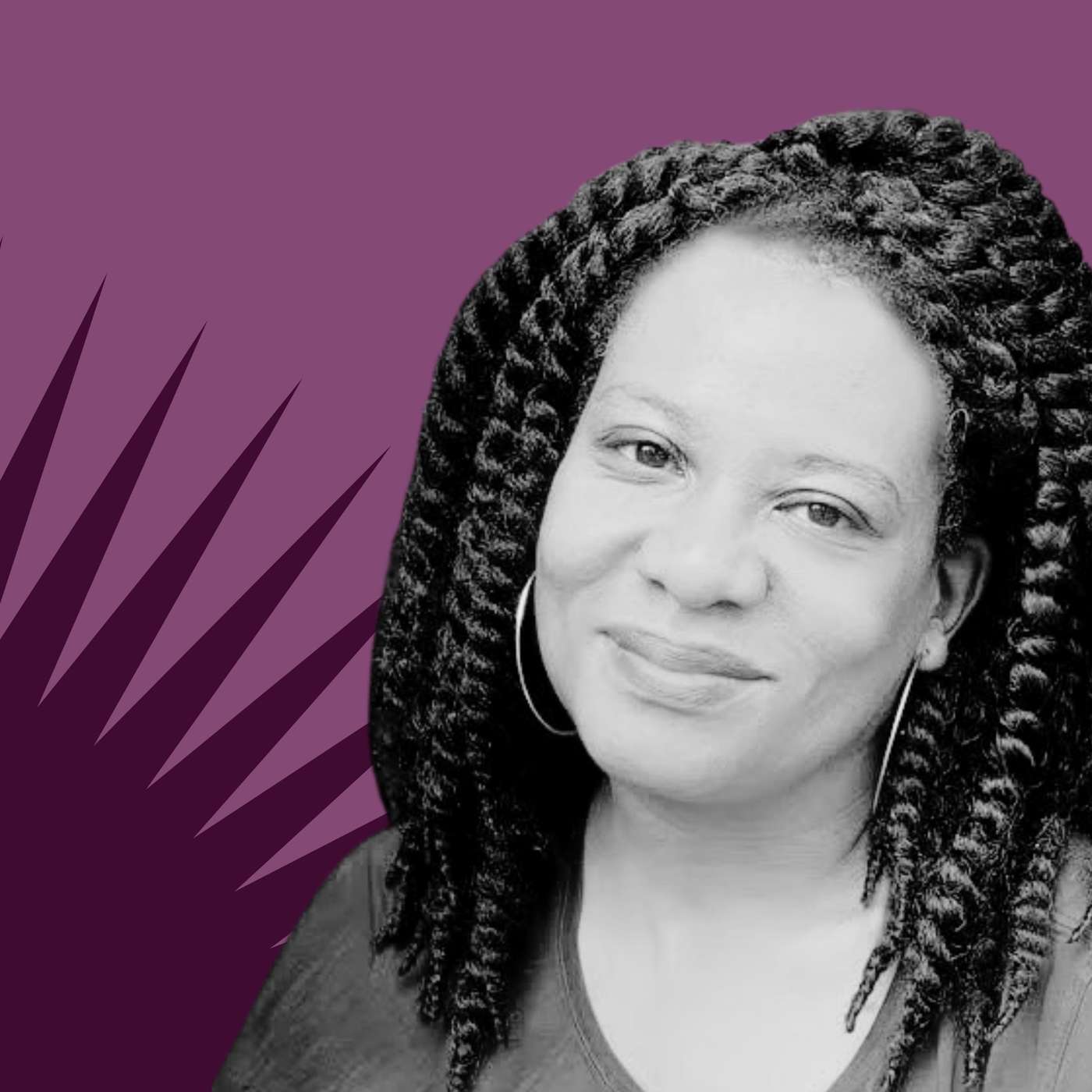


"It may not be Mister Right YouTube, but it is Mister Right Now." — Erika Dilday
On Super Bowl Sunday — with America celebrating its 250th anniversary — Erika Dilday joins to discuss the power of documentary film to cut through algorithmic noise and show us who we really are. As executive producer of POV, the longest-running documentary program on American television (now entering its 39th season), Dilday has spent her career championing first-person storytelling that platforms won't surface. She's also co-directing an upcoming series with Ken Burns, Emancipation to Exodus, exploring the period from the Civil War to the Great Migration. We discuss why algorithms limit discovery, whether AI can replicate human nuance, and what she learned from screening films at San Quentin.
About the Guest
Erika Dilday is the Executive Producer of POV, America's longest-running documentary series, now in its 39th season on PBS. She is co-directing Emancipation to Exodus with Ken Burns, a documentary series about the period from the end of the Civil War to the Great Migration, scheduled for PBS in 2027. Her father was the first Black television station manager in the United States.
Chapters:
00:00:01 Opening
Super Bowl Sunday, America's 250th, and Erika's prediction ("all Patriots all the way")
00:02:28 Emancipation to Exodus
Her collaboration with Ken Burns on the period from Civil War to Great Migration (PBS, 2027)
00:05:09 Her father's legacy
The first Black TV station manager in the United States; "Those who want change don't have the luxury of being comfortable"
00:06:23 Documentary as truth and art
What distinguishes film from news; Hoop Dreams and the power of immersive storytelling
00:08:21 POV's mission
39 seasons, Tongues Untied, and stories that wouldn't be told elsewhere
00:11:27 PBS and the culture wars
Pressures on public broadcasting, the need for alternative distribution
00:15:47 YouTube: Mister Right Now
Not the ideal platform, but the only one for democratic distribution
00:17:38 San Quentin Film Festival
Incarcerated audiences engaging deeply with documentary
00:20:06 Media consolidation
Time Warner, Netflix, Paramount; indie platforms like Mubi and Ovid
00:21:49 Algorithms and discovery
Platforms suggest what they think you want, not what might stretch your thinking
00:24:47 AI vs. human nuance
"It can be imitated, but it's not going to be replicated"
00:27:26 Oscar picks
The Perfect Neighbor (2025) (Netflix) and Cutting Through Rocks (2025) (the sleeper)
References:
- POV
- Hoop Dreams (1994) — documentary about two Chicago high school students dreaming of NBA careers
- Tongues Untied (1989) — Marlon Riggs' documentary on Black gay identity in America (POV Season 4)
- Salesman (1968) — Maysles Brothers documentary following door-to-door Bible salesmen
- The Perfect Neighbor (2025) — Geeta Gandbhir's documentary about a killing in Florida, told through body cam footage (Netflix)
- Cutting Through Rocks (2025) — Sara Khaki and Mohammad Reza Eyni's documentary about a female elected official and motorcycle rider in Iran
- San Quentin Film Festival — the first film festival ever held inside a U.S. prison, celebrating incarcerated and formerly incarcerated filmmakers
- Independent platforms mentioned: Mubi, Ovid, Jolt
About Keen On America
Keen On America is a daily podcast hosted by Andrew Keen, the Anglo-American writer and Silicon Valley insider. Every day, Andrew brings his uniquely transatlantic and eclectic eye to the forces reshaping the United States — interviewing leading thinkers and writers about American politics, technology, culture, and democracy. With nearly 2,800 episodes, Keen On America is the most prolific intellectual interview show in podcasting history.
Website: KeenOn.TV
Substack: keenon.substack.com
YouTube: youtube.com/@KeenOnShow
Apple Podcasts: Keen On America
Spotify: Keen On America
00:01 - Opening
02:28 - Emancipation to Exodus
05:09 - Her father's legacy
06:23 - Documentary as truth and art
08:21 - POV's mission
11:27 - PBS and the culture wars
15:47 - YouTube: Mister Right Now
17:38 - San Quentin Film Festival
20:06 - Media consolidation
21:49 - Algorithms and discovery
24:47 - AI vs. human nuance
27:26 - Oscar picks
0:00 Hello, my name is Andrew Keen. Welcome to Keen on America, the Daily Show about everything that matters with the world's leading commentators and thinkers. Hello everybody. It is Sunday the 8th of February, 2026, Super Bowl Day, the day where everyone or all Americans supposedly gather around their televisions.
0:43 One of the few days of unity left in the United States. My guest today has an interesting take, I think, on the idea of unity and minorities and different opinions in the United States. Erika Dilday is the executive producer of POVA very distinguished filmmaker who's focused on. Other angles on America, and she's joining us from New York. Erika, will you be watching the Super Bowl? I absolutely will. I am all Patriots all the way. I don't care about the predictions that the Seahawks are the favorite. I know that we're gonna be looking at a New England to win at the end of the. Well, we will see on that one, I hope, uh, I'm not sure if I have any, we, uh, in California or certainly Northern California, don't have any dogs in the fight.
1:32 The, uh, the game of course is at Santa Clara, but Seattle will beat the 49 ERs. It will be a day, uh, later today where people will talk about America's 250th year anniversary. Lots of. Politics, of course. Uh, bad Bunny will be playing. Who, uh, uh, who will incite some controversy? Um, should it be a day, Erika, where America celebrates its togetherness. I hope so. I am. One of the things that I do find a little disturbing is the idea of these alternate halftime shows and the idea that somehow bad Bunny isn't quite American, which is a little bit ridiculous, but, uh, I'm hoping that just the idea of idea playing ball and being together and, you know, hopefully putting politics aside for one day will reign and, uh.
2:28 You know, right now it's kind of east coast versus West coast as opposed to anything else. Your life is spent, uh, as a cinematographer, producer and director, your co-directing and an upcoming series with Ken Burns on Emancipation to Exodus. What in your mind is the role of film and documentary film in particular in the cultural history of America? Uh, I believe it's really important in telling the stories of who we are. I mean, one thing about emancipation to Exodus and the reason that I really wanted to work on this with Ken is it's about the period from the end of the Civil War to the great migration out of the South.
3:14 And that period of time I think is one of the most misunderstood in history. It was a time of great creation. It was also a time of great destruction. And I think one of the things that doesn't happen enough in this country is that we tell the real story of what happened and how things were. There's, there's, there's just not enough of that and a willingness to engage and talk about these topics and really look at the truth because it tells us who we are and where we should be going, and. I also think that with other films that we do, um, like for instance on POV, we tell stories from a lot of different point, different points of view.
3:56 POV stands for point of view, and we look at how people think, what, what motivates them. Where they're from, what they love and treasure, and I think that ends up bringing us closer together because in the end, so much of that is the same. It's, and, but it's important to hear it from the person whose story it is as opposed to someone else telling it for them. Last Sunday, Ken Burns actually was on, um, meet the Press, um, and he articulated in 2025, of course he's made a, a series about the American Revolution that's attracting a lot of interest. He articulated the degree of optimism about us.
4:40 Uh, future. Do you share that optimism? Ken is definitely more optimistic than I am, but that's a lot of what I like about him. But one of the things he's, you know, he's one of the smartest men I know, and he's also a great student of history, and one of the things that I think you see in our history is that. Eventually we come out on the side of progress and often there is, you know, some sort of backsliding on progress within this country. But eventually, I do believe that the foundations we were built on were that. Everybody should have a chance. Everybody's human, everybody should work together to create a democracy that values and celebrates and appreciates different opinions and ideas, and I just feel that that's where we're going to end up.
5:33 Again, I don't feel that we're right there right now, but I feel that's where we're going to end up again. You are from a, a very interesting family. Your father was the first black television station manager in the United States, went from Boston to Mississippi, so a kind of reverse migration. What does your family's history tell us about whether or not we should be optimistic about the American future? Uh, I will say one of the thing, one of the things about my dad was he was both optimistic and realistic and he believed in action, which is something that has spurred me through most of my life.
6:13 If you want something to happen, don't look to your left and to your right for someone to make it happen. It's up to you to make it happen, and so in my life, when I see something that I don't think is the way it should be, I am inspired to do something, to do something about it. If I don't think something's fair, then. You know, it's up to me to make it fair. If I see something that needs to be changed, it's up to me to change it. Uh, you know, and he said, those of us who want change don't really have the luxury of being comfortable. So I am very comfortable in a state of discomfort because I feel that you have to shake things up to make change. Erika, you're the executive producer of POV point of view.
6:55 You've dedicated your life to Dr. Why films wrote books, um, it about films. I know your, your father was also in the television business, which is slightly different from yours. What is it about films that you think reflects a kind of intellectual ri richness when it comes to different points of view? One of the things that I love about documentary films in particular is that they're both truth and art at the same time, and I think they really offer the viewer a chance to immerse themselves completely in something.
7:37 You know, news stories, if they're really good, they're useful at the time and they may be referenced later. A good documentary is something that you can watch that's timeless and that will always provide you with a reel. Sense of what it was like to be in a certain place or a certain time or hear a certain idea. I mean, the documentary that uh, was uh, probably the start for me in terms of realizing how much I love documentary was when I was in school and saw the film Hoop Dreams. It's, uh, Chicago film about two young men who are, you know, hoping to play college ball and.
8:17 That film changed the way I looked at how you could hear and tell a person's story. And you, the thing with a good documentary is you have to feel something, you know, you hear it, you see it. You are, you know, enveloped in that world for the time that you're watching it. And I don't think anybody walks away without feeling something. And it's that immersive quality and that ability to transport you that I think. Documentary does better than any other form of reality storytelling. Tell me what you do at POV. Um, what is it that you add to the conversation that isn't done elsewhere?
8:59 Uh, sure. Well, one of the things, we're the longest running documentary program on American television and, you know, for, we're going into our 39th season, and for 39 years we've been telling stories that, you know, sometimes otherwise wouldn't have made it, uh, someplace else. Uh, POV has always looked for. The most beautiful documentaries, and sometimes that beauty means telling a story that you wouldn't hear otherwise. You know, one of the films that, uh, we did, which really sort of set I think the, uh, scene for what, uh. Uh, POV was going to be was the Film Tongues Untied and, uh, it's a documentary by the filmmaker Marlon Riggs.
9:49 It, uh, was in season four in, in 1989 on uh, POV, and it brought to the world, uh, exploration into what it means to be black and gay in America. And it was. You know, again, a beautiful film for so many reasons. Do you cover every angle, A POV? I mean, I'm guessing, uh, Erika, from, from what you're saying, that it, it tends to attract in your association with P-B-S-A-A, a progressive audience, a diverse audience, uh, a black, brown audience.
10:31 Um, well, do you focus on, uh, some of the more. C conservative, uh, communities in the United States in terms of POV. Yeah, well the, first of all, our audience is mostly white, which is interesting. It's mostly white, mostly middle aged and older, so that part of it is interesting. I mean, it is definitely people with open minds and I would say it. Definitely because it is public television and a lot more people, I think, who are more progressive watch public television, but I don't think it's programmed for a progressive audience.
11:12 Uh, at least in my programming, I, whenever we look at films and look at what to bring on, I think what does the American audience. Need to see and need to hear what viewpoints are not being talked about, what things aren't being said, and how do we, you know, expose people to those. Like for instance, we've gotta film the Bitter Pill, which is about suing the opioid, uh, industry. And it's from the point of view of a white West Virginia lawyer who is frustrated by the number of deaths and overdoses in their community. Uh, I never asked the people, you know, in that film their politics, but it doesn't strike me as a particularly liberal audience.
11:59 What it does strike me as is a good story. PBS of course is on, so to speak, the front lines of many of the cultural political controversies these days. Uh, you're all too familiar with that. Are you concerned with the way in which certain individuals in the United States these days seem to want to eliminate eight diverse voices in media, especially on the television front, P-B-S-N-P-R and so on? Yeah. And you know, the, the Atlantic article you're sharing, I have a lot of problems with that article. I did not find it really, uh, accurate or, and this was, uh, uh, an article from April of last year about PBS pulling a film for political reasons and then changing its mind.
12:48 I know you were referenced in the piece right then that, I mean, just the headline is untrue. Uh, the film was always set to air and was never pulled from PBS. What film was it? Erika? Uh, break the Game and, but more broadly, I mean, leaving aside that particular story, um mm-hmm. What, what is the, the current state of the game when it comes to. Public broadcasting PBS and, and, and the ability or the inability to put on different kinds of content. I mean, funding of course is essential too.
13:29 Yeah. And one, one of the things that I think is that we ask PBS to be too many things, to too many people. And I feel that we need more options, particularly in documentary film, to show films and conversations that may not be. Or particularly oriented toward PBS, but you know, should be publicly available. And that's some of the work that I'm hoping that we can do moving forward is to, you know, to make sure that there are other spaces for films to show. We've developed a great reliance on PBS for independent documentary, especially as other, uh, options have, you know, shrunk over.
14:16 The past few years, but I also don't believe that it is up to PBS to carry the weight of, you know, all of the indie film industry. And we also have to explore options where we can get films out to audiences, uh, in other ways. One of the things that I'm looking at doing is using YouTube as a way to get some of the films that maybe we don't have the bandwidth for on PBS out to, uh, a general audience. Erika, we have a number of independent filmmakers or aspiring independent filmmakers in our audience, both listening and watching. Are there real viable business models?
14:57 For independent filmmakers these days, what advice would you give? How do you actually make money in this business? Uh, that's no pun intended, the million dollar question. Uh, I do think that you can make money in this business. This is not a business to go into though, if you're looking to make a lot of money. I mean, documentary film is often a labor of love, and I think people can, you know, support themselves, but it is not the type of filmmaking where you're going to get, you know, filthy rich. Uh, part of it is, I think, being realistic about. What audiences are looking for at the time.
15:38 One of the things that we ask people is, why this story? Why are you telling it and why now? And having something that will really bring to the audience something that they're craving. And I think there are filmmakers who have passion projects or who have pet projects. The projects may be good projects, but they aren't necessarily going to resonate with a wide audience. I still believe those films should be made, but I think people have to be realistic about what they're going to get out of that filmmaking experience, which may not be a big sale and it may not be wide distribution, but I don't think every film should have that. Erika, you mentioned YouTube earlier.
16:18 I know you're doing some work with them and, and, and, and a number of your, uh, your enterprises. Uh, YouTube is a very divisive company. Some people see it as a great opportunity for independent filmmakers and alternative to television and traditional movies. On the other hand, some people see it as simply an opportunity for Google too. Make more money. Money. What's your take on, on YouTube and some of these other new digital platforms? Well, first of all, I agree with both of those statements. I think it's an opportunity to get films out there and it's an opportunity to make, you know, Google more money. Um, one of the things that you know I've said is it may not be Mr.
17:02 Wright YouTube, but it is Mr. Wright. Now. It is one of the few forms I think that we have where. You can get film out there democratically and have the tools that you need to put it out safely, but is that going to be the, you know, the end of the line? I don't think so. I mean, there are lots of different film platforms that are being identified and hopefully some of those, you know, will come to fruition sometimes. Soon some, I, I feel like we're in the wild, wild west of how do we distribute films through streaming and you know, there are a lot of people doing a lot of things.
17:42 PBS is, you know, making some moves. There are probably four or five different independent platforms out there. The question is just, you know, which platform will come through. And also what the idea is, you know, some people are looking for subscription services. My personal mission is to make sure that we can provide public access to films, and one of the most important audiences for me is the incarcerated audience. Uh, we did work with the San Quentin Film Festival and going to the San Quentin Film Festival is one of the best experiences that I've had at, as someone who's involved in documentary, I mean, going there. Dealing with a lot of the people who are incarcerated there.
18:23 I met people of every age, ethnicity, race, level of education, and you know, there were people there who hadn't graduated from high school, people who had master's degrees. They could all break down their different episodes of POV and independent lens and programs that were on. You know, on the PBS network, because that's some of the only programming that they get, and they all loved it or hated it, but they all felt something about it and wanted desperately to discuss it and what they thought. And that just showed me how powerful a, the programming is, and B, this idea that it's all high brower only for certain type of people.
19:04 It's just not true. What's your take on the debate about whether or not documentaries should actually be watched in movie houses versus on television or indeed on personal devices? Do you think that the best of the work that you produce, um, should be seen in movie theaters? Uh, you know, it depends. I mean, I think some of it should be seen in movie theaters and I think you get a better viewing experience, but it's more important to me that it be seen and it's. Just as important to me that it be used, you know, whether it sparks a conversation for someone with their child about, you know, what's going on in the environment, or someone sees something about, you know, school choice and decides that they wanna figure out what's going on in their community and maybe get involved with it.
19:57 I just, you know, it should make you wanna do something. And so. In my mind, it is more important that people see it and use it than it is that they see it at any particular form. But yes, absolutely. I think on the big screen there is a difference, but then I'm programming for the small screen. So, you know, obviously I see value in that as an independent or as a champion of independent filmmaking. As someone who really focuses on. Diverse points of view. Do you have any strong feelings, Erika, on this huge debate now over the future of Time Warner and the struggle between Netflix and Paramount?
20:39 Are you concerned? Will it impact on independent filmmaking? I absolutely think it will. I mean, just, I'm not a fan of Monopoly. Anyhow. I think when there isn't healthy competition and there isn't room for sort of competing ideas and ways of doing things that you lose out. And I feel that the sort of compression of this industry is going to mean, uh, dearth of room for. Creativity for different ideas and for the kind of filmmaking that I think is the most important. But does it really make any difference whether Time Warner is acquired in that sense by Paramount or Netflix when it have the same impact, more of a consolidation?
21:27 Uh, yeah. I mean, I'm against the consolidation more so than it is, whether it's Paramount or Netflix. I'm just, you know, I'm just concerned more about the co consolidation. Are there examples of independent platforms that really excite you? Uh, Mobie seems a very interesting one. A lot of my friends are on that. S one, uh, then there's Jolt, avid. Uh, those are the ones that you know, I've been looking at most recently. But I, I feel like there are a number of different platforms out there. But one of the things that I also think is that this whole algorithm based business is a little difficult because.
22:16 One of the things that's most important to me is which platform. We'll figure out how to let people discover things as opposed to just telling them what they should look for. One of the things that I worry about is the lack of ability to discover, uh, and you know, it happens now, you know, when you go into, you know, your Netflix account, it's going to suggest to you what it thinks you want to see, but it doesn't give you the ability to. You know, think beyond that or you know, to sort of stretch ideas of what you might wanna see. And that's where I have the most, uh, discomfort with those platforms is really the algorithm based business.
23:00 Speaking of algorithms and discomfort, one of the controversies later today on the Super Bowl will be. The Anthropic ad, which has already managed to anger Sam Altman and open AI and Civil War amongst AI companies. As a great debate about the impact of AI on film, there are some who believe that AI can democratize filmmaking and enable everyone to make it. Others see it as just another cultural catastrophe. What's your feeling on ai, particularly while you're wearing your, your POV? Ka will it, will it enhance or limit diversity in demo documentary filmmaking?
23:45 I think ultimately it will end up enhancing it, but we've got a long way to go before this tool does that. Right now I think it is more destructive than it is helpful. I think it creates. False ideas, false narratives. But I also know that probably 10, 15 years from now, it'll be an entirely different thing than it is right now. And not being a technologist, I, I don't wanna say that X is gonna happen or y is gonna happen, but I do believe that most things that we look at in their infancy. Uh, are kind of clunky. And it's funny because AI's changing so fast that I don't think we wanna think about it as clunky, but that's what it is right now.
24:29 It's clunky. And the question is, what form will it take in the future? And I feel that we're raising the right alarm bells about how it's used and how it should be used. And what I'm hoping is that. You know, again, 10 years from now, the way we look at AI will be entirely different than the AI that we're looking at today. But are you confident that humans can compete with smart machines to make documentaries? I think in the long run, I mean, you talk about 10 years, I mean, in Silicon Valley's 10 years is like 10 centuries, and in 10 years we'll have remarkably more powerful tools. It, it could, you conceive of a world in which you can just program a documentary in, in 30 seconds or a minute, I think you will be able to program something that you could call a documentary.
25:21 I don't think it will probably have the value of a documentary that's been created by people that takes into account the nuances and the creativity that make documentaries great. You might be able to imitate somebody, or you might be able to create something that you know has content that you want or need, but I think that human factor is never going to be replicated. It can be dim imitated, but it's not gonna be replicated. In your work at POV and going into American prisons and making films and a accessing that community, what's the role of technology? Certainly people, uh, incarcerated have less access to technology.
26:04 Does that concern you? It does. And, uh, I, but I also think we're too reliant on technology in a lot of ways. And one of the things that I do like about documentary film is even though we use technology to shoot and to edit it, some of the best documentary films, you know, the quality of documentary films has not improved over the past 20 or 30 years because technology has become more advanced. It's really been the creativity of the minds that make it. And you look at a film 30 years ago and it has just as much resonance and you know, is just as high quality as a film created today. So I don't see that in advancement in terms of making filmmaking better.
26:49 It may make it easier, but I don't think it's making it better. And uh, that's one of the things that sort of heartens me, like when you go back to ai, I mean. You take a film like Salesman, the Maisels Brothers film salesman from 1968, that film is just as great today as it was, you know, almost 60 years ago. And I think that is part of what is the beauty of documentary is that it's, it's the eye that's seeing it that really creates the film, not just the tools or the technology. And of course, the documentary greats. People like Frederick Wiseman seem even greater in some ways today than they were at the time.
27:30 You mentioned that Hoop Dreams woke you up to the potential of film, uh, documentary filmmaking we're coming up of course, after the Super Bowl on the Oscars a few days after. The Super Bowl is always the Oscars, the movie industry Super Bowl. Are there documentary films made this year that. I particularly excited you that are in the running and the Oscars. I mean, of course the Oscars mostly focuses on fictional films, but documentaries play a role. Oh, yeah. No, I mean there's definitely, uh, there are, uh, definitely, you know, Oscar nominated documentary films this year. And, uh, if you ask me, uh, my guess is that the winner is going to be the perfect neighbor, the perfect.
28:20 Tell me more about that film. Uh, the Perfect Neighbor is, uh, filmed by Gita Gbe, about a killing of, uh, a woman by her neighbor in Florida, and it's told completely through body cam footage. And everyone should watch it. Is it easy to access? I mean, one of the problems with some of these, it's on Netflix. It's on Netflix, but I'll tell you, the Sleeper, uh, is a film called Cutting Through Rocks, and that is a film by Sarah Khaki and Mohammad Drea ee. And that is about a woman in Iran who is, uh, an elected official and a motorcycle rider.
29:08 That film. Film is, I think, the sleeper of the season, and that's an, that one is being independently distributed, so that's gonna be a little harder to see right now, but it is, it's the sleeper film in my, in my mind. Well, let's end, uh, Erika with something about this project you're doing with Ken Burns emancipation to Exodus. I know it's, it's coming out what, in 2027? Yes. Um, tell me a little bit more about this, um, what it's going to cover and where we'll be able to watch it. Sure. Well, it will, it will be on PBS, so, uh, you can in two years, check your local, well, in a year and a half check your local PBS station, but it is about, again.
29:58 It starts with the end of the Civil War and looking at, you know, the promise and the ability of what's going to be next in for black people in the Southern United States, and just how that came about, but also what we do. Is we look at how things progressed over that period, some of the places where there were different experiments and how they worked and how really, one of the things that I love about it is that there was a lot of dignity and agency for black people during this time that was systematically dismantled and. You know, we really wanna highlight a lot of that dignity and agency and let people see, you know, what was going on.
30:43 And, and you know, like for instance, there was this idea that after the Civil War that you know, a lot of black people were just going to want to go out and get white people and be angry at them. Most people, the biggest thing that happened was they tried to find their families. They tried to find their children's, their children, and their brothers and their sisters and their. Spouses who were sold away and they tried to start a life for themselves. And you know, I wanna, I wanna show that dignity and I wanna show that agency. And I also wanna show how it was completely dismantled through cruelty and through aggression, and perhaps even through jealousy.
31:27 And finally, what lessons. Will your series with Burns, the emancipation to exes exodus, what lessons will it offer America of the late 2020s? I think one of the things that it'll teach us is, first of all, if you try and keep anyone down, you pull yourself. That as a nation, and as you know, just as people, when we try and make someone else lesser, we make ourselves lesser. And also that, you know, you can't keep people down. They will find a way.
32:08 Well, Erika Dilday, the executive producer of POV, uh, upcoming co. Uh, what are you? The co-director, co-director Codirector of, uh, the Ken Burns series, Emancipation to Exodus. I'm not sure I should be wishing New England any luck in the Super Bowl? As I said, I'm indifferent, but I hope you will end the day happier than you began it. Oh, I will. I'll, and we'll definitely, uh, I'd love to get you back on the show next year, 20, uh, 2027 to talk more about, uh, this new, uh, series, Emancipation to Exodus. Thank you so much. Absolutely. Thank you.