Brooklyn Al Primo Posto: Vincent Coppola’s Magical Memoir of the Church, the Mafia and the Gowanus Canal
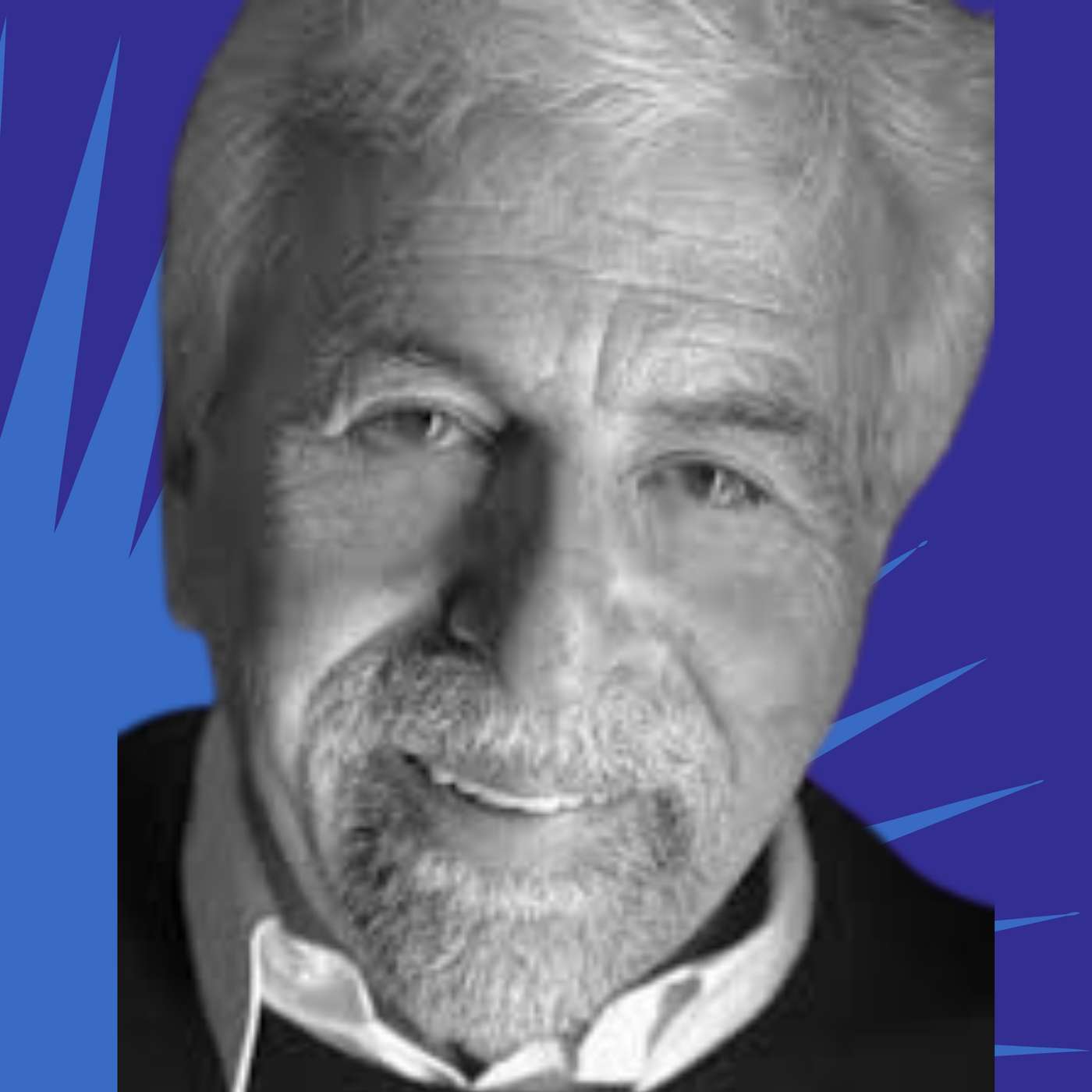


“I never knew, and I was a bright kid. I didn’t know who the mayor of New York was, but I could tell you the names of all the mafia guys on the corner.” — Vincent Coppola
So we finally found a Coppola for the show. No, not Francis Ford. But somebody just as cool and even more authentic. The longtime Newsweek reporter Vincent Coppola grew up in Brooklyn three subway stops from Manhattan, but never went there until he was a teenager, nor even visited Central Park until his twenties. Coppola’s version of Brooklyn, a teeming Italian ghetto squeezed between the banks of the polluted Gowanus Canal, no longer exists. Except in his exquisitely rendered new memoir, Gowanus Crossing: A Brooklyn Boyhood, which has the most delicious story about an Easter pie recipe you’ll ever read.
The Brooklyn of Vinnie’s childhood was intact, insular, cut off from everywhere more than three stops away. It had its own government — the Mafia; its own religion — the Catholic Church; its own poisoned geography — the Gowanus Canal. A world inside a world. He didn’t know who the mayor of New York was, but he knew the name of every wise guy on every street corner. To a kid, Gowanus was a magical place. The grown Vinnie (now called Vincent), having crossed his own Rubicon to attend Columbia journalism school, describes it as a “toxic snow globe.” Brooklyn über alles. Or, more authentically, al primo posto. Especially now, when only a real Coppola can resurrect it.
Five Takeaways
• A Toxic Snow Globe: Cut Off Three Stops from Manhattan: Coppola grew up in an Italian enclave on the Gowanus Canal — a waterway that was, unbeknownst to its residents, one of the most polluted in America. The community was so insular that Coppola — a bright, bookish kid — never went to Manhattan until he was a teenager, never visited Central Park until he was in his twenties, though he was three subway stops away. He knew the names of all the Mafia guys on the corner. He did not know who the mayor of New York was. A toxic snow globe: its own rules, its own government, its own religion. Intact and entirely cut off from the rest of the world.
• The Mafia as Shadow Government: The Mafia was not background colour in Coppola’s childhood. It was the actual government. Police from the 78th Precinct pulled up to the social club on Sundays; officers walked in and walked out with brown paper bags full of cash. Squad cars ferried a hitman — the bodyguard of Carmine Persico — as if they were taxis. This corrupted any childlike innocence about institutions. The stereotype of the nice policeman, the honest cop, the beloved priest: none of them applied. Because they were poor, nobody cared. Nobody cared about the canal being polluted until real estate people came in.
• The Predatory Priest and the Code of Silence: A local priest molested altar boys for decades, including Coppola’s best friend. Nobody in the community knew. Coppola’s observation: if the Mafia had known, they would have killed that man. It would have been that simple. Two oppressive codes of silence — the Mafia’s omertà and the Church’s own silence — operated in parallel. One protected criminals who were also community pillars. The other protected a predator. The community was too poor, too preoccupied, too isolated to see what was happening in front of their eyes.
• The Easter Pie Recipe: A Story About Secrets and Mothers: One of the great set pieces of the book. Coppola was obsessed throughout his life with a specific Easter pastry — pizza di grano, a grain pie — that the old neighbourhood women made and would not share the recipe for. He worked for Newsweek, had access to chefs everywhere, could not reproduce it. At his mother’s funeral, an old neighbour pressed a piece of paper into his hand. Weeks later he found it in his jacket pocket and opened it. Not cash — the recipe. Written in Italian. Beginning: “under a full moon.” It was a hundred years old. He wasn’t going to be baking under full moons.
• The Ghost Town: A Million-Dollar Desert: Coppola returned to Gowanus three weeks before the interview, invited to speak at a public library. His neighbourhood was blooming with skyscrapers and condominiums. And it was dead silent. When he grew up, the streets were teeming — children playing hopscotch, women gossiping on chairs outside, music, grilling on the corner, betting. He came back to a million-dollar ghost town. It broke his heart. The people he grew up with had been driven out — priced out of the place where they belonged. That is the elegy the book is writing. He hopes he preserved the best of that world.
About the Guest
Vincent Coppola is a journalist and the author of six books. A former reporter at Newsweek, he has written for Esquire, Rolling Stone, Men’s Journal, and Atlanta magazine. He is a 1977 honours graduate of the Columbia University Graduate School of Journalism. His essay on his mother’s battle with cancer won the William Allen White Gold Medal. He is the author of Gowanus Crossing: A Brooklyn Boyhood (Henry Holt, June 9, 2026). He lives in Savannah, Georgia.
References:
• Gowanus Crossing: A Brooklyn Boyhood by Vincent Coppola (Henry Holt, June 9, 2026).
• Frank McCourt, Angela’s Ashes — the publisher’s comparison: “Frank McCourt’s gimlet eye with the exuberant menace of a Scorsese movie.”
• Carmine Persico — the mafioso boss referenced in the conversation; his bodyguard is a character in the book.
About Keen On America
Nobody asks more awkward questions than the Anglo-American writer and filmmaker Andrew Keen. In Keen On America, Andrew brings his pointed Transatlantic wit to making sense of the United States — hosting daily interviews about the history and future of this now venerable Republic. With nearly 2,900 episodes since the show launched on TechCrunch in 2010, Keen On America is the most prolific intellectual interview show in the history of podcasting.
Chapters:
- (00:31) - Introduction: the Brooklyn of Whole Foods vs the Brooklyn of the Gowanus Canal
- (01:20) - An Italian village plucked from the south of Italy and dropped in Brooklyn
- (02:04) - Vince, did you ever really leave?
- (02:27) - Stage four cancer: the trigger for the memoir
- (03:11) - The Gowanus C...
00:31 - Introduction: the Brooklyn of Whole Foods vs the Brooklyn of the Gowanus Canal
01:20 - An Italian village plucked from the south of Italy and dropped in Brooklyn
02:04 - Vince, did you ever really leave?
02:27 - Stage four cancer: the trigger for the memoir
03:11 - The Gowanus Canal: origins, history, pollution
04:28 - A Brooklyn boyhood: what you know is what you know
05:54 - Never went to Manhattan until he was a teenager
07:06 - The stereotypes of Italian American life: not entirely inaccurate
07:24 - The Mafia as shadow government
09:02 - The Godfather and the alternative government
09:30 - Police collecting cash from the social club on Sundays
11:09 - Three stops from Manhattan, might as well have been the moon
11:28 - Parents: his mother at the centre of the book
20:00 - The canal and stage four cancer: the connection
25:00 - Columbia University and leaving Gowanus
30:00 - Newsweek and the world beyond Brooklyn
32:12 - Food was everything: tomato sauce on Sunday mornings
33:35 - The Easter pastry: pizza di grano
33:40 - The recipe pressed into his hand at his mother’s funeral
36:41 - What did you discover about your childhood from writing this?
37:13 - A dream before he knew what the dream was
39:40 - Today’s Brooklyn: a million-dollar ghost town
40:48 - A film or TV show?
41:27 - I wrote it to kind of pay off
00:00:31 Andrew Keen: Hello, everybody. Our guest today is from Brooklyn, another writer from Brooklyn, but this time a very different kind of writer. Of course, Brooklyn these days is full of Whole Foods and lofts and all sorts of other kinds of economic, cultural innovation. But there's another Brooklyn, a Brooklyn of the, Gowanus Canal, a Brooklyn of Vincent Coppola's new book, Gowanus Crossing, and Vincent is joining us. Vincent, lives now in Savannah, Georgia, but grew up in Brooklyn, a very different kind of Brooklyn, Vince, from, the Brooklyn that, many writers now live in. Is that fair?
00:01:20 Vincent Coppola: The Brooklyn I grew up in was literally, Andrew, an Italian village plucked from the South Of Italy at the turn of the century and kind of dropped in this godforsaken part of Brooklyn. And the community, Gowanus or South Brooklyn, called locally, it was there for almost a hundred years. And then inevitably, as old things in New York City, it was it changed. Newcomers came in, property values rose, and the original families, could not afford to live where we grew up.
00:02:04 Andrew Keen: Yeah. It's an astonishing story, this book. I mean, you left Brooklyn. You had a very distinguished career as a journalist. You wrote many books. You went to Columbia to study journalism. But in a way, would it be fair to say, Vince, that you never really left, that it was always in your home?
00:02:27 Vincent Coppola: No. I never left it. And as I got older, I realized, you know, I'd been around and out in the world. I'd been in places, and I felt this pull carrying me back. It was triggered particularly in my early sixties when I developed stage four cancer, and I was, which is associated in my mind with that canal. But I got sick and going through treatments, I found myself going back to what was familiar and in a way, embracing to me, a place where I really felt I belonged.
00:03:11 Andrew Keen: Tell me about the canal. I've walked around Brooklyn extensively. My son lives on and off there, and he's an expert. We've done many walks around Brooklyn. It's a I'm sure we've crossed the canal, but, of course, it's not a particularly popular tourist spot these days, is it?
00:03:28 Vincent Coppola: No. It's not a tourist spot, but it's a residential area on the move. The Gowanus Canal had its origins in the seventeenth century, where it was a salt marsh where Dutch and then later English settlers extracted oysters, which were exported to England and Holland. It played a part in the revolutionary war. There was a battle there. And then in the nineteenth century, that salt marsh was developed into an industrial commercial waterway, which basically opened up Brooklyn to the world. By the twentieth century, it had become, unbeknownst to us who live there, one of the most polluted places in America.
00:04:28 Andrew Keen: Tell me about your childhood. This book is about that childhood, a Brooklyn boyhood. What was it like, Vince?
00:04:37 Vincent Coppola: Well, you know what you know. Where I grew up, there was no emphasis. We were formerly Italian peasants. So education, unfortunately but I was a bookish kid, and my relatives would say, everything you know is in books, almost as if it was a negative. You know, I think, therefore, I don't exist. But it was rough and tumble. I came from a very large family. My great grandfathers had settled on that canal as the Irish and German before them had moved out. So we were the last of many immigrant groups to settle there, And it was basically the bottom of the barrel. It was in my mind very much cut off from New York City, even though it was just three subway stops away. And I didn't go to Manhattan until I was a teenager. I didn't go to Central Park until I was in my twenties.
00:05:54 Andrew Keen: Are you saying that you never set foot in Manhattan until you were a teenager?
00:05:59 Vincent Coppola: Correct. Correct. Never. It was to me, looking back, I lived in a snow globe, a toxic snow globe, which nonetheless was intact. It had its own rules, its own government, its own religion, which were kind of at odds looking back with the rest of the world. I never knew, and I was a bright kid. I didn't know who the mayor of New York was, but I could tell you the names of all the mafia guys on the corner. I went to Catholic schools, where we were not pushed. And if you were brainy, let's say, you were considered a troublemaker. And I wound myself wound up inadvertently one of the kids in the back of the classroom wondering why and what the world was like outside Gowanus.
00:07:06 Andrew Keen: We've all grown up, of course, Vince, with the stereotypes of Italian American society, culture, communities, the mafia, the church, food. But judging from your book, some of those stereotypes aren't entirely inaccurate. Is that fair?
00:07:24 Vincent Coppola: Inaccurate? No. The mafia was a shadow government, and it was there in place constantly. Growing up, these were the people I knew. They were from the same families, although my family was not wise guy family. Other things, there was a very strong sense of community. There was a deeply ingrained, at least in my mom, respect for the Catholic church. Meanwhile, one of the local priests was molesting altar boys for decades. But so you lived in a world that you fully did not understand. Was that known within the community? No. No. There were in those days, there were men who were homosexual who would pay for sex with teenage boys. The fact that a priest was in the middle of it, molesting people, including my best friend to this day, was not known. If the mafia had known this was happening, they would have killed that man. It would have been that simple. But we were too busy, too poor, too preoccupied to know what was going on right in front of our eyes.
00:09:02 Andrew Keen: As, of course, that famous scene in Godfather, in The Godfather where, Don Corleone presents himself as the alternative government. And in some ways, it's credible. In some ways, he did maintain order on the street. And when you needed a favor, you went to him. When you were growing up, were you aware of that? I mean, was there a local police force? What happened if something went wrong? Police
00:09:30 Vincent Coppola: Were in the hands of the mafia. I literally, on a Sunday, would see a squad car from the 78th Precinct in Brooklyn pull up. The police officers would walk in this social club and walk out with a brown paper bag stuffed with cash. I would see one of the characters in my book is, he was, the bodyguard of one of Carmine Persico, a very big mafioso chief. I would see squad cars ferry this hitman as if they were taxis, and it kind of corrupted any childlike innocence to see the things around you, was so far removed from the stereotype that I'd be reading in books of the nice policemen, the honest cop, the beloved priest. They were not that way. A few of the nuns were decent, humane, but this was a very isolated area. And because we were poor, nobody cared. Nobody cared about that canal being polluted until real estate people started to come in and develop it. And all of a sudden, it's now hot real estate territory. But by then, the damage was done to my community. We couldn't afford to live where we grew up.
00:11:09 Andrew Keen: Yeah. It's astonishing in a way the way we conceive of geography didn't really exist for you. As you said, you were three or four stops away from Manhattan. You never went there until you were a teenager. You never went to Central Park until you were in your twenties. Tell me a little bit about your parents. I know your mother features very centrally in this sort of biography.
00:11:31 Vincent Coppola: Well, let me say this. I would seem we called Manhattan the city as if we lived somewhere else. My parents my father was a dockworker as were most men in that area. He had seen terrible fighting in World War two, and he came home kind of a ruined man before his life started. So he was given to tremendous anger, bouts of violence where he beat us. He beat my mother. And, again, I was one of four boys, and you're trying to process why is this happening. I was so surprised as an adult when I finally got to talk to my cousins and friends who were still surviving to learn that their fathers had not beat their mothers, that we were like the exception. I had uncles who you know, they were all working class. They never made any money. They never had any education. They were gamblers, but they weren't violent. My dad was, and it was heartbreaking. And looking back, I can see it was post traumatic stress disorder. I can see it was poverty. I can see he was trying to raise four sons on a minimal salary, and I could see how that changed. But he did good things. But you never knew what father you were getting. One day, my mom called him doctor Jekyll and mister Hyde. You never knew who your father was that day. And my worst memories, we lived in a two story, row house, dilapidated, but now very valuable. We'd be asleep, and we'd hear the fights beginning. And the screams, the furniture, we'd have to run down, and get in between. And it would you don't know at the time how deeply you're being scarred and damaged by that, but we all were. And of my four brothers, I'm probably the closest to normal. And I think that's so because I was always bookish. Book books got me out of that world.
00:14:12 Andrew Keen: How did he treat you as someone who was smart, bookish, different? Did he see you as a rebel? Did he see you as the hope of the family?
00:14:25 Vincent Coppola: You know, that's a very difficult question. I think he saw me as somebody who was not hewing to the laws and rules of that world. Like, I had no interest in gambling. None. And all the men were gamblers. They played horses and bet on games, and I had no interest in that. I think as I got older when I went to Columbia Journalism School, at that point, he had emphysema. He was on the road to passing away. But he came to my Columbia graduation. And I still remember, although this is not in the book, I won one of the awards at the end of the year. It was a fellowship to The United Kingdom, And I remember just how happy and proud my father was. And that is one of the strongest memories of my life of that man, that he was capable of feeling. He did see that I was going in a different direction, but he was torn. He was torn in so many ways, and violence was very common in those days. You know, you made a living with your hands. You made a living with your fists maybe, but never with your head. And that was my world in a nutshell. And, again, I'm a kid processing these things. You don't have these insights when you're living in the middle of it. You just hope, to get out and be normal.
00:16:11 Andrew Keen: Where did he serve in the war?
00:16:13 Vincent Coppola: In the Pacific. He would fought on, Peleliu Island, which is one of the most brutal battles. And he and, of course, those World War two guys never talked about their experiences. But I do know his best friend in a tank. My father was a tanker. And at one point, the tank in front of him hit a landmine, and his crew was trapped in it. And my father saw his best friend basically burned alive. He only mentioned it one time, but I never forgot the man. His name was Valentine. And I've looked him up. And in fact, he did die in a tank that hit a mine surrounded by Japanese snipers. So I have to believe, Andrew, that had a lasting impact on him. And then he came home to a dead end job working on the docks in a mafia controlled union. So what life did he have?
00:17:16 Andrew Keen: Well, the life he had was with his family and your mother. Tell me about her.
00:17:24 Vincent Coppola: My, my mom was an interesting person. She was very beautiful, and very sexy. And, she loved clothes and fashion. But like my father, she never got past the eighth grade. She came from a family, an immigrant family. Her father, my grandfather, was a prizefighter, and there were seven brothers, my great uncles. My grandfather was a prizefighter. Two brothers were wrestlers. Another two became mayor LaGuardia's bodyguards. So they were and then they were upwardly mobile to a degree, but they were gone. By the time I was born, these were my great uncles. They were old men and passing away. So I never got the sense that I really was I mean, I was big and I was husky like they were, but I never got the sense of any kind of continuity.
00:18:35 Andrew Keen: Yeah. The more I listen to, Vincent, the more it reminds me of Bruce Springsteen's childhood in New Jersey. He also said he never came to Manhattan while he was a youngster. He had a very difficult relationship with his father. He was quite close to his mother. His mother loved music. Did your mother go to the movies? Did she like music? You said she liked fashion.
00:18:57 Vincent Coppola: No. My mother's social life consist consisted with interactions with her sisters. That was basically it. I've you know, as a young woman, she probably I know she wanted to go to see Frank Sinatra singing at whatever New York theater he sang at, which became famous. She never really left the block. And she at the end and she was one of these women who lived through her children, myself and my three brothers. One of whom was a very beautiful man, gay, who died horribly of AIDS in front of her eyes. So whatever joy she had was squeezed out, and she got cancer. Two of her sisters got cancer. I got cancer, and I'm convinced it was from that canal, living on that canal.
00:20:00 Andrew Keen: Yeah. I mean, I think that almost goes without saying if your whole family is afflicted with cancer. Tell me about your brother, the one who died of AIDS.
00:20:11 Vincent Coppola: His name was Thomas. I have a son named for him. Thomas, wanted to be an actor, and he was one of those guys who was almost too beautiful, too beautiful to be taken seriously except by men and women who wanted to buy him. He got he studied at the acting studios. He was in he'd got some modeling jobs. He was very kind, very decent, not particularly effeminate. Effeminate in my neighborhood, marked you. And while he was gay and always gay, he was not one of the ones who would have been pointed at and made fun of. A, my father was too crazy for anybody to make fun of any of his children. And Thomas was, again, he wasn't out until his twenties, and he was always surrounded by women. They loved him. They loved his kindness, but they loved his beauty as well. He's pictured in the book.
00:21:33 Andrew Keen: In many of the traditional narratives of mid century immigrant life, especially Italian and Irish immigrant life, sexuality plays an important role. How did it play a role for you as you grew up? Did how old were you when you discovered girls?
00:21:56 Vincent Coppola: For some reason, being bookish and brainy in that neighborhood did not make you attractive to women. I came late in life. I discovered I was a handsome guy when I was at Columbia Journalism School, graduate school, was suddenly women, I guess, like myself who were bookish, ambitious, interested in the world at large. I was surrounded by them. And then at Newsweek, one of my postings was to Atlanta, Georgia. And here I was, this Italian guy who could not get a date, could not get late in Brooklyn. And suddenly, I'm in Georgia, and these southern women who I'd always seen watching football games, I was in an ocean of them. And they, incorrectly, as it were, saw an Italian, not as one of 3,000,000 of us in New York City, but some sort of exotic species. And I had a very high profile job. In those days, a journalist was admired. Women were attracted to journalists, unlike today, we're like the scum of the earth, apparently, at least in the South. So it was an eye opener to be 29, 30 years old and suddenly find yourself attractive.
00:23:34 Andrew Keen: What about the politics of all this? One of your best known books is Dragons of God about the far right. More and more books are being written about this. Was there a politics in the community, in the family, or was it all local? Everything was so local that politics, ideology just was foreign, irrelevant.
00:23:58 Vincent Coppola: I would say it played a very small part. Again, my great grandfather's generation, one of them went on to become a kind of minor political boss in Brooklyn, and his son became a justice of the New York State Supreme Court. But that was so exceptional. And my father and mother, they stayed in Gowanus. Some of them, they moved out, but Italians tend to stay in place. They don't really flee neighborhoods the first time a threat, whether it's a black or something else is moving in. They're very stubborn about that. And, I mean, Staten Island is all Italian. Bensonhurst in Brooklyn is all Italian. Politics was not something beyond. Your vote was harvested by the local political bosses, who in return would maybe give you a job at the post office. But the kind of political awareness, I didn't see any of that until I was in college.
00:25:19 Andrew Keen: Was there a kind of a pyramid, a hierarchy, Vince, of other communities, maybe the Irish because they were Catholic, other Catholic communities, then Protestant immigrants, then Jews, and I would always assume that, African Americans were on the bottom of that pyramid. Did was it a community defined by one kind of racism or another, one kind of othering or another?
00:25:49 Vincent Coppola: It was. To my surprise, I went to a Catholic high school, an app academically driven all boys Catholic high school. And the first thing I noticed when I showed up at this high school in Brooklyn was all the Irish guys called me Vinny the Guinea, which was an insult, but not to me. So there was a hierarchy, and, obviously, blacks and Hispanics were part of it. As I've gotten older, Andrew, I have noticed so many similarities between urban black culture and urban Italian culture. We dress alike. We wear the same jewelry. We like the same music, and yet there's this animosity, which I could never understand.
00:26:48 Andrew Keen: Did you ever get up to Bed Stuy? I mean, in the sixties when you were growing up, Bobby Kennedy, of course, who was the in some of the sixties, at least, the senator from New York started his Bed Stuy Restoration Corporation. Did you spend any time outside your community in, in other parts of Brooklyn? I know you didn't spend much time in Manhattan, if any.
00:27:15 Vincent Coppola: Well, I had many, many odd jobs, and the work working class ethic was so ingrained in me. I felt I had to prove myself by doing blue collar work, driving trucks and so on. And I spent one summer. In fact, it was the summer Bobby Kennedy was assassinated, 1968. I was driving and delivering Italian ISIS throughout Bedford Stuyvesant. So I was in the middle of it, but all these things were eye opening to me. You know, I delivered to black people who were just as poor as my family was, who treated me humanely. And I have always had I don't wanna exaggerate it. I've always loved the minority, and that love was reinforced with a sense of duty when I went to Columbia. I wanted to make the world a better place. You know, maybe it was an illusion, but I devoted myself. Working in the South as a reporter, I came across poverty that was unimaginable to me being from New York City. That right wing book, I wrote that in the nineties, long before this right wing wave that was drowning in. It was off a story. And then I reported of a disc jockey, a talk radio host named Alan Berg being assassinated in the seventies. And Oliver Stone made a movie about it called Talk Radio. But I was so I covered the story for Newsweek, but I was driven by trying to understand what it was that could make a man hate his neighbor. And I went out on the road for, like, six months visiting all those armed right wing camps, and they were like the opposite of hippie communes. These were like well armed planning war on America, on Jews and blacks and minorities. And that was another eye opening experience, writing that book.
00:29:52 Andrew Keen: Vince, the standard question, which I'm sure you're getting the book is out this week, is why write the book? But the more I listen to it and the more I've looked at it, my question would be, why did it take you so long? I mean, you're 78 years old now. You could have written this book thirty or forty years ago, couldn't you?
00:30:09 Vincent Coppola: Well, forty years ago, the Brooklyn I came from was relatively intact. It was just another neighborhood. What triggered me, in addition to being under the gun with this cancer I developed, it was, what was I drawn to? What did I love? I kind of looked over my life, and at that point, I'd done things. You know, I'd I'd dated women that I never thought I could date. I traveled. I'd written serious stories. But when I was sick, I remembered the community of Gowanus. I remember the compassion that was there, even for gay people and black people, if they dwelt within this magic circle. And only when you're kind of facing death and you take stock of your life, you realize what's important. And that funky neighborhood with these families and the food and all the rest became very important to me. And I think, Andrew, I kinda grabbed onto it because as a writer, my memory is just as real as the world around me, and it's always been that way. And I think it's what helped me write that book that I could go back literally to the past where I was a kid among other kids without all these deeper questions swirling up.
00:31:52 Andrew Keen: Yeah. When I've been reading it, it made me hungry, Vince. Not hungry maybe for a Brooklyn boyhood, but hungry for the kinds of foods, the pastries, the pasta that you describe. How central was food both within the community and in your Brooklyn childhood?
00:32:12 Vincent Coppola: It was central. If there was one thing where we lived large, where we were rich, endowed, blessed, it was the food. It was central. On a Sunday morning, when I'd come out of my row house, walk to the corner, watching the cars, heading to Manhattan, every house was cooking tomato sauce, and the smells permeated. It they drowned out the canal smell. And my grandparents, that Giordano family with the seven brothers, we would have Sunday dinner literally on the sidewalk where there'd be 20 of us on a long table passing food back and forth. I never found that again until I started to visit Italy, you know, as an adult. But the food was amazing, and, you know, southern Italian food is now the food that the whole world loves. So I was really blessed. Food was everything. And when I got sick for about six months, I had no taste whatsoever. I lost 40 pounds because I couldn't taste anything. So food was life. It really was.
00:33:35 Andrew Keen: What about the pastries? You write beautifully about the pastries.
00:33:40 Vincent Coppola: You've read the book. There was an Easter pastry that was made, again. It was called pizza de grotto, a grain pie. And it was a simple thing that for some reason could not be reproduced in a Italian pastry store. It was not the same as when the old ladies in the neighborhood made it. And, yeah, again, it's me, but I became fixated on that one. It wasn't a cannoli. It wasn't this. It was this Easter pie. And I went around the world, like, trying to find it when I went to Italy. And the my mom could not bake. She was a great cook. My father was an even better cook, but they weren't bakers. We had pastry stores. And when I was living in the South, and I'd go back to Brooklyn for Easter, and there would be this pie that would be given to my parents, you know, by their friends and cousins and relatives. And I really craved it. And in the house with three other brothers, if I got a sliver of it, I was the happiest guy. And at that point, I worked for Newsweek. I had access to chefs and cuisine everywhere. And I said, mom, just get the recipe. I'll have somebody bake it. Make it. And she said to me, they won't give it to me. These old neighborhood crones who knew us all by our first names and called me by my grandfather's name. They would not give up that recipe. And at my mom's funeral, an old lady came up to me and pressed a piece of paper in my hand. And among Italian Americans, there was a tradition to help people pay for funerals. You gave them an offering, and in Italian, it was called the letter. And it was just cash. And when somebody would give you that, you'd write it down. This is still going on in the eighties. You'd write it down and write down what you were given. And when their family member or loved one died, you'd be obligated to give them money. And I assumed at my mother's funeral, that's what this piece of paper was. And weeks later, I found it in my soup jacket, and I opened it. And it was the recipe for this pizza digano, but it was in Italian. And it began, Andrew, under a full moon. So it was a 100 years old, and I wasn't gonna be baking under full moons.
00:36:41 Andrew Keen: Yeah. And those are the kind of stories you can read in this wonderful new book by Vincent, Coppola, a Brooklyn childhood, Gowanus Crossing. Vince, I sense I mean, it's fairly self evident and didn't require a great deal of genius to sense this sort of simultaneous nostalgia and horror at your own childhood. What did you discover about it from writing this book?
00:37:13 Vincent Coppola: That's another great question. I discovered that my childhood was not like everybody else's. I discovered that dreaming, having a dream, I would stand, sit on my roof looking at my Manhattan, and I would wonder, how do you get to be in one of those skyscrapers? How do you get a life to bring you to a job in one of those Manhattan skyscrapers? When I taught school, I taught school in the school my dad dropped out of. I could see those same skyscrapers. And whether luck or chance or determination or will, I got to go to Columbia. I got to go to Newsweek. I got to travel the world. So I would say, without sounding corny, I had a dream before I knew what the dream was. And I think the dream was just to be normal, to have a normal life with parents who loved each other and loved me and brothers who didn't kill themselves with drugs or violence. I just wanted this American dream.
00:38:40 Andrew Keen: Yeah. I was gonna throw in the American dream.
00:38:43 Vincent Coppola: My whole life.
00:38:46 Andrew Keen: So finally, Vince, a lot of people are gonna be listening to this and reading the book and thinking, oh, Brooklyn's changed. It used to be better fifty, a hundred years ago. But, of course, Brooklyn is what Brooklyn is. It's full of expensive homes now. All the row houses have been done up. They probably cost a thousand times more than when you were growing up. The restaurants are expensive, full of supposedly authentic Italian or, other kinds of food, but often not very authentic. What are we to make of today's Brooklyn? Should we be sympathetic? Should we be nostalgic? When you walk around Brooklyn and you see these fancy restaurants and expensive clothes and all the yuppies moving in, does that make you happy or sad?
00:39:40 Vincent Coppola: Breaks my heart, Andrew. It breaks my heart for the people I grew up with who never got to live where they wanted to live because they were driven out. But, mostly, I was up there about three weeks ago on a book, invitation to speak at a public library. So I went back to my neighborhood, which is blooming with skyscrapers, condominiums everywhere, but it was dead silent. When I grew up, the streets were teeming. Children were playing hopscotch. Ladies were gossiping, sitting outside, listening to music. People were grilling Italian sausages on the corner. People were making bets. And now I come back to this million dollar ghost town, and it was really, really disturbing. And I hope I preserved, and that's what I guess I tried to do, the best of my world in this book.
00:40:48 Andrew Keen: Well, I hope a filmmaker is gonna be reading or watching this. I mean, of course, we have many wonderful films from Coppola, Scorsese, et al, about life. But, anyone, any interest, Vince, in, in making a television show about the book?
00:41:07 Vincent Coppola: Well, it hadn't come out yet, but I do have an agent in New York City who specializes in bringing books like this to the screen. And, hopefully, something may happen. But, Andrew, I didn't write it to become famous
00:41:26 Andrew Keen: Well, you
00:41:27 Vincent Coppola: In '78. I wrote it to kind of pay off.
00:41:32 Andrew Keen: Well, you've left us with this, Vince. It's a wonderful book full of incredible stories. Gowanus Crossing by Vincent Coppola. Very, very rich memory of a Brooklyn boyhood, a complicated Brooklyn boyhood, but, brutally honest in both a positive and a negative sense. Vince, congratulations on the book, and that was a wonderful conversation. Thank you so much, for the book and for your honesty, and best of luck with the book.
00:42:02 Vincent Coppola: Thank you, Andrew. I hope I lived up to your expectation because I'm happy to be on this show.