America's New Forever War? Yonah Jeremy Bob on the US-Israeli Conflict With Iran
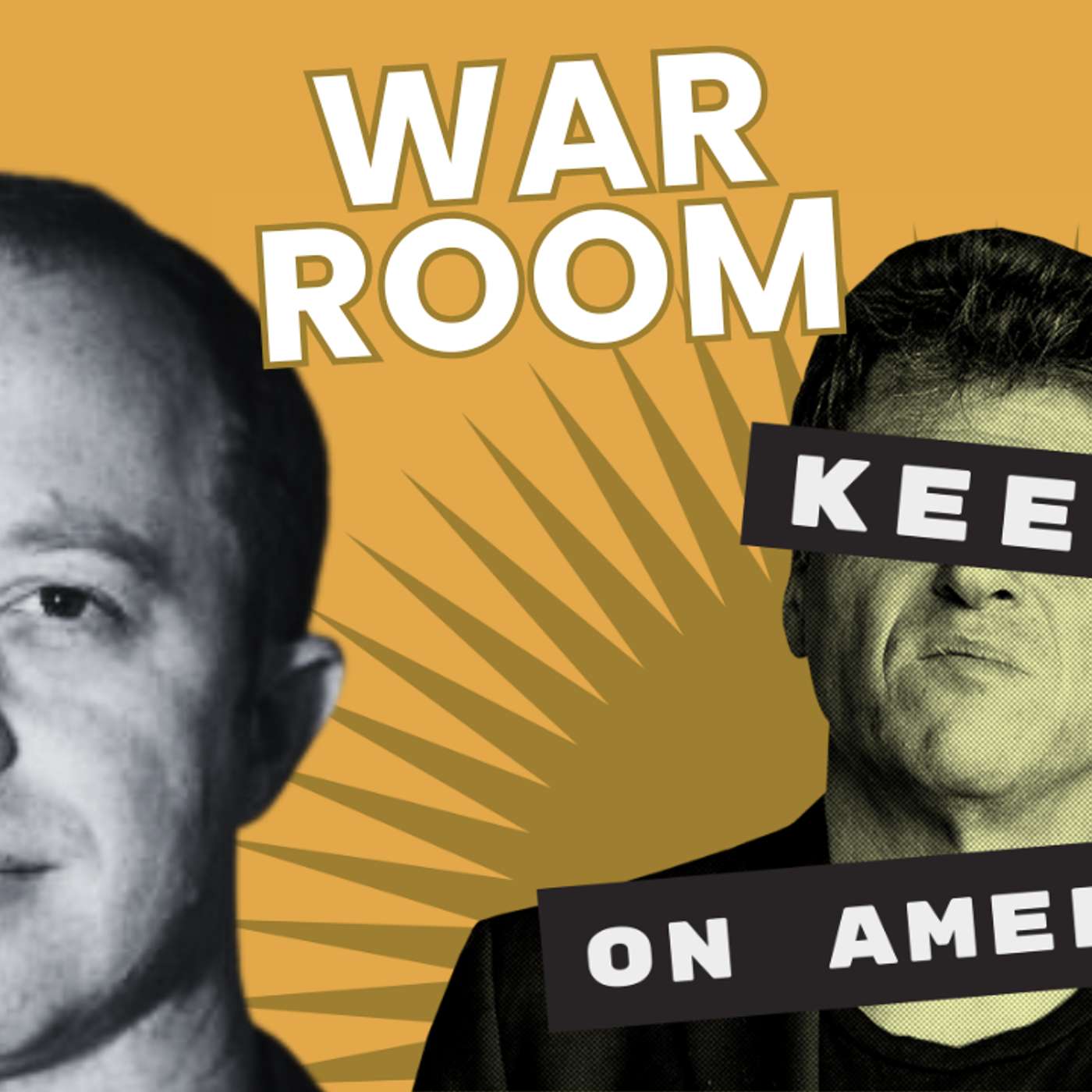


“I’m a military correspondent, but I would be totally happy if there was world peace and I had to change jobs.” — Yonah Jeremy Bob
Oil hit $100 a barrel (again) today. Donald Trump confessed, with uncharacteristic honesty, that the Iran war won’t end until after the November elections. And while Israel’s war with Iran ended back in April, America’s hasn’t, with the US and Iran shooting at each other most of the time since February. So, with the 25th anniversary of 9/11 tomorrow, is this about to become America’s new forever war?
Yonah Jeremy Bob is the senior military correspondent at The Jerusalem Post and co-author of In the War Room, the inside story of Israel’s fight against the Iranian “axis.” The Baltimore-born and Jerusalem-based journalist confesses that he watches this conflict with “two brains.” For Israelis of both left and right, it’s a war of survival. His US brain, however, has the more down-to-earth reading of a conflict that offers no existential threat.
So is this the new forever war? America after 9/11 “was at war for about a decade,” Bob responds. A nation in post-traumatic shock. A quarter of a century later, most Americans think of today’s Iran war in terms of domestic gas prices. Thus Trump’s presentation of the conflict in the context of an election calendar is not a forever war. Like all things Trumpian, it’s just another transactional campaign. As for the senior military correspondent himself, he’d be totally happy, Bob confesses, if world peace put him out of a job.
Five Takeaways
• The Split Screen. Bob — Baltimore-born, Jerusalem-based — says he watches this war with two brains, and they see different wars. The American brain sees a US-Iran conflict that hasn’t stopped: strikes, sabotage, and bombing traded almost nonstop since February 28. The Israeli brain sees a war that ended on April 7 — one 24-hour exception aside — leaving Israel calmer about Iran than Washington is. What actually agitates Israelis this week is diplomatic: Britain and a dozen mostly European countries (plus Canada) sanctioning the West Bank — not Israel proper, but a stain and a loss all the same. On Witkoff and Kushner, whom Ed Luce’s FT column accused of “blind amateurism,” Bob’s ledger is mixed: genuine credit for ending the Israel-Hamas war in October 2025 and bringing home all 250 hostages — the war’s forgotten center of gravity for most Israelis — against failure to close any Iran nuclear deal and near-nothing on Ukraine.
• The Transactional Ally. Bob’s three-level model of the Trump-Netanyahu relationship: lower-official criticism gets ignored; a direct Trump request gets “yes, but”; and a genuine Trump threat gets obeyed — every time. The astonishing exhibit: Israeli aircraft already en route to bomb Iran, recalled mid-flight after Trump tweeted “those aircraft better come back.” Bob can list three or four such episodes; Netanyahu backed off in all of them, because American support is more essential now than ever — which is the second story: Israel’s worst diplomatic isolation in decades, with bipartisan American support frayed and Europe largely gone. The counterweights: India, whose closeness to Israel — military, intelligence, and AI agreements — has never been higher, and the UAE, now closer to Israel than Egypt or Jordan. The original Abraham Accords held through the war; the grand prize didn’t — MBS was publicly “weeks away” from normalization in September 2023, and stopping that clock, Bob believes, is very possibly why Sinwar invaded when he did.
• The Book Bibi Doesn’t Like. In the War Room’s revisionist core: the early-war Netanyahu was the hesitant man in the room — it took roughly three weeks for the rest of the war cabinet to convince him to invade Gaza at all, consistent with a career of avoiding big ground operations — until, with victories in northern Gaza and Khan Younis behind him, he flipped in spring 2024 into the war room’s most aggressive member, pressing on to Hezbollah and Iran as his own defense chiefs turned toward ending it. Netanyahu, Bob reports dryly, dislikes exactly those chapters: “we’re in touch… we got an earful” — from both political directions, which the authors take as evidence they nailed it. On October 7 itself: warnings — including one relayed from the UAE — were ignored by everyone, Netanyahu, the IDF’s Halevi, and the Shin Bet’s Bar alike, all captive to the concept that Hamas was deterred; Bob’s author’s note says all of them should have resigned, as their 1973 predecessors did. The conspiracy theory that Bibi wanted the invasion gets “an unequivocal no.”
• Between Genocide and Mistakes. Andrew put Al Jazeera’s headline to him directly, and Bob — Boston University Law before journalism — answered as a lawyer: on genocide, “unequivocally no,” for want of intent (Bret Stephens’s point: a state that wanted genocide had the bombs to commit it in weeks, and wouldn’t have spent the war moving civilians out of the way). Then he did the arithmetic against his own side’s comfort: of roughly 70,000 dead, about 25,000 were Hamas and 3,000–5,000 were killed by Hamas itself — leaving 35,000 to 45,000 Palestinian civilians. “I think that’s too much.” The army has 150 criminal probes and some 3,000 disciplinary ones open; the World Central Kitchen strike — armed figures misread as Hamas boarding the trucks — stands as his anatomy of a terrible mistake that may yet be prosecuted as gross negligence. The insiders he talks to are genuinely sad about the civilian toll, and on the settlers he goes on record for the brass: top IDF and Shin Bet officials say the police under Itamar Ben-Gvir simply won’t crack down on Jewish extremist violence in the West Bank. “I point the mean finger at” Ben-Gvir — their words, he says, sounded out to the world.
• The Nuclear Scorecard — and the Clock. His Jerusalem Post exclusive, summarized: what triggered June 2025 wasn’t just enriched uranium (Iran had ten weapons’ worth for years) but progress on the “weapons group” — the metallurgy and hemispheres needed to put a warhead on a missile. Today that weapons work is destroyed or inoperable, the vast majority of Iran’s 20,000 centrifuges are gone, and the 60-percent uranium sits under bombed rubble, watched by intelligence services Bob judges too deeply embedded for Iran to move it unseen. Rebuild in one to three years? Theoretically — if Israel and America fall asleep. The strategic errors he’d correct: selling regime change (the IRGC and Basij command hundreds of thousands of hardcore supporters; the messaging failure is now “an element of the current elections”) — and the split verdict stands: Israel’s war succeeded on its existential terms; America’s depends on Hormuz and the program’s end. On 9/11’s eve, his forever-war answer: America itself “was at war for about a decade” after the towers fell, but this one has a clock — Americans feel gas prices, not danger. And the sign-off: a military correspondent who’d be totally happy if world peace cost him the job.
About the Guest
Yonah Jeremy Bob is the senior military correspondent and analyst at The Jerusalem Post, with unparalleled access to top...
00:31 - Introduction: $100 oil and Trump’s confession
02:37 - Two brains: the split screen between Washington and Jerusalem
04:32 - Witkoff, Kushner, and “blind amateurism”
06:56 - Trump’s deafening silence — and the West Bank sanctions
07:41 - The transactional ally: three levels of pressure
09:48 - “Those aircraft better come back”
11:34 - With friends like these: India, the UAE, and isolation
14:46 - Are the Abraham Accords still alive?
17:53 - Why Sinwar invaded — and when
20:08 - The warnings Netanyahu ignored
22:58 - The conspiracy question: an unequivocal no
23:25 - The hesitant Netanyahu: the chapters Bibi doesn’t like
26:13 - The genocide question — answered as a lawyer
29:53 - Between genocide and mistakes: 150 criminal probes
32:42 - The insiders’ sadness
34:10 - Ben-Gvir and the violence the police won’t stop
36:46 - The coherent story: Israel versus the Iranian axis
39:50 - Did Netanyahu always want this war?
42:06 - Two wars: the American failure, the Israeli success
45:39 - The nuclear scorecard: centrifuges, rubble, cat-and-mouse
48:58 - Regime change: the message that backfired
51:46 - A forever war? The 9/11 answer
54:41 - “I would be totally happy if there was world peace”
00:00 -
00:00:31 Andrew Keen: Hello, everybody. It's Thursday, September 10, 2026. As always, the news is full of stories about one kind of war or another in the Middle East. Oil today hit $100 a barrel, not for the first or probably the last time, as the United States and the Houthis exchange strikes. Donald Trump said, relatively honestly, unusually for him that the Iran war won't end until after the November elections, which was an astonishing confession. British Israeli relations are at the lowest ebb for decades after a massive fight over Israeli behavior, in the occupied territories. So I thought it'd be a good opportunity to check in with a guy on the ground. Yonah Jeremy Bob is the Jerusalem Post senior military correspondent. He's an old friend of the show. He's the author of Target Tehran, best-selling book from 2023, how Israel is using sabotage, cyberwarfare assassination, and secret diplomacy to stop a nuclear Iran and create a new Middle East, a rather prescient book. And he has a book out this week, a new book, which he co-authored with Elliot Kaufman, In the War Room, the inside story of Israel's fight against Hamas and the Iranian axis. Yonah is joining us from near Jerusalem where he lives. Yonah, congratulations on the new book In the War Room. Before we get into the details of that what's the general feeling in Israel at the moment? You're a man who's lived there for many years. Is there anything unusual about the current atmosphere, or is it just really business as usual given this ongoing almost endless war, it seems, between Israel and Iran?
00:02:37 Yonah Jeremy Bob: Right. So I'm from Baltimore in the United States, so I always have two brains. I have my sort of my American brain and my Israeli brain. So the American side of me, you know, understands that basically the war with Iran didn't stop. Right? The United States and Iran have been shooting at each other, bombing each other, sabotaging each other, almost nonstop, since February twenty-eighth of this year. On the Israeli side, the war ended on April 7. There has been one day where for a brief twenty-four hours, Israel and Iran took shots at each other several months ago. But basically since April 7, Israel and Iran have not been in direct war. Obviously there's all kinds of behind-the-scenes fights between Iran and Israel and the proxies of Iran, Hezbollah in Lebanon, Hamas in Gaza. But so that's sort of like a split screen between Israel is actually not the one fighting Iran right now. It's the United States that's different than usual. So from that perspective, actually it's calmer in Israel regarding Iran than it is in the United States. I wouldn't say it's calm because people are afraid that there could be another round of war at any point. But the biggest news in Israel that people are upset about is really what you mentioned, the new fight between Israel and England. It's not just Israel and England. It's England along with about a dozen western countries, mostly European and Canada, that are putting sanctions on the West Bank in Israel, not Israel as a whole, the West Bank in Israel. But even that for Israel is a big loss diplomatically. It, you know, sort of puts a certain stain on things. And so Israelis are hoping that you know, through negotiations, at some point, they'll be able to remove that.
00:04:32 Andrew Keen: That was an interesting piece, yesterday in the Financial Times, another old friend of the show, Ed Luce, the America correspondent. And I'm quoting the headline, Kushner and Witkoff's blind amateurism, when it comes to US diplomacy in Ukraine and Gaza. In your new book, In the War Room, I know you interviewed Witkoff. Is there some truth to this? What's the general consensus within Israel about the competence of American foreign policy, particularly orchestrated by Witkoff and the president's son-in-law, Jared Kushner.
00:05:18 Yonah Jeremy Bob: Yeah. So it's a mixed bag. Right? I guess, to their credit, they did help end the war between Israel and Hamas in October 2025. Right? They were at the front of that negotiation. And Israelis— I can't emphasize this enough. It's completely forgotten now in the international discourse. But for most Israelis, a lot of the war between Israel and Hamas really was about getting the hostages back. Right? There were 250 hostages. Some of them came back alive. Some of them came back deceased after Hamas killed them, while they were holding them. And that all of them came back. So that was something that Israelis were very thankful to Witkoff and Kushner about. Since then, they haven't done as well. Right? They have not achieved the negotiation with Iran, which wraps up wrap wraps ups and ends the nuclear program. That's Israel's biggest concern is you know, to end Iran's nuclear program has been set back a lot by Israeli and American attacks in 2025 and 2026, but there are pieces of it that are still there. And so that has been a failure from a Israeli perspective. Obviously again if you go to the broader American perspective, Witkoff and Kushner have not achieved anything or almost anything regarding the Ukraine Russia war. So I guess it depends, you know, where you focus. I think, you know, on the Israeli side, they have a mixed record. If at some point, they finally do get a deal with Iran that wraps up the nuclear program, then it'll be looked at more positively. And if they don't, they'll be looked at negatively in Israel.
00:06:56 Andrew Keen: You mentioned the UK embargo on West Bank, or products made on the occupied territories. A lot of— a lot of reporting on, and I'm quoting the London Independent, Trump's deafening silence over Israel, and this issue, the souring relations between Trump and Netanyahu and this muted US response to the UK's West Bank sanctions. Is there a feeling that Trump isn't quite the ally you imagined in the first place?
00:07:41 Yonah Jeremy Bob: So if you're asking me, I have always understood that Trump is a completely transactional individual. Did you say
00:07:48 Andrew Keen: Trump or Trump?
00:07:49 Yonah Jeremy Bob: Sorry. Trump is a completely transactional individual, and there are many elements where he has been supportive of Israel. But I believe he's been supportive of Israel because you know, he believed he would get something. He believed it worked for him politically. He agreed with a particular, you know, strategy or ideology. But anywhere where Trump has thought that his interest was different than Netanyahu's or Israel, he's going in a different direction. For example, we as we said before, the ending of the war in October 2025. I think most Israelis did want it to end then. There's an argument that Netanyahu wanted to continue it, and Trump made him end it. And Netanyahu certainly didn't want the ceasefire to mention the idea of the Palestinian Authority having a big role in Gaza, and Trump insisted on that being part of the ceasefire. Whether it happens or not is still an open question, but that was something that Trump imposed. So I, you know, I have always seen that Trump certainly has been very supportive of Israel on a lot of issues, but I think I have always understood him to be a transactional individual. And so if there was an issue where he didn't agree with Israeli policy, I'm never surprised if he goes in a different direction.
00:09:07 Andrew Keen: I remember there was one rather, tense relation. I think it was between Clinton and Netanyahu, maybe Obama and Netanyahu when the American president said, in anger, well, we're the senior partner in this relationship. You do what we say. Of course, Netanyahu is very skilled in not doing what the Americans say. You seem to suggest, though, Yonah, that Netanyahu does do what Trump wants. Or at least when Trump's maybe perhaps very angry or very focused, He's forced into doing stuff that he might not want to do. Is that fair?
00:09:48 Yonah Jeremy Bob: So I would put things at three levels in the way that under the Trump administration, the United States communicates with Israel. Sometimes you see lower level officials in the state department or somewhere else, you know, criticizing Israel on some issue. And that if it's something that Israel doesn't care about obviously they'll we'll try to do what the United States wants. If it's something that Netanyahu doesn't want to do, he will invariably ignore that because it's a lower level official. Then you get a situation where Trump himself says to Netanyahu, you need to change something. You need to do something. So that Netanyahu is never going to say a direct no to Trump. Right? He that's you know, that's not the relationship that they have. Like you said, Netanyahu does understand that the United States is crucial, and it's probably more crucial than ever on in this time period because Israel used to have more support from more countries and has less support than it did in the past. Israel still has support from India and the UAE and Egypt and various countries, but Israel has less support certainly in Europe than it used to have and so it really needs the Trump administration support. And so there, you'll see Netanyahu usually say yes, but. You know, I will do something towards what you want, but I might not do all of what you want. And then there's specific instances, couple of times where Trump said, you know, there literally, there were there was an instance where Israel was sending aircraft to Iran, to bomb Iran, and Trump tweeted, those aircraft better come back. And literally, those aircraft were ordered to come back even though they were on their way to drop their bombs. And there is I could give you probably a list of three or four instances where Trump threatened Netanyahu. And in those instances, Netanyahu always backs off and does what Trump, basically orders them to do.
00:11:34 Andrew Keen: You mentioned that Israel still has friends. You listed UAE, India, and Egypt, with friends like those. I'm wondering whether Israel has a whether Israel is viable in the long term. Is there a sense, Yonah, within Israel or certainly amongst the people you talk to a lot of military figures, political figures, that Israel is dangerously losing friends. JD Vance, of course, was quite forthright, in his warning to Israel that then not lose the US as a friend because you don't have many others. I mean, you'd be left with Egypt and the UAE, which I don't think will go to war for Israel. Is there a sense of increasing isolation? And in that sense, do people blame Netanyahu, or does it really depend on the political community that you talk to?
00:12:33 Yonah Jeremy Bob: So let me give a two part answer to that. I think in the basic sense, this is one of the worst diplomatic situations Israel has been in decades. Alright? Israel does have less diplomatic support than it's been in decades, and you can see that in Europe. You can see that also in the United States used to be clear bipartisan support in both the Democratic and Republican parties, and they're still our supporters in the Democratic Party, and there's still a majority of supporters, I would say, in the Republican party, but all of that's frayed. And certainly with Netanyahu himself, you know, the vast majority of the Democratic Party is definitely against him, and a rising number of Republicans are also against him. So I would say the end of sort of part one of my answer is if Netanyahu remains in power, which isn't what the polls say right now, but you never know. He's pulled a lot of rabbits, out of a hat, so to speak. So then, you know, it's going to be rough, in some of those areas. On the other hand, if Gadi Eisenkot wins the election, right, he's the main opposition figure. I think you could see a lot of that change rather quickly because there are a lot of things that Israel does for all of these countries. It's not just trade. There's a lot of intelligence that Israel has done that have saved lives in many European countries in the United States. Israel provides a lot of cyber technology. So there's interest there. Plus, Israel still is the only democracy, you know, in this area. My second part would be with all of that said, India is a tremendously powerful country, and the closeness between Israel and India right now is the highest that it's ever been. They signed some very deep, agreements in terms of military, intelligence, artificial intelligence cooperation, and there's another half a dozen or two countries that are important. As you said, UAE wouldn't necessarily, you know, go to war, send troops to help Israel, but the UAE and Israel are actually very close right now, and UAE has done many things to help Israel also in the military, area behind the scenes.
00:14:46 Andrew Keen: Trump, of course, talks and his people talk a lot about the quote, unquote, Abraham Accords, which again for me as an and I'm saying not an expert here, always seem to me as being stillborn. What is the current state of these accords when it especially when it comes you mentioned Israeli relations with the UAE, but with the Saudis and of course, the other Gulf states. Are the Abraham Accords still alive? Do they exist? Is there any viability to them in the long term?
00:15:23 Yonah Jeremy Bob: Okay. So the original Abraham Accords were the UAE, Morocco, Bahrain, and Sudan. There was a hope that would be sort of the you know, initial down payment, which would lead to a broadening, including the Saudis and another dozen or so Middle Eastern and North African countries. So the original Abraham Accords are very strong. I can't emphasize, as I said a moment ago, Israel and the UAE are close. I would say they are closer than Israel and Egypt. They're closer than Israel and Jordan. I've been to the UAE. The Emirates are very, very positive, in general about Israel. The sharing of technology is you know, at a extremely high level, you know, including classified items. Morocco, very close still. Morocco is supposed to contribute troops to the international stabilization force, the peace, you know, force that's supposed to go into Gaza. Morocco, I can tell you, I've met officials who've come here to buy Israeli weapons. So Morocco and Israel still very close. Bahrain also still in very good relations with Israel. Sudan is only sort of officially part of the accords, but Sudan isn't really a country
00:16:40 Andrew Keen: Right now.
00:16:40 Yonah Jeremy Bob: Right? It's been in complete civil war since shortly after the accords were signed. So we have to see, you know, if and when that civil war ends, who's running the country, we'll see if it's still going. So from the perspective of what was done, the down payment worked. All of those countries, despite two, three years of war between Israel and you know, various neighbors, they're still with Israel. But as you say, the second piece, which was supposed to be the bigger, more important piece, has been pushed off. If you go at September 2023, just a couple weeks before Hamas invades Israel on October 7, MBS, Mohammed bin Salman, the crown prince of the Saudis, says publicly for the first time, we're weeks away from normalizing with Israel. And if that invasion doesn't happen and Israel doesn't have this big war with Hamas, you probably see a normalization between Israel and the Saudis in the end of twenty twenty three. And after this war and after Israel is farther away from working with a Palestinian state than it was at the time, not that it was you know, sort of something that was for sure at the time, but it was more open to the idea than Israelis are today. So too, the distance between Israel and the Saudis for normalization is much larger than it was at that point.
00:17:53 Andrew Keen: And of course, at the time, there was a lot of theories that the Hamas military operation in South Israel, North Israel, was triggered by that. Is that true, Yonah? Is it really did they make that decision presumably with the encouragement of the Iranians to scuttle the next stage of the Abraham Accords?
00:18:20 Yonah Jeremy Bob: So there are a list of reasons. We know a lot now about why Yahya Sinwar, who's the head of Hamas at the time, went for this major invasion, which I'll just remind people because so many things have happened since then. 1,200 Israelis, mostly civilians, were killed by Hamas. 250 hostages were taken, not just Israelis. Also foreign nationals for a number of other countries were taken hostage by Hamas. 20 or so Israeli villages were conquered for a period of several days. Some of them, you know, were held, for a period of time. So why did Sinwar do that? So the main reason that Sinwar did that was he wanted to change all the geopolitics. He felt like Israel was ignoring him. He felt the West was ignoring him, and he felt that accomplishing this would put Hamas back on the map and would force Israel and the West to give him something, whether it would be removing the blockade of Gaza, the maritime blockade, whether it would be making various concessions to sort of recognize Hamas as a permanent ruler in Gaza, which you know, most of the West had seen Hamas already as a terror group. So he wanted to change that. On top of that you know, is one of the reasons why he did it, when he did it, you know, October 7 as opposed to let's say, two months later or six months later. Did he say let's do it now and not wait two months or six more months because he was worried about Saudi normalization with Israel. He wanted to get in before that. I think that's absolutely a factor of the when he decided to do it. But that he was looking to do it, we now know that he almost did it in late twenty twenty two. He almost did it in spring twenty twenty three. So it was on his mind already, but it is possible, very possible, that the reason he did it when he did it was to stop the normalization.
00:20:08 Andrew Keen: And there are lots of reports. I'm sure the Israeli papers, I think, you've even written a piece about it that Netanyahu was quite aware of this Hamas operation. His rivals described him, according to The New York Times, as being unfit after he was warned about the October seventh attacks. There's always so many rumors and stories about Netanyahu. Is this an important story, Yonah? Is this something that has legs, so to speak?
00:20:45 Yonah Jeremy Bob: So in our book, In the War Room, which just came out on September 8 this week, we give the full picture of what Netanyahu, you know, was going through in terms of Hamas in Gaza, what IDF chief, Israeli military chief, Herzi Halevi knew, what the Shin Bet intelligence agency, Ronen Bar, knew, and the people who you know, came before them because the policy of how to deal with Hamas in Gaza was going on for about fifteen years. Hamas took over Gaza. I believe it's in 2007. They do a coup against the Palestinian Authority, which had run Gaza up until then. And it's a system wide problem. Okay? I absolutely blame Netanyahu. I absolutely blame the Israeli military. I absolutely blame the Shin Bet. All of them were responsible. And I have an author's note at the end of the book where I say everybody should have resigned, if not on October 7 within a certain amount of months, to take responsibility the same way that all of the top Israeli officials resigned after the nineteen seventy three war, the known as the Yom Kippur war between Israel and Egypt and Syria when Egypt successfully surprised the Israeli military. So I think all of them were responsible. The specific story that you're talking about is you know, some sort of warning was passed on to Netanyahu from the UAE. There's an ongoing debate about exactly what was passed on. Was it said directly from the head of the UAE, MBZ, Mohammed, bin Zayed to Netanyahu. Was it said through somebody? What was said? That we could probably you know, continue debating, and maybe somebody will write a book just to you know, about that specific conversation. The point is warnings were absolutely given to Netanyahu, to the Israeli military, to the Shin Bet, and all of those parties ignored the warnings because there was a general concept that said Israel believes that Hamas is deterred. Hamas is so much weaker. Hamas would never dare to do an invasion like they did. And because of that all of the hints and all of the messages that were passed on were ignored by everybody, including Netanyahu.
00:22:58 Andrew Keen: Is it conceivable, Yonah, there's lots of conspiracy theories, of course, especially in our conspiratorial age about what drives Netanyahu. Is it conceivable that he wanted this invasion, that would give him the excuse to not just bomb Gaza back into the stone ages, but also launch a war against Iran and maybe force or encourage the Americans to join them in this war?
00:23:25 Yonah Jeremy Bob: I'm gonna say an unequivocal no on that one. There is no way that Netanyahu or anyone in Israel wanted this war to happen. The story that we do tell in In the War Room is that Netanyahu evolves during this war. And that if you look at the early chapters, Netanyahu is not the way that people think of him in most of the world, which is the super aggressive guy who wants, you know, wants to fight war and big wars and bomb everything. That's not who he was from let's say, October 2023 until about March or April 2024. In fact, it took about three weeks for Israel to do its counter invasion of Gaza, and it was mostly because everybody else in the war room had to convince Netanyahu to do the invasion. Up until then, Netanyahu and Israel had fought, let's say, four, five big rounds with Hamas, and each time either hadn't invaded or had invaded in a very limited manner. Why? Not that Netanyahu had any love for Hamas and the Palestinians, but he was very conservative about you know, if you get involved in a military operation, then things could go sideways. And what you see in our so this doesn't go with his reputation. By the way, he doesn't like this. Netanyahu doesn't like the parts of our book that say that he hesitated to go to war at the beginning.
00:24:44 Andrew Keen: How do you know he doesn't like that?
00:24:46 Yonah Jeremy Bob: Because we're in touch. We got talk
00:24:50 Andrew Keen: To him. You give him a call. He tells you that he's not happy with the book.
00:24:53 Yonah Jeremy Bob: I'm not gonna say exactly who said what, but let's say we got an earful, not just from him, also from other sources. I'll put it like this. Me myself and my co-author, Elliot Kaufman, we think we nailed the truth pretty well in this book because we got an earful from people on both sides of the political spectrum whenever something we wrote didn't sort of suit their sort of you know, political, how they wanna present themselves. But just to sort of finish the point, there is a point where Netanyahu shifts. Somewhere in March, April twenty twenty four, he suddenly gains confidence. He sees that the Israeli military has been winning in Northern Gaza, winning in Khan Younis, which is sort of Mid Southern Gaza. And from that point on he becomes the most aggressive member of the war cabinet. So even when other members of the war cabinet who had wanted him to invade Northern Gaza in 2023 starts saying to him, hey. Let's end the war maybe in summer twenty twenty four. He says, no way. I wanna keep fighting Hamas. And then he wants to go to war with Hezbollah, and he wants to go to with Iran. So that does he does shift, and he does become the person who does wanna continue the war far more than the Israeli defense officials who eventually, again shift from being the ones who wanted to be aggressive at the beginning to okay. Especially in summer 2024, a lot of them wanted to wrap up the worst possible.
00:26:13 Andrew Keen: Yeah. No. The Al Jazeera, headlines today suggest that there's probably not a headline that you'll see that often in Israel, but Benjamin Netanyahu has overseen a genocide, although in his telling, he's a victim. In your mind, is has there been a genocide, an Israeli genocide in Gaza? We've had a number of shows about this. Many Americans, as you know, believe it's a genocide.
00:26:43 Yonah Jeremy Bob: So I'm gonna unequivocally say that there has not been genocide in Gaza. That's like my
00:26:48 Andrew Keen: But it is worth noting that how many people were have been killed? Seventy, eighty thousand Palestinians?
00:26:54 Yonah Jeremy Bob: So I'm gonna give a longer answer because yeah, there's genocide, and then there's you know, individual war crimes, and then there's you know, individual mistakes. So somebody asked if there was a genocide in Gaza, my answer is unequivocally no. Bret Stephens from the New York Times, you know, said it in an interview that if you know, is Israel would never want to do this. But if Israel had wanted to commit genocide, it has enough bombs. It could have bombed everybody in Gaza in a couple of weeks. It wouldn't have you know, tried to get, you know, all of the civilians to leave Northern Gaza and move them to the South. And then when it started to bomb the South, it wouldn't have moved them to another place. It wouldn't have you know, done millions of warnings by text message, phone message, direct, you know, phone calls, all kinds of ways to move Palestinian, you know, civilians out of the way of war the war was being fought. So that's the point of genocide. But that doesn't mean that mistakes weren't made, and that doesn't mean that individual war crimes, you know, couldn't have been committed in specific instances. And I'll go further. The Israeli military just announced a couple weeks ago that it has 150 criminal, probes opened right now against its own soldiers. And that's you know, sort of the criminal level, it has I think, 3,000, disciplinary probes also open. So over the course of the two years, you know, basically what the Israeli military is saying is there were a lot of mistakes, and they're checking. Were those mistakes, you know, criminal or not? You know, for example, there was you know, the most famous case is probably the World Central Kitchen incident in April 2024. Israeli military bombs seven international aid workers. There's nobody in Israel who is purposely wanting to kill international aid workers. That's not a thing. But you know, people said, wait. It's it said, you know, on the trucks, you know, international aid workers, you know, how could it not be a war crime? So it turns out that the person involved, who was making the call saw armed figures getting into the trucks. They assumed that this meant that Hamas had taken over the trucks. And so they decided the trucks were now taken over by Hamas and that gave them the right to target the trucks. This is a terrible mistake. Maybe that person should even be prosecuted for like recklessness, you know, for gross negligence. That's a debate that's going on in Israel. And so that's a debate that I think does need to be had. I think it's a problem. It's sad that on one hand, you have people who just wanna label Israel with genocide without looking at the facts of the individual cases and without noticing that Israel warned people to leave areas and that Hamas systematically used human shields. And on the other hand, there are a lot of Israelis who aren't willing to admit that Israel has made mistakes. And in some cases, there are bad apples who probably did commit war crimes, and those things need to be you know, investigated and prosecuted.
00:29:53 Andrew Keen: Yeah. No. There's a large gray linguistic area between genocide and mistakes. What word would you use?
00:30:02 Yonah Jeremy Bob: I want to look at individual cases. You know, I've been a journalist for fourteen years.
00:30:07 Andrew Keen: But Yeah. But you can't. I mean, the whatever it is the 70 or 80,000 people killed, mostly civilians in Oh, if you
00:30:15 Yonah Jeremy Bob: Were to
00:30:15 Andrew Keen: Just ask a consequence of mistakes, is it?
00:30:17 Yonah Jeremy Bob: No. If you no. So if you wanna just ask me were too many Gazans killed, I think too many Gazans were killed. I'll say that out of the 70,000, 25,000 of them were Hamas. And my from anecdotal evidence, I would say Hamas probably also killed 3,000 to 5,000 of their own people. Some of it was rocket misfires. Some of it is just slaughtering opposition. But that still leaves, you know, 35, 45,000, Palestinian civilians. I think that's too much. I don't know, you know, all of the you know, operational circumstances each operation, but you know, so do I think that Israel, you know, that the war could have been shorter, that fewer Palestinians should have been killed? Absolutely. Again from there to genocide, I was trying to say before, I was a lawyer for ten years. You need to have criminal intent. And so if you think you're killing Hamas and it turns out that you killed a civilian, that's not a war crime or genocide because you know, it's a terrible mistake, and somebody should be held accountable. Right.
00:31:21 Andrew Keen: So but your point I'm just trying to boil this down. You seem to be suggesting that maybe war crimes were committed, but by individual bad actors rather than Yes. The Israeli state. Yes. So Netanyahu and his generals and the people you interviewed for in the war room are not guilty of war crime
00:31:44 Yonah Jeremy Bob: In Iraq? So. I don't think that at a jet as a general matter, I do not believe that the people who are making decisions wanted to kill Palestinian civilians, were trying to kill Palestinian civilians. I've been in not just in touch with the top war room people. I've been at the lower stages of people who were flying drones. I've seen numerous times where they wanted to attack a senior Hamas official, and they backed off because civilians walked into you know, sort of the area, and they said, it's too close. You know, we don't wanna hit the civilians. So no, I don't think that at the highest levels, I don't think anybody was trying to kill civilians. I think they were trying to kill Hamas. I do think that it when you we talk about the number of people who've been killed, the number of mistakes that are made, the number of if you have a 150 criminal investigations, I'm assuming that some of these people are guilty. Yes.
00:32:42 Andrew Keen: You talk as you know, in the war room, you talk to lots of insiders. You seem to have a channel to Netanyahu himself. Is there discomfort, unhappiness amongst some of the people you talk to about the number of casualties in this Gaza war? The Palestinian casualties?
00:33:03 Yonah Jeremy Bob: Absolutely. I don't Israelis, you know, sort of quickly go into the shell of defending themselves because there's so many people accusing them of genocide. But if the opening conversation isn't, well, we are accusing you of genocide. If the opening conversation is we're not having a legal conversation, what you tell us isn't going to be held against you in a court of law. You just ask people at a like at a human level, are you sad at how many Palestinian civilians were killed? Absolutely. Very sad. And it's not something that people wanted. It's not something that people want. And I'll remind everyone, and I look. I have some criticism in the book that I think the war could have been probably ended earlier. But I'll remind everyone, Hamas could have ended the war earlier. There were probably 20 or 30 instances where Israel stopped and said, if you give the hostages back, we'll stop. And up until October 2025, Hamas never said yes.
00:34:10 Andrew Keen: Is there also amongst all the people you talk to these insiders, is there anger, frustration with the behavior of the settlers in this latest round of violence?
00:34:23 Yonah Jeremy Bob: Okay. So now we're sort of going out of the book. Right? The book talks about
00:34:27 Andrew Keen: Yeah. We'll come back to the book, but I'm just curious since you're an insider and you talk to all these people off the record.
00:34:33 Yonah Jeremy Bob: Yeah. Happy to discuss it. Just the book talks about Gaza, Lebanon, Iran, a little bit about Syria. We thought about whether to do a chapter about the West Bank, and honestly, we almost didn't even have a chapter on Syria because at some point, you need to sort of put together sort of like a coherent story. And the West Bank story is an important story, but I don't think it connects into the to more directly. But to answer your question, I'm writing an article, today. It may already be posted or will be posted in the near, you know, future, And I've written dozens of articles that the top Israeli military officials themselves don't think that there's significant enough cracking down on Jewish extremists who are committing violence against Palestinians of the West Bank. I'll say that people may not realize it, but the number of Palestinian terror attacks against Jews in the West Bank is still much larger. But that doesn't you know, it's not this isn't or what about this? You know? You can have Palestinian terror and you can have Jewish terror. So there is Jewish terror. There is Jewish extremist violence. And the top Israeli military officials don't think the cracking down is going hard enough. What's part of the problem? Here I point the mean finger at somebody named Itamar Ben-Gvir. He's one of Netanyahu's, you know, coalition partners. And when I'm when I say I'm pointing, I'm really sort of speaking on behalf of top Israeli military officials and top Shin Bet officials. This is what they're telling me. So I'm just sounding this out to the world. Top Israeli military and Shin Bet officials say that the police for the last three years, three plus years under Itamar Ben-Gvir, was far to the right of Netanyahu, have not been doing their job as well, have not been arresting. So the Israeli military will come in and stop violent Jewish extremists from attacking Palestinians, and the police are then supposed to arrest them and bring them, you know, to trial, and they haven't been doing that enough. Now it's not that it doesn't happen at all. There have been some examples of arrests and indictments, but it hasn't been happening enough. And that is one of the reasons that their situation in the West Bank in terms of Jewish extremist violence is not— it's not properly under control at the current moment.
00:36:46 Andrew Keen: Maybe we'll come back to Ben-Gvir later. But let's go into the war room and the— your new book. You mentioned that you were looking for a coherent story in the Israeli war in Syria, Lebanon, Iran. You— so you left out the chapter on the West Bank. What is that con coherent story? What will historians report back on this latest wave of wars, these different fronts in the war between Israel? Is it essentially a war between Israel and Iran and its forces in Lebanon and Syria?
00:37:26 Yonah Jeremy Bob: Yes. That's it. It's actually fairly simple when you get past all of the different rounds. This is a war between Israel and Iran is depending on where a thousand to 1,800 kilometers away from Israel. It is nowhere near bordering Israel. It isn't even like a second circle bordering Israel. And yet, it has spent billions of dollars to give weapons to Hamas to attack Israel, to give weapons to Hezbollah to attack Israel, to give weapons to the Houthis in Yemen to attack Israel. We didn't do a chapter on them either. Again at some point, you have to sort of focus on something a little bit more to give weapons to Syrian militias to attack Israel. And Iran has directly attacked Israel four times in the last couple years with over a thousand ballistic missiles. So this war at the end of the day turns out to be Iran and its proxies against Israel that you see that in our title for the book. And Hamas certainly starts the war with the invasion on October 7. And Yeah. You call it
00:38:36 Andrew Keen: The Iranian axis. Of course, I assume you borrowed that word from the axis of evil. I think it's George Bush's term.
00:38:44 Yonah Jeremy Bob: Right. And so you know, Iran didn't say to Hamas, do an invasion on October 7. But I can tell you that in February 2023, I was sitting with top Israeli defense officials, and they said, Iran has given an order to Hamas and to Hezbollah and to all of its proxies to be more provocative of Israel this year than in the past to take more risks. Nobody thought that Hamas would go as far as it did. They were talking to us about Hamas invading with you know, 50, of its fighters to take over one village, not 5,000 of its fighters to take over 20 villages. But so that absolutely when you go backwards, could Hamas have pulled off what it did on October 7 without Iranian training, funding, strategy? It couldn't have. So yes, I you know, the war starts between Israel and Hamas, and that's sort of the most consistent piece of the war for a lot of the time, but you see at the end of the day that it really is a war between Israel and Iran.
00:39:50 Andrew Keen: There's a narrative here, and you know this stuff a million times better than I do, that Netanyahu has always wanted to go to war with Iran. He's never been able to successfully convince a US president to join him. Is there any truth to that?
00:40:07 Yonah Jeremy Bob: So this is a complex question. Netanyahu has theoretically wanted to strike Iran. If you go back in time, there are those who say that if not for the Israeli military, Mossad, and Shin Bet chiefs talking him down in 2010, 2012 a couple of times, that he might have struck in that period. But I would say that's not exactly what happens in this war. When Israel finally strikes Iran, it's when Iran has directly attacked Israel twice, and Israel is convinced with not something small, with hundreds of ballistic missiles, and Israel is convinced that Iran has not been deterred by Israel's limited responses. Right? April 2024, Iran shoots something like 110 ballistic missiles. I think it's a 170 drones, 30 cruise missiles in Israel shoots one important radar of Iran near a nuclear facility to say to Iran, don't do that again because if we can blow up this radar of yours next to your nuclear facility, it means we could have blown up the nuclear facility too. Don't do that again. It has some effect, but Iran attacks Israel again on October 1 with around 200 ballistic missiles. That time, Israel attacks about 20 different sites to send a stronger message. But again Israel sees that Iran is not slowing down its ballistic missile production. It's moving towards nuclear weapons. It's actually speeding all of that up to a point that Israel Israeli intelligence is saying it could cross a point of no return and we might not notice it. That's the point when Israel decides to attack in June 2025 to take down the nuclear program, to slow down the ballistic missiles program. That is what changes everything. So didn't Netanyahu wanna do that? Absolutely. But would he have done it? But for the fact that Iran had attacked Israel directly twice before, I think at the end of the day, he wouldn't have.
00:42:06 Andrew Keen: Lots of reports in the US press about Iran showing, and I'm quoting a Wall Street Journal piece from today, a new appetite for escalation. There's been a surge in construction. Supposedly, it's suspected Iranian nuclear sites. You're a military guy, Yonah. In terms of this war, should we be thinking about two wars, a US war against Iran and an Israeli war against Iran in terms of success and failure? It strikes me, and maybe correct me if I'm wrong, that the US war against Iran has been a dismal failure. I'm less knowledgeable or less certain about the Israeli war against Iran. How do we think of this in military terms?
00:43:00 Yonah Jeremy Bob: So I again I'll come back to the idea of a split screen. I think the US war against Iran and the Israeli war against Iran are absolutely different things to analyze. I agree with you on sort of that basic idea. And I'll definitely say that from the Israeli perspective, the war has been more successful, and from the American perspective, it's been less successful. Why has it been more successful for Israel? Because Israelis and this is not a right-wing, left-wing, you know, issue. Right wing, left wing, you'll see on the Palestinians. You know? Should there be land for peace? When should there be land for peace? Israelis are split on that issue. There is nobody in Israel, basically who does not feel scared and threatened from Iran because Iran has in fact, directly attacked Israel with ballistic missiles that have blown up. When a ballistic missile hits, it's not like a Hamas or Hezbollah rocket that you know, destroys maybe one house. It can destroy a neighborhood. These are serious, deadly, powerful weapons. And it's everybody knows they've been sponsoring Hamas and Hezbollah to attack Israel. So Israelis view an Iranian nuclear weapon not as a general someday kind of threat, but as a imminent existential threat. So from the Israeli perspective, the fact that Iran's nuclear weapons program has been pushed back by some period of years, it's not gone. There are pieces of it that can still be you know, used and rebuilt if either agreement isn't reached or Israel or the United States don't properly keep an eye on certain areas where some of the enriched uranium is you know, under rubble at this point in time, but it has been pushed back and Israelis feel safer. The United States, most Americans never really felt specifically in danger from Iran. Do they feel a general danger? Do they like the idea of Iranians having nuclear weapons? For sure not. All American presidents have said they're not gonna let Iran have a nuclear weapon, but it's not the same imminent danger the way Israelis feel it. And so for Americans, the you know, a lot of the story just comes down to gas prices. The gas prices are up. That's hitting people in their pockets. And so if people don't feel that there was an imminent danger to them and they feel economically like they're doing worse, so a lot of Americans, you know, feel like it's been a failure. From my perspective as an American, I would say, we don't know yet whether it's been good or not because it really depends who wins the standoff. If at the end of the day, it turns out that the Strait of Hormuz stay open and the United States gets rid of Iran's nuclear program, then it may actually be defined in the end as a victory. If the United States doesn't achieve those two goals, then it will probably be defined by the United States as a defeat.
00:45:39 Andrew Keen: You're a military guy, and the book really focuses on what Israel and the US achieved or didn't achieve when it came to nuclear weapons, nuclear technology. You have a an exclusive in the Jerusalem Post inside the IDF's military intelligence's crusade. I'm not sure whether that's a word— used ironically to block Iran from getting nukes. What's the outcome of this war so far when it comes to Iran's ability to build and wage nuclear warfare? Sure. Let me break it down for everybody.
00:46:19 Yonah Jeremy Bob: According to Israeli intelligence, and this is not the politicians. This isn't Netanyahu. This is intelligence people who could care less about politics. In early and mid twenty twenty five, Iran was not only at the point where they had enough enriched uranium for something like 10 nuclear weapons, which was something they had for a while, but they also had achieved new things in terms of metallurgy and hemispheres, which is to say the items that you need to assemble to you know, basically put a nuclear warhead on a ballistic missile and to deliver a ballistic missile. And so all of those items, they were making progress on. And that is what set off alarms in Israel is that it wasn't just enriched uranium. The Iranians were making progress on what we call the weapons group issues, the ability to put a nuclear warhead on a missile and deliver it. And that is what set off the alarms. And so that has been pushed back a lot. All of the weapons group issues, my understanding is were destroyed or made inoperable. In terms of the you know, centrifuges, right, those are the machines that spin around really fast to enrich the uranium, which is sort of the heart of making a nuclear weapon. Iran had something like 20,000 centrifuges, a tremendous fleet. The vast majority of those are destroyed or inoperable. Now if you read my whole article, you'll see that Iran still does have some centrifuges, but they're not hooked up right now. It still does have 60% enriched uranium, but it's under rubble of facilities that were bombed by Israel and the United States believe they know exactly where that uranium is under the rubble and that they're keeping an eye on it so that if Iran tries to move that uranium, they'll be able to stop it. And this is where you get into the cat and mouse game. Can Iran think of a way to move it slowly underground through little tunnels that it digs that nobody notices, without Israeli intelligence finding out? I'm going to lean in and say that after both this book and the book Target Iran, that Israeli intelligence penetration of Iran is so strong that Iran is not going to be able to succeed in doing that. And so I'll say overall, while Iran does have pieces of a nuclear weapons program, that if Israel and United States went to sleep and got overconfident, could they still rebuild and get a nuclear weapon in another year or two years or three years? Theoretically possible. But right at this point, I think it's going to be very difficult for them to do it. And a lot of the tools, the huge program that they had the dozens of facilities, they don't have that right now.
00:48:58 Andrew Keen: But isn't ultimately the real significance of the war political? For better or worse, Israel decimated the Iranian leadership, assassinated the senior cleric, and killed many other senior people within the regime. Has that benefited Israel? It's I mean, you again you know this a million times better than I do, but who is now in power in Iran? And are they, in a sense, more powerful? I mean, there were all there was all the talk, but particularly by Trump, about an uprising against the clerical regime in Tehran, which didn't happen. Has the ultimate consequence of the war been to strengthen Iranian military hardliners, which presumably isn't good for Israel?
00:49:48 Yonah Jeremy Bob: So this is a great question, and I would say that the way that I would have managed the public messaging of the twenty twenty five and twenty twenty six wars with Iran would have been to focus on the nuclear weapons program number one and on the ballistic missile threat number two. By the way, the ballistic missile threat is not something to laugh about when you're talking about thousands of ballistic missiles. Even Israel's awesome air defense missile shield could be absolutely, you know, penetrated, and so that was one thing that Israel wanted to reduce. I would have focused on those. I wouldn't have focused on regime change. If regime change happened to happen because the Iranian people, you know, rose up along with the regime being weakened, that certainly I think all of most of the world would be much happier with a less fanatical regime who wants to just you know, like most countries, just you know, sort of do business and mind their own business. I think most of the world would be happy. But I never thought that regime change would be something that would happen easily. So I think it was a mistake that you know, public officials, whether it's Netanyahu or Trump, you know, sort of made that out as like a mission and something that was you know, realistic to happen in a short period of time. I think anybody who studied the IRGC, the Islamic Revolutionary Guard Corps, and the Basij, the militia under them, would know that they have hundreds of thousands of hardcore supporters and none of their million to 2,000,000 sort of low level supporters, and that's not something that you can just you know, easily throw off. So again you know, how we define, you know, success, failure, and all of that is most Israelis feel safer from these operations because they don't feel as much in danger right now from nuclear weapons and ballistic missiles. But absolutely, because Netanyahu made it about regime change also a lot of Israelis do feel that was a failure, and then that's an element of the current elections.
00:51:46 Andrew Keen: Finally, you've been very generous with your time, Yonah. Tomorrow, of course, is the twenty-fifth anniversary of 9/11, terrorist attacks on the Twin Towers. I was just in New York this week. I went to the museum there. It launched the so-called forever wars, the American wars in Iraq, Afghanistan. In some senses, perhaps, they're still going on. Is there a danger that this current war against Iran and its proxies in Iran, Lebanon, Syria, Yemen, elsewhere, is it in danger of being a forever war like the wars of the last twenty-five years that America has been involved in the Middle East. I mean, what where without actually formally dislodging the Iranian regime, which as you know, is probably less likely today than it was before the latest, war. How does all this end, or is it just ongoing?
00:52:49 Yonah Jeremy Bob: It's a great question. I don't know the answer. I'll see your sense?
00:52:54 Andrew Keen: I mean, nobody knows the answer, but what's your sense?
00:52:58 Yonah Jeremy Bob: My guess is that this war will not go on as long as September 11, mostly because September 11 was about the United States, and Israel is not anywhere near as strong as the United States. And the United States in this war with Iran, you know, for various reasons that we've talked about but it's not something that the whole United States was behind by any means. And after September 11, the entire United States was what I would say in sort of like a sort of a you know, post traumatic stress disorder, PTSD, of what else will terrorists do to us in the United States. I was living in the United States at the time, and that's how most people felt. People suddenly, you know, there were soldiers in airports, which was never something you saw in the United States before. You would have seen it in Israel and other countries like that but you know, people really were terrified. And so the United States did a lot of operations all over the world because people really were scared. I don't think most Americans are feeling in danger from Iran right now. And so I don't think, you know, could it go on for months? Could it go on for another year? Maybe. But I think there is a clock on this because most Americans don't want a longer war. And after 9/11, there were a lot of Americans who said, let's fight a longer war overseas because it'll keep the jihadists busy, and they won't get over here. Eventually, most Americans moved away from that but I think it took about a decade, until the United States sort of fully calmed down from that moment. And so when people say, you know, Israel's been in a very long war, I'd say, well, the United States after 9/11 was at war for about a decade.
00:54:41 Andrew Keen: Well, there you have it. If you wanna get in the war room, you can do it with my guest, Yonah Jeremy Bob, who's the senior military correspondent at the Jerusalem Post. So he knows his stuff. He has channels to Bibi Netanyahu, such good channels, in fact, that Bibi articulated his unhappiness with some of the stuff in the book. He co-authored it with Elliot Kaufman. I think it's gonna be an influential book. Thank you so much, Yonah, for spending so much time with us, and I hope that the news will improve. As you know, it's doubtful but possible. Thank you so much.
00:55:22 Yonah Jeremy Bob: I'm a military correspondent, but I would be totally happy if there was world peace and I had to change jobs.