All the President’s Chips: Cagan Koc and Diederik Baazil on the Nvidia Scandal
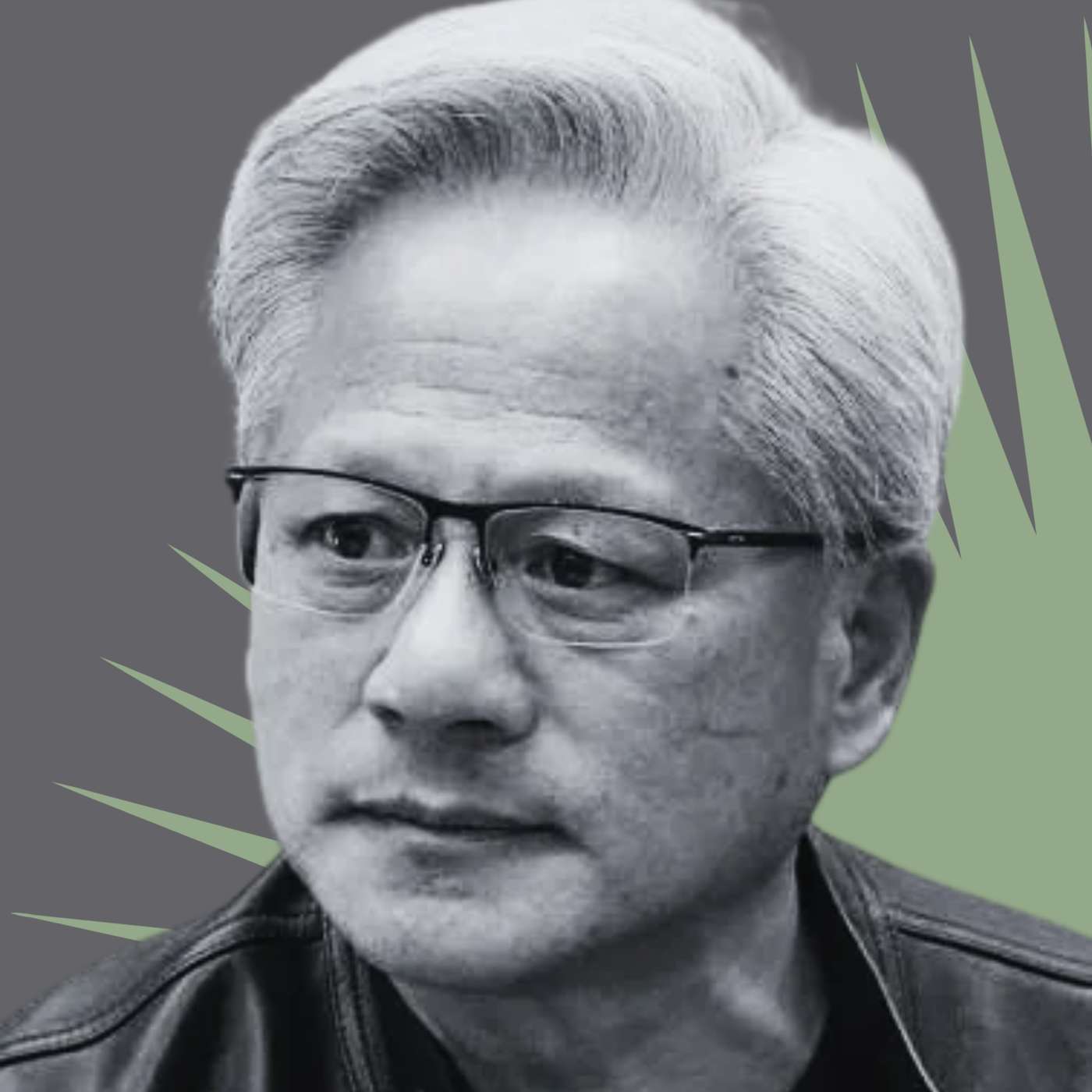


“If I were sitting in Beijing watching all this, I’d be reaching for the popcorn.” — Cagan Koc
INTRO
What a scandal-packed week. On Thursday, Jensen Huang resigned as Nvidia’s CEO after confessing to an affair with Alice Huang, a Megaspeed executive whom US officials suspect of working for Chinese intelligence. Treasury Secretary Scott Bessent has already thrown Commerce Secretary Howard Lutnick under the bus. Trump, as always, blames everyone except himself. And the Wall Street Journal’s Peggy Noonan calls it’s a “potentially Teapot Dome-size, Watergate-size” scandal.
Noonan may well be right. Yesterday’s New York Times reports that Lutnick pushed to loosen chip rules while Cantor Fitzgerald, the firm his sons now run, helped finance Asian data centers that stood to benefit. Then there’s the potential scandal of Nvidia’s own numbers. In the quarter to July 2025, it billed $10.2 billion in Singapore, 22% of its revenue. The next quarter, Singapore — home of Alice Huang’s Megaspeed — vanished as a separate revenue category. Oops.
Meanwhile, tone-deaf Silicon Valley is lobbying for Huang’s return as Nvidia CEO. And people around here wonder why America now hates big tech.
My guests, the Europe-based Bloomberg veterans Cagan Koc and Diederik Baazil, have been reporting on the global chip business for years. Their upcoming book, The Machine and the Microchip, is about ASML, the Dutch company that makes the only machines capable of printing the world’s most advanced chips.
“Most engineers we interviewed kind of like to joke that it’s not rocket science what they do,” Koc says of ASML’s machines. “It’s much more complicated than that.”
Cagan Koc and Diederik Baazil will return to the show in early January when The Machine and the Microchip is published. But I wanted to get them on today to get their take on this brewing crisis. Especially since the Amsterdam-based Koc and the Brussels-based Baazil also provide a European take on the scandal.
So who, beyond Jensen Huang, is going to take the fall? Throw Lutnick under the bus, I suggested. Koc isn’t convinced. The moment Trump makes Lutnick the villain, he says, he makes the scandal bigger. Meanwhile, in Beijing, they’re reaching for the popcorn. Although, Koc warns, the fallout could hurt China too.
One thing that both Watergate and Teapot Dome teach us is the law of unintended consequences. A sex scandal may have triggered the story, but that’s not how it will play out. All the President’s Chips? Huangpot Dome? Stay tuned. Like you, I have absolutely no idea how this will end.
FURTHER READING
• The Machine and the Microchip: Inside the Secret War for Global High-Tech Supremacy (MIT Press, January 2027), by Cagan Koc and Diederik Baazil.
• “Jensen Huang Is a White House Scandal”, by Peggy Noonan, Wall Street Journal, November 2026.
• Breakneck: China’s Quest to Engineer the Future (W. W. Norton, 2025), by Dan Wang.
• KEEN ON AMERICA episodes cited: Stephen Witt on the rise of Nvidia and Jensen Huang, Keith Teare on Jensen Huang for president, Kishore Mahbubani on whether China has won, and Aman Verjee on the history of financial bubbles.
ABOUT THE GUESTS
Cagan Koc is an investigative journalist who writes about technology, geopolitics and global business. He spent more than nine years at Bloomberg News and was its Netherlands bureau chief until 2025. Diederik Baazil, based in Brussels, was Bloomberg’s political correspondent in The Hague and Japan correspondent for De Groene Amsterdammer and Het Financieele Dagblad. Their book The Machine and the Microchip is published in the US by MIT Press in January 2027.
ABOUT KEEN ON AMERICA
Nobody asks more awkward questions than the Anglo-American writer and filmmaker Andrew Keen. With 3,000 episodes since the show launched on TechCrunch in 2010, Keen On America is a daily conversation about the ideas, books and arguments shaping the United States. New episodes every day.
LIVE IN SAN FRANCISCO: How to See America. Who Stole America’s Pride? Arlie Russell Hochschild in conversation with Andrew Keen, Manny’s, December 8. Tickets: https://www.eventbrite.com/e/how-to-see-america-who-stole-americas-pride-tickets-2003996604791
00:00:31 Andrew Keen: Hello, everybody. It's Sunday, 11/15/2026. Anything but a slow news day, slow weekend. Of course, everyone's obsessed. Where I'm talking from at least in San Francisco and California in the middle of the day about the current NVIDIA situation. I thought that, Peggy Noonan of the Wall Street Journal wrote a really brilliant op ed couple of days ago on November 12, which was headlined Jensen Huang is a White House scandal. She noted that it's potentially Teapot Dome-sized, Watergate-sized kind of scandal covering all sorts of things, including, of course, the Trump administration. Today, The Wall Street Journal leads with a piece about how Jensen Huang built the backdoor route that keeps Beijing in the AI race. If that's true, it's a remarkable story, maybe a treasonous story. Meanwhile, the New York Times leads with stories about Howard Lutnick, the, Trump commerce secretary, pushing to weaken chip rules that overlap with his own family business. More potential treason there. The Times also talks about Jensen carrying a secret for more than a year. It led to his downfall, maybe not just his downfall, the downfall of his company, potentially even the Trump administration. Meanwhile, there's the China angle, of course. New York Times reports that, Megaspeed, the Singapore company that Alice Huang was associated with left the company apparently in August 2025. I'm not sure I believe what Megaspeed is telling us. Anyway, it's all remarkable. A lot of moving parts, and I'm thrilled that we have a couple of guys who are experts in this field. Cagan Koc and Diederik Baazil are Dutch and Belgium based journalists. They were with, Bloomberg. They know this stuff inside out. They have a really interesting new book coming out called The Machine and the Microchip, a book about ASML, which will be coming out in January. I wanna get them back on the show, in early January to talk about that book, but I thought we'd have a remarkable opportunity to talk to two guys in the know. Diederik, let's start with you. What do you make— I'm not sure if you saw the Peggy Noonan piece, but what do you make of this idea that it might be a Teapot Dome, Watergate-sized scandal?
00:03:17 Diederik Baazil: Yeah. It's a bit early to say, but I think it's definitely a White House scandal, that is wider than just, Jensen Huang making a wrong judgment. But I think some people in the White House also have made some wrong judgments, and I think Howard Lutnick is probably one of them, as has been reported that he was in the know of this affair and that he, has been advocating for, yeah, more lenient, chip controls for a— For NVIDIA. And that's, exactly why it's being criticized at the moment. So, yeah, I understand the wider take there.
00:03:59 Andrew Keen: Cagan, as I said, the Journal's running today with a story about how Jensen built the backdoor route that keeps Beijing in the AI race. I mean, if he did do that, I'm assuming that it's treasonous because certainly against the law arming supposedly America's deadliest enemy with AI, the key technology of the future. What do you make of all this? Is it— Again, repeating my question to your colleague Diederik. Is it potentially a Teapot Dome, Watergate-size scandal? And does it incorporate not just Lutnick and Trump, but also potentially, Huang himself?
00:04:41 Cagan Koc: Yeah. So Watergate, wasn't simply about the scandal. It was, I think, about the abuse of political power, the attempts of concealing wrongdoing. I think here the distinction is that, yeah, like Jensen Huang's personal, scandal is obviously sensational. But what interests me much more is the relationship between one of the world's most powerful, technology executives and the White House. And I think the backdoor route to Beijing is actually one of the most revealing aspects of the story because Washington has spent years trying to kind of stop China from getting access to America's most advanced AI chips. But the semiconductor industry is global, and it's incredibly difficult to control every, kind of route through which technology reaches its final, customer. And, take Singapore, for example, a company can purchase NVIDIA chips, install them in data centers outside China, and potentially give Chinese customers access to that computing power even remotely. So the real question isn't, I think, simply whether Washington can close one backdoor to Beijing. It's whether America can maintain its technological advance, advantage, without encouraging China to build an entirely separate system that America can no longer influence.
00:06:24 Andrew Keen: Diederik, let's go back to Megaspeed. As I said, the Times reports that Megaspeed says Alice Huang, who have supposedly the, quote, unquote, Chinese spy, although a lot of people are arguing whether the word spy is appropriate, left the company in August 2025. Is the core of this story that Megaspeed was laundering NVIDIA chips and supplying China? Is that really what all this is about?
00:06:56 Diederik Baazil: It's a part of the story, but it's known already that companies like Megaspeed have been laundering whether it's the actual chips, by just buying the NVIDIA chips and sending them onwards to China or what Cagan mentioned that you host Chinese companies on your advanced, clouds. So that is known that is happening, and the Trump administration to a certain extent accepted that is happening and that it will allow it because they want China to be dependent on NVIDIA chips as much as possible. But what it makes it more interesting here is that Megaspeed was a fairly new company and all of a sudden was able to purchase great amounts of the best, NVIDIA chips. And as you can imagine, a lot of companies want to buy those same chips, and a lot of companies don't succeed in getting them soon, in their factories. And for some reason, this company was able to get loads of them, and, they became one of, NVIDIA's biggest clients in the region in just a few years. And that makes it suspicious if you see there's a personal relationship and you— And if it's, there's a risk that it's actually going to China that this company has managed in such a short time to become so important to NVIDIA. That's what makes it the story, I think.
00:08:25 Andrew Keen: Yeah. And, Cagan, again, as an ass, as someone who does— Doesn't follow this stuff with any care at all, I mean, all of this stuff's entirely new to me, including Megaspeed. I never heard of the company before. It all sounds or reads so blatant, so obvious. I mean, things are always obvious. Crimes are always obvious after the event. But is there something almost absurdly flagrant about this, that Jensen Huang was supplying Megaspeed and maybe other middle market or, companies to supply China? I mean, the fact that he was involved in a sexual relationship with one of the Mega— Megaseed [as spoken: Megaspeed], I don't wanna make any vulgar jokes about Megaseed, Megaspeed executives is really, to me, is the least interesting part of the whole thing.
00:09:20 Cagan Koc: Yeah. I think that's a great question. Like, how could some— Somebody, or how could something potentially take place and have been happening right under Washington's nose? I think we should be asking that question. What I also find fascinating is the possibility, of a much more uncomfortable explanation. Maybe the incentives were so enormous that nobody was particularly eager to ask the difficult questions. And I think, that's, something to do with American capitalism. Right?
00:10:00 Andrew Keen: Oh, wow. But— Yeah. But doesn't that actually explain this— The fact that—
00:10:08 Diederik Baazil: Yeah.
00:10:09 Andrew Keen: The Trump administration is telling two stories simultaneously. On the one hand, you have Bessent telling, a story, and Rubio telling the story that they warned about Alice. And on the other hand, you had Lutnick claiming that he was gonna do about— Do something about it, but he didn't maybe because he had his own business interest, maybe because Trump has his own business interest. So Bessent is in a— In an odd way. Isn't he the smoking gun or Rubio?
00:10:38 Diederik Baazil: Maybe to add a little bit of background, I think at the end of Biden's administration, they implemented this regime that's called the chip regime [ed.: the AI Diffusion Rule, issued in January 2025 and rescinded by the Trump administration in May 2025], and it divided the world into three categories, high risk, low risk, and close partners, basically. And that was intended to make sure that smuggling of these chips would be prohibited. And it was, like, one of the big policies that Biden and Jake Sullivan, his security adviser, were pushing through at the end of their term. And then Trump took over, Lutnick took over, and quite soon in their term, they decided to straightaway kill this chip regime despite the fact that smuggling would continue, and there was, like, ample evidence also in newspapers that smuggling via companies like Megaspeed was taking place. So I think to a certain extent, it was a conscious risk they took or decision that, like, we find it more important in— That NVIDIA is successful, is able to export its chips than to prohibit smuggling. And in the midst of that all, as I understand, Lutnick's— What is it? Children have invested in Megaspeed-like companies?
00:11:52 Andrew Keen: Yeah. Yeah. I mean, Lutnick's kids are even— I mean, they're they are, you know, they make Lutnick look honest, which is quite an achievement.
00:12:03 Diederik Baazil: I think I'm not familiar with kids.
00:12:05 Andrew Keen: Yeah. So And they also— Yeah. I mean, it's just it's an astonishing story. Meanwhile, I mean, presumably, from an NVIDIA point of view, for all whatever Jensen Huang might say about being proud to be an American and all the rest of it, this is in— This was in NVIDIA's interest because it expanded their business and wasn't one of the smoking guns, maybe not quite as obvious as some of the others, that, in the last few months, NVIDIA has been, shall we say, re-editing their numbers. So it's not entirely clear where Singapore sales, for example, were coming from.
00:12:51 Diederik Baazil: Yeah.
00:12:51 Cagan Koc: I— Yeah. I think that's definitely one of the most, uncomfortable, questions for NVIDIA.
00:12:58 Diederik Baazil: And same happened with Malaysia, by the way. That also— Like, sales in Malaysia also, I think, tripled in a few years on the season [unclear].
00:13:06 Cagan Koc: And in July 2025, I think NVIDIA reported, what, $10.2 billion in Singapore billed revenue. That was, like, 22% of its total quarterly sales. In the following quarter, like, Singapore disappeared as a separate category. I think, yeah, NVIDIA has some serious, explanations.
00:13:27 Andrew Keen: I mean, to put it— I mean, it's not just serious explanations, Cagan. I mean, from the way I understand it, I mean, this is just a giant. I mean, it's— As Peggy Noonan says, this is Watergate-size, Teapot Dome-size. I mean, every scandal is different from Watergate, different from Teapot Dome. But the fact that NVIDIA was dressing up its numbers so it wasn't clear Yeah. Is, again, I mean, there— There's evidence of them, but then the administration was turning the other eye as well. So it claims that it wasn't aware—
00:14:02 Diederik Baazil: Or invested.
00:14:03 Andrew Keen: When it must have been when certainly, Rubio and Bessent in particular knew exactly what was happening.
00:14:11 Cagan Koc: One thing you mentioned was, the two different, stories coming out of the same Trump administration. I think that is particularly fascinating, and that's something that we've also, kind of, encountered while reporting for our book. Well, as we all know that, Huang had cultivated really good relations, with, Lutnick and Trump. So the obvious question is, was the administration genuinely trying to stop these chips reaching China, or were there some people, more interested in protecting NVIDIA's business?
00:14:55 Andrew Keen: And, What do you think? You're the expert.
00:14:58 Cagan Koc: I think sometimes those two ambitions collide. Right? That's exactly what we discovered while reporting our book. Right? Semiconductor policy isn't simply a battle between Washington and Beijing. It's also a battle inside Washington, right, between sometimes national security officials, commercial interests, and kind of powerful corporate executives. And this, like, this similar stuff had happened, during the Biden administration, but not to this extent.
00:15:28 Diederik Baazil: Yeah. And there— And there's never ending debate, on whether export controls actually help or make it worse. And the debate is basically, the argument, Jensen Huang was making. We should sell those chips to China because then they are relying on our supply, and they won't make their own alternative, and they will always rely on The US. Good news.
00:15:52 Andrew Keen: But he would say that, wouldn't he? Because he's selling them.
00:15:54 Diederik Baazil: Of course. Of course. And ASML is saying the same, but it makes sense that he says it, but that's one side of the argument. And the other side of the argument is, if you don't sell it, they have an extra incentive to come up with their own alternative, and that's an argument also people are making. And, yeah, that— That's a never ending debate. And with every news cycle, the debate comes back, and no one really knows what is the best way forward. We know for a fact that the fact that for a book we covered at ASML's most advanced machine, extreme ultraviolet, never ended up in China. That's had— That had major effects on China because it's simply such a difficult machine to make. But it depends on the technology, depends on the product whether, you know, what type of debate you follow.
00:16:48 Andrew Keen: Yeah. And to be— Let's be clear here. Your book is on ASML. There was a headline today that NVIDIA's spy scandal is becoming a headache for ASML too. This is, your book's already out in Holland. Surprise. Surprise. They got it first. Your book is about a— ASML who are based, in The Netherlands in Veldhoven. As I said, I wanna do a whole show on your book. It's a really interesting book, The Machine and the Microchip, at the beginning of January when it comes out in The US. But just explain what ASML is and how it fits in this stack, I guess, of technologies. It's not a chip company, is it?
00:17:34 Cagan Koc: ASML is probably the most important technology company most people have never heard of. It's a Dutch company based in, a sleepy town called Veldhoven, near Eindhoven. And it makes, the extraordinarily kind of sophisticated machines that are used to manufacture the world's most advanced microchips. So without, ASML, NVIDIA doesn't exist. Right? NVIDIA relies on, ASML's machines to make its chips. Without ASML, no advanced, chips exist. And there is no other company in the world that can make the machines that ASML makes. The US has tried it for decades. They couldn't. China has been trying for decades. Basically, ASML is unrivaled. And, the simplest way to understand it is NVIDIA designs the chips that power artificial intelligence. Taiwan's TSMC manufactures those chips, but TSMC needs ASML to make them. So that's the kind of cycle.
00:18:45 Andrew Keen: So it's ASML to TSMC to NVIDIA, essentially.
00:18:50 Cagan Koc: Yeah. Exactly. And these machines use an extraordinary technology called extreme ultraviolet lithography. And most, engineers, we interviewed, kind of like to joke that it's not rocket science what they do. It's much more complicated than that.
00:19:10 Andrew Keen: I can imagine.
00:19:11 Cagan Koc: And these machines cost like, the most advanced ones cost $400 million a piece. The world's most expensive machine. It takes, seven Boeing 747s to, transport one machine. These are possibly, the most complicated machines ever created by humans.
00:19:37 Andrew Keen: Just to remind us, I've been to Eindhoven lots of times, sometimes to visit Philips. So Philips is a company much associated with Eindhoven. I'm assuming that, ASML owns Veldhoven. Was this a start up? When was the company founded? Who funded it, and why is it such, as you say, so unknown given its importance?
00:20:01 Diederik Baazil: No. Actually, it's— It came out of ASML. It— Out of, Philips. Sorry.
00:20:06 Andrew Keen: Okay.
00:20:06 Diederik Baazil: It was a department within Philips. And they— It was promising, but it needed a lot of funding. So they put it, separate, basically, in 1984.
00:20:19 Andrew Keen: So that makes sense. Yeah.
00:20:20 Diederik Baazil: Yeah. So it came out of Philips, and Philips had stakes in the company till when, Cagan? Do we know? Somewhere end of the nineties or something like that?
00:20:30 Cagan Koc: Yeah. 1997. [ed.: Philips cut its ASML stake below 10% in 2000 and sold its last shares in 2004.] So I don't know. I have to—
00:20:35 Diederik Baazil: And then they sold it. Worst decision ever. And, the rest of this— And, actually, Philips also had stakes in the— In TSMC once upon a time. They were, like, a founder investor in TSMC. So if Philips held all its stakes in ASML—
00:20:53 Andrew Keen: Yahoo that passed on, buying Google for—
00:20:57 Diederik Baazil: Yeah. Story like that.
00:20:58 Andrew Keen: Billion dollars or whatever that story was. Yeah. Astonishing. I hope they don't have— I'm assuming that the ASML CEO is male. I hope he doesn't like the ladies as much as Jensen, does he?
00:21:12 Diederik Baazil: No. He's a French male, actually. Now he, as far as we know, he is happily married.
00:21:21 Andrew Keen: Yeah. Well, if you don't— If you're not gonna break that story, no one will. There's another interesting story about why, The Netherlands must hold the line on ASML. How is this impacting in Europe, this scandal, not just in the context of ASML, but the way in which the whole thing is being reported, you're both Bloomberg guys or former Bloomberg guys. You both do a lot of reporting. Is this being seen as a massive scandal yet or just another sex scandal?
00:21:58 Cagan Koc: I think, this is potentially a gift to Europe's argument. Yeah. That's, America cannot be trusted to set all the rules of the technology war. A lot of the Dutch and EU and also even, like, Asian, politicians we've spoken with, for the book, and these are very senior politicians. They said that they felt like they've been bullied by The US for some of the measures against China. And, yeah, for years, Washington has been telling the Dutch government, right, that they must stop ASML selling, their most advanced machines to China. And in fact, the extreme ultraviolet machines, has— Have never been sold to China. Not even a single machine, was shipped to China because of US export controls. And, ASML went to remarkable lengths to accommodate Washington. Right? In— At one point, we report in the book that, it even offered to act as, America's eyes and ears in China, although ASML denies this. So, imagine—
00:23:15 Andrew Keen: In other words, the spy, they could have been, Alice Huang's, the equivalent of Alice Huang for the US government. Right?
00:23:24 Cagan Koc: He said that.
00:23:25 Diederik Baazil: You don't use them.
00:23:26 Andrew Keen: I said it.
00:23:26 Cagan Koc: And—
00:23:27 Diederik Baazil: Yeah. You can use them.
00:23:28 Andrew Keen: Can't say anything like that, but I can.
00:23:30 Cagan Koc: Yeah. Yeah. Yeah. But imagine being a Dutch minister watching this unfold, I think.
00:23:35 Diederik Baazil: Yeah.
00:23:36 Andrew Keen: But from, ASML's point of view, I mean, what does this actually mean for daily business? Is this having any impact? Yeah?
00:23:45 Diederik Baazil: Personally, I think it will have bad impact on ASML because we see that the talk in Washington now is that they want stronger export controls. And there was already a— An act on the table, the MATCH Act, it's called, that has to limit, ASML's export to China even further because there are quite advanced machines of ASML in China already, and they need servicing to function. And they want to basically stop that, this new act. And The Netherlands has been lobbying against it. But now with this renewed push, from Washington to— For stricter export controls, I think is getting increasingly difficult to stop this from happening, and that will— That really hurt China, but it will also hurt, China, ASML's revenue in China, which is still quite, I think in the last quarter, it's— Was about 20%. So it's still quite large.
00:24:43 Andrew Keen: Cagan, given the nature of Chinese state capitalism, one of you suggested that ASML's technology is beyond rocket science. But do the Chinese have the resources— Presumably, they have the capital, but the resources and the knowledge to actually replicate ASML in China?
00:25:08 Cagan Koc: I think, this question is a million dollar question.
00:25:12 Andrew Keen: It's a trillion. It's a multitrillion dollar question.
00:25:15 Cagan Koc: Billion dollar— Billions of dollars. I mean, it's, so let me put it this way. If we ask this question repeatedly to ASML executives, and they keep saying China is at least fifteen to twenty years behind ASML. But, Andrew, if there's one country on earth with the money, the patience, and the political determination to replicate ASML, it's China.
00:25:43 Andrew Keen: And the closed system, which doesn't make them accountable so they can do whatever they like, essentially. Indeed. Indeed.
00:25:50 Diederik Baazil: Yeah. And we also— One whole chapter is in our book is about, as big— Also as Chinese spy case, at ASML, where we got access to core documents, which were, not public. And thanks that we have great details in how those Chinese spies went about at the ASML location in The US. And, like, long story short, they basically— They just stole the source code of a certain software tool, started a company in The US. ASML sued that company, and, the company went bankrupt straight away. But now the company is very successful in China because they also found a company there, and they used the stolen software in China. And it's getting all the support, it needs from The US— From the Chinese government, and it's even considering an IPO at the moment. So all— China is also really targeting not only NVIDIA, but definitely also ASML, to get it, yeah, through different ways. And because winning— I think they care more about getting replacement for ASML's machine than for NVIDIA's chips.
00:27:06 Andrew Keen: Cagan, as I said, some people have accused Alice Huang of being a spy. I don't know what that word really means. But I'm guessing that there are entire bureaucracies, organizations, cities maybe even in China dedicated to this kind of industrial espionage. Is that fair?
00:27:29 Cagan Koc: I mean, I might still travel to China. So Okay. Well Maybe it's— But, there's a— I mean, potentially, yes. But there's also—
00:27:41 Andrew Keen: the I mean, to put it— Let me rephrase the question so that you can go to China. I mean, the Chinese are pretty— They're organized about everything. Of course, Dan Wang wrote his famous book about China [ed.: Breakneck] China as an engineering state. When it comes to all this, they are engineers first and foremost.
00:28:02 Diederik Baazil: Indeed. Yeah. Yeah. And they are engineers. They're great engineers. And the whole story that they only can replicate what the West made is— Like, it's not true. We know that by now, like, on many technologies, they are way ahead of us. And, chip machines is one of the few technologies they're actually still trailing. Personally, I think if they would have ASML's best machine, if they would have access to it, they could make chips similar to NVIDIA's chips. That's my own estimation, but they are currently able to use older generation chip machines of ASML in such a perfect way and in a such a smartly designed way that they are able to stretch the limits of those chips. And if you use the expertise on the best machine, then I think it's likely that they will be on par with NVIDIA. And so, yeah, they're very capable.
00:28:59 Andrew Keen: Well, yeah, on par with NVIDIA, but ASML and NVIDIA don't compete. They're partners. Right?
00:29:05 Diederik Baazil: No. I mean, China. If China would have ASML's best machine.
00:29:08 Andrew Keen: Oh, I see. I see what you're saying, sir. So, really, NVIDIA relies on ASML. Cagan, you made a point or one of you made the point earlier that, ASML claims to be fifteen or twenty years ahead of any— Anything in China. Of course, it's always fifteen or twenty years until it isn't. But— And one of you have been talking about something called a chip machine. It's obviously much more sophisticated than that. But is it— ASML, are they moving forward too? So even if China was to catch up with the ASML of this, of November 2026, ASML would always be ahead? Or is this idea of a chip machine a kind of, a terminal— An end of story, and once you get there, you're done?
00:30:00 Cagan Koc: That's, exactly what ASML CFO said two years ago. Like, those lines, I think. Even if, you know, they come close to us, we're coming up with, like, much more advanced, kind of machines. But I wanna tell, one story from a book, which I think perfectly captures this—
00:30:23 Andrew Keen: Alright. This is from The Machine and the Microchip book, the book that's gonna be out in January.
00:30:28 Cagan Koc: Yeah. Yeah. So for, its fortieth anniversary, ASML produced this special Lego model of one of its, incredibly sophisticated latest chipmaking machines that China is not allowed to buy because of US exports.
00:30:46 Andrew Keen: A Lego model. Like, the kids'—
00:30:48 Cagan Koc: A Lego model. Right. And this is such a, like, kind of a nerdy, like, cool thing that everyone in the public wanted to buy it. Like, all these, chip nerds and, engineers wanted to buy it, but ASML said no. I'm only selling this to my employees. So you couldn't even buy it, like, from its, gift store unless you had an ASML employee badge. And, I was like, okay. This is really annoying. So I, asked one of my ASML sources to, send me a Lego set, And he did. And I was like, great. So then we were, like, curious. We did. We were like, do you think the Chinese somehow, like, got their hands on this Lego? Like, they can't buy the actual machine. So we went on, like, Amazon, all these western, marketplaces. It didn't exist anywhere, but we found it on Taobao. This exact, like, Lego set.
00:31:50 Diederik Baazil: Mhmm.
00:31:51 Cagan Koc: And I asked a friend in Mainland China to buy it. And then, he sent it to another friend in Hong Kong who sent it to me in The Netherlands. And, when I got the real thing, I compared it against the one I got from my ASML source, and it was the same thing. So then we picked up the phone and, like, called the Chinese supplier. Like, how did you get your hands on this? And they were like, oh, like, we got the blueprints from ASML. I called ASML. ASML was like, no. We didn't, like, provide the blueprints to anyone. This is, like, off limits. So this is, like, kind of a very good example of, like, China going out of its way to, get their hands on this machine. Like, if you can't get your hands on the actual machine, perhaps you start with the Lego version, work your way up. But, China, as you said, is extraordinarily good at, like, mobilizing resources. Right? Like, after the incident, Diederik talked about, there was another Chinese employee who stole lots and lots of data and, left ASML and went to work for Huawei. So this coupled with the fact that Beijing is pouring enormous amounts of money into trying to develop its own chip making equipment. I mean, yeah, I wouldn't be so sure. And the same thing happened with the solar, industry. Right? In the nineties, early two thousands, the West said, like, China can never come close to the solar industry.
00:33:27 Diederik Baazil: It's less common [unclear].
00:33:27 Cagan Koc: Of course. It's definitely. But then the same thing happened with the automakers. Right? Like, right now Yeah. China is the indisputable leader, in EV production. So never say never.
00:33:42 Andrew Keen: Diederik, you're based in Brussels. You're talking to us from there. I'm in San Francisco on the edge of Silicon Valley. The lead story in the FT today is that Jensen Huang apparently is discussing a comeback as NVIDIA CEO with allies. Apparently, everybody loves Jensen. Maybe some people love him a bit too much or he loves others a bit too much, it would seem. I wonder whether, though, all this is slightly absurd, whether Silicon Valley quite understands. I mean, all the traditional tech people in Silicon Valley are rallying around Jensen saying he's key to the company. But from your perch in Brussels, of course, which looks at Silicon Valley rather differently, certainly, from how we do in San Francisco, is there a degree of myopia here, absurdity about Silicon Valley not quite getting the scale of this crisis, or is it just another crisis you think that might just blow over one more? Every time something like this— Not we've ever had anything like this before. But every time you get a big crisis, people always say, oh, this is the last time. This is the final one, and then maybe it will just go away and be replaced by something else. But Yeah. It just seems as if in Silicon Valley itself, the fact that he supposedly must have planted this story in the FT, very credible newspaper, He's already discussing a comeback. Sounds utterly absurd.
00:35:08 Diederik Baazil: Yeah. I think the fact that this seems probable or possible in Silicon Valley is because he— Jensen is so central to this, hey, this whole AI boom we're in at the moment. I think he's been the main cheerleader that, like, there won't be a crash and AI won't kill us. And everything will be okay, and we will make lots of money and in Kumbaya, basically. And the same time, he's been investing in companies, in cloud companies, but also in ChatGPT and in Anthropic, and he's sending around all his money for those companies to buy his chips and build mega data centers. So people who are in that business want this bubble to continue, basically. They need this central pillar to the Kumbaya atmosphere. And if he— If this pillar crashes, then I think the risk that the bubble might burst is gonna increase. And if you're so convinced that it's all about AI and AI is the future and nothing can go around, then, yeah, then Jensen is the best guy in the world. Right? So what— Be sure he made a small mistake, they might think, but he is the guy to bring us forward, and he has the vision. So I think that's the reasoning they are in. And in Brussels, yeah, it all looks a bit odd. Strange things also happen in Brussels, and that's, with scandalous relationships, and let's be honest. But in Brussels, the talk of town is tech sovereignty and how to become less dependent on these American tech companies.
00:36:51 Andrew Keen: Yeah. And that can only be strengthening that argument. And, again, the way you're telling it is ironic. If much of this is true, it's almost as if given that NVIDIA is driving the American AI boom, it's being financed by China because of NVIDIA's AI sales to China via Singapore. So there are so many layers of irony here.
00:37:15 Diederik Baazil: Yeah. I think the majority of its profit of NVIDIA isn't from China. But, yeah, to a certain extent, I get your argument.
00:37:24 Andrew Keen: Cagan, you talked about Lego. Is the current AI economy a bit of a— Maybe not a Lego set, but a house of cards? And if indeed this does result in some major economic crisis in NVIDIA, if they're leaderless and maybe they're sanctioned one way or the other. Could this bring the whole thing down, crashing to the ground?
00:37:47 Cagan Koc: Are you, in other words, asking if, we're in a bubble?
00:37:52 Andrew Keen: Yeah. Exactly. Well, I'm more than a bubble.
00:37:55 Diederik Baazil: Yeah.
00:37:55 Andrew Keen: If the bubble could be bursting.
00:37:58 Cagan Koc: Well, I think parts of the sector, I think we're absolutely in an AI bubble in some sectors, like in some pockets. But, a bubble doesn't mean the technology is fake. Right?
00:38:13 Diederik Baazil: Yeah.
00:38:14 Cagan Koc: The Internet bubble was real. The Internet changed the world, but that didn't stop investors from losing extraordinary amounts of money in companies that never made a profit. And I think, we're seeing something very similar with AI. Right? The circular economy that's developing NVIDIA sells chips to big technology companies. Those companies spend hundreds of billions of dollars building data centers. They invest in AI startups, which then kind of spend enormous sums buying computing power from the same technology companies. So money is, like, kind of going round and round the system, and everybody's booking revenue.
00:38:55 Andrew Keen: Swishing around or swinging around. Like—
00:38:57 Cagan Koc: Where is the ultimate customer? Who's going to pay enough to justify all this investment?
00:39:01 Diederik Baazil: Yeah. And there's— Well, there's still discussion within AI specialists or whatever we should call them. If you need this massive amount of compute, so compute this data center, basically. If you need this amount of compute to actually have sophisticated AI. We have seen the DeepSeek shock from China, which was China's AI model that was able to function on less compute. And, like, the debate is still out if you need this amount of data centers to actually, yeah, reach the AI you wanted.
00:39:38 Andrew Keen: Yeah. I mean, the Chinese must be— I mean, I assume you— I know, Cagan, you joked about wanting to go back to China. I'm assuming that from Beijing, this is a very entertaining and amusing story. You're nodding your head. You're not sure.
00:39:59 Cagan Koc: Yeah. I mean, if I were sitting in Beijing watching all this, I'd be reaching for the popcorn.
00:40:07 Andrew Keen: Yeah. Exactly. Well, I'm reaching for the popcorn. I'm in—
00:40:10 Diederik Baazil: I also—
00:40:11 Andrew Keen: Here in San Francisco.
00:40:12 Diederik Baazil: I spoke to some people in Brussels that also are saying that, for example, ChatGPT and Anthropic and all those companies, they seem like a massive asset to The US, but they can turn out to become, yeah, an issue for the administration because of this whole, yeah, bubble atmosphere they have created. And that could totally turn the tables. We don't know exactly if that will happen. But—
00:40:36 Andrew Keen: Yeah. We got the Anthropic IPO next week that's rumored to be about a $1.5 trillion IPO. So you couldn't make this stuff up. You couldn't write it better if you were a Hollywood script writer.
00:40:50 Diederik Baazil: Yeah. I already got three emails if I want to invest in this IPO. So I think they're very keen on their marketing, because they might be a bit scared as well that this is not the right context to do your IPO in.
00:41:05 Cagan Koc: There's also one other twist worth kind of adding to your previous question, that came to my mind. Yeah. Beijing may be enjoying, right, like, this whole embarrassment, but it shouldn't necessarily kind of celebrate the consequences. Because Huang was indeed one of the strongest voices arguing that America should keep selling, chips to China.
00:41:27 Andrew Keen: Yeah.
00:41:27 Cagan Koc: And I think his departure is now fueling kind of bipartisan demands for tougher restrictions.
00:41:33 Diederik Baazil: And Yeah.
00:41:33 Cagan Koc: Chinese AI stocks have already reacted negatively.
00:41:38 Andrew Keen: Yeah. So, yeah. And they're sophisticated enough to understand that. Finally, you guys are tech and business reporters rather than political reporters. But one thing you could say about Donald Trump is he's always very good at getting out of crises and throwing other people under the bus. In your take, can they throw Lutnick under the bus here? And everybody blames Lutnick and say, oh, you know, he had business interests. He's gonna resign. Bessent can applaud. Rubio can applaud. Donald can— Trump can do his normal Donald Trump. So I don't know. I didn't see it. Or, you know, and, I'm disappointed in Lutnick, and he disappears, and then the show goes on. Is that conceivable in your mind?
00:42:25 Cagan Koc: I think the moment Trump makes Lutnick the villain, he also makes the scandal bigger. Because, I think— I mean, any good journalists, or congress will probably start asking who knew what who spoke to Jensen Huang and whether decisions were influenced by political relationships. And, you know.
00:42:49 Diederik Baazil: And also, Bessent, who seemed to throw, Lutnick under the bus by saying, that he was the one stopping Megaspeed from getting sanctioned, for, suspicious that it was smuggling chips. Bessent is also recently saying that he's not pro stricter, export controls on NVIDIA. So I think it's still more people within the administration that are still opposing stricter measures, which may say something that he isn't entirely lost yet.
00:43:24 Andrew Keen: Yeah. And, of course, this is all in the context not just of the imminent Anthropic IPO of next week, but the midterms and—
00:43:35 Diederik Baazil: change.
00:43:35 Andrew Keen: Yeah. I mean, the Democrats must be smacking their lips over this one as if they didn't have enough already to investigate.
00:43:44 Diederik Baazil: Yeah. Yeah. Maybe that's the plan to create just that many scandals that they are drowning in investigation.
00:43:49 Andrew Keen: I think this one— I mean, you know, we're always waiting for the big one, but I think Noonan may be right. I think this is the one as she says. This is the Teapot Dome-size, Watergate-size, crisis. We will see. Your, you guys have been very generous to come on a Sunday to talk. It's evening in, Amsterdam and Brussels where you're speaking from. Your new book, The Machine and the Microchip: Inside the Secret War for Global High-tech Supremacy is really a book about ASML and its place in all this. Cagan Koc and Diederik Baazil, will get you back on the show in the beginning of, January to talk specifically about this book, which is enormously important. And, hopefully, by then, it will be clear whether or not this is a real crisis or just one more drama in our perpetually dramatic news cycle. So, Cagan Koc and Diederik Baazil, real honor to have you on the show. Thank you so much, and we'll see you again in the new year.
00:44:50 Cagan Koc: Thank you very much, Andrew.
00:44:51 Diederik Baazil: Yeah. Thanks for having us.