A History of Cities in 32 Inventions: Jonn Elledge on the Ideas & Technologies That Built Our World
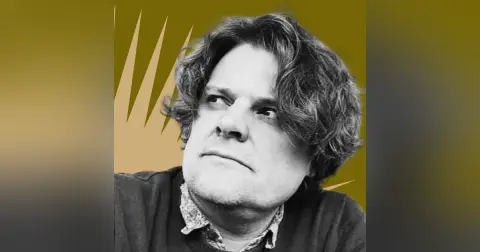



“It would be lovely to imagine that writing comes out of some instinct to compose works of great literature. It absolutely doesn’t. It’s a side effect of accountancy.” — Jonn Elledge
“Borders Are Back, Baby” we proclaimed last year to celebrate Jonn Elledge’s appearance on the show to talk about his 2025 work A Brief History of the World in 47 Borders. And now the prolific Elledge, currently residing in the bosom of London’s lower east side in Bethnal Green, is back to talk about his latest book A Brief History of Cities in 32 Inventions. In Blighty, by the way, it’s entitled 31 Inventions That Built Our World. America gets the extra (brief) invention. Not that we’re counting.
Elledge’s most prosaic invention isn’t exactly Archimedean. Writing was invented, he says, because somebody had to count the grain. Once ten thousand people live in one place you need not only a granary but a way of recording what’s in it. And of course, laws protecting grain owners from thieves.
Et voilà (rather than eureka!).
Thus came mathematics, literacy, politics, accountancy and eventually literature. So what we think of as civilization owes itself to urbane places like Bethnal Green. Without such hotspots, you wouldn’t be able to read this. No wonder some of our most glittering cultural figures — Mick Jagger, John Grisham, Robert Plant — studied accountancy. You can’t always count what you want. Not even a history of cities in 32 1/2 inventions.
FURTHER READING
• Jonn Elledge, A Brief History of Cities in 32 Inventions (The Experiment, 13 October 2026). The UK edition is 31 Inventions That Built Our World.
• The extra American chapter is on the Los Angeles streetcar conspiracy. The other cut chapters are free on his Substack.
• Elledge created and ran CityMetric at the New Statesman, and also wrote A Brief History of the World in 47 Borders and Conspiracy, with Tom Phillips.
• The theory he couldn’t name at 17:20 is urban scaling — Geoffrey West and Luis Bettencourt’s finding that productivity rises faster than population, building on Alfred Marshall on agglomeration.
FIVE TAKEAWAYS
1. Why Ideas Cluster
There is no technical reason a bank or a tech firm needs to sit next to its rivals — and yet they always do. Elledge puts it down to the sheer density of interactions: more people having more conversations, so more chances for ideas to collide. It is also why Britain worries that Manchester and Birmingham underperform Lyon and Munich.
2. Napoleon Moved at Caesar’s Speed
In 1800 armies crossed Europe no faster than they had two thousand years earlier. You could cover twenty miles a day, so politics happened at twenty miles a day. Nation states are not really possible until the railways of the 1830s. It is the Roman Empire, Elledge notes, not the Italian one.
3. Gilgamesh Already Knew
The oldest surviving work of literature, from Uruk four thousand years ago, already splits the world between the walled city — comfortable, advanced, faintly decadent — and the wild country beyond, which is more dangerous and more authentic. Brexit and the Rust Belt are running on the same fault line.
4. The Empty State Building
Two architects raced to build the tallest tower, each secretly adding height beyond the published plans. Both topped out in the autumn of 1929, exactly as America discovered it had too much office space. The Empire State Building stood half empty for years and acquired the nickname.
5. The Tube Has Warmed the Ground
Edwardian posters invited Londoners to cool off on the Bakerloo line on hot days. A century of trains in unventilated tunnels has since raised the temperature of the earth around them, and nobody is sure how to undo it.
ABOUT THE GUEST
Jonn Elledge is a British journalist and author. He created and ran CityMetric, the New Statesman’s urbanism site, and was an assistant editor there; he has written for the Financial Times, the Guardian and the i. His books include A Brief History of the World in 47 Borders, The Compendium of (Not Quite) Everything and, with Tom Phillips, Conspiracy. He writes The Newsletter of (Not Quite) Everything and lives in London.
ABOUT KEEN ON AMERICA
Nobody asks more awkward questions than the Anglo-American writer and filmmaker Andrew Keen. With 3,000 episodes since the show launched on TechCrunch in 2010, Keen On America is a daily conversation about the ideas, books and arguments shaping the United States. New episodes every day.
00:00 - Intro
00:31 - Borders are back, baby — and so is Jonn Elledge
01:41 - Why America gets an extra invention
02:56 - Are cities the epitome of modernity?
04:00 - Why “city” means something different in Britain
04:32 - Andy Burnham and Number 10 North
05:00 - Civilization has a city at its root
05:30 - The granary, the ledger, and everything after
06:30 - Rome’s Cloaca Maxima
07:31 - Arendt, Aristotle and the polis
08:16 - Napoleon moved at Caesar’s speed
09:26 - The Social War, and the city as political unit
10:30 - Metropolitan and provincial: Brexit and the Rust Belt
11:53 - Nostalgia, and which side it belongs to
12:34 - Gilgamesh and Enkidu already knew
13:50 - A town of 10,000 was once a great city
14:53 - Urban farming
15:01 - Why ideas cluster
16:56 - Agglomeration, and the theory he can’t name
17:20 - Why Manchester underperforms Lyon
18:25 - Did cities invent the past?
19:07 - Writing is a side effect of accountancy
20:11 - Capitals, railways and the national press
20:52 - Did America invent the modern city?
21:45 - The Home Insurance Building
22:38 - Steel frames, and why cathedrals had thick walls
23:30 - Otis, and why six stories was the limit
24:57 - Ego and the race to the sky
25:30 - Giza, cathedrals, France against Germany
26:00 - The Empty State Building
26:30 - Why the title moved to Asia and the Gulf
27:15 - Was 9/11 an attack on modernity?
28:29 - New York as the archetype
29:07 - A subway that hasn’t changed in fifty years
29:47 - Budapest first, London second
30:30 - The tube has warmed the ground around it
31:09 - Why London rebuilds and New York doesn’t
32:12 - Cars, culture, and when the city was built
33:53 - Why it is so hard to build anything
34:16 - Britain’s seven million missing homes
34:57 - Roger Rabbit and the LA streetcars
35:40 - Los Angeles as a new species of city
37:33 - LAX, and the case for the defense
38:00 - Atlanta, sprawl and density
38:30 - The streetcar conspiracy is only a little bit true
39:17 - San Francisco, rents and the AI boom
40:35 - A return to medieval inequality?
41:46 - Is AI the thirty-third invention?
43:48 - The smart city nobody could explain
44:16 - Sidewalk Labs in Toronto
44:57 - Closing
00:00:31 Andrew Keen: Hello, everybody. Last year in August, we did a show with the British writer, Jonn Elledge. Back then, he had a book out. It was called A Brief History of the World in 47 Borders, and we entitled our conversation Borders are Back, Baby. I'm not sure about borders, but Jonn Elledge is certainly back, baby, with a new book in the United States. It's called A Brief History of Cities in 32 Inventions. In the UK, its title is somewhat different: 31 Inventions that Built Our World. Jonn is joining us from the old world, from the old center of the old world, Bethnal Green in the old, East End of London. Jonn, congratulations on the book. Let's address this glaring difference between the UK and the US. In the US, the title is A Brief History of Cities in 32 Inventions, whereas in the UK, it's 31 Inventions that Built Our World. So what— why did the US get an extra invention?
00:01:41 Jonn Elledge: Well, in the US, everything has to be bigger, doesn't it? It's just that kind of a country. No. Like, so the book was originally announced with 35 chapters. And I wrote too many words, so we left a few of them on the cutting room floor. And they've all been— all except one, I think, have now been published on my Substack, and the last one will pop out at some point. But when I was talking to my US editor at The Experiment, I said, oh, by the way, one of the chapters that we cut is about the, LA streetcar conspiracy, which, those who've seen the brilliant film Who Framed Roger Rabbit will be very familiar with. It's kind of the twist there that the streetcars in LA are kinda closed down by the machinations of the evil motor industry. And it's a chapter about that and whether it's true or not. And spoilers, a little bit. Only a little bit. But because it was quite an American story, I said to my US editor, Nick, do you want it back in? And, yeah, so that's kind of— the American market gets an extra chapter, but I've spent the last month of my life explaining to my British readers that— what's missing and how they can read it for free on my newsletter.
00:02:56 Andrew Keen: Yeah. Well, hopefully, we've got both UK and US audience so you can get the book. And I'm sure if you're in the US, you can get the UK book and vice versa or if you're clever on Amazon. The other difference in the title, Jonn, is the US edition is A Brief History of Cities in 32 Inventions, whereas, the UK edition is 31 Inventions that Built Our World. This idea, and the subtitle of the US edition is The Ideas and Technologies That Made Modernity Possible. Are cities the epitome of modernity? Of course, they existed before modernity. I noted in some of my, rather brief research on the Internet that ancient Baghdad and Rome both had a million residents. I'm not sure what the toilet facilities were like in either city, but, cities existed before modernity. So what's the relationship between cities and modernity?
00:04:00 Jonn Elledge: Well, before unpacking that, I will explain the difference in the title was because there was some concern in the UK market. The word city has different implications here. I think possibly because Britain is so dominated by one big city, like London is so much bigger than any of its rivals, and is responsible for something insane like a quarter of our economy. And so I think a lot of people who would consider themselves not to live in cities, even if they were living in places of the same size in North America, probably would say they lived in cities.
00:04:32 Andrew Keen: Well, hasn't there been a prime minister who's changing all that?
00:04:35 Jonn Elledge: Well, I mean, he— he's trying to. I mean, he's not— Andy Burnham has, opened a government office, Number 10 North, in his home city of Manchester, which is a very fine city, by the way, which did a lot to invent modernity. But it was just about not sort of accidentally communicating to people that we would like to be reading the book in Britain that it— not suggesting it wasn't for them somehow. In terms of whether or not cities are modernity, I mean, the kind of central thesis of the book is that cities are, to some extent, the root of civilization. I mean, literally, the word civilization has the Latin root civis, which meant city. [ed.: civis means “citizen”; civitas, “city” or “citizenry.”] So— and there's a lot of words like that for— with both Greek and Latin roots like police or politeness or civility. [ed.: “polite” comes from Latin polire, “to polish,” not from polis.] All of these come from the words for city. To an extent, our sense of civilization is rooted in the urban world, and there are very good reasons for that, which is that once you have large numbers of people living in the same space, we don't need to be talking about a million here. We can be talking about 10,000 perhaps. You need to start considering a whole bunch of stuff like you need a granary to store food for them. Then you need, a way of kind of accounting for how much food there is in the granary. You need kind of a series of laws to make sure that people can't just take from the granary. From these things, you get, mathematics and therefore science. You get literacy and therefore literature, and you get politics and government. Everything we associate with, quote, unquote, civilization has its roots in the oldest cities of the ancient world, which required a completely different form of living and organization than our sort of hunter-gathering predecessors ever needed to think about. So that's kind of the central thesis of the book. It starts with the invention of cities and why we started living in an urban way in the first place five million— five millennia ago. But the invention of modernity is because so much of the book, quite frankly, is post-industrial revolution. Not all of it. Like, if you kind of look at sewers, which, get a chapter in the book, like, you know, Rome had the Cloaca Maxima, the great sewer. In the ancient world, there were kind of primitive sewage sys— networks because if you've got a million people living in a place, that's quite a lot of waste to get rid of. You need a way of doing that. But, nonetheless, so much of the kind of modern city and the kind of world around us as we experience it today is really a product of the industrial revolution, and technologies invented after about 1750, 1800. So the thesis of the book is that these things do have roots going back millennia, but much of it is really a relatively recent phenomenon. Like, you only have to go back seven or eight generations, and most of our ancestors would have been living in a radically different way to the way that we now completely take for granted.
00:07:31 Andrew Keen: Jonn, we did a show, a couple of weeks ago on the, German-American political theorist, Hannah Arendt, who popularized it, took Aristotle's notion of the polis and popularized it in a modern context, very much a theorist of democracy. You're not a political theorist, and I'm not sure how much of your work is really political. But in your analysis and in your Brief History of Cities in 32 Inventions, what's the role of democracy or self-rule, especially when it comes to, the legacy of antiquity and particularly of Greece and Athens?
00:08:16 Jonn Elledge: Well, I suppose going back to the ancient world, the city was the original unit of politics because that was— a large chunk of the book is about the evolution of transport technologies, and something that kind of haven't really hit home for me until I was researching it is the extent to which, like, in 1800, the world is smaller and slower. Or rather, it— because it's slower, it has to be smaller. So there's a quote, I can't remember who it's by, but Napoleon's armies basically move around Europe at the same speed that Julius Caesar's had nearly two thousand years before because transport technologies have not come on. One of the corollaries of that is you could probably only go about 20 miles in a day. Therefore, the units in which politics happened was much, much smaller. You couldn't have nation states in the way we understand them until, basically, the invention of the railways in the eighteen thirties and forties. So much of ancient history happens at the level of the city. And, you know, we— it's the Roman Empire, not the Italian Empire. Like, I've been recently been reading, no. Actually, this wasn't reading. This is episodes of The Rest Is History, in fact.
00:09:25 Andrew Keen: Mhmm.
00:09:26 Jonn Elledge: But about the Social War, as they call it, at the sort of turn of the first century BC, which was kind of a civil war within the nascent Roman Empire, even though it's still the republic at that point, between, the people of Rome proper, the actual city, and its territories in the rest of Italy because the people in the rest of Italy did not have Roman citizenship. And there was literally a civil war that had to be fought to kind of get them equal status. So, you know, the city was the original political unit. In modern times, that's obviously changed radically. Like, now the world is built on nation states, these kind of territory unit— territorial units that are much, much bigger than most political units in the ancient world, thanks to the arrival of things like the railway and the car. And that has kinda changed our attitude to the level of the geographical scale on which politics happens. But I do think one of the interesting phenomena that I have, thought a lot about in the past of my career that has been writing about politics in the last ten years or so is the kind of divide between, for want of a better way of putting it, metropolitan and provincial. So you kind of see this in politics in my own country where, after the Brexit referendum, when people were kind of, looking at who voted in which direction. And there's a huge swathe of the country that these kind of industrial towns that traditionally voted for the left-wing Labour Party, but nonetheless voted to leave the European Union in June 2016. That is an exact parallel with the kind of Rust Belt towns that four months later would be voting for Donald Trump despite having historically been blue-collar Democratic places. And I do think we are seeing across much of the developed world, there is this kind of new fault line in politics between, metropolitan, which tends to mean not necessarily just the capital, but the largest cities and also often university towns on the one hand that have kind of a certain attitude to politics and, a more provincial, which can be not just rural, but small towns, often ex-industrial places in the rest of the country. And that plays out in different ways in different countries, but we are seeing that basically across the democratic world.
00:11:53 Andrew Keen: And one of the things that particularly interests me about the cleavage you're describing is the different kinds of nostalgia that exists in the city versus the countryside. This cleavage that you describe, you find it in the US, the UK. It seems to drive much of what some people at least call right-wing populism. Maybe it's anti-urban populism. Is there something about the city, Jonn, in terms of its inventiveness, in terms of its intimate relationship with technology that makes it, by definition, nostalgic for something else, for something that existed before it?
00:12:34 Jonn Elledge: Well, I think nostalgia is a fairly universal human condition. I don't know about in the city specifically. I would say that the split we were just talking about does have very ancient roots. I mean, like the— I refer to it briefly in the book, in the very early chapters trying to do messing about in the ancient world. The oldest extant work of human literature out of Uruk in Mesopotamia is the Epic of Gilgamesh. These kind of stories of a legendary king who kinda built the city walls and so on. And it's his adventures out— outside of the city with the wild man, Enkidu. And, you know, even there in this work of epic literature written four thousand years ago, you know, as far from Julius Caesar as he is from us, there is this kind of divide between the city. There's this place of technological advancement and comfort and luxury, but also decadence, and slightly suspect modernity on one level. And against that, you have, a wilder, rural, more dangerous, but also kind of more authentic and more natural rural culture. So I kinda do— and we can still see that kind of cleavage as you put it in politics today and the way people talk about these kind of two realms. It is odd in its way that we still have that language because another recurring theme of the book is that even places that would consider themselves to be quite small towns of, you know, 10,000 people or so, that is in the modern world. That's not a big place. But in the ancient world, that would be quite a sizable city. So these people who now consider themselves as living in, you know, small towns that are kind of in touch with the real America or the real England or whatever it is are on a comparable scale to quite great cities in the ancient world. And yet that split between them and the big city still kind of remains. I do— I mean, going back to your question about inventiveness, I do think not everything. Obviously, like, you know, there are technologies that are invented in a more rural setting. Agriculture is the big one. You know, the different agricultural advancements are obviously not gonna get them in the East End of London or Midtown Manhattan.
00:14:53 Andrew Keen: Although, there's more and more of a fashion for urban gardening and urban farming of one kind or another.
00:15:01 Jonn Elledge: That is true. And I think we are— we will move more in that direction in the decades to come, I think. But I do think there is something specifically inventive around the city, not because of any sort of inherent prospect of— inherent characteristic rather of urban people over rural ones. It's merely the kind of density of interactions. It's just that there are more people having more conversations. So there are more opportunities for ideas to bang into each other. And you kind of can see this with the way, a lot of modern service industries tend to cluster. Like, if you imagine not just kind of, like, financial sectors. Like, a bank could be based anywhere. There is absolutely no reason with modern technology that a bank couldn't be in quite a small town. But generally speaking, financial services tend to cluster in big cities because people like being near, other people who work in the same sector as themselves, partly so they can kinda jump ship from one bank to another, I'm sure, but also because that is where ideas come from. That is where productivity improvements come from. And you can see this as well in the tech sector. If you kinda think about Silicon Valley, again, there is no particular reason that big tech firms need to be next to each other. By definition, these things are all happening on the Internet, and yet there is kind of quite a clear inclination for these sectors to kind of pick a place and all cluster there. And one of the side effects that we see from this— I mean, thinking again about London's over— overly prominent role in Britain's economy, that is to some extent because it is the hub of all these big service industries. So as you've alluded to Andy Burnham and his Number 10 North, he— one of his policy goals is to kind of slightly break London's hold on the British economy precisely because it would be, it would do the country some good if our second and third cities were kind of performing at a higher rate.
00:16:56 Andrew Keen: Yeah. I wonder whether there's a natural law of innovation tilting towards cities. In my city, San Francisco, all the innovation tended to take place in the south of the city in Silicon Valley, but with AI, all the innovation now has come to San Francisco. So maybe there's something natural about that. Let me—
00:17:20 Jonn Elledge: There absolutely is, or rather I've come across this theory before. So I was looking at my phone, which is rather rude because I was trying to find the guy who came up with it. But there were, I can't find a name, but there is definitely a theory called agglomeration theory, which does basically suggest there is a fairly direct mathematical relationship between population size and productivity, and that larger— people living in larger cities will be more productive than those living in smaller ones precisely because of this density of interactions. And one of the problems we have in the British economy is that according to this law, a number of our kind of major cities like the Birminghams, the Manchesters, the Glasgows of the country are performing below the rate at which you would expect them to compared to their peers in Europe, say. Like, Manchester does not perform relative to its size in the way Marseille or Lyon or Munich do. And that is one of the sort of big unanswered questions about the British economy is why that's true and how we fix it. But, yeah, there is absolutely a relationship between city size and productivity.
00:18:25 Andrew Keen: Let me refine the— that question about nostalgia. Could one argue, Jonn, that one of the inventions of cities is the past, whether it's in museums or monuments, nation states, post-nation states, international states, empires. And before the city, the idea of the past didn't really exist, and the city needed to invent the idea of the past, which it put in museums, as I said, in monuments, in all kinds of architecture. So would it be pretentious to argue that the cities invented the idea of the past?
00:19:07 Jonn Elledge: I mean, on one level, as I've kind of already alluded to, the reason we have writing in the first place is it would be lovely to kind of imagine that writing comes out of, like, some instinct to kind of, like, compose works of great literature, but it absolutely doesn't. It's a side effect of accountancy. It is literally because once you have an urban economy, you need to keep track of how much grain you have in your store. You need to keep track of who owes what to whom. And that is where, both mathematics and literacy descends from. So— and you can't have history until you have writing. Like, the father of history is Herodotus, who's Athenian, I believe. [ed.: Herodotus was from Halicarnassus, in Asia Minor.] So on that most basic of levels, like, in the, you know, history— the invention of history is not, you know, the invention of things having happened in the past because, obviously, that was always true. It is literally our kind of ability to write it down and remember it.
00:20:03 Andrew Keen: But what— I mean, like, where the museum put walls in it, put walls around it, turn it into rooms and buildings.
00:20:11 Jonn Elledge: Yeah. I mean, civic identities and then later nation states do kind of stem from cities. I mean, a lot of— not every nation state. There are different models, but a lot of nation states basically start with one city and then kind of expand out. Like, the language of the capital becomes, after the arrival of the railways, the language of the entire country because the railways enable you to have a national media because newspapers can be printed in one city and then distributed around the whole country. So, like, you know, our modern nation states and everything that goes with them, including the idea of a shared past, do sort of kind of come out of cities to some extent. Yes.
00:20:52 Andrew Keen: I noted at the beginning that your American version has one more invention than the British version, and you have a good explanation for that. But I wonder whether one could be a little bit more symbolic and suggest that the city or the modern city only was fully realized with great modern American cities. I know you write in your book about the New York subway and about the Home Insurance Building in Chicago, the world's first skyscraper. Are modern American cities late nineteenth, mid nineteenth, late nineteenth century American cities, Jonn, are they different in— to borrow a popular word in Silicon Valley, in scale from previous cities, or are they really no different from, certainly, Paris or London or Rome or even Baghdad?
00:21:45 Jonn Elledge: There are certainly elements of modern city that are invented in the United States. So I suppose there's two things. There's the technologies themselves. One of the chapters in the book is on the invention of the skyscraper, which is you've already alluded to, happens in the United States.
00:22:04 Andrew Keen: The Home Insurance Building [unclear]. I think most people would have guessed it would have been New York, which—
00:22:09 Jonn Elledge: Well, the Home Insurance Building is kind of remembered as the first skyscraper. If you look at the picture of it, which you have on the screen now, it doesn't look much like a skyscraper now as we kinda conceive them. It's not this kind of, like, arrow pointing up into a clear—
00:22:20 Andrew Keen: If you were just listening, this is a— this is about a 20-story building on a corner—
00:22:25 Jonn Elledge: 12, I think. It's— yeah.
00:22:26 Andrew Keen: Is it 12-story? Certainly no more than [unclear]. Yeah. So 12 stories in— on a corner in Chicago that now would look like an ordinary building. But back in the twenties, it was, what, the tallest building in the world?
00:22:38 Jonn Elledge: Yes. Well, so it's from 1885, I believe. So a bit earlier than the twenties. And, I think they might have extended it upwards, which is a thing you can't really imagine being able to do with, like, the Burj Khalifa or something. They stuck an extra couple of stories on top. It is actually contested whether or not it should really deserve the title, and that's a story I tell in the book. But the things that it kind of does, that give— that make it the first skyscraper as it's built using steel frame construction, which means it basically has a reinforced metal skeleton, which you can hang curtain walls off. Because prior to that, for most of human history, like, you had cathedrals, which could be as high as a 10-story building, but the walls at the bottom had to be thicker to support all the weight above them. What the invention of steel frame construction does is it means you don't have to— the frame itself can support the weight. Therefore, you can build, to a higher level. There are other inventions that are necessary for the skyscraper. The most important, I would say, which— and this also gets a chapter in the book, is the elevator or rather the safety elevator that had previously been elevators. But Elisha Otis' invention of a safety mechanism, which is to a large extent still in use today, like we've refined it, but it's still his basic system. That means it is extremely unlikely that the car you are in is going to suddenly drop to the basement. That enables, buildings to be taller because if you're reliant on people climbing stairs, you can really only go up to about six or seven stories. There were apartment blocks of that scale in ancient Rome, but it was the poorest people who lived at the top because they not only had to climb up under their own power, they also, were at greatest risk in the event of a fire, and they had to carry any water they needed up themselves. And water is heavy stuff. So to build high, you need steel frame construction, you need elevators, you need electricity, and you're also in need— need things like pumps so that you can get water up there. And in the late nineteenth century, all these things come together to enable Chicago and New York initially to start building on a previously unimaginable scale. And as had, in fact, been true for all of human history, ego has a big role to play in people wanting to have built the tallest building there has ever been. Like—
00:24:57 Andrew Keen: There's ego in America, Jonn. I'm shocked. I've never noticed that.
00:25:02 Jonn Elledge: But this goes— I mean, if you kinda trace the history of the world's tallest structures, it starts with the Great Pyramid of Giza, but then there's a succession of European cathedrals. There's a period in the nineteenth century where, rather pleasingly, like, the title swaps back and forth between France and Germany. And that was one of the less destructive forms that particular rivalry was to take. Then it is briefly Philadelphia Town Hall [ed.: Philadelphia City Hall]. But then after that, it is just a succession of skyscrapers. And one of the stories I tell in the book is about, the race to the sky, which was this, battle in the late nineteen twenties, between two American architects working for different financiers who are competing to build the tallest building there's ever been. And the both of them plotting to secretly make their building taller than the public accounts of it. One of the resulting buildings is the Chrysler Building. The other, I think, is 40 Wall Street. And the magnificent thing about this is, like, they both top out in the autumn of nineteen twenty nine, which is the exact moment it becomes clear that we— that the US has too much office space, and everyone goes broke, essentially. And the Empire State Building, which is completed a mere six months after either of these two buildings, it stands half empty for decades and is known dismissively as the Empty State Building for quite a period. But then later in the twentieth century, the US stops having the tallest building in the world, and the title moves to first Asia and then the Middle East because those economies by then have something to prove in the way the United States doesn't. So, you can argue that the skyscraper is in fact, from an economic point of view, a slightly silly form of building, and it is purely, ego that kind of keeps people, companies, architects, nation states demanding that somebody does it for them. I think the Burj Khalifa in Dubai is still the tallest building in the world. The Saudis have— they were at one point promising to build a mile-high skyscraper, which was later quietly scaled back to a kilometer-high skyscraper. I'm not even sure it's broken ground. [ed.: The Jeddah Tower broke ground in 2013; construction resumed in 2025 after a long pause, and the tower has since passed 100 floors.] So I think as it stands, the Burj Khalifa remains unchallenged.
00:27:15 Andrew Keen: Yeah. It's interesting you bring up the Saudis. Of course, most of the 9/11 hijackers were from Saudi Arabia. We've done some shows recently on 9/11, on the destruction of the Twin Towers in New York City, its twenty-five-year anniversary last month. Was 9/11 then, Jonn, in terms of your way of thinking about modernity? Was it a suitable, in symbolic terms, attack on modernity. It wasn't just bringing a couple of buildings down. It was an attack on the idea of modernity by, a group who, whose ideology is against modernity, not just the United States. Is that fair?
00:28:04 Jonn Elledge: I mean, I think you can certainly make that argument, and attacking the World Trade Center, which were the, you know, the tallest buildings, in the United States, was very clearly a symbol of that. Yes. I mean, I suppose the— you could see it as a symbol of America, but you could also see it as a symbol of capitalism, of finance. And as you say, like, the—
00:28:29 Andrew Keen: The Wall Street element, of course, as—
00:28:31 Jonn Elledge: Yes. Well, quite. But, yes, I mean, like, I think you can— to an extent, like, you— I mean, circling back to your question about whether the US invented the modern city, I kinda went down the rabbit hole of telling stories about skyscrapers because that's very much my happy place. But I do think, like, the modern city is— the— New York is kind of like the archetypal modern city, isn't it? I mean, when people in the developing world want to develop their city, and kinda show that they've arrived, the sort of building typology they follow is very much that of New York rather than London or Paris.
00:29:07 Andrew Keen: Although it's weird. You're right. But— and I know you write extensively about the New York City subway. But I spent a lot of time in New York and especially on the subway. And it seems to me increasingly archaic, increasingly a refraction of an industrial world, a decaying industrial world. It's barely been changed, I don't know, in fifth— certainly since I've been going in the last fifty years. So, the subway itself.
00:29:35 Jonn Elledge: Or—
00:29:35 Andrew Keen: Yeah. Well, the subway itself, it barely has any elevators. I mean, if you're in a wheelchair, it must be almost impossible to get around. I mean, subway is— sorry. Sorry. Go on.
00:29:47 Jonn Elledge: I was just gonna say I think it's often because those things can be quite difficult to retrofit. So we have a— in the chapter about metro networks, I actually start with the Budapest subway precisely because, like, certain cities come up in the book over and over again, and London, Paris, and New York are the big three. And I got to that chapter, and I realized, obviously, I'm gonna have to write about the London Underground, because it is the first underground railway. It is the first modern metro. So I started with the second, underground railway and then wheeled back precisely so I wasn't just banging on about London, immediately again. But one of the problems we have on the London Underground is that, some of the lines have been running long enough that they were built before anyone realized that if you run trains through tunnels bored into the ground for decade after decade, and the— without ventilation shafts, then those tunnels are going to heat up. So you can go back to about the end of the nineteen hundreds, and there will be posters suggesting that, you know, on a hot summer's day, perhaps you would like to go down to the Bakerloo Line to chill out for a bit and cool yourself off. You would not possibly do that today because the tube has been running long enough to literally raise the temperature of the Earth around it, and nobody is quite sure what to do about that or how to sort of retrofit the [unclear].
00:31:09 Andrew Keen: Jonn, you're talking to me from Bethnal Green in the East End always strikes me. I spend a lot of time in London too that Londoners enjoy. One of the definitions of being a Londoner is bashing its own transportation system. But one of the things that strikes me is that London has done a far better job reinventing its subways, its transportation system, certainly, than New York. Why do some cities like London do a better job than others like New York in terms of— I mean, you're in Bethnal Green, and, the whole city's been transformed by— we talked— we talked about this before we went live. The Elizabethan line [as spoken: Elizabeth line]—
00:31:51 Jonn Elledge: And the Metropolitan line. [unclear] after the late Queen. Right.
00:31:54 Andrew Keen: [unclear] London is the most, manageable city when it comes to transportation. I know it's not ideal, but why would London be much more successful in reinventing its transportation system than New York, for example?
00:32:12 Jonn Elledge: Well, I mean, I think there's a couple of possible answers to that question. I think one of them is Europe, the cities of Europe, the old— the cities of old Europe often do have better public transport systems partly because of a different kind of, mentality around transport and role of the car. So it is very rare to go to, a major European city, and it will not have some form of metro, probably trams as well as buses. And I think partly that's because the cities are older, and therefore it's— a lot of American cities were built after the age of the car, so they were just built in a different form of urbanism. But I think it is also, the political culture that kind of comes with that. That, you know, it is in London, it is not seen as especially aspirational to have a nice car. Like, nobody who lives in London drives very much, really. And the friends I do have who drive are kinda mocked in the group chats for thinking they need a car in London. Like, everyone is just very, very used to getting public transport everywhere. I think it is just— it is difficult to sort of imagine, Americans in many cities. I think possibly even New York having that same attitude because of the different political cultures, which I think is downstream of when the cities were built. Another thing with New York specifically, though, is I suspect— so I've not looked into this, but I suspect it's that the MTA is a state agency, isn't it? It is not in fact run by the city. It's run by New York state and therefore in the hands of the governor and not the mayor. And the governor of New York, of course, it has to answer to the people of, you know—
00:33:53 Andrew Keen: Yeah. [unclear] There's a massive debate, and I'm sure you're familiar in America with why things— why it's so hard to build anything. We did a show last year with an author who wrote a whole book about why it's impossible to build stuff around, Penn Station in New York because it's privately owned, so it's impossible to rebuild. [ed.: Penn Station is owned by Amtrak; Madison Square Garden, built above it, is privately owned.] Moving on, Jonn.
00:34:16 Jonn Elledge: Well, so can I just respond to that very quickly? Because, I mean, we do have— we have a similar issue here. I spend a lot of time writing about the housing crisis. Like, Britain has a terrible housing crisis. According to figures out this week, we're now nearly 7 million homes short of where we should be to be keeping up with the European average, and that has very predictable impacts on house prices, family formation, productivity, and so on. And I think partly that's because when people own large chunks— you know, when people already own their patch of the city, they do not necessarily want it to change. So I think it is simple— it is simply easier to kind of, like, redevelop a new city than an old one.
00:34:57 Andrew Keen: Yeah. Which is— again, London's been very good at that. Moving on, you mentioned rabbit holes and Who Framed Roger Rabbit, which you write about it in the book, which, of course, is set in Los Angeles in California, Southern California. The city of the car, if that's the right way of describing it, or maybe the anti city of the car, are— is Los Angeles a different model, postmodern city? What are the ideas and technologies that enable a place like Los Angeles in contrast to London or New York or Paris or Chicago? Or are we really still talking about the same kind of city?
00:35:40 Jonn Elledge: No. I do think LA is different. I think LA is kind of like the species type for a particular new kind of city, which is one predicated on the car, where the kind of the main transport arteries are not railway lines or metro networks. They are freeways, basically. And Who Framed Roger Rabbit is kind of a film about that process. I mean, it's also a film about, cartoon characters, some of which are unnervingly sexy. But, like, the kind of— I don't wanna spoil the film too much, but it is basically about, how LA, which once had one of the best public transport networks in America in its kind of not one but two streetcar networks, the red cars and the yellow cars, one of which operated downtown and another which connected the city to its suburbs. How it ended up as, like, the most quintessentially, driver-friendly city in America. Well, I say driver-friendly. It's horrible being a driver in LA by all accounts. But you need a car [unclear].
00:36:41 Andrew Keen: Did you spend much time, by the way, in the US for this book?
00:36:46 Jonn Elledge: I have— I've been to many US cities down the years, and I also— I used to edit a website about urbanism. So I kind of had [unclear] research—
00:36:55 Andrew Keen: No. I'm in San Francisco, so there are—
00:36:58 Jonn Elledge: I've never actually been in San Francisco.
00:37:00 Andrew Keen: Oh, you haven't? Well, we'll talk about San Francisco later. But, in defense of Los Angeles, I've been going to LA a lot recently as well, and they do— they are making, certainly more than San Francisco, an effort to rebuild their public transportation system. Now, for example, if you go into LAX, their main airport, which is itself a nightmare, you can actually get downtown by quite a good public transportation system. So I think it's too easy sometimes with a town like LA to fall into negative stereotypes.
00:37:33 Jonn Elledge: Sure. That's probably fair, but it is quite difficult to retrofit. I mean, I think about a city like Atlanta, which is— I think the metropolitan population is two or three million. [ed.: The Atlanta metropolitan area has more than 6 million people.] It's quite small. It— it's a fraction of the size of London, but it sprawls over a much wider area. In a city like that, because it has kind of been built on this kind of, like, this much more spread out suburban model, it is— it's almost impossible to kind of retrofit a European-style metro network because such networks require population density. And a lot of American cities don't have it because they were built in the age of the car. And kind of circling back to Los Angeles, LA was built around its streetcars, but those streetcars were never intended to be either public transport in the sense that we understand it today or even a profit-making network. They were basically a real estate play. Like, the Pacific Electric Railway Company bought those networks in large part to sell houses. And once the houses have been sold and the cars came— you know, motorcars, the automobile came along, nobody was that fussed about maintaining the streetcar network. So kind of the dirty secret of the LA streetcar conspiracy that's often, you know, it's often blamed on the motor industry. It's only a little bit true. Like, to a large extent, like, the streetcars stopped working because Angelenos stopped using it because it got old and shabby and haven't been invested in. And it— once you have that kind of spread out urbanism— I mean, as I understand it, LA doesn't have kind of a dense downtown, in the same way that Manhattan does or Central London does or Paris does. It is quite difficult to kind of retrofit a European-style public transport network on it. You're kind of locked into the car-based model.
00:39:17 Andrew Keen: Let's end with my city, San Francisco. You mentioned the crisis of homes, of homelessness and of soaring rents in London. It's much worse in San Francisco. They're in the business now in San Francisco of turning more of its offices into homes. Rents are skyrocketing. Pay— newspapers are always full of stories about how expensive it's becoming, particularly during the AI boom. San Francisco, in contrast to Los Angeles is enclosed geographically. It's just the nature of it— of its geography. I wonder whether the postmodern city in its San Francisco form, Jonn, is a return in a way to medieval cities of radical inequality, almost like caste-like cities. Is it, people take for granted, especially classic American city like New York, that they're democratic? Is it conceivable that the postmodern, city, the twenty-first— mid to late twenty-first century city in America or, for that matter, in Asia, will be a return to sort of medieval caste-like places?
00:40:35 Jonn Elledge: I mean, I do think cities are often places of enormous inequality. I mean, one of the things we have seen, certainly in the whole of the English-speaking world. I don't think there's an exception there, and I don't know so much about other, the rest of Europe. But in the English-speaking world, property prices and especially urban property prices have gone through the roof the last generation or so. And to an extent, I think that is downstream of moving to a sort of more service economy model because London and New York and San Francisco and so on are where the tech firms and the finance shops and so on are all based. That means there is going to be a minority of very, very rich people there, and they can bid up property prices and also prevent the development of further homes. So I do think we are going to see the economic divides get worse, and I don't really know what to do about that. I do think we probably do need to be building a lot more homes. But I also— I wonder if there are changes that cannot be addressed purely through house building, to fix that. I don't— I do not have the faintest idea how to fix this one. I'm sorry.
00:41:46 Andrew Keen: Well, finally, your book, the US book has 32 inventions. The— the UK one has 31. Is there a thirty-third invention with AI? I mean, San Francisco is being radically transformed. Maybe not by AI itself, although more and more of its transportation are self-driving cars. And you need to come here. I think you'd find it very interesting. Yeah. Will AI, in your view, be one of those world-historic inventions that change cities that make them different, or is it just another invention that, as always, we tend to exaggerate, and then we'll move on to the next big thing when it comes along?
00:42:29 Jonn Elledge: Well, I mean, as you know, the book itself is very much focused on the physical world and the urban infrastructure stuff. So it kind of starts with, cities themselves and walls and windows and goes through kind of heating and air conditioning and water and the sewers and the street grid and parks. And there's a whole bunch of stuff about transport, and so on. So I— AI would not be a contender for the kind of stuff I write about in the book. But, in terms of whether it will affect the way we live, I'm sure it will, but I would be reluctant to predict how. I think it is kind of difficult to get your head around how big a change it's going to be partly because I think there is a lot of hype around it at the moment. I think it will have a huge economic impact, but possibly not quite as huge as the people who have shares in AI companies would like us to think right now. But also because if it is even a fraction as radical a thing as its boosters are talking about, it's obviously going to affect every aspect of human civilization, and the city is a subset of that. So it will clearly affect how we live. But what it'll do for the, urban infrastructure around us beyond giving us, like, slightly cleverer self-driving cars, I wouldn't possibly know how to tell you.
00:43:44 Andrew Keen: Presumably also the sharing of energy, and grids and all that sort of thing.
00:43:48 Jonn Elledge: No. I mean, when I was, writing about urbanism professionally full time, one of the things that big tech firms kept trying to sell me on was the idea of the smart city, where basically, like, they were kinda competing to own the operating system of the urban world. And nobody ever managed to explain it to me, what it would give us beyond slightly smarter, slightly more effective street lights. I remain to be convinced on this one. But, you know, some— perhaps they're right. Perhaps big tech will—
00:44:16 Andrew Keen: Right. They're not. Yeah. And the big tech isn't doing a very good job convincing cities. Google's smart city initiative, Sidewalk Labs, [ed.: Sidewalk Labs was an Alphabet company; its Toronto Quayside project was abandoned in 2020.] which we've talked about in the show, failed in Toronto. Anyway, Jonn Elledge is back, baby. We've missed you, Jonn. This new book is fascinating in ways that only Jonn Elledge can make things fascinating. Even sewage systems or electric lighting are interesting in Jonn Elledge's world. The book is out in the US. It's called A Brief History of Cities in 32 Inventions, whereas in the UK, it's 31 Inventions that Built Our World. Either way, great book, great conversation. Thanks so much, Jonn.
00:44:57 Jonn Elledge: Thank you for having me. Good to see you again.